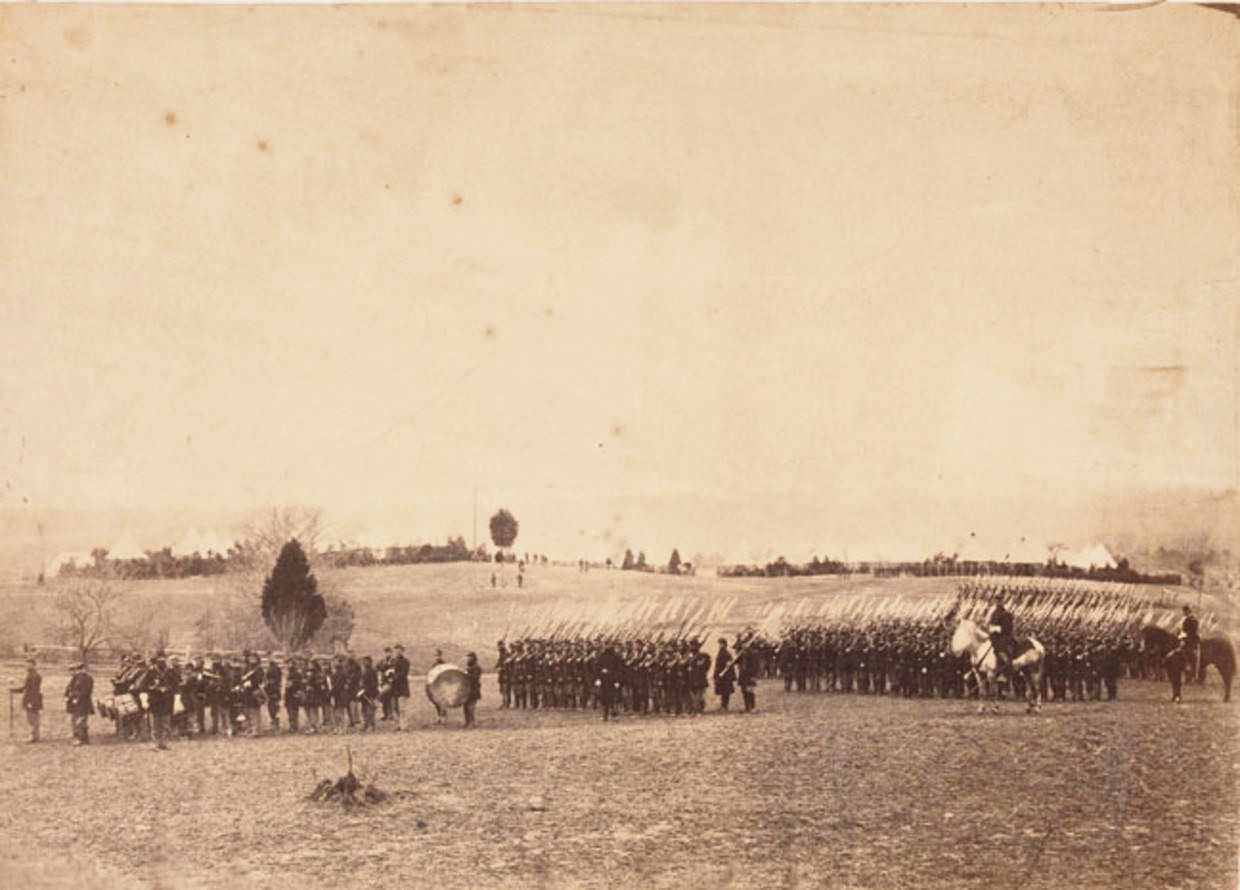
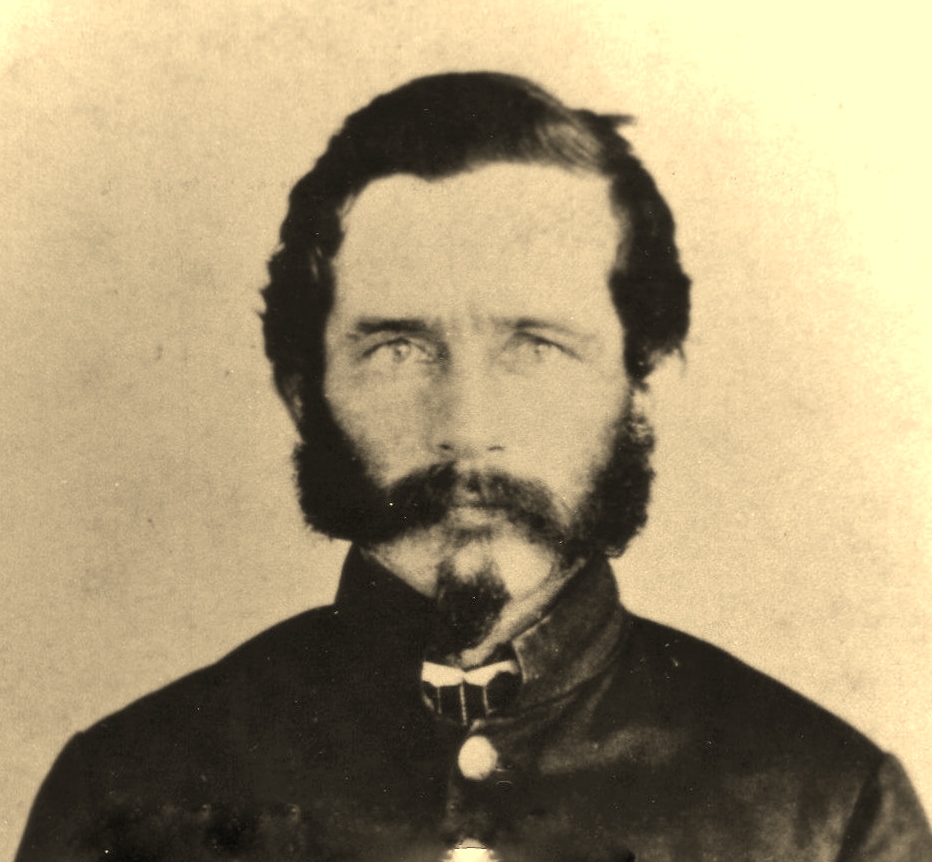
Red Octobers: Remembering Two of the 47th Pennsylvania Volunteers’ Costliest Battles

“The Commencement of the Battle Near Pocotaligo River” (Frank Leslie’s Illustrated Newspaper, October 1862, public domain; click to enlarge).

“The rebels here had every advantage of ground, being ensconced in a wood, with a deep swamp in front, passable only by a narrow causeway, on which the bridge had been destroyed, while, on our side of the swamp and along the entire front and flanks of the enemy (extending to the swamps), was an impervious thicket, intersected by a deep water ditch, and passable only by a narrow road. Into this road the rebels threw a most terrific fire of grape, shot, shell, canister, and musket balls, killing and wounding great numbers of my command.” — Brigadier-General John M. Brannan, commanding, Battle of Pocotaligo, South Carolina (October 22, 1864)

“This victory was, to us, of company C, dearly bought…. It is my painful duty to inform you of the news and I will now give you our loss in killed wounded and missing.” — Field Musician Henry D. Wharton, drummer, 47th Pennsylvania Volunteers, Battle of Cedar Creek, Virginia (October 19, 1864)


The month of October was often a confusing one for many veterans of the 47th Pennsylvania Volunteer Infantry, bringing with it the conflicting emotions of pride and profound grief, as memories of bloody battles bravely waged on distant fields long ago suddenly began reinserting themselves into their daytime thoughts and haunting their dreams.

For some, the “time machine” of memory transported them back to South Carolina in 1862 when nearly one hundred and fifty members of the regiment were seriously wounded or killed in action during the Battle of Pocotaligo — the first major combat experience for the 47th Pennsylvania Volunteers. Others flashed back to 1864 — when the regiment lost the equivalent of nearly two full companies of men during the Battle of Cedar Creek, Virginia.

But as painful and frightening as those memories often were, the 47th Pennsylvania Veteran Volunteers also knew that their service to the nation had genuinely mattered. Each, in his own way, had helped to save the United States of America from disunion.

So it will come as no surprise, then, to learn that many of the surviving members of the 47th Pennsylvania made a concerted effort to schedule their get-togethers in conjunction with the anniversaries of those two battles. More often than not, those annual reunions fell on the actual anniversary of the Battle of Pocotaligo — October 22.

The First Reunion
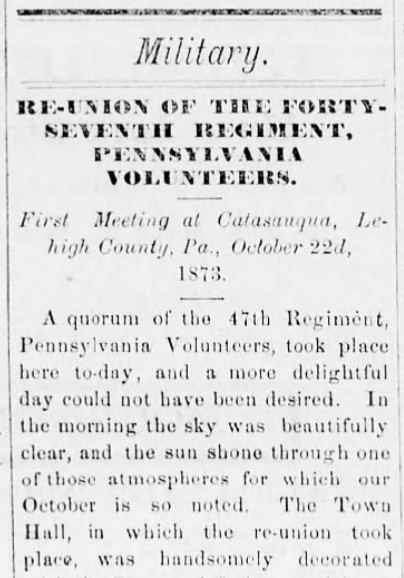
Newspaper headline regarding the first reunion of 47th Pennsylvania Volunteer Infantry veterans in Catasauqua, Pennsylvania on October 22, 1873 (The Newport News, Newport, Pennsylvania, November 8, 1873, public domain).

The first official gathering of 47th Pennsylvania Veteran Volunteers took place in the Borough of Catasauqua in Lehigh County, Pennsylvania on October 22, 1873, and was attended by more than eighty of the regiment’s former officers and enlisted men who had been greeted by the “Committee of Arrangements” upon their arrival at Catasauqua’s train station shortly after noon that day, according to The Newport News. Dressed either in their old uniforms or the newer uniforms of the Grand Army of the Republic (G.A.R.), they lined up behind “the City Cornet Band of Allentown,” and “were conducted to the ‘Mansion House,’ (Captain Harte, proprietor), which was decorated with flags and evergreens, and had the words, “Welcome 47th,” on the front of the piazza, wreathed with evergreens.”

“Here a general hand-shaking took place, congratulations of a hearty character were given, and old friendships renewed which had not been formed under such pleasant circumstances. There were probably a hundred present from various places — Allentown, Easton, and Northumberland and Perry counties…. Among those of the 47th we noticed Cols. Gobin and Good, the former of Lebanon, and the latter of Allentown; Capts. Hart and Gilbert of Catasauqua; Capt. Yard and Lieutenants Bonstine and Wycker, of Easton; Capt. Beard, of Harrisburg; Lieuts. Balliet and Stuber, Captains Kleckner and Leisenring, of Allentown; Assistant Surgeon Scheetz of Pottstown, and Quartermaster F. Z. Heebner, of Allentown.”

Their business meeting then began at 2 p.m. in the town hall, which “was handsomely decorated with the Stars and Stripes, and hung with wreaths and festoons of evergreens and flowers,” according to The Newport News. An “address of welcome was made by M. H. Horn, Cashier of the Catasauqua National Bank,” who spoke of “the terrible and sanguinary conflicts, the sufferings on the battlefield, in prison pens, in the hospital — and the honored dead,” and observed that the 47th Pennsylvania Volunteers had “shared in all [those] scenes.”

“You helped to save our honored institutions. Your share of this work has been recorded upon the pages of history, and has been read and re-read by thousands, and will be read by thousands yet unborn. Your object here to-day is to talk over the past, and to take steps towards securing a series of reunions. May your proceedings be harmonious and pleasant, and may your re-unions be continued until none of you survive, and may you all at last join in that re-union in a better land, where there is no war, but all is peace.”

The 47th Pennsylvanians then elected a temporary slate of officers and appointed a five-member committee to help guide them in the formation of their own, new veterans’ group. Their former commanding officer, John Peter Shindel Gobin, who had been appointed to serve as the chairman of their association’s first board of directors, then delivered his own address, during which he called to mind the highs and terrible lows of their long tenure of service. According to The Newport News, “His speech was well received.”

Allentown’s mayor, Theodore C. Yeager, M.D., then stepped up to the podium, “alluded to the trial and hardships … and paid a glowing tribute to the services of the gallant 47th.”

The Committee on Organization, which was chaired by the regiment’s founder and Allentown’s former mayor, Tilghman H. Good, followed with a report regarding the planning and costs related to that first reunion, after which a roll call was conducted to formally document the names of the 47th Pennsylvania Veteran Volunteers who were present for that historic occasion.

Additional business matters were then debated — the result of which was the approval of the group’s official name — “Association of the 47th Regiment, Pennsylvania Volunteers” — and of its mission statement — “to revive and cement friendship formed in the ranks, and promote the social feeling so desirable, and that should exist between the men whose names are found on the rolls of the 47th Regiment, Pennsylvania Volunteers.” Vice presidents, who had just been elected by the group to represent the companies in which they had served during the war, were then charged with reaching out to their former comrades to urge them to join the regiment’s new association. “William Weiss was designated as Secretary on Membership, and instructed to prepare a record book” that would keep track of “the name and Post Office address of each member,” including the musicians of the former Regimental Band, who were expected to reunite under the baton of the 47th’s second bandmaster, Anthony B. Bush.

The date chosen for their next reunion was Thursday, October 22, 1874. Also scheduled to take place on the anniversary of the Battle of Pocotaligo, it would be held in Allentown — as would many subsequent gatherings of 47th Pennsylvanians. One, in particular, would prove to be the most memorable of all — for the veterans and for their families.

Making History Yet Again

Allentown Militia, Soldiers and Sailors Monument Dedication, Allentown, Pennsylvania, 1899 (public domain).

Without question, the most notable of the reunions held by the Association of the 47th Regiment, Pennsylvania Volunteers was the one that was planned to coincide with the anniversary of the Battle of Cedar Creek in 1899 — a history-making year in which the Lehigh County Soldiers and Sailors Monument was scheduled to be unveiled and dedicated in the city of Allentown.

Designated as “Monument Day,” October 19, 1899 had officially been declared as a holiday for students and many workers across the city. According to the October 5 edition of The Allentown Leader that year, all schools were to be closed so that students and their families could participate in the parade and dedication ceremony, with as many as one thousand elementary school students expected to be on hand to “sing national anthems at the unveiling exercises.” As planning for the celebration continued to unfold, leaders of the Association of the 47th Regiment, Pennsylvania Volunteers announced that veterans of the regiment would “carry their old tattered flag that was used in the war” when marching in the parade that would be held prior to the dedication ceremony.

And when that parade began? It was breathtaking. An estimated fifteen thousand marchers from one hundred twenty-five organizations, “representing the principal towns and cities in the eastern section of the state,” were stretched out along a two-mile line, according to various newspaper accounts that would later describe the procession as “the largest and grandest demonstration in the history of the city.” The parade’s chief marshal, Corporal Francis Daeufer, a veteran of the 47th Pennsylvania’s Company I, ensured that each of the divisions (Grand Army of the Republic, Union Veteran Legion, Sons of Veterans, Patriotic Order Sons of America, Knights of the Golden Eagle, Junior Order United American Mechanics, Improved Order of Red Men, the city’s fire department, Survivors of the Forty-seventh Regiment, Soldiers and Sailors of the Spanish-American War, Knights of Pythias, Knights of Friendship, Knights of the Mystic Chain, National Guard of Pennsylvania, and various other organizations) stepped off on time and kept the parade flowing with energy and efficiency.

In its follow-up coverage, The Allentown Leader estimated that the total crowd may have reached sixty thousand men, women and children, many of whom cheered and waved American flags as the aging veterans marched past them. Roughly fifteen thousand of those attendees then “massed on the Square” for the actual monument dedication, during which a group of daughters and granddaughters of Civil War veterans assisted with the monument’s unveiling while younger children sang the Star-Spangled Banner.

No other regimental reunion, no matter how well planned in years to come, would ever eclipse those inspiring events of Monument Day. Memories of long-forgotten sacrifices were rekindled and wounded hearts were healed as Americans put aside their differences to pay sincere tribute to the men who had given their all to save the United States of America.


Sources:

  1. “47th Reunion.” Allentown, Pennsylvania: The Allentown Leader, October 13, 1899.
  2. Bates, Samuel P. History of Pennsylvania Volunteers, 1861-5, vol. 1. Harrisburg, Pennsylvania: B. Singerly, State Printer, 1869.
  3. “Board of Control: Legislation for the Benefit of Allentown Schools: Monument Day Will Be a Holiday.” Allentown, Pennsylvania: The Allentown Leader, October 5, 1899.
  4. Gobin, John Peter Shindel. Personal Letters, 1861-1865. Northumberland, Pennsylvania: Personal Collection of John Deppen.
  5. Irwin, Richard Bache. History of the Nineteenth Army Corps. New York, New York: G. P. Putnam’s Sons, 1893.
  6. Lambert, James F. and Henry J. Reinhard. A History of Catasauqua in Lehigh County Pennsylvania. Allentown, Pennsylvania: The Searle & Dressler Co., Inc., 1914.
  7. “Program Adopted: Order of Exercises for Unveiling Decided Upon.” Allentown, Pennsylvania: The Allentown Leader, October 5, 1899.
  8. Reports of Colonel Tilghman H. Good, Forty-seventh Pennsylvania Infantry and acting commander, First Brigade, Tenth Army Corps, in The War of the Rebellion: A Compilation of the Official Records of the Union and Confederate Armies. Prepared Under the Direction of the Secretary of War, By Lieut. Col. Robert N. Scott, Third U.S. Artillery, and Published Pursuant to Act of Congress Approved June 16, 1880 (series I, vol. XIV). Washington, D.C.: Government Printing Office, 1885.
  9. “Reunion of the Forty-Seventh Regiment, Pennsylvania Volunteers: First Meeting at Catasauqua, Lehigh County, Pa., October 22d, 1873,” in “Military.” Newport, Pennsylvania: The Newport News, November 8, 1873.
  10. “Roster of the 47th P. V. Inf.” Allentown, Pennsylvania: The Morning Call, October 26, 1930.
  11. Schmidt, Lewis. A Civil War History of the 47th Regiment of Pennsylvania Veteran Volunteers. Allentown, Pennsylvania: Self-published, 1986.
  12. Sheridan, Philip Henry. Personal Memoirs of P. H. Sheridan, General, United States Army in Two Volumes. New York, New York: Charles L. Webster & Company, 1888.
  13. “The Forty-Seventh in Annual Reunion: Anniversary of Pocotaligo Was Celebrated by Veterans: Met at South Bethlehem.” Allentown, Pennsylvania: The Morning Call, October 23, 1908.
  14. “The History of the Forty-Seventh Regt. P. V.” Allentown, Pennsylvania: The Lehigh Register, July 20, 1870.
  15. Wharton, Henry D. Letters from the Sunbury Guards. Sunbury, Pennsylvania: Sunbury American, 1861-1868.

 

“March Madness”: American Civil War Style

The phrase, “Dum Tacent Clamant” (“While they are silent, they cry aloud”), is inscribed on the Grand Army of the Republic monument at the Chalmette National Cemetery in Louisiana (G.A.R. Monument, Chalmette National Cemetery, circa 1910, U.S. Library of Congress, public domain).

For many Americans, the phrase “March Madness” conjures visions of college life or good times spent with friends at sports bars, cheering on favorite teams as future NBA All Stars steal and dunk their way through basketball championships en route to fame and fortune. But a very real form of “madness” affected Americans during the American Civil War — and it was a devastating experience for many of the boys and men who were forced to endure it by circumstances that were largely out of their control. That condition, which was referred to by physicians as nostalgia, was known to cause feelings of “despair and homesickness so severe that soldiers became listless and emaciated and sometimes died,” according to the late journalist Tony Horwitz, and it affected multiple members of the 47th Pennsylvania Volunteer Infantry throughout the regiment’s long and storied history.

“Though geographically less distant from home than soldiers in foreign wars, most Civil War servicemen were farm boys, in their teens and early 20s, who had rarely if ever traveled far from family and familiar surrounds….”

Horowitz’s description of young Civil War-era soldiers was particularly true for the teenagers and young men who served with the 47th Pennsylvania Volunteer Infantry. Among the most distantly located of Union Army troops, many were transported from farms and small towns across Pennsylvania to Virginia in 1861 — and then down to America’s Deep South as the war raged on toward its second year. Initially stationed at Fort Taylor in Key West, Florida during the late winter of 1862, they were subsequently transferred to South Carolina, and were then moved back and forth between Florida and South Carolina between the fall of 1862 and mid-February 1864 as they engaged in the capture of Saint John’s Bluff, Florida, the Battle of Pocotaligo, South Carolina, the capture of Jacksonville, Florida, and the garrisoning of Fort Taylor in Key West and of Fort Jefferson in Florida’s Dry Tortugas — the latter of which was a duty station that was about as far south as any American could travel in the United States.

And then they were shipped west to Louisiana to fight in the Union’s 1864 Red River Campaign, during which time they made history as the only regiment from Pennsylvania to take part in that campaign — a series of intense military engagements in which more than a dozen 47th Pennsylvania Volunteers would be captured by Confederate troops and force marched to Texas, only to be held in deplorable conditions as prisoners of war at Camp Ford — the largest Confederate POW camp west of the Mississippi River. Several never made it out alive; those who did were never the same.

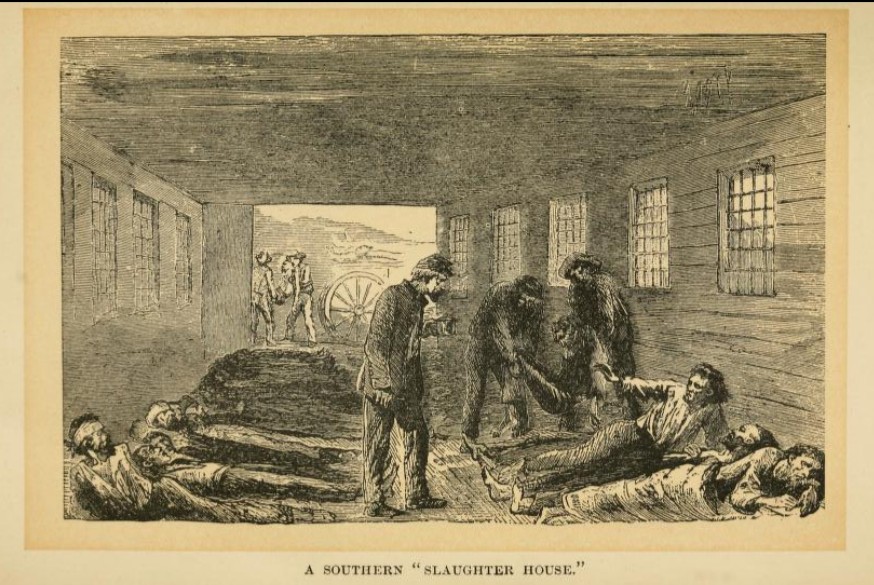
Even more damaging were the horrific conditions experienced by a far larger group of 47th Pennsylvania Volunteers who were taken prisoner in Virginia roughly six months later, including First Sergeant William Fry (1836-1865) of Company C and Corporal James Huff (1835-1865) of Company E, who were both captured during the Battle of Cedar Creek and then dragged away to the two most infamous POW camps in the Confederacy. Sergeant Fry, who “was paroled [on March 4, 1865], only to ‘come home to die’ from starvation and slow poison — the victim [at Andersonville] of atrocities such as have only been practiced by the traitors to our own government, and from which savages would turn in disgust,” died three weeks later at his mother’s home (on March 28, 1865), according to the 15 April 1865 edition of The Sunbury American, while Corporal Huff lost his will to live on March 5, 1865, after suffering through months of the mental and physical torment of starvation that he endured at Salisbury. (His body was then thrown into an unmarked trench grave there with those of thousands of other Union POWs, and was never able to be identified.)

War-Induced Trauma

“A Southern ‘Slaughter House'” depicted the suffering of Union soldiers at the Confederacy’s Salisbury Prison Camp (Charles S. Greene, Sparks from the Campfire, 1889, public domain).

While it is true that the majority of 47th Pennsylvania Volunteers managed to avoid being killed or imprisoned as POWs, it is also true that a significant number of them suffered serious emotional trauma — either personally because they were wounded or became ill as a direct result of their military service, or vicariously — because they saw one of their comrades fall in battle or watched as a sibling or friend succumbed to disease-related complications at a Union Army hospital. So, it’s often heartbreaking for present-day descendants to read diary entries and letters that were penned by their 47th Pennsylvania ancestors as they tried to convey their thoughts in shaky, cursive handwriting while cycling between happy memories of home, their hope for better days and their profound feelings of bewilderment, grief and despair.

While scribbling one such letter during church services on Sunday, December 29, 1861, for example, Private Abraham N. Wolf told his wife that the 47th Pennsylvania’s Regimental Band was playing a hymn at that moment, and went on to state, with childlike wonder and incandescent joy, that he’d received the gift box she’d sent him, adding “everything was in it yet what you said was in it and it came on the second day of Christmas.” But his words then turned bittersweet as he reported that he had already “fried some of the sausages” that she’d sent him in order to take with him for dinner as he headed out for duty to chop wood for the regiment. “They tasted pretty good to me for it was something new to me for it was from home.”

The next year, homesickness and grief darkened the holidays for a very pensive Henry Hornbeck, as evidenced by this diary notation:

“How different this Christmas from last year when all was Joy at home. Mary & myself for the sake of a Joyful surprise, placed upon the plate (before Breakfast) of Dear Mother, a Christmas Gift, and how pleased she was for that present, which was entirely unexpected. Now, alas, she is no more, never more are we to see her in this world. No one who has not lost a dearly beloved Mother, can feel that loss or have the least idea of what the loss of his or her dearest friend on earth is, until he or she experiences what we have, Standing at the death bed of a dying parent, and to feel as we felt, alone in this wide world…. Retrospection is often times pleasing and also horrifying. I wish you a Merry Christmas.”

The Consequences of Untreated Suffering

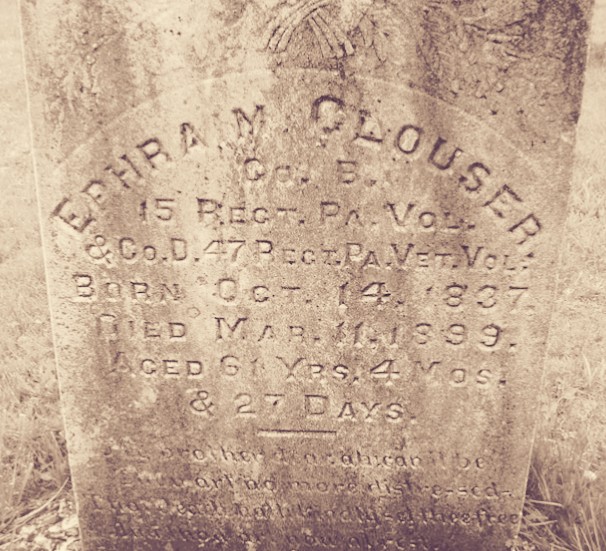
Placed by loved ones at the Bloomfield Cemetery in Perry County, Pennsylvania, this gravestone expresses the hope that the heart of 47th Pennsylvania veteran Ephraim Clouser is no longer distressed (public domain; click to enlarge).

One of the many heartbreaking truths of the American Civil War era is that soldiers who were battling depression or other mental health issues rarely received sympathy or support from their superior officers because those officers were advised by military physicians to respond harshly, rather than with compassion, to any behavior that might be perceived — or misperceived — as “malingering.” That surprising guidance was given by those surgeons because they had received medical school training which had taught them that any failure to shake off feelings of homesickness, sadness or grief was a sign of “weakness” or a “character flaw” rather than a symptom of a legitimate disease that required prompt and ongoing treatment. According to Horwitz:

“Military and medical officials recognized nostalgia as a serious ‘camp disease,’ but generally blamed it on ‘feeble will,’ ‘moral turpitude’ and inactivity in camp. Few sufferers were discharged or granted furloughs, and the recommended treatment was drilling and shaming of ‘nostalgic’ soldiers.”

In more than a few cases, the untreated or poorly-treated nostalgia experienced by 47th Pennsylvania Volunteer Infantrymen became so severe that it broke the hearts of those 47th Pennsylvanians — figuratively and then literally — as it led to the development of damaging heart or brain diseases that would later be termed “Soldier’s Heart” or “PTSD” (post-traumatic stress disorder).

One of the earliest casualties of that sub-standard treatment was Private Adolph Finster of the 47th Pennsylvania’s A Company, who ended his life by suicide in Key West, Florida on May 15, 1863. A twenty-five-year-old who had been employed as a clerk in Easton prior to the war, Private Finster was subsequently buried in grave number 180 “of the Key West Post Cemetery,” according to historian Lewis Schmidt.

Another was D Company Private Ephraim Clouser, who was hospitalized for months at one Union Army hospital after another, following his release from captivity as a POW on November 25, 1864. (Shot in the knee during the Battle of Pleasant Hill, Louisiana on April 9th, he had been force marched to Camp Ford in Texas, where he had then been subjected to starvation and dangerously unsanitary living conditions). Awarded a U.S. Civil War soldier’s invalid pension in 1866, he was then diagnosed with dementia (1868), described as “an insane veteran” by his hometown newspaper (1896) and “jailed as a dangerous character” (1898), before he was finally committed to the Pennsylvania State Lunatic Asylum (later known as the Harrisburg State Hospital).

Two of the other post-war casualties were William H. Sieger, a field musician from Company G, who died by suicide eight years after receiving his honorable discharge and eleven days after his twenty-ninth birthday, and Daniel Battaglia, a Swiss immigrant who served as a private with Adolph Finster in Company A and later battled mental health issues for decades before he was finally committed to the “Government Hospital for the Insane” (later known as St. Elizabeths Hospital) in Washington, D.C. — forty-five years after receiving his honorable discharge.

Still others, who managed to survive and be welcomed home with huzzahs and hearty backslaps after the war, seemed “just fine” to neighbors and co-workers but, in reality, were actually suffering greatly from physical or mental illnesses that would plague them for the remainder of their days — quiet casualties of a war that continued to claim lives more than half a century after it ended.

* Note: To see an image and read more of Abraham Wolf’s letter, read the article, “1861: Abraham Nicholas Wolf, Jr. to Sarah (Trexler) Wolf,” by Spared and Shared.


Sources:

  1. Da Costa, Jacob Mendez. “Observations on the diseases of the heart noticed among soldiers, particularly the organic diseases,” in Contributions relating to the Causation and Prevention of Disease, and to Camp Diseases; together with a Report of the Diseases, etc., Among the Prisoners at Andersonville, GA. New York: United States Sanitary Commission and Hurd and Houghton, 1867.
  2. Da Costa, Jacob Mendez. “On Irritable Heart; a Clinical Study of a Form of Functional Cardiac Disorder and Its Consequences: Result in Two Hundred Cases,” in The American Journal of the Medical Sciences, vol. 61, no. 121, p. 17. Philadelphia, Pennsylvania: Henry C. Lea, 1871.
  3. Friedman, Matthew J. “History of PTSD in Veterans: Civil War to DSM-5.” Washington, D.C.: National Center for PTSD, U.S. Department of Veterans Affairs, retrieved online, March 23, 2026.
  4. Greene, Lieutenant-Colonel Charles S. Sparks from the Campfire: Thrilling Stories of Heroism, Adventure, Daring and Suffering, Re-Told by the Boys Who Were There. New York: W. A. Houghton, 1889.
  5. Horwitz, Tony. “Did Civil War Soldiers Have PTSD?“, in Smithsonian Magazine. Washington, D.C.: Smithsonian Institution, January 2015.
  6. Pollard, Harvey, Chittari Shivakumari, et.al. “‘Soldier’s Heart’: A Genetic Basis for Elevated Cardiovascular Disease Risk Associated with Post-Traumatic Stress Disorder,” in Frontiers in Neuromolecular Science, September 23, 2016. Switzerland: Frontiers Research Foundation.
  7. “Resolutions of Condolence” (report regarding the death of former Andersonville prisoner of war, Sergeant William Fry, at his home in Sunbury). Sunbury, Pennsylvania: The Sunbury American, April 15, 1865.
  8. Schmidt, Lewis G. A Civil War History of the 47th Regiment of Pennsylvania Veteran Volunteers. Allentown, Pennsylvania: Self-published, 1986.


A Past That Seems Distant — But Wasn’t

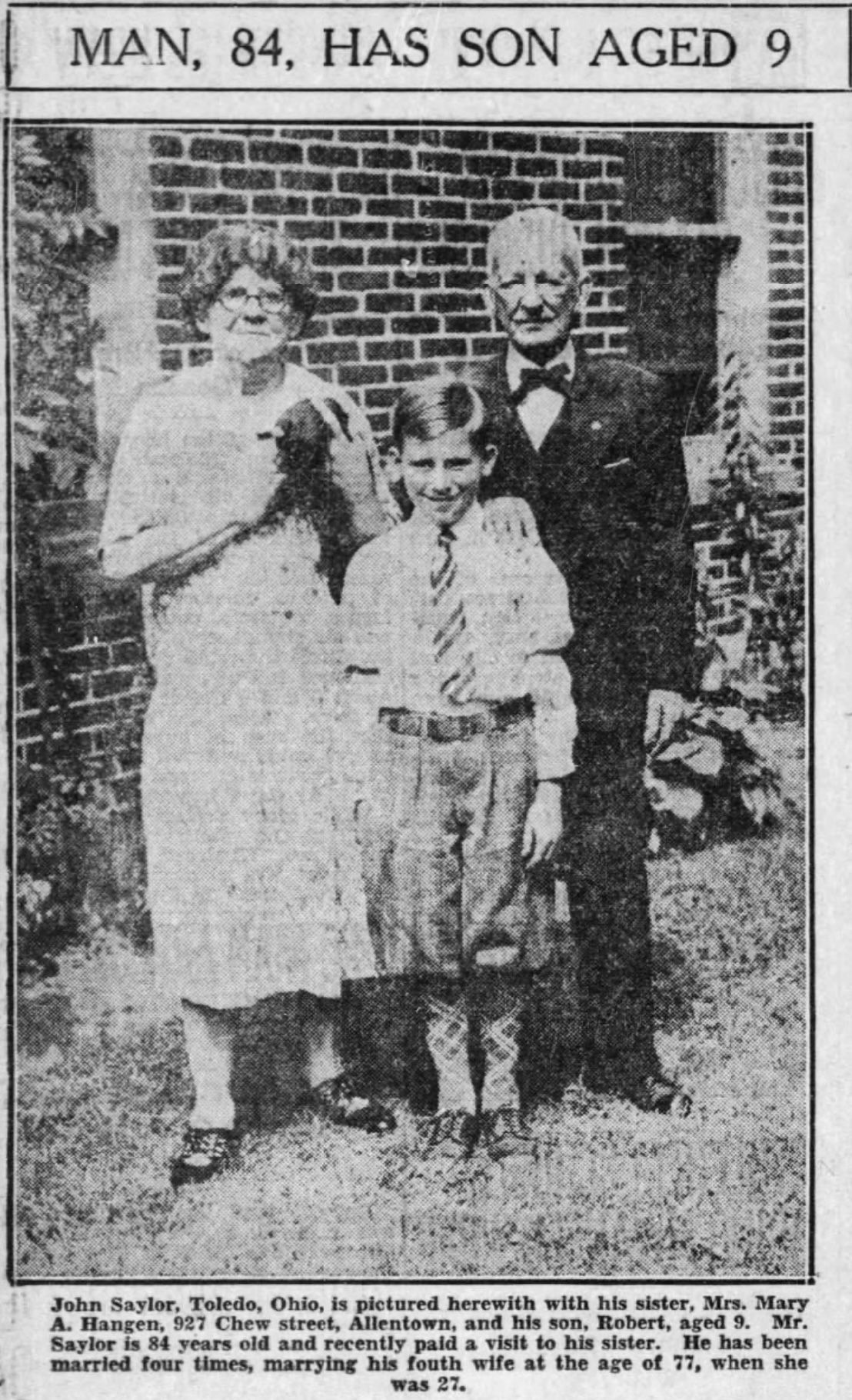
47th Pennsylvania veteran John Edward Saylor with his sister, Mary Alice (Saylor) Hangen, and his son, Robert Henry Saylor, (The Morning Call, Allentown, Pennsylvania, August 1929, public domain).

Many Americans tend to think of the American Civil War as part of the United States’ long distant past. Waged more than one hundred and sixty years ago, it began at a time when the art of photography was still in its infancy and the average newspaper contained mostly written text without any accompanying illustration.

As the war dragged on, though, newspaper publishers began sending Winslow Homer and other artists to far-flung locations, hoping that any sketches they sent back would give readers a better sense of the battles that were killing countless young men and destroying entire communities. Matthew B. Brady and Alexander Gardner, who had gained a measure of fame by photographing President Abraham Lincoln and members of his cabinet, went on to revolutionize war reporting by turning their cameras on carnage so horrific that it could not be conveyed by mere words or pencil illustrations. Their black and white photographs are the ones still viewed most often by history students in classrooms across the nation, contributing to the persistent notion that the American Civil War is distant, rather than recent history.

But that’s not quite correct, as the lives of Robert Henry Saylor and Edward John Saylor will show us. Born in the city of Toledo, Ohio during the early 1920s, the Saylor brothers could both lay claim to have been cradled in the arms of their father, John Edward Saylor (1846-1931), a veteran of the American Civil War who had served with the 47th Pennsylvania Volunteer Infantry’s K Company from early 1864 until early 1866.

Veterans of World War II, both brothers also made it through their respective tenures of military service and lived well into the last decades of the twentieth century, with the youngest brother nearly surviving long enough to witness the dawn of the twenty-first, making him a genuine “living bridge” between the not-so-distant past and present.

Their life stories help us to better understand just how recent so much of American History is. Reflect on that as you learn more about the Saylors’ lives by reading our new bio of Corporal John Edward Saylor.


Sources:

  1. Bates, Samuel P. History of Pennsylvania Volunteers, 1861-5, vol. 1. Harrisburg, Pennsylvania: B. Singerly, State Printer, 1869.
  2. Conway, William (boarding house operator) and Ollena; Saylor, John [sic, “John Edward Saylor”] (lodger and eighty-four-year-old Civil War veteran) and Robert (lodger and Civil War veteran’s ten-year-old son); et. al., in U.S. Census (Toledo, Lucas County, Ohio, 1930). Washington, D.C.: U.S. National Archives and Records Administration.
  3. “Edward Saylor” (obituary of a son of John Edward Saylor). Coshocton, Ohio: The Coshocton Tribune, August 5, 1999.
  4. “Former Resident Dies” (death notice of John Edward Saylor). Port Clinton, Ohio: News-Herald, September 4, 1931.
  5. John Saylor [sic, “John Edward Saylor”], in Death Certificates (registration district no.: 769, death of death: August 28, 1931). Columbus, Ohio: State of Ohio, Department of Health, Division of Vital Statistics.
  6. “Man, 84, Has Son Aged 9” (photo with caption of John Edward Saylor and his son, Robert, and John’s sister, Mary A. (Saylor) Hangen). Allentown, Pennsylvania: The Morning Call, August 25, 1929.
  7. Mary Alice Hangen (a sister of John Edward Saylor), in Death Certificates (file no.: 67765, registered no.: 858, date of death: July 12, 1932). Harrisburg, Pennsylvania: Commonwealth of Pennsylvania, Department of Health, Bureau of Vital Statistics.
  8. “Mrs. Mary A. Hangen” (obituary of a sister of John Edward Saylor). Allentown, Pennsylvania: The Morning Call, July 13, 1932.
  9. “Putnam Group Inducted Into Armed Forces” (notice of the impending World War II service of John Edward Saylor’s son, Robert Henry Saylor). Lima, Ohio: The Lima News, May 11, 1943.
  10. Robert Henry Saylor, in U.S. Headstone Applications for Military Veterans (Vista Memorial Gardens, Hialeah, Florida, year of death: 1977). Washington, D.C.: U.S. National Archives and Records Administration.
  11. “Saylor” (obituary of Robert Henry Saylor, a son of John Edward Saylor). Coshocton, Ohio: The Coshocton Tribune, January 4, 1977).
  12. Saylor, Edward J. (the groom and the youngest son of John Edward Saylor), John Saylor [sic, “John Edward Saylor”] (father of the groom) and Catherine Pyfer [sic, ” Pfeiffer”] (mother of the groom); and Loretta Wehrly (the bride), in Marriage Records (Putnam County, Ohio, June 10, 1946). Ottawa, Ohio: Putnam County Probate Court.
  13. Saylor, Edward J. (the youngest son of John Edward Saylor), Loretta, and Gloria J., in U.S. Census (Pleasant Township, Putnam County, Ohio, 1950). Washington, D.C.: U.S. National Archives and Records Administration.
  14. Saylor, John, in Civil War Muster Rolls (Company K, 47th Pennsylvania Infantry). Harrisburg, Pennsylvania: Pennsylvania State Archives.
  15. Saylor, John, in Civil War Veterans’ Card File, 1861-1866 (Company K, 47th Pennsylvania Infantry). Harrisburg, Pennsylvania: Pennsylvania State Archives.
  16. Saylor Robert (a son of John Edward Saylor) and Edwina, in U.S. Census (Coshocton, Coshocton County, Ohio, 1950). Washington, D.C.: U.S. National Archives and Records Administration.
  17. “Saylor, Robert H.” (obituary of a son of John Edward Saylor). Miami, Florida: The Miami Herald, January 4, 1977.


Black History Month: Say His Name, Then Share His Story

Page one of the U.S. Army’s Civil War enlistment paperwork for Bristor Gethers (mistakenly listed as “Presto Garris”), 47th Pennsylvania Volunteer Infantry, Company F, 5 October 1862 (U.S. National Archives and Records Administration, public domain; click to enlarge).

Our realization, as researchers, that there were at least nine formerly enslaved Black men who enlisted with the 47th Pennsylvania Volunteer Infantry during the American Civil War was sparked by a single index card for a soldier named “Presto Garris” that we found in the Pennsylvania Civil War Veterans’ Card File, which is maintained by the Pennsylvania State Archives.

Our ability to determine the true name of that soldier and correct the historical record about his life by researching and writing his biography was made possible by reading the dozens of pages contained in his U.S. Civil War Pension file and Compiled Military Service Records, which are maintained by the U.S. National Archives and Records Administration.

It was worth every penny of the roughly one hundred and ten dollars that we spent to obtain copies of those records from the National Archives because one of those documents confirmed the precise location of where that soldier had been enslaved prior to the war while others told us that he had survived the war and had lived out his life as a farmer. Another document even provided clues to the location of his grave.

That knowledge was so much more than we could have ever have hoped to gain because so many of the millions of men, women and children who were sold into, born into and re-sold throughout the American system of chattel slavery were never identified by name on state and federal census records prior to the war or were listed under names that had been created for them by their enslavers.

So, it matters that we’re able to tell you, for certain, that the true name of the soldier listed on that aforementioned index card was Bristor Gethers, that he lived near Mt. Pleasant, South Carolina after the war and that he resided with his wife and son near Beaufort, South Carolina after that. Please take the time to learn more about him by reading his bio on our educational program’s special website, Freedmen of the 47th Pennsylvania Volunteer Infantry. Then, look through the records that document his life’s journey.

Mr. Gethers’ story teaches us all that it is possible to find a new way forward after surviving the darkest of times.


Sources:

  1. “Garris, Presto,” in Civil War Muster Rolls (Company F, 47th Pennsylvania Infantry). Harrisburg, Pennsylvania: Pennsylvania State Archives.
  2. “Garris, Presto,” in Pennsylvania Civil War Veterans’ Card File, 1861-1866 (Company F, 47th Pennsylvania Infantry). Harrisburg, Pennsylvania: Pennsylvania State Archives.
  3. “Geddis, Brista” and “Geddis, Rachel,” in U.S. Census (Beaufort Township, Beaufort County, South Carolina, 1880). Washington, D.C.: U.S. National Archives and Records Administration.
  4. “Geddis, Brister,” in “Agreement Between B. J. Whitesides and Fifteen Freedmen” (Mt. Pleasant, South Carolina, 12 February 1868), in “Records of the Bureau of Refugees, Freedmen, and Abandoned Lands.” Washington, D.C.: U.S. National Archives and Records Administration.
  5. “Gethers, Bristor,” “Garris, Presto” and “Geddes, Bristor,” in U.S. Civil War Pension and U.S. Civil War Widows’ Pension Files (widow’s pension application no.: 598937, widow’s certificate no.: 447893, filed by the widow, Rachel Geddes, from South Carolina, 27 July 1894). Washington, D.C.: U.S. National Archives and Records Administration.


On Crutches, Convalescing in Carolina: The Fight by Pocotaligo’s Wounded to Recover

Captain John Peter Shindel Gobin, Company C, 47th Pennsylvania Volunteers, shown here circa 1863, went on to become Lieutenant Governor of Pennsylvania after the war (public domain).

Still ruminating about the carnage that he and his fellow 47th Pennsylvania Volunteer Infantrymen had survived just weeks earlier during the Battle of Pocotaligo, C Company Captain John Peter Shindel Gobin sat down in his quarters at his regiment’s encampment in Beaufort, South Carolina in mid-November 1862 and began to pen an update to a letter that he had recently written to friends back home. Despite his belief that he had “nothing to write home about,” his letter proved to be an important historical artifact — a handwritten, dated and signed eyewitness account that detailed what happened to multiple Union Army soldiers who had been wounded in action at that 1862 battle in South Carolina.

Head Quarters Co. C 47 P.V.
Beaufort S.C. Nov. 13. 1862

Dear Friends

I have just learned that a mail leaves for the North tomorrow morning although I have nothing particular to write about, and there is no telling when you will get it, as I understand vessels from here are now quarantined ten days at New York. Still I suppose you will be anxious to hear from me.

I have not heard from Sergt. Haupt today. Yesterday he was still living and improving, and I now have hopes of his recovery. I was down on Saturday last and both nurses and doctor promised me to do everything in their power to save him. If money or attention can save him it must be done.

The rest of the wounded of my Company are doing very well. All will recover, I think, and lose no limbs, but how many will be unfit for service I cannot yet tell. Billington, Kiehl, Barlton [sic, “Bartlow”], Sergt. Haupt and Leffler are yet at Hilton Head. Billington is on crutches and attending to Haupt or helping. Barlton [sic, “Bartlow”] and Leffler are also on crutches. Kiehl is walking about, but his jaw is badly shattered. Corp S. Y. Haupt is on duty. Haas’ wound is healing up nicely. Corp. Finck is about on crutches. O’Rourke, Holman, Lothard, Rine [sic, “Rhine”], and Larkins are in camp, getting along finely. Those who were wounded in the body, face and legs all get along much better than Sergt. Haupt who was wounded in the foot. His jaws were tightly locked the last time I saw him.

The Yellow fever is pretty bad at the Head, and I do not like to send any body down. I am holding a Court Martial, and keep very busy. The fever creates no alarm whatever here. No cases at all have occurred save those brought from Hilton Head. We have had two frosts and all feel satisfied that will settle the fever. Some good men have fallen victims to it. Gen. Mitchell [sic, Major-General Ormsby Mitchel] is much regretted here.

Sixty of my men are on picket under Lieut. Oyster, Lieut. Rees [sic, “Reese”] having been on the sick list. However he is well again. The balance of the men are all getting along finely. Warren McEwen had been sick but is well again. My health is excellent. Spirits ditto. I suppose however by the looks of things I will be kept in Court Martials for a month longer, the trial list being very large. The men begin to look on me as a kind of executioner as it seems I must be upon every Court held in the Dep’t [Department of the South].

We are waiting patiently and anxiously for a mail, not having had any news from the North since the 24th of last month. Three weeks without news seems a terrible time, when you come to realize it.

I wrote home from the Head the last time I was down. Was my last received. Write soon and give me all the news. With love to all

I remain
Yours JPSG

What Ultimately Happened to the Men Identified in That Gobin Letter?

Captain Daniel Oyster, Company C, 47th Pennsylvania Volunteers, circa 1864 (public domain).

The “Rees” and “Oyster” mentioned by Captain J. P. S. Gobin were his immediate subordinates, First Lieutenant William Reese and Second Lieutenant Daniel Oyster, who both ended up surviving the war. Reese would later be accused of cowardice during the 1864 Red River Campaign but cleared of that false charge, while Oyster would rise through the regiment’s ranks to become captain of Company C before being wounded in two different battles of Sheridan’s 1864 Shenandoah Valley Campaign.

The “Billington” and “Barlow” who had sustained leg wounds were Privates Samuel Billington and John Bartlow. Although both ultimately recovered from those wounds, Private Billington would later be deemed unable to continue serving with the 47th Pennsylvania and would be honorably discharged on a surgeon’s certificate of disability on July 1, 1863, while Private Bartlow would go on to become a sergeant with the 47th’s C Company, effective September 1, 1864, only to be killed in action just over a month later, during the Battle of Cedar Creek, Virginia.

“Corp. Finck” was Corporal William F. Finck, who had also been wounded in the leg and who also subsequently recovered and returned to duty. Unlike Sergeant Bartlow, however, he would survive a second wound that he would later sustain during the Battle of Cedar Creek and would be promoted to the rank of sergeant on April 1, 1865.

“Haas” was Private Jeremiah Haas, who had been wounded in the breast and face. Known as “Jerry” to his friends and family, he also eventually recovered and returned to duty, but was then mortally wounded in action during the Battle of Sabine Cross Roads near Mansfield, Louisiana on April 8, 1864 and died “almost instantly,” according to a letter written by his Company C comrade, Henry Wharton.

The “Haupts” were Sergeant Peter Haupt and his brother, Private Samuel Y. Haupt. Sergeant Peter Haupt, whose foot and ankle had been wounded at Pocotaligo, later developed lockjaw and died after contracting tetanus from the lead in the canister shot that had struck him. His brother, Samuel, however, survived. Wounded in the face and chin, Samuel would later be cleared for active duty and then be promoted steadily up through the ranks to become a first sergeant.

“Holman” was Private Conrad P. Holman, who had also been wounded in the face and who also recovered and returned to duty, would later be captured by Confederate troops during the Battle of Pleasant Hill in Louisiana on April 9, 1864 and be held as a prisoner of war (POW) at Camp Ford near Tyler, Texas until he was released during a prisoner exchange on July 22 of that same year.

“Kiehl” was Private Theodore Kiehl, whose jaw had shattered when his mouth was struck by a rifle ball at Pocotaligo, also recovered and returned to active duty. Sadly, he would later be killed in action on the grounds of Cooley’s farm near Winchester, Virginia during the Battle of Cedar Creek in October 1864.

“Larkins” and “Leffler” were Privates Michael F. Larkin and Charles W. Lefler, who had sustained wounds to the hip and side and/or arm and stomach (Larkins) and leg (Lefler) at Pocotaligo. They also both recovered and returned to active duty. Unlike so many of their comrades, however, they both survived their respective tenures of service and were both honorably discharged.

“Lothard” was actually Charles L. Marshall — one of several “mystery men” of the 47th Pennsylvania Volunteer Infantry. A native of Virginia who had relocated to Luzerne County, Pennsylvania to work in a coal mine prior to the American Civil War, he had enlisted as a private with the 47th Pennsylvania under the assumed name of “Thomas Lothard.” Shot in the head and/or body at Pocotaligo, he would ultimately recover and return to active duty, only to be wounded again in his head (top), body (right side) and left shin left during the Battle of Sabine Cross Roads in Louisiana on April 8, 1864. Later mistakenly labeled as a deserter, his military records were subsequently clarified to reflect his honorable discharge on January 7, 1866, as well as his legal name and alias.

“Warren McEwen” was Private Warren C. McEwen, whose illness would later become so persistent that he would be honorably discharged on a surgeon’s certificate of disability on December 7, 1862.

“O’Rourke” and “Rine” were Privates Richard O’Rourke and James R. Rhine, who had also sustained wounds to the side (O’Rourke) and leg (Rhine) at Pocotaligo, and would also recover, return to active duty, serve out their respective terms of enlistment, and be honorably discharged.

Veteran Volunteers

Samuel Y. Haupt, Company C, 47th Pennsylvania Volunteers (circa 1863, public domain).

John Bartlow, William Finck, Samuel Haupt, Charles Marshall (as “Thomas Lothard”), Richard O’Rourke, and James Rhine were among multiple members of the 47th Pennsylvania Volunteer Infantry who would go on to be awarded the coveted title of “Veteran Volunteer” when they chose to re-enlist for additional tours of duty and helped to bring an end to one of the darkest times in America’s history.

Remember their names. Honor the sacrifices that they made.


Sources:

  1. Bates, Samuel P. History of Pennsylvania Volunteers, 1861-5, vol. 1. Harrisburg, Pennsylvania: B. Singerly, State Printer, 1869.
  2. Gobin, John Peter Shindel. Personal Letters, 1861-1865. Northumberland, Pennsylvania: Personal Collection of John Deppen.
  3. MacConkey, Alfred. “Tetanus: Its Prevention and Treatment by Means of Antitetanic Serum.” London, England: The British Medical Journal, vol. 2, no. 2806, October 10, 1914, pp. 609-614.
  4. Schmidt, Lewis G. A Civil War History of the 47th Regiment of Pennsylvania Veteran Volunteers. Allentown, Pennsylvania: Self-published, 1986.
  5. Wharton, Henry D. “Letters from the Sunbury Guards.” Sunbury, Pennsylvania: The Sunbury American, 1862.


Remembering the Red River Campaign Prisoners of War on National POW/MIA Recognition Day

This POW/MIA Recognition Flag designed by Newt Heisley was formally recognized by U.S. House of Representatives Resolution No. 467 on September 21, 1990 (public domain).

During the Army of the United States’ 1864 Red River Campaign across Louisiana in the American Civil War, multiple members of the 47th Pennsylvania Volunteer Infantry were declared as “Missing in Action” (MIA) — largely due to the confusion caused by a series of engagements with the enemy in which Union soldiers were repeatedly required to retreat, regroup and resume the fight as they faced down wave after wave of Confederate troops attempting to outflank and perform end runs around the outer edges of Union Army lines.

Each time the cannon smoke began to clear from those battles, many of those MIA members of the 47th Pennsylvania Volunteer Infantry found their way back to the regiment, carrying word to senior officers of the 47th Pennsylvania Volunteers that members of the regiment had been captured by Confederate troops. By mid-May of 1864, it was clear that at least twenty-three 47th Pennsylvania Volunteers were being held as prisoners of war (POWs) by the Confederate States Army.

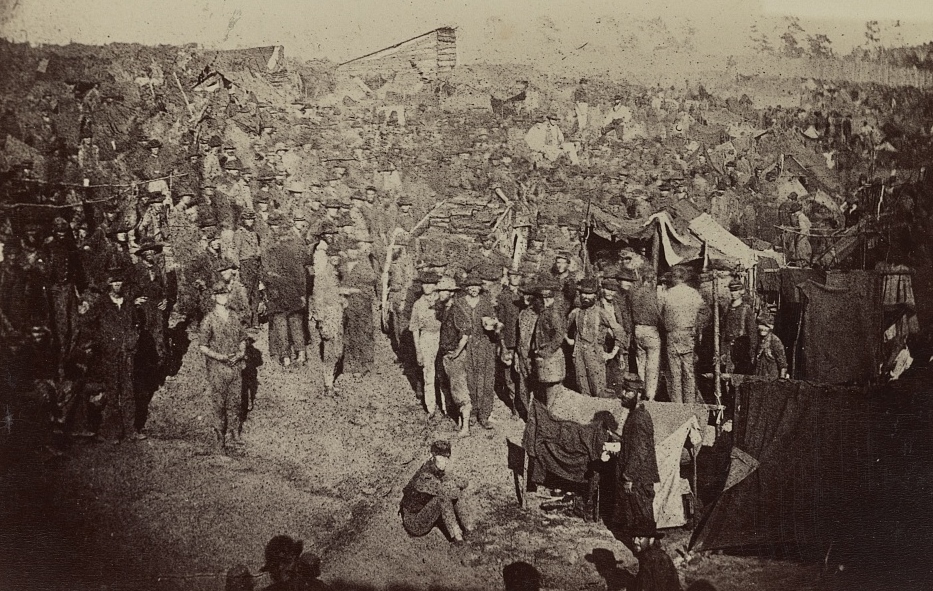
Regimental leaders would later learn that many of those men had been force marched roughly one hundred and fifty miles to Camp Ford, which was located outside of Tyler, Texas and would become the largest Confederate POW camp west of the Mississippi River by the summer of 1864. Once there, they were starved, given minimal to no medical care for any wounds they had sustained, exposed to extreme variations in temperature and weather, due to inadequate shelter, and sickened by dysentery and other diseases that were spread by living in the cramped, overcrowded conditions that became increasingly unsanitary, due to the placement of latrine facilities near water supplies meant for drinking or bathing. As their days dragged on, their treatment by Confederate soldiers grew more and more harsh. According to representatives of the Smith County Historical Society who have been working on documenting the history of Camp Ford:

On April 8th and 9th 1864 at the battles of Mansfield and Pleasant Hill, Louisiana, Confederate forces captured more than 2,000 Union soldiers, who were quickly marched to Tyler…. The existing stockade did not have sufficient area to house them, and an emergency enlargement was undertaken. Local slaves were again impressed, the north and east wall was dug up and the logs cut in half, and the top ten feet of the logs of the south and west walls were cut off. The resulting half logs gave sufficient timber to quadruple the area of the stockade, and it was expanded to about eleven acres.

With additional battles in Arkansas and Louisiana, the prison population had grown to around 5,000 by mid-June. Hard-pressed CS officials had no ability to provide shelter for the new prisoners, and their suffering was intense. The number of tools was inadequate, and many men could only dig holes in the ground for shelter. Rations were often insufficient and the death rate soared…. Of 316 total deaths at the camp, 232 occurred between July and November 1864….

At least three 47th Pennsylvania Volunteers are confirmed to have died while imprisoned at Camp Ford. Another member of the regiment was later removed from that prison and moved to Andersonville, the most notorious of all American Civil War POW camps. Two others died as POWs who were confined to a Confederate hospital.

In recognition of National POW/MIA Recognition Day, which is observed on the third Friday each September in the United States of America, we pay tribute to those twenty-three brave souls.

DeSoto and Sabine Parishes (Mansfield and Pleasant Hill, Louisiana)

Possibly wounded in action during the Battle of Pleasant Hill, Privates Solomon Powell and Jonathan Wantz of Company D were captured during that battle on April 9, 1864. Private Powell died either that same day or on June 7, 1864, while still being held by Confederate troops as a POW at Pleasant Hill. Private Wantz also died while still being held as a POW at Pleasant Hill; his death was reported as having occurred on June 17, 1864. Their exact burial locations remain unidentified.

Confederate Hospital (Shreveport, Louisiana)

G Company Private Joseph Clewell — who had only been a member of the 47th Pennsylvania since mid-November 1863, fell ill sometime after being captured by Confederate troops during one of the 47th Pennsylvania’s Red River Campaign engagements in the spring of 1864. Suffering from chronic diarrhea due to the poor water quality and unsanitary living conditions that he endured while being held as a POW, he was subsequently confined to the Confederate States Army Hospital No. 59 in Shreveport, Louisiana sometime in May or early June. Held at that hospital as a POW, his health continued to decline until he died there on June 18, 1864, according to the U.S. Army’s Registers of Deaths of Volunteer Soldiers. His exact burial location also remains unidentified.

This illustration presented a rosier view of life at Camp Ford, the largest Confederate Army prison camp west of the Mississippi River, than was the actual situation for the 47th Pennsylvania Volunteers confined there (Harper’s Weekly, March 4, 1865, public domain).

Camp Ford or Camp Groce (Texas)

The 47th Pennsylvania Volunteers confirmed to have been released from Camp Ford or Camp Groce in Texas during a series of prisoner exchanges between the Army of the United States and the Confederate States Army were:

  • Private Charles Frances Brown, Bugler of Company D and Regimental Band No. 2 (date of release: July 22, 1864; discharged after receiving medical treatment; re-enlisted with the 7th New York Volunteers in October 1864);
  • Private Charles Buss/Bress of Company D (fell ill with dysentery while confined as a POW at Camp Ford and developed chronic diarrhea and severe hemorrhoids — conditions that would plague him for the remainder of his life, date of release: July 22, 1864; received medical treatment and was honorably discharged from a Union Army medical facility in Philadelphia in May 1865);
  • Private Ephraim Clouser of Company D (captured after being shot in the right knee, date of release: November 25, 1864; placed on Union Army sick rolls after being diagnosed as being too traumatized to remain on duty, he was transferred to the Union Army’s Jefferson Barracks Hospital in St. Louis, Missouri, then to a Union Army hospital in Cincinnati, Ohio and then to the Union Army’s general hospital in York, Pennsylvania, where he remained until the end of the war; still suffering from post-traumatic stress disorder (PTSD) after the war, he was declared by the Pennsylvania court system to be unable to care for himself, and was confined to the Harrisburg State Hospital for the remainder of his life);
  • Sergeant James Crownover of Company D (captured after being shot in the right shoulder, date of release: November 25, 1864; received medical treatment, recovered and returned to duty);
  • Private James Downs of Company D (date of release: July 22, 1864; received medical treatment and returned to duty; possibly suffering from post-traumatic stress disorder (PTSD), he fell from a window of the Brookville Memorial Home in Jefferson County, Pennsylvania in 1921);
  • Private Conrad P. Holman, of Company C (date of release: July 22, 1864; received medical treatment, recovered and returned to duty);
  • Corporal James Huff of Company E (captured after being wounded, date of release: August 29, 1864; received medical treatment, recovered and returned to duty; captured by Confederate troops during the Battle of Cedar Creek, Virginia on October 19, 1864, was transported and force marched to North Carolina, where he was held as a POW at the Salisbury Prison Camp until his death there from starvation and harsh treatment on March 5, 1865; he was subsequently buried somewhere on the POW camp grounds in an unmarked mass trench grave of Union soldiers);
  • Private John Lewis Jones of Company F (captured after being wounded, date of release: September 24, 1864; received medical treatment, recovered and returned to duty);
  • Private Edward Mathews of Company C (date of release: July 22, 1864; received medical treatment, recovered and returned to duty);
  • Private Adam Maul/Moll/Moul of Company C (captured on May 3, 1864, while away from his regiment’s encampment in Alexandria, Louisiana — possibly while assigned to duties related to the construction of Bailey’s Dam, date of release: July 22, 1864; received medical treatment, recovered and was assigned to detached duty at Hilton Head, South Carolina on January 3, 1865, but was reportedly not given discharge paperwork by his regiment; his exact burial location remains unidentified);
  • Private John W. McNew of Company C (captured after being wounded, date of release: July 22, 1864; received medical treatment, recovered and returned to duty);
  • Corporal John Garber Miller of Company D (date of release: July 22, 1864; received medical treatment, recovered and returned to duty);
  • Private Samuel W. Miller of Company C (date of release: July 22, 1864; received medical treatment, recovered and returned to duty);
  • Private John Wesley Smith of Company C (date of release: July 22, 1864; received medical treatment, recovered and returned to duty;
  • Private William J. Smith of Company D (date of release: July 22, 1864; received medical treatment, recovered and returned to duty; and
  • Private Benjamin F. Wieand/Weiand of Companies B and D (captured after being wounded; received medical treatment after his release from captivity and was honorably discharged on July 21, 1865.

The 47th Pennsylvania Volunteers confirmed to have died on the grounds of Camp Ford were:

  • Private Samuel M. Kern of Company D (date of death: June 12, 1864);
  • Private Frederick Smith of Company I (date of death: May 4, 1864); and
  • Private John Weiss, Company F (captured after being severely wounded, he was initially confined to Camp Ford, but was then transferred to a “Rebel hospital” for treatment of his wounds, according to regimental records; died at that Confederate hospital on July 15, 1864).

The burial locations of Privates Samuel Kern, Frederick Smith and John Weiss remain unidentified. (The Confederate hospital where Private John Weiss died may have been the Confederate Army Hospital No. 59 in Shreveport, Louisiana — the same Confederate hospital where G Company Private Joseph Clewell died on June 18, 1864.)

Issuing Rations at the Andersonville POW Camp, August 17, 1864 (view from Main Gate, U.S. Library of Congress, public domain).

Andersonville (Fort Sumter, Georgia)

According to an article in the April 12, 1911 edition of the Reading Eagle, Private Ben Zellner of the 47th Pennsylvania’s Company K had also begun his imprisonment as a POW at Camp Ford, but was later transported to Georgia, where he was confined to Andersonville, the most notorious Confederate prison camp of them all.

Benjamin Zellner, who was one of the youngest soldiers during the Civil War, was captured by the Confederates at Pleasant Hill, La., April 8, 1864. He was a member of Co. K, 47th Regiment, with Gen. Banks’ army on the Red River expedition. Comrade Zellner was wounded in a charge to the left of the lines and fell on the field. The Union forces being driven back, he, with a number of others was captured. After being kept at Pleasant Hill two weeks, they were removed to Mansfield, La., on a Saturday night and kept over night [sic] in the Court House until Sunday morning. Thence they were removed to Shreveport, La., and again kept in the Court House. From thence they were marched 110 miles to Unionville prison at Tyler, Tex…. The 47th was the only Penn’a Regiment to participate in the Red River campaign.

Although POW records from Camp Ford that are maintained by the Smith County Historical Society note that a “Ben Cellner” was released in that camp’s July 22, 1864 prisoner exchange with the Union Army, interviews by several different newspaper reporters of Zellner in his later life contradict those records. According to Zellner and the Reading Eagle, he had been transported to Camp Sumter near Anderson, Georgia sometime in May or June 1864:

In about a month [after arriving at Camp Ford in Texas, following their 8 April capture in Louisiana] 300 or 400 of the strongest were brought back to Shreveport and then transported down the Red River to an old station and marched four days, when they were taken by train to Andersonville….

At the time of Private Zellner’s internment, Andersonville was under the command of Henry Wirz, who would later be convicted of war crimes for his brutal treatment of Union prisoners. According to the September 21, 1864 edition of The Soldiers’ Journal:

Those Union prisoners recently released from Camp Sumter, at Andersonville, Ga., have made affidavit of the condition of the 35,000 prisoners confined there. The horrors of their imprisonment, plainly and unaffectedly narrated, have no parallel outside of Taeping or Malay annals. Twenty-five acres of human beings – so closely packed that locomotion is made obsolete, compelled to drink from sewers, and to eat raw meat like cannibals – are dwelling under vigilant espionage, hopeless, helpless, and Godless. Some are lunatic, and others have become desperately wicked; all are living, loathing, naked, starved fellow-men.

Reportedly held as a POW for six months and fourteen days, according to the March 26, 1915 edition of The Allentown Leader, Zellner was freed from captivity during a Union and Confederate army prisoner exchange in September 1864 (per a report in the April 12, 1911 edition of the Reading Eagle). The April 8, 1911 Allentown Leader noted that, after this prisoner exchange, which took place “along the James River,” he was then sent with a number of his fellow former POWs “to Washington, to Fortress Monroe, to New York and home.” Following a period of recovery, he then returned to service with his regiment just in time to participate in a key portion of Union Major-General Phillip Sheridan’s 1864 Shenandoah Valley Campaign.

Read their stories. Remember their names. Honor their individual sacrifices.


Sources:

  1. “47 Years Today Since Rebels Caught Him: This Is a Memorable Anniversary for Comrade Ben Zellner.” Allentown, Pennsylvania: The Allentown Leader, April 8, 1911.
  2. Allentown’s Youngest Civil War Veteran (profile of Private Ben Zellner). Reading, Pennsylvania: Reading Eagle, April 12, 1911.
  3. Bates, Samuel P. History of Pennsylvania Volunteers, 1861-5, vol. 1. Harrisburg, Pennsylvania: B. Singerly, State Printer, 1869.
  4. “Camp Ford,” in “Texas Beyond History.” Austin, Texas: Texas Archaeological Research Laboratory, University of Texas at Austin, retrieved online January 24, 2025.
  5. Camp Ford Prison Records (47th Pennsylvania Volunteer Infantry, 1864). Tyler, Texas: Smith County Historical Society.
  6. “Camp Sumter,” in “Editorial Jottings.” Washington, D.C.: The Soldiers’ Journal, September 21, 1864.
  7. Civil War Muster Rolls (47th Pennsylvania Infantry). Harrisburg, Pennsylvania: Pennsylvania State Archives.
  8. Civil War Veterans’ Card File, 1861-1866 (47th Pennsylvania Infantry). Harrisburg, Pennsylvania: Pennsylvania State Archives.
  9. Gilbert, Randal B. A New Look at Camp Ford, Tyler, Texas: The Largest Confederate Prison Camp West of the Mississippi River, 3rd Edition. Tyler, Texas: The Smith County Historical Society, 2010.
  10. “His Glorious Record as a Soldier: Fought at Gettysburg, Red River and Shenandoah Valley and Besides Enduring the Horrors of Andersonville, Carries Bullet to This Day.” Allentown, Pennsylvania: The Allentown Leader, March 26, 1917.
  11. Horwitz, Tony. “Did Civil War Soldiers Have PTSD?“, in Smithsonian Magazine, January 2015. Washington, D.C.: Smithsonian Institution.
  12. Lawrence, F. Lee. “Camp Ford,” in “Hand Book of Texas.” Austin, Texas: Texas State Historical Association, retrieved online January 24, 2025.
  13. “Newport: Special Correspondence” (notice documenting Ephraim Clouser’s confinement for mental illness and later death at the asylum in Harrisburg, Pennsylvania). Harrisburg, Pennsylvania: Harrisburg Daily Independent, March 18, 1899.
  14. “POW/MIA Recognition Day.” Indianapolis, Indiana: The American Legion National Headquarters, retrieved online September 19, 2025.
  15. Registers of Deaths of Volunteers. Washington, D.C.: U.S. National Archives and Records Administration, 1864-1865.
  16. Schmidt, Lewis. A Civil War History of the 47th Regiment of Pennsylvania Veteran Volunteers. Allentown, Pennsylvania: Self-published, 1986.
  17. Simmons, G. W. “Camp Ford, Texas” (sketch, Harper’s Weekly, March 4, 1865; retrieved June 9, 2015, via University of North Texas Libraries, The Portal to Texas History, crediting Star of the Republic Museum, Washington, Texas).
  18. Slattery, Joe. “Confederate Soldiers Who Died at the Confederate General Hospital in Shreveport, Louisiana,” in The Genie, vol. 37, no. 1 (First Quarter, 2003), p. 12. Shreveport, Louisiana: Ark-La-Tex Genealogical Association.
  19. “The Exchange of Prisoners; The Cartel Agreed Upon by Gen. Dix for the United States, and Gen. Hill for the Rebels,” in “Supplementary Articles.” New York, New York: The New York Times, October 6, 1862.
  20. Thoms, Alston V., principal investigator and editor, and David O. Brown, Patricia A. Clabaugh, J. Philip Dering, et. al., contributing authors. Uncovering Camp Ford: Archaeological Interpretations of a Confederate Prisoner-of-War Camp in East Texas. College Station, Texas: Center for Ecological Archaelogy, Department of Anthropology, Texas A & M University.
  21. “Union Army Deaths in Shreveport 1864-1865.” Shreveport, Louisiana: Sons of Union Veterans, Brig. Gen. Joseph Bailey Camp No. 5, retrieved April 29, 2021.
  22. “Up in Perry” (notice of Ephraim Clouser’s arrest and sanity hearing). Harrisburg, Pennsylvania: Harrisburg Telegraph, September 22, 1892.
  23. Wharton, Henry D. Letters from the Sunbury Guards, 1861-1866. Sunbury, Pennsylvania: Sunbury American.


A Tale of Two Swords: 47th Pennsylvania Officers Lauded by Citizens and Soldiers (Florida, 1863)

Captain Henry Durant Woodruff, commanding officer of Company D, 2nd Pennsylvania Volunteers, April-July 1861, and Company D, 47th Pennsylvania Volunteers, August 31, 1861-September 18, 1864 (public domain).

On Saturday, August 22, 1863, readers of The Sunbury American turned to page three of their favorite Northumberland County, Pennsylvania newspaper to find the latest “Letter from the Sunbury Guards,” one of the many field reports that would be sent during the American Civil War to the newspaper’s publisher and editor, Henry B. Masser and Emanuel Wilvert, by one of their former employees, Henry D. Wharton, a member of the 47th Pennsylvania Volunteer Infantry’s C Company. The letter from Henry that was published on that day in August provides important insights into what daily life was like for the 47th Pennsylvanians who were stationed at Fort Taylor in Key West, Florida in 1863 and also illustrates the positive rapport that the 47th Pennsylvania’s officers worked hard to build — not only with the regiment’s enlisted men, but with the civilians they encountered while serving the nation as members of an occupying military force in the nation’s Deep South.

Letter from the Sunbury Guards
Key West, Fla., July 30, 1863

Dear Wilvert: — One day last week, I was surprised at the confusion and loud cheering coming from Company D, usually a very quiet set of men. I crossed the Barracks ground to their quarters, when I learned the cause. The men had presented their Captain with a beautiful sword, sash and belt. The presentation was made in a neat speech by Private Baltozer, who in a few preliminary remarks thanked the Captain for his kindness to the members of Company D, and then said “receive this sword as a token of our estimation, and for your chivalrous spirits on the sanguine field, when the heavens glared with fire and the earth trembled ‘neath cannons roar. May it never rest in its scabbard until rebellion is crushed and traitorism is banished from the land, and peace spreads her white wings from the St. John’s to the sunny banks of the Rio Grande. That it may ever benefit you in the hour of peril, and that you may undauntingly use it as opportunity is afforded, is the ardent wish of the donors.” The presentation was unexpected to Captain Woodruff, who, modest man as he is, felt it keenly, so much so, that it was with difficulty he uttered the following reply:

“My companions in arms. — Your beautiful present is accepted with sincere satisfaction and heartfelt thanks. It affords the satisfaction that you still respect and have confidence in your commander; and he is thankful not only for the value of this gift; but, also for the rich token of your kind regard. And while I wear these arms and accoutrements, emblematical of my rank and office, may they never be worn unworthily or the noble donors have cause to blush for any ungallant act of the wearer. Two years have nearly elapsed since we have been associated as commander and commanded. Two years of privation and toil, and yet your love for the cause, and your ardor to serve your country has not abated.”

“When you entered upon this gigantic struggle, you were not prompted by large bribes and bounties, or intimidated by fear of being forced in service by fear of conscription, but, inspired by a noble patriotism, you cheerfully volunteered for the longest period known to the law. Your conduct thus far has been in accordance with the honorable principles which caused you to volunteer. No discipline too strict, no privations too great, no toil too hard, no trials too sore, but that your indomitable spirits have been able to accomplish, undergo and overcome. And now allow me to say to you that I am proud of the noble men who compose this company. I am proud of the honor you have this day conferred on your Captain. In looking forward, I have no fears for you in the future. Whatever you may be called on to do, in garrison, in the tented field, or on the ensanguined plain it will be bravely — it will be well done. Then, until rebels and traitors shall become extinct, or have grounded their arms, and acknowledged the supremacy of the Government and the law, let this ‘Our motto be, Give us death, or give us victory.'”

Colonel Tilghman H. Good, commanding officer, 47th Pennsylvania Volunteers (public domain image, circa 1863).

Wharton then continued his lengthy letter with a retelling of a second ceremony that took place on July 25, 1863:

On Saturday last, another sword presentation came off. This time Col. T. H. Good was the recipient, and the donors, the citizens. The sword is a magnificent one, and with the sash and belt, cost six hundred and ten dollars. At 4 o’clock P.M., the two companies stationed at the Barracks, were marched to the Fort, where, with the three other companies doing duty, we formed in line, and under command of the Colonel were moved through several streets, to the front of the Custom House. A fine stand was erected, on the piazza of the building seats were placed for the ladies, flags were stretched across the streets, and everything so arranged as to give it the appearance of a holiday. On the stand I noticed Rear Admiral Bailey and Capt. Templeton of the Navy, Gen. Woodbury and staff, Captains Hook and McFarland of the Army, besides Thomas J. Boynton, U.S. District Attorney for the Southern District of Florida. The articles were presented to Col. Good by Mr. Maloney, a lawyer of this city who complimented the Colonel on the fine bearing and appearance of his regiment. He spoke of the trials the citizens had under the military commander Col. Good relieved; of their being saved from banishment and separation of friends and all they held dear; of the wholesome administration of the Colonel, while in command of this Department, and in conclusion placed the sword in Col. Good’s hand, telling him if he used it as he used his own at Pocotaligo, the citizens would be satisfied, and have no fear of it ever being dishonored. The Colonel replied in a very short speech, saying, what he had done was by instructions by Head Quarters — thanked him for the present, and said as he then felt, he could assure the good people of Key West, that their present would never be dishonored through himself. As the Col. concluded, the Band of our regiment struck up the tune ‘Bully for You,’ which was received with cheer after cheer. Several speeches were made, among others, one by Mr. Boynton. He is a Missourian and received his appointment from the present administration. Although a southerner, he is Union all over. He said he hoped the cannon and sword would soon be made into plow shares and pruning hooks, but not until every rebel was on his knees willing to obey the laws and pay respect to the Star Spangled Banner. The Band then played several National airs, cheers were given for the Union, President Lincoln, Army and Navy, Gen. Woodbury, Admiral Baily, &c., when the meeting adjourned, and we were marched to our different quarters, well pleased with the proceedings, though I must say, completely worn out from fatigue and extreme heat.

According to Allentown’s Morning Call newspaper, the sword’s “hilt grip is a golden goddess Columbia, the female personification of the United States.”

Above her head on the pommel, a coiled snake seems ready to strike. On the crossguard a lion’s head roars defiance and Hercules slays the Nemean lion on the sword’s knuckle bow.

The blade is a riot of gilt allegorical figures. In tiny letters just above the hilt is the maker’s name and year: Collins and Company, Hartford, Connecticut, 1862. On the other side is the engraver, Ball Black & Company, New York.

In a subsequent description of the sword in 1915, The Morning Call noted that it had been engraved with the following tribute to Colonel Good:

“The Citizens of Key West, Florida, to Col. T. H. Good, 47th Penn Vols., in appreciation of his merit as a gentleman and a soldier, April, 1863.”

That sword would cost more than twenty-five hundred U.S. dollars were it crafted today. But its true value is priceless because it serves as a timeless reminder that effective leadership is possible — even in the darkest of times.


Sources:

  1. Bates, Samuel P. History of Pennsylvania Volunteers, 1861-5, vol. 1. Harrisburg, Pennsylvania: B. Singerly, State Printer, 1869.
  2. “July 25” (1995 photograph of the sword presented to Colonel Tilghman H. Good by the citizens of Key West, Florida on July 25, 1863), in “Florida Keys History Center.” Key West, Florida: Key West Library, retrieved online August 16, 2025.
  3. Schmidt, Lewis G. A Civil War History of the 47th Regiment of Pennsylvania Veteran Volunteers. Allentown, Pennsylvania: Self-published, 1986.
  4. “Sword Is a Reminder of Friendship Forged Amid War.” Allentown, Pennsylvania: The Morning Call, October 3, 2021.
  5. “Veterans of 47th Vols’ Meet in Reunion: Forty-third Annual Gathering Recalls Trying Days.” Allentown, Pennsylvania: The Morning Call, 23 October 1915.
  6. Wharton, Henry D. “Letter from the Sunbury Guards” (Key West, Florida, July 7, 1863). Sunbury, Pennsylvania: The Sunbury American, August 22, 1863.


Reconstruction and Provost Duties: The 47th Pennsylvania Heads for Georgia (Early to Late June 1865)

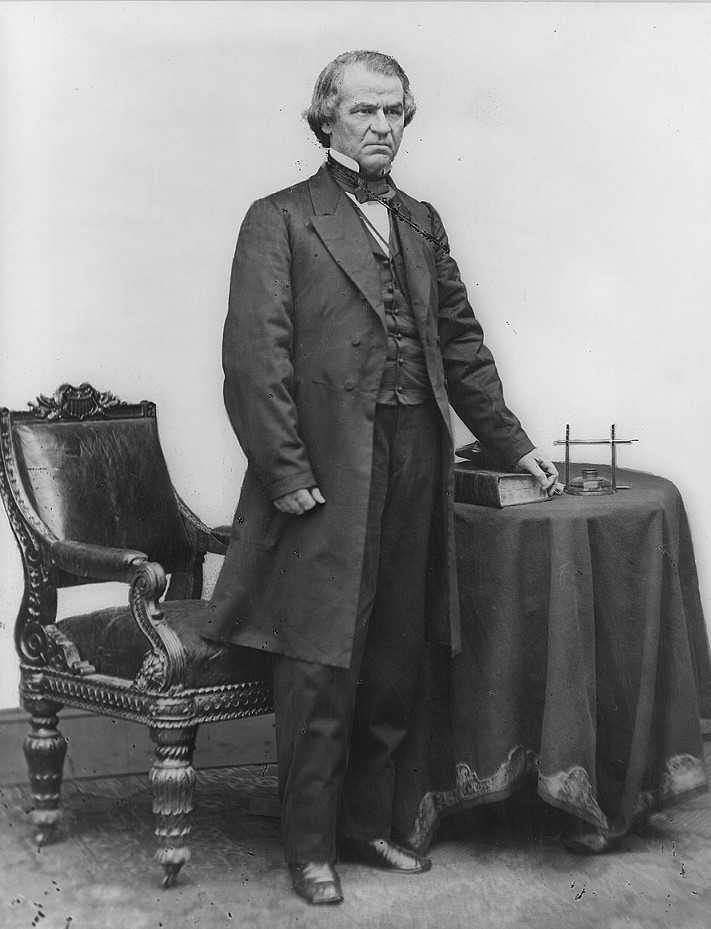
U.S. President Andrew Johnson, circa 1865 (Matthew Brady, U.S. Library of Congress, public domain).

With the American Civil War officially over, and the shock of his assassinated predecessor beginning to ease, U.S. President Andrew Johnson was now in charge of healing a divided, battered nation. According to historian Eric Foner, President Johnson “inaugurated the period of Presidential Reconstruction (1865-67) in May of 1865.”

Johnson offered a pardon to all southern Whites except Confederate leaders and wealthy planters (although most of these subsequently received individual pardons), restoring their political rights and all property except for slaves. He also outlined how new state governments would be created.

In order to facilitate the rebuilding of those new local and state governments, President Johnson also made the decision to station federal troops in key locations throughout the nation’s southern and western states. Among the federal troops ordered to assist with the operations were members of the 47th Pennsylvania Volunteer Infantry (who were known by this time as the 47th Pennsylvania Veteran Volunteers).

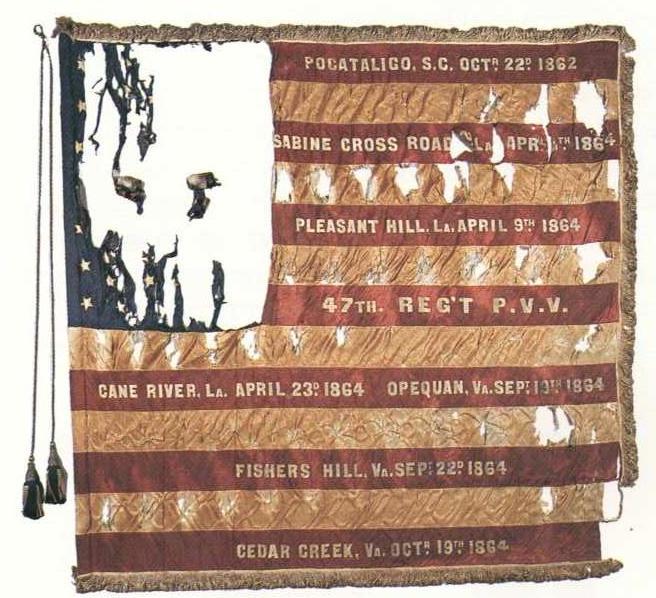
Second State Colors, 47th Pennsylvania Veteran Volunteers (presented to the regiment 7 March 1865).

A New Mission Begins

The Reconstruction Era for the 47th Pennsylvania Veteran Volunteers effectively began with the regiment’s departure for America’s Deep South on June 3, 1865, according to Assistant Regimental Surgeon John Young Shindel, M.D., who wrote these words on that day in history:

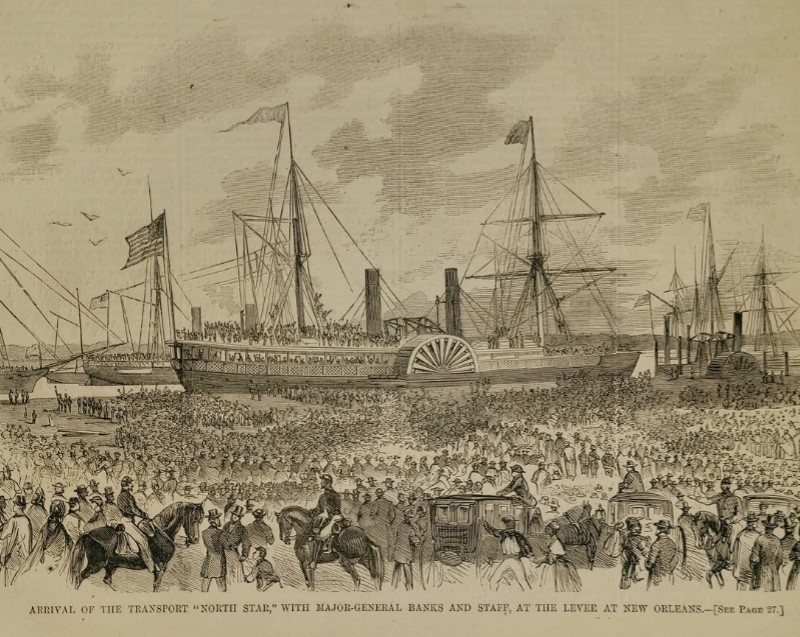
At about 10 o’clock, went on board the U.S.S. North Star…. Some of the Reg. went on Board the “Haze”. Dr. S. [and] Some on board the “Metis” from W. [Washington]. Started down the Potomac. Passed Mt. Vernon….

Reaching Fortress Monroe the next morning circa 11:00 a.m., the North Star continued south through the Atlantic Ocean and on to the waters off Cape Hatteras, North Carolina around 10:00 p.m. on June 4, according to Dr. Young. Suffering from seasickness the following day, he noted that his ship had already reached Cape Fear in North Carolina.

U.S.S. North Star, circa 1863 (Harper’s Weekly, January 10, 1863, public domain).

By Tuesday, June 6, the North Star had steamed to the mouth of the Savannah River, where it stopped, briefly, in order to allow a pilot to board. That pilot then moved the ship along the river, past Fort Pulaski, across the bar, and toward the harbor in the city of Savannah, Georgia, where it finally then dropped its anchor. The ship’s passengers were then directed to effect their transfer to smaller troop transports — the General Grant and the Oneita, according to Private Luther Horn of Company E. Those smaller steamers then took the 47th Pennsylvanians directly into the city. Upon their arrival at their designated landing spots at 4:00 a.m. the next morning (June 7), they disembarked, setting their feet on the soil of Georgia for the first time in the regiment’s history.

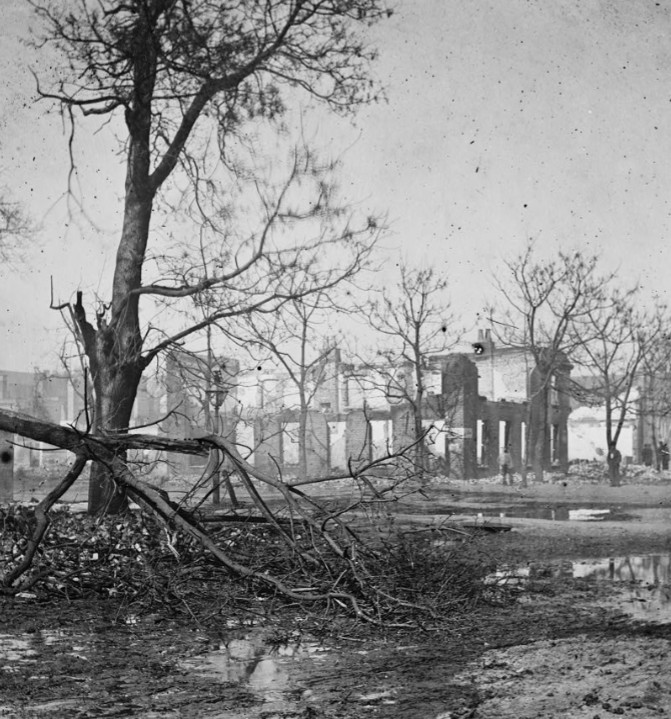
War-damaged houses in Savannah, Georgia, 1865 (Sam Cooley, U.S. Army, U.S. Library of Congress, public domain).

Using the next three hours to unload their equipment, they then lined up, by company, and stepped forward into their new mission at 7:30 a.m. Marching through the streets of Savannah, they headed one mile south, toward the city’s southern section, where they began erecting their Sibley tents.

* Note: Meanwhile, the steamships carrying the remaining 47th Pennsylvanians (the Metis and the Haze) were still en route. The Metis arrived later that day (June 7); the Haze arrived during the afternoon of June 8 with the members of Companies A, D, H, and I.

As the reunited 47th Pennsylvania Veteran Volunteers began settling in to their new routine, Regimental Orders, No. 67 directed members of Regimental Band No. 2 to practice between 9:00 and 10:00 every morning and perform every evening at 7:00 outside of the tent of the regiment’s commanding officer, Colonel John Peter Shindel Gobin.

On Friday, June 9, the entire regiment took part in a brigade parade. Five days later, Regimental Orders, No. 69 directed that “the first call for dress parade would be at 6 PM, and commanders were instructed to fall in their companies and drill them in the manual of arms until the second call at 6:30 PM,” according to regimental historian Lewis Schmidt. By mid-June the regiment was staffed by a total of eight hundred and sixty-three officers and enlisted men.

C Company’s Adam Maul and G Company’s Benjamin Neur, both privates, were subsequently detached to duties as clerks at the U.S. Department of the South’s headquarters. On June 21, Regimental Orders, No. 70 directed the captains of each company to “have their respective companies policed every morning and see that the tents and quarters of the men are properly ventilated and kept scrupulously clean, necessary for health,” adding that “one of the medical officers will inspect.”

Battling the elements once again, the 47th Pennsylvanians broke camp and relocated a short distance away — to drier ground — on Monday, June 26.

Confident in his regiment’s abilities to keep the peace, even as other Union Army regiments were receiving orders to depart from Georgia, leaving the 47th Pennsylvania with far less support, Colonel Gobin “requested permission from Maj. Wilkinson, AA Gen. of the District of Savannah, to turn in excess ordnance and ordnance stores” on June 27. The diplomacy phase of their new mission had begun.


Sources:

  1. Bates, Samuel P. History of Pennsylvania VolunteersVolunteers, 1861-5, vol. 1. Harrisburg, Pennsylvania: B. Singerly, State Printer, 1869.
  2. Civil War Muster Rolls (47th Pennsylvania Infantry). Harrisburg, Pennsylvania: Pennsylvania State Archives.
  3. Civil War Veterans’ Card File, 1861-1866 (47th Pennsylvania Infantry). Harrisburg, Pennsylvania: Pennsylvania State Archives.
  4. Foner, Eric. “Reconstruction.” Washington, D.C.: U.S. National Park Service, retrieved online June 3, 2025.
  5. “From Charleston and Savannah.” Pittsburgh, Pennsylvania: The Pittsburgh Daily Gazette, July 13, 1865.
  6. “From the South,” in “By Telegraph from Charleston.” Baraboo, Wisconsin: Baraboo Republic, July 19, 1865.
  7. “Savannah Intelligence.” Charleston, South Carolina: Charleston Daily Courier, July 4, 1865.
  8. Schmidt, Lewis. A Civil War History of the 47th Regiment of Pennsylvania Veteran Volunteers. Allentown, Pennsylvania: Self-published, 1986.
  9. Shindel, John Young. Diary and Personal Letters, 1865-1866. Allentown, Pennsylvania: Personal Collection of Lewis Schmidt.
  10. “The History of the Forty-Seventh Regt. P. V.” Allentown, Pennsylvania: The Lehigh Register, July 20, 1870.


Camp Brightwood, Washington, D.C.: Medical Issues and Personnel Changes (April-Early June 1865)

Spectators gather for the Grand Review of the Armies, 23-24 May 1865, beside the crepe-draped U.S. Capitol, flag at half-staff following the assassination of President Abraham Lincoln (U.S. Library of Congress, public domain).

Headquartered at Camp Brightwood in the Brightwood district of Washington, D.C.’s northwestern section since late April 1865, the 47th Pennsylvania Volunteers were attached to Dwight’s Division of the 2nd Brigade of the U.S. Department of Washington’s 22nd Corps. Their job was to prevent former Confederate States military troops and their sympathizers from reigniting the flames of civil war in the wake of U.S. President Abraham Lincoln’s assassination.

Multiple members of the regiment had only recently completed their detached duties as guards at the military prison where the key conspirators in their commander-in-chief’s murder were being held during their historic trial, and the regiment as a whole had just marched in the Union’s Grand Review of the National Armies on May 23.

Unidentified Union infantry regiment, Camp Brightwood, Washington, D.C., circa 1865 (public domain).

Now, as the majority of Union Army soldiers were being granted honorable discharges from the military, the 47th Pennsylvania Veteran Volunteers were hurriedly packing their belongings — but for transport to south, rather than back home. Meanwhile, as that frenzy of activity was unfolding, a “lucky few” of their comrades were being transferred to other federal military units, while others were receiving word that they would be honorably discharged via general orders that had been issued by the United States War Department — or by surgeons’ certificates of disability that had been approved by regimental or more senior ranking Union Army physicians.

Sergeant-Major William M. Hendricks, central regimental command, 47th Pennsylvania Volunteers, circa 1863 (public domain).

Among the more startling departures were those of First Lieutenant William M. Hendricks of Company C, Private William Kennedy of Company G, and Private Daniel Kochendarfer (alternate spellings: Kochenderfer, Kochendorfer) of Company H. First Lieutenant Hendricks had simply had his fill of military life and had resigned his commission on May 9, 1865 and Private Kennedy had died from phthisis at Mower General Hospital in Philadelphia, Pennsylvania on May 25, but Private Kochendarfer was ordered to remain behind for an entirely different reason — an arrest and conviction (the details of which remain murky to this day).

* Note: Having distinguished himself earlier in his career by nursing his sick and wounded comrades during their final moments of life in 1862, Private Daniel Kochendarfer was convicted during a court martial trial and sent to a federal military prison on June 1, 1865. He remained imprisoned there even as the 47th Pennsylvania Veteran Volunteer Infantry was mustering out for the final time on Christmas Day in 1865. Dishonorably discharged on March 7, 1866, he was never able to clear his name, despite petitioning the U.S. War Department for redress during the 1890s.

Medical Discharges

Other discharges that were issued to 47th Pennsylvanians at Camp Brightwood that spring were granted for entirely different reasons — physical or mental fitness for new duties that would require both brains and brawn. Among those deemed no longer fit to serve were:

  • Private George W. Lightfoot of Company G, who was transferred to Company I in the 24th Regiment of the U.S. Army’s Veteran Reserve Corps, which was also known as the “Invalid Corps” (April 25, 1865);
  • Private Joseph H. Schwab of Company F, who was honorably discharged on a surgeon’s certificate of disability (April 25, 1865);
  • Private William Leinberger of Company C, who was transferred to the 1st Battalion of the 21st Regiment of the Veteran Reserve Corps (April 28, 1865);
  • Private William M. Michael of Company C, who had been wounded in action during the Battle of Cedar Creek, Virginia on October 19, 1864 and was honorably discharged per General Orders, No. 77, issued by the Office of the U.S. Adjutant General (May 3, 1865);
  • Private William H. Guptill of Company G, who was honorably discharged on a surgeon’s certificate of disability (May 15, 1865);
  • Private Josiah D. Rabenold of Company B, who had been wounded in action during the Battle of Opequan, Virginia, also known as “Third Winchester,” on 19 September 1864, was treated by Union Army physicians and was honorably discharged (May 15, 1865);
  • Private Joseph Young of Company G, who had been hospitalized at a Union Army facility in Cumberland, Maryland and was honorably discharged on a surgeon’s certificate (May 17, 1865);
  • Private Charles Acher of Company K, who was honorably discharged on a surgeon’s certificate (May 19, 1865);
  • Private George P. Blain of Company C, who had been wounded in action during the Battle of Cedar Creek and was honorably discharged per General Orders, No. 77, issued by the Office of the U.S. Adjutant General (May 19, 1865);
  • Private Adam Lyddick of Company H, who had been severely wounded above the knee during the Battle of Cedar Creek, Virginia on October 19, 1864 and was honorably discharged on a surgeon’s certificate (May 19, 1865);
  • Private George Turpin of Company H, who had been hospitalized at the Union’s Mower General Hospital in Philadelphia (May 19, 1865);
  • Private Charles Buss of Company F, who had endured captivity as a prisoner of war (POW) at the Confederate Army’s prison camp near Tyler, Texas (Camp Ford) until his release on January 1, 1865 and was honorably discharged on a surgeon’s certificate (May 25, 1865);
  • Private Joel Michael of Company F was honorably discharged on a surgeon’s certificate (May 25, 1865);
  • Private Allen L. Kramer of Company B, who was wounded in action during the Battle of Creek, was treated at a Union Army General Hospital in Philadelphia and was honorably discharged on a surgeon’s certificate (May 26, 1865);
  • Private Charles F. Stuart of Company C, who had endured captivity as a POW at a Confederate Army prisoner of war camp until his release on 4 March 1865 and was honorably discharged (May 29, 1865);
  • Private Daniel S. Crawford of Company A, whose leg had been amputated to save his life after being wounded during the Battle of Cedar Creek and was honorably discharged on a surgeon’s certificate (May 31, 1865);
  • Private Michael Fitzgibbon of Company I, who was initially alleged to have deserted from Camp Brightwood, but had, in reality, been receiving treatment for malaria from Union Army physicians and was honorably discharged (May 31, 1865);
  • Private Lewis Brong of Company B, who had developed a chronic medical condition during Sheridan’s 1864 Shenandoah Valley Campaign and was honorably discharged per General Orders, No. 53, issued by the U.S. War Department (June 1, 1865);
  • Regimental Quartermaster Francis Z. Heebner, who had endured captivity as a POW at a Confederate Army officers’ prison in Richmond or Danville, Virginia until his release in late February 1865 and was honorably discharged (June 1, 1865);
  • Private Jenkin J. Richards of Company E, who had been hospitalized at the Union’s Fairfax Seminary Hospital in Fairfax, Virginia and was honorably discharged on a surgeon’s certificate (June 3, 1865);
  • Private Augustus Deitz/Dietzof Company H, who had been hospitalized in Washington, D.C. and was honorably discharged on a surgeon’s certificate (June 6, 1865); and
  • Private Andrew Mehaffie of Company D, who had also been wounded during the Battle of Cedar Creek and was also honorably discharged on a surgeon’s certificate (June 9, 1865).

Honorable Discharge by General Orders

Per General Orders, No. 53 or General Orders, No. 272, the more able-bodied 47th Pennsylvanians mustering out at Camp Brightwood were:

  • Private Richard Ambrum (Company G, June 1, 1865);
  • Private George W. Baltozer (Company D, June 14, 1865);
  • Private William H. Barber (Company K, June 1, 1865);
  • Sergeant Samuel H. Barnes (Company E, June 1, 1865);
  • Private Alfred Biege (Company F, June 1, 1865);
  • Private David K. Bills (Company A, June 1, 1865);
  • Private Tilghman Boger (Company K, June 1, 1865);
  • Private David Buskirk (Company G, May 26, 1865);
  • Private William Christ (Company F, June 1, 1865);
  • Private Michael Deibert (Company F, June 1, 1865);
  • Private George Diehl (Company B, May 23, 1865);
  • Private William Earhart (Company D, June 1, 1865);
  • Corporal William H. Eichman (Company E, June 1, 1865);
  • Private Milton A. Engleman (Company G, June 1, 1865);
  • Private George Felger (Company E, June 1, 1865);
  • Private Isaac Fleishhower (Company A, May 19, 1865);
  • Private William Fowler (Company E, June 1, 1865);
  • Private Charles H. Frey (Company E, June 1, 1865);
  • Musician and Private James A. Gaumer (Regimental Band No. 2 and Company G, June 1, 1865);
  • Private Solomon Gildner (Company A, June 1, 1865);
  • Private Benedict Glichler (Company K, May 19, 1865);
  • Sergeant John W. Glick (Company G, June 1, 1865);
  • Private Solomon Gross (Company I, June 2, 1865);
  • Private Emanuel Guera (Company H, June 19, 1865);
  • Private James Hall (Company H, June 1, 1865);
  • Privates Adam and Jacob Hammaker (Company H, June 1, 1865);
  • Private William George Harper (Company D, June 1, 1865);
  • Private William P. Heller (Company K, June 1, 1865);
  • Private Henry Henn (Company G, May 15, 1865);
  • Corporal George K. Hepler (Company C, June 1, 1865);
  • Privates Levinus and Solomon Hillegass (Company G, June 1, 1865);
  • Regimental Quartermaster Sergeant Henry J. Hornbeck (June 1, 1865);
  • Private Ananias Horting (Company H, June 1, 1865);
  • Private Daniel Houser (Company E, June 1, 1865);
  • Private Joseph Hausman (Company B, June 1, 1865);
  • Corporal Benjamin Huntzberger/Hunsberger (Company I, June 2, 1865);
  • Private Abraham F. Keim (Company D, May 23 or 28, 1865);
  • Musician Simon P. Kieffer (Company F, June 1, 1865);
  • Private Charles King (Company F, June 1, 1865);
  • Private David F. Knerr (Company I, June 1, 1865);
  • Corporal Daniel J. Kramer (Company I, June 1, 1865);
  • Private William H. Kramer (Company G, June 1, 1865);
  • Private John J. Lawall (Company I, June 1, 1865);
  • Private James Lay (Company H, June 1, 1865);
  • Private William Leiby (Company G, June 1, 1865);
  • Private George W. Levers (Company E, June 1, 1865);
  • Private John F. Liddick (aka John Liddick 2 and John Liddick 3 per Bates’ History of Pennsylvania Volunteers, Company H, June 1, 1865);
  • Private William H. Liddick (Company H, June 1, 1865);
  • Private James T. Lilly (Company F, May 31, 1865);
  • Private August Loeffelman (Company A, June 1, 1865);
  • Private George Malick (Company C, June 1, 1865);
  • Private Jesse Moyer (Company I, June 1, 1865);
  • Private Aamon Myers (Company D, June 1, 1865);
  • Private William Noll (Company K, June 1, 1865);
  • Private Thomas H. O’Donald (Company A, May 5, 1865);
  • Private Andrew J. Osmun (Company B, June 1, 1865);
  • Private Abraham Osterstock (Company A, May 5, 1865);
  • Private Jacob Paulus (Company A, June 1, 1865);
  • Private Washington A. Power (Company D, June 1, 1865);
  • Private Israel Reinhard (Company G, June 1, 1865);
  • Private Edward Remaly (Company F, June 1, 1865);
  • Corporal Allen J. Reinhard (Company B, June 1, 1865);
  • Private Henry Rinek (Company E, June 1, 1865);
  • Private Charles Rohrbacher (Company F, June 1, 1865);
  • Private Steven Schechterly (Company I, June 1, 1865);
  • Private Lewis Schmohl (Company A, June 1, 1865);
  • Private Joseph Benson Shaver (Company D, June 1, 1865);
  • Private Peter Shireman (Company F, June 1, 1865);
  • Private Franklin Sieger (Company B, June 1, 1865);
  • Private Samuel H. Smith (Company I, June 1, 1865);
  • Private John G. Snyder (Company F, June 1, 1865);
  • Private Erwin S. Stahler (Company G, June 1, 1865);
  • Private H. Stoutsaberger (Company H, June 1, 1865);
  • George Stroop (Captain, Company D, June 2, 1865);
  • Private Charles Stump (Company A, May 15, 1865);
  • Private George Sweger (Company H, June 1, 1865);
  • Private Samuel Transue, (Company E, June 1, 1865);
  • Private Israel Troxell (Company I, June 1, 1865);
  • Private Oliver Van Billiard (Company B, May 26, 1865);
  • Corporal Walter H. Van Dyke (Company F, June 1, 1865);
  • Corporal William M. Wallace (Company H, June 1, 1865);
  • Private Daniel H. Wannamaker/Wannermaker (Company I, June 1, 1865);
  • Private Cornelius Wenrich/Wenrick (Company C, June 6, 1865);
  • Corporal Solomon Wieder (Company G, June 1, 1865);
  • Private Andrew J. Williams (Company D, June 1, 1865);
  • Private Franklin H. Wilson (Company F, June 1, 1865);
  • and Private Daniel S. Zook (Company D, May 17, 1865).

Peacekeeping and Reconstruction

War-damaged houses in Savannah, Georgia, 1865 (Sam Cooley, U.S. Army, U.S. Library of Congress, public domain).

As spring gave way to summer, the new mission of the 47th Pennsylvania Veteran Volunteer Infantry would be to keep the peace across the United States of America’s Deep South while helping to rebuild shattered communities and restore local government operations during what has since become known as the Reconstruction Era. They arrived at their first new duty station (Savannah, Georgia) during the first week of June in 1865. Promotions during the Camp Brightwood and Reconstruction periods of duty were awarded to:

  • Adams, William (Company E): From corporal to sergeant, May 1865;
  • Brown, Amos T. (Company H): From private to corporal, June 2, 1865;
  • Bush, James M. (Company F): From private to corporal, April 25, 1865;
  • Clay, George W. (Company D): From second lieutenant to first lieutenant, June 2, 1865);
  • Cunningham, Robert (Company F): From private to corporal, June 2, 1865;
  • Dennis, Henry T. (Company G): From sergeant to first sergeant, May 14, 1865;
  • Eisenhard, John H. (Company B): From private to corporal, April 21, 1865;
  • Haltiman, William H. (Company I): From first sergeant to second lieutenant, May 27, 1865;
  • Hartzell, Israel Frank (Company I): From private to corporal, June 2, 1865;
  • Hettinger, Stephen (Company I): From private to corporal, June 2, 1865;
  • Hinckle, Willam H. (Company K): From private to corporal April 21, 1865;
  • Jacoby, Moses (Company E): From private to corporal, June 2, 1865;
  • Jones, John L. (Company F): From corporal to sergeant, June 2, 1865);
  • Kosier, George (Company D: From first lieutenant to captain, June 1, 1865);
  • Kuder, Owen (Company I): From private to corporal, June 2, 1865;
  • Lawall, Allen D. (Company I): From second to first lieutenant, May 30, 1865;
  • Lilly, Joseph M. (Company F): From corporal to sergeant, April 21, 1865;
  • Mayers, William H. (Company I, alternate surname spellings: Mayer, Meyers, Moyers; listed in Bates’ History of Pennsylvania Volunteers as “William H. Moyers I”): From sergeant to first sergeant, May 27, 1865;
  • Mink, Theodore (Company I): From first lieutenant to captain, May 22, 1865;
  • Moser, Owen (Company E): From private to corporal, May 27, 1865;
  • O’Brien, Martin (Company F): From private to corporal, April 25, 1865;
  • Rader, Reuben E. (Company A): From private to corporal, May 14, 1865;
  • Rockafellow, William (Company E): From corporal to sergeant, June 2, 1865;
  • Seneff, Henry (Company C): From private to corporal, April 22 1865;
  • Small, Charles H. (Company H): From company private to regimental quartermaster sergeant, June 2, 1865;
  • Stuber, Levi (Company I): From company captain to regimental major and third-in-command, May 22, 1865;
  • Walton, John F. (Company E): From private to corporal, May 1, 1865; and
  • Weise, Henry C. (Company H): From private to corporal, June 2, 1865.

Sadly, while all of those advancements in rank were occurring, Private Allen Faber of Company A, was fighting a battle that he was destined to lose. Still hospitalized for treatment of rheumatic carditis at the Union’s Harewood General Hospital in Washingon, D.C, he finally succumbed there to complications from his condition on June 7, 1865, and was subsequently interred with military honors at the Arlington National Cemetery in Arlington, Virginia.


Sources:

  1. Bates, Samuel P. History of Pennsylvania Volunteers, 1861-5, vol. 1. Harrisburg, Pennsylvania: B. Singerly, State Printer, 1869.
  2. “Battleground National Cemetery: Battleround to Community — Brightwood Heritage Trail,” “Fort Stevens” and “Mayor Emery and the Union Army.” United States: Historical Marker Database, retrieved online May 20, 2025.
  3. “Battleground to Community: Brightwood Heritage Trail.” Washington, D.C.: Cultural Tourism DC, 2008.
  4. Civil War Muster Rolls (47th Pennsylvania Infantry). Harrisburg, Pennsylvania: Pennsylvania State Archives.
  5. Civil War Veterans’ Card File, 1861-1866 (47th Pennsylvania Infantry). Harrisburg, Pennsylvania: Pennsylvania State Archives.
  6. “Our Returned Prisoners: Names of 500 Released Officers Sent to Annapolis.” New York, New York: The New York Times, February 28, 1865.
  7. Schmidt, Lewis. A Civil War History of the 47th Regiment of Pennsylvania Veteran Volunteers. Allentown, Pennsylvania: Self-published, 1986.
  8. “The History of the Forty-Seventh Regt. P. V.” Allentown, Pennsylvania: The Lehigh Register, 20 July 1870.


Through the Eyes of a Captain: The Sights, Sounds and Side Effects of the Battle of Pocotaligo, South Carolina

Captain John Peter Shindel Gobin, Company C, 47th Pennsylvania Volunteers, circa 1863 (public domain).

Five days after the Battle of Pocotaligo was waged on October 22, 1862 between Union and Confederate troops in South Carolina, Captain John Peter Shindel Gobin set pen to paper to document the events that had led up to and taken place that terrible day. His powerful account revealed a scale of carnage that shocked the readers of the November 15, 1862 edition of The Sunbury Gazette.

The commanding officer of the 47th Pennsylvania Volunteer Infantry’s color-bearer unit, Company C, Captain Gobin was a lawyer from Sunbury, Northumberland County who would later go on to command the entire regiment and, post-war, would be elected to the Pennsylvania State Senate and then as lieutenant governor of the Commonwealth of Pennsylvania. His account of this often overlooked American Civil War battle is one that merits the attention of historians because of the statistics and insights he shared with close friends.

Headquarters, Co. C, 47th Reg’t.,
Beaufort, S.C.,
Oct. 27, 1862

Dear Friends:–For the first time since our terrible engagement on the main land, I find time to write you an account of the affair. As my last informed you, during the St. John’s Expedition, I contracted the intermittent fever, and on my arrival here, was placed in the officers’ hospital.–Good nursing and an abundance of quinine, however, soon placed me on my feet, and on Monday, the 20th, I went to camp well, but still weak. On Tuesday morning our regiment received orders for six hundred men to embark on a Transport, with two days’ rations, at 1 o’clock P.M. I selected sixty men, and embarked. Our destination was unknown, although it was the general opinion that it was the Charleston and Savannah Railroad bridges. We steamed down the river, and were all advised by Gen. Brennan [sic, Brannan], who was on the boat with our regiment, to get as much sleep as possible. I sought my berth, and when I awoke next morning, found we were in the Broad River, opposite Mackay’s Point. A detachment of the 4th New Hampshire, sent on shore to capture the enemy’s pickets, having failed, we were ordered to disembark immediately. Eight Companies of our regiment, (the other two being on another Transport) were gotten [ready], and at once took up the line of march. After about three miles, we came in sight of the pickets, when we halted until joined by the 55th Pennsylvania, 6th Connecticut, and one section of the 1st U.S. Artillery. We were again ordered forward–a few of the enemy’s cavalry slowly retiring before us, until we reached a place known as Caston, where two pieces of artillery, supported by cavalry, were discovered in position in the road.–They fired two shells at us, which went wide.

While our artillery ran to the front and unlimbered, our regiment was ordered forward at double quick. The enemy however left after receiving one round from our artillery, which killed one of their men. We followed them closely for about two miles, when we found their battery of six pieces, posted in a strong position at the edge of a wood, supported by infantry and cavalry. They opened upon us immdiately, which was replied to by our artillery, posted in the road. This road ran through a sweet potato field, covered with vines and brush. Our regiment was thrown in mass and deployed on my company [Company C], which brought my right in the road. We were ordered to charge, and with a yell the men went in. We had scarcely taken a dozen steps before we were greeted with a shower of round shot and shell from the enemy’s artillery. A round shot stuck the ground fairly in front of me, covering me with sand, bounding to the right and killing the third man in the company to my right. It was followed by a shell, that gave us another shower of sand, and flew between the legs of Corporal Keefer, the man on my left, tearing his pantaloons, striking his file coverer, Billington, on the knee, and glancing and striking a man named Gensemer on Billington’s left, and bringing them to the ground, but fortunately failing to explode. Almost at the same instant Jeremiah Haas and Jno. Barlow were struck, the former in the face and breast by a piece of shell, the latter through the leg by a cannister shot. The shower we received here was terrific. Nothing daunted, on they rushed for the battery, but it was almost impossible to get through the weeds and vines. When within a hundred yards the enemy limbered up, and retreated through the woods. We followed as rapidly as possible, but we had scarcely entered the woods, when we were again greeted with a terrific storm of shell, grape and cannister from a new position, on the other side of the woods.

Samuel Y. Haupt, 47th Pennsylvania Volunteers (circa 1863, public domain).

Ordering my men to keep to the right of the road, we pushed forward through a wood almost impenetrable. We were at times obliged to crawl on our hands and knees.–In the meantime the enemy’s infantry opened upon us, and assisted in raking the woods. Sergeant Haupt [sic, Peter Haupt] here received his wound. When at length we pushed through, we found ourselves separated from the enemy by an impassable swamp, about one hundred yards in width. The only means of getting over was by a narrow causeway of about twelve feet in width. Seeing this, our regiment fell back to the edge of the woods, lay down and engaged the enemy’s infantry opposite us. In the meantime two howitzers from the Wabash, [that] had been placed in position in the rear of the woods, commenced shelling the enemy, whose artillery, was on the right of the road on the opposite side of the swamp. The latter replied, the shells of both parties passing over us. Our situation was extremely critical. Exposed to the cross-fire of the contending artillery and the infantry in the front, with the limbs and tops of trees falling on and around us, it was indeed a position I never want to be placed in again.–Here Peter Wolf while endeavoring, in company with Sergeant Brosious, Corp. S. Y. Haupt and Isaac Kembel, to pick off some artillerymen, received two balls and fell dead. I had him carried five miles and buried by the side of the road. Corp. S. Y. Haupt, had the stock of his rifle shattered by a rifle ball, that embedded itself.

In about twenty minutes the fire became too hot for them, and they again “skedaddled“ just as Gen. Terry’s Brigade, 75th Pennsylvania, in advance, were ordered up to relieve us. They followed them up rapidly, until they arrived at Pocotaligo creek, over which the rebels crossed, and tore up the bridge, and ensconced themselves behind their breastworks and in their rifle pits.–We were again ordered forward, deployed to the right, and advanced to the bank of the creek, or marsh, which was fringed by woods. We lay a short time supporting the 7th Connecticut, when their ammunition became expended, and we took the front. Here occurred the most desperate fighting of the day. The enemy were reinforced by the 26th South Carolina, which came upon the breastworks with a rush. We gave them a volley that sent them staggering, but they formed in the rear of the first line, and the two poured into us one of the most scathing, withering fires ever endured. Added to it, their artillery commenced throwing grape and cannister amongst us, but we soon drove the artillerymen from their guns, and silenced them. The colors on the left of my company attracting a very heavy fire, I ordered the Sergeant to wrap them up.–This caused quite a yell among the Confederates, but we soon changed their tune.–We fired until our ammunition was nearly expended, when we ceased. This caused the enemy’s artillery to open upon us, while the musketry continued with redoubled energy. Eight men of my company fell at this last fight. We held our position, unsupported, until dark, when we were ordered to fall back. We did so and covered the retreat. We were the first regiment in the fight, and last out of it. Our men fought like veterans, and did fearful execution among the enemy. Our loss was very heavy, losing one hundred and twelve men out of six hundred. I detailed my entire company to carry their dead and wounded comrades to the boat, which I did not reach until 4 o’clock A.M., bringing with me the last man, Billington. In consequence of having no stretchers or ambulances, we were compelled to carry our wounded in blankets. They were, however, all taken good care of.

Although we did not succeed in burning the bridge, yet we were not defeated. We drove the enemy five miles, compelling him to leave a number of his dead and wounded on the field. We captured two caissons, and a number of prisoners, and were only prevented from capturing or scattering the whole force by the destruction of the bridge over Pocotaligo creek, and their immense reinforcements. I shall never forget the sound of those locomotive whistles in my life. Gen. Beauregard commanded the rebels.

My men fought as men accustomed to it all their life. Nothing could exceed their valor. In addition to the loss in my own company, of the color guard, composed of Corporals from other companies attached to it, all but two were struck. Every man seemed determined to win.

My loss is as follows:–Killed–PeterWolf, Sunbury, Pa.; George Harner [sic, Horner], Upper Mahanoy; Seth Deibert, Lehigh county.–Wounded, Sergeant Peter Haupt, Sunbury, Pa., cannister shot through foot; will save the foot; Corporal Samuel Y. Haupt, rifle shot on chin; will be ready for duty in a week. His rifle was struck with a piece of shell, and after shattered by rifle ball. Corporal William Finck, near Milton; rifle shot through leg–amputation not necessary; private S. H. Billington, Sunbury, struck on knee by shell; will save the leg; private John Bartlow, cannister shot through leg; will save the leg; private Jeremiah Haas, struck in face and breast by piece of shell; will soon be well; private Conrad Halman [sic, Holman], Juniata county, shot in face by rifle ball–teeth all gone; will recover; private Theodore Kiehl, struck in the mouth by a rifle ball; lower jaw shattered, but will recover; Charles Leffler [sic, Lefler], Lehigh county, rifle shot through leg–will recover without amputation; Michael Larkins [sic, Larkin], Lehigh county, wounded in side and hip in a hand to hand fight with a mounted officer; killed the officer and captured his horse; able to be about; Thomas Lothard, Pittston, Pa., grape shot through right side; will recover; Richard O’Rourke, Juniata county; rifle ball through right side, will recover; James R. Rine [sic, Rhine], Juniata county, struck on leg by round shot–not serious.

Killed ………… 3
Wounded …. 13
Total ……….. 16

This being over one-fourth of the number engaged, I think, is pretty heavy. However I think most of the wounded will be fit for duty again. They are all comfortable and well cared for. None of their wounds will, from present appearances, prove mortal. I will write again in a few days. With love to all, I remain

Yours, J. P. S. G. 

*Note: Captain Gobin’s assessment of his wounded men was, unfortunately, overly optimistic with respect to Sergeant Peter Haupt. While undergoing treatment at a Union Army hospital, Sergeant Haupt developed traumatic tetanus–a direct cause of the lead injected into his system by the cannister shot that had felled him. He subsequently died from tetanus a related lockjaw.


Sources: 

  1. “Army Correspondence.” Sunbury, Pennsylvania: The Sunbury Gazette, November 15, 1862.
  2. Haupt, Peter, in U.S. Registers of Deaths of Volunteer Soldiers, October 1862. Washington, D.C.: U.S. National Archives and Records Administration.