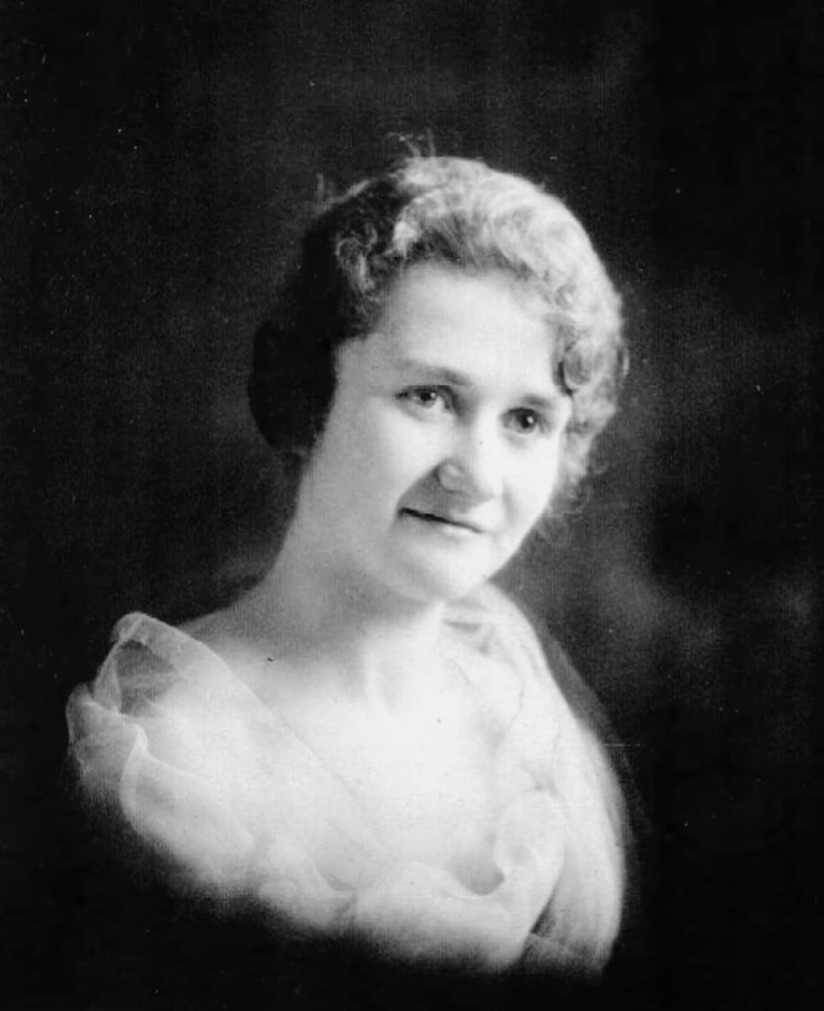
H. Corrine Snyder, Schuylkill County, Pennsylvania, circa 1930s. (© Snyder Family Archives. All rights reserved.)
A granddaughter of a twice-wounded veteran of the American Civil War and the second-born daughter of a pioneer in the American telephone industry, Helen Corrine Snyder was a twentieth-century success story.
Born nearly two years after the dawn of a new century, she arrived during an era in which medical care providers across the United States routinely failed to address the dangers faced by women during pregnancy and the shockingly high infant mortality rates which persisted well into that new century, and which still, sadly, are failing to be addressed in many parts of America in the twenty-first century. According to the late American demographer Ben Wattenberg, in 1900, “more than one of six American infants … died before the age of one, and mothers were 100 times more likely to die in childbirth than they were” in the year 2000.
But H. Corrine Snyder’s mother was a survivor who made sure that her two first-born daughters would be survivors, too. Women of great faith, both were members of the Christ Evangelical Congregational Church in the Village of Lavelle in Schuylkill County, Pennsylvania, where meetings were often held by a local chapter of the Woman’s Christian Temperance Union (WCTU), one of the first organizations in the United States to focus on social justice issues, including the widespread abstention from alcohol and drug use to reduce domestic violence and other forms of violence against women and children, the creation of kindergarten classes in public schools, the establishment of eight-hour work days and a system of equal pay for equal work, health and safety protections for consumers of food, beverages and medicines, and prison reform.
A working woman during a time when women rarely worked outside of their homes, Corrine Snyder became a trusted “bean counter” who could be relied upon by business executives to keep their financial records accurate and up to date.
Formative Years
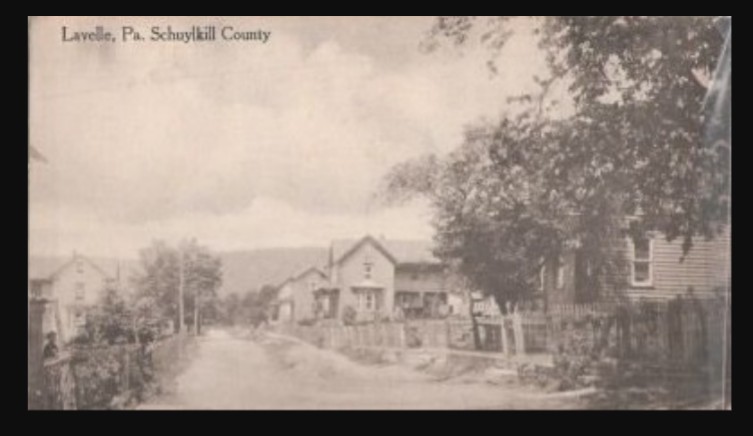
Main Street, Village of Lavelle, Schuylkill County, Pennsylvania, circa 1900 (public domain).
Born as Helen Corrine Snyder in the Village of Lavelle, Schuylkill County, Pennsylvania on 6 September 1901, H. Corrine Snyder was the second oldest daughter and third oldest child of John Hartranft Snyder and Minnie Rebecka (Strohecker) Snyder. Her mother, Minnie, was the daughter of Samuel and Annie (Troutman) Strohecker, of Gordon, Schuylkill County. Her father, John, was the son of American Civil War veteran Timothy Matthias Snyder, who had served with the 47th Pennsylvania Volunteer Infantry, and Catharine (Boyer) Snyder.
* Note: H. Corrine Snyder also decended from American Revolutionary War Patriot Johann Nicholas Schneider, according to a membership application that was filed by by Corrine’s younger brother, John Sylvester Snyder, and later approved by the National Society of the Sons of the American Revolution during the 1940s.
Although born with the given name of “Helen,” she disliked that name, and gradually began calling herself “H. Corrine Snyder,” a name she would come to use for business purposes as an adult. Family and friends knew her as “Corrine.” Those closest to her called her “Eenie.”
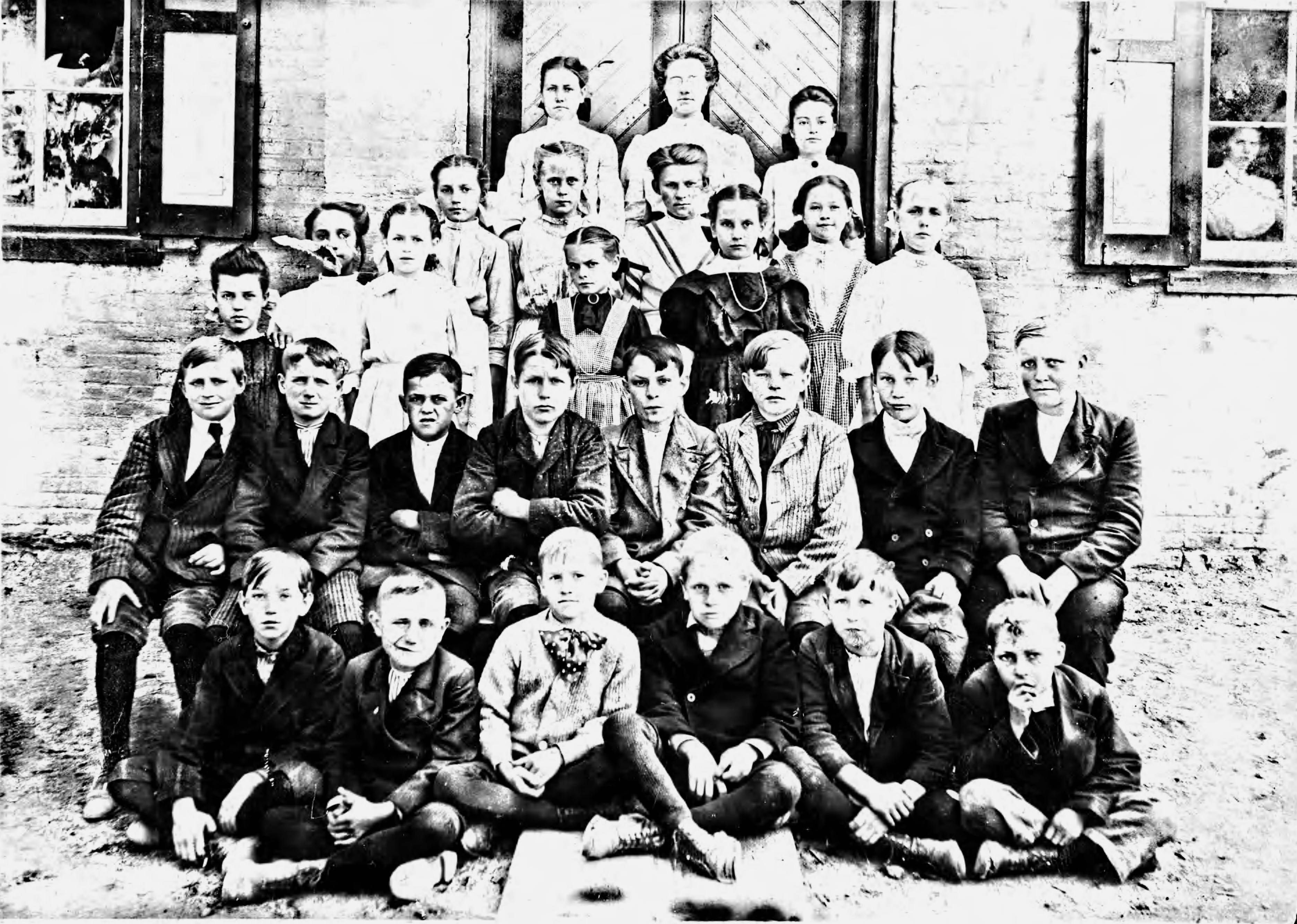
Siblings Timothy P. Snyder (row two, first from left) and Nona M. Snyder (row three, third from left), Lavelle School, Village of Lavelle, Schuylkill County, Pennsylvania, circa 1908-1910 (U.S. Library of Congress, public domain).
During the early 1900s, H. Corrine Snyder attended the Lavelle School in Lavelle with her older siblings, Timothy Peter Snyder (1898-1913) and Nona Mae Snyder (1900-1987). Both had been born at the Snyder family home on Main Street in Lavelle, with Tim having been born roughly two years before the end of the previous century, on 1 May 1898, and Nona having been born shortly after the dawn of the twentieth, on 29 January 1900.
Also attending the Lavelle School with them were their Lavelle-born younger siblings: John Sylvester Snyder (1904-1969), who was born on 2 May 1904 and would go on to become a construction manager with McKinney Construction in Northumberland County and then Portland Cement in Allentown, Lehigh County, Pennsylvania; and Catharine Rebecka Snyder (1906-1995), who was born on 25 August 1906 and would go on to become an executive assistant with the New Holland Company and marry businessman Charles F. Courtney (1900-1950). Several of their cousins also attended the same school.
In 1908, the Snyder siblings welcomed the birth of another sister, Lillian Estelle Snyder (1908-2001), on 30 September 1908. She would go on to become a head nurse at Peter Bent Brigham Hospital in Boston, Massachusetts and a clinical nursing instructor at the Allentown Hospital School of Nursing before working for the pharmaceutical company Merck Sharpe & Dohme in Baltimore, Maryland.
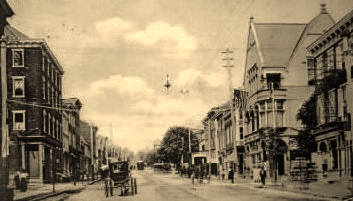
Horse and buggy drivers pass new telephone poles on Ashland, Pennsylvania’s West Centre Street (early 1900s, public domain).
Around this same time, the family’s patriarch, John Hartranft Snyder, co-founded the Lavelle Telegraph and Telephone Company, which was officially incorporated in 1908. John H. Snyder was subsequently credited with installing the first telephone lines in the Lavelle Valley, as well as in rural areas south of the city of Ashland in Schuylkill County. During the firm’s early days, its main communications center was based at the Snyder family home on Main Street in Lavelle.
In addition to John H. Snyder’s involvement with the Lavelle Telegraph and Telephone Company, John Snyder’s wife, Minnie, and their oldest children operated a dry goods store from the ground floor of the Snyder family home in Lavelle, which was located directly across from the Lavelle School.
By 1910, the increasingly prosperous Snyder family was welcoming the arrival of another child–Chester Hartranft Snyder (1910-1983). Born on 17 October 1910, he would ultimately grow up to become an insurance company executive.
But that progress would be abruptly halted when the Snyders experienced the first of two tragedies. In 1911, the Snyder family home in Lavelle was destroyed by fire. The family members subsequently rebuilt their home at the same site on Main Street, but were required to relocate to Ashland during the construction. As a result, the family underwent several years of hardship.
A Heartbreaking End
As if that devastating fire had not been tragic enough, Corrine’s older brother, Timothy P. Snyder, was critically injured two years later during a coal mining-related accident. Just nine days shy of his fifteenth birthday, he fell from a coal train while working as a laborer at the Potts Colliery in Locustdale, Schuylkill County on 22 April 1913. The train, which was in motion at the time, ran over his legs. His battered body was taken from the colliery to the Ashland Hospital in Ashland, but he died while en route, at 2:30 that same afternoon.
Snyder family records and oral histories confirm that the teenaged Timothy P. Snyder had taken a man-sized job at the colliery to help his family meet ends during the rebuilding of their home following the 1911 fire. He remains at rest with his parents, John Hartranft Snyder and Minnie Rebecka (Strohecker) Snyder, at the Snyder family plot at the Citizens’ Cemetery in Lavelle, Pennsylvania.
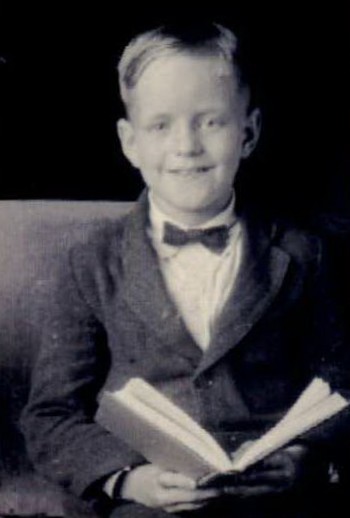
Willard Emery Snyder, shown here at the age of nine in 1926, gave Corrine Snyder the nickname of “Eenie.” (© Snyder Family Archives. All rights reserved.)
Roughly four years later, the final Snyder sibling–Willard Emery Snyder (1917-1972)–was born in Lavelle on 31 July 1917. Like his father before him, Willard E. Snyder would have a long relationship with the telephone industry. He would also have a close bond with Corrine Snyder for more than half a century because she was largely responsible for helping to raise him while her parents managed the Snyder family’s businesses and kept the family afloat during an increasingly challenging economy.
It was Willard, in fact, who created Corrine’s nickname. Unable to pronounce her name (“KO-reen’) correctly as a toddler, he called her “Eenie,” and it stuck, becoming a beloved moniker for a much-beloved sister and aunt.
On 8 August 1918, the Snyder siblings’ paternal grandmother, Catharine (Boyer) Snyder, the widow of American Civil War veteran Timothy Matthias Snyder, died at her home at 1131 Church Street in Reading, Pennsylvania. In her late sixties at the time of her death from complications related to pulmonary tuberculosis, Catharine’s remains were transported to the Brock Cemetery in Ashland, Schuylkill County, for burial beside her husband on 11 August.
Perseverance in the Face of Adversity
As a chief stockholder and secretary of the Lavelle Telegraph and Telephone Company, Snyder family patriarch John Hartranft Snyder continued to manage the firm’s expansion throughout the teen and early adult years of the older Snyder siblings.
By 1920, Eenie Snyder was still residing at home in Lavelle with her parents. Also residing at the Snyders’ home were her siblings: Nona, John S., Catharine R., Lillian E., Chester H., and Willard E. Snyder. According to that year’s federal census, Nona was a nineteen-year-old “Saleslady” in a “Clothing Store,” and was the only one of her siblings working that year. Their father, John H. Snyder, was described as a “Carpenter” who was employed in the “Coal Mines.” All of the Snyder children, except for Willard (but including Nona), were described as having attended school since the beginning of that school year.
That same year, the Snyder sisters’ mother and aunts, as well as other women across the United States of America who were twenty-one years of age or older, were granted the right to vote, following the ratification of the Nineteenth Amendment to the United States Constitution on 18 August 1920.
By 1926, Corrine and Catharine R. Snyder had moved out of the Snyder family home in Lavelle and had relocated to the city of Reading in neighboring Berks County, Pennsylvania. On 26 August of that year, Reading newspapers were reporting that “Miss Nona Snyder, of Lavelle,” was “spending time with her sisters, Misses Kitty and Corrine, of Bethany Church, Reading.” Both Kitty and Corrine were living together in an apartment at 1037 North 4th Street in Reading. Corrine was employed as a bookkeeper, while Catharine, who was also known to her family as “Kitty” or “Kit,” worked as a stenographer.
By the winter of 1927, their younger sister, Lillian, had also moved out of the Snyder family home in Lavelle. Enrolled in the Reading Hospital School of Nursing on 5 February 1927, she resided in Reading with Corrine and Catharine at their apartment. Following her graduation on 9 May 1929, Lillian then pursued additional training at the same nursing school, and was also appointed to the faculty of the Reading Hospital School of Nursing as a nursing instructor.
And then another unfathomable tragedy struck. On 28 October 1929, the Dow Jones (America’s stock market) suffered a thirteen percent loss, followed by a twelve percent decline the next day, sparking a worldwide financial disaster that would ultimately come to be known as the Great Depression. “By mid-November, the Dow had lost almost half its value,” according to historians at the United States Federal Reserve.
The slide continued through the summer of 1932, when the Dow closed at 41.22, its lowest value of the twentieth century, 89 percent below its peak. The Dow did not return to its pre-crash heights until November 1954.
Still single and still residing with her parents in Lavelle as of 1930, Nona Snyder was described by that year’s federal census enumerator as not working, like so many other Americans, while her younger brother, John Sylvester Snyder, who was also still living at home, was described as a laborer at a lumber company. Their twelve-year-old brother, Willard, who was also living with them, was still a student at a public school in their county. Their father, John H. Snyder, was also still working as a laborer at an area coal mine.
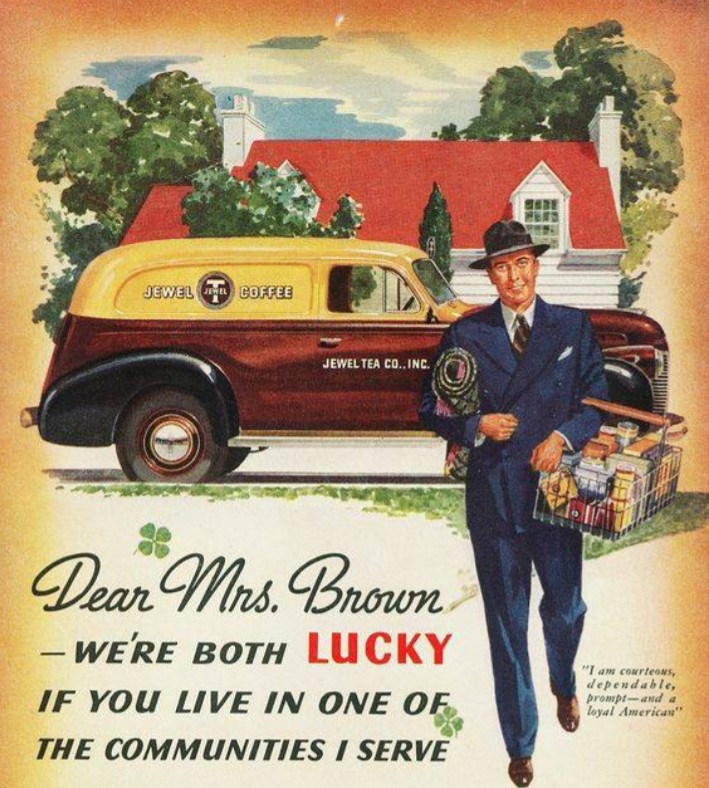
Jewel Tea Company advertisement, 1941 (public domain.
Eenie, Kit and Lillian, however, were still living and working in Reading. According to the 1930 federal census for the city of Reading’s Fourteenth Ward, they were lodgers residing at the home of sixty-seven-year-old widow Emma Beyerle, which was located at 807 North 5th Street. Eenie was a bookkeeper who worked for the Jewel Tea Company, the firm that would employ her for thirty-four years, while Lillian was confirmed to be a registered nurse. Kit was employed by an iron company as a stenographer. (Her 1936 application for a United States Social Security Number noted that she was an employee of the Reading Iron Company.)
* Note: The Jewel Tea Company employed a work force of door-to-door salesmen who traveled throughout their assigned territories, building a network of customers who purchased the company’s branded fresh coffee and tea, as well as other household goods from them (with the help of company catalogs). As adept as those salesmen were, though, what really propelled the company from start-up to business powerhouse, according to historian David Frew, were the premium gifts that housewives and other customers could earn if they became regular, loyal shoppers. “For every dollar that a customer spent at Jewel Tea, he or she received a coupon, which could be exchanged for special prizes that were listed in the Jewel Catalog.” As Jewel Tea grew, the company’s founder, Frank Skiff, “developed a partner relationship with Hull China and designed a special pattern that was molded into dishes, cups, and companion pieces like servers, pitchers, and platters.” That pattern was “Autumn Leaf,” and it is still highly prized by collectors today. Behind that successful sales network was a dedicated work force of bookkeepers (like H. Corrine Snyder), secretaries and other internal business management personnel. It was steady work–and it gradually helped to stabilize a nation struggling through a stunning economic disaster.
According to historians at the FDR Library & Museum, “By the time that FDR [Franklin Delano Roosevelt] was inaugurated on March 4, 1933, the banking system had collapsed” and “nearly 25% of the labor force was unemployed.”
Factories were shut down, farms and homes were lost to foreclosure, mills and mines were abandoned, and people went hungry. The resulting lower incomes meant the further inability of the people to spend or to save their way out of the crisis, thus perpetuating the economic slowdown in a seemingly never-ending cycle….
In the First Hundred Days of his new administration, FDR pushed through Congress a package of legislation designed to lift the nation out of the Depression. Roosevelt declared a “banking holiday” to end the runs on the banks and created new federal programs by so-called “alphabet agencies.” For example, the AAA (Agricultural Adjustment Administration) stabilized farm prices and thus saved farms. The CCC (Civilian Conservation Corps) provided jobs to unemployed youths while improving the environment. The TVA (Tennessee Valley Authority) provided jobs and brought electricity to rural areas for the first time. The FERA (Federal Emergency Relief Administration) and the WPA (Works Progress Administration) provided jobs to thousands of unemployed Americans in construction and arts projects across the country. The NRA (National Recovery Administration) sought to stabilize consumer goods prices….
Those efforts came to be known as President Roosevelt’s “New Deal for the American People.” By 1938, the United States Treasury Department was funding large-scale public infrastructure improvements, including the construction of new railroad lines and new housing for Americans who were homeless or living in residential homes or apartments that were unsafe.
Around this same time, Eenie Snyder’s older sister, Nona, made the decision to move out of the Snyder family home in Lavelle. By 1938, Nona was making a new life for herself in neighboring Lebanon County.
* Note: Still involved with the Lavelle Telegraph and Telephone Company to some degree over the next few years, the Snyder sisters’ father, John H. Snyder, would gradually begin to curtail his business efforts as he fell ill with cancer. The operations of Lavelle Telephone and Telegraph were subsequently connected to those of the Bell Telephone Company’s facility in Ashland. After forty-seven years of transmission, control of the entire firm was transferred to Bell Telephone of Pennsylvania in 1956.
1940s
Having begun her professional life as a young woman Eenie Snyder was employed for most of her adulthood as a cashier or bookkeeper by the Jewel Tea Company. Continuing to live together with her sisters, Kit and Lillian, during the opening months of 1940, Eenie and her sisters were documented as still being together on 1 April of that year–but they were now residing at 713-1/2 North 5th Street in Reading.
At that time, Eenie was documented by a federal census numerator as having earned eleven hundred dollars for her previous fifty-two weeks of work (roughly twenty-five thousand U.S. dollars in 2025), while Kit was working as a secretary at a hardware store, and Lillian was employed as a registered nurse in private duty setting.
Sometime in early 1941, however, their living situation radically changed when Eenie’s sisters, Lillian and Kit (both of whom were now in their early to mid-thirties), chose to relocate Boston, Massachusetts. That big move enabled Lillian to join the nursing staff of the nation’s renowned Peter Bent Brigham Hospital. To support herself, Kit found work as a private secretary for the A. M. Byers Company, which would soon become the largest wrought iron producer in the United States. Meanwhile, Lillian was engaged in providing medical care to women and children at the hospital while also training nursing students and staff as part of national defense preparations for America’s increasing involvement in World War II.
Around this same time, Eenie Snyder, now in her early forties, also departed from Reading–transferred by Jewel Tea to a bookkeeping position in the city of Allentown in Lehigh County. On 1 October 1942, she was confirmed by the United States government to be one of the residents of an apartment building located at 949 North 19th Street in Allentown. The form on which this address was listed was handwritten by her beloved “baby brother,” Willard Snyder, in his capacity as an electrician’s mate with a Seabee battalion of the United States Naval Reserves. Part of an application that he had submitted to secure National Service Life Insurance, that form designated his father as his primary life ensurance beneficiary and Eenie as his contingent beneficiary, ensuring that his family would receive a survivor’s benefit of ten thousand dollars if he died while in service to the nation during the war.
* Note: Although both Kit and Lillian Snyder relocated to Boston in 1941, they did not reside together, at least initially. Lillian lived in a dormitory that was operated by Peter Bent Brigham Hospital for its nursing students and staff, while Kit resided alone in an apartment at 40 Berkeley Street, according to a Boston city directory. By June of 1942, newspapers were reporting the federal government’s directive that hospital and university nursing programs train fifty-five thousand student nurses between the ages of eighteen and thirty-five by 1 September of that same year to replace registered nurses who would be reassigned to “battlefield duty.”
Based on entries for both women in a 1943 edition of the Boston city directory, Lillian and Kit moved into a new place together sometime in late 1942 or early 1943. By the summer of 1943, they were residing in a large apartment building located at 6 Autumn Street, near Lillian’s hospital job in Boston. (Kit was still working for A. M. Byers.)
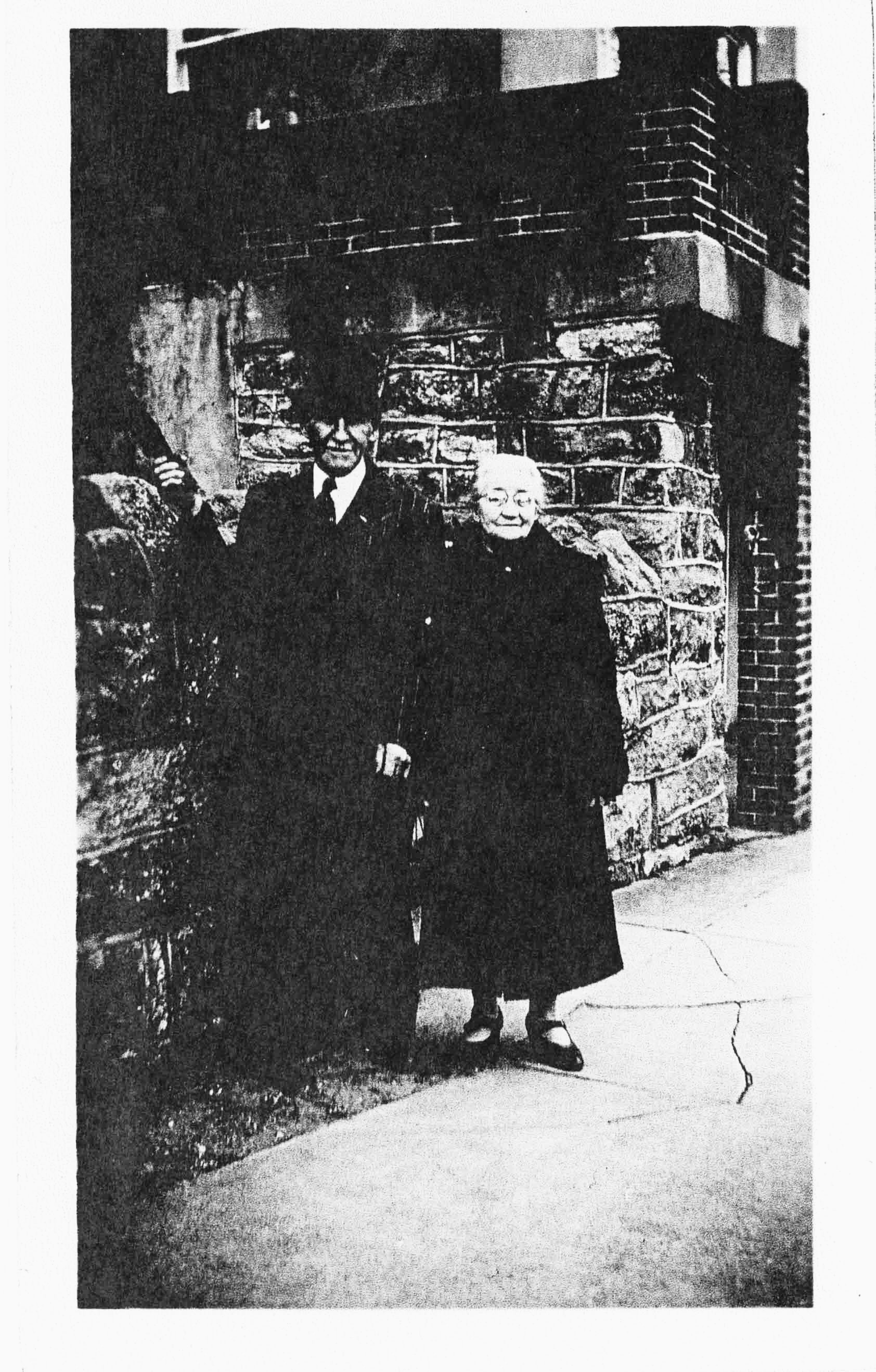
John Hartranft Snyder and Minnie R. Snyder, Snyder Family Home, Main Street, Lavelle, Pennsylvania, circa 1943. The doorway seen behind Minnie’s left shoulder was the entrance to their former dry goods store. (© Snyder Family Archives. All rights reserved.)
The first years of the 1940s would prove to be difficult ones for the Snyder sisters, however, as their father, John H. Snyder, became increasingly frail due to stomach cancer. On 22 May 1944, he was forced to undergo major surgery at the Geisinger Hospital in Danville, Pennsylvania. As his condition worsened, Electrician’s Mate Willard Snyder was brought home from his duty station on Midway Island in the Pacific Theater of World War II for a thirty-day leave of absence to visit their dying father.
In addition, Eenie’s sister, Lillian Snyder, resigned her position as a head nurse at Peter Bent Brigham Hospital in Boston around this same time, “to come back home to stay with her parents,” according to “Lavelle Nurse Home,” a news report that was published in the 18 July 1944 edition of the Mount Carmel Item. In doing so, she ended a promising career with one of the leading academic medical centers in the United States, causing her to spend the remainder of her nursing career striving to regain the power and prestige she had accrued during one of the happiest and most fulfilling periods of her life.
The surgery their father had endured was not enough to save him, however; on 5 August 1944, John Hartranft Snyder succumbed to cancer-related complications–just weeks after Willard Snyder had returned to his duties on Midway Island. Following his passing at the Snyder family home in Lavelle, John H. Snyder was laid to rest at the Citizens’ Cemetery in Lavelle, in the same family plot where the Snyder siblings’ older brother, Timothy P. Snyder, had been buried after his tragic, fatal accident in 1913.
On 1 October of that same year (1944), Eenie Snyder was documented by the United States government as still residing in her apartment at 949 North 19th Street in Allentown. The form on which this address was typed, by Lieutenant F. G. Fowler of the United States Naval Reserves, was part of paperwork that her brother, Willard, had submitted to update his National Life Insurance beneficiary data after the death of their father.
Kit, who had returned to Boston, still worked as a private secretary for the A. M. Byers Co. and still lived in the apartment she had previously shared with her sister, Lillian (at 6 Autumn Street), while Lillian remained behind at the Snyder family home in Lavelle to care for their grieving mother.
Soldiering on in their respective military and civilian capacities, their sadness and collective sense of fear increased, as it did for so many of their fellow Americans, when they read the shocking news that U.S. President Franklin Delano Roosevelt had died on 12 April 1945. Although they understood, intellectually, that there would be a smooth transition of power at their nation’s highest level, as Vice President Harry Truman became the next president of the United States, they worried about what might happen next as their younger brother, Willard Snyder, and other sailors and soldiers continued their fight to bring an end to World War II under the leadership of a new commander-in-chief. Joining with others across the nation who mourned the late president, they read news coverage of his death and funeral, which included memorable images in Life Magazine and other publications that were created by renowned photographers Wayne F. Miller, Ed Clark, et. al.
Their fears gradually morphed into halting feelings of hope, however, as word spread that an end to the global conflict might be closer than they had dared dream. Buoyed by a radio broadcast on 8 May 1945, during which senior U.S. military officials proclaimed that Victory in Europe had finally been achieved, they joined with other Pennsylvanians in V-Day celebrations that were tempered, for them, by the knowledge that their youngest brother was still in harm’s way in the war’s Pacific Theater of operations.
During the summer of 1945, the Snyder sisters were finally able to relax as radio stations and newspapers announced, in mid-August, that the Empire of Japan had surrendered and, on 2 September, had formally signed the Japanese Instrument of Surrender, sparking V-J (Victory over Japan) celebrations across Pennsylvania and worldwide. They would see their youngest brother soon.
That reunification process began on 18 October 1945, when Electrician’s Mate Willard Snyder ended his tour of duty on Midway Island. Shipped with other Seabees to San Francisco, he arrived on 26 October and was stationed there until ordered to return to the East Coast. Part way through his trip home, however, he became ill during a stopover in Olathe, Kansas. Redirected by a superior officer to the U.S. Naval Hospital in Great Lakes, Illinois, he was admitted there on 9 November, and received roughly two weeks of treatment for malaria, which he had contracted while in service to the nation. Subsequently transported to the U.S. Naval Personal Separation Center in Bainbridge, Maryland during the third week of November, he was honorably discharged on 24 November 1945, and allowed to return to his childhood home on Main Street in Lavelle.
Post-war, the Snyder siblings began to rebuild their lives. Willard and Lillian Snyder continued to reside at the Snyder family home in Lavelle, while Eenie continued to live and work in Allentown. Still residing in Massachusetts two years later, their younger sister, Kit, married steel industry salesman Charles Francis Courtney, Jr. in Boston on 12 July 1947, enjoyed a brief honeymoon, and then began to make a new life with him in the city of Lancaster, Pennsylvania.
According to the 1949 Allentown city directory, Eenie Snyder resided alone in apartment number two at 930 North Nineteenth Street in Allentown, which was a second-floor unit in a brick, row-house-style structure that had been built in 1927. Well-maintained since that time, it still stands today.
1950s

Advertisement for Nurses, Merck Sharpe & Dohme, Baltimore Sun, Baltimore, Maryland, 8 March 1953 (public domain; click to enlarge).
By April of 1950, Eenie was still working for Jewel Tea as a bookkeeper and was still living alone in apartment number two at 930 North Nineteenth Street in Allentown. That same month, a federal census enumerator confirmed that her brother, Willard, was the head of a household residing in the Snyder siblings’ childhood home on Main Street in Lavelle. Also residing with him were his wife, Genevieve, their daughter, Judy, and Willard’s sister, Lillian, and their mother, Minnie. Lillian was employed as a nurse at a hospital by this time, while Willard was worked as a repairman for Bell Telephone.
Sometime after April 1950, however, Lillian Snyder opted to join the nursing faculty and staff at the Allentown General Hospital in Lehigh County. Once again, the still-single Lillian made the choice to share an apartment with her older sister, Eenie, who was also still single. From this point forward, they would continue to live together for the remainder of Eenie’s life (first in Allentown, then in Baltimore, Maryland, and finally in Lancaster, Pennsylvania).
Still residing in Lancaster with her husband, Charles Courtney, at the dawn of the 1950s, Catharine (Snyder) Courtney lived with him in an apartment building at 912 New Holland Avenue. Their happy times were cut short, however, when Charlie died, leaving Kit as a grief-stricken, forty-four-year-old widow. Felled by an acute coronary occlusion on 1 December, he had passed away at the Lancaster General Hospital at 1:01 a.m. on 2 December. Subsequently cremated, his remains were later inurned in the columbarium at the Charles Evans Cemetery in Reading.
Their shared grief was compounded when their mother, Minnie (Strohecker) Snyder, also began a rapid decline. Battling cancer, she soon moved from Lavelle into the same apartment that Eenie shared with Lillian in Allentown. During this phase of their lives, Eenie was employed by the Jewel Tea Company as a bookkeeper, while Lillian was serving as a clinical nursing instructor on the faculty of the Allentown Hospital’s School of Nursing. Following her death at the age of eighty, on 28 April 1952, Minnie R. (Strohecker) Snyder was laid to rest beside her husband and her first-born son, Tim, at the Citizens’ Cemetery in Lavelle, Schuylkill County.
Less than a year later, the Snyder family’s oldest daughter, Nona, finally decided that she was also free to marry. So, at 8 a.m., on 23 September 1953, she wed Allen Adam Albert (1907-1993), the owner of Albert’s clothing store in Pine Grove, Schuylkill County. Their wedding ceremony was held at the First Evangelical Congregational Church in Lebanon, Pennsylvania. A subsequent report by the Lebanon Daily News noted that “The couple was unattended” during the ceremony.
Three years later, Eenie and Lillian Snyder relocated to Baltimore, Maryland, where Lillian had accepted a position as a registered nurse with Merck Sharp & Dohme, the pharmaceutical company known for its development of streptomycin, the first medication proven to be effective in the treatment of tuberculosis–the disease which had sickened and killed the Snyder sisters’ paternal grandmother, Catharine (Boyer) Snyder. During Lillian’s tenure at Merck, her employer would become increasingly renowned and profitable for its research and development of medications to treat heart disease and vaccinations that prevented the spread of measles, mumps and rubella, saving the lives of countless children worldwide.
Although there were now more professional opportunities open to Eenie, Kit and Lillian, enabling them to climb higher on the ladders of success for their respective fields of employment, they were, in hindsight, shockingly underpaid for their hard work. According to the United States Department of Labor’s Occupational Handbook of 1959, bookkeepers, private secretaries and other clerical workers had become “the second largest of all the major occupational groups in the United States.
Altogether, slightly more than 9 million men and women were employed to take care of the vast amount of correspondence, recordkeeping, and other office duties necessary to the operation of modern businesses and government agencies.
Stenographers, typists, and secretaries [were] by far the largest specialized group of clerical workers. Bookkeepers [were] the second largest group. Other large clerical occupations include[d] those of telephone operator, shipping and receiving clerk, cashier, mail carrier, and office machine operator.
Clerical work [was] the largest of all areas of employment for women. In 1958, about 3 out of every 10 employed women were officeworkers…. More than 90 percent of the telephone operators; the stenographers, typists, and secretaries; and the attendants in physicians’ and dentists’ offices offices [were] women. Women also fille[d] more than three-fourths of the jobs as bookkeepers, cashiers, and office machine operators….
Graduation from high school [was] the usual minimum educational requirement for entering clerical jobs. Additional business courses or some college work [might also have been] required for jobs requiring specialized skill. The most widely sought office skills–stenography and typewriting–[could] be obtained either through high school or business school courses…. The operation of many kinds of office machines, such as adding machines, special bookkeeping machines, and billing machines [was] often taught on the job…. Reading comprehension, numerical skill, and good knowledge of spelling and grammar [were] important in obtaining a job and essential to advancement. Ability to get along with others [was] also rated high among the qualifications necessary for success in office work….
Women in beginning clerical jobs … had average weekly salaries of about $45 to $55 in late 1957 and early 1958, in most of the 19 labor market areas surveyed by the Bureau of Labor Statistics…. The highest paid clerical workers were men accounting clerks … whose average weekly salaries ranged from $83.50 in Boston, Mass., to $102 in Cleveland, Ohio. Among women clerical workers, secretaries were generally the highest paid with average salaries ranging from $66 a week in Memphis, Tenn., to $89.50 in Cleveland, Ohio….
Pay levels for officeworkers tend[ed] to be higher in manufacturing than in most nonmanufacturing industries….
In large offices, bookkeeping jobs range[d] from entry positions as clerk or machine operator to the highly responsible post of head bookkeeper…. Bookkeepers in jobs with greater responsibility [generally posted and balanced] accounts and [performed] more difficult work such as preparing summary reports…. The head bookkeeper [had] responsibility for all aspects of his department’s work….
About 900,000 workers were employed as bookkeepers in 1958; more than three-fourths of them were women. Well over one-third of all bookkeepers [were] employed by retail stores or wholesale houses….
In Baltimore, the average salaries for “clerical” workers during the winter of 1957-1958 ranged from roughly fifty-one dollars per week for the lowest classification of bookkeeping machine operator to roughly seventy dollars per week for the highest classification of accounting clerk. Nationwide, the average salary for women who were entry level accounting clerks or bookkeepers was roughly fifty-five to seventy dollars per week, while women who were experienced accounting clerks were typically paid between sixty-eight and eighty-four dollars per week–compared with men in similar jobs who were paid roughly twenty dollars more per week.
With respect to Lillian’s chosen field, there were four hundred and twenty-five thousand nurses employed across America by 1955. They were working in clinics, hospitals, laboratories, nursing homes, patients’ houses, and physicians’ private practice offices. “Nursing, the largest of the major health service occupations, [was] second only to teaching as a field of professional employment for women” with more than ninety percent of registered nursing jobs held by women.
Registered professional nurses furnish[ed] nursing services to patients, either by giving direct nuring care or by supervising allied nursing personnel. As the persons with primary responsibility for carrying out physicians’ instructions and with independent nursing duties, professional nurses [were] important members of the medical health team. Generally, their main concerns were: Care of the sick and injured, prevention of illness, and promotion of good health. They performe[d] such tasks as administering medications and treatments prescribed by a physician; observing, evaluating, and recording symptoms, reactions, and progress of patients; assisting in patient education and rehabilitation; improving the physical and emotional environment of patients; and instructing auxiliary nursing workers or students.
In the nursing field, there [were] several distinct groups of professional nurses specializing in a particular type of patient care and treatment. The largest group of professional nurses (about 63 percent of the total) [during the late 1950s were] hospital nurses, who [were] concerned mainly with the care and welfare of patients in hospitals and related institutions. Most [were] general duty nurses, who usually perform[ed] the more skilled bedside services, such as caring for a patient after an operation, assisting with blood transfusions and intravenous feeding, and giving medications…. Some hospital nurses [were] engaged primarily in administrative or supervisory work. Others specialize[d] in a certain type of service, such as caring for mothers and babies or assisting physicians in the delivery or operating room.
Private duty nurses (about 15 percent of all professional nurses) [were] employed directly by patients or their families to give individual nursing care, usually when constant attention [was] needed….
The third largest group … [was] office nurses (approximately 8 percent of the total). Employed mainly by physicians in private practice or in medical clinics … [they assisted] in the care of patients … perform[ed] routine laboratory work [and also managed physicians’ schedules and records].…
Public health nurses (about 6 percent of all professional nurses) [were] employed by public and private health agencies, including city and county health departments, visiting nurse associations, and schools…. Especially concerned with promoting good health and preventing disease and injury, public health nurses [often worked] with community leaders, teachers, parents, and physicians in planning or operating a community health education program….
Sometimes called industrial nurses, occupational health nurses (about 4 percent of all nurses) [provided] nursing care principally to employees in business and industry. Interested in keeping employees well and on the job, they [often worked] alone (with a doctor on call) or [were] part of a health service department in a large organization. They [provided] emergency treatment for injuries and minor illnesses occurring at work, arrange[d] for further medical care when necessary, and offer[ed] health counseling. [They also often assisted with] health examinations, keep[ing] health records of employees, and [the development] of programs to prevent or control occupational diseases or accidents.
To prepare nursing personnel, nurse educators (3 percent of all nurses) [were] employed by hospital nursing schools, colleges and universities, public vocational schools, and schools of practical nursing….
Minimum starting salaries of general duty nurses employed by hospitals in 16 metropolitan areas approximated from $55 to $70 a week in 1956-1957, according to the Bureau of Labor Statistics…. Weekly salaries of general duty nurses (including both beginning and experienced nurses) were generally between $60 and $80 during the same period. In comparison to general duty nurses, head nurses averaged about 10 to 15 percent more and supervisors of nurses and nursing instructors about 20 to 30 percent more…. Office nurses … earned $3,600 a year on average [by 1958]….
Occupational health (industrial) nurses averaged from $76.50 a week in Boston to $93.50 in Los Angeles…. An American Nurses’ Association survey of nursing education programs indicated that nurse educators and administrators had a median salary of $4,140 in 1956.
1960s
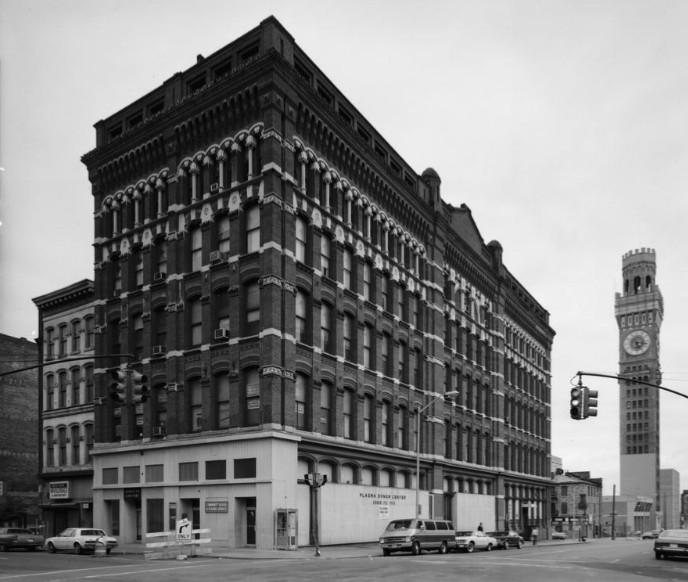
Lillian E. Snyder, R.N., may have worked at the Merck Sharp & Dohme blood donation center, located at the corner of West Baltimore and Eutaw Streets in Baltimore, Maryland during the mid to late 1960s (A. S. Abell Building, Baltimore, Maryland, circa 1968, U.S. Library of Congress, public domain).
Still working as a registered nurse for Merck & Co., Inc. at its blood bank in Baltimore during the 1960s, Lillian Snyder continued to reside with her older sister, Eenie, in an apartment in the city. In 1966, The Baltimore Sun reported that her employer’s Merck Sharp & Dohme division had “leased the property at the southeast corner of West Baltimore and Eutaw streets” for use as “a model blood donor center.” That building was the A. S. Abell Building.
* Note: In 1960, Kit Snyder was still living alone in the apartment she had briefly shared with her husband, Charlie. But she had begun picking up the pieces of her shattered dreams, and had begun building a new future for herself. Employed as a private secretary for the New Holland Machine Company in neighboring New Holland, Pennsylvania, she did well enough, financially, over the next decade, that she could indulge her passion for travel. Her employer was becoming one of the largest manufacturers of farm equipment in the United States as it expanded its operations to Canada, Belgium, Brazil, and Japan during this and succeeding eras of American History.
In 1969, the Snyder siblings received word that their brother, John Sylvester Snyder, had been hospitalized after suffering a stroke. Following his death in Allentown, Lehigh County, Pennsylvania on 12 November 1969, he was laid to rest at that city’s Cedar Hill Memorial Park.
1970s
Nearly three years to the day after her younger brother, John S. Snyder, had passed away, Eenie then received the heartbreaking news that her “baby brother,” Willard Emery Snyder, had suffered a heart attack at work on 10 November 1972, and had died later that same morning. It was a terrible shock. He was still in his mid-fifties and had been slated to start his vacation the next day. Following graveside funeral services on a cold, rainy 13 November, he was laid to rest at the Sinking Spring Cemetery in Sinking Spring, Berks County, Pennsylvania.
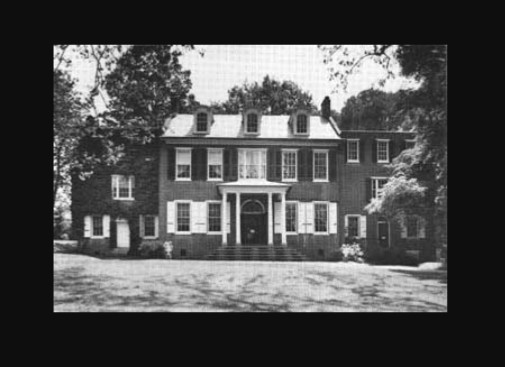
The “Lancaster Aunts” of the Snyder family often volunteered as docents at Wheatland, the estate of former U.S. President James Buchanan in Lancaster, Pennsylvania (Wheatland, Lancaster, Pennsylvania, 1976, U.S. National Park Service, public domain).
All retired now (as of 1971), the three Snyder sisters who had resided with one another throughout their professional lives–Eenie, Lillian and Kit–had settled into a comfortable life in a second floor apartment that was part of the Williamson Square Apartment Complex at 206 North President Avenue in Lancaster.
Close enough to volunteer as docents at Wheatland, the home of former US. President James Buchanan, which is still located at 230 North President Avenue, they spent a fair amount of their time sharing their knowledge of American History and passion for lifelong learning with elementary, middle and high school students. Frequent Sunday dinner guests at the home of their younger brother, Willard, and his family during Willard’s final years, they continued to visit Willard’s widow and daughters, as well as other nieces and nephews well into the next decade, and were lovingly nicknamed the “Lancaster Aunts.”
Later Life, Death and Interment
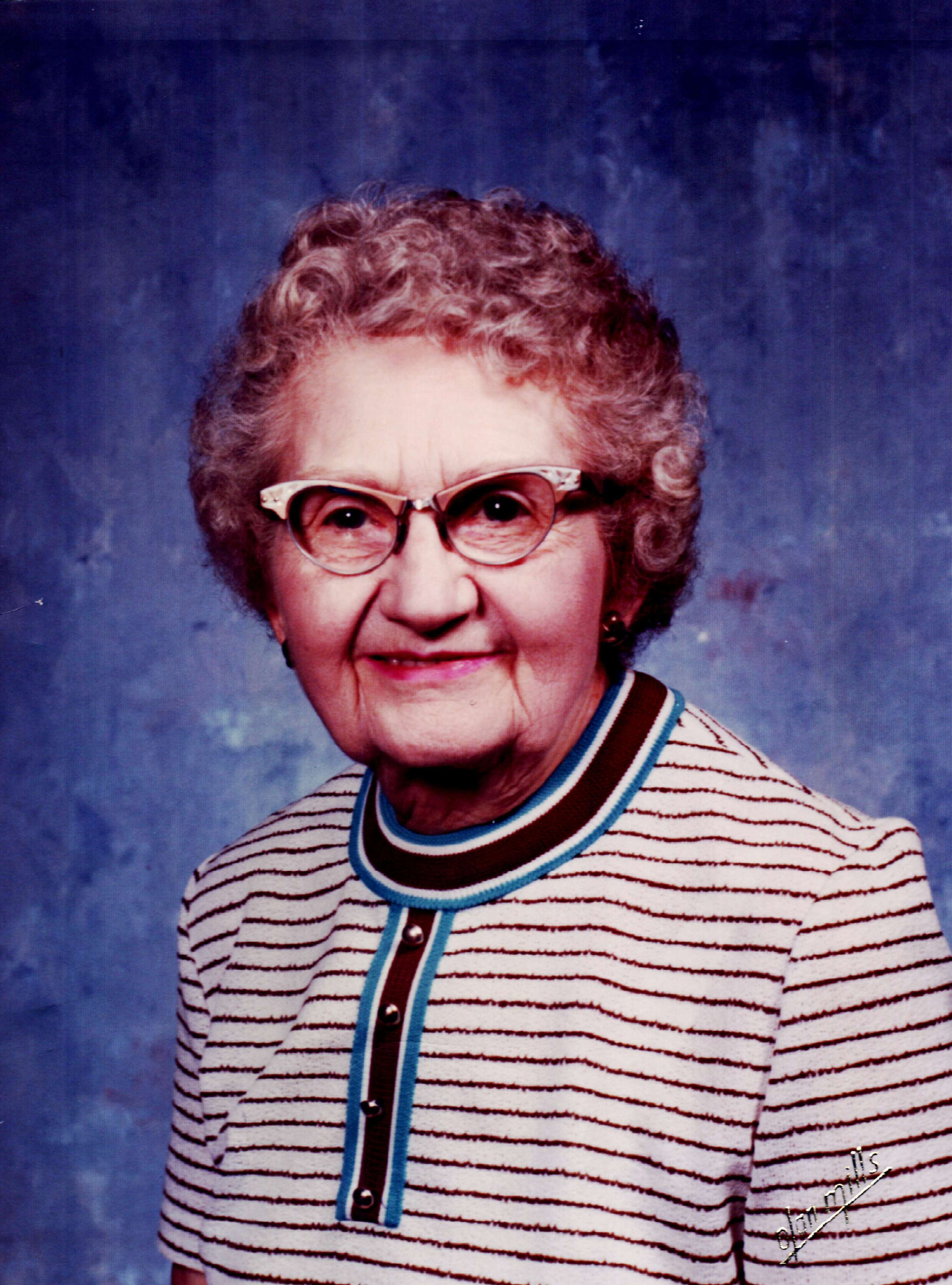
H. Corrine Snyder, known to family and friends as “Eenie,” Lancaster, Pennsylvania, circa 1982. (© Snyder Family Archives. All rights reserved.)
During the late 1970s and early 1980s, Eenie, Lillian and and Kit Snyder were avid travelers, sending postcards to family and friends from their trips across the United States. They proved to all who knew them that there was no such thing as being “too old” to learn and have fun.
As Eenie’s health began to decline, however, their group travels gradually slowed. Even so, they still found ways to remain active and socialize with family and friends by entertaining guests at their apartment on a regular basis.
Sadly, on 6 May 1987, the trio received word that their eighty-seven-year-old sister, Nona Mae (Snyder) Albert, had died at the Pottsville Hospital in Pottsville, Schuylkill County. Following funeral services, she was laid to rest at the Saint John’s Lutheran Cemetery in Pine Grove, Schuylkill County.
With that death, Eenie officially became the Snyder family’s “matriarch.” Long-since retired and preferring to stay close to home, she remained active as a member of the Bethany Circle of the First United Methodist Church in Lancaster. As her heart disease became increasingly worrisome, she was admitted by her physician and her youngest sister, Lillian, into St. Joseph’s Hospital in Lancaster in late December 1987.
A fighter to the end, she survived to witness the dawn of a New Year. On 8 January 1988, she suffered a cardiac arrest while still being treated at that hospital, and began her new life in Heaven. Her remains were subsequently cremated and inurned at the Charles Evans Cemetery Columbarium in Reading, a cemetery that is located within short walking distance of where her paternal grandmother, Catharine (Boyer) Snyder, had spent the final years of her life.
Beloved by her surviving siblings, nieces, nephews, grandnieces, and grandnephews, Eenie Snyder is still greatly missed by those who knew her. Her sisters, Lillian E. Snyder and Catharine Rebecka (Snyder) Courtney, were later inurned beside her at the same columbarium, following their respective deaths in 1995 and 2001.
Sources:
- “100 Years Ago–1911” (brief news recap of the 1911 fire which destroyed the Lavelle, Pennsylvania home of John Hartranft Snyder and his family). Pottsville, Pennsylvania: Republican-Herald, 17 March 2011.
- “Allen and Nona Albert’s Retirement a Loss to Long-Time Customers.” Tremont, Pennsylvania: The Press-Herald and The Pine Grove Herald, 12 February 1970.
- Attendance, Graduation and Employment Records of Lillian Estelle Snyder, Reading Hospital School of Nursing, 1927-1939 (H. Corrine Snyder’s younger sister). West Reading, Pennsylvania: Office of the Registrar, School of Nursing, Reading Hospital.
- Beyerle, Emma; and Snyder, H. Corinne [sic, Corrine], Catharine R. and Lillian E., in U.S. Census (City of Reading, Fourteenth Ward, City of Reading, Berks County, Pennsylvania, 1930). Washington, D.C.: U.S. National Archives and Records Administration.
- Catharine Snyder (paternal grandmother of H. Corrine Snyder), in Death Certificates (file no.: 91429, registered no.: 1242, date of death: 8 August 1918). Harrisburg, Pennsylvania: Commonwealth of Pennsylvania, Department of Health, Bureau of Vital Statistics.
- Charles F. Courtney (brother-in-law of H. Corrine Snyder), in Death Certificates (file no.: 103378, registered no.: 912, date of death: 2 December 1950). Harrisburg, Pennsylvania: Commonwealth of Pennsylvania, Department of Health, Bureau of Vital Statistics.
- “Charles F. Courtney” (obituary). Lancaster, Pennsylvania: The Sunday News, 3 December 1950.
- Courtney, Charles F. and Catharine R., in Polk’s Lancaster City Directory, 1950. Boston, Massachusetts: R. L. Polk & Co., Inc., Publishers, 1950.
- Courtney, Charles F. and Catharine R., in Polk’s Lancaster City Directory, 1960. Boston, Massachusetts: R. L. Polk & Co., Inc., Publishers, 1960.
- “Died on Way to Hospital” (brief notice of Timothy P. Snyder’s fatal accident at work). Pottsville, Pennsylvania: Pottsville Republican, 23 April 1913.
- Frew, David. “The Jewel Tea Man.” Erie, Pennsylvania: Jefferson Educational Society, March 2021.
- “Fund Hospitals Help Fill Nurse Need: Must Have More Students to Meet Fall Schedule.” Boston, Massachusetts: The Boston Globe, 20 June 1942.
- Gordon, Elizabeth Putnam. Women Torch-Bearers: The Story of the Woman’s Christian Temperance Union. Evanston, Illinois: National Woman’s Christian Temperance Union Publishing House, 1924.
- “Great Depression Facts.” Hyde Park, New York: FDR Library & Museum, retrieved online 16 February 2025.
- Gruber, Philip. “A History of Innovation: New Holland Has Grown from Machine Shop to Global Brand.” Ephrata, Pennsylvania: Lancaster Farming, 5 March 2024.
- John H. Snyder (father of H. Corrine Snyder), in Death Certificates (file no.: 73704, registered no.: 184, date of death: 5 August 1944). Harrisburg, Pennsylvania: Commonwealth of Pennsylvania, Department of Health, Bureau of Vital Statistics.
- “John H. Snyder, Lavelle, ‘Phone Official, Dies” (obituary of H. Corrine Snyder’s father). Mount Carmel, Pennsylvania: Mount Carmel Item, 7 August 1944.
- “Lavelle Nurse Home” (article about Lillian E. Snyder’s resignation from her position as a head nurse at Peter Bent Brigham Hospital in Boston, Massachusetts to return home to Lavelle, Pennsylvania to care for her dying father). Mount Carmel, Pennsylvania: Mount Carmel Item, 18 July 1944.
- “Lillian Snyder, 92, Was Registered Nurse” (obituary of H. Corrine Snyder’s younger sister, Lillian Estelle Snyder). Lancaster, Pennsylvania: Intelligencer Journal, 9 June 2001.
- Maurer, Russ. “Lavelle Telegraph Telephone Company Charted in 1908,” in “Memories of Russ Maurer.” Hegins, Pennsylvania: The Citizen-Standard, circa 1990s.
- “Merck Division Leases Site.” Baltimore, Maryland: The Baltimore Sun, 8 May 1968.
- “Miss Nona Snyder Is Married Today to Pine Grove Man” (article describing the wedding ceremony of Nona M. Snyder and Allen A. Albert). Lebanon, Pennsylvania: Lebanon Daily News, 23 September 1953.
- “Mrs. John H. Snyder” (obituary of H. Corrine Snyder’s mother). Pottsville, Pennsylvania: Pottsville Republican, 29 April 1952.
- “Nona Albert” (obituary). Lebanon, Pennsylvania: The Daily News, 3 June 1960.
- Nona, Corrine and “Kitty” Snyder, in “Personal Mentions.” Reading, Pennsylvania: The Reading Eagle, 26 August 1926.
- “Nurses Are Told of Blood Banks for Use in War” (news report regarding a nursing convention held in Boston, Massachusetts in October 1941). Boston, Massachusetts: The Boston Globe, 30 October 1941.
- Occupational Outlook Handbook, 1959 Edition, pp. 53-58 and 224-238, in Bulletin No. 1255. Washington, D.C.: United States Department of Labor, 1959.
- Rudloff, Tarin and Theresa Donnelly. “A. S. Abell Building.” Baltimore, Maryland: Baltimore Heritage, 10 July 2012.
- Shibley, Natalie. “The Forgotten Women of the Antibiotics Race.” Dallas, Texas: Lady Science, 2021.
- Snyder, Catharine R. and Courtney, Charles F., in “Massachusetts Vital Records Index to Marriages” (documentation of the marriage of H. Corrine Snyder’s younger sister, Catharine, in Boston in 1947). Boston, Massachusetts: New England Historic Genealogical Society.
- Snyder, Catharine R. and Lillian, E., in The Boston Directory for the Year Commencing July 1, 1942 (Boston Massachusetts, 1942). Chicago, Illinois: R. L. Polk Publishers, 1942.
- Snyder, Corrine and Catharine, in Reading City Directory, 1926. Reading, Pennsylvania: Boyd’s City Directories.
- Snyder, Corrine, Lillian E. and Catharine R., in U.S. Census (City of Reading, Fourteenth Ward, Berks County, Pennsylvania, 1940). Washington, D.C.: U.S. National Archives and Records Administration.
- Snyder, H. Corrine, in U.S. Census (Allentown, Lehigh County, Pennsylvania, 1950). Washington, D.C.: U.S. National Archives and Records Administration.
- Snyder, John H., Minnie R., Timothy P. and Nona M., in U.S. Census (Butler Township, Schuylkill County, Pennsylvania, 1900). Washington, D.C.: U.S. National Archives and Records Administration.
- Snyder, John H., Minnie R., Timothy P., Nona M., H. Corrine, John S., Catharine R., and Lillian E., in U.S. Census (Lavelle, Northwest Butler Township, Schuylkill County, Pennsylvania, 1910). Washington, D.C.: U.S. National Archives and Records Administration.
- Snyder, John H., Minnie, Nona M., John S., and Willard E. in U.S. Census (Butler Township, Schuylkill County, Pennsylvania, 1930). Washington, D.C.: U.S. National Archives and Records Administration.
- Snyder, John H., Minnie R., Nona, Corrine, John S., Catharine R., Lillian E., Chester H., and Willard E. in U.S. Census (Butler Township, Schuylkill County, Pennsylvania, 1920). Washington, D.C.: U.S. National Archives and Records Administration.
- Snyder, Willard E. (head of household), Jene M. [sic, Genevieve; wife of Willard], Judy L. (daughter of Willard), Minnie R. (Willard’s mother), and Lillian E., in U.S. Census (Lavelle, Butler Township, Schuylkill County, Pennsylvania, 1950). Washington, D.C.: U.S. National Archives and Records Administration.
- “Stock Market Crash of 1929,” in “The Great Depression,” in “Federal Reserve History.” Washington, D.C.: Federal Reserve, retrieved online 16 February 2025.
- Thomas, George E. “Row Houses,” in “Eastern Pennsylvania: The Piedmont: Lehigh County: Allentown,” in SAH Archipedia. Chicago, Illinois: Society of Architectural Historians, retrieved online 18 February 1925.
- “The Young Crusader, Woman’s Christian Temperance Union Magazine for Children, 1934,” in “Document Bank of Virginia.” Richmond, Virginia: Library of Virginia, retrieved online 15 February 2025.
- Timothy P. Snyder, in Death Certificates (file no.: 34710, date of death: 22 April 1913). Harrisburg, Pennsylvania: Commonwealth of Pennsylvania, Department of Health, Bureau of Vital Statistics.
- Wattenberg, Ben. “FMC Program Segments 1900-1930: Infant and Maternal Mortality,” in “The First Measured Century.” Washington, D.C.: PBS, 2000 (retrieved online 14 February 2025).
 47th Pennsylvania Volunteers
You must be logged in to post a comment.