Telegraphing the News — From President Abraham Lincoln’s Assassination to His Assassin’s Capture

Telegram announcing the assassination of U.S. President Abraham Lincoln, sent by Henry Harrison Atwater at the U.S. Navy Yard in Washington, D.C. on 15 April 1865 at 1:30 a.m. (U.S. National Archives and Records Administration, public domain; click to enlarge).

They are fleeting glimpses into a nation reeling from the death of a beloved hero. Viewed in chronological sequence, they take readers from the utter shock experienced by stunned government employees through the stages of grief as they tried to carry out their expected duties while also coming to terms with their own emotions about what was unfolding through the chaos and confusion around them.

They were the telegrams, logbook entries, military orders, dispatches from executives of the United States government to their subordinates who were stationed throughout the U.S. and across the globe, and other documents that were hurriedly created during the immediate and ongoing aftermath of the assassination of United States President Abraham Lincoln, and they are illuminating, heartbreaking and, at times, infuriating — particularly as their intensity builds with each update regarding the dramatic hunt for, and capture of, the perpetrator and facilitators of one the most vile acts in American history.

Henry Harrison Atwater

Among the briefest but most powerful of the telegraph messages that were dispatched during the first hours after President Lincoln was shot at Ford’s Theatre were those transmitted by Washington Navy Yard telegrapher Henry Harrison Atwater:

  • War Dept. Apr. 14 (186)5. Comd Parker. An attempt has been made this P.M. to assassinate the President & Secy of State – The parties may escape or attempt to escept [sic] down the Potomac [unclear] J.H. Taylor, Chf Staff
  • War Dept. Washington. Apr 15th (186)5. 1.05 a.m. Brig Gen. Barnes Pt. Lookout. Stop all vessels going down the river & hold all persons on them till further orders and [sic] attempt has been made tonigh [sic] to assassinate the President & secy of state hold all persons leaving Washington H.W. Halleck Maj Gen Chf Staff 
  • Navy Yard Washington Apr 15th (186)5 1.15 a.m. Comdr Parker. An attempt has this evening been made to assinate [sic] the President and Sec’y Seward The President was shot through the head and Secy seward [sic] had his throat cut in his own house Both are in a very dangerous condition. No further particulars There is great excitement here T.H. Eastman Lt Comdr U.S. Pot. Flotilla
  • War Dept Apr 15 (186)5 8 a.m. H.H. Atwater President died at seven twenty two (7.22) this a.m. Maynard Operator
  • War Dept April 15th 2.20 p.m. (186)5. Comd J.B. Montgomery Navy Yard If the military authorities arrest the murderer of the President and take him to the yard put him on a monitor & anchor her in the stream with strong guard on vessel – wharf – and in yard Call upon Comdt Marine Corps for guard – Have vessel immediately prepared ready to receive him at any hour day or night with necessary instructions he will be heavily ironed and so guarded as to prevent escape or injury to himself Gideon Welles Secy Navy

Atwater, when interviewed half a century later for the May 1, 1915 edition of the journal, Telephone and Telegraph Age, explained how he came to be the person who transmitted those crucial messages:

I was not in the theatre on the evening of April 14, 1865, but was in my room at the Navy Yard, where I was stationed, when about eleven p.m. I was called up by Mr. Maynard at the War Department Office and informed that President Lincoln had been shot at Ford’s Theatre. I ran to give the information to Commodore Montgomery at his house, and met the Commodore as he was entering the yard and conveyed the information. He replied: — “I guess that is a mistake, for I have just come from uptown and heard nothing of it.” I told him it had just occurred, and returned to my quarters.

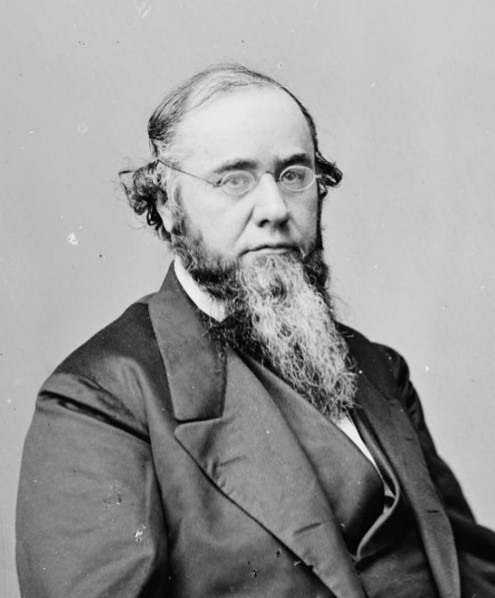
Edwin Stanton

U.S. Secretary of War Edwin M. Stanton, circa 1862-1865 (Matthew Brady, U.S. Library of Congress, public domain).

Meanwhile, U.S. Secretary of War Edward Stanton was penning the following messages for telegraphic transmission by his subordinates:

  • War Department, April 15, 1865 – 1:30 a.m.
    Major-General Dix,
    New York:
    Last evening, about 10:30 p.m., at Ford’s Theater, the President, while sitting in his private box with Mrs. Lincoln, Miss Harris, and Major Rathbone, was shot by an assassin . . . The pistol-ball entered the back of the President’s head, and penetrated nearly through the head. The wound is mortal. The President has been insensible ever since it was inflicted, and is now dying.
  • War Department, April 15, 1865 – 2:35 a.m.
    Investigation strongly indicates J. Wilkes Booth as the assassin of the President.

Roughly five hours later, on April 15, 1865, Secretary Stanton conveyed the news that:

  • Abraham Lincoln died this morning at 22 minutes after 7 o’clock.

Stanton then began to write, rewrite and send announcements about the president’s death to senior officials of the federal government, which carried instructions that kept the federal government running during the transfer of power to the new president Andrew Johnson. Unable to employ the Transatlantic telegraph to quickly alert U.S. Department of State staff who were serving overseas at that time (because the transatlantic cable was still inoperable), Stanton was compelled to use the nineteenth-century version of “snail mail” when he sent this dispatch of April 15, 1865 by ship to Charles Francis Adams, the U.S. Minister to the United Kingdom:

Recd. 26 April, 1865
Charles Francis Adams
United States Minister, London
Washington, DC 15 April, 1865

Sir.

It has become my distressing duty to announce to you that last night His Excellency Abraham Lincoln President of The United States, was assassinated, about the hour of half past 10 o’clock, in his private box at Ford’s Theatre, in this city. The President about eight o’clock accompanied Mrs. Lincoln to the theatre. Another lady and gentleman were with them in the box. About half past ten during a pause in the performance, the assassin entered the box, the door of which was unguarded, hastily approached the President from behind, and discharged a pistol at his head. The bullet entered the back of his head, and penetrated nearly through. The assassin then leaped from the box upon the stage, brandishing a large knife or dagger, and exclaiming “Sic semper tyrannis!” and escaped in the rear of the theatre. Immediately upon the discharge the President fell to the floor insensible, and continued in that state until 20 minutes past 7 o’clock this morning when he breathed his last. About the same time the murder was being committed at the Theatre another assassin presented himself at the door of Mr. Seward’s residence, gained admission by representing he had a prescription from Mr. Seward’s physicians which he was directed to see administered and hurried up to the third story chamber where Mr. Seward was lying. He here discovered Mr. Frederick Seward, struck him over the head, inflicting several wounds, and fracturing the skull in two places, inflicting, it is feared mortal wounds. He then rushed into the room where Mr. Seward was in bed, attended by a young daughter and a male nurse. The male attendant was stabbed through the lungs, and it is believed will die. The assassin then struck Mr. Seward with a knife or dagger twice in the throat and twice in the face, inflicting terrible wounds. By this time Major Seward, eldest son of the Secretary, and another attendant reached the room, and rushed to the rescue of the Secretary; they were also wounded in the conflict, and the assassin escaped. No artery or important blood vessel was severed by any of the wounds inflicted upon him, but he was for a long time insensible from the loss of blood. Some hope of his possible recovery is entertained. Immediately upon the death of the President notice was given to Vice President Johnson, who happened to be in the City, and upon whom the office of President now devolves. He will take the office and assume the functions of President to-day. The murderer of the President has been discovered, and evidence obtained that these horrible crimes were committed in execution of conspiracy deliberately planned and set on foot by rebels on pretence of avenging the South and aiding the rebel cause; but it is hoped that the perpetrators will be caught.

The feeling occasioned by these atrocious crimes is so great, sudden, and overwhelming that I cannot at present do more than communicate them to you. At the earliest moment yesterday the late President called a Cabinet meeting, at which General Grant was present. He was more cheerful and happy than I had ever seen him, rejoiced at the near prospect of firm and durable peace at home and abroad, manifested in a marked degree the kindness and humanity of his disposition, and the tender and forgiving spirit that so eminently distinguished him. Public notice had been given that he and General Grant, would be present at the Theatre, and the opportunity of adding the Lieutenant General to the number of victims to be murdered was no doubt seized for the fitting occasion of executing the plans that appear to have been in preparation for some weeks, but General Grant was compelled to be absent, and thus escaped the designs upon him. It is needless for me to say anything in regard to the influence which this atrocious murder of the President may exercise upon the affairs of this country, but I will only add that, horrible as are the atrocities that have been resorted to by the enemies of the country, they are not likely in any degree to impair the public spirit, or postpone the complete and final overthrow of the rebellion. In profound grief for the events, which it has become my duty to communicate to you,

I have the honor to be
Very respectfully
Your obt. Servant
Edwin M. Stanton

Metropolitan Police, Washington, D.C.

In addition, a supervising police officer at the city of Washington’s Metropolitan Police Department headquarters penned this ten-line entry in the department’s logbook:

At this hour the melancholy intelligence of the assassination of Mr. Lincoln, President of the U.S, at Fords Theater was brought to this office, and the information obtained from the following persons goes to show that the assassin is a man named J. Wilks [sic] Booth. Secretary Seward & both his sons & servant were attacked at the same hour by a man supposed to be J____ Serratt. Assign to the Force.

The hunt for the conspirators had begun.


Sources:

  1. Brown, J. Willard, A.M. The Signal Corps, U.S.A. in the War of the Rebellion. Boston, Massachusetts: U.S. Veteran Signal Corps Association, 1896.
  2. Exhibit: Lincoln Assassination Report.” Washington, D.C.: U.S. National Archives and Records Administration, retrieved online April 15, 1865.
  3. Kauffman, Michael W. American Brutus: John Wilkes Booth and the Lincoln Conspiracies. New York, New York: Random House, 2004.
  4. Langbart, David. “Reporting the Death of the President, 1865,” in The Text Message. Washington, D.C.: U.S. National Archives and Records Administration, April 15, 2015.
  5. The Assassin’s Escape: Following John Wilkes Booth.” Washington, D.C.: Ford’s Theatre, retrieved online April 15, 1865.


Election Day 1864 — Lincoln or McClellan? How the 47th Pennsylvania Volunteers Voted

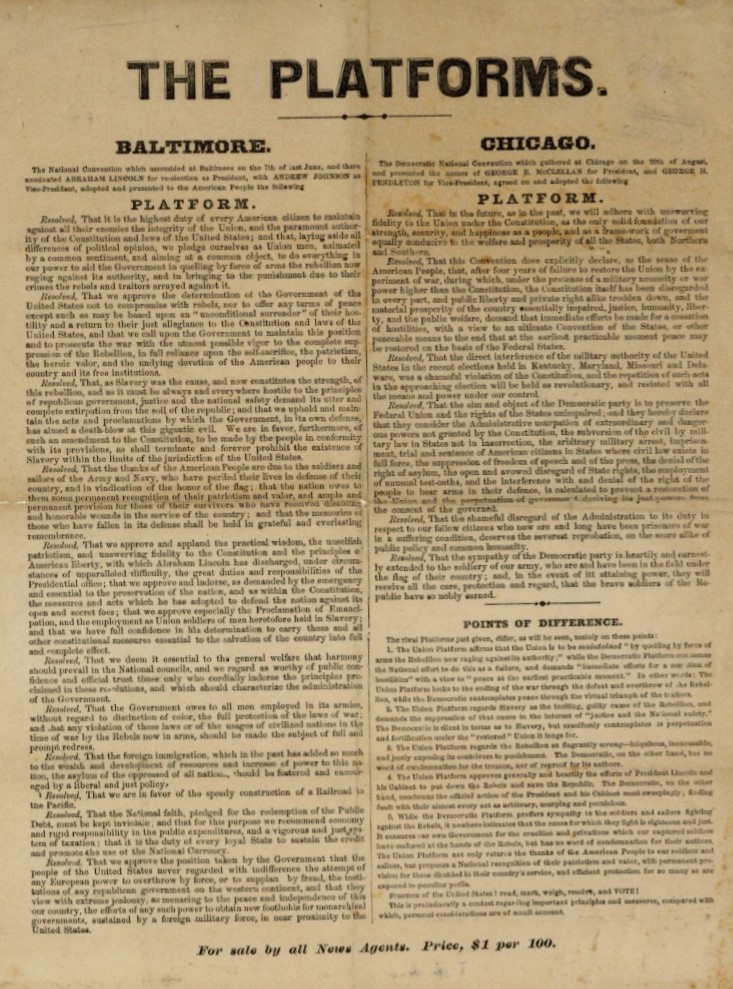
The platforms of the Union and Democratic parties, U.S. Presidential Election of 1864 (courtesy of the University of Illinois Urbana-Champaign; click to enlarge).

Even in the midst of a devastating civil war, Americans across the United States managed to come together to fulfill their civic responsibilities by voting on Election Day. Fathers and sons flocked to city and small town polling places while soldiers on active duty filled out ballot forms wherever they were stationed during the early to mid-1860s.

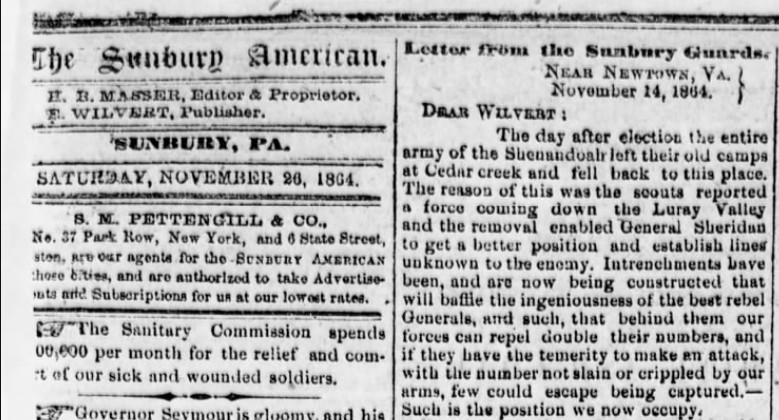
With respect to the Presidential Election of 1864, which was held in multiple states across America on November 8, 1864, that voting took place for members of the 47th Pennsylvania Volunteer Infantry at their encampment near Newtown, Virginia, according to a letter that was subsequently penned by 47th Pennsylvanian Henry D. Wharton to his hometown newspaper in Sunbury, Pennsylvania on November 14:

“The election passed off quietly and without any military interference, not the influence of officers used in controlling any man’s vote. In the regiments from the old Keystone, the companies were formed by the first Sergeant, when he stated to the men the object for which they were called to ‘fail to,’ and then they proceeded to the election of officers to hold the election – the boys having the whole control, none of the officers interfering in the least.”

Were the 47th Pennsylvania Volunteers pro-Lincoln or pro-McClellan?

Excerpt from Henry Wharton’s letter to his hometown newspaper, November 14, 1864 (The Sunbury American, November 14, 1864, public domain; click to enlarge).

Wharton reported that, after the votes from members of the regiment were counted, President Abraham Lincoln was the favored choice of most of the 47th Pennsylvania Volunteers. Lincoln had garnered one hundred and ninety-four votes to General George B. McClellan’s one hundred and twenty-one (a margin of seventy-three votes). Those votes, by individual company, were tallied as follows:

  • Company A: President Lincoln (ten); General McClellan (one)
  • Company B: President Lincoln (twenty-six); General McClellan (two)
  • Company C: President Lincoln (twenty-nine); General McClellan (thirteen)
  • Company D: President Lincoln (thirty-one); General McClellan (eleven)
  • Company E: President Lincoln (twenty-four); General McClellan (three)
  • Company F: President Lincoln (eighteen); General McClellan (sixteen)
  • Company G: President Lincoln (nine); General McClellan (thirteen)
  • Company H: President Lincoln (ten); General McClellan (twenty-four)
  • Company I: President Lincoln (nineteen); General McClellan (sixteen)
  • Company K: President Lincoln (eighteen); General McClellan (twenty)

But Wharton’s figures for the men from Company K were incorrect, according to historian Lewis Schmidt, who noted in his book, A Civil War History of the 47th Regiment of Pennsylvania Veteran Volunteers, that “Fifteen of the members [of Company K] voted for the Lincoln electors and seven for the McClellan electors” when they “voted on the battlefield of Cedar Creek, November 8, 1864.” The members of Company K who cast votes that day were: “David H. Fetherolf, Mathias Miller, John Keiser, Phaon Guth, James D. Weil, Daniel Strauss, Paul Strauss, George Sherer, Lewis G. Seip, Henry Hantz, Charles W. Abbott, George Kase, Charles Stoudt, William Schlicher, William F. Knerr, E. F. Benner, George Delp, Tilghman Boger, William H. Barber, William D. Schick, Frank Beisel, and David Semmel.”

Apathy or Attrition?

One of the first things that researchers notice when looking at those figures for the 1864 election is that the number of votes tendered by 47th Pennsylvania Volunteers that November day was lower than it should have been — shockingly so when considering that each company of the regiment had been staffed by roughly one hundred men when the 47th Pennsylvania left Camp Curtin and headed for Washington, D.C. three years earlier. The turnout of 47th Pennsylvanians was not a sign of voter apathy, however, but of a simple, ugly truth. The regiment had just recently lost the equivalent of nearly two full companies of men in combat. According to Wharton, “The battle at Cedar Creek thinned our ranks by which we lost many votes – this number and those away in hospitals would have increased the Union majority to three hundred.”

* Note: When Henry Wharton wrote the phrase “Union majority,” he was referring to the National Union Party, which had been established during the 1860s by prominent Republicans as a way to bring members of their party together with “War Democrats” and potential voters from border states to vote for President Lincoln and others who supported the Republican platform for eradicating chattel slavery and ending the nation’s secession crisis and civil war.

What Happened After That Election in 1864?

President Abraham Lincoln signing the Emancipation Proclamation in 1862 (W.E. Winner, painter, J. Serz, engraver, circa 1864; public domain, U.S. Library of Congress).

Successful in his bid for re-election, both in terms of the electoral college and popular vote, President Abraham Lincoln went on to deliver one of his most inspiring addresses to the nation, urging his fellow Americans “to bind up the nation’s wounds” and “do all which may achieve and cherish a just and lasting peace among ourselves and with all nations.” He then continued to shepherd his nation through one of its darkest times until the war was finally over.

Food for Thought

If Henry Wharton and his fellow soldiers could make it to the polls on Election Day after all they endured in battle, so can you. Please vote. Your voice does matter.


Sources:

  1. Political Party Timeline: 1836-1864,” in American Experience: Abraham and Mary Lincoln: A House Divided. Boston, Massachusetts: GBH Education for WGBH-TV (PBS), 2001.
  2. Schmidt, Lewis G. A Civil War History of the 47th Regiment of Pennsylvania Veteran Volunteers. Allentown, Pennsylvania: Self-published, 1986.
  3. The People’s Candidate: Lincoln’s Presidential Elections,” in “Illinois History & Lincoln Collections.” Urbana, Illinois: Main Library, University of Illinois Champaign-Urbana, retrieved online November 3, 2025.
  4. Transcript of Abraham Lincoln’s Second Inaugural Address (delivered Saturday March 4, 1865), in “UShistory.org.” Philadelphia, Pennsylvania: Independence Hall Association, retrieved online March 4, 2020 and November 3, 2025.
  5. Wharton, Henry D. “Letter from the Sunbury Guards, Near Newtown, VA, November 14, 1864.” Sunbury, Pennsylvania: The Sunbury American, November 26, 1864.

One Special September Day: Four 47th Pennsylvania Volunteers Shake Hands with President Abraham Lincoln in 1861 (part two)

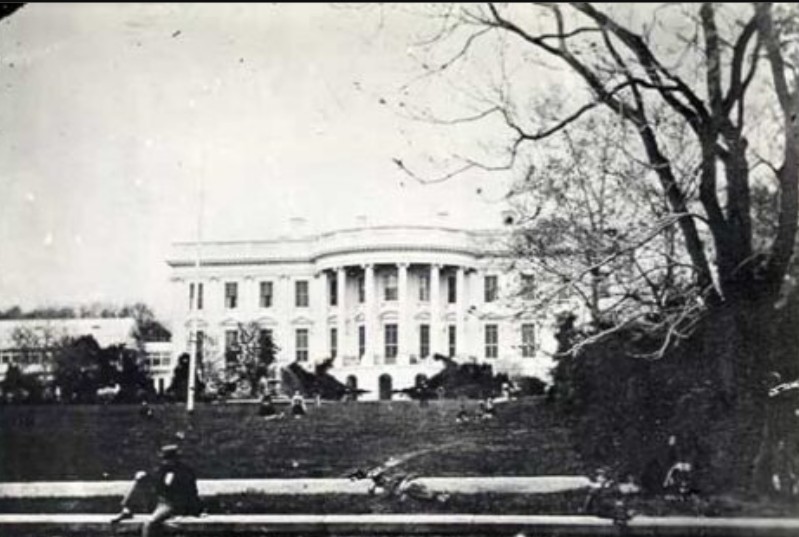
White House, Washington, D.C., 1861 (Matthew Brady, U.S. Library of Congress, public domain).

“There is another chapter to the story of how four young soldiers from Allentown, members of the Forty-Seventh Regiment, managed to see President Lincoln in 1861 after they had made two ineffectual efforts to see the great man. The young soldiers were Allen Wolf, William H. Smith, Jacob Worman, and George Hepler. They were members of Captain Mickley’s Company G and the pass which they had expired at 5 p.m. of that day.”

The Allentown Democrat, April 5, 1911


Their mission to shake the hand of President Abraham Lincoln accomplished, Private George Heppler, Drummer William N. Smith, Private Allen David Wolf, and Private Jacob Peter Worman, of the 47th Pennsylvania Volunteer Infantry, had a second mission to accomplish in late September of 1861 — to make it back to their regiment’s encampment, safely and quickly — because the pass that they had received from one of their superior officers was about to expire.

But their new mission would prove to be even more difficult than had their successful White House meeting with President Lincoln. According to The Allentown Democrat:

“It was growing late in the afternoon when the young soldiers left the White House and they made tracks for the camp. What followed can best be told in Mr. Wolf’s own words:

‘When we got to the point where our regiment had been encamped in the morning we saw nothing but strange faces. We asked for Company G, and were directed to a point. When we came there we found that during our absence the Forty-seventh had been ordered to move and a Wisconsin regiment was encamped there. We decided to return to the city [Washington, D.C.] and in due time fell into the hands of the patrol. We showed our pass and were sent to the headquarters of General McClellan. The general met us personally. We told him of our predicament and he told us that our regiment was now encamped in a different location. He directed us to cross the chain bridge. The general also informed us that a wagon train would go that way and that we should follow it. We did as he instructed us to do. What a march that was, however! It was raining all night and we were drenched to the skin by the time we reached our regiment. But we felt amply repaid. We had seen the greatest man in the country and had spoken to General McClellan.’

Chain Bridge across the Potomac above Georgetown looking toward Virginia, 1861 (The Illustrated London News, public domain).

The inability of the four 47th Pennsylvania Volunteers to locate their regiment’s camp is more easily understood when reading a letter penned on 29 September by Company C Musician Henry Wharton, in which he informed readers of the Sunbury American that the 47th Pennsylvania had changed camps three times in three days:

“On Friday last we left Camp Kalorama, and the same night encamped about one mile from the Chain Bridge on the opposite side of the Potomac from Washington. The next morning, Saturday, we were ordered to this Camp [Camp Advance near Fort Ethan Allen, Virginia], one and a half miles from the one we occupied the night previous. I should have mentioned that we halted on a high hill (on our march here) at the Chain Bridge, called Camp Lyon, but were immediately ordered on this side of the river. On the route from Kalorama we were for two hours exposed to the hardest rain I ever experienced. Whew, it was a whopper; but the fellows stood it well – not a murmur – and they waited in their wet clothes until nine o’clock at night for their supper. Our Camp adjoins that of the N.Y. 79th (Highlanders.)….

“We had not been in this Camp more than six hours before our boys were supplied with twenty rounds of ball and cartridge, and ordered to march and meet the enemy; they were out all night and got back to Camp at nine o’clock this morning, without having a fight. They are now in their tents taking a snooze preparatory to another march this morning…. I don’t know how long the boys will be gone, but the orders are to cook two days’ rations and take it with them in their haversacks….”

Despite that confusion, all four of the adventurous 47th Pennsylvania Volunteers eventually did manage to reconnect with their regiment at its encampment in Virginia. They then went on to follow President Lincoln’s directive to them: “Be good and above all obey your commander.”

Private Allen David Wolf, who was ultimately promoted up through the ranks to become Corporal Wolf, and Drummer William N. Smith both survived their initial three-year terms of enlistment and were both honorably discharged from the 47th Pennsylvania Volunteer Infantry’s encampment near Berryville, Virginia on September 18, 1864.

Private George Heppler, who was also ultimately promoted to the rank of corporal, and Private Worman, who was promoted to the rank of sergeant, served far longer — until the 47th was mustered out for the final time on Christmas Day in 1865.

All four witnessed both the worst and best of humanity and were forever changed by all that they had seen and heard as they fought to save their nation from disunion.


Sources:

  1. Bates, Samuel P. History of Pennsylvania Volunteers, 1861-5, vol. 1. Harrisburg, Pennsylvania: B. Singerly, State Printer, 1869.
  2. “Gleanings by the Way.” Allentown, Pennsylvania: The Allentown Democrat, April 4, 1911.
  3. “Gleanings By the Way.” Allentown, Pennsylvania: The Allentown Democrat, April 5, 1911.
  4. Wharton, Henry D. “Letters from the Sunbury Guards.” Sunbury, Pennsylvania: The Sunbury American, September 1861.


One Special September Day: Four 47th Pennsylvania Volunteers Shake Hands with President Abraham Lincoln in 1861 (part one)

Abraham Lincoln in New York City on Monday morning, February 27, 1860, several hours before he delivered his Cooper Union address (Matthew Brady, U.S. Library of Congress, public domain).

“In the eyes of the young men who went to the front during the dark days of the Civil War, the greatest man in the country was President Lincoln. It was every young soldier’s ambition to get the opportunity to see the great Lincoln, to shake him by the hand and to hear words fall from his lips. It was not an easy matter to have this ambition gratified. But comparatively few soldiers ever got within speaking distance of the great statesman. It was a physical impossibility for the president to see all those who wished to meet him and the attaches [sic] of the White House had to exercise great diplomacy with the eager throngs that haunted the executive mansion.”

— The Allentown Democrat, April 4, 1911


The vast majority of average Americans will never have the opportunity to shake the hand of a United States president. The schedules of modern office holders are too hectic and security protections are too tight to allow for such encounters on anything more than an infrequent basis — a reality that was true even for many U.S. citizens in the nineteenth century.

So, it is striking to learn that four young Pennsylvanians actually were able to shake President Abraham Lincoln’s hand on one very special day in late September 1861. All four were members of the 47th Pennsylvania Volunteer Infantry, which would go on to make history as the only regiment from the Commonwealth of Pennsylvania to participate in the Union’s Red River Campaign across Louisiana, and all four were members of that regiment’s G Company — a unit that would sustain heavy casualties as it fought valiantly in the Battle of Pocotaligo, South Carolina in 1862 and the Battle of Cedar Creek, Virginia in 1864.

Those memorable handshakes between President Lincoln and Private George Heppler, Drummer William N. Smith, Private Allen David Wolf, and Private Jacob Peter Worman, unfolded as follows, according to Wolf (who was interviewed by The Allentown Democrat in 1911):

“Our regiment went in 1861 from Harrisburg to Washington where we were encamped just outside the city limits. It was our dream to see Lincoln. Accordingly one day the four of us secured a pass to go into the city, but the time set for our return was 5 o’clock. We were all young fellows — I was seventeen years of age — and thrown into a new world. Everything seemed so wonderful to us and so different from Allentown. We were enjoying our holiday immensely, when some one suggested that we try to see President Lincoln. We had heard so much about this great man and when the matter was suggested we were all agreed.

“Let me tell you, however, that to start out to see the president and to actually see him in those days was [sic] two different things. Little did we dream of the difficulties that we would encounter. We started for the White House and arrived in due time. We got into the green room, where a negro servant met us and asked us our business. We told him that we were young soldiers from Pennsylvania and were very eager to see the president. The black man retired and returned a few moments later with the message that the president was very busy and could not see us at that time. We were disappointed, of course.

“We walked around the city for about an hour, but we were not satisfied. The disappointment over our failure to see the president weighed heavily on our minds. It was then that we determined to make another effort to have our ambition gratified and presented ourselves at the White House again. The negro servant recognized us and laughed when he saw us. We prevailed upon him to see the president and to find out whether we couldn’t see him. The negro again went up stairs and returned with the message that the president was still busy. We went away the second time disappointed.

“Again we walked about the city. Nothing seemed to interest us, however. We nursed our disappointment as best we could, but we simply could not rid ourselves of the desire to see the president. At four o’clock in the afternoon we determined to make a final effort. Again we ascended the White House steps and again we were met by our negro friend.He consented to intercede for us and went up stairs. A few moments later the president came down the stairway. We were standing at the bottom. There was a kindly, patient smile on his face. He greeted us cordially, shook each by the hand and said: ‘Boys, you are young soldiers. Be good and above all obey your commander.’ With that he retired. We were satisfied and went away brimful of happiness and patriotism.'”

What happened next for those four soldiers? Find out in part two of our look back at one of several encounters that members of the 47th Pennsylvania Volunteer Infantry had with President Abraham Lincoln during the American Civil War.


Sources:

  1. Bates, Samuel P. History of Pennsylvania Volunteers, 1861-5, vol. 1. Harrisburg, Pennsylvania: B. Singerly, State Printer, 1869.
  2. “Gleanings by the Way.” Allentown, Pennsylvania: The Allentown Democrat, April 4, 1911.
  3. “Gleanings By the Way.” Allentown, Pennsylvania: The Allentown Democrat, April 5, 1911.


Camp Brightwood, Washington, D.C. (Mid-April – June 2, 1865)

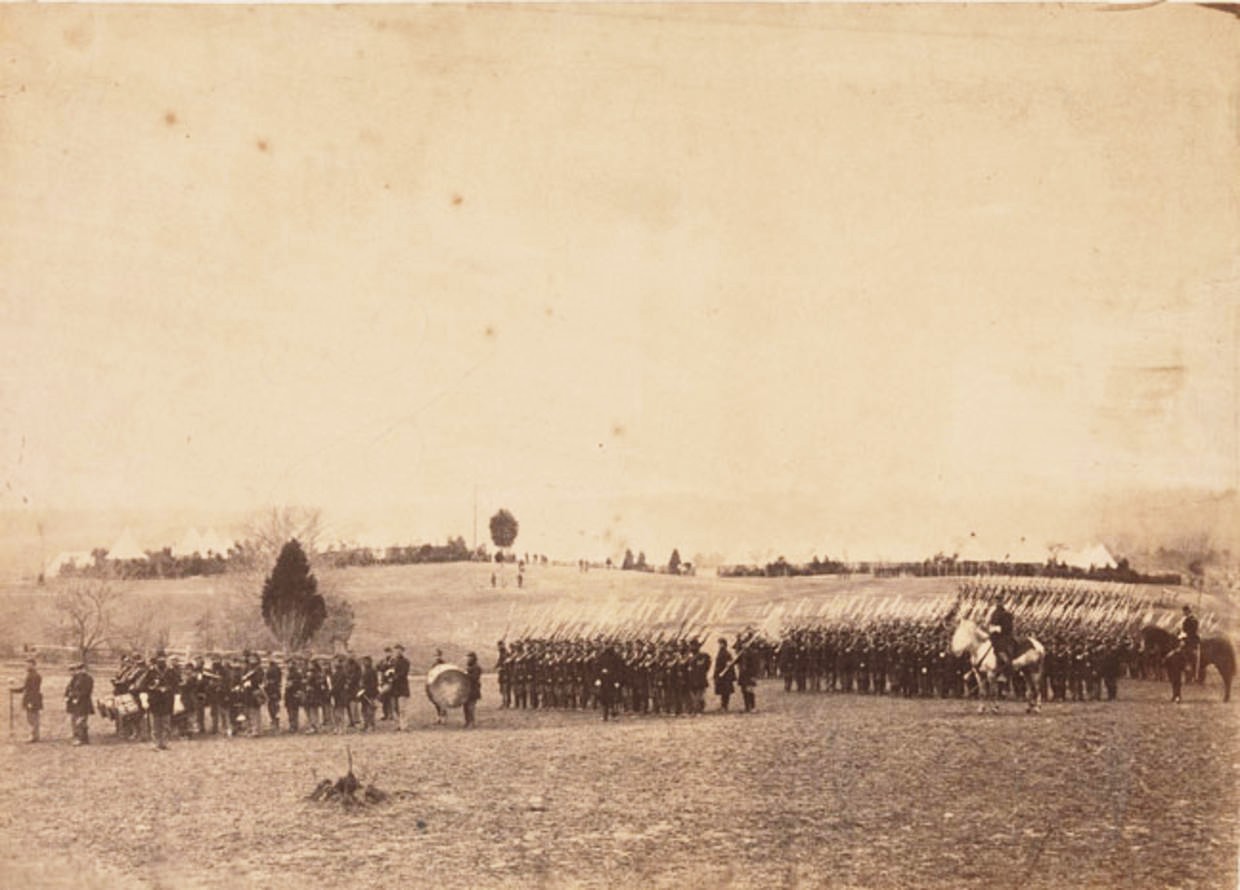
Unidentified Union infantry regiment, Camp Brightwood, Washington, D.C., circa 1865 (public domain; click to enlarge).

Marched closer to the nation’s capital in the wake of U.S. President Abraham Lincoln’s assassination in mid-April 1865, the 47th Pennsylvania Veteran Volunteers were directed to proceed to the Brightwood district in the northwestern section of Washington, D.C. and erect their Sibley tents at the Union Army duty station known as Camp Brightwood.

Their new job was to prevent Confederate States Army troops and their sympathizers from reigniting the flames of civil war that had just been stamped out weeks earlier.

According to historians at Cultural Tourism DC, Brightwood was “one of Washington, DC’s early communities and the site of the only Civil War battle to take place within the District of Columbia” — the Battle of Fort Stevens.

This crossroads community developed from the Seventh Street Turnpike, today’s Georgia Avenue, and Military Road. Its earliest days included a pre-Civil War settlement of free African Americans…. Eventually Brightwood boasted a popular race track, country estates, and sturdy suburban housing. In 1861 the area was known as Brighton, but once it was large enough to merit a U.S. Post Office, the name was changed to Brightwood to distinguish it from Brighton, Maryland.

Also, according to Cultural Tourism historians, Camp Brightwood was established on the grounds of “Emery Place, the summer estate of Matthew Gault Emery,” who had “made a fortune in stone-cutting, including the cornerstone for the Washington Monument,” which was laid in 1848.

During the Civil War (1861-1865), Captain Emery led the local militia. His hilltop became a signal station where soldiers used flags or torches to communicate with nearby Fort DeRussy or the distant Capitol. Soldiers of the 35th New York Volunteers created Camp Brightwood here. During the Battle of Fort Stevens in July 1864, Camp Brightwood was a transfer point for the wounded.

By late April of 1865, it was home to multiple Union Army regiments, including the 47th Pennsylvania Veteran Volunteers.

Guarding the Lincoln Assassination Conspirators

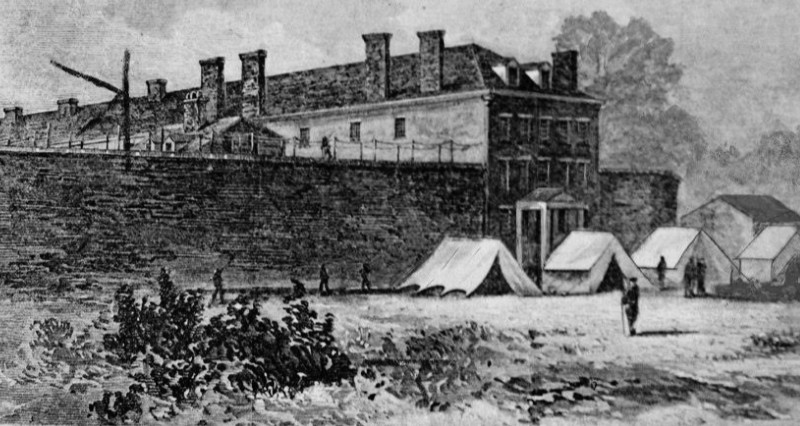
Washington Arsenal Penitentiary, Washington, D.C., 1865 (Joseph Hanshew, public domain; click to enlarge).

Sometime after their arrival at Camp Brightwood during that fateful spring of 1865, a group of 47th Pennsylvania Veteran Volunteers were given a new assignment — guard duty at the Washington Arsenal and its prison facility, where eight people were being held in connection with their involvement in the assassination of President Abraham Lincoln. They had been arrested between April 17 and 26.

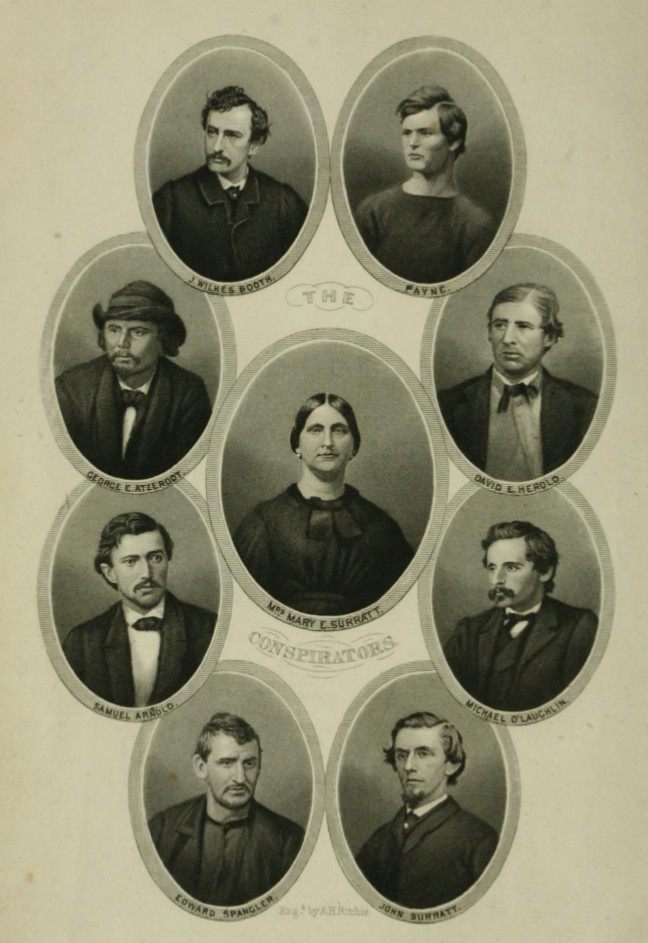
The key conspirators involved in President Abraham Lincoln’s assassination (Benn Pitman, The Assassination of President Lincoln and the Trial of the Conspirators,” 1865, U.S. Library of Congress, public domain).

While researchers for 47th Pennsylvania Volunteers: One Civil War Regiment’s Story have not yet determined the exact start date of the 47th Pennsylvania’s guard duties at the Washington Arsenal Penitentiary, they are now able to offer a better estimate — thanks to the work of Lincoln scholars Edward Steers, Jr. and Harold Holzer, who published documents written by Union Major-General John Frederick Hartranft, the Pennsylvanian appointed by U.S. President Andrew Johnson on May 1, 1865 “to command the military prison at the Washington Arsenal, where the U.S. government had just incarerated the seven men and one woman accused of complicity in the shooting.” Included in the Steers-Holzer compilation is a letter from Major-General Hartranft, governor and commander of the “Washington Arsenal Military Prison,” to Major-General Winfield S. Hancock, commanding officer of the United States Middle Military Division, which was dated May 11, 1865. Hartranft began by informing Hancock that “at 10:25 yesterday [May 10, 1865], Lt. Col. J. M. Clough, 18th N. H. reported with 450 muskets, for four days duty, relieving the 47th Pa. Vols.” He then went on to describe the duties performed by 18th New Hampshire Volunteers at the Washington Arsenal on May 10:

At 11:45, the prisoners on trial were taken into Court, in compliance with the orders of the same. At 1 P.M. the Court ordered the prisoners returned to their cells, which was done.

At 1:10 P.M. dinner was served to the prisoners in the usual manner.

At 1:30 in compliance with your orders Marshal McPhail was admitted to see the prisoner in 161 [Atzerodt], his hood having been previously removed; he remained with him until 2.35, immediately after which his hood was replaced and the door locked.

At 3:45 P.M. Mr. George L. Crawford in accordance with your instructions, was permitted to have an interview with prisoner in 209. I was present during the same, and heard all that was said. The conversation was in regard to the property of the prisoner in Philadelphia. At 4:25 the hood was replaced and the cell locked.

At 6 P.M. Supper was furnished the prisoners and at the same time Dr. Porter and myself made inspections of all the cells and prisoners.

At 6 P.M. in accordance with your instructions, Mr. Stone, counsel for Dr. Mudd, was permitted to visit his client. The interview took place in the presence of Lt. Col. McCall but not in his hearing.

At 6:35 the interview closed, and the door was again locked.

At 7 this A.M. breakfast was served to the prisoners in the usual manner. At 7:15, Dr. Porter and myself made Inspections of all the cells and prisoners.

I would respectfully recommend that the prisoner in 190 be removed to cell 165.

All passes admitting persons during the last 24 hours are here with enclosed.

As a result, researchers for the 47th Pennsylvania Volunteers’ project postulate that:

  1. As many as four hundred and fifty 47th Pennylvania Veteran Volunteer Infantrymen may have been stationed at the Washington Arsenal between May 6-10, 1865; and
  2. At least some of those 47th Pennsylvanians may very well have interacted with the key Lincoln assassination conspirators (Samuel Bland Arnold, George A. Atzerodt, David E. Herold, Dr. Samuel Alexander Mudd, Michael O’Laughlen, Lewis Thornton Powell/Lewis Payne, Edman Spangler/Ned Spangler, and Mary Elizabeth Surratt) — interactions which likely took place while those eight prisoners were confined at the Washington Arsenal prison; on the way to and from the courtroom, where they were being tried for conspiring to assassinate President Lincoln; inside that courtroom during trial proceedings; and possibly also at other sites related to their confinement and trial.

Although the duties performed between by 47th Pennsylvania Volunteers between May 6-9 would not have been exactly the same as those performed by the New Hampshire soldiers on May 10, they may very well have been similar — meaning that at least some 47th Pennsylvania Volunteers may have been involved in locking and unlocking the doors of the conspirators’ cells, escorting the conspirators into the courtroom of their military trial (which began on May 9, 1865), standing guard over the conspirators during their trial to prevent their escape, escorting them from the courtroom, and interacting with them in their cells by:

  • Bringing meals to them;
  • Removing and replacing the hoods that covered their heads so that they could interact with their lawyers and other visitors;
  • Verifying the legitimacy of passes held by would-be visitors and denying or granting access to those visitors as appropriate;
  • Escorting visitors to and from their cells; and
  • Monitoring their visits with anyone granted entry to their cells.

With their guard assignment completed by the morning of May 10, 1865, the 47th Pennsylvania Volunteers who were serving on detached duty at the Washington Arsenal were marched back to Camp Brightwood, where they would remain until their next assignment — participating in the Union’s Grand Review of the National Armies on May 23, 1865.

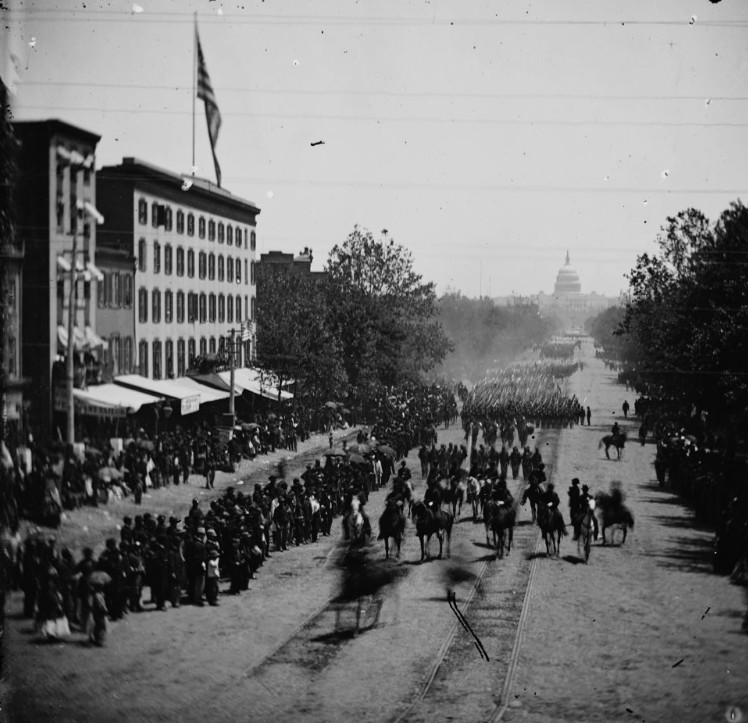
19th Corps, Army of the United States, Grand Review of the National Armies, Pennsylvania Avenue, Washington, D.C., May 23, 1865 (Matthew Brady, U.S. Library of Congress, public domain).

The Grandest of the Grand Reviews

The 47th Pennsylvania Veteran Volunteer Infantry was just one group of the more than one hundred and forty-five thousand Union military men who marched from Capitol Hill through the streets of Washington, D.C. during a two-day spectacle designed to celebrate the end of the American Civil War and heal Americans’ heartbreak in the wake of President Lincoln’s assassination. Held from May 23-24, 1865, it was a sight that had never been seen before — and one that would likely never be seen anywhere in the United States of America ever again. The first day’s parade alone lasted six hours.

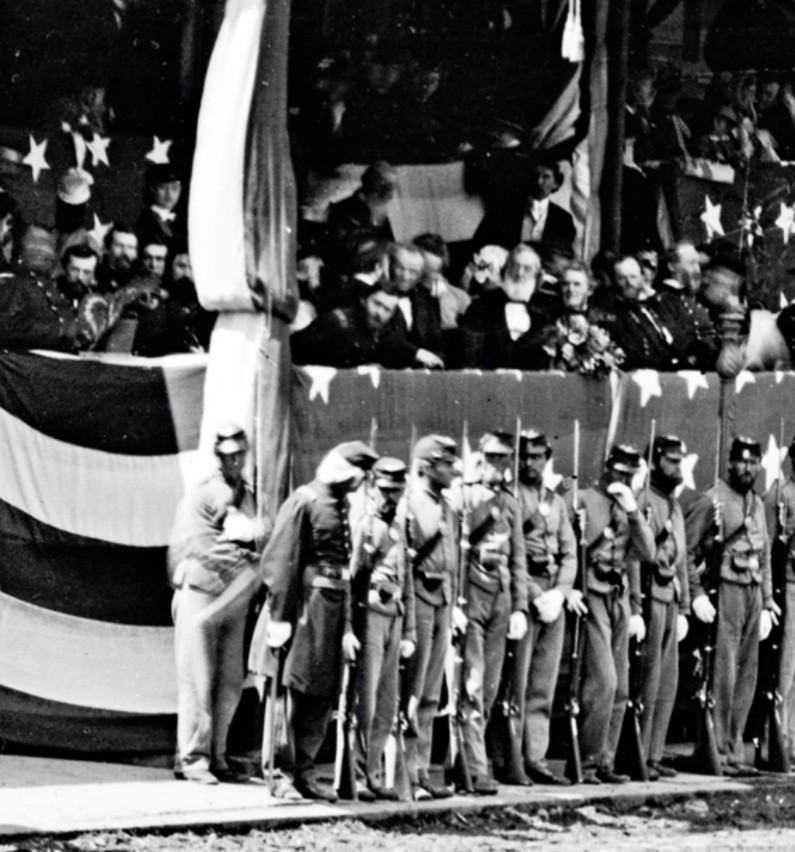
Lieutenant-General Ulysses S. Grant, leaning forward, President Andrew Johnson to his left, Grand Review of the National Armies, Washington, D.C., May 23, 1865 (U.S. Library of Congress, public domain).

According to The New York Times, the 47th Pennsylvanians were positioned behind the parade’s third division, as part of the Nineteenth Army Corps (XIX Corps) in Dwight’s Division. Marching with the precision for which they had become renowned, they passed in front of a review stand which sheltered U.S. President Andrew Johnson, Secretary of War Edwin M. Stanton and Lieutenant-General Ulysses S. Grant. The division directly behind the 47th Pennsylvanians in that day’s line of march included other officers and general staff of the Army of the United States and regiments commanded by American Civil War icon Brigadier-General Joshua L. Chamberlain, one of the most beloved heroes from the tide-turning Battle of Gettysburg.

Rev. William DeWitt Clinton Rodrock, chaplain, 47th Pennsylvania Volunteers (courtesy of Robert Champlin, used with permission).

Afterward, 47th Pennsylvania Chaplain William DeWitt Clinton Rodrock summed up the experience in a report penned at Camp Brightwood on May 31:

The wise king of the Scriptures speaks of a sorrow that pervades the human heart “in the midst of laughter.” The truthfulness of this Divine philosophy is a matter of daily experience. Our most joyous seasons are intermingled with a sadness that often challenges definition. Every garden has its sepulchre. Every draft of sweet has its ingredient of bitter. This fact has never been so fully realized as this month. With the mighty army of brave soldiers congregated and reviewed in Washington and the … expressions of deep regret that Abraham Lincoln is not here to have witnessed the great pageant of the 23rd and 24th inst. have been universal. Not the splendid victories which our brave soldiers have won — not the pleasing prospect that they are “homeward bound” — not the consolatory thought that the reins of government have fallen into the hands of so good a man as Andrew Johnson — have served to restrain these utterances of grief and sorrow. Had it been God’s will to spare Mr. Lincoln’s life, what an eclat his presence would have imparted to the mighty pageant.

But as He willed otherwise and “doeth all things well,” it is ours to learn the great lesson of the hour.

Rebuilding a Shattered Nation

Ruins of Charleston, South Carolina as seen from the Circular Church, 1865 (U.S. National Archives and Records Administration, public domain).

As the cheers of the Grand Review crowds faded, the 47th Pennsylvania Veteran Volunteers resumed life at Camp Brightwood, with many assuming that their days of wearing “Union Blue” were finally coming to an end. But that assumption proved to be an incorrect one when the 47th Pennsylvania Veteran Volunteers received word that they were being reassigned. Ordered to pack their belongings in late May 1865, they would be heading back to America’s Deep South — this time to assist with Reconstruction duties in Georgia and South Carolina, beginning the first week in June.


Sources:

  1. Assassination of President Abraham Lincoln.” Washington, D.C.: U.S. Library of Congress, retrieved online May 21, 2025.
  2. Bates, Samuel P. History of Pennsylvania Volunteers, 1861-5, vol. 1. Harrisburg, Pennsylvania: B. Singerly, State Printer, 1869.
  3. Battleground National Cemetery: Battleround to Community — Brightwood Heritage Trail,” “Fort Stevens” and “Mayor Emery and the Union Army.” United States: Historical Marker Database, retrieved online May 20, 2025.
  4. “Battleground to Community: Brightwood Heritage Trail.” Washington, D.C.: Cultural Tourism DC, 2008.
  5. “Grand Military Review: Streets Crowded with Spectators: Sherman Greeted with Deafening Cheers.” Pittsburgh, Pennsylvania: The Daily Post, May 25, 1865.
  6. Grant” (television mini-series). New York, New York: History Channel Education, 2020.
  7. “Our Heroes! The Grand Review at Washington. Honor to the Brave. Immense Outpouring of the People. The Troops Reviewed by Gen. Grant.” Harrisburg, Pennsylvania: Daily Telegraph, May 23, 1865.
  8. Pitman, Benn. The Assassination of President Abraham Lincoln and the Trial of the Conspirators. Cincinnati, Ohio and New York, New York: Moore, Wilstach & Boldwin, 1865.
  9. Reconstruction: An Overview.” Washington, D.C.: American Battlefield Trust, November 28, 2023.
  10. Review of the Armies; Propitious Weather and a Splendid Spectacle. Nearly a Hundred Thousand Veterans in the Lines.” New York, New York: The New York Times, May 24, 1865, front page.
  11. Rodrock, Rev. William D. C. Chaplain’s Reports (47th Pennsylvania Volunteer Infantry, 1865). Washington, D.C.: U.S. National Archives and Records Administration.
  12. Schmidt, Lewis. A Civil War History of the 47th Regiment of Pennsylvania Veteran Volunteers. Allentown, Pennsylvania: Self-published, 1986.
  13. “Serenade to General Grant” (performance for Lieutenant-General Ulysses S. Grant by the 47th Pennsylvania Veteran Volunteers’ Regimental Band), in “Washington.” Philadelphia, Pennsylvania: The Inquirer, May 22, 1865.
  14. Steers, Edward Jr. and Harold Holzer. The Lincoln Assassination Conspirators: Their Confinement and Execution, as Recorded in the Letterbook of John Frederick Hartranft. Baton Rouge, Louisiana, 2009.
  15. The Final March: Grand Review of the Armies.” Washington, D.C.: U.S. National Park Service, retrieved online May 20, 2025.
  16. “The Grand Review: A Grand Spectacle Witnessed.” Pittsburgh, Pennsylvania: The Daily Post, May 24, 1865.
  17. “The Grand Review: Immense Crowds in Washington: Fine Appearance of the Troops: Their Enthusiastic Reception.” Harrisburg, Pennsylvania: Pennsylvania Daily Telegraph, May 24, 1865; and West Chester, Pennsylvania: The Record, May 17, 1865.
  18. “The Grand Review: The City Crowded with Visitors: Order of Corps, Divisions, Brigades and Regiments.” Philadelphia, Pennsylvania: Daily Constitutional Union, May 23, 1865.
  19. “The History of the Forty-Seventh Regt. P. V.” Allentown, Pennsylvania: The Lehigh Register, 20 July 1870.
  20. The Lincoln Conspirators,” in “Ford’s Theatre.” Washington, D.C.: U.S. National Park Service, retrieved online May 21, 2025.


April 15th: A Date of Decision and Death for President Abraham Lincoln

This 1865 photograph of President Abraham Lincoln by Alexander Gardner is believed by historians to be the final photo taken of Lincoln (1865, U.S. Library of Congress, public domain).

There were multiple key moments in the life of the man who would become the sixteenth president of the United States of America. Some, like the deaths of his mother and sister, would dramatically alter the trajectory of his life; others, like his decision to embark upon a life of public service, would reshape the future of a nation.

But his actions on one particular date, during two entirely different years, did both.

So pivotal in history, that particular date’s annual arrival still stops average Americans in their tracks each year, prompting them to reflect on the legacy of that one man — and the question, “What if?”

That man was U.S. President Abraham Lincoln and that date is April 15.

Lincoln’s Call for Seventy-Five Thousand Volunteers (April 15, 1861)

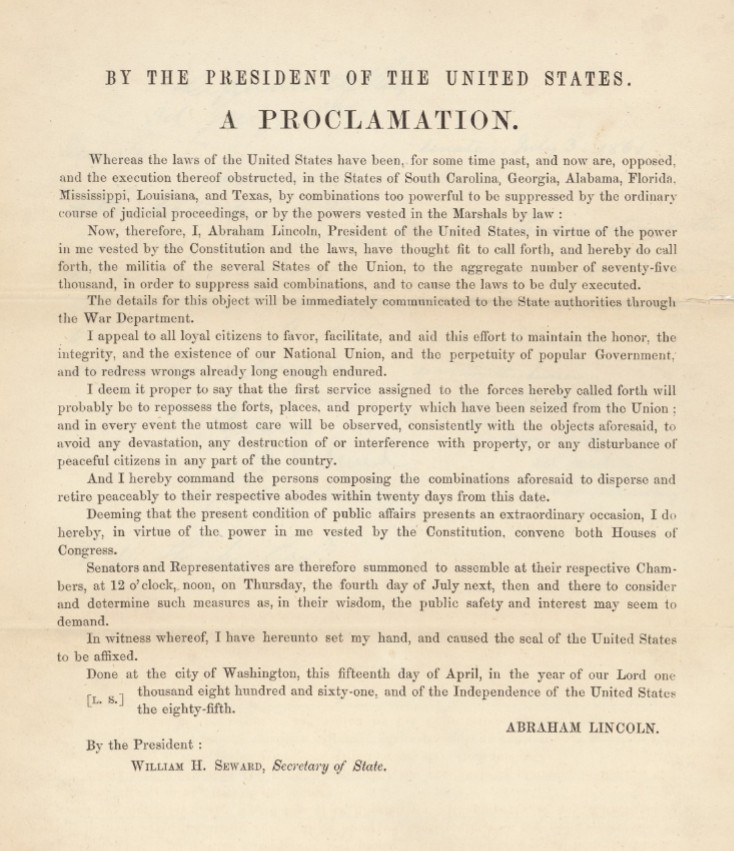
Proclamation issued by U.S. President Abraham Lincoln, calling for seventy-five thousand state militia troops to bring an end to the secession of, and insurrection by, eleven of fifteen southern slaveholding states, April 15, 1861 (U.S. National Archives and Records Administration, public domain; click to enlarge).

In response to the fall of Fort Sumter in Charleston, South Carolina to Confederate States troops on April 14, 1861, President Abraham Lincoln issued a proclamation in which he called for seventy-five thousand men across the United States to risk their lives to defend the nation’s capital and bring a swift end to the secession crisis and insurrection initiated by eleven of fifteen southern slave holding states. That proclamation, which was issued on April 15, 1861 read as follows:

By the President of the United States.

A Proclamation.

Whereas the laws of the United States have been, for some time past, and now are, opposed, and the execution thereof obstructed, in the States of South Carolina, Georgia, Alabama, Florida, Mississippi, Louisiana, and Texas, by combinations too powerful to be suppressed by the ordinary course of judicial proceedings, or by the powers vested in the Marshals by law:

Now, therefore, I, Abraham Lincoln, President of the United States, in virtue of the power in me vested by the Constitution and the laws, have thought fit to call forth, and hereby do call forth, the militia of the several States of the Union, to the aggregate number of seventy-five thousand, in order to suppress said combinations, and to cause the laws to be duly executed.

The details for this object will be immediately communicated to the State authorities through the War Department.

I appeal to all loyal citizens to favor, facilitate, and aid this effort to maintain the honor, the integrity, and the existence of our National Union, and the perpetuity of popular Government, and to redress wrongs already long enough endured.

I deem it proper to say that the first service assigned to the forces hereby called forth will probably be to repossess the forts, places, and property which have been seized from the Union; and in every event the utmost care will be observed, consistently with the objects aforesaid, to avoid any devastation, any destruction of or interference with property, or any disturbance of peaceful citizens in any part of the country.

And I hereby command the persons composing the combinations aforesaid to disperse and retire peaceably to their respective abodes within twenty days from this date.

Deeming that the present condition of public affairs presents an extraordinary occasion, I do hereby, in virtue of the power in me vested by the Constitution, convene both Houses of Congress.

Senators and Representatives are therefore summoned to assemble at their respective Chambers, at 12 o’clock, noon, on Thursday, the fourth day of July next, then and there to consider and determine such measures as, in their wisdom, the public safety and interest may seem to demand.

In witness whereof, I have hereunto set my hand, and caused the seal of the United States to be affixed.

Done at the city of Washington, this fifteenth day of April, in the year of our Lord one thousand eight hundred and sixty-one, and of the Independence of the United States the eighty-fifth.

Abraham Lincoln

By the President: William H. Seward, Secretary of State.

Four years later, on the exact same date, President Abraham would draw his last breath.

Lincoln’s Death from an Assassin’s Bullet (April 15, 1865)

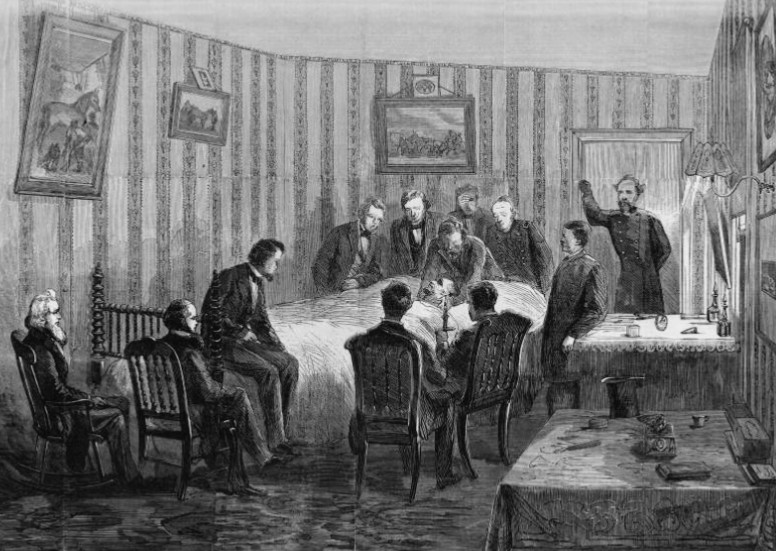
President Abraham Lincoln on his deathbed at the Petersen House in Washington, D.C., April 15, 1865 (Harper’s Weekly, 1865, public domain; click to enlarge).

Mortally wounded by a shot to his head, which was fired by an assassin and Confederate sympathizer while President Abraham Lincoln was watching a performance of the popular stage play, Our American Cousin, at Ford’s Theatre in Washington, D.C., on the evening of Good Friday, April 14, 1865, President Lincoln was initially examined on site in the presidential box, by fellow theatre attendee and physician Charles Leale, before being carried downstairs by Union Army soldiers and taken across Tenth Street — and into a room at the Petersen boarding house, where he was then gently lowered onto the bed of Willie Clark.

As additional physicians arrived and assessed the president’s condition, a decision was made to make him as comfortable as possible, when it was determined that he would likely not survive the night.

A remarkably strong man, even as he waged his toughest battle, President Lincoln managed to hang onto until the following morning, drawing his final ragged breath at 7:22 a.m. on April 15, 1865 — and leaving the work of national healing and Reconstruction in far less capable hands.

One hundred and sixty years later, Americans still wonder, “Would we be a better nation if Lincoln had survived?”


Sources:

  1. A Proclamation by the President of the United States, April 15, 1861.” Washington, D.C.: U.S. Capitol Visitor Center, retrieved online April 15, 2025.
  2. Abraham Lincoln’s Assassination,” in “History Channel: Civil War.” New York, New York: A&E Television Networks, February 27, 2025.
  3. Eric Foner: Reconstruction and the Constitution” (video). Chicago, Illinois: Chicago Humanities Festival, 2019.
  4. Lincoln’s Death,” in “Lincoln Assassination.” Washington, D.C.: Ford’s Theatre, retrieved online December 1, 2024.
  5. The Petersen House.” Washington, D.C.: U.S. National Park Service, December 1, 2024.


Through a War Correspondent’s Eyes: The Art of Winslow Homer

Winslow Homer, 1880 (public domain).

Winslow Homer (1836-1910) was a Boston native who became one of the most important artists in nineteenth-century America. Best known for his pastoral landscapes and seascapes, he was also a notable chronicler of the lives of average American Civil War-era soldiers.

Apprenticed to Boston lithographer J. H. Bufford during the mid-1850s, he subsequently turned down a job offer by Harper’s Weekly later that same decade to become a staff illustrator, choosing, instead, to make his living as a freelancer and founder of his own art studio in New York City.

American Civil War

“The Civil War Surgeon at Work in the Field,” Winslow Homer, 12 July 1862 (National Library of Medicine, public domain).

During the early 1860s, however, Winslow Homer was ultimately persuaded to serve as a war correspondent for Harper’s Weekly, leading him to create some of the most evocative illustrations of the American Civil War era.

In 1862, for example, he showed Americans what it was like to be “The Civil War Surgeon at Work in the Field” by sketching a group of Union Army surgeons and wounded soldiers and then turning that sketch into a powerful illustration for a July edition of Harper’s Weekly. In November of that same year, he documented “A Sharp-Shooter on Picket Duty,” perched high up in a tree in the Virginia countryside, protecting his fellow members of the Army of the Potomac.

“Thanksgiving in Camp” (Winslow Homer, Harper’s Weekly, 29 November 1862, public domain).

That same month, he also preserved, for all time, a Thanksgiving celebration of one pensive group of Union Army soldiers who were stationed far from the arms of loved ones.

Why Was His Work So Popular?

Homer’s work captured the hearts and minds of Harper’s Weekly readers for three simple reasons. He had a great eye and great instincts to match his great skills as an illustrator.

“Sleeping on Their Arms” (Winslow Homer, Harper’s Weekly, 21 May 1864, public domain).

According to a 2015 Yale News article about Homer by Amy Athey Mcdonald, “Artist-reporters” of the Civil War era “had to be more than merely good draftsmen. They had to be astute observers, have an instinct for story and drama, the ability to sketch quickly and accurately, and no small amount of daring, as they faced battles, injuries, starvation, and disease first hand.”

Post-War Life

After the Civil War ended, Winslow put a fair amount of distance between himself and the United States. In 1866, he traveled to France, where he spent ten months studying and honing his skills. According to the late H. Barbara Weinberg, a renowned American art scholar and former curator at The Metropolitan Museum of Art in New York City, “While there [was] little likelihood of influence from members of the French avante-garde” during this phase of Homer’s life, “Homer shared their subject interests, their fascination with serial imagery, and their desire to incorporate into their works outdoor light, flat and simple forms (reinforced by their appreciation of Japanese design principles), and free brushwork.”

Recognized as a master of oil painting in the United States by the 1870s (while still just in his thirties), he also began to explore his talent as a watercolor artist.

“The Cotton Pickers” (Winslow Homer, 1876, public domain).

And, he began to document the post-war lives of men and women who had been freed from chattel enslavement. Painted in oil in 1876, “The Cotton Pickers” illustrated the harsh reality of the Reconstruction era–that many Freedmen and Freedwomen were still engaged in the same backbreaking work that they had endured while enslaved before the war. According to author Carol Strickland, “Although the artist left scant record of his convictions about race, his paintings of Black people are unlike those of his contemporaries.”

“The Gulf Stream” (Winslow Homer, 1899, public domain).

When speaking to Strickland for a 2022 profile of Homer, Associate Professor Gwendolyn DuBois Shaw observed that “before Emancipation, artists had elicited sympathy for enslaved people by portraying them on the auction block, for example. But the market for such work evaporated after the 1860s…. Caricatures derived from minstrel shows appeared in paintings, but ‘it was really unusual for Homer to stake so much on Black subjects connected to Reconstruction.'” His work in this regard, however, was not only limited to the Reconstruction era; in later years, he depicted the struggles of the Black men, women and children that he met while visiting the Bahamas.

“The Life Line” (Winslow Homer, 1884, public domain).

But it was, perhaps, through his paintings of the sea that he became best known to a wider audience across America. According to Weinberg:

He enjoyed isolation and was inspired by privacy and silence to paint the great themes of his career: the struggle of people against the sea and the relationship of fragile, transient human life to the timelessness of nature.


Sources:

  1. McDonald, Amy Athey. “As Embedded Artist with the Union Army, Winslow Homer Captured Life at the Front of the Civil War.” New Haven, Connecticut: Yale News, 20 April 2015.
  2. Strickland, Carol. “Not Just Seascapes: Winslow Homer’s Rendering of Black Humanity.” Boston, Massachusetts: The Christian Science Monitor, 7 June 2022.
  3. “Thanksgiving in Camp (from ‘Harper’s Weekly,’ Vol. VII).” New York, New York: The Metropolitan Museum of Art, retrieved online 28 November 2024.
  4. “The Army of the Potomac — A Sharp-Shooter on Picket Duty (from ‘Harper’s Weekly,’ Vol. VII).” New York, New York: The Metropolitan Museum of Art, retrieved online 28 November 2024.
  5. Weinberg, H. Barbara. “Winslow Homer (1836-1910).” New York, New York: The Metropolitan Museum of Art, October 2004.


The Lieber Code: President Abraham Lincoln Formalizes the Code of Conduct for the Union Army (April 24, 1863)


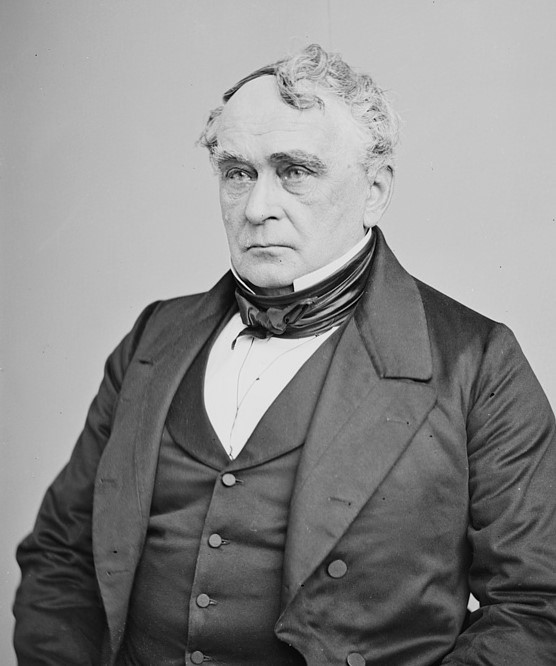
Professor Francis Lieber, circa 1860s (U.S. Library of Congress, public domain).

Issued by President Abraham Lincoln on April 24, 1863 as “General Orders, No. 100: Instructions for the Government of Armies of the United States in the Field,” the “Lieber Code” defined how regular and volunteer military personnel in service to the United States were expected to behave toward one another, toward civilians and toward those they considered to be the enemy—Confederate States government officials, sailors, soldiers, spies, and others supporting the Confederacy.

Those instructions were researched and drafted by Francis Lieber, a native of the Kingdom of Prussia who became a professor of American history and political science in South Carolina roughly a decade after arriving as an immigrant in the United States. Professor Lieber, who later joined the faculty of what is, today, Columbia University, also became known for his creation of the maxim, “Nullum jus sine officio, nullum officium sine jure” (translation: “No right without its duties, no duty without its rights”), which was inscribed on his personal stationery.

According to Jenny Gesley, Ph.D., a legal specialist at the United States Library of Congress, Professor Lieber “had been imprisoned as an ‘enemy of the state,’” while still a resident of Prussia “due to his liberal nationalist views and his opposition to Prussia’s political system.”

His book “On Civil Liberty and Self Government” (1853) was a bestseller and was eventually adopted as a standard college textbook. Even though he was widely known and respected in the academic community, he felt like an outsider in South Carolina, in particular because of his opposition to slavery. In 1857, he therefore accepted a position in the department of history and political science at Columbia College, the future Columbia University, and subsequently a position in Columbia Law School.

…. When the Civil War broke out in 1861, President Lincoln wanted to provide instructions to Union officers on the particularly complicated legal issues arising from non-international armed conflicts. Among these issues were whether to treat captured Confederate soldiers as traitors subject to the death penalty or as prisoners of war (POWs) and the treatment of fugitive or freed slaves…. Lieber and a committee of four generals were therefore asked to draw up a manual for Union soldiers….

By the time that the Lieber Code was finalized, it contained one hundred and fifty-seven provisions, including several that addressed “the treatment of fugitive and freed slaves that entered the Union territory.” According to Dr. Gesley:

Lieber took the view that international law did not distinguish between people based on color (Art. 58) and that the law of nature and nations has never acknowledged slavery (Art. 42). He therefore included provisions that held that fugitive slaves that escaped to the North became free (Arts. 42, 43) and that all soldiers no matter their skin color must be awarded POW status (Art.57).

The Lieber Code also spelled out how civilians and miliary prisoners of war (POWs) should be treated. The following were among the most enlightening provisions of this new code of conduct:

Article 15. Military necessity admits of all direct destruction of life or limb of armed enemies, and of other persons whose destruction is incidentally unavoidable in the armed contests of the war; it allows of the capturing of every armed enemy, and every enemy of importance to the hostile government, or of peculiar danger to the captor; it allows of all destruction of property, and obstruction of the ways and channels of traffic, travel, or communication, and of all withholding of sustenance or means of life from the enemy; of the appropriation of whatever an enemy’s country affords necessary for the subsistence and safety of the army, and of such deception as does not involve the breaking of good faith either positively pledged, regarding agreements entered into during the war, or supposed by the modern law of war to exist. Men who take up arms against one another in public war do not cease on this account to be moral beings, responsible to one another and to God.

Article 16. Military necessity does not admit of cruelty—that is, the infliction of suffering for the sake of suffering or for revenge, nor of maiming or wounding except in fight, nor of torture to extort confessions. It does not admit of the use of poison in any way, nor of the wanton devastation of a district. It admits of deception, but disclaims acts of perfidy; and, in general, military necessity does not include any act of hostility which makes the return to peace unnecessarily difficult.

Article 17 (no longer permitted under present-day international laws). War is not carried on by arms alone. It is lawful to starve the hostile belligerent, armed or unarmed, so that it leads to the speedier subjection of the enemy….

Article 21. The citizen or native of a hostile country is thus an enemy, as one of the constituents of the hostile state or nation, and as such is subjected to the hardships of the war.

Article 22. Nevertheless, as civilization has advanced during the last centuries, so has likewise steadily advanced, especially in war on land, the distinction between the private individual belonging to a hostile country and the hostile country itself, with its men in arms. The principle has been more and more acknowledged that the unarmed citizen is to be spared in person, property, and honor as much as the exigencies of war will admit.

Article 23. Private citizens are no longer murdered, enslaved, or carried off to distant parts, and the inoffensive individual is as little disturbed in his private relations as the commander of the hostile troops can afford to grant in the overruling demands of a vigorous war….

Article 26. Commanding generals may cause the magistrates and civil officers of the hostile country to take the oath of temporary allegiance or an oath of fidelity to their own victorious government or rulers, and they may expel everyone who declines to do so. But whether they do so or not, the people and their civil officers owe strict obedience to them as long as they hold sway over the district or country, at the peril of their lives….

Article 35. Commanding generals may cause the magistrates and civil officers of the hostile country to take the oath of temporary allegiance or an oath of fidelity to their own victorious government or rulers, and they may expel everyone who declines to do so. But whether they do so or not, the people and their civil officers owe strict obedience to them as long as they hold sway over the district or country, at the peril of their lives.

Article 36. If such works of art, libraries, collections, or instruments belonging to a hostile nation or government, can be removed without injury, the ruler of the conquering state or nation may order them to be seized and removed for the benefit of the said nation. The ultimate ownership is to be settled by the ensuing treaty of peace. In no case shall they be sold or given away, if captured by the armies of the United States, nor shall they ever be privately appropriated, or wantonly destroyed or injured.

Article 37. The United States acknowledge and protect, in hostile countries occupied by them, religion and morality; strictly private property; the persons of the inhabitants, especially those of women: and the sacredness of domestic relations. Offenses to the contrary shall be rigorously punished. This rule does not interfere with the right of the victorious invader to tax the people or their property, to levy forced loans, to billet soldiers, or to appropriate property, especially houses, lands, boats or ships, and churches, for temporary and military uses.

Article 38. Private property, unless forfeited by crimes or by offenses of the owner, can be seized only by way of military necessity, for the support or other benefit of the army or of the United States. If the owner has not fled, the commanding officer will cause receipts to be given, which may serve the spoliated owner to obtain indemnity….

Article 42.  Slavery, complicating and confounding the ideas of property, (that is of a thing,) and of personality, (that is of humanity,) exists according to municipal or local law only. The law of nature and nations has never acknowledged it. The digest of the Roman law enacts the early dictum of the pagan jurist, that “so far as the law of nature is concerned, all men are equal.” Fugitives escaping from a country in which they were slaves, villains, or serfs, into another country, have, for centuries past, been held free and acknowledged free by judicial decisions of European countries, even though the municipal law of the country in which the slave had taken refuge acknowledged slavery within its own dominions.

Article 43. Therefore, in a war between the United States and a belligerent which admits of slavery, if a person held in bondage by that belligerent be captured by or come as a fugitive under the protection of the military forces of the United States, such person is immediately entitled to the rights and privileges of a freeman. To return such person into slavery would amount to enslaving a free person, and neither the United States nor any officer under their authority can enslave any human being. Moreover, a person so made free by the law of war is under the shield of the law of nations, and the former owner or State can have, by the law of postliminy, no belligerent lien or claim of service.

Article 44. All wanton violence committed against persons in the invaded country, all destruction of property not commanded by the authorized officer, all robbery, all pillage or sacking, even after taking a place by main force, all rape, wounding, maiming, or killing of such inhabitants, are prohibited under the penalty of death, or such other severe punishment as may seem adequate for the gravity of the offense. A soldier, officer or private, in the act of committing such violence, and disobeying a superior ordering him to abstain from it, may be lawfully killed on the spot by such superior….

Article 47. Crimes punishable by all penal codes, such as arson, murder, maiming, assaults, highway robbery, theft, burglary, fraud, forgery, and rape, if committed by an American soldier in a hostile country against its inhabitants, are not only punishable as at home, but in all cases in which death is not inflicted, the severer punishment shall be preferred.

Article 48. Deserters from the American Army, having entered the service of the enemy, suffer death if they fall again into the hands of the United States, whether by capture, or being delivered up to the American Army; and if a deserter from the enemy, having taken service in the Army of the United States, is captured by the enemy, and punished by them with death or otherwise, it is not a breach against the law and usages of war, requiring redress or retaliation.

Article 49. A prisoner of war is a public enemy armed or attached to the hostile army for active aid, who has fallen into the hands of the captor, either fighting or wounded, on the field or in the hospital, by individual surrender or by capitulation. All soldiers, of whatever species of arms; all men who belong to the rising en masse of the hostile country; all those who are attached to the army for its efficiency and promote directly the object of the war, except such as are hereinafter provided for; all disabled men or officers on the field or elsewhere, if captured; all enemies who have thrown away their arms and ask for quarter, are prisoners of war, and as such exposed to the inconveniences as well as entitled to the privileges of a prisoner of war.

Article 50. Moreover, citizens who accompany an army for whatever purpose, such as sutlers, editors, or reporters of journals, or contractors, if captured, may be made prisoners of war, and be detained as such. The monarch and members of the hostile reigning family, male or female, the chief, and chief officers of the hostile government, its diplomatic agents, and all persons who are of particular and singular use and benefit to the hostile army or its government, are, if captured on belligerent ground, and if unprovided with a safe conduct granted by the captor’s government, prisoners of war.

Article 51. If the people of that portion of an invaded country which is not yet occupied by the enemy, or of the whole country, at the approach of a hostile army, rise, under a duly authorized levy en masse to resist the invader, they are now treated as public enemies, and, if captured, are prisoners of war.

Article 52. No belligerent has the right to declare that he will treat every captured man in arms of a levy en masse as a brigand or bandit. If, however, the people of a country, or any portion of the same, already occupied by an army, rise against it, they are violators of the laws of war, and are not entitled to their protection.

Article 53. The enemy’s chaplains, officers of the medical staff, apothecaries, hospital nurses and servants, if they fall into the hands of the American Army, are not prisoners of war, unless the commander has reasons to retain them. In this latter case; or if, at their own desire, they are allowed to remain with their captured companions, they are treated as prisoners of war, and may be exchanged if the commander sees fit….

Article 56. A prisoner of war is subject to no punishment for being a public enemy, nor is any revenge wreaked upon him by the intentional infliction of any suffering, or disgrace, by cruel imprisonment, want of food, by mutilation, death or any other barbarity.

Article 57. So soon as a man is armed by a sovereign government and takes the soldier’s oath of fidelity, he is a belligerent; his killing, wounding, or other warlike acts are not individual crimes or offenses. No belligerent has a right to declare that enemies of a certain class, color, or condition, when properly organized as soldiers, will not be treated by him as public enemies.

Article 58. The law of nations knows no distinction of color, and if an enemy of the United States should enslave and sell any captured persons of their army, it would be a case for the severest retaliation, if not redressed upon complaint. The United States cannot retaliate by enslavement; therefore death must be the retaliation for this crime against the law of nations.

Article 59. A prisoner of war remains answerable for his crimes committed against the captor’s army or people, committed before he was captured, and for which he has not been punished by his own authorities. All prisoners of war are liable to the infliction of retaliatory measures.

Article 60. It is against the usage of modern war to resolve, in hatred and revenge, to give no quarter. No body of troops has the right to declare that it will not give, and therefore will not expect, quarter; but a commander is permitted to direct his troops to give no quarter, in great straits, when his own salvation makes it impossible to cumber himself with prisoners.

Article 61. Troops that give no quarter have no right to kill enemies already disabled on the ground, or prisoners captured by other troops.

Article 62. All troops of the enemy known or discovered to give no quarter in general, or to any portion of the army, receive none.

Article 63. Troops who fight in the uniform of their enemies, without any plain, striking, and uniform mark of distinction of their own, can expect no quarter….

Article 65. The use of the enemy’s national standard, flag, or other emblem of nationality, for the purpose of deceiving the enemy in battle, is an act of perfidy by which they lose all claim to the protection of the laws of war….

Article 67. The law of nations allows every sovereign government to make war upon another sovereign state, and, therefore, admits of no rules or laws different from those of regular warfare, regarding the treatment of prisoners of war, although they may belong to the army of a government which the captor may consider as a wanton and unjust assailant.

Article 68. Modern wars are not internecine wars, in which the killing of the enemy is the object. The destruction of the enemy in modern war, and, indeed, modern war itself, are means to obtain that object of the belligerent which lies beyond the war. Unnecessary or revengeful destruction of life is not lawful.

Article 69. Outposts, sentinels, or pickets are not to be fired upon, except to drive them in, or when a positive order, special or general, has been issued to that effect.

Article 70. The use of poison in any manner, be it to poison wells, or food, or arms, is wholly excluded from modern warfare. He that uses it puts himself out of the pale of the law and usages of war.

Article 71. Whoever intentionally inflicts additional wounds on an enemy already wholly disabled, or kills such an enemy, or who orders or encourages soldiers to do so, shall suffer death, if duly convicted, whether he belongs to the Army of the United States, or is an enemy captured after having committed his misdeed.

Article 72. Money and other valuables on the person of a prisoner, such as watches or jewelry, as well as extra clothing, are regarded by the American Army as the private property of the prisoner, and the appropriation of such valuables or money is considered dishonorable, and is prohibited. Nevertheless, if large sums are found upon the persons of prisoners, or in their possession, they shall be taken from them, and the surplus, after providing for their own support, appropriated for the use of the army, under the direction of the commander, unless otherwise ordered by the government. Nor can prisoners claim, as private property, large sums found and captured in their train, although they have been placed in the private luggage of the prisoners.

Article 73. All officers, when captured, must surrender their side arms to the captor. They may be restored to the prisoner in marked cases, by the commander, to signalize admiration of his distinguished bravery or approbation of his humane treatment of prisoners before his capture. The captured officer to whom they may be restored can not wear them during captivity.

Article 74. A prisoner of war, being a public enemy, is the prisoner of the government, and not of the captor. No ransom can be paid by a prisoner of war to his individual captor or to any officer in command. The government alone releases captives, according to rules prescribed by itself.

Article 75. Prisoners of war are subject to confinement or imprisonment such as may be deemed necessary on account of safety, but they are to be subjected to no other intentional suffering or indignity. The confinement and mode of treating a prisoner may be varied during his captivity according to the demands of safety.

Article 76. Prisoners of war shall be fed upon plain and wholesome food whenever practicable, and treated with humanity. They may be required to work for the benefit of the captor’s government, according to their rank and condition.

Article 77. A prisoner of war who escapes may be shot, or otherwise killed in his flight; but neither death nor any other punishment shall be inflicted upon him simply for the attempt to escape, which the law of war does not consider a crime. Stricter means of security shall be used after an unsuccessful attempt at escape. If, however, a conspiracy is discovered, the purpose of which is a united or general escape, the conspirators may be rigorously punished, even with death; and capital punishment may also be inflicted upon prisoners of war discovered to have plotted rebellion against the authorities of the captors, whether in union with fellow prisoners or other persons.

Article 78. If prisoners of war, having given no pledge nor made any promise on their honor, forcibly or otherwise escape, and are captured again in battle after having rejoined their own army, they shall not be punished for their escape, but shall be treated as simple prisoners of war, although they will be subjected to stricter confinement.

Article 79. Every captured wounded enemy shall be medically treated, according to the ability of the medical staff.

Article 80. Honorable men, when captured, will abstain from giving to the enemy information concerning their own army, and the modern law of war permits no longer the use of any violence against prisoners in order to extort the desired information or to punish them for having given false information.

Article 81. Partisans are soldiers armed and wearing the uniform of their army, but belonging to a corps which acts detached from the main body for the purpose of making inroads into the territory occupied by the enemy. If captured, they are entitled to all the privileges of the prisoner of war.

Article 82. Men, or squads of men, who commit hostilities, whether by fighting, or inroads for destruction or plunder, or by raids of any kind, without commission, without being part and portion of the organized hostile army, and without sharing continuously in the war, but who do so with intermitting returns to their homes and avocations, or with the occasional assumption of the semblance of peaceful pursuits, divesting themselves of the character or appearance of soldiers—such men, or squads of men, are not public enemies, and, therefore, if captured, are not entitled to the privileges of prisoners of war, but shall be treated summarily as highway robbers or pirates.

Article 83. Scouts, or single soldiers, if disguised in the dress of the country or in the uniform of the army hostile to their own, employed in obtaining information, if found within or lurking about the lines of the captor, are treated as spies, and suffer death.

Article 84. Armed prowlers, by whatever names they may be called, or persons of the enemy’s territory, who steal within the lines of the hostile army for the purpose of robbing, killing, or of destroying bridges, roads or canals, or of robbing or destroying the mail, or of cutting the telegraph wires, are not entitled to the privileges of the prisoner of war.

Article 85. War-rebels are persons within an occupied territory who rise in arms against the occupying or conquering army, or against the authorities established by the same. If captured, they may suffer death, whether they rise singly, in small or large bands, and whether called upon to do so by their own, but expelled, government or not. They are not prisoners of war; nor are they if discovered and secured before their conspiracy has matured to an actual rising or armed violence….

Article 88. A spy is a person who secretly, in disguise or under false pretense, seeks information with the intention of communicating it to the enemy. The spy is punishable with death by hanging by the neck, whether or not he succeeds in obtaining the information or in conveying it to the enemy.

Article 89. If a citizen of the United States obtains information in a legitimate manner, and betrays it to the enemy, be he a military or civil officer, or a private citizen, he shall suffer death.

Article 90. A traitor under the law of war, or a war-traitor, is a person in a place or district under Martial Law who, unauthorized by the military commander, gives information of any kind to the enemy, or holds intercourse with him.

Article 91. The war-traitor is always severely punished. If his offense consists in betraying to the enemy anything concerning the condition, safety, operations, or plans of the troops holding or occupying the place or district, his punishment is death.

Article 92. If the citizen or subject of a country or place invaded or conquered gives information to his own government, from which he is separated by the hostile army, or to the army of his government, he is a war-traitor, and death is the penalty of his offense….

Article 94. No person having been forced by the enemy to serve as guide is punishable for having done so.

Article 95. If a citizen of a hostile and invaded district voluntarily serves as a guide to the enemy, or offers to do so, he is deemed a war-traitor, and shall suffer death.

Article 96. A citizen serving voluntarily as a guide against his own country commits treason, and will be dealt with according to the law of his country.

Article 97. Guides, when it is clearly proved that they have misled intentionally, may be put to death.

Article 98. An unauthorized or secret communication with the enemy is considered treasonable by the law of war. Foreign residents in an invaded or occupied territory, or foreign visitors in the same, can claim no immunity from this law. They may communicate with foreign parts, or with the inhabitants of the hostile country, so far as the military authority permits, but no further. Instant expulsion from the occupied territory would be the very least punishment for the infraction of this rule.

Article 99. A messenger carrying written dispatches or verbal messages from one portion of the army, or from a besieged place, to another portion of the same army, or its government, if armed, and in the uniform of his army, and if captured, while doing so, in the territory occupied by the enemy, is treated by the captor as a prisoner of war. If not in uniform, nor a soldier, the circumstances connected with his capture must determine the disposition that shall be made of him.

Article 100. A messenger or agent who attempts to steal through the territory occupied by the enemy, to further, in any manner, the interests of the enemy, if captured, is not entitled to the privileges of the prisoner of war, and may be dealt with according to the circumstances of the case.

Article 101. While deception in war is admitted as a just and necessary means of hostility, and is consistent with honorable warfare, the common law of war allows even capital punishment for clandestine or treacherous attempts to injure an enemy, because they are so dangerous, and it is difficult to guard against them.

Article 102. The law of war, like the criminal law regarding other offenses, makes no difference on account of the difference of sexes, concerning the spy, the war-traitor, or the war-rebel.

Article 103. Spies, war-traitors, and war-rebels are not exchanged according to the common law of war. The exchange of such persons would require a special cartel, authorized by the government, or, at a great distance from it, by the chief commander of the army in the field….

Article 105. Exchanges of prisoners take place—number for number—rank for rank wounded for wounded—with added condition for added condition—such, for instance, as not to serve for a certain period.

Article 106. In exchanging prisoners of war, such numbers of persons of inferior rank may be substituted as an equivalent for one of superior rank as may be agreed upon by cartel, which requires the sanction of the government, or of the commander of the army in the field.

Article 107. A prisoner of war is in honor bound truly to state to the captor his rank; and he is not to assume a lower rank than belongs to him, in order to cause a more advantageous exchange, nor a higher rank, for the purpose of obtaining better treatment. Offenses to the contrary have been justly punished by the commanders of released prisoners, and may be good cause for refusing to release such prisoners.

Article 108. The surplus number of prisoners of war remaining after an exchange has taken place is sometimes released either for the payment of a stipulated sum of money, or, in urgent cases, of provision, clothing, or other necessaries. Such arrangement, however, requires the sanction of the highest authority.

Article 109. The exchange of prisoners of war is an act of convenience to both belligerents. If no general cartel has been concluded, it cannot be demanded by either of them. No belligerent is obliged to exchange prisoners of war. A cartel is voidable as soon as either party has violated it.

Article 110. No exchange of prisoners shall be made except after complete capture, and after an accurate account of them, and a list of the captured officers, has been taken.

Article 111. The bearer of a flag of truce cannot insist upon being admitted. He must always be admitted with great caution. Unnecessary frequency is carefully to be avoided.

Article 112. If the bearer of a flag of truce offer himself during an engagement, he can be admitted as a very rare exception only. It is no breach of good faith to retain such flag of truce, if admitted during the engagement. Firing is not required to cease on the appearance of a flag of truce in battle.

Article 113. If the bearer of a flag of truce, presenting himself during an engagement, is killed or wounded, it furnishes no ground of complaint whatever.

Article 114. If it be discovered, and fairly proved, that a flag of truce has been abused for surreptitiously obtaining military knowledge, the bearer of the flag thus abusing his sacred character is deemed a spy. So sacred is the character of a flag of truce, and so necessary is its sacredness, that while its abuse is an especially heinous offense, great caution is requisite, on the other hand, in convicting the bearer of a flag of truce as a spy.

Article 115. It is customary to designate by certain flags (usually yellow) the hospitals in places which are shelled, so that the besieging enemy may avoid firing on them. The same has been done in battles, when hospitals are situated within the field of the engagement….

Article 119. Prisoners of war may be released from captivity by exchange, and, under certain circumstances, also by parole.

Article 120. The term Parole designates the pledge of individual good faith and honor to do, or to omit doing, certain acts after he who gives his parole shall have been dismissed, wholly or partially, from the power of the captor….

Article 122. The parole applies chiefly to prisoners of war whom the captor allows to return to their country, or to live in greater freedom within the captor’s country or territory, on conditions stated in the parole.

Article 123. Release of prisoners of war by exchange is the general rule; release by parole is the exception.

Article 124. Breaking the parole is punished with death when the person breaking the parole is captured again. Accurate lists, therefore, of the paroled persons must be kept by the belligerents.

Article 125. When paroles are given and received there must be an exchange of two written documents, in which the name and rank of the paroled individuals are accurately and truthfully stated.

Article 126. Commissioned officers only are allowed to give their parole, and they can give it only with the permission of their superior, as long as a superior in rank is within reach.

Article 127. No noncommissioned officer or private can give his parole except through an officer. Individual paroles not given through an officer are not only void, but subject the individuals giving them to the punishment of death as deserters. The only admissible exception is where individuals, properly separated from their commands, have suffered long confinement without the possibility of being paroled through an officer.

Article 128. No paroling on the battlefield; no paroling of entire bodies of troops after a battle; and no dismissal of large numbers of prisoners, with a general declaration that they are paroled, is permitted, or of any value.

Article 129. In capitulations for the surrender of strong places or fortified camps the commanding officer, in cases of urgent necessity, may agree that the troops under his command shall not fight again during the war, unless exchanged.

Article 130. The usual pledge given in the parole is not to serve during the existing war, unless exchanged. This pledge refers only to the active service in the field, against the paroling belligerent or his allies actively engaged in the same war. These cases of breaking the parole are patent acts, and can be visited with the punishment of death; but the pledge does not refer to internal service, such as recruiting or drilling the recruits, fortifying places not besieged, quelling civil commotions, fighting against belligerents unconnected with the paroling belligerents, or to civil or diplomatic service for which the paroled officer may be employed.

Article 131. If the government does not approve of the parole, the paroled officer must return into captivity, and should the enemy refuse to receive him, he is free of his parole.

Article 132. A belligerent government may declare, by a general order, whether it will allow paroling, and on what conditions it will allow it. Such order is communicated to the enemy.

Article 133. No prisoner of war can be forced by the hostile government to parole himself, and no government is obliged to parole prisoners of war, or to parole all captured officers, if it paroles any. As the pledging of the parole is an individual act, so is paroling, on the other hand, an act of choice on the part of the belligerent.

Article 134. The commander of an occupying army may require of the civil officers of the enemy, and of its citizens, any pledge he may consider necessary for the safety or security of his army, and upon their failure to give it he may arrest, confine, or detain them….

Article 144. So soon as a capitulation is signed, the capitulator has no right to demolish, destroy, or injure the works, arms, stores, or ammunition, in his possession, during the time which elapses between the signing and the execution of the capitulation, unless otherwise stipulated in the same….

Article 146. Prisoners taken in the act of breaking an armistice must be treated as prisoners of war, the officer alone being responsible who gives the order for such a violation of an armistice. The highest authority of the belligerent aggrieved may demand redress for the infraction of an armistice….

Article 148. The law of war does not allow proclaiming either an individual belonging to the hostile army, or a citizen, or a subject of the hostile government, an outlaw, who may be slain without trial by any captor, any more than the modern law of peace allows such intentional outlawry; on the contrary, it abhors such outrage. The sternest retaliation should follow the murder committed in consequence of such proclamation, made by whatever authority. Civilized nations look with horror upon offers of rewards for the assassination of enemies as relapses into barbarism.

Article 149. Insurrection is the rising of people in arms against their government, or a portion of it, or against one or more of its laws, or against an officer or officers of the government. It may be confined to mere armed resistance, or it may have greater ends in view.

Article 150. Civil war is war between two or more portions of a country or state, each contending for the mastery of the whole, and each claiming to be the legitimate government. The term is also sometimes applied to war of rebellion, when the rebellious provinces or portions of the state are contiguous to those containing the seat of government.

Article 151. The term rebellion is applied to an insurrection of large extent, and is usually a war between the legitimate government of a country and portions of provinces of the same who seek to throw off their allegiance to it and set up a government of their own….

Article 153. Treating captured rebels as prisoners of war, exchanging them, concluding of cartels, capitulations, or other warlike agreements with them; addressing officers of a rebel army by the rank they may have in the same; accepting flags of truce; or, on the other hand, proclaiming Martial Law in their territory, or levying war-taxes or forced loans, or doing any other act sanctioned or demanded by the law and usages of public war between sovereign belligerents, neither proves nor establishes an acknowledgment of the rebellious people, or of the government which they may have erected, as a public or sovereign power. Nor does the adoption of the rules of war toward rebels imply an engagement with them extending beyond the limits of these rules. It is victory in the field that ends the strife and settles the future relations between the contending parties.

Article 154. Treating, in the field, the rebellious enemy according to the law and usages of war has never prevented the legitimate government from trying the leaders of the rebellion or chief rebels for high treason, and from treating them accordingly, unless they are included in a general amnesty.

Article 155. All enemies in regular war are divided into two general classes—that is to say, into combatants and noncombatants, or unarmed citizens of the hostile government. The military commander of the legitimate government, in a war of rebellion, distinguishes between the loyal citizen in the revolted portion of the country and the disloyal citizen. The disloyal citizens may further be classified into those citizens known to sympathize with the rebellion without positively aiding it, and those who, without taking up arms, give positive aid and comfort to the rebellious enemy without being bodily forced thereto.

Article 156. Common justice and plain expediency require that the military commander protect the manifestly loyal citizens, in revolted territories, against the hardships of the war as much as the common misfortune of all war admits. The commander will throw the burden of the war, as much as lies within his power, on the disloyal citizens, of the revolted portion or province, subjecting them to a stricter police than the noncombatant enemies have to suffer in regular war; and if he deems it appropriate, or if his government demands of him that every citizen shall, by an oath of allegiance, or by some other manifest act, declare his fidelity to the legitimate government, he may expel, transfer, imprison, or fine the revolted citizens who refuse to pledge themselves anew as citizens obedient to the law and loyal to the government. Whether it is expedient to do so, and whether reliance can be placed upon such oaths, the commander or his government have the right to decide.

Article 157. Armed or unarmed resistance by citizens of the United States against the lawful movements of their troops is levying war against the United States, and is therefore treason.


Sources:

  1. A Maxim (letter to the editor explaining the origins of Francis Lieber’s maxim, “Nullum jus sine officio”), in The American Historical Record, vol. 1, no. 2 (February 1872), pp. 80-81. Philadelphia, Pennsylvania: Chase & Town Publishers, 1872.
  2. Carnahan, Burrus. Global Impact: The Lincoln Administration and the Development of International Law.” Washington, D.C.: President Lincoln’s Cottage, May 9, 2016.
  3. General Orders 100: The Lieber Code,” in “The Avalon Project: Documents in Law, History and Diplomacy.” New Haven, Connecticut: Lillian Goldman Law Library, Yale Law School, Yale University, retrieved online April 3, 2024.
  4. Gesley, Jenny. The ‘Lieber Code’—the First Modern Codification of the Laws of War,” in “In Custodia Legis: Law Librarians of Congress.” Washington, D.C.: U.S. Library of Congress, retrieved online April 3, 2024.
  5. Gilman, D. C.; Peck, H. T.; Colby, F. M., editors. “Lieber, Francis,” in New International Encyclopedia (first edition). New York, New York: Dodd, Mead, 1905.
  6. Lieber, Francis. Instructions for the Government of Armies of the United States in the Field. Washington, D.C.: Government Printing Office, 1898.
  7. The Laws of War: The Lieber Codes.” Andersonville, Georgia: Andersonville National Historic Site, U.S. National Park Service, retrieved online April 3, 2024.
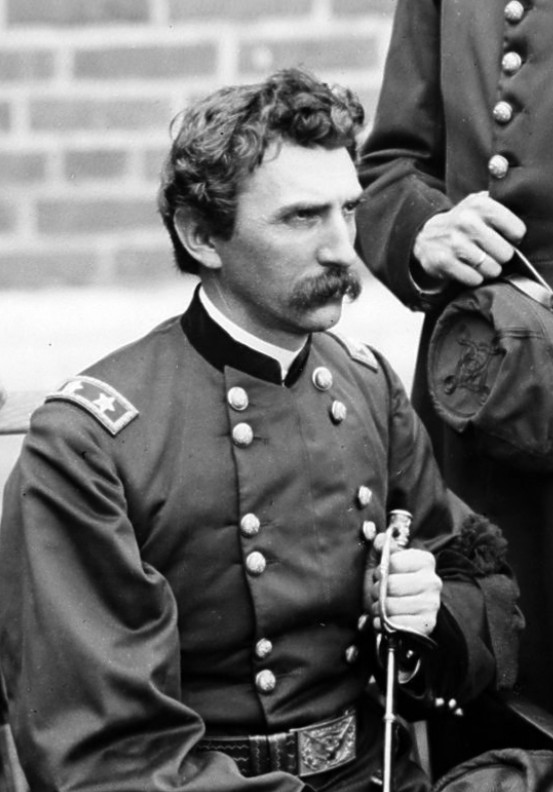
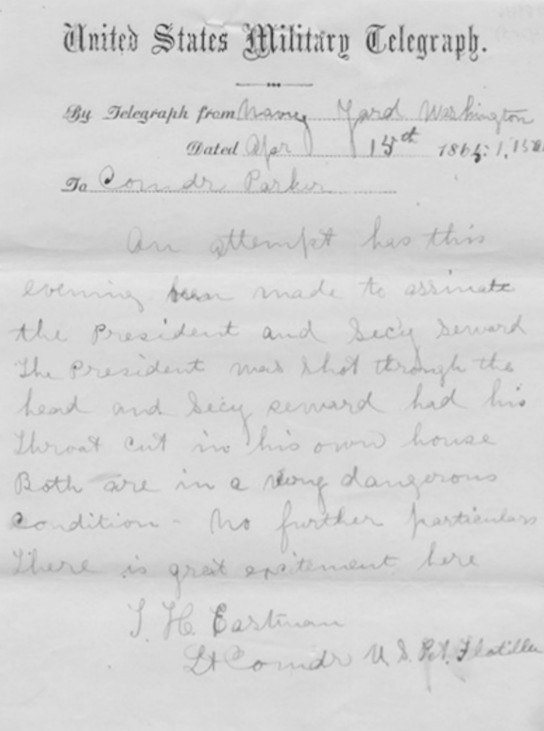


April 17, 1865: A Nation in Mourning Begins to Move Forward

Andrew Johnson, photographed by Matthew Brady sometime between 1860 and 1875, was sworn in as president of the United States on April 15, 1865 (Matthew Brady Collection, U.S. Library of Congress, public domain).

Andrew Johnson, of Tennessee, is now President of the United States. The mysterious purposes of Divine Providence, far beyond the extremest perception of man’s mere judgment, in shaping the ends his wisdom deems to be wisest for our chastisement or in promoting our good, will chasten us while humbling us in the dust in the bereavement the People have sustained through that most wicked act, the bold and daring assassination of the President of the United States. Such an act of perfidy and atrocity has no parallel in the annals of deep and damning crime. The world will stand aghast in horror and detestation of the brutal murder, when the terrible tidings will have reached earth’s remotest extremity.

— The Constitutional Union newspaper, Philadelphia, Pennsylvania, Monday, April 17, 1865


That opening paragraph of Philadelphia’s Constitutional Union article, “The New President,” illustrates both the State of the Union and the state of mind of the average American during the first days after the assassination of President Abraham Lincoln—the collective and individual states of bewilderment and grief while looking back and reflecting on Lincoln’s life and death while also worrying about what the future held as a new leader was introduced to the nation.

That new leader—President Andrew Johnson (1808-1875), who had been quietly sworn in as the seventeenth president of the United States on the same day that Lincoln died—April 15, 1865—had worked his way up from an early-career job as mayor of a local town in Tennessee to a later-life election to the United States Senate, becoming the only senator from America’s Deep South to remain in service with the Senate when southern states began their secession from the Union in December 1860. Subsequently appointed by Lincoln as Tennessee’s military governor in March 1862, he had then been placed on the Republican ticket as Lincoln’s running mate during the pivotal presidential election of November 1864, and had been sworn in as the nation’s vice president in March 1865—just forty-two days before he succeeded Lincoln.

Like Lincoln and Lincoln’s Secretary of State William Seward, Andrew Johnson had also been the target of the assassination conspiracy that unfolded on April 14, 1865. But Johnson was luckier. George Atzerodt, the man who had been assigned to assassinate him, changed his mind as he reached Kirkwood House, the Pennsylvania Avenue hotel where Johnson lived, and, instead, left Washington, D.C., hoping to evade capture.

Shortly before sunrise, while still the sitting vice president, Johnson visited the unconscious, dying president at his bedside at the Petersen House, spent a few moments consoling Lincoln’s family, and then walked the short distance back to his residence to prepare for the possibility of being sworn in as the nation’s next president.

Depiction of Andrew Johnson being sworn as the seventeenth president of the United States, April 15, 1865. The ceremony, attended by only a handful of senior government officials, was a subdued affair due to the death earlier that day of President Lincoln. It was held at Kirkwood House in Washington, D.C., where Johnson had resided since his inauguration as vice president forty-two days earlier (Frank Leslie’s Illustrated Newspaper, January 6, 1866).

Less than four hours after Lincoln’s death, Johnson was administered the Oath of Office by Chief Justice Salmon Chase of the United States Supreme Court, as several members of Lincoln’s former cabinet and Johnson’s former fellow senators looked on:

I do solemnly swear (or affirm) that I will faithfully execute the Office of President of the United States, and will to the best of my Ability, preserve, protect and defend the Constitution of the United States.

After speaking those words, President Andrew Johnson told the small group:

The duties of the office are mine; I will perform them—the consequences are with God. Gentlemen, I shall lean upon you; I feel I shall need your support. I am deeply impressed with the solemnity of the occasion and the responsibilities of the duties of the office I am assuming.

It was at that moment, during the morning of April 15, 1865, that the 47th Pennsylvania Volunteer Infantry entered its tenure of Reconstruction Era service under a new commander-in-chief.

Members of the regiment began that new phase of duty with heavy hearts and hope for a brighter day, according to C Company’s Henry Wharton. Writing to the editor of his hometown newspaper, the Sunbury American, from an unidentified “Camp Near Washington, D.C.” on April 24, Wharton mused:

It is true we have sustained a great loss in the death of our much beloved President, but as it has pleased Divine Power to remove him from our midst, we should be thankful that He has given us such a great and determined man in his stead (Andrew Johnson) to drive on the machinery of the Government. It was a wise thing in the framers of the Constitution when they put in that clause, where if we lose our President the wheels of the Government can never be stopped. This is done by the Vice President, a plain unpretending citizen, on the death of the Chief Magistrate, stepping forward so to take the oath administered by the Chief Justice, and at once takes the responsibility of the office. No flourish of trumpets, nor convulsion of nations, but by the simple power vested in a Judge, a fellow citizen assumes power. This little fact proves that our Republic can never die.

I cannot describe to you the feeling of the army when the news reached us that Abraham Lincoln had been murdered by the assassin. I will not attempt it, for in doing so, I would work myself into a state to make me miserable. One thing – if the boys had gone into a fight that morning no prisoners would have been taken – no quarters given.

In Washington, the train containing the remains of our late President, passed us near the Annapolis Junction. There was [sic, were] nine cars heavily draped in mourning. Our train stopped on a siding. It was a solemn time. The men all uncovered in respect, and stout men wept as the last of him they loved, passed them, to be conveyed to its resting place. Along the whole route, houses were draped in mourning, and the American flag hung at half mast [sic, half-mast] with mourning. This showed the deep hold Mr. Lincoln had in the hearts of our people.


Sources:

  1. Andrew Johnson’s Inauguration.” Washington, D.C.: U.S. National Park Service, retrieved online April 17, 1865.
  2. Andrew Johnson: The 17th President of the United States.” Washington, D.C.: The White House, retrieved online April 17, 1865.
  3. “The New President” (announcement of President Andrew Johnson’s recent inauguration). Philadelphia, Pennsylvania: Constitutional Union, April 17, 1865.
  4. The Swearing in of Andrew Johnson.” Washington, D.C.: Joint Congressional Committee on Inaugural Ceremonies (JCCIC) and the United States Senate, retrieved online April 17, 1865.
  5. Wharton, Henry. Letters from the Sunbury Guards, 1861-1868. Sunbury, Pennsylvania: Sunbury American.


April 16, 1865: Stanton and Grant Inform the Union Army That President Lincoln Has Been Assassinated

Broadside showing the text of General Orders, No. 66 issued by U.S. Secretary of War Edwin Stanton and Lieutenant-General Ulysses S. Grant on 16 April 1865 to inform Union Army troops about the assassination of President Abraham Lincoln and provide instructions regarding the appropriate procedures for mourning (U.S. Library of Congress, public domain; click to enlarge).

General Orders, No. 66
War Department, Adjutant-General’s Office
Washington, April 16, 1865

The following order of the Secretary of War announces to the Armies of the United States the untimely and lamentable death of the illustrious ABRAHAM LINCOLN, late President of the United States:

WAR DEPARTMENT,
WASHINGTON, CITY, April 16, 1865

The distressing duty has devolved upon the Secretary of War to announce to the armies of the United States, that at twenty-two minutes after 7 o’clock, on the morning of Saturday, the 15th day of April, 1865, ABRAHAM LINCOLN, President of the United States, died of a mortal wound inflicted upon him by an assassin.

The Armies of the United States will share with their fellow-citizens the feelings of grief and horror inspired by this most atrocious murder of their great and beloved President and Commander-in-Chief, and with profound sorrow will mourn his death as a national calamity.

The Headquarters of every Department, Post, Station, Fort, and Arsenal will be draped in mourning for thirty days, and appropriate funeral honors will be paid by every Army, and in every Department, and at every Military Post, and at the Military Academy at West Point, to the memory of the late illustrious Chief Magistrate of the Nation and Commander-in-Chief of its Armies.

Lieutenant-General Grant will give the necessary instructions for carrying this order into effect.

EDWIN M. STANTON,
Secretary of War

On the day after the receipt of this order at the Headquarters of each Military Division, Department, Army, Post, Station, Fort, and Arsenal and at the Military Academy at West Point the troops and cadets will be paraded at 10 o’clock a. m. and the order read to them, after which all labors and operations for the day will cease and be suspended as far as practicable in a state of war.

The national flag will be displayed at half-staff.

At dawn of day thirteen guns will be fired, and afterwards at intervals of thirty minutes between the rising and setting sun a single gun, and at the close of the day a national salute of thirty-six guns.

The officers of the Armies of the United States will wear the badge of mourning on the left arm and on their swords and the colors of their commands and regiments will be put in mourning for the period of six months.

By command of Lieutenant-General Grant:
W. A. NICHOLS, Assistant Adjutant-General.


Sources:

  1. General Orders No. 66: War Department, Adjutant General’s Office, Washington, April 16, 1865.” Washington, D.C.: United States Library of Congress, retrieved online April 16, 2024.
  2. Stanton, Edwin McMasters (1814-1869) General Orders No. 66. New York, New York: The Gilder Lehrman Institute of American History, retrieved online April 16, 2024.
  3. Wooley, John and Gerhard Peters. Announcement to the Army of the Death of President Lincoln,” in “The American Presidency Project.” Santa Barbara, California: Department of Political Science, University of California, Santa Barbara, retrieved online April 16, 2024.