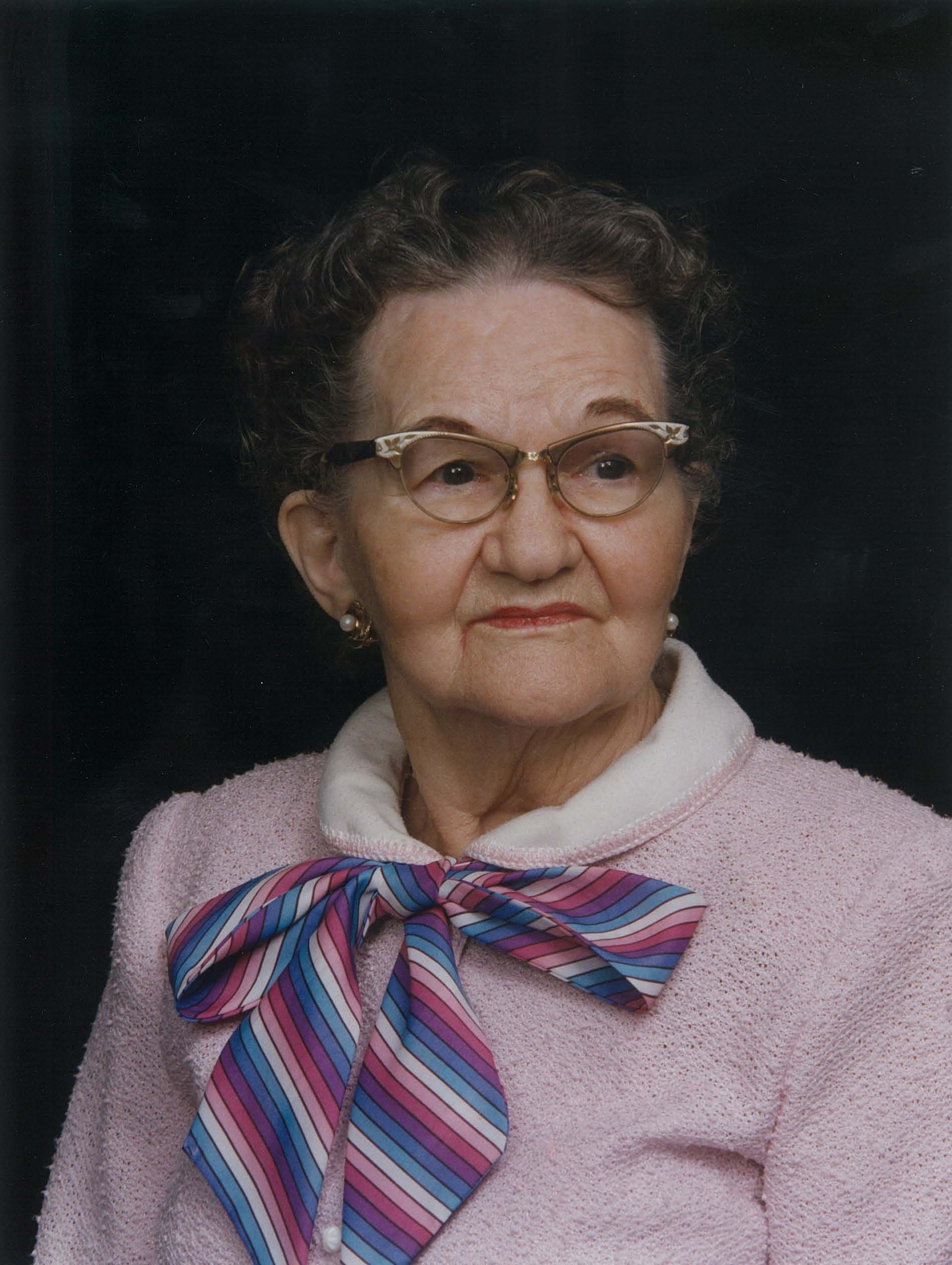
Lillian Estelle Snyder, R.N., niece of Lillie May Snyder, circa 1990s (© Snyder Family Archives. All rights reserved.)
A granddaughter of a twice-wounded veteran of the American Civil War and the youngest daughter of a pioneer in the American telephone industry, Lillian Estelle Snyder, R.N., was a twentieth-century success story who made the world better.
Born eight years after the dawn of a new century, she arrived during a time in which medical care providers across the United States routinely failed to address the dangers faced by women during pregnancy and the shockingly high infant mortality rates that persisted well into that new century, and which still, sadly, are failing to be addressed in many parts of America in the twenty-first century. According to the late American demographer Ben Wattenberg, in 1900, “more than one of six American infants … died before the age of one, and mothers were 100 times more likely to die in childbirth than they were” in the year 2000.
A product of the Commonwealth of Pennsylvania’s renowned public school system, she subsequently embarked upon a nursing career and devoted her life to improving healthcare for women and children across the United States.
Formative Years
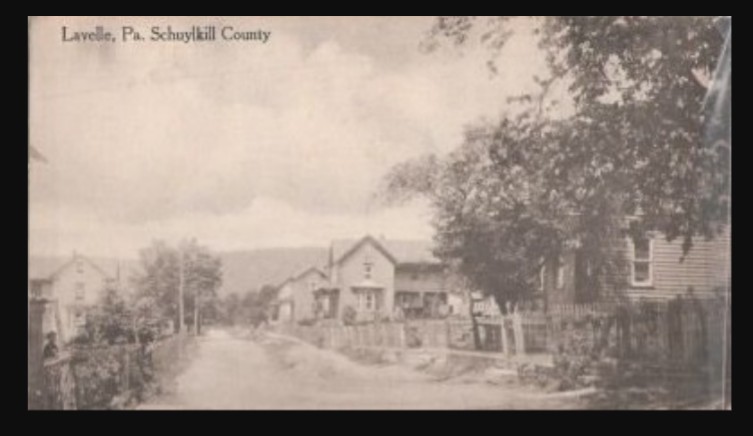
Main Street, Village of Lavelle, Schuylkill County, Pennsylvania, circa 1900 (public domain).
Born in the Village of Lavelle, Schuylkill County, Pennsylvania on 30 September 1908, Lillian Estelle Snyder was a lineal descendant of American Revolutionary War Patriot Johann Nicholas Schneider, according to records of the National Society of the Sons of the American Revolution.
Lillian’s mother, Minnie Rebecka (Strohecker) Snyder (1872-1952), was a daughter of Samuel and Annie (Troutman) Strohecker, of Gordon, Schuylkill County. Lillian’s father, John Hartranft Snyder (1873-1944), was the oldest surviving son of Catharine (Boyer) Snyder and Timothy Matthias Snyder, who had served with the 47th Pennsylvania Volunteer Infantry during the American Civil War.
Just over a week after Lillian E. Snyder was born, newspapers across Pennsylvania were reporting that her father had become a co-founder of a new communications firm — Lavelle Telegraph and Telephone — which was officially chartered (incorporated) at the Commonwealth of Pennsylvania’s Department of State in Harrisburg on 9 October 1908. During that company’s early days, its main operations center was based at the Snyder family home on Main Street in Lavelle. (A chief stockholder and secretary of the board of directors, Lillian’s father, John H. Snyder, would subsequently be credited with installing the first telephone lines in the Lavelle Valley and rural areas south of the Borough of Ashland in Schuylkill County, and would also supervise the connection of the company’s Lavelle center to the telephone operations center in Ashland that was owned by The Bell Telephone Company of Pennsylvania — a former industry giant that is now part of Verizon.)
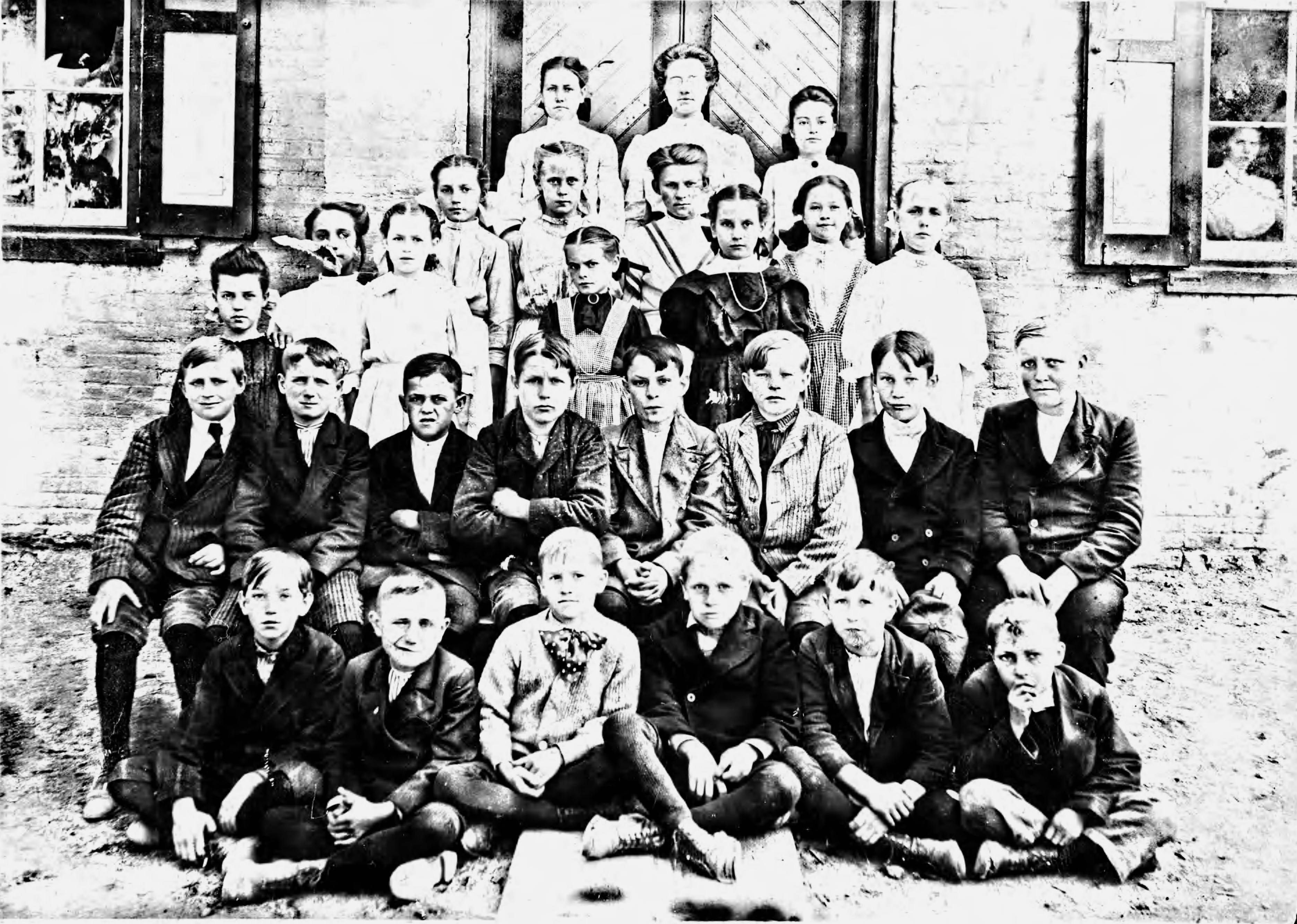
Siblings Timothy P. Snyder (row two, first from left) and Nona M. Snyder (row three, third from left), Lavelle School, Village of Lavelle, Schuylkill County, Pennsylvania, circa 1908-1910 (U.S. Library of Congress, public domain).
Meanwhile, Lillian Snyder and her older sister, Catharine Rebecka Snyder (1906-1995), who was known to family and friends as “Kit,” were spending their early childhood days learning and growing through play at the Snyder family home, while their older siblings were attending classes at the Lavelle School, which was located directly across the street. Those older siblings were: Timothy Peter Snyder (1898-1913), Nona Mae Snyder (1900-1987), Helen Corrine Snyder (1901-1988), and John Sylvester Snyder (1904-1969). All six children had been born at the Snyder family home on Main Street in Lavelle, with Tim having been born roughly two years before the end of the previous century, on 1 May 1898, and Nona having been born shortly after the dawn of the twentieth, on 29 January 1900. Corrine, John and Kit had been born, respectively, on 9 September 1901, 2 May 1904 and 25 August 1906.
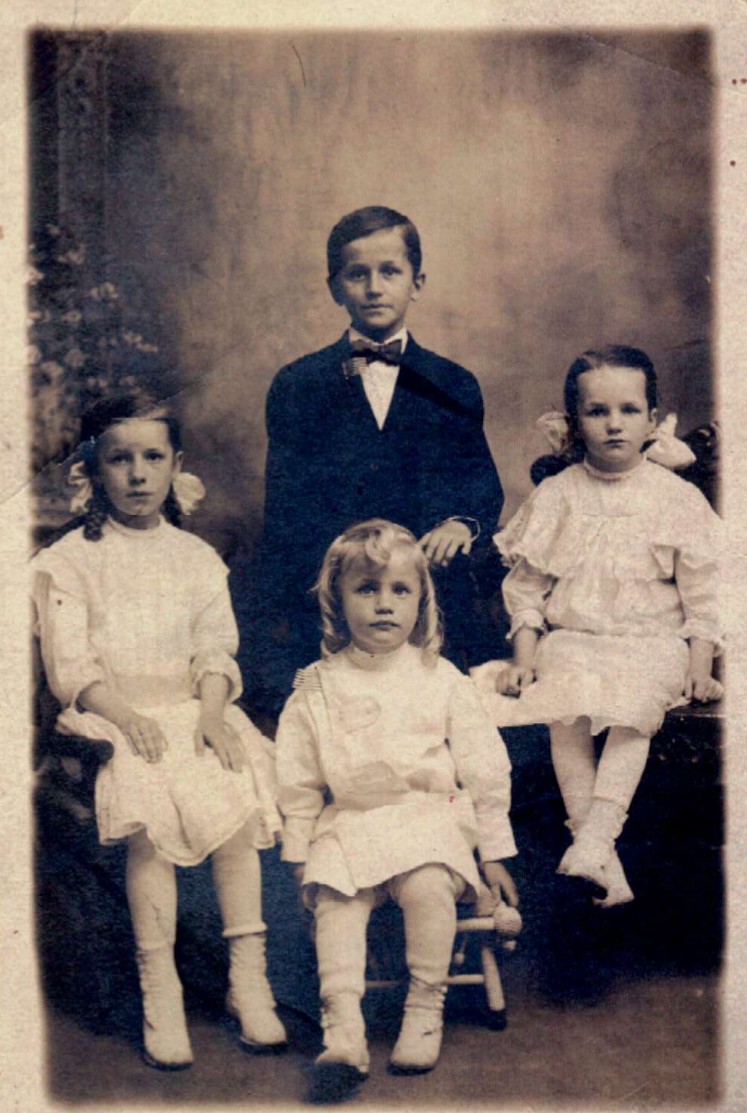
Four of the eight children of John Hartranft Snyder and Minnie (Strohecker) Snyder, Lavelle, Pennsylvania, 1914: John Sylvester Snyder (1904-1969), standing; H. Corrine Snyder (1901-1988), seated at his right; Lillian Estelle Snyder (1908-2001), seated at his left; and Chester Hartranft Snyder (1910-1983), seated front (© Snyder Family Archives. All rights reserved.)
In addition, Lillian’s mother, Minnie, was operating a dry goods store from the ground floor of the Snyder family home with help from Lillian’s two oldest sisters, Nona and Corrine (when they weren’t at school). By 1910, the increasingly prosperous Snyder family was welcoming the arrival of another child — Chester Hartranft Snyder (1910-1983). Born on 17 October 1910, he would ultimately grow up to become an insurance company executive who would be known in business circles as “Ches” and by family as “Bingo” or “Bing.”
The Snyders’ progress would be abruptly halted, however when they experienced the first of two tragedies. In 1911, the Snyder family home in Lavelle was destroyed by fire. The blaze, which broke out sometime around 8:30 p.m. on 16 March, was sparked by a gasoline stove in the family’s house — a largely wooden structure. Although the family was able to escape, they were traumatized by having to watch the flames destroy their home and possessions — and then spread to the home of their next-door neighbor, Harry Keller, and beyond to the home of G. S. Maurer, which also sustained major damage even though it was situated roughly one hundred feet away. According to news reports, the flames were visible as far away as the city of Pottsville.
After the smoke cleared, the Snyders’ financial loss was estimated at twelve hundred dollars. Although they were able to rebuild their home at the same site on Main Street, they were required to relocate to Ashland during the reconstruction, causing years of hardship and worry.
A Heartbreaking End
As if that devastating fire had not been tragic enough, Lillian’s older brother, Timothy P. Snyder, was then critically injured two years later during a coal mining-related accident. Just nine days shy of his fifteenth birthday, Tim fell from a coal train while working as a laborer at the Potts Colliery in Locustdale, Schuylkill County on 22 April 1913. The train, which was in motion at the time, ran over his legs. His battered body was taken from the colliery to the Ashland Hospital in Ashland, but he died while en route, at 2:30 that same afternoon. Snyder family records and oral histories confirm that the teenaged Timothy P. Snyder had taken a man-sized job at the colliery to help his family make ends meet during the rebuilding of their home. He remains at rest at the Snyder family plot at the Citizens’ Cemetery in Lavelle, Pennsylvania.
Although Lillian and Ches Snyder were too young to understand the impact of the double tragedy, they were still very likely affected by the waves of shock, grief and bewilderment experienced by their parents and older siblings.
An Intimate Understanding of the Danger of Infectious Diseases
Lillian Snyder’s early childhood and elementary school years had also been shaped by the interactions that she had had with her paternal grandmother, Catharine (Boyer) Snyder (1850-1918), who had been widowed at the age of thirty-nine by American Civil War veteran Timothy M. Snyder (1840-1889) when he suffered a sudden, fatal heart attack at the age of forty-nine in 1889. In addition to hearing stories about Timothy’s war-time experiences that kindled her lifelong interest in American History, Lillian Snyder came to understand that her paternal grandmother had been waging her own war — against infectious diseases — for much of her adult life. Catharine’s first two sons, Henry and Mark Snyder, who had been born during the early 1870s, had died in infancy, as had her fifth, sixth and tenth children, Laura, Franklin and Salome Snyder, who had been born during the late 1870s and 1880s. But the most traumatic experience of all, perhaps, was the loss of Catharine’s daughter, Flora, who had contracted diphtheria in mid-December 1895 and had died in Ashland on 3 January 1896. Catharine had almost died herself around that same time, having fallen ill with pneumonia while trying to care for Flora. Severely weakened by that illness, Catharine subsequently contracted pulmonary tuberculosis, which then led to her development of myocarditis, interstitial nephritis and other chronic health complications that hastened her death (at the age of sixty-eight in Reading on 8 August 1918 — roughly a month before Lillian’s tenth birthday).
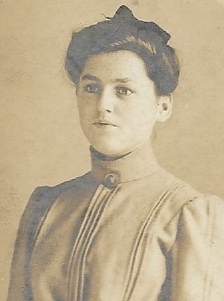
Lillie May Snyder, circa 1910 (© Snyder Family Archives. All rights reserved.)
Her grandmother’s illness and the tragic, disease-related deaths of so many of her grandmother’s children (who also had been the brothers and sisters of Lillian’s father) were, in fact, likely at the root of Lillian Snyder’s decision to pursue a career in nursing — a decision that was also encouraged by Lillian’s paternal aunt, Lillie May Snyder, who had received special training herself to become a licensed practical nurse. As the youngest surviving daughter of Timothy and Catharine Snyder and the youngest sister of Lillian E. Snyder’s father, Lillie May Snyder had been an eyewitness, herself, to the terrifying toll that infectious diseases took on family and friendsq.
* Note: The first and only daughter of Timothy and Catharine Snyder to survive to adulthood, Lillie May Snyder was another of the Snyder women who did their part to make the world a better one. Born in Ashland, Pennsylvania on 13 September 1887, she was just two years old when her father died suddenly from a heart attack, just three when her youngest sister, Salome, died in infancy, and just nine when she lost her older sister, Flora, to diphtheria — and also nearly lost her mother to pneumonia. After resettling with her mother in the city of Reading, Berks County, Pennsylvania, Lillie May had found work as a knitter at a factory to support her mother, who continued to struggle with health issues while trying to survive on a small U.S. Civil War Widow’s Pension. The upheaval would leave an indelible impression, however, prompting Lillie May to seek the training she needed to become a nurse. Afterward, she was hired as a governess to David and Sandra Kelsey, the children of prominent Berks County dentist, Jules Kelsey, D.D.S., transforming herself into a role model for both Lillian Estelle Snyder, who later became a registered nurse, and for Dr. Kelsey’s daughter, Sandra, who later became a respected, beloved pediatrician at the Reading Hospital.
Light, Darkness and Hope in a Changing World and Nation
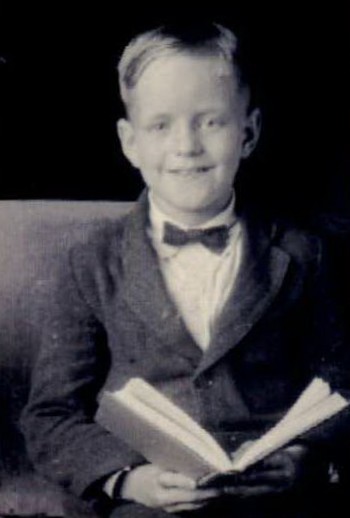
Willard Emery Snyder, shown here at the age of nine in 1926, gave Corrine Snyder the nickname of “Eenie” (©Snyder Family Archives. All rights reserved.)
Although the Snyder family endured significant losses during the decade between 1910 and 1920, there were still moments of shining light. One of the brightest was the birth of the Snyder siblings’ baby brother, Willard Emery Snyder (1917-1972), who was born at the Snyders’ Main Street home on 31 July 1917. Like his father before him, Willard would have a long relationship with the telephone industry. He would also have a close bond with Corrine Snyder for more than half a century because she was largely responsible for helping to raise him while her parents managed the Snyder family businesses. Unable to pronounce her name (“KO-reen’) correctly as a toddler, he called her “Eenie,” and it stuck, becoming a beloved moniker for a much-beloved sister and aunt.
But the family’s worries soon returned as the United States was drawn into the madness of World War I. Among the many Americans who survived, but “did not come home whole,” was Lillian Snyder’s first cousin, Bright Samuel Enterline (1895-1964), whose unit, Company F of the U.S. Army’s 301st Water Tank Company, was attacked with mustard gas by German Army troops while stationed in France. Shipped home on 18 July 1918, he eventually resumed management of his family’s store in Lavelle, but continued to suffer lung and other health issues for the remainder of his life — struggles that also made an impression on young Lillian.
That same decade, Lillian watched and listened intently as the adults around her debated whether or not women should be given the right to vote. An issue that was also widely reported in newspapers and discussed by government officials, as well as her teachers and fellow students at the Lavelle School and, later, at Ashland High School, during the pivotal moment in American History that led to the ratification of the 19th Amendment to the United States Constitution on 18 August 1920. Although she was still too young to vote when that legislation initially took effect, her forty-eight-year-old mother was eligible to vote — and did — for the very first time in her life. Lillian’s oldest sister, Nona, then also became eligible when she turned twenty-one, followed by their sisters, Eenie and Kit, in subsequent years.
New and very different paths were now open to all of the Snyder sisters.
Nursing Career
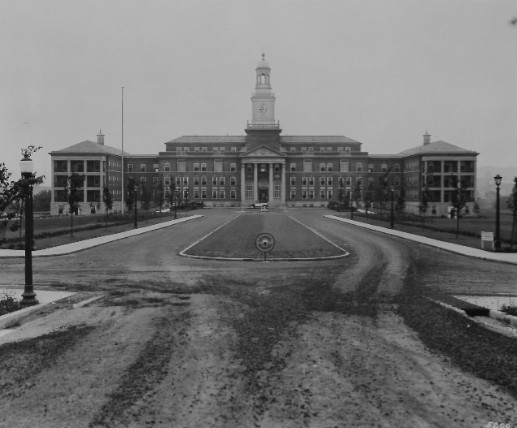
The Reading Hospital’s main building, West Reading, Pennsylvania, 1929 (public domain; click to enlarge).
Having graduated from Ashland High School, Lillian Snyder applied for admission to the School of Nursing at the Reading Hospital in Berks County. If accepted, she would be arriving at a pivotal moment in the hospital’s history — the dedication of its new main building, which was located in West Reading and close to Wyomissing. Dedicated on 2 October 1926, according to the History of the Reading Hospital, 1867-1942, “The neighborhood of the hospital [would soon become] one of the show places of the community. Its buildings [rose] in an elevated position covering thirty-eight acres and encompassing a far view of the surrounding and very beautiful countryside. The lofty steeple of the main building with its lantern shining through the night [would become] a welcome and familiar landmark of Reading.”
Present at that dedication ceremony was the hospital’s director of nurses, Mary L. Francis, who would not only play a role in the approval of Lillian E. Snyder’s application for admission to the School of Nursing, but would also later monitor her progress. Officially admitted to the nursing program on 4 October 1926, Lillian went on to receive three years of classroom education and hands-on training in the standard procedures for the in-patient and out-patient medical and surgical care of men, women, children, and infants, and received training from the following departments: genito-urinary, gynecology, maternity, nutrition (“diet kitchen”), operating room, orthopedic, private floors, and special duty. Described as “an earnest worker,” she was an “A” student who received high marks for: “attention,” “conscientiousness,” “executive ability,” “general deportment,” “interest,” “memory,” “neatness,” “practical work,” “punctuality,” “reliability,” “thoroughness,” the manner in which she interacted with patients and her fellow staff, and “consideration of others.”
Also according to the History of the Reading Hospital, “The buildings erected in 1926 comprised thecmain hospital unit including B, C, and D units, G or service building, and the power house north of that unit.” A graduate of that School of Nursing on 9 May 1929, Lillian immediately pursued advanced training at that same school, which she completed on 3 October of that same year. Hired by the Reading Hospital’s School of Nursing as a clinical nursing instructor, she then served as a member of that school’s faculty for roughly a decade. In 1930, construction was completed on the Nurses Hall. That year, Lillian was sharing an apartment with her sisters, Eenie and Kit, on North Fifth Street in Reading.
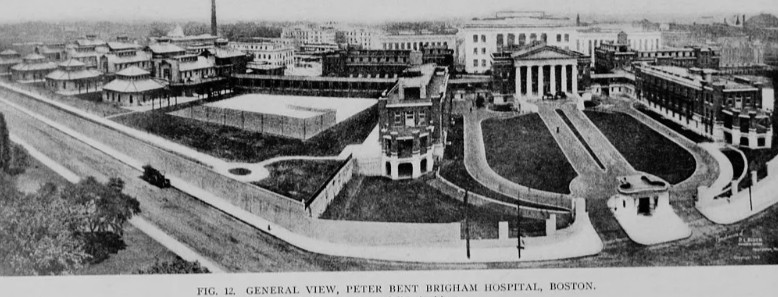
Roughly two decades after this photo of the Peter Bent Brigham Hospital in Boston, Massachusetts was taken, Lillian E. Snyder was employed as a head nurse who supervised the care of women and children (1918, public domain; click to enlarge).
By early 1941, however, their situation radically changed when Lillian and her sister Kit (both of whom were now in their early to mid-thirties), chose to relocate to Boston, Massachusetts. That big move enabled Lillian to join the nursing staff of the nation’s renowned Peter Bent Brigham Hospital (later known as Brigham and Women’s Hospital) as a head nurse in the women and children’s ward. She would also subsequently be assigned to train nursing students and staff as part of national defense preparations for America’s increasing involvement in World War II. Meanwhile, Kit found work in Boston as a private secretary for the A. M. Byers Company, which would soon become the largest wrought iron producer in the United States. Their sister, Eenie (now in her early forties), had also left Reading — transferred to the city of Allentown by her employer, the Jewel Tea Company.
*Note: Although both Kit and Lillian Snyder relocated to Boston in 1941, they did not reside together, at least initially. Lillian lived in a dormitory that was operated by Peter Bent Brigham Hospital for its nursing students and staff, while Kit resided alone in an apartment at 40 Berkeley Street, according to a Boston city directory. By June of 1942, newspapers were reporting the federal government’s directive that hospital and university nursing programs train fifty-five thousand student nurses between the ages of eighteen and thirty-five, by 1 September of that same year, to replace registered nurses who would be reassigned to “battlefield duty.” Based on entries for Lillian and Kit in a 1943 edition of the Boston city directory, the two Snyder sisters moved into a new place together sometime in late 1942 or early 1943. By the summer of 1943, they were residing in a large apartment building located at 6 Autumn Street, near Lillian’s hospital job in Boston.
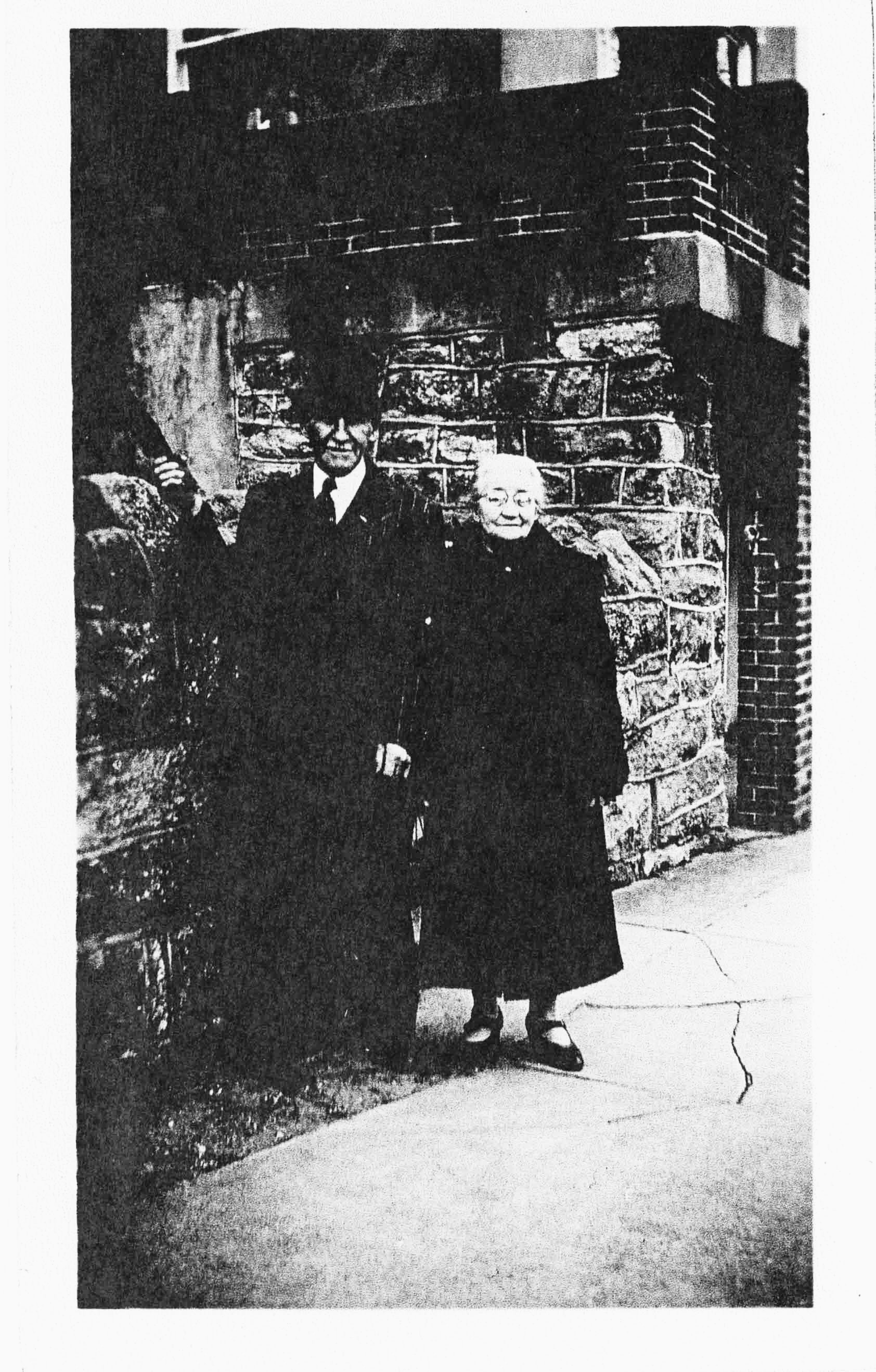
John Hartranft Snyder and Minnie R. Snyder, Snyder Family Home, Main Street, Lavelle, Pennsylvania, circa 1943. The doorway seen behind Minnie’s left shoulder was the entrance to their former dry goods store (©Snyder Family Archives. All rights reserved.)
Those first years of that decade would prove to be difficult ones for the siblings, however, as their father, John H. Snyder, became increasingly frail due to stomach cancer. On 22 May 1944, he was forced to undergo major surgery at the Geisinger Hospital in Danville, Pennsylvania. Although he survived the surgery, his condition continued to deteriorate. So, Lillian’s “baby brother,” Seaman Willard Snyder, was brought home from his duty station on Midway Island in the Pacific Theater of World War II for a thirty-day leave of absence to visit their dying patriarch, and Lillian was persuaded by her family to temporarily leave her position as a head nurse at Peter Bent Brigham in Boston and “come back home to stay with her parents,” according to “Lavelle Nurse Home,” a news report that was published in the 18 July 1944 edition of the Mount Carmel Item.
Sadly, John Hartranft Snyder succumbed to cancer-related complications at the Snyders’ Main Street home on 5 August 1944. Following funeral services, he was laid to rest at the Citizens’ Cemetery in Lavelle — just weeks after Willard Snyder had returned to his duties on Midway. In the wake of that loss, Lillian was pressured by her family to make her temporary leave from Peter Bent Brigham a permanent one, which she did. By doing so, she ended a promising career with one of the leading academic medical centers in the United States, causing her to spend the remainder of her nursing career striving to regain the power and prestige she had accrued during one of the happiest and most fulfilling periods of her life.
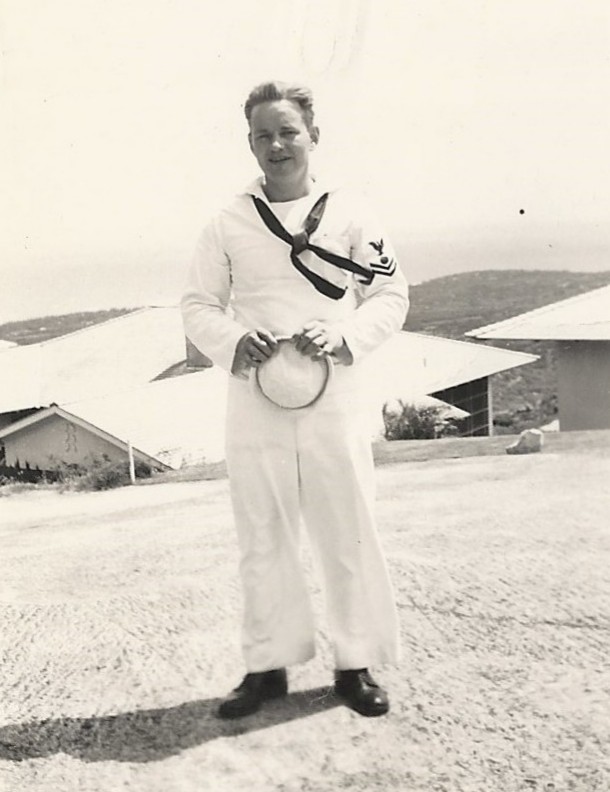
Willard Emery Snyder, U.S. Navy Seabees, Hawaiian Islands, circa 1943 (©Snyder Family Archives. All rights reserved.)
She was now her mother’s caregiver and resided with her at the Snyder family home in Lavelle. As World War II raged on, each of the Snyder siblings continued to “soldier on” in their respective military and civilian capacities, their sadness and collective sense of fear increasing, as it did for so many of their fellow Americans, when they read the shocking news that U.S. President Franklin Delano Roosevelt had died on 12 April 1945. Although they understood, intellectually, that there would be a smooth transition of power at their nation’s highest level, as Vice President Harry Truman became the next president of the United States, they worried about what might happen next as their younger brother, Willard Snyder, and other sailors and soldiers continued their fight to bring an end to the war under the leadership of a new commander-in-chief. Joining with others across the nation who mourned the late president, they read news coverage of his death and funeral, which included memorable images in Life Magazine and other publications that were created by renowned photographers Wayne F. Miller, Ed Clark, et. al.
Their fears gradually morphed into halting feelings of hope, however, as word spread that an end to the global conflict might be closer than they had dared dream. Buoyed by a radio broadcast on 8 May 1945, during which senior U.S. military officials proclaimed that Victory in Europe had finally been achieved, they joined with other Pennsylvanians in V-Day celebrations that were tempered, for them, by the knowledge that their youngest brother was still in harm’s way. The Snyder sisters were finally able to relax as radio stations and newspapers announced, in mid-August 1945, that the Empire of Japan had surrendered. The Japanese Instrument of Surrender was then signed on 2 September, sparking V-J (Victory over Japan) celebrations across Pennsylvania and worldwide. They would see their youngest brother soon.
That reunification process began on 18 October 1945, when Electrician’s Mate Willard Snyder ended his tour of duty on Midway Island. Shipped with other Seabees to San Francisco, he arrived on 26 October and was stationed there until ordered to return to the East Coast. Part way through his trip home, however, he became ill during a stopover in Olathe, Kansas. Redirected by a superior officer to the U.S. Naval Hospital in Great Lakes, Illinois, he was admitted there on 9 November, and received roughly two weeks of treatment for malaria, which he had contracted while in service to the nation. Subsequently transported to the U.S. Naval Personal Separation Center in Bainbridge, Maryland during the third week of November, he was honorably discharged on 24 November 1945, and allowed to return to his childhood home on Main Street in Lavelle.
Post-war, the Snyder siblings began to rebuild their lives. Willard and Lillian Snyder continued to reside with their mother at the Snyder family home in Lavelle, while Eenie continued to live and work in Allentown. Still residing in Massachusetts two years later, their younger sister, Kit, married steel industry salesman Charles Francis Courtney, Jr. in Boston on 12 July 1947. After a brief honeymoon, they then began to make a new life together in the city of Lancaster, Pennsylvania. According to the 1949 Allentown city directory, Eenie was still living alone in apartment number two at 930 North Nineteenth Street in Allentown.
1950s
By April of 1950, Eenie was still working for Jewel Tea as a bookkeeper and was still living alone in apartment number two at 930 North Nineteenth Street in Allentown. That same month, a federal census enumerator confirmed that Lillian Snyder was still residing with her mother at the Snyders’ family home in Lavelle, and that Lillian’s brother, Willard, was the head of their household, which also included Willard’s wife, Genevieve, and their daughter, Judy. Lillian was employed as a nurse at a hospital by that time, while Willard was worked as a repairman for Bell Telephone.
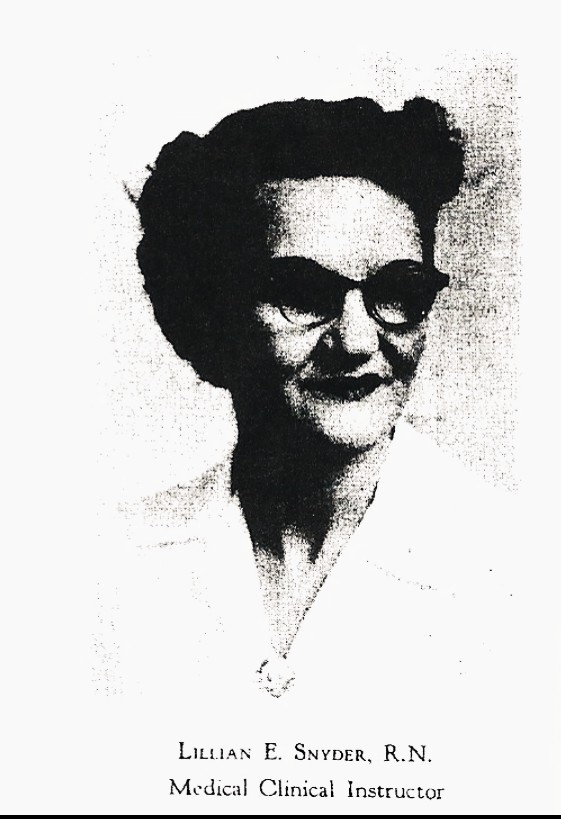
Lillian Estelle Snyder, R.N., Clinical Instructor, Allentown Hospital School of Nursing, Allentown, Pennsylvania, 1955 (©Snyder Family Archives; used with permission).
Sometime after April 1950, however, Lillian Snyder opted to join the nursing faculty and staff at the Allentown Hospital (now part of the Lehigh Valley Health Network). Once again, the still-single Lillian made the choice to share an apartment with her older sister, Eenie, who was also still single. From that point forward, they would continue to live together for the remainder of Eenie’s life (first in Allentown, then in Baltimore, Maryland, and finally in Lancaster, Pennsylvania).
Still residing in Lancaster with her husband, Charles Courtney, at the dawn of the 1950s, Catharine (Snyder) Courtney lived with him in an apartment building at 912 New Holland Avenue. Their happy times were cut short, however, when Charlie died, leaving Kit as a grief-stricken, forty-four-year-old widow. Felled by an acute coronary occlusion on 1 December, he had passed away at the Lancaster General Hospital at 1:01 a.m. on 2 December. Subsequently cremated, his remains were later inurned in the columbarium at the Charles Evans Cemetery in Reading.
The Snyder siblings’ shared grief was compounded when their mother, Minnie (Strohecker) Snyder, also began a rapid decline. Battling cancer, Minnie soon moved from Lavelle into the same apartment that Eenie shared with Lillian in Allentown. During that phase of their lives, Eenie was still employed by the Jewel Tea Company as a bookkeeper, while Lillian was still serving as a clinical nursing instructor on the faculty of the Allentown Hospital’s School of Nursing. Following her death at the age of eighty, on 28 April 1952, Minnie R. (Strohecker) Snyder was laid to rest beside her husband and her first-born son, Tim, at the Citizens’ Cemetery in Lavelle, Schuylkill County.
A New Career and Another Major Move

Advertisement for Nurses, Merck Sharpe & Dohme, Baltimore Sun, Baltimore, Maryland, 8 March 1953 (public domain; click to enlarge).
Following their mother’s death, Eenie and Lillian Snyder relocated to Baltimore, Maryland, where Lillian had accepted a position as a registered nurse with Merck Sharp & Dohme, the pharmaceutical company known for its development of streptomycin, the first medication proven to be effective in the treatment of tuberculosis — the disease that had sickened and killed the Snyders’ paternal grandmother. During Lillian’s tenure at Merck, her employer would become increasingly renowned and profitable for its research and development of medications to treat heart disease and vaccinations that prevented the spread of measles, mumps and rubella, saving the lives of countless children worldwide.
Although there were now more professional opportunities open to Eenie, Kit and Lillian, enabling them to climb higher on the ladders of success for their respective fields of employment, they were, in hindsight, shockingly underpaid for their hard work. According to the United States Department of Labor’s Occupational Handbook of 1959, bookkeepers, private secretaries and other clerical workers had become “the second largest of all the major occupational groups in the United States.
Altogether, slightly more than 9 million men and women were employed to take care of the vast amount of correspondence, recordkeeping, and other office duties necessary to the operation of modern businesses and government agencies.
Stenographers, typists, and secretaries [were] by far the largest specialized group of clerical workers. Bookkeepers [were] the second largest group. Other large clerical occupations include[d] those of telephone operator, shipping and receiving clerk, cashier, mail carrier, and office machine operator.
Clerical work [was] the largest of all areas of employment for women. In 1958, about 3 out of every 10 employed women were officeworkers…. More than 90 percent of the telephone operators; the stenographers, typists, and secretaries; and the attendants in physicians’ and dentists’ offices offices [were] women. Women also fille[d] more than three-fourths of the jobs as bookkeepers, cashiers, and office machine operators….
Graduation from high school [was] the usual minimum educational requirement for entering clerical jobs. Additional business courses or some college work [might also have been] required for jobs requiring specialized skill. The most widely sought office skills — stenography and typewriting — [could] be obtained either through high school or business school courses…. The operation of many kinds of office machines, such as adding machines, special bookkeeping machines, and billing machines [was] often taught on the job…. Reading comprehension, numerical skill, and good knowledge of spelling and grammar [were] important in obtaining a job and essential to advancement. Ability to get along with others [was] also rated high among the qualifications necessary for success in office work….
Women in beginning clerical jobs … had average weekly salaries of about $45 to $55 in late 1957 and early 1958, in most of the 19 labor market areas surveyed by the Bureau of Labor Statistics…. The highest paid clerical workers were men accounting clerks … whose average weekly salaries ranged from $83.50 in Boston, Mass., to $102 in Cleveland, Ohio. Among women clerical workers, secretaries were generally the highest paid with average salaries ranging from $66 a week in Memphis, Tenn., to $89.50 in Cleveland, Ohio….
Pay levels for officeworkers tend[ed] to be higher in manufacturing than in most nonmanufacturing industries….
In large offices, bookkeeping jobs range[d] from entry positions as clerk or machine operator to the highly responsible post of head bookkeeper…. Bookkeepers in jobs with greater responsibility [generally posted and balanced] accounts and [performed] more difficult work such as preparing summary reports…. The head bookkeeper [had] responsibility for all aspects of his department’s work….
About 900,000 workers were employed as bookkeepers in 1958; more than three-fourths of them were women. Well over one-third of all bookkeepers [were] employed by retail stores or wholesale houses….
In Baltimore, the average salaries for “clerical” workers during the winter of 1957-1958 ranged from roughly fifty-one dollars per week for the lowest classification of bookkeeping machine operator to roughly seventy dollars per week for the highest classification of accounting clerk. Nationwide, the average salary for women who were entry level accounting clerks or bookkeepers was roughly fifty-five to seventy dollars per week, while women who were experienced accounting clerks were typically paid between sixty-eight and eighty-four dollars per week — compared with men in similar jobs who were paid roughly twenty dollars more per week.
With respect to Lillian’s chosen field, there were four hundred and twenty-five thousand nurses employed across America by 1955. They were working in clinics, hospitals, laboratories, nursing homes, patients’ houses, and physicians’ private practice offices. “Nursing, the largest of the major health service occupations, [was] second only to teaching as a field of professional employment for women” with more than ninety percent of registered nursing jobs held by women.
Registered professional nurses furnish[ed] nursing services to patients, either by giving direct nuring care or by supervising allied nursing personnel. As the persons with primary responsibility for carrying out physicians’ instructions and with independent nursing duties, professional nurses [were] important members of the medical health team. Generally, their main concerns were: Care of the sick and injured, prevention of illness, and promotion of good health. They performe[d] such tasks as administering medications and treatments prescribed by a physician; observing, evaluating, and recording symptoms, reactions, and progress of patients; assisting in patient education and rehabilitation; improving the physical and emotional environment of patients; and instructing auxiliary nursing workers or students.
In the nursing field, there [were] several distinct groups of professional nurses specializing in a particular type of patient care and treatment. The largest group of professional nurses (about 63 percent of the total) [during the late 1950s were] hospital nurses, who [were] concerned mainly with the care and welfare of patients in hospitals and related institutions. Most [were] general duty nurses, who usually perform[ed] the more skilled bedside services, such as caring for a patient after an operation, assisting with blood transfusions and intravenous feeding, and giving medications…. Some hospital nurses [were] engaged primarily in administrative or supervisory work. Others specialize[d] in a certain type of service, such as caring for mothers and babies or assisting physicians in the delivery or operating room.
Private duty nurses (about 15 percent of all professional nurses) [were] employed directly by patients or their families to give individual nursing care, usually when constant attention [was] needed….
The third largest group … [was] office nurses (approximately 8 percent of the total). Employed mainly by physicians in private practice or in medical clinics … [they assisted] in the care of patients … perform[ed] routine laboratory work [and also managed physicians’ schedules and records].…
Public health nurses (about 6 percent of all professional nurses) [were] employed by public and private health agencies, including city and county health departments, visiting nurse associations, and schools…. Especially concerned with promoting good health and preventing disease and injury, public health nurses [often worked] with community leaders, teachers, parents, and physicians in planning or operating a community health education program….
Sometimes called industrial nurses, occupational health nurses (about 4 percent of all nurses) [provided] nursing care principally to employees in business and industry. Interested in keeping employees well and on the job, they [often worked] alone (with a doctor on call) or [were] part of a health service department in a large organization. They [provided] emergency treatment for injuries and minor illnesses occurring at work, arrange[d] for further medical care when necessary, and offer[ed] health counseling. [They also often assisted with] health examinations, keep[ing] health records of employees, and [the development] of programs to prevent or control occupational diseases or accidents.
To prepare nursing personnel, nurse educators (3 percent of all nurses) [were] employed by hospital nursing schools, colleges and universities, public vocational schools, and schools of practical nursing….
Minimum starting salaries of general duty nurses employed by hospitals in 16 metropolitan areas approximated from $55 to $70 a week in 1956-1957, according to the Bureau of Labor Statistics…. Weekly salaries of general duty nurses (including both beginning and experienced nurses) were generally between $60 and $80 during the same period. In comparison to general duty nurses, head nurses averaged about 10 to 15 percent more and supervisors of nurses and nursing instructors about 20 to 30 percent more…. Office nurses … earned $3,600 a year on average [by 1958]….
Occupational health (industrial) nurses averaged from $76.50 a week in Boston to $93.50 in Los Angeles…. An American Nurses’ Association survey of nursing education programs indicated that nurse educators and administrators had a median salary of $4,140 in 1956.
1960s
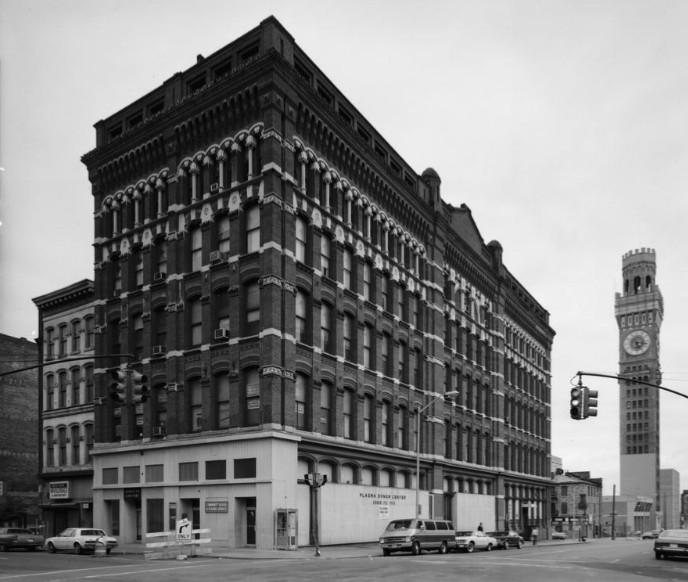
Lillian E. Snyder, R.N., may have worked at the Merck Sharp & Dohme blood donation center, located at the corner of West Baltimore and Eutaw Streets in Baltimore, Maryland during the mid to late 1960s (A. S. Abell Building, Baltimore, Maryland, circa 1968, U.S. Library of Congress, public domain; click to enlarge).
Still working as a registered nurse for Merck & Co., Inc. at its blood bank in Baltimore during the 1960s, Lillian Snyder continued to reside with her older sister, Eenie, in an apartment in the city. In 1966, The Baltimore Sun reported that her employer’s Merck Sharp & Dohme division had “leased the property at the southeast corner of West Baltimore and Eutaw streets” for use as “a model blood donor center.” That building was the A. S. Abell Building.
* Note: In 1960, Kit Snyder was still living alone in the apartment she had briefly shared with her husband, Charlie. But she had begun picking up the pieces of her shattered dreams to build a new future for herself. Employed as a private secretary for the New Holland Machine Company in neighboring New Holland, Pennsylvania, she did well enough, financially, over the next decade, that she could indulge her passion for travel. (Her employer was becoming one of the largest manufacturers of farm equipment in the United States as it expanded its operations to Canada, Belgium, Brazil, and Japan.)
Sadly, reared its ugly head again in 1969 as the Snyder siblings received word that their brother, John Sylvester Snyder, had been hospitalized after suffering a stroke. Following his death in Allentown, Lehigh County, Pennsylvania on 12 November 1969, he was laid to rest at that city’s Cedar Hill Memorial Park.
1970s
Nearly three years to the day after her younger brother, John S. Snyder, had passed away, Eenie then received the heartbreaking news that her “baby brother,” Willard Emery Snyder, had suffered a heart attack at work on 10 November 1972, and had died later that same morning. It was a terrible shock. He was still in his mid-fifties and had been slated to start his vacation the next day. Following graveside funeral services on a cold, rainy 13 November, he was laid to rest at the Sinking Spring Cemetery in Sinking Spring, Berks County.
Retirement
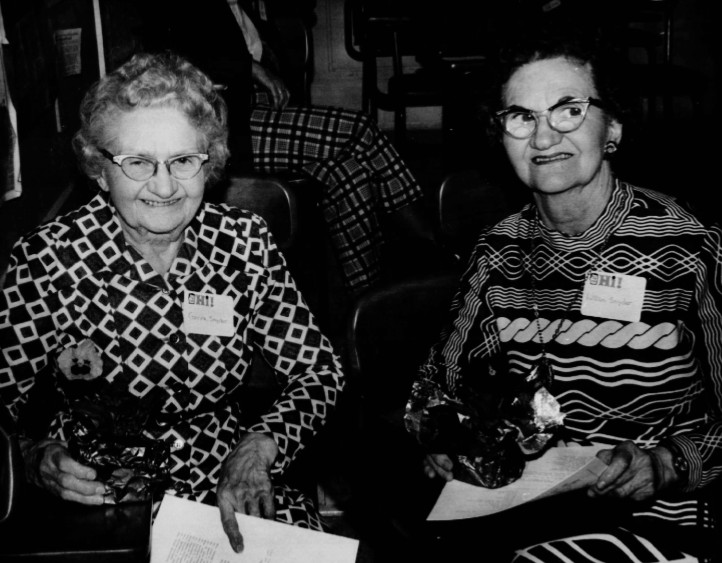
H. Corrine Snyder (1901-1988) and Lillian Estelle Snyder (1908-2001), volunteering together circa early 1980s. (©Snyder Family Archives. All rights reserved.)
Retired from Merck in 1971, Lillian Snyder continued to reside in Baltimore with her older sister, Eenie, briefly before relocating to an apartment with their sister, Kit, at 206 North President Avenue in Lancaster, Pennsylvania. Family members who had referred to them collectively as “The Girls” throughout their lives subsequently began calling them “The Lancaster Aunts” — but, in reality, they were “the United States aunts” because they traveled widely, spending cherished time with their nieces and nephews or visiting historic sites across the United States that had long been of interest to the three, who were avid readers and lifelong learners. With each postcard, they kindled a sense of curiosity that inspired those they loved to embark upon their own exciting journeys. Even when “the Lancaster Aunts” were at home, they often weren’t AT home because they were serving as docents at Wheatland, the former home of U.S. President James Buchanan or volunteering for projects at the Lancaster Historical Society or North Museum. As family historians, they also successfully documented much of the Snyder family’s history back into the 1600s.
Then, on 6 May 1987, the trio received word that their eighty-seven-year-old sister, Nona Mae (Snyder) Albert, had died at the Pottsville Hospital in Pottsville, Schuylkill County. Following funeral services, Nona was laid to rest at the Saint John’s Lutheran Cemetery in Pine Grove, Schuylkill County. With that death, Eenie officially became the Snyder family’s “matriarch.” Long-since retired and preferring to stay close to home, she remained active as a member of the Bethany Circle of the First United Methodist Church in Lancaster. As her heart disease became increasingly worrisome, however, she was admitted by her physician and her youngest sister, Lillian, into St. Joseph’s Hospital in Lancaster in late December 1987. A fighter to the end, Eenie survived to witness the dawn of a New Year, but suffered a cardiac arrest and died at the hospital on 8 January 1988. Subsequently cremated, Eenie’s remains were inurned at the Charles Evans Cemetery Columbarium in Reading, a cemetery that is located within short walking distance of where her paternal grandmother, Catharine (Boyer) Snyder, had spent the final years of her life.
Tragically, Kit (Snyder) Courtney then became one of a rising number of aging Americans who developed severe memory issues later in life. Subsequently diagnosed with Alzheimer’s Disease, she received care from her sister, Lillian Snyder, during the early stages of her illness. Ensuring that Kit felt as loved and vibrant as possible, Lillian, a retired registered nurse, began to make preparations for the more advanced care that Kit would need as the illness progressed. In1990, Lillian arranged for their relocation to Cornwall Manor, a nonprofit senior living community located in Lebanon County, Pennsylvania, which allowed her to live independently with Kit as long as possible until Kit was transitioned to Cornwall Manor’s Health Center for more advanced care. Following Kit’s death at that health facility, at the age of eighty-nine, on 27 August 1995, her remains were inurned beside those of her husband, Charles F. Courtney, and older sister, Eenie, at the columbarium at the Charles Evans Cemetery in Reading.
“Soldiering on” in the face of grief, Lillian Snyder possessed a keen mind until the final six months of her life. When it came, her decline was gradual and gentler than those experienced by Kit and far too many other seniors. Always practical and indefatigable, Lillian would be remembered by family, friends and healthcare providers during those last months as cheerful, sweet and kind. Her mind often took her back to one of the happiest and most productive periods of her life.
Death and Inurnment
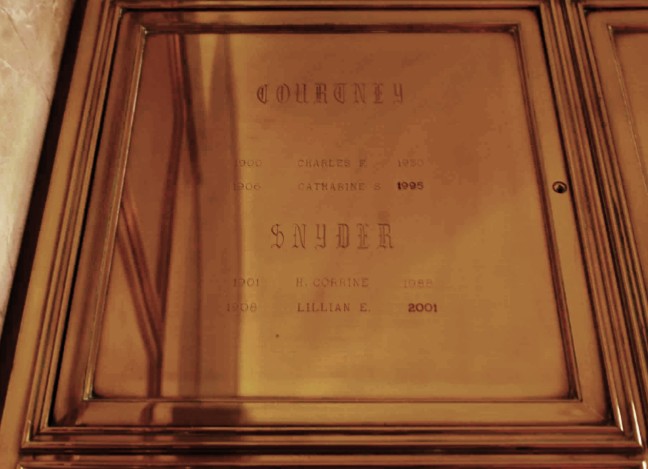
Columbarium niche containing the burial urns of Catharine R. (Snyder) Courtney, Charles F. Courtney, H. Corrine Snyder, and Lillian E. Snyder, Charles Evans Cemetery, Reading, Pennsylvania (© Snyder Family Archives. All rights reserved.)
The longest-lived of the eight Snyder siblings, Lillian Estelle Snyder passed away at the age of ninety-two at Cornwall Manor on 7 June 2001. Following cremation, her remains were inurned in the same niche where the burial urns of her sisters, Eenie and Kit, had previously been inurned — the columbarium at the Charles Evans Cemetery in Reading, Pennsylvania.
Legacy
Lillian Estelle Snyder was beloved not just by her siblings, but by her many nieces, nephews and friends. She tried hard to make life better not only for her family and friends, but for the patients intrusted to her for the treatment and recovery from illnesses — and for the countless number of people she would never meet but who lived long, healthier lives thanks to the vaccines and other medications that were invented and tested at the healthcare and research facilities where she was employed as a nurse. Focused on improving the quality of healthcare for women and children for much of her nursing career, she would be profoundly distressed by the lack of scientific rigor of present-day, anti-vaccine disinformation campaigns that have convinced some parents to refuse vaccinations for their children that provide protection against diphtheria, measles, whooping cough, and other preventable, highly-transmissable, dangerous diseases.
* Note: To learn more about the safety and efficacy of vaccines, please visit the Pennsylvania Department of Health’s Immunization Guidance page. (Aunt Lillian would want you to do this.)
Sources:
- “19th Amendment to the U.S. Constitution: Women’s Right to Vote (1920),” in “Milestone Documents.” Washington, D.C.: U.S. National Archives and Records Administration.
- “100 Years Ago–1911” (brief news recap of the 1911 fire which destroyed the Lavelle, Pennsylvania home of John Hartranft Snyder and his family). Pottsville, Pennsylvania: Republican-Herald, 17 March 2011.
- “Allen and Nona Albert’s Retirement a Loss to Long-Time Customers” (article about the retirement of Lillian E. Snyder’s oldest sister, Nona). Tremont, Pennsylvania: The Press-Herald and The Pine Grove Herald, 12 February 1970.
- Attendance, Graduation and Employment Records of Lillian Estelle Snyder, Reading Hospital School of Nursing, 1927-1939. West Reading, Pennsylvania: Office of the Registrar, School of Nursing, Reading Hospital.
- Balasubramanian, Chandana. “Diphtheria, the ‘Strangling Angel’: Outbreaks, Symptoms, Vaccine and More,” in GIDEON Infectious Diseases Database.” Santa Monica, California: Gideon Informatics, 5 January 2023.
- Baptismal, marriage, military, death, and burial records of the Snyder family. Pennsylvania, California, Florida, Louisiana, Nevada, Ohio, etc.: Snyder Family Archives, 1650-present and Historic Pennsylvania Church and Town Records (baptismal, marriage, death, and burial records of various churches across Pennsylvania). Harrisburg, Pennsylvania: Department of Health, Bureau of Vital Statistics, 1905-1956; and Philadelphia, Pennsylvania: Historical Society of Pennsylvania, 1776-1956.
- Bandettini, W. Patricia. “Understanding Myocarditis: From an Early Sketch Toward a More Complete Picture,” in Journal of the American College of Cardiology, vol. 3, no. 4, 19 February 2024. Washington, D.C.: American College of Cardiology.
- Bates, Samuel P. History of Pennsylvania Volunteers, 1861-5, vol. 1. Harrisburg, Pennsylvania: B. Singerly, State Printer, 1869.
- Beyerle, Emma; and Snyder, H. Corinne [sic, Corrine], Catharine R. and Lillian E., in U.S. Census (City of Reading, Fourteenth Ward, City of Reading, Berks County, Pennsylvania, 1930). Washington, D.C.: U.S. National Archives and Records Administration.
- Bright Samuel Enterline (a first cousin of Lillian E. Snyder), in Death Certificates (file no.: 101192-64, local reg. no.: 180, date of death: 9 October 1864). Harrisburg, Pennsylvania: Commonwealth of Pennsylvania, Department of Health, Bureau of Vital Statistics.
- “Catharine Courtney, 89, Private Secretary” (obituary of Lillian E. Snyder’s older sister). Lancaster, Pennsylvania: Intelligencer Journal and New Era, 28 August 1995.
- Catharine Snyder (death certificate of Lillian E. Snyder’s paternal grandmother, Catharine (Boyer) Snyder), in Death Certificates (file no.: 91429, registered no.: 1242, date of death: 8 August 1918). Harrisburg, Pennsylvania: Commonwealth of Pennsylvania, Department of Health, Bureau of Vital Statistics.
- Charles F. Courtney (death certificate of Catharine R. (Snyder) Courtney’s husband), in Death Certificates (file no.: 103378, registered no.: 912, date of death: 2 December 1950). Harrisburg, Pennsylvania: Commonwealth of Pennsylvania, Department of Health, Bureau of Vital Statistics.
- “Charles F. Courtney” (obituary of Lillian E. Snyder’s brother-in-law). Lancaster, Pennsylvania: The Sunday News, 3 December 1950.
- Courtney, Charles F. and Catharine R. (entries of Lillian E. Snyder’s sister and brother-in-law), in Polk’s Lancaster City Directory, 1950. Boston, Massachusetts: R. L. Polk & Co., Inc., Publishers, 1950.
- Courtney, Charles F. and Catharine R. (entries of Lillian E. Snyder’s sister and brother-in-law), in Polk’s Lancaster City Directory, 1960. Boston, Massachusetts: R. L. Polk & Co., Inc., Publishers, 1960.
- “Died on Way to Hospital” (brief notice of of the fatal, work-related accident of Lillian E. Snyder’s oldest brother, Timothy P. Snyder). Pottsville, Pennsylvania: Pottsville Republican, 23 April 1913.
- Enterline, Bright S. (a first cousin of Lillian E. Snyder), in World War I Veterans Service and Compensation File, 1934–1948 (RG 19, series 19.91). Harrisburg, Pennsylvania: Pennsylvania State Archives.
- “Explaining Trends in the Gender Wage Gap: A Report by The Council of Economic Advisors.” Washington, D.C.: The White House, June 1998.
- “Fund Hospitals Help Fill Nurse Need: Must Have More Students to Meet Fall Schedule.” Boston, Massachusetts: The Boston Globe, 20 June 1942.
- Gordon, Elizabeth Putnam. Women Torch-Bearers: The Story of the Woman’s Christian Temperance Union. Evanston, Illinois: National Woman’s Christian Temperance Union Publishing House, 1924.
- “Great Depression Facts.” Hyde Park, New York: FDR Library & Museum, retrieved online 16 February 2025.
- Gruber, Philip. “A History of Innovation: New Holland Has Grown from Machine Shop to Global Brand.” Ephrata, Pennsylvania: Lancaster Farming, 5 March 2024.
- History of the Reading Hospital, 1867-1942. Reading, Pennsylvania: The Board of Managers on Occasion of the 75th Anniversary of the Reading Hospital, 9 December 1942 (printed by the Reading Eagle Press).
- John H. Snyder (death certificate of Lillian E. Snyder’s father), in Death Certificates (file no.: 73704, registered no.: 184, date of death: 5 August 1944). Harrisburg, Pennsylvania: Commonwealth of Pennsylvania, Department of Health, Bureau of Vital Statistics.
- “John H. Snyder, Lavelle, ‘Phone Official, Dies” (obituary of Lillian E. Snyder’s father). Mount Carmel, Pennsylvania: Mount Carmel Item, 7 August 1944.
- “Lavelle Nurse Home” (article about Lillian E. Snyder’s resignation from her position as a head nurse at Peter Bent Brigham Hospital in Boston, Massachusetts to return home to Lavelle, Pennsylvania to care for her dying father). Mount Carmel, Pennsylvania: Mount Carmel Item, 18 July 1944.
- Lewis, Jim. “Not forgotten: She was both pediatrician and pioneer” (obituary of Sandra Rowan, MD, one of the children cared for by Lillian E. Snyder’s paternal aunt, Lillie May Snyder). Reading, Pennsylvania: Reading Eagle, 16 July 2016.
- “Lillian Snyder, 92, Was Registered Nurse” (obituary). Lancaster, Pennsylvania: Intelligencer Journal, 9 June 2001.
- “Local Group Returns from Tour of Orient” (photo with article about the travels of Lillian E. Snyder’s sister, Catharine R. (Snyder) Courtney, and Catharine’s friends). Lancaster, Pennsylvania: Intelligencer Journal, 2 April 1963.
- Maurer, Russ. “Lavelle Telegraph Telephone Company Charted in 1908,” in “Memories of Russ Maurer.” Hegins, Pennsylvania: The Citizen-Standard, circa 1990s.
- “Measles,” in “Diseases and Conditions.” Harrisburg, Pennsylvania: Commonwealth of Pennsylvania, Department of Health, retrieved online 27 September 2026.
- “Merck Division Leases Site.” Baltimore, Maryland: The Baltimore Sun, 8 May 1968.
- “Miss Nona Snyder Is Married Today to Pine Grove Man” (article describing the marriage of Lillian E. Snyder’s sister, Nona, to clothing store owner Allen A. Albert). Lebanon, Pennsylvania: Lebanon Daily News, 23 September 1953.
- “Mrs. John H. Snyder” (obituary of Lillian E. Snyder’s mother). Pottsville, Pennsylvania: Pottsville Republican, 29 April 1952.
- Mrs. Timothy Snyder (pneumonia recovery of Lillian E. Snyder’s paternal grandmother), in “Schuylkill County.” Reading, Pennsylvania: Reading Eagle, 4 February 1896.
- “New Telephone Co. Ready at Ashland.” Shenandoah, Pennsylvania: Evening Herald, 14 October 1908.
- “Nona Albert” (obituary of Lillian E. Snyder’s oldest sister). Lebanon, Pennsylvania: The Daily News, 3 June 1960.
- Nona, Corrine and “Kitty” Snyder, in “Personal Mentions.” Reading, Pennsylvania: The Reading Eagle, 26 August 1926.
- “Nurses Are Told of Blood Banks for Use in War” (news report regarding a nursing convention held in Boston, Massachusetts in October 1941). Boston, Massachusetts: The Boston Globe, 30 October 1941.
- Occupational Outlook Handbook, 1959 Edition, pp. 53-58 and 224-238, in Bulletin No. 1255. Washington, D.C.: United States Department of Labor, 1959.
- “Phone Companies Chartered.” Altoona, Pennsylvania: The Altoona Times, 10 October 1908.
- Reynolds, Arthur R. “Pneumonia: The New ‘Captain of the Men of Death,'” in JAMA (Journal of the American Medical Association), 28 February 1903. Chicago, Illinois: American Medical Association.
- Rudloff, Tarin and Theresa Donnelly. “A. S. Abell Building.” Baltimore, Maryland: Baltimore Heritage, 10 July 2012.
- Shibley, Natalie. “The Forgotten Women of the Antibiotics Race.” Dallas, Texas: Lady Science, 2021.
- Snyder, Catharine, John, Timothy, Lillie, and Salome (census entires for Lillian Estelle Snyder’s paternal grandmother, father, uncle, and aunts), in A Directory of the Eleventh Census of the Population of Schuylkill County, Giving the Names and Ages of Males and Females, Published by Cities, Boroughs, Wards, Townships, Precincts or Towns, in Connection with a Business Directory of the Same for Advertising Purposes. Lebanon, Pennsylvania: E. A. Schartel, Publisher, 1891.
- Snyder, Catharine R. and Courtney, Charles F. (marriage record of Lillian’s older sister, Catharine Rebecka Snyder), in “Massachusetts Vital Records Index to Marriages.” Boston, Massachusetts: New England Historic Genealogical Society.
- Snyder, Catharine R. and Lillian, E., in The Boston Directory for the Year Commencing July 1, 1942 (Boston Massachusetts, 1942). Chicago, Illinois: R. L. Polk Publishers, 1942.
- Snyder, Corrine and Catharine (entries for Lillian E. Snyder’s older sisters, H. Corrine and Catharine R. Snyder), in Reading City Directory, 1926. Reading, Pennsylvania: Boyd’s City Directories.
- Snyder, Corrine, Lillian E. and Catharine R., in U.S. Census (City of Reading, Fourteenth Ward, Berks County, Pennsylvania, 1940). Washington, D.C.: U.S. National Archives and Records Administration.
- Snyder, H. Corrine (entry for Lillian E. Snyder’s oldest sister), in U.S. Census (Allentown, Lehigh County, Pennsylvania, 1950). Washington, D.C.: U.S. National Archives and Records Administration.
- Snyder, John H., Minnie R., Timothy P. and Nona M., in U.S. Census (Butler Township, Schuylkill County, Pennsylvania, 1900). Washington, D.C.: U.S. National Archives and Records Administration.
- Snyder, John H., Minnie R., Timothy P., Nona M., H. Corrine, John S., Catharine R., and Lillian E., in U.S. Census (Lavelle, Northwest Butler Township, Schuylkill County, Pennsylvania, 1910). Washington, D.C.: U.S. National Archives and Records Administration.
- Snyder, John H., Minnie, Nona M., John S., and Willard E. in U.S. Census (Butler Township, Schuylkill County, Pennsylvania, 1930). Washington, D.C.: U.S. National Archives and Records Administration.
- Snyder, John H., Minnie R., Nona, Corrine, John S., Catharine R., Lillian E., Chester H., and Willard E. in U.S. Census (Butler Township, Schuylkill County, Pennsylvania, 1920). Washington, D.C.: U.S. National Archives and Records Administration.
- Snyder, Lillie May, in Gibson & Sanders Funeral Home Records, 1956 (funeral and burial records of Lillian E. Snyder’s paternal aunt, Lillie May Snyder). Reading, Pennsylvania: Sanders Funeral Home, retrieved in 2011.
- Snyder, Miss Lillie (obituary and funeral notice of Lillian E. Snyder’s paternal aunt, Lillie May Snyder). Reading, Pennsylvania: Reading Eagle, 16 and 18 May 1956.
- Snyder, Timothy G. (obituary of Lillian E. Snyder’s paternal uncle, Timothy Grant Snyder). Allentown, Pennsylvania: Morning Call, 12 December 1925.
- Snyder, Timothy M. and Timothy G. (military service data of Lillian E. Snyder’s paternal grandfather and paternal uncle), in Pennsylvania Veterans’ Burial Index Cards. Harrisburg, Pennsylvania: Pennsylvania Department of Military and Veterans Affairs, 1889 and 1925.
- Snyder, Willard E. (head of household), Jene M. [sic, Genevieve; wife of Willard], Judy L. (daughter of Willard), Minnie R. (Willard’s mother), and Lillian E. (sister of head of household), in U.S. Census (Lavelle, Butler Township, Schuylkill County, Pennsylvania, 1950). Washington, D.C.: U.S. National Archives and Records Administration.
- “Staying the ‘Battle Axe of Ignorance’: The Rise of Public Education,” in “‘The Surest Foundation of Happiness’: Education in Pennsylvania.” Harrisburg, Pennsylvania: Pennsylvania Historical and Museum Commission, 2023.
- “Stock Market Crash of 1929,” in “The Great Depression,” in “Federal Reserve History.” Washington, D.C.: Federal Reserve, retrieved online 16 February 2025.
- “The Forgotten Plague: Tuberculosis in America,” in “American Experience.” Boston, Massachusetts: WGBH Educational Foundation, 10 February 2015.
- “The Young Crusader, Woman’s Christian Temperance Union Magazine for Children, 1934,” in “Document Bank of Virginia.” Richmond, Virginia: Library of Virginia, retrieved online 15 February 2025.
- Thomas, George E. “Row Houses,” in “Eastern Pennsylvania: The Piedmont: Lehigh County: Allentown,” in SAH Archipedia. Chicago, Illinois: Society of Architectural Historians, retrieved online 18 February 1925.
- Timothy P. Snyder (death certificate of Lillian E. Snyder’s oldest brother), in Death Certificates (file no.: 34710, date of death: 22 April 1913). Harrisburg, Pennsylvania: Commonwealth of Pennsylvania, Department of Health, Bureau of Vital Statistics.
- “Two New Telephone Co.’s.” Allentown, Pennsylvania: The Morning Call, 10 October 1908.
- Wattenberg, Ben. “FMC Program Segments 1900-1930: Infant and Maternal Mortality,” in “The First Measured Century.” Washington, D.C.: PBS, 2000 (retrieved online 14 February 2025).
- “Whooping Cough Is Making a Comeback, But the Vaccine Provides Powerful Protection,” in Vaccines Work. Geneva, Switzerland: Gavi Secretariat, retrieved online 27 September 2026.
- William Snyder and Melot, Gaynelle May (Snyder), in “Obituaries” (obituaries of Lillian E. Snyder’s paternal uncle and his daughter). Toledo, Ohio. Toledo Blade, 7 July 1944 and 18 December 2005.
- William Emery Snyder (death certificate of Lillian E. Snyder’s paternal uncle), in Death Certificates. Columbus, Ohio: Ohio Department of Health, 6 July 1944.


You must be logged in to post a comment.