“Propitious Weather and a Splendid Spectacle”: The United States of America’s Grand Review of the Armies (May 23, 1865)

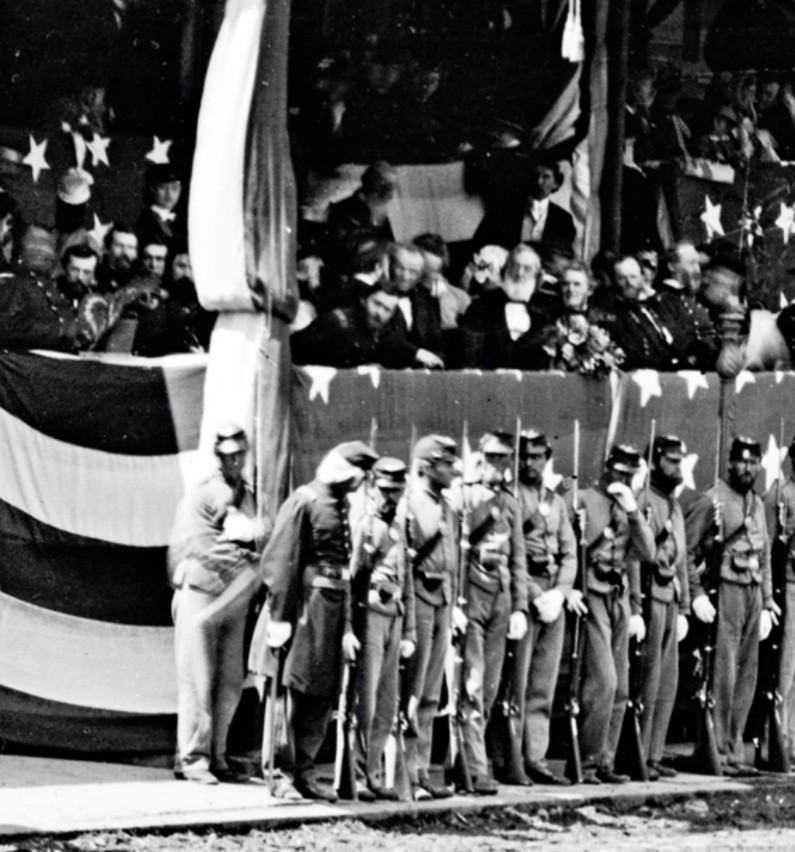
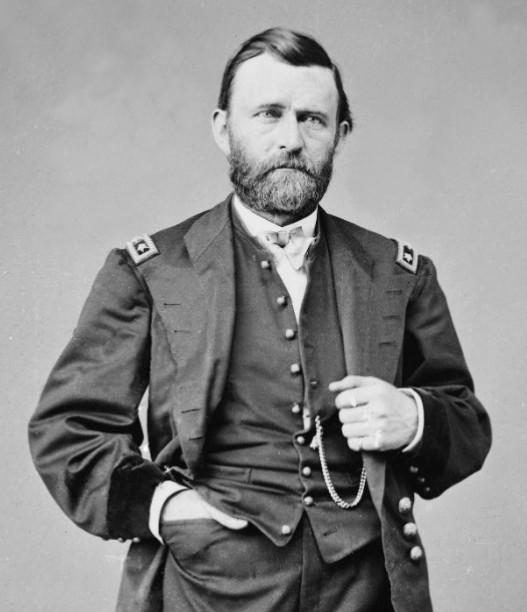
Lieutenant-General Ulysses S. Grant leans forward to have a better look at a Union regiment approaching the presidential reviewing stand, President Andrew Johnson to his left, Grand Review of the National Armies, Washington, D.C., May 23, 1865 (U.S. Library of Congress, public domain; click to enlarge).

It was a week to remember. The 47th Pennsylvania Veteran Volunteers had survived the bloody Battle of Pocotaligo in South Carolina (October 1862) to make history as the only regiment from the Great Keystone State to participate in the Union’s 1864 Red River Campaign across Louisiana and help firmly, finally turn the tide of the American Civil War in the Union’s favor during Sheridan’s 1864 Shenandoah Valley Campaign — only to be brought to their knees in mourning, upon receiving the heartbreaking news that their beloved commander-in-chief had been assassinated — just as victory was at hand.

Now, they were joining more than one hundred and forty-five thousand other “boys in blue” in a triumphant march through the streets of Washington, D.C. that would subsequently be described by The New York Times as “The Grand Procession of Battle Stained Banners” and a “splendid spectacle” that was graced with “propitious weather.” The reporter penning those superlatives was describing the Union’s Grand Review of the National Armies, which took place from May 23 to 24.

The Army of the Potomac has passed in review. The first day’s pageant is over, and to the correspondent falls the duty of depicting a scene almost devoid of incident, save in its grand aspiration. Every circumstance has combined to make it a complete success. The weather has been magnificent; the air, delightfully tempered by the rains of the past week, is cool and fragrant, and dust, is for the time subdued….

Though the city is so crowded, it is yet gay and jovial with the good feeling that prevails, for the occasion is one of such grand import and true rejoicing, that small vexations sink out of sight. With many it is the greatest epoch of their lives; with the soldier it is the last act in the drama; with the nation it is the triumphant exhibition of the resources and valor which have saved it from disruption and placed it first upon earth.

So the scene of to-day (and that of to-morrow) will never be forgotten, and he who is privileged to be a witness will mark it as a white day in the calendar, from which to gather hope and courage for the future….

That Times reporter went on to describe the ways in which multiple Union Army regiments had made their way to the nation’s capital, where they had set up tents upon their respective arrivals and how they had assembled for the first day of the review, providing a list, line-by-line, of the long order of march — a list which included the 47th Pennsylvania Volunteers. (Officially stationed at Camp Brightwood in the northwest corner of Washington, D.C. by early May 1865, the 47th Pennsylvanians had departed from that camp on Monday, May 22 to move closer to their assigned position for the Grand Review’s start, according to Private Henry Horn of Company G.)

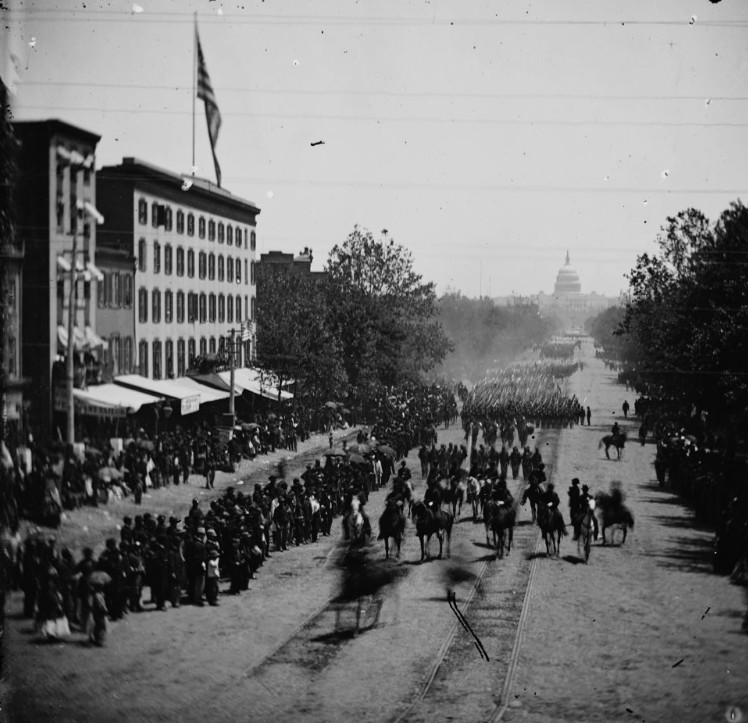
19th Corps, Army of the United States, Grand Review of the National Armies, Pennsylvania Avenue, Washington, D.C., May 23, 1865 (Matthew Brady, U.S. Library of Congress, public domain).

The 47th Pennsylvania was just one of the one hundred and eighteen infantry regiments, twenty-nine cavalry regiments and thirty-three artillery batteries that boldly stepped forth from Capitol Hill on that first day of the Grand Review (May 23, 1865). Marching with the precision they were known for, under the banners of the Army of the Potomac (Mr. Lincoln’s Army), they were participants in a thrilling, six-hour parade, passing in front of a review stand that sheltered U.S. President Andrew Johnson, Secretary of War Edwin M. Stanton, Lieutenant-General Ulysses S. Grant, and other high-ranking officials of the military and federal government. According to the Times, the 47th Pennsylvania Veteran Volunteers were positioned behind the parade’s third division, as part of the Nineteenth Army Corps (XIX Corps) in Dwight’s Division:

Third Division.
Brevet Brig.-Gen. John G. Curtin commanding.

First Brigade, Col. A. B. McCalmon commanding — 51st Pennsylvania Veteran Volunteers, Col. William J. Bolton; 208th Pennsylvania, Lieut.-Col. M. T. Heintzelman; 209th Pennsylvania, Col. T. B. Kaufman; 200th Pennsylvania, Maj. Jacob Rehm.

Second Brigade, Col. J. A. Mathews commanding — 207th Pennsylvania, Col. R. C. Cox; 211th Pennsylvania, Lieut.-Col. Coulter; 205th Pennsylvania, Lieut.-Col. W. F. Walter.

Dwight’s Division.
Nineteenth Army Corps, Brig.-Gen. William Dwight commanding.

First Brigade, Brig.-Gen. G. L. Beal commanding — 15th Maine, Col. Isaac Dyer; 114th New York, Col. S. R. Per Lee; 29th Maine, Col. George H. Nye; 30th Massachusetts, Lieut.-Col. N. Shardman; 1st Maine Battalion, Capt. C. S. Brown.

Second Brigade, Brevet Brig.-Gen. E. P. Davis commanding — 153rd New York, Lieut.-Col. J. A. McLaughlin; 8th Vermont, Col. J. B. Mead; 12th Connecticut, Lieut.-Col. G. W. Lewis; 26th Massachusetts, Lieut.-Col. W. H. Chapman; 47th Pennsylvania, Col. J. P. S. Gobin.

Third Brigade, Brig.-Gen. J. D. Fessenden commanding — 173rd New York, Col. L. M. Peck; 160th New York, Col. C. C. Dwight; 162nd New York, Col. J. W. Blanchard; 133rd New York, Col. L. D. Currie; 30th Maine, Col. T. H. Hubbard.

Artillery Brigade, Brevet Brig.-Gen. J. C. Tidball commanding — 34th New York Battery, Brevet Maj. J. Roemer; 7th Maine Battery, Capt. A. B. Twitchell; 19th New York Battery, Capt. E. W. Rogers; Battery D, 47th Pennsylvania Volunteer Artillery; Capt. S. H. Rhoads; 11th Massachusetts Battery, Capt. E. J. Jones; 27th New York Battery, Capt. J. B. Eaton.

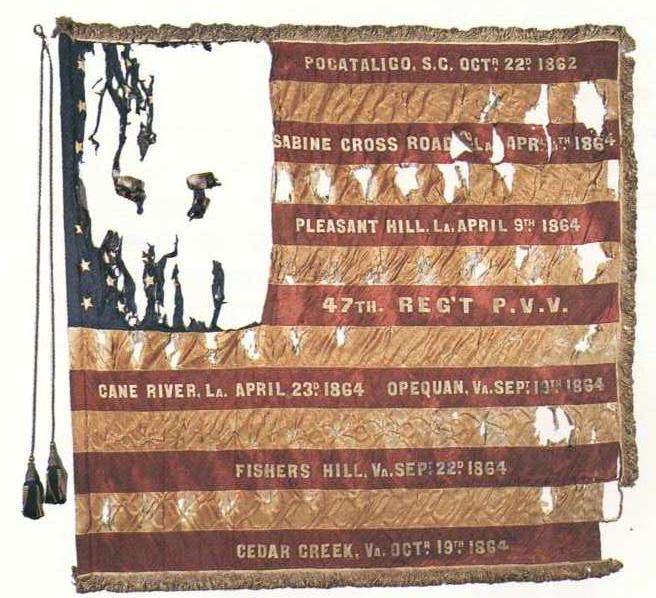
Second State Colors, 47th Pennsylvania Veteran Volunteers (presented to the regiment 7 March 1865).

Lest one be tempted to think that the 47th Pennsylvania Veteran Volunteers were placed further back in the line of march because they were being accorded less respect, one only need look at the rosters of the men who immediately followed the 47th. The division positioned directly behind them was composed of general staff of the Army of the United States and regiments led by American Civil War icon and Gettyburg hero Joshua L. Chamberlain. Observed U.S. Secretary of War Edwin M. Stanton, “You see in these armies, the foundation of the Republic: our future railroad managers, congressmen, bank presidents, senators, manufacturers, judges, governors and diplomats; yes and not less than half a dozen presidents.”

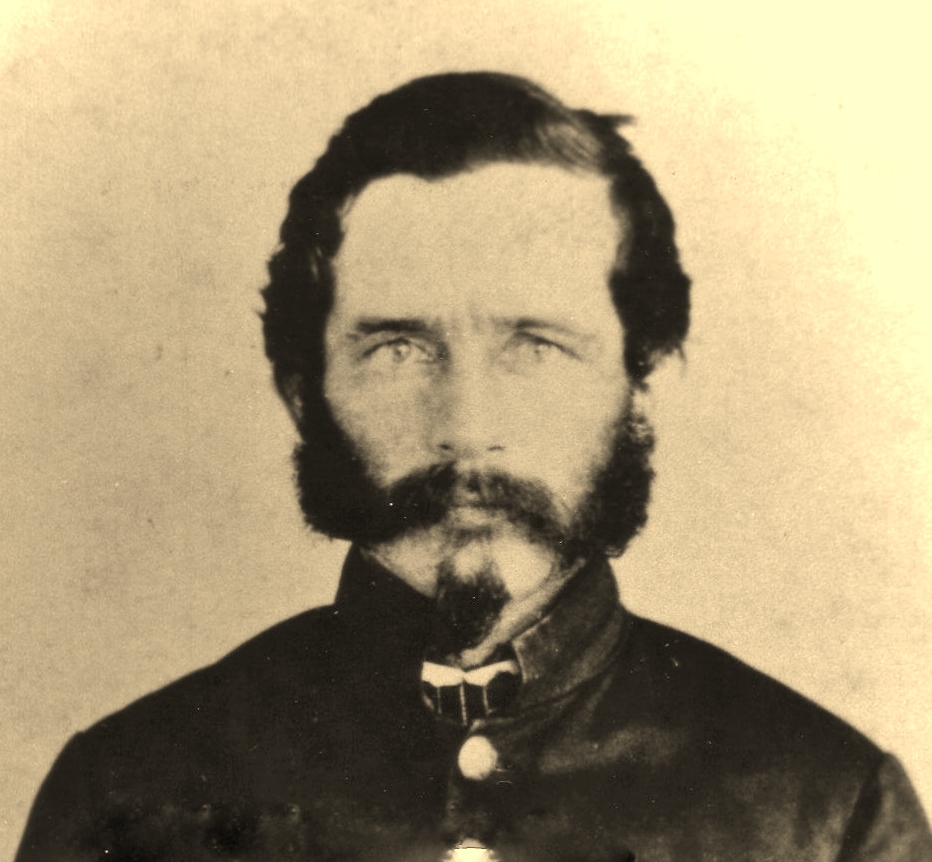
John Peter Shindel Gobin, 47th Pennsylvania Volunteers, shown here as a captain in 1863, went on to become lieutenant governor of Pennsylvania after the war (public domain).

Among the 47th Pennsylvanians who would continue to serve their communities, commonwealth and nation faithfully were future city councilmen, industrialists, inventors, judges, a three-time mayor, newspaper publishers, physicians, policemen, federal postmasters, local school board members, and a state senator who would be publicly elected as Pennsylvania’s seventh lieutenant governor. Each one had experienced the horrors of war. All were forever changed. So, please take time this Memorial Day weekend to read and share their stories with your family, friends and neighbors — and say their names as you offer a toast in tribute to their valor. We owe them at least that much for the sacrifices they made to save our nation.


Sources:

  1. Bates, Samuel P. History of Pennsylvania Volunteers, 1861-5, vol. 1. Harrisburg, Pennsylvania: B. Singerly, State Printer, 1869.
  2. “Grand Military Review: Streets Crowded with Spectators: Sherman Greeted with Deafening Cheers.” Pittsburgh, Pennsylvania: The Daily Post, May 25, 1865.
  3. “Our Heroes! The Grand Review at Washington. Honor to the Brave. Immense Outpouring of the People. The Troops Reviewed by Gen. Grant.” Harrisburg, Pennsylvania: Daily Telegraph, May 23, 1865.
  4. Review of the Armies; Propitious Weather and a Splendid Spectacle. Nearly a Hundred Thousand Veterans in the Lines.” New York, New York: The New York Times, May 24, 1865, front page.
  5. Rodrock, Rev. William D. C. Chaplain’s Reports (47th Pennsylvania Volunteer Infantry, 1865). Washington, D.C.: U.S. National Archives and Records Administration.
  6. Schmidt, Lewis. A Civil War History of the 47th Regiment of Pennsylvania Veteran Volunteers. Allentown, Pennsylvania: Self-published, 1986.
  7. “Serenade to General Grant” (performance for Lieutenant-General Ulysses S. Grant by the 47th Pennsylvania Veteran Volunteers’ Regimental Band), in “Washington.” Philadelphia, Pennsylvania: The Inquirer, May 22, 1865.
  8. The Final March: Grand Review of the Armies.” Washington, D.C.: U.S. National Park Service, retrieved online May 20, 2025.
  9. “The Grand Review: A Grand Spectacle Witnessed.” Pittsburgh, Pennsylvania: The Daily Post, May 24, 1865.
  10. “The Grand Review: Immense Crowds in Washington: Fine Appearance of the Troops: Their Enthusiastic Reception.” Harrisburg, Pennsylvania: Pennsylvania Daily Telegraph, May 24, 1865; and West Chester, Pennsylvania: The Record, May 17, 1865.
  11. “The Grand Review: The City Crowded with Visitors: Order of Corps, Divisions, Brigades and Regiments.” Philadelphia, Pennsylvania: Daily Constitutional Union, May 23, 1865.
  12. “The History of the Forty-Seventh Regt. P. V.” Allentown, Pennsylvania: The Lehigh Register, 20 July 1870.


A Musical Tribute to Beloved Commanding Officers: The 47th Pennsylvania’s Regimental Band “Serenades” Generals Grant and Sheridan (May 22, 1865)

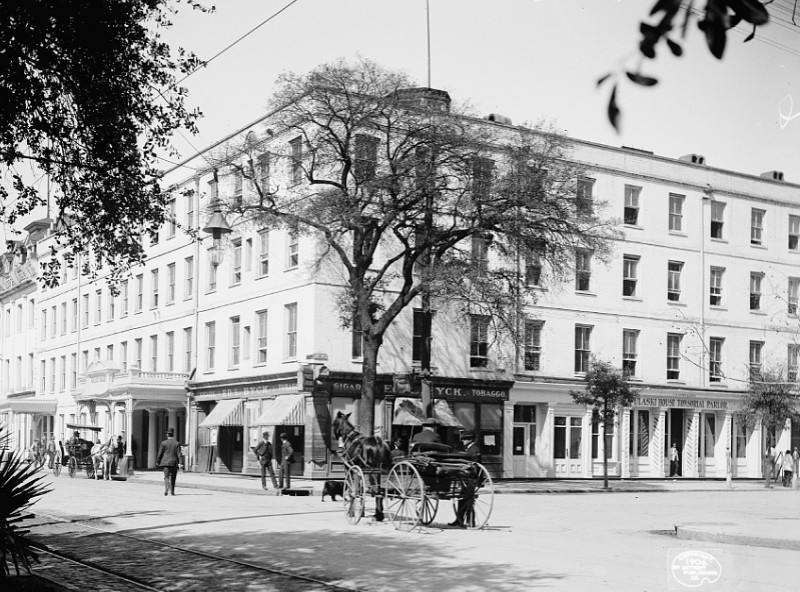
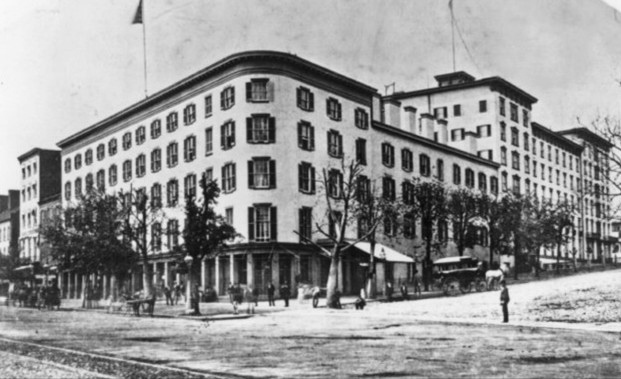
Willard’s Hotel, Washington, D.C., circa 1860-1865 (public domain; click to enlarge).

On the eve of the headline-making Grand Review of the National Armies in the nation’s capital in late May 1865, members of the 47th Pennsylvania Veteran Volunteers’ Regimental Band made their own small headlines in newspapers nationwide when they performed a selection of patriotic and popular musical numbers during an hour-long, impromptu concert for Union Lieutenant-General Ulysses S. Grant and Major-General Philip H. Sheridan, who were engaged in a meeting at Willard’s Hotel. Also joining in the musical tribute were musicians from one of Maine’s volunteer infantry regiments.

Lieutenant-General Ulysses S. Grant (public domain).

As the 47th Pennsylvanians performed, a crowd gathered nearby to listen. When the music ceased, calls of “Speech! Speech!” to Grant and Sheridan began to ripple through the crowd. Both men demurred, however, choosing instead to continue their “parting interview,” according to the Bangor Daily Whig and Courier — a decision which evidently did not disappoint the throng for long. Per The Philadelphia Inquirer, “The music was very fine, both bands rivaling each other in doing honor to the greatest General of the age” (General Grant).

Joseph Eugene Walter, Regimental Band, 47th Pennsylvania Volunteers, circa 1861.

Among the 47th Pennsylvanians who may very well have performed for Grant and Sheridan that evening were Private Joseph Eugene Walter and Principal Musician Daniel Dachrodt. (Walter, a private with Company E, had been a cornetist with Pomp’s Cornet Band in Easton, Northampton County, Pennsylvania prior to the start of the American Civil War and had previously served with the 47th Pennsylvania’s highly-regarded first Regimental Band, which had been led by Thomas Coates, the “Father of Band Music in America.” Dachrodt, who had been promoted to the rank of Drum Major and had then been placed in charge of all of the regiment’s field drummers, would ultimately survive the war — and all of his comrades — to become the last living member of the regiment in 1939.)

Major-General Philip Sheridan, U.S. Army (c. 1864, U.S. Library of Congress, public domain).

Standing on the balcony of Willard’s Hotel again the next morning (May 23), Major-General Sheridan was treated to another rousing tribute as members of his cavalry “passed before him to pay a farewell salute … while the bands played ‘Hail to the Chief!'” Those same units would take part, later that morning and afternoon, in the Army of the Potomac’s march down Pennsylvania Avenue during the parade on day one of the Grand Review. That evening, Sheridan would depart for the train depot in Baltimore, Maryland, for transportation to his new assignment — spearheading regional Reconstruction efforts as the military governor of Louisiana and Texas.

Sources:

  1. Discover Our History.” Washington, D.C.: Willard Intercontinental Hotel, retrieved online May 20, 1865.
  2. General Philip H. Sheridan.” Washington, D.C.: U.S. National Park Service, retrieved online, May 20, 2025.
  3. Grant” (television mini-series). New York, New York: History Channel Education, 2020.
  4. “Our Heroes! The Grand Review at Washington. Honor to the Brave. Immense Outpouring of the People. The Troops Reviewed by Gen. Grant.” Harrisburg, Pennsylvania: Daily Telegraph, May 23, 1865.
  5. Regimental Band of the 47th Pennsylvania Veteran Volunteers (report on the band’s performance for Lieutenant-General Ulysses S. Grant in Washington, D.C.), in “Special Dispatch to the Boston Journal.” Bangor, Maine: Bangor Daily Whig and Courier, May 23, 1865.
  6. Review of the Armies; Propitious Weather and a Splendid Spectacle. Nearly a Hundred Thousand Veterans in the Lines.” New York, New York: The New York Times, May 24, 1865, front page.
  7. “Serenade to General Grant” (performance for Lieutenant-General Ulysses S. Grant by the 47th Pennsylvania Veteran Volunteers’ Regimental Band), in “Washington.” Philadelphia, Pennsylvania: The Inquirer, May 22, 1865.
  8. The Final March: Grand Review of the Armies.” Washington, D.C.: U.S. National Park Service, retrieved online May 20, 2025.
  9. “The Grand Review: The City Crowded with Visitors: Order of Corps, Divisions, Brigades and Regiments.” Philadelphia, Pennsylvania: Daily Constitutional Union, May 23, 1865.


Camp Brightwood, Washington, D.C. (Mid-April – June 2, 1865)

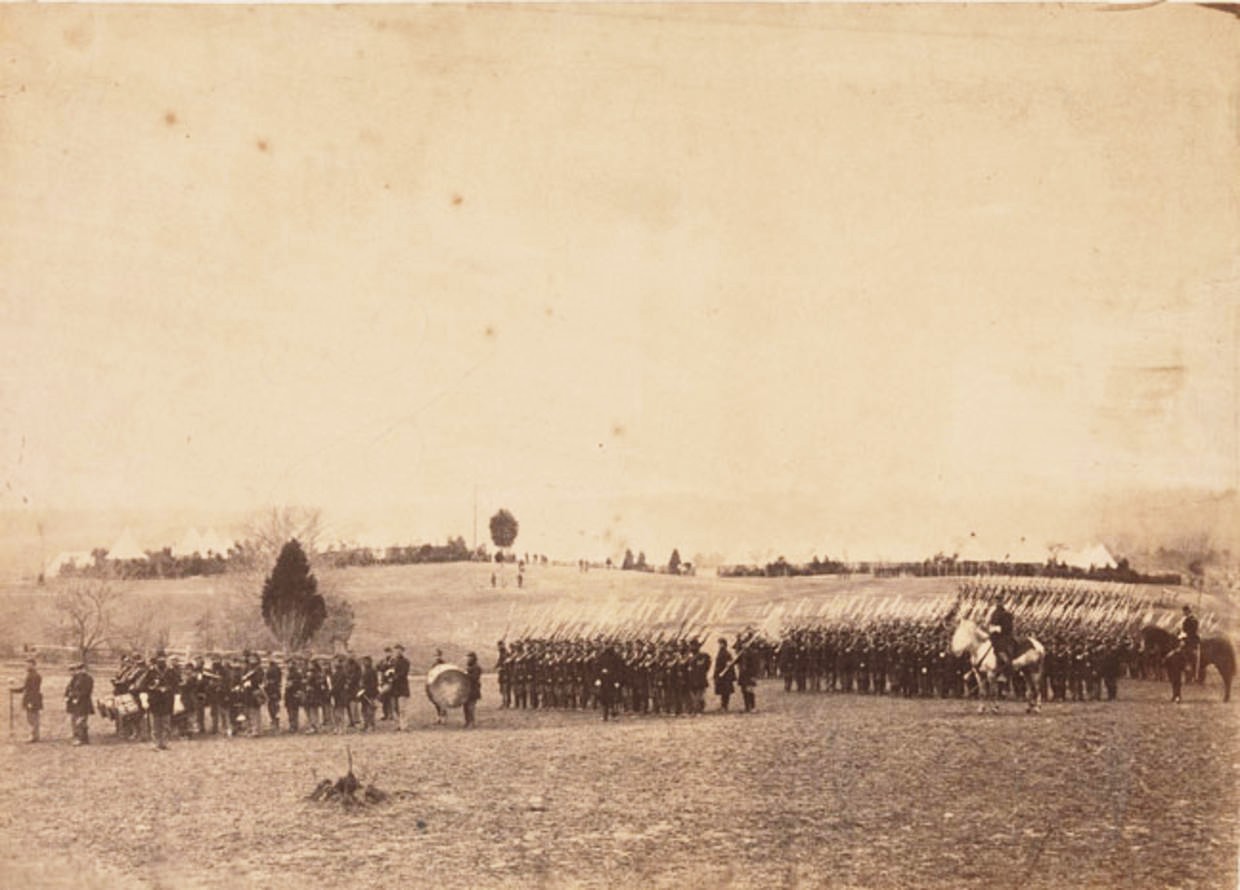
Unidentified Union infantry regiment, Camp Brightwood, Washington, D.C., circa 1865 (public domain; click to enlarge).

Marched closer to the nation’s capital in the wake of U.S. President Abraham Lincoln’s assassination in mid-April 1865, the 47th Pennsylvania Veteran Volunteers were directed to proceed to the Brightwood district in the northwestern section of Washington, D.C. and erect their Sibley tents at the Union Army duty station known as Camp Brightwood.

Their new job was to prevent Confederate States Army troops and their sympathizers from reigniting the flames of civil war that had just been stamped out weeks earlier.

According to historians at Cultural Tourism DC, Brightwood was “one of Washington, DC’s early communities and the site of the only Civil War battle to take place within the District of Columbia” — the Battle of Fort Stevens.

This crossroads community developed from the Seventh Street Turnpike, today’s Georgia Avenue, and Military Road. Its earliest days included a pre-Civil War settlement of free African Americans…. Eventually Brightwood boasted a popular race track, country estates, and sturdy suburban housing. In 1861 the area was known as Brighton, but once it was large enough to merit a U.S. Post Office, the name was changed to Brightwood to distinguish it from Brighton, Maryland.

Also, according to Cultural Tourism historians, Camp Brightwood was established on the grounds of “Emery Place, the summer estate of Matthew Gault Emery,” who had “made a fortune in stone-cutting, including the cornerstone for the Washington Monument,” which was laid in 1848.

During the Civil War (1861-1865), Captain Emery led the local militia. His hilltop became a signal station where soldiers used flags or torches to communicate with nearby Fort DeRussy or the distant Capitol. Soldiers of the 35th New York Volunteers created Camp Brightwood here. During the Battle of Fort Stevens in July 1864, Camp Brightwood was a transfer point for the wounded.

By late April of 1865, it was home to multiple Union Army regiments, including the 47th Pennsylvania Veteran Volunteers.

Guarding the Lincoln Assassination Conspirators

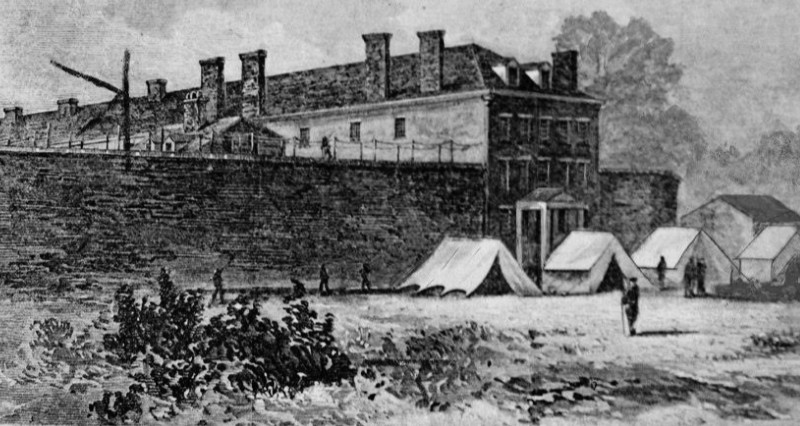
Washington Arsenal Penitentiary, Washington, D.C., 1865 (Joseph Hanshew, public domain; click to enlarge).

Sometime after their arrival at Camp Brightwood during that fateful spring of 1865, a group of 47th Pennsylvania Veteran Volunteers were given a new assignment — guard duty at the Washington Arsenal and its prison facility, where eight people were being held in connection with their involvement in the assassination of President Abraham Lincoln. They had been arrested between April 17 and 26.

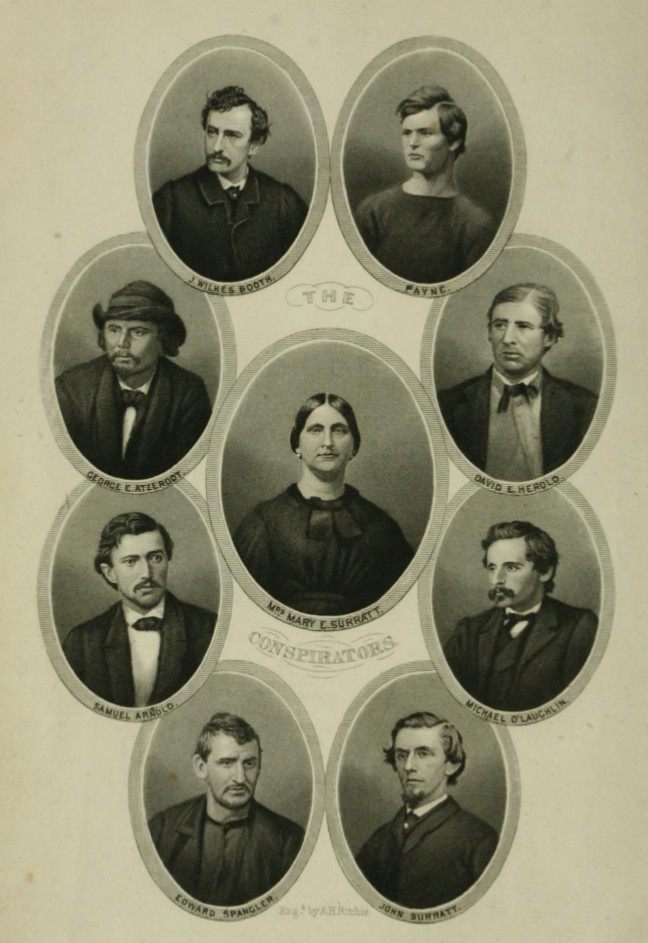
The key conspirators involved in President Abraham Lincoln’s assassination (Benn Pitman, The Assassination of President Lincoln and the Trial of the Conspirators,” 1865, U.S. Library of Congress, public domain).

While researchers for 47th Pennsylvania Volunteers: One Civil War Regiment’s Story have not yet determined the exact start date of the 47th Pennsylvania’s guard duties at the Washington Arsenal Penitentiary, they are now able to offer a better estimate — thanks to the work of Lincoln scholars Edward Steers, Jr. and Harold Holzer, who published documents written by Union Major-General John Frederick Hartranft, the Pennsylvanian appointed by U.S. President Andrew Johnson on May 1, 1865 “to command the military prison at the Washington Arsenal, where the U.S. government had just incarerated the seven men and one woman accused of complicity in the shooting.” Included in the Steers-Holzer compilation is a letter from Major-General Hartranft, governor and commander of the “Washington Arsenal Military Prison,” to Major-General Winfield S. Hancock, commanding officer of the United States Middle Military Division, which was dated May 11, 1865. Hartranft began by informing Hancock that “at 10:25 yesterday [May 10, 1865], Lt. Col. J. M. Clough, 18th N. H. reported with 450 muskets, for four days duty, relieving the 47th Pa. Vols.” He then went on to describe the duties performed by 18th New Hampshire Volunteers at the Washington Arsenal on May 10:

At 11:45, the prisoners on trial were taken into Court, in compliance with the orders of the same. At 1 P.M. the Court ordered the prisoners returned to their cells, which was done.

At 1:10 P.M. dinner was served to the prisoners in the usual manner.

At 1:30 in compliance with your orders Marshal McPhail was admitted to see the prisoner in 161 [Atzerodt], his hood having been previously removed; he remained with him until 2.35, immediately after which his hood was replaced and the door locked.

At 3:45 P.M. Mr. George L. Crawford in accordance with your instructions, was permitted to have an interview with prisoner in 209. I was present during the same, and heard all that was said. The conversation was in regard to the property of the prisoner in Philadelphia. At 4:25 the hood was replaced and the cell locked.

At 6 P.M. Supper was furnished the prisoners and at the same time Dr. Porter and myself made inspections of all the cells and prisoners.

At 6 P.M. in accordance with your instructions, Mr. Stone, counsel for Dr. Mudd, was permitted to visit his client. The interview took place in the presence of Lt. Col. McCall but not in his hearing.

At 6:35 the interview closed, and the door was again locked.

At 7 this A.M. breakfast was served to the prisoners in the usual manner. At 7:15, Dr. Porter and myself made Inspections of all the cells and prisoners.

I would respectfully recommend that the prisoner in 190 be removed to cell 165.

All passes admitting persons during the last 24 hours are here with enclosed.

As a result, researchers for the 47th Pennsylvania Volunteers’ project postulate that:

  1. As many as four hundred and fifty 47th Pennylvania Veteran Volunteer Infantrymen may have been stationed at the Washington Arsenal between May 6-10, 1865; and
  2. At least some of those 47th Pennsylvanians may very well have interacted with the key Lincoln assassination conspirators (Samuel Bland Arnold, George A. Atzerodt, David E. Herold, Dr. Samuel Alexander Mudd, Michael O’Laughlen, Lewis Thornton Powell/Lewis Payne, Edman Spangler/Ned Spangler, and Mary Elizabeth Surratt) — interactions which likely took place while those eight prisoners were confined at the Washington Arsenal prison; on the way to and from the courtroom, where they were being tried for conspiring to assassinate President Lincoln; inside that courtroom during trial proceedings; and possibly also at other sites related to their confinement and trial.

Although the duties performed between by 47th Pennsylvania Volunteers between May 6-9 would not have been exactly the same as those performed by the New Hampshire soldiers on May 10, they may very well have been similar — meaning that at least some 47th Pennsylvania Volunteers may have been involved in locking and unlocking the doors of the conspirators’ cells, escorting the conspirators into the courtroom of their military trial (which began on May 9, 1865), standing guard over the conspirators during their trial to prevent their escape, escorting them from the courtroom, and interacting with them in their cells by:

  • Bringing meals to them;
  • Removing and replacing the hoods that covered their heads so that they could interact with their lawyers and other visitors;
  • Verifying the legitimacy of passes held by would-be visitors and denying or granting access to those visitors as appropriate;
  • Escorting visitors to and from their cells; and
  • Monitoring their visits with anyone granted entry to their cells.

With their guard assignment completed by the morning of May 10, 1865, the 47th Pennsylvania Volunteers who were serving on detached duty at the Washington Arsenal were marched back to Camp Brightwood, where they would remain until their next assignment — participating in the Union’s Grand Review of the National Armies on May 23, 1865.

19th Corps, Army of the United States, Grand Review of the National Armies, Pennsylvania Avenue, Washington, D.C., May 23, 1865 (Matthew Brady, U.S. Library of Congress, public domain).

The Grandest of the Grand Reviews

The 47th Pennsylvania Veteran Volunteer Infantry was just one group of the more than one hundred and forty-five thousand Union military men who marched from Capitol Hill through the streets of Washington, D.C. during a two-day spectacle designed to celebrate the end of the American Civil War and heal Americans’ heartbreak in the wake of President Lincoln’s assassination. Held from May 23-24, 1865, it was a sight that had never been seen before — and one that would likely never be seen anywhere in the United States of America ever again. The first day’s parade alone lasted six hours.

Lieutenant-General Ulysses S. Grant, leaning forward, President Andrew Johnson to his left, Grand Review of the National Armies, Washington, D.C., May 23, 1865 (U.S. Library of Congress, public domain).

According to The New York Times, the 47th Pennsylvanians were positioned behind the parade’s third division, as part of the Nineteenth Army Corps (XIX Corps) in Dwight’s Division. Marching with the precision for which they had become renowned, they passed in front of a review stand which sheltered U.S. President Andrew Johnson, Secretary of War Edwin M. Stanton and Lieutenant-General Ulysses S. Grant. The division directly behind the 47th Pennsylvanians in that day’s line of march included other officers and general staff of the Army of the United States and regiments commanded by American Civil War icon Brigadier-General Joshua L. Chamberlain, one of the most beloved heroes from the tide-turning Battle of Gettysburg.

Rev. William DeWitt Clinton Rodrock, chaplain, 47th Pennsylvania Volunteers (courtesy of Robert Champlin, used with permission).

Afterward, 47th Pennsylvania Chaplain William DeWitt Clinton Rodrock summed up the experience in a report penned at Camp Brightwood on May 31:

The wise king of the Scriptures speaks of a sorrow that pervades the human heart “in the midst of laughter.” The truthfulness of this Divine philosophy is a matter of daily experience. Our most joyous seasons are intermingled with a sadness that often challenges definition. Every garden has its sepulchre. Every draft of sweet has its ingredient of bitter. This fact has never been so fully realized as this month. With the mighty army of brave soldiers congregated and reviewed in Washington and the … expressions of deep regret that Abraham Lincoln is not here to have witnessed the great pageant of the 23rd and 24th inst. have been universal. Not the splendid victories which our brave soldiers have won — not the pleasing prospect that they are “homeward bound” — not the consolatory thought that the reins of government have fallen into the hands of so good a man as Andrew Johnson — have served to restrain these utterances of grief and sorrow. Had it been God’s will to spare Mr. Lincoln’s life, what an eclat his presence would have imparted to the mighty pageant.

But as He willed otherwise and “doeth all things well,” it is ours to learn the great lesson of the hour.

Rebuilding a Shattered Nation

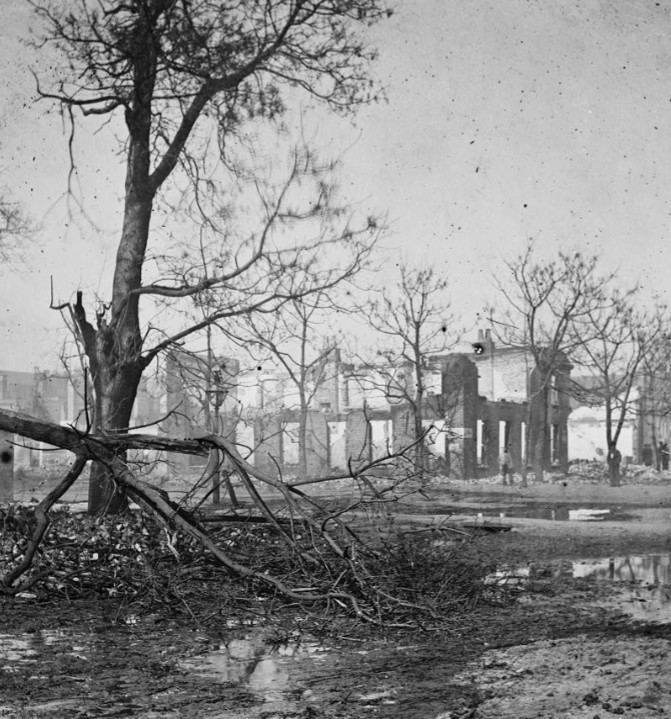
Ruins of Charleston, South Carolina as seen from the Circular Church, 1865 (U.S. National Archives and Records Administration, public domain).

As the cheers of the Grand Review crowds faded, the 47th Pennsylvania Veteran Volunteers resumed life at Camp Brightwood, with many assuming that their days of wearing “Union Blue” were finally coming to an end. But that assumption proved to be an incorrect one when the 47th Pennsylvania Veteran Volunteers received word that they were being reassigned. Ordered to pack their belongings in late May 1865, they would be heading back to America’s Deep South — this time to assist with Reconstruction duties in Georgia and South Carolina, beginning the first week in June.


Sources:

  1. Assassination of President Abraham Lincoln.” Washington, D.C.: U.S. Library of Congress, retrieved online May 21, 2025.
  2. Bates, Samuel P. History of Pennsylvania Volunteers, 1861-5, vol. 1. Harrisburg, Pennsylvania: B. Singerly, State Printer, 1869.
  3. Battleground National Cemetery: Battleround to Community — Brightwood Heritage Trail,” “Fort Stevens” and “Mayor Emery and the Union Army.” United States: Historical Marker Database, retrieved online May 20, 2025.
  4. “Battleground to Community: Brightwood Heritage Trail.” Washington, D.C.: Cultural Tourism DC, 2008.
  5. “Grand Military Review: Streets Crowded with Spectators: Sherman Greeted with Deafening Cheers.” Pittsburgh, Pennsylvania: The Daily Post, May 25, 1865.
  6. Grant” (television mini-series). New York, New York: History Channel Education, 2020.
  7. “Our Heroes! The Grand Review at Washington. Honor to the Brave. Immense Outpouring of the People. The Troops Reviewed by Gen. Grant.” Harrisburg, Pennsylvania: Daily Telegraph, May 23, 1865.
  8. Pitman, Benn. The Assassination of President Abraham Lincoln and the Trial of the Conspirators. Cincinnati, Ohio and New York, New York: Moore, Wilstach & Boldwin, 1865.
  9. Reconstruction: An Overview.” Washington, D.C.: American Battlefield Trust, November 28, 2023.
  10. Review of the Armies; Propitious Weather and a Splendid Spectacle. Nearly a Hundred Thousand Veterans in the Lines.” New York, New York: The New York Times, May 24, 1865, front page.
  11. Rodrock, Rev. William D. C. Chaplain’s Reports (47th Pennsylvania Volunteer Infantry, 1865). Washington, D.C.: U.S. National Archives and Records Administration.
  12. Schmidt, Lewis. A Civil War History of the 47th Regiment of Pennsylvania Veteran Volunteers. Allentown, Pennsylvania: Self-published, 1986.
  13. “Serenade to General Grant” (performance for Lieutenant-General Ulysses S. Grant by the 47th Pennsylvania Veteran Volunteers’ Regimental Band), in “Washington.” Philadelphia, Pennsylvania: The Inquirer, May 22, 1865.
  14. Steers, Edward Jr. and Harold Holzer. The Lincoln Assassination Conspirators: Their Confinement and Execution, as Recorded in the Letterbook of John Frederick Hartranft. Baton Rouge, Louisiana, 2009.
  15. The Final March: Grand Review of the Armies.” Washington, D.C.: U.S. National Park Service, retrieved online May 20, 2025.
  16. “The Grand Review: A Grand Spectacle Witnessed.” Pittsburgh, Pennsylvania: The Daily Post, May 24, 1865.
  17. “The Grand Review: Immense Crowds in Washington: Fine Appearance of the Troops: Their Enthusiastic Reception.” Harrisburg, Pennsylvania: Pennsylvania Daily Telegraph, May 24, 1865; and West Chester, Pennsylvania: The Record, May 17, 1865.
  18. “The Grand Review: The City Crowded with Visitors: Order of Corps, Divisions, Brigades and Regiments.” Philadelphia, Pennsylvania: Daily Constitutional Union, May 23, 1865.
  19. “The History of the Forty-Seventh Regt. P. V.” Allentown, Pennsylvania: The Lehigh Register, 20 July 1870.
  20. The Lincoln Conspirators,” in “Ford’s Theatre.” Washington, D.C.: U.S. National Park Service, retrieved online May 21, 2025.


April 12th: This Date in 47th Pennsylvania Volunteer Infantry History

April 12th would prove to be an important date for the men who served with the 47th Pennsylvania Volunteer Infantry during the American Civil War and Reconstruction eras. This abridged timeline illustrates why:

1861

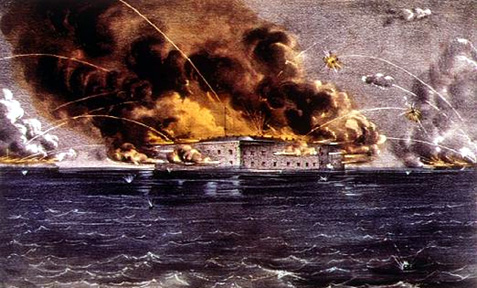
The bombardment of Fort Sumter 12-14 April 1861 (Currier & Ives, public domain).

At 4:30 a.m., on April 12, 1861, artillery batteries of the Confederate States Army open fire on United States Army troops stationed at Fort Sumter in Charleston, South Carolina. A long and disastrous period of civil war begins in America.

The majority of Pennsylvanians and residents of other states throughout America who will ultimately serve with the 47th Pennsylvania Volunteer Infantry are at home, asleep in their beds — or just rising and readying themselves for their work days on family farms, as canal boatmen, in iron foundries, silk mills, tanneries or tobacco factories, as quarrymen toiling away in the slate industry, or as miners tunneling deeper inside of the Earth in poorly-lighted coal mines, along with countless other blue collar laborers who are risking their own health and safety just to keep their families housed and fed.

The 47th Pennsylvania Volunteer Infantry isn’t even “a glimmer” in anyone’s eyes — yet. (It won’t be founded until August 5, 1861.)

1862

In 1862, The Gazette, one of two hometown newspapers read by the majority of men serving with the 47th Pennsylvania Volunteer Infantry’s C Company, carries the following news in its April 12th edition:

Jeff. Davis is becoming desperate. He has issued an extraordinary Message ordering the enrollment of all citizens of the Confederate States between the ages of 18 and 35, for military service, the residue of the fighting population, above 35 to form a fighting force.

Although that particular edition of the newspaper has not yet reached the 47th Pennsylvania Volunteers who are stationed in Florida, a warning about the Confederate Conscription Act’s pending passage has likely been telegraphed by the U.S. War Department to senior officers at the 47th Pennsylvania’s headquarters at Fort Taylor in Key West in order to prepare them for the increased threat they and their troops will face.

1864

On April 12, 1864, Captain Charles William Abbott, commanding officer of the 47th Pennsylvania Volunteer Infantry’s K Company, pens a brief report from his regiment’s camp at Grand Ecore, Louisiana to his superior officers in the United States Army of the Gulf, which partially documents the losses in soldiers and supplies sustained by his regiment during the Battle of Pleasant Hill, Louisiana on April 9, 1864. That report also contains details about the regiment’s movements during this phase of duty.

Sergeant John Gross Helfrich then describes this same battle in a letter to his parents on May 5th, in which he notes:

I have learned additional news of the late fight of our boys of the “Nineteenth Corps”…. The casualties of our boys amounted to a great deal more than at first reported. The Lt. Col. of our Forty-seventh Regt. is missing, and supposed he is wounded or perhaps killed. Lt. Swoyer is dead.

1865

In a letter that he is writing to the Sunbury American on April 12, 1865 from the 47th Pennsylvania Volunteer Infantry’s camp near Summit Point, Virginia, 47th Pennsylvanian Henry D. Wharton describes a celebration that took place following the surrender at Appomattox by Confederate General Robert E. Lee and his army on April 9, 1865:

Since yesterday a week we have been on the move, going as far as three miles beyond Winchester. There we halted for three days, waiting for the return or news from Torbett’s cavalry who had gone on a reconnoisance [sic] up to the valley. They returned, reporting they were as far up as Mt. Jackson, some sixty miles, and found nary an armed reb. The reason of our move was to be ready in case Lee moved against us, or to march on Lynchburg, if Lee reached that point, so that we could aid in surrounding him and [his] army, and with Sheridan and Mead capture the whole party. Grant’s gallant boys saved us that march and bagged the whole crowd. Last Sunday night our camp was aroused by the loud road of artillery. Hearing so much good news of late, I stuck to my blanket, not caring to get up, for I suspected a salute, which it really was for the ‘unconditional surrender of Lee.’ The boys got wild over the news, shouting till they were hoarse, the loud huzzas [sic, huzzahs] echoing through the Valley, songs of ‘rally round the flag,’ &c., were sung, and above the noise of the ‘cannons opening roar,’ and confusion of camp, could be heard ‘Hail Columbia’ and Yankee Doodle played by our band. Other bands took it up and soon the whole army let loose, making ‘confusion worse confounded.’

The next morning we packed up, struck tents, marched away, and now we are within a short distance of our old quarters. – The war is about played out, and peace is clearly seen through the bright cloud that has taken the place of those that darkened the sky for the last four years. The question now with us is whether the veterans after Old Abe has matters fixed to his satisfaction, will have to stay ‘till the expiration of the three years, or be discharged as per agreement, at the ‘end of the war.’ If we are not discharged when hostilities cease, great injustice will be done.

The members of Co. ‘C,’ wishing to do honor to Lieut. C. S. Beard, and show their appreciation of him as an officer and gentleman, presented him with a splendid sword, sash and belt. Lieut. Beard rose from the ranks, and as one of their number, the boys gave him this token of esteem.

A few nights ago, an aid [sic] on Gen. Torbett’s staff, with two more officers, attempted to pass a safe guard stationed at a house near Winchester. The guard halted the party, they rushed on, paying no attention to the challenge, when the sentinel charged bayonet, running the sharp steel through the abdomen of the aid [sic], wounding him so severely that he died in an hour. The guard did his duty as he was there for the protection of the inmates and their property, with instruction to let no one enter.

The boys are all well, and jubilant over the victories of Grant, and their own little Sheridan, and feel as though they would soon return to meet the loved ones at home, and receive a kind greeting from old friends….

1866

On April 12, 1866, members of the 47th Pennsylvania Veteran Volunteers who survived the American Civil War are three months into their post-war civilian lives. Many are back home in Pennsylvania, trying to regain some sense of their old selves with normal work and family routines. Others have already left their pre-war and war lives behind, choosing to migrate west in search of better opportunities — or a certain peace of mind they hope to find in knowing they will be far away from any decision-makers who might drag their communities and nation back down into another disastrous war in the future.


Sources:

  1. Abbott, Charles W. Report from Captain Charles W. Abbott, Captain, Company K, 47th Pennsylvania Volunteer Infantry, to Senior Officers of the U.S. Army of the Gulf’s XIX Corps (19th Corps), Grand Ecore, Louisiana, April 12, 1864. Nazareth, Pennsylvania: Personal Collection of Julian Burley.
  2. Agriculture and Rural Life,” in “Stories from PA History.” Harrisburg, Pennsylvania: Pennsylvania Historical and Museum Commission, 2023.
  3. Fort Sumter and Fort Moultrie National Park.” Washington, D.C.: National Park Foundation, retrieved online April 12, 2025.
  4. Harris, Howard and Perry K. Blatz. Keystone of Democracy: A History of Pennsylvania Workers. Harrisburg, Pennsylvania: Pennsylvania Historical and Museum Commission, 1999.
  5. Helfrich, John Gross. Letter to His Parents, May 5, 1864. Mesa, Arizona: Personal Collection of the Colin Cofield Family Archives.
  6. Miller, Randall M. and William A. Pencak. Pennsylvania: A History of the CommonwealthUniversity Park, Pennsylvania: The Pennsylvania State University Press, 2002.
  7. Mining Anthracite,” in “Stories from PA History.” Harrisburg, Pennsylvania: Pennsylvania Historical and Museum Commission, 2023.
  8. Montgomery, Morton L. Early Furnaces and Forges of Berks County, Pennsylvania, in The Pennsylvania Magazine of History and Biography, 1884. Philadelphia, Pennsylvania: Historical Society of Pennsylvania, 1884.
  9. News Regarding the Confederate States’ New Conscription Order. Sunbury, Pennsylvania: The Gazette, April 12, 1862.
  10. Palladino, Grace. Another Civil War: Labor, Capital, and the State in the Anthracite Regions of Pennsylvania, 1840-1868. New York, New York: Fordham University Press, March 30, 2006.
  11. Sacher, John M. Confederate Conscription and the Struggle for Southern Soldiers. Baton Rouge, Louisiana: LSU Press, 2021.
  12. The Industrial Age,” in “Stories from PA History: Science and Invention.” Harrisburg, Pennsylvania: Pennsylvania Historical and Museum Commission, 2023.
  13. The Pennsylvania Iron Industry: Furnace and Forge of America,” in “Stories from PA History.” Harrisburg, Pennsylvania: Pennsylvania Historical and Museum Commission, 2023.
  14. The Railroad in Pennsylvania,” in “Stories from PA History.” Harrisburg, Pennsylvania: Pennsylvania Historical and Museum Commission, 2023.
  15. Timeline of Labor History in Pennsylvania.” Pennsylvania: Pennsylvania Labor History Society, retrieved online April 12, 2025.


Women’s History Month: A Look Back at the Mothers, Wives, Widows, Daughters, and Granddaughters of the 47th Pennsylvania Volunteers

Leanna (Diehl) Hornbeck (1851-1934).

Leanna (Diehl) Hornbeck (1851-1934).

As Women’s History Month 2025 comes to a close, we take a look back at the mothers, wives, widows, daughters, and granddaughters of 47th Pennsylvania Volunteer Infantrymen who helped to preserve America’s Union and rebuild their shattered nation following the end of the American Civil War.

The backbones of their respective families, they not only kept the home fires burning while their husbands were engaged in combat far from their loving arms, they each left their own marks on the communities where they lived, and deserve to be remembered and celebrated for their own courage and resilience. Learn more about these remarkable women by watching our YouTube video, “Faces of the 47th: Wives, Widows and Daughters of the 47th Pennsylvania Volunteers,” and by reading the following biographies:

Remember their names. Be inspired by their strength. Honor the sacrifices they made for community and country.


Sources: 

  1. “Allen and Nona Albert’s Retirement a Loss to Long-Time Customers.” Tremont, Pennsylvania: The Press-Herald and The Pine Grove Herald, 12 February 1970.
  2. “Allentown Woman on the Roll of Honor: Gov. Brumbaugh Retires Mrs. Anna S. Leisenring, Factory Inspector, with Half Pay.” Reading, Pennsylvania: Reading Eagle, 20 January 1918.
  3. “Allentown Woman to Come to Reading to Inspect Bake Shops and Textile Establishments: Mrs. Annie Leisenring Is Lineal Descendant of Conrad Weiser, the Great Colonial Pioneer Who Lived Near Womelsdorf. Was First Appointed to Factory Inspection Service in 1893.” Reading, Pennsylvania: Reading Eagle, 20 May 1914.
  4. Baptismal, marriage, military, death, and burial records of the Snyder family. Pennsylvania, California, Florida, Louisiana, Nevada, Ohio, etc.: Snyder Family Archives, 1650-present and Historic Pennsylvania Church and Town Records (baptismal, marriage, death, and burial records of various churches across Pennsylvania). Harrisburg, Pennsylvania: Department of Health, Bureau of Vital Statistics, 1905-1956; and Philadelphia, Pennsylvania: Historical Society of Pennsylvania, 1776-1956.
  5. Beyerle, Emma; and Snyder, H. Corinne [sic, Corrine], Catharine R. and Lillian E., in U.S. Census (City of Reading, Fourteenth Ward, City of Reading, Berks County, Pennsylvania, 1930). Washington, D.C.: U.S. National Archives and Records Administration.
  6. Breneman, Christian K. and Margaret J., in U.S. Civil War Pension Index (application no.: 432815, certificate no.: 307318, filed by the widow from Pennsylvania on 7 July 1891). Washington, D.C.: U.S. National Archives and Records Administration.
  7. Breneman, Margaret A., Wm. L. Gardner, and Margaret J. Breneman; Victor L., Carrie I. Landis, Christian and Margaret J. Breneman, and R. M. Landis; Benj. C Breneman, Lena M. Rupley, Christian K. and Margaret J. Breneman, and Henry M. and Phoebe Rupley; Harry S. Breneman, Anna May Gebhard, C. K. and M. J. Breneman, and Jacob and Anna Gebhard, in Applications for Marriage Licenses. Harrisburg, Pennsylvania: Clerk of the Orphans’ Court of Dauphin County, Pennsylvania, 21 December 1897; 21 November 1906; 17 June 1911; and 3 October 1914.
  8. “Catharine Courtney, 89, Private Secretary” (obituary). Lancaster, Pennsylvania: Intelligencer Journal, 28 August 1995.
  9. Catharine S. Courtney, in “Clubs: York Woman Heads State Secretaries.” Lancaster, Pennsylvania: New Era, 23 April 1956.
  10. Chalkley John, in Portrait and Biographical Album of Whiteside County, Illinois, Containing Full-Page Portraits and Biographical Sketches of Prominent and Representative Citizens of the County, Together with the Portraits and Biographies of All the Governors of Illinois, and the Presidents of the United States. Chicago, Illinois: Chapman Brothers, 1863.
  11. Charles Magill and “Julian Ruston” [sic], in Certificate of Marriage. Camden, New Jersey: St. Paul’s Protestant Episcopal Church, 18 January 1887.
  12. Courtney, Charles F. and Catharine R., in Polk’s Lancaster City Directory, 1950. Boston, Massachusetts: R. L. Polk & Co., Inc., Publishers, 1950.
  13. Davis, William W. History of Whiteside County, Illinois from Its Earliest Settlement to 1908: Illustrated, with Biographical Sketches of Some Prominent Citizens of the County, vols. 1 and 2. Chicago, Illinois: Pioneer Publishing Co., 1908.
  14. “Death of a Highly Esteemed Citizen.” Allentown, Pennsylvania: The Allentown Democrat, 5 October 1898.
  15. Edwin Minnich, Juliann (Kuehner) Minnich, and George Minnich, in U.S. Civil War Widows’ Pension Files. Washington, D.C.: U.S. National Archives and Records Administration, 1865-1901.
  16. Explaining Trends in the Gender Wage Gap: A Report by The Council of Economic Advisors.” Washington, D.C.: The White House, June 1998.
  17. “Funeral of Mrs. Mary B. Moyer from Her Late Home on East Market Street,” in “Green Ridge Items.” Scranton, Pennsylvania: The Scranton Tribune, 9 December 1901.
  18. Fusselman, Daniel, Catherine, Celistia [sic, Salista], Catherine, John W. R., Caroline, Mary E., and Sarah, in U.S. Census (East Waterford, Tuscarora Township, Juniata County, Pennsylvania, 1860). Washington, D.C.: U.S. National Archives and Records Administration.
  19. Fusselman, Daniel (father), Kate, John, Caroline, Emna Sarah, Daniel (son), Amanda, Rosa, and Josiah, in U.S. Census (McCullochs Mills, Tuscarora Township, Juniata County, Pennsylvania, 1870). Washington, D.C.: U.S. National Archives and Records Administration.
  20. Fusselman, Daniel and Catharine, in U.S. Civil War Pension Files (application no.: 254530, certificate no.: 315939, filed from Pennsylvania by the veteran, 8 May 1878; application no.: 250052, certificate no.: 347812, filed by the veteran’s widow, 20 August 1879). Washington, D.C.: U.S. National Archives and Records Administration.
  21. Gordon, Elizabeth Putnam. Women Torch-Bearers: The Story of the Woman’s Christian Temperance Union. Evanston, Illinois: National Woman’s Christian Temperance Union Publishing House, 1924.
  22. Holland Farmer Passed Away Friday.” Abilene, Kansas: Abilene Daily Reflector, 29 August 1914.
  23. “John Family Papers, 1775-1951” (RG5/077). Swarthmore, Pennsylvania: Friends Historical Library of Swarthmore College.
  24. John, Clark E. History and Family Record of the “John” Family, 1683 to 1964: The Descendants of John Phillips and Ellen, His Wife, from Haverfordwest, Pembrokeshire, Wales. Salt Lake City, Utah: Genealogical Society of the Church of Latter Day Saints, 1967.
  25. John, Don D. and Helen Doup John. “Eliza John Diary from 1839 to 1863: An Historical and Genealogical Record of the Quakers in Northumberland County, Pennsylvania and What Befell Them,” in Historical Collections of the John Family in America, 1950. Louisville, Kentucky: J. D. John, Self-published, 1951.
  26. John, George D., Mary Alice John, Elida P. John, Sarah Hughes, and Sidney A. John, in Illinois Deaths and Stillbirths, 1916-1947 (database via Public Board of Health, Archives, Springfield, Illinois, Family History Library microfilm 1,614,419, 1,786,728 and 1,818,801; dates: 1928, 1937, 1938). Salt Lake City, Utah: Family History Library.
  27. Leanna D. Hornbeck, in Illinois Deaths and Stillbirths, 1916–1947. Salt Lake City, Utah: FamilySearch, 1934.
  28. Leanna D. Hornbeck, in U.S. Passport Applications (No. 5492 on Roll No. 184). Washington, D.C.: U.S. Department of State, Bureau of Citizenship and U.S. National Archives, 10 May 1913.
  29. Lecture Presentation by Annie E. Leisenring, in “Addresses and Discussions: Fourth Annual Welfare and Efficiency Conference, Pennsylvania Department of Labor and Industry, November 21, 22, 23, 1916.” Harrisburg, Pennsylvania: Monthly Bulletin of the Pennsylvania Department of Labor and Industry, William Stanley Ray, State Printer, March 1917.
  30. Leisenring, Annie, in U.S. Census of Union Veterans and Widows of the Civil War. Washington, D.C. and Pennsylvania: 1890.
  31. Leisenring, Annie E., in United States Veterans Administration Pension Payment Cards (Certificate No.: 240043). Washington, D.C.: U.S. National Archives and Records Administration, 1887-1920.
  32. Letter from Key West (from “W. D. C. R., Chaplain, Forty-seventh Regiment, P. V.”; dated 13 March 1862). Philadelphia, Pennsylvania: The Press, 31 March 1862, front page.
  33. Lewis, Jim. “Not Forgotten: She Was Both Pediatrician and Pioneer” (obituary of Sandra Rowan, MD, one of the children cared for by Lillie May Snyder). Reading, Pennsylvania: Reading Eagle, 16 July 2016.
  34. “Lillian Snyder, 92, Was Registered Nurse” (obituary of H. Corrine Snyder’s younger sister, Lillian Estelle Snyder). Lancaster, Pennsylvania: Intelligencer Journal, 9 June 2001.
  35. “Local Group Returns from Tour of Orient” (photo with article about the travels of Catharine R. (Snyder) Courtney and friends). Lancaster, Pennsylvania: Intelligencer Journal, 2 April 1963.
  36. “Many Attend Funeral of Stephen J. Moyer.” Scranton, Pennsylvania: The Scranton Tribune, 9 August 1915.
  37. Maurer, Russ. “Lavelle Telegraph Telephone Company Charted in 1908,” in “Memories of Russ Maurer.” Hegins, Pennsylvania: The Citizen-Standard, circa 1990s.
  38. “Minick, Julia A. (nee) Megill, Julia A.” [sic], in U.S. Civil War Pension General Index Cards, 1896. Washington, D.C.: U.S. National Archives and Records Administration.
  39. Minnich, Capt. Edwin G. and Mrs. Julia (Kuehner) Minnich (images and military paperwork). Pennsylvania: Personal Collection of Chris Sapp.
  40. “Miss Nona Snyder Is Married Today to Pine Grove Man” (article describing the wedding ceremony of Nona M. Snyder and Allen A. Albert). Lebanon, Pennsylvania: Lebanon Daily News, 23 September 1953.
  41. Mrs. Julia Magill, in “Prominent Army Nurses,” in “The National Association of Army Nurses of the Civil War.” Washington, D.C.: The Evening Times, Wednesday, October 8, 1902.
  42. “Mrs. Margaret J. Breneman” (obituary). Harrisburg, Pennsylvania: Harrisburg Telegraph, 20 March 1930.
  43. “Nona Albert” (obituary). Lebanon, Pennsylvania: The Daily News, 3 June 1960.
  44. Notice of Mrs. Henry Hornbeck’s Return from Chicago. Allentown, Pennsylvania: The Allentown Democrat, 23 September 1909.
  45. Occupational Outlook Handbook, 1959 Edition, pp. 239-249, in Bulletin No. 1255. Washington, D.C.: United States Department of Labor, 1959.
  46. Rodrock, William D. C. and Julia M. Rodrock, in U.S. Civil War Pension Index (application no.: 296549, certificate no.: 260499, filed by the veteran on 17 July 1879; application no.: 793449, certificate no.: 574458, filed by the veteran’s widow from New Jersey on 24 October 1903). Washington, D.C.: U.S. National Archives and Records Administration.
  47. “Shopping Nights Are Agreed Upon.” Allentown, Pennsylvania: The Allentown Leader, 17 December 1917.
  48. Smalser, Robert. Letter of Mary Barbara (Nyhart) Moyer to her husband, Stephen J. Moyer, and photographs of Stephen J. and Mary Moyer and their children. Seabeck, Washington: Personal Collection of Col. Bob Smalser (used with permission).
  49. Snyder, Catharine, John, Timothy, Lillie, and Salome, in A Directory of the Eleventh Census of the Population of Schuylkill County, Giving the Names and Ages of Males and Females, Published by Cities, Boroughs, Wards, Townships, Precincts or Towns, in Connection with a Business Directory of the Same for Advertising Purposes. Lebanon, Pennsylvania: E. A. Schartel, Publisher, 1891.
  50. Snyder, Catharine R. and Courtney, Charles F., in “Massachusetts Vital Records Index to Marriages” (documentation of the marriage of H. Corrine Snyder’s younger sister, Catharine, in Boston in 1947). Boston, Massachusetts: New England Historic Genealogical Society.
  51. Snyder, Catharine R. and Lillian, E., in The Boston Directory for the Year Commencing July 1, 1942 (Boston Massachusetts, 1942). Chicago, Illinois: R. L. Polk Publishers, 1942.
  52. Snyder, Corrine and Catharine, in Reading City Directory, 1926. Reading, Pennsylvania: Boyd’s City Directories.
  53. Snyder, Corrine, Lillian E. and Catharine R., in U.S. Census (City of Reading, Fourteenth Ward, Berks County, Pennsylvania, 1940). Washington, D.C.: U.S. National Archives and Records Administration.
  54. Snyder, H. Corrine, in U.S. Census (Allentown, Lehigh County, Pennsylvania, 1950). Washington, D.C.: U.S. National Archives and Records Administration.
  55. Snyder, John H., Minnie R., Timothy P. and Nona M., in U.S. Census (Butler Township, Schuylkill County, Pennsylvania, 1900). Washington, D.C.: U.S. National Archives and Records Administration.
  56. Snyder, John H., Minnie R., Timothy P., Nona M., H. Corrine, John S., Catharine R., and Lillian E., in U.S. Census (Lavelle, Northwest Butler Township, Schuylkill County, Pennsylvania, 1910). Washington, D.C.: U.S. National Archives and Records Administration.
  57. Snyder, John H., Minnie, Nona M., John S., and Willard E. in U.S. Census (Butler Township, Schuylkill County, Pennsylvania, 1930). Washington, D.C.: U.S. National Archives and Records Administration.
  58. Snyder, John H., Minnie R., Nona, Corrine, John S., Catharine R., Lillian E., Chester H., and Willard E. in U.S. Census (Butler Township, Schuylkill County, Pennsylvania, 1920). Washington, D.C.: U.S. National Archives and Records Administration.
  59. Snyder, Lillie May, in Gibson & Sanders Funeral Home Records (1956). Reading, Pennsylvania: Sanders Funeral Home, retrieved in 2011.
  60. Snyder, Miss Lillie (obituary and funeral notice). Reading, Pennsylvania: Reading Eagle, 16 and 18 May 1956.
  61. “Stephen J. Moyer,” in “Deaths.” Scranton, Pennsylvania: The Scranton Tribune, 6 August 1915.
  62. “Veterans Who Will Be at the G.A.R. Celebration Owe Their Lives to the Heroic Self-Sacrifice of These Wgomen Nurses.” Philadelphia, Pennsylvania: The Philadelphia Times, Sunday, 20 August 1899.
  63. “Violate Child Labor Law: One Employer Heavily Fined and Others to Be Arrested. Special to The Telegraph.” Harrisburg, Pennsylvania: Harrisburg Telegraph, 8 September 1911.
  64. Wattenberg, Ben. “FMC Program Segments 1900-1930: Infant and Maternal Mortality,” in “The First Measured Century.” Washington, D.C.: PBS, 2000 (retrieved online 14 February 2025).
  65. “W.C.T.U. Convention,” in “Frackville News.” Shenandoah, Pennsylvania: Evening Herald, 30 September 1950.
  66. “Will of Henry J. Hornbeck.” Allentown, Pennsylvania: The Allentown Democrat, 19 October 1898.


Honoring President George Washington, Fort Taylor, Key West, Florida (February 22, 1862)

Fort Taylor, Key West, Florida (Harper’s Weekly, 1864, public domain).

Letter from the Sunbury Guards
Camp Brannan. Key West, Fla., Feb. 27, 1862.

DEAR WILVERT:– Gen. Brannan and staff arrived here on Friday last, on the steamer Philadelphia. He made his first appearance, to us, on our parade ground, at dress parade, and seemed pleased at the improvement the men had made with their new arms, in the manual. After dress parade he rode passed [sic] the different streets of the regiment, and the enthusiastic cheers given him showed that he was liked, and that the men had perfect confidence in him.

Saturday last, the anniversary of the birth of “the Father of his Country,” WASHINGTON, was celebrated in a becoming manner. The whole Brigade was formed in Divisions, which made three sides of a square; the officers in the centre [sic]. A prayer was then offered to the Throne of Grace asking for success to our arms, that this wicked rebellion might be put down, and that we might hereafter celebrate the anniversary of Washington’s birthday in peace. The farewell ‘Address’ was then read….

Washington & Lincoln (Apotheosis), J. A. Arthur, 1865 (public domain).

When 47th Pennsylvania Volunteer Henry D. Wharton penned those words from his duty station at Fort Taylor in Key West on February 27, he was referring to the final public address given by the first President of the United States, GeorgeWashington, as he prepared to retire from his life of public service. Written on September 19, 1796, Washington’s insightful words reminded Wharton and his fellow Union Army soldiers what they were fighting to preserve.

Picture them as they stood there, attired in their blue uniforms, the American flag wafting gently in the breeze under the brilliant blue sky of a sunny, Florida day, as a senior officer solemnly read Washington’s final guidance to his beloved fellow Americans–guidance that remains relevant even now.

Washington’s Final Address (Excerpt)

Friends and Fellow Citizens:

The period for a new election of a citizen to administer the executive government of the United States being not far distant, and the time actually arrived when your thoughts must be employed in designating the person who is to be clothed with that important trust, it appears to me proper, especially as it may conduce to a more distinct expression of the public voice, that I should now apprise you of the resolution I have formed, to decline being considered among the number of those out of whom a choice is to be made.

I beg you, at the same time, to do me the justice to be assured that this resolution has not been taken without a strict regard to all the considerations appertaining to the relation which binds a dutiful citizen to his country; and that in withdrawing the tender of service, which silence in my situation might imply, I am influenced by no diminution of zeal for your future interest, no deficiency of grateful respect for your past kindness, but am supported by a full conviction that the step is compatible with both.

The acceptance of, and continuance hitherto in, the office to which your suffrages have twice called me have been a uniform sacrifice of inclination to the opinion of duty and to a deference for what appeared to be your desire. I constantly hoped that it would have been much earlier in my power, consistently with motives which I was not at liberty to disregard, to return to that retirement from which I had been reluctantly drawn….

The unity of government which constitutes you one people is also now dear to you. It is justly so, for it is a main pillar in the edifice of your real independence, the support of your tranquility at home, your peace abroad; of your safety; of your prosperity; of that very liberty which you so highly prize. But as it is easy to foresee that, from different causes and from different quarters, much pains will be taken, many artifices employed to weaken in your minds the conviction of this truth; as this is the point in your political fortress against which the batteries of internal and external enemies will be most constantly and actively (though often covertly and insidiously) directed, it is of infinite moment that you should properly estimate the immense value of your national union to your collective and individual happiness; that you should cherish a cordial, habitual, and immovable attachment to it; accustoming yourselves to think and speak of it as of the palladium of your political safety and prosperity; watching for its preservation with jealous anxiety; discountenancing whatever may suggest even a suspicion that it can in any event be abandoned; and indignantly frowning upon the first dawning of every attempt to alienate any portion of our country from the rest, or to enfeeble the sacred ties which now link together the various parts.

For this you have every inducement of sympathy and interest. Citizens, by birth or choice, of a common country, that country has a right to concentrate your affections. The name of American, which belongs to you in your national capacity, must always exalt the just pride of patriotism more than any appellation derived from local discriminations.

With slight shades of difference, you have the same religion, manners, habits, and political principles. You have in a common cause fought and triumphed together; the independence and liberty you possess are the work of joint counsels, and joint efforts of common dangers, sufferings, and successes.

But these considerations, however powerfully they address themselves to your sensibility, are greatly outweighed by those which apply more immediately to your interest. Here every portion of our country finds the most commanding motives for carefully guarding and preserving the union of the whole….

In contemplating the causes which may disturb our Union, it occurs as matter of serious concern that any ground should have been furnished for characterizing parties by geographical discriminations, Northern and Southern, Atlantic and Western; whence designing men may endeavor to excite a belief that there is a real difference of local interests and views.

One of the expedients of party to acquire influence within particular districts is to misrepresent the opinions and aims of other districts. You cannot shield yourselves too much against the jealousies and heartburnings which spring from these misrepresentations; they tend to render alien to each other those who ought to be bound together by fraternal affection….

To the efficacy and permanency of your Union, a government for the whole is indispensable. No alliance, however strict, between the parts can be an adequate substitute; they must inevitably experience the infractions and interruptions which all alliances in all times have experienced. Sensible of this momentous truth, you have improved upon your first essay, by the adoption of a constitution of government better calculated than your former for an intimate union, and for the efficacious management of your common concerns. This government, the offspring of our own choice, uninfluenced and unawed, adopted upon full investigation and mature deliberation, completely free in its principles, in the distribution of its powers, uniting security with energy, and containing within itself a provision for its own amendment, has a just claim to your confidence and your support. Respect for its authority, compliance with its laws, acquiescence in its measures, are duties enjoined by the fundamental maxims of true liberty. The basis of our political systems is the right of the people to make and to alter their constitutions of government. But the Constitution which at any time exists, till changed by an explicit and authentic act of the whole people, is sacredly obligatory upon all. The very idea of the power and the right of the people to establish government presupposes the duty of every individual to obey the established government.

All obstructions to the execution of the laws, all combinations and associations, under whatever plausible character, with the real design to direct, control, counteract, or awe the regular deliberation and action of the constituted authorities, are destructive of this fundamental principle, and of fatal tendency. They serve to organize faction, to give it an artificial and extraordinary force; to put, in the place of the delegated will of the nation the will of a party, often a small but artful and enterprising minority of the community; and, according to the alternate triumphs of different parties, to make the public administration the mirror of the ill-concerted and incongruous projects of faction, rather than the organ of consistent and wholesome plans digested by common counsels and modified by mutual interests.

However combinations or associations of the above description may now and then answer popular ends, they are likely, in the course of time and things, to become potent engines, by which cunning, ambitious, and unprincipled men will be enabled to subvert the power of the people and to usurp for themselves the reins of government, destroying afterwards the very engines which have lifted them to unjust dominion.

Towards the preservation of your government, and the permanency of your present happy state, it is requisite, not only that you steadily discountenance irregular oppositions to its acknowledged authority, but also that you resist with care the spirit of innovation upon its principles, however specious the pretexts. One method of assault may be to effect, in the forms of the Constitution, alterations which will impair the energy of the system, and thus to undermine what cannot be directly overthrown. In all the changes to which you may be invited, remember that time and habit are at least as necessary to fix the true character of governments as of other human institutions; that experience is the surest standard by which to test the real tendency of the existing constitution of a country; that facility in changes, upon the credit of mere hypothesis and opinion, exposes to perpetual change, from the endless variety of hypothesis and opinion; and remember, especially, that for the efficient management of your common interests, in a country so extensive as ours, a government of as much vigor as is consistent with the perfect security of liberty is indispensable. Liberty itself will find in such a government, with powers properly distributed and adjusted, its surest guardian. It is, indeed, little else than a name, where the government is too feeble to withstand the enterprises of faction, to confine each member of the society within the limits prescribed by the laws, and to maintain all in the secure and tranquil enjoyment of the rights of person and property.

I have already intimated to you the danger of parties in the State, with particular reference to the founding of them on geographical discriminations. Let me now take a more comprehensive view, and warn you in the most solemn manner against the baneful effects of the spirit of party generally.

This spirit, unfortunately, is inseparable from our nature, having its root in the strongest passions of the human mind. It exists under different shapes in all governments, more or less stifled, controlled, or repressed; but, in those of the popular form, it is seen in its greatest rankness, and is truly their worst enemy.

The alternate domination of one faction over another, sharpened by the spirit of revenge, natural to party dissension, which in different ages and countries has perpetrated the most horrid enormities, is itself a frightful despotism. But this leads at length to a more formal and permanent despotism. The disorders and miseries which result gradually incline the minds of men to seek security and repose in the absolute power of an individual; and sooner or later the chief of some prevailing faction, more able or more fortunate than his competitors, turns this disposition to the purposes of his own elevation, on the ruins of public liberty.

Without looking forward to an extremity of this kind (which nevertheless ought not to be entirely out of sight), the common and continual mischiefs of the spirit of party are sufficient to make it the interest and duty of a wise people to discourage and restrain it.

It serves always to distract the public councils and enfeeble the public administration. It agitates the community with ill-founded jealousies and false alarms, kindles the animosity of one part against another, foments occasionally riot and insurrection. It opens the door to foreign influence and corruption, which finds a facilitated access to the government itself through the channels of party passions. Thus the policy and the will of one country are subjected to the policy and will of another….

Against the insidious wiles of foreign influence (I conjure you to believe me, fellow-citizens) the jealousy of a free people ought to be constantly awake, since history and experience prove that foreign influence is one of the most baneful foes of republican government. But that jealousy to be useful must be impartial; else it becomes the instrument of the very influence to be avoided, instead of a defense against it. Excessive partiality for one foreign nation and excessive dislike of another cause those whom they actuate to see danger only on one side, and serve to veil and even second the arts of influence on the other. Real patriots who may resist the intrigues of the favorite are liable to become suspected and odious, while its tools and dupes usurp the applause and confidence of the people, to surrender their interests.

The great rule of conduct for us in regard to foreign nations is in extending our commercial relations, to have with them as little political connection as possible. So far as we have already formed engagements, let them be fulfilled with perfect good faith. Here let us stop. Europe has a set of primary interests which to us have none; or a very remote relation. Hence she must be engaged in frequent controversies, the causes of which are essentially foreign to our concerns. Hence, therefore, it must be unwise in us to implicate ourselves by artificial ties in the ordinary vicissitudes of her politics, or the ordinary combinations and collisions of her friendships or enmities.

Our detached and distant situation invites and enables us to pursue a different course. If we remain one people under an efficient government, the period is not far off when we may defy material injury from external annoyance; when we may take such an attitude as will cause the neutrality we may at any time resolve upon to be scrupulously respected; when belligerent nations, under the impossibility of making acquisitions upon us, will not lightly hazard the giving us provocation; when we may choose peace or war, as our interest, guided by justice, shall counsel.

Why forego the advantages of so peculiar a situation? Why quit our own to stand upon foreign ground? Why, by interweaving our destiny with that of any part of Europe, entangle our peace and prosperity in the toils of European ambition, rivalship, interest, humor or caprice?

It is our true policy to steer clear of permanent alliances with any portion of the foreign world; so far, I mean, as we are now at liberty to do it; for let me not be understood as capable of patronizing infidelity to existing engagements. I hold the maxim no less applicable to public than to private affairs, that honesty is always the best policy….

Harmony, liberal intercourse with all nations, are recommended by policy, hunanity, and interest. But even our commercial policy should hold an eual and impartial hand: neither seeking nor granting exclusive favors or preferences; consulting the natural course of things; diffusing and diversifying by gentle means the streams of commerce but forcing nothing; establishing with powers so disposed–in order to give to trade a stable course, to define the rights of our merchants, and to enable the government to support them, conventional rules of intercourse, the best that present circumstances and mutual opinion will permit … constantly keeping in view, that it is folly in one nation to look for disinterested favors from another….

Though in reviewing the incidents of my administration I am unconscious of intentional error, I am nevertheless too sensible of my defects not to think it probable that I have committed many errors. Whatever they may be, I beseech the Almighty to avert or mitigate the evils to which they may tend. I shall also carry with me the hope that my country will never cease to view them with indulgence….

The reading of Washington’s lengthy final address continued on. The full address is available online here. It is well worth reading–and re-reading, on an annual basis.


Sources:

  1. Farewell Address (1796).” Philadelphia, Pennsylvania: National Constitution Center, retrieved online February 17, 2025.
  2. George Washington’s Farewell Address.” Mount Vernon, Virginia: George Washington’s Mount Vernon, retrieved online February 17, 2025.
  3. Wharton, Henry. “Letter from the Sunbury Guards: Camp Brannan, Key West, Florida, February 27, 1862.” Sunbury, Pennsylvania: Sunbury American, 15 March 1862.


A New Year and Our Second Decade of Storytelling

“New Year’s” (Thomas Nast, Harper’s Weekly, 8 January 1881, public domain).

Out with the old and in with the … old? Such are the lives of researchers and students of the American Civil War and Reconstruction eras as we move forward from 2024 into the New Year of 2025.

Unlike millions of other human beings across our pale blue dot (as Carl Sagan called our planet), we will continue to spend a significant portion of our lives looking back as 2025 progresses. We will do so not because we are backward in our ways of thinking, however, but because we’re hoping to better understand how our nation and world came to be what it is at present — as we also try to answer questions about our respective ancestors and the roles they played in shaping how we became who we are as individuals today.

My promise, as the founder and managing editor of 47th Pennsylvania Volunteers: One Civil War Regiment’s Story, is that our travels back in time, during what is now our second decade of operation, will continue to include adventures filled with fascinating twists and turns that will sometimes be sad, but more often than not, will be informative and positively energizing.

Our 2025 education program objectives are much the same as they’ve always been — to hunt for data that sheds light on the lives of the men who served with the 47th Pennsylvania Volunteer Infantry, to learn more about their immediate families and descendants, to find records, photographs and other memorabilia that will corroborate the data we uncover, to use those details, documents, photographs, and memorabilia to tell the stories of those men and their families as accurately and thoroughly as we possibly can, and to motivate learners of all ages across Pennsylvania, the United States and the world to study the history of this regiment and appreciate the impact that its members made, as individuals, on their communities, our nation and our beloved “pale blue dot.”

Welcome to 2025! Let the time travels begin!!


A Decade and a Year in Review

Detail from stationery used in a letter by a 47th Pennsylvania Volunteer to his parents (1862, public domain).

When I launched the website for 47th Pennsylvania Volunteers: One Civil War Regiment’s Story in 2014, my goal was simple — to create an online space that could function as a basic “placeholder” for the research that I had been conducting, for years, about the life of my great-grandfather, Timothy M. Snyder, who had served with the 47th Pennsylvania Volunteer Infantry during the American Civil War.

I was simply trying to understand why Tim Snyder had continued to serve with his regiment for such a long period of time (from mid-August 1861 through early January 1866), despite having completed his initial, three-year term of enlistment and despite his having been wounded twice in battle.

Along the way, I began uncovering details about another man — Henry D. Wharton. It seemed, from letters that Henry had written to my great-grandfather’s hometown newspaper, that he had not only served beside Tim Snyder on battlefields far from home, but that he might actually have been Tim’s neighbor or friend — or possibly even his cousin.

So, I began searching Civil War-era newspaper collections for more of Henry Wharton’s letters in the hope of finding more information about my great-grandfather, but what I found was so much more — accounts of battles so poetic, so lyrical, that I felt that Henry might have become a friend of mine, had we lived in the same town, during the same decades.

I needed to know what happened to Henry. Did he survive? Did he make it home? What was his life like before the war? How did he become such a gifted writer? As I learned more about him, I realized that, yes, he did survive, and, yes, he did marry — but he never had children. (“So there’s no one left to tell his story.”)

It was that single thought that inspired me to research and write a biography about Henry Wharton, and it was that biography that prompted me, in turn, to create 47th Pennsylvania Volunteers: One Civil War Regiment’s Story.

I could not have imagined back then that my research would attract the attention of descendants of other men who had also served with the 47th Pennsylvania, nor that my research findings would be of help to other academic and public historians and educators in K-12 school systems, colleges and universities, historical societies, public libraries, and museums across the United States.

Nor could I have anticipated the extraordinary generosity of the volunteers who have trekked over hill and dale through cemeteries, in all kinds of weather, to photograph the graves of 47th Pennsylvania Volunteer Infantrymen, or have ventured to far-flung flea markets and archives of small-town historical societies (or into the dusty, spider-friendly attics of grandparents — “Eek!”) in search of military records, photos and other memorabilia to help me create accurate biographies of their 47th Pennsylvania ancestors.

And I certainly could not have conceived of any future in which my audience would become a global one, with readers of my posts about the regiment’s activities and biographies of individual soldiers transformed into avid fans of the 47th Pennsylvania Volunteer Infantrymen who helped to preserve a nation’s Union and end the brutal practice of chattel slavery, wherever they encountered it, whenever they had the power to do so.

But each of those scenarios did come to pass, fueled largely by word of mouth. As my research findings grew, transforming a “placeholder website” into an educational outreach initiative, WordPress and other technology tools documented the history of “The 47th Pennsylvania Volunteers’ Project,” enabling me to provide this helpful snapshot of success for you.

Key Project Statistics (as of 2 p.m. on December 31, 2024):

  • First Content Posted to Website: May 25, 2014
  • Total Website Page Views to Date: 892,101
  • Total Number of Website Visitors to Date: 745,686
  • Total Number of 47th Pennsylvania Volunteer Gravesites Documented via the Project’s Virtual Cemetery to Date: 1,448
  • Total Number of Individual Officers, Enlisted Men and Regimental Support Personnel Profiled to Date: 302

I am profoundly grateful to my great-grandfather. He bequeathed the gift of all gifts to each of his descendants and to history lovers everywhere — breadcrumbs scattered, with and without thought, along the path of his life’s journey, never dreaming that his “factcrumbs” would be found, analyzed, layered and baked into satisfying, lifelong “brainfood” for present-day and future students of history.

I am also grateful to Henry Wharton for his presence of mind to faithfully chronicle the activities of the 47th Pennsylvania Volunteer Infantry in ways that made readers want to learn more about so many of the regiment’s individual members and their families.

As I close out both 2024 and the first decade of operations for “the 47th Pennsylvania Volunteers’ Project,” I thank you, dear reader, for joining me on this journey and ask to you to stay engaged with the content on this website, its related social media accounts and our companion website, Freedmen of the 47th Pennsylvania Volunteer Infantry, because there are more than a thousand soldiers’ stories that are still waiting to be uncovered and told.

May your New Year be filled with laughter, love and light!


Poetry of the American Civil War: “An Evening in Camp” (December 28, 1861)

“Our Heaven Born Banner” (William Bauly, circa 1861, U.S. Library of Congress, public domain).

It is evening on the camp ground, and the fading sunlight gleams,
Over hill tops, into valleys and adown the winding streams;

Weary drill at last is ended, and the soldiers gather in
To the music of the fifers and the sweet-toned violin.

Noble sons of patriot fathers, loving freedom most of all,
Dreading more the tyrant’s sceptre than the rifle’s deadly ball;

Each within his homely quarters, on his hard unpillowed bed,
Takes the uninviting supper, by no loving mother spread.

Not for them the winter fire where the family group is found,
Pleasant converse, peals of laughter, merry jestings circling round;

Where the mother piles her knitting, and the sisters read or sew,
And the father paints in language, “miracles of long ago.”

Not for them! yet through their changes, Memory keeps her taper bright,
Lighting up the streams of day-time, and the visions of the night;

Hearts that know no selfish terror, through their tender pulses send,
Throbs of strong magnetic feeling, to the parent or the friend.

One is writing to his mother, and his thoughtful eye grows dim,
With the memory of her kindness, and her loving care for him;

Patient of his youthful follies, quick to lead and slow to blame,
Rising with his rising honor, sinking if he sink to shame.

Well she knows her pillowed slumbers are not as they were of old;
Well he knows the grief and terror that her pen hath never told;

And he sees the dark brown tresses, growing whiter day by day,
Since her country’s tocsin sounded, and she gave her all away.

And another reads the message that a Father’s hand hath sent,
Strong in courage, wise in council, glowing with a high intent;

“All his prayers go forth to bless him–he has been his pride and joy,
And the hopes of past and present crowd around his darling boy.”

With a quivering lip he folds it, but his keen and steady eye,
Speaks the strong, unshaken courage, that shall conquer or shall die;

Gentle words a wife has written, there the husband reads to-night,
And his manly tears are hidden in the fading winter light.

Then he folds his daughter’s billet in a warm and close embrace,
Her’s, who holds the prisoned sunbeams of eight summers in her face;

Ah! he cares not for the blunders, through each blurred and crooked line,
All the glances of her blue eyes and her bady graces shine.

Needs must tremble they who called him from such pleasures to the strife,
He will keep his vow of vengeance at the peril of his life;

Where the sunbeams linger longest, heeding not the frosty air,
With his pale young forehead shaded, sits another reading there.

One who loved him like the poets, shared this in the days gone by,
And each line looks kindly at him through that sister’s speaking eye.

“Sits she in the dear old Study, reading what I read to-night,
Tracing out the rhythmic numbers, in the flashing crimson light;

Or, perchance, the lamps are lighted, and she pens the gentle line
That gives olden warmth and comfort to this stranger life of mine.”

There a young man holds a locket, gazing on a face so dear,
That the past becomes the present, and the far away the near;

Over streams, and hills and vallies, he is standing by her side,
And her dark brown eyes are liquid with the gush of love and pride.

Sweeter than the sounds of summer is the language that she speaks;
Fairer than June’s fairest blossoms, are the roses on her cheeks,

And he feels to-day more worthy plighted heart and hand,
Than when peace and smiling plenty blessed his sorrowing Fatherland.

Breaking on the evening’s bustle calls the drum to muster roll,
And the soldier’s sterner duties shade the fancies of his soul.

Turning to their straw and blankets, quiet slumbers close them round;
Nothing but the sentry’s pacing breaks the silence of the ground,

And the stars look kindly on them from the blue etherial sea,
Leading on the Hosts of Freemen through the gates of victory.

MELROSE


Source:

“Select Poetry [from the West Chester (Pa) Times].” Sunbury, Pennsylvania: The Sunbury American, 28 December 1861.


Through the Eyes of a Captain: The Sights, Sounds and Side Effects of the Battle of Pocotaligo, South Carolina

Captain John Peter Shindel Gobin, Company C, 47th Pennsylvania Volunteers, circa 1863 (public domain).

Five days after the Battle of Pocotaligo was waged on October 22, 1862 between Union and Confederate troops in South Carolina, Captain John Peter Shindel Gobin set pen to paper to document the events that had led up to and taken place that terrible day. His powerful account revealed a scale of carnage that shocked the readers of the November 15, 1862 edition of The Sunbury Gazette.

The commanding officer of the 47th Pennsylvania Volunteer Infantry’s color-bearer unit, Company C, Captain Gobin was a lawyer from Sunbury, Northumberland County who would later go on to command the entire regiment and, post-war, would be elected to the Pennsylvania State Senate and then as lieutenant governor of the Commonwealth of Pennsylvania. His account of this often overlooked American Civil War battle is one that merits the attention of historians because of the statistics and insights he shared with close friends.

Headquarters, Co. C, 47th Reg’t.,
Beaufort, S.C.,
Oct. 27, 1862

Dear Friends:–For the first time since our terrible engagement on the main land, I find time to write you an account of the affair. As my last informed you, during the St. John’s Expedition, I contracted the intermittent fever, and on my arrival here, was placed in the officers’ hospital.–Good nursing and an abundance of quinine, however, soon placed me on my feet, and on Monday, the 20th, I went to camp well, but still weak. On Tuesday morning our regiment received orders for six hundred men to embark on a Transport, with two days’ rations, at 1 o’clock P.M. I selected sixty men, and embarked. Our destination was unknown, although it was the general opinion that it was the Charleston and Savannah Railroad bridges. We steamed down the river, and were all advised by Gen. Brennan [sic, Brannan], who was on the boat with our regiment, to get as much sleep as possible. I sought my berth, and when I awoke next morning, found we were in the Broad River, opposite Mackay’s Point. A detachment of the 4th New Hampshire, sent on shore to capture the enemy’s pickets, having failed, we were ordered to disembark immediately. Eight Companies of our regiment, (the other two being on another Transport) were gotten [ready], and at once took up the line of march. After about three miles, we came in sight of the pickets, when we halted until joined by the 55th Pennsylvania, 6th Connecticut, and one section of the 1st U.S. Artillery. We were again ordered forward–a few of the enemy’s cavalry slowly retiring before us, until we reached a place known as Caston, where two pieces of artillery, supported by cavalry, were discovered in position in the road.–They fired two shells at us, which went wide.

While our artillery ran to the front and unlimbered, our regiment was ordered forward at double quick. The enemy however left after receiving one round from our artillery, which killed one of their men. We followed them closely for about two miles, when we found their battery of six pieces, posted in a strong position at the edge of a wood, supported by infantry and cavalry. They opened upon us immdiately, which was replied to by our artillery, posted in the road. This road ran through a sweet potato field, covered with vines and brush. Our regiment was thrown in mass and deployed on my company [Company C], which brought my right in the road. We were ordered to charge, and with a yell the men went in. We had scarcely taken a dozen steps before we were greeted with a shower of round shot and shell from the enemy’s artillery. A round shot stuck the ground fairly in front of me, covering me with sand, bounding to the right and killing the third man in the company to my right. It was followed by a shell, that gave us another shower of sand, and flew between the legs of Corporal Keefer, the man on my left, tearing his pantaloons, striking his file coverer, Billington, on the knee, and glancing and striking a man named Gensemer on Billington’s left, and bringing them to the ground, but fortunately failing to explode. Almost at the same instant Jeremiah Haas and Jno. Barlow were struck, the former in the face and breast by a piece of shell, the latter through the leg by a cannister shot. The shower we received here was terrific. Nothing daunted, on they rushed for the battery, but it was almost impossible to get through the weeds and vines. When within a hundred yards the enemy limbered up, and retreated through the woods. We followed as rapidly as possible, but we had scarcely entered the woods, when we were again greeted with a terrific storm of shell, grape and cannister from a new position, on the other side of the woods.

Samuel Y. Haupt, 47th Pennsylvania Volunteers (circa 1863, public domain).

Ordering my men to keep to the right of the road, we pushed forward through a wood almost impenetrable. We were at times obliged to crawl on our hands and knees.–In the meantime the enemy’s infantry opened upon us, and assisted in raking the woods. Sergeant Haupt [sic, Peter Haupt] here received his wound. When at length we pushed through, we found ourselves separated from the enemy by an impassable swamp, about one hundred yards in width. The only means of getting over was by a narrow causeway of about twelve feet in width. Seeing this, our regiment fell back to the edge of the woods, lay down and engaged the enemy’s infantry opposite us. In the meantime two howitzers from the Wabash, [that] had been placed in position in the rear of the woods, commenced shelling the enemy, whose artillery, was on the right of the road on the opposite side of the swamp. The latter replied, the shells of both parties passing over us. Our situation was extremely critical. Exposed to the cross-fire of the contending artillery and the infantry in the front, with the limbs and tops of trees falling on and around us, it was indeed a position I never want to be placed in again.–Here Peter Wolf while endeavoring, in company with Sergeant Brosious, Corp. S. Y. Haupt and Isaac Kembel, to pick off some artillerymen, received two balls and fell dead. I had him carried five miles and buried by the side of the road. Corp. S. Y. Haupt, had the stock of his rifle shattered by a rifle ball, that embedded itself.

In about twenty minutes the fire became too hot for them, and they again skedaddled just as Gen. Terry’s Brigade, 75th Pennsylvania, in advance, were ordered up to relieve us. They followed them up rapidly, until they arrived at Pocotaligo creek, over which the rebels crossed, and tore up the bridge, and ensconced themselves behind their breastworks and in their rifle pits.–We were again ordered forward, deployed to the right, and advanced to the bank of the creek, or marsh, which was fringed by woods. We lay a short time supporting the 7th Connecticut, when their ammunition became expended, and we took the front. Here occurred the most desperate fighting of the day. The enemy were reinforced by the 26th South Carolina, which came upon the breastworks with a rush. We gave them a volley that sent them staggering, but they formed in the rear of the first line, and the two poured into us one of the most scathing, withering fires ever endured. Added to it, their artillery commenced throwing grape and cannister amongst us, but we soon drove the artillerymen from their guns, and silenced them. The colors on the left of my company attracting a very heavy fire, I ordered the Sergeant to wrap them up.–This caused quite a yell among the Confederates, but we soon changed their tune.–We fired until our ammunition was nearly expended, when we ceased. This caused the enemy’s artillery to open upon us, while the musketry continued with redoubled energy. Eight men of my company fell at this last fight. We held our position, unsupported, until dark, when we were ordered to fall back. We did so and covered the retreat. We were the first regiment in the fight, and last out of it. Our men fought like veterans, and did fearful execution among the enemy. Our loss was very heavy, losing one hundred and twelve men out of six hundred. I detailed my entire company to carry their dead and wounded comrades to the boat, which I did not reach until 4 o’clock A.M., bringing with me the last man, Billington. In consequence of having no stretchers or ambulances, we were compelled to carry our wounded in blankets. They were, however, all taken good care of.

Although we did not succeed in burning the bridge, yet we were not defeated. We drove the enemy five miles, compelling him to leave a number of his dead and wounded on the field. We captured two caissons, and a number of prisoners, and were only prevented from capturing or scattering the whole force by the destruction of the bridge over Pocotaligo creek, and their immense reinforcements. I shall never forget the sound of those locomotive whistles in my life. Gen. Beauregard commanded the rebels.

My men fought as men accustomed to it all their life. Nothing could exceed their valor. In addition to the loss in my own company, of the color guard, composed of Corporals from other companies attached to it, all but two were struck. Every man seemed determined to win.

My loss is as follows:–Killed–PeterWolf, Sunbury, Pa.; George Harner [sic, Horner], Upper Mahanoy; Seth Deibert, Lehigh county.–Wounded, Sergeant Peter Haupt, Sunbury, Pa., cannister shot through foot; will save the foot; Corporal Samuel Y. Haupt, rifle shot on chin; will be ready for duty in a week. His rifle was struck with a piece of shell, and after shattered by rifle ball. Corporal William Finck, near Milton; rifle shot through leg–amputation not necessary; private S. H. Billington, Sunbury, struck on knee by shell; will save the leg; private John Bartlow, cannister shot through leg; will save the leg; private Jeremiah Haas, struck in face and breast by piece of shell; will soon be well; private Conrad Halman [sic, Holman], Juniata county, shot in face by rifle ball–teeth all gone; will recover; private Theodore Kiehl, struck in the mouth by a rifle ball; lower jaw shattered, but will recover; Charles Leffler [sic, Lefler], Lehigh county, rifle shot through leg–will recover without amputation; Michael Larkins [sic, Larkin], Lehigh county, wounded in side and hip in a hand to hand fight with a mounted officer; killed the officer and captured his horse; able to be about; Thomas Lothard, Pittston, Pa., grape shot through right side; will recover; Richard O’Rourke, Juniata county; rifle ball through right side, will recover; James R. Rine [sic, Rhine], Juniata county, struck on leg by round shot–not serious.

Killed ………… 3
Wounded …. 13
Total ……….. 16

This being over one-fourth of the number engaged, I think, is pretty heavy. However I think most of the wounded will be fit for duty again. They are all comfortable and well cared for. None of their wounds will, from present appearances, prove mortal. I will write again in a few days. With love to all, I remain

Yours, J. P. S. G. 

*Note: Captain Gobin’s assessment of his wounded men was, unfortunately, overly optimistic with respect to Sergeant Peter Haupt. While undergoing treatment at a Union Army hospital, Sergeant Haupt developed traumatic tetanus–a direct cause of the lead injected into his system by the cannister shot that had felled him. He subsequently died from tetanus a related lockjaw.


Sources: 

  1. “Army Correspondence.” Sunbury, Pennsylvania: The Sunbury Gazette, November 15, 1862.
  2. Haupt, Peter, in U.S. Registers of Deaths of Volunteer Soldiers, October 1862. Washington, D.C.: U.S. National Archives and Records Administration.