Remembering the Red River Campaign Prisoners of War on National POW/MIA Recognition Day

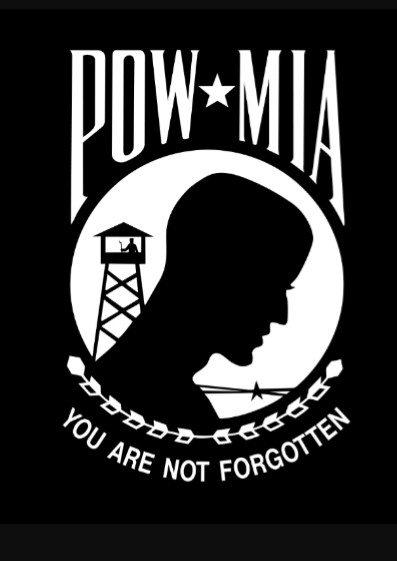
This POW/MIA Recognition Flag designed by Newt Heisley was formally recognized by U.S. House of Representatives Resolution No. 467 on September 21, 1990 (public domain).

During the Army of the United States’ 1864 Red River Campaign across Louisiana in the American Civil War, multiple members of the 47th Pennsylvania Volunteer Infantry were declared as “Missing in Action” (MIA) — largely due to the confusion caused by a series of engagements with the enemy in which Union soldiers were repeatedly required to retreat, regroup and resume the fight as they faced down wave after wave of Confederate troops attempting to outflank and perform end runs around the outer edges of Union Army lines.

Each time the cannon smoke began to clear from those battles, many of those MIA members of the 47th Pennsylvania Volunteer Infantry found their way back to the regiment, carrying word to senior officers of the 47th Pennsylvania Volunteers that members of the regiment had been captured by Confederate troops. By mid-May of 1864, it was clear that at least twenty-three 47th Pennsylvania Volunteers were being held as prisoners of war (POWs) by the Confederate States Army.

Regimental leaders would later learn that many of those men had been force marched roughly one hundred and fifty miles to Camp Ford, which was located outside of Tyler, Texas and would become the largest Confederate POW camp west of the Mississippi River by the summer of 1864. Once there, they were starved, given minimal to no medical care for any wounds they had sustained, exposed to extreme variations in temperature and weather, due to inadequate shelter, and sickened by dysentery and other diseases that were spread by living in the cramped, overcrowded conditions that became increasingly unsanitary, due to the placement of latrine facilities near water supplies meant for drinking or bathing. As their days dragged on, their treatment by Confederate soldiers grew more and more harsh. According to representatives of the Smith County Historical Society who have been working on documenting the history of Camp Ford:

On April 8th and 9th 1864 at the battles of Mansfield and Pleasant Hill, Louisiana, Confederate forces captured more than 2,000 Union soldiers, who were quickly marched to Tyler…. The existing stockade did not have sufficient area to house them, and an emergency enlargement was undertaken. Local slaves were again impressed, the north and east wall was dug up and the logs cut in half, and the top ten feet of the logs of the south and west walls were cut off. The resulting half logs gave sufficient timber to quadruple the area of the stockade, and it was expanded to about eleven acres.

With additional battles in Arkansas and Louisiana, the prison population had grown to around 5,000 by mid-June. Hard-pressed CS officials had no ability to provide shelter for the new prisoners, and their suffering was intense. The number of tools was inadequate, and many men could only dig holes in the ground for shelter. Rations were often insufficient and the death rate soared…. Of 316 total deaths at the camp, 232 occurred between July and November 1864….

At least three 47th Pennsylvania Volunteers are confirmed to have died while imprisoned at Camp Ford. Another member of the regiment was later removed from that prison and moved to Andersonville, the most notorious of all American Civil War POW camps. Two others died as POWs who were confined to a Confederate hospital.

In recognition of National POW/MIA Recognition Day, which is observed on the third Friday each September in the United States of America, we pay tribute to those twenty-three brave souls.

DeSoto and Sabine Parishes (Mansfield and Pleasant Hill, Louisiana)

Possibly wounded in action during the Battle of Pleasant Hill, Privates Solomon Powell and Jonathan Wantz of Company D were captured during that battle on April 9, 1864. Private Powell died either that same day or on June 7, 1864, while still being held by Confederate troops as a POW at Pleasant Hill. Private Wantz also died while still being held as a POW at Pleasant Hill; his death was reported as having occurred on June 17, 1864. Their exact burial locations remain unidentified.

Confederate Hospital (Shreveport, Louisiana)

G Company Private Joseph Clewell — who had only been a member of the 47th Pennsylvania since mid-November 1863, fell ill sometime after being captured by Confederate troops during one of the 47th Pennsylvania’s Red River Campaign engagements in the spring of 1864. Suffering from chronic diarrhea due to the poor water quality and unsanitary living conditions that he endured while being held as a POW, he was subsequently confined to the Confederate States Army Hospital No. 59 in Shreveport, Louisiana sometime in May or early June. Held at that hospital as a POW, his health continued to decline until he died there on June 18, 1864, according to the U.S. Army’s Registers of Deaths of Volunteer Soldiers. His exact burial location also remains unidentified.

This illustration presented a rosier view of life at Camp Ford, the largest Confederate Army prison camp west of the Mississippi River, than was the actual situation for the 47th Pennsylvania Volunteers confined there (Harper’s Weekly, March 4, 1865, public domain).

Camp Ford or Camp Groce (Texas)

The 47th Pennsylvania Volunteers confirmed to have been released from Camp Ford or Camp Groce in Texas during a series of prisoner exchanges between the Army of the United States and the Confederate States Army were:

  • Private Charles Frances Brown, Bugler of Company D and Regimental Band No. 2 (date of release: July 22, 1864; discharged after receiving medical treatment; re-enlisted with the 7th New York Volunteers in October 1864);
  • Private Charles Buss/Bress of Company D (fell ill with dysentery while confined as a POW at Camp Ford and developed chronic diarrhea and severe hemorrhoids — conditions that would plague him for the remainder of his life, date of release: July 22, 1864; received medical treatment and was honorably discharged from a Union Army medical facility in Philadelphia in May 1865);
  • Private Ephraim Clouser of Company D (captured after being shot in the right knee, date of release: November 25, 1864; placed on Union Army sick rolls after being diagnosed as being too traumatized to remain on duty, he was transferred to the Union Army’s Jefferson Barracks Hospital in St. Louis, Missouri, then to a Union Army hospital in Cincinnati, Ohio and then to the Union Army’s general hospital in York, Pennsylvania, where he remained until the end of the war; still suffering from post-traumatic stress disorder (PTSD) after the war, he was declared by the Pennsylvania court system to be unable to care for himself, and was confined to the Harrisburg State Hospital for the remainder of his life);
  • Sergeant James Crownover of Company D (captured after being shot in the right shoulder, date of release: November 25, 1864; received medical treatment, recovered and returned to duty);
  • Private James Downs of Company D (date of release: July 22, 1864; received medical treatment and returned to duty; possibly suffering from post-traumatic stress disorder (PTSD), he fell from a window of the Brookville Memorial Home in Jefferson County, Pennsylvania in 1921);
  • Private Conrad P. Holman, of Company C (date of release: July 22, 1864; received medical treatment, recovered and returned to duty);
  • Corporal James Huff of Company E (captured after being wounded, date of release: August 29, 1864; received medical treatment, recovered and returned to duty; captured by Confederate troops during the Battle of Cedar Creek, Virginia on October 19, 1864, was transported and force marched to North Carolina, where he was held as a POW at the Salisbury Prison Camp until his death there from starvation and harsh treatment on March 5, 1865; he was subsequently buried somewhere on the POW camp grounds in an unmarked mass trench grave of Union soldiers);
  • Private John Lewis Jones of Company F (captured after being wounded, date of release: September 24, 1864; received medical treatment, recovered and returned to duty);
  • Private Edward Mathews of Company C (date of release: July 22, 1864; received medical treatment, recovered and returned to duty);
  • Private Adam Maul/Moll/Moul of Company C (captured on May 3, 1864, while away from his regiment’s encampment in Alexandria, Louisiana — possibly while assigned to duties related to the construction of Bailey’s Dam, date of release: July 22, 1864; received medical treatment, recovered and was assigned to detached duty at Hilton Head, South Carolina on January 3, 1865, but was reportedly not given discharge paperwork by his regiment; his exact burial location remains unidentified);
  • Private John W. McNew of Company C (captured after being wounded, date of release: July 22, 1864; received medical treatment, recovered and returned to duty);
  • Corporal John Garber Miller of Company D (date of release: July 22, 1864; received medical treatment, recovered and returned to duty);
  • Private Samuel W. Miller of Company C (date of release: July 22, 1864; received medical treatment, recovered and returned to duty);
  • Private John Wesley Smith of Company C (date of release: July 22, 1864; received medical treatment, recovered and returned to duty;
  • Private William J. Smith of Company D (date of release: July 22, 1864; received medical treatment, recovered and returned to duty; and
  • Private Benjamin F. Wieand/Weiand of Companies B and D (captured after being wounded; received medical treatment after his release from captivity and was honorably discharged on July 21, 1865.

The 47th Pennsylvania Volunteers confirmed to have died on the grounds of Camp Ford were:

  • Private Samuel M. Kern of Company D (date of death: June 12, 1864);
  • Private Frederick Smith of Company I (date of death: May 4, 1864); and
  • Private John Weiss, Company F (captured after being severely wounded, he was initially confined to Camp Ford, but was then transferred to a “Rebel hospital” for treatment of his wounds, according to regimental records; died at that Confederate hospital on July 15, 1864).

The burial locations of Privates Samuel Kern, Frederick Smith and John Weiss remain unidentified. (The Confederate hospital where Private John Weiss died may have been the Confederate Army Hospital No. 59 in Shreveport, Louisiana — the same Confederate hospital where G Company Private Joseph Clewell died on June 18, 1864.)

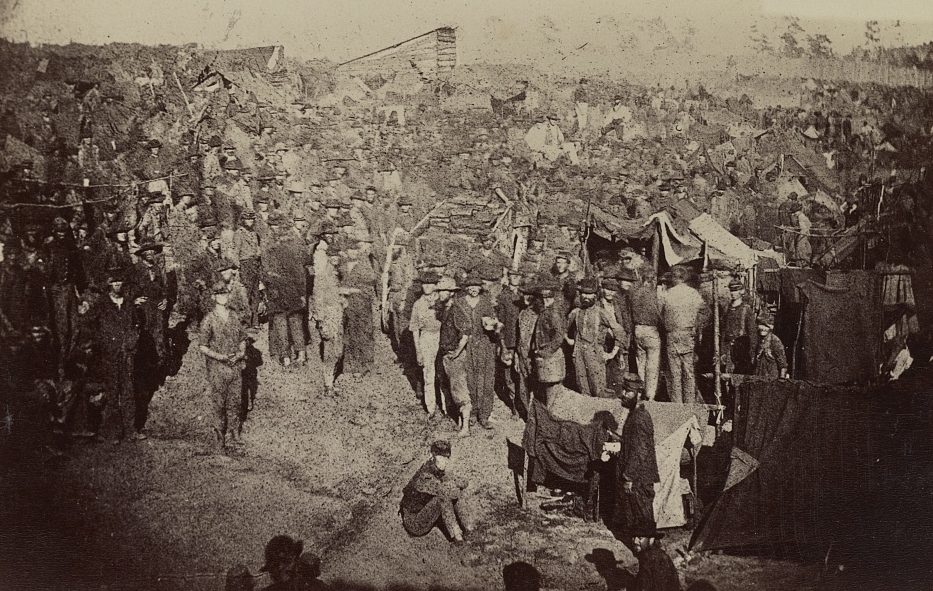
Issuing Rations at the Andersonville POW Camp, August 17, 1864 (view from Main Gate, U.S. Library of Congress, public domain).

Andersonville (Fort Sumter, Georgia)

According to an article in the April 12, 1911 edition of the Reading Eagle, Private Ben Zellner of the 47th Pennsylvania’s Company K had also begun his imprisonment as a POW at Camp Ford, but was later transported to Georgia, where he was confined to Andersonville, the most notorious Confederate prison camp of them all.

Benjamin Zellner, who was one of the youngest soldiers during the Civil War, was captured by the Confederates at Pleasant Hill, La., April 8, 1864. He was a member of Co. K, 47th Regiment, with Gen. Banks’ army on the Red River expedition. Comrade Zellner was wounded in a charge to the left of the lines and fell on the field. The Union forces being driven back, he, with a number of others was captured. After being kept at Pleasant Hill two weeks, they were removed to Mansfield, La., on a Saturday night and kept over night [sic] in the Court House until Sunday morning. Thence they were removed to Shreveport, La., and again kept in the Court House. From thence they were marched 110 miles to Unionville prison at Tyler, Tex…. The 47th was the only Penn’a Regiment to participate in the Red River campaign.

Although POW records from Camp Ford that are maintained by the Smith County Historical Society note that a “Ben Cellner” was released in that camp’s July 22, 1864 prisoner exchange with the Union Army, interviews by several different newspaper reporters of Zellner in his later life contradict those records. According to Zellner and the Reading Eagle, he had been transported to Camp Sumter near Anderson, Georgia sometime in May or June 1864:

In about a month [after arriving at Camp Ford in Texas, following their 8 April capture in Louisiana] 300 or 400 of the strongest were brought back to Shreveport and then transported down the Red River to an old station and marched four days, when they were taken by train to Andersonville….

At the time of Private Zellner’s internment, Andersonville was under the command of Henry Wirz, who would later be convicted of war crimes for his brutal treatment of Union prisoners. According to the September 21, 1864 edition of The Soldiers’ Journal:

Those Union prisoners recently released from Camp Sumter, at Andersonville, Ga., have made affidavit of the condition of the 35,000 prisoners confined there. The horrors of their imprisonment, plainly and unaffectedly narrated, have no parallel outside of Taeping or Malay annals. Twenty-five acres of human beings – so closely packed that locomotion is made obsolete, compelled to drink from sewers, and to eat raw meat like cannibals – are dwelling under vigilant espionage, hopeless, helpless, and Godless. Some are lunatic, and others have become desperately wicked; all are living, loathing, naked, starved fellow-men.

Reportedly held as a POW for six months and fourteen days, according to the March 26, 1915 edition of The Allentown Leader, Zellner was freed from captivity during a Union and Confederate army prisoner exchange in September 1864 (per a report in the April 12, 1911 edition of the Reading Eagle). The April 8, 1911 Allentown Leader noted that, after this prisoner exchange, which took place “along the James River,” he was then sent with a number of his fellow former POWs “to Washington, to Fortress Monroe, to New York and home.” Following a period of recovery, he then returned to service with his regiment just in time to participate in a key portion of Union Major-General Phillip Sheridan’s 1864 Shenandoah Valley Campaign.

Read their stories. Remember their names. Honor their individual sacrifices.


Sources:

  1. “47 Years Today Since Rebels Caught Him: This Is a Memorable Anniversary for Comrade Ben Zellner.” Allentown, Pennsylvania: The Allentown Leader, April 8, 1911.
  2. Allentown’s Youngest Civil War Veteran (profile of Private Ben Zellner). Reading, Pennsylvania: Reading Eagle, April 12, 1911.
  3. Bates, Samuel P. History of Pennsylvania Volunteers, 1861-5, vol. 1. Harrisburg, Pennsylvania: B. Singerly, State Printer, 1869.
  4. Camp Ford,” in “Texas Beyond History.” Austin, Texas: Texas Archaeological Research Laboratory, University of Texas at Austin, retrieved online January 24, 2025.
  5. Camp Ford Prison Records (47th Pennsylvania Volunteer Infantry, 1864). Tyler, Texas: Smith County Historical Society.
  6. “Camp Sumter,” in “Editorial Jottings.” Washington, D.C.: The Soldiers’ Journal, September 21, 1864.
  7. Civil War Muster Rolls (47th Pennsylvania Infantry). Harrisburg, Pennsylvania: Pennsylvania State Archives.
  8. Civil War Veterans’ Card File, 1861-1866 (47th Pennsylvania Infantry). Harrisburg, Pennsylvania: Pennsylvania State Archives.
  9. Gilbert, Randal B. A New Look at Camp Ford, Tyler, Texas: The Largest Confederate Prison Camp West of the Mississippi River, 3rd Edition. Tyler, Texas: The Smith County Historical Society, 2010.
  10. “His Glorious Record as a Soldier: Fought at Gettysburg, Red River and Shenandoah Valley and Besides Enduring the Horrors of Andersonville, Carries Bullet to This Day.” Allentown, Pennsylvania: The Allentown Leader, March 26, 1917.
  11. Horwitz, Tony. “Did Civil War Soldiers Have PTSD?“, in Smithsonian Magazine, January 2015. Washington, D.C.: Smithsonian Institution.
  12. Lawrence, F. Lee. “Camp Ford,” in “Hand Book of Texas.” Austin, Texas: Texas State Historical Association, retrieved online January 24, 2025.
  13. “Newport: Special Correspondence” (notice documenting Ephraim Clouser’s confinement for mental illness and later death at the asylum in Harrisburg, Pennsylvania). Harrisburg, Pennsylvania: Harrisburg Daily Independent, March 18, 1899.
  14. POW/MIA Recognition Day.” Indianapolis, Indiana: The American Legion National Headquarters, retrieved online September 19, 2025.
  15. Registers of Deaths of Volunteers. Washington, D.C.: U.S. National Archives and Records Administration, 1864-1865.
  16. Schmidt, Lewis. A Civil War History of the 47th Regiment of Pennsylvania Veteran Volunteers. Allentown, Pennsylvania: Self-published, 1986.
  17. Simmons, G. W. “Camp Ford, Texas” (sketch, Harper’s Weekly, March 4, 1865; retrieved June 9, 2015, via University of North Texas Libraries, The Portal to Texas History, crediting Star of the Republic Museum, Washington, Texas).
  18. Slattery, Joe. “Confederate Soldiers Who Died at the Confederate General Hospital in Shreveport, Louisiana,” in The Genie, vol. 37, no. 1 (First Quarter, 2003), p. 12. Shreveport, Louisiana: Ark-La-Tex Genealogical Association.
  19. “The Exchange of Prisoners; The Cartel Agreed Upon by Gen. Dix for the United States, and Gen. Hill for the Rebels,” in “Supplementary Articles.” New York, New York: The New York Times, October 6, 1862.
  20. Thoms, Alston V., principal investigator and editor, and David O. Brown, Patricia A. Clabaugh, J. Philip Dering, et. al., contributing authors. Uncovering Camp Ford: Archaeological Interpretations of a Confederate Prisoner-of-War Camp in East Texas. College Station, Texas: Center for Ecological Archaelogy, Department of Anthropology, Texas A & M University.
  21. Union Army Deaths in Shreveport 1864-1865.” Shreveport, Louisiana: Sons of Union Veterans, Brig. Gen. Joseph Bailey Camp No. 5, retrieved April 29, 2021.
  22. “Up in Perry” (notice of Ephraim Clouser’s arrest and sanity hearing). Harrisburg, Pennsylvania: Harrisburg Telegraph, September 22, 1892.
  23. Wharton, Henry D. Letters from the Sunbury Guards, 1861-1866. Sunbury, Pennsylvania: Sunbury American.


Judy Snyder Wasserman: A Woman Who Made the World Better

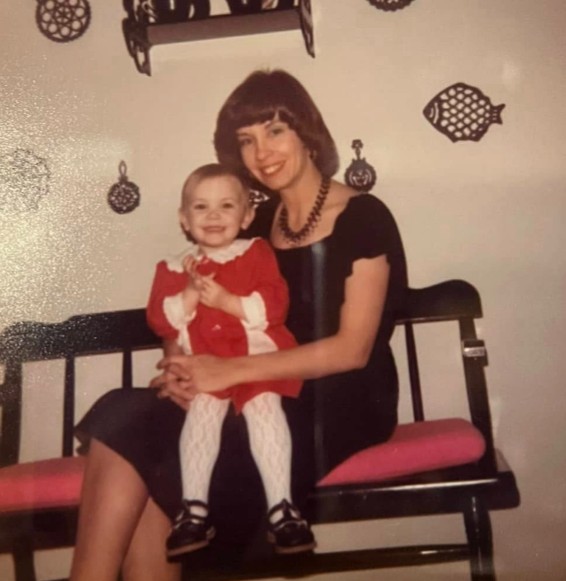
Judy (Snyder) Wasserman and daughter, New Jersey, 1980s (courtesy of the Snyder-Wasserman-Griffin-Silvio Family Archives).

She was my sister and she was a force of nature. Join me in paying tribute to the first supporter of 47th Pennsylvania Volunteers: One Civil War Regiment’s Story, Judy (Snyder) Wasserman.

This educational project would not have been possible without her.

Who Was She?

Born in Houston, Texas on February 23, 1947, Judy Leah Snyder was a daughter of Schuylkill County, Pennsylvania natives Willard Emery Snyder (1917-1972) and Genevieve Madeline (Krupa) Snyder (1918-1997).

Her father, who had served with the United States Navy’s Seabees during World War II and was an employee of the Bell Telephone Company of Pennsylvania afterward, was a son of telephone industry pioneer John Hartranft Snyder (1873-1944), and a descendant of American Revolutionary War Patriot Johannes Nicholas Schneider (1749-1821) and American Civil War veteran Timothy Matthias Snyder (1840-1889), who served with the 47th Pennsylvania Volunteer Infantry’s C Company, the unit which had protected the American flag during multiple battles in South Carolina, Louisiana and Virginia.

Her mother, Genevieve, who had worked in the blueprints division at the Philadelphia Navy Yard during World War II, was a first-generation American whose parents, Jan Krupa (1881-1942) and Rozalia (Tuczek) Krupa (1884-1962), had emigrated separately from Poland between 1902 and 1905, and had met and married in Philadelphia’s Manayunk section in 1906 before relocating to the community of Minersville in Schuylkill County, where Jan found work as an explosives expert in the anthracite coal mining industry.

Initially raised in Lavelle, Schuylkill County, Judy Snyder relocated with her parents to the nearby community of Frackville, where she became the older sister to two siblings and was enrolled as a student at the Frackville Elementary School during the early 1950s.

Later that same decade, she relocated with her parents and younger sisters to the Borough of West Lawn in Berks County, Pennsylvania, where her youngest sister was born. An avid reader and persuasive debater who was inspired by the characters in Louisa May Alcott’s novel, “Little Women,” Judy successfully lobbied her parents to name her baby sister, “Laurie,” saving her from the years of playground bullying that would likely have resulted had one of several other proposed names been chosen. Fortunately, their parents agreed, assuring a lifelong, loving bond between the oldest and youngest sisters — a bond that was strengthened as Judy wheeled Laurie around their neighborhood on frequent stroller rides to nurture a sense of curiosity and wonder.

Skilled at math, Judy was also a Russian language student at Wilson High School in West Lawn. A talented painter during those same high school years, she went on to become an adept visual artist as the designer of eye-catching, award-winning window displays for major department stores in New York City and New Jersey, as well as interior designs and decorations for multiple Casual Corner stores on the East Coast.

Judy (Snyder) Wasserman as she created a department store window display (courtesy of the Snyder-Wasserman-Griffin-Silvio Family Archives).

A fashionable dresser, she helped her younger sisters to develop their own sense of style, as each went on to become educators in Pennsylvania’s highly regarded system of public schools. (She was less successful, however, at convincing “dear old Dad” to modernize. The bellbottom pants that she picked out for him one year never quite made it out of his closet, for one reason or another.)

Married to Howard Wasserman, one of the genuinely good guys in the world, Judy welcomed the births of two beautiful, brilliant daughters, Jess and Corry, who have each made their own positive impact on the world and will continue to do so for many years to come. Judy and Howard’s granddaughter, Izzy, has already shown signs that she, too, will be a formidable woman who will change the world in a positive way.

A lifelong learner who enjoyed studying American History, Judy drove her “baby” sister across Louisiana and back during two epic, 1990s road trips. Visiting multiple cities and towns, they stayed in a hotel on Bourbon Street in New Orleans that was reportedly haunted by the ghosts of Union Army soldiers, photographed the stained glass art at New Orleans’ Metairie Cemetery, marveled at the phenomenal flora and fauna found along Louisiana’s back roads, made a lifelong friend of the curator of the Bayou Folk Museum and Kate Chopin House in Cloutierville, toured the key filming locations for the movie, “Steel Magnolias,” in Natchitoches, Louisiana, and had some of the most memorable fine and junk food dining experiences in history.

She was witty and knew how to laugh and have fun — but she also knew when to get serious.

A fierce advocate for the most vulnerable in the world, she fought to improve public education for children across New Jersey and Louisiana, where she resided with her family, beginning in the 1990s. Also sensitive to the plight of animals that were being neglected or abused, she rescued more than a few from fates worse than death.

A warrior to the end, Judy (Snyder) Wasserman passed away in Lake Charles, Louisiana on April 1, 2023, but her sense of wonder and fighting spirit live on in those who love her still.


Sources: Images and oral history segments, courtesy of the Snyder-Wasserman-Griffin-Silvio Family Archives.

The Red River Campaign: How It Began, Progressed and Ended for the 47th Pennsylvania Volunteer Infantry (Louisiana, Late February to Early July 1864)

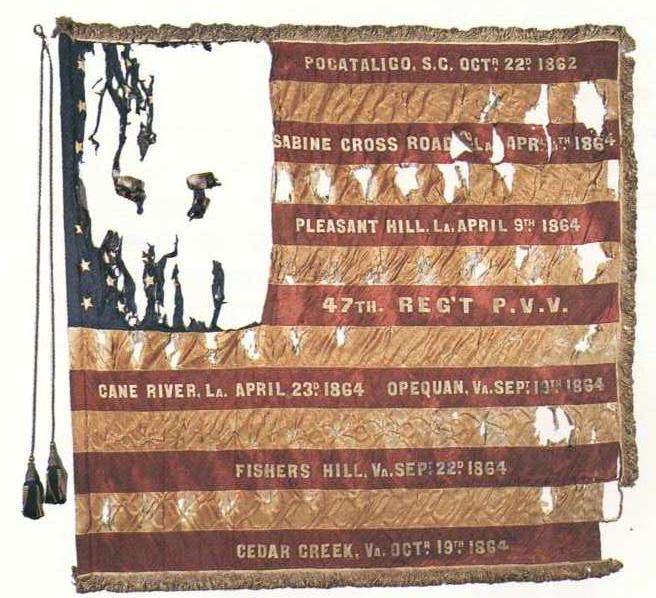
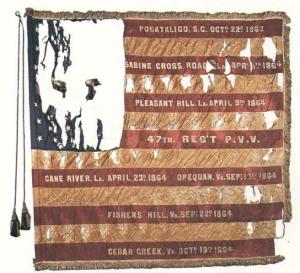
Second State Colors, 47th Pennsylvania Veteran Volunteers (presented to the regiment 7 March 1865).

Seven battle names embossed on a battle flag. Three documented a series of seemingly minor military engagements during one oft-maligned military campaign of the American Civil War.

Known by military scholars today as the 1864 Red River Campaign, those “minor” engagements ensured that the 47th Pennsylvania Volunteers would be known for all time as history makers—members of the only regiment from the Commonwealth of Pennsylvania to take part as the Union’s Army of the Gulf marched through Louisiana between late February and mid-July 1864, enabling the United States government to prevent the war and the brutal practice of chattel slavery from spreading any further west.

As for how inconsequential those “minor” engagements of the 1864 Red River Campaign were? They left such indelible marks on the 47th Pennsylvania Volunteer Infantry that its senior officers chose to emboss the majority of that campaign’s battle names on the second battle flag that was carried by the regiment as it defended the nation in the wake of President Abraham Lincoln’s assassination in April 1865, and as the regiment marched triumphantly through the streets of Washington, D.C. during the Union’s Grand Review of the Armies in late May of that same year.

How It Began

The 47th Pennsylvania Volunteers’ participation in the 1864 Red River Campaign across Louisiana began with a series of general and special orders and other communications that were issued by senior military officers of the United States Army:

  • SPECIAL ORDERS, No. 39
    HEADQUARTERS, DEPARTMENT OF THE GULF, New Orleans, Louisiana, February 13, 1864.

12. First. The Second Regiment U.S. Colored Troops will be relieved from duty at Ship Island and proceed without delay to Key West, Fla., where it will be reported for duty to Brig. Gen. D. P. Woodbury. Second. On the arrival of the Second U.S. Colored Troops at Key West, the battalion of Forty-seventh Pennsylvania Volunteers stationed at that point will be relieved from duty in the District of Key West and Tortugas, and will proceed without delay to Franklin, La., where it will be reported for duty to Maj. Gen. W. B. Franklin, commanding Nineteenth Army Corps. Third. On the arrival of the First Battalion, Forty-seventh Pennsylvania, at Franklin, the One hundred and tenth New York Volunteers will proceed to Fort Jefferson, Dry Tortugas, and relieve the battalion of the Forty-seventh Pennsylvania now in garrison there. Fourth. On being so relieved, the battalion of the Forty-seventh Pennsylvania now stationed at Fort Jefferson will proceed to Franklin, La., and report for duty at the headquarters of the regiment. The quartermaster’s department will immediately furnish the necessary transportation.

By command of Major-General Banks:

RICHD. B. IRWIN,
Assistant Adjutant-General.

  • SPECIAL ORDERS, No. 48
    H
    EADQUARTERS 19th ARMY CORPS AND U.S. FORCES, Franklin, Louisiana, February 18, 1864.

5. In pursuance of Special Orders No. 41, extract 3, current series, headquarters Department of the Gulf, the following-named regiments assigned to the First Division, Nineteenth Army Corps, Brig. Gen. W. H. Emory commanding, are hereby assigned to brigades as follows, to take effect February 20, 1864:First Brigade, to be commanded by Brig. Gen. William Dwight: Fifteenth Maine, Thirtieth Massachusetts, One hundred and fourteenth New York, One hundred and seventy-third New York, One hundred and sixty-first New York.Second Brigade, to be commanded by Brig. Gen. J. W. McMillan: Twenty-sixth Massachusetts (temporary), Thirteenth Maine, Twelfth Connecticut, Eighth Vermont, One hundred and sixtieth New York, Forty-seventh Pennsylvania.Third Brigade, to be commanded by the senior colonel: Fourteenth Maine, One hundred and sixty-second New York, One hundred and sixty-fifth New York, One hundred and sixteenth New York, Thirtieth Maine.

Capt. Duncan S. Walker, assistant adjutant-general, U.S. Volunteers, is assigned to duty as assistant adjutant-general, First Division, and will report to Brigadier-General Emory.

Capt. Oliver Matthews, assistant adjutant-general, U.S. Volunteers, is assigned to duty as assistant adjutant-general, First Brigade, First Division, and will report to Brig. Gen. William Dwight.

The following-named batteries are assigned to the First Division: Battery A, First U.S. Artillery; Battery L, First U.S. Artillery; Fourth Massachusetts Battery, Sixth Massachusetts Battery, Twenty-fifth New York Battery.

By order of Major-General Franklin:

WICKHAM HOFFMAN,
Assistant Adjutant-General.

  • HEADQUARTERS, DEPARTMENT OF THE GULF, New Orleans, Louisiana, February 19, 1864.
    Major-General Franklin, Commanding, Nineteenth Corps, Franklin:

GENERAL: Instead of awaiting the arrival of the battalion of the Forty-seventh Pennsylvania Volunteers, as heretofore ordered, the One hundred and tenth New York Volunteers will be immediately relieved from duty with the First Division, Nineteenth Army Corps, and will proceed without delay to Algiers, where it will take steam transportation for Key West, Fla.

By command of Major-General Banks:

RICHD. B. IRWIN,
Assistant-Adjutant General.

How It Progressed

Casualties began to be incurred by the 47th Pennsylvania even before members of the regiment stepped off of their respective troop transports and onto Louisiana soil in early March 1864. Researchers for 47th Pennsylvania Volunteers: One Civil War Regiment’s Story believe that the first Red River casualty was actually Private Frederick Koehler, who reportedly drowned after falling overboard from his transport, just as it was entering the harbor near Algiers, Louisiana.

From that moment on, the regiment’s casualty rate climbed as the 47th Pennsylvania Volunteers marched, built, dug, and fought their way across unfamiliar, difficult terrain, under conditions for which their northern bodies and immune systems were ill prepared. Two of the campaign’s engagements—the Battle of Sabine Cross Roads/Mansfield on April 8, 1864, and the Battle of Pleasant Hill on April 9—were among the most brutal and sanguinary fighting that they waged during the entire war.

Along the way, the 47th Pennsylvanians helped to free more Black men, women and children from the plantations where they had long been enslaved, with five of the men they met ultimately choosing to enlist with the 47th Pennsylvania Volunteer Infantry, further integrating a regiment that had already begun enrolling Black soldiers as far back as the fall of 1862.

How It Ended

Union Army base at Morganza Bend, Louisiana, circa 1863-1865 (U.S. Library of Congress, public domain).

Their final combat engagement—the Battle of Mansura—was fought on May 16, 1864. Afterward, they marched for Morganza, Louisiana. Encamped there for most of June, they finally made their way back to New Orleans by the end of that month—two campaign-ending duty stations that were not luxurious by any standards now, or then, but were far more comfortable than what they had endured throughout their long and difficult spring.

Those final duty stations were still not completely safe for them, however; the grim reaper continued to scythe men left and right as typhoid, mysterious fevers, dysentery, and chronic diarrhea ravaged the regiment during the unbearably hot, humid weeks of June and early July.

As a result, the regiment lost as many or more of its members to disease than it did to the rifle and cannon fire that they had so recently dodged. And the war was still not over.

When the Fourth of July arrived for the weary warriors, the 47th Pennsylvania Volunteers were busy packing their belongings, having just received new orders to return to the Eastern Theater of battle. By mid-July, roughly sixty percent of the regiment’s members were fighting for their lives yet again—this time in the Battle of Cool Spring, near Snicker’s Gap, Virginia.

As that was happening, multiple members of the regiment were coming to grips with the fact that they had been left behind to recuperate from battle wounds or diseases they had contracted while in service to the nation. Among those convalescents were eighteen men who subsequently died at Union hospitals or Confederate prison camps long after their comrades had reached the East Coast. Two of those men were later documented as among the five total who died in Baton Rouge, with ten men among the total of thirty-three who passed away in New Orleans. Seven others died in Natchez, Mississippi, and at least one of the men left behind had been one of the seventeen POWs held captive at Camp Ford, the largest Confederate prison camp west of the Mississippi River.

Stilled Voices

The phrase, “Dum Tacent Clamant” (While they are silent, they cry aloud”), is inscribed on the Grand Army of the Republic monument at the Chalmette National Cemetery in St. Bernard Parish, Louisiana, where multiple members of the 47th Pennsylvania Volunteers remain at rest (G.A.R. Monument, Chalmette National Cemetery, circa 1910, U.S. Library of Congress, public domain).

More than seventy of the 47th Pennsylvania’s disease and battle-related casualties remain at rest in marked or unmarked national cemetery graves in Louisiana and Mississippi. Other unsung heroes lie forgotten in graves yet to be identified, part of the legion of American soldiers “known but to God.”

Albert, George Washington: Corporal, Company H; fell ill during the Red River Campaign; was transported to New Orleans, where he was confined to a Union Army hospital; discharged on a surgeon’s certificate of disability on April 18, 1864, he died aboard the U.S. Steamer Yazoo while being transported home to Pennsylvania to convalesce; buried at sea, a cenotaph was created for him at Ludolph’s Cemetery in Elliottsburg, Pennsylvania;

Andrew, Michael: Private, Company A; fell ill with chronic diarrhea sometime during the Red River Campaign; was transported to New Orleans, where he was confined to a Union Army general hospital; died there on July 15 or 18, 1864; was interred at the Monument Cemetery in New Orleans (now the Chalmette National Cemetery);

Barry, William: Private, Company H; killed in action during the Battle of Sabine Cross Roads/Mansfield, Louisiana on April 8, 1864; his burial location remains unidentified;

Beidleman, Jacob (alternate surnames: Beiderman, Biedleman): Private, Company G; fell ill with chronic diarrhea during the Red River Campaign; was confined to the Union’s hospital ship, the USS Laurel Hill, and transported to Natchez, Mississippi, where he was confined to Union Army’s Natchez General hospital; died there on July 3, 1864; may have been interred at the Natchez National Cemetery in a grave that remains unidentified;

Bellis (alternate spelling: Bellus), Amandus: Private, Company A; fell ill during the Red River Campaign, was confined to the Union’s hospital ship, the USS Laurel Hill, while it was docked near Morganza, Louisiana; subsequently transported to Natchez, Mississippi, he died en route, while aboard that ship, on June 30, 1864; was possibly buried at sea or interred in an unmarked grave at the Natchez National Cemetery that remains unidentified;

Berlin, Elias: Private, Company A; fell ill in Florida, or during the opening days of the Red River Campaign; died in Florida, or aboard ship while en route to Louisiana, or in Louisiana on March 28, 1864; was interred, or a cenotaph was created for him, at the Zion UCC Stone Church Cemetery in Kreidersville, Pennsylvania;

Bettz, Godfrey (alternate spelling: Betz): Private, Company F; fell ill with chronic diarrhea sometime during the Red River Campaign; was transported to New Orleans, where he was confined to a Union Army general hospital; died there on May 8, 1864; was interred in section 51, grave no. 3968 at the Monument Cemetery in New Orleans (now the Chalmette National Cemetery);

Bohan, George (alternate spellings: Bohan, Bohn, Bollan, Bolian): Private, Company A; fell ill with chronic diarrhea sometime during the Red River Campaign; was transported to New Orleans, where he was confined to a Union Army general hospital; died there on June 27 or 28, 1864; was interred in section 67, grave no. 5358 at the Monument Cemetery in New Orleans (now the Chalmette National Cemetery);

Brader, Josiah (alternate spelling: Braden): Private, Company B; fell ill with typhoid fever sometime during the Red River Campaign; was transported to New Orleans, where he was confined to the University Hospital; died there on July 9, 1864; was interred in section 66, grave no. 5279 at the Monument Cemetery in New Orleans (now the Chalmette National Cemetery);

Brooks, George W.: Private, Company E; fell ill with chronic diarrhea sometime during the Red River Campaign; was transported to New Orleans, where he was confined to a Union Army hospital; died there on August 12, 1864; was interred in section 67, grave no. 5383 at the Monument Cemetery (now the Chalmette National Cemetery);

Clewell, Jr., Joseph: Private, Company G; fell ill with chronic diarrhea after being captured by Confederate troops during the Battle of Sabine Crossroads/Mansfield on April 8, 1864 or the Battle of Pleasant Hill on April 9, or during one of the regiment’s subsequent Red River Campaign engagements; was subsequently confined to the Confederate States Army hospital in Shreveport, Louisiana sometime in May or early June and held there as a prisoner of war (POW) until his death there on June 18, 1864; possibly interred in one of the unmarked graves in Shreveport’s Greenwood Cemetery, according to Joe Slattery, Genealogy Library Specialist at the Shreve Memorial Library in Shreveport; if not, his remains may have been exhumed and reinterred in an unmarked grave at the Alexandria National Cemetery in Pineville, Louisiana, according to historian Lewis Schmidt;

Crader, James: Sergeant, Company G; fell ill sometime during the Red River Campaign; was confined to the Union’s hospital ship, the USS Laurel Hill, and transported to Natchez, Mississippi, where he was confined to the Union’s General Hospital in Natchez; died there on July 9, 1864; may have been interred at the Natchez National Cemetery;

Davenport, Valentine: Private, Company H; fell ill during the opening days of the Red River Campaign; was confined to a Union hospital in New Orleans and then discharged on a surgeon’s certificate of disability on March 28, 1864; died in New Orleans on May 4, 1864; was buried at a national cemetery in the State of New York, according to the U.S. Army Department of the East’s Roll of Honor: Names of Soldiers Who Died in Defence of the American Union, Vol. X: “Soldiers Buried in the Department of the East: New York,” p. 15 (Washington, D.C.: Government Printing Office, 1867);

Dech, Alpheus (alternate presentations of name: Alfred Dech, Alpheus Deck): Private, Company G; fell ill with chronic diarrhea sometime during the Red River Campaign; was transported to New Orleans, where he was confined to the U.S. Marine Hospital; died there on June 3, 1864; was interred in grave no. 4028 at the Monument Cemetery in New Orleans (now the Chalmette National Cemetery);

Dumm, William F. (alternate spellings: Drum or Drumm): Private, Company H; killed in action during the Battle of Pleasant Hill, Louisiana on April 9, 1864; his burial location remains unidentified;

Evans, John: Private, Company H; fell ill with chronic diarrhea sometime during the Red River Campaign; was transported to New Orleans, where he was confined to a Union Army hospital; died there on June 20, 1864; was interred in section 51, grave no. 4042 at the Monument Cemetery in New Orleans (now the Chalmette National Cemetery);

Fetzer, Owen: Private, Company I; fell ill with chronic diarrhea sometime during the Red River Campaign; was transported to New Orleans, where he was hospitalized at the Union’s St. Louis General Hospital; died there on April 19, 1864; his burial location remains unidentified;

Fink, Edward: Private, Company B; declared missing in action (MIA) after the Battle of Pleasant Hill, Louisiana on April 9, 1864; was later declared as killed in action (KIA), having been killed by gunshot during the battle; his burial location remains unidentified;

Frack, William: Corporal, Company I; declared missing in action and “supposed dead” following the Battle of Pleasant Hill, Louisiana on April 9, 1864; was ultimately declared as killed in action; his burial location remains unidentified;

Gerrett, Mathias (alternate spelling: Garrett): Private, Company K; fell ill with typhoid fever sometime during the Red River Campaign; was transported to New Orleans, where he was confined to the Union Army’s Barracks Hospital; died there on May 22, 1864; was interred in section 51, grave no. 3995 at the Monument Cemetery in New Orleans (now the Chalmette National Cemetery);

Haas, Jeremiah: Private, Company C; killed in action during the Battle of Sabine Cross Roads/Mansfield, Louisiana on April 8, 1864; his burial location remains unidentified;

Hagelgans, Nicholas: Private, Company K; killed in action during the Battle of Pleasant Hill, Louisiana on April 9, 1864; his burial location remains unidentified;

Hahn, Richard: Private, Company E; killed in action by a musket ball during the Battle of Pleasant Hill, Louisiana on April 9, 1864; his burial location remains unidentified;

Hangen, Washington H. R.: First Lieutenant and Regimental Adjutant; officially discharged from the U.S. Army and 47th Pennsylvania Volunteer Infantry during the summer of 1864; remained in Louisiana, where he worked for the U.S. Bureau of Refugees, Freedmen, and Abandoned Lands (the “Freedmen’s Bureau”) in St. Tammany Parish and Washington Parish before becoming a surveyor for the State of Louisiana and the U.S. Office of the Surveyor General; died in Abita Springs, St. Tammany Parish on April 23, 1895; was likely interred at the Madisonville Cemetery in St. Tammany Parish, where his second wife had previously been buried;

Hart, J. S. (alternate spelling: Harte): Private, Company C; fell ill with chronic diarrhea sometime during the Red River Campaign; was transported to New Orleans, where he was confined to the Marine Hospital; died there on August 5, 1864; was interred in section 49, grave no. 3869 at the Monument Cemetery in New Orleans (now the Chalmette National Cemetery);

Hartshorn, John (alternate spelling: Hartshorne): Private, Company H; initially listed as missing in action following the Battle of Pleasant Hill, Louisiana on April 9, 1864, Union Army officials determined he had been captured by Confederate troops and marched one hundred and twenty-five miles to Camp Ford near Tyler, Texas, where he was held captive as a prisoner of war (POW) until he was released during a prisoner exchange on July 22, 1864; subsequently died at a Union Army hospital in New Orleans, Louisiana on August 8, 1864; his burial location remains unidentified;

Hawk, David C. (alternate spellings: Hank, Hauk): Private, Company I; fell ill with chronic diarrhea sometime during the Red River Campaign; was transported to New Orleans, where he was confined to a U.S. Army general hospital; died there on July 28, 1864 (alternate death date: July 28, 1865); was described on regimental muster rolls as “absent sick left in U.S. General Hospital of New Orleans since 9-20-64”; was interred in section 49, grave no. 3849 at the Monument Cemetery in New Orleans (now the Chalmette National Cemetery);

Helfrich, John Gross: Sergeant, Company C; fell ill with dysentery sometime during the Red River Campaign; was transported to New Orleans, where he was confined to Charity Hospital; died there on August 5, 1864; was interred in section 49, grave no. 3867 of the Monument Cemetery in New Orleans (now the Chalmette National Cemetery);

Heller, Jonathan: Private, Company G; fell ill with dysentery sometime during the Red River Campaign; was transported to New Orleans, where he was confined to Charity Hospital; died there on June 7, 1864; was interred in square 13, grave no. 1 of the Monument Cemetery in New Orleans (now the Chalmette National Cemetery);

Herbert, Jacob: Private, Company A; fell ill or was injured sometime during the Red River Campaign; was transported to Natchez, Mississippi, where he was confined to a Union Army hospital; died in Natchez on June 30, 1864; his burial location remains unidentified;

Herman, William: Private, Company F; fell ill with chronic diarrhea during the Red River Campaign; was confined to the Union Army hospital ship, the USS Laurel Hill, and transported to Natchez, Mississippi, where he was confined to the Union’s Natchez General Hospital; died there on July 23 or 24, 1864 (his wife’s affidavit in her widow’s pension application notes the date as 23 July; the U.S. Army’s death ledger indicates the date of death was 24 July 1864); may have been interred at the Natchez National Cemetery in Natchez, Mississippi;

Hettrick, Levinus (alternate presentations of name: Levenas Hedrick, Gevinus Hettrick, Levinas Hetrick, Sevinas Hettrick): Private, Company B; drowned in the Mississippi River on June 27, 1864, while serving with the 47th Pennsylvania Volunteers at Morganza, Louisiana, following the 47th’s participation in the Red River Campaign; his burial location remains unidentified;

Hoffman, Nicholas: Private, Company A; fell ill with typhoid fever sometime during the Red River Campaign; was confined to the Union’s hospital ship, the USS Laurel Hill, while it was docked near Morganza, Louisiana, and was transported to Natchez, Mississippi; died aboard that ship on June 30, 1864, while it was in the vicinity of Natchez; per an affidavit filed on June 19, 1865 by Sergeant Charles Small and Private Joseph A. Rogers of the 47th Pennsylvania Volunteer Infantry, Hoffman was buried at the Natchez National Cemetery in Mississippi;

Holsheiser, Lawrence (alternate spellings of surname: Holsheiser, Holyhauser, Hultzheizer, Hultzheizor): Private, Company F; fell ill with chronic diarrhea during the Red River Campaign; was transported to New Orleans, where he was confined to the Barracks Hospital; died there on May 1, 1864; was interred at the Monument Cemetery (now the Chalmette National Cemetery);

Hower, Phillip (alternate spelling: Philip): Private, Company G; contracted Variola (smallpox) during the Red River Campaign; was transported to New Orleans, where he was confined to the Union’s Barracks Hospital; died there on April 21, 1864; was interred at the Monument Cemetery in New Orleans (now the Chalmette National Cemetery);

Keiser, Uriah: Private, Unassigned Men; fell ill during the Red River Campaign; was transported to New Orleans, where he was confined to the Union’s Barracks Hospital; died there in July 1864; was interred at the Monument Cemetery in section 57, grave no.: 4477 (now the Chalmette National Cemetery);

Kennedy, James: Private, Company C; sustained gunshot fracture of the arm and gunshot wound to his side during the Battle of Pleasant Hill, Louisiana on April 9, 1864; was transported to the Union Army’s St. James Hospital in New Orleans, Louisiana, where he died from his battle wounds on April 27, 1864; his burial location remains unidentified;

Kern, Samuel M.: Private, Company D; wounded in action and captured during the Battle of Pleasant Hill, Louisiana on April 9, 1864; was marched or transported to Camp Ford near Tyler, Texas, where he was held in captivity as a prisoner of war (POW) until he died on June 12, 1864; his burial location remains unidentified;

Knauss, Elwin (alternate spellings: Knauss, Kneuss, Knouse; Ellwin, Elvin): Private, Company I; fell ill while during the Red River Campaign; was transported to New Orleans, where he was confined to the U.S. Marine Hospital; died there on August 3, 1864 (alternate death date: June 30, 1864); was interred in grave site 20-55 at the Monument Cemetery in New Orleans (now the Chalmette National Cemetery);

Koehler, Frederick (alternate spellings: Koehler, Kohler, Köhler): Private, Company K; was likely the regiment’s first casualty during the Red River Campaign; while sitting in one of the side hatches of the steamship transporting the 47th Pennsylvania to Louisiana, he fell overboard from the ship as it was rounding into port at Algiers and drowned; members of the regiment reported seeing his body “come up astern of the boat,” and that someone had retrieved his cap, which carried the label “F. K.” on its vizier; researchers have not been able to determine whether or not this soldier was buried at sea, at a cemetery in Louisiana, or if his body was returned home for burial in Pennsylvania;

Kramer, George: Private, Company C; fell ill with chronic diarrhea during the Red River Campaign; was likely confined to one of the Union Army’s general hospitals in Baton Rouge or New Orleans, Louisiana, or to a Union general hospital in Natchez, Mississippi; was placed aboard the Union’s hospital ship, the SS Mississippi; died aboard that ship on August 27, 1864 and was likely buried at sea or possibly at a still-unidentified cemetery in Louisiana or Mississippi; his name was included on the roster of soldiers listed on the Company C, 47th Pennsylvania Volunteers’ Soldiers Monument that was erected at the Sunbury Cemetery in Sunbury, Pennsylvania;

Lehr, Charles (alternate spelling: Lear): Private, Company A; fell ill with chronic diarrhea during the Red River Campaign; was confined to the Union Army’s hospital ship, the USS Laurel Hill, and was transported to the Union’s Natchez General Hospital in Natchez, Mississippi; died there on July 22, 1864; may have been interred in an unmarked/unknown grave at the Natchez National Cemetery;

Long, Solomon: Private, Company K; Contracted typhoid fever during the Red River Campaign; was transported to New Orleans, where he was confined to the U.S. Marine Hospital; died there on August 21, 1864; was interred in section 60, grave no. 4728 of the Monument Cemetery in New Orleans (now the Chalmette National Cemetery);

Matter/Madder, Jacob: Private, Company K; initially reported as missing in action following the Battle of Pleasant Hill, Louisiana on April 9, 1864, his status was subsequently updated to “died of wounds” from that battle; his burial location remains unidentified;

Mayes, William (alternate spelling: Hayes, Mays): Private, Company D; fell ill during the opening days of the Red River Campaign; was transported to New Orleans, where he was confined to a Union Army general hospital; died there on March 30, 1864; was interred in grave no. 3945 of the Monument Cemetery in New Orleans (now the Chalmette National Cemetery);

Miller, Jonathan: Private, Company A; cause and date of death have not yet been determined (soldier was identified by his military headstone); was interred in section 59, grave no. 4629 at the Monument Cemetery in New Orleans (now the Chalmette National Cemetery);

Missmer, Benjamin (alternate spellings: Messner, Missimer, Missmer): Private, Company H; fell ill with chronic diarrhea during the Red River Campaign; was transported to New Orleans, where he was confined to the Union’s St. Louis General Hospital; died there on August 7, 1864; was interred in section 49, grave no. 3874 at the Monument Cemetery in New Orleans (now the Chalmette National Cemetery;

Orris, Nicholas: Private, Co. H; killed in action during the Battle of Pleasant Hill, Louisiana on April 9, 1864; his burial location remains unidentified;

Osterstock, Jacob: Private, Company A; fell ill during the Red River Campaign; was transported to a Union Army hospital in Baton Rouge; died there on June 30, 1864; his burial location remains unidentified;

Powell, Solomon: Private, Company D; may have been wounded in action; was captured during the Battle of Pleasant Hill, Louisiana on April 9, 1864; died from his battle wounds at Pleasant Hill, Louisiana, either on the same day as the battle, or on June 7, 1864, while being held by Confederate troops as a prisoner of war (POW); his burial location remains unidentified; per historian Lewis Schmidt, “Privates Powell and Wantz were probably buried in a cemetery at Pleasant Hill, ‘at the rear of the brick building used for a hospital,’ and after the war reinterred at Alexandria National Cemetery at Pineville, Louisiana in unknown graves”;

Resch, Charles (alternate spelling: Resk): Private, Company K; fell ill during the Red River Campaign; was transported to Baton Rouge and confined to a Union Army general hospital; died there on August 18, 1864; was interred in section 11, grave no. 629 at the Baton Rouge National Cemetery;

Ridgeway, John (alternate spelling: Ridgway): Private, Company H; fell ill during the Red River Campaign; was transported to New Orleans and confined to a Union Army general hospital; died there on July 30, 1864; was interred in section 57, grave no.4475 at the Monument Cemetery in New Orleans (now the Chalmette National Cemetery);

Sanders, Francis (alternate spellings: Xander, Xandres): Corporal, Company B; wounded in action during the Battle of Sabine Cross Roads/Mansfield, Louisiana on April 8, 1864; died shortly after being carried to the rear by his brother; his death was documented in the obituary of his widow, Henrietta Susan (Balliet) Sanders, in the May 15, 1916 edition of Allentown’s Morning Call newspaper, which reported that Francis Sanders “enlisted in the Forty-seventh regiment and saw service for two enlistments until the battle of Sabine Cross Roads, La., where he was wounded and carried to the rear by his brother. From that day to this not a word was heard from him and the supposition was that he died from his wounds” and was likely interred in an unknown, unmarked grave; his burial location remains unidentified;

Schaffer, Reuben Moyer (alternate spellings: Schaeffer, Scheaffer, Shaffer): Private, Company H; reported as wounded in action during either the Battle of Sabine Cross Roads/Mansfield on April 8, 1864 or the Battle of Pleasant Hill on April 9; was subsequently marched with his regiment to Grand Ecore; was reported in U.S. Army records to have died at Grand Ecore on April 22, 1864; however, he actually died during the forty-five-mile march toward Cloutierville, according to a letter subsequently written by his commanding officer, Captain James Kacy, to First Lieutenant William Wallace Geety on May 29; was likely interred in an unknown, unmarked grave; his burial location remains unidentified;

Schlu, Christian (alternate spellings: Schla, Schlea): Private, Company G; fell ill with chronic diarrhea during the Red River Campaign; was transported to New Orleans, where he was confined to the U.S. Marine Hospital; died there on June 2, 1864; was interred in section 58, grave no.: 4577 at the Monument Cemetery in New Orleans (now the Chalmette National Cemetery);

Schweitzer, William (alternate spelling: Sweitzer): Corporal, Company A; fell ill during the Red River Campaign; was taken to the Union’s hospital ship, the USS Laurel Hill, which was docked near Morganza, Louisiana, and was hospitalized aboard that ship on June 20, 1864; diagnosed with typhoid fever, he died aboard ship four days later, on June 24, 1864 (alternate death date: June 23, 1864); his burial location remains unidentified;

Schwenk, Charles M.: Private, Company B; fell ill during the Red River Campaign; was transported to Baton Rouge, where he was confined to a Union general hospital; died there on June 20, 1864; was interred in section 8, grave no. 476 at the Baton Rouge National Cemetery;

Smith, Frederick: Private, Co. D; may have been wounded in action during the Battle of Pleasant Hill, Louisiana on April 9, 1864; was captured by Confederate troops during that battle and marched one hundred and twenty-five miles to Camp Ford near Tyler, Texas, where he was held captive as a prisoner of war (POW) until his death on May 4, 1864; his burial location remains unidentified, but may still be located on the grounds of the Camp Ford Historic Park;

Smith, George H.: Private, Company H; fell ill with chronic diarrhea during the Red River Campaign; was confined to the Union’s hospital ship, the USS Laurel Hill, and transported to Natchez, Mississippi, where he was hospitalized at the Union’s Natchez General Hospital; died there on July 9, 1864; was interred at the Natchez National Cemetery;

Smith, Henry: Private, Company G; fell ill with chronic diarrhea during the Red River Campaign; was transported to New Orleans, where he was confined to the U.S. Marine Hospital; died there on May 30, 1864; was interred in section 51, grave no. 4522 at the Monument Cemetery in New Orleans (now the Chalmette National Cemetery);

Smith, Joseph: Private, Company B; fell ill during the Red River Campaign; was transported to New Orleans, where he was confined to the Union’s Barracks General Hospital; died there on September 2, 1864; was interred in section 60, grave no. 4768 at the Monument Cemetery in New Orleans (now the Chalmette National Cemetery);

Snyder, Jonas: Private, Company I; fell ill and developed consumption during the Red River Campaign across Louisiana; died aboard the U.S. Steamer McClellan on July 8, 1864 while en route to Fortress Monroe, Virginia with his regiment; was buried at sea during a formal military burial ceremony, according to Company I First Lieutenant Levi Stuber’s affidavit that was filed on behalf of Jonas Snyder’s widow for her U.S. Civil War Widow’s Pension application;

Sterner, John C.: Private, Company C; killed in action during the Battle of Pleasant Hill, Louisiana on April 9, 1864; was interred, or a cenotaph was erected on his behalf, at Lantz’s Emmanuel Cemetery in Sunbury, Pennsylvania;

Stick, Francis: Private, Company I; fell ill with chronic diarrhea during the Red River Campaign; was transported to New Orleans, where he was confined to the University General Hospital; died there on June 10, 1864; was interred in section 52, grave no. 4065 at the Monument Cemetery in New Orleans (now the Chalmette National Cemetery);

Stocker, Josiah Simon: Private Company A; fell ill with dysentery during the Red River Campaign; was transported to New Orleans, where he was confined to the University General Hospital; died there on May 17, 1864; was interred in section 7, grave no. 368 at the Baton Rouge National Cemetery;

Straehley, Jeremiah (alternate spellings: Strackley, Strahle, Strahley): Private, Company G; fell ill with chronic diarrhea during the Red River Campaign; was transported to New Orleans, where he was confined to a Union Army general hospital; died there on May 14, 1864; his burial location remains unidentified;

Swoyer, Alfred P.: Second Lieutenant, Company K; was killed instantly after being struck by a minié ball in the right temple during the Battle of Sabine Cross Roads/Mansfield, Louisiana on April 8, 1884; his burial location remains unidentified;

Trabold, Jacob: Private, Company A; fell ill with dysentery during the Red River Campaign; died from disease-related complications at Morganza, Louisiana on June 27, 1864; his burial location remains unidentified;

Wagner, Samuel: Private, Company D; was wounded in action during the Battle of Pleasant Hill, Louisiana on April 9, 1864; was lost at sea while being transported for medical care aboard the USS Pocahontas when that steam transport foundered off of Cape May, New Jersey, after colliding with the City of Bath on June 1, 1864; his body was never recovered;

Walbert, William S. (alternate spelling: Walberd): Private, Company K; fell ill with chronic diarrhea during the Red River Campaign; was transported to New Orleans, where he was hospitalized at the U.S. Marine Hospital; died there on April 30, 1864; his burial location remains unidentified;

Walters, James: Private, Unassigned Men; fell ill during the Red River Campaign; died on June 23, 1864 (per historian Lewis Schmidt); his death and burial locations remain unidentified;

Wantz, Jonathan: Private, Company D; may have been wounded in action during the Battle of Pleasant Hill, Louisiana on April 9, 1864; was captured by Confederate troops during that battle, and was then held captive as a prisoner of war (POW) until he died at Pleasant Hill—either the same day as that battle, or on June 17, 1864, while he was still being held as a POW by Confederate troops; his burial location remains unidentified (per historian Lewis Schmidt, “Privates Powell and Wantz were probably buried in a cemetery at Pleasant Hill, ‘at the rear of the brick building used for a hospital,’ and after the war reinterred at Alexandria National Cemetery at Pineville, Louisiana in unknown graves”);

Webster, John Eyres: Private, Company G; fell ill with fever during the Red River Campaign; was confined to a Union Army general hospital in Baton Rouge; died there from disease-related complications on June 24, 1864 (alternate death date: June 21, 1864); was interred in section 4, grave no. 190 at the Baton Rouge National Cemetery with a cenotaph erected for him by his family at the Old Saint David Church Cemetery in Wayne, Delaware County, Pennsylvania;

Weiss, John: Private, Co. F; was wounded in action and captured by Confederate troops during the Battle of Pleasant Hill, Louisiana on April 9, 1864; was marched or transported to Camp Ford near Tyler, Texas, where he was held captive as a prisoner of war (POW) until his death on July 15, 1864; his burial location remains unknown;

Williamson, Jacob: Private, Company A; fell ill with typhoid fever during the Red River Campaign; was transported to Baton Rouge, where he was confined to the Union’s Baton Rouge General Hospital; died there from malignant typhoid fever on July 13, 1864; was interred in section 9, grave no. 500 at the Baton Rouge National Cemetery;

Witz, John (alternate spellings: Wilts, Wiltz, Wilz, Witts): Private, Unassigned Men and Company E; fell ill with typhoid fever during the Red River Campaign, was taken to the Union’s hospital ship, the USS Laurel Hill, which was docked near Morganza, Louisiana; died aboard that ship on June 23, 1864 (alternate death date: June 21, 1864); was most likely buried at sea or near Morganza, Louisiana; however, his exact burial location remains unidentified;

Worley, John (alternate spellings: Wehle, Worly, Whorley): Private, Company F; fell ill with chronic diarrhea during the Red River Campaign; was transported to New Orleans, where he was confined to the Union’s St. Louis General Hospital; died there on July 15, 1864; was interred on July 16, 1864 in section 142, grave no. 3804 of the Monument Cemetery in New Orleans (now the Chalmette National Cemetery);

Wolf, Samuel (alternate first name: Simon): Private, Company K; was initially declared as missing in action following the Battle of Pleasant Hill, Louisiana on April 9, 1864; was ultimately declared as having been killed in action during that battle after having been absent from muster rolls for a substantial period of time; his burial location remains unknown.


Sources:

  1. Civil War Muster Rolls (47th Pennsylvania Infantry, 1864). Harrisburg, Pennsylvania: Pennsylvania State Archives.
  2. Civil War Veterans’ Card File (47th Pennsylvania Infantry, 1864). Harrisburg, Pennsylvania: Pennsylvania State Archives.
  3. Gilbert, Randal B. A New Look at Camp Ford, Tyler Texas: The Largest Confederate Prison Camp West of the Mississippi River (3rd Edition). Tyler, Texas: The Smith County Historical Society, 2010.
  4. Prisoner of War Rosters, Camp Ford (47th Pennsylvania Infantry, 1864). Tyler, Texas: Smith County Historical Society, retrieved 2014.
  5. Registers of Deaths of Volunteers, 1861–1865 (NAID: 656639), in “Records of the Adjutant General’s Office” (Record Group 94). Washington, D.C.: National Archives and Records Administration.
  6. Registers of Pennsylvania Volunteers, 1861-1865 (47th Regiment), in “Records of the Department of Military and Veterans’ Affairs” (Record Group 19). Harrisburg, Pennsylvania: Pennsylvania State Archives.
  7. Roll of Honor: Names of Soldiers Who, in Defence [sic] of the American Union, Suffered Martyrdom in the Prison Pens throughout the South. Washington, D.C.: Government Printing Office, 1867-1868.
  8. Scott, Col. Robert N., ed. The War of the Rebellion: A Compilation of the Records of the Union and Confederate Armies (Series I – Volume XXXIV – In Four Parts: Part II, Correspondence, etc.: Chapter XLVI: Louisiana and the Trans-Mississippi). Washington, D.C.: Government Printing Office, 1891.
  9. Schmidt, Lewis G. A Civil War History of the 47th Regiment of Pennsylvania Veteran Volunteers. Allentown, Pennsylvania: Self-published, 1986.
  10. Thoms, Alston V., principal investigator and editor, and David O. Brown, Patricia A. Clabaugh, J. Philip Dering, et. al., contributing authors. Uncovering Camp Ford: Archaeological Interpretations of a Confederate Prisoner-of-War Camp in East Texas. College Station, Maryland: Center for Ecological Archaeology, Department of Anthropology, Texas A & M University, 2000.
  11. Wharton, Henry. Letters from the Sunbury Guards, 1864. Sunbury, Pennsylvania: Sunbury American.
 

Battle of Pleasant Hill, Louisiana, April 9, 1864 — Casualties and POWs from the 47th Pennsylvania Volunteer Infantry

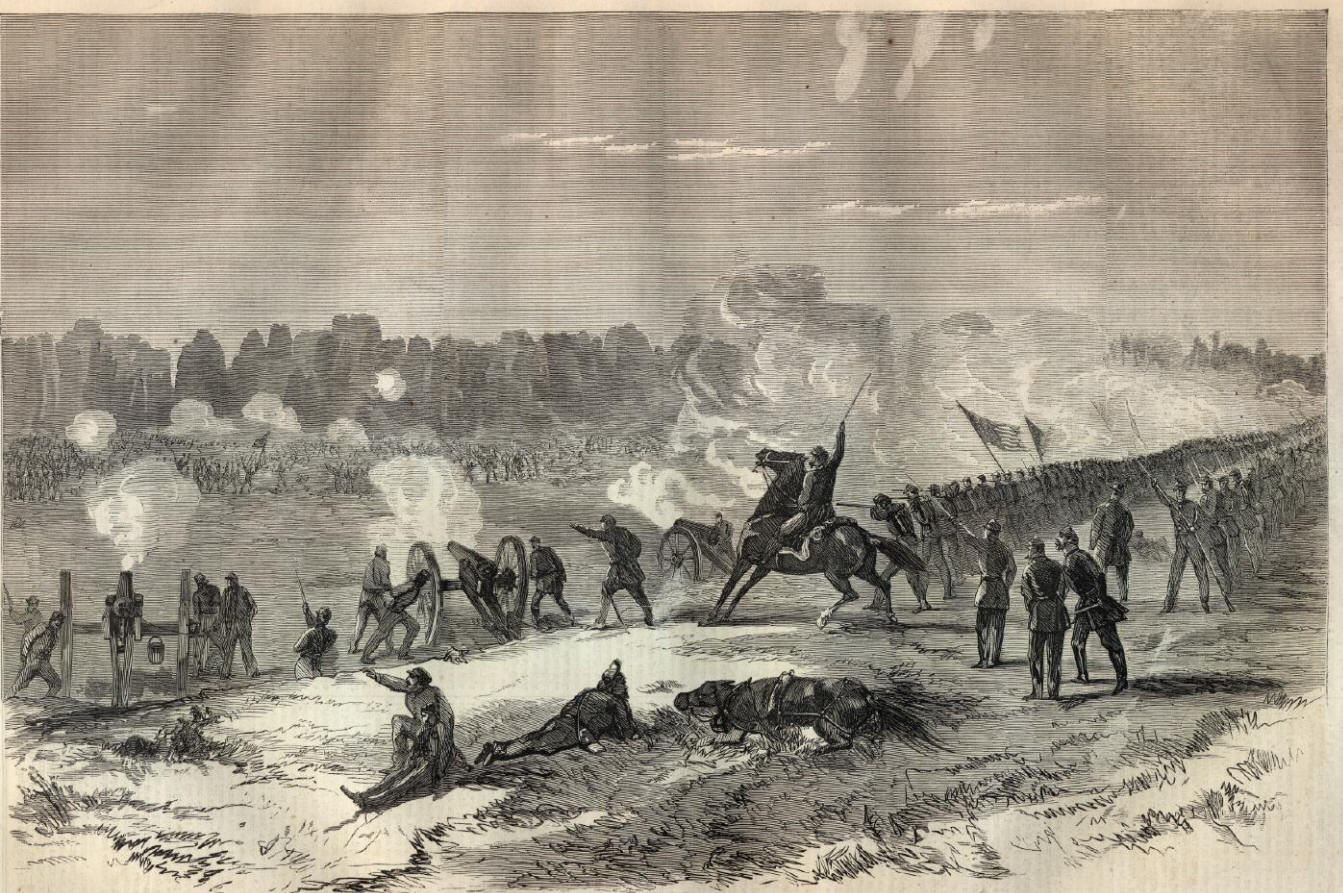
Battle of Pleasant Hill, Louisiana, April 9, 1864 (Harper’s Weekly, May 7, 1864, public domain).

Arriving at Pleasant Hill, Louisiana around 8:30 a.m. on April 9, 1864, after having retreated from the scene of the Battle of Sabine Cross Roads just before midnight on April 8, and with the enemy believed to be in pursuit, Union Major-General Nathaniel Banks ordered his troops (including the (47th Pennsylvania Volunteers) to regroup and ready themselves for a new round of fighting. That fight would later be known as the Battle of Pleasant Hill.

In his official Red River Campaign Report penned a year later, Banks described how the day unfolded:

A line of battle was formed in the following order: First Brigade, Nineteenth Corps, on the right, resting on a ravine; Second Brigade in the center, and Third Brigade on the left. The center was strengthened by a brigade of General Smith’s forces, whose main force was held in reserve. The enemy moved toward our right flank. The Second Brigade [including the 47th Pennsylvania Volunteers] withdrew from the center to the support of the First Brigade. The brigade in support of the center moved up into position, and another of General Smith’s brigades was posted to the extreme left position on the hill, in echelon to the rear of the left main line.

Light skirmishing occurred during the afternoon. Between 4 and 5 o’clock it increased in vigor, and about 5 p.m., when it appeared to have nearly ceased, the enemy drove in our skirmishers and attacked in force, his first onset being against the left. He advanced in two oblique lines, extending well over toward the right of the Third Brigade, Nineteenth Corps. After a determined resistance this part of the line gave way and went slowly back to the reserves. The First and Second Brigades were soon enveloped in front, right, and rear. By skillful movements of General Emory the flanks of the two brigades, now bearing the brunt of the battle, were covered. The enemy pursued the brigades, passing the left and center, until he approached the reserves under General Smith, when he was met by a charge led by General Mower and checked. The whole of the reserves were now ordered up, and in turn we drove the enemy, continuing the pursuit until night compelled us to halt.

First State Color, 47th Pennsylvania Volunteers (issued September 20, 1861, retired May 11, 1865).

The 47th Pennsylvania Volunteers had been ordered into a critically important defensive position at the far right of the Union lines that day (April 9, 1864), their right flank spreading up onto a high bluff. According to Bates, after fighting off a charge by the troops of Confederate Major-General Richard Taylor, the 47th was forced to bolster the buckling lines of the 165th New York Infantry—just as the 47th was shifting to the left of the massed Union forces.

Nearly two decades later, First Lieutenant James Hahn recalled his involvement (as a sergeant in that battle) for a retrospective article in the January 31, 1884 edition of The National Tribune:

A PENNSYLVANIA SOLDIER’S EXPERIENCE.

Lieutenant James Hahn, of the 47th Pennsylvania infantry, writing from Newport, Pa., refers as follows to the engagements at Sabine Cross-roads and Pleasant Hill:

‘The 19th Corps had gone into camp for the evening about four miles from Sabine Cross-Roads. The engagement at Mansfield had been fought by the 13th Corps, who struggled bravely against overwhelming odds until they were driven from the field. I presume the rebel Gen. Dick Taylor knew of the situation of our army, and that the 19th was in the rear of the 13th, and the 16th still in rear of the 19th, some thirteen miles away, encamped at Pleasant Hill. They thought it would be a good joke to whip Banks’ army in detail: first, the 13th corps, then 19th, then finish up on the 16th. But they counted without their hosts; for when the couriers came flying back to the 19th with the news of the sad disaster that had befallen the 13th corps, we were double-quicked a distance of some four miles, and just met the advance of our defeated 13th corps – coming pell-mell, infantry, cavalry, and artillery all in one conglomerated mass, in such a manner as only a defeated and routed army can be mixed up – at Sabine Cross-roads, where our corps was thrown into line just in time to receive the victorious and elated Johnnies with a very warm reception, which gave them a recoil, and which stopped their impetuous headway, and gave the 13th corps time to get safely to the rear. I do not know what would have been the consequence if the 19th had been defeated also, that evening of the 8th, at Sabine Cross-roads, and the victorious rebel army had thrown themselves upon the ‘guerrillas’ then lying in camp at Pleasant Hill. It was just about getting dark when the Johnnies made their last assault upon the lines of the 19th. We held the field until about midnight, and then fell back and left the picket to hold the line while we joined the 16th at Pleasant Hill the morning of the 9th of April, soon after daybreak. It was not long until the rebel cavalry put in an appearance, and soon skirmishing commenced. About 4 o’clock in the afternoon the engagement become general all along the line, and with varied success, until late in the afternoon the rebels were driven from the field, and were followed until darkness set in, and about midnight our army made a retrograde movement, which ended at Grand Ecore, and left our dead and wounded lying on the field, all of whom fell into rebel hands. I have been informed since by one of our regiment, who was left wounded on the field, that the rebels were so completely defeated that they did not return to the battlefield till late the next day, and I have always been of the opinion that, if the defeat that the rebels got at Pleasant Hill had been followed up, Banks’ army, with the aid of A. J. Smith’s divisions, could have got to Shreveport (the objective point) without much left or hindrance from the rebel army.’

According to Major-General Banks, “The battle of the 9th was desperate and sanguinary. The defeat of the enemy was complete, and his loss in officers and men more than double that sustained by our forces.”

Even so, casualties for the 47th Pennsylvania Volunteer Infantry that day were high. The abridged lists below partially documents the 47th Pennsylvania Volunteers who were declared as wounded in action, killed in action, missing in action, or captives of the Confederate States Army (POWs) after the Battle of Pleasant Hill:

Killed or Wounded in Action:

Lieutenant-Colonel George Warren Alexander, 47th Pennsylvania Volunteers, circa 1861 (public domain).

Alexander, George Warren: Lieutenant-Colonel and second in command of the regiment; struck in the left leg near the ankle by a shell fragment which fractured his leg; recovered and returned to duty; was honorably discharged upon expiration of his three-year term of service on September 23, 1864.

Baldwin, Isaac: Corporal, Company D; twice wounded in action in 1864, he was first wounded during the Battle of Pleasant Hill, Louisiana on April 9, 1864; recovered and returned to duty with Company D; wounded in action the second time during the Battle of Cedar Creek, Virginia on October 19, 1864; recovered and returned to duty with Company D; subsequently promoted to the rank of sergeant on January 20, 1865; was honorably discharged on December 25, 1865.

Buss, Charles (alternate spelling: Bress): Private, Company F; initially declared missing in action following the Battle of Pleasant Hill, Louisiana on April 9, 1864, Union Army leaders ultimately determined that he had been captured by Confederate States Army troops during that battle; marched one hundred and twenty-five miles to Camp Ford near Tyler, Texas; held captive there as a prisoner of war (POW) until he was released during a prisoner exchange on July 22, 1864. (Note: This was likely the “Charles Bress” shown on Camp Ford prisoner records as a private from Company D.) After recovering from his POW experience, he remained on the Company F rosters until he was honorably discharged in January 1865.

Clouser, Ephraim: Private, Company D; shot in the right knee and then captured by Confederate Army troops during the Battle of Pleasant Hill, Louisiana on April 9, 1864; marched or was transported one hundred and twenty-five miles to Camp Ford near Tyler, Texas, where he was held as a prisoner of war (POW) until he was released during a prisoner exchange on November 25, 1864; placed on the sick rolls of the Army of the United States after his release from captivity, he was hospitalized at the Union Army’s Jefferson Barracks in St. Louis, Missouri before being transferred to a Union Army hospital in Cincinnati, Ohio for more advanced care for his battle wound — and possibly also for “Soldiers’ Heart”/post-traumatic stress disorder (PTSD); from there, he was sent home to Pennsylvania to convalesce at the Union Army’s general hospital in York, Pennsylvania; honorably discharged after that convalescence, his exact muster out date remains unclear; described, post-war, as “an insane veteran,” he was repeatedly institutionalized throughout his remaining years.

Crownover, James: Sergeant, Company D; survived slight breast wound during the Battle of Pocotaligo, South Carolina on October 22, 1862; sustained gunshot wound to the right shoulder and was captured by Confederate States Army troops during the Battle of Pleasant Hill, Louisiana on April 9, 1864; marched or was transported to Camp Groce or Camp Ford near Tyler, Texas, where he was held until he was released during a prisoner exchange on November 25, 1864; while he was being held as a POW, he was commissioned, but not mustered as a second lieutenant on August 31, 1864; recovered following medical treatment; returned to duty with Company C and was promoted to the rank of first sergeant on July 5, 1865; was honorably discharged on December 25, 1865.

Dingler, John: Private, Company E; wounded in action during the Battle of Pleasant Hill, Louisiana on April 9, 1864; recovered and returned to duty with Company E; was honorably discharged upon expiration of his three-year term of enlistment on September 18, 1864; later re-enlisted with the 47th Pennsylvania’s B Company on February 13, 1865; was honorably discharged on December 25, 1865.

Dumm, William F. (alternate spellings: Drum or Drumm): Private, Company H; killed in action during the Battle of Pleasant Hill, Louisiana on April 9, 1864.

Fink, Edward: Private, Company B; killed in action during the Battle of Pleasant Hill, Louisiana on April 9, 1864.

Frack, William: Corporal, Company I; declared missing in action and “supposed dead” following the Battle of Pleasant Hill, Louisiana on April 9, 1864; was ultimately declared as killed in action.

Hagelgans, Nicholas: Private, Company K; killed in action during the Battle of Pleasant Hill, Louisiana on April 9, 1864.

Hahn, Richard: Private, Company E; killed in action by a musket ball during the Battle of Pleasant Hill, Louisiana on April 9, 1864.

Haltiman, William (alternate spellings: Haldeman or Halderman): Second Lieutenant, Company I; wounded in action during the Battle of Pleasant Hill, Louisiana on April 9, 1864; recovered and returned to duty with Company I; promoted to the rank of sergeant on January 1, 1865; promoted to the rank of second lieutenant on May 27, 1865; felled by sunstroke while on duty in mid-July 1865, he died in Pineville, South Carolina on July 21, 1865.

Hangen, Granville D.: Private, Company I; wounded in action during the Battle of Pleasant Hill, Louisiana on April 9, 1864; recovered and returned to duty with Company I; was honorably discharged on December 25, 1865.

Hartshorn, John (alternate spelling: Hartshorne): Private, Company H; initially listed as missing in action following the Battle of Pleasant Hill, Louisiana on April 9, 1864, Union Army officials ultimately determined that he had been captured by Confederate States Army troops and marched one hundred and twenty-five miles to Camp Ford near Tyler, Texas, where he was held captive as a prisoner of war (POW) until he was released during a prisoner exchange on July 22, 1864. (Note: His surname was spelled as “Hartshorne” in Camp Ford’s prisoner records, which also described him as “illiterate” and incorrectly listed his company as “K.”) He subsequently died at a Union Army hospital in New Orleans, Louisiana on August 8, 1864.

Huff, James: Corporal, Company E; wounded in action and captured by Confederate States Army troops during the Battle of Pleasant Hill, Louisiana on April 9, 1864; marched or was transported to Camp Ford near Tyler, Texas, where he was held as a prisoner of war (POW) until he was released during a prisoner exchange on August 29, 1864; recovered and returned to duty with Company E; was captured again by Confederate States Army troops during the Battle of Cedar Creek, Virginia on October 19, 1864; was marched or was transported to the Salisbury Prison Camp in Salisbury, North Carolina, where he was again held captive as a POW—this time, until his death on March 5, 1865. Per historian Lewis Schmidt, it was “reported [by a fellow soldier that] ‘he got his throat cut with a ball and I sott him up against stump to die.’” He was subsequently buried by Confederate States Army soldiers in one of the unmarked trench graves at the Salisbury Prison Camp.

Jones, John L.: Private, Company F; wounded in action and captured by Confederate troops during the Battle of Pleasant Hill, Louisiana on April 9, 1864; marched one hundred and twenty-five miles to Camp Ford near Tyler, Texas; promoted by his regiment on September 18, 1864 while he was still being held as a POW at Camp Ford, he was finally released during a prisoner exchange on September 24, 1864; recovered and returned to duty with Company F, he was promoted to the rank of sergeant on June 2, 1865; was honorably discharged on December 25, 1865.

Kennedy, James: Private, Company C; sustained gunshot fracture of the arm and gunshot wound to his side during the Battle of Pleasant Hill, Louisiana on April 9, 1864; was transported to the Union Army’s St. James Hospital in New Orleans, Louisiana, where he died from his battle wounds on April 27, 1864.

Kern, Samuel M.: Private, Company D; wounded in action and captured during the Battle of Pleasant Hill, Louisiana on April 9, 1864; marched or was transported to Camp Ford near Tyler, Texas, where he was held in captivity as a prisoner of war (POW) until he died on June 12, 1864.

Kramer, Cornelius: Private, Company C; wounded in the leg during the Battle of Pleasant Hill, Louisiana on April 9, 1864; recovered and returned to duty with Company C; was honorably discharged on December 16, 1865.

Matter, Jacob (alternate spelling: Madder): Private, Company K; initially reported as missing in action following the Battle of Pleasant Hill, Louisiana on April 9, 1864, his status was subsequently updated to “died of wounds” from that battle.

Mayers, William H. (alternate spellings: Mayer, Mayers, Meyers, Moyers; shown on regimental muster rolls as “Mayers, William H.” and “Meyers, William H.”; listed in Samuel P. Bates’ History of Pennsylvania Volunteers, 1861-5 and various other records as “Moyers I, William H.”): Corporal, Co. I; wounded in action during the Battle of Pleasant Hill, Louisiana on April 9, 1864; recovered and returned to duty with Company I; promoted to the rank of sergeant on September 19, 1864; was subsequently wounded in action again—this time during the Battle of Cedar Creek, Virginia on October 19, 1864; recovered and returned to duty; promoted to the rank of first sergeant on May 27, 1865; was commissioned, but not mustered as a second lieutenant on July 25, 1865; was honorably discharged on December 25, 1865.

McNew, John: Private, Company C; wounded in action and captured by Confederate States Army troops during the Battle of Pleasant Hill, Louisiana on April 9, 1964; marched to Camp Ford near Tyler, Texas and held captive there as a prisoner of war (POW) until he was released during prisoner exchange on July 22, 1864. (Note: Camp Ford records incorrectly listed him as a member of Company D and also described him as “illiterate.”) Promoted to the rank of corporal on December 1, 1864; reduced to the rank of private on April 22, 1865; was honorably discharged on December 25, 1865.

Miller, George: Private, Company C; wounded in the side during the Battle of Pleasant Hill, Louisiana on April 9, 1864; was honorably mustered out upon expiration of his three-year term of service on September 18, 1864; died suddenly in his hometown in 1867.

Miller, John Garber: Corporal, Company D; wounded in action and captured during the Battle of Pleasant Hill, Louisiana on April 9, 1864, he was marched one hundred and twenty-five miles to Camp Ford near Tyler, Texas, where he was held captive as a prisoner of war (POW) until he was released during a prisoner exchange on July 22, 1864. (Note: Camp Ford records incorrectly listed him as a member of Co. G.) Recovered and returned to duty with Company D, he was subsequently promoted to the rank of sergeant on September 19, 1864; was honorably mustered out on December 25, 1865.

Moser, Peter (alternate spelling: “Moses”): Private, Company F; survived arm wound sustained during the Battle of Pocotaligo, South Carolina on October 22, 1862; was honorably discharged on a surgeon’s certificate of disability on February 24, 1863; recovered and re-enlisted with Company F on December 19, 1863; initially declared missing in action following the Battle of Pleasant Hill, Louisiana on April 9, 1864. Union Army officers subsequently determined that he had been captured in battle at Pleasant Hill and marched one hundred and twenty-five miles to Camp Ford near Tyler, Texas where he was held captive as a prisoner of war (POW) until he was released during a prisoner exchange on July 22, 1864. (Note: His surname was listed on Camp Ford prisoner records as “Moses,” which also described him as “illiterate.”) Transported to New Orleans for treatment at a Union Army hospital, he remained “Absent and sick at New Orleans since 22 July 1864,” according to his Civil War Veterans’ Card File entry in the Pennsylvania State Archives, which also noted that he was “Supposed to be Dis. Under G.O. #77 A.G.O. W.D. Series 1865.” He ultimately survived the war and died in Pennsylvania in 1905.

O’Brien, William H.: Private, Company H; wounded in action during the Battle of Pleasant Hill, Louisiana on April 9, 1864; recovered and returned to duty with Company H; was honorably discharged on December 6, 1864.

Offhouse, William: Private, Company F; wounded in action during the Battle of Pleasant Hill, Louisiana on April 9, 1864; recovered and returned to duty with Company F; was honorably discharged upon expiration of his three-year term of service on September 18, 1864.

Private Nicholas Orris, Company H, 47th Pennsylvania Volunteers, circa 1863 (public domain).

Orris, Nicholas: Private, Co. H; killed in action during the Battle of Pleasant Hill, Louisiana on April 9, 1864; burial location remains unknown.

Petre, Pete: Private, Company D; wounded in action during the Battle of Pleasant Hill, Louisiana on April 9, 1864; recovered and returned to duty with Company D; was honorably discharged on December 25, 1865.

Powell, Solomon: Private, Company D; possibly wounded in action, he was captured during the Battle of Pleasant Hill, Louisiana on April 9, 1864; he then died from his battle wounds at Pleasant Hill, Louisiana either that same day or on June 7, 1864 while still being held by Confederate troops as a prisoner of war (POW). According to historian Lewis Schmidt, “Privates Powell and Wantz were probably buried in a cemetery at Pleasant Hill, ‘at the rear of the brick building used for a hospital,’ and after the war reinterred at Alexandria National Cemetery at Pineville, Louisiana in unknown graves.”)

Pyers, William: Sergeant, Company C; wounded in the arm and side while saving the flag from fallen C Company Color-Bearer Benjamin Walls; recovered and returned to duty with Company C; killed in action during the Battle of Cedar Creek, Virginia on October 19, 1864.

Reinert, Griffin (alternate spelling: Reinhart, Griffith; known as “Griff”): Private, Company F; sustained a gunshot wound to his jaw during the Battle of Pleasant Hill, Louisiana on April 9, 1864; was transported to the Union Army Hospital in York, Pennsylvania for more advanced medical care; was discharged on a surgeon’s certificate of disability on December 28, 1864.

Reinsmith, Tilghman: Private and Field Musician—Bugler, Company B; wounded in action during the Battle of Pleasant Hill, Louisiana on April 9, 1864; recovered and returned to duty with Company B; promoted to the rank of corporal on October 1, 1864; was honorably discharged on December 25, 1865.

Scheetz, Robert (alternate spelling Sheats): Private, Company F; wounded in action during the Battle of Pleasant Hill, Louisiana on April 9, 1864; recovered and returned to duty with Company F; was honorably discharged upon expiration of his three-year term of service on September 18, 1864.

Schleppy, Llewellyn J. (alternate spelling “Sleppy”): Private, Company F; wounded in action during the Battle of Pleasant Hill, Louisiana on April 9, 1864; recovered and returned to duty with Company F; was honorably discharged upon expiration of his three-year term of service on September 18, 1864.

Shaver, Joseph Benson: Private, Company D; wounded in action during the Battle of Pleasant Hill, Louisiana on April 9, 1864; recovered and returned to duty with Company D; was honorably discharged at Washington, D.C. on June 1, 1865.

Smith, Frederick: Private, Co. D; possibly wounded in action during the Battle of Pleasant Hill, Louisiana on April 9, 1864; captured by Confederate States Army troops during that battle and marched one hundred and twenty-five miles to Camp Ford near Tyler, Texas, where he was held captive as a prisoner of war (POW) until his death on May 4, 1864.

Sterner, John C.: Private, Company C; killed in action during the Battle of Pleasant Hill, Louisiana on April 9, 1864.

Stewart, Cornelius Baskins: Corporal, Company D; after surviving a wound sustained during the Battle of Pocotaligo, South Carolina on October 22, 1862, he recovered, was released to the regiment on December 15, 1862, and returned to active duty on March 1, 1863; shot in the right hip during the Battle of Pleasant Hill, Louisiana on April 9, 1864, he recovered and returned to duty again with Company D; he was honorably discharged upon completion of his three-year term of service on September 18, 1864.

Wagner, Samuel: Private, Company D; wounded in action during the Battle of Pleasant Hill, Louisiana on April 9, 1864, he was lost at sea while being transported for medical care aboard the USS Pocahontas when that steam transport foundered off of Cape May, New Jersey after colliding with the City of Bath on June 1, 1864.

Walls, Benjamin: Regimental Color-Sergeant, Company C; sustained gunshot wound to his left shoulder while trying to mount the 47th Pennsylvania’s flag on a piece of Confederate artillery that had been re-captured by the regiment; recovered and attempted to re-enlist, but was denied permission due to his age. (At sixty-seven, he was the oldest man to serve in the entire regiment.) Was honorably discharged upon expiration of his three-year term of service on September 18, 1864.

Wantz, Jonathan: Private, Company D; possibly wounded in action during the Battle of Pleasant Hill, Louisiana on April 9, 1864; captured by Confederate States Army troops during that battle, he was then held captive as a prisoner of war (POW) until he died at Pleasant Hill—either the same day or on June 17, 1864 while he was still being held as a POW by Confederate troops. According to historian Lewis Schmidt, “Privates Powell and Wantz were probably buried in a cemetery at Pleasant Hill, ‘at the rear of the brick building used for a hospital,’ and after the war reinterred at Alexandria National Cemetery at Pineville, Louisiana in unknown graves.”)

Weiss, John: Private, Co. F; Wounded in action and captured by Confederate States Army troops during the Battle of Pleasant Hill, Louisiana on April 9, 1864; marched or was transported to Camp Ford near Tyler, Texas, where he was held captive as a prisoner of war (POW) until his death on July 15, 1864; his burial location remains unknown.

Wieand, Benjamin: Private, Company D; Survived wound to his right thigh during the Battle of Pocotaligo, South Carolina on October 22, 1862; recovered and transferred to Company D, 47th Pennsylvania Volunteers on December 15, 1863; wounded in action and captured by Confederate States Army troops during Battle of Pleasant Hill, Louisiana on April 9, 1864, he was marched or was transported to Camp Ford near Tyler, Texas, where he was held captive as a prisoner of war (POW) until he was released during a prisoner exchange (possibly after July 1864); was honorably discharged on July 21, 1865.

Wolf, Samuel: Private, Company K; initially declared as missing in action following the Battle of Pleasant Hill, Louisiana on April 9, 1864, he was ultimately declared as having been killed in action during that battle after having been absent from muster rolls for a substantial period of time.

Zellner, Benjamin (alternate spelling: Cellner): Private, Company K; wounded in action four times in 1864; was shot in the leg and lost an eye during the Battle of Pleasant Hill, Louisiana on April 9, 1864; captured during that same battle by Confederate States Army troops, he was confined initially at Pleasant Hill and Mansfield before being marched or transported to Camp Ford near Tyler Texas, where he was held captive as a prisoner of war (POW). Note: Although Camp Ford records (under surname of “Cellner”) stated in 2010 that he was released during a prisoner exchange on July 22, 1864, Zellner stated in multiple newspaper accounts after war’s end that he was one of a group of three to four hundred men who had been deemed well enough by Camp Ford officials to be shipped to Shreveport, Louisiana, where they were then processed and sent by rail to Andersonville, the notorious Confederate POW camp in Georgia. Finally released from Andersonville in September 1864, he recovered and returned to duty with Company K. He was then wounded in the leg and also suffered a bayonet wound during the Battle of Cedar Creek, Virginia on October 19, 1964; recovered from those wounds and returned to duty with Company K; was honorably discharged on December 25, 1865. During a newspaper interview in later life, he told the reporter that his bayonet wound had never healed properly.


Captured and Held as Prisoners of War (POWs):

This image depicts life at Camp Ford, the largest Confederate Army prison camp west of the Mississippi River (Harper’s Weekly, March 4, 1865, public domain).

Brown, Francis or Charles: Private and Musician/Bugler, Company D and Regimental Band No. 2; captured by Confederate States Army troops during the Battle of Pleasant Hill, Louisiana on April 9, 1864 and marched one hundred and twenty-five miles to Camp Ford, near Tyler, Texas, where he was held captive as a prisoner of war (POW) until he was released during a prisoner exchange on July 22, 1864; subsequently awarded a furlough to recuperate, he was mistakenly listed on regimental rosters as having deserted while on leave on September 16, 1864 when, in fact, he had actually re-enlisted as a bugler with the 7th New York Volunteers in October 1864, signaling that there had either been a miscommunication with him about the furlough (his native language was German), or that he had developed a mental impairment during his captivity as a POW; he went on to  serve with the 7th New York until he was honorably mustered out at Hart Island, New York on August 4, 1865

Buss, Charles (alternate spelling: Bress): Private, Company F; initially declared missing in action following the Battle of Pleasant Hill, Louisiana on April 9, 1864, Union Army leaders ultimately determined that he had been captured by Confederate States Army troops during that battle; marched one hundred and twenty-five miles to Camp Ford near Tyler, Texas, he was held captive there as a prisoner of war (POW) until he was released during a prisoner exchange on July 22, 1864. (Note: This was likely the “Charles Bress” shown on Camp Ford prisoner records as a Private from Company D.) After recovering from his POW experience, he remained on the Company F rosters until he was honorably discharged in January 1865.

Clouser, Ephraim: Private, Company D; shot in the right knee and then captured by Confederate Army troops during the Battle of Pleasant Hill, Louisiana on April 9, 1864; marched or was transported one hundred and twenty-five miles to Camp Ford near Tyler, Texas, where he was held as a prisoner of war (POW) until he was released during a prisoner exchange on November 25, 1864; placed on the sick rolls of the Army of the United States after his release from captivity, he was hospitalized at the Union Army’s Jefferson Barracks in St. Louis, Missouri before being transferred to a Union Army hospital in Cincinnati, Ohio for more advanced care for his battle wound — and possibly also for “Soldiers’ Heart”/post-traumatic stress disorder (PTSD); from there, he was sent home to Pennsylvania to convalesce at the Union Army’s general hospital in York, Pennsylvania; honorably discharged after that convalescence, his exact muster out date remains unclear; described, post-war, as “an insane veteran,” he was repeatedly institutionalized throughout his remaining years.

Crownover, James: Sergeant, Company D; survived slight breast wound during the Battle of Pocotaligo, South Carolina on October 22, 1862; sustained gunshot wound to the right shoulder and was captured by Confederate States Army troops during the Battle of Pleasant Hill, Louisiana on April 9, 1864; marched or was transported to Camp Groce or Camp Ford near Tyler, Texas, where he was held captive until he was released during a prisoner exchange on November 25, 1864; while he was being held as a POW, he was commissioned, but not mustered as a second lieutenant on August 31, 1864; recovered and returned to duty with Company C; promoted to the rank of first sergeant on July 5, 1865; was honorably discharged on December 25, 1865.

James Downs (circa 1880s, public domain).

Downs, James: Private, Company D; captured during the Battle of Pleasant Hill, Louisiana on April 9, 1864 and marched one hundred and twenty-five miles to Camp Ford, near Tyler, Texas, where he was held captive as a prisoner of war (POW) until he was released during a prisoner exchange on July 22, 1864; recovered and returned to duty with Company D; promoted to the rank of corporal on July 5, 1865; was honorably discharged on December 25, 1865.

Fisher, Charles B.: Private, Company K; captured during the Battle of Pleasant Hill, Louisiana on April 9, 1864; marched one hundred and twenty-five miles to Camp Ford near Tyler, Texas, where he was held captive as a prisoner of war (POW) until he was released during a prisoner exchange on July 22, 1864. (Note: Camp Ford’s prisoner records described him as “illiterate.”) Recovered and returned to duty with Company K; was honorably discharged upon expiration of his three-year term of service on September 18, 1864.

Hartshorn, John (alternate spelling: Hartshorne): Private, Company H; initially listed as missing in action following the Battle of Pleasant Hill, Louisiana on April 9, 1864, Union Army officials ultimately determined that he had been captured by Confederate States Army troops and marched one hundred and twenty-five miles to Camp Ford near Tyler, Texas, where he was held captive as a prisoner of war (POW) until he was released during a prisoner exchange on July 22, 1864. (Note: His surname was spelled as “Hartshorne” in Camp Ford’s prisoner records, which also described him as “illiterate” and incorrectly listed his company as “K.”) He subsequently died at a Union Army hospital in New Orleans, Louisiana on August 8, 1864.

Huff, James: Corporal, Company E; wounded in action and captured by Confederate States Army troops during the Battle of Pleasant Hill, Louisiana on April 9, 1864; marched or was transported to Camp Ford near Tyler, Texas, where he was held captive as a prisoner of war (POW) until he was released during a prisoner exchange on August 29, 1864; recovered and returned to duty with Company E; was captured again by Confederate States Army troops during the Battle of Cedar Creek, Virginia on October 19, 1864; was marched or transported to the Salisbury Prison Camp in Salisbury, North Carolina, where he was again held captive as a POW—this time, until his death on March 5, 1865. Per historian Lewis Schmidt, it was “reported [by a fellow soldier that] ‘he got his throat cut with a ball and I sott him up against stump to die.’” was buried by Confederate States Army soldiers in one of the unmarked trench graves at the Salisbury Prison Camp.

Jones, John L.: Private, Company F; wounded in action and captured by Confederate troops during the Battle of Pleasant Hill, Louisiana on April 9, 1864; marched one hundred and twenty-five miles to Camp Ford near Tyler, Texas, where he was held captive as a prisoner of war (POW); promoted by his regiment on September 18, 1864 while he was still being held as a POW at Camp Ford, he was finally released during a prisoner exchange on September 24, 1864; recovered and returned to duty with Company F, he was promoted to the rank of sergeant on June 2, 1865; was honorably discharged on December 25, 1865.

Kern, Samuel M.: Private, Company D; wounded in action and captured during the Battle of Pleasant Hill, Louisiana on April 9, 1864; marched or was transported to Camp Ford near Tyler, Texas, where he was held captive as a prisoner of war (POW) until he died on June 12, 1864.

McNew, John: Private, Company C; wounded in action and captured by Confederate States Army troops during the Battle of Pleasant Hill, Louisiana on April 9, 1964; marched to Camp Ford near Tyler, Texas and held captive there as a prisoner of war (POW) until he was released during a prisoner exchange on July 22, 1864. (Note: Camp Ford records incorrectly listed him as a member of Company D and also described him as “illiterate.) Promoted to the rank of corporal on December 1, 1864; reduced to the rank of private on April 22, 1865; was honorably discharged on December 25, 1865.

Miller, John Garber: Corporal, Company D; wounded in action and captured during the Battle of Pleasant Hill, Louisiana on April 9, 1864; marched one hundred and twenty-five miles to Camp Ford near Tyler, Texas, where he was held captive as a prisoner of war (POW) until he was released during a prisoner exchange on July 22, 1864. (Note: Camp Ford records incorrectly listed him as a member of Co. G.) Recovered and returned to duty with Company D, he was subsequently promoted to the rank of sergeant on September 19, 1864; was honorably mustered out on December 25, 1865.

Moser, Peter (alternate spelling: “Moses”): Private, Company F; survived arm wound sustained during the Battle of Pocotaligo, South Carolina on October 22, 1862; was honorably discharged on a surgeon’s certificate of disability on February 24, 1863; recovered and re-enlisted with Company F on December 19, 1863; initially declared missing in action following the Battle of Pleasant Hill, Louisiana on April 9, 1864, Union Army officers subsequently determined that he had been captured in battle at Pleasant Hill and marched one hundred and twenty-five miles to Camp Ford near Tyler, Texas, where he was held as a prisoner of war (POW) until he was released during a prisoner exchange on July 22, 1864. (Note: His surname was listed on Camp Ford prisoner records as “Moses,” which also described him as “illiterate.”) Transported to New Orleans for treatment at a Union Army hospital, he remained “Absent and sick at New Orleans since 22 July 1864,” according to his Civil War Veterans’ Card File entry in the Pennsylvania State Archives, which also noted that he was “Supposed to be Dis. Under G.O. #77 A.G.O. W.D. Series 1865.” He ultimately survived the war and died in Pennsylvania in 1905.

Powell, Solomon: Private, Company D; possibly wounded in action, he was also captured during the Battle of Pleasant Hill, Louisiana on April 9, 1864; he then died from his battle wounds at Pleasant Hill, Louisiana either that same day or on June 7, 1864 while still being held by Confederate troops as a POW. According to historian Lewis Schmidt, “Privates Powell and Wantz were probably buried in a cemetery at Pleasant Hill, ‘at the rear of the brick building used for a hospital,’ and after the war reinterred at Alexandria National Cemetery at Pineville, Louisiana in unknown graves.”)

Smith, Frederick: Private, Company D; possibly wounded in action during the Battle of Pleasant Hill, Louisiana on April 9, 1864; captured during that battle by Confederate States Army troops, he was marched one hundred and twenty-five miles to Camp Ford near Tyler, Texas, where he was held captive as a prisoner of war (POW) until his death on May 4, 1864.

Smith, John Wesley: Private, Company C; captured by Confederates during the Battle of Pleasant Hill, Louisiana on April 9, 1864; marched one hundred and twenty-five miles to Camp Ford near Tyler, Texas, where he was held captive as a prisoner of war (POW) until he was released during a prisoner exchange on July 22, 1864; recovered and returned to duty with Company C; was honorably discharged on December 25, 1865.

Smith, William J.: Private, Company D; captured by Confederate States Army troops during the Battle of Pleasant Hill, Louisiana on April 9, 1864; marched one hundred and twenty-five miles to Camp Ford near Tyler, Texas, where he was held captive as a prisoner of war (POW) until he was released during a prisoner exchange on July 22, 1874. (Note: Camp Ford’s prisoner records described him as “illiterate.”) Honorably mustered out on December 25, 1865, he suffered from scurvy, which was likely attributable to his POW experience. Injured in a work-related accident in May 1891, he contracted tetanus due to that injury and died from lock-jaw in Duncannon, Pennsylvania on 3 June 1891.

Wantz, Jonathan: Private, Company D; possibly wounded in action during the Battle of Pleasant Hill, Louisiana on April 9, 1863, he was then captured by Confederate States Army troops and held captive as a prisoner of war (POW) until he died at Pleasant Hill—either the same day or on June 17, 1864 while he was still being held as a POW by Confederate troops. According to historian Lewis Schmidt, “Privates Powell and Wantz were probably buried in a cemetery at Pleasant Hill, ‘at the rear of the brick building used for a hospital,’ and after the war reinterred at Alexandria National Cemetery at Pineville, Louisiana in unknown graves.”)

Weiss, John: Private, Co. F; Wounded in action and captured by Confederate States Army troops during the Battle of Pleasant Hill, Louisiana on April 9, 1864; marched or was transported to Camp Ford near Tyler, Texas, where he was held captive as a prisoner of war (POW) until his death on July 15, 1864; his burial location remains unknown.

Wieand, Benjamin: Private, Company D; Survived wound to his right thigh during the Battle of Pocotaligo, South Carolina on October 22, 1862; recovered and transferred to Company D, 47th Pennsylvania Volunteers on December 15, 1863; wounded in action and captured by Confederate States Army troops during Battle of Pleasant Hill, Louisiana on April 9, 1864, he was marched or was transported to Camp Ford near Tyler, Texas, where he was held captive as a prisoner of war (POW) until he was released during a prisoner exchange (possibly after July 1864); was honorably discharged on July 21, 1865.

Zellner, Benjamin (alternate spelling: Cellner): Private, Company K; wounded in action four times in 1864; was shot in the leg and lost an eye during the Battle of Pleasant Hill, Louisiana on April 9, 1864; captured during that same battle by Confederate States Army troops, he was confined initially at Pleasant Hill and Mansfield before being marched or transported to Camp Ford near Tyler Texas, where he was held captive as a prisoner of war (POW). Note: Although Camp Ford records (under surname of “Cellner”) stated in 2010 that he was released during a prisoner exchange on July 22, 1864, Zellner stated in multiple newspaper accounts after war’s end that he was one of a group of three to four hundred men who had been deemed well enough by Camp Ford officials to be shipped to Shreveport, Louisiana, where they were then processed and sent by rail to Andersonville, the notorious Confederate POW camp in Georgia. Finally released from Andersonville in September 1864, he recovered and returned to duty with Company K. He was then wounded in the leg and also suffered a bayonet wound during the Battle of Cedar Creek, Virginia on October 19, 1964; recovered from those wounds and returned to duty with Company K; was honorably discharged on December 25, 1865. During a newspaper interview in later life, he told the reporter that his bayonet wound had never healed properly.


Sources:

  1. “A Pennsylvania Soldier’s Experience.” Washington, D.C.: The National Tribune, January 31, 1884.
  2. Bates, Samuel P. History of Pennsylvania Volunteers, 1861-5, vol. 1. Harrisburg, Pennsylvania: B. Singerly, State Printer, 1869.
  3. Prisoner of War Records, Camp Ford and Camp Groce (47th Pennsylvania Volunteer Infantry). Tyler Texas: Smith County Historical Society, 2010.
  4. Schmidt, Lewis G. A Civil War History of the 47th Regiment of Pennsylvania Veteran Volunteers. Allentown, Pennsylvania: Self-published, 1986.


Attempts to End Chattel Slavery Across America: President Abraham Lincoln Issues the Emancipation Proclamation (January 1, 1863)

President Abraham Lincoln signing the Emancipation Proclamation in 1862 (W.E. Winner, painter, J. Serz, engraver, circa 1864; public domain, U.S. Library of Congress).

“I do order and declare that all persons held as slaves within said designated States, and parts of States, are, and henceforward shall be free; and that the Executive government of the United States, including the military and naval authorities thereof, will recognize and maintain the freedom of said persons.”

—President Abraham Lincoln, “Emancipation Proclamation,” January 1, 1863


With those words, President Abraham Lincoln and the United States of America took another step forward in the nation’s long process of ending the brutal practice of chattel slavery in America. Issued on January 1, 1863, “the Emancipation Proclamation was limited in many ways,” according to historians at the U.S. National Archives. “It applied only to states that had seceded from the United States, leaving slavery untouched in the loyal border states. It also expressly exempted parts of the Confederacy (the Southern secessionist states) that had already come under Northern control. Most important, the freedom it promised depended upon Union (United States) military victory.”

Although the Emancipation Proclamation did not end slavery in the nation, it captured the hearts and imagination of millions of Americans and fundamentally transformed the character of the war. After January 1, 1863, every advance of federal troops expanded the domain of freedom. Moreover, the Proclamation announced the acceptance of black men into the Union Army and Navy, enabling the liberated to become liberators. By the end of the war, almost 200,000 black soldiers and sailors had fought for the Union and freedom.

From the first days of the Civil War, slaves had acted to secure their own liberty. The Emancipation Proclamation confirmed their insistence that the war for the Union must become a war for freedom. It added moral force to the Union cause and strengthened the Union both militarily and politically. As a milestone along the road to slavery’s final destruction, the Emancipation Proclamation has assumed a place among the great documents of human freedom.

By the time that President Lincoln had issued this proclamation, the 47th Pennsylvania Volunteer Infantry had already become an integrated regiment, having enrolled four formerly enslaved Black men in October and November 1862 while the regiment was assigned to occupation duties with the United States Army’s Tenth Corps (X Corps) in Beaufort, South Carolina—a process the regiment would continue during its tenure as the only regiment from Pennsylvania to participate in the Union’s 1864 Red River Campaign across Louisiana—an integration process that was supported by President Lincoln’s Emancipation Proclamation of 1863.

Page one of the Emancipation Proclamation issued by U.S. President Abraham Lincoln, January 1, 1863 (U.S. National Archives and Records Administration, public domain; click to enlarge).

The Full Text of the Emancipation Proclamation

January 1, 1863
By the President of the United States of America:
A Proclamation.

Whereas, on the twenty-second day of September, in the year of our Lord one thousand eight hundred and sixty-two, a proclamation was issued by the President of the United States, containing, among other things, the following, to wit:

That on the first day of January, in the year of our Lord one thousand eight hundred and sixty-three, all persons held as slaves within any State or designated part of a State, the people whereof shall then be in rebellion against the United States, shall be then, thenceforward, and forever free; and the Executive Government of the United States, including the military and naval authority thereof, will recognize and maintain the freedom of such persons, and will do no act or acts to repress such persons, or any of them, in any efforts they may make for their actual freedom.

‘That the Executive will, on the first day of January aforesaid, by proclamation, designate the States and parts of States, if any, in which the people thereof, respectively, shall then be in rebellion against the United States; and the fact that any State, or the people thereof, shall on that day be, in good faith, represented in the Congress of the United States by members chosen thereto at elections wherein a majority of the qualified voters of such State shall have participated, shall, in the absence of strong countervailing testimony, be deemed conclusive evidence that such State, and the people thereof, are not then in rebellion against the United States.’

Now, therefore I, Abraham Lincoln, President of the United States, by virtue of the power in me vested as Commander-in-Chief, of the Army and Navy of the United States in time of actual armed rebellion against the authority and government of the United States, and as a fit and necessary war measure for suppressing said rebellion, do, on this first day of January, in the year of our Lord one thousand eight hundred and sixty-three, and in accordance with my purpose so to do publicly proclaimed for the full period of one hundred days, from the day first above mentioned, order and designate as the States and parts of States wherein the people thereof respectively, are this day in rebellion against the United States, the following, to wit:

Arkansas, Texas, Louisiana, (except the Parishes of St. Bernard, Plaquemines, Jefferson, St. John, St. Charles, St. James Ascension, Assumption, Terrebonne, Lafourche, St. Mary, St. Martin, and Orleans, including the City of New Orleans) Mississippi, Alabama, Florida, Georgia, South Carolina, North Carolina, and Virginia, (except the forty-eight counties designated as West Virginia, and also the counties of Berkley, Accomac, Northampton, Elizabeth City, York, Princess Ann, and Norfolk, including the cities of Norfolk and Portsmouth[)], and which excepted parts, are for the present, left precisely as if this proclamation were not issued.

And by virtue of the power, and for the purpose aforesaid, I do order and declare that all persons held as slaves within said designated States, and parts of States, are, and henceforward shall be free; and that the Executive government of the United States, including the military and naval authorities thereof, will recognize and maintain the freedom of said persons.

And I hereby enjoin upon the people so declared to be free to abstain from all violence, unless in necessary self-defence; and I recommend to them that, in all cases when allowed, they labor faithfully for reasonable wages.

And I further declare and make known, that such persons of suitable condition, will be received into the armed service of the United States to garrison forts, positions, stations, and other places, and to man vessels of all sorts in said service.

And upon this act, sincerely believed to be an act of justice, warranted by the Constitution, upon military necessity, I invoke the considerate judgment of mankind, and the gracious favor of Almighty God.

In witness whereof, I have hereunto set my hand and caused the seal of the United States to be affixed.

Done at the City of Washington, this first day of January, in the year of our Lord one thousand eight hundred and sixty three, and of the Independence of the United States of America the eighty-seventh.

By the President: ABRAHAM LINCOLN

WILLIAM H. SEWARD, Secretary of State.


Sources:

  1. Establishing Slavery in the Lowcountry,” in “African Passages, Lowcountry Adaptations.” Charleston, South Carolina: Lowcountry Digital History Initiative, retrieved online January 1, 2024.
  2. “Franklin, John Hope. The Emancipation Proclamation: An Act of Justice,” in Prologue Magazine, Summer 1993, vol. 25, no. 2. Washington, D.C.: U.S. National Archives and Records Administration.
  3. Snyder, Laurie. “Freedmen from South Carolina,” in “Freedmen of the 47th Pennsylvania Volunteer Infantry.” 47th Pennsylvania Volunteers: One Civil War Regiment’s Story, 2023.
  4. The Emancipation Proclamation.” Washington, D.C.: U.S. National Archives and Records Administration, May 5, 2017.
  5. Transcript of the Proclamation (transcription of the Emancipation Proclamation).” Washington, D.C.: U.S. National Archives and Records Administration, May 5, 2017.


Learn More About the 47th Pennsylvania Volunteers

First State Color, 47th Regiment, Pennsylvania Volunteer Infantry (presented to the regiment by Pennsylvania Governor Andrew Curtin, 20 September 1861; retired 11 May 1865, public domain).

Largely forgotten by mainstream historians, the 47th Pennsylvania Volunteer Infantry was a Union Army unit which served for nearly the entire duration of the American Civil War. Formed by the fruit of the Great Keystone State’s small towns and cities, the regiment was born on August 5, 1861, when its founder, Tilghman H. Good, received permission from Pennsylvania Governor Andrew Gregg Curtin to form an entirely new regiment in response to President Abraham Lincoln’s call for additional volunteers to help preserve American’s Union. It ended its service during the early months of the nation’s Reconstruction Era, officially mustering out at Charleston, South Carolina on Christmas Day in 1865, its members receiving their final discharge papers at Camp Cadwalader in Philadelphia, Pennsylvania in early January of 1866.

Along the way, the 47th Pennsylvania made history, becoming an integrated regiment in 1862 and the only regiment from Pennsylvania to participate in the Union’s 1864 Red River Campaign across Louisiana. Its members also distinguished themselves in battle, repeatedly, including during Union General Philip Sheridan’s Shenandoah Valley Campaign, which unfolded between August and December of 1864.

Learn more about key moments in this regiment’s history by reading the following posts:

1861:

1862:

1863:

1864:

1865: