Poetry of the American Civil War: “An Evening in Camp” (December 28, 1861)

“Our Heaven Born Banner” (William Bauly, circa 1861, U.S. Library of Congress, public domain).

It is evening on the camp ground, and the fading sunlight gleams,
Over hill tops, into valleys and adown the winding streams;

Weary drill at last is ended, and the soldiers gather in
To the music of the fifers and the sweet-toned violin.

Noble sons of patriot fathers, loving freedom most of all,
Dreading more the tyrant’s sceptre than the rifle’s deadly ball;

Each within his homely quarters, on his hard unpillowed bed,
Takes the uninviting supper, by no loving mother spread.

Not for them the winter fire where the family group is found,
Pleasant converse, peals of laughter, merry jestings circling round;

Where the mother piles her knitting, and the sisters read or sew,
And the father paints in language, “miracles of long ago.”

Not for them! yet through their changes, Memory keeps her taper bright,
Lighting up the streams of day-time, and the visions of the night;

Hearts that know no selfish terror, through their tender pulses send,
Throbs of strong magnetic feeling, to the parent or the friend.

One is writing to his mother, and his thoughtful eye grows dim,
With the memory of her kindness, and her loving care for him;

Patient of his youthful follies, quick to lead and slow to blame,
Rising with his rising honor, sinking if he sink to shame.

Well she knows her pillowed slumbers are not as they were of old;
Well he knows the grief and terror that her pen hath never told;

And he sees the dark brown tresses, growing whiter day by day,
Since her country’s tocsin sounded, and she gave her all away.

And another reads the message that a Father’s hand hath sent,
Strong in courage, wise in council, glowing with a high intent;

“All his prayers go forth to bless him–he has been his pride and joy,
And the hopes of past and present crowd around his darling boy.”

With a quivering lip he folds it, but his keen and steady eye,
Speaks the strong, unshaken courage, that shall conquer or shall die;

Gentle words a wife has written, there the husband reads to-night,
And his manly tears are hidden in the fading winter light.

Then he folds his daughter’s billet in a warm and close embrace,
Her’s, who holds the prisoned sunbeams of eight summers in her face;

Ah! he cares not for the blunders, through each blurred and crooked line,
All the glances of her blue eyes and her bady graces shine.

Needs must tremble they who called him from such pleasures to the strife,
He will keep his vow of vengeance at the peril of his life;

Where the sunbeams linger longest, heeding not the frosty air,
With his pale young forehead shaded, sits another reading there.

One who loved him like the poets, shared this in the days gone by,
And each line looks kindly at him through that sister’s speaking eye.

“Sits she in the dear old Study, reading what I read to-night,
Tracing out the rhythmic numbers, in the flashing crimson light;

Or, perchance, the lamps are lighted, and she pens the gentle line
That gives olden warmth and comfort to this stranger life of mine.”

There a young man holds a locket, gazing on a face so dear,
That the past becomes the present, and the far away the near;

Over streams, and hills and vallies, he is standing by her side,
And her dark brown eyes are liquid with the gush of love and pride.

Sweeter than the sounds of summer is the language that she speaks;
Fairer than June’s fairest blossoms, are the roses on her cheeks,

And he feels to-day more worthy plighted heart and hand,
Than when peace and smiling plenty blessed his sorrowing Fatherland.

Breaking on the evening’s bustle calls the drum to muster roll,
And the soldier’s sterner duties shade the fancies of his soul.

Turning to their straw and blankets, quiet slumbers close them round;
Nothing but the sentry’s pacing breaks the silence of the ground,

And the stars look kindly on them from the blue etherial sea,
Leading on the Hosts of Freemen through the gates of victory.

MELROSE


Source:

“Select Poetry [from the West Chester (Pa) Times].” Sunbury, Pennsylvania: The Sunbury American, 28 December 1861.


Through a War Correspondent’s Eyes: The Art of Winslow Homer

Winslow Homer, 1880 (public domain).

Winslow Homer (1836-1910) was a Boston native who became one of the most important artists in nineteenth-century America. Best known for his pastoral landscapes and seascapes, he was also a notable chronicler of the lives of average American Civil War-era soldiers.

Apprenticed to Boston lithographer J. H. Bufford during the mid-1850s, he subsequently turned down a job offer by Harper’s Weekly later that same decade to become a staff illustrator, choosing, instead, to make his living as a freelancer and founder of his own art studio in New York City.

American Civil War

“The Civil War Surgeon at Work in the Field,” Winslow Homer, 12 July 1862 (National Library of Medicine, public domain).

During the early 1860s, however, Winslow Homer was ultimately persuaded to serve as a war correspondent for Harper’s Weekly, leading him to create some of the most evocative illustrations of the American Civil War era.

In 1862, for example, he showed Americans what it was like to be “The Civil War Surgeon at Work in the Field” by sketching a group of Union Army surgeons and wounded soldiers and then turning that sketch into a powerful illustration for a July edition of Harper’s Weekly. In November of that same year, he documented “A Sharp-Shooter on Picket Duty,” perched high up in a tree in the Virginia countryside, protecting his fellow members of the Army of the Potomac.

“Thanksgiving in Camp” (Winslow Homer, Harper’s Weekly, 29 November 1862, public domain).

That same month, he also preserved, for all time, a Thanksgiving celebration of one pensive group of Union Army soldiers who were stationed far from the arms of loved ones.

Why Was His Work So Popular?

Homer’s work captured the hearts and minds of Harper’s Weekly readers for three simple reasons. He had a great eye and great instincts to match his great skills as an illustrator.

“Sleeping on Their Arms” (Winslow Homer, Harper’s Weekly, 21 May 1864, public domain).

According to a 2015 Yale News article about Homer by Amy Athey Mcdonald, “Artist-reporters” of the Civil War era “had to be more than merely good draftsmen. They had to be astute observers, have an instinct for story and drama, the ability to sketch quickly and accurately, and no small amount of daring, as they faced battles, injuries, starvation, and disease first hand.”

Post-War Life

After the Civil War ended, Winslow put a fair amount of distance between himself and the United States. In 1866, he traveled to France, where he spent ten months studying and honing his skills. According to the late H. Barbara Weinberg, a renowned American art scholar and former curator at The Metropolitan Museum of Art in New York City, “While there [was] little likelihood of influence from members of the French avante-garde” during this phase of Homer’s life, “Homer shared their subject interests, their fascination with serial imagery, and their desire to incorporate into their works outdoor light, flat and simple forms (reinforced by their appreciation of Japanese design principles), and free brushwork.”

Recognized as a master of oil painting in the United States by the 1870s (while still just in his thirties), he also began to explore his talent as a watercolor artist.

“The Cotton Pickers” (Winslow Homer, 1876, public domain).

And, he began to document the post-war lives of men and women who had been freed from chattel enslavement. Painted in oil in 1876, “The Cotton Pickers” illustrated the harsh reality of the Reconstruction era–that many Freedmen and Freedwomen were still engaged in the same backbreaking work that they had endured while enslaved before the war. According to author Carol Strickland, “Although the artist left scant record of his convictions about race, his paintings of Black people are unlike those of his contemporaries.”

“The Gulf Stream” (Winslow Homer, 1899, public domain).

When speaking to Strickland for a 2022 profile of Homer, Associate Professor Gwendolyn DuBois Shaw observed that “before Emancipation, artists had elicited sympathy for enslaved people by portraying them on the auction block, for example. But the market for such work evaporated after the 1860s…. Caricatures derived from minstrel shows appeared in paintings, but ‘it was really unusual for Homer to stake so much on Black subjects connected to Reconstruction.'” His work in this regard, however, was not only limited to the Reconstruction era; in later years, he depicted the struggles of the Black men, women and children that he met while visiting the Bahamas.

“The Life Line” (Winslow Homer, 1884, public domain).

But it was, perhaps, through his paintings of the sea that he became best known to a wider audience across America. According to Weinberg:

He enjoyed isolation and was inspired by privacy and silence to paint the great themes of his career: the struggle of people against the sea and the relationship of fragile, transient human life to the timelessness of nature.


Sources:

  1. McDonald, Amy Athey. “As Embedded Artist with the Union Army, Winslow Homer Captured Life at the Front of the Civil War.” New Haven, Connecticut: Yale News, 20 April 2015.
  2. Strickland, Carol. “Not Just Seascapes: Winslow Homer’s Rendering of Black Humanity.” Boston, Massachusetts: The Christian Science Monitor, 7 June 2022.
  3. “Thanksgiving in Camp (from ‘Harper’s Weekly,’ Vol. VII).” New York, New York: The Metropolitan Museum of Art, retrieved online 28 November 2024.
  4. “The Army of the Potomac — A Sharp-Shooter on Picket Duty (from ‘Harper’s Weekly,’ Vol. VII).” New York, New York: The Metropolitan Museum of Art, retrieved online 28 November 2024.
  5. Weinberg, H. Barbara. “Winslow Homer (1836-1910).” New York, New York: The Metropolitan Museum of Art, October 2004.


Through the Eyes of a Captain: The Sights, Sounds and Side Effects of the Battle of Pocotaligo, South Carolina

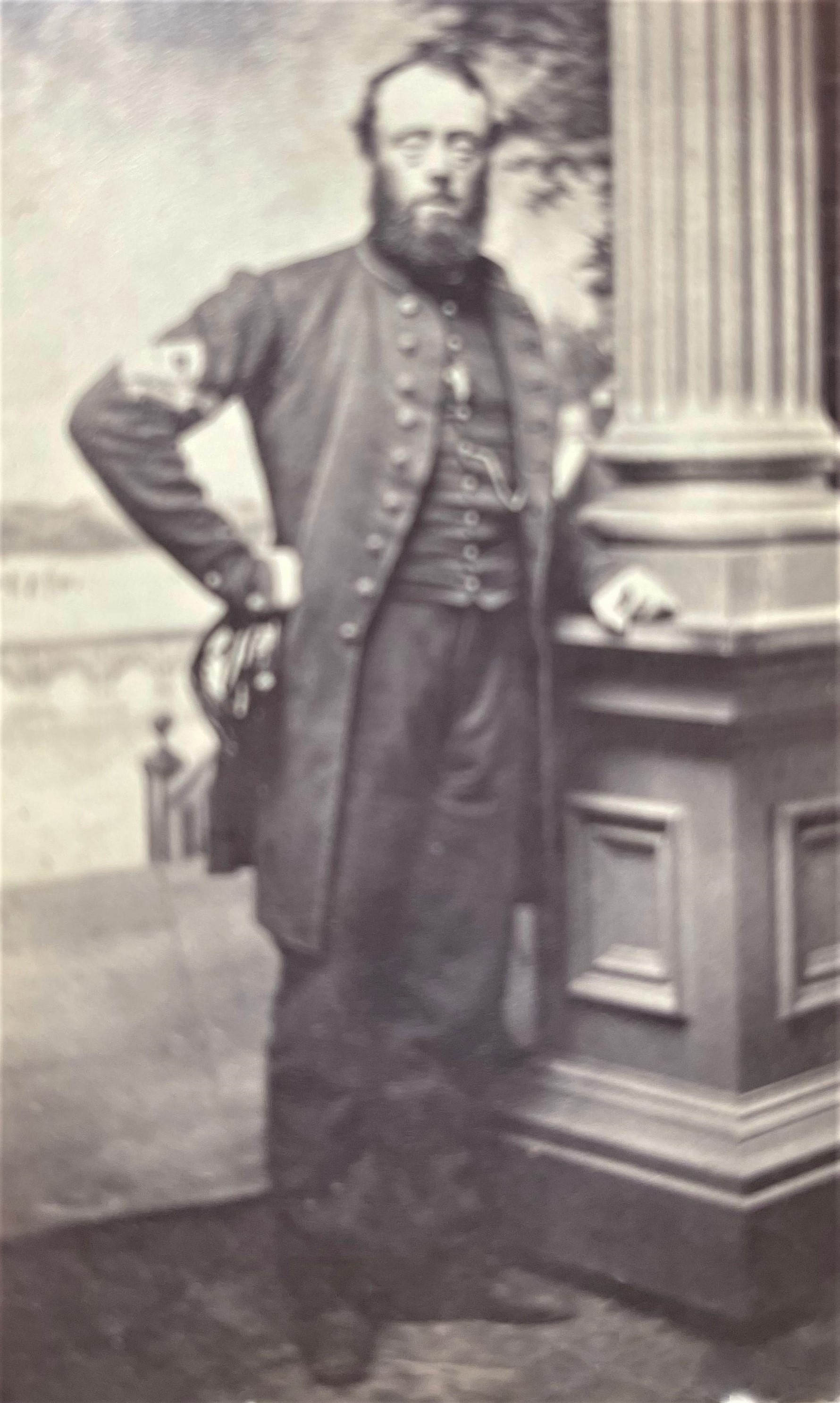
Captain John Peter Shindel Gobin, Company C, 47th Pennsylvania Volunteers, circa 1863 (public domain).

Five days after the Battle of Pocotaligo was waged on October 22, 1862 between Union and Confederate troops in South Carolina, Captain John Peter Shindel Gobin set pen to paper to document the events that had led up to and taken place that terrible day. His powerful account revealed a scale of carnage that shocked the readers of the November 15, 1862 edition of The Sunbury Gazette.

The commanding officer of the 47th Pennsylvania Volunteer Infantry’s color-bearer unit, Company C, Captain Gobin was a lawyer from Sunbury, Northumberland County who would later go on to command the entire regiment and, post-war, would be elected to the Pennsylvania State Senate and then as lieutenant governor of the Commonwealth of Pennsylvania. His account of this often overlooked American Civil War battle is one that merits the attention of historians because of the statistics and insights he shared with close friends.

Headquarters, Co. C, 47th Reg’t.,
Beaufort, S.C.,
Oct. 27, 1862

Dear Friends:–For the first time since our terrible engagement on the main land, I find time to write you an account of the affair. As my last informed you, during the St. John’s Expedition, I contracted the intermittent fever, and on my arrival here, was placed in the officers’ hospital.–Good nursing and an abundance of quinine, however, soon placed me on my feet, and on Monday, the 20th, I went to camp well, but still weak. On Tuesday morning our regiment received orders for six hundred men to embark on a Transport, with two days’ rations, at 1 o’clock P.M. I selected sixty men, and embarked. Our destination was unknown, although it was the general opinion that it was the Charleston and Savannah Railroad bridges. We steamed down the river, and were all advised by Gen. Brennan [sic, Brannan], who was on the boat with our regiment, to get as much sleep as possible. I sought my berth, and when I awoke next morning, found we were in the Broad River, opposite Mackay’s Point. A detachment of the 4th New Hampshire, sent on shore to capture the enemy’s pickets, having failed, we were ordered to disembark immediately. Eight Companies of our regiment, (the other two being on another Transport) were gotten [ready], and at once took up the line of march. After about three miles, we came in sight of the pickets, when we halted until joined by the 55th Pennsylvania, 6th Connecticut, and one section of the 1st U.S. Artillery. We were again ordered forward–a few of the enemy’s cavalry slowly retiring before us, until we reached a place known as Caston, where two pieces of artillery, supported by cavalry, were discovered in position in the road.–They fired two shells at us, which went wide.

While our artillery ran to the front and unlimbered, our regiment was ordered forward at double quick. The enemy however left after receiving one round from our artillery, which killed one of their men. We followed them closely for about two miles, when we found their battery of six pieces, posted in a strong position at the edge of a wood, supported by infantry and cavalry. They opened upon us immdiately, which was replied to by our artillery, posted in the road. This road ran through a sweet potato field, covered with vines and brush. Our regiment was thrown in mass and deployed on my company [Company C], which brought my right in the road. We were ordered to charge, and with a yell the men went in. We had scarcely taken a dozen steps before we were greeted with a shower of round shot and shell from the enemy’s artillery. A round shot stuck the ground fairly in front of me, covering me with sand, bounding to the right and killing the third man in the company to my right. It was followed by a shell, that gave us another shower of sand, and flew between the legs of Corporal Keefer, the man on my left, tearing his pantaloons, striking his file coverer, Billington, on the knee, and glancing and striking a man named Gensemer on Billington’s left, and bringing them to the ground, but fortunately failing to explode. Almost at the same instant Jeremiah Haas and Jno. Barlow were struck, the former in the face and breast by a piece of shell, the latter through the leg by a cannister shot. The shower we received here was terrific. Nothing daunted, on they rushed for the battery, but it was almost impossible to get through the weeds and vines. When within a hundred yards the enemy limbered up, and retreated through the woods. We followed as rapidly as possible, but we had scarcely entered the woods, when we were again greeted with a terrific storm of shell, grape and cannister from a new position, on the other side of the woods.

Samuel Y. Haupt, 47th Pennsylvania Volunteers (circa 1863, public domain).

Ordering my men to keep to the right of the road, we pushed forward through a wood almost impenetrable. We were at times obliged to crawl on our hands and knees.–In the meantime the enemy’s infantry opened upon us, and assisted in raking the woods. Sergeant Haupt [sic, Peter Haupt] here received his wound. When at length we pushed through, we found ourselves separated from the enemy by an impassable swamp, about one hundred yards in width. The only means of getting over was by a narrow causeway of about twelve feet in width. Seeing this, our regiment fell back to the edge of the woods, lay down and engaged the enemy’s infantry opposite us. In the meantime two howitzers from the Wabash, [that] had been placed in position in the rear of the woods, commenced shelling the enemy, whose artillery, was on the right of the road on the opposite side of the swamp. The latter replied, the shells of both parties passing over us. Our situation was extremely critical. Exposed to the cross-fire of the contending artillery and the infantry in the front, with the limbs and tops of trees falling on and around us, it was indeed a position I never want to be placed in again.–Here Peter Wolf while endeavoring, in company with Sergeant Brosious, Corp. S. Y. Haupt and Isaac Kembel, to pick off some artillerymen, received two balls and fell dead. I had him carried five miles and buried by the side of the road. Corp. S. Y. Haupt, had the stock of his rifle shattered by a rifle ball, that embedded itself.

In about twenty minutes the fire became too hot for them, and they again skedaddled just as Gen. Terry’s Brigade, 75th Pennsylvania, in advance, were ordered up to relieve us. They followed them up rapidly, until they arrived at Pocotaligo creek, over which the rebels crossed, and tore up the bridge, and ensconced themselves behind their breastworks and in their rifle pits.–We were again ordered forward, deployed to the right, and advanced to the bank of the creek, or marsh, which was fringed by woods. We lay a short time supporting the 7th Connecticut, when their ammunition became expended, and we took the front. Here occurred the most desperate fighting of the day. The enemy were reinforced by the 26th South Carolina, which came upon the breastworks with a rush. We gave them a volley that sent them staggering, but they formed in the rear of the first line, and the two poured into us one of the most scathing, withering fires ever endured. Added to it, their artillery commenced throwing grape and cannister amongst us, but we soon drove the artillerymen from their guns, and silenced them. The colors on the left of my company attracting a very heavy fire, I ordered the Sergeant to wrap them up.–This caused quite a yell among the Confederates, but we soon changed their tune.–We fired until our ammunition was nearly expended, when we ceased. This caused the enemy’s artillery to open upon us, while the musketry continued with redoubled energy. Eight men of my company fell at this last fight. We held our position, unsupported, until dark, when we were ordered to fall back. We did so and covered the retreat. We were the first regiment in the fight, and last out of it. Our men fought like veterans, and did fearful execution among the enemy. Our loss was very heavy, losing one hundred and twelve men out of six hundred. I detailed my entire company to carry their dead and wounded comrades to the boat, which I did not reach until 4 o’clock A.M., bringing with me the last man, Billington. In consequence of having no stretchers or ambulances, we were compelled to carry our wounded in blankets. They were, however, all taken good care of.

Although we did not succeed in burning the bridge, yet we were not defeated. We drove the enemy five miles, compelling him to leave a number of his dead and wounded on the field. We captured two caissons, and a number of prisoners, and were only prevented from capturing or scattering the whole force by the destruction of the bridge over Pocotaligo creek, and their immense reinforcements. I shall never forget the sound of those locomotive whistles in my life. Gen. Beauregard commanded the rebels.

My men fought as men accustomed to it all their life. Nothing could exceed their valor. In addition to the loss in my own company, of the color guard, composed of Corporals from other companies attached to it, all but two were struck. Every man seemed determined to win.

My loss is as follows:–Killed–PeterWolf, Sunbury, Pa.; George Harner [sic, Horner], Upper Mahanoy; Seth Deibert, Lehigh county.–Wounded, Sergeant Peter Haupt, Sunbury, Pa., cannister shot through foot; will save the foot; Corporal Samuel Y. Haupt, rifle shot on chin; will be ready for duty in a week. His rifle was struck with a piece of shell, and after shattered by rifle ball. Corporal William Finck, near Milton; rifle shot through leg–amputation not necessary; private S. H. Billington, Sunbury, struck on knee by shell; will save the leg; private John Bartlow, cannister shot through leg; will save the leg; private Jeremiah Haas, struck in face and breast by piece of shell; will soon be well; private Conrad Halman [sic, Holman], Juniata county, shot in face by rifle ball–teeth all gone; will recover; private Theodore Kiehl, struck in the mouth by a rifle ball; lower jaw shattered, but will recover; Charles Leffler [sic, Lefler], Lehigh county, rifle shot through leg–will recover without amputation; Michael Larkins [sic, Larkin], Lehigh county, wounded in side and hip in a hand to hand fight with a mounted officer; killed the officer and captured his horse; able to be about; Thomas Lothard, Pittston, Pa., grape shot through right side; will recover; Richard O’Rourke, Juniata county; rifle ball through right side, will recover; James R. Rine [sic, Rhine], Juniata county, struck on leg by round shot–not serious.

Killed ………… 3
Wounded …. 13
Total ……….. 16

This being over one-fourth of the number engaged, I think, is pretty heavy. However I think most of the wounded will be fit for duty again. They are all comfortable and well cared for. None of their wounds will, from present appearances, prove mortal. I will write again in a few days. With love to all, I remain

Yours, J. P. S. G. 

*Note: Captain Gobin’s assessment of his wounded men was, unfortunately, overly optimistic with respect to Sergeant Peter Haupt. While undergoing treatment at a Union Army hospital, Sergeant Haupt developed traumatic tetanus–a direct cause of the lead injected into his system by the cannister shot that had felled him. He subsequently died from tetanus a related lockjaw.


Sources: 

  1. “Army Correspondence.” Sunbury, Pennsylvania: The Sunbury Gazette, November 15, 1862.
  2. Haupt, Peter, in U.S. Registers of Deaths of Volunteer Soldiers, October 1862. Washington, D.C.: U.S. National Archives and Records Administration.


Research Update: New Details Learned About Abraham Jassum, One of Nine Formerly Enslaved Men Who Enlisted with the 47th Pennsylvania Volunteers

Enlistment form for Abraham Jassum, Undercook, 47th Pennsylvania Volunteers, 5 October 1862, p. 1 (Compiled Military Service Records, U.S. National Archives and Records Administration, public domain; click to enlarge).

Fleeing the brutal practice of chattel slavery in South Carolina during the fall of 1862, a Black youth walked into a recruiting station for the Army of the United States in Beaufort, South Carolina and told an officer there that he wanted to become a soldier. His name, according to his enlistment paperwork, was Abraham Jassum, and he was just sixteen years old.

Sadly, much of that teenager’s life has remained a mystery that has stubbornly resisted unraveling–until now. Thanks to documents recently copied by the U.S. National Archives for 47th Pennsylvania Volunteers: One Civil War Regiment’s Story, researchers now know that Abraham Jassum was born into slavery in Charleston, South Carolina sometime around 1846.

Although specific details about what happened to this teenager between the dates of his birth and army enlistment have not yet been found, researchers do already have several ideas. One theory is that Abraham’s surname was not actually “Jassum” because that surname does not appear to have been present on any federal census records for any plantation owners or other enslavers in South Carolina between 1840 and 1860, nor was it used for any Black Freedmen in South Carolina on federal census records that were completed after the American Civil War. Furthermore, there appear to be no U.S. Civil War Pension records that exist for any soldier with the surname of “Jassum.”

Another theory is that, by the time that Abraham reached the age of sixteen, he had been transported to Beaufort to be used as an enslaved laborer there (or was “sold as property” by his enslaver in Charleston to a plantation owner or other enslaver near Beaufort), and that he was freed by Union soldiers when Beaufort was occupied by the Union Army.

Fortunately, the Compiled Military Service Records (CMSR) file for Abraham Jassum does contain important details about his life between October 1862 and October 1865.

Bay Street Looking West, Beaufort, South Carolina, circa 1862 (Sam A. Cooley, 10th Army Corps, photographer, public domain).

What is known for certain is that he enlisted for military service on October 5, 1862 as an “undercook“–a designation that was first authorized for use by regiments serving with the Army of the United States by the U.S. War Department. Examined and certified as fit for duty by William F. Reiber, M.D., an assistant regimental surgeon with the 47th Pennsylvania Volunteer Infantry, Abraham Jassum was then assigned to the 47th Pennsylvania Volunteers’ F Company.

Military records at the time of his enlistment noted that he was five feet, six inches tall and had black hair, black eyes and a black complexion. Muster sheets subsequently described him as a “Negro.”

During his three-year term of enlistment, he traveled with the 47th Pennsylvania to its battle, garrison, occupation, and other duty assignments in Florida, Louisiana, Virginia, Washington D.C., and South Carolina. While stationed with his regiment in Louisiana, he was documented as having been officially mustered into the regiment in June 1864, along with the other Black soldiers of the 47th Pennsylvania.

Additional military records of the 47th Pennsylvania Volunteer Infantry confirm Abraham Jassum’s service in 1864 and 1865, describing him as a “cook” or as a “private,” which appears to indicate that he may have been promoted at some point prior to his honorable discharge.

Issued his honorable discharge paperwork on October 4, 1865, while his regiment was assigned to Reconstruction-related duties in Charleston, South Carolina, he was given a small travel allowance to enable him to return to his place of enlistment (Beaufort, South Carolina), which seems to indicate that he chose to settle in Beaufort, at least initially, rather than remaining in the city where he had been born (Charleston), and instead of relocating north with his former regiment when it returned to Pennsylvania.

Researchers will continue to search for records that can shed more light on what happened to Abraham Jassum after the war, and will post updates if and when new data is uncovered.


Sources:

  1. Bates, Samuel P. History of Pennsylvania Volunteers, 1861-5, vol. 1. Harrisburg, Pennsylvania: B. Singerly, State Printer, 1869.
  2. Jassum, Abraham, in Civil War Veterans’ Card File, 1861-1866 (Company F, 47th Pennsylvania Infantry). Harrisburg, Pennsylvania: Pennsylvania State Archives.
  3. Jassum, Abraham, Civil War Muster Rolls (Company F, 47th Pennsylvania Infantry). Harrisburg, Pennsylvania: Pennsylvania State Archives.
  4. Jassum, Abraham, in Compiled Military Service Records (Company F, 47th Pennsylvania Volunteer Infantry). Washington, D.C.: U.S. National Archives and Records Administration.
  5. Jassum, Abraham, in Registers of Pennsylvania Volunteers, 1861-1865 (Company F, 47th Pennsylvania Infantry), in Records of the Department of Military and Veterans’ Affairs (RG-19). Harrisburg, Pennsylvania: Pennsylvania State Archives.
  6. Schmidt, Lewis. A Civil War History of the 47th Regiment of Pennsylvania Veteran Volunteers. Allentown, Pennsylvania: Self-published, 1986.


Sheridan’s Ride: A Poem Commemorating the Battle of Cedar Creek, Virginia

Sheridan Rallying His Troops, Battle of Cedar Creek, Virginia, October 19, 1864 (U.S. Library of Congress, public domain).

Barely three weeks after the conclusion of the epic Battle of Cedar Creek in Virginia, a poem celebrating the valor displayed during the Union’s victory over the Confederacy that fateful October 19, 1864 began appearing in newspapers across the United States. Penned by Thomas Buchanan Read, Sheridan’s Ride was subsequently recited in public at community events nationwide and is presented here, in its entirety, in commemoration of the battle in which the 47th Pennsylvania Volunteer Infantry lost the equivalent of nearly two full companies of men in killed, wounded and missing in action, as well as soldiers who were captured by Rebel troops and dragged off to the Confederates’ notorious Andersonville and Salisbury prisoner camps.

Sheridan’s Ride

Up from the South at break of day,
Bringing to Winchester fresh dismay,
The affrighted air with a shudder bore,
Like a herald in haste to the chieftain’s door.
The terrible grumble and rumble and roar,
Telling the battle was on once more,
And Sheridan twenty miles away.

And wider still those billows of war
Thundered along the horizon’s bar,
And louder yet into Winchester rolled
The roar of that red sea uncontrolled,
Making the blood of the listener cold
As he thought of the stake in that fiery fray,
And Sheridan twenty miles away.

But there is a road from Winchester town,
A good, broad highway leading down;
And there, through the flush of the morning light,
A steed, as black as the steeds of night,
Was seen to pass as with eagle flight–
He stretched away with his utmost speed;
Hill rose and fell — but his heart was gay,
With Sheridan fifteen miles away.

Still sprung from those swift hoofs, thundering south,
The dust, like the smoke from the cannon’s mouth,
Or the trail of a comet sweeping faster and faster,
Foreboding to traitors the doom of disaster;
The heart of the steed and the heart of the master
Were beating like prisoners assaulting their walls,
Impatient to be where the battle-field calls;
Every nerve of the charger was strained to full play,
With Sheridan only ten miles away.

Under his spurning feet, the road,
Like an arrowy Alpine river flowed,
And the landscape sped away behind
Like an ocean flying before the wind;
And the steed, like a barque fed with furnace ire,
Swept on, with his wild eyes full of fire.
But lo! He is nearing his heart’s desire —
He is snuffing the smoke of the roaring fray,
With Sheridan only five miles away.

The first that the General saw were the groups
Of stragglers, and then the retreating troops;–
What was done — what to do — a glance told him both,
Then striking his spurs with a terrible oath,
He dashed down the line ‘mid a storm of huzzas,
And the wave of retreat checked its course there because
The sight of the master compelled it to pause,
With foam and with dust the black charger was gray;
By the flash of his eye, and his red nostrils’ play,
He seemed to the whole great army to say:
“I have brought you Sheridan all the way
From Winchester down to save the day!”

Hurrah, hurrah for Sheridan!
Hurrah, hurrah, for horse and man!
And when their statues are placed on high
Under the dome of the Union sky,
The American soldiers’ Temple of Fame,
There with the glorious General’s name
Be it said in letters both bold and bright:
“Here is the steed that saved the day
By carrying Sheridan into the fight,
From Winchester — twenty miles away!”


Sources:

  1. Sheridan’s Ride.” Philadelphia, Pennsylvania:  The Daily Evening Telegraph, November 9, 1864.
  2. “Sheridan’s Ride.” Cleveland, Ohio: The Evening Post, November 17, 1864.
  3. “Sheridan’s Ride.” Reading, Pennsylvania: The Daily Times, November 17, 1864.
  4. “Sheridan’s Ride.” Davenport, Iowa: The Democrat, November 25, 1864.
  5. “Sheridan’s Ride.” Brownsville, Nebraska Territory: Nebraska Advertiser, December 1, 1864.
  6. “Mr. Murdoch’s Readings.” Pittsburgh, Pennsylvania: Pittsburgh Gazette, December 6, 1864.
  7. “Tennyson Club Lectures.” Pittsburgh, Pennsylvania: The Post, December 6, 1864.
  8. “Entertainment.” Sacramento, California: The Sacramento Bee, December 17, 1864.


The Backbones of a Nation: The Laborers Who Enlisted with the 47th Pennsylvania Volunteer Infantry

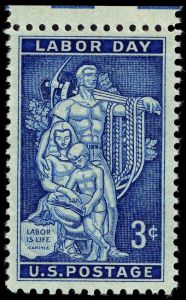
“Labor Is Life” (U.S. Postal Service’s Labor Day Stamp, 1956, U.S. Library of Congress, public domain).

Bakers, blacksmiths, boatmen, butchers, carpenters, cabinetmakers, cigarmakers, coal miners, factory workers, farmers, gardeners, gold miners, iron workers, masons, quarry workers, teamsters, tombstone carvers. These were just a few of the diverse job titles held by the laborers who enlisted with the 47th Pennsylvania Volunteer Infantry during the American Civil War.

Many returned to their same occupations after the war ended while others found new pathways for their life journeys. Far too many were never able to return to the arms of their loved ones and still rest in marked or unmarked graves far from the Commonwealth of Pennsylvania.

In honor of Labor Day, 47th Pennsylvania Volunteers: One Civil War Regiment’s Story is proud to present this abridged list of blue-collar men and boys who served with the 47th Pennsylvania Volunteer Infantry between August 1861 and January 1866, as well as the names of two of the women associated with the regiment who made their own unforgettable marks on the world.

* Auchmuty, Samuel S. (First Lieutenant, Company D): A native of Duncannon, Perry County and veteran of the Mexican-American War who was employed as a carpenter during the early 1860s, Samuel Auchmuty responded to President Abraham Lincoln’s call for volunteers to defend the nation’s capital during the opening weeks of the American Civil War by enrolling as a first lieutenant with Company D of the newly-formed 47th Pennsylvania Volunteer Infantry on August 20, 1861; after completing his three-year term of enlistment, he was honorably discharged in September 1864 and returned home to Pennsylvania, where he resumed his work as a house carpenter and launched a successful contracting business that was responsible for building new business structures, churches, single-family homes, and schools, as well as renovating existing structures; he died in 1891, following a brief illness;
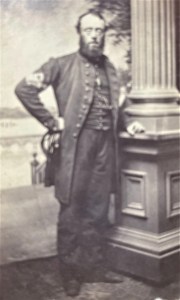
First Sergeant Christian S. Beard, circa 1863 (public domain).

* Beard, Christian Seiler (First Lieutenant, Company C): A twenty-seven-year-old, married carpenter residing in Williamsport, Lycoming County when President Abraham Lincoln called for seventy-five thousand volunteers to defend the nation’s capital, following the fall of Fort Sumter in mid-April 1865, Chistian S. Beard promptly enrolled for Civil War military service before that month was out as a private with Company D of the 11th Pennsylvania Volunteers; honorably discharged in July after completing his Three Months’ Service, he re-enlisted as a sergeant with Company C of the newly-formed 47th Pennsylvania Volunteers on August 19; after rising up through the ranks to become a first lieutenant, he was honorably discharged on Christmas Day, 1865, and returned home to his wife in Dauphin County, Pennsylvania, where he continued to work as a carpenter; after having several children with his wife, he was widowed by her; remarried in 1884, he relocated with his wife and children to Pittsburgh, where he continued to work as a carpenter; ailing with heart and kidney disease, he died there on November 16, 1911 and was interred at that city’s Highwood Cemetery;

* Burke, Thomas (Sergeant, Company I): A first-generation American, Thomas Burke was a twenty-year-old cabinetmaker residing in Allentown at the dawn of the American Civil War; after enrolling for military service on the day that the 47th Pennsylvania Volunteer Infantry was founded (August 5, 1861), he was officially mustered in as a private; from that point on, he continued to work his way up the ranks, receiving a promotion to corporal on September 19, 1864 and then to sergeant on July 11, 1865; honorably mustered out with his company in Charleston, South Carolina on December 25, 1865, he returned home to Lehigh County, where he married and began a family; sometime in early to mid-1871, he and his family migrated west to Iowa, settling in Anamosa, Jones County, where he was employed as a carpenter and contractor; he died at his home there on October 22, 1910 and was buried at that town’s Riverside Cemetery;

* Colvin, John Dorrance (Second Lieutenant, Company C): A native of Abington Township, Lackawanna County who was a farmer when he enlisted for Civil War military service on September 12, 1861, John D. Colvin transferred to the U.S. Army Signal Corps on October 13, 1863, and continued to serve with the Signal Corps for the duration of the war; employed as an engineer, post-war, he helped the Pacific Railroad to extend its service from Atchison, Kansas to Fort Kearney in Nebraska before returning home to Pennsylvania, where he married, began a family and resided with them in Olyphant and Carbondale before relocating with them to Parsons in Luzerne County, where he became a prominent civic leader and member of the school board; initially employed as a machinist, he went on to become superintendent of the Delaware & Hudson Coal company before taking a similar job with the Lehigh Valley Coal Company; the U.S. Postal Service’s postmaster of Parsons during the early 1890s, he died there on March 15, 1901 and was buried at the Hollenback Cemetery in Wilkes-Barre;

* Crownover, James (Sergeant, Company D): A twenty-three-year-old teamster residing in Blain, Perry County when he enrolled for Civil War military service on August 20, 1861, James Crownover rose up through the ranks of the 47th Pennsylvania from private to reach the rank of sergeant; wounded in the right shoulder and captured by Confederate troops during the Battle of Pleasant Hill, Louisiana on April 9, 1864, he was marched to Camp Ford, near Tyler, Texas, the largest Confederate prison camp west of the Mississippi River, where he was held as a prisoner of war (POW) until he was released during a prisoner exchange on November 25, 1864; during captivity, he was commissioned, but not mustered as a second lieutenant; given medical treatment before he was returned to active duty, he was honorably discharged with his regiment in Charleston, South Carolina on December 25, 1865; after returning home, he found work at a tannery near Blain, married, began a family and then relocated with them to East Huntingdon Township, Westmoreland County, where he worked as a teamster; relocating with them to Braddock in Allegheny County after the turn of the century, he worked at a local mill there; he died in Allegheny County on July 18, 1903 and was buried at the Monongahela Cemetery in Braddock Hills;

Jacob Daub, circa 1862-1865 (carte de visite, Cooley & Beckett Photographers, Savannah, Georgia and Beaufort and Hilton Head, South Carolina, public domain).

* Daub, Jacob and William J. (Drummer Boy, Company A): A German immigrant as a child, Jacob Daub emigrated with his parents and younger brother, William, circa 1852; after settling in Easton, Northampton County, Pennsylvania, where his father found work as a stone mason, Jacob grew up to become a cigarmaker, and also became the first of the two brothers to enlist in the American Civil War; after enrolling at the age of sixteen, he was classified as a field musician and assigned to Company A as its drummer boy; his nineteen-year-old brother, William, a carpenter by 1865, followed him into the war when he enlisted as a private with the same company in February of that year; after the war ended, both returned home to Northampton County, where they married, had children and went on to live long, full lives; William eventually died at the age of eighty in 1928, followed by Jacob, who passed away in 1936, roughly two months before his ninety-first birthday;

* Detweiler, Charles C. (Private, Company A): Berks County native Charles Detweiler enrolled for Civil War military service on September 16, 1862; a carpenter who later became a farmer, he served with Company A until he was severely injured in the Battle of Cedar Creek, Virginia, October 19, 1864, when he sustained a musket ball wound to the middle of his thigh; treated at a Union Army hospital in Virginia before being transported to the Union’s Mower General Hospital in Philadelphia, Pennsylvania, he learned that the musket ball had damaged his femur and femoral arteries; following his wound-related death at Mower on March 12, 1865, he was buried at the Fairview Cemetery in Kutztown, Berks County;

* Diaz, John (Private, Company I): An immigrant from Spain’s Canary Islands, John Diaz emigrated sometime between 1862 and 1865 and settled in Philadelphia, Pennsylvania, where he found work as a cigarmaker; on January 25, 1865, at the age of nineteen, he enlisted with the Union Army at a recruiting depot in Norristown, Montgomery County and served as a private with Company I of the 47th Pennsylvania Volunteer Infantry until it was mustered out on Christmas Day, 1865; following his return to Pennsylvania, he resumed work as a cigarmaker in Philadelphia, eventually launching his own cigarmaking firm, which became a family business as his sons became old enough to work for him; sometime between 1906 and 1910, he relocated with his wife and several of his children to Camden County, New Jersey, where he died on September 5, 1915;

James Downs (circa 1880s, public domain).

* Downs, James (Corporal, Company D): A twenty-three-year-old tanner residing in Blain, Perry County when he enrolled for Civil War military service on August 20, 1861, James Downs was captured by Confederate troops during the Battle of Pleasant Hill, Louisiana on April 9, 1864 and marched to Camp Ford, near Tyler, Texas, the largest Confederate prison camp west of the Mississippi River; held there as a prisoner of war (POW) until he was released during a prisoner exchange on July 22, 1864, he received medical treatment and was subsequently returned to active duty; following his honorable discharge with his regiment in Charleston, South Carolina, on December 25, 1865, he returned home, married, began a family and relocated with his family to Phillipsburg, New Jersey; suffering from heart and kidney disease, and possibly also from post-traumatic stress disorder, rather than “insane” as physicians at the Pennsylvania Memorial Home in Brookville, Jefferson County, Pennsylvania had diagnosed him, he fell from a window at that home and died at there on September 16, 1921; he was subsequently interred in the Veterans’ Circle of the Brookville Cemetery;

* Eagle, Augustus (Second Lieutenant, Company F): A German immigrant as a teenager, Augustus Eagle arrived in America on June 23, 1855, two years after his brother, Frederick Eagle, had emigrated and made a life for himself in Catasauqua, Lehigh County, Pennsylvania; both men married and began families there, with Fred employed as a laborer and Gus employed by the Crane Iron Works; when President Abraham Lincoln issued his call for volunteers to defend the nation’s capital during the opening weeks of the American Civil War, both men enrolled for military service on August 21, 1861 as privates with Company F of the 47th Pennsylvania Volunteer Infantry; in 1862, Fred fell ill and was honorably discharged on a surgeon’s certificate of disability, but Gus continued to serve, rising up through the regiment’s enlisted and officers’ ranks; commissioned as a second lieutenant, he was honorably discharged on September 11, 1864, upon completion of his three-year term of service; post-war, Fred became a successful baker with real estate and personal property valued at $4,200 (roughly $155,750 in 2023 dollars) and died in Catasauqua in 1885, while Gus owned a successful restaurant in Whitehall Township before operating the Fairview Hotel, which became a popular spot for political gatherings; after suffering a series of strokes in 1902, Gus died at his home on August 17 and was buried at the Fairview Cemetery in West Catasauqua;

* Eisenbraun, Alfred (Drummer Boy, Company B): A tobacco stripper and first-generation American from Allentown, Lehigh County, fifteen-year-old Alfred Eisenbraun became the second “man” from the 47th Pennsylvania to die when he succumbed to complications from typhoid fever at the Kalorama Eruptive Fever Hospital in Georgetown, District of Columbia on October 26, 1861; he still rests at the U.S. Soldiers’ and Airmen’s Home Cemetery in Washington, D.C.;

* Fink, Aaron (Corporal, Company B): A shoemaker and native of Salisbury Township, Lehigh County, Pennsylvania, Aaron Fink, grew up, began a family and established a successful small shoemaking business, first in Allentown and then in Mauch Chunk (now Jim Thorpe) in Carbon County; on August 20, 1861, he chose to respond to President Abraham Lincoln’s call for volunteers to help bring the American Civil War to a quick end when he enrolled for military service; shot in the right leg during the fighting at the Frampton Plantation during the Battle of Pocotaligo, South Carolina on October 22, 1862, he was treated at the Union Army’s hospital at Hilton Head, South Carolina, but died there from wound-related complications on November 5, 1862; initially buried near that hospital, his remains were later exhumed by Allentown undertaker Paul Balliet and returned to Pennsylvania for reinterment at that city’s Union-West End Cemetery;

* Fornwald, Reily M. (Corporal, Company G): Born in Heidelberg Township, Berks County, Reily Fornwald was raised there on his family’s farm near Stouchsberg; educated in his community’s common schools and then at Millersville State Normal School, he became a railroad worker before returning to farm life shortly before the dawn of the American Civil War; after enlisting for military service at the age of twenty on September 11, 1862, he was wounded in the head and groin by an exploding artillery shell during the Battle of Pocotaligo, South Carolina on October 22, 1862; stabilized on the battlefield before being transported to a field hospital for more advanced medical care, he spent four weeks recuperating before returning to active duty with his regiment; promoted to the rank of corporal on January 19, 1863, he continued to serve with his regiment until he was honorably discharged at Berryville, Virginia on September 18, 1864, upon expiration of his term of enlistment; after returning home, he spent four years operating a blast furnace for White & Ferguson in Robesonia, Berks County; he also married and began a family; sometime around 1870, he left that job to become an engine operator for Wright, Cook & Co. in Sheridan and then moved to a job as an engine operator for William M. Kauffman—a position he held for roughly a decade before securing employment as a shifting engineer with the Reading Railway Company at its yards in Reading; following his retirement in 1905, he and his wife settled in Robesonia, where he became involved in buying and selling real estate; following a severe fall in May 1925, during which he fractured a thigh bone, he died at the Homeopathic Hospital in Reading on June 1 and was buried at Robesonia’s Heidelberg Cemetery;
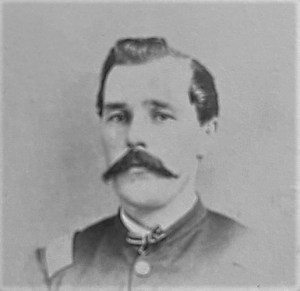
Captain Reuben Shatto Gardner, Company H, 47th Pennsylvania Volunteers, circa 1863 (public domain).

* Gardner, Reuben Shatto, John A. and Jacob S. R.: Natives of Perry County, Reuben Shatto Gardner and his brothers, John A. Gardner and Jacob S. R. Gardner, began their work lives as laborers; among the earliest responders to President Abraham Lincoln’s call to defend the nation’s capital, following the fall of Fort Sumter in mid-April 1861, Reuben was a twenty-five-year-old miller who resided in Newport, Perry County; after enlisting as a private with Company D of the 2nd Pennsylvania Volunteers on April 20, he was honorably mustered out after completing his term of service; he then re-upped for a three-year tour of duty, mustering in as a first sergeant with Company H of the newly-formed 47th Pennsylvania Volunteer Infantry; also enrolling with him that same day were his twenty-three-year-old and twenty-one-year-old brothers, John A. Gardner and Jacob S. R. Gardner; John officially mustered in at Camp Curtin in Harrisburg on September 18 (the day before Reuben arrived), while Jacob officially mustered in on September 19; both joined their brother’s company, entering at their respective ranks of corporal and private, but Jacob’s tenure was a short one; sickened by typhoid fever in late December 1861, he died at the 47th Pennsylvania’s regimental hospital at Camp Griffin, near Langley, Virginia on January 8, 1862; his remains were later returned to Perry County for burial at the Old Newport Cemetery; soldiering on, Reuben and John were transported with their regiment by ship to Fort Taylor in Key West, Florida and subsequently sent to South Carolina with their regiment and other Union troops; shot in the head and thigh during the Battle of Pocotaligo, South Carolina on October 22, 1862, Reuben was treated at the Union Army’s hospital at Hilton Head, South Carolina for an extended period of time, and then returned to active duty with his regiment; meanwhile, John was assigned with H Company and the men from Companies D, F and K to garrison Fort Jefferson in Florida’s Dry Tortugas; both brothers then continued to work their way up the regiment’s ranks, with John promoted to corporal on September 18, 1864 and Reuben ultimately commissioned as a captain and given  command of Company H on February 16, 1865; both then returned home after honorably mustering out with the regiment in Charleston, South Carolina on Christmas Day, 1865; sometime around 1866 or 1867, Reuben and his wife migrated west, first to Elk River Station in Sherburne County, Minnesota and then to Stillwater, Washington County, before settling in the city of Minneapolis; through it all, he worked as a miller; Reuben and his family then relocated farther west, arriving in King County, Washington after the Great Seattle Fire of 1889; initially employed in the restaurant industry, Reuben later found work as a railroad conductor before prospecting for gold with son Edward in the western United States and British Columbia, Canada during the 1890s Gold Rush; employed as a U.S. Post Office clerk in charge of the money order and registry departments in Seattle from 1898 to 1902, Reuben died in Seattle at the age of sixty-eight on September 25, 1903 and was interred at that city’s Lakeview Cemetery; meanwhile, his brother John, who had resumed work as a fireman with the Pennsylvania Railroad after returning from the war, was widowed by his wife in 1872; after remarrying and welcoming the births of more children, he was severely injured on October 9, 1873 while working as a fireman on the Pacific Express for the Pennsylvania Railroad; unable to continue working as a fireman due to his amputated hand, he worked briefly as a railroad call messenger before launching his own transfer business in Harrisburg; after he was widowed by his ailing second wife, John was severely injured in a second accident in 1894 while loading his delivery wagon; still operating his business after the turn of the century, he remarried on January 3, 1900, but was widowed by his third wife when she died during a surgical procedure in 1911; he subsequently closed his business and relocated to the home of his daughter in the city of Reading, Berks County; four years later, he fell on an icy sidewalk and became bedfast; aged eighty and ailing from arteriosclerosis and lung congestion, he died at her home on February 20, 1918 and was buried at Reading’s Charles Evans Cemetery;

* Gethers, Bristor (Under-Cook, Company F): Born into slavery in South Carolina circa 1829, Bristor Gethers was married “by slave custom at Georgetown, S.C.” on the Pringle plantation in Georgetown sometime around 1847 to “Rachael Richardson” (alternate spelling “Rachel”); a field hand at the dawn of the Civil War, he was freed from chattel enslavement in 1862 by Union Army troops; he then enlisted as an “Under-Cook” with Company F of the 47th Pennsylvania Volunteer Infantry in Beaufort, South Carolina on October 5, 1862, and traveled with the regiment until October 4, 1865, when he was honorably discharged in Charleston, South Carolina upon completion of his three-year term of enlistment; at that point, he returned to Beaufort and resumed life with his wife and their son, Peter; a farmer, Bristor was ultimately disabled by ailments that were directly attributable to his Union Army tenure; awarded a U.S. Civil War Soldiers’ Pension, he lived out his days with his wife on Horse Island, South Carolina, and died on Horse Island, South Carolina on June 24 or 25, 1894; he was then laid to rest at a graveyard on Parris Island on June 26 of that same year;

* Gilbert, Edwin (Captain, Company F): A native of Northampton County and a carpenter residing in Catasauqua, Lehigh County at the dawn of the American Civil War, Edwin Gilbert enrolled as a corporal on August 21, 1861; after rising up through his regiment’s officer ranks, he was ultimately commissioned as a captain and placed in charge of his company on New Year’s Day, 1865, and then mustered out with his company in Charleston, South Carolina of Christmas of that same year; resuming his life with his wife and children in Lehigh County after the war, he continued to work as a carpenter; after suffering a stroke in late December 1893, he died on January 2, 1894 and was buried at the Fairview Cemetery in West Catasauqua;
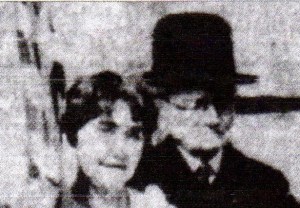
Mrs. Caroline Bost and Martin L. Guth celebrated the anniversary of President Abraham Lincoln’s birthday with fellow Grand Army of the Republic and ladies auxiliary members in February 1933 (public domain).

* Guth, Martin Luther (Corporal, Company K): A native of Lehigh County and son of a farmer, Martin L. Guth was a seventeen-year-old laborer and resident of Guthsville in Whitehall Township at the dawn of the American Civil War; after enrolling for military service on September 26, 1862, he was officially mustered in as a corporal; he continued to serve with his regiment until he was honorably mustered out on October 1, 1865, upon expiration of his term of service; at some point during that service, he broke his leg—an injury that did not heal properly and plagued him for the remainer of his life; after returning home to the Lehigh Valley, he found work again as a laborer; married in 1883, he became the father of four children, one of whom was born in New Mexico and another who was born in California; he had moved his family west in search of work in the mining industry; documented as a “prospector” or “miner” records created in Nevada during that period, he was also documented on voter registration rolls of Butte City in Glenn County, California in August 1892; by 1900, he was living separately from his wife, who was residing in Bandon, Coos County, Oregon with their two children while he was residing at the Veterans’ Home of California in Yount Township, Napa County, California; subsequently admitted to the Mountain Branch of the network of U.S. National Homes for Disabled Volunteer Soldiers in Johnson City, Tennessee on February 11, 1912, his disabilities included an old compound fracture of his right leg with chronic ulceration, defective vision (right eye), chronic bronchitis, and arteriosclerosis; discharged on December 12, 1920, he was admitted to the U.S. National Soldiers’ Home in Leavenworth, Kansas on July 30, 1912, but discharged on September 29, 1913; by 1920, he was living alone on Fruitvale Avenue in the city of Oakland, California, but was remaining active with his local chapter of the Grand Army of the Republic as he rose through the leadership ranks of chapter, state and national G.A.R. organizations; after a long, adventure-filled life, he died on October 11, 1935, at the age of ninety-one, at the veterans’ home in San Francisco and was interred at the San Francisco National Cemetery (also known as the Presidio Cemetery);

Lieutenant Charles A. Hackman, Company G, 47th Pennsylvania Volunteers, circa 1864 (public domain).

* Hackman, Charles Abraham and Martin Henry (First Lieutenant and Sergeant, Company G): Natives of Rittersville, Lehigh County, Charles and Martin Hackman began their work lives as apprentices, with Charles employed by a carpenter and Martin employed by master coachmaker Jacob Graffin; members of the local militia unit known as the Allen Rifles, they were among the earliest responders to President Abraham Lincoln’s call to defend the nation’s capital, following the fall of Fort Sumter in mid-April 1861; both enlisted as privates with Company I of the 1st Pennsylvania Volunteers on April 20 and were honorably mustered out in July after completing their service; Charles then re-upped for a three-year tour of duty, mustering in as a sergeant with Company G of the newly-formed 47th Pennsylvania Volunteer Infantry; he then spent most of his early service in Virginia; meanwhile, his younger brother, Martin H. Hackman, who was employed as a coach trimmer in Lehigh County, re-enlisted for his own second tour of duty, as a private with Charles’ company, on January 8, 1862; working their way up the ranks, Charles was commissioned as a first lieutenant on June 18, 1863, while Martin was promoted to sergeant on April 26, 1864; Charles was then breveted as a captain on November 30, 1864 after having mustered out on November 5; Martin was then honorably discharged on January 8, 1865; initially employed, post-war, with the Philadelphia & Reading Railroad’s train car facility in Reading, Berks County, Charles was promoted to car inspector at the company’s Philadelphia facility in December 1866; he subsequently married, but had no children and was widowed in 1904; remarried, he remained in Philadelphia until the early 1900s, when he relocated to Allentown; Martin, who worked as a bricklayer in Allentown, did have children after marrying, but he, too, was widowed; also remarried, he became a manager at a rolling mill; ailing with pneumonia in early 1917, Charles was eighty-six years old when he died in Allentown on January 17; he was buried at Allentown’s Union-West End Cemetery, while his brother Martin was buried at the Nisky Hill Cemetery in Bethlehem, following his death in Bethlehem from a cerebral hemorrhage on December 14, 1921;

* Junker, George (Captain, Company K): A German immigrant as a young adult, George Junker emigrated sometime around the early 1850s and settled in Allentown, Lehigh County, Pennsylvania, where he found employment as a marble worker and tombstone carver, and where he also joined the Allen Infantry, one of his adopted hometown’s three militia units; responding to U.S. President Abraham Lincoln’s call for volunteers to defend the nation’s capital during the opening weeks of the American Civil War, George enlisted with his fellow Allen Infantrymen, honorably completed his Three Months’ Service, and promptly began his own recruitment of men for an “all-German company” for the newly-formed 47th Pennsylvania Volunteer Infantry; commissioned as a captain with the 47th Pennsylvania, he was placed in charge of his men who became known as Company K; mortally wounded by a Confederate rifle shot during the Battle of Pocotaligo, South Carolina on October 22, 1862, he died from his wounds the next day at the Union Army’s division hospital at Hilton Head, South Carolina; his remains were returned to his family in Hazleton, Luzerne County for reburial at the Vine Street Cemetery;

* Kern, Samuel (Private, Company D): A native of Perry County who was employed as a farmer in Bloomfield, Perry County when he enrolled for Civil War military service on August 20, 1861, Samuel Kern was wounded and captured by Confederate troops during the Battle of Pleasant Hill, Louisiana on April 9, 1864; marched to Camp Ford, near Tyler, Texas, the largest Confederate prison camp west of the Mississippi River, he was held there as a prisoner of war (POW) until he died from harsh treatment on June 12, 1864; buried somewhere on the grounds of that prison camp, his grave remains unidentified;

* Kosier, George (Captain, Company D): A native of Perry County and twenty-four-year-old carpenter residing in that county’s community of New Bloomfield at the dawn of the American Civil War, George Kosier became one of the earliest men from his county to respond to President Abraham Lincoln’s call for to defend the nation’s capital, following the fall of Fort-Sumter in mid-April 1861, when he enrolled for military service on April 20 as a corporal with Company D of the 2nd Pennsylvania Volunteers; honorably discharged in July after completing his Three Months’ Service, he re-enlisted as a first sergeant with Company D of the newly-formed 47th Pennsylvania Volunteer Infantry; joining him were his younger brothers, Jesse and William S. Kosier, aged nineteen and twenty-three, who were enrolled as privates with the same company; all three subsequently re-enlisted with their company at Fort Taylor in Key West, Florida in 1863; sadly, Jesse fell ill with pleurisy and died at the Union Army’s Field Hospital in Sandy Hook, Maryland on August 1864; initially buried at a cemetery in Weverton, Maryland, his remains were later exhumed and reinterred at the Antietam National Cemetery in Sharpsburg, Maryland; both George and William continued to serve with the regiment, with George continuing his rise up the ranks; commissioned as a captain, he was given command of Company D in early June 1865; both brothers were then honorably discharged with their regiment on Christmas Day, 1865; post-war, both men married and began families; William died in Pennsylvania sometime around 1879, but George went on to live a long full life; after settling in Ogle County, Illinois, where he was employed as a carpenter, he relocated with his family to Wright County, Iowa, where he built bridges; he died in Chicago on December 3, 1920 and was buried at that city’s Rosehill Cemetery;
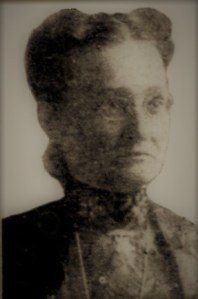
Anna (Weiser) Leisenring (1851-1942) , circa 1914 (public domain).

* Leisenring, Annie (Weiser): The wife of Thomas B. Leisenring (Captain, Company G), Annie Leisenring was employed by the Commonwealth of Pennsylvania as a factory inspector after the American Civil War; she became well known through newspaper accounts of her inspection visits and also became widely respected for her efforts to improve child labor laws statewide;

* Lowrey, Thomas (Corporal, Company E): An Irish immigrant as a young adult, Thomas Lowrey emigrated sometime around the late 1840s or early 1850s and settled in Northampton County, Pennsylvania, where he found work as a miner, married and began a family; responding to U.S. President Abraham Lincoln’s call for volunteers to defend the nation’s capital during the opening weeks of the American Civil War, Thomas enlisted with Company E of the 47th Pennsylvania on September 16, 1861; after completing his three-year term of enlistment, he was honorably discharged in September 1864 and returned home to Pennsylvania, where he resumed work as a coal miner near Shenandoah, Schuylkill County, and where he resided with his wife and children; after witnessing the dawn of a new century, he died in Shenandoah on January 11, 1906;
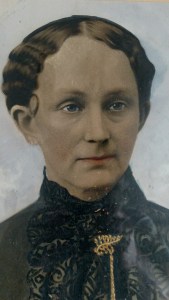
This image of Julia (Kuenher) Minnich, circa 1860s, is being presented here through the generosity of Chris Sapp and his family, and is being used with Mr. Sapp’s permission. This image may not be reproduced, repurposed, or shared with other websites without the permission of Chris Sapp.

* Magill, Julia Ann (Kuehner Minnich): Widowed and the mother of a young son at the time that her husband, B Company’s Captain Edwin G. Minnich, was killed in battle during the American Civil War, Julia Ann (Kuehner) Minnich became a Union Army nurse at Harewood Hospital in Washington, D.C. during the war in order to keep a roof over her son’s head; she then spent the remainder of her life battling the U.S. Pension Bureau to receive and keep both the U.S. Civil War Widow’s Pension and U.S. Civil War Nurse’s Pension that she was entitled to under federal law; forced to go on working into her later years by poverty, she finally found work as a cook at a hotel in South Bethlehem; she died sometime after 1906;

* Menner, Edward W. (Second Lieutenant, Company E): A first-generation American who was a native of Easton, Northampton County, Edward Menner was a sixteen-year-old carpenter when he enrolled for Civil War military service on August 25, 1861; working his way up from private to second lieutenant before he was honorably discharged with his regiment in Charleston, South Carolina on Christmas Day, 1865, he was wounded in the left shoulder during the Battle of Cedar Creek, Virginia on October 19, 1864; after returning home to the Lehigh Valley, he secured employment as a hooker with the Bethlehem Iron Company (later known as Bethlehem Steel) on March 15, 1866; he married, begam a family and continued to work in the iron industry for much of his life; he died in Bethlehem on April 25, 1913 and was buried at that city’s Nisky Hill Cemetery;

* Miller, John Garber (Sergeant, Company D): A native of Ironville, Blair County, John G. Miller was a twenty-one-year-old laborer living in Duncannon, Perry County when he enrolled for Civil War military service on August 20, 1861; captured by Confederate troops during the Battle of Pleasant Hill, Louisiana on April 9, 1864 and marched to Camp Ford, near Tyler, Texas, the largest Confederate prison camp west of the Mississippi River, he was held there as a prisoner of war (POW) until he was released during a prisoner exchange on July 22, 1864; returned to active duty with his regiment after receiving medical treatment, he continued to serve until he was honorably discharged with the regiment in Charleston, South Carolina on December 25, 1865; after returning home, he married, began a family and relocated with his family to Philipsburg, Centre County, Pennsylvania, where he was employed as a teamster; returning to Blair County with his family, he resided with them in Logan Township before relocating with them again to Coalport, Clearfield County; suffering from heart disease, he died in Coalport on February 16, 1921 and was interred at the Coalport Cemetery;
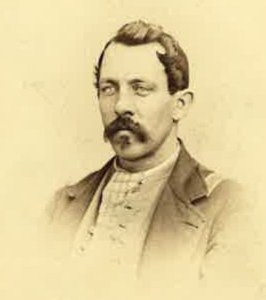
Captain Theodore Mink, Company I, 47th Pennsylvania Volunteers (circa 1870s-1880s, courtesy of Julian Burley; used with permission).

* Mink, Theodore (Captain, Company I): A native of Allentown, Lehigh County who was apprenticed as a coachmaker and then tried his hand as a whaler and blacksmith prior to the American Civil War, Thedore Mink became one of the “First Defenders” who responded to President Abraham Lincoln’s call for seventy-five thousand volunteers to defend the nation’s capital after the fall of Fort Sumter in mid-April 1861; after honorably completing his Three Months’ Service in July, he re-enlisted on August 5 as a sergeant with Company I of the newly-formed 47th Pennsylvania Volunteer Infantry; after steadily working his way up through the ranks, he was commissioned as a captain and placed in charge of his company on May 22, 1865; he continued to serve with his regiment until it was mustered out on Christmas Day, 1865; following his return to Pennsylvania, he was hired as a laborer with a circus troupe operated by Mike Lipman before finding longtime employment in advertising and then as head of the circus wardrobe for the Forepaugh Circus before he was promoted to management with the circus; felled by pneumonia during late 1889, he died in Philadelphia on January 7, 1890 and was interred in Allentown’s Union-West End Cemetery;

* Newman, Edward (Private, Company H): A German immigrant who left his homeland sometime around 1920, Edward Newman chose to settle in Allentown, Lehigh County, Pennsylvania, where he found work as a baker; after enlisting for Civil War military service in August 1862, he mustered in as a private with Company I of the 127th Pennsylvania Volunteers and fought in the Battle of Fredericksburg from December 11-15 of that year; honorably mustered out with his regiment in May 1863, he re-enlisted on October 23, 1863 for a second tour of duty—but as a private with a different regiment—Company H of the 47th Pennsylvania Volunteers; he continued to serve with the 47th Pennsylvania until he was officially mustered out in Charleston, South Carolina on Christmas Day, 1865, he returned to Pennsylvania’s Lehigh Valley, where he worked briefly as a baker; suffering from rheumatism that developed while the 47th Pennsylvania was stationed near Cedar Creek, Virginia during the fall of 1864, he was admitted to the network of U.S. Homes for Disabled Volunteer Soldiers at the Central Branch in Dayton, Montgomery County, Ohio on July 17, 1877; still unmarried and still living there in 1880, his health continued to decline; diagnosed with acute enteritis, he died there on January 22, 1886 and was buried at the Dayton National Cemetery;

Captain Daniel Oyster, Company C, 47th Pennsylvania Volunteers, circa 1864 (public domain).

* Oyster, Daniel (Captain, Company C): A native of Sunbury, Northumberland County who was employed as a machinist, Daniel Oyster became one of the earliest men from his county to respond to President Abraham Lincoln’s call to defend the nation’s capital, following the fall of Fort-Sumter in mid-April 1861, when he enrolled for Civil War military service on April 23 as a corporal with Company F of the 11th Pennsylvania Volunteers; honorably discharged in July after completing his Three Months’ Service, he re-enlisted as a first sergeant with Company C of the newly-formed 47th Pennsylvania Volunteers on August 19; his brother, John Oyster, subsequently followed him into the service, enrolling as a private with his company on November 20, 1863; after rising up through the ranks to become captain of his company, Daniel was shot in his left shoulder near Berryville, Virginia on September 5, 1864 and then shot in his right shoulder during the Battle of Cedar Creek on October 19; successfully treated by Union Army surgeons for both wounds, he was awarded a veteran’s furlough in order to continue his recuperation and returned home to Sunbury; he then returned to duty and was honorably discharged with his company on Christmas Day, 1865; post-discharge, he and his brother, John, returned home to Sunbury; Daniel continued to reside with their aging mother and was initially employed as a policeman, but was then forced by a war-related decline in his health to take less-taxing work as a railroad postal agent; his brother John, who was married, lived nearby and worked as a fireman, but died in Sunbury on April 20, 1899; employed as a bookkeeper after the turn of the century, Daniel never married and was ultimately admitted to the Southern Branch of the U.S. National Home for Disabled Volunteer Soldiers in Hampton, Virginia, where he died on August 5, 1922—exactly sixty-one years to the day after the 47th Pennsylvania Volunteer Infantry was founded; he was given a funeral with full military honors before being laid to rest in the officers’ section at the Arlington National Cemetery on August 11;

* Sauerwein, Thomas Franklin (First Sergeant, Company B): The son of a lock tender in Pennsylvania’s Lehigh Valley, Thomas Sauerwein was employed as a carpenter at the dawn of the American Civil War; following his enrollment for military service in Allentown, Lehigh County on August 20, 1861, he was officially mustered in as a private with Company B of the 47th Pennsylvania Volunteer Infantry; from that point on, he steadily worked his way up the ranks of the regiment, ultimately being promoted to first sergeant on New Year’s Day, 1865; following his honorable discharge with his company on Christmas Day of that same year, he returned home to the Lehigh Valley, where he found work as a carpenter, married and began a family; by 1880, he had moved his family west to Williamsport in Lycoming County, where he had found work as a machinist; employed as a leather roller with a tanning factory, he was promoted to a position as a leather finisher after the turn of the century, while his two sons worked as leather rollers in the same industry; he died in Williamsport on July 29, 1912 and was buried at the East Wildwood Cemetery in Loyalsock;

* Slayer, Joseph (Private, Company E; also known as “Dead Eye Dick” and “E. J. McMeeser”): A native of Philadelphia, Joseph Slayer was a nineteen-year-old miner residing in Willliams Township, Northampton County, Pennsylvania at the dawn of the American Civil War; after enrolling for military service in Easton, Northampton County on September 9, 1861, he was officially mustered in as a private with Company E of the 47th Pennsylvania Volunteers; he continued to serve with his company, re-enlisting as a private with Company E, under the name of Joseph Slayer, at Fort Jefferson in Florida’s Dry Tortugas on January 4, 1864; honorably mustered out with his company in Charleston, South Carolina on Christmas Day, 1865, he relocated to Zanesville, Ohio sometime after the war, where he joined the Grand Army of the Republic’s Hazlett Post No. 81; he may then have relocated briefly to St. Paul, Minnesota sometime around the 1870s or early 1880s, or may simply have had a child and grandchild living there, because newspaper reports of his death noted that he had been carrying a photograph of a toddler named Robert—a photo that had “To Grandpa” inscribed on it and indicated that the grandchild, Robert, was a resident of St. Paul in 1892; by the 1880s, Joseph had made it as far west as the Dakota Territory—but this was where his life’s journey took a strange twist; discarding the name he had used in the army (“Joseph Slayer”), he changed his name several times over the next several years, as if he were trying to shed his prior life and all of its associations; acquaintances he met in the southern part of the Dakota Territory during the early to mid-1880s knew him as “Dead Eye Dick” while others who met him after he had resettled in Bismarck, in the northern part of the Dakota Territory, knew him as “Eugene McMeeser” or “E. J. McMeeser” (alternate spelling: “McNeeser”); by the time that the federal government conducted its special census of Civil War veterans in June 1890, Joseph was so comfortable fusing parts of his old and new lives together that he was convincingly documented by an enumerator as “Eugene McMeeser,” a veteran who had served as a private with Company E of the 47th Pennsylvania Infantry from September 9, 1861 until January 11, 1866; in 1890, Joseph became a married man; documented as having rheumatism so severe that he was “at times confined at home,” he filed for a U.S. Civil War Pension from North Dakota on March 28, 1891—but he did so as “Joseph Slayer”—the name under which he had first enrolled for military service in Pennsylvania in 1861; ultimately awarded a pension—which would not have happened if federal officials had not been able to verify his identity and match it to his existing military service records, he was diagnosed with angina pectoris in 1904, but still managed to secure a U.S. patent for one of his inventions—a napkin holder; he died in Bismarck less than a month later, on January 12 or 13, 1905; found on the floor of his rented room, his death sparked a coroner’s inquest which revealed that he had been living under an assumed name; he was buried at Saint Mary’s Cemetery in Bismarck; the name “Joseph Slayer” was carved onto his military headstone;

* Snyder, Timothy (Corporal, Company C): A carpenter who was born in Rebuck, Northumberland County, Tim Snyder was employed as a carpenter and residing in the city of Sunbury in that county by the dawn of the American Civil War; after enlisting for military service as a private in August 1861, he was wounded twice in combat, once during the Battle of Pocotaligo, South Carolina (1862) and a second time, in the knee, during the Battle of Opequan, Virginia (1864), shortly after he had been promoted to the rank of corporal; he survived and returned to Pennsylvania, where he resumed work as a carpenter; after relocating to Schuylkill County, he settled in the community of Ashland; in 1870, he married Catharine Boyer and started a family with her; he continued to work as a carpenter in Schuylkill County until his untimely death in May 1889 and was laid to rest with military honors at the Brock Cemetery in Ashland; John Hartranft Snyder, his first son to survive infancy, grew up to become a co-founder of the Lavelle Telegraph and Telephone Company, while his second son to survive infancy, Timothy Grant Snyder, became a corporal in the United States Marine Corps during the Spanish-American War; stationed on the USS Buffalo as it visited Port Said, Egypt, he also served aboard Admiral George Dewey’s flagship, the USS Olympia, in 1899;
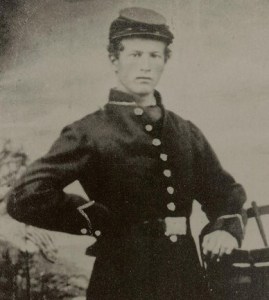
Drummer Boy William Williamson, 47th Pennsylvania Volunteers, Company A, circa 1863 (public domain).

* Williamson, William (Drummer, Company A): A farmer from Stockertown, Northampton County, William Williamson was documented by a mid-nineteenth-century federal census enumerator as an unmarried laborer who lived at the Easton home of Northampton County physician John Sandt, M.D.—an indication that William’s parents may have either died or were struggling so much financially during the 1850s and early 1860s that they had encouraged him to “leave the nest” and begin supporting himself, or had hired him out as an apprentice or indentured servant; like so many other young men from Northampton County, when President Abraham Lincoln issued his call for help to protect the nation’s capital from a likely invasion by Confederate States Army troops, he stepped forward, raised his hand, and stated the following:

I, William Williamson appointed a private in the Army of the United States, do solemnly swear, or affirm, that I will bear true allegiance to the United States of America, and that I will serve them honestly and faithfully against all their enemies or opposers whatsoever, and observe and obey the orders of the President of the United States, and the orders of the officers appointed over me, according to the rules and articles for the government of the Armies of the United States.

Later in life, William Williamson became a champion for an older woman who had been struggling to convince officials of the federal government that she was worthy enough to be awarded a U.S. Civil War Mother’s Pension, after her son had died in service to the nation as a Union Army soldier.

Post-war, William Williamson found work at a slate quarry, married, began a family in Belfast, Northampton County, and lived to witness the dawn of a new century. Following his death at the age of sixty in Plainfield Township on June 17, 1901, he was laid to rest at the Belfast Union Cemetery.


Sources:

  1. “A Badge from Admiral Dewey and Schuylkill County” (announcements of Timothy Grant Snyder’s service on Admiral Dewey’s flagship). Reading, Pennsylvania: Reading Eagle: October 3, 1899 and November 21, 1899.
  2. Baptismal, census, marriage, military, death, and burial records of the Snyder family. Pennsylvania, California, Florida, Louisiana, Massachusetts, Nevada, Ohio, etc.: Snyder Family Archives, 1650-present; and in Historic Pennsylvania Church and Town Records (baptismal, marriage, death and burial records of various churches across Pennsylvania). Philadelphia, Pennsylvania: Historical Society of Pennsylvania, 1776-1918.
  3. Bates, Samuel P. History of Pennsylvania Volunteers, 1861-5, vol. 1. Harrisburg, Pennsylvania: B. Singerly, State Printer, 1869.
  4. James Crownover, James Downs and Samuel Kern, et. al., in Camp Ford Prison Records. Tyler, Texas: The Smith County Historical Society, 1864.
  5. Civil War Muster Rolls, 1861-1866 (47th Pennsylvania Infantry). Harrisburg, Pennsylvania: Pennsylvania State Archives.
  6. Civil War Veterans’ Card File, 1861-1866 (47th Pennsylvania Infantry). Harrisburg, Pennsylvania: Pennsylvania State Archives.
  7. Registers of Deaths of Volunteers, U.S. Army; Admissions Ledgers, U.S. National Homes for Disabled Volunteer Soldiers; federal burial ledgers, and national cemetery interment control forms, 1861-1935. Washington, D.C.: U.S. Office of the Adjutant General (Record Group 94), U.S. National Archives and Records Administration.
  8. Schmidt, Lewis. A Civil War History of the 47th Regiment of Pennsylvania Veteran Volunteers. Allentown, Pennsylvania: Self-published, 1986.
  9. U.S. Census Records, 1830-1930. Washington, D.C.: U.S. National Archives and Records Administration.
  10. U.S. Civil War Pension Records, 1862-1935. Washington, D.C.: U.S. National Archives and Records Administration.
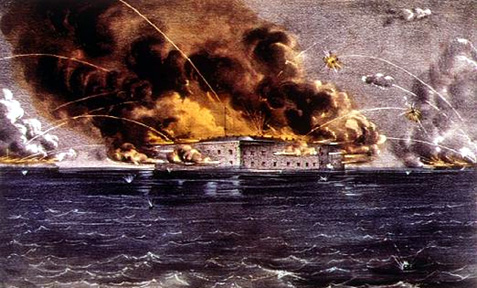
Catching Dogs and Hogs During the “Dog Days” of Summer (Charleston, South Carolina, 1865)

Meeting and Broad Streets near Line Street in Charleston, South Carolina, St. Michael’s Episcopal Church in the distance (U.S. Navy, circa 1863-1865, U.S. Library of Congress, public domain).

There is no disputing that the 47th Pennsylvania Volunteer Infantry had a long and storied history. Formed on August 5, 1861, the regiment not only served for the entire duration of the American Civil War; it continued its service to the nation for more than eight months after the end of that terrible conflict, becoming the only regiment from the Commonwealth of Pennsylvania to fight in the Union’s 1864 Red River Campaign across Louisiana before it participated in Major-General Philip Sheridan’s tide-turning Shenandoah Valley Campaign across Virginia during the fall of 1864 and helped defend Washington, D.C. in the wake of the assassination of President Abraham Lincoln in April 1865.

As those war years unfolded, newspapers from Easton to Pittsburgh published updates on the regiment’s travels, along with excerpts from letters penned by its baby-faced recruits and wizened warriors. One of the more unusual news items was reported during the 47th Pennsylvania’s final months of service—while it was stationed in the Deep South of the United States of America during the early days of Reconstruction, following the end of the American Civil War. Assigned to keep the peace in the first state that had seceded from the Union, members of the regiment lived and primarily worked in Charleston, South Carolina, where they performed a wide range of provost (civil governance)-related tasks, including the prevention and prosecution of crimes against civilians and the re-establishment of newspaper publishing operations.

The Line Street area of Charleston, South Carolina, where a public pound was established in July 1865 to improve animal control and public safety (Thomas Fetters, The Charleston & Hamburg, public domain; click to enlarge).

During the summer of 1865, that “to do” list was expanded to include the “policing” of the city’s furrier denizens. According to The Charleston Daily Courier, Sergeant George Nichols (alternate surname spelling: “Nicholas”) of the 47th Pennsylvania’s E Company was ordered to supervise the operations of a new animal pound that had been established on Line Street in Charleston, “between Coming and Percy streets”:

Headquarters,
Charleston, S.C. July 20, 1865
[GENERAL ORDERS, No. 64.]

I. A POUND IS HEREBY ESTABLISHED ON LINE-STREET, between Coming and Percy-streets, and Sergeant GEO. NICHOLAS, Co. “E,” 47th Pennsylvania Volunteers, temporarily detailed as pound-keeper.

II. Hereafter all cattle, sheep, goats, hogs, and dogs found running at large in the City South of Line-street, shall be taken to the public pound and there detained until the penalty prescribed by this Order, together with the charges of the pound-keeper and the actual expense of maintaining said animals while in the pound, shall be paid.

The penalties for each violation of this Order to be as follows:

Cattle . . . . . . . . . . . . . . . . . . . . . . . . . . .$5.00 per head
Sheep, goats, hogs and dogs . . . . . . . $1.00

The amount to be turned into the City Treasury.

III. All animals, except dogs, remaining in the public pound for the space of six (6) days without being claimed and the penalties and charges therefor [sic] paid, shall be sold at public sale by the pound-keeper. The proceeds to be turned over to the owner of such animals, after deducting the fines and pound fees.

All dogs remaining unclaimed for the space of one week shall be shot.

The Provost Marshal and Chief of Military Police are charged with the execution of this Order.

By order Bt. Brig. Gen. W. T. BENNETT, Com’dg Post.
CHARLES G. CHIPMAN,
Capt. 54th Massachusetts Volunteers, A. A. D. C.
OFFICIAL: THOS. F. LAMBERT, 2d Lieut. 47th Pa. Vols., A. A. D. C.
July 21

The Confederate Steamer, Governor Milton, that was captured by Companies E and K, 47th Pennsylvania Volunteers, October 1862 (Frank Leslie’s Illustrated Newspaper, public domain).

By the time that he had received this duty assignment in 1865, Sergeant Nichols had already amassed a distinguished service history. In early October 1862, while still just a corporal, he was placed in charge of the Governor Milton, a Confederate steamship that had been captured by a detachment of 47th Pennsylvania Volunteers as part of Union Army and Navy operations related to the capture of Saint John’s Bluff, Florida. He later preserved his memories of that day’s events with this diary entry:

“At 9 PM … October 7, discovered the steamer Gov. Milton in a small creek, 2 miles above Hawkinsville; boarded her in a small boat, and found that she had been run in there but a short time before, as her fires were not yet out. Her engineer and mate, then in charge, were asleep on board at the time of her capture. They informed us that owing to the weakness of the steamer’s boiler we found her where we did. We returned our prize the next day…..

I commanded one of the Small Boats that whent [sic] in after her. I was Boatman and gave orders when the headman jumped on Bord [sic] take the Painter with him. That however belongs to Wm. Adams or Jacob Kerkendall [sic]. It was So dark I could not tell witch [sic] Struck the deck first. But when I Struck the deck I demanded the Surrend [sic] of the Boat in the name of the U.S. after we had the boat an offercier [sic] off the Paul Jones, a Gun Boat was with us he ask me how Soon could I move her out in the Stream I said five minuts [sic]. So an Engineer one of coulered [sic] Men helped me. and I will Say right hear [sic] he learned Me More than I ever knowed about Engineering. Where we Started down the River we was one hundred and twenty five miles up the river. When we Stopped at Polatkey [Palatka] to get wood for the Steamer I whent [sic] out and Borrowed a half of a deer that hung up in a cut house and a bee hive for some honey for the Boys. I never forget the boys.’”

When the 47th Pennsylvania Volunteers made their way back to their respective troop transports near Saint John’s Bluff, the captured steamer was left behind to enable a group of Union soldiers to repair its boiler. Overseeing those repairs was none other than Corporal Nichols, who had been temporarily detached from the 47th Pennsylvania’s E Company. Adding to his diary, he wrote:

“So hear [sic] we are at Jacksonville and off we go down the river again, and the Captain Yard Said you are detailed on detached duty as Engineer well that beats hell. I told him I did not Enlist for an Engineer. well I cannot help it he said. I got orders for you to stay hear [sic]. When the Boys was gone about a week orders came for us to come to Beaufort, S. Carolina by the inland rout over the Museley Mash Rout. So I Borrowed a twelve pound gun with amanition [sic] for to Protect our Selves with. But I only used it once to clear Some cavelry [sic] away. We Passed fort Palask [sic]. But that was in our Possession and we got Back to Beaufort all right. and I whent [sic] up to See the Boys and Beged [sic] captain to get me Back in the company, But he could not make it go.”

After completing his detached duty, Corporal Nichols was reunited with his regiment at its duty station in Beaufort, South Carolina that same October of 1862. He then went on to serve with the regiment for the remainder of its service to the nation, finally mustering out with his fellow 47th Pennsylvania Veteran Volunteers in Charleston, South Carolina on Christmas Day of 1865. An engineer with the Delaware, Lackawanna & Western Railroad following the war, he died from pneumonia at the age of seventy at his home in Phillipsburg, New Jersey on March 2, 1908, and was laid to rest at the Phillipsburg Cemetery.


Sources:

  1. Bates, Samuel P. History of Pennsylvania Volunteers, 1861-5, vol. 1. Harrisburg, Pennsylvania: B. Singerly, State Printer, 1869.
  2. “General Orders, No. 64” (establishment and staffing of a public pound in Charleston, South Carolina). Charleston, South Carolina: The Charleston Daily Courier, 21 July 1865, p. 2.
  3. Schmidt, Lewis. A Civil War History of the 47th Regiment of Pennsylvania Veteran Volunteers. Allentown, Pennsylvania: Self-published, 1986.


Respect and Confidence: The Bond Between an Effective Commanding Officer and His Men

Unidentified Union Army artillerymen standing next to one of the fifteen-inch Rodman guns, which were installed on the third level of Fort Jefferson in the Dry Tortugas, Florida, beginning in 1862. These smoothbore Rodman weighed twenty-five tons, and was able to fire four hundred and fity-pound shells more than three miles (U.S. National Park Service, public domain).

July of 1863 was a very different experience for the 47th Pennsylvania Volunteers than it was for many other members of the Army of the United States. Divided roughly in half, in order to provide garrison coverage at two federal military installations in Florida that had been deemed critical to the federal government’s ability to turn the tide of the American Civil War in the Union’s favor, their regiment was not involved in the epic Battle of Gettysburg that unfolded over three days on the soil of their home state that month.

But their service to the nation still mattered. Split between Fort Taylor in Key West, Florida and Fort Jefferson in Florida’s remote Dry Tortugas, their collective job was not only to hamper efforts by the Confederate States of America to move troops and supplies throughout the Deep South, but also to prevent Great Britain and other European nations from interfering in the war.

As winter gave way to spring and summer, individual companies of the regiment continued to drill in the use of their respective fort artillery batteries and their own rifles and were also assigned to provost duties, functioning both as military police who ensured that soldiers behaved themselves and were punished when they did not, and as civil justice officials who upheld the nation’s rule of law to protect the local citizenry by arresting and prosecuting criminals, preventing the illegal sale of alcohol and other prohibited goods and carrying out the enforcement of multiple federal laws, including the nation’s newly adopted Lieber Code for the Armies of the United States and President Abraham Lincoln’s Emancipation Proclamation which freed the men, women and children who had been enslaved in their respective jurisdictions.

They were also still nursing their wounded bodies and souls as they came to terms with the deaths of their comrades and the emotional and physical injuries that they had sustained themselves during the bloody Battle of Pocotaligo, South Carolina on October 22, 1862.

Captain Henry Durant Woodruff, commanding officer of Company D, 47th Pennsylvania Volunteers (public domain).

It was in this spirit of reflection that a genuinely memorable event took place at Fort Taylor in Key West, Florida on July 16, 1863. That day, the members of the 47th Pennsylvania’s Company D “presented a magnificent sword, sash, and belt” to Captain Henry Durant Woodruff “at the US Barracks in Key West,” according to historian Lewis Schmidt.

The company was formed in front of their quarters at 8 AM, across the barracks ground from Company C, and Pvt. George W. Baltozer, a 24 year old teacher from Perry County, made the following remarks on behalf of the company:

‘The motives that assemble us on the present occasion are based on our mature confidence, the martial skill, the intrepid heroism, and the undaunted intrepidity of our leader in arms. It is manifestive of our consciousness of your noble ability to wield in the defence [sic] of the rights of our country, this glittering weapon, that we place it in your protective hand. Receive it, sir, as a token of our estimation of your promotion of our ease and comfort in quietude, and for your chivalrous spirit on the sanguine field, when the heavens glared with fire, and the earth trembled ‘neath cannons’ roar. May it never rest in its scabbard ’till rebellion is crushed and traitorism is banished from the land, and peace spread her white wings from the St. John’s to the sunny banks of the Rio Grande. May it ever bespeak in the heart of him that wields it, bravery, loyalty, heroism, and philanthropy. That it may ever benefit you in the hour of peril, and that you may undauntingly use it as opportunity is afforded, is the very ardent wish of your most obedient servants.'”

Also, according to Schmidt, Captain Woodruff responded to this touching tribute by presenting a surprisingly lengthy address to his men:

My companions in arms, your beautiful present is accepted with sincere satisfaction and heartfelt thanks. It affords the satisfaction that you still respect and have confidence in your commander, and he is thankful not only for the value of this noble gift, but for the rich token of your kind regard. And while I wear these arms and accoutrements, emblematical of my rank and office, may they never be worn unworthily, or the noble donors have cause to blush for the ungallant act of the wearer.

Two years have nearly elapsed since we have been associated as commander and commanded. Two years of privation and toil, yet your love for the cause and your ardor to serve your country has not abated.

When you entered upon this gigantic struggle, you were not prompted by large bribes or bounties, or intimidated by being forced in service by conscription. But inspired by a noble patriotism, you cheerfully volunteered for the longest period known to law.

Your conduct thus far has been in accordance with the honorable principles which caused you to volunteer. No discipline too strict, no privations too great, no toil too sore, but that your indomitable spirits have been able to accomplish, to undergo and overcome. And now allow me to say to you that I am proud of the noble men who compose this company; I am proud of your generous and gallant conduct; I am proud of your association; I am proud of the honor you have this day conferred upon your Captain.

In looking forward, I have no fears for you in the future, whatever you may be called on to do—in garrison—in the tented field, or on the sanguined plain, it will be bravely—it will be well done. Then until rebels and traitors shall become extinct, or have grounded their arms, and acknowledged the supremacy of the government and the law, let this our motto be: Give us death or give us liberty.

Later that year, multiple members of Company D would opt to re-enlist to finish the fight, serving valiantly until the leaders of the Rebellion finally surrendered in April 1865—and beyond—into the early months of the Reconstruction Era, until their regiment was finally mustered out at Charleston, South Carolina on Christmas Day in 1865.


Sources:

  1. Bates, Samuel P. History of Pennsylvania Volunteers, 1861-5, vol. 1. Harrisburg, Pennsylvania: B. Singerly, State Printer, 1869.
  2. Carnahan, Burrus. Global Impact: The Lincoln Administration and the Development of International Law.” Washington, D.C.: President Lincoln’s Cottage, May 9, 2016.
  3. Florida’s Role in the Civil War: ‘Supplier of the Confederacy.’” Tampa, Florida: Florida Center for Instructional Technology, College of Education, University of South Florida, retrieved online January 15, 2020.
  4. General Orders 100: The Lieber Code,” in “The Avalon Project: Documents in Law, History and Diplomacy.” New Haven, Connecticut: Lillian Goldman Law Library, Yale Law School, Yale University, retrieved online April 3, 2024.
  5. Gesley, Jenny. The ‘Lieber Code’—the First Modern Codification of the Laws of War,” in “In Custodia Legis: Law Librarians of Congress.” Washington, D.C.: U.S. Library of Congress, retrieved online April 3, 2024.
  6. History: Crops (Historic Florida Barge Canal Trail).” Historical Marker Database, retrieved online December 30, 2023.
  7. Lieber, Francis. Instructions for the Government of Armies of the United States in the Field. Washington, D.C.: Government Printing Office, 1898.
  8. Owsley, Frank Lawrence, and Harriet Fason Chappell. King Cotton Diplomacy: Foreign Relations of the Confederate States of America. Chicago, Illinois: University of Chicago Press, 1959.
  9. Preventing Diplomatic Recognition of the Confederacy, 1861–1865,” and The Alabama Claims, 1862–1872,” in “Milestones: 1861–1865.” Washington, D.C.: Office of the Historian, Foreign Service Institute, United States Department of State, retrieved online December 30, 2023.
  10. Schmidt, Lewis. A Civil War History of the 47th Regiment of Pennsylvania Veteran Volunteers. Allentown, Pennsylvania: Self-published, 1986.
  11. Wharton, Henry D. Letters from the Sunbury Guards. Sunbury, Pennsylvania, Sunbury American, 1861-1866.


The Red River Campaign: How It Began, Progressed and Ended for the 47th Pennsylvania Volunteer Infantry (Louisiana, Late February to Early July 1864)

Second State Colors, 47th Pennsylvania Veteran Volunteers (presented to the regiment 7 March 1865).

Seven battle names embossed on a battle flag. Three documented a series of seemingly minor military engagements during one oft-maligned military campaign of the American Civil War.

Known by military scholars today as the 1864 Red River Campaign, those “minor” engagements ensured that the 47th Pennsylvania Volunteers would be known for all time as history makers—members of the only regiment from the Commonwealth of Pennsylvania to take part as the Union’s Army of the Gulf marched through Louisiana between late February and mid-July 1864, enabling the United States government to prevent the war and the brutal practice of chattel slavery from spreading any further west.

As for how inconsequential those “minor” engagements of the 1864 Red River Campaign were? They left such indelible marks on the 47th Pennsylvania Volunteer Infantry that its senior officers chose to emboss the majority of that campaign’s battle names on the second battle flag that was carried by the regiment as it defended the nation in the wake of President Abraham Lincoln’s assassination in April 1865, and as the regiment marched triumphantly through the streets of Washington, D.C. during the Union’s Grand Review of the Armies in late May of that same year.

How It Began

The 47th Pennsylvania Volunteers’ participation in the 1864 Red River Campaign across Louisiana began with a series of general and special orders and other communications that were issued by senior military officers of the United States Army:

  • SPECIAL ORDERS, No. 39
    HEADQUARTERS, DEPARTMENT OF THE GULF, New Orleans, Louisiana, February 13, 1864.

12. First. The Second Regiment U.S. Colored Troops will be relieved from duty at Ship Island and proceed without delay to Key West, Fla., where it will be reported for duty to Brig. Gen. D. P. Woodbury. Second. On the arrival of the Second U.S. Colored Troops at Key West, the battalion of Forty-seventh Pennsylvania Volunteers stationed at that point will be relieved from duty in the District of Key West and Tortugas, and will proceed without delay to Franklin, La., where it will be reported for duty to Maj. Gen. W. B. Franklin, commanding Nineteenth Army Corps. Third. On the arrival of the First Battalion, Forty-seventh Pennsylvania, at Franklin, the One hundred and tenth New York Volunteers will proceed to Fort Jefferson, Dry Tortugas, and relieve the battalion of the Forty-seventh Pennsylvania now in garrison there. Fourth. On being so relieved, the battalion of the Forty-seventh Pennsylvania now stationed at Fort Jefferson will proceed to Franklin, La., and report for duty at the headquarters of the regiment. The quartermaster’s department will immediately furnish the necessary transportation.

By command of Major-General Banks:

RICHD. B. IRWIN,
Assistant Adjutant-General.

  • SPECIAL ORDERS, No. 48
    H
    EADQUARTERS 19th ARMY CORPS AND U.S. FORCES, Franklin, Louisiana, February 18, 1864.

5. In pursuance of Special Orders No. 41, extract 3, current series, headquarters Department of the Gulf, the following-named regiments assigned to the First Division, Nineteenth Army Corps, Brig. Gen. W. H. Emory commanding, are hereby assigned to brigades as follows, to take effect February 20, 1864:First Brigade, to be commanded by Brig. Gen. William Dwight: Fifteenth Maine, Thirtieth Massachusetts, One hundred and fourteenth New York, One hundred and seventy-third New York, One hundred and sixty-first New York.Second Brigade, to be commanded by Brig. Gen. J. W. McMillan: Twenty-sixth Massachusetts (temporary), Thirteenth Maine, Twelfth Connecticut, Eighth Vermont, One hundred and sixtieth New York, Forty-seventh Pennsylvania.Third Brigade, to be commanded by the senior colonel: Fourteenth Maine, One hundred and sixty-second New York, One hundred and sixty-fifth New York, One hundred and sixteenth New York, Thirtieth Maine.

Capt. Duncan S. Walker, assistant adjutant-general, U.S. Volunteers, is assigned to duty as assistant adjutant-general, First Division, and will report to Brigadier-General Emory.

Capt. Oliver Matthews, assistant adjutant-general, U.S. Volunteers, is assigned to duty as assistant adjutant-general, First Brigade, First Division, and will report to Brig. Gen. William Dwight.

The following-named batteries are assigned to the First Division: Battery A, First U.S. Artillery; Battery L, First U.S. Artillery; Fourth Massachusetts Battery, Sixth Massachusetts Battery, Twenty-fifth New York Battery.

By order of Major-General Franklin:

WICKHAM HOFFMAN,
Assistant Adjutant-General.

  • HEADQUARTERS, DEPARTMENT OF THE GULF, New Orleans, Louisiana, February 19, 1864.
    Major-General Franklin, Commanding, Nineteenth Corps, Franklin:

GENERAL: Instead of awaiting the arrival of the battalion of the Forty-seventh Pennsylvania Volunteers, as heretofore ordered, the One hundred and tenth New York Volunteers will be immediately relieved from duty with the First Division, Nineteenth Army Corps, and will proceed without delay to Algiers, where it will take steam transportation for Key West, Fla.

By command of Major-General Banks:

RICHD. B. IRWIN,
Assistant-Adjutant General.

How It Progressed

Casualties began to be incurred by the 47th Pennsylvania even before members of the regiment stepped off of their respective troop transports and onto Louisiana soil in early March 1864. Researchers for 47th Pennsylvania Volunteers: One Civil War Regiment’s Story believe that the first Red River casualty was actually Private Frederick Koehler, who reportedly drowned after falling overboard from his transport, just as it was entering the harbor near Algiers, Louisiana.

From that moment on, the regiment’s casualty rate climbed as the 47th Pennsylvania Volunteers marched, built, dug, and fought their way across unfamiliar, difficult terrain, under conditions for which their northern bodies and immune systems were ill prepared. Two of the campaign’s engagements—the Battle of Sabine Cross Roads/Mansfield on April 8, 1864, and the Battle of Pleasant Hill on April 9—were among the most brutal and sanguinary fighting that they waged during the entire war.

Along the way, the 47th Pennsylvanians helped to free more Black men, women and children from the plantations where they had long been enslaved, with five of the men they met ultimately choosing to enlist with the 47th Pennsylvania Volunteer Infantry, further integrating a regiment that had already begun enrolling Black soldiers as far back as the fall of 1862.

How It Ended

Union Army base at Morganza Bend, Louisiana, circa 1863-1865 (U.S. Library of Congress, public domain).

Their final combat engagement—the Battle of Mansura—was fought on May 16, 1864. Afterward, they marched for Morganza, Louisiana. Encamped there for most of June, they finally made their way back to New Orleans by the end of that month—two campaign-ending duty stations that were not luxurious by any standards now, or then, but were far more comfortable than what they had endured throughout their long and difficult spring.

Those final duty stations were still not completely safe for them, however; the grim reaper continued to scythe men left and right as typhoid, mysterious fevers, dysentery, and chronic diarrhea ravaged the regiment during the unbearably hot, humid weeks of June and early July.

As a result, the regiment lost as many or more of its members to disease than it did to the rifle and cannon fire that they had so recently dodged. And the war was still not over.

When the Fourth of July arrived for the weary warriors, the 47th Pennsylvania Volunteers were busy packing their belongings, having just received new orders to return to the Eastern Theater of battle. By mid-July, roughly sixty percent of the regiment’s members were fighting for their lives yet again—this time in the Battle of Cool Spring, near Snicker’s Gap, Virginia.

As that was happening, multiple members of the regiment were coming to grips with the fact that they had been left behind to recuperate from battle wounds or diseases they had contracted while in service to the nation. Among those convalescents were eighteen men who subsequently died at Union hospitals or Confederate prison camps long after their comrades had reached the East Coast. Two of those men were later documented as among the five total who died in Baton Rouge, with ten men among the total of thirty-three who passed away in New Orleans. Seven others died in Natchez, Mississippi, and at least one of the men left behind had been one of the seventeen POWs held captive at Camp Ford, the largest Confederate prison camp west of the Mississippi River.

Stilled Voices

The phrase, “Dum Tacent Clamant” (While they are silent, they cry aloud”), is inscribed on the Grand Army of the Republic monument at the Chalmette National Cemetery in St. Bernard Parish, Louisiana, where multiple members of the 47th Pennsylvania Volunteers remain at rest (G.A.R. Monument, Chalmette National Cemetery, circa 1910, U.S. Library of Congress, public domain).

More than seventy of the 47th Pennsylvania’s disease and battle-related casualties remain at rest in marked or unmarked national cemetery graves in Louisiana and Mississippi. Other unsung heroes lie forgotten in graves yet to be identified, part of the legion of American soldiers “known but to God.”

Albert, George Washington: Corporal, Company H; fell ill during the Red River Campaign; was transported to New Orleans, where he was confined to a Union Army hospital; discharged on a surgeon’s certificate of disability on April 18, 1864, he died aboard the U.S. Steamer Yazoo while being transported home to Pennsylvania to convalesce; buried at sea, a cenotaph was created for him at Ludolph’s Cemetery in Elliottsburg, Pennsylvania;

Andrew, Michael: Private, Company A; fell ill with chronic diarrhea sometime during the Red River Campaign; was transported to New Orleans, where he was confined to a Union Army general hospital; died there on July 15 or 18, 1864; was interred at the Monument Cemetery in New Orleans (now the Chalmette National Cemetery);

Barry, William: Private, Company H; killed in action during the Battle of Sabine Cross Roads/Mansfield, Louisiana on April 8, 1864; his burial location remains unidentified;

Beidleman, Jacob (alternate surnames: Beiderman, Biedleman): Private, Company G; fell ill with chronic diarrhea during the Red River Campaign; was confined to the Union’s hospital ship, the USS Laurel Hill, and transported to Natchez, Mississippi, where he was confined to Union Army’s Natchez General hospital; died there on July 3, 1864; may have been interred at the Natchez National Cemetery in a grave that remains unidentified;

Bellis (alternate spelling: Bellus), Amandus: Private, Company A; fell ill during the Red River Campaign, was confined to the Union’s hospital ship, the USS Laurel Hill, while it was docked near Morganza, Louisiana; subsequently transported to Natchez, Mississippi, he died en route, while aboard that ship, on June 30, 1864; was possibly buried at sea or interred in an unmarked grave at the Natchez National Cemetery that remains unidentified;

Berlin, Elias: Private, Company A; fell ill in Florida, or during the opening days of the Red River Campaign; died in Florida, or aboard ship while en route to Louisiana, or in Louisiana on March 28, 1864; was interred, or a cenotaph was created for him, at the Zion UCC Stone Church Cemetery in Kreidersville, Pennsylvania;

Bettz, Godfrey (alternate spelling: Betz): Private, Company F; fell ill with chronic diarrhea sometime during the Red River Campaign; was transported to New Orleans, where he was confined to a Union Army general hospital; died there on May 8, 1864; was interred in section 51, grave no. 3968 at the Monument Cemetery in New Orleans (now the Chalmette National Cemetery);

Bohan, George (alternate spellings: Bohan, Bohn, Bollan, Bolian): Private, Company A; fell ill with chronic diarrhea sometime during the Red River Campaign; was transported to New Orleans, where he was confined to a Union Army general hospital; died there on June 27 or 28, 1864; was interred in section 67, grave no. 5358 at the Monument Cemetery in New Orleans (now the Chalmette National Cemetery);

Brader, Josiah (alternate spelling: Braden): Private, Company B; fell ill with typhoid fever sometime during the Red River Campaign; was transported to New Orleans, where he was confined to the University Hospital; died there on July 9, 1864; was interred in section 66, grave no. 5279 at the Monument Cemetery in New Orleans (now the Chalmette National Cemetery);

Brooks, George W.: Private, Company E; fell ill with chronic diarrhea sometime during the Red River Campaign; was transported to New Orleans, where he was confined to a Union Army hospital; died there on August 12, 1864; was interred in section 67, grave no. 5383 at the Monument Cemetery (now the Chalmette National Cemetery);

Clewell, Jr., Joseph: Private, Company G; fell ill with chronic diarrhea after being captured by Confederate troops during the Battle of Sabine Crossroads/Mansfield on April 8, 1864 or the Battle of Pleasant Hill on April 9, or during one of the regiment’s subsequent Red River Campaign engagements; was subsequently confined to the Confederate States Army hospital in Shreveport, Louisiana sometime in May or early June and held there as a prisoner of war (POW) until his death there on June 18, 1864; possibly interred in one of the unmarked graves in Shreveport’s Greenwood Cemetery, according to Joe Slattery, Genealogy Library Specialist at the Shreve Memorial Library in Shreveport; if not, his remains may have been exhumed and reinterred in an unmarked grave at the Alexandria National Cemetery in Pineville, Louisiana, according to historian Lewis Schmidt;

Crader, James: Sergeant, Company G; fell ill sometime during the Red River Campaign; was confined to the Union’s hospital ship, the USS Laurel Hill, and transported to Natchez, Mississippi, where he was confined to the Union’s General Hospital in Natchez; died there on July 9, 1864; may have been interred at the Natchez National Cemetery;

Davenport, Valentine: Private, Company H; fell ill during the opening days of the Red River Campaign; was confined to a Union hospital in New Orleans and then discharged on a surgeon’s certificate of disability on March 28, 1864; died in New Orleans on May 4, 1864; was buried at a national cemetery in the State of New York, according to the U.S. Army Department of the East’s Roll of Honor: Names of Soldiers Who Died in Defence of the American Union, Vol. X: “Soldiers Buried in the Department of the East: New York,” p. 15 (Washington, D.C.: Government Printing Office, 1867);

Dech, Alpheus (alternate presentations of name: Alfred Dech, Alpheus Deck): Private, Company G; fell ill with chronic diarrhea sometime during the Red River Campaign; was transported to New Orleans, where he was confined to the U.S. Marine Hospital; died there on June 3, 1864; was interred in grave no. 4028 at the Monument Cemetery in New Orleans (now the Chalmette National Cemetery);

Dumm, William F. (alternate spellings: Drum or Drumm): Private, Company H; killed in action during the Battle of Pleasant Hill, Louisiana on April 9, 1864; his burial location remains unidentified;

Evans, John: Private, Company H; fell ill with chronic diarrhea sometime during the Red River Campaign; was transported to New Orleans, where he was confined to a Union Army hospital; died there on June 20, 1864; was interred in section 51, grave no. 4042 at the Monument Cemetery in New Orleans (now the Chalmette National Cemetery);

Fetzer, Owen: Private, Company I; fell ill with chronic diarrhea sometime during the Red River Campaign; was transported to New Orleans, where he was hospitalized at the Union’s St. Louis General Hospital; died there on April 19, 1864; his burial location remains unidentified;

Fink, Edward: Private, Company B; declared missing in action (MIA) after the Battle of Pleasant Hill, Louisiana on April 9, 1864; was later declared as killed in action (KIA), having been killed by gunshot during the battle; his burial location remains unidentified;

Frack, William: Corporal, Company I; declared missing in action and “supposed dead” following the Battle of Pleasant Hill, Louisiana on April 9, 1864; was ultimately declared as killed in action; his burial location remains unidentified;

Gerrett, Mathias (alternate spelling: Garrett): Private, Company K; fell ill with typhoid fever sometime during the Red River Campaign; was transported to New Orleans, where he was confined to the Union Army’s Barracks Hospital; died there on May 22, 1864; was interred in section 51, grave no. 3995 at the Monument Cemetery in New Orleans (now the Chalmette National Cemetery);

Haas, Jeremiah: Private, Company C; killed in action during the Battle of Sabine Cross Roads/Mansfield, Louisiana on April 8, 1864; his burial location remains unidentified;

Hagelgans, Nicholas: Private, Company K; killed in action during the Battle of Pleasant Hill, Louisiana on April 9, 1864; his burial location remains unidentified;

Hahn, Richard: Private, Company E; killed in action by a musket ball during the Battle of Pleasant Hill, Louisiana on April 9, 1864; his burial location remains unidentified;

Hangen, Washington H. R.: First Lieutenant and Regimental Adjutant; officially discharged from the U.S. Army and 47th Pennsylvania Volunteer Infantry during the summer of 1864; remained in Louisiana, where he worked for the U.S. Bureau of Refugees, Freedmen, and Abandoned Lands (the “Freedmen’s Bureau”) in St. Tammany Parish and Washington Parish before becoming a surveyor for the State of Louisiana and the U.S. Office of the Surveyor General; died in Abita Springs, St. Tammany Parish on April 23, 1895; was likely interred at the Madisonville Cemetery in St. Tammany Parish, where his second wife had previously been buried;

Hart, J. S. (alternate spelling: Harte): Private, Company C; fell ill with chronic diarrhea sometime during the Red River Campaign; was transported to New Orleans, where he was confined to the Marine Hospital; died there on August 5, 1864; was interred in section 49, grave no. 3869 at the Monument Cemetery in New Orleans (now the Chalmette National Cemetery);

Hartshorn, John (alternate spelling: Hartshorne): Private, Company H; initially listed as missing in action following the Battle of Pleasant Hill, Louisiana on April 9, 1864, Union Army officials determined he had been captured by Confederate troops and marched one hundred and twenty-five miles to Camp Ford near Tyler, Texas, where he was held captive as a prisoner of war (POW) until he was released during a prisoner exchange on July 22, 1864; subsequently died at a Union Army hospital in New Orleans, Louisiana on August 8, 1864; his burial location remains unidentified;

Hawk, David C. (alternate spellings: Hank, Hauk): Private, Company I; fell ill with chronic diarrhea sometime during the Red River Campaign; was transported to New Orleans, where he was confined to a U.S. Army general hospital; died there on July 28, 1864 (alternate death date: July 28, 1865); was described on regimental muster rolls as “absent sick left in U.S. General Hospital of New Orleans since 9-20-64”; was interred in section 49, grave no. 3849 at the Monument Cemetery in New Orleans (now the Chalmette National Cemetery);

Helfrich, John Gross: Sergeant, Company C; fell ill with dysentery sometime during the Red River Campaign; was transported to New Orleans, where he was confined to Charity Hospital; died there on August 5, 1864; was interred in section 49, grave no. 3867 of the Monument Cemetery in New Orleans (now the Chalmette National Cemetery);

Heller, Jonathan: Private, Company G; fell ill with dysentery sometime during the Red River Campaign; was transported to New Orleans, where he was confined to Charity Hospital; died there on June 7, 1864; was interred in square 13, grave no. 1 of the Monument Cemetery in New Orleans (now the Chalmette National Cemetery);

Herbert, Jacob: Private, Company A; fell ill or was injured sometime during the Red River Campaign; was transported to Natchez, Mississippi, where he was confined to a Union Army hospital; died in Natchez on June 30, 1864; his burial location remains unidentified;

Herman, William: Private, Company F; fell ill with chronic diarrhea during the Red River Campaign; was confined to the Union Army hospital ship, the USS Laurel Hill, and transported to Natchez, Mississippi, where he was confined to the Union’s Natchez General Hospital; died there on July 23 or 24, 1864 (his wife’s affidavit in her widow’s pension application notes the date as 23 July; the U.S. Army’s death ledger indicates the date of death was 24 July 1864); may have been interred at the Natchez National Cemetery in Natchez, Mississippi;

Hettrick, Levinus (alternate presentations of name: Levenas Hedrick, Gevinus Hettrick, Levinas Hetrick, Sevinas Hettrick): Private, Company B; drowned in the Mississippi River on June 27, 1864, while serving with the 47th Pennsylvania Volunteers at Morganza, Louisiana, following the 47th’s participation in the Red River Campaign; his burial location remains unidentified;

Hoffman, Nicholas: Private, Company A; fell ill with typhoid fever sometime during the Red River Campaign; was confined to the Union’s hospital ship, the USS Laurel Hill, while it was docked near Morganza, Louisiana, and was transported to Natchez, Mississippi; died aboard that ship on June 30, 1864, while it was in the vicinity of Natchez; per an affidavit filed on June 19, 1865 by Sergeant Charles Small and Private Joseph A. Rogers of the 47th Pennsylvania Volunteer Infantry, Hoffman was buried at the Natchez National Cemetery in Mississippi;

Holsheiser, Lawrence (alternate spellings of surname: Holsheiser, Holyhauser, Hultzheizer, Hultzheizor): Private, Company F; fell ill with chronic diarrhea during the Red River Campaign; was transported to New Orleans, where he was confined to the Barracks Hospital; died there on May 1, 1864; was interred at the Monument Cemetery (now the Chalmette National Cemetery);

Hower, Phillip (alternate spelling: Philip): Private, Company G; contracted Variola (smallpox) during the Red River Campaign; was transported to New Orleans, where he was confined to the Union’s Barracks Hospital; died there on April 21, 1864; was interred at the Monument Cemetery in New Orleans (now the Chalmette National Cemetery);

Keiser, Uriah: Private, Unassigned Men; fell ill during the Red River Campaign; was transported to New Orleans, where he was confined to the Union’s Barracks Hospital; died there in July 1864; was interred at the Monument Cemetery in section 57, grave no.: 4477 (now the Chalmette National Cemetery);

Kennedy, James: Private, Company C; sustained gunshot fracture of the arm and gunshot wound to his side during the Battle of Pleasant Hill, Louisiana on April 9, 1864; was transported to the Union Army’s St. James Hospital in New Orleans, Louisiana, where he died from his battle wounds on April 27, 1864; his burial location remains unidentified;

Kern, Samuel M.: Private, Company D; wounded in action and captured during the Battle of Pleasant Hill, Louisiana on April 9, 1864; was marched or transported to Camp Ford near Tyler, Texas, where he was held in captivity as a prisoner of war (POW) until he died on June 12, 1864; his burial location remains unidentified;

Knauss, Elwin (alternate spellings: Knauss, Kneuss, Knouse; Ellwin, Elvin): Private, Company I; fell ill while during the Red River Campaign; was transported to New Orleans, where he was confined to the U.S. Marine Hospital; died there on August 3, 1864 (alternate death date: June 30, 1864); was interred in grave site 20-55 at the Monument Cemetery in New Orleans (now the Chalmette National Cemetery);

Koehler, Frederick (alternate spellings: Koehler, Kohler, Köhler): Private, Company K; was likely the regiment’s first casualty during the Red River Campaign; while sitting in one of the side hatches of the steamship transporting the 47th Pennsylvania to Louisiana, he fell overboard from the ship as it was rounding into port at Algiers and drowned; members of the regiment reported seeing his body “come up astern of the boat,” and that someone had retrieved his cap, which carried the label “F. K.” on its vizier; researchers have not been able to determine whether or not this soldier was buried at sea, at a cemetery in Louisiana, or if his body was returned home for burial in Pennsylvania;

Kramer, George: Private, Company C; fell ill with chronic diarrhea during the Red River Campaign; was likely confined to one of the Union Army’s general hospitals in Baton Rouge or New Orleans, Louisiana, or to a Union general hospital in Natchez, Mississippi; was placed aboard the Union’s hospital ship, the SS Mississippi; died aboard that ship on August 27, 1864 and was likely buried at sea or possibly at a still-unidentified cemetery in Louisiana or Mississippi; his name was included on the roster of soldiers listed on the Company C, 47th Pennsylvania Volunteers’ Soldiers Monument that was erected at the Sunbury Cemetery in Sunbury, Pennsylvania;

Lehr, Charles (alternate spelling: Lear): Private, Company A; fell ill with chronic diarrhea during the Red River Campaign; was confined to the Union Army’s hospital ship, the USS Laurel Hill, and was transported to the Union’s Natchez General Hospital in Natchez, Mississippi; died there on July 22, 1864; may have been interred in an unmarked/unknown grave at the Natchez National Cemetery;

Long, Solomon: Private, Company K; Contracted typhoid fever during the Red River Campaign; was transported to New Orleans, where he was confined to the U.S. Marine Hospital; died there on August 21, 1864; was interred in section 60, grave no. 4728 of the Monument Cemetery in New Orleans (now the Chalmette National Cemetery);

Matter/Madder, Jacob: Private, Company K; initially reported as missing in action following the Battle of Pleasant Hill, Louisiana on April 9, 1864, his status was subsequently updated to “died of wounds” from that battle; his burial location remains unidentified;

Mayes, William (alternate spelling: Hayes, Mays): Private, Company D; fell ill during the opening days of the Red River Campaign; was transported to New Orleans, where he was confined to a Union Army general hospital; died there on March 30, 1864; was interred in grave no. 3945 of the Monument Cemetery in New Orleans (now the Chalmette National Cemetery);

Miller, Jonathan: Private, Company A; cause and date of death have not yet been determined (soldier was identified by his military headstone); was interred in section 59, grave no. 4629 at the Monument Cemetery in New Orleans (now the Chalmette National Cemetery);

Missmer, Benjamin (alternate spellings: Messner, Missimer, Missmer): Private, Company H; fell ill with chronic diarrhea during the Red River Campaign; was transported to New Orleans, where he was confined to the Union’s St. Louis General Hospital; died there on August 7, 1864; was interred in section 49, grave no. 3874 at the Monument Cemetery in New Orleans (now the Chalmette National Cemetery;

Orris, Nicholas: Private, Co. H; killed in action during the Battle of Pleasant Hill, Louisiana on April 9, 1864; his burial location remains unidentified;

Osterstock, Jacob: Private, Company A; fell ill during the Red River Campaign; was transported to a Union Army hospital in Baton Rouge; died there on June 30, 1864; his burial location remains unidentified;

Powell, Solomon: Private, Company D; may have been wounded in action; was captured during the Battle of Pleasant Hill, Louisiana on April 9, 1864; died from his battle wounds at Pleasant Hill, Louisiana, either on the same day as the battle, or on June 7, 1864, while being held by Confederate troops as a prisoner of war (POW); his burial location remains unidentified; per historian Lewis Schmidt, “Privates Powell and Wantz were probably buried in a cemetery at Pleasant Hill, ‘at the rear of the brick building used for a hospital,’ and after the war reinterred at Alexandria National Cemetery at Pineville, Louisiana in unknown graves”;

Resch, Charles (alternate spelling: Resk): Private, Company K; fell ill during the Red River Campaign; was transported to Baton Rouge and confined to a Union Army general hospital; died there on August 18, 1864; was interred in section 11, grave no. 629 at the Baton Rouge National Cemetery;

Ridgeway, John (alternate spelling: Ridgway): Private, Company H; fell ill during the Red River Campaign; was transported to New Orleans and confined to a Union Army general hospital; died there on July 30, 1864; was interred in section 57, grave no.4475 at the Monument Cemetery in New Orleans (now the Chalmette National Cemetery);

Sanders, Francis (alternate spellings: Xander, Xandres): Corporal, Company B; wounded in action during the Battle of Sabine Cross Roads/Mansfield, Louisiana on April 8, 1864; died shortly after being carried to the rear by his brother; his death was documented in the obituary of his widow, Henrietta Susan (Balliet) Sanders, in the May 15, 1916 edition of Allentown’s Morning Call newspaper, which reported that Francis Sanders “enlisted in the Forty-seventh regiment and saw service for two enlistments until the battle of Sabine Cross Roads, La., where he was wounded and carried to the rear by his brother. From that day to this not a word was heard from him and the supposition was that he died from his wounds” and was likely interred in an unknown, unmarked grave; his burial location remains unidentified;

Schaffer, Reuben Moyer (alternate spellings: Schaeffer, Scheaffer, Shaffer): Private, Company H; reported as wounded in action during either the Battle of Sabine Cross Roads/Mansfield on April 8, 1864 or the Battle of Pleasant Hill on April 9; was subsequently marched with his regiment to Grand Ecore; was reported in U.S. Army records to have died at Grand Ecore on April 22, 1864; however, he actually died during the forty-five-mile march toward Cloutierville, according to a letter subsequently written by his commanding officer, Captain James Kacy, to First Lieutenant William Wallace Geety on May 29; was likely interred in an unknown, unmarked grave; his burial location remains unidentified;

Schlu, Christian (alternate spellings: Schla, Schlea): Private, Company G; fell ill with chronic diarrhea during the Red River Campaign; was transported to New Orleans, where he was confined to the U.S. Marine Hospital; died there on June 2, 1864; was interred in section 58, grave no.: 4577 at the Monument Cemetery in New Orleans (now the Chalmette National Cemetery);

Schweitzer, William (alternate spelling: Sweitzer): Corporal, Company A; fell ill during the Red River Campaign; was taken to the Union’s hospital ship, the USS Laurel Hill, which was docked near Morganza, Louisiana, and was hospitalized aboard that ship on June 20, 1864; diagnosed with typhoid fever, he died aboard ship four days later, on June 24, 1864 (alternate death date: June 23, 1864); his burial location remains unidentified;

Schwenk, Charles M.: Private, Company B; fell ill during the Red River Campaign; was transported to Baton Rouge, where he was confined to a Union general hospital; died there on June 20, 1864; was interred in section 8, grave no. 476 at the Baton Rouge National Cemetery;

Smith, Frederick: Private, Co. D; may have been wounded in action during the Battle of Pleasant Hill, Louisiana on April 9, 1864; was captured by Confederate troops during that battle and marched one hundred and twenty-five miles to Camp Ford near Tyler, Texas, where he was held captive as a prisoner of war (POW) until his death on May 4, 1864; his burial location remains unidentified, but may still be located on the grounds of the Camp Ford Historic Park;

Smith, George H.: Private, Company H; fell ill with chronic diarrhea during the Red River Campaign; was confined to the Union’s hospital ship, the USS Laurel Hill, and transported to Natchez, Mississippi, where he was hospitalized at the Union’s Natchez General Hospital; died there on July 9, 1864; was interred at the Natchez National Cemetery;

Smith, Henry: Private, Company G; fell ill with chronic diarrhea during the Red River Campaign; was transported to New Orleans, where he was confined to the U.S. Marine Hospital; died there on May 30, 1864; was interred in section 51, grave no. 4522 at the Monument Cemetery in New Orleans (now the Chalmette National Cemetery);

Smith, Joseph: Private, Company B; fell ill during the Red River Campaign; was transported to New Orleans, where he was confined to the Union’s Barracks General Hospital; died there on September 2, 1864; was interred in section 60, grave no. 4768 at the Monument Cemetery in New Orleans (now the Chalmette National Cemetery);

Snyder, Jonas: Private, Company I; fell ill and developed consumption during the Red River Campaign across Louisiana; died aboard the U.S. Steamer McClellan on July 8, 1864 while en route to Fortress Monroe, Virginia with his regiment; was buried at sea during a formal military burial ceremony, according to Company I First Lieutenant Levi Stuber’s affidavit that was filed on behalf of Jonas Snyder’s widow for her U.S. Civil War Widow’s Pension application;

Sterner, John C.: Private, Company C; killed in action during the Battle of Pleasant Hill, Louisiana on April 9, 1864; was interred, or a cenotaph was erected on his behalf, at Lantz’s Emmanuel Cemetery in Sunbury, Pennsylvania;

Stick, Francis: Private, Company I; fell ill with chronic diarrhea during the Red River Campaign; was transported to New Orleans, where he was confined to the University General Hospital; died there on June 10, 1864; was interred in section 52, grave no. 4065 at the Monument Cemetery in New Orleans (now the Chalmette National Cemetery);

Stocker, Josiah Simon: Private Company A; fell ill with dysentery during the Red River Campaign; was transported to New Orleans, where he was confined to the University General Hospital; died there on May 17, 1864; was interred in section 7, grave no. 368 at the Baton Rouge National Cemetery;

Straehley, Jeremiah (alternate spellings: Strackley, Strahle, Strahley): Private, Company G; fell ill with chronic diarrhea during the Red River Campaign; was transported to New Orleans, where he was confined to a Union Army general hospital; died there on May 14, 1864; his burial location remains unidentified;

Swoyer, Alfred P.: Second Lieutenant, Company K; was killed instantly after being struck by a minié ball in the right temple during the Battle of Sabine Cross Roads/Mansfield, Louisiana on April 8, 1884; his burial location remains unidentified;

Trabold, Jacob: Private, Company A; fell ill with dysentery during the Red River Campaign; died from disease-related complications at Morganza, Louisiana on June 27, 1864; his burial location remains unidentified;

Wagner, Samuel: Private, Company D; was wounded in action during the Battle of Pleasant Hill, Louisiana on April 9, 1864; was lost at sea while being transported for medical care aboard the USS Pocahontas when that steam transport foundered off of Cape May, New Jersey, after colliding with the City of Bath on June 1, 1864; his body was never recovered;

Walbert, William S. (alternate spelling: Walberd): Private, Company K; fell ill with chronic diarrhea during the Red River Campaign; was transported to New Orleans, where he was hospitalized at the U.S. Marine Hospital; died there on April 30, 1864; his burial location remains unidentified;

Walters, James: Private, Unassigned Men; fell ill during the Red River Campaign; died on June 23, 1864 (per historian Lewis Schmidt); his death and burial locations remain unidentified;

Wantz, Jonathan: Private, Company D; may have been wounded in action during the Battle of Pleasant Hill, Louisiana on April 9, 1864; was captured by Confederate troops during that battle, and was then held captive as a prisoner of war (POW) until he died at Pleasant Hill—either the same day as that battle, or on June 17, 1864, while he was still being held as a POW by Confederate troops; his burial location remains unidentified (per historian Lewis Schmidt, “Privates Powell and Wantz were probably buried in a cemetery at Pleasant Hill, ‘at the rear of the brick building used for a hospital,’ and after the war reinterred at Alexandria National Cemetery at Pineville, Louisiana in unknown graves”);

Webster, John Eyres: Private, Company G; fell ill with fever during the Red River Campaign; was confined to a Union Army general hospital in Baton Rouge; died there from disease-related complications on June 24, 1864 (alternate death date: June 21, 1864); was interred in section 4, grave no. 190 at the Baton Rouge National Cemetery with a cenotaph erected for him by his family at the Old Saint David Church Cemetery in Wayne, Delaware County, Pennsylvania;

Weiss, John: Private, Co. F; was wounded in action and captured by Confederate troops during the Battle of Pleasant Hill, Louisiana on April 9, 1864; was marched or transported to Camp Ford near Tyler, Texas, where he was held captive as a prisoner of war (POW) until his death on July 15, 1864; his burial location remains unknown;

Williamson, Jacob: Private, Company A; fell ill with typhoid fever during the Red River Campaign; was transported to Baton Rouge, where he was confined to the Union’s Baton Rouge General Hospital; died there from malignant typhoid fever on July 13, 1864; was interred in section 9, grave no. 500 at the Baton Rouge National Cemetery;

Witz, John (alternate spellings: Wilts, Wiltz, Wilz, Witts): Private, Unassigned Men and Company E; fell ill with typhoid fever during the Red River Campaign, was taken to the Union’s hospital ship, the USS Laurel Hill, which was docked near Morganza, Louisiana; died aboard that ship on June 23, 1864 (alternate death date: June 21, 1864); was most likely buried at sea or near Morganza, Louisiana; however, his exact burial location remains unidentified;

Worley, John (alternate spellings: Wehle, Worly, Whorley): Private, Company F; fell ill with chronic diarrhea during the Red River Campaign; was transported to New Orleans, where he was confined to the Union’s St. Louis General Hospital; died there on July 15, 1864; was interred on July 16, 1864 in section 142, grave no. 3804 of the Monument Cemetery in New Orleans (now the Chalmette National Cemetery);

Wolf, Samuel (alternate first name: Simon): Private, Company K; was initially declared as missing in action following the Battle of Pleasant Hill, Louisiana on April 9, 1864; was ultimately declared as having been killed in action during that battle after having been absent from muster rolls for a substantial period of time; his burial location remains unknown.


Sources:

  1. Civil War Muster Rolls (47th Pennsylvania Infantry, 1864). Harrisburg, Pennsylvania: Pennsylvania State Archives.
  2. Civil War Veterans’ Card File (47th Pennsylvania Infantry, 1864). Harrisburg, Pennsylvania: Pennsylvania State Archives.
  3. Gilbert, Randal B. A New Look at Camp Ford, Tyler Texas: The Largest Confederate Prison Camp West of the Mississippi River (3rd Edition). Tyler, Texas: The Smith County Historical Society, 2010.
  4. Prisoner of War Rosters, Camp Ford (47th Pennsylvania Infantry, 1864). Tyler, Texas: Smith County Historical Society, retrieved 2014.
  5. Registers of Deaths of Volunteers, 1861–1865 (NAID: 656639), in “Records of the Adjutant General’s Office” (Record Group 94). Washington, D.C.: National Archives and Records Administration.
  6. Registers of Pennsylvania Volunteers, 1861-1865 (47th Regiment), in “Records of the Department of Military and Veterans’ Affairs” (Record Group 19). Harrisburg, Pennsylvania: Pennsylvania State Archives.
  7. Roll of Honor: Names of Soldiers Who, in Defence [sic] of the American Union, Suffered Martyrdom in the Prison Pens throughout the South. Washington, D.C.: Government Printing Office, 1867-1868.
  8. Scott, Col. Robert N., ed. The War of the Rebellion: A Compilation of the Records of the Union and Confederate Armies (Series I – Volume XXXIV – In Four Parts: Part II, Correspondence, etc.: Chapter XLVI: Louisiana and the Trans-Mississippi). Washington, D.C.: Government Printing Office, 1891.
  9. Schmidt, Lewis G. A Civil War History of the 47th Regiment of Pennsylvania Veteran Volunteers. Allentown, Pennsylvania: Self-published, 1986.
  10. Thoms, Alston V., principal investigator and editor, and David O. Brown, Patricia A. Clabaugh, J. Philip Dering, et. al., contributing authors. Uncovering Camp Ford: Archaeological Interpretations of a Confederate Prisoner-of-War Camp in East Texas. College Station, Maryland: Center for Ecological Archaeology, Department of Anthropology, Texas A & M University, 2000.
  11. Wharton, Henry. Letters from the Sunbury Guards, 1864. Sunbury, Pennsylvania: Sunbury American.


The Aftermath of Combat: An Army Captain Reports His Company’s Losses During the Union’s 1864 Red River Campaign Across Louisiana

With sincere gratitude to Julian Burley for his purchase and preservation of Captain Charles W. Abbott’s letter and for his permission to use the letter’s image and text for 47th Pennsylvania Volunteers: One Civil War Regiment’s Story.


Captain Charles William Abbott, Company K, 47th Pennsylvania Volunteers, went on to become a lieutenant-colonel and second-in-command of his regiment (public domain).

His company had barely gotten back to camp after surviving the brutal combat of the Battle of Sabine Cross Roads during the Union’s 1864 Red River Campaign across Louisiana when his men were expected to suck it up, turn around and march back toward the enemy for what would ultimately turn into the Battle of Pleasant Hill, Louisiana later that day—9 April 1864.

He was Captain Charles William Abbott, and he was the commanding officer of Company K—the second to have headed “the all-German company” that had been recruited for service with the 47th Pennsylvania Volunteer Infantry in August 1861 by Captain George Junker, who had been killed during the Battle of Pocotaligo in October 1862. Unlike his predecessor, though, Captain Abbott would turn out to be a survivor of multiple battles and would later be commissioned as a lieutenant-colonel and appointed as second-in-command of the 47th Pennsylvania Volunteers.

But in April 1864, during the opening weeks of the Red River Campaign, he was still “middle management”—a company captain who had to explain to superiors why he needed more supplies for his company when his own commanding officers were thinking that he and his men had already been given their designated allotment of food and other items necessary to perform their duties in the Western Theater of the American Civil War.

Captain Abbott’s brief report, penned on 12 April 1864—three days after the Battle of Pleasant Hill, from the U.S. Army of the Gulf’s encampment at Grand Ecore, Louisiana, documented a significant hardship faced by Union Army troops when they were suddenly ordered into combat—the unanticipated loss of unit-related supplies and personal belongings. That same report also presented key details about his company’s movements before and after its most recent battle, as well as its post-battle casualty status.

Transcription of Captain Abbott’s Letter:

Report by Captain Charles W. Abbott, Company K, 47th Pennsylvania Volunteers, Grand Ecore, Louisiana, 12 April 1864 (courtesy of Julian Burley, used with permission; click to enlarge).

Grand Ecore, La.
April 12th 1864.

I certify on honor that on the 9th day of April 1864 at Pleasant Hill, La., the Camp and Garrison Equipage enumerated below were lost under the following Circumstances. The Regiment to which my Company belongs were ordered to leave their knapsacks in Camp, and prepare for action. During the Engagement the Enemy got possession of our Camp but were driven from the field. During the Engagement One Sergeant and One Private were wounded, and Ten Privates missing. The Regiment lay on their arms during the Night in a different locality and were ordered to retreat in good Order at 2 O’clock A.M. April 10th. It was therefore unpossible [sic, impossible] to recover the Camp and Garrison Equipage. The following is a List of the Stores abandoned:

21 Knapsacks
31 Haversacks
19 Canteen’s & Straps
18 Shelter tents

4 Camp Kettles

Chas. W. Abbott Capt.
Comdg. Co. K. 47th Pa Vols

The undersigned, being duly sworn, deposes and says that he is cognizant of the facts as above set forth, and that they are correct, to the best of his knowledge and belief.

G. W. Alexander
Lt. Col. 47 R.P.V.

Sworn to and subscribed before me; at Grand Ecore, La. this 12th day of April 1864.


Sources:

  1. Abbott, Charles W., in Civil War Veterans’ Card File, 1861-1865 (K-47 I and F&S-47 I). Harrisburg, Pennsylvania: Pennsylvania State Archives.
  2. Abbott, Charles W., in Civil War Muster Rolls (K-47 I and F&S-47 I). Harrisburg, Pennsylvania: Pennsylvania State Archives.
  3. Abbott, Charles W. Report from Captain Charles W. Abbott, Company K, 47th Pennsylvania Volunteer Infantry, to senior officers of the U.S. Army of the Gulf’s XIX Corps (19th Corps), Grand Ecore, Louisiana, 12 April 1864. Nazareth, Pennsylvania: Personal Collection of Julian Burley.
  4. Bates, Samuel P. History of Pennsylvania Volunteers, 1861-5, vol. 1. Harrisburg, Pennsylvania: B. Singerly, State Printer, 1869.
  5. “History of the Forty-Seventh Regiment P.V., The.” Allentown, Pennsylvania: The Lehigh Register, 20 July 1870.
  6. Schmidt, Lewis G. A Civil War History of the 47th Regiment of Pennsylvania Veteran Volunteers. Allentown, Pennsylvania: Self-published, 1986.