On Crutches, Convalescing in Carolina: The Fight by Pocotaligo’s Wounded to Recover

Captain John Peter Shindel Gobin, Company C, 47th Pennsylvania Volunteers, shown here circa 1863, went on to become Lieutenant Governor of Pennsylvania after the war (public domain).

Still ruminating about the carnage that he and his fellow 47th Pennsylvania Volunteer Infantrymen had survived just weeks earlier during the Battle of Pocotaligo, C Company Captain John Peter Shindel Gobin sat down in his quarters at his regiment’s encampment in Beaufort, South Carolina in mid-November 1862 and began to pen an update to a letter that he had recently written to friends back home. Despite his belief that he had “nothing to write home about,” his letter proved to be an important historical artifact — a handwritten, dated and signed eyewitness account that detailed what happened to multiple Union Army soldiers who had been wounded in action at that 1862 battle in South Carolina.

Head Quarters Co. C 47 P.V.
Beaufort S.C. Nov. 13. 1862

Dear Friends

I have just learned that a mail leaves for the North tomorrow morning although I have nothing particular to write about, and there is no telling when you will get it, as I understand vessels from here are now quarantined ten days at New York. Still I suppose you will be anxious to hear from me.

I have not heard from Sergt. Haupt today. Yesterday he was still living and improving, and I now have hopes of his recovery. I was down on Saturday last and both nurses and doctor promised me to do everything in their power to save him. If money or attention can save him it must be done.

The rest of the wounded of my Company are doing very well. All will recover, I think, and lose no limbs, but how many will be unfit for service I cannot yet tell. Billington, Kiehl, Barlton [sic, “Bartlow”], Sergt. Haupt and Leffler are yet at Hilton Head. Billington is on crutches and attending to Haupt or helping. Barlton [sic, “Bartlow”] and Leffler are also on crutches. Kiehl is walking about, but his jaw is badly shattered. Corp S. Y. Haupt is on duty. Haas’ wound is healing up nicely. Corp. Finck is about on crutches. O’Rourke, Holman, Lothard, Rine [sic, “Rhine”], and Larkins are in camp, getting along finely. Those who were wounded in the body, face and legs all get along much better than Sergt. Haupt who was wounded in the foot. His jaws were tightly locked the last time I saw him.

The Yellow fever is pretty bad at the Head, and I do not like to send any body down. I am holding a Court Martial, and keep very busy. The fever creates no alarm whatever here. No cases at all have occurred save those brought from Hilton Head. We have had two frosts and all feel satisfied that will settle the fever. Some good men have fallen victims to it. Gen. Mitchell [sic, Major-General Ormsby Mitchel] is much regretted here.

Sixty of my men are on picket under Lieut. Oyster, Lieut. Rees [sic, “Reese”] having been on the sick list. However he is well again. The balance of the men are all getting along finely. Warren McEwen had been sick but is well again. My health is excellent. Spirits ditto. I suppose however by the looks of things I will be kept in Court Martials for a month longer, the trial list being very large. The men begin to look on me as a kind of executioner as it seems I must be upon every Court held in the Dep’t [Department of the South].

We are waiting patiently and anxiously for a mail, not having had any news from the North since the 24th of last month. Three weeks without news seems a terrible time, when you come to realize it.

I wrote home from the Head the last time I was down. Was my last received. Write soon and give me all the news. With love to all

I remain
Yours JPSG

What Ultimately Happened to the Men Identified in That Gobin Letter?

Captain Daniel Oyster, Company C, 47th Pennsylvania Volunteers, circa 1864 (public domain).

The “Rees” and “Oyster” mentioned by Captain J. P. S. Gobin were his immediate subordinates, First Lieutenant William Reese and Second Lieutenant Daniel Oyster, who both ended up surviving the war. Reese would later be accused of cowardice during the 1864 Red River Campaign but cleared of that false charge, while Oyster would rise through the regiment’s ranks to become captain of Company C before being wounded in two different battles of Sheridan’s 1864 Shenandoah Valley Campaign.

The “Billington” and “Barlow” who had sustained leg wounds were Privates Samuel Billington and John Bartlow. Although both ultimately recovered from those wounds, Private Billington would later be deemed unable to continue serving with the 47th Pennsylvania and would be honorably discharged on a surgeon’s certificate of disability on July 1, 1863, while Private Bartlow would go on to become a sergeant with the 47th’s C Company, effective September 1, 1864, only to be killed in action just over a month later, during the Battle of Cedar Creek, Virginia.

“Corp. Finck” was Corporal William F. Finck, who had also been wounded in the leg and who also subsequently recovered and returned to duty. Unlike Sergeant Bartlow, however, he would survive a second wound that he would later sustain during the Battle of Cedar Creek and would be promoted to the rank of sergeant on April 1, 1865.

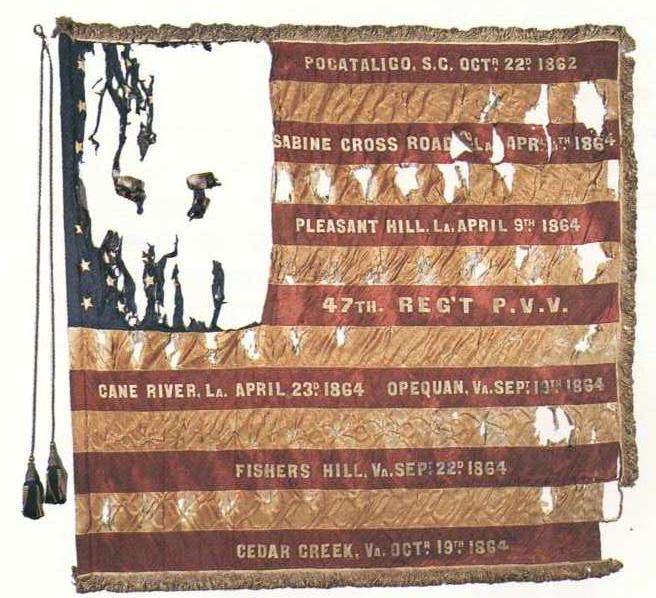
“Haas” was Private Jeremiah Haas, who had been wounded in the breast and face. Known as “Jerry” to his friends and family, he also eventually recovered and returned to duty, but was then mortally wounded in action during the Battle of Sabine Cross Roads near Mansfield, Louisiana on April 8, 1864 and died “almost instantly,” according to a letter written by his Company C comrade, Henry Wharton.

The “Haupts” were Sergeant Peter Haupt and his brother, Private Samuel Y. Haupt. Sergeant Peter Haupt, whose foot and ankle had been wounded at Pocotaligo, later developed lockjaw and died after contracting tetanus from the lead in the canister shot that had struck him. His brother, Samuel, however, survived. Wounded in the face and chin, Samuel would later be cleared for active duty and then be promoted steadily up through the ranks to become a first sergeant.

“Holman” was Private Conrad P. Holman, who had also been wounded in the face and who also recovered and returned to duty, would later be captured by Confederate troops during the Battle of Pleasant Hill in Louisiana on April 9, 1864 and be held as a prisoner of war (POW) at Camp Ford near Tyler, Texas until he was released during a prisoner exchange on July 22 of that same year.

“Kiehl” was Private Theodore Kiehl, whose jaw had shattered when his mouth was struck by a rifle ball at Pocotaligo, also recovered and returned to active duty. Sadly, he would later be killed in action on the grounds of Cooley’s farm near Winchester, Virginia during the Battle of Cedar Creek in October 1864.

“Larkins” and “Leffler” were Privates Michael F. Larkin and Charles W. Lefler, who had sustained wounds to the hip and side and/or arm and stomach (Larkins) and leg (Lefler) at Pocotaligo. They also both recovered and returned to active duty. Unlike so many of their comrades, however, they both survived their respective tenures of service and were both honorably discharged.

“Lothard” was actually Charles L. Marshall — one of several “mystery men” of the 47th Pennsylvania Volunteer Infantry. A native of Virginia who had relocated to Luzerne County, Pennsylvania to work in a coal mine prior to the American Civil War, he had enlisted as a private with the 47th Pennsylvania under the assumed name of “Thomas Lothard.” Shot in the head and/or body at Pocotaligo, he would ultimately recover and return to active duty, only to be wounded again in his head (top), body (right side) and left shin left during the Battle of Sabine Cross Roads in Louisiana on April 8, 1864. Later mistakenly labeled as a deserter, his military records were subsequently clarified to reflect his honorable discharge on January 7, 1866, as well as his legal name and alias.

“Warren McEwen” was Private Warren C. McEwen, whose illness would later become so persistent that he would be honorably discharged on a surgeon’s certificate of disability on December 7, 1862.

“O’Rourke” and “Rine” were Privates Richard O’Rourke and James R. Rhine, who had also sustained wounds to the side (O’Rourke) and leg (Rhine) at Pocotaligo, and would also recover, return to active duty, serve out their respective terms of enlistment, and be honorably discharged.

Veteran Volunteers

Samuel Y. Haupt, Company C, 47th Pennsylvania Volunteers (circa 1863, public domain).

John Bartlow, William Finck, Samuel Haupt, Charles Marshall (as “Thomas Lothard”), Richard O’Rourke, and James Rhine were among multiple members of the 47th Pennsylvania Volunteer Infantry who would go on to be awarded the coveted title of “Veteran Volunteer” when they chose to re-enlist for additional tours of duty and helped to bring an end to one of the darkest times in America’s history.

Remember their names. Honor the sacrifices that they made.


Sources:

  1. Bates, Samuel P. History of Pennsylvania Volunteers, 1861-5, vol. 1. Harrisburg, Pennsylvania: B. Singerly, State Printer, 1869.
  2. Gobin, John Peter Shindel. Personal Letters, 1861-1865. Northumberland, Pennsylvania: Personal Collection of John Deppen.
  3. MacConkey, Alfred. “Tetanus: Its Prevention and Treatment by Means of Antitetanic Serum.” London, England: The British Medical Journal, vol. 2, no. 2806, October 10, 1914, pp. 609-614.
  4. Schmidt, Lewis G. A Civil War History of the 47th Regiment of Pennsylvania Veteran Volunteers. Allentown, Pennsylvania: Self-published, 1986.
  5. Wharton, Henry D. “Letters from the Sunbury Guards.” Sunbury, Pennsylvania: The Sunbury American, 1862.


Election Day 1864 — Lincoln or McClellan? How the 47th Pennsylvania Volunteers Voted

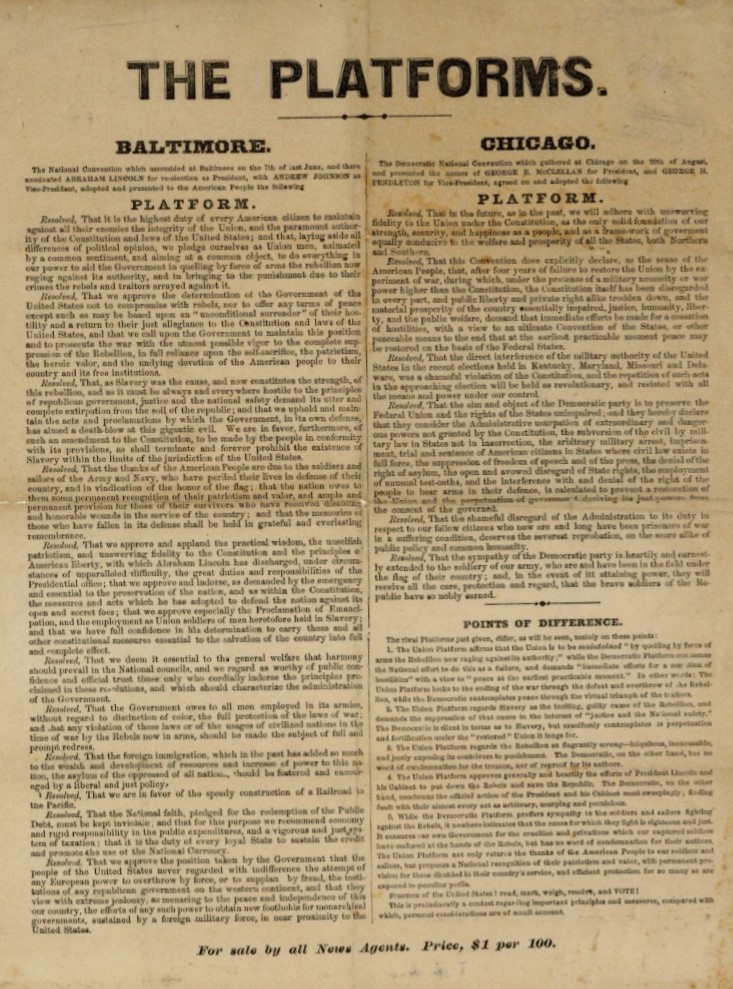
The platforms of the Union and Democratic parties, U.S. Presidential Election of 1864 (courtesy of the University of Illinois Urbana-Champaign; click to enlarge).

Even in the midst of a devastating civil war, Americans across the United States managed to come together to fulfill their civic responsibilities by voting on Election Day. Fathers and sons flocked to city and small town polling places while soldiers on active duty filled out ballot forms wherever they were stationed during the early to mid-1860s.

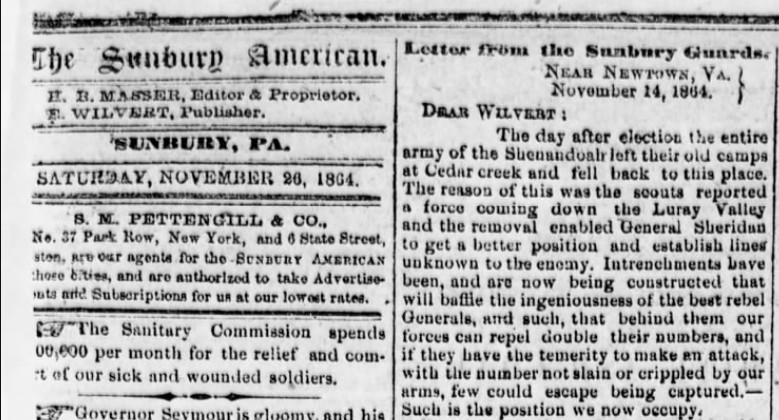
With respect to the Presidential Election of 1864, which was held in multiple states across America on November 8, 1864, that voting took place for members of the 47th Pennsylvania Volunteer Infantry at their encampment near Newtown, Virginia, according to a letter that was subsequently penned by 47th Pennsylvanian Henry D. Wharton to his hometown newspaper in Sunbury, Pennsylvania on November 14:

“The election passed off quietly and without any military interference, not the influence of officers used in controlling any man’s vote. In the regiments from the old Keystone, the companies were formed by the first Sergeant, when he stated to the men the object for which they were called to ‘fail to,’ and then they proceeded to the election of officers to hold the election – the boys having the whole control, none of the officers interfering in the least.”

Were the 47th Pennsylvania Volunteers pro-Lincoln or pro-McClellan?

Excerpt from Henry Wharton’s letter to his hometown newspaper, November 14, 1864 (The Sunbury American, November 14, 1864, public domain; click to enlarge).

Wharton reported that, after the votes from members of the regiment were counted, President Abraham Lincoln was the favored choice of most of the 47th Pennsylvania Volunteers. Lincoln had garnered one hundred and ninety-four votes to General George B. McClellan’s one hundred and twenty-one (a margin of seventy-three votes). Those votes, by individual company, were tallied as follows:

  • Company A: President Lincoln (ten); General McClellan (one)
  • Company B: President Lincoln (twenty-six); General McClellan (two)
  • Company C: President Lincoln (twenty-nine); General McClellan (thirteen)
  • Company D: President Lincoln (thirty-one); General McClellan (eleven)
  • Company E: President Lincoln (twenty-four); General McClellan (three)
  • Company F: President Lincoln (eighteen); General McClellan (sixteen)
  • Company G: President Lincoln (nine); General McClellan (thirteen)
  • Company H: President Lincoln (ten); General McClellan (twenty-four)
  • Company I: President Lincoln (nineteen); General McClellan (sixteen)
  • Company K: President Lincoln (eighteen); General McClellan (twenty)

But Wharton’s figures for the men from Company K were incorrect, according to historian Lewis Schmidt, who noted in his book, A Civil War History of the 47th Regiment of Pennsylvania Veteran Volunteers, that “Fifteen of the members [of Company K] voted for the Lincoln electors and seven for the McClellan electors” when they “voted on the battlefield of Cedar Creek, November 8, 1864.” The members of Company K who cast votes that day were: “David H. Fetherolf, Mathias Miller, John Keiser, Phaon Guth, James D. Weil, Daniel Strauss, Paul Strauss, George Sherer, Lewis G. Seip, Henry Hantz, Charles W. Abbott, George Kase, Charles Stoudt, William Schlicher, William F. Knerr, E. F. Benner, George Delp, Tilghman Boger, William H. Barber, William D. Schick, Frank Beisel, and David Semmel.”

Apathy or Attrition?

One of the first things that researchers notice when looking at those figures for the 1864 election is that the number of votes tendered by 47th Pennsylvania Volunteers that November day was lower than it should have been — shockingly so when considering that each company of the regiment had been staffed by roughly one hundred men when the 47th Pennsylvania left Camp Curtin and headed for Washington, D.C. three years earlier. The turnout of 47th Pennsylvanians was not a sign of voter apathy, however, but of a simple, ugly truth. The regiment had just recently lost the equivalent of nearly two full companies of men in combat. According to Wharton, “The battle at Cedar Creek thinned our ranks by which we lost many votes – this number and those away in hospitals would have increased the Union majority to three hundred.”

* Note: When Henry Wharton wrote the phrase “Union majority,” he was referring to the National Union Party, which had been established during the 1860s by prominent Republicans as a way to bring members of their party together with “War Democrats” and potential voters from border states to vote for President Lincoln and others who supported the Republican platform for eradicating chattel slavery and ending the nation’s secession crisis and civil war.

What Happened After That Election in 1864?

President Abraham Lincoln signing the Emancipation Proclamation in 1862 (W.E. Winner, painter, J. Serz, engraver, circa 1864; public domain, U.S. Library of Congress).

Successful in his bid for re-election, both in terms of the electoral college and popular vote, President Abraham Lincoln went on to deliver one of his most inspiring addresses to the nation, urging his fellow Americans “to bind up the nation’s wounds” and “do all which may achieve and cherish a just and lasting peace among ourselves and with all nations.” He then continued to shepherd his nation through one of its darkest times until the war was finally over.

Food for Thought

If Henry Wharton and his fellow soldiers could make it to the polls on Election Day after all they endured in battle, so can you. Please vote. Your voice does matter.


Sources:

  1. Political Party Timeline: 1836-1864,” in American Experience: Abraham and Mary Lincoln: A House Divided. Boston, Massachusetts: GBH Education for WGBH-TV (PBS), 2001.
  2. Schmidt, Lewis G. A Civil War History of the 47th Regiment of Pennsylvania Veteran Volunteers. Allentown, Pennsylvania: Self-published, 1986.
  3. The People’s Candidate: Lincoln’s Presidential Elections,” in “Illinois History & Lincoln Collections.” Urbana, Illinois: Main Library, University of Illinois Champaign-Urbana, retrieved online November 3, 2025.
  4. Transcript of Abraham Lincoln’s Second Inaugural Address (delivered Saturday March 4, 1865), in “UShistory.org.” Philadelphia, Pennsylvania: Independence Hall Association, retrieved online March 4, 2020 and November 3, 2025.
  5. Wharton, Henry D. “Letter from the Sunbury Guards, Near Newtown, VA, November 14, 1864.” Sunbury, Pennsylvania: The Sunbury American, November 26, 1864.

Finding Your 47th Pennsylvanian: The Surprising Details in Pennsylvania’s Civil War-Era Muster Rolls

Excerpt of muster-out roll, Company G, 47th Pennsylvania Volunteer Infantry, December 25, 1865, page one (Pennsylvania Civil War Muster Rolls, Pennsylvania State Archives, public domain; click to enlarge).

The Commonwealth of Pennsylvania’s collection of Civil War-era muster rolls is another of the three major tools that beginning, medium and advanced researchers initially turn to for help in determining which Pennsylvania military unit(s) a soldier served with during the American Civil War. Unfortunately, it is also a resource that often does not receive the close attention from researchers that it should.

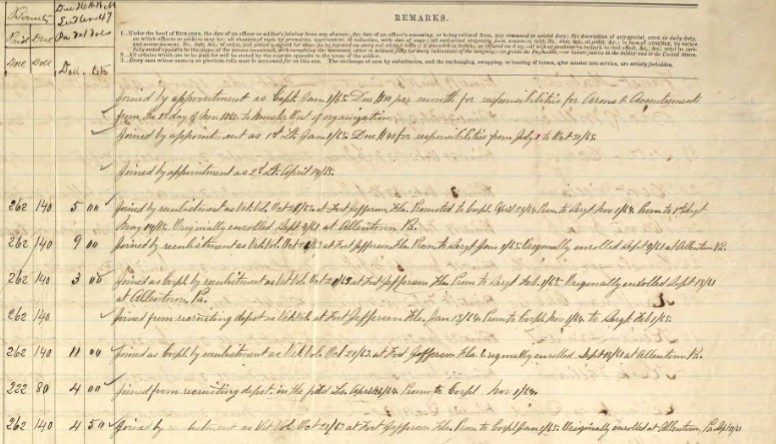
Those who have chosen to spend significant time looking through the individual documents contained in this collection have come to understand that, in addition to confirming the identity of a soldier’s regiment and company, as well as his rank(s) at enrollment and final discharge, Pennsylvania’s Civil War-era muster rolls are also useful for documenting when and where that soldier enrolled and mustered in for service and whether or not he had some change to his status while serving, such as a promotion, reduction in rank or charge of desertion — and possibly data which documented whether or not he was wounded or killed in battle and, if so, when and where.

Physically created as hard-copy index cards that were later preserved by the Pennsylvania State Archives in Harrisburg, Pennsylvania, as part of the “Civil War Muster Rolls and Related Records” group of documents from the Pennsylvania Department of Military and Veterans Affairs’ archives (Series RG:-019-ADJT-11, 1861-1866, 1906), this collection includes muster rolls from each of Pennsylvania’s volunteer infantry and volunteer militia regiments, emergency volunteer militia regiments that were formed during the summer of 1863 in response to the looming invasion of the commonwealth by the Confederate States Army, United States Colored Troops (USCT), United States Veteran Volunteer regiments and Hancock Veterans Corps, regiments of the Veterans Reserve Corps, and independent or other unattached units. Preserved on microfilm decades ago by the Commonwealth of Pennsylvania, a portion of this large collection has since been partially digitized and made available on the Ancestry.com website as “Pennsylvania, U.S., Civil War Muster Rolls, 1860-1869.”

* Note: Although Ancestry.com is a subscription-based genealogy service that generally requires users to pay for access to its records collections, the Commonwealth of Pennsylvania entered into a partnership with Ancestry.com several years ago “to digitize family history records in the State Archives and make them available online.” As part of that agreement, Ancestry.com created Ancestry.com Pennsylvania to provide free access to Pennsylvania residents to the Pennsylvania records it has digitized. If you reside in Pennsylvania and want to learn more about how you may obtain free access to those records, please contact the Pennsylvania State Archives for guidance. If you reside elsewhere, check with your local library to determine if it offers access to Ancestry.com as part of its service to library users.

What May Researchers Find with This Resource?

Excerpt from muster-out roll, Company G, 47th Pennsylvania Volunteer Infantry, December 25, 1865, showing soldiers’ promotions, status as Veteran Volunteers, etc. (Pennsylvania State Archives, public domain; click to enlarge).

According to personnel at the Pennsylvania State Archives, Pennsylvania’s Civil War Muster Rolls and Related Records collection includes:

“Alphabetical Rolls. The rolls are arranged alphabetically by the soldiers’ surnames. Entries usually give the name, rank, civilian occupation, and residence, the unit, regiment, company, and commanding officer, and the date and place where the roll was taken. Particulars about sickness or injury are also sometimes noted.

“Descriptive Lists of Deserters. Lists give the names, ages, places of birth, height, hair and eye color, civilian occupations, and ranks of deserters, the units, regiments, and companies to which they were assigned, and the dates and places from which they deserted.

“Muster-In Rolls. Entries usually list the name, age, rank, unit, regiment, and company of the soldier, the date and place where enrolled, the name of the person who mustered him in, the term of enlistment, the date of mustering in, and the name of commanding officer. Remarks concerning promotions and assignments are sometimes recorded.

“Muster-Out Rolls. The dated lists ordinarily give the soldier’s name, age, rank, unit, regiment, and company, the date, place, and person who mustered him in, the period of enlistment, and the name of the commanding officer. Particulars concerning pay earned, promotions, capture by the enemy and the like also regularly appear.

“Muster and Descriptive Rolls. Generally the rolls give the name, age, town or county and state or kingdom of birth, civilian occupation, complexion, height, eye and hair color, and rank, the unit, regiment, company and commanding officer, and the amount of money received for pay, bounties, and clothing. Rolls for assigned United States black troops are included in this group. Included throughout are such related materials as regimental accounts of action, and correspondence related to infractions of military procedures, correspondence from soldiers addressed to the governor expressing grievances or petitioning for promotion.

“The data found in the documents of this series were used to create the Civil War Veterans Card File, 1861-1866 (Series 19.12).”

Be Sure to Look for Data Regarding Soldiers’ Pay

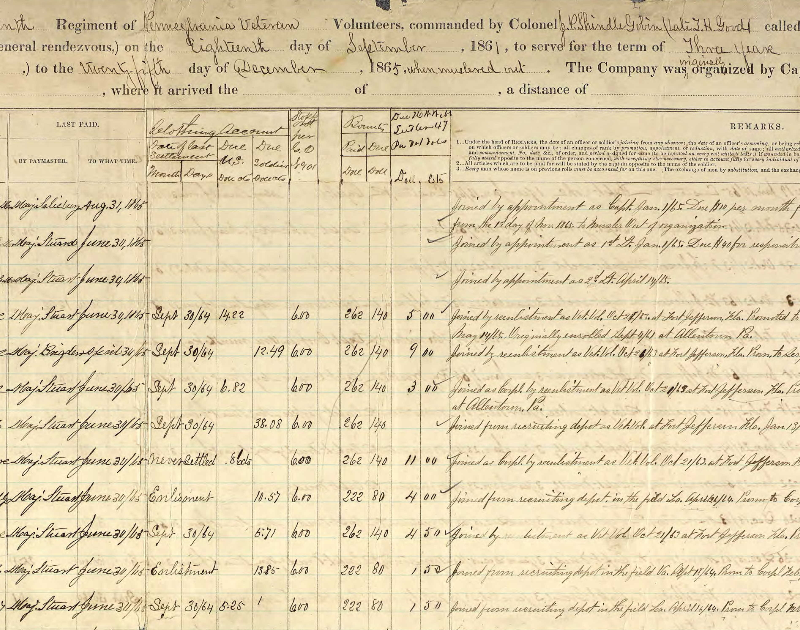
Excerpt from muster-out roll for Company G, 47th Pennsylvania Volunteer Infantry, showing soldiers’ pay data, December 25, 1865 (Pennsylvania State Archives, public domain).

One of the most fascinating features found on the muster-out rolls for Pennsylvania volunteer soldiers is that many of the infantry unit clerks took the time to meticulously record the pay data for multiple members of their respective regiments. As a result, present-day researchers are often able to determine how much bounty pay a particular soldier was eligible for at the time of his enlistment — and how much of that promised pay he actually received, as well as how much money he still owed the United States government for his army uniform, rifle and ammunition at the time of his discharged from the military.

Another striking feature on the muster-out rolls is the “Last Paid” column, which corroborates the shocking fact that many Union Army soldiers were expected to perform their duties, even though they were not being paid regularly — a data point that also may help to shed light on why some soldiers’ families faced greater hardship than others (because some soldiers were able to send part of their pay home while others were not).

Caveat Regarding Ancestry.com’s Collection Related to the 47th Pennsylvania Volunteer Infantry

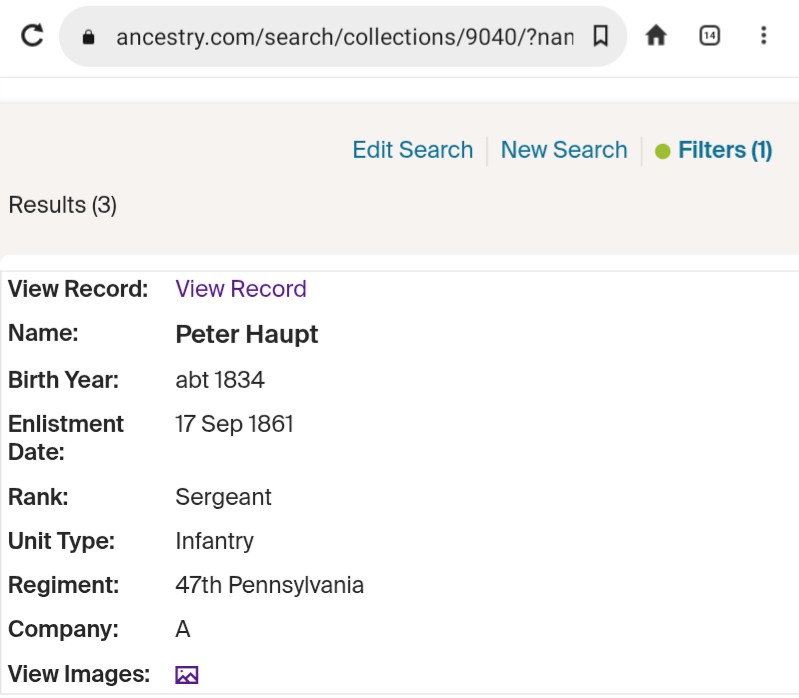
Screenshot of Ancestry.com’s record detail page for Peter Haupt, which incorrectly identifies him as a member of Company A, 47th Pennsylvania Volunteer Infantry, instead of Company C (fair use for illustration purpose, October 2025).

Although Ancestry.com’s collection of Pennsylvania Civil War-era muster rolls can be a useful tool for researchers, there is a significant problem with records related to the 47th Pennsylvania Volunteer Infantry that merits closer scrutiny — the inaccurate transcription of soldiers’ data. That scrutiny is needed because the muster rolls from the 47th Pennsylvania’s Company C were mixed together with the muster rolls from Company A when they were posted to Ancestry.com’s website, making it appear, when browsing through those rolls, that all of the soldiers listed on every single one of those incorrectly grouped muster rolls were all members of Company A, when they were not.

Complicating things further, the Ancestry.com personnel who were assigned to transcribe the data from each of those muster rolls and create Record Detail pages for each individual soldier that summarized each soldier’s data from the muster roll on which it appeared, apparently did not realize that the muster rolls from Companies A and C of the 47th Pennsylvania Volunteer Infantry had been mixed together. As a result, those transcribers incorrectly described every soldier from that improperly sorted muster roll group as a member of Company A, when they were not. (See attached image.)

So, when reviewing Ancestry.com’s collection of muster rolls, it is vitally important that researchers not take the transcribed data found on any of the Record Detail pages of 47th Pennsylvania muster rolls at face value. Instead, researchers should double check the data found on those muster rolls for the 47th Pennsylvania Volunteer Infantry against the data for individual soldiers published by Samuel P. Bates in his History of Pennsylvania Volunteers, 1861-5, volume 1, and should also then re-check that data against the information of individual soldiers that is contained in the Pennsylvania Civil War Veterans Index Card File, 1861-1866.

* Note: This is particularly important if you are a family historian who is hoping to identify the specific company in which your ancestor served. (And you will definitely want to know which company your ancestor served with because each company of the 47th Pennsylvania Volunteer Infantry was assigned to different duties in different locations at different times during the regiment’s service.)

Caveat Regarding “Deserters”

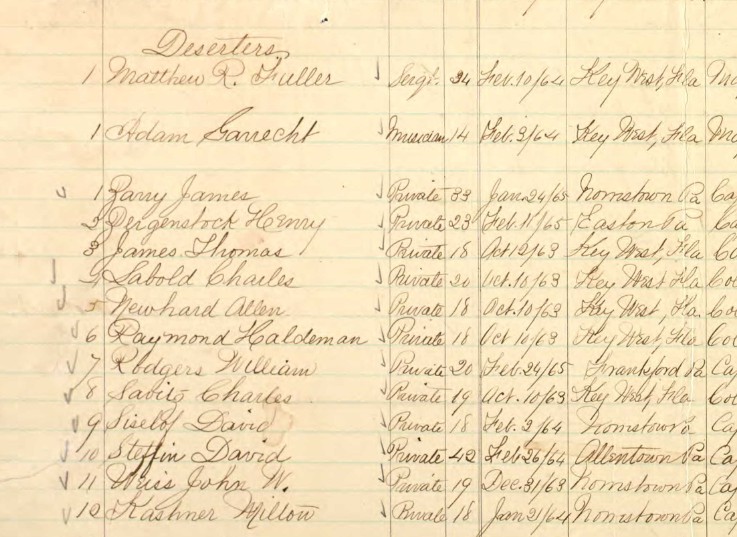
Private Milton P. Cashner, Company B, 47th Pennsylvania Volunteer Infantry, was incorrectly labeled as a deserter on this regimental muster roll from the American Civil War (Pennsylvania State Archives, public domain; click to enlarge).

If a muster roll entry for your ancestor noted that he was a deserter, it’s also important that you not take that label at face value, either, because that data may also be incorrect. Military records from the Civil War era contained a surprising number of errors, a fact that is understandable when considering what the average army clerk was expected to do — keep track of more than a thousand men, many of whom ended up becoming separated from their regiment and confined to Union Army hospitals after being wounded in battle. (Wounded too severely to identify themselves to army personnel, they were then often mis-identified by army hospital personnel and then also incorrectly labeled as “deserters” by their own regiments because they hadn’t shown up for post-battle roll calls.) So, it’s important to double and triple check the data for any ancestor who was labeled as a “deserter” because he might actually have been convalescing at a hospital and not absent without leave.

Honoring Our Ancestors 

One of the best ways to honor ancestors who fought to preserve America’s Union is to pass their stories along to future generations. No embellishment required. Their willingness to volunteer for military service and the bravery they displayed as they ran toward danger and certain death during one of America’s darkest times speaks for itself.

Our job, as students of American History, educators and family historians is to ensure that their stories are told as accurately and thoroughly as possible so that their valor and love of community and country are never forgotten.

Remember their names. Tell and re-tell their stories. Honor the sacrifices that they made.


Sources:

  1. “Ancestry Pennsylvania,” in “Agencies: Pennsylvania Historical and Museum Commission,” in “Pennsylvania State Archives.” Harrisburg, Pennsylvania: Commonwealth of Pennsylvania, retrieved online October 25, 2025.
  2. Civil War Muster Rolls and Related Records” (resource description). Harrisburg, Pennsylvania: Pennsylvania State Archives, retrieved online October 30, 2025.
  3. Pennsylvania,” in Collections. Lehi, Utah: Ancestry.com Operations, Inc., 2021 (retrieved online October 25, 2025).


Finding Your 47th Pennsylvanian: Using the Pennsylvania Civil War Veterans Card File, 1861-1866

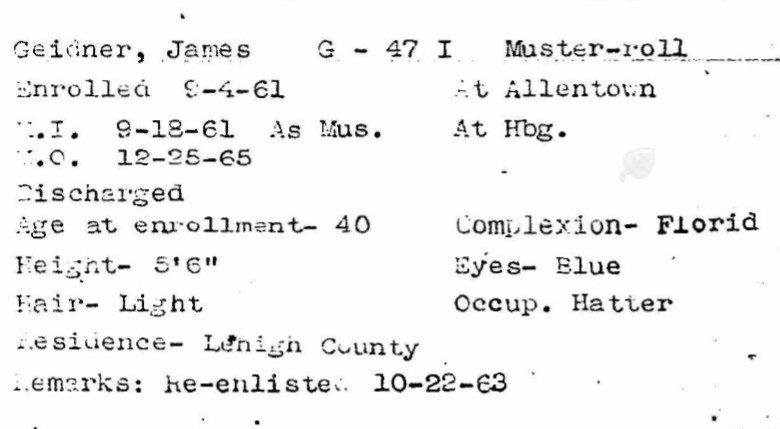
The index card of Field Musician James Geidner, Company G, 47th Pennsylvania Volunteer Infantry (Pennsylvania Civil War Veterans Card File, 1861-1866, courtesy of the Pennsylvania State Archives).

The Pennsylvania Civil War Veterans Index Card File, 1861-1866 is one of three resources that beginning, medium and advanced researchers frequently turn to for help in determining which Pennsylvania military unit(s) a soldier served with during the American Civil War. Physically housed at the Pennsylvania State Archives in Harrisburg, Pennsylvania, as part of the Pennsylvania Department of Military and Veterans Affairs’ archives (Series RG-019-ADJT-12), this collection of individual index cards was preserved on microfilm decades ago by the Commonwealth of Pennsylvania and then later digitized and made available, free of charge, on the State Archives’ website via a user-friendly portal, enabling researchers nationwide to search or browse, alphabetically, through each of the index cards that had been created for the majority of Pennsylvanians who had served with the Union Army (as well as the non-Pennsylvanians who had also served with Pennsylvania units). According to Pennsylvania State Archives personnel:

“These 3 x 5 cards were initially prepared to serve as an index to Samuel Penniman Bates’ History of Pennsylvania Volunteers, 1861-1865, (Harrisburg, 1869-1871). The Office of the Adjutant General later expanded the scope of the cards by transcribing onto them data found on the original documents. Among the information generally found are the soldiers’ names, military units, and ages at enrollment, the dates and places where enrolled, the dates and places where mustered in, and the dates of discharge. Physical descriptions (complexion, height, color of hair and eyes), residences, birthplaces, promotions and wounds also are sometimes included. The listing is not comprehensive.”

That last sentence is an important caveat because, while this index card system can be a helpful primary source for basic data about individual soldiers, it does not contain the name of every single Pennsylvanian who served with the Union Army during the Civil War. In addition, a significant number of the index cards contain errors (incorrect spellings of soldiers’ names, soldiers labeled as deserters when they had actually been honorably discharged or hospitalized to due battle wounds or illness, etc.).

* Note: Those faults are understandable, however, when considering that the index cards were based on data compiled by Samuel Bates for his History of Pennsylvania Volunteers, 1861-5a five-volume series of books that included rosters of soldiers for each Pennsylvania regiment that served during the American Civil War. The errors in Bates’ History are also understandable as you come to understand that Samuel Bates was assigned the task, during the mid-1860s, of summarizing thousands and thousands of muster rolls generated by Pennsylvania military units during the war — many of which were also filled with errors because the army clerks assigned to maintain those rolls were often unable to create accurate records as their regiments were being marched into battle or from one duty station to another.

Another more recent issue with this system is that its portal to the digitized index cards that was so easy to browse and search for free is now no longer available on the Pennsylvania State Archives’ website. The index cards are still available, however, to researchers who travel to Harrisburg to view the microfilmed version at the State Archives, as well as to online researchers via Ancestry.com as “Pennsylvania, U.S., Veterans Card Files, 1775-1948.” (Although Ancestry.com is a subscription-based genealogy service that generally requires users to pay for access to its records collections, the Commonwealth of Pennsylvania entered into a partnership with Ancestry.com several years ago “to digitize family history records in the State Archives and make them available online.” As part of that agreement, Ancestry.com created Ancestry.com Pennsylvania to provide free access to Pennsylvania residents to the Pennsylvania State Archives records it has digitized. If you reside in Pennsylvania and want to learn more about how you may obtain free access to those records, please contact the Pennsylvania State Archives for guidance. If you reside elsewhere, check with your local library to see if it offers access to Ancestry.com as part of its service to library users.)

Despite those issues, the Pennsylvania Civil War Veterans Index Card File, 1861-1866 remains a useful tool for finding your 47th Pennsylvanian because it may help you confirm your ancestor’s place of residence during the early 1860s and may also provide you with an approximate year of birth for him.

Additional Important Tips for Using This Resource

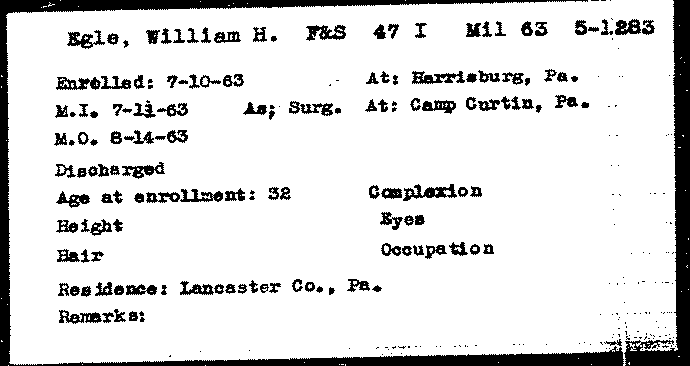
The index card of William H. Egle, M.D. shows that this soldier served with the 47th Pennsylvania Militia, Emergency of 1863 and not the 47th Pennsylvania Volunteer Infantry (Pennsylvania Civil War Veterans Card File, 1861-1866, courtesy of the Pennsylvania State Archives).

If you are able to find an index card for your ancestor in the Pennsylvania Civil War Veterans Index Card File, 1861-1866, pay particular attention to the top line of that card’s data. That data identifies the regiment number and company letter of his military unit. Then also look at the lines of data below. (Those lines of text note the start and dates of his service.) If you see dates of service indicating that your ancestor served between mid-April 1861 and the end of July 1861, you will realize that the regiment number in the top line was not “47.” This means that your ancestor performed what is known as “Three Months’ Service,” that he actually served with a different regiment during the first months of the war, and that he then may also have served with the 47th Pennsylvania Volunteer Infantry at a later date (because the 47th Pennsylvania Volunteer Infantry was not established until August 5, 1861). So, you’re one of those 47th Pennsylvania descendants who needs to look for two or more index cards in the Pennsylvania Civil War Veterans Index Card File, 1861-1866 — one for your ancestor’s “Three Month Service” and one for his service with the 47th Pennsylvania Volunteer Infantry (which was initially most likely a three-year term of enlistment, but may have been a one or two-year term, depending on how late he was enrolled for service).

HOWEVER, if you see dates of service indicating that your ancestor served at any point during 1863 — AND, if the top line indicates that his regiment was “47 I Mil 63” — this means that your ancestor DID NOT serve with the 47th Pennsylvania Volunteer Infantry. He served with the 47th Pennsylvania Militia, Emergency of 1863. (The soldiers who served with that militia group were also brave and honorable men, but they were part of a very different unit that had a very different mission. Learn more about that militia unit here.)

Regardless of whether or not your ancestor “performed Three Months’ Service” during the earliest part of the Civil War, if you see dates of service indicating that your ancestor served at any point between August 5, 1861 and early January 1866 — AND if the top line indicates that his regiment was “47 I” — then you can be reasonably confident that your ancestor actually did serve with the 47th Pennsylvania Volunteer Infantry (also known as the 47th Pennsylvania Volunteers or the 47th Pennsylvania Veteran Volunteers). So, you should make yourself a cup of coffee or tea, find a comfy chair, and spend some quality time exploring our website to learn more about the history-making 47th Pennsylvania Volunteer Infantry.

Best wishes for success with your research! Let us know what you learn about your ancestor!!


Sources:

  1. “Ancestry Pennsylvania,” in “Agencies: Pennsylvania Historical and Museum Commission,” in “Pennsylvania State Archives.” Harrisburg, Pennsylvania: Commonwealth of Pennsylvania, retrieved online October 25, 2025.
  2. Civil War Veterans Card File, 1861-1866” (resource description). Harrisburg, Pennsylvania: Pennsylvania State Archives, retrieved online October 25, 2025.
  3. Pennsylvania,” in Collections. Lehi, Utah: Ancestry.com Operations, Inc., 2021 (retrieved online October 25, 2025).


Finding Your 47th Pennsylvanian: Use “Bates’ History” — But With Caution

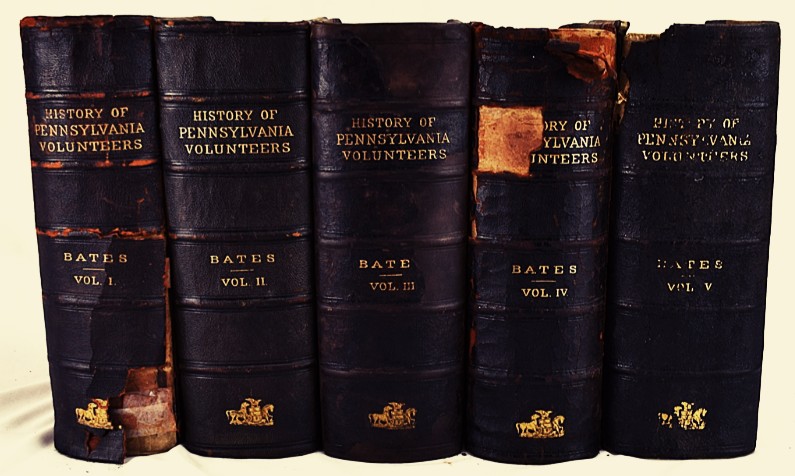
“History of Pennsylvania Volunteers, 1861-5,” Samuel P. Bates, 1869-1871 (public domain).

“So long as differences arise among nations, which cannot be settled by peaceful conference, and appeals are made to the arbitrament of the sword, the only safety that remains to the government is in the courage of its soldiery. In the late sanguinary struggle, the national unity was preserved, and the perpetuity of democratic institutions secured, by the men who bore the musket, and who led in the deadly conflict. Argument and moral sentiment were at fault, diplomacy was powerless, and courage proved the only peacemaker.

“In recognition of their services, and as a mark of the appreciation in which their valor is held, the Legislature of Pennsylvania authorized the preparation of a record of each of the military organizations in the field since 1861.” 

— Samuel P. Bates, “Preface,” History of Pennsylvania Volunteers, 1861-5


One of the first pieces of advice that archivists, librarians and professional genealogists will often give to descendants of Pennsylvania Volunteer Infantrymen when beginning their research of soldier-ancestors is to “Check Bates’ History,” which often results in descendants responding with, “What’s that?” and “Where Can I Find It?”

“Bates’ History” is, in fact, a five-volume series of books entitled, History of Pennsylvania Volunteers, 1861-5; Prepared in Compliance with Acts of the Legislature, that was researched, written and published during the mid-1860s through the early 1870s by Samuel Penniman Bates, an American educator and historian. Appointed in 1864 as state historian of the Commonwealth of Pennsylvania by Pennsylvania Governor Andrew Gregg Curtin, Bates was subsequently commissioned by the governor on June 1, 1866 to fulfill a legislative directive that “a military history of the organization of Pennsylvania volunteers and militia, who have been, or may be in the field” be researched, written and published for the public record. Bates was then given additional instructions by the Pennsylvania Legislature on April 17, 1867 “that the military history of the Pennsylvania volunteers … embrace an account of the organization, and services in the field, of each regiment, together with a roll giving the name, age, and residence of each officer and soldier, the date and term of enlistment, the promotions, the discharges, and casualties, and the places of burial of those who died in service.”

Thanks to that foresight by elected officials from Pennsylvania and Bates’ Herculean effort, generations of genealogists and academic historians have since visited historical societies and libraries across Pennsylvania and beyond to peruse increasingly worn copies of Bates’ books in order to learn more about the history of a specific regiment and confirm the names of that regiment’s leaders and rank and file members.

Access to Bates’ data was then made even easier by technological advancements in library science with the digitization of Bates’ books. As a result, family historians and other researchers no longer need to schlep to libraries to hunker down over their desired dusty tomes because Bates’ complete series has been accessible online, free of charge since 2012, thanks to HathiTrust, a collaborative effort between multiple academic institutions across the United States that is headquartered at the University of Michigan’s main campus in Ann Arbor. (“Go Blue!”)

This highly user-friendly format presented by HathiTrust allows users to not only read or browse each volume, but to also search for a specific soldier’s name by entering that name into the search textbox for the volume where that soldier’s name would most likely be located.

With respect to members of the 47th Pennsylvania Volunteer Infantry, that book would be Bates’ first volume. So, to find your 47th Pennsylvanian:

  1. Pull up volume one of Bates;
  2. Click on the downward-facing arrow of the black “Options” line near the top of the webpage you’re now seeing;
  3. Click on “Search in This Text”;
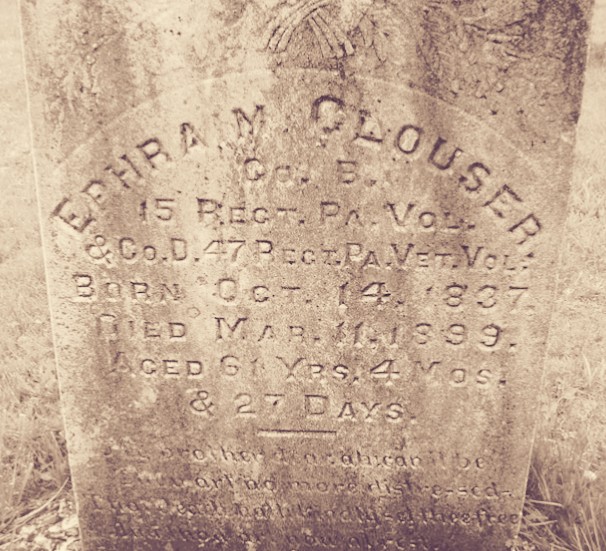
  4. Enter your ancestor’s name in that text box, between quotation marks, beginning with his last name, followed by a comma, one space, and his given name (example: “Clouser, Ephraim”); and
  5. Click the magnifying glass.

That search should pull up a new webpage that lists the page(s) in Bates’ first volume on which your ancestor’s name might appear — if your ancestor actually did serve with the 47th Pennsylvania Volunteer Infantry. Each of those items on that list will have an active link that will take you to the specific page in Bates’ first volume on which your ancestor is listed (or may take you to a page on which someone who had the same name as your ancestor is listed; so double check the data to be sure you’re looking at data for the correct soldier).

But if your search does not pull up a page(s) with your ancestor’s name, it may mean that your ancestor did not actually serve with the 47th Pennsylvania Volunteer Infantry — or that Bates spelled your ancestor’s name incorrectly.

Caveat Emptor

“Let the buyer beware” — or in this case “Caveat Scholaris” (“Let the student beware.”) While Bates History can be a helpful starting point for research regarding the 47th Pennsylvania Volunteer Infantry, each volume in the series contains significant errors — understandable when considering that Bates was tasked with summarizing the myriad number of muster rolls generated by hundreds of Pennsylvania military units that were staffed by more than three hundred and sixty thousand soldiers from Pennsylvania during the American Civil War. (And many of those original muster rolls were filled with errors because the Union Army clerks assigned to maintain those rolls simply could not create or update records when their regiments were being moved from one duty station to another as they marched into, or retreated from, battlefields scattered throughout three theaters of war that spread across multiple states in the Union and Confederacy.)

That being said, Bates left future generations of Pennsylvanians with a useful, detailed and reasonably accurate record of Pennsylvania’s role in the American Civil War. So, by all means, use Bates’ History to further your research; just don’t rely on it as your sole source of data.

As you go about finding your 47th Pennsylvanian, always double check the new data you find against the regiment’s original muster rolls and against other sources, such as the individual U.S. Civil War Pension file(s) for your ancestor and his parents, widow and/or children — records that are often chock full of new data and are maintained by the U.S. National Archives and Records Administration. (More information about those pension records is available online here.)


Sources:

  1. “A State History of Our Pennsylvania Regiments.” Philadelphia, Pennsylvania: The Daily Evening Telegraph, January 19, 1867.
  2. Bates, Samuel P. History of Pennsylvania Volunteers, 1861-5; Prepared in Compliance with Acts of the Legislature, volumes 1-5. Harrisburg, Pennsylvania: B. Singerly, State Printer, 1869-1871 (full text search and browse options available through HathiTrust, University of Michigan).
  3. Hodge, Ruth E. “Samuel Penniman Bates Papers, 1853-1895,” in “Guide to African American Resources at the Pennsylvania State Archives.” Harrisburg, Pennsylvania: Pennsylvania Historical and Museum Commission, 2000.
  4. Royer, Douglas L. Guide to Civil War Holdings of the Pennsylvania State Archives. Harrisburg, Pennsylvania: Pennsylvania State Archives, 2001.


Finding Your 47th Pennsylvanian: Begin Your Search Using Our Website

Each company history page on the 47th Pennsylvania Volunteers’ website includes a link to that company’s browsable roster of members. The search box allows researchers to search for soldiers’ names or historical data about the regiment using a single word or phrase (website screenshot, © Laurie Snyder, 2025).

Whether you’re confident or merely have a hunch that one of your ancestors served with the 47th Pennsylvania Volunteer Infantry during the American Civil War, one of the quickest ways to learn more about him is to use our website’s search and browse capabilities because we may have already done some of your research for you.

If you already know which unit of the 47th Pennsylvania your ancestor served in (field and staff officers, medical staff, regimental band, or a specific company — A, B, C, D, E, F, G, H, I, or K), start by looking for your ancestor’s name on that unit’s roster on our main website: 47thpennsylvaniavolunteers.com.

At a minimum, you will likely find your ancestor’s name and rank, as well as the dates of his muster-in and end of service. You may also find that your ancestor’s name has an active link that, when clicked on, will either take you to a full bio that we’ve already researched and published for him on our website, or will take you to a memorial for him on Find A Grave that may give you more data about him such as his birth and death dates and locations, the name and location of the cemetery where he is buried and, hopefully, the names of your ancestor’s parents, siblings, spouse, and children.

If you aren’t sure which unit your ancestor served in, however, you might want to try looking for his name by using our textbox search tool. First, search for him by placing his name between quotation marks — surname first, followed by a comma, single space and his given name (example: “Jumper, Amos”), and click your return key. That should pull up a new page that lists the company roster entry for him, as well as a list of other rosters on our website where his name might also appear (battle casualties, immigrants and first generation Americans, post-war westward migration, etc.).

If that doesn’t work, try searching for his name by using spelling variants (example: “Reinhard, Allen” instead of “Reinhart, Allen”). Or adjust your phrase so that you’re searching with your ancestor’s given name first and are searching with and without middle initials (example: “Tilghman Good” or “Tilghman H. Good”).

If you still don’t find your ancestor, don’t despair. You simply have a research puzzle that is just waiting to be solved.

It may be that your ancestor is a 47th Pennsylvania Volunteer Infantryman who isn’t yet listed on our rosters because we’re still searching for documentation that will confirm his membership with the regiment. (Or it may be that your ancestor served with an entirely different regiment altogether. The 47th Pennsylvania Militia, Emergency of 1863 has often been confused with the 47th Pennsylvania Volunteer Infantry, for example.)

In our next article, we’ll explore the next steps you might want to take as you go about “Finding Your 47th Pennsylvanian.”

Finding Your 47th Pennsylvanian

Whether you’re a history teacher, middle or high school student, university-level researcher, or descendant of a soldier who served with the 47th Pennsylvania Volunteer Infantry during the American Civil War, it may feel like an impossible task to learn more about the life of someone who lived and died more than a century ago.

But it may be much easier for you than you realize.

From finding and confirming a specific soldier’s identity to documenting when and where he served in the military (and what his duties might have been) — to identifying the names of a soldier’s family members from great-grandparents to great-grandchildren, there are multiple tools available that can help you begin and deepen your research. That’s why we’re launching a new feature on our website during Family History Month — a series of periodic “tips and tricks” articles that are designed to help you progress along the way in your journey from preliminary researcher to soldier’s biographer. Look for those articles over the next several months under the heading of “Finding Your 47th Pennsylvanian.”

Welcome to the hunt!

Remembering the Red River Campaign Prisoners of War on National POW/MIA Recognition Day

This POW/MIA Recognition Flag designed by Newt Heisley was formally recognized by U.S. House of Representatives Resolution No. 467 on September 21, 1990 (public domain).

During the Army of the United States’ 1864 Red River Campaign across Louisiana in the American Civil War, multiple members of the 47th Pennsylvania Volunteer Infantry were declared as “Missing in Action” (MIA) — largely due to the confusion caused by a series of engagements with the enemy in which Union soldiers were repeatedly required to retreat, regroup and resume the fight as they faced down wave after wave of Confederate troops attempting to outflank and perform end runs around the outer edges of Union Army lines.

Each time the cannon smoke began to clear from those battles, many of those MIA members of the 47th Pennsylvania Volunteer Infantry found their way back to the regiment, carrying word to senior officers of the 47th Pennsylvania Volunteers that members of the regiment had been captured by Confederate troops. By mid-May of 1864, it was clear that at least twenty-three 47th Pennsylvania Volunteers were being held as prisoners of war (POWs) by the Confederate States Army.

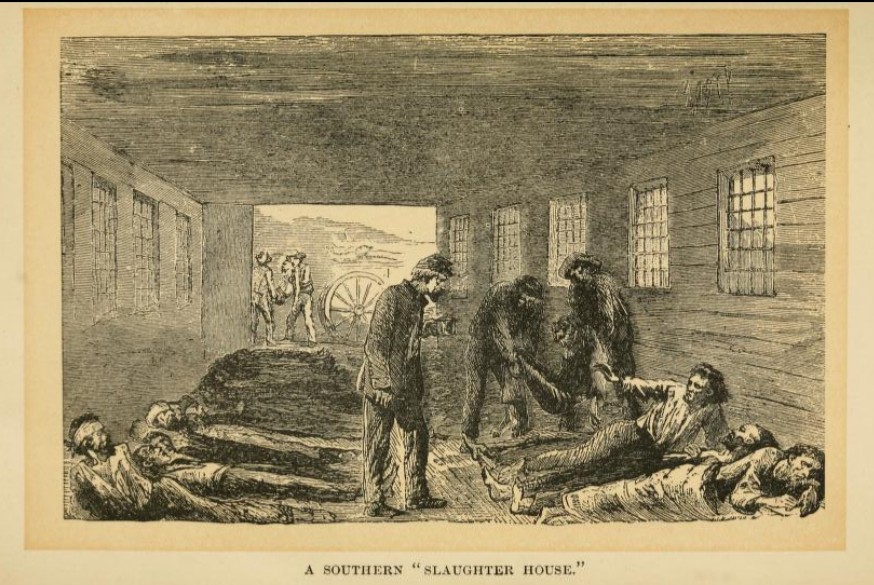
Regimental leaders would later learn that many of those men had been force marched roughly one hundred and fifty miles to Camp Ford, which was located outside of Tyler, Texas and would become the largest Confederate POW camp west of the Mississippi River by the summer of 1864. Once there, they were starved, given minimal to no medical care for any wounds they had sustained, exposed to extreme variations in temperature and weather, due to inadequate shelter, and sickened by dysentery and other diseases that were spread by living in the cramped, overcrowded conditions that became increasingly unsanitary, due to the placement of latrine facilities near water supplies meant for drinking or bathing. As their days dragged on, their treatment by Confederate soldiers grew more and more harsh. According to representatives of the Smith County Historical Society who have been working on documenting the history of Camp Ford:

On April 8th and 9th 1864 at the battles of Mansfield and Pleasant Hill, Louisiana, Confederate forces captured more than 2,000 Union soldiers, who were quickly marched to Tyler…. The existing stockade did not have sufficient area to house them, and an emergency enlargement was undertaken. Local slaves were again impressed, the north and east wall was dug up and the logs cut in half, and the top ten feet of the logs of the south and west walls were cut off. The resulting half logs gave sufficient timber to quadruple the area of the stockade, and it was expanded to about eleven acres.

With additional battles in Arkansas and Louisiana, the prison population had grown to around 5,000 by mid-June. Hard-pressed CS officials had no ability to provide shelter for the new prisoners, and their suffering was intense. The number of tools was inadequate, and many men could only dig holes in the ground for shelter. Rations were often insufficient and the death rate soared…. Of 316 total deaths at the camp, 232 occurred between July and November 1864….

At least three 47th Pennsylvania Volunteers are confirmed to have died while imprisoned at Camp Ford. Another member of the regiment was later removed from that prison and moved to Andersonville, the most notorious of all American Civil War POW camps. Two others died as POWs who were confined to a Confederate hospital.

In recognition of National POW/MIA Recognition Day, which is observed on the third Friday each September in the United States of America, we pay tribute to those twenty-three brave souls.

DeSoto and Sabine Parishes (Mansfield and Pleasant Hill, Louisiana)

Possibly wounded in action during the Battle of Pleasant Hill, Privates Solomon Powell and Jonathan Wantz of Company D were captured during that battle on April 9, 1864. Private Powell died either that same day or on June 7, 1864, while still being held by Confederate troops as a POW at Pleasant Hill. Private Wantz also died while still being held as a POW at Pleasant Hill; his death was reported as having occurred on June 17, 1864. Their exact burial locations remain unidentified.

Confederate Hospital (Shreveport, Louisiana)

G Company Private Joseph Clewell — who had only been a member of the 47th Pennsylvania since mid-November 1863, fell ill sometime after being captured by Confederate troops during one of the 47th Pennsylvania’s Red River Campaign engagements in the spring of 1864. Suffering from chronic diarrhea due to the poor water quality and unsanitary living conditions that he endured while being held as a POW, he was subsequently confined to the Confederate States Army Hospital No. 59 in Shreveport, Louisiana sometime in May or early June. Held at that hospital as a POW, his health continued to decline until he died there on June 18, 1864, according to the U.S. Army’s Registers of Deaths of Volunteer Soldiers. His exact burial location also remains unidentified.

This illustration presented a rosier view of life at Camp Ford, the largest Confederate Army prison camp west of the Mississippi River, than was the actual situation for the 47th Pennsylvania Volunteers confined there (Harper’s Weekly, March 4, 1865, public domain).

Camp Ford or Camp Groce (Texas)

The 47th Pennsylvania Volunteers confirmed to have been released from Camp Ford or Camp Groce in Texas during a series of prisoner exchanges between the Army of the United States and the Confederate States Army were:

  • Private Charles Frances Brown, Bugler of Company D and Regimental Band No. 2 (date of release: July 22, 1864; discharged after receiving medical treatment; re-enlisted with the 7th New York Volunteers in October 1864);
  • Private Charles Buss/Bress of Company D (fell ill with dysentery while confined as a POW at Camp Ford and developed chronic diarrhea and severe hemorrhoids — conditions that would plague him for the remainder of his life, date of release: July 22, 1864; received medical treatment and was honorably discharged from a Union Army medical facility in Philadelphia in May 1865);
  • Private Ephraim Clouser of Company D (captured after being shot in the right knee, date of release: November 25, 1864; placed on Union Army sick rolls after being diagnosed as being too traumatized to remain on duty, he was transferred to the Union Army’s Jefferson Barracks Hospital in St. Louis, Missouri, then to a Union Army hospital in Cincinnati, Ohio and then to the Union Army’s general hospital in York, Pennsylvania, where he remained until the end of the war; still suffering from post-traumatic stress disorder (PTSD) after the war, he was declared by the Pennsylvania court system to be unable to care for himself, and was confined to the Harrisburg State Hospital for the remainder of his life);
  • Sergeant James Crownover of Company D (captured after being shot in the right shoulder, date of release: November 25, 1864; received medical treatment, recovered and returned to duty);
  • Private James Downs of Company D (date of release: July 22, 1864; received medical treatment and returned to duty; possibly suffering from post-traumatic stress disorder (PTSD), he fell from a window of the Brookville Memorial Home in Jefferson County, Pennsylvania in 1921);
  • Private Conrad P. Holman, of Company C (date of release: July 22, 1864; received medical treatment, recovered and returned to duty);
  • Corporal James Huff of Company E (captured after being wounded, date of release: August 29, 1864; received medical treatment, recovered and returned to duty; captured by Confederate troops during the Battle of Cedar Creek, Virginia on October 19, 1864, was transported and force marched to North Carolina, where he was held as a POW at the Salisbury Prison Camp until his death there from starvation and harsh treatment on March 5, 1865; he was subsequently buried somewhere on the POW camp grounds in an unmarked mass trench grave of Union soldiers);
  • Private John Lewis Jones of Company F (captured after being wounded, date of release: September 24, 1864; received medical treatment, recovered and returned to duty);
  • Private Edward Mathews of Company C (date of release: July 22, 1864; received medical treatment, recovered and returned to duty);
  • Private Adam Maul/Moll/Moul of Company C (captured on May 3, 1864, while away from his regiment’s encampment in Alexandria, Louisiana — possibly while assigned to duties related to the construction of Bailey’s Dam, date of release: July 22, 1864; received medical treatment, recovered and was assigned to detached duty at Hilton Head, South Carolina on January 3, 1865, but was reportedly not given discharge paperwork by his regiment; his exact burial location remains unidentified);
  • Private John W. McNew of Company C (captured after being wounded, date of release: July 22, 1864; received medical treatment, recovered and returned to duty);
  • Corporal John Garber Miller of Company D (date of release: July 22, 1864; received medical treatment, recovered and returned to duty);
  • Private Samuel W. Miller of Company C (date of release: July 22, 1864; received medical treatment, recovered and returned to duty);
  • Private John Wesley Smith of Company C (date of release: July 22, 1864; received medical treatment, recovered and returned to duty;
  • Private William J. Smith of Company D (date of release: July 22, 1864; received medical treatment, recovered and returned to duty; and
  • Private Benjamin F. Wieand/Weiand of Companies B and D (captured after being wounded; received medical treatment after his release from captivity and was honorably discharged on July 21, 1865.

The 47th Pennsylvania Volunteers confirmed to have died on the grounds of Camp Ford were:

  • Private Samuel M. Kern of Company D (date of death: June 12, 1864);
  • Private Frederick Smith of Company I (date of death: May 4, 1864); and
  • Private John Weiss, Company F (captured after being severely wounded, he was initially confined to Camp Ford, but was then transferred to a “Rebel hospital” for treatment of his wounds, according to regimental records; died at that Confederate hospital on July 15, 1864).

The burial locations of Privates Samuel Kern, Frederick Smith and John Weiss remain unidentified. (The Confederate hospital where Private John Weiss died may have been the Confederate Army Hospital No. 59 in Shreveport, Louisiana — the same Confederate hospital where G Company Private Joseph Clewell died on June 18, 1864.)

Issuing Rations at the Andersonville POW Camp, August 17, 1864 (view from Main Gate, U.S. Library of Congress, public domain).

Andersonville (Fort Sumter, Georgia)

According to an article in the April 12, 1911 edition of the Reading Eagle, Private Ben Zellner of the 47th Pennsylvania’s Company K had also begun his imprisonment as a POW at Camp Ford, but was later transported to Georgia, where he was confined to Andersonville, the most notorious Confederate prison camp of them all.

Benjamin Zellner, who was one of the youngest soldiers during the Civil War, was captured by the Confederates at Pleasant Hill, La., April 8, 1864. He was a member of Co. K, 47th Regiment, with Gen. Banks’ army on the Red River expedition. Comrade Zellner was wounded in a charge to the left of the lines and fell on the field. The Union forces being driven back, he, with a number of others was captured. After being kept at Pleasant Hill two weeks, they were removed to Mansfield, La., on a Saturday night and kept over night [sic] in the Court House until Sunday morning. Thence they were removed to Shreveport, La., and again kept in the Court House. From thence they were marched 110 miles to Unionville prison at Tyler, Tex…. The 47th was the only Penn’a Regiment to participate in the Red River campaign.

Although POW records from Camp Ford that are maintained by the Smith County Historical Society note that a “Ben Cellner” was released in that camp’s July 22, 1864 prisoner exchange with the Union Army, interviews by several different newspaper reporters of Zellner in his later life contradict those records. According to Zellner and the Reading Eagle, he had been transported to Camp Sumter near Anderson, Georgia sometime in May or June 1864:

In about a month [after arriving at Camp Ford in Texas, following their 8 April capture in Louisiana] 300 or 400 of the strongest were brought back to Shreveport and then transported down the Red River to an old station and marched four days, when they were taken by train to Andersonville….

At the time of Private Zellner’s internment, Andersonville was under the command of Henry Wirz, who would later be convicted of war crimes for his brutal treatment of Union prisoners. According to the September 21, 1864 edition of The Soldiers’ Journal:

Those Union prisoners recently released from Camp Sumter, at Andersonville, Ga., have made affidavit of the condition of the 35,000 prisoners confined there. The horrors of their imprisonment, plainly and unaffectedly narrated, have no parallel outside of Taeping or Malay annals. Twenty-five acres of human beings – so closely packed that locomotion is made obsolete, compelled to drink from sewers, and to eat raw meat like cannibals – are dwelling under vigilant espionage, hopeless, helpless, and Godless. Some are lunatic, and others have become desperately wicked; all are living, loathing, naked, starved fellow-men.

Reportedly held as a POW for six months and fourteen days, according to the March 26, 1915 edition of The Allentown Leader, Zellner was freed from captivity during a Union and Confederate army prisoner exchange in September 1864 (per a report in the April 12, 1911 edition of the Reading Eagle). The April 8, 1911 Allentown Leader noted that, after this prisoner exchange, which took place “along the James River,” he was then sent with a number of his fellow former POWs “to Washington, to Fortress Monroe, to New York and home.” Following a period of recovery, he then returned to service with his regiment just in time to participate in a key portion of Union Major-General Phillip Sheridan’s 1864 Shenandoah Valley Campaign.

Read their stories. Remember their names. Honor their individual sacrifices.


Sources:

  1. “47 Years Today Since Rebels Caught Him: This Is a Memorable Anniversary for Comrade Ben Zellner.” Allentown, Pennsylvania: The Allentown Leader, April 8, 1911.
  2. Allentown’s Youngest Civil War Veteran (profile of Private Ben Zellner). Reading, Pennsylvania: Reading Eagle, April 12, 1911.
  3. Bates, Samuel P. History of Pennsylvania Volunteers, 1861-5, vol. 1. Harrisburg, Pennsylvania: B. Singerly, State Printer, 1869.
  4. Camp Ford,” in “Texas Beyond History.” Austin, Texas: Texas Archaeological Research Laboratory, University of Texas at Austin, retrieved online January 24, 2025.
  5. Camp Ford Prison Records (47th Pennsylvania Volunteer Infantry, 1864). Tyler, Texas: Smith County Historical Society.
  6. “Camp Sumter,” in “Editorial Jottings.” Washington, D.C.: The Soldiers’ Journal, September 21, 1864.
  7. Civil War Muster Rolls (47th Pennsylvania Infantry). Harrisburg, Pennsylvania: Pennsylvania State Archives.
  8. Civil War Veterans’ Card File, 1861-1866 (47th Pennsylvania Infantry). Harrisburg, Pennsylvania: Pennsylvania State Archives.
  9. Gilbert, Randal B. A New Look at Camp Ford, Tyler, Texas: The Largest Confederate Prison Camp West of the Mississippi River, 3rd Edition. Tyler, Texas: The Smith County Historical Society, 2010.
  10. “His Glorious Record as a Soldier: Fought at Gettysburg, Red River and Shenandoah Valley and Besides Enduring the Horrors of Andersonville, Carries Bullet to This Day.” Allentown, Pennsylvania: The Allentown Leader, March 26, 1917.
  11. Horwitz, Tony. “Did Civil War Soldiers Have PTSD?“, in Smithsonian Magazine, January 2015. Washington, D.C.: Smithsonian Institution.
  12. Lawrence, F. Lee. “Camp Ford,” in “Hand Book of Texas.” Austin, Texas: Texas State Historical Association, retrieved online January 24, 2025.
  13. “Newport: Special Correspondence” (notice documenting Ephraim Clouser’s confinement for mental illness and later death at the asylum in Harrisburg, Pennsylvania). Harrisburg, Pennsylvania: Harrisburg Daily Independent, March 18, 1899.
  14. POW/MIA Recognition Day.” Indianapolis, Indiana: The American Legion National Headquarters, retrieved online September 19, 2025.
  15. Registers of Deaths of Volunteers. Washington, D.C.: U.S. National Archives and Records Administration, 1864-1865.
  16. Schmidt, Lewis. A Civil War History of the 47th Regiment of Pennsylvania Veteran Volunteers. Allentown, Pennsylvania: Self-published, 1986.

  17. Simmons, G. W. “Camp Ford, Texas” (sketch, Harper’s Weekly, March 4, 1865; retrieved June 9, 2015, via University of North Texas Libraries, The Portal to Texas History, crediting Star of the Republic Museum, Washington, Texas).
  18. Slattery, Joe. “Confederate Soldiers Who Died at the Confederate General Hospital in Shreveport, Louisiana,” in The Genie, vol. 37, no. 1 (First Quarter, 2003), p. 12. Shreveport, Louisiana: Ark-La-Tex Genealogical Association.
  19. “The Exchange of Prisoners; The Cartel Agreed Upon by Gen. Dix for the United States, and Gen. Hill for the Rebels,” in “Supplementary Articles.” New York, New York: The New York Times, October 6, 1862.
  20. Thoms, Alston V., principal investigator and editor, and David O. Brown, Patricia A. Clabaugh, J. Philip Dering, et. al., contributing authors. Uncovering Camp Ford: Archaeological Interpretations of a Confederate Prisoner-of-War Camp in East Texas. College Station, Texas: Center for Ecological Archaelogy, Department of Anthropology, Texas A & M University.
  21. Union Army Deaths in Shreveport 1864-1865.” Shreveport, Louisiana: Sons of Union Veterans, Brig. Gen. Joseph Bailey Camp No. 5, retrieved April 29, 2021.
  22. “Up in Perry” (notice of Ephraim Clouser’s arrest and sanity hearing). Harrisburg, Pennsylvania: Harrisburg Telegraph, September 22, 1892.
  23. Wharton, Henry D. Letters from the Sunbury Guards, 1861-1866. Sunbury, Pennsylvania: Sunbury American.


One Special September Day: Four 47th Pennsylvania Volunteers Shake Hands with President Abraham Lincoln in 1861 (part two)

White House, Washington, D.C., 1861 (Matthew Brady, U.S. Library of Congress, public domain).

“There is another chapter to the story of how four young soldiers from Allentown, members of the Forty-Seventh Regiment, managed to see President Lincoln in 1861 after they had made two ineffectual efforts to see the great man. The young soldiers were Allen Wolf, William H. Smith, Jacob Worman, and George Hepler. They were members of Captain Mickley’s Company G and the pass which they had expired at 5 p.m. of that day.”

The Allentown Democrat, April 5, 1911


Their mission to shake the hand of President Abraham Lincoln accomplished, Private George Heppler, Drummer William N. Smith, Private Allen David Wolf, and Private Jacob Peter Worman, of the 47th Pennsylvania Volunteer Infantry, had a second mission to accomplish in late September of 1861 — to make it back to their regiment’s encampment, safely and quickly — because the pass that they had received from one of their superior officers was about to expire.

But their new mission would prove to be even more difficult than had their successful White House meeting with President Lincoln. According to The Allentown Democrat:

“It was growing late in the afternoon when the young soldiers left the White House and they made tracks for the camp. What followed can best be told in Mr. Wolf’s own words:

‘When we got to the point where our regiment had been encamped in the morning we saw nothing but strange faces. We asked for Company G, and were directed to a point. When we came there we found that during our absence the Forty-seventh had been ordered to move and a Wisconsin regiment was encamped there. We decided to return to the city [Washington, D.C.] and in due time fell into the hands of the patrol. We showed our pass and were sent to the headquarters of General McClellan. The general met us personally. We told him of our predicament and he told us that our regiment was now encamped in a different location. He directed us to cross the chain bridge. The general also informed us that a wagon train would go that way and that we should follow it. We did as he instructed us to do. What a march that was, however! It was raining all night and we were drenched to the skin by the time we reached our regiment. But we felt amply repaid. We had seen the greatest man in the country and had spoken to General McClellan.’

Chain Bridge across the Potomac above Georgetown looking toward Virginia, 1861 (The Illustrated London News, public domain).

The inability of the four 47th Pennsylvania Volunteers to locate their regiment’s camp is more easily understood when reading a letter penned on 29 September by Company C Musician Henry Wharton, in which he informed readers of the Sunbury American that the 47th Pennsylvania had changed camps three times in three days:

“On Friday last we left Camp Kalorama, and the same night encamped about one mile from the Chain Bridge on the opposite side of the Potomac from Washington. The next morning, Saturday, we were ordered to this Camp [Camp Advance near Fort Ethan Allen, Virginia], one and a half miles from the one we occupied the night previous. I should have mentioned that we halted on a high hill (on our march here) at the Chain Bridge, called Camp Lyon, but were immediately ordered on this side of the river. On the route from Kalorama we were for two hours exposed to the hardest rain I ever experienced. Whew, it was a whopper; but the fellows stood it well – not a murmur – and they waited in their wet clothes until nine o’clock at night for their supper. Our Camp adjoins that of the N.Y. 79th (Highlanders.)….

“We had not been in this Camp more than six hours before our boys were supplied with twenty rounds of ball and cartridge, and ordered to march and meet the enemy; they were out all night and got back to Camp at nine o’clock this morning, without having a fight. They are now in their tents taking a snooze preparatory to another march this morning…. I don’t know how long the boys will be gone, but the orders are to cook two days’ rations and take it with them in their haversacks….”

Despite that confusion, all four of the adventurous 47th Pennsylvania Volunteers eventually did manage to reconnect with their regiment at its encampment in Virginia. They then went on to follow President Lincoln’s directive to them: “Be good and above all obey your commander.”

Private Allen David Wolf, who was ultimately promoted up through the ranks to become Corporal Wolf, and Drummer William N. Smith both survived their initial three-year terms of enlistment and were both honorably discharged from the 47th Pennsylvania Volunteer Infantry’s encampment near Berryville, Virginia on September 18, 1864.

Private George Heppler, who was also ultimately promoted to the rank of corporal, and Private Worman, who was promoted to the rank of sergeant, served far longer — until the 47th was mustered out for the final time on Christmas Day in 1865.

All four witnessed both the worst and best of humanity and were forever changed by all that they had seen and heard as they fought to save their nation from disunion.


Sources:

  1. Bates, Samuel P. History of Pennsylvania Volunteers, 1861-5, vol. 1. Harrisburg, Pennsylvania: B. Singerly, State Printer, 1869.
  2. “Gleanings by the Way.” Allentown, Pennsylvania: The Allentown Democrat, April 4, 1911.
  3. “Gleanings By the Way.” Allentown, Pennsylvania: The Allentown Democrat, April 5, 1911.
  4. Wharton, Henry D. “Letters from the Sunbury Guards.” Sunbury, Pennsylvania: The Sunbury American, September 1861.


One Special September Day: Four 47th Pennsylvania Volunteers Shake Hands with President Abraham Lincoln in 1861 (part one)

Abraham Lincoln in New York City on Monday morning, February 27, 1860, several hours before he delivered his Cooper Union address (Matthew Brady, U.S. Library of Congress, public domain).

“In the eyes of the young men who went to the front during the dark days of the Civil War, the greatest man in the country was President Lincoln. It was every young soldier’s ambition to get the opportunity to see the great Lincoln, to shake him by the hand and to hear words fall from his lips. It was not an easy matter to have this ambition gratified. But comparatively few soldiers ever got within speaking distance of the great statesman. It was a physical impossibility for the president to see all those who wished to meet him and the attaches [sic] of the White House had to exercise great diplomacy with the eager throngs that haunted the executive mansion.”

— The Allentown Democrat, April 4, 1911


The vast majority of average Americans will never have the opportunity to shake the hand of a United States president. The schedules of modern office holders are too hectic and security protections are too tight to allow for such encounters on anything more than an infrequent basis — a reality that was true even for many U.S. citizens in the nineteenth century.

So, it is striking to learn that four young Pennsylvanians actually were able to shake President Abraham Lincoln’s hand on one very special day in late September 1861. All four were members of the 47th Pennsylvania Volunteer Infantry, which would go on to make history as the only regiment from the Commonwealth of Pennsylvania to participate in the Union’s Red River Campaign across Louisiana, and all four were members of that regiment’s G Company — a unit that would sustain heavy casualties as it fought valiantly in the Battle of Pocotaligo, South Carolina in 1862 and the Battle of Cedar Creek, Virginia in 1864.

Those memorable handshakes between President Lincoln and Private George Heppler, Drummer William N. Smith, Private Allen David Wolf, and Private Jacob Peter Worman, unfolded as follows, according to Wolf (who was interviewed by The Allentown Democrat in 1911):

“Our regiment went in 1861 from Harrisburg to Washington where we were encamped just outside the city limits. It was our dream to see Lincoln. Accordingly one day the four of us secured a pass to go into the city, but the time set for our return was 5 o’clock. We were all young fellows — I was seventeen years of age — and thrown into a new world. Everything seemed so wonderful to us and so different from Allentown. We were enjoying our holiday immensely, when some one suggested that we try to see President Lincoln. We had heard so much about this great man and when the matter was suggested we were all agreed.

“Let me tell you, however, that to start out to see the president and to actually see him in those days was [sic] two different things. Little did we dream of the difficulties that we would encounter. We started for the White House and arrived in due time. We got into the green room, where a negro servant met us and asked us our business. We told him that we were young soldiers from Pennsylvania and were very eager to see the president. The black man retired and returned a few moments later with the message that the president was very busy and could not see us at that time. We were disappointed, of course.

“We walked around the city for about an hour, but we were not satisfied. The disappointment over our failure to see the president weighed heavily on our minds. It was then that we determined to make another effort to have our ambition gratified and presented ourselves at the White House again. The negro servant recognized us and laughed when he saw us. We prevailed upon him to see the president and to find out whether we couldn’t see him. The negro again went up stairs and returned with the message that the president was still busy. We went away the second time disappointed.

“Again we walked about the city. Nothing seemed to interest us, however. We nursed our disappointment as best we could, but we simply could not rid ourselves of the desire to see the president. At four o’clock in the afternoon we determined to make a final effort. Again we ascended the White House steps and again we were met by our negro friend.He consented to intercede for us and went up stairs. A few moments later the president came down the stairway. We were standing at the bottom. There was a kindly, patient smile on his face. He greeted us cordially, shook each by the hand and said: ‘Boys, you are young soldiers. Be good and above all obey your commander.’ With that he retired. We were satisfied and went away brimful of happiness and patriotism.'”

What happened next for those four soldiers? Find out in part two of our look back at one of several encounters that members of the 47th Pennsylvania Volunteer Infantry had with President Abraham Lincoln during the American Civil War.


Sources:

  1. Bates, Samuel P. History of Pennsylvania Volunteers, 1861-5, vol. 1. Harrisburg, Pennsylvania: B. Singerly, State Printer, 1869.
  2. “Gleanings by the Way.” Allentown, Pennsylvania: The Allentown Democrat, April 4, 1911.
  3. “Gleanings By the Way.” Allentown, Pennsylvania: The Allentown Democrat, April 5, 1911.