Remembering the Red River Campaign Prisoners of War on National POW/MIA Recognition Day

This POW/MIA Recognition Flag designed by Newt Heisley was formally recognized by U.S. House of Representatives Resolution No. 467 on September 21, 1990 (public domain).

During the Army of the United States’ 1864 Red River Campaign across Louisiana in the American Civil War, multiple members of the 47th Pennsylvania Volunteer Infantry were declared as “Missing in Action” (MIA) — largely due to the confusion caused by a series of engagements with the enemy in which Union soldiers were repeatedly required to retreat, regroup and resume the fight as they faced down wave after wave of Confederate troops attempting to outflank and perform end runs around the outer edges of Union Army lines.

Each time the cannon smoke began to clear from those battles, many of those MIA members of the 47th Pennsylvania Volunteer Infantry found their way back to the regiment, carrying word to senior officers of the 47th Pennsylvania Volunteers that members of the regiment had been captured by Confederate troops. By mid-May of 1864, it was clear that at least twenty-three 47th Pennsylvania Volunteers were being held as prisoners of war (POWs) by the Confederate States Army.

Regimental leaders would later learn that many of those men had been force marched roughly one hundred and fifty miles to Camp Ford, which was located outside of Tyler, Texas and would become the largest Confederate POW camp west of the Mississippi River by the summer of 1864. Once there, they were starved, given minimal to no medical care for any wounds they had sustained, exposed to extreme variations in temperature and weather, due to inadequate shelter, and sickened by dysentery and other diseases that were spread by living in the cramped, overcrowded conditions that became increasingly unsanitary, due to the placement of latrine facilities near water supplies meant for drinking or bathing. As their days dragged on, their treatment by Confederate soldiers grew more and more harsh. According to representatives of the Smith County Historical Society who have been working on documenting the history of Camp Ford:

On April 8th and 9th 1864 at the battles of Mansfield and Pleasant Hill, Louisiana, Confederate forces captured more than 2,000 Union soldiers, who were quickly marched to Tyler…. The existing stockade did not have sufficient area to house them, and an emergency enlargement was undertaken. Local slaves were again impressed, the north and east wall was dug up and the logs cut in half, and the top ten feet of the logs of the south and west walls were cut off. The resulting half logs gave sufficient timber to quadruple the area of the stockade, and it was expanded to about eleven acres.

With additional battles in Arkansas and Louisiana, the prison population had grown to around 5,000 by mid-June. Hard-pressed CS officials had no ability to provide shelter for the new prisoners, and their suffering was intense. The number of tools was inadequate, and many men could only dig holes in the ground for shelter. Rations were often insufficient and the death rate soared…. Of 316 total deaths at the camp, 232 occurred between July and November 1864….

At least three 47th Pennsylvania Volunteers are confirmed to have died while imprisoned at Camp Ford. Another member of the regiment was later removed from that prison and moved to Andersonville, the most notorious of all American Civil War POW camps. Two others died as POWs who were confined to a Confederate hospital.

In recognition of National POW/MIA Recognition Day, which is observed on the third Friday each September in the United States of America, we pay tribute to those twenty-three brave souls.

DeSoto and Sabine Parishes (Mansfield and Pleasant Hill, Louisiana)

Possibly wounded in action during the Battle of Pleasant Hill, Privates Solomon Powell and Jonathan Wantz of Company D were captured during that battle on April 9, 1864. Private Powell died either that same day or on June 7, 1864, while still being held by Confederate troops as a POW at Pleasant Hill. Private Wantz also died while still being held as a POW at Pleasant Hill; his death was reported as having occurred on June 17, 1864. Their exact burial locations remain unidentified.

Confederate Hospital (Shreveport, Louisiana)

G Company Private Joseph Clewell — who had only been a member of the 47th Pennsylvania since mid-November 1863, fell ill sometime after being captured by Confederate troops during one of the 47th Pennsylvania’s Red River Campaign engagements in the spring of 1864. Suffering from chronic diarrhea due to the poor water quality and unsanitary living conditions that he endured while being held as a POW, he was subsequently confined to the Confederate States Army Hospital No. 59 in Shreveport, Louisiana sometime in May or early June. Held at that hospital as a POW, his health continued to decline until he died there on June 18, 1864, according to the U.S. Army’s Registers of Deaths of Volunteer Soldiers. His exact burial location also remains unidentified.

This illustration presented a rosier view of life at Camp Ford, the largest Confederate Army prison camp west of the Mississippi River, than was the actual situation for the 47th Pennsylvania Volunteers confined there (Harper’s Weekly, March 4, 1865, public domain).

Camp Ford or Camp Groce (Texas)

The 47th Pennsylvania Volunteers confirmed to have been released from Camp Ford or Camp Groce in Texas during a series of prisoner exchanges between the Army of the United States and the Confederate States Army were:

  • Private Charles Frances Brown, Bugler of Company D and Regimental Band No. 2 (date of release: July 22, 1864; discharged after receiving medical treatment; re-enlisted with the 7th New York Volunteers in October 1864);
  • Private Charles Buss/Bress of Company D (fell ill with dysentery while confined as a POW at Camp Ford and developed chronic diarrhea and severe hemorrhoids — conditions that would plague him for the remainder of his life, date of release: July 22, 1864; received medical treatment and was honorably discharged from a Union Army medical facility in Philadelphia in May 1865);
  • Private Ephraim Clouser of Company D (captured after being shot in the right knee, date of release: November 25, 1864; placed on Union Army sick rolls after being diagnosed as being too traumatized to remain on duty, he was transferred to the Union Army’s Jefferson Barracks Hospital in St. Louis, Missouri, then to a Union Army hospital in Cincinnati, Ohio and then to the Union Army’s general hospital in York, Pennsylvania, where he remained until the end of the war; still suffering from post-traumatic stress disorder (PTSD) after the war, he was declared by the Pennsylvania court system to be unable to care for himself, and was confined to the Harrisburg State Hospital for the remainder of his life);
  • Sergeant James Crownover of Company D (captured after being shot in the right shoulder, date of release: November 25, 1864; received medical treatment, recovered and returned to duty);
  • Private James Downs of Company D (date of release: July 22, 1864; received medical treatment and returned to duty; possibly suffering from post-traumatic stress disorder (PTSD), he fell from a window of the Brookville Memorial Home in Jefferson County, Pennsylvania in 1921);
  • Private Conrad P. Holman, of Company C (date of release: July 22, 1864; received medical treatment, recovered and returned to duty);
  • Corporal James Huff of Company E (captured after being wounded, date of release: August 29, 1864; received medical treatment, recovered and returned to duty; captured by Confederate troops during the Battle of Cedar Creek, Virginia on October 19, 1864, was transported and force marched to North Carolina, where he was held as a POW at the Salisbury Prison Camp until his death there from starvation and harsh treatment on March 5, 1865; he was subsequently buried somewhere on the POW camp grounds in an unmarked mass trench grave of Union soldiers);
  • Private John Lewis Jones of Company F (captured after being wounded, date of release: September 24, 1864; received medical treatment, recovered and returned to duty);
  • Private Edward Mathews of Company C (date of release: July 22, 1864; received medical treatment, recovered and returned to duty);
  • Private Adam Maul/Moll/Moul of Company C (captured on May 3, 1864, while away from his regiment’s encampment in Alexandria, Louisiana — possibly while assigned to duties related to the construction of Bailey’s Dam, date of release: July 22, 1864; received medical treatment, recovered and was assigned to detached duty at Hilton Head, South Carolina on January 3, 1865, but was reportedly not given discharge paperwork by his regiment; his exact burial location remains unidentified);
  • Private John W. McNew of Company C (captured after being wounded, date of release: July 22, 1864; received medical treatment, recovered and returned to duty);
  • Corporal John Garber Miller of Company D (date of release: July 22, 1864; received medical treatment, recovered and returned to duty);
  • Private Samuel W. Miller of Company C (date of release: July 22, 1864; received medical treatment, recovered and returned to duty);
  • Private John Wesley Smith of Company C (date of release: July 22, 1864; received medical treatment, recovered and returned to duty;
  • Private William J. Smith of Company D (date of release: July 22, 1864; received medical treatment, recovered and returned to duty; and
  • Private Benjamin F. Wieand/Weiand of Companies B and D (captured after being wounded; received medical treatment after his release from captivity and was honorably discharged on July 21, 1865.

The 47th Pennsylvania Volunteers confirmed to have died on the grounds of Camp Ford were:

  • Private Samuel M. Kern of Company D (date of death: June 12, 1864);
  • Private Frederick Smith of Company I (date of death: May 4, 1864); and
  • Private John Weiss, Company F (captured after being severely wounded, he was initially confined to Camp Ford, but was then transferred to a “Rebel hospital” for treatment of his wounds, according to regimental records; died at that Confederate hospital on July 15, 1864).

The burial locations of Privates Samuel Kern, Frederick Smith and John Weiss remain unidentified. (The Confederate hospital where Private John Weiss died may have been the Confederate Army Hospital No. 59 in Shreveport, Louisiana — the same Confederate hospital where G Company Private Joseph Clewell died on June 18, 1864.)

Issuing Rations at the Andersonville POW Camp, August 17, 1864 (view from Main Gate, U.S. Library of Congress, public domain).

Andersonville (Fort Sumter, Georgia)

According to an article in the April 12, 1911 edition of the Reading Eagle, Private Ben Zellner of the 47th Pennsylvania’s Company K had also begun his imprisonment as a POW at Camp Ford, but was later transported to Georgia, where he was confined to Andersonville, the most notorious Confederate prison camp of them all.

Benjamin Zellner, who was one of the youngest soldiers during the Civil War, was captured by the Confederates at Pleasant Hill, La., April 8, 1864. He was a member of Co. K, 47th Regiment, with Gen. Banks’ army on the Red River expedition. Comrade Zellner was wounded in a charge to the left of the lines and fell on the field. The Union forces being driven back, he, with a number of others was captured. After being kept at Pleasant Hill two weeks, they were removed to Mansfield, La., on a Saturday night and kept over night [sic] in the Court House until Sunday morning. Thence they were removed to Shreveport, La., and again kept in the Court House. From thence they were marched 110 miles to Unionville prison at Tyler, Tex…. The 47th was the only Penn’a Regiment to participate in the Red River campaign.

Although POW records from Camp Ford that are maintained by the Smith County Historical Society note that a “Ben Cellner” was released in that camp’s July 22, 1864 prisoner exchange with the Union Army, interviews by several different newspaper reporters of Zellner in his later life contradict those records. According to Zellner and the Reading Eagle, he had been transported to Camp Sumter near Anderson, Georgia sometime in May or June 1864:

In about a month [after arriving at Camp Ford in Texas, following their 8 April capture in Louisiana] 300 or 400 of the strongest were brought back to Shreveport and then transported down the Red River to an old station and marched four days, when they were taken by train to Andersonville….

At the time of Private Zellner’s internment, Andersonville was under the command of Henry Wirz, who would later be convicted of war crimes for his brutal treatment of Union prisoners. According to the September 21, 1864 edition of The Soldiers’ Journal:

Those Union prisoners recently released from Camp Sumter, at Andersonville, Ga., have made affidavit of the condition of the 35,000 prisoners confined there. The horrors of their imprisonment, plainly and unaffectedly narrated, have no parallel outside of Taeping or Malay annals. Twenty-five acres of human beings – so closely packed that locomotion is made obsolete, compelled to drink from sewers, and to eat raw meat like cannibals – are dwelling under vigilant espionage, hopeless, helpless, and Godless. Some are lunatic, and others have become desperately wicked; all are living, loathing, naked, starved fellow-men.

Reportedly held as a POW for six months and fourteen days, according to the March 26, 1915 edition of The Allentown Leader, Zellner was freed from captivity during a Union and Confederate army prisoner exchange in September 1864 (per a report in the April 12, 1911 edition of the Reading Eagle). The April 8, 1911 Allentown Leader noted that, after this prisoner exchange, which took place “along the James River,” he was then sent with a number of his fellow former POWs “to Washington, to Fortress Monroe, to New York and home.” Following a period of recovery, he then returned to service with his regiment just in time to participate in a key portion of Union Major-General Phillip Sheridan’s 1864 Shenandoah Valley Campaign.

Read their stories. Remember their names. Honor their individual sacrifices.


Sources:

  1. “47 Years Today Since Rebels Caught Him: This Is a Memorable Anniversary for Comrade Ben Zellner.” Allentown, Pennsylvania: The Allentown Leader, April 8, 1911.
  2. Allentown’s Youngest Civil War Veteran (profile of Private Ben Zellner). Reading, Pennsylvania: Reading Eagle, April 12, 1911.
  3. Bates, Samuel P. History of Pennsylvania Volunteers, 1861-5, vol. 1. Harrisburg, Pennsylvania: B. Singerly, State Printer, 1869.
  4. Camp Ford,” in “Texas Beyond History.” Austin, Texas: Texas Archaeological Research Laboratory, University of Texas at Austin, retrieved online January 24, 2025.
  5. Camp Ford Prison Records (47th Pennsylvania Volunteer Infantry, 1864). Tyler, Texas: Smith County Historical Society.
  6. “Camp Sumter,” in “Editorial Jottings.” Washington, D.C.: The Soldiers’ Journal, September 21, 1864.
  7. Civil War Muster Rolls (47th Pennsylvania Infantry). Harrisburg, Pennsylvania: Pennsylvania State Archives.
  8. Civil War Veterans’ Card File, 1861-1866 (47th Pennsylvania Infantry). Harrisburg, Pennsylvania: Pennsylvania State Archives.
  9. Gilbert, Randal B. A New Look at Camp Ford, Tyler, Texas: The Largest Confederate Prison Camp West of the Mississippi River, 3rd Edition. Tyler, Texas: The Smith County Historical Society, 2010.
  10. “His Glorious Record as a Soldier: Fought at Gettysburg, Red River and Shenandoah Valley and Besides Enduring the Horrors of Andersonville, Carries Bullet to This Day.” Allentown, Pennsylvania: The Allentown Leader, March 26, 1917.
  11. Horwitz, Tony. “Did Civil War Soldiers Have PTSD?“, in Smithsonian Magazine, January 2015. Washington, D.C.: Smithsonian Institution.
  12. Lawrence, F. Lee. “Camp Ford,” in “Hand Book of Texas.” Austin, Texas: Texas State Historical Association, retrieved online January 24, 2025.
  13. “Newport: Special Correspondence” (notice documenting Ephraim Clouser’s confinement for mental illness and later death at the asylum in Harrisburg, Pennsylvania). Harrisburg, Pennsylvania: Harrisburg Daily Independent, March 18, 1899.
  14. POW/MIA Recognition Day.” Indianapolis, Indiana: The American Legion National Headquarters, retrieved online September 19, 2025.
  15. Registers of Deaths of Volunteers. Washington, D.C.: U.S. National Archives and Records Administration, 1864-1865.
  16. Schmidt, Lewis. A Civil War History of the 47th Regiment of Pennsylvania Veteran Volunteers. Allentown, Pennsylvania: Self-published, 1986.
  17. Simmons, G. W. “Camp Ford, Texas” (sketch, Harper’s Weekly, March 4, 1865; retrieved June 9, 2015, via University of North Texas Libraries, The Portal to Texas History, crediting Star of the Republic Museum, Washington, Texas).
  18. Slattery, Joe. “Confederate Soldiers Who Died at the Confederate General Hospital in Shreveport, Louisiana,” in The Genie, vol. 37, no. 1 (First Quarter, 2003), p. 12. Shreveport, Louisiana: Ark-La-Tex Genealogical Association.
  19. “The Exchange of Prisoners; The Cartel Agreed Upon by Gen. Dix for the United States, and Gen. Hill for the Rebels,” in “Supplementary Articles.” New York, New York: The New York Times, October 6, 1862.
  20. Thoms, Alston V., principal investigator and editor, and David O. Brown, Patricia A. Clabaugh, J. Philip Dering, et. al., contributing authors. Uncovering Camp Ford: Archaeological Interpretations of a Confederate Prisoner-of-War Camp in East Texas. College Station, Texas: Center for Ecological Archaelogy, Department of Anthropology, Texas A & M University.
  21. Union Army Deaths in Shreveport 1864-1865.” Shreveport, Louisiana: Sons of Union Veterans, Brig. Gen. Joseph Bailey Camp No. 5, retrieved April 29, 2021.
  22. “Up in Perry” (notice of Ephraim Clouser’s arrest and sanity hearing). Harrisburg, Pennsylvania: Harrisburg Telegraph, September 22, 1892.
  23. Wharton, Henry D. Letters from the Sunbury Guards, 1861-1866. Sunbury, Pennsylvania: Sunbury American.


The Backbones of a Nation: The Laborers Who Enlisted with the 47th Pennsylvania Volunteer Infantry

“Labor Is Life” (U.S. Postal Service’s Labor Day Stamp, 1956, U.S. Library of Congress, public domain).

Bakers, blacksmiths, boatmen, butchers, carpenters, cabinetmakers, cigarmakers, coal miners, factory workers, farmers, gardeners, gold miners, iron workers, masons, quarry workers, teamsters, tombstone carvers. These were just a few of the diverse job titles held by the laborers who enlisted with the 47th Pennsylvania Volunteer Infantry during the American Civil War.

Many returned to their same occupations after the war ended while others found new pathways for their life journeys. Far too many were never able to return to the arms of their loved ones and still rest in marked or unmarked graves far from the Commonwealth of Pennsylvania.

In honor of Labor Day, 47th Pennsylvania Volunteers: One Civil War Regiment’s Story is proud to present this abridged list of blue-collar men and boys who served with the 47th Pennsylvania Volunteer Infantry between August 1861 and January 1866, as well as the names of two of the women associated with the regiment who made their own unforgettable marks on the world.

* Auchmuty, Samuel S. (First Lieutenant, Company D): A native of Duncannon, Perry County and veteran of the Mexican-American War who was employed as a carpenter during the early 1860s, Samuel Auchmuty responded to President Abraham Lincoln’s call for volunteers to defend the nation’s capital during the opening weeks of the American Civil War by enrolling as a first lieutenant with Company D of the newly-formed 47th Pennsylvania Volunteer Infantry on August 20, 1861; after completing his three-year term of enlistment, he was honorably discharged in September 1864 and returned home to Pennsylvania, where he resumed his work as a house carpenter and launched a successful contracting business that was responsible for building new business structures, churches, single-family homes, and schools, as well as renovating existing structures; he died in 1891, following a brief illness;

First Sergeant Christian S. Beard, circa 1863 (public domain).

* Beard, Christian Seiler (First Lieutenant, Company C): A twenty-seven-year-old, married carpenter residing in Williamsport, Lycoming County when President Abraham Lincoln called for seventy-five thousand volunteers to defend the nation’s capital, following the fall of Fort Sumter in mid-April 1865, Chistian S. Beard promptly enrolled for Civil War military service before that month was out as a private with Company D of the 11th Pennsylvania Volunteers; honorably discharged in July after completing his Three Months’ Service, he re-enlisted as a sergeant with Company C of the newly-formed 47th Pennsylvania Volunteers on August 19; after rising up through the ranks to become a first lieutenant, he was honorably discharged on Christmas Day, 1865, and returned home to his wife in Dauphin County, Pennsylvania, where he continued to work as a carpenter; after having several children with his wife, he was widowed by her; remarried in 1884, he relocated with his wife and children to Pittsburgh, where he continued to work as a carpenter; ailing with heart and kidney disease, he died there on November 16, 1911 and was interred at that city’s Highwood Cemetery;

* Burke, Thomas (Sergeant, Company I): A first-generation American, Thomas Burke was a twenty-year-old cabinetmaker residing in Allentown at the dawn of the American Civil War; after enrolling for military service on the day that the 47th Pennsylvania Volunteer Infantry was founded (August 5, 1861), he was officially mustered in as a private; from that point on, he continued to work his way up the ranks, receiving a promotion to corporal on September 19, 1864 and then to sergeant on July 11, 1865; honorably mustered out with his company in Charleston, South Carolina on December 25, 1865, he returned home to Lehigh County, where he married and began a family; sometime in early to mid-1871, he and his family migrated west to Iowa, settling in Anamosa, Jones County, where he was employed as a carpenter and contractor; he died at his home there on October 22, 1910 and was buried at that town’s Riverside Cemetery;

* Colvin, John Dorrance (Second Lieutenant, Company C): A native of Abington Township, Lackawanna County who was a farmer when he enlisted for Civil War military service on September 12, 1861, John D. Colvin transferred to the U.S. Army Signal Corps on October 13, 1863, and continued to serve with the Signal Corps for the duration of the war; employed as an engineer, post-war, he helped the Pacific Railroad to extend its service from Atchison, Kansas to Fort Kearney in Nebraska before returning home to Pennsylvania, where he married, began a family and resided with them in Olyphant and Carbondale before relocating with them to Parsons in Luzerne County, where he became a prominent civic leader and member of the school board; initially employed as a machinist, he went on to become superintendent of the Delaware & Hudson Coal company before taking a similar job with the Lehigh Valley Coal Company; the U.S. Postal Service’s postmaster of Parsons during the early 1890s, he died there on March 15, 1901 and was buried at the Hollenback Cemetery in Wilkes-Barre;

* Crownover, James (Sergeant, Company D): A twenty-three-year-old teamster residing in Blain, Perry County when he enrolled for Civil War military service on August 20, 1861, James Crownover rose up through the ranks of the 47th Pennsylvania from private to reach the rank of sergeant; wounded in the right shoulder and captured by Confederate troops during the Battle of Pleasant Hill, Louisiana on April 9, 1864, he was marched to Camp Ford, near Tyler, Texas, the largest Confederate prison camp west of the Mississippi River, where he was held as a prisoner of war (POW) until he was released during a prisoner exchange on November 25, 1864; during captivity, he was commissioned, but not mustered as a second lieutenant; given medical treatment before he was returned to active duty, he was honorably discharged with his regiment in Charleston, South Carolina on December 25, 1865; after returning home, he found work at a tannery near Blain, married, began a family and then relocated with them to East Huntingdon Township, Westmoreland County, where he worked as a teamster; relocating with them to Braddock in Allegheny County after the turn of the century, he worked at a local mill there; he died in Allegheny County on July 18, 1903 and was buried at the Monongahela Cemetery in Braddock Hills;

Jacob Daub, circa 1862-1865 (carte de visite, Cooley & Beckett Photographers, Savannah, Georgia and Beaufort and Hilton Head, South Carolina, public domain).

* Daub, Jacob and William J. (Drummer Boy, Company A): A German immigrant as a child, Jacob Daub emigrated with his parents and younger brother, William, circa 1852; after settling in Easton, Northampton County, Pennsylvania, where his father found work as a stone mason, Jacob grew up to become a cigarmaker, and also became the first of the two brothers to enlist in the American Civil War; after enrolling at the age of sixteen, he was classified as a field musician and assigned to Company A as its drummer boy; his nineteen-year-old brother, William, a carpenter by 1865, followed him into the war when he enlisted as a private with the same company in February of that year; after the war ended, both returned home to Northampton County, where they married, had children and went on to live long, full lives; William eventually died at the age of eighty in 1928, followed by Jacob, who passed away in 1936, roughly two months before his ninety-first birthday;

* Detweiler, Charles C. (Private, Company A): Berks County native Charles Detweiler enrolled for Civil War military service on September 16, 1862; a carpenter who later became a farmer, he served with Company A until he was severely injured in the Battle of Cedar Creek, Virginia, October 19, 1864, when he sustained a musket ball wound to the middle of his thigh; treated at a Union Army hospital in Virginia before being transported to the Union’s Mower General Hospital in Philadelphia, Pennsylvania, he learned that the musket ball had damaged his femur and femoral arteries; following his wound-related death at Mower on March 12, 1865, he was buried at the Fairview Cemetery in Kutztown, Berks County;

* Diaz, John (Private, Company I): An immigrant from Spain’s Canary Islands, John Diaz emigrated sometime between 1862 and 1865 and settled in Philadelphia, Pennsylvania, where he found work as a cigarmaker; on January 25, 1865, at the age of nineteen, he enlisted with the Union Army at a recruiting depot in Norristown, Montgomery County and served as a private with Company I of the 47th Pennsylvania Volunteer Infantry until it was mustered out on Christmas Day, 1865; following his return to Pennsylvania, he resumed work as a cigarmaker in Philadelphia, eventually launching his own cigarmaking firm, which became a family business as his sons became old enough to work for him; sometime between 1906 and 1910, he relocated with his wife and several of his children to Camden County, New Jersey, where he died on September 5, 1915;

James Downs (circa 1880s, public domain).

* Downs, James (Corporal, Company D): A twenty-three-year-old tanner residing in Blain, Perry County when he enrolled for Civil War military service on August 20, 1861, James Downs was captured by Confederate troops during the Battle of Pleasant Hill, Louisiana on April 9, 1864 and marched to Camp Ford, near Tyler, Texas, the largest Confederate prison camp west of the Mississippi River; held there as a prisoner of war (POW) until he was released during a prisoner exchange on July 22, 1864, he received medical treatment and was subsequently returned to active duty; following his honorable discharge with his regiment in Charleston, South Carolina, on December 25, 1865, he returned home, married, began a family and relocated with his family to Phillipsburg, New Jersey; suffering from heart and kidney disease, and possibly also from post-traumatic stress disorder, rather than “insane” as physicians at the Pennsylvania Memorial Home in Brookville, Jefferson County, Pennsylvania had diagnosed him, he fell from a window at that home and died at there on September 16, 1921; he was subsequently interred in the Veterans’ Circle of the Brookville Cemetery;

* Eagle, Augustus (Second Lieutenant, Company F): A German immigrant as a teenager, Augustus Eagle arrived in America on June 23, 1855, two years after his brother, Frederick Eagle, had emigrated and made a life for himself in Catasauqua, Lehigh County, Pennsylvania; both men married and began families there, with Fred employed as a laborer and Gus employed by the Crane Iron Works; when President Abraham Lincoln issued his call for volunteers to defend the nation’s capital during the opening weeks of the American Civil War, both men enrolled for military service on August 21, 1861 as privates with Company F of the 47th Pennsylvania Volunteer Infantry; in 1862, Fred fell ill and was honorably discharged on a surgeon’s certificate of disability, but Gus continued to serve, rising up through the regiment’s enlisted and officers’ ranks; commissioned as a second lieutenant, he was honorably discharged on September 11, 1864, upon completion of his three-year term of service; post-war, Fred became a successful baker with real estate and personal property valued at $4,200 (roughly $155,750 in 2023 dollars) and died in Catasauqua in 1885, while Gus owned a successful restaurant in Whitehall Township before operating the Fairview Hotel, which became a popular spot for political gatherings; after suffering a series of strokes in 1902, Gus died at his home on August 17 and was buried at the Fairview Cemetery in West Catasauqua;

* Eisenbraun, Alfred (Drummer Boy, Company B): A tobacco stripper and first-generation American from Allentown, Lehigh County, fifteen-year-old Alfred Eisenbraun became the second “man” from the 47th Pennsylvania to die when he succumbed to complications from typhoid fever at the Kalorama Eruptive Fever Hospital in Georgetown, District of Columbia on October 26, 1861; he still rests at the U.S. Soldiers’ and Airmen’s Home Cemetery in Washington, D.C.;

* Fink, Aaron (Corporal, Company B): A shoemaker and native of Salisbury Township, Lehigh County, Pennsylvania, Aaron Fink, grew up, began a family and established a successful small shoemaking business, first in Allentown and then in Mauch Chunk (now Jim Thorpe) in Carbon County; on August 20, 1861, he chose to respond to President Abraham Lincoln’s call for volunteers to help bring the American Civil War to a quick end when he enrolled for military service; shot in the right leg during the fighting at the Frampton Plantation during the Battle of Pocotaligo, South Carolina on October 22, 1862, he was treated at the Union Army’s hospital at Hilton Head, South Carolina, but died there from wound-related complications on November 5, 1862; initially buried near that hospital, his remains were later exhumed by Allentown undertaker Paul Balliet and returned to Pennsylvania for reinterment at that city’s Union-West End Cemetery;

* Fornwald, Reily M. (Corporal, Company G): Born in Heidelberg Township, Berks County, Reily Fornwald was raised there on his family’s farm near Stouchsberg; educated in his community’s common schools and then at Millersville State Normal School, he became a railroad worker before returning to farm life shortly before the dawn of the American Civil War; after enlisting for military service at the age of twenty on September 11, 1862, he was wounded in the head and groin by an exploding artillery shell during the Battle of Pocotaligo, South Carolina on October 22, 1862; stabilized on the battlefield before being transported to a field hospital for more advanced medical care, he spent four weeks recuperating before returning to active duty with his regiment; promoted to the rank of corporal on January 19, 1863, he continued to serve with his regiment until he was honorably discharged at Berryville, Virginia on September 18, 1864, upon expiration of his term of enlistment; after returning home, he spent four years operating a blast furnace for White & Ferguson in Robesonia, Berks County; he also married and began a family; sometime around 1870, he left that job to become an engine operator for Wright, Cook & Co. in Sheridan and then moved to a job as an engine operator for William M. Kauffman—a position he held for roughly a decade before securing employment as a shifting engineer with the Reading Railway Company at its yards in Reading; following his retirement in 1905, he and his wife settled in Robesonia, where he became involved in buying and selling real estate; following a severe fall in May 1925, during which he fractured a thigh bone, he died at the Homeopathic Hospital in Reading on June 1 and was buried at Robesonia’s Heidelberg Cemetery;

Captain Reuben Shatto Gardner, Company H, 47th Pennsylvania Volunteers, circa 1863 (public domain).

* Gardner, Reuben Shatto, John A. and Jacob S. R.: Natives of Perry County, Reuben Shatto Gardner and his brothers, John A. Gardner and Jacob S. R. Gardner, began their work lives as laborers; among the earliest responders to President Abraham Lincoln’s call to defend the nation’s capital, following the fall of Fort Sumter in mid-April 1861, Reuben was a twenty-five-year-old miller who resided in Newport, Perry County; after enlisting as a private with Company D of the 2nd Pennsylvania Volunteers on April 20, he was honorably mustered out after completing his term of service; he then re-upped for a three-year tour of duty, mustering in as a first sergeant with Company H of the newly-formed 47th Pennsylvania Volunteer Infantry; also enrolling with him that same day were his twenty-three-year-old and twenty-one-year-old brothers, John A. Gardner and Jacob S. R. Gardner; John officially mustered in at Camp Curtin in Harrisburg on September 18 (the day before Reuben arrived), while Jacob officially mustered in on September 19; both joined their brother’s company, entering at their respective ranks of corporal and private, but Jacob’s tenure was a short one; sickened by typhoid fever in late December 1861, he died at the 47th Pennsylvania’s regimental hospital at Camp Griffin, near Langley, Virginia on January 8, 1862; his remains were later returned to Perry County for burial at the Old Newport Cemetery; soldiering on, Reuben and John were transported with their regiment by ship to Fort Taylor in Key West, Florida and subsequently sent to South Carolina with their regiment and other Union troops; shot in the head and thigh during the Battle of Pocotaligo, South Carolina on October 22, 1862, Reuben was treated at the Union Army’s hospital at Hilton Head, South Carolina for an extended period of time, and then returned to active duty with his regiment; meanwhile, John was assigned with H Company and the men from Companies D, F and K to garrison Fort Jefferson in Florida’s Dry Tortugas; both brothers then continued to work their way up the regiment’s ranks, with John promoted to corporal on September 18, 1864 and Reuben ultimately commissioned as a captain and given  command of Company H on February 16, 1865; both then returned home after honorably mustering out with the regiment in Charleston, South Carolina on Christmas Day, 1865; sometime around 1866 or 1867, Reuben and his wife migrated west, first to Elk River Station in Sherburne County, Minnesota and then to Stillwater, Washington County, before settling in the city of Minneapolis; through it all, he worked as a miller; Reuben and his family then relocated farther west, arriving in King County, Washington after the Great Seattle Fire of 1889; initially employed in the restaurant industry, Reuben later found work as a railroad conductor before prospecting for gold with son Edward in the western United States and British Columbia, Canada during the 1890s Gold Rush; employed as a U.S. Post Office clerk in charge of the money order and registry departments in Seattle from 1898 to 1902, Reuben died in Seattle at the age of sixty-eight on September 25, 1903 and was interred at that city’s Lakeview Cemetery; meanwhile, his brother John, who had resumed work as a fireman with the Pennsylvania Railroad after returning from the war, was widowed by his wife in 1872; after remarrying and welcoming the births of more children, he was severely injured on October 9, 1873 while working as a fireman on the Pacific Express for the Pennsylvania Railroad; unable to continue working as a fireman due to his amputated hand, he worked briefly as a railroad call messenger before launching his own transfer business in Harrisburg; after he was widowed by his ailing second wife, John was severely injured in a second accident in 1894 while loading his delivery wagon; still operating his business after the turn of the century, he remarried on January 3, 1900, but was widowed by his third wife when she died during a surgical procedure in 1911; he subsequently closed his business and relocated to the home of his daughter in the city of Reading, Berks County; four years later, he fell on an icy sidewalk and became bedfast; aged eighty and ailing from arteriosclerosis and lung congestion, he died at her home on February 20, 1918 and was buried at Reading’s Charles Evans Cemetery;

* Gethers, Bristor (Under-Cook, Company F): Born into slavery in South Carolina circa 1829, Bristor Gethers was married “by slave custom at Georgetown, S.C.” on the Pringle plantation in Georgetown sometime around 1847 to “Rachael Richardson” (alternate spelling “Rachel”); a field hand at the dawn of the Civil War, he was freed from chattel enslavement in 1862 by Union Army troops; he then enlisted as an “Under-Cook” with Company F of the 47th Pennsylvania Volunteer Infantry in Beaufort, South Carolina on October 5, 1862, and traveled with the regiment until October 4, 1865, when he was honorably discharged in Charleston, South Carolina upon completion of his three-year term of enlistment; at that point, he returned to Beaufort and resumed life with his wife and their son, Peter; a farmer, Bristor was ultimately disabled by ailments that were directly attributable to his Union Army tenure; awarded a U.S. Civil War Soldiers’ Pension, he lived out his days with his wife on Horse Island, South Carolina, and died on Horse Island, South Carolina on June 24 or 25, 1894; he was then laid to rest at a graveyard on Parris Island on June 26 of that same year;

* Gilbert, Edwin (Captain, Company F): A native of Northampton County and a carpenter residing in Catasauqua, Lehigh County at the dawn of the American Civil War, Edwin Gilbert enrolled as a corporal on August 21, 1861; after rising up through his regiment’s officer ranks, he was ultimately commissioned as a captain and placed in charge of his company on New Year’s Day, 1865, and then mustered out with his company in Charleston, South Carolina of Christmas of that same year; resuming his life with his wife and children in Lehigh County after the war, he continued to work as a carpenter; after suffering a stroke in late December 1893, he died on January 2, 1894 and was buried at the Fairview Cemetery in West Catasauqua;

Mrs. Caroline Bost and Martin L. Guth celebrated the anniversary of President Abraham Lincoln’s birthday with fellow Grand Army of the Republic and ladies auxiliary members in February 1933 (public domain).

* Guth, Martin Luther (Corporal, Company K): A native of Lehigh County and son of a farmer, Martin L. Guth was a seventeen-year-old laborer and resident of Guthsville in Whitehall Township at the dawn of the American Civil War; after enrolling for military service on September 26, 1862, he was officially mustered in as a corporal; he continued to serve with his regiment until he was honorably mustered out on October 1, 1865, upon expiration of his term of service; at some point during that service, he broke his leg—an injury that did not heal properly and plagued him for the remainer of his life; after returning home to the Lehigh Valley, he found work again as a laborer; married in 1883, he became the father of four children, one of whom was born in New Mexico and another who was born in California; he had moved his family west in search of work in the mining industry; documented as a “prospector” or “miner” records created in Nevada during that period, he was also documented on voter registration rolls of Butte City in Glenn County, California in August 1892; by 1900, he was living separately from his wife, who was residing in Bandon, Coos County, Oregon with their two children while he was residing at the Veterans’ Home of California in Yount Township, Napa County, California; subsequently admitted to the Mountain Branch of the network of U.S. National Homes for Disabled Volunteer Soldiers in Johnson City, Tennessee on February 11, 1912, his disabilities included an old compound fracture of his right leg with chronic ulceration, defective vision (right eye), chronic bronchitis, and arteriosclerosis; discharged on December 12, 1920, he was admitted to the U.S. National Soldiers’ Home in Leavenworth, Kansas on July 30, 1912, but discharged on September 29, 1913; by 1920, he was living alone on Fruitvale Avenue in the city of Oakland, California, but was remaining active with his local chapter of the Grand Army of the Republic as he rose through the leadership ranks of chapter, state and national G.A.R. organizations; after a long, adventure-filled life, he died on October 11, 1935, at the age of ninety-one, at the veterans’ home in San Francisco and was interred at the San Francisco National Cemetery (also known as the Presidio Cemetery);

Lieutenant Charles A. Hackman, Company G, 47th Pennsylvania Volunteers, circa 1864 (public domain).

* Hackman, Charles Abraham and Martin Henry (First Lieutenant and Sergeant, Company G): Natives of Rittersville, Lehigh County, Charles and Martin Hackman began their work lives as apprentices, with Charles employed by a carpenter and Martin employed by master coachmaker Jacob Graffin; members of the local militia unit known as the Allen Rifles, they were among the earliest responders to President Abraham Lincoln’s call to defend the nation’s capital, following the fall of Fort Sumter in mid-April 1861; both enlisted as privates with Company I of the 1st Pennsylvania Volunteers on April 20 and were honorably mustered out in July after completing their service; Charles then re-upped for a three-year tour of duty, mustering in as a sergeant with Company G of the newly-formed 47th Pennsylvania Volunteer Infantry; he then spent most of his early service in Virginia; meanwhile, his younger brother, Martin H. Hackman, who was employed as a coach trimmer in Lehigh County, re-enlisted for his own second tour of duty, as a private with Charles’ company, on January 8, 1862; working their way up the ranks, Charles was commissioned as a first lieutenant on June 18, 1863, while Martin was promoted to sergeant on April 26, 1864; Charles was then breveted as a captain on November 30, 1864 after having mustered out on November 5; Martin was then honorably discharged on January 8, 1865; initially employed, post-war, with the Philadelphia & Reading Railroad’s train car facility in Reading, Berks County, Charles was promoted to car inspector at the company’s Philadelphia facility in December 1866; he subsequently married, but had no children and was widowed in 1904; remarried, he remained in Philadelphia until the early 1900s, when he relocated to Allentown; Martin, who worked as a bricklayer in Allentown, did have children after marrying, but he, too, was widowed; also remarried, he became a manager at a rolling mill; ailing with pneumonia in early 1917, Charles was eighty-six years old when he died in Allentown on January 17; he was buried at Allentown’s Union-West End Cemetery, while his brother Martin was buried at the Nisky Hill Cemetery in Bethlehem, following his death in Bethlehem from a cerebral hemorrhage on December 14, 1921;

* Junker, George (Captain, Company K): A German immigrant as a young adult, George Junker emigrated sometime around the early 1850s and settled in Allentown, Lehigh County, Pennsylvania, where he found employment as a marble worker and tombstone carver, and where he also joined the Allen Infantry, one of his adopted hometown’s three militia units; responding to U.S. President Abraham Lincoln’s call for volunteers to defend the nation’s capital during the opening weeks of the American Civil War, George enlisted with his fellow Allen Infantrymen, honorably completed his Three Months’ Service, and promptly began his own recruitment of men for an “all-German company” for the newly-formed 47th Pennsylvania Volunteer Infantry; commissioned as a captain with the 47th Pennsylvania, he was placed in charge of his men who became known as Company K; mortally wounded by a Confederate rifle shot during the Battle of Pocotaligo, South Carolina on October 22, 1862, he died from his wounds the next day at the Union Army’s division hospital at Hilton Head, South Carolina; his remains were returned to his family in Hazleton, Luzerne County for reburial at the Vine Street Cemetery;

* Kern, Samuel (Private, Company D): A native of Perry County who was employed as a farmer in Bloomfield, Perry County when he enrolled for Civil War military service on August 20, 1861, Samuel Kern was wounded and captured by Confederate troops during the Battle of Pleasant Hill, Louisiana on April 9, 1864; marched to Camp Ford, near Tyler, Texas, the largest Confederate prison camp west of the Mississippi River, he was held there as a prisoner of war (POW) until he died from harsh treatment on June 12, 1864; buried somewhere on the grounds of that prison camp, his grave remains unidentified;

* Kosier, George (Captain, Company D): A native of Perry County and twenty-four-year-old carpenter residing in that county’s community of New Bloomfield at the dawn of the American Civil War, George Kosier became one of the earliest men from his county to respond to President Abraham Lincoln’s call for to defend the nation’s capital, following the fall of Fort-Sumter in mid-April 1861, when he enrolled for military service on April 20 as a corporal with Company D of the 2nd Pennsylvania Volunteers; honorably discharged in July after completing his Three Months’ Service, he re-enlisted as a first sergeant with Company D of the newly-formed 47th Pennsylvania Volunteer Infantry; joining him were his younger brothers, Jesse and William S. Kosier, aged nineteen and twenty-three, who were enrolled as privates with the same company; all three subsequently re-enlisted with their company at Fort Taylor in Key West, Florida in 1863; sadly, Jesse fell ill with pleurisy and died at the Union Army’s Field Hospital in Sandy Hook, Maryland on August 1864; initially buried at a cemetery in Weverton, Maryland, his remains were later exhumed and reinterred at the Antietam National Cemetery in Sharpsburg, Maryland; both George and William continued to serve with the regiment, with George continuing his rise up the ranks; commissioned as a captain, he was given command of Company D in early June 1865; both brothers were then honorably discharged with their regiment on Christmas Day, 1865; post-war, both men married and began families; William died in Pennsylvania sometime around 1879, but George went on to live a long full life; after settling in Ogle County, Illinois, where he was employed as a carpenter, he relocated with his family to Wright County, Iowa, where he built bridges; he died in Chicago on December 3, 1920 and was buried at that city’s Rosehill Cemetery;

Anna (Weiser) Leisenring (1851-1942) , circa 1914 (public domain).

* Leisenring, Annie (Weiser): The wife of Thomas B. Leisenring (Captain, Company G), Annie Leisenring was employed by the Commonwealth of Pennsylvania as a factory inspector after the American Civil War; she became well known through newspaper accounts of her inspection visits and also became widely respected for her efforts to improve child labor laws statewide;

* Lowrey, Thomas (Corporal, Company E): An Irish immigrant as a young adult, Thomas Lowrey emigrated sometime around the late 1840s or early 1850s and settled in Northampton County, Pennsylvania, where he found work as a miner, married and began a family; responding to U.S. President Abraham Lincoln’s call for volunteers to defend the nation’s capital during the opening weeks of the American Civil War, Thomas enlisted with Company E of the 47th Pennsylvania on September 16, 1861; after completing his three-year term of enlistment, he was honorably discharged in September 1864 and returned home to Pennsylvania, where he resumed work as a coal miner near Shenandoah, Schuylkill County, and where he resided with his wife and children; after witnessing the dawn of a new century, he died in Shenandoah on January 11, 1906;

This image of Julia (Kuenher) Minnich, circa 1860s, is being presented here through the generosity of Chris Sapp and his family, and is being used with Mr. Sapp’s permission. This image may not be reproduced, repurposed, or shared with other websites without the permission of Chris Sapp.

* Magill, Julia Ann (Kuehner Minnich): Widowed and the mother of a young son at the time that her husband, B Company’s Captain Edwin G. Minnich, was killed in battle during the American Civil War, Julia Ann (Kuehner) Minnich became a Union Army nurse at Harewood Hospital in Washington, D.C. during the war in order to keep a roof over her son’s head; she then spent the remainder of her life battling the U.S. Pension Bureau to receive and keep both the U.S. Civil War Widow’s Pension and U.S. Civil War Nurse’s Pension that she was entitled to under federal law; forced to go on working into her later years by poverty, she finally found work as a cook at a hotel in South Bethlehem; she died sometime after 1906;

* Menner, Edward W. (Second Lieutenant, Company E): A first-generation American who was a native of Easton, Northampton County, Edward Menner was a sixteen-year-old carpenter when he enrolled for Civil War military service on August 25, 1861; working his way up from private to second lieutenant before he was honorably discharged with his regiment in Charleston, South Carolina on Christmas Day, 1865, he was wounded in the left shoulder during the Battle of Cedar Creek, Virginia on October 19, 1864; after returning home to the Lehigh Valley, he secured employment as a hooker with the Bethlehem Iron Company (later known as Bethlehem Steel) on March 15, 1866; he married, begam a family and continued to work in the iron industry for much of his life; he died in Bethlehem on April 25, 1913 and was buried at that city’s Nisky Hill Cemetery;

* Miller, John Garber (Sergeant, Company D): A native of Ironville, Blair County, John G. Miller was a twenty-one-year-old laborer living in Duncannon, Perry County when he enrolled for Civil War military service on August 20, 1861; captured by Confederate troops during the Battle of Pleasant Hill, Louisiana on April 9, 1864 and marched to Camp Ford, near Tyler, Texas, the largest Confederate prison camp west of the Mississippi River, he was held there as a prisoner of war (POW) until he was released during a prisoner exchange on July 22, 1864; returned to active duty with his regiment after receiving medical treatment, he continued to serve until he was honorably discharged with the regiment in Charleston, South Carolina on December 25, 1865; after returning home, he married, began a family and relocated with his family to Philipsburg, Centre County, Pennsylvania, where he was employed as a teamster; returning to Blair County with his family, he resided with them in Logan Township before relocating with them again to Coalport, Clearfield County; suffering from heart disease, he died in Coalport on February 16, 1921 and was interred at the Coalport Cemetery;

Captain Theodore Mink, Company I, 47th Pennsylvania Volunteers (circa 1870s-1880s, courtesy of Julian Burley; used with permission).

* Mink, Theodore (Captain, Company I): A native of Allentown, Lehigh County who was apprenticed as a coachmaker and then tried his hand as a whaler and blacksmith prior to the American Civil War, Thedore Mink became one of the “First Defenders” who responded to President Abraham Lincoln’s call for seventy-five thousand volunteers to defend the nation’s capital after the fall of Fort Sumter in mid-April 1861; after honorably completing his Three Months’ Service in July, he re-enlisted on August 5 as a sergeant with Company I of the newly-formed 47th Pennsylvania Volunteer Infantry; after steadily working his way up through the ranks, he was commissioned as a captain and placed in charge of his company on May 22, 1865; he continued to serve with his regiment until it was mustered out on Christmas Day, 1865; following his return to Pennsylvania, he was hired as a laborer with a circus troupe operated by Mike Lipman before finding longtime employment in advertising and then as head of the circus wardrobe for the Forepaugh Circus before he was promoted to management with the circus; felled by pneumonia during late 1889, he died in Philadelphia on January 7, 1890 and was interred in Allentown’s Union-West End Cemetery;

* Newman, Edward (Private, Company H): A German immigrant who left his homeland sometime around 1920, Edward Newman chose to settle in Allentown, Lehigh County, Pennsylvania, where he found work as a baker; after enlisting for Civil War military service in August 1862, he mustered in as a private with Company I of the 127th Pennsylvania Volunteers and fought in the Battle of Fredericksburg from December 11-15 of that year; honorably mustered out with his regiment in May 1863, he re-enlisted on October 23, 1863 for a second tour of duty—but as a private with a different regiment—Company H of the 47th Pennsylvania Volunteers; he continued to serve with the 47th Pennsylvania until he was officially mustered out in Charleston, South Carolina on Christmas Day, 1865, he returned to Pennsylvania’s Lehigh Valley, where he worked briefly as a baker; suffering from rheumatism that developed while the 47th Pennsylvania was stationed near Cedar Creek, Virginia during the fall of 1864, he was admitted to the network of U.S. Homes for Disabled Volunteer Soldiers at the Central Branch in Dayton, Montgomery County, Ohio on July 17, 1877; still unmarried and still living there in 1880, his health continued to decline; diagnosed with acute enteritis, he died there on January 22, 1886 and was buried at the Dayton National Cemetery;

Captain Daniel Oyster, Company C, 47th Pennsylvania Volunteers, circa 1864 (public domain).

* Oyster, Daniel (Captain, Company C): A native of Sunbury, Northumberland County who was employed as a machinist, Daniel Oyster became one of the earliest men from his county to respond to President Abraham Lincoln’s call to defend the nation’s capital, following the fall of Fort-Sumter in mid-April 1861, when he enrolled for Civil War military service on April 23 as a corporal with Company F of the 11th Pennsylvania Volunteers; honorably discharged in July after completing his Three Months’ Service, he re-enlisted as a first sergeant with Company C of the newly-formed 47th Pennsylvania Volunteers on August 19; his brother, John Oyster, subsequently followed him into the service, enrolling as a private with his company on November 20, 1863; after rising up through the ranks to become captain of his company, Daniel was shot in his left shoulder near Berryville, Virginia on September 5, 1864 and then shot in his right shoulder during the Battle of Cedar Creek on October 19; successfully treated by Union Army surgeons for both wounds, he was awarded a veteran’s furlough in order to continue his recuperation and returned home to Sunbury; he then returned to duty and was honorably discharged with his company on Christmas Day, 1865; post-discharge, he and his brother, John, returned home to Sunbury; Daniel continued to reside with their aging mother and was initially employed as a policeman, but was then forced by a war-related decline in his health to take less-taxing work as a railroad postal agent; his brother John, who was married, lived nearby and worked as a fireman, but died in Sunbury on April 20, 1899; employed as a bookkeeper after the turn of the century, Daniel never married and was ultimately admitted to the Southern Branch of the U.S. National Home for Disabled Volunteer Soldiers in Hampton, Virginia, where he died on August 5, 1922—exactly sixty-one years to the day after the 47th Pennsylvania Volunteer Infantry was founded; he was given a funeral with full military honors before being laid to rest in the officers’ section at the Arlington National Cemetery on August 11;

* Sauerwein, Thomas Franklin (First Sergeant, Company B): The son of a lock tender in Pennsylvania’s Lehigh Valley, Thomas Sauerwein was employed as a carpenter at the dawn of the American Civil War; following his enrollment for military service in Allentown, Lehigh County on August 20, 1861, he was officially mustered in as a private with Company B of the 47th Pennsylvania Volunteer Infantry; from that point on, he steadily worked his way up the ranks of the regiment, ultimately being promoted to first sergeant on New Year’s Day, 1865; following his honorable discharge with his company on Christmas Day of that same year, he returned home to the Lehigh Valley, where he found work as a carpenter, married and began a family; by 1880, he had moved his family west to Williamsport in Lycoming County, where he had found work as a machinist; employed as a leather roller with a tanning factory, he was promoted to a position as a leather finisher after the turn of the century, while his two sons worked as leather rollers in the same industry; he died in Williamsport on July 29, 1912 and was buried at the East Wildwood Cemetery in Loyalsock;

* Slayer, Joseph (Private, Company E; also known as “Dead Eye Dick” and “E. J. McMeeser”): A native of Philadelphia, Joseph Slayer was a nineteen-year-old miner residing in Willliams Township, Northampton County, Pennsylvania at the dawn of the American Civil War; after enrolling for military service in Easton, Northampton County on September 9, 1861, he was officially mustered in as a private with Company E of the 47th Pennsylvania Volunteers; he continued to serve with his company, re-enlisting as a private with Company E, under the name of Joseph Slayer, at Fort Jefferson in Florida’s Dry Tortugas on January 4, 1864; honorably mustered out with his company in Charleston, South Carolina on Christmas Day, 1865, he relocated to Zanesville, Ohio sometime after the war, where he joined the Grand Army of the Republic’s Hazlett Post No. 81; he may then have relocated briefly to St. Paul, Minnesota sometime around the 1870s or early 1880s, or may simply have had a child and grandchild living there, because newspaper reports of his death noted that he had been carrying a photograph of a toddler named Robert—a photo that had “To Grandpa” inscribed on it and indicated that the grandchild, Robert, was a resident of St. Paul in 1892; by the 1880s, Joseph had made it as far west as the Dakota Territory—but this was where his life’s journey took a strange twist; discarding the name he had used in the army (“Joseph Slayer”), he changed his name several times over the next several years, as if he were trying to shed his prior life and all of its associations; acquaintances he met in the southern part of the Dakota Territory during the early to mid-1880s knew him as “Dead Eye Dick” while others who met him after he had resettled in Bismarck, in the northern part of the Dakota Territory, knew him as “Eugene McMeeser” or “E. J. McMeeser” (alternate spelling: “McNeeser”); by the time that the federal government conducted its special census of Civil War veterans in June 1890, Joseph was so comfortable fusing parts of his old and new lives together that he was convincingly documented by an enumerator as “Eugene McMeeser,” a veteran who had served as a private with Company E of the 47th Pennsylvania Infantry from September 9, 1861 until January 11, 1866; in 1890, Joseph became a married man; documented as having rheumatism so severe that he was “at times confined at home,” he filed for a U.S. Civil War Pension from North Dakota on March 28, 1891—but he did so as “Joseph Slayer”—the name under which he had first enrolled for military service in Pennsylvania in 1861; ultimately awarded a pension—which would not have happened if federal officials had not been able to verify his identity and match it to his existing military service records, he was diagnosed with angina pectoris in 1904, but still managed to secure a U.S. patent for one of his inventions—a napkin holder; he died in Bismarck less than a month later, on January 12 or 13, 1905; found on the floor of his rented room, his death sparked a coroner’s inquest which revealed that he had been living under an assumed name; he was buried at Saint Mary’s Cemetery in Bismarck; the name “Joseph Slayer” was carved onto his military headstone;

* Snyder, Timothy (Corporal, Company C): A carpenter who was born in Rebuck, Northumberland County, Tim Snyder was employed as a carpenter and residing in the city of Sunbury in that county by the dawn of the American Civil War; after enlisting for military service as a private in August 1861, he was wounded twice in combat, once during the Battle of Pocotaligo, South Carolina (1862) and a second time, in the knee, during the Battle of Opequan, Virginia (1864), shortly after he had been promoted to the rank of corporal; he survived and returned to Pennsylvania, where he resumed work as a carpenter; after relocating to Schuylkill County, he settled in the community of Ashland; in 1870, he married Catharine Boyer and started a family with her; he continued to work as a carpenter in Schuylkill County until his untimely death in May 1889 and was laid to rest with military honors at the Brock Cemetery in Ashland; John Hartranft Snyder, his first son to survive infancy, grew up to become a co-founder of the Lavelle Telegraph and Telephone Company, while his second son to survive infancy, Timothy Grant Snyder, became a corporal in the United States Marine Corps during the Spanish-American War; stationed on the USS Buffalo as it visited Port Said, Egypt, he also served aboard Admiral George Dewey’s flagship, the USS Olympia, in 1899;

Drummer Boy William Williamson, 47th Pennsylvania Volunteers, Company A, circa 1863 (public domain).

* Williamson, William (Drummer, Company A): A farmer from Stockertown, Northampton County, William Williamson was documented by a mid-nineteenth-century federal census enumerator as an unmarried laborer who lived at the Easton home of Northampton County physician John Sandt, M.D.—an indication that William’s parents may have either died or were struggling so much financially during the 1850s and early 1860s that they had encouraged him to “leave the nest” and begin supporting himself, or had hired him out as an apprentice or indentured servant; like so many other young men from Northampton County, when President Abraham Lincoln issued his call for help to protect the nation’s capital from a likely invasion by Confederate States Army troops, he stepped forward, raised his hand, and stated the following:

I, William Williamson appointed a private in the Army of the United States, do solemnly swear, or affirm, that I will bear true allegiance to the United States of America, and that I will serve them honestly and faithfully against all their enemies or opposers whatsoever, and observe and obey the orders of the President of the United States, and the orders of the officers appointed over me, according to the rules and articles for the government of the Armies of the United States.

Later in life, William Williamson became a champion for an older woman who had been struggling to convince officials of the federal government that she was worthy enough to be awarded a U.S. Civil War Mother’s Pension, after her son had died in service to the nation as a Union Army soldier.

Post-war, William Williamson found work at a slate quarry, married, began a family in Belfast, Northampton County, and lived to witness the dawn of a new century. Following his death at the age of sixty in Plainfield Township on June 17, 1901, he was laid to rest at the Belfast Union Cemetery.


Sources:

  1. “A Badge from Admiral Dewey and Schuylkill County” (announcements of Timothy Grant Snyder’s service on Admiral Dewey’s flagship). Reading, Pennsylvania: Reading Eagle: October 3, 1899 and November 21, 1899.
  2. Baptismal, census, marriage, military, death, and burial records of the Snyder family. Pennsylvania, California, Florida, Louisiana, Massachusetts, Nevada, Ohio, etc.: Snyder Family Archives, 1650-present; and in Historic Pennsylvania Church and Town Records (baptismal, marriage, death and burial records of various churches across Pennsylvania). Philadelphia, Pennsylvania: Historical Society of Pennsylvania, 1776-1918.
  3. Bates, Samuel P. History of Pennsylvania Volunteers, 1861-5, vol. 1. Harrisburg, Pennsylvania: B. Singerly, State Printer, 1869.
  4. James Crownover, James Downs and Samuel Kern, et. al., in Camp Ford Prison Records. Tyler, Texas: The Smith County Historical Society, 1864.
  5. Civil War Muster Rolls, 1861-1866 (47th Pennsylvania Infantry). Harrisburg, Pennsylvania: Pennsylvania State Archives.
  6. Civil War Veterans’ Card File, 1861-1866 (47th Pennsylvania Infantry). Harrisburg, Pennsylvania: Pennsylvania State Archives.
  7. Registers of Deaths of Volunteers, U.S. Army; Admissions Ledgers, U.S. National Homes for Disabled Volunteer Soldiers; federal burial ledgers, and national cemetery interment control forms, 1861-1935. Washington, D.C.: U.S. Office of the Adjutant General (Record Group 94), U.S. National Archives and Records Administration.
  8. Schmidt, Lewis. A Civil War History of the 47th Regiment of Pennsylvania Veteran Volunteers. Allentown, Pennsylvania: Self-published, 1986.
  9. U.S. Census Records, 1830-1930. Washington, D.C.: U.S. National Archives and Records Administration.
  10. U.S. Civil War Pension Records, 1862-1935. Washington, D.C.: U.S. National Archives and Records Administration.

Battle of Pleasant Hill, Louisiana, April 9, 1864 — Casualties and POWs from the 47th Pennsylvania Volunteer Infantry

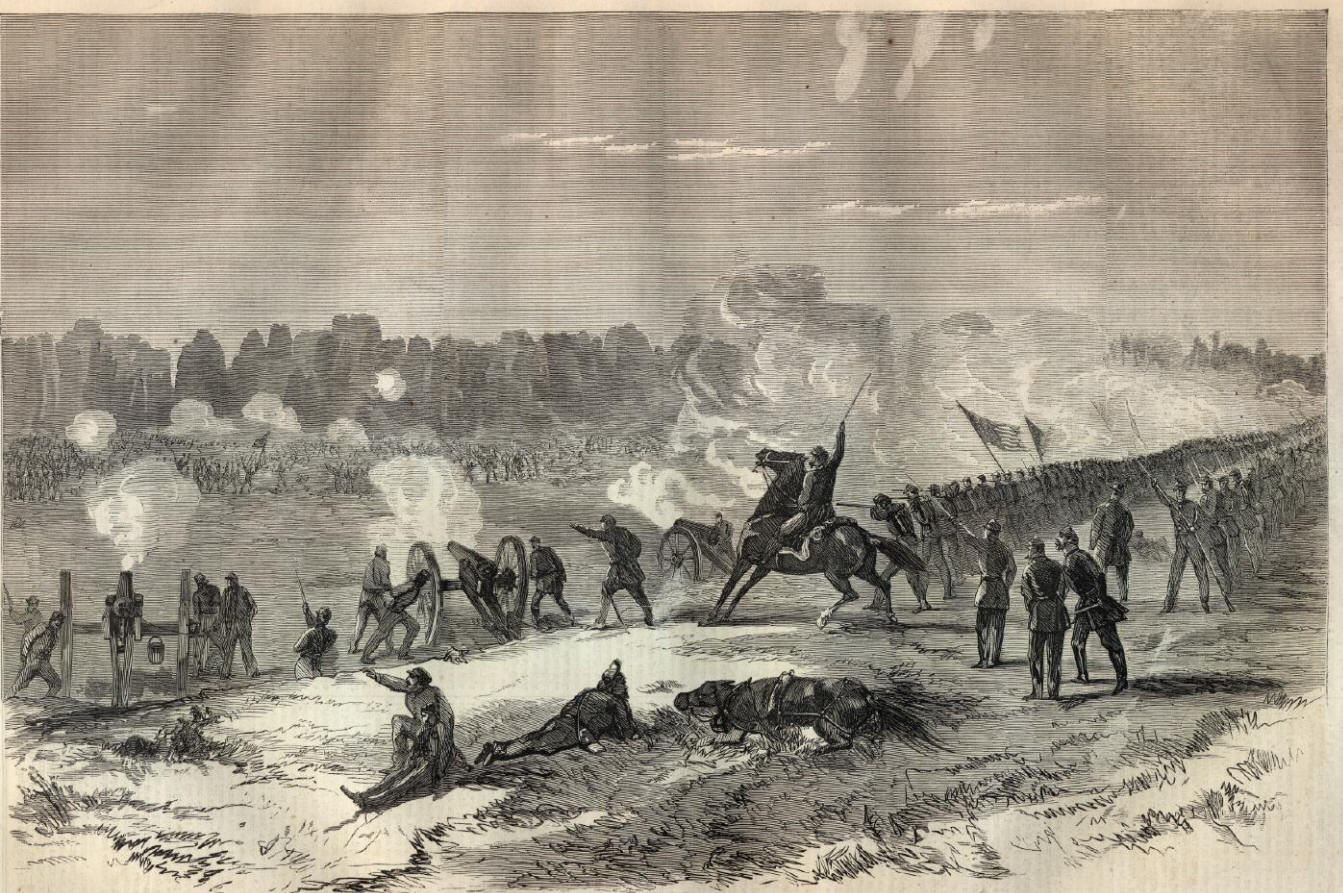
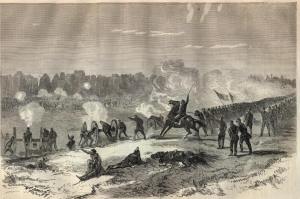
Battle of Pleasant Hill, Louisiana, April 9, 1864 (Harper’s Weekly, May 7, 1864, public domain).

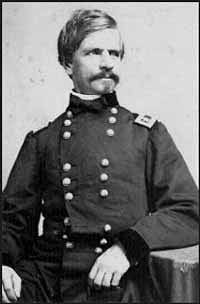
Arriving at Pleasant Hill, Louisiana around 8:30 a.m. on April 9, 1864, after having retreated from the scene of the Battle of Sabine Cross Roads just before midnight on April 8, and with the enemy believed to be in pursuit, Union Major-General Nathaniel Banks ordered his troops (including the (47th Pennsylvania Volunteers) to regroup and ready themselves for a new round of fighting. That fight would later be known as the Battle of Pleasant Hill.

In his official Red River Campaign Report penned a year later, Banks described how the day unfolded:

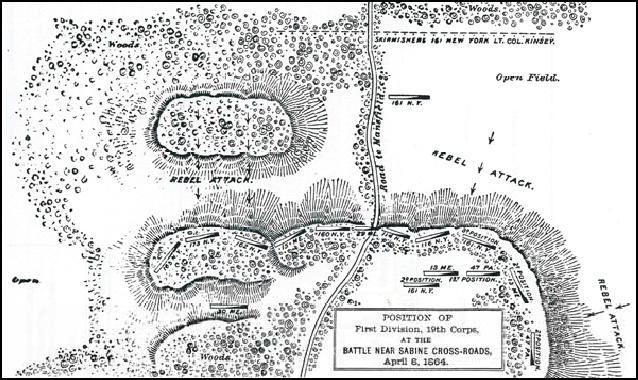
A line of battle was formed in the following order: First Brigade, Nineteenth Corps, on the right, resting on a ravine; Second Brigade in the center, and Third Brigade on the left. The center was strengthened by a brigade of General Smith’s forces, whose main force was held in reserve. The enemy moved toward our right flank. The Second Brigade [including the 47th Pennsylvania Volunteers] withdrew from the center to the support of the First Brigade. The brigade in support of the center moved up into position, and another of General Smith’s brigades was posted to the extreme left position on the hill, in echelon to the rear of the left main line.

Light skirmishing occurred during the afternoon. Between 4 and 5 o’clock it increased in vigor, and about 5 p.m., when it appeared to have nearly ceased, the enemy drove in our skirmishers and attacked in force, his first onset being against the left. He advanced in two oblique lines, extending well over toward the right of the Third Brigade, Nineteenth Corps. After a determined resistance this part of the line gave way and went slowly back to the reserves. The First and Second Brigades were soon enveloped in front, right, and rear. By skillful movements of General Emory the flanks of the two brigades, now bearing the brunt of the battle, were covered. The enemy pursued the brigades, passing the left and center, until he approached the reserves under General Smith, when he was met by a charge led by General Mower and checked. The whole of the reserves were now ordered up, and in turn we drove the enemy, continuing the pursuit until night compelled us to halt.

First State Color, 47th Pennsylvania Volunteers (issued September 20, 1861, retired May 11, 1865).

The 47th Pennsylvania Volunteers had been ordered into a critically important defensive position at the far right of the Union lines that day (April 9, 1864), their right flank spreading up onto a high bluff. According to Bates, after fighting off a charge by the troops of Confederate Major-General Richard Taylor, the 47th was forced to bolster the buckling lines of the 165th New York Infantry—just as the 47th was shifting to the left of the massed Union forces.

Nearly two decades later, First Lieutenant James Hahn recalled his involvement (as a sergeant in that battle) for a retrospective article in the January 31, 1884 edition of The National Tribune:

A PENNSYLVANIA SOLDIER’S EXPERIENCE.

Lieutenant James Hahn, of the 47th Pennsylvania infantry, writing from Newport, Pa., refers as follows to the engagements at Sabine Cross-roads and Pleasant Hill:

‘The 19th Corps had gone into camp for the evening about four miles from Sabine Cross-Roads. The engagement at Mansfield had been fought by the 13th Corps, who struggled bravely against overwhelming odds until they were driven from the field. I presume the rebel Gen. Dick Taylor knew of the situation of our army, and that the 19th was in the rear of the 13th, and the 16th still in rear of the 19th, some thirteen miles away, encamped at Pleasant Hill. They thought it would be a good joke to whip Banks’ army in detail: first, the 13th corps, then 19th, then finish up on the 16th. But they counted without their hosts; for when the couriers came flying back to the 19th with the news of the sad disaster that had befallen the 13th corps, we were double-quicked a distance of some four miles, and just met the advance of our defeated 13th corps – coming pell-mell, infantry, cavalry, and artillery all in one conglomerated mass, in such a manner as only a defeated and routed army can be mixed up – at Sabine Cross-roads, where our corps was thrown into line just in time to receive the victorious and elated Johnnies with a very warm reception, which gave them a recoil, and which stopped their impetuous headway, and gave the 13th corps time to get safely to the rear. I do not know what would have been the consequence if the 19th had been defeated also, that evening of the 8th, at Sabine Cross-roads, and the victorious rebel army had thrown themselves upon the ‘guerrillas’ then lying in camp at Pleasant Hill. It was just about getting dark when the Johnnies made their last assault upon the lines of the 19th. We held the field until about midnight, and then fell back and left the picket to hold the line while we joined the 16th at Pleasant Hill the morning of the 9th of April, soon after daybreak. It was not long until the rebel cavalry put in an appearance, and soon skirmishing commenced. About 4 o’clock in the afternoon the engagement become general all along the line, and with varied success, until late in the afternoon the rebels were driven from the field, and were followed until darkness set in, and about midnight our army made a retrograde movement, which ended at Grand Ecore, and left our dead and wounded lying on the field, all of whom fell into rebel hands. I have been informed since by one of our regiment, who was left wounded on the field, that the rebels were so completely defeated that they did not return to the battlefield till late the next day, and I have always been of the opinion that, if the defeat that the rebels got at Pleasant Hill had been followed up, Banks’ army, with the aid of A. J. Smith’s divisions, could have got to Shreveport (the objective point) without much left or hindrance from the rebel army.’

According to Major-General Banks, “The battle of the 9th was desperate and sanguinary. The defeat of the enemy was complete, and his loss in officers and men more than double that sustained by our forces.”

Even so, casualties for the 47th Pennsylvania Volunteer Infantry that day were high. The abridged lists below partially documents the 47th Pennsylvania Volunteers who were declared as wounded in action, killed in action, missing in action, or captives of the Confederate States Army (POWs) after the Battle of Pleasant Hill:

Killed or Wounded in Action:
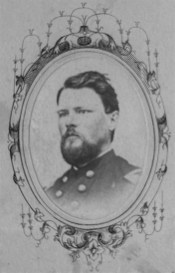
Lieutenant-Colonel George Warren Alexander, 47th Pennsylvania Volunteers, circa 1861 (public domain).

Alexander, George Warren: Lieutenant-Colonel and second in command of the regiment; struck in the left leg near the ankle by a shell fragment which fractured his leg; recovered and returned to duty; was honorably discharged upon expiration of his three-year term of service on September 23, 1864.

Baldwin, Isaac: Corporal, Company D; twice wounded in action in 1864, he was first wounded during the Battle of Pleasant Hill, Louisiana on April 9, 1864; recovered and returned to duty with Company D; wounded in action the second time during the Battle of Cedar Creek, Virginia on October 19, 1864; recovered and returned to duty with Company D; subsequently promoted to the rank of sergeant on January 20, 1865; was honorably discharged on December 25, 1865.

Buss, Charles (alternate spelling: Bress): Private, Company F; initially declared missing in action following the Battle of Pleasant Hill, Louisiana on April 9, 1864, Union Army leaders ultimately determined that he had been captured by Confederate States Army troops during that battle; marched one hundred and twenty-five miles to Camp Ford near Tyler, Texas; held captive there as a prisoner of war (POW) until he was released during a prisoner exchange on July 22, 1864. (Note: This was likely the “Charles Bress” shown on Camp Ford prisoner records as a private from Company D.) After recovering from his POW experience, he remained on the Company F rosters until he was honorably discharged in January 1865.

Clouser, Ephraim: Private, Company D; shot in the right knee and then captured by Confederate Army troops during the Battle of Pleasant Hill, Louisiana on April 9, 1864; marched or was transported one hundred and twenty-five miles to Camp Ford near Tyler, Texas, where he was held as a prisoner of war (POW) until he was released during a prisoner exchange on November 25, 1864; placed on the sick rolls of the Army of the United States after his release from captivity, he was hospitalized at the Union Army’s Jefferson Barracks in St. Louis, Missouri before being transferred to a Union Army hospital in Cincinnati, Ohio for more advanced care for his battle wound — and possibly also for “Soldiers’ Heart”/post-traumatic stress disorder (PTSD); from there, he was sent home to Pennsylvania to convalesce at the Union Army’s general hospital in York, Pennsylvania; honorably discharged after that convalescence, his exact muster out date remains unclear; described, post-war, as “an insane veteran,” he was repeatedly institutionalized throughout his remaining years.

Crownover, James: Sergeant, Company D; survived slight breast wound during the Battle of Pocotaligo, South Carolina on October 22, 1862; sustained gunshot wound to the right shoulder and was captured by Confederate States Army troops during the Battle of Pleasant Hill, Louisiana on April 9, 1864; marched or was transported to Camp Groce or Camp Ford near Tyler, Texas, where he was held until he was released during a prisoner exchange on November 25, 1864; while he was being held as a POW, he was commissioned, but not mustered as a second lieutenant on August 31, 1864; recovered following medical treatment; returned to duty with Company C and was promoted to the rank of first sergeant on July 5, 1865; was honorably discharged on December 25, 1865.

Dingler, John: Private, Company E; wounded in action during the Battle of Pleasant Hill, Louisiana on April 9, 1864; recovered and returned to duty with Company E; was honorably discharged upon expiration of his three-year term of enlistment on September 18, 1864; later re-enlisted with the 47th Pennsylvania’s B Company on February 13, 1865; was honorably discharged on December 25, 1865.

Dumm, William F. (alternate spellings: Drum or Drumm): Private, Company H; killed in action during the Battle of Pleasant Hill, Louisiana on April 9, 1864.

Fink, Edward: Private, Company B; killed in action during the Battle of Pleasant Hill, Louisiana on April 9, 1864.

Frack, William: Corporal, Company I; declared missing in action and “supposed dead” following the Battle of Pleasant Hill, Louisiana on April 9, 1864; was ultimately declared as killed in action.

Hagelgans, Nicholas: Private, Company K; killed in action during the Battle of Pleasant Hill, Louisiana on April 9, 1864.

Hahn, Richard: Private, Company E; killed in action by a musket ball during the Battle of Pleasant Hill, Louisiana on April 9, 1864.

Haltiman, William (alternate spellings: Haldeman or Halderman): Second Lieutenant, Company I; wounded in action during the Battle of Pleasant Hill, Louisiana on April 9, 1864; recovered and returned to duty with Company I; promoted to the rank of sergeant on January 1, 1865; promoted to the rank of second lieutenant on May 27, 1865; felled by sunstroke while on duty in mid-July 1865, he died in Pineville, South Carolina on July 21, 1865.

Hangen, Granville D.: Private, Company I; wounded in action during the Battle of Pleasant Hill, Louisiana on April 9, 1864; recovered and returned to duty with Company I; was honorably discharged on December 25, 1865.

Hartshorn, John (alternate spelling: Hartshorne): Private, Company H; initially listed as missing in action following the Battle of Pleasant Hill, Louisiana on April 9, 1864, Union Army officials ultimately determined that he had been captured by Confederate States Army troops and marched one hundred and twenty-five miles to Camp Ford near Tyler, Texas, where he was held captive as a prisoner of war (POW) until he was released during a prisoner exchange on July 22, 1864. (Note: His surname was spelled as “Hartshorne” in Camp Ford’s prisoner records, which also described him as “illiterate” and incorrectly listed his company as “K.”) He subsequently died at a Union Army hospital in New Orleans, Louisiana on August 8, 1864.

Huff, James: Corporal, Company E; wounded in action and captured by Confederate States Army troops during the Battle of Pleasant Hill, Louisiana on April 9, 1864; marched or was transported to Camp Ford near Tyler, Texas, where he was held as a prisoner of war (POW) until he was released during a prisoner exchange on August 29, 1864; recovered and returned to duty with Company E; was captured again by Confederate States Army troops during the Battle of Cedar Creek, Virginia on October 19, 1864; was marched or was transported to the Salisbury Prison Camp in Salisbury, North Carolina, where he was again held captive as a POW—this time, until his death on March 5, 1865. Per historian Lewis Schmidt, it was “reported [by a fellow soldier that] ‘he got his throat cut with a ball and I sott him up against stump to die.’” He was subsequently buried by Confederate States Army soldiers in one of the unmarked trench graves at the Salisbury Prison Camp.

Jones, John L.: Private, Company F; wounded in action and captured by Confederate troops during the Battle of Pleasant Hill, Louisiana on April 9, 1864; marched one hundred and twenty-five miles to Camp Ford near Tyler, Texas; promoted by his regiment on September 18, 1864 while he was still being held as a POW at Camp Ford, he was finally released during a prisoner exchange on September 24, 1864; recovered and returned to duty with Company F, he was promoted to the rank of sergeant on June 2, 1865; was honorably discharged on December 25, 1865.

Kennedy, James: Private, Company C; sustained gunshot fracture of the arm and gunshot wound to his side during the Battle of Pleasant Hill, Louisiana on April 9, 1864; was transported to the Union Army’s St. James Hospital in New Orleans, Louisiana, where he died from his battle wounds on April 27, 1864.

Kern, Samuel M.: Private, Company D; wounded in action and captured during the Battle of Pleasant Hill, Louisiana on April 9, 1864; marched or was transported to Camp Ford near Tyler, Texas, where he was held in captivity as a prisoner of war (POW) until he died on June 12, 1864.

Kramer, Cornelius: Private, Company C; wounded in the leg during the Battle of Pleasant Hill, Louisiana on April 9, 1864; recovered and returned to duty with Company C; was honorably discharged on December 16, 1865.

Matter, Jacob (alternate spelling: Madder): Private, Company K; initially reported as missing in action following the Battle of Pleasant Hill, Louisiana on April 9, 1864, his status was subsequently updated to “died of wounds” from that battle.

Mayers, William H. (alternate spellings: Mayer, Mayers, Meyers, Moyers; shown on regimental muster rolls as “Mayers, William H.” and “Meyers, William H.”; listed in Samuel P. Bates’ History of Pennsylvania Volunteers, 1861-5 and various other records as “Moyers I, William H.”): Corporal, Co. I; wounded in action during the Battle of Pleasant Hill, Louisiana on April 9, 1864; recovered and returned to duty with Company I; promoted to the rank of sergeant on September 19, 1864; was subsequently wounded in action again—this time during the Battle of Cedar Creek, Virginia on October 19, 1864; recovered and returned to duty; promoted to the rank of first sergeant on May 27, 1865; was commissioned, but not mustered as a second lieutenant on July 25, 1865; was honorably discharged on December 25, 1865.

McNew, John: Private, Company C; wounded in action and captured by Confederate States Army troops during the Battle of Pleasant Hill, Louisiana on April 9, 1964; marched to Camp Ford near Tyler, Texas and held captive there as a prisoner of war (POW) until he was released during prisoner exchange on July 22, 1864. (Note: Camp Ford records incorrectly listed him as a member of Company D and also described him as “illiterate.”) Promoted to the rank of corporal on December 1, 1864; reduced to the rank of private on April 22, 1865; was honorably discharged on December 25, 1865.

Miller, George: Private, Company C; wounded in the side during the Battle of Pleasant Hill, Louisiana on April 9, 1864; was honorably mustered out upon expiration of his three-year term of service on September 18, 1864; died suddenly in his hometown in 1867.

Miller, John Garber: Corporal, Company D; wounded in action and captured during the Battle of Pleasant Hill, Louisiana on April 9, 1864, he was marched one hundred and twenty-five miles to Camp Ford near Tyler, Texas, where he was held captive as a prisoner of war (POW) until he was released during a prisoner exchange on July 22, 1864. (Note: Camp Ford records incorrectly listed him as a member of Co. G.) Recovered and returned to duty with Company D, he was subsequently promoted to the rank of sergeant on September 19, 1864; was honorably mustered out on December 25, 1865.

Moser, Peter (alternate spelling: “Moses”): Private, Company F; survived arm wound sustained during the Battle of Pocotaligo, South Carolina on October 22, 1862; was honorably discharged on a surgeon’s certificate of disability on February 24, 1863; recovered and re-enlisted with Company F on December 19, 1863; initially declared missing in action following the Battle of Pleasant Hill, Louisiana on April 9, 1864. Union Army officers subsequently determined that he had been captured in battle at Pleasant Hill and marched one hundred and twenty-five miles to Camp Ford near Tyler, Texas where he was held captive as a prisoner of war (POW) until he was released during a prisoner exchange on July 22, 1864. (Note: His surname was listed on Camp Ford prisoner records as “Moses,” which also described him as “illiterate.”) Transported to New Orleans for treatment at a Union Army hospital, he remained “Absent and sick at New Orleans since 22 July 1864,” according to his Civil War Veterans’ Card File entry in the Pennsylvania State Archives, which also noted that he was “Supposed to be Dis. Under G.O. #77 A.G.O. W.D. Series 1865.” He ultimately survived the war and died in Pennsylvania in 1905.

O’Brien, William H.: Private, Company H; wounded in action during the Battle of Pleasant Hill, Louisiana on April 9, 1864; recovered and returned to duty with Company H; was honorably discharged on December 6, 1864.

Offhouse, William: Private, Company F; wounded in action during the Battle of Pleasant Hill, Louisiana on April 9, 1864; recovered and returned to duty with Company F; was honorably discharged upon expiration of his three-year term of service on September 18, 1864.

Private Nicholas Orris, Company H, 47th Pennsylvania Volunteers, circa 1863 (public domain).

Orris, Nicholas: Private, Co. H; killed in action during the Battle of Pleasant Hill, Louisiana on April 9, 1864; burial location remains unknown.

Petre, Pete: Private, Company D; wounded in action during the Battle of Pleasant Hill, Louisiana on April 9, 1864; recovered and returned to duty with Company D; was honorably discharged on December 25, 1865.

Powell, Solomon: Private, Company D; possibly wounded in action, he was captured during the Battle of Pleasant Hill, Louisiana on April 9, 1864; he then died from his battle wounds at Pleasant Hill, Louisiana either that same day or on June 7, 1864 while still being held by Confederate troops as a prisoner of war (POW). According to historian Lewis Schmidt, “Privates Powell and Wantz were probably buried in a cemetery at Pleasant Hill, ‘at the rear of the brick building used for a hospital,’ and after the war reinterred at Alexandria National Cemetery at Pineville, Louisiana in unknown graves.”)

Pyers, William: Sergeant, Company C; wounded in the arm and side while saving the flag from fallen C Company Color-Bearer Benjamin Walls; recovered and returned to duty with Company C; killed in action during the Battle of Cedar Creek, Virginia on October 19, 1864.

Reinert, Griffin (alternate spelling: Reinhart, Griffith; known as “Griff”): Private, Company F; sustained a gunshot wound to his jaw during the Battle of Pleasant Hill, Louisiana on April 9, 1864; was transported to the Union Army Hospital in York, Pennsylvania for more advanced medical care; was discharged on a surgeon’s certificate of disability on December 28, 1864.

Reinsmith, Tilghman: Private and Field Musician—Bugler, Company B; wounded in action during the Battle of Pleasant Hill, Louisiana on April 9, 1864; recovered and returned to duty with Company B; promoted to the rank of corporal on October 1, 1864; was honorably discharged on December 25, 1865.

Scheetz, Robert (alternate spelling Sheats): Private, Company F; wounded in action during the Battle of Pleasant Hill, Louisiana on April 9, 1864; recovered and returned to duty with Company F; was honorably discharged upon expiration of his three-year term of service on September 18, 1864.

Schleppy, Llewellyn J. (alternate spelling “Sleppy”): Private, Company F; wounded in action during the Battle of Pleasant Hill, Louisiana on April 9, 1864; recovered and returned to duty with Company F; was honorably discharged upon expiration of his three-year term of service on September 18, 1864.

Shaver, Joseph Benson: Private, Company D; wounded in action during the Battle of Pleasant Hill, Louisiana on April 9, 1864; recovered and returned to duty with Company D; was honorably discharged at Washington, D.C. on June 1, 1865.

Smith, Frederick: Private, Co. D; possibly wounded in action during the Battle of Pleasant Hill, Louisiana on April 9, 1864; captured by Confederate States Army troops during that battle and marched one hundred and twenty-five miles to Camp Ford near Tyler, Texas, where he was held captive as a prisoner of war (POW) until his death on May 4, 1864.

Sterner, John C.: Private, Company C; killed in action during the Battle of Pleasant Hill, Louisiana on April 9, 1864.

Stewart, Cornelius Baskins: Corporal, Company D; after surviving a wound sustained during the Battle of Pocotaligo, South Carolina on October 22, 1862, he recovered, was released to the regiment on December 15, 1862, and returned to active duty on March 1, 1863; shot in the right hip during the Battle of Pleasant Hill, Louisiana on April 9, 1864, he recovered and returned to duty again with Company D; he was honorably discharged upon completion of his three-year term of service on September 18, 1864.

Wagner, Samuel: Private, Company D; wounded in action during the Battle of Pleasant Hill, Louisiana on April 9, 1864, he was lost at sea while being transported for medical care aboard the USS Pocahontas when that steam transport foundered off of Cape May, New Jersey after colliding with the City of Bath on June 1, 1864.

Walls, Benjamin: Regimental Color-Sergeant, Company C; sustained gunshot wound to his left shoulder while trying to mount the 47th Pennsylvania’s flag on a piece of Confederate artillery that had been re-captured by the regiment; recovered and attempted to re-enlist, but was denied permission due to his age. (At sixty-seven, he was the oldest man to serve in the entire regiment.) Was honorably discharged upon expiration of his three-year term of service on September 18, 1864.

Wantz, Jonathan: Private, Company D; possibly wounded in action during the Battle of Pleasant Hill, Louisiana on April 9, 1864; captured by Confederate States Army troops during that battle, he was then held captive as a prisoner of war (POW) until he died at Pleasant Hill—either the same day or on June 17, 1864 while he was still being held as a POW by Confederate troops. According to historian Lewis Schmidt, “Privates Powell and Wantz were probably buried in a cemetery at Pleasant Hill, ‘at the rear of the brick building used for a hospital,’ and after the war reinterred at Alexandria National Cemetery at Pineville, Louisiana in unknown graves.”)

Weiss, John: Private, Co. F; Wounded in action and captured by Confederate States Army troops during the Battle of Pleasant Hill, Louisiana on April 9, 1864; marched or was transported to Camp Ford near Tyler, Texas, where he was held captive as a prisoner of war (POW) until his death on July 15, 1864; his burial location remains unknown.

Wieand, Benjamin: Private, Company D; Survived wound to his right thigh during the Battle of Pocotaligo, South Carolina on October 22, 1862; recovered and transferred to Company D, 47th Pennsylvania Volunteers on December 15, 1863; wounded in action and captured by Confederate States Army troops during Battle of Pleasant Hill, Louisiana on April 9, 1864, he was marched or was transported to Camp Ford near Tyler, Texas, where he was held captive as a prisoner of war (POW) until he was released during a prisoner exchange (possibly after July 1864); was honorably discharged on July 21, 1865.

Wolf, Samuel: Private, Company K; initially declared as missing in action following the Battle of Pleasant Hill, Louisiana on April 9, 1864, he was ultimately declared as having been killed in action during that battle after having been absent from muster rolls for a substantial period of time.

Zellner, Benjamin (alternate spelling: Cellner): Private, Company K; wounded in action four times in 1864; was shot in the leg and lost an eye during the Battle of Pleasant Hill, Louisiana on April 9, 1864; captured during that same battle by Confederate States Army troops, he was confined initially at Pleasant Hill and Mansfield before being marched or transported to Camp Ford near Tyler Texas, where he was held captive as a prisoner of war (POW). Note: Although Camp Ford records (under surname of “Cellner”) stated in 2010 that he was released during a prisoner exchange on July 22, 1864, Zellner stated in multiple newspaper accounts after war’s end that he was one of a group of three to four hundred men who had been deemed well enough by Camp Ford officials to be shipped to Shreveport, Louisiana, where they were then processed and sent by rail to Andersonville, the notorious Confederate POW camp in Georgia. Finally released from Andersonville in September 1864, he recovered and returned to duty with Company K. He was then wounded in the leg and also suffered a bayonet wound during the Battle of Cedar Creek, Virginia on October 19, 1964; recovered from those wounds and returned to duty with Company K; was honorably discharged on December 25, 1865. During a newspaper interview in later life, he told the reporter that his bayonet wound had never healed properly.


Captured and Held as Prisoners of War (POWs):
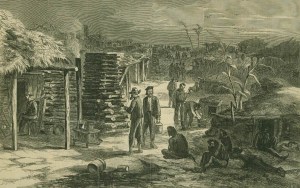
This image depicts life at Camp Ford, the largest Confederate Army prison camp west of the Mississippi River (Harper’s Weekly, March 4, 1865, public domain).

Brown, Francis or Charles: Private and Musician/Bugler, Company D and Regimental Band No. 2; captured by Confederate States Army troops during the Battle of Pleasant Hill, Louisiana on April 9, 1864 and marched one hundred and twenty-five miles to Camp Ford, near Tyler, Texas, where he was held captive as a prisoner of war (POW) until he was released during a prisoner exchange on July 22, 1864; subsequently awarded a furlough to recuperate, he was mistakenly listed on regimental rosters as having deserted while on leave on September 16, 1864 when, in fact, he had actually re-enlisted as a bugler with the 7th New York Volunteers in October 1864, signaling that there had either been a miscommunication with him about the furlough (his native language was German), or that he had developed a mental impairment during his captivity as a POW; he went on to  serve with the 7th New York until he was honorably mustered out at Hart Island, New York on August 4, 1865

Buss, Charles (alternate spelling: Bress): Private, Company F; initially declared missing in action following the Battle of Pleasant Hill, Louisiana on April 9, 1864, Union Army leaders ultimately determined that he had been captured by Confederate States Army troops during that battle; marched one hundred and twenty-five miles to Camp Ford near Tyler, Texas, he was held captive there as a prisoner of war (POW) until he was released during a prisoner exchange on July 22, 1864. (Note: This was likely the “Charles Bress” shown on Camp Ford prisoner records as a Private from Company D.) After recovering from his POW experience, he remained on the Company F rosters until he was honorably discharged in January 1865.

Clouser, Ephraim: Private, Company D; shot in the right knee and then captured by Confederate Army troops during the Battle of Pleasant Hill, Louisiana on April 9, 1864; marched or was transported one hundred and twenty-five miles to Camp Ford near Tyler, Texas, where he was held as a prisoner of war (POW) until he was released during a prisoner exchange on November 25, 1864; placed on the sick rolls of the Army of the United States after his release from captivity, he was hospitalized at the Union Army’s Jefferson Barracks in St. Louis, Missouri before being transferred to a Union Army hospital in Cincinnati, Ohio for more advanced care for his battle wound — and possibly also for “Soldiers’ Heart”/post-traumatic stress disorder (PTSD); from there, he was sent home to Pennsylvania to convalesce at the Union Army’s general hospital in York, Pennsylvania; honorably discharged after that convalescence, his exact muster out date remains unclear; described, post-war, as “an insane veteran,” he was repeatedly institutionalized throughout his remaining years.

Crownover, James: Sergeant, Company D; survived slight breast wound during the Battle of Pocotaligo, South Carolina on October 22, 1862; sustained gunshot wound to the right shoulder and was captured by Confederate States Army troops during the Battle of Pleasant Hill, Louisiana on April 9, 1864; marched or was transported to Camp Groce or Camp Ford near Tyler, Texas, where he was held captive until he was released during a prisoner exchange on November 25, 1864; while he was being held as a POW, he was commissioned, but not mustered as a second lieutenant on August 31, 1864; recovered and returned to duty with Company C; promoted to the rank of first sergeant on July 5, 1865; was honorably discharged on December 25, 1865.
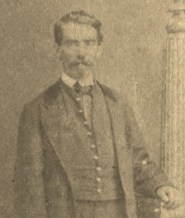
James Downs (circa 1880s, public domain).

Downs, James: Private, Company D; captured during the Battle of Pleasant Hill, Louisiana on April 9, 1864 and marched one hundred and twenty-five miles to Camp Ford, near Tyler, Texas, where he was held captive as a prisoner of war (POW) until he was released during a prisoner exchange on July 22, 1864; recovered and returned to duty with Company D; promoted to the rank of corporal on July 5, 1865; was honorably discharged on December 25, 1865.

Fisher, Charles B.: Private, Company K; captured during the Battle of Pleasant Hill, Louisiana on April 9, 1864; marched one hundred and twenty-five miles to Camp Ford near Tyler, Texas, where he was held captive as a prisoner of war (POW) until he was released during a prisoner exchange on July 22, 1864. (Note: Camp Ford’s prisoner records described him as “illiterate.”) Recovered and returned to duty with Company K; was honorably discharged upon expiration of his three-year term of service on September 18, 1864.

Hartshorn, John (alternate spelling: Hartshorne): Private, Company H; initially listed as missing in action following the Battle of Pleasant Hill, Louisiana on April 9, 1864, Union Army officials ultimately determined that he had been captured by Confederate States Army troops and marched one hundred and twenty-five miles to Camp Ford near Tyler, Texas, where he was held captive as a prisoner of war (POW) until he was released during a prisoner exchange on July 22, 1864. (Note: His surname was spelled as “Hartshorne” in Camp Ford’s prisoner records, which also described him as “illiterate” and incorrectly listed his company as “K.”) He subsequently died at a Union Army hospital in New Orleans, Louisiana on August 8, 1864.

Huff, James: Corporal, Company E; wounded in action and captured by Confederate States Army troops during the Battle of Pleasant Hill, Louisiana on April 9, 1864; marched or was transported to Camp Ford near Tyler, Texas, where he was held captive as a prisoner of war (POW) until he was released during a prisoner exchange on August 29, 1864; recovered and returned to duty with Company E; was captured again by Confederate States Army troops during the Battle of Cedar Creek, Virginia on October 19, 1864; was marched or transported to the Salisbury Prison Camp in Salisbury, North Carolina, where he was again held captive as a POW—this time, until his death on March 5, 1865. Per historian Lewis Schmidt, it was “reported [by a fellow soldier that] ‘he got his throat cut with a ball and I sott him up against stump to die.’” was buried by Confederate States Army soldiers in one of the unmarked trench graves at the Salisbury Prison Camp.

Jones, John L.: Private, Company F; wounded in action and captured by Confederate troops during the Battle of Pleasant Hill, Louisiana on April 9, 1864; marched one hundred and twenty-five miles to Camp Ford near Tyler, Texas, where he was held captive as a prisoner of war (POW); promoted by his regiment on September 18, 1864 while he was still being held as a POW at Camp Ford, he was finally released during a prisoner exchange on September 24, 1864; recovered and returned to duty with Company F, he was promoted to the rank of sergeant on June 2, 1865; was honorably discharged on December 25, 1865.

Kern, Samuel M.: Private, Company D; wounded in action and captured during the Battle of Pleasant Hill, Louisiana on April 9, 1864; marched or was transported to Camp Ford near Tyler, Texas, where he was held captive as a prisoner of war (POW) until he died on June 12, 1864.

McNew, John: Private, Company C; wounded in action and captured by Confederate States Army troops during the Battle of Pleasant Hill, Louisiana on April 9, 1964; marched to Camp Ford near Tyler, Texas and held captive there as a prisoner of war (POW) until he was released during a prisoner exchange on July 22, 1864. (Note: Camp Ford records incorrectly listed him as a member of Company D and also described him as “illiterate.) Promoted to the rank of corporal on December 1, 1864; reduced to the rank of private on April 22, 1865; was honorably discharged on December 25, 1865.

Miller, John Garber: Corporal, Company D; wounded in action and captured during the Battle of Pleasant Hill, Louisiana on April 9, 1864; marched one hundred and twenty-five miles to Camp Ford near Tyler, Texas, where he was held captive as a prisoner of war (POW) until he was released during a prisoner exchange on July 22, 1864. (Note: Camp Ford records incorrectly listed him as a member of Co. G.) Recovered and returned to duty with Company D, he was subsequently promoted to the rank of sergeant on September 19, 1864; was honorably mustered out on December 25, 1865.

Moser, Peter (alternate spelling: “Moses”): Private, Company F; survived arm wound sustained during the Battle of Pocotaligo, South Carolina on October 22, 1862; was honorably discharged on a surgeon’s certificate of disability on February 24, 1863; recovered and re-enlisted with Company F on December 19, 1863; initially declared missing in action following the Battle of Pleasant Hill, Louisiana on April 9, 1864, Union Army officers subsequently determined that he had been captured in battle at Pleasant Hill and marched one hundred and twenty-five miles to Camp Ford near Tyler, Texas, where he was held as a prisoner of war (POW) until he was released during a prisoner exchange on July 22, 1864. (Note: His surname was listed on Camp Ford prisoner records as “Moses,” which also described him as “illiterate.”) Transported to New Orleans for treatment at a Union Army hospital, he remained “Absent and sick at New Orleans since 22 July 1864,” according to his Civil War Veterans’ Card File entry in the Pennsylvania State Archives, which also noted that he was “Supposed to be Dis. Under G.O. #77 A.G.O. W.D. Series 1865.” He ultimately survived the war and died in Pennsylvania in 1905.

Powell, Solomon: Private, Company D; possibly wounded in action, he was also captured during the Battle of Pleasant Hill, Louisiana on April 9, 1864; he then died from his battle wounds at Pleasant Hill, Louisiana either that same day or on June 7, 1864 while still being held by Confederate troops as a POW. According to historian Lewis Schmidt, “Privates Powell and Wantz were probably buried in a cemetery at Pleasant Hill, ‘at the rear of the brick building used for a hospital,’ and after the war reinterred at Alexandria National Cemetery at Pineville, Louisiana in unknown graves.”)

Smith, Frederick: Private, Company D; possibly wounded in action during the Battle of Pleasant Hill, Louisiana on April 9, 1864; captured during that battle by Confederate States Army troops, he was marched one hundred and twenty-five miles to Camp Ford near Tyler, Texas, where he was held captive as a prisoner of war (POW) until his death on May 4, 1864.

Smith, John Wesley: Private, Company C; captured by Confederates during the Battle of Pleasant Hill, Louisiana on April 9, 1864; marched one hundred and twenty-five miles to Camp Ford near Tyler, Texas, where he was held captive as a prisoner of war (POW) until he was released during a prisoner exchange on July 22, 1864; recovered and returned to duty with Company C; was honorably discharged on December 25, 1865.

Smith, William J.: Private, Company D; captured by Confederate States Army troops during the Battle of Pleasant Hill, Louisiana on April 9, 1864; marched one hundred and twenty-five miles to Camp Ford near Tyler, Texas, where he was held captive as a prisoner of war (POW) until he was released during a prisoner exchange on July 22, 1874. (Note: Camp Ford’s prisoner records described him as “illiterate.”) Honorably mustered out on December 25, 1865, he suffered from scurvy, which was likely attributable to his POW experience. Injured in a work-related accident in May 1891, he contracted tetanus due to that injury and died from lock-jaw in Duncannon, Pennsylvania on 3 June 1891.

Wantz, Jonathan: Private, Company D; possibly wounded in action during the Battle of Pleasant Hill, Louisiana on April 9, 1863, he was then captured by Confederate States Army troops and held captive as a prisoner of war (POW) until he died at Pleasant Hill—either the same day or on June 17, 1864 while he was still being held as a POW by Confederate troops. According to historian Lewis Schmidt, “Privates Powell and Wantz were probably buried in a cemetery at Pleasant Hill, ‘at the rear of the brick building used for a hospital,’ and after the war reinterred at Alexandria National Cemetery at Pineville, Louisiana in unknown graves.”)

Weiss, John: Private, Co. F; Wounded in action and captured by Confederate States Army troops during the Battle of Pleasant Hill, Louisiana on April 9, 1864; marched or was transported to Camp Ford near Tyler, Texas, where he was held captive as a prisoner of war (POW) until his death on July 15, 1864; his burial location remains unknown.

Wieand, Benjamin: Private, Company D; Survived wound to his right thigh during the Battle of Pocotaligo, South Carolina on October 22, 1862; recovered and transferred to Company D, 47th Pennsylvania Volunteers on December 15, 1863; wounded in action and captured by Confederate States Army troops during Battle of Pleasant Hill, Louisiana on April 9, 1864, he was marched or was transported to Camp Ford near Tyler, Texas, where he was held captive as a prisoner of war (POW) until he was released during a prisoner exchange (possibly after July 1864); was honorably discharged on July 21, 1865.

Zellner, Benjamin (alternate spelling: Cellner): Private, Company K; wounded in action four times in 1864; was shot in the leg and lost an eye during the Battle of Pleasant Hill, Louisiana on April 9, 1864; captured during that same battle by Confederate States Army troops, he was confined initially at Pleasant Hill and Mansfield before being marched or transported to Camp Ford near Tyler Texas, where he was held captive as a prisoner of war (POW). Note: Although Camp Ford records (under surname of “Cellner”) stated in 2010 that he was released during a prisoner exchange on July 22, 1864, Zellner stated in multiple newspaper accounts after war’s end that he was one of a group of three to four hundred men who had been deemed well enough by Camp Ford officials to be shipped to Shreveport, Louisiana, where they were then processed and sent by rail to Andersonville, the notorious Confederate POW camp in Georgia. Finally released from Andersonville in September 1864, he recovered and returned to duty with Company K. He was then wounded in the leg and also suffered a bayonet wound during the Battle of Cedar Creek, Virginia on October 19, 1964; recovered from those wounds and returned to duty with Company K; was honorably discharged on December 25, 1865. During a newspaper interview in later life, he told the reporter that his bayonet wound had never healed properly.


Sources:

  1. “A Pennsylvania Soldier’s Experience.” Washington, D.C.: The National Tribune, January 31, 1884.
  2. Bates, Samuel P. History of Pennsylvania Volunteers, 1861-5, vol. 1. Harrisburg, Pennsylvania: B. Singerly, State Printer, 1869.
  3. Prisoner of War Records, Camp Ford and Camp Groce (47th Pennsylvania Volunteer Infantry). Tyler Texas: Smith County Historical Society, 2010.
  4. Schmidt, Lewis G. A Civil War History of the 47th Regiment of Pennsylvania Veteran Volunteers. Allentown, Pennsylvania: Self-published, 1986.
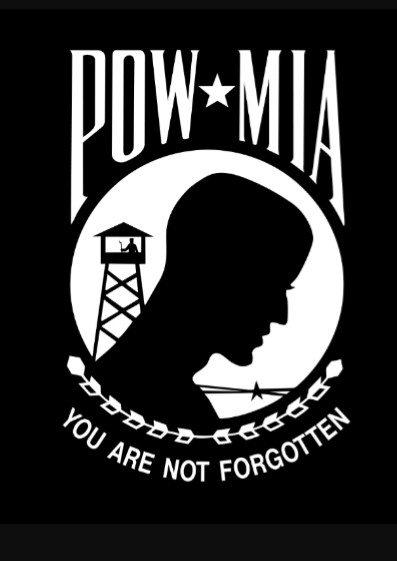
 

RED RIVER CAMPAIGN (Louisiana, March to June 1864)

February-March 1864:

 "For twenty minutes a continual roar of musketry was heard, reports of artillery shook the earth and the air seemed filled with the whiz of shells and bullets, commingled with the cheers of the men engaged in deadly strife…." - Henry D. Wharton, Company C, regarding the Battle of Opequan (19 September 1864)

First State Color, 47th Pennsylvania Volunteers; carried during the Red River Campaign across Louisiana, March-May 1864.

On February 25 and March 1, 1864, members of the 47th Regiment, Pennsylvania Volunteer Infantry set off for a phase of service in which their regiment will truly make history. Steaming for New Orleans aboard the Charles Thomas, the men of the 47th arrive at Algiers, Louisiana on or after February 28, and are then shipped by train to Brashear City. Following another steamer ride—this time to Franklin via the Bayou Teche—the 47th joins the 2nd Brigade, 1st Division of the Department of the Gulf’s 19th Army Corps. In short order, the 47th becomes the only Pennsylvania regiment to serve in the Red River Campaign of Union Major-General Nathaniel P. Banks. The 1st Division of the U.S. Army’s 19th Corps is commanded by Brigadier-General William Hemsley Emory. The 2nd Brigade is led by Brigadier-General James W. McMillan.

From March 14-26, the 47th marches through New Iberia, Vermillionville, Opelousas, and Washington while en route to Alexandria and Natchitoches. Often short on food and water, a number of men from the regiment become ill during the grueling marches in the harsh Louisiana climate while others are felled by dysentery and/or tropical diseases.

April 6, 1864:

Nathaniel P. Banks. Major General, U.S. Volunteers (1863, U.S. National Archives, public domain).

Nathaniel P. Banks, Major General, U.S. Volunteers (1863, U.S. National Archives, public domain).

Union Major-General Nathaniel P. Banks sends his Union troops west via a single road. The column of men stretches for twenty-plus miles.

Heading the column are roughly four thousand cavalrymen led by Brigadier-General Albert Lindley Lee. Most are newbies who have little experience on horseback. They are followed by three hundred supply wagons, artillery units, one infantry division, seven hundred additional support wagons, and most of the 13th and 19th Corps.

As they move, they move west, marching toward Los Adaes, Louisiana, and then north on the Shreveport-Natchitoches stagecoach road. The column is SO long and SO slow moving that the troops at its head reach Pleasant Hill before the last men have even left Natchitoches, Louisiana.

April 7, 1864:

Union cavalry troops of Major-General Nathaniel Banks begin their march. Led by Brigadier-General Albert Lee, their progress is slowed by Union wagons. Lee’s requests for infantry support plus redirection of the wagons is denied by Banks and leaders of the U.S. Army’s 19th Corps.

April 8, 1864 (morning):

Union Major-General Nathaniel Banks’ Cavalry, led by Brigadier-General Albert Lee, crosses a stream, and moves through trees and fields. In the distance, atop a ridge, Lee spots Confederate cavalry and infantry which stretch along both sides of the road for three quarters of a mile. After he spots more Confederate cavalry troops to his right, he asks for help from Banks. After taking his time, Banks finally orders the 13th U.S. Army to move up to assist Lee’s cavalry. Banks also moves up to see what’s happening.

Major General Richard Taylor, CSA (c. 1860s, public domain).

Major-General Richard Taylor, CSA (circa 1860s, public domain).

Arrayed before him in the distance are roughly ten thousand troops led by Confederate Major-General Richard Taylor, a plantation owner and son of former U.S. President Zachary Taylor. (Ironically, the 47th Pennsylvania Volunteers had just spent a significant period of time—off and on between 1862 to early 1864—garrisoning Fort Zachary Taylor in Key West, Florida.)

It’s the morning of April 8, 1864, the day of the Battle of Sabine Cross Roads near Mansfield, Louisiana.

Confederate Taylor and his 10,000 troops expect Banks’ Union forces to charge—but they don’t. A six-hour waiting game ensues.

April 8, 1864 (afternoon and evening):

At 4 p.m. Louisiana time, Confederate Major-General Richard Taylor’s left flank slowly begins an echelon formation attack on troops commanded by Union Major-General Nathaniel Banks, and the Union’s cavalry line buckles. BUT, in the process, eleven out of fourteen Confederate officers are killed in action within fourteen minutes of the opening charge.

Replacing one of those fallen Confederate leaders is Brigadier-General Camille Armand Jules Marie, the Prince de Polignac. A Prince of France, he fought with the Confederate Army during America’s Civil War, and is an important name for descendants of the 47th Pennsylvania Volunteers and others studying the 47th’s history because, later that same day, forces led by Polignac and Confederate Brigadier-General Thomas Green (Texas Cavalry Corps) directly engage in battle with the 47th Pennsylvania.

Good, Tilghman HThe 47th Pennsylvania Volunteers are led by Colonel Tilghman H. Good, the regiment’s founder, and his second in command, Lieutenant-Colonel George Warren Alexander.

Following the charge by Taylor’s Confederate troops and the resulting buckling of the Union’s right flank, Banks’ left Union flank also collapses. Taylor’s troops continue on, puncturing a secondary Union position mile three quarters of a mile behind the Union’s front line.

Banks then orders Brigadier-General William Emory to move his 1st Division, 19th U.S. Army Corps men to the front. Among Emory’s 5,859 men were nine New York regiments, three from Maine—and the 47th Pennsylvania Volunteers. Ninety minutes and seven miles of marching later, Emory’s men are waiting for the Confederates on the ridge above Chapman’s Bayou.

* Note: The 47th Pennsylvania Volunteers were positioned behind the 161st New York, 29th Maine, and other Union regiments at or near the farm of Joshua Chapman, about five miles southeast of Mansfield, Louisiana. The battles here were termed the “Peach Orchard” fight by Confederates and “Pleasant Grove” by 47th Pennsylvanians, a name attributed by some historians to the live oak trees in front of Chapman’s house. The fighting at the peach orchard was particularly brutal.

19th U.S. Army Map, Phase 3, Battle of Sabine Cross Roads/Mansfield, Louisiana (8 April 1864, public domain).

19th U.S. Army Map, Phase 3, Battle of Sabine Cross Roads/Mansfield, Louisiana (April 8, 1864, public domain).

As Confederates, led by Polignac, et. al. attack the center of the Union line, the 161st buckles, but the 29th Maine is able to repulse the Confederates. Green’s Confederate cavalrymen then attempt an end run on the Union’s right flank. His troops include: Brigadier-General Xavier DeBray’s Cavalry Brigade (composed of the 26th and 36th Texas Cavalry) and Colonel Augustus Buchel’s Cavalry Brigade (composed of the 1st Texas Cavalry and Terrell’s Texas Cavalry).

Initially positioned to the right of the 13th Maine Infantry, the 47th Pennsylvania Volunteers and 13th Maine both pinwheel to head off Green’s attack, and end Green’s flanking effort.

As darkness falls on April 8, 1864, fighting wanes and then ceases as exhausted troops on both sides collapse between the bodies of their dead comrades. Seventy-four men were killed in action, at least one hundred and sixty-one are wounded, and hundreds more are declared missing in action, including one hundred and eighty-eight men from the 19th U.S. Army (to which the 47th Pennsylvania was attached). Some of these missing soldiers (including members of the 47th Pennsylvania) are eventually found wounded or dead; others (including 47th Pennsylvanians) end up as prisoners of war (POWs), at Camp Ford, a Confederate prison near Tyler, Texas, but some remain missing to this day.

* Note: Some historians believe that these missing men may have been hastily interred somewhere on or near the battlefield by fellow soldiers or local residents, but no remains were found during archaeological excavations of the area during the late 20th and early 21st centuries. In 1996, L.P. Hecht, in his Echoes from the Letters of a Civil War Surgeon, reported that wild hogs had eaten the remains of at least some of the federal soldiers who had been left unburied.

April 8, 1864 (late evening):

Receiving word of another likely attack, Banks orders his Union troops to withdraw to Pleasant Hill (not to be confused with the aforementioned Pleasant Grove). This withdrawal commences after midnight and through the early hours of April 9, 1864. According to Banks:

From Pleasant Grove, where this action occurred, to Pleasant Hill was 15 miles. It was certain that the enemy, who was within the reach of re-enforcements, would renew the attack in the morning, and it was wholly uncertain whether the command of General Smith could reach the position we held in season for a second engagement. For this reason the army toward morning fell back to Pleasant Hill, General Emory covering the rear, burying the dead, bringing off the wounded, and all the material of the army. It arrived there at 8.30 on the morning of the 9th, effecting a junction with the forces of General Smith and the colored brigade under Colonel Dickey, which had reached that point the evening previous.

* To view the abridged casualty lists from the Battle of Sabine Cross Roads, visit “Battle of Sabine Cross Roads/Mansfield, Louisiana, April 8, 1864 — Casualties and POWs from the 47th Pennsylvania Volunteer Infantry.”

April 9, 1864 (morning):

Battle of Pleasant Hill, Louisiana, 9 April 1864 (Harper's Weekly, 7 May 1864, public domain).

Battle of Pleasant Hill, Louisiana, April  9, 1864 (Harper’s Weekly, May 7, 1864, public domain).

Arriving at Pleasant Hill, Louisiana around 8:30 a.m., and with the enemy believed to be in pursuit, Union Major-General Nathaniel Banks orders his troops to regroup and ready themselves for a new round of fighting.

The Battle of Pleasant Hill, Louisiana is just hours from its start. In his official Red River Campaign Report penned a year later, Banks described how the day unfolded:

A line of battle was formed in the following order: First Brigade, Nineteenth Corps, on the right, resting on a ravine; Second Brigade in the center, and Third Brigade on the left. The center was strengthened by a brigade of General Smith’s forces, whose main force was held in reserve. The enemy moved toward our right flank. The Second Brigade [including the 47th Pennsylvania Volunteers] withdrew from the center to the support of the First Brigade. The brigade in support of the center moved up into position, and another of General Smith’s brigades was posted to the extreme left position on the hill, in echelon to the rear of the left main line.

Light skirmishing occurred during the afternoon. Between 4 and 5 o’clock it increased in vigor, and about 5 p.m., when it appeared to have nearly ceased, the enemy drove in our skirmishers and attacked in force, his first onset being against the left. He advanced in two oblique lines, extending well over toward the right of the Third Brigade, Nineteenth Corps. After a determined resistance this part of the line gave way and went slowly back to the reserves. The First and Second Brigades were soon enveloped in front, right, and rear. By skillful movements of General Emory the flanks of the two brigades, now bearing the brunt of the battle, were covered. The enemy pursued the brigades, passing the left and center, until he approached the reserves under General Smith, when he was met by a charge led by General Mower and checked. The whole of the reserves were now ordered up, and in turn we drove the enemy, continuing the pursuit until night compelled us to halt.

The battle of the 9th was desperate and sanguinary. The defeat of the enemy was complete, and his loss in officers and men more than double that sustained by our forces. There was nothing in the immediate position or condition of the two armies to prevent a forward movement the next morning, and orders were given to prepare for an advance. The train, which had been turned to the rear on the day of the battle, was ordered to reform and advance at daybreak. I communicated this purpose at the close of the day to General A. J. Smith, who expressed his concurrence therein. But representations subsequently received from General Franklin and all the general officers of the Nineteenth Corps, as to the condition of their respective commands for immediate active operations against the enemy, caused a suspension of this order, and a conference of the general officers was held in the evening, in which it was determined, upon the urgent recommendation of all the general officers above named, and with the acquiescence of General Smith, to retire upon Grand Ecore the following day. The reasons urged for this course by the officers commanding the Nineteenth and Thirteenth Corps were, first, that the absence of water made it absolutely necessary to advance or retire without delay. General Emory’s command [including the 47th Pennsylvania Volunteers] had been without rations for two days, and the train, which had been turned to the rear during the battle, could not be put in condition to move forward upon the single road through dense woods, in which it stood, without difficulty and loss of time. It was for the purpose of communicating with the fleet at Springfield Landing from the Sabine Cross-Roads to the river, as well as to prevent the concentration of the Texan troops with the enemy at Mansfield, that we had pushed for the early occupation of that point. Considering the difficulty with which the gun-boats passed Alexandria and Grand Ecore, there was every reason to believe that the navigation of the river would be found impracticable. A squadron of cavalry, under direction of Mr. Young, who had formerly been employed in the surveys of this country and was now connected with the engineer department, which had been sent upon a reconnaissance to the river, returned to Pleasant Hill on the day of the battle with the report that they had not been able to discover the fleet nor learn from the people its passage up the river. (The report of General T. Kilby Smith, commanding the river forces, states that the fleet did not arrive at Loggy Bayou until 2 p.m. on the 10th of April, two days after the battle at Sabine Cross-Roads.) This led to the belief that the low water had prevented the advance of the fleet. The condition of the river, which had been steadily falling since our march from Alexandria, rendered it very doubtful, if the fleet ascended the river, whether it could return from any intermediate point, and probable, if not certain, that if it reached Shreveport it would never escape without a rise of the river, of which all hopes began to fail. The forces designated for this campaign numbered 42,000 men. Less than half that number was actually available for service against the enemy during its progress.

The distance which separated General Steele’s command from the line of our operations (nearly 200 miles) rendered his movements of little moment to us or to the enemy, and reduced the strength of the fighting column to the extent of his force, which was expected to be from 10,000 to 15,000 men. The depot at Alexandria, made necessary by the impracticable navigation, withdrew from our forces 3,000 men under General Grover. The return of the Marine Brigade to the defense of the Mississippi, upon the demand of Major-General McPherson, and which could not pass Alexandria without its steamers nor move by land for want of land transportation, made a further reduction of 3,000 men. The protection of the fleet of transports against the enemy on both sides of the river made it necessary for General A. J. Smith to detach General T. Kilby Smith’s division of 2,500 men from the main body for that duty. The army train required a guard of 500 men. These several detachments, which it was impossible to avoid, and the distance of General Steele’s command, which it was not in my power to correct, reduced the number of troops that we were able at any point to bring into action from 42,000 men to about 20,000. The losses sustained in the very severe battles of the 7th, 8th, and 9th of April amounted to about 3,969 men, and necessarily reduced our active forces to that extent.

The enemy, superior to us in numbers in the outset, by falling back was able to recover from his great losses by means of re-enforcements, which were within his reach as he approached his base of operations, while we were growing weaker as we departed from ours. We had fought the battle at Pleasant Hill with about 15,000 against 22,000 men and won a victory, which for these reasons we were unable to follow up. Other considerations connected with the actual military condition of affairs afforded additional reasons for the course recommended. Between the commencement of the expedition and the battle of Pleasant Hill a change had occurred in the general command of the army, which caused a modification of my instructions in regard to this expedition.

Lieutenant-General Grant, in a dispatch dated the 15th March, which I received on the 27th March, at Alexandria, eight days before we reached Grand Ecore, by special messenger, gave me the following instructions:

‘Should you find that the taking of Shreveport will occupy ten or fifteen days more time than General Sherman gave his troops to be absent from their command you will send them back at the time specified in his note of (blank date) March, even if it should lead to the abandonment of the main object of the expedition. Should it prove successful, hold Shreveport and Red River with such force as you deem necessary and return the balance of your troops to the neighborhood of New Orleans.’

These instructions, I was informed, were given for the purpose of having ‘all parts of the army, or rather all armies, act as much in concert as possible,’ and with a view to a movement in the spring campaign against Mobile, which was certainly to be made ‘if troops enough could be obtained without embarrassing other movements; in which event New Orleans would be the point of departure for such an expedition.’ A subsequent dispatch, though it did not control, fully justified my action, repeated these general views and stated that the commanding general ‘would much rather the Red River expedition had never been begun that that you should be detained one day beyond the 1st of May in commencing the movement east of the Mississippi.’

The limitation of time referred to in these dispatches was based upon an opinion which I had verbally expressed to General Sherman at New Orleans, that General Smith could be spared in thirty days after we reached Alexandria, but it was predicted upon the expectation that the navigation of the river would be unobstructed; that we should advance without delay at Alexandria, Grand Ecore, or elsewhere on account of low water, and that the forces of General Steele were to co-operate with us effectively at some point on Red River, near Natchitoches or Monroe. It was never understood that an expedition that involved on the part of my command a land march of nearly 400 miles into the enemy’s country, and which terminated at a point which we might not be able to hold, either on account of the strength of the enemy or the difficulties of obtaining supplies, was to be limited to thirty days. The condition of our forces, and the distance and difficulties attending the further advance into the enemy’s country after the battles of the 8th and 9th against an enemy superior in numbers to our own, rendered it probable that we could not occupy Shreveport within the time specified, and certain that without a rise in the river the troops necessary to hold it against the enemy would be compelled to evacuate it for want of supplies, and impossible that the expedition should return in any event to New Orleans in time to co-operate in the general movements of the army contemplated for the spring campaign. It was known at this time that the fleet could not repass the rapids at Alexandria, and it was doubtful, if the fleet reached any point above Grand Ecore, whether it would be able to return. By falling back to Grand Ecore we should be able to ascertain the condition of the fleet, the practicability of continuing the movement by the river, reorganize a part of the forces that had been shattered in the battles of the 7th, 8th, and 9th, possibly ascertain the position of General Steele and obtain from him the assistance expected for a new advance north of the river or upon its southern bank, and perhaps obtain definite instructions from the Government as to the course to be pursued.

Upon these general considerations, and without reference to the actual condition of the respective armies, at 12 o’clock midnight on the 9th I countermanded the order for the return of the train, and directed preparations to be made for the return of the army to Grand Ecore. The dead were buried and the wounded brought in from the field of battle and placed in the most comfortable hospitals that could be provided, and surgeons and supplies furnished for them. A second squadron of cavalry was sent, under direction of Mr. Young, of the engineer department, to inform the fleet of our retrograde movement and to direct its return, if it had ascended the river, and on the morning of the 10th the army leisurely returned to Grand Ecore.

The 47th Pennsylvania Volunteers had been ordered into a critically important defensive position at the far right of the Union lines that day (April 9, 1864), their right flank spreading up onto a high bluff. According to Bates, after fighting off a charge by the troops of Confederate Major-General Richard Taylor, the 47th was forced to bolster the buckling lines of the 165th New York Infantry—just as the 47th was shifting to the left of the massed Union forces.

The regiment sustained heavy casualties during the Battle of Pleasant Hill. The regiment’s second in command, Lieutenant-Colonel George W. Alexander, was severely wounded in both legs. One of those wounds—an artillery shrapnel wound to his left leg near the ankle—resulted in a fractured leg. Regimental Color-Sergeant Benjamin Walls and Sergeant William Pyers both sustained gunshot wounds.

Color-Sergeant Walls, the oldest man in the regiment, was shot in the left shoulder as he was mounting the 47th’s flag on one of the Massachusetts artillery caissons that had been recaptured by the 47th. Sergeant Pyers was then shot while retrieving the American flag from Walls, thereby preventing it from falling into enemy hands. Both men survived and continued to fight for the 47th—Walls until his three-year term of service expired on September 18, 1864, Pyers until he was killed in action just over a month later during the Battle of Cedar Creek, Virginia.

Many others were less fortunate. Hastily buried by comrades or local citizens, several still rest in unknown graves.

In addition, more men from the 47th Pennsylvania were captured and marched off to Camp Ford near Tyler, Texas, becoming the only soldiers from any Pennsylvania regiment to have men imprisoned there. At least three 47th Pennsylvanians never made it out alive; the remaining POWs were released in prisoner exchanges which took place from July through the fall of 1864.

Nearly two decades later, First Lieutenant James Hahn recalled his involvement (as a sergeant) in both engagements for a retrospective article in the January 31, 1884 edition of The National Tribune:

A PENNSYLVANIA SOLDIER’S EXPERIENCE.

Lieutenant James Hahn, of the 47th Pennsylvania infantry, writing from Newport, Pa., refers as follows to the engagements at Sabine Cross-roads and Pleasant Hill :

‘The 19th Corps had gone into camp for the evening about four miles from Sabine Cross-Roads. The engagement at Mansfield had been fought by the 13th Corps, who struggled bravely against overwhelming odds until they were driven from the field. I presume the rebel Gen. Dick Taylor knew of the situation of our army, and that the 19th was in the rear of the 13th, and the 16th still in rear of the 19th, some thirteen miles away, encamped at Pleasant Hill. They thought it would be a good joke to whip Banks’ army in detail : first, the 13th corps, then 19th, then finish up on the 16th. But they counted without their hosts; for when the couriers came flying back to the 19th with the news of the sad disaster that had befallen the 13th corps, we were double-quicked a distance of some four miles, and just met the advance of our defeated 13th corps – coming pell-mell, infantry, cavalry, and artillery all in one conglomerated mass, in such a manner as only a defeated and routed army can be mixed up – at Sabine Cross-roads, where our corps was thrown into line just in time to receive the victorious and elated Johnnies with a very warm reception, which gave them a recoil, and which stopped their impetuous headway, and gave the 13th corps time to get safely to the rear. I do not know what would have been the consequence if the 19th had been defeated also, that evening of the 8th, at Sabine Cross-roads, and the victorious rebel army had thrown themselves upon the ‘guerrillas’ then lying in camp at Pleasant Hill. It was just about getting dark when the Johnnies made their last assault upon the lines of the 19th. We held the field until about midnight, and then fell back and left the picket to hold the line while we joined the 16th at Pleasant Hill the morning of the 9th of April, soon after daybreak. It was not long until the rebel cavalry put in an appearance, and soon skirmishing commenced. About 4 o’clock in the afternoon the engagement become general all along the line, and with varied success, until late in the afternoon the rebels were driven from the field, and were followed until darkness set in, and about midnight our army made a retrograde movement, which ended at Grand Ecore, and left our dead and wounded lying on the field, all of whom fell into rebel hands. I have been informed since by one of our regiment, who was left wounded on the field, that the rebels were so completely defeated that they did not return to the battlefield till late the next day, and I have always been of the opinion that, if the defeat that the rebels got at Pleasant Hill had been followed up, Banks’ army, with the aid of A. J. Smith’s divisions, could have got to Shreveport (the objective point) without much left or hindrance from the rebel army.’

* To view the abridged casualty lists from the Battle of Pleasant Hill, visit “Battle of Pleasant Hill, Louisiana, April 9, 1864 — Casualties and POWs from the 47th Pennsylvania Volunteer Infantry.”

April 10-June 20, 1864:

After the regiment resettled in at Grand Ecore, Louisiana, 47th Pennsylvania scribe Henry D. Wharton finally had time to gather his thoughts and pen an account for the Sunbury American of the regiment’s recent battles:

Grand Ecore, Western La. }
April 12, 1864.

DEAR WILVERT:–After lying over for three days at Natchitoches to recruit and get a fresh supply from the Commisariat [sic], we again pushed forward in hunt of the rebs, as the sequel will show, proved lucky to us, and a perfect discomfiture to the enemy. On the first days march we were detained several hours by letting the 13th Army Corps pass by us, when we pushed forward to Double Bridges, a distance of sixteen miles. It was at this place, shortly before our arrival that a brisk skirmish came off between our cavalry and the rebs, in which we lost ninety men in killed and wounded. The rebs loss was more severe, besides a number of prisoners. On our march next day we saw unmistakeable [sic] evidence of hot work, the limbs were knocked from trees and their trunks were well pierced with shot and a number of horses lie dead by the road side, which showed the good work done by our cavalry…. We made Pleasant Hill that day and encamped. It was here that we expected a heavy fight, but there was a mere skirmish, the rebs skedaddling in a hurry, followed by our cavalry. Our forces moved early next morning, the 13th corps far in the advance. We made but seven miles and then went into camp, when the news [broke] that the 13th  and cavalry had engaged the enemy in force. Receiving two days hard tack, orders came to forward, which was done in double quick, making the distance, eight miles, in one hour and twenty minutes. We reached there at the right time, for the 13th had fought hard, expending their ammunition; the cavalry were repulsed and in their retreat made such confusion among the teams, that had it not been for our timely arrival, a panic would have ensued, exceeding that of Bull Run.

Our corps, the 19th, rushed to the rescue, fell into line of battle, and were soon pouring on the rebs a fire which turned the tide of affairs. We were two hours under fire, giving the enemy more than we received, when darkness caused the fight to come to a close, not, however, until we gave them a parting salute of two volleys from the whole corps. Three pieces of Nimm’s battery was [sic] captured by the enemy before our corps got there, besides the train of the cavalry, with ammunition and stores.

About 10 o’clock that night our forces made a retrograde movement, falling back to Pleasant Hill, to secure a better position.– The trains were sent back so as not to interfere with our movements. We arrived safely at nine o’clock, next morning [10 April 1864], and immediately prepared for the coming work. An hour later the rear guard came in informing us of the approach of the enemy.– Our skirmishers of cavalry and infantry were sent out, and ’twas not long until shots were exchanged. At this time, 10 o’clock, Smith’s 16th Army Corps reinforced us, and was soon formed in line of battle. Skirmishing continued until four o’clock, when the rebs commenced feeling our lines, with artillery, on right, left and centre [sic]. This was well replied to by the 25th N.Y. Battery. (The Battery to which Dad Randels and some others of our own boys are attached.)

The battle then commenced in real earnest. The rebs charged our lines, with cheers, firing volleys of musketry that would seem to annihilate our forces. They tried to flank our right and left, but the boys repulsed them handsomely. Batteries were captured and recaptured; advances were made and repulsed, the enemy fighting as though it was the last of a desperate cause. Our volleys of musketry, of which more was used than in any fight during the war, and the executions of the artillery was too much for them, for they fled, our men after them, yelling shouts of victory, and chasing them for five miles beyond the battlefield. Our fire told with terrible effect. A rebel Lieut.-Col. prisoner, said that in a charge made by one of their Brigades, when they advanced so far as to make a capture of a portion of our left a sure thing, they were met by a fire that destroyed four hundred, and then were driven back in confusion. In another advance, our fire was so destructive that only three men were left unscathed to return within their lines.

The prisoners captured amounted to two thousand; among them one General, one Lieutenant-Colonel, and any quantity of Captains and Lieutenants. Of the number killed and wounded I am unable to say, but the general impression is it amounted to over five thousand. The dead body of Lieut.-Gen. Mouton was found on the field, they leaving him in their hasty retreat. He was killed by the explosion of a shell, tearing away the upper portion of his head.

Nimm’s Battery was recaptured by our regiment. Twenty-three pieces of artillery were captured by the enemy. It was at the recaptured of Nimm’s Battery that our Color Sergeant, B. F. Walls, received his wound. The Squire was so well pleased at the recapture, that he rushed forward with his flag and raised it on the wheels of a caisson, when he fell pierced by a bullet in the left shoulder.

It seems the enemy were panic stricken, fleeing from the field in confusion, not caring for the wounded. They burned their entire train for fear of its falling into our hands. Part of this was well for us, for by doing so, the train taken from our cavalry was destroyed, giving us the satisfaction that our stores done [sic] them no good.

Our whole loss, in killed, wounded, missing and stragglers is estimated at three thousand. The greatest portion belonging to the 13th corps, having occurred at Sabine, on the 8th, in the first fight. The loss in Company “C,” is Jeremiah Haas, killed. Jerry felt no pain, dying almost instantly. He was beloved by his comrades, and his loss is much regretted by them. He was a good soldier, a young man whose morals were not injured from the influences of an army, and best of all, an honest man. The wounded are – 

Serg. Wm. Pyers, arm and side, not dangerous.
”  B. F. Walls, left shoulder.
Private Thomas Lothard, two wounds in arm, slight,
”  Cornelius Kramer, left leg, below knee.
”  George Miller, side.
”  Thomas Nipple, hip, slight.
”  James Kennedy, right and side, severe.

Missing – J. W. McNew, J. W. Firth, Samuel Miller, Edward Matthews, John Sterner and Conrad Holman.

The whole force of the enemy was thirty-five thousand – ten thousand of them coming fresh into the fight on the second day, at Pleasant Hill, under General (Pap) Price. Our forces, parts of the 19th and 16th corps, amounted to fifteen thousand, the 13th taking no part in this action. We expect to have another fight soon, probably at Shreveport, where it is expected the rebellion will be crushed on the western side of the Mississippi.

Our wounded are getting along finely, and are in the best of spirits. They will be sent to New Orleans to remain in hospital until convalescent. The boys remaining are well and seem anxious for another encounter with the graybacks.

The 47th Pennsylvanians remained at Grand Ecore for a total of eleven days (through April 22, 1864), where they engaged in the hard labor of strengthening regimental and brigade fortifications in a brutal climate. They then moved back to Natchitoches Parish where they arrived in Cloutierville, after marching forty-five miles, at 10 p.m. that night. En route, the Union forces were attacked again—this time in the rear, but they were able to quickly end the encounter and continue on.

The 47th Pennsylvania Volunteers were stationed just to the left of the “Thick Woods” with Emory’s 2nd Brigade, 1st Division for the Battle of Cane River Crossing at Monett’s Ferry, Louisiana, April 23, 1864 (Union Army map, public domain).

The next morning (April 23, 1864), episodic skirmishing quickly roared into the flames of a robust fight.

As part of the advance party led by Brigadier-General William Emory, the 47th Pennsylvanians took on the Confederate cavalrymen commanded by Brigadier-General Hamilton P. Bee in the Battle of Monett’s Ferry (also known as the “Cane River Crossing” or the “Affair at Monett’s Ferry”).

Responding to a barrage from the Confederate’s twenty-pound Parrott guns and raking fire from enemy troops situated near a bayou and on a bluff, Emory directed one of his brigades to keep Bee’s Confederates busy while sending the other two brigades to find a safe spot where his Union troops could ford the Cane River.

Affair at Monett’s Bluff, Louisiana, April 23, 1864 (Major-General Nathaniel Banks’ Red River Campaign Report, public domain).

As part of the “beekeepers,” the 47th Pennsylvanian Volunteers supported Emory’s artillery.

Meanwhile, other troops who were part of Emory’s command found and worked their way across the Cane River, attacked Bee’s flank, and forced a Rebel retreat. That Union brigade then erected a series of pontoon bridges, enabling the 47th and other remaining Union troops to make the Cane River Crossing by the next day.

As the Confederates retreated, they torched their own food stores, as well as the cotton supplies of their fellow southerners.

Encamping overnight before resuming their march toward Rapides Parish, the 47th Pennsylvanians finally arrived on April 26 in Alexandria, where they camped for seventeen more days (through May 13, 1864).

While there, they engaged yet again in the hard labor of fortification work, and also helped to build Bailey’s Dam,” a timber structure that enabled Union gunboats to make their way back down the Red River.

Christened “Bailey’s Dam” in reference to the Union officer who oversaw its construction, Lieutenant-Colonel Joseph Bailey, this timber dam built by the Union Army on the Red River near Alexandria, Louisiana in May 1864 facilitated Union gunboat passage (public domain).

In a follow-up letter penned from the 47th’s encampment at Morganza to the Sunbury American on May 29, 1864, Henry D. Wharton reported on the dam’s construction and other key details from this difficult period of service:

MORGAWZA BEND [sic, Morganza], La., May 29, 1864

DEAR WILVERT: – The uncertainty of a mail passing the blockade on the Red river, established by the Johnny Rebs while we were lying at Alexandria, prevented me from writing to you until now; but knowing the anxiety you have for us, I feel justified in commencing from where I dated my last letter, and will give you the ‘dangers we have passed’ as I recollect them.

Our sojourn at Grand Ecore was for eleven days, during which time our position was well fortified by entrenchments for a length of five miles, made of heavy logs, five feet high and six feet wide, filled in with dirt. In front of this, trees were felled for a distance of two hundred yards, so that if the enemy attacked we had an open space before us which would enable our forces to repel them and follow if necessary. But our labor seemed to the men as useless, for on the morning of 22d April, the army abandoned these works and started for Alexandria. From our scouts it was ascertained that the enemy had passed some miles to our left with the intention of making a stand against our right at Bayou Cane, where there is a high bluff and dense woods, and at the same attack Smith’s forces who were bringing up the rear. This first day was a hard one on the boys, for by ten o’clock at night they made Cloutierville, a distance of forty-five miles. On that day the rear was attacked which caused our forces to reverse their front and form in line of battle, expecting too, to go back to the relief of Smith, but he needed no assistance, sending word to the front that he had ‘whipped them, and could do it again.’ It was well that Banks made so long a march on that day, for on the next we found the enemy prepared to carry out their design of attacking us front and rear. Skirmishing commenced early in the morning and as our columns advanced he fell back towards the bayou, when we soon discovered the position of their batteries on the bluff. There was then an artillery duel by the smaller pieces, and some sharp fighting by the cavalry, when the ‘mule battery,’ twenty pound Parrott guns, opened a heavy fire, which soon dislodged them, forcing the chivalry to flee in a manner not at all suitable to their boasted courage. Before this one cavalry, the 3d Brigade of the 1st Div., and Birges’ brigade of the second, had crossed the bayou and were doing good service, which, with the other work, made the enemy show their heels. The 3d brigade done some daring deeds in this fight, as also did the cavalry. In one instance the 3d charged up a hill almost perpendicular, driving the enemy back by the bayonet without firing a gun. The woods on this bluff was so thick that the cavalry had to dismount and fight on foot. During the whole of the day, our brigade, the 2d was supporting artillery, under fire all the time, and could not give Mr. Reb a return shot.

While we were fighting in front, Smith was engaged some miles in the rear, but he done his part well and drove them back. The rebel commanders thought by attacking us in the rear, and having a large face on the bluffs, they would be able to capture our train and take us all prisoners, but in this they were mistaken, for our march was so rapid that we were on them before they had thrown up the necessary earthworks. Besides they underrated the amount of our artillery, calculating from the number engaged at Pleasant Hill. The rebel prisoners say it ‘seems as though the Yankees manufacture, on short notice, artillery to order, and the men are furnished with wings when they wish to make a certain point.

The damage done to the Confederate cause by the burning of cotton was immense. On the night of the 22d our route was lighted up for miles and millions of dollars worth of this production was destroyed. This loss will be felt more by Davis & Co., than several defeats in this region, for the basis of the loan in England was on the cotton of Western Louisiana.

After the rebels had fled from the bluff the negro troops put down the pontoons, and by ten that night we were six miles beyond the bayou safely encamped. The next morning we moved forward and in two days were in Alexandria. Johnnys followed Smith’s forces, keeping out of range of his guns, except when he had gained the eminence across the bayou, when he punished them (the rebs) severely.

We were at Alexandria seventeen days, during which time the men were kept busy at throwing up earthworks, foraging and three times went out some distance to meet the enemy, but they did not make their appearance in numbers large enough for an engagement. The water in the Red river had fallen so much that it prevented the gunboats from operating with us, and kept our transports from supplying the troops with rations, (and you know soldiers, like other people, will eat) so Banks was compelled to relinquish his designs on Shreveport and fall back to the Mississippi. To do this a large dam had to be built on the falls at Alexandria to get the ironclads down the river. After a great deal labor this was accomplished and by the morning of May 13th the last one was through the shute [sic], when we bade adieu to Alexandria, marching through the town with banners flying and keeping step to the music of ‘Rally around the flag,’ and ‘When this cruel war is over.’

Tragically, sometime after the 47th’s departure from Alexandria, an individual or groups of individuals torched the city. Although many present-day historians indicate that this terrible act was the work of Union troops, Henry Wharton recounted in his same letter of May 29 what had been reported about the fire to leaders of the 47th on May 14, 1864, and also provided a glimpse into two horrific attacks by Confederates on non-combatant ships:

The next morning, at our camping place, the fleet of boats passed us, when we were informed that Alexandria had been destroyed by fire – the act of a dissatisfied citizen and several negroes. Incendiary acts were strictly forbidden in a general order the day before we left the place, and a cavalry guard was left in the rear to see the order enforced. After marching a few miles skirmishing commenced in front between the cavalry and the enemy in riflepits [sic] on the bank of the river, but they were easily driven away. When we came up we discovered their pits and places where there had been batteries planted. At this point the John Warren, an unarmed transport, on which were sick soldiers and women, was fired into and sunk, killing many and those that were not drowned taken prisoners. A tin-clad gunboat was destroyed at the same place, by which we lost a large mail. Many letters and directed envelopes were found on the bank – thrown there after the contents had been read by the unprincipled scoundrels. The inhumanity of Guerrilla bands in this department is beyond belief, and if one did not know the truth of it or saw some of their barbarities, he would write it down as the story of a ‘reliable gentleman’ or as told by an ‘intelligent contraband.’ Not satisfied with his murderous intent on unarmed transports he fires into the Hospital steamer Laurel Hill, with four hundred sick on board. This boat had the usual hospital signal floating fore and aft, yet, notwithstanding all this, and the customs of war, they fired on them, proving by this act that they are more hardened than the Indians on the frontier.

As the Union troops continued their march toward the southeastern part of Louisiana, they passed Fort DeRussy, and then engaged in yet another battle—this time in Avoyelles Parish near Marksville. Fighting in this Battle of Mansura on May 16, 1864, Union infantry skirmished with Dick Taylor’s Confederates, and then orchestrated a flanking attack to force Taylor’s troops into retreat during what was largely a four-hour artillery shoot out:

On Sunday, May 15, we left the river road and took a short route through the woods, saving considerable distance. The windings of Red river are so numerous that it resembles the tape-worm railroad wherewith the politicians frightened the dear people during the administration of Ritner and Stevens. – We stopped several hours in the woods to leave cavalry pass, when we moved forward and by four o’clock emerged into a large open plain where we formed in line of battle, expecting a regular engagement. The enemy, however, retired and we advanced ‘till dark, when the forces halted for the night, with orders to rest on their arms. – ‘Twas here that Banks rode through our regiment, amidst the cheers of the boys, and gave the pleasant news that Grant had defeated Lee. Early next morning we marched through Marksville into a prairie nine miles long and six wide where every preparation was made for a fight. The whole of our force was formed in line, in support of artillery in front, who commenced operations on the enemy driving him gradually from the prairie into the woods. As the enemy retreated before the heavy fire of our artillery, the infantry advanced in line until they reached Mousoula [sic], where they formed in column, taking the whole field in an attempt to flank the enemy, but their running qualities were so good that we were foiled. The maneuvring [sic] of the troops was handsomely done, and the movements was [sic] one of the finest things of the war. The fight of artillery was a steady one of five miles. The enemy merely stood that they might cover the retreat of their infantry and train under cover of their artillery. Our loss was slight. Of the rebels we could not ascertain correctly, but learned from citizens who had secreted themselves during the fight, that they had many killed and wounded, who threw them into wagons, promiscuously, and drove them off so that we could not learn their casualties. The next day we moved to Simmsport on the Achafalaya [sic] river, where a bridge was made by putting the transports side by side, which enabled the troops and train to pass safely over. – The day before we crossed the rebels attacked Smith, thinking it was but the rear guard, in which they, the graybacks, were awfully cut up, and four hundred prisoners fell into our hands. Our loss in killed and wounded was ninety. This fight was the last one of the expedition. The whole of the force is safe on the Mississippi, gunboats, transports and trains. The 16th and 17th have gone to their old commands.

It is amusing to read the statements of correspondents to papers North, concerning our movements and the losses of our army. I have it from the best source that the Federal loss from Franklin to Mansfield, and from their [sic] to this point does not exceed thirty-five hundred in killed, wounded and missing, while that of the rebels is over eight thousand.

On Saturday, May 21, 1864, Brigadier-General William Emory then ordered the men of Company C – the 47th Pennsylvania’s Color-Guard Unit—to move enemy prisoners to a safer Union stronghold. So, Captain John Peter Shindel Gobin and his men marched one hundred and eighty-seven Confederate soldiers south, transferred their management to the appropriate Union authorities, and returned to the regiment.

In his continuation of his May 29 letter, Henry Wharton delivered the sad news that James Kennedy had died at a Union hospital in New Orleans from the wounds he had sustained in action during the Battle of Pleasant Hill on April 9:

His friends in the company were pleased to learn that Dr. Dodge of Sunbury, now of the U.S. Steamer Octorora, was with him in his last moments, and ministered to his wants. The Doctor was one of the Surgeons from the Navy who volunteered when our wounded was [sic] sent to New Orleans.

Aftermath

In addition to deaths in combat or at Confederate prison camps, the 47th Pennsylvania Volunteers lost a significant number of men to disease and the hardships wrought by hard duty in a difficult climate. Three members of the regiment also drowned during the Red River Campaign—one at the start of the expedition, the other two as the regiment’s time in Louisiana wound down.

Many of the regiment’s dead were ultimately laid to rest at the Chalmette National Cemetery in Chalmette, Louisiana—a fair number in unmarked graves. The graves of others still have not yet been located. At least one historian believes the missing status of soldiers on both sides is due to a combination of factors—poor military record keeping, hasty burials of war dead by civilians or retreating troops in shallow, unmarked graves, or the destruction of bodies by feral hogs which devoured soldiers’ remains before they could be properly interred. Quite simply, the scale of the carnage, once again, had overwhelmed military leaders on both sides.

History books record the Battle of Sabine Cross Roads/Mansfield as a Confederate victory, the Battle of Pleasant Hill as a technical victory for the Union, and the Battle of Monett’s Ferry/Cane River Crossing and Battle of Mansura/Marksville as clear victories for the Union.

Through it all, the Commonwealth of Pennsylvania was represented by just one regiment—the 47th Regiment, Pennsylvania Volunteer Infantry.


Sources:

1. 47th Pennsylvania Volunteer Records, in Camp Ford Prisoner of War Database. Tyler, Texas: The Smith County Historical Society, 1864.

2. A Pennsylvania Soldier’s Experience, in Up the Red River: How the Famous Banks Expedition Came to Grief: Off for Shreveport: The March from Grand Ecore to Pleasant Hill: Sabine Cross-Roads, And the Part the 13th Corps Played in That Battle. Washington, D.C.: January 31, 1884.

3. Banks, Nathaniel P. “General Banks’s Report of the Red River Campaign,” in Annual Report of the Secretary of War, in Message of the President of the United States, and Accompanying Documents, to the Two Houses of Congress, at the Commencement of the First Session of the Thirty-Ninth Congress. Washington, D.C.: Government Printing Office, 1866.

4. Bates, Samuel P. History of Pennsylvania Volunteers, 1861-5, vol. 1. Harrisburg, Pennsylvania: B. Singerly, State Printer, 1869.

5. Burial Ledgers, in Records of The National Cemetery Administration, and in Records of the U.S. Departments of Defense and Army (Quartermaster General). Washington, D.C.: U.S. National Archives and Records Administration, 1864-1865.

6. Civil War Muster Rolls, in Records of the Department of Military and Veterans’ Affairs (Record Group 19, Series 19.11). Harrisburg, Pennsylvania: Pennsylvania Historical and Museum Commission.

7. Civil War Veterans’ Card File, 1861-1866. Harrisburg, Pennsylvania: Pennsylvania State Archives.

8. Claims for Widow and Minor Pensions, in U.S. Civil War Widows’ Pension Files. Washington, D.C.: U.S. National Archives.

9. Dixon, Boyd. Archaeological Investigations at the Third Phase of the Battle of Mansfield, in Bulletin of the Louisiana Archaeological Society, Number 33. New Orleans, Louisiana: 2006. Retrieved online December 2015.

10. Gilbert, Randal B. A New Look at Camp Ford, Tyler Texas: The Largest Confederate Prison Camp West of the Mississippi River, 3rd Edition. Tyler, Texas: The Smith County Historical Society, 2010.

11. Interment Control Forms, in Records of the U.S. Office of the Quartermaster General. College Park, Maryland: U.S. National Archives and Records Administration.

12. Joiner, Gary D. The Red River Campaign: March 10—May 22, 1864. Civil War Trust: Washington, D.C.. Retrieved online December 2015.

13. Registers of Deaths of Volunteers, in Records of the U.S. Adjutant General’s Office. Washington, D.C.: U.S. National Archives and Records Administration, 1864-1865.

14. Reports of Maj. Gen. N. P. Banks (dated April 6, 1865), et. al., in The War of the Rebellion, Vol. XXXIV: A Compilation of the Official Records of the Union and Confederate Armies. Washington, D.C.: Government Printing Office, 1891.

15. Schmidt, Lewis. A Civil War History of the 47th Regiment of Pennsylvania Veteran Volunteers. Allentown, Pennsylvania: Self-published, 1986.
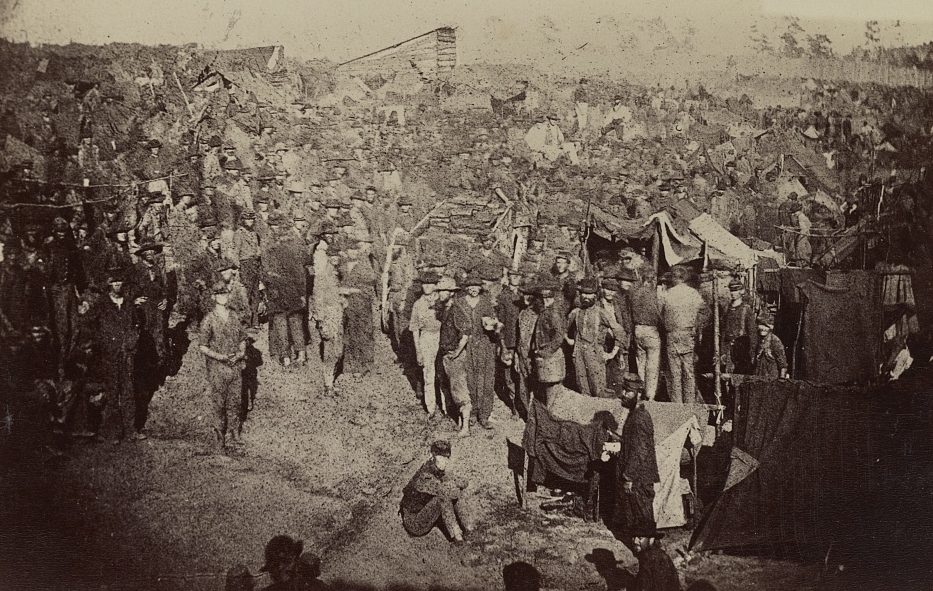
16. “The Red River Campaign: Detailed Account of the Retrograde Movement How the Gunboats Escaped.” New York, New York: The New York Times, 5 June 1864.

17. Wharton, Henry D. (as “H. D. W.”). Sunbury, Pennsylvania: Sunbury American, 1864-1865.