Black History Month: Ratification of the 15th Amendment to the United States Constitution (February 3, 1870)

The 15th Amendment to the United States Constitution, which ensured voting access for all American male citizens, regardless of race, color or previous condition of servitude, was passed by the United States Congress on February 26, 1869 and ratified on February 3, 1870 (U.S. National Archives and Records Administration, public domain; click to enlarge).

Passed by the United States Congress on February 26, 1869, the 15th Amendment to the United States Constitution granted Voting Rights to African American men. That amendment was officially ratified on February 3, 1870.

Text of the 15th Amendment

Fortieth Congress of the United States of America;

At the third Session, Begun and held at the city of Washington, on Monday, the seventh day of December, one thousand eight hundred sixty-eight.

A RESOLUTION

Proposing an Amendment to the Constitution of the United States.

Resolved by the Senate and House of Representatives of the United States of America in Congress assembled, (two-thirds of both houses concurring) that the following article be proposed to the legislature of the several States as an amendment to the Constitution of the United States which, when ratified by three-fourths of said legislatures shall be valid as part of the Constitution, namely:

Article XV.

Section 1. The right of citizens of the United States to vote shall not be denied or abridged by the United States or by any State on account of race, color, or previous condition of servitude–

Section 2. The Congress shall have power to enforce this article by appropriate legislation.


“The Fifteenth Amendment and Its Results” (G. F. Kahl for E. Sachse & Co., lithographer, circa 1870, U.S. Library of Congress, public domain; click to enlarge).


Sources:

  1. 15th Amendment to the United States Constitution: Voting Rights (1870),” in “Milestone Documents.” Washington, D.C.: U.S. National Archives and Records Administration, retrieved online February 3, 2025.
  2. The Fifteenth Amendment and Its Results.” Washington, D.C.: U.S. Library of Congress, retrieved online February 3, 2025.


A New Year and Our Second Decade of Storytelling

“New Year’s” (Thomas Nast, Harper’s Weekly, 8 January 1881, public domain).

Out with the old and in with the … old? Such are the lives of researchers and students of the American Civil War and Reconstruction eras as we move forward from 2024 into the New Year of 2025.

Unlike millions of other human beings across our pale blue dot (as Carl Sagan called our planet), we will continue to spend a significant portion of our lives looking back as 2025 progresses. We will do so not because we are backward in our ways of thinking, however, but because we’re hoping to better understand how our nation and world came to be what it is at present — as we also try to answer questions about our respective ancestors and the roles they played in shaping how we became who we are as individuals today.

My promise, as the founder and managing editor of 47th Pennsylvania Volunteers: One Civil War Regiment’s Story, is that our travels back in time, during what is now our second decade of operation, will continue to include adventures filled with fascinating twists and turns that will sometimes be sad, but more often than not, will be informative and positively energizing.

Our 2025 education program objectives are much the same as they’ve always been — to hunt for data that sheds light on the lives of the men who served with the 47th Pennsylvania Volunteer Infantry, to learn more about their immediate families and descendants, to find records, photographs and other memorabilia that will corroborate the data we uncover, to use those details, documents, photographs, and memorabilia to tell the stories of those men and their families as accurately and thoroughly as we possibly can, and to motivate learners of all ages across Pennsylvania, the United States and the world to study the history of this regiment and appreciate the impact that its members made, as individuals, on their communities, our nation and our beloved “pale blue dot.”

Welcome to 2025! Let the time travels begin!!


Through a War Correspondent’s Eyes: The Art of Winslow Homer

Winslow Homer, 1880 (public domain).

Winslow Homer (1836-1910) was a Boston native who became one of the most important artists in nineteenth-century America. Best known for his pastoral landscapes and seascapes, he was also a notable chronicler of the lives of average American Civil War-era soldiers.

Apprenticed to Boston lithographer J. H. Bufford during the mid-1850s, he subsequently turned down a job offer by Harper’s Weekly later that same decade to become a staff illustrator, choosing, instead, to make his living as a freelancer and founder of his own art studio in New York City.

American Civil War

“The Civil War Surgeon at Work in the Field,” Winslow Homer, 12 July 1862 (National Library of Medicine, public domain).

During the early 1860s, however, Winslow Homer was ultimately persuaded to serve as a war correspondent for Harper’s Weekly, leading him to create some of the most evocative illustrations of the American Civil War era.

In 1862, for example, he showed Americans what it was like to be “The Civil War Surgeon at Work in the Field” by sketching a group of Union Army surgeons and wounded soldiers and then turning that sketch into a powerful illustration for a July edition of Harper’s Weekly. In November of that same year, he documented “A Sharp-Shooter on Picket Duty,” perched high up in a tree in the Virginia countryside, protecting his fellow members of the Army of the Potomac.

“Thanksgiving in Camp” (Winslow Homer, Harper’s Weekly, 29 November 1862, public domain).

That same month, he also preserved, for all time, a Thanksgiving celebration of one pensive group of Union Army soldiers who were stationed far from the arms of loved ones.

Why Was His Work So Popular?

Homer’s work captured the hearts and minds of Harper’s Weekly readers for three simple reasons. He had a great eye and great instincts to match his great skills as an illustrator.

“Sleeping on Their Arms” (Winslow Homer, Harper’s Weekly, 21 May 1864, public domain).

According to a 2015 Yale News article about Homer by Amy Athey Mcdonald, “Artist-reporters” of the Civil War era “had to be more than merely good draftsmen. They had to be astute observers, have an instinct for story and drama, the ability to sketch quickly and accurately, and no small amount of daring, as they faced battles, injuries, starvation, and disease first hand.”

Post-War Life

After the Civil War ended, Winslow put a fair amount of distance between himself and the United States. In 1866, he traveled to France, where he spent ten months studying and honing his skills. According to the late H. Barbara Weinberg, a renowned American art scholar and former curator at The Metropolitan Museum of Art in New York City, “While there [was] little likelihood of influence from members of the French avante-garde” during this phase of Homer’s life, “Homer shared their subject interests, their fascination with serial imagery, and their desire to incorporate into their works outdoor light, flat and simple forms (reinforced by their appreciation of Japanese design principles), and free brushwork.”

Recognized as a master of oil painting in the United States by the 1870s (while still just in his thirties), he also began to explore his talent as a watercolor artist.

“The Cotton Pickers” (Winslow Homer, 1876, public domain).

And, he began to document the post-war lives of men and women who had been freed from chattel enslavement. Painted in oil in 1876, “The Cotton Pickers” illustrated the harsh reality of the Reconstruction era–that many Freedmen and Freedwomen were still engaged in the same backbreaking work that they had endured while enslaved before the war. According to author Carol Strickland, “Although the artist left scant record of his convictions about race, his paintings of Black people are unlike those of his contemporaries.”

“The Gulf Stream” (Winslow Homer, 1899, public domain).

When speaking to Strickland for a 2022 profile of Homer, Associate Professor Gwendolyn DuBois Shaw observed that “before Emancipation, artists had elicited sympathy for enslaved people by portraying them on the auction block, for example. But the market for such work evaporated after the 1860s…. Caricatures derived from minstrel shows appeared in paintings, but ‘it was really unusual for Homer to stake so much on Black subjects connected to Reconstruction.'” His work in this regard, however, was not only limited to the Reconstruction era; in later years, he depicted the struggles of the Black men, women and children that he met while visiting the Bahamas.

“The Life Line” (Winslow Homer, 1884, public domain).

But it was, perhaps, through his paintings of the sea that he became best known to a wider audience across America. According to Weinberg:

He enjoyed isolation and was inspired by privacy and silence to paint the great themes of his career: the struggle of people against the sea and the relationship of fragile, transient human life to the timelessness of nature.


Sources:

  1. McDonald, Amy Athey. “As Embedded Artist with the Union Army, Winslow Homer Captured Life at the Front of the Civil War.” New Haven, Connecticut: Yale News, 20 April 2015.
  2. Strickland, Carol. “Not Just Seascapes: Winslow Homer’s Rendering of Black Humanity.” Boston, Massachusetts: The Christian Science Monitor, 7 June 2022.
  3. “Thanksgiving in Camp (from ‘Harper’s Weekly,’ Vol. VII).” New York, New York: The Metropolitan Museum of Art, retrieved online 28 November 2024.
  4. “The Army of the Potomac — A Sharp-Shooter on Picket Duty (from ‘Harper’s Weekly,’ Vol. VII).” New York, New York: The Metropolitan Museum of Art, retrieved online 28 November 2024.
  5. Weinberg, H. Barbara. “Winslow Homer (1836-1910).” New York, New York: The Metropolitan Museum of Art, October 2004.


The Backbones of a Nation: The Laborers Who Enlisted with the 47th Pennsylvania Volunteer Infantry

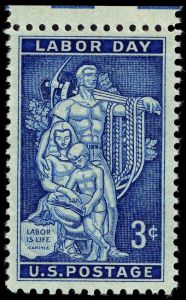
“Labor Is Life” (U.S. Postal Service’s Labor Day Stamp, 1956, U.S. Library of Congress, public domain).

Bakers, blacksmiths, boatmen, butchers, carpenters, cabinetmakers, cigarmakers, coal miners, factory workers, farmers, gardeners, gold miners, iron workers, masons, quarry workers, teamsters, tombstone carvers. These were just a few of the diverse job titles held by the laborers who enlisted with the 47th Pennsylvania Volunteer Infantry during the American Civil War.

Many returned to their same occupations after the war ended while others found new pathways for their life journeys. Far too many were never able to return to the arms of their loved ones and still rest in marked or unmarked graves far from the Commonwealth of Pennsylvania.

In honor of Labor Day, 47th Pennsylvania Volunteers: One Civil War Regiment’s Story is proud to present this abridged list of blue-collar men and boys who served with the 47th Pennsylvania Volunteer Infantry between August 1861 and January 1866, as well as the names of two of the women associated with the regiment who made their own unforgettable marks on the world.

* Auchmuty, Samuel S. (First Lieutenant, Company D): A native of Duncannon, Perry County and veteran of the Mexican-American War who was employed as a carpenter during the early 1860s, Samuel Auchmuty responded to President Abraham Lincoln’s call for volunteers to defend the nation’s capital during the opening weeks of the American Civil War by enrolling as a first lieutenant with Company D of the newly-formed 47th Pennsylvania Volunteer Infantry on August 20, 1861; after completing his three-year term of enlistment, he was honorably discharged in September 1864 and returned home to Pennsylvania, where he resumed his work as a house carpenter and launched a successful contracting business that was responsible for building new business structures, churches, single-family homes, and schools, as well as renovating existing structures; he died in 1891, following a brief illness;
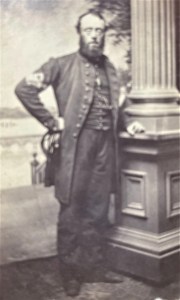
First Sergeant Christian S. Beard, circa 1863 (public domain).

* Beard, Christian Seiler (First Lieutenant, Company C): A twenty-seven-year-old, married carpenter residing in Williamsport, Lycoming County when President Abraham Lincoln called for seventy-five thousand volunteers to defend the nation’s capital, following the fall of Fort Sumter in mid-April 1865, Chistian S. Beard promptly enrolled for Civil War military service before that month was out as a private with Company D of the 11th Pennsylvania Volunteers; honorably discharged in July after completing his Three Months’ Service, he re-enlisted as a sergeant with Company C of the newly-formed 47th Pennsylvania Volunteers on August 19; after rising up through the ranks to become a first lieutenant, he was honorably discharged on Christmas Day, 1865, and returned home to his wife in Dauphin County, Pennsylvania, where he continued to work as a carpenter; after having several children with his wife, he was widowed by her; remarried in 1884, he relocated with his wife and children to Pittsburgh, where he continued to work as a carpenter; ailing with heart and kidney disease, he died there on November 16, 1911 and was interred at that city’s Highwood Cemetery;

* Burke, Thomas (Sergeant, Company I): A first-generation American, Thomas Burke was a twenty-year-old cabinetmaker residing in Allentown at the dawn of the American Civil War; after enrolling for military service on the day that the 47th Pennsylvania Volunteer Infantry was founded (August 5, 1861), he was officially mustered in as a private; from that point on, he continued to work his way up the ranks, receiving a promotion to corporal on September 19, 1864 and then to sergeant on July 11, 1865; honorably mustered out with his company in Charleston, South Carolina on December 25, 1865, he returned home to Lehigh County, where he married and began a family; sometime in early to mid-1871, he and his family migrated west to Iowa, settling in Anamosa, Jones County, where he was employed as a carpenter and contractor; he died at his home there on October 22, 1910 and was buried at that town’s Riverside Cemetery;

* Colvin, John Dorrance (Second Lieutenant, Company C): A native of Abington Township, Lackawanna County who was a farmer when he enlisted for Civil War military service on September 12, 1861, John D. Colvin transferred to the U.S. Army Signal Corps on October 13, 1863, and continued to serve with the Signal Corps for the duration of the war; employed as an engineer, post-war, he helped the Pacific Railroad to extend its service from Atchison, Kansas to Fort Kearney in Nebraska before returning home to Pennsylvania, where he married, began a family and resided with them in Olyphant and Carbondale before relocating with them to Parsons in Luzerne County, where he became a prominent civic leader and member of the school board; initially employed as a machinist, he went on to become superintendent of the Delaware & Hudson Coal company before taking a similar job with the Lehigh Valley Coal Company; the U.S. Postal Service’s postmaster of Parsons during the early 1890s, he died there on March 15, 1901 and was buried at the Hollenback Cemetery in Wilkes-Barre;

* Crownover, James (Sergeant, Company D): A twenty-three-year-old teamster residing in Blain, Perry County when he enrolled for Civil War military service on August 20, 1861, James Crownover rose up through the ranks of the 47th Pennsylvania from private to reach the rank of sergeant; wounded in the right shoulder and captured by Confederate troops during the Battle of Pleasant Hill, Louisiana on April 9, 1864, he was marched to Camp Ford, near Tyler, Texas, the largest Confederate prison camp west of the Mississippi River, where he was held as a prisoner of war (POW) until he was released during a prisoner exchange on November 25, 1864; during captivity, he was commissioned, but not mustered as a second lieutenant; given medical treatment before he was returned to active duty, he was honorably discharged with his regiment in Charleston, South Carolina on December 25, 1865; after returning home, he found work at a tannery near Blain, married, began a family and then relocated with them to East Huntingdon Township, Westmoreland County, where he worked as a teamster; relocating with them to Braddock in Allegheny County after the turn of the century, he worked at a local mill there; he died in Allegheny County on July 18, 1903 and was buried at the Monongahela Cemetery in Braddock Hills;

Jacob Daub, circa 1862-1865 (carte de visite, Cooley & Beckett Photographers, Savannah, Georgia and Beaufort and Hilton Head, South Carolina, public domain).

* Daub, Jacob and William J. (Drummer Boy, Company A): A German immigrant as a child, Jacob Daub emigrated with his parents and younger brother, William, circa 1852; after settling in Easton, Northampton County, Pennsylvania, where his father found work as a stone mason, Jacob grew up to become a cigarmaker, and also became the first of the two brothers to enlist in the American Civil War; after enrolling at the age of sixteen, he was classified as a field musician and assigned to Company A as its drummer boy; his nineteen-year-old brother, William, a carpenter by 1865, followed him into the war when he enlisted as a private with the same company in February of that year; after the war ended, both returned home to Northampton County, where they married, had children and went on to live long, full lives; William eventually died at the age of eighty in 1928, followed by Jacob, who passed away in 1936, roughly two months before his ninety-first birthday;

* Detweiler, Charles C. (Private, Company A): Berks County native Charles Detweiler enrolled for Civil War military service on September 16, 1862; a carpenter who later became a farmer, he served with Company A until he was severely injured in the Battle of Cedar Creek, Virginia, October 19, 1864, when he sustained a musket ball wound to the middle of his thigh; treated at a Union Army hospital in Virginia before being transported to the Union’s Mower General Hospital in Philadelphia, Pennsylvania, he learned that the musket ball had damaged his femur and femoral arteries; following his wound-related death at Mower on March 12, 1865, he was buried at the Fairview Cemetery in Kutztown, Berks County;

* Diaz, John (Private, Company I): An immigrant from Spain’s Canary Islands, John Diaz emigrated sometime between 1862 and 1865 and settled in Philadelphia, Pennsylvania, where he found work as a cigarmaker; on January 25, 1865, at the age of nineteen, he enlisted with the Union Army at a recruiting depot in Norristown, Montgomery County and served as a private with Company I of the 47th Pennsylvania Volunteer Infantry until it was mustered out on Christmas Day, 1865; following his return to Pennsylvania, he resumed work as a cigarmaker in Philadelphia, eventually launching his own cigarmaking firm, which became a family business as his sons became old enough to work for him; sometime between 1906 and 1910, he relocated with his wife and several of his children to Camden County, New Jersey, where he died on September 5, 1915;

James Downs (circa 1880s, public domain).

* Downs, James (Corporal, Company D): A twenty-three-year-old tanner residing in Blain, Perry County when he enrolled for Civil War military service on August 20, 1861, James Downs was captured by Confederate troops during the Battle of Pleasant Hill, Louisiana on April 9, 1864 and marched to Camp Ford, near Tyler, Texas, the largest Confederate prison camp west of the Mississippi River; held there as a prisoner of war (POW) until he was released during a prisoner exchange on July 22, 1864, he received medical treatment and was subsequently returned to active duty; following his honorable discharge with his regiment in Charleston, South Carolina, on December 25, 1865, he returned home, married, began a family and relocated with his family to Phillipsburg, New Jersey; suffering from heart and kidney disease, and possibly also from post-traumatic stress disorder, rather than “insane” as physicians at the Pennsylvania Memorial Home in Brookville, Jefferson County, Pennsylvania had diagnosed him, he fell from a window at that home and died at there on September 16, 1921; he was subsequently interred in the Veterans’ Circle of the Brookville Cemetery;

* Eagle, Augustus (Second Lieutenant, Company F): A German immigrant as a teenager, Augustus Eagle arrived in America on June 23, 1855, two years after his brother, Frederick Eagle, had emigrated and made a life for himself in Catasauqua, Lehigh County, Pennsylvania; both men married and began families there, with Fred employed as a laborer and Gus employed by the Crane Iron Works; when President Abraham Lincoln issued his call for volunteers to defend the nation’s capital during the opening weeks of the American Civil War, both men enrolled for military service on August 21, 1861 as privates with Company F of the 47th Pennsylvania Volunteer Infantry; in 1862, Fred fell ill and was honorably discharged on a surgeon’s certificate of disability, but Gus continued to serve, rising up through the regiment’s enlisted and officers’ ranks; commissioned as a second lieutenant, he was honorably discharged on September 11, 1864, upon completion of his three-year term of service; post-war, Fred became a successful baker with real estate and personal property valued at $4,200 (roughly $155,750 in 2023 dollars) and died in Catasauqua in 1885, while Gus owned a successful restaurant in Whitehall Township before operating the Fairview Hotel, which became a popular spot for political gatherings; after suffering a series of strokes in 1902, Gus died at his home on August 17 and was buried at the Fairview Cemetery in West Catasauqua;

* Eisenbraun, Alfred (Drummer Boy, Company B): A tobacco stripper and first-generation American from Allentown, Lehigh County, fifteen-year-old Alfred Eisenbraun became the second “man” from the 47th Pennsylvania to die when he succumbed to complications from typhoid fever at the Kalorama Eruptive Fever Hospital in Georgetown, District of Columbia on October 26, 1861; he still rests at the U.S. Soldiers’ and Airmen’s Home Cemetery in Washington, D.C.;

* Fink, Aaron (Corporal, Company B): A shoemaker and native of Salisbury Township, Lehigh County, Pennsylvania, Aaron Fink, grew up, began a family and established a successful small shoemaking business, first in Allentown and then in Mauch Chunk (now Jim Thorpe) in Carbon County; on August 20, 1861, he chose to respond to President Abraham Lincoln’s call for volunteers to help bring the American Civil War to a quick end when he enrolled for military service; shot in the right leg during the fighting at the Frampton Plantation during the Battle of Pocotaligo, South Carolina on October 22, 1862, he was treated at the Union Army’s hospital at Hilton Head, South Carolina, but died there from wound-related complications on November 5, 1862; initially buried near that hospital, his remains were later exhumed by Allentown undertaker Paul Balliet and returned to Pennsylvania for reinterment at that city’s Union-West End Cemetery;

* Fornwald, Reily M. (Corporal, Company G): Born in Heidelberg Township, Berks County, Reily Fornwald was raised there on his family’s farm near Stouchsberg; educated in his community’s common schools and then at Millersville State Normal School, he became a railroad worker before returning to farm life shortly before the dawn of the American Civil War; after enlisting for military service at the age of twenty on September 11, 1862, he was wounded in the head and groin by an exploding artillery shell during the Battle of Pocotaligo, South Carolina on October 22, 1862; stabilized on the battlefield before being transported to a field hospital for more advanced medical care, he spent four weeks recuperating before returning to active duty with his regiment; promoted to the rank of corporal on January 19, 1863, he continued to serve with his regiment until he was honorably discharged at Berryville, Virginia on September 18, 1864, upon expiration of his term of enlistment; after returning home, he spent four years operating a blast furnace for White & Ferguson in Robesonia, Berks County; he also married and began a family; sometime around 1870, he left that job to become an engine operator for Wright, Cook & Co. in Sheridan and then moved to a job as an engine operator for William M. Kauffman—a position he held for roughly a decade before securing employment as a shifting engineer with the Reading Railway Company at its yards in Reading; following his retirement in 1905, he and his wife settled in Robesonia, where he became involved in buying and selling real estate; following a severe fall in May 1925, during which he fractured a thigh bone, he died at the Homeopathic Hospital in Reading on June 1 and was buried at Robesonia’s Heidelberg Cemetery;
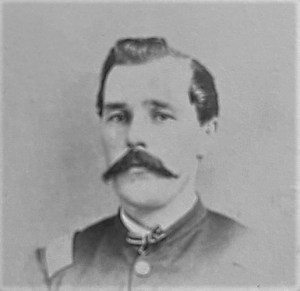
Captain Reuben Shatto Gardner, Company H, 47th Pennsylvania Volunteers, circa 1863 (public domain).

* Gardner, Reuben Shatto, John A. and Jacob S. R.: Natives of Perry County, Reuben Shatto Gardner and his brothers, John A. Gardner and Jacob S. R. Gardner, began their work lives as laborers; among the earliest responders to President Abraham Lincoln’s call to defend the nation’s capital, following the fall of Fort Sumter in mid-April 1861, Reuben was a twenty-five-year-old miller who resided in Newport, Perry County; after enlisting as a private with Company D of the 2nd Pennsylvania Volunteers on April 20, he was honorably mustered out after completing his term of service; he then re-upped for a three-year tour of duty, mustering in as a first sergeant with Company H of the newly-formed 47th Pennsylvania Volunteer Infantry; also enrolling with him that same day were his twenty-three-year-old and twenty-one-year-old brothers, John A. Gardner and Jacob S. R. Gardner; John officially mustered in at Camp Curtin in Harrisburg on September 18 (the day before Reuben arrived), while Jacob officially mustered in on September 19; both joined their brother’s company, entering at their respective ranks of corporal and private, but Jacob’s tenure was a short one; sickened by typhoid fever in late December 1861, he died at the 47th Pennsylvania’s regimental hospital at Camp Griffin, near Langley, Virginia on January 8, 1862; his remains were later returned to Perry County for burial at the Old Newport Cemetery; soldiering on, Reuben and John were transported with their regiment by ship to Fort Taylor in Key West, Florida and subsequently sent to South Carolina with their regiment and other Union troops; shot in the head and thigh during the Battle of Pocotaligo, South Carolina on October 22, 1862, Reuben was treated at the Union Army’s hospital at Hilton Head, South Carolina for an extended period of time, and then returned to active duty with his regiment; meanwhile, John was assigned with H Company and the men from Companies D, F and K to garrison Fort Jefferson in Florida’s Dry Tortugas; both brothers then continued to work their way up the regiment’s ranks, with John promoted to corporal on September 18, 1864 and Reuben ultimately commissioned as a captain and given  command of Company H on February 16, 1865; both then returned home after honorably mustering out with the regiment in Charleston, South Carolina on Christmas Day, 1865; sometime around 1866 or 1867, Reuben and his wife migrated west, first to Elk River Station in Sherburne County, Minnesota and then to Stillwater, Washington County, before settling in the city of Minneapolis; through it all, he worked as a miller; Reuben and his family then relocated farther west, arriving in King County, Washington after the Great Seattle Fire of 1889; initially employed in the restaurant industry, Reuben later found work as a railroad conductor before prospecting for gold with son Edward in the western United States and British Columbia, Canada during the 1890s Gold Rush; employed as a U.S. Post Office clerk in charge of the money order and registry departments in Seattle from 1898 to 1902, Reuben died in Seattle at the age of sixty-eight on September 25, 1903 and was interred at that city’s Lakeview Cemetery; meanwhile, his brother John, who had resumed work as a fireman with the Pennsylvania Railroad after returning from the war, was widowed by his wife in 1872; after remarrying and welcoming the births of more children, he was severely injured on October 9, 1873 while working as a fireman on the Pacific Express for the Pennsylvania Railroad; unable to continue working as a fireman due to his amputated hand, he worked briefly as a railroad call messenger before launching his own transfer business in Harrisburg; after he was widowed by his ailing second wife, John was severely injured in a second accident in 1894 while loading his delivery wagon; still operating his business after the turn of the century, he remarried on January 3, 1900, but was widowed by his third wife when she died during a surgical procedure in 1911; he subsequently closed his business and relocated to the home of his daughter in the city of Reading, Berks County; four years later, he fell on an icy sidewalk and became bedfast; aged eighty and ailing from arteriosclerosis and lung congestion, he died at her home on February 20, 1918 and was buried at Reading’s Charles Evans Cemetery;

* Gethers, Bristor (Under-Cook, Company F): Born into slavery in South Carolina circa 1829, Bristor Gethers was married “by slave custom at Georgetown, S.C.” on the Pringle plantation in Georgetown sometime around 1847 to “Rachael Richardson” (alternate spelling “Rachel”); a field hand at the dawn of the Civil War, he was freed from chattel enslavement in 1862 by Union Army troops; he then enlisted as an “Under-Cook” with Company F of the 47th Pennsylvania Volunteer Infantry in Beaufort, South Carolina on October 5, 1862, and traveled with the regiment until October 4, 1865, when he was honorably discharged in Charleston, South Carolina upon completion of his three-year term of enlistment; at that point, he returned to Beaufort and resumed life with his wife and their son, Peter; a farmer, Bristor was ultimately disabled by ailments that were directly attributable to his Union Army tenure; awarded a U.S. Civil War Soldiers’ Pension, he lived out his days with his wife on Horse Island, South Carolina, and died on Horse Island, South Carolina on June 24 or 25, 1894; he was then laid to rest at a graveyard on Parris Island on June 26 of that same year;

* Gilbert, Edwin (Captain, Company F): A native of Northampton County and a carpenter residing in Catasauqua, Lehigh County at the dawn of the American Civil War, Edwin Gilbert enrolled as a corporal on August 21, 1861; after rising up through his regiment’s officer ranks, he was ultimately commissioned as a captain and placed in charge of his company on New Year’s Day, 1865, and then mustered out with his company in Charleston, South Carolina of Christmas of that same year; resuming his life with his wife and children in Lehigh County after the war, he continued to work as a carpenter; after suffering a stroke in late December 1893, he died on January 2, 1894 and was buried at the Fairview Cemetery in West Catasauqua;
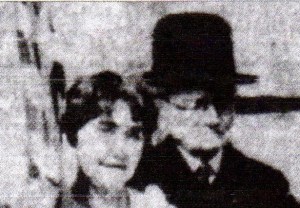
Mrs. Caroline Bost and Martin L. Guth celebrated the anniversary of President Abraham Lincoln’s birthday with fellow Grand Army of the Republic and ladies auxiliary members in February 1933 (public domain).

* Guth, Martin Luther (Corporal, Company K): A native of Lehigh County and son of a farmer, Martin L. Guth was a seventeen-year-old laborer and resident of Guthsville in Whitehall Township at the dawn of the American Civil War; after enrolling for military service on September 26, 1862, he was officially mustered in as a corporal; he continued to serve with his regiment until he was honorably mustered out on October 1, 1865, upon expiration of his term of service; at some point during that service, he broke his leg—an injury that did not heal properly and plagued him for the remainer of his life; after returning home to the Lehigh Valley, he found work again as a laborer; married in 1883, he became the father of four children, one of whom was born in New Mexico and another who was born in California; he had moved his family west in search of work in the mining industry; documented as a “prospector” or “miner” records created in Nevada during that period, he was also documented on voter registration rolls of Butte City in Glenn County, California in August 1892; by 1900, he was living separately from his wife, who was residing in Bandon, Coos County, Oregon with their two children while he was residing at the Veterans’ Home of California in Yount Township, Napa County, California; subsequently admitted to the Mountain Branch of the network of U.S. National Homes for Disabled Volunteer Soldiers in Johnson City, Tennessee on February 11, 1912, his disabilities included an old compound fracture of his right leg with chronic ulceration, defective vision (right eye), chronic bronchitis, and arteriosclerosis; discharged on December 12, 1920, he was admitted to the U.S. National Soldiers’ Home in Leavenworth, Kansas on July 30, 1912, but discharged on September 29, 1913; by 1920, he was living alone on Fruitvale Avenue in the city of Oakland, California, but was remaining active with his local chapter of the Grand Army of the Republic as he rose through the leadership ranks of chapter, state and national G.A.R. organizations; after a long, adventure-filled life, he died on October 11, 1935, at the age of ninety-one, at the veterans’ home in San Francisco and was interred at the San Francisco National Cemetery (also known as the Presidio Cemetery);

Lieutenant Charles A. Hackman, Company G, 47th Pennsylvania Volunteers, circa 1864 (public domain).

* Hackman, Charles Abraham and Martin Henry (First Lieutenant and Sergeant, Company G): Natives of Rittersville, Lehigh County, Charles and Martin Hackman began their work lives as apprentices, with Charles employed by a carpenter and Martin employed by master coachmaker Jacob Graffin; members of the local militia unit known as the Allen Rifles, they were among the earliest responders to President Abraham Lincoln’s call to defend the nation’s capital, following the fall of Fort Sumter in mid-April 1861; both enlisted as privates with Company I of the 1st Pennsylvania Volunteers on April 20 and were honorably mustered out in July after completing their service; Charles then re-upped for a three-year tour of duty, mustering in as a sergeant with Company G of the newly-formed 47th Pennsylvania Volunteer Infantry; he then spent most of his early service in Virginia; meanwhile, his younger brother, Martin H. Hackman, who was employed as a coach trimmer in Lehigh County, re-enlisted for his own second tour of duty, as a private with Charles’ company, on January 8, 1862; working their way up the ranks, Charles was commissioned as a first lieutenant on June 18, 1863, while Martin was promoted to sergeant on April 26, 1864; Charles was then breveted as a captain on November 30, 1864 after having mustered out on November 5; Martin was then honorably discharged on January 8, 1865; initially employed, post-war, with the Philadelphia & Reading Railroad’s train car facility in Reading, Berks County, Charles was promoted to car inspector at the company’s Philadelphia facility in December 1866; he subsequently married, but had no children and was widowed in 1904; remarried, he remained in Philadelphia until the early 1900s, when he relocated to Allentown; Martin, who worked as a bricklayer in Allentown, did have children after marrying, but he, too, was widowed; also remarried, he became a manager at a rolling mill; ailing with pneumonia in early 1917, Charles was eighty-six years old when he died in Allentown on January 17; he was buried at Allentown’s Union-West End Cemetery, while his brother Martin was buried at the Nisky Hill Cemetery in Bethlehem, following his death in Bethlehem from a cerebral hemorrhage on December 14, 1921;

* Junker, George (Captain, Company K): A German immigrant as a young adult, George Junker emigrated sometime around the early 1850s and settled in Allentown, Lehigh County, Pennsylvania, where he found employment as a marble worker and tombstone carver, and where he also joined the Allen Infantry, one of his adopted hometown’s three militia units; responding to U.S. President Abraham Lincoln’s call for volunteers to defend the nation’s capital during the opening weeks of the American Civil War, George enlisted with his fellow Allen Infantrymen, honorably completed his Three Months’ Service, and promptly began his own recruitment of men for an “all-German company” for the newly-formed 47th Pennsylvania Volunteer Infantry; commissioned as a captain with the 47th Pennsylvania, he was placed in charge of his men who became known as Company K; mortally wounded by a Confederate rifle shot during the Battle of Pocotaligo, South Carolina on October 22, 1862, he died from his wounds the next day at the Union Army’s division hospital at Hilton Head, South Carolina; his remains were returned to his family in Hazleton, Luzerne County for reburial at the Vine Street Cemetery;

* Kern, Samuel (Private, Company D): A native of Perry County who was employed as a farmer in Bloomfield, Perry County when he enrolled for Civil War military service on August 20, 1861, Samuel Kern was wounded and captured by Confederate troops during the Battle of Pleasant Hill, Louisiana on April 9, 1864; marched to Camp Ford, near Tyler, Texas, the largest Confederate prison camp west of the Mississippi River, he was held there as a prisoner of war (POW) until he died from harsh treatment on June 12, 1864; buried somewhere on the grounds of that prison camp, his grave remains unidentified;

* Kosier, George (Captain, Company D): A native of Perry County and twenty-four-year-old carpenter residing in that county’s community of New Bloomfield at the dawn of the American Civil War, George Kosier became one of the earliest men from his county to respond to President Abraham Lincoln’s call for to defend the nation’s capital, following the fall of Fort-Sumter in mid-April 1861, when he enrolled for military service on April 20 as a corporal with Company D of the 2nd Pennsylvania Volunteers; honorably discharged in July after completing his Three Months’ Service, he re-enlisted as a first sergeant with Company D of the newly-formed 47th Pennsylvania Volunteer Infantry; joining him were his younger brothers, Jesse and William S. Kosier, aged nineteen and twenty-three, who were enrolled as privates with the same company; all three subsequently re-enlisted with their company at Fort Taylor in Key West, Florida in 1863; sadly, Jesse fell ill with pleurisy and died at the Union Army’s Field Hospital in Sandy Hook, Maryland on August 1864; initially buried at a cemetery in Weverton, Maryland, his remains were later exhumed and reinterred at the Antietam National Cemetery in Sharpsburg, Maryland; both George and William continued to serve with the regiment, with George continuing his rise up the ranks; commissioned as a captain, he was given command of Company D in early June 1865; both brothers were then honorably discharged with their regiment on Christmas Day, 1865; post-war, both men married and began families; William died in Pennsylvania sometime around 1879, but George went on to live a long full life; after settling in Ogle County, Illinois, where he was employed as a carpenter, he relocated with his family to Wright County, Iowa, where he built bridges; he died in Chicago on December 3, 1920 and was buried at that city’s Rosehill Cemetery;
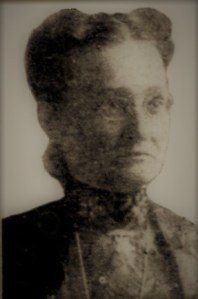
Anna (Weiser) Leisenring (1851-1942) , circa 1914 (public domain).

* Leisenring, Annie (Weiser): The wife of Thomas B. Leisenring (Captain, Company G), Annie Leisenring was employed by the Commonwealth of Pennsylvania as a factory inspector after the American Civil War; she became well known through newspaper accounts of her inspection visits and also became widely respected for her efforts to improve child labor laws statewide;

* Lowrey, Thomas (Corporal, Company E): An Irish immigrant as a young adult, Thomas Lowrey emigrated sometime around the late 1840s or early 1850s and settled in Northampton County, Pennsylvania, where he found work as a miner, married and began a family; responding to U.S. President Abraham Lincoln’s call for volunteers to defend the nation’s capital during the opening weeks of the American Civil War, Thomas enlisted with Company E of the 47th Pennsylvania on September 16, 1861; after completing his three-year term of enlistment, he was honorably discharged in September 1864 and returned home to Pennsylvania, where he resumed work as a coal miner near Shenandoah, Schuylkill County, and where he resided with his wife and children; after witnessing the dawn of a new century, he died in Shenandoah on January 11, 1906;
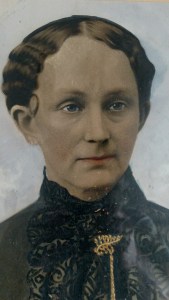
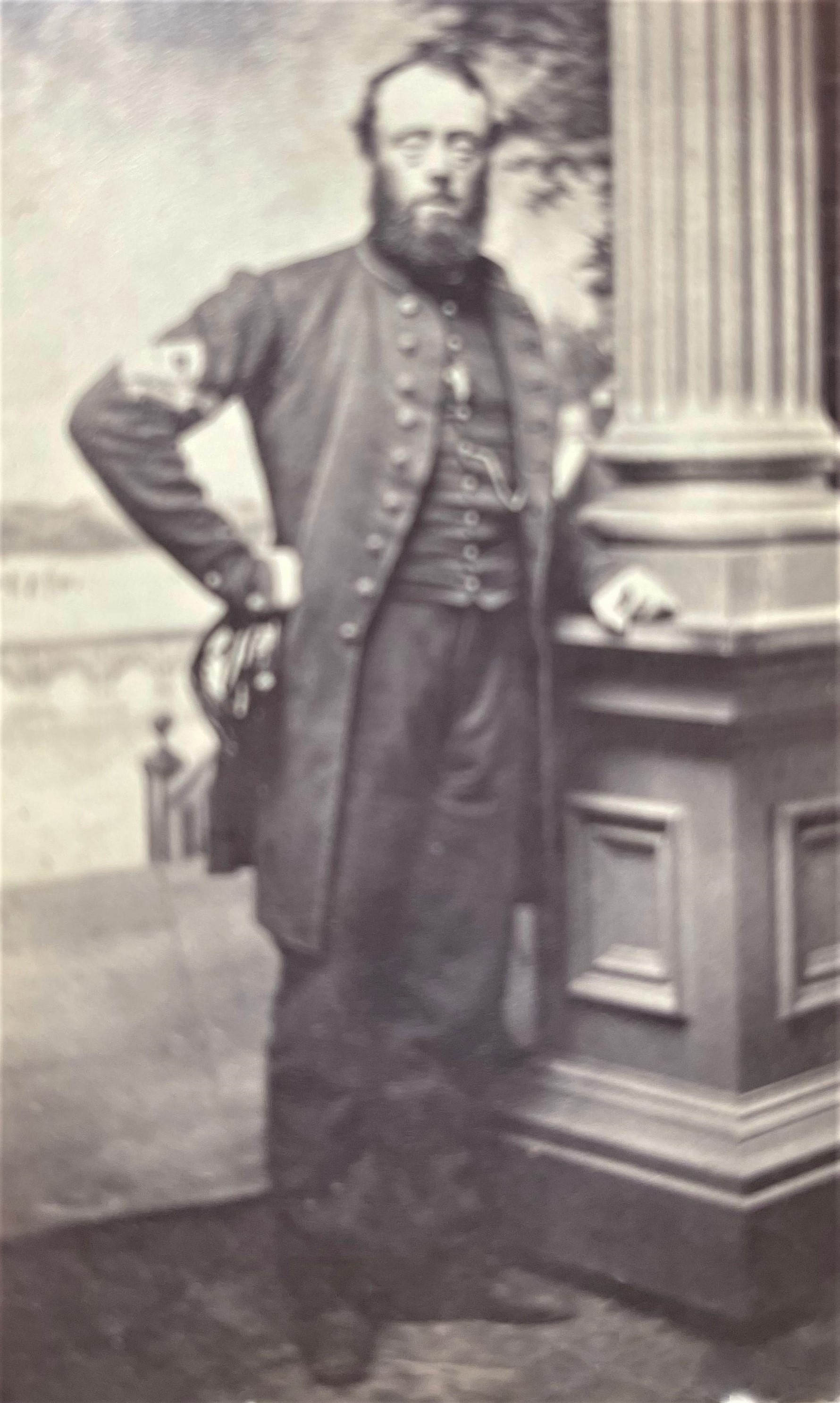
This image of Julia (Kuenher) Minnich, circa 1860s, is being presented here through the generosity of Chris Sapp and his family, and is being used with Mr. Sapp’s permission. This image may not be reproduced, repurposed, or shared with other websites without the permission of Chris Sapp.

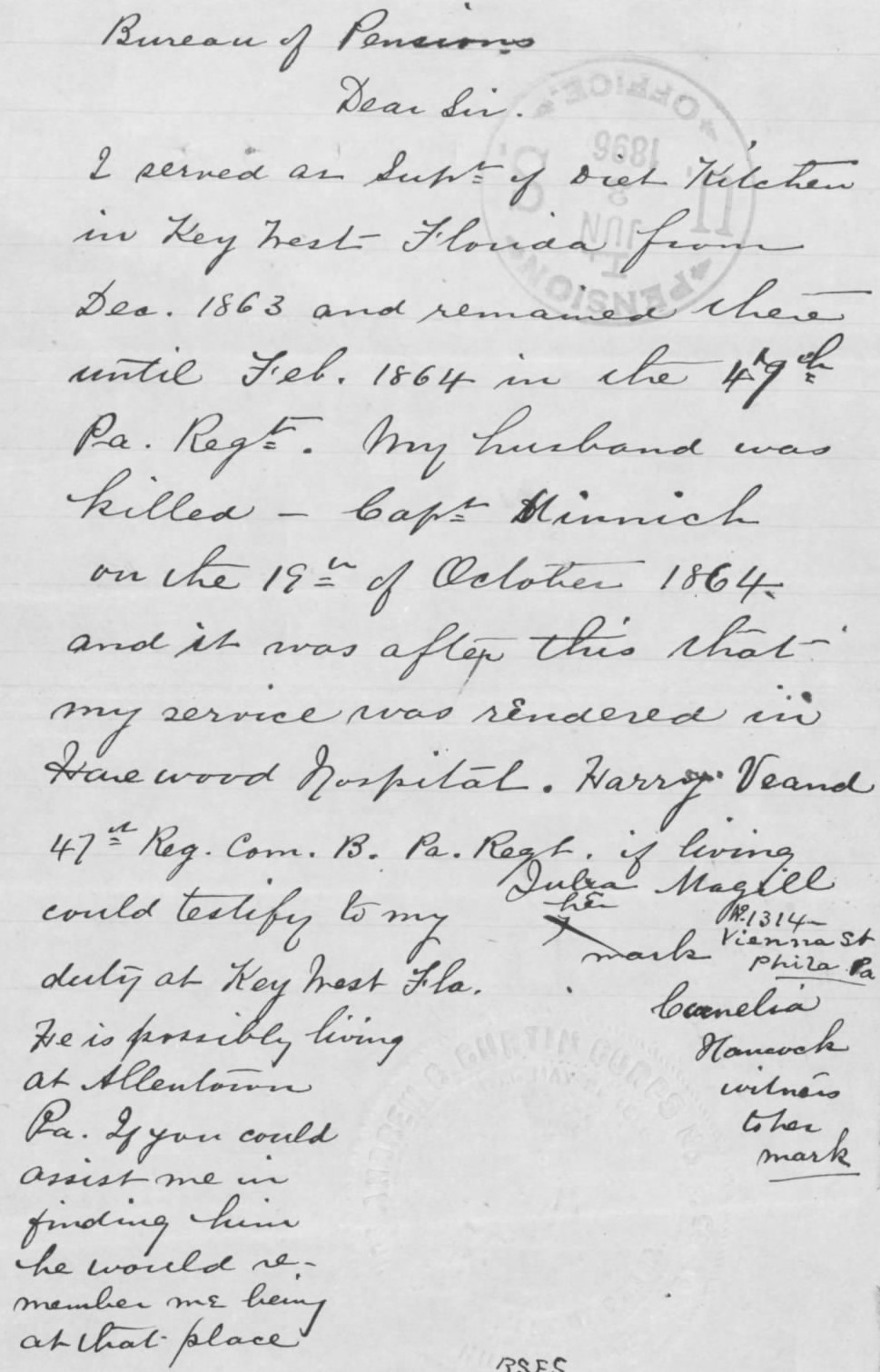
* Magill, Julia Ann (Kuehner Minnich): Widowed and the mother of a young son at the time that her husband, B Company’s Captain Edwin G. Minnich, was killed in battle during the American Civil War, Julia Ann (Kuehner) Minnich became a Union Army nurse at Harewood Hospital in Washington, D.C. during the war in order to keep a roof over her son’s head; she then spent the remainder of her life battling the U.S. Pension Bureau to receive and keep both the U.S. Civil War Widow’s Pension and U.S. Civil War Nurse’s Pension that she was entitled to under federal law; forced to go on working into her later years by poverty, she finally found work as a cook at a hotel in South Bethlehem; she died sometime after 1906;

* Menner, Edward W. (Second Lieutenant, Company E): A first-generation American who was a native of Easton, Northampton County, Edward Menner was a sixteen-year-old carpenter when he enrolled for Civil War military service on August 25, 1861; working his way up from private to second lieutenant before he was honorably discharged with his regiment in Charleston, South Carolina on Christmas Day, 1865, he was wounded in the left shoulder during the Battle of Cedar Creek, Virginia on October 19, 1864; after returning home to the Lehigh Valley, he secured employment as a hooker with the Bethlehem Iron Company (later known as Bethlehem Steel) on March 15, 1866; he married, begam a family and continued to work in the iron industry for much of his life; he died in Bethlehem on April 25, 1913 and was buried at that city’s Nisky Hill Cemetery;

* Miller, John Garber (Sergeant, Company D): A native of Ironville, Blair County, John G. Miller was a twenty-one-year-old laborer living in Duncannon, Perry County when he enrolled for Civil War military service on August 20, 1861; captured by Confederate troops during the Battle of Pleasant Hill, Louisiana on April 9, 1864 and marched to Camp Ford, near Tyler, Texas, the largest Confederate prison camp west of the Mississippi River, he was held there as a prisoner of war (POW) until he was released during a prisoner exchange on July 22, 1864; returned to active duty with his regiment after receiving medical treatment, he continued to serve until he was honorably discharged with the regiment in Charleston, South Carolina on December 25, 1865; after returning home, he married, began a family and relocated with his family to Philipsburg, Centre County, Pennsylvania, where he was employed as a teamster; returning to Blair County with his family, he resided with them in Logan Township before relocating with them again to Coalport, Clearfield County; suffering from heart disease, he died in Coalport on February 16, 1921 and was interred at the Coalport Cemetery;
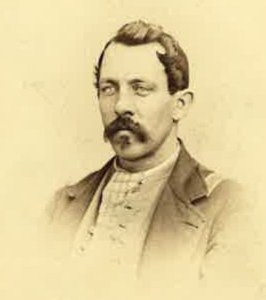
Captain Theodore Mink, Company I, 47th Pennsylvania Volunteers (circa 1870s-1880s, courtesy of Julian Burley; used with permission).

* Mink, Theodore (Captain, Company I): A native of Allentown, Lehigh County who was apprenticed as a coachmaker and then tried his hand as a whaler and blacksmith prior to the American Civil War, Thedore Mink became one of the “First Defenders” who responded to President Abraham Lincoln’s call for seventy-five thousand volunteers to defend the nation’s capital after the fall of Fort Sumter in mid-April 1861; after honorably completing his Three Months’ Service in July, he re-enlisted on August 5 as a sergeant with Company I of the newly-formed 47th Pennsylvania Volunteer Infantry; after steadily working his way up through the ranks, he was commissioned as a captain and placed in charge of his company on May 22, 1865; he continued to serve with his regiment until it was mustered out on Christmas Day, 1865; following his return to Pennsylvania, he was hired as a laborer with a circus troupe operated by Mike Lipman before finding longtime employment in advertising and then as head of the circus wardrobe for the Forepaugh Circus before he was promoted to management with the circus; felled by pneumonia during late 1889, he died in Philadelphia on January 7, 1890 and was interred in Allentown’s Union-West End Cemetery;

* Newman, Edward (Private, Company H): A German immigrant who left his homeland sometime around 1920, Edward Newman chose to settle in Allentown, Lehigh County, Pennsylvania, where he found work as a baker; after enlisting for Civil War military service in August 1862, he mustered in as a private with Company I of the 127th Pennsylvania Volunteers and fought in the Battle of Fredericksburg from December 11-15 of that year; honorably mustered out with his regiment in May 1863, he re-enlisted on October 23, 1863 for a second tour of duty—but as a private with a different regiment—Company H of the 47th Pennsylvania Volunteers; he continued to serve with the 47th Pennsylvania until he was officially mustered out in Charleston, South Carolina on Christmas Day, 1865, he returned to Pennsylvania’s Lehigh Valley, where he worked briefly as a baker; suffering from rheumatism that developed while the 47th Pennsylvania was stationed near Cedar Creek, Virginia during the fall of 1864, he was admitted to the network of U.S. Homes for Disabled Volunteer Soldiers at the Central Branch in Dayton, Montgomery County, Ohio on July 17, 1877; still unmarried and still living there in 1880, his health continued to decline; diagnosed with acute enteritis, he died there on January 22, 1886 and was buried at the Dayton National Cemetery;

Captain Daniel Oyster, Company C, 47th Pennsylvania Volunteers, circa 1864 (public domain).

* Oyster, Daniel (Captain, Company C): A native of Sunbury, Northumberland County who was employed as a machinist, Daniel Oyster became one of the earliest men from his county to respond to President Abraham Lincoln’s call to defend the nation’s capital, following the fall of Fort-Sumter in mid-April 1861, when he enrolled for Civil War military service on April 23 as a corporal with Company F of the 11th Pennsylvania Volunteers; honorably discharged in July after completing his Three Months’ Service, he re-enlisted as a first sergeant with Company C of the newly-formed 47th Pennsylvania Volunteers on August 19; his brother, John Oyster, subsequently followed him into the service, enrolling as a private with his company on November 20, 1863; after rising up through the ranks to become captain of his company, Daniel was shot in his left shoulder near Berryville, Virginia on September 5, 1864 and then shot in his right shoulder during the Battle of Cedar Creek on October 19; successfully treated by Union Army surgeons for both wounds, he was awarded a veteran’s furlough in order to continue his recuperation and returned home to Sunbury; he then returned to duty and was honorably discharged with his company on Christmas Day, 1865; post-discharge, he and his brother, John, returned home to Sunbury; Daniel continued to reside with their aging mother and was initially employed as a policeman, but was then forced by a war-related decline in his health to take less-taxing work as a railroad postal agent; his brother John, who was married, lived nearby and worked as a fireman, but died in Sunbury on April 20, 1899; employed as a bookkeeper after the turn of the century, Daniel never married and was ultimately admitted to the Southern Branch of the U.S. National Home for Disabled Volunteer Soldiers in Hampton, Virginia, where he died on August 5, 1922—exactly sixty-one years to the day after the 47th Pennsylvania Volunteer Infantry was founded; he was given a funeral with full military honors before being laid to rest in the officers’ section at the Arlington National Cemetery on August 11;

* Sauerwein, Thomas Franklin (First Sergeant, Company B): The son of a lock tender in Pennsylvania’s Lehigh Valley, Thomas Sauerwein was employed as a carpenter at the dawn of the American Civil War; following his enrollment for military service in Allentown, Lehigh County on August 20, 1861, he was officially mustered in as a private with Company B of the 47th Pennsylvania Volunteer Infantry; from that point on, he steadily worked his way up the ranks of the regiment, ultimately being promoted to first sergeant on New Year’s Day, 1865; following his honorable discharge with his company on Christmas Day of that same year, he returned home to the Lehigh Valley, where he found work as a carpenter, married and began a family; by 1880, he had moved his family west to Williamsport in Lycoming County, where he had found work as a machinist; employed as a leather roller with a tanning factory, he was promoted to a position as a leather finisher after the turn of the century, while his two sons worked as leather rollers in the same industry; he died in Williamsport on July 29, 1912 and was buried at the East Wildwood Cemetery in Loyalsock;

* Slayer, Joseph (Private, Company E; also known as “Dead Eye Dick” and “E. J. McMeeser”): A native of Philadelphia, Joseph Slayer was a nineteen-year-old miner residing in Willliams Township, Northampton County, Pennsylvania at the dawn of the American Civil War; after enrolling for military service in Easton, Northampton County on September 9, 1861, he was officially mustered in as a private with Company E of the 47th Pennsylvania Volunteers; he continued to serve with his company, re-enlisting as a private with Company E, under the name of Joseph Slayer, at Fort Jefferson in Florida’s Dry Tortugas on January 4, 1864; honorably mustered out with his company in Charleston, South Carolina on Christmas Day, 1865, he relocated to Zanesville, Ohio sometime after the war, where he joined the Grand Army of the Republic’s Hazlett Post No. 81; he may then have relocated briefly to St. Paul, Minnesota sometime around the 1870s or early 1880s, or may simply have had a child and grandchild living there, because newspaper reports of his death noted that he had been carrying a photograph of a toddler named Robert—a photo that had “To Grandpa” inscribed on it and indicated that the grandchild, Robert, was a resident of St. Paul in 1892; by the 1880s, Joseph had made it as far west as the Dakota Territory—but this was where his life’s journey took a strange twist; discarding the name he had used in the army (“Joseph Slayer”), he changed his name several times over the next several years, as if he were trying to shed his prior life and all of its associations; acquaintances he met in the southern part of the Dakota Territory during the early to mid-1880s knew him as “Dead Eye Dick” while others who met him after he had resettled in Bismarck, in the northern part of the Dakota Territory, knew him as “Eugene McMeeser” or “E. J. McMeeser” (alternate spelling: “McNeeser”); by the time that the federal government conducted its special census of Civil War veterans in June 1890, Joseph was so comfortable fusing parts of his old and new lives together that he was convincingly documented by an enumerator as “Eugene McMeeser,” a veteran who had served as a private with Company E of the 47th Pennsylvania Infantry from September 9, 1861 until January 11, 1866; in 1890, Joseph became a married man; documented as having rheumatism so severe that he was “at times confined at home,” he filed for a U.S. Civil War Pension from North Dakota on March 28, 1891—but he did so as “Joseph Slayer”—the name under which he had first enrolled for military service in Pennsylvania in 1861; ultimately awarded a pension—which would not have happened if federal officials had not been able to verify his identity and match it to his existing military service records, he was diagnosed with angina pectoris in 1904, but still managed to secure a U.S. patent for one of his inventions—a napkin holder; he died in Bismarck less than a month later, on January 12 or 13, 1905; found on the floor of his rented room, his death sparked a coroner’s inquest which revealed that he had been living under an assumed name; he was buried at Saint Mary’s Cemetery in Bismarck; the name “Joseph Slayer” was carved onto his military headstone;

* Snyder, Timothy (Corporal, Company C): A carpenter who was born in Rebuck, Northumberland County, Tim Snyder was employed as a carpenter and residing in the city of Sunbury in that county by the dawn of the American Civil War; after enlisting for military service as a private in August 1861, he was wounded twice in combat, once during the Battle of Pocotaligo, South Carolina (1862) and a second time, in the knee, during the Battle of Opequan, Virginia (1864), shortly after he had been promoted to the rank of corporal; he survived and returned to Pennsylvania, where he resumed work as a carpenter; after relocating to Schuylkill County, he settled in the community of Ashland; in 1870, he married Catharine Boyer and started a family with her; he continued to work as a carpenter in Schuylkill County until his untimely death in May 1889 and was laid to rest with military honors at the Brock Cemetery in Ashland; John Hartranft Snyder, his first son to survive infancy, grew up to become a co-founder of the Lavelle Telegraph and Telephone Company, while his second son to survive infancy, Timothy Grant Snyder, became a corporal in the United States Marine Corps during the Spanish-American War; stationed on the USS Buffalo as it visited Port Said, Egypt, he also served aboard Admiral George Dewey’s flagship, the USS Olympia, in 1899;
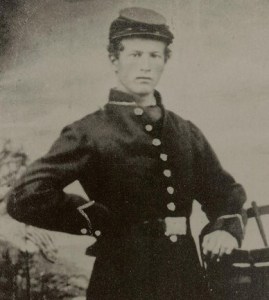
Drummer Boy William Williamson, 47th Pennsylvania Volunteers, Company A, circa 1863 (public domain).

* Williamson, William (Drummer, Company A): A farmer from Stockertown, Northampton County, William Williamson was documented by a mid-nineteenth-century federal census enumerator as an unmarried laborer who lived at the Easton home of Northampton County physician John Sandt, M.D.—an indication that William’s parents may have either died or were struggling so much financially during the 1850s and early 1860s that they had encouraged him to “leave the nest” and begin supporting himself, or had hired him out as an apprentice or indentured servant; like so many other young men from Northampton County, when President Abraham Lincoln issued his call for help to protect the nation’s capital from a likely invasion by Confederate States Army troops, he stepped forward, raised his hand, and stated the following:

I, William Williamson appointed a private in the Army of the United States, do solemnly swear, or affirm, that I will bear true allegiance to the United States of America, and that I will serve them honestly and faithfully against all their enemies or opposers whatsoever, and observe and obey the orders of the President of the United States, and the orders of the officers appointed over me, according to the rules and articles for the government of the Armies of the United States.

Later in life, William Williamson became a champion for an older woman who had been struggling to convince officials of the federal government that she was worthy enough to be awarded a U.S. Civil War Mother’s Pension, after her son had died in service to the nation as a Union Army soldier.

Post-war, William Williamson found work at a slate quarry, married, began a family in Belfast, Northampton County, and lived to witness the dawn of a new century. Following his death at the age of sixty in Plainfield Township on June 17, 1901, he was laid to rest at the Belfast Union Cemetery.


Sources:

  1. “A Badge from Admiral Dewey and Schuylkill County” (announcements of Timothy Grant Snyder’s service on Admiral Dewey’s flagship). Reading, Pennsylvania: Reading Eagle: October 3, 1899 and November 21, 1899.
  2. Baptismal, census, marriage, military, death, and burial records of the Snyder family. Pennsylvania, California, Florida, Louisiana, Massachusetts, Nevada, Ohio, etc.: Snyder Family Archives, 1650-present; and in Historic Pennsylvania Church and Town Records (baptismal, marriage, death and burial records of various churches across Pennsylvania). Philadelphia, Pennsylvania: Historical Society of Pennsylvania, 1776-1918.
  3. Bates, Samuel P. History of Pennsylvania Volunteers, 1861-5, vol. 1. Harrisburg, Pennsylvania: B. Singerly, State Printer, 1869.
  4. James Crownover, James Downs and Samuel Kern, et. al., in Camp Ford Prison Records. Tyler, Texas: The Smith County Historical Society, 1864.
  5. Civil War Muster Rolls, 1861-1866 (47th Pennsylvania Infantry). Harrisburg, Pennsylvania: Pennsylvania State Archives.
  6. Civil War Veterans’ Card File, 1861-1866 (47th Pennsylvania Infantry). Harrisburg, Pennsylvania: Pennsylvania State Archives.
  7. Registers of Deaths of Volunteers, U.S. Army; Admissions Ledgers, U.S. National Homes for Disabled Volunteer Soldiers; federal burial ledgers, and national cemetery interment control forms, 1861-1935. Washington, D.C.: U.S. Office of the Adjutant General (Record Group 94), U.S. National Archives and Records Administration.
  8. Schmidt, Lewis. A Civil War History of the 47th Regiment of Pennsylvania Veteran Volunteers. Allentown, Pennsylvania: Self-published, 1986.
  9. U.S. Census Records, 1830-1930. Washington, D.C.: U.S. National Archives and Records Administration.
  10. U.S. Civil War Pension Records, 1862-1935. Washington, D.C.: U.S. National Archives and Records Administration.

Catching Dogs and Hogs During the “Dog Days” of Summer (Charleston, South Carolina, 1865)

Meeting and Broad Streets near Line Street in Charleston, South Carolina, St. Michael’s Episcopal Church in the distance (U.S. Navy, circa 1863-1865, U.S. Library of Congress, public domain).

There is no disputing that the 47th Pennsylvania Volunteer Infantry had a long and storied history. Formed on August 5, 1861, the regiment not only served for the entire duration of the American Civil War; it continued its service to the nation for more than eight months after the end of that terrible conflict, becoming the only regiment from the Commonwealth of Pennsylvania to fight in the Union’s 1864 Red River Campaign across Louisiana before it participated in Major-General Philip Sheridan’s tide-turning Shenandoah Valley Campaign across Virginia during the fall of 1864 and helped defend Washington, D.C. in the wake of the assassination of President Abraham Lincoln in April 1865.

As those war years unfolded, newspapers from Easton to Pittsburgh published updates on the regiment’s travels, along with excerpts from letters penned by its baby-faced recruits and wizened warriors. One of the more unusual news items was reported during the 47th Pennsylvania’s final months of service—while it was stationed in the Deep South of the United States of America during the early days of Reconstruction, following the end of the American Civil War. Assigned to keep the peace in the first state that had seceded from the Union, members of the regiment lived and primarily worked in Charleston, South Carolina, where they performed a wide range of provost (civil governance)-related tasks, including the prevention and prosecution of crimes against civilians and the re-establishment of newspaper publishing operations.

The Line Street area of Charleston, South Carolina, where a public pound was established in July 1865 to improve animal control and public safety (Thomas Fetters, The Charleston & Hamburg, public domain; click to enlarge).

During the summer of 1865, that “to do” list was expanded to include the “policing” of the city’s furrier denizens. According to The Charleston Daily Courier, Sergeant George Nichols (alternate surname spelling: “Nicholas”) of the 47th Pennsylvania’s E Company was ordered to supervise the operations of a new animal pound that had been established on Line Street in Charleston, “between Coming and Percy streets”:

Headquarters,
Charleston, S.C. July 20, 1865
[GENERAL ORDERS, No. 64.]

I. A POUND IS HEREBY ESTABLISHED ON LINE-STREET, between Coming and Percy-streets, and Sergeant GEO. NICHOLAS, Co. “E,” 47th Pennsylvania Volunteers, temporarily detailed as pound-keeper.

II. Hereafter all cattle, sheep, goats, hogs, and dogs found running at large in the City South of Line-street, shall be taken to the public pound and there detained until the penalty prescribed by this Order, together with the charges of the pound-keeper and the actual expense of maintaining said animals while in the pound, shall be paid.

The penalties for each violation of this Order to be as follows:

Cattle . . . . . . . . . . . . . . . . . . . . . . . . . . .$5.00 per head
Sheep, goats, hogs and dogs . . . . . . . $1.00

The amount to be turned into the City Treasury.

III. All animals, except dogs, remaining in the public pound for the space of six (6) days without being claimed and the penalties and charges therefor [sic] paid, shall be sold at public sale by the pound-keeper. The proceeds to be turned over to the owner of such animals, after deducting the fines and pound fees.

All dogs remaining unclaimed for the space of one week shall be shot.

The Provost Marshal and Chief of Military Police are charged with the execution of this Order.

By order Bt. Brig. Gen. W. T. BENNETT, Com’dg Post.
CHARLES G. CHIPMAN,
Capt. 54th Massachusetts Volunteers, A. A. D. C.
OFFICIAL: THOS. F. LAMBERT, 2d Lieut. 47th Pa. Vols., A. A. D. C.
July 21

The Confederate Steamer, Governor Milton, that was captured by Companies E and K, 47th Pennsylvania Volunteers, October 1862 (Frank Leslie’s Illustrated Newspaper, public domain).

By the time that he had received this duty assignment in 1865, Sergeant Nichols had already amassed a distinguished service history. In early October 1862, while still just a corporal, he was placed in charge of the Governor Milton, a Confederate steamship that had been captured by a detachment of 47th Pennsylvania Volunteers as part of Union Army and Navy operations related to the capture of Saint John’s Bluff, Florida. He later preserved his memories of that day’s events with this diary entry:

“At 9 PM … October 7, discovered the steamer Gov. Milton in a small creek, 2 miles above Hawkinsville; boarded her in a small boat, and found that she had been run in there but a short time before, as her fires were not yet out. Her engineer and mate, then in charge, were asleep on board at the time of her capture. They informed us that owing to the weakness of the steamer’s boiler we found her where we did. We returned our prize the next day…..

I commanded one of the Small Boats that whent [sic] in after her. I was Boatman and gave orders when the headman jumped on Bord [sic] take the Painter with him. That however belongs to Wm. Adams or Jacob Kerkendall [sic]. It was So dark I could not tell witch [sic] Struck the deck first. But when I Struck the deck I demanded the Surrend [sic] of the Boat in the name of the U.S. after we had the boat an offercier [sic] off the Paul Jones, a Gun Boat was with us he ask me how Soon could I move her out in the Stream I said five minuts [sic]. So an Engineer one of coulered [sic] Men helped me. and I will Say right hear [sic] he learned Me More than I ever knowed about Engineering. Where we Started down the River we was one hundred and twenty five miles up the river. When we Stopped at Polatkey [Palatka] to get wood for the Steamer I whent [sic] out and Borrowed a half of a deer that hung up in a cut house and a bee hive for some honey for the Boys. I never forget the boys.’”

When the 47th Pennsylvania Volunteers made their way back to their respective troop transports near Saint John’s Bluff, the captured steamer was left behind to enable a group of Union soldiers to repair its boiler. Overseeing those repairs was none other than Corporal Nichols, who had been temporarily detached from the 47th Pennsylvania’s E Company. Adding to his diary, he wrote:

“So hear [sic] we are at Jacksonville and off we go down the river again, and the Captain Yard Said you are detailed on detached duty as Engineer well that beats hell. I told him I did not Enlist for an Engineer. well I cannot help it he said. I got orders for you to stay hear [sic]. When the Boys was gone about a week orders came for us to come to Beaufort, S. Carolina by the inland rout over the Museley Mash Rout. So I Borrowed a twelve pound gun with amanition [sic] for to Protect our Selves with. But I only used it once to clear Some cavelry [sic] away. We Passed fort Palask [sic]. But that was in our Possession and we got Back to Beaufort all right. and I whent [sic] up to See the Boys and Beged [sic] captain to get me Back in the company, But he could not make it go.”

After completing his detached duty, Corporal Nichols was reunited with his regiment at its duty station in Beaufort, South Carolina that same October of 1862. He then went on to serve with the regiment for the remainder of its service to the nation, finally mustering out with his fellow 47th Pennsylvania Veteran Volunteers in Charleston, South Carolina on Christmas Day of 1865. An engineer with the Delaware, Lackawanna & Western Railroad following the war, he died from pneumonia at the age of seventy at his home in Phillipsburg, New Jersey on March 2, 1908, and was laid to rest at the Phillipsburg Cemetery.


Sources:

  1. Bates, Samuel P. History of Pennsylvania Volunteers, 1861-5, vol. 1. Harrisburg, Pennsylvania: B. Singerly, State Printer, 1869.
  2. “General Orders, No. 64” (establishment and staffing of a public pound in Charleston, South Carolina). Charleston, South Carolina: The Charleston Daily Courier, 21 July 1865, p. 2.
  3. Schmidt, Lewis. A Civil War History of the 47th Regiment of Pennsylvania Veteran Volunteers. Allentown, Pennsylvania: Self-published, 1986.


April 17, 1865: A Nation in Mourning Begins to Move Forward

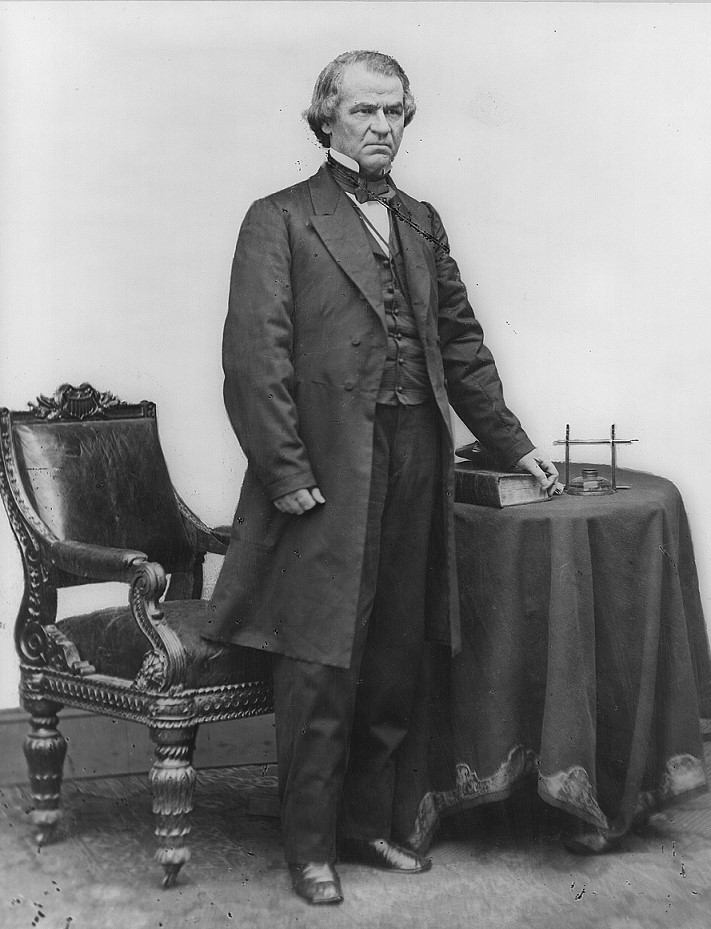
Andrew Johnson, photographed by Matthew Brady sometime between 1860 and 1875, was sworn in as president of the United States on April 15, 1865 (Matthew Brady Collection, U.S. Library of Congress, public domain).

Andrew Johnson, of Tennessee, is now President of the United States. The mysterious purposes of Divine Providence, far beyond the extremest perception of man’s mere judgment, in shaping the ends his wisdom deems to be wisest for our chastisement or in promoting our good, will chasten us while humbling us in the dust in the bereavement the People have sustained through that most wicked act, the bold and daring assassination of the President of the United States. Such an act of perfidy and atrocity has no parallel in the annals of deep and damning crime. The world will stand aghast in horror and detestation of the brutal murder, when the terrible tidings will have reached earth’s remotest extremity.

— The Constitutional Union newspaper, Philadelphia, Pennsylvania, Monday, April 17, 1865


That opening paragraph of Philadelphia’s Constitutional Union article, “The New President,” illustrates both the State of the Union and the state of mind of the average American during the first days after the assassination of President Abraham Lincoln—the collective and individual states of bewilderment and grief while looking back and reflecting on Lincoln’s life and death while also worrying about what the future held as a new leader was introduced to the nation.

That new leader—President Andrew Johnson (1808-1875), who had been quietly sworn in as the seventeenth president of the United States on the same day that Lincoln died—April 15, 1865—had worked his way up from an early-career job as mayor of a local town in Tennessee to a later-life election to the United States Senate, becoming the only senator from America’s Deep South to remain in service with the Senate when southern states began their secession from the Union in December 1860. Subsequently appointed by Lincoln as Tennessee’s military governor in March 1862, he had then been placed on the Republican ticket as Lincoln’s running mate during the pivotal presidential election of November 1864, and had been sworn in as the nation’s vice president in March 1865—just forty-two days before he succeeded Lincoln.

Like Lincoln and Lincoln’s Secretary of State William Seward, Andrew Johnson had also been the target of the assassination conspiracy that unfolded on April 14, 1865. But Johnson was luckier. George Atzerodt, the man who had been assigned to assassinate him, changed his mind as he reached Kirkwood House, the Pennsylvania Avenue hotel where Johnson lived, and, instead, left Washington, D.C., hoping to evade capture.

Shortly before sunrise, while still the sitting vice president, Johnson visited the unconscious, dying president at his bedside at the Petersen House, spent a few moments consoling Lincoln’s family, and then walked the short distance back to his residence to prepare for the possibility of being sworn in as the nation’s next president.

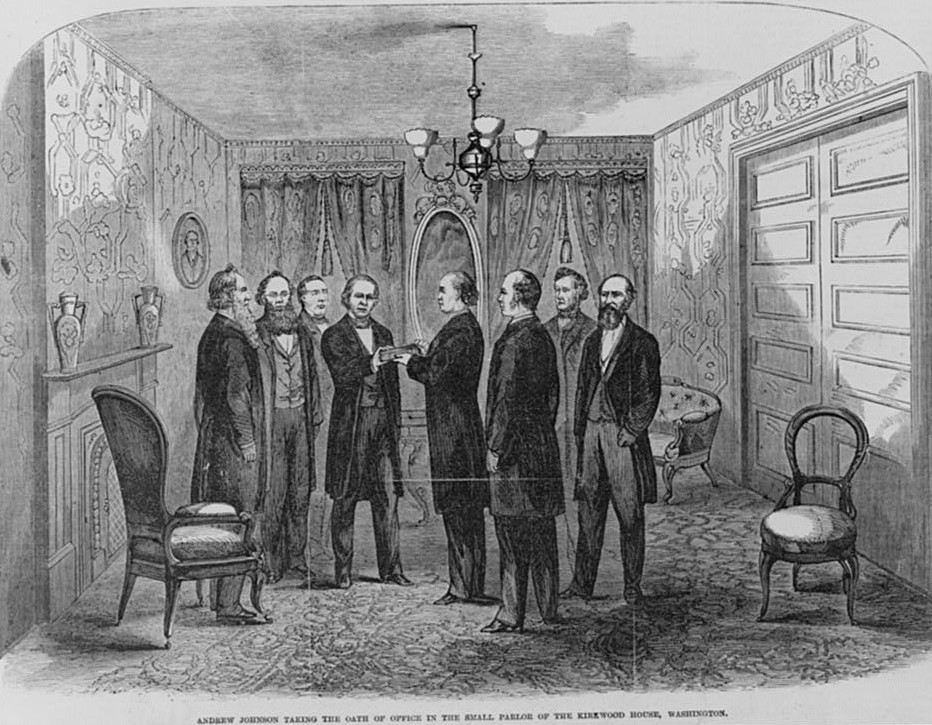
Depiction of Andrew Johnson being sworn as the seventeenth president of the United States, April 15, 1865. The ceremony, attended by only a handful of senior government officials, was a subdued affair due to the death earlier that day of President Lincoln. It was held at Kirkwood House in Washington, D.C., where Johnson had resided since his inauguration as vice president forty-two days earlier (Frank Leslie’s Illustrated Newspaper, January 6, 1866).

Less than four hours after Lincoln’s death, Johnson was administered the Oath of Office by Chief Justice Salmon Chase of the United States Supreme Court, as several members of Lincoln’s former cabinet and Johnson’s former fellow senators looked on:

I do solemnly swear (or affirm) that I will faithfully execute the Office of President of the United States, and will to the best of my Ability, preserve, protect and defend the Constitution of the United States.

After speaking those words, President Andrew Johnson told the small group:

The duties of the office are mine; I will perform them—the consequences are with God. Gentlemen, I shall lean upon you; I feel I shall need your support. I am deeply impressed with the solemnity of the occasion and the responsibilities of the duties of the office I am assuming.

It was at that moment, during the morning of April 15, 1865, that the 47th Pennsylvania Volunteer Infantry entered its tenure of Reconstruction Era service under a new commander-in-chief.

Members of the regiment began that new phase of duty with heavy hearts and hope for a brighter day, according to C Company’s Henry Wharton. Writing to the editor of his hometown newspaper, the Sunbury American, from an unidentified “Camp Near Washington, D.C.” on April 24, Wharton mused:

It is true we have sustained a great loss in the death of our much beloved President, but as it has pleased Divine Power to remove him from our midst, we should be thankful that He has given us such a great and determined man in his stead (Andrew Johnson) to drive on the machinery of the Government. It was a wise thing in the framers of the Constitution when they put in that clause, where if we lose our President the wheels of the Government can never be stopped. This is done by the Vice President, a plain unpretending citizen, on the death of the Chief Magistrate, stepping forward so to take the oath administered by the Chief Justice, and at once takes the responsibility of the office. No flourish of trumpets, nor convulsion of nations, but by the simple power vested in a Judge, a fellow citizen assumes power. This little fact proves that our Republic can never die.

I cannot describe to you the feeling of the army when the news reached us that Abraham Lincoln had been murdered by the assassin. I will not attempt it, for in doing so, I would work myself into a state to make me miserable. One thing – if the boys had gone into a fight that morning no prisoners would have been taken – no quarters given.

In Washington, the train containing the remains of our late President, passed us near the Annapolis Junction. There was [sic, were] nine cars heavily draped in mourning. Our train stopped on a siding. It was a solemn time. The men all uncovered in respect, and stout men wept as the last of him they loved, passed them, to be conveyed to its resting place. Along the whole route, houses were draped in mourning, and the American flag hung at half mast [sic, half-mast] with mourning. This showed the deep hold Mr. Lincoln had in the hearts of our people.


Sources:

  1. Andrew Johnson’s Inauguration.” Washington, D.C.: U.S. National Park Service, retrieved online April 17, 1865.
  2. Andrew Johnson: The 17th President of the United States.” Washington, D.C.: The White House, retrieved online April 17, 1865.
  3. “The New President” (announcement of President Andrew Johnson’s recent inauguration). Philadelphia, Pennsylvania: Constitutional Union, April 17, 1865.
  4. The Swearing in of Andrew Johnson.” Washington, D.C.: Joint Congressional Committee on Inaugural Ceremonies (JCCIC) and the United States Senate, retrieved online April 17, 1865.
  5. Wharton, Henry. Letters from the Sunbury Guards, 1861-1868. Sunbury, Pennsylvania: Sunbury American.


No Way to Treat a Widow: A Look at the U.S. Civil War Pension Battles Waged by Widows of Union Army Soldiers

This image of Julia (Kuenher) Minnich, circa 1860s, is being presented here through the generosity of Chris Sapp and his family, and is being used with Mr. Sapp’s permission. This image may not be reproduced, repurposed, or shared with other websites without the permission of Chris Sapp.

Prove to us you were married to that soldier.

Prove to us that the children you claim to be his were actually fathered by that soldier.

Prove to us that you stayed faithful to that soldier by remaining a widow for the remainder of your life—depriving yourself of warmth, comfort and love, even though you were in your early twenties when he widowed you.

Those heartbreaking words exemplify the bureaucratic nightmares endured by many widows of Union Army soldiers as they battled with insensitive and sometimes surprisingly judgmental officials from the United States Department of the Interior to obtain U.S. Civil War Widows’ Pensions—the American Civil War-era form of general assistance that held the potential to help them keep rooves over the heads of their children as they struggled to adjust to their new roles as single mothers.

A closer look at the Civil War Widows’ Pension files of multiple women who were widowed when their soldier-husbands died while serving with the 47th Pennsylvania Volunteer Infantry between 1861 and 1865 reveals that the quests of many of these women were bewildering, exasperating, heartbreaking, and long.

A Widow, Mother and a Civil War Nurse

At the time of her husband’s death in combat, Julia Ann (Kuehner) Minnich was residing with the couple’s young son, George, at the family’s home in Allentown, Pennsylvania. Just two weeks after receiving word that her husband was dead, she was forced to put her grief aside, and move forward.

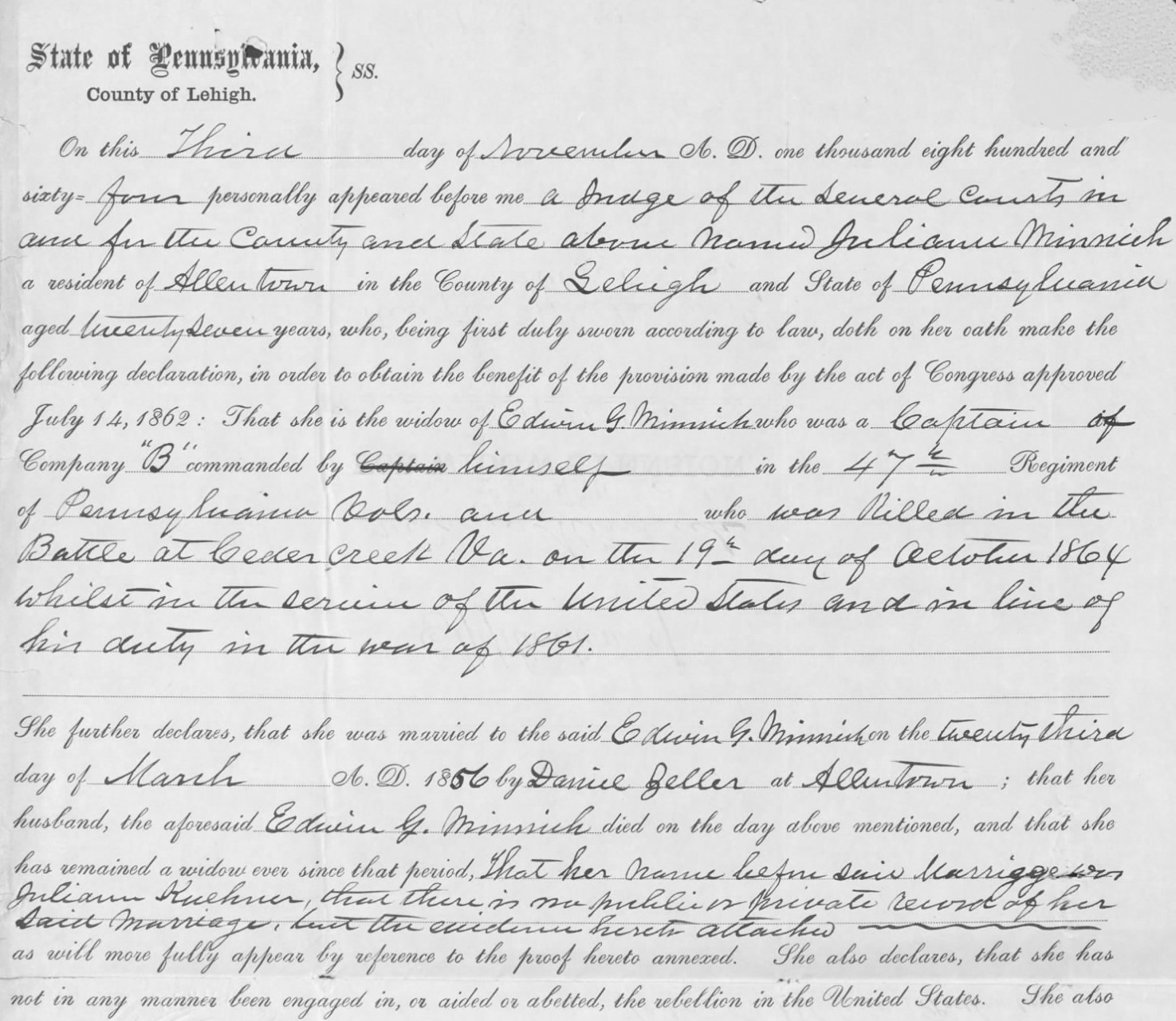
Appearing before a Lehigh County justice of the peace on November 3, 1864, Julia declared that she was the twenty-seven-year-old widow of Edwin G. Minnich, who had been the captain of Company B, 47th Pennsylvania Infantry when he was killed “whilst in the service of the United States and in the line of duty” during the Battle of Cedar Creek, Virginia on October 19, 1864.

Juliann (Kuehner) Minnich’s 1864 Affidavit for Her Initial U.S. Civil War Widow’s Pension, p. 1 (U.S. Civil War Widows’ Pension Files, U.S. National Archives and Records Administration, public domain; click to enlarge).

Required by federal and state officials to prove that she had actually been married to Edwin Minnich—a distressing procedure that would have felt disrespectful to any grieving wife whose husband had been killed in combat, she subsequently furnished a series of affidavits which stated and re-stated that her maiden name before marriage was “Juliann Kuehner,” that she had been united in marriage with Edwin G. Minnich on March 23, 1856 by the Rev. Daniel Zeller at the German Reformed Church in Allentown, and that she had one surviving child from the marriage, George E. Minnich, who had been born on May 15, 1857 and was under the age of 16—making him eligible for U.S. Civil War Pension support. She also noted for the record that there had been “no public or private record” of her marriage.

The Rev. Daniel Zeller backed up her testimony by providing his own affidavit in which he attested to the date of her wedding ceremony, as did Minnich family friends John D. Lawall and William H. Blumer, the president of the First National Bank of Allentown and a brother to Jacob A. Blumer, a bank cashier who was later appointed as the guardian of Julia’s minor son, George. All four men swore under oath that they had known Julia and her husband for more than five years and confirmed that the statements she had made in her affidavits were true.

Despite this evidence, no decision was made regarding Julia’s eligibility for a pension award; as a result, she was forced to find other ways to support herself and her young son, including serving as a Civil War nurse for the Union Army.

Finally awarded a U.S. Civil War Widow’s Pension of twenty dollars per month on July 21, 1865, Julia (Kuehner) Minnich found herself in the position that many low-income women experience after struggling for months to make ends meet—having to build back her savings after digging herself out of a financial hole. In 1866, she made the difficult decision to send her son away to boarding school at the Home for Friendless Children for the City and County of Lancaster—one of the first privately run orphanages to receive funding from the Commonwealth of Pennsylvania to care for children who had lost one or both parents during the Civil War.

Seeking greater stability, she then remarried—to William Ruston, a native of England and employee of the Jordan Mill in Allentown—an act that would cause her greater hardship in the long run when her U.S. Civil War Widow’s Pension was cancelled by federal government officials due to her remarriage and again when her second husband deserted her during the mid-1870s.

Forced to settle for work as a household servant in Philadelphia by 1880, she then remarried for a third time in 1887—to Charles Magill, who then also widowed her two weeks before Christmas in 1889.

Julia (Minnich) Magill’s June 3, 1896 Attestation Re: her 1863-1864 U.S. Civil War Nursing Service at Fort Taylor in Key West, Florida (U.S. Civil War Nurses’ Pension Files, U.S. National Archives and Records Administration, public domain; click to enlarge).

Soldiering on in the face of adversity, she felt a renewed sense of hope when the United States Congress approved a pension program for Civil War nurses on August 5, 1892. Applying for aid on March 4, 1896, she cited her 1865 nursing service with the Medical Department of the U.S. Volunteers at Harewood Hospital in Washington, D.C. She then added, via a letter penned on her behalf, that she had also performed nursing duties for the Union Army at Fort Taylor in Key West, Florida:

Bureau of Pensions
Dear Sir,

I served as Supt. Of Diet Kitchen in Key West – Florida from Dec. 1863 and remained there until Feb. 1864 in the 47th Pa. Regt. My husband was killed – Capt. Minnich on the 19th of October 1864 and it was after this that my service was rendered in Harewood Hospital. Harry Veand 47th Reg. Com. B Pa. Regt. if living could testify to my duty at Key West Fla. He is possibly living at Allentown Pa. If you could assist me in finding him he would remember me being at that place.

Julia Magill
her mark
No. 1314 Vienna St.
Phila Pa

Camelia Hancock [sic, possibly Cornelia Hancock]
witness to her mark

But that 1890s application process proved to be another difficult one. When her attorney advised her that pension officials had been unable to secure documentation of her nursing service, she began filing document after document with his help. But, although she was eventually gratified by an admission by federal officials that records documenting her nursing service actually did exist, she was still not awarded the nurse’s pension support that she so desperately needed and deserved.

It was only after the turn of the century—after changes were made to the federal pension system that allowed the resumption of assistance to remarried Civil War widows who had been stripped of their pensions—that her sacrifices and service to the nation were finally recognized with the restart of her Civil War Widow’s Pension payments of twenty dollars per month on April 5, 1901.

Sadly though, by this point in her life, Julia was in such dire straits, financially, that she had been forced to take a job as a cook at a hotel in Bethlehem, Pennsylvania for just two dollars per week. According to her son’s former guardian, during this period of her life, she “had no property, real or personal, and … had no means of support except her own daily labor.”

Researchers for 47th Pennsylvania Volunteers: One Civil War Regiment’s Story have not yet determined what ultimately happened to her.

A Widow Lacking English Language Proficiency

Hannah Kolb’s U.S. Civil War Widow’s Pension Claim (Hannah’s Affidavit, February 14, 1865, p. 1, U.S. Civil War Widows’ Pension Files, U.S. National Archives and Records Administration, public domain; click to enlarge).

Following the premature death of her husband, Hannah (Imborly) Kolb also quickly realized that she faced a challenging future as a widow, single mom and head of a household that was in a precarious financial state. Putting her own shock and grief to the side, she too sought help from the federal government. After submitting her U.S. Civil War Widow’s Pension claim on December 12, 1864, she was also forced to jump through multiple hoops before eventually gaining access to the pension support to which she was entitled.

Filing document after document with the court systems of both Lehigh and Montgomery counties, she appeared before justices of the peace and other county officials within those two counties to affirm that she had been married to, and had had children with, Private John Kolb, another 47th Pennsylvania Volunteer Infantryman who had died in 1864 during his American Civil War service on behalf of the United States.

During one of her earliest appearances, Hannah testified before a judge of the General Courts, Lehigh County on February 14, 1865 “to obtain the benefit of the provision made by the act of Congress approved July 14, 1862.” During that deposition, she stated that she was a forty-five-year-old resident of Saegersville in Heidelberg Township, Lehigh County who was “the widow of John Kolb who was a Private in Company ‘K’ commanded by Captain C. W. Abbott in the 47th Regiment of Pennsylvania Volunteers who re-enlisted as a Veteran Volunteer in the fall of 1863, and died in the U.S. Genl. Hospital at Baltimore in the State of Maryland on the 21st day of October 1864 of Hemorrhoides [sic] while in the service of the United States.”

She added that she had been “married to the said John Kolb on the fourth day of August 1842 by Daniel Weiser at Montgomery; that her husband, the aforesaid John Kolb, died on the day above mentioned, and that she [had] remained a widow ever since that period,” noting that “her name before said marriage was Hannah Imboden,” and affirmed that there was “no public or private record” available of their marriage. She then further attested to the birth of their children, Hannah, who had been born on September 9, 1852, and Daniel, who had been born on January 17, 1853—dates of birth that also made them eligible to receive U.S. Civil War Pension support because they were still both under the age of sixteen.

Still residing in Heidelberg Township in 1866, she appeared that year before another Lehigh County justice of the peace on December 8 to re-state for the record that she was the widow of Private John Kolb, who “died in the Military Service of the United States on the 21st day of October 1864 at the United States General Hospital Baltimore MD. while a private in company ‘K’ Commanded by Capt. C. W. Abbott 47th Regiment Penna. Vols. Commanded by Col. T. H. Good in the war of 1861,” and reiterated that she had “remained a widow” since the death of her husband. In addition, she repeated the vital statistics related to her marriage and births of her children, who were still living at home with her. Adding that she was filing her 1866 affidavit “for the purpose of obtaining the benefit of the provisions made by the Second Section of the Act of Congress increasing the pensions for widows and orphans approved July 25, 1866,” she also stated for the record that she was appointing C. W. Bennett, Esquire of Washington, D.C., as her attorney to represent her in ongoing proceedings related to her pension claim.

The mark made by Hannah Kolb, in lieu of her signature, on one of her U.S. Civil War Widow’s Pension claim affidavits (U.S. Civil War Widows’ Pension Files, U.S. National Archives and Records Administration, public domain; click to enlarge).

One of the notable features of Hannah Kolb’s pension paperwork (which is also a notable feature of many of the pension files of other women mentioned in this article) is that she “made her mark” on documents that she was required to sign, signaling that she could not read or write English well enough to complete the federal pension application forms and required supporting documentation by herself. Since a significant percentage of the men who enlisted with the 47th Pennsylvania Volunteer Infantry were German immigrants or Pennsylvania-born men of German heritage who still spoke German or Pennsylvania Dutch at home, it is reasonable to theorize that those times when she “made her mark” were an indication that she was most likely someone who also still only spoke German or Pennsylvania Dutch at home—a language barrier that put her at a disadvantage when trying to communicate with federal government officials who were far more proficient in English than they were in German.

Still battling to obtain the federal financial assistance she needed to keep her family housed and fed, Hannah next sought help from her husband’s former superior officer—Lieutenant-Colonel Charles W. Abbott. On August 31, 1867, Abbott submitted an affidavit to the county courts in which he attested that “John Kolb contracted a disease whilst in said service in the state of LA. [Louisiana] but however marched on with his said company [from] Richmond to Harrisonburg Va. and then from there he was sent to Jarvis U.S.A. G— Hospital at Baltimore Md. once Regt. reached Harrisonsburg [circa] 25th of Sept. 1864 and the said John Kolb reached that place [circa 27 September] and was the same day he reached there [was transferred to Jarvis Hospital].”

Lieutenant-Colonel Charles W. Abbott’s affidavit, filed in support of Hannah Kolb’s U.S. Civil War Widow’s Pension claim, p. 1, August 1867, p. 1, U.S. Civil War Widows’ Pension Files, U.S. National Archives and Records Administration, public domain; click to enlarge).

Abbott then went on to present additional facts related to John Kolb’s illness and death and made clear to court officials that his subordinate’s illness and death were both directly related to his military service with the 47th Pennsylvania.

Less than three months later, on November 18, 1867, Hannah appeared before Lehigh County Justice of the Peace Samuel J. Kistler for the purpose of “explaining discrepancies between the Original Application” for her pension and the paperwork she had subsequently filed for an increase in that pension. The justice asked questions regarding the birth date of her daughter, which she confirmed. Her attorney then explained that errors on previous paperwork were not Hannah’s fault but were due to the representation she had received previously.

On February 1, 1868, Hannah made her next pension claim-related appearance—this time before a Lehigh County alderman—to attest, yet again, that she was a resident of Heidelberg Township who was “the widow of John Kolb who was a private in Co. ‘K’ – 47 Regt. Pa. Vols. In the war of 1861,” reiterating that she “was married to John Kolb on the 4th day of August A.D. 1842.”

This time, however, her attorney came better prepared.

Stating for the record that her marriage data “appear[ed] by a family Record in an old prayer Book now in my possession (which said Record reads as follows…),” he handed court officials an affidavit that presented, verbatim, in German, the text from Hannah’s prayer book which contained the vital statistics of her marriage. During that round of testimony, Hannah and her attorney also corrected the spelling of her maiden name, stating that it was “Imborly” and not “Imboden,” as had been written by her previous legal representative. Once again, she made an “X” mark in lieu of her signature.

On March 13, 1879, she appeared before Lehigh County Justice of the Peace Samuel Kistler to file a new claim that would enable her to restart her pension, the monthly payments of which had fallen into “arrears” (unpaid) status. Once again, she marked an “X” on the legal document in lieu of her signature.

Throughout this long process, as she cleared one hurdle after another, sapping the emotional energy she needed to raise her children, Hannah sought the help of the minister who had married her, the physician who had delivered two of her children, and multiple neighbors—each of whom attested that she was, indeed, who she said she was—the widow of 47th Pennsylvania Volunteer Infantryman John Kolb and was, most definitely, the mother of his children.

Finally awarded a U.S. Civil War Widow’s Pension of eight dollars per month, she was then also granted an additional four dollars per month for the support of her minor children on February 19, 1868.

Researchers are still working to identify her year of death and burial location.

A Widow Pushed to the Brink of Madness

Excerpt from 1868 court petition by Caroline Herman’s father and brother to have her declared incompetent, p. 1 (U.S. Civil War Widows’ and Orphans’ Pension Files, U.S. National Archives and Records Administration, public domain; click to enlarge).

The mind of Caroline (Miller) Herman appears to have shattered after she received word that she had been widowed by her soldier-husband, Private William Herman, a member of the 47th Pennsylvania Volunteers’ F Company who had died from disease-related complications following the Union’s 1864 Red River Campaign across Louisiana. Struggling financially, her behavior became increasingly erratic after beginning her application process for a U.S. Civil War Widow’s Pension.

A resident of Weisenberg Township, Lehigh County during the fall of 1866, the thirty-two-year-old was in a such a precarious position by the end of that year that Joshua Seiberling, the attorney helping her with her pension application, felt compelled to pen an appeal to the U.S. Pension Bureau in which he begged federal officials to speed up their review due to the severe hardships that she and her children were suffering.

Although her widow’s pension was eventually approved by the bureau, the examiner handling her case initially refused to grant the additional orphans’ pension support she had requested (an extra two dollars per month for each of her two children). In later testimony before the court, Seiberling described how Caroline’s life had continued to unravel:

Just about that time [when she received word that she would be receiving a widow’s pension] she fell into the hands of Henry Croll from Berks Co. He controlled her so that she Refused to execute another paper for me. I dropped the matter there, after the Father and Brother of Caroline Harman [sic, Herman] called on me and desired me to permit them to present my name to our court as Committee of Caroline that they had all else prepared. I permitted them to do so and as you will see I was appointed but before the [proceedings] of said court was closed Croll persuaded Mrs. Harman to come and live with him and thereby got her out of our county, and out of our power. About the same time he was appointed by our court as guardian of the two minor children of said Mrs. Harman and for two of the minor children of William Shaffer, also a deceased soldier.

When the court realized that Henry Croll was “insolvent” and unable to pay the surety bond that all court-appointed guardians were expected to furnish, the court revoked his guardianship and appointed Seiberling in his place.

On June 11, 1868, Caroline’s father and brother—Daniel Miller, Sr. and Daniel Miller, Jr.—petitioned the Court of Common Pleas of Lehigh County, Pennsylvania, for help, stating that Caroline was so mentally ill that she was no longer capable of managing her finances or caring for her children. Asking the court to determine “whether the said Caroline Harman [sic, Herman] has or has not by reason of lunacy become incapable of managing her estate,” they also asked the court to order that a formal inquest be held.

Same day inquisition taken and returned finding the said Caroline Harman [sic, Herman] a lunatic and that she has been so for ten years and upwards—but that she enjoys lucid intervals—and that by reason of said lunacy she is incapable of managing her estate.

Her commitment was subsequently ordered by the court on September 25, 1868, and her children were enrolled by Seiberling in the Pennsylvania Soldiers’ Orphans’ School in Womelsdorf, Berks County, which was known at that time, and is still known as the Bethany Orphans’ Home. Although “provided for at the expense of the State,” according to Seiberling, Seiberling continued to seek pension support for Caroline and her children.

Nearly thirty-one years to the day on which her husband died, Caroline (Miller) Herman passed away in Reading, Berks County (on July 27, 1895).

A Widow Accused of Adultery

Accusation of adultery made against Pauline (Wilt Ritter) Knauss by U.S Pension Bureau official (Pauline Ritter’s U.S. Civil War Widow’s Pension File, Restoration Claim Rejection, 1887, p. 3, U.S. National Archives and Records Administration, public domain; click to enlarge).

Following the untimely death of her own husband, Pauline (Wilt) Ritter was just twenty-one years old when she became a single mother and head of her household. She filed for a U.S. Civil War Widow’s Pension on December 4, 1863, assisted by attorney Edwin Albright, while also fighting to keep her young daughter, Mary Jane Ritter, housed, clothed and fed.

According to her pension file, Pauline and her daughter were also residents of Allentown. Her eventual pension award—eight dollars per month—was made retroactive to October 30, 1863—the date of her soldier-husband’s death.

But she was young—and she had a long life ahead of her. So, after roughly fifteen years of living as the grieving widow of Corporal James Ritter, she made the decision to remarry in a ceremony that took place on February 3, 1885 at the home of her second husband, Thomas M. Knauss, a veteran of the Civil War who had served with Company L of the 1st Pennsylvania Cavalry.

Before she took this step, however, she made an unusual decision for a widow—to stop cashing her pension checks. She did so, according to testimony that she provided for government officials, because she had been told by several neighbors that she was not entitled to receive Civil War Pension support because she had “a suitor.”

Several years later, when she realized that she had been misled, she filed a claim with the U.S. Pension Bureau, on July 26, 1886, to be compensated for the back payments that she believed had rightly been due her since 1879. She then filed an additional affidavit, on November 30, in which she explained to those same officials, that she “did not draw her pension during the period from June 4, 1879 to Feb. 3, 1885 because during said period her present husband was her suitor or beau and she was told that because of said fact she could no longer draw her pension, and that being so informed by her neighbors she failed to execute her vouchers and never made inquiry of the pension office … taking it for granted that she could no longer get her pension.”

An ugly dispute then ensued.

After the initial Pension Bureau examiner who was assigned to review Pauline’s claim rejected that claim, another bureau staffer who had been assigned to re-review her claim made a determination that the first examiner’s work wasn’t up to par. On July 27, 1887, that Board of Re-Review staffer issued this finding: “The Reviewer gives no grounds for rejecting this claim for restoration.”

Two days later, on July 29, A. T. Parsons wrote this shocking letter to the Chief of the Board of Reviewers:

The Reviewer does give grounds for rejecting claim for restoration; if a pensioner has overdrawn all pension to which she is entitled is not grounds for rejection of a claim for restoration, and sufficient ground for such action I fail to understand what can be more effective.

The facts in this case are the pensioner commenced to live with Thomas M. Knauss in 1865 and continued to live with him as his wife up to the present time having between 1866 and 1883 eight children by him. Feb. 3 1885 the ceremony of marriage was performed.

I could not reject on the grounds of remarriage prior to 1885. Neither could I reject on the ground of open and notorious adulterous cohabitation for as this all took place in the State of Pa. it is not the fact.

Parsons made these incendiary claims, despite attestations by Pauline’s longtime neighbors and son-in-law that she had not remarried since the death of her husband until she wed Thomas Knauss in February 1885.

That first Pension Bureau claims reviewer appears to have been in possession of contradictory evidence, however; according to the federal census enumerator who visited her home in 1870, Pauline was already using the Knauss surname that year and was describing herself as the wife of Thomas Knauss and the mother of Mary Ritter (aged nine), George (aged four) and Robert (aged two). By the time of the 1880 federal census, her household with Thomas Knauss had grown to include four more children: daughters Emma (aged nine), Agnes (aged eight), Effy (aged three), and Minerva (aged one).

Meanwhile, Mary Jane—her daughter from her first marriage—had begun her own married life with her new husband. (Sadly, Mary Jane’s life would prove to be a short one. She passed away in Allentown while just in her early forties.)

Despite the growing controversy and heartache, Pauline soldiered on, waging a war of words and paper with the U.S. Pension Bureau while also continuing to make a life in Allentown with her second husband and their large family. But then he also widowed her.

Having survived the deaths of her first husband (1863), her second husband (1900), her daughter from her first marriage, Mary Jane (1902), and two of her sons from her second marriage—George W. Knauss in 1918, and John Ellsworth Knauss, who had died suddenly from an abscessed appendix on February 11, 1922, Pauline (Wilt Ritter) Knauss died in Allentown from mesenteric thrombosis (a blood clot in one of her intestinal arteries) on February 27, 1922. Subsequently buried beside her second husband, she was survived by her daughter from her second marriage, Goldie Viola (Knauss) Landis (1883-1960).

The Often Heartbreaking Evidence

To view the U.S. Civil War Widow’s Pension records of these and other widows of 47th Pennsylvania Volunteer Infantrymen who navigated the federal pension application process during and after the American Civil War, visit these pages of our project’s website:


Sources:

  1. Caroline Herman, Daniel Miller (father), Catharine Welder (mother), and William Herman, in Death Records (Zion Evangelical Lutheran Church, Maxatawny Township, Berks County, Pennsylvania, 1895). Berks County, Pennsylvania: Zion Evangelical Lutheran Church.
  2. Charles Magill, in Coroner’s Certificates. Philadelphia, Pennsylvania: Office of the Coroner, December 10, 1889.
  3. Charles Magill and “Julian Ruston” [sic], in Certificate of Marriage. Camden, New Jersey: St. Paul’s Protestant Episcopal Church, January 18, 1887.
  4. Edwin Minnich, Juliann (Kuehner) Minnich, and George Minnich, in U.S. Civil War Widows’ Pension Files. Washington, D.C.: U.S. National Archives and Records Administration, 1865-1901.
  5. Harman, Carolina [sic], in Death Records (City of Reading, Berks County, Pennsylvania, July 27, 1895). Reading, Pennsylvania: Clerk of the Orphans’ Court, Berks County.
  6. Harman [sic], William and Caroline, in U.S. Civil War Widows’ Pension Files. Washington, D.C.: U.S. National Archives and Records Administration.
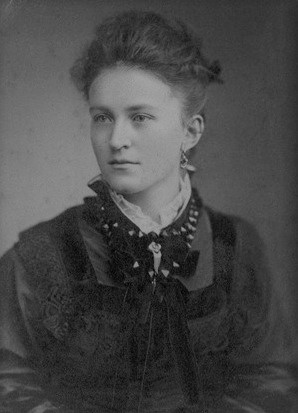
  7. Herman, Caroline, widow of William Herman, in U.S. Census, Longswamp Township, Berks County, Pennsylvania, 1890). Washington, D.C.: U.S. National Archives and Records Administration.
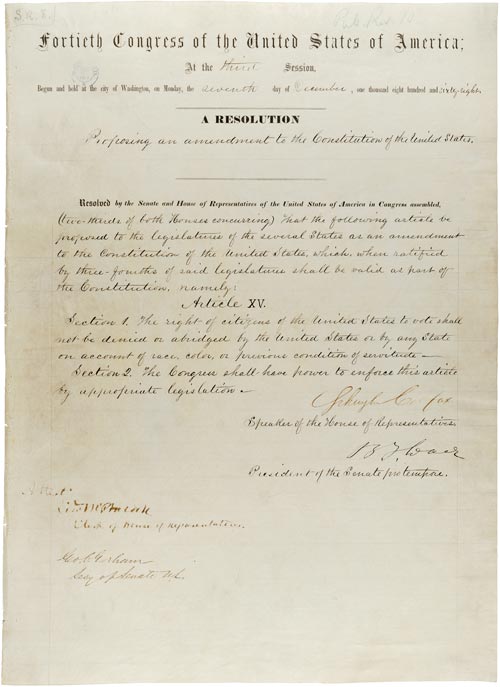
  8. “Judge Endlich’s Opinion” (ruling on the sanity of Carolina Herman). Reading, Pennsylvania: Reading Times, September 30, 1890.
  9. Julia Magill, in “Prominent Army Nurses,” in “The National Association of Army Nurses of the Civil War.” Washington, D.C.: The Evening Times, Wednesday, October 8, 1902.
  10. Knauss, Thomas, Pauline, George, and Robert, and Ritter, Mary, in U.S. Census (Allentown, First Ward, Lehigh County, Pennsylvania, 1870). Washington, D.C.: U.S. National Archives and Records Administration.
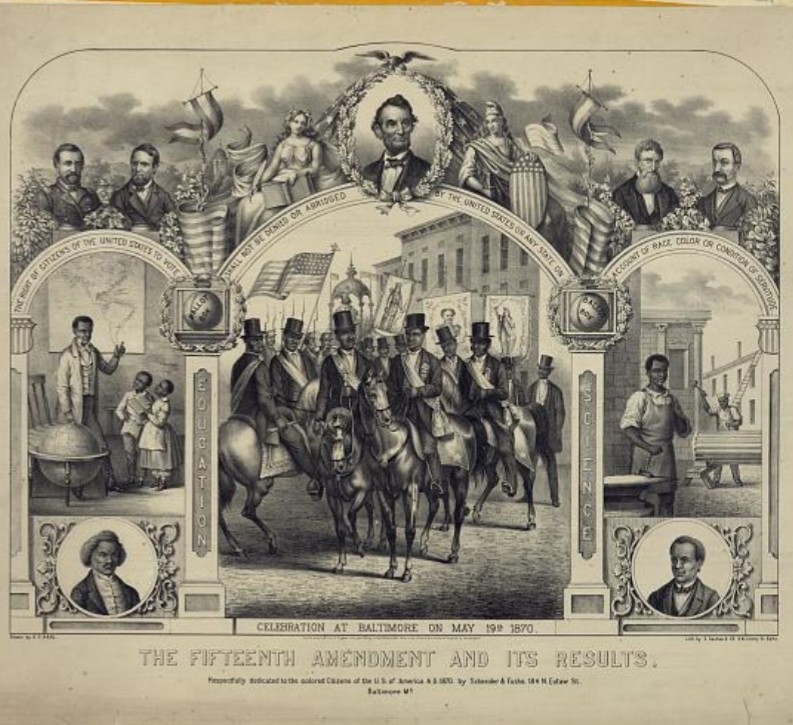
  11. Knauss, Thomas, Pauline, George, Robert, Emma, Agnes, Effy, and Minerva, in U.S. Census (Allentown, Lehigh County, Pennsylvania, 1880). Washington, D.C.: U.S. National Archives and Records Administration.
  12. Pauline Knauss, in Death Certificates (file no.: 15329, registered no.: 219; date of death: February 27, 1922). Harrisburg, Pennsylvania: Commonwealth of Pennsylvania, Department of Health, Bureau of Vital Statistics.
  13. Kolb, Hannah and William, in U.S. Census (Heidelberg Township, Lehigh County, Pennsylvania, 1870; note: shown as living next door to/near Hiram Kolb, who was Hannah’s son and William’s brother); Washington, D.C.: U.S. National Archives and Records Administration.
  14. Kolb, John and Hannah, in U.S. Civil War Widows’ Pension Files. Washington, D.C.: U.S. National Archives and Records Administration.
  15. “Minick, Julia A. (nee) Megill, Julia A.” [sic], in U.S. Civil War Pension General Index Cards, 1896. Washington, D.C.: U.S. National Archives and Records Administration.
  16. Minnich, Capt. Edwin G. and Mrs. Julia (Kuehner) Minnich (images and military paperwork). Pennsylvania: Personal Collection of Chris Sapp.
  17. Minnich, George E., in New Jersey State Census (1895). Trenton, New Jersey: New Jersey Department of State.
  18. Ritter, James and Paulina, in U.S. Civil War Widows’ Pension Files. Washington, D.C.: U.S. National Archives and Records Administration.
  19. “Todte Körper Heimgebracht” (“Dead Bodies Brought Home”). Allentown, Pennsylvania: Der Lecha Caunty Patriot, February 2, 1864.


Thoughts of Home at Christmas: The Influence of Thomas Nast’s Art During a 47th Pennsylvania Volunteer’s Lifetime

“Christmas Eve,” 1862 (Thomas Nast, Harper’s Weekly, Vol. 7, pp. 8-9, Christmas edition, 1862, public domain; click to enlarge).

When thinking about what life was like for the Pennsylvania volunteer soldiers who served their nation during the American Civil War, the influence of nineteenth century artists on their lives would likely not be the first thing that comes to mind. The orders they received from their superior officers in the Army and the “trickle down” effect of the directives issued by state and federal elected officials to those Union Army officers, yes, but visual artists? Probably not.

But artists and their artwork—paintings and illustrations created during and after the 1860s—did leave their mark on the psyches of soldiers in ways that were profoundly illuminating and long lasting.

Many of the most powerful artworks that were likely seen and reflected on by members of the 47th Pennsylvania Volunteer Infantry were those drawn by Thomas Nast (1840-1902), a native of Germany who had emigrated to the United States from Bavaria with his mother and siblings in 1846. He spent most of his formative years in New York City, where he took up drawing while still in school. As he aged, he came to view America as his homeland, but still grew up experiencing many German traditions—as had many 47th Pennsylvania Volunteers during their own formative years. (Company K, for example, was established in August 1861 as an “all-German company” of the 47th Pennsylvania.)

Nast’s first depiction of the Christmas season (shown above) was created for the cover and centerfold of the Christmas edition of Harper’s Weekly 1862, shortly after he was hired as a staff illustrator.

“Santa Claus in Camp,” 1863 (Thomas Nast, Harper’s Weekly, January 3, 1863, public domain; click to enlarge).

He then continued to create illustrations of Santa for Harper’s Weekly in subsequent years. According to journalist Lorraine Boissoneault:

You could call it the face that launched a thousand Christmas letters. Appearing on January 3, 1863, in the illustrated magazine Harper’s Weekly, two images cemented the nation’s obsession with a jolly old elf. The first drawing shows Santa distributing presents in a Union Army camp. Lest any reader question Santa’s allegiance in the Civil War, he wears a jacket patterned with stars and pants colored in stripes. In his hands, he holds a puppet toy with a rope around its neck, its features like those of Confederate president Jefferson Davis….

According to historians at Grant Cottage, “In 1868, newly elected 18th President U.S. Grant paid tribute to Thomas Nast by saying, ‘Two things elected me, the sword of Sheridan and the pencil of Thomas Nast.’”

As a result, members of the 47th Pennsylvania Volunteer Infantry had ample time to become well acquainted with Nast’s artistry and his support for their efforts, as part of the United States Army, to end the Civil War and preserve America’s Union. An ardent abolitionist, Nast also actively supported the federal government’s efforts to eradicate the brutal practice of chattel slavery.

Fort Taylor, Key West, Florida (Harper’s Weekly, 1864, public domain).

Nast’s first illustrations of Santa Claus and depictions of soldiers longing for family at Christmas would initially have been seen by 47th Pennsylvania Volunteers while they were stationed far from home at Fort Taylor in Key West, Florida—just two months after the regiment had sustained a shockingly high rate of casualties during the Battle of Pocotaligo, South Carolina on October 22, 1862. More than one hundred members of the regiment had been killed in action, mortally wounded, grievously wounded, or wounded less seriously, but still able to continue their service.

So terrible was the outcome that it would have been enough to make an impression even on individual 47th Pennsylvanians who hadn’t been wounded. They were not only now battle tested, they were battle scarred, according to comments made by individual members of the regiment in the letters they wrote to families and friends back home during that Christmas of 1862.

No matter how strong their capacity for overcoming adversity had been before that battle, their hearts and minds would never be the same. It would take time to heal and move forward—time they were given while stationed on garrison duty for more than a year.

Fort Jefferson (Harper’s Weekly, August 26, 1865, public domain; click to enlarge).

By the time that the American Civil War was ending its third year, the mental wounds of Pocotaligo were far less fresh than they had been the previous Christmas. Still stationed in Florida on garrison duty in 1863, the 47th Pennsylvania Volunteer Infantry was now a divided regiment. While slightly more than half of the regiment was still on duty at in Key West, as companies A, B, C, E, G, and I remained at Fort Taylor, the remaining members of the regiment—companies D, F, H, and K—were now even farther away from home—stationed at Fort Jefferson, the Union’s remote outpost that was situated so far off of Florida’s coast that it was accessible only by ship.

Letters penned to family and friends back in Pennsylvania during the early part of 1863 capture a sense of sadness and longing that pervaded the regiment—as 47th Pennsylvanians mourned the loss of their deceased comrades and thought about how deeply they missed their own families.

Gradually, as the year wore on, those feelings turned to acceptance of their respective losses and, eventually, frustration at still being assigned to garrison duty when they felt they could and should be helping the federal government bring a faster end to the war by defeating the Confederate States Army through enough tide-turning combat engagements that the Confederate States of America would finally surrender and agree to re-unify the nation.

By early 1864, the wish of those 47th Pennsylvanians was granted by senior Union Army officials. They were not only given the opportunity to return to combat, but to return to intense combat as a history-making regiment.

The only regiment from Pennsylvania to fight in the Union’s 1864 Red River Campaign across Louisiana, the 47th Pennsylvanians repeatedly displayed their valor as the blood of more and more of their comrades was spilled to eradicate slavery across the nation while also fighting to preserve the nation’s Union. By the fall of 1864, they were participating in such fierce, repeated battles across Virginia during Union Major-General Philip Sheridan’s 1864 Shenandoah Valley Campaign that President Abraham Lincoln was able to secure his reelection and the tide of the American Civil War was decisively turned in the federal government’s favor once and for all.
Ruins of Charleston, South Carolina as seen from the Circular Church, 1865 (U.S. National Archives and Records Administration, public domain).

By April 1865, the Confederate States Army had surrendered, the war was over and President Lincoln was gone, felled by an assassin’s bullet that had too easily found its target. So, once again, the 47th Pennsylvania Volunteers were in mourning.

Sent back to America’s Deep South that summer, they were assigned to Reconstruction duties in Savannah, Georgia and Charleston, South Carolina, where they helped to reestablish functioning local and state governments, rebuild shattered infrastructure, and reinvigorate a free press that was dedicated to supporting a unified nation—all while other Pennsylvania volunteer regiments were being mustered out and sent home.

Finally, after a long and storied period of service to their nation, the 47th Pennsylvania Veteran Volunteers were given their honorable discharge papers at Camp Cadwalader in Philadelphia, and were then sent home to their own family and friends in communities across Pennsylvania in early January 1866.

Return to Civilian Life

“Santa Claus and His Works,” 1866 (Thomas Nast, Harper’s Weekly, December 29, 1866, public domain; click to enlarge).

Attempting to regain some sense of normalcy as their post-war lives unfolded over the years between the late 1860s and the early 1900s, many of the surviving veterans of the 47th Pennsylvania Volunteer Infantry resumed the jobs they held prior to the war while others found new and better ways to make a living. Some became small business creators, pastors or other church officials, members of their local town councils or school boards, beloved doctors, or even inventors. One even became the lieutenant governor of the Commonwealth of Pennsylvania.

Most also married and began families, some small, some large. Still others made their way west—as far as the states of California and Washington—in search of fortune or, more commonly, places where war’s Grim Reaper would never find them again.

“‘Twas the Night Before Christmas,” 1866 (Thomas Nast, Harper’s Weekly, December 25, 1886, public domain; click to enlarge).

As the years rolled on, they saw more and more of Thomas Nast’s work as it was published in Harper’s Weekly, particularly at Christmas. But the Santa Claus of war was now transformed by Nast as the Saint Nicholas of his childhood in Germany—kind, altruistic, loving, and jolly.

Over time, those illustrations collectively formed the “mind pictures” that the majority of American children and adults experienced when they imagined Santa Claus. So powerful has Nast’s influence been that, even today, when Americans encounter the many variations of Santa used to promote products in Christmas advertising campaigns, they see images that are often based on Nast’s nineteenth century drawings—drawings that had their genesis as beacons of light and hope during one of the darkest times in America’s history.

Like Abraham Lincoln, Nast has been helping Americans to summon and follow “the better angels of our nature” for more than one hundred and sixty years. May the power of his art help us all continue to do so this year and for the remainder of our days.


Sources:

  1. Boissoneault, Lorraine. A Civil War Cartoonist Created the Modern Image of Santa Claus as Union Propaganda.” Washington, D.C.: Smithsonian Magazine, December 19, 2018.
  2. Drawn Together: The Friendship of U.S. Grant and Thomas Nast (video). Wilton, New York: Grant Cottage, May 14, 2022.
  3. Santa Claus,” in “Thomas Nast.” Columbus, Ohio: University Libraries, The Ohio State University, retrieved online December 23, 2023.
  4. Santa Claus in Camp (from ‘Harper’s Weekly,’ vol. 7, p. 1).” New York, New York: The Met, retrieved online December 23, 2023.
  5. Vinson, J. Chal. Thomas Nast and the American Political Scene,” in American Quarterly, vol. 9, no. 3, Autumn 1957, pp. 337-344. Baltimore, Maryland: The Johns Hopkins University Press.


Uniforms and Insignia of the 47th Pennsylvania Volunteer Infantry

Captain Richard A. Graeffe, Company A, 47th Pennsylvania Volunteers, circa 1862 (public domain).

Upon mustering in at Camp Curtin in Harrisburg, Pennsylvania in August and early September of 1861, the men who had enrolled for military service with the 47th Pennsylvania Volunteer Infantry were assigned to their respective companies and issued standardized uniforms—the same style of dark blue, wool uniforms that were worn by the regular officers or enlisted members of the U.S. Army. The uniform of Captain Richard Graeffe (pictured at right) shows the typical details of a company commander’s uniform with shoulder bars, hat and sword.

Initially equipped with Mississippi rifles, the 47th Pennsylvania Volunteers were then provided with basic training in light infantry tactics through mid-September. Presented with the regiment’s First State Color on September 20, 1861 by Pennsylvania Governor Andrew Curtin, they were subsequently marched to Harrisburg’s train station, and were transported to Washington, D.C., where they participated in the first of multiple duty assignments that would take them from the Eastern Theater of the American Civil War to the Western and Trans-Mississippi theaters between early 1862 and March of 1864 before being transported back to the Eastern Theater for the fateful and tide-turning Shenandoah Valley Campaign, which unfolded during the summer and fall of 1864.

Army of the United States, Corps Badges, 1865 (U.S. Library of Congress, public domain; click to enlarge).

Along the way, the 47th Pennsylvania Volunteer Infantry would be attached to the:

  • U.S. Army of the Potomac (“Mr. Lincoln’s Army”) in the Eastern Theater (1861);
  • U.S. Army’s Tenth Corps (X Corps) in the Western Theater (Occupying force duties and battles in Florida and South Carolina, early winter 1862 through early winter 1864);
  • U.S. Army’s Nineteenth Corps (XIX Corps) in the Trans-Mississippi Theater (Red River Campaign, spring and early summer 1864);
  • U.S. Army of the Shenandoah, Nineteenth Corps (XIX Corps) in the Eastern Theater (Battle of Cool Spring and Sheridan’s 1864 Shenandoah Valley Campaign, summer and fall 1864);
  • U.S. Army of the Shenandoah, Nineteenth Corps (XIX Corps) in the Eastern Theater (Defense of Washington, D.C., late winter 1864 through the immediate aftermath of the assassination of President Abraham Lincoln in 1865);
  • Selected units of the U.S. Army’s former Nineteenth Corps (XIX Corps (Reconstruction duties in Savannah, Georgia and Charleston, South Carolina, June through late December 1865); and
  • Camp Cadwalader (final discharge, early January 1866).
Each time that the 47th Pennsylvania Volunteers were attached to a different Union Army corps, they were issued specific insignia that were then sewn onto their uniforms. The chart pictured above shows the different insignia that were worn by the various Union corps’ members.

The Demographics of the 47th Pennsylvania Volunteer Infantry

Lieutenant-Colonel George Warren Alexander, second-in-command, 47th Pennsylvania Volunteer Infantry, with officers from the 47th at Fort Jefferson in the Dry Tortugas, Florida, circa 1863 (public domain).

Recruited primarily at community gathering places in their respective hometowns, the majority of soldiers who served with the 47th Pennsylvania Volunteer Infantry were enrolled at county seats or other large population centers within the Commonwealth of Pennsylvania.

The youngest member of the regiment was a 12-year-old drummer boy; the oldest was a 65-year-old, financially successful farmer who would attempt to re-enlist, at the age of 68, after being seriously wounded while protecting the American flag in battle.

Roughly 70 percent were residents of Pennsylvania’s Lehigh Valley, including the cities of Allentown, Bethlehem and Easton and surrounding communities in Lehigh and Northampton counties. Company C, which was formed primarily of men from Northumberland County, was more commonly known as the “Sunbury Guards.” Company D and Company H were staffed largely by men from Perry County. Company K was formed with the intent of creating an “all-German” company that would be composed of German-Americans and German immigrants.

In point of fact, a number of the 47th Pennsylvania Volunteers were immigrants or first-generation Americans. A significant percentage of each of the regiment’s companies were men whose families still spoke German or “Pennsylvania Dutch” at their homes and churches more than a century after their ancestors emigrated from Germany in search of religious or political freedom. Others traced their roots to Ireland; one had been born on Spain’s Canary Islands, and at least two were natives of Cuba.

In early October of 1862, several African American men who had been freed from enslavement on plantations near Beaufort, South Carolina, joined the ranks of the 47th Pennsylvania, followed by the April 1864 enrollment of other formerly enslaved men in Natchitoches, Louisiana.

Their final resting places span the nation, from Maine to California and from the State of Washington to Florida.