Finding Your 47th Pennsylvanian: The Surprising Details in Pennsylvania’s Civil War-Era Muster Rolls

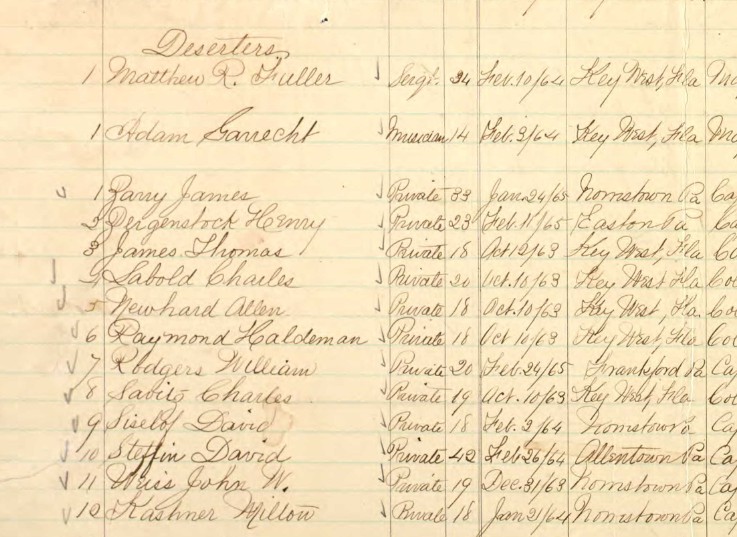
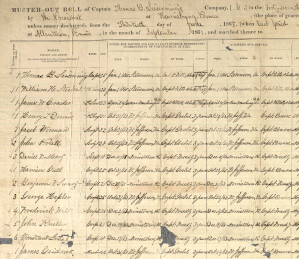
Excerpt of muster-out roll, Company G, 47th Pennsylvania Volunteer Infantry, December 25, 1865, page one (Pennsylvania Civil War Muster Rolls, Pennsylvania State Archives, public domain; click to enlarge).

The Commonwealth of Pennsylvania’s collection of Civil War-era muster rolls is another of the three major tools that beginning, medium and advanced researchers initially turn to for help in determining which Pennsylvania military unit(s) a soldier served with during the American Civil War. Unfortunately, it is also a resource that often does not receive the close attention from researchers that it should.

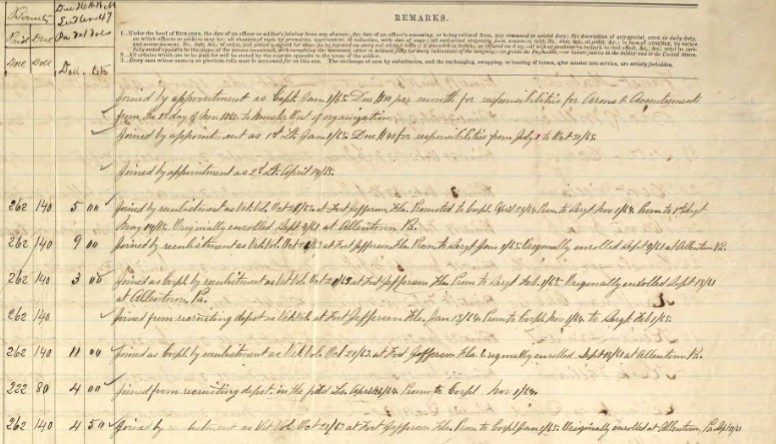
Those who have chosen to spend significant time looking through the individual documents contained in this collection have come to understand that, in addition to confirming the identity of a soldier’s regiment and company, as well as his rank(s) at enrollment and final discharge, Pennsylvania’s Civil War-era muster rolls are also useful for documenting when and where that soldier enrolled and mustered in for service and whether or not he had some change to his status while serving, such as a promotion, reduction in rank or charge of desertion — and possibly data which documented whether or not he was wounded or killed in battle and, if so, when and where.

Physically created as hard-copy index cards that were later preserved by the Pennsylvania State Archives in Harrisburg, Pennsylvania, as part of the “Civil War Muster Rolls and Related Records” group of documents from the Pennsylvania Department of Military and Veterans Affairs’ archives (Series RG:-019-ADJT-11, 1861-1866, 1906), this collection includes muster rolls from each of Pennsylvania’s volunteer infantry and volunteer militia regiments, emergency volunteer militia regiments that were formed during the summer of 1863 in response to the looming invasion of the commonwealth by the Confederate States Army, United States Colored Troops (USCT), United States Veteran Volunteer regiments and Hancock Veterans Corps, regiments of the Veterans Reserve Corps, and independent or other unattached units. Preserved on microfilm decades ago by the Commonwealth of Pennsylvania, a portion of this large collection has since been partially digitized and made available on the Ancestry.com website as “Pennsylvania, U.S., Civil War Muster Rolls, 1860-1869.”

* Note: Although Ancestry.com is a subscription-based genealogy service that generally requires users to pay for access to its records collections, the Commonwealth of Pennsylvania entered into a partnership with Ancestry.com several years ago “to digitize family history records in the State Archives and make them available online.” As part of that agreement, Ancestry.com created Ancestry.com Pennsylvania to provide free access to Pennsylvania residents to the Pennsylvania records it has digitized. If you reside in Pennsylvania and want to learn more about how you may obtain free access to those records, please contact the Pennsylvania State Archives for guidance. If you reside elsewhere, check with your local library to determine if it offers access to Ancestry.com as part of its service to library users.

What May Researchers Find with This Resource?
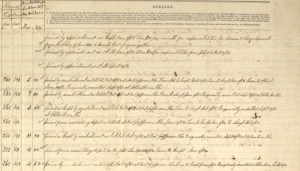
Excerpt from muster-out roll, Company G, 47th Pennsylvania Volunteer Infantry, December 25, 1865, showing soldiers’ promotions, status as Veteran Volunteers, etc. (Pennsylvania State Archives, public domain; click to enlarge).

According to personnel at the Pennsylvania State Archives, Pennsylvania’s Civil War Muster Rolls and Related Records collection includes:

“Alphabetical Rolls. The rolls are arranged alphabetically by the soldiers’ surnames. Entries usually give the name, rank, civilian occupation, and residence, the unit, regiment, company, and commanding officer, and the date and place where the roll was taken. Particulars about sickness or injury are also sometimes noted.

“Descriptive Lists of Deserters. Lists give the names, ages, places of birth, height, hair and eye color, civilian occupations, and ranks of deserters, the units, regiments, and companies to which they were assigned, and the dates and places from which they deserted.

“Muster-In Rolls. Entries usually list the name, age, rank, unit, regiment, and company of the soldier, the date and place where enrolled, the name of the person who mustered him in, the term of enlistment, the date of mustering in, and the name of commanding officer. Remarks concerning promotions and assignments are sometimes recorded.

“Muster-Out Rolls. The dated lists ordinarily give the soldier’s name, age, rank, unit, regiment, and company, the date, place, and person who mustered him in, the period of enlistment, and the name of the commanding officer. Particulars concerning pay earned, promotions, capture by the enemy and the like also regularly appear.

“Muster and Descriptive Rolls. Generally the rolls give the name, age, town or county and state or kingdom of birth, civilian occupation, complexion, height, eye and hair color, and rank, the unit, regiment, company and commanding officer, and the amount of money received for pay, bounties, and clothing. Rolls for assigned United States black troops are included in this group. Included throughout are such related materials as regimental accounts of action, and correspondence related to infractions of military procedures, correspondence from soldiers addressed to the governor expressing grievances or petitioning for promotion.

“The data found in the documents of this series were used to create the Civil War Veterans Card File, 1861-1866 (Series 19.12).”

Be Sure to Look for Data Regarding Soldiers’ Pay

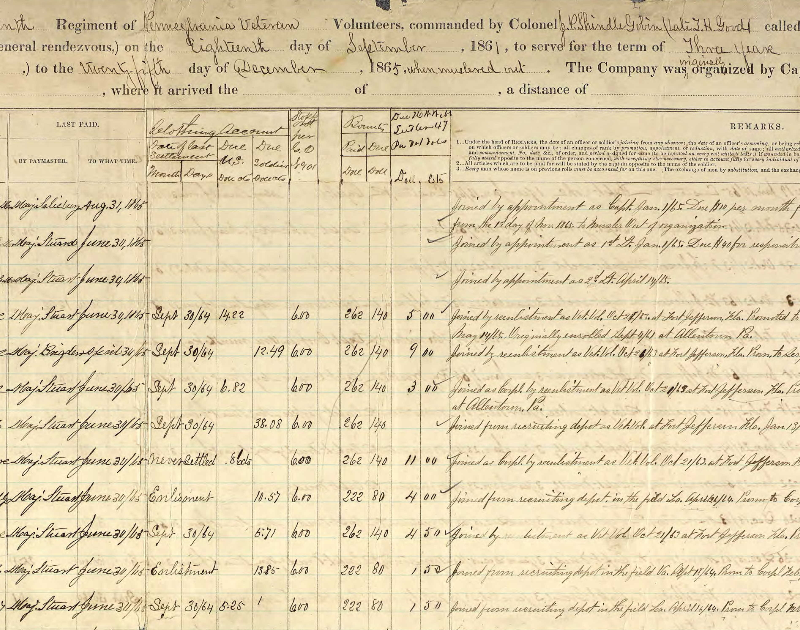
Excerpt from muster-out roll for Company G, 47th Pennsylvania Volunteer Infantry, showing soldiers’ pay data, December 25, 1865 (Pennsylvania State Archives, public domain).

One of the most fascinating features found on the muster-out rolls for Pennsylvania volunteer soldiers is that many of the infantry unit clerks took the time to meticulously record the pay data for multiple members of their respective regiments. As a result, present-day researchers are often able to determine how much bounty pay a particular soldier was eligible for at the time of his enlistment — and how much of that promised pay he actually received, as well as how much money he still owed the United States government for his army uniform, rifle and ammunition at the time of his discharged from the military.

Another striking feature on the muster-out rolls is the “Last Paid” column, which corroborates the shocking fact that many Union Army soldiers were expected to perform their duties, even though they were not being paid regularly — a data point that also may help to shed light on why some soldiers’ families faced greater hardship than others (because some soldiers were able to send part of their pay home while others were not).

Caveat Regarding Ancestry.com’s Collection Related to the 47th Pennsylvania Volunteer Infantry
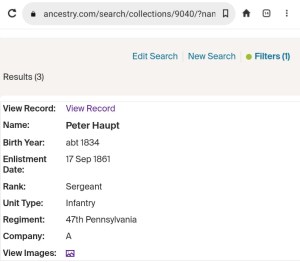
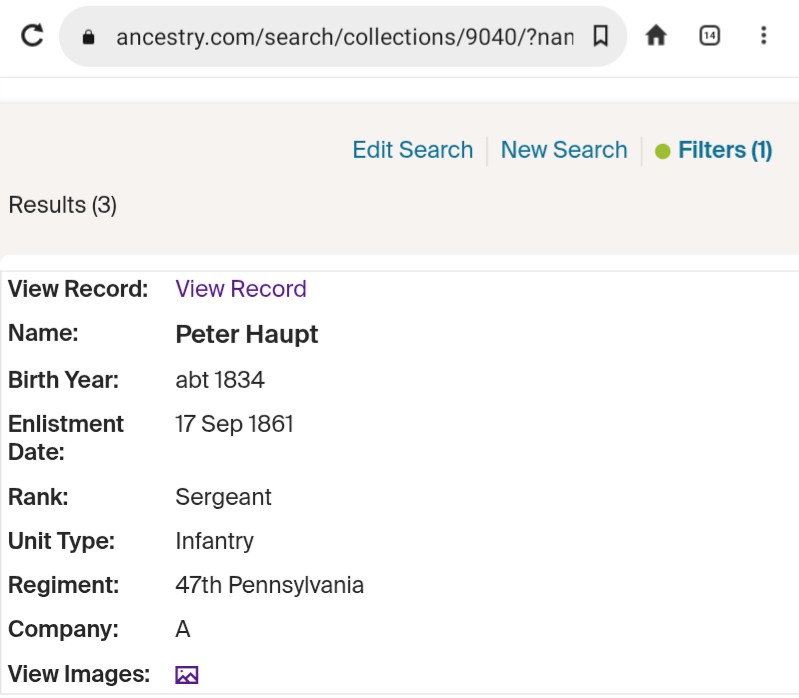
Screenshot of Ancestry.com’s record detail page for Peter Haupt, which incorrectly identifies him as a member of Company A, 47th Pennsylvania Volunteer Infantry, instead of Company C (fair use for illustration purpose, October 2025).

Although Ancestry.com’s collection of Pennsylvania Civil War-era muster rolls can be a useful tool for researchers, there is a significant problem with records related to the 47th Pennsylvania Volunteer Infantry that merits closer scrutiny — the inaccurate transcription of soldiers’ data. That scrutiny is needed because the muster rolls from the 47th Pennsylvania’s Company C were mixed together with the muster rolls from Company A when they were posted to Ancestry.com’s website, making it appear, when browsing through those rolls, that all of the soldiers listed on every single one of those incorrectly grouped muster rolls were all members of Company A, when they were not.

Complicating things further, the Ancestry.com personnel who were assigned to transcribe the data from each of those muster rolls and create Record Detail pages for each individual soldier that summarized each soldier’s data from the muster roll on which it appeared, apparently did not realize that the muster rolls from Companies A and C of the 47th Pennsylvania Volunteer Infantry had been mixed together. As a result, those transcribers incorrectly described every soldier from that improperly sorted muster roll group as a member of Company A, when they were not. (See attached image.)

So, when reviewing Ancestry.com’s collection of muster rolls, it is vitally important that researchers not take the transcribed data found on any of the Record Detail pages of 47th Pennsylvania muster rolls at face value. Instead, researchers should double check the data found on those muster rolls for the 47th Pennsylvania Volunteer Infantry against the data for individual soldiers published by Samuel P. Bates in his History of Pennsylvania Volunteers, 1861-5, volume 1, and should also then re-check that data against the information of individual soldiers that is contained in the Pennsylvania Civil War Veterans Index Card File, 1861-1866.

* Note: This is particularly important if you are a family historian who is hoping to identify the specific company in which your ancestor served. (And you will definitely want to know which company your ancestor served with because each company of the 47th Pennsylvania Volunteer Infantry was assigned to different duties in different locations at different times during the regiment’s service.)

Caveat Regarding “Deserters”
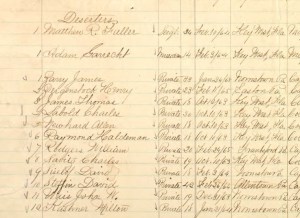
Private Milton P. Cashner, Company B, 47th Pennsylvania Volunteer Infantry, was incorrectly labeled as a deserter on this regimental muster roll from the American Civil War (Pennsylvania State Archives, public domain; click to enlarge).

If a muster roll entry for your ancestor noted that he was a deserter, it’s also important that you not take that label at face value, either, because that data may also be incorrect. Military records from the Civil War era contained a surprising number of errors, a fact that is understandable when considering what the average army clerk was expected to do — keep track of more than a thousand men, many of whom ended up becoming separated from their regiment and confined to Union Army hospitals after being wounded in battle. (Wounded too severely to identify themselves to army personnel, they were then often mis-identified by army hospital personnel and then also incorrectly labeled as “deserters” by their own regiments because they hadn’t shown up for post-battle roll calls.) So, it’s important to double and triple check the data for any ancestor who was labeled as a “deserter” because he might actually have been convalescing at a hospital and not absent without leave.

Honoring Our Ancestors 

One of the best ways to honor ancestors who fought to preserve America’s Union is to pass their stories along to future generations. No embellishment required. Their willingness to volunteer for military service and the bravery they displayed as they ran toward danger and certain death during one of America’s darkest times speaks for itself.

Our job, as students of American History, educators and family historians is to ensure that their stories are told as accurately and thoroughly as possible so that their valor and love of community and country are never forgotten.

Remember their names. Tell and re-tell their stories. Honor the sacrifices that they made.


Sources:

  1. “Ancestry Pennsylvania,” in “Agencies: Pennsylvania Historical and Museum Commission,” in “Pennsylvania State Archives.” Harrisburg, Pennsylvania: Commonwealth of Pennsylvania, retrieved online October 25, 2025.
  2. Civil War Muster Rolls and Related Records” (resource description). Harrisburg, Pennsylvania: Pennsylvania State Archives, retrieved online October 30, 2025.
  3. Pennsylvania,” in Collections. Lehi, Utah: Ancestry.com Operations, Inc., 2021 (retrieved online October 25, 2025).
 

Finding Your 47th Pennsylvanian: Using the Pennsylvania Civil War Veterans Card File, 1861-1866

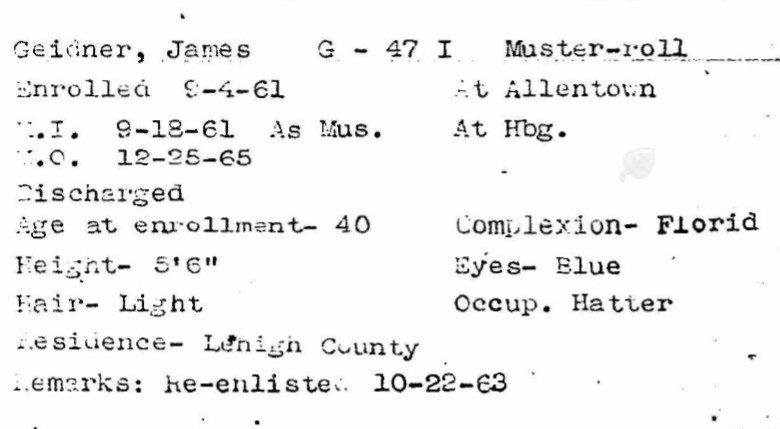
The index card of Field Musician James Geidner, Company G, 47th Pennsylvania Volunteer Infantry (Pennsylvania Civil War Veterans Card File, 1861-1866, courtesy of the Pennsylvania State Archives).

The Pennsylvania Civil War Veterans Index Card File, 1861-1866 is one of three resources that beginning, medium and advanced researchers frequently turn to for help in determining which Pennsylvania military unit(s) a soldier served with during the American Civil War. Physically housed at the Pennsylvania State Archives in Harrisburg, Pennsylvania, as part of the Pennsylvania Department of Military and Veterans Affairs’ archives (Series RG-019-ADJT-12), this collection of individual index cards was preserved on microfilm decades ago by the Commonwealth of Pennsylvania and then later digitized and made available, free of charge, on the State Archives’ website via a user-friendly portal, enabling researchers nationwide to search or browse, alphabetically, through each of the index cards that had been created for the majority of Pennsylvanians who had served with the Union Army (as well as the non-Pennsylvanians who had also served with Pennsylvania units). According to Pennsylvania State Archives personnel:

“These 3 x 5 cards were initially prepared to serve as an index to Samuel Penniman Bates’ History of Pennsylvania Volunteers, 1861-1865, (Harrisburg, 1869-1871). The Office of the Adjutant General later expanded the scope of the cards by transcribing onto them data found on the original documents. Among the information generally found are the soldiers’ names, military units, and ages at enrollment, the dates and places where enrolled, the dates and places where mustered in, and the dates of discharge. Physical descriptions (complexion, height, color of hair and eyes), residences, birthplaces, promotions and wounds also are sometimes included. The listing is not comprehensive.”

That last sentence is an important caveat because, while this index card system can be a helpful primary source for basic data about individual soldiers, it does not contain the name of every single Pennsylvanian who served with the Union Army during the Civil War. In addition, a significant number of the index cards contain errors (incorrect spellings of soldiers’ names, soldiers labeled as deserters when they had actually been honorably discharged or hospitalized to due battle wounds or illness, etc.).

* Note: Those faults are understandable, however, when considering that the index cards were based on data compiled by Samuel Bates for his History of Pennsylvania Volunteers, 1861-5a five-volume series of books that included rosters of soldiers for each Pennsylvania regiment that served during the American Civil War. The errors in Bates’ History are also understandable as you come to understand that Samuel Bates was assigned the task, during the mid-1860s, of summarizing thousands and thousands of muster rolls generated by Pennsylvania military units during the war — many of which were also filled with errors because the army clerks assigned to maintain those rolls were often unable to create accurate records as their regiments were being marched into battle or from one duty station to another.

Another more recent issue with this system is that its portal to the digitized index cards that was so easy to browse and search for free is now no longer available on the Pennsylvania State Archives’ website. The index cards are still available, however, to researchers who travel to Harrisburg to view the microfilmed version at the State Archives, as well as to online researchers via Ancestry.com as “Pennsylvania, U.S., Veterans Card Files, 1775-1948.” (Although Ancestry.com is a subscription-based genealogy service that generally requires users to pay for access to its records collections, the Commonwealth of Pennsylvania entered into a partnership with Ancestry.com several years ago “to digitize family history records in the State Archives and make them available online.” As part of that agreement, Ancestry.com created Ancestry.com Pennsylvania to provide free access to Pennsylvania residents to the Pennsylvania State Archives records it has digitized. If you reside in Pennsylvania and want to learn more about how you may obtain free access to those records, please contact the Pennsylvania State Archives for guidance. If you reside elsewhere, check with your local library to see if it offers access to Ancestry.com as part of its service to library users.)

Despite those issues, the Pennsylvania Civil War Veterans Index Card File, 1861-1866 remains a useful tool for finding your 47th Pennsylvanian because it may help you confirm your ancestor’s place of residence during the early 1860s and may also provide you with an approximate year of birth for him.

Additional Important Tips for Using This Resource

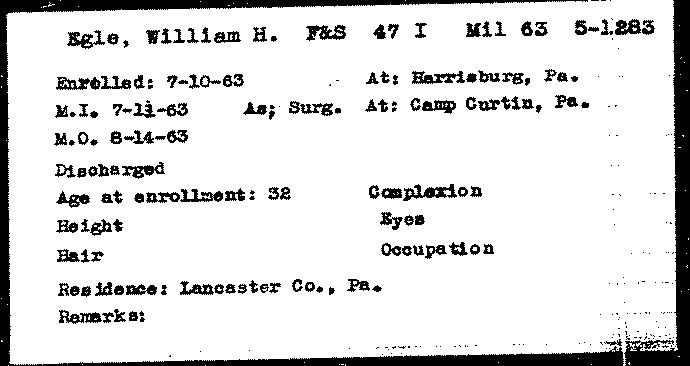
The index card of William H. Egle, M.D. shows that this soldier served with the 47th Pennsylvania Militia, Emergency of 1863 and not the 47th Pennsylvania Volunteer Infantry (Pennsylvania Civil War Veterans Card File, 1861-1866, courtesy of the Pennsylvania State Archives).

If you are able to find an index card for your ancestor in the Pennsylvania Civil War Veterans Index Card File, 1861-1866, pay particular attention to the top line of that card’s data. That data identifies the regiment number and company letter of his military unit. Then also look at the lines of data below. (Those lines of text note the start and dates of his service.) If you see dates of service indicating that your ancestor served between mid-April 1861 and the end of July 1861, you will realize that the regiment number in the top line was not “47.” This means that your ancestor performed what is known as “Three Months’ Service,” that he actually served with a different regiment during the first months of the war, and that he then may also have served with the 47th Pennsylvania Volunteer Infantry at a later date (because the 47th Pennsylvania Volunteer Infantry was not established until August 5, 1861). So, you’re one of those 47th Pennsylvania descendants who needs to look for two or more index cards in the Pennsylvania Civil War Veterans Index Card File, 1861-1866 — one for your ancestor’s “Three Month Service” and one for his service with the 47th Pennsylvania Volunteer Infantry (which was initially most likely a three-year term of enlistment, but may have been a one or two-year term, depending on how late he was enrolled for service).

HOWEVER, if you see dates of service indicating that your ancestor served at any point during 1863 — AND, if the top line indicates that his regiment was “47 I Mil 63” — this means that your ancestor DID NOT serve with the 47th Pennsylvania Volunteer Infantry. He served with the 47th Pennsylvania Militia, Emergency of 1863. (The soldiers who served with that militia group were also brave and honorable men, but they were part of a very different unit that had a very different mission. Learn more about that militia unit here.)

Regardless of whether or not your ancestor “performed Three Months’ Service” during the earliest part of the Civil War, if you see dates of service indicating that your ancestor served at any point between August 5, 1861 and early January 1866 — AND if the top line indicates that his regiment was “47 I” — then you can be reasonably confident that your ancestor actually did serve with the 47th Pennsylvania Volunteer Infantry (also known as the 47th Pennsylvania Volunteers or the 47th Pennsylvania Veteran Volunteers). So, you should make yourself a cup of coffee or tea, find a comfy chair, and spend some quality time exploring our website to learn more about the history-making 47th Pennsylvania Volunteer Infantry.

Best wishes for success with your research! Let us know what you learn about your ancestor!!


Sources:

  1. “Ancestry Pennsylvania,” in “Agencies: Pennsylvania Historical and Museum Commission,” in “Pennsylvania State Archives.” Harrisburg, Pennsylvania: Commonwealth of Pennsylvania, retrieved online October 25, 2025.
  2. Civil War Veterans Card File, 1861-1866” (resource description). Harrisburg, Pennsylvania: Pennsylvania State Archives, retrieved online October 25, 2025.
  3. Pennsylvania,” in Collections. Lehi, Utah: Ancestry.com Operations, Inc., 2021 (retrieved online October 25, 2025).


Reconstruction and Diplomacy: The 47th Pennsylvania in Georgia (Summer 1865)

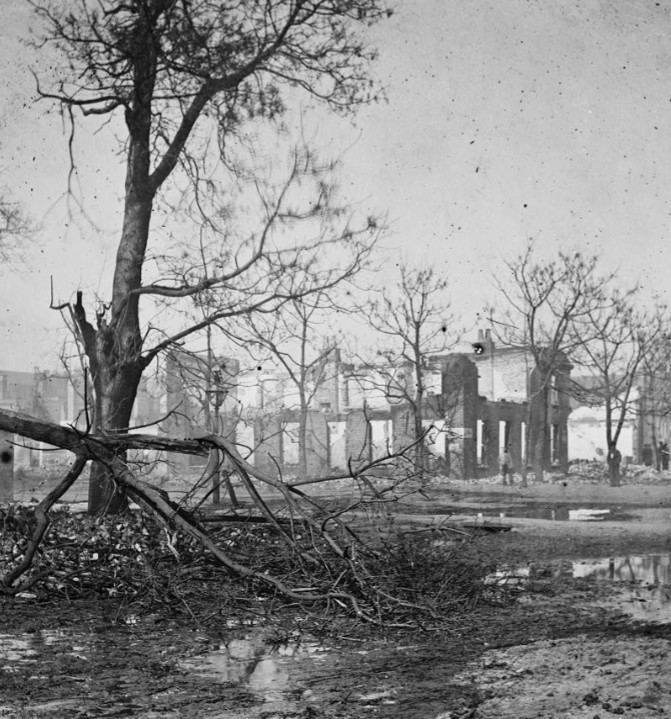
War-damaged houses in Savannah, Georgia, 1865 (Sam Cooley, U.S. Army, U.S. Library of Congress, public domain).

Stationed in Savannah, Georgia since June 7, 1865, the soldiers still serving with the 47th Pennsylvania Volunteer Infantry that first summer after the American Civil War were assigned to provost duties — as peacekeepers, public information specialists and public works officials, during what has since become known as the Presidential Reconstruction Era (1865-1867) of American History.

Commanded by Colonel John Peter Shindel Gobin, Lieutenant-Colonel Charles William Abbott and Major Levi Stuber, multiple members of the regiment were literally involved in the re-construction of small southern towns and larger cities, helping to shore up war-damaged structures that could be restored — and in tearing down others that were deemed too dangerous for civilians to leave standing.

John Young Shindel, M.D., assistant surgeon, 47th Pennsylvania Volunteers, 1865 (public domain).

It was hazardous work, according to John Young Shindel, M.D., an assistant regimental surgeon who had joined the medical staff of the 47th Pennsylvania earlier that same year. On Wednesday, June 18, 1865, he noted that:

10 o’clock wall fell in and buried 15 or 20 men. 6 or 7 were taken out some dead. Zellner Co. K badly hurt. Sent him to Hosp. Capt. Hoffman, Chief of Police, seriously hurt. In P.M. was with Capt. Hoffman.

The 47th Pennsylvanian mentioned by Dr. Young was Private Ben Zellner, who had survived repeated battle wounds and confinement as a prisoner of war (POW) at two Confederate States Army prison camps, only to nearly lose his life while assigned to police duty during peacetime. According to Private Zellner’s 1896 account of that 1865 accident, his jawbone had been broken during the wall’s collapse “and he sustained 11 scalp wounds”; as a result, he “lost the sight of his left eye and the hearing of his left ear.”

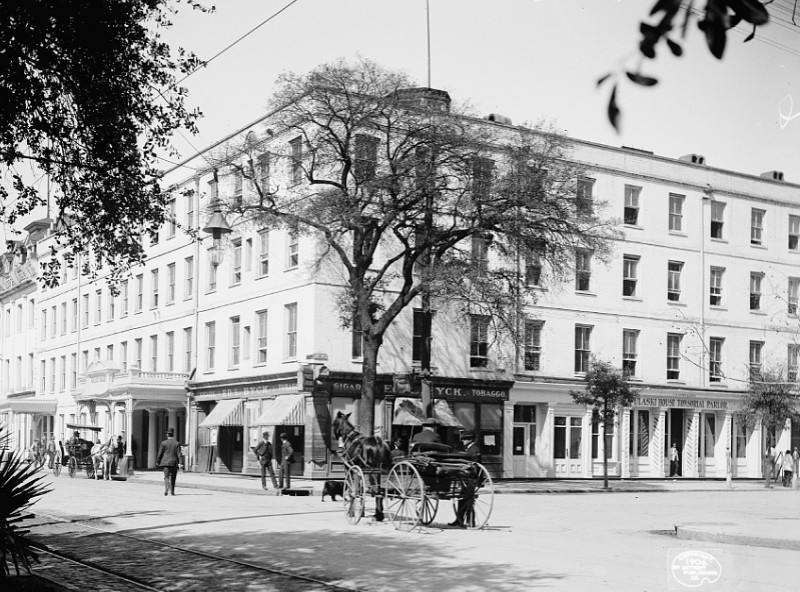
The 47th Pennsylvania Volunteer Infantry’s Regimental Band performed in concert for James Johnson, provincial governor of the State of Georgia, at the Pulaski Hotel in Savannah on June 30, 1865 (Pulaski Hotel, Savannah, Georgia, circa 1906, U.S. Library of Congress, public domain).

Meanwhile, other 47th Pennsylvania Volunteers were being transformed into diplomats. Officers and enlisted members of the regiment, for example, helped to facilitate a warm welcome for James Johnson, the provisional governor of Georgia, during his official visit to Savannah in early July. According to the Charleston Daily Courier, Governor Johnson (who had been appointed to his gubernatorial post by U.S. President Andrew Johnson (but was not related to the president), had been invited to Savannah by members of the city council “to address the citizens … at some suitable place.” In that invitation, council members also suggested that “military and naval commanders of the United States army and navy at this post and their respective staffs be respectfully invited to attend said meeting.” Johnson subsequently accepted the invitation and made the trip to Savannah in late June. The night of his arrival (June 30), “the fine band of the 47th Pennsylvania Regiment, Eugene Walter, Leader, serenaded the Governor at the Pulaski House.”

Several patriotic airs were played, and as soon as practicable the Governor appeared on one of the balconies, in response to repeated calls. He was loudly welcomed. He made no elaborate speech, but addressed the immense assembly substantially as follows:

“Fellow-Citizens — I thank you for the consideration, on your part, which has occasioned this demonstration. I know that you have called on me as the Provisional Governor of the State of Georgia, and in the discharge of the high duties now incumbent upon me, I promise you to act to the best of my ability. I know that you will not expect, on this occasion, any very full remarks. Hoping to meet you hereafter, and then to have an opportunity to explain my sentiments and position, I will bid you good night.”

This brief address was received with loud cheers by the crowd, and the band then played several other appropriate airs.

Joseph Eugene Walter, Regimental Band, 47th Pennsylvania Volunteers, circa 1861.

On July 1, the Savannah Republican newspaper published a more detailed description of that evening’s events:

Last evening, through the exertions of a few citizens, an impromptu call was made upon Gov. Johnson at the Pulaski by a delegation of loyal men, accompanied by the fine band of the 47th Pennsylvania Veteran Volunteers, now stationed in this city. The object of the call was simply to manifest the joy of the people at the return of a loyal civil magistrate, who, in a measure, holds the future destiny of Georgia in his hands, and to pay the Governor the compliment of a serenade. After the band had performed several appropriate pieces of music, loud calls and cheers were given for the Governor, who at length appeared, and in a few brief remarks thanked the assemblage for their demonstrations of respect, and informed them that, being wearied with traveling he begged to be excused from making any formal speech. Before bidding the crowd good night, the Governor informed them that it would be his pleasure to address the people tonight at the Theatre, where he would state his position and give his views on the state of the country. Upon retiring, the crowd applauded and cheered the Governor lustily, while Johnson square was ablaze with the discharge of fire works, the shooting of rockets, roman candles, and the illumination of blue lights, gave the scene a very brilliant appearance and made the vicinity of Savannah lively for one hour. At a late hour the crowd quietly dispersed to their homes, well pleased with the impromptu ovation to the Governor. Governor Johnson was afterwards introduced to a large number of army officers, each of whom expresses the wish that the day was near when bayonets would not be necessary to maintain order in Georgia. The Governor, who is a most unostentatious gentleman, spoke very encouragingly of the future, and shook hands with all who were introduced.

The thanks of our citizens are due Colonel Gobin, of the 47th Pennsylvania Volunteers, for the services of his excellent band, whose presence made the hasty reception a success. The Colonel has very kindly offered the use of his band for the meeting this evening at the theatre, and we may expect a brilliant gathering of the masses tonight at 8 o’clock.

James Johnson, provisional governor of the State of Georgia, 1865 (Lawton B. Evans, A History of Georgia for Use in Schools, 1898, public domain).

On Saturday evening (July 1), Governor Johnson fulfilled his promise. During a lengthy address, he spoke about cooperation and the rule of law, the true meaning of citizenship and the path forward following the nationwide eradication of chattel slavery. The crowd, which had been attentive throughout his speech, gave him a robust round of applause, and peacefully dispersed, according to subsequent newspaper reports. The festivities, which continued into the next week, also included a “Grand Review of the Garrison,” which was held in Savannah on Monday afternoon, July 3. According to the Savannah Republican:

The review of the entire garrison by Major General H. W. Birge, on Monday afternoon, was certainly one of the finest military pageants that we have witnessed since the departure of Gen. Sherman’s army. For perfection of military movements, neatness of appearance and true soldierly bearing on the part of privates as well as officers, won encomiums from the vast crowd of spectators who witnessed the review. We don’t blame Gen. Birge to feel proud of such a noble body of gallant men as he has the honor to command, and we are fortunate in having so excellent a command garrisoning our city.

The following composes the troops that participated in the review:

Brigadier General Joseph D. Fessenden, commanding 1st Division.

1st Brigade, 1st Division, Col. L. Peck commanding. — 90th New York, Lt. Col. Schamman; 173d New York, Lt. Col. Holbrook; 160th New York, Lt. Col. Blanchard; 47th Pennsylvania, Col. Gobin.

2d Brigade, Col. H. Day commanding. — 131st New York, Capt. Tilosting commanding; 128th New York, Capt. _____ ; 14th New Hampshire, Lt. Col. Mastern.

3d Brigade, 2d Division, Col. Graham commanding. — 22d Iowa, Lt. Col. _____ ; 24th Iowa, Lt. Col. Wright; 28th Iowa, Lt. Col. Wilson.

4th Brigade, Brevet Brig. Gen. E. P. Davis commanding. — 153d _____ , Lt. Col. Loughlin; 30th Maine, Col. Hubbard; 12th Connecticut, Lt. Col. Lewis; 26th Massachusetts, Lt. Col. Chapman; 75th New York, Lt. Col. York; 103rd U.S.C.T., Major Manning.

Civil conversation, community concerts and displays of kindness toward strangers were indeed replacing bayonets — becoming the most powerful tools ever wielded by the 47th Pennsylvania Volunteers as they helped to rescue their nation from disunion.


Sources:

  1. Bates, Samuel P. History of Pennsylvania Volunteers, 1865-1, vol. 1. Harrisburg, Pennsylvania: B. Singerly, State Printer, 1869.
  2. “Comrade Zellner’s Birthday” (includes description of Private Benjamin F. Zellner’s injury in 1865 while serving with the 47th Pennsylvania Volunteers during the Reconstruction Era). Allentown, Pennsylvania: The Allentown Leader, March 27, 1896.
  3. Evans, Lawton B. A History of Georgia for Use in Schools, p. 304. New York, New York: Universal Publishing Company, 1898.
  4. Foner, Eric. “Reconstruction.” Washington, D.C.: U.S. National Park Service, retrieved online July 1, 2025.
  5. Governor Johnson’s Patriotic Address: A Stirring Appeal to Georgians.” Savannah, Georgia: Savannah Republican, July 6, 2025.
  6. “House Divided: The Civil War Research Engine at Dickinson College.” Carlisle, Pennsylvania: Dickinson College, accessed July 1, 2025.
  7. James Johnson,” in New Georgia Encyclopedia. Atlanta, Georgia: Georgia Humanities, retrieved online July 1, 2025.
  8. “Savannah Intelligence.” Charleston, South Carolina: Charleston Daily Courier, July 4, 1865.
  9. “Serenade to Our New Governor: The Pulaski House and Johnson Square Radiant with Fireworks: Remarks of the Governor: Music and Pyrotechnics.” Savannah, Georgia: Savannah Republican, July 1, 1865.
  10. Shindel, John Young. Diary and Personal Letters, 1865-1866. Allentown, Pennsylvania: Personal Collection of Lewis Schmidt.
  11. Wharton, Henry D. Letters from the Sunbury Guards, 1865. Sunbury, Pennsylvania: Sunbury American, 1865-1866.
  12. “The Grand Review of the Garrison.” Savannah, Georgia: Savannah Republican, July 6, 1865.
  13. “The History of the Forty-Seventh Regt. P. V.” Allentown, Pennsylvania: The Lehigh Register, July 20, 1870.


Reconstruction and Provost Duties: The 47th Pennsylvania Heads for Georgia (Early to Late June 1865)

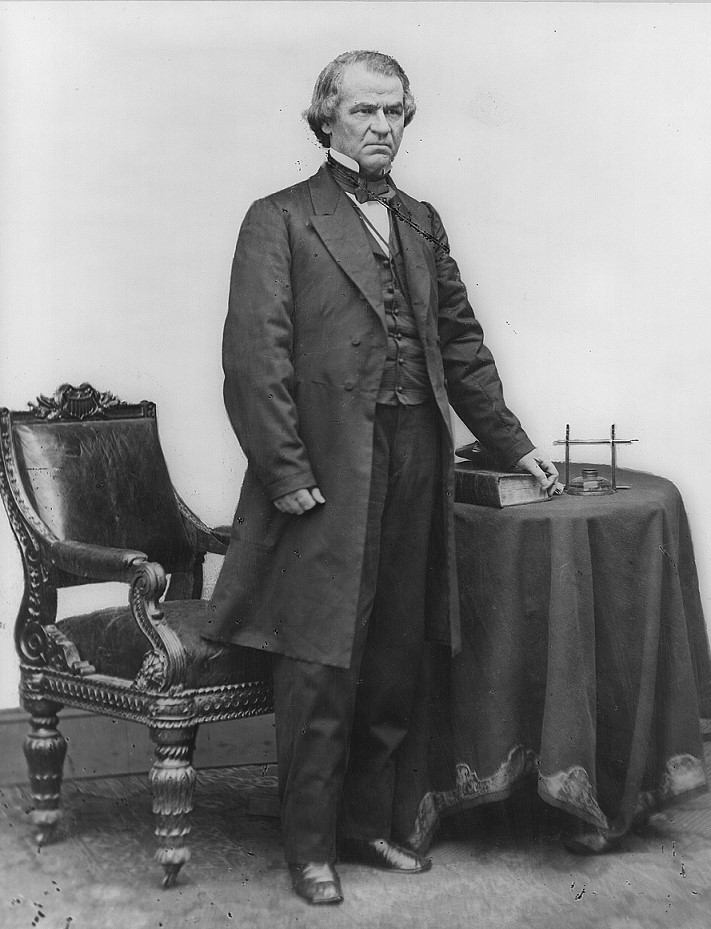
U.S. President Andrew Johnson, circa 1865 (Matthew Brady, U.S. Library of Congress, public domain).

With the American Civil War officially over, and the shock of his assassinated predecessor beginning to ease, U.S. President Andrew Johnson was now in charge of healing a divided, battered nation. According to historian Eric Foner, President Johnson “inaugurated the period of Presidential Reconstruction (1865-67) in May of 1865.”

Johnson offered a pardon to all southern Whites except Confederate leaders and wealthy planters (although most of these subsequently received individual pardons), restoring their political rights and all property except for slaves. He also outlined how new state governments would be created.

In order to facilitate the rebuilding of those new local and state governments, President Johnson also made the decision to station federal troops in key locations throughout the nation’s southern and western states. Among the federal troops ordered to assist with the operations were members of the 47th Pennsylvania Volunteer Infantry (who were known by this time as the 47th Pennsylvania Veteran Volunteers).

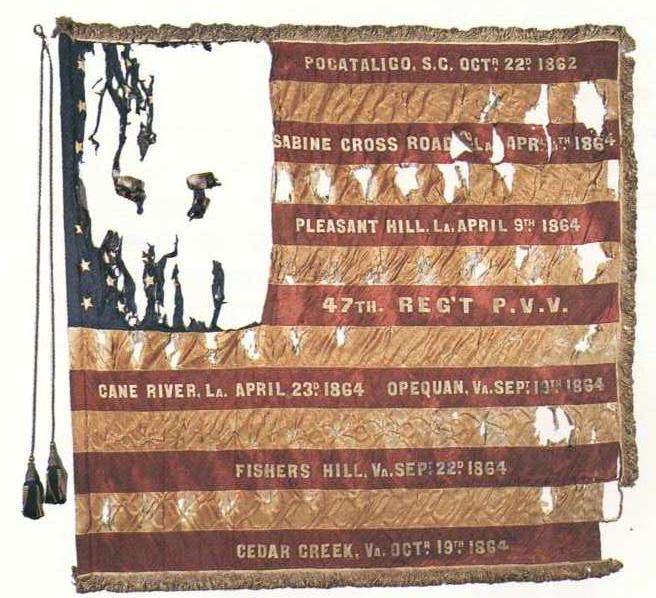
Second State Colors, 47th Pennsylvania Veteran Volunteers (presented to the regiment 7 March 1865).

A New Mission Begins

The Reconstruction Era for the 47th Pennsylvania Veteran Volunteers effectively began with the regiment’s departure for America’s Deep South on June 3, 1865, according to Assistant Regimental Surgeon John Young Shindel, M.D., who wrote these words on that day in history:

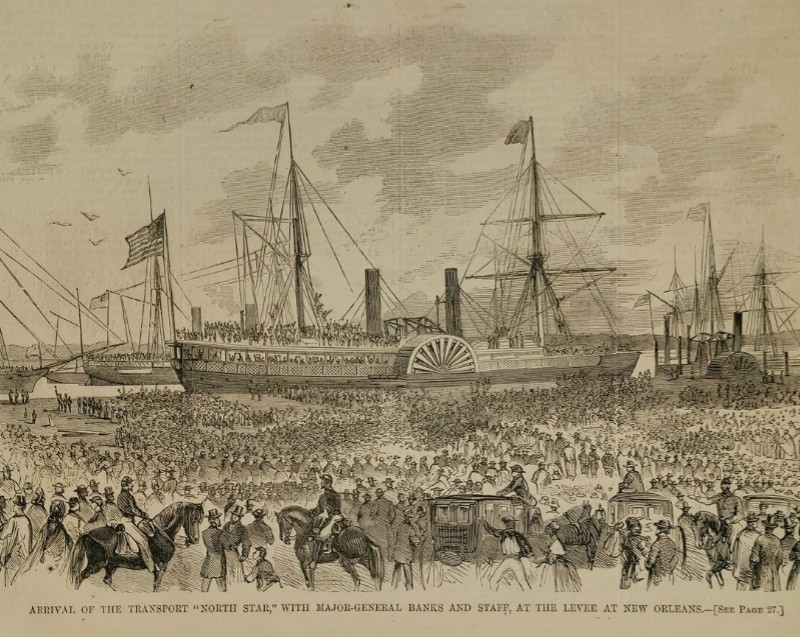
At about 10 o’clock, went on board the U.S.S. North Star…. Some of the Reg. went on Board the “Haze”. Dr. S. [and] Some on board the “Metis” from W. [Washington]. Started down the Potomac. Passed Mt. Vernon….

Reaching Fortress Monroe the next morning circa 11:00 a.m., the North Star continued south through the Atlantic Ocean and on to the waters off Cape Hatteras, North Carolina around 10:00 p.m. on June 4, according to Dr. Young. Suffering from seasickness the following day, he noted that his ship had already reached Cape Fear in North Carolina.

U.S.S. North Star, circa 1863 (Harper’s Weekly, January 10, 1863, public domain).

By Tuesday, June 6, the North Star had steamed to the mouth of the Savannah River, where it stopped, briefly, in order to allow a pilot to board. That pilot then moved the ship along the river, past Fort Pulaski, across the bar, and toward the harbor in the city of Savannah, Georgia, where it finally then dropped its anchor. The ship’s passengers were then directed to effect their transfer to smaller troop transports — the General Grant and the Oneita, according to Private Luther Horn of Company E. Those smaller steamers then took the 47th Pennsylvanians directly into the city. Upon their arrival at their designated landing spots at 4:00 a.m. the next morning (June 7), they disembarked, setting their feet on the soil of Georgia for the first time in the regiment’s history.

War-damaged houses in Savannah, Georgia, 1865 (Sam Cooley, U.S. Army, U.S. Library of Congress, public domain).

Using the next three hours to unload their equipment, they then lined up, by company, and stepped forward into their new mission at 7:30 a.m. Marching through the streets of Savannah, they headed one mile south, toward the city’s southern section, where they began erecting their Sibley tents.

* Note: Meanwhile, the steamships carrying the remaining 47th Pennsylvanians (the Metis and the Haze) were still en route. The Metis arrived later that day (June 7); the Haze arrived during the afternoon of June 8 with the members of Companies A, D, H, and I.

As the reunited 47th Pennsylvania Veteran Volunteers began settling in to their new routine, Regimental Orders, No. 67 directed members of Regimental Band No. 2 to practice between 9:00 and 10:00 every morning and perform every evening at 7:00 outside of the tent of the regiment’s commanding officer, Colonel John Peter Shindel Gobin.

On Friday, June 9, the entire regiment took part in a brigade parade. Five days later, Regimental Orders, No. 69 directed that “the first call for dress parade would be at 6 PM, and commanders were instructed to fall in their companies and drill them in the manual of arms until the second call at 6:30 PM,” according to regimental historian Lewis Schmidt. By mid-June the regiment was staffed by a total of eight hundred and sixty-three officers and enlisted men.

C Company’s Adam Maul and G Company’s Benjamin Neur, both privates, were subsequently detached to duties as clerks at the U.S. Department of the South’s headquarters. On June 21, Regimental Orders, No. 70 directed the captains of each company to “have their respective companies policed every morning and see that the tents and quarters of the men are properly ventilated and kept scrupulously clean, necessary for health,” adding that “one of the medical officers will inspect.”

Battling the elements once again, the 47th Pennsylvanians broke camp and relocated a short distance away — to drier ground — on Monday, June 26.

Confident in his regiment’s abilities to keep the peace, even as other Union Army regiments were receiving orders to depart from Georgia, leaving the 47th Pennsylvania with far less support, Colonel Gobin “requested permission from Maj. Wilkinson, AA Gen. of the District of Savannah, to turn in excess ordnance and ordnance stores” on June 27. The diplomacy phase of their new mission had begun.


Sources:

  1. Bates, Samuel P. History of Pennsylvania VolunteersVolunteers, 1861-5, vol. 1. Harrisburg, Pennsylvania: B. Singerly, State Printer, 1869.
  2. Civil War Muster Rolls (47th Pennsylvania Infantry). Harrisburg, Pennsylvania: Pennsylvania State Archives.
  3. Civil War Veterans’ Card File, 1861-1866 (47th Pennsylvania Infantry). Harrisburg, Pennsylvania: Pennsylvania State Archives.
  4. Foner, Eric. “Reconstruction.” Washington, D.C.: U.S. National Park Service, retrieved online June 3, 2025.
  5. “From Charleston and Savannah.” Pittsburgh, Pennsylvania: The Pittsburgh Daily Gazette, July 13, 1865.
  6. “From the South,” in “By Telegraph from Charleston.” Baraboo, Wisconsin: Baraboo Republic, July 19, 1865.
  7. “Savannah Intelligence.” Charleston, South Carolina: Charleston Daily Courier, July 4, 1865.
  8. Schmidt, Lewis. A Civil War History of the 47th Regiment of Pennsylvania Veteran Volunteers. Allentown, Pennsylvania: Self-published, 1986.
  9. Shindel, John Young. Diary and Personal Letters, 1865-1866. Allentown, Pennsylvania: Personal Collection of Lewis Schmidt.
  10. “The History of the Forty-Seventh Regt. P. V.” Allentown, Pennsylvania: The Lehigh Register, July 20, 1870.


Camp Brightwood, Washington, D.C.: Medical Issues and Personnel Changes (April-Early June 1865)

Spectators gather for the Grand Review of the Armies, 23-24 May 1865, beside the crepe-draped U.S. Capitol, flag at half-staff following the assassination of President Abraham Lincoln (U.S. Library of Congress, public domain).

Headquartered at Camp Brightwood in the Brightwood district of Washington, D.C.’s northwestern section since late April 1865, the 47th Pennsylvania Volunteers were attached to Dwight’s Division of the 2nd Brigade of the U.S. Department of Washington’s 22nd Corps. Their job was to prevent former Confederate States military troops and their sympathizers from reigniting the flames of civil war in the wake of U.S. President Abraham Lincoln’s assassination.

Multiple members of the regiment had only recently completed their detached duties as guards at the military prison where the key conspirators in their commander-in-chief’s murder were being held during their historic trial, and the regiment as a whole had just marched in the Union’s Grand Review of the National Armies on May 23.

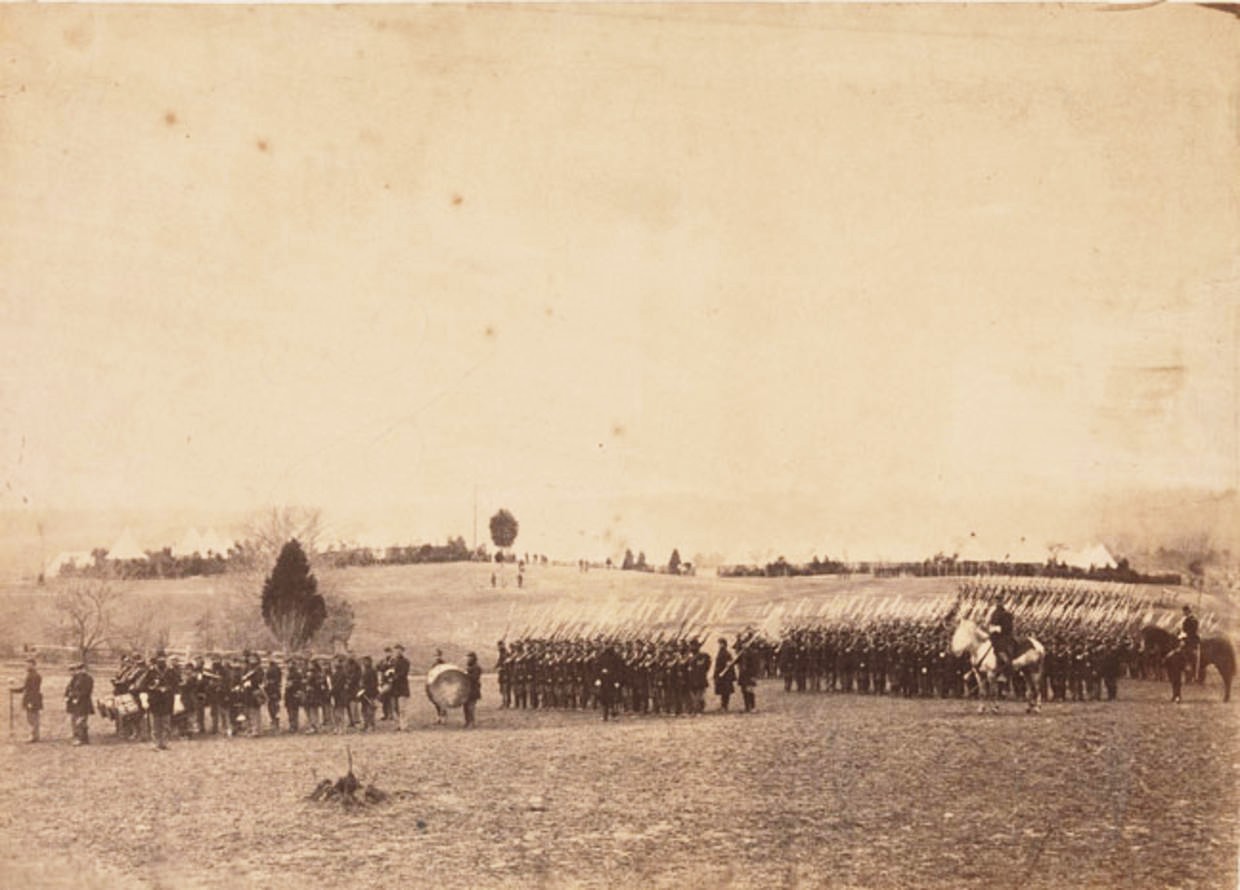
Unidentified Union infantry regiment, Camp Brightwood, Washington, D.C., circa 1865 (public domain).

Now, as the majority of Union Army soldiers were being granted honorable discharges from the military, the 47th Pennsylvania Veteran Volunteers were hurriedly packing their belongings — but for transport to south, rather than back home. Meanwhile, as that frenzy of activity was unfolding, a “lucky few” of their comrades were being transferred to other federal military units, while others were receiving word that they would be honorably discharged via general orders that had been issued by the United States War Department — or by surgeons’ certificates of disability that had been approved by regimental or more senior ranking Union Army physicians.

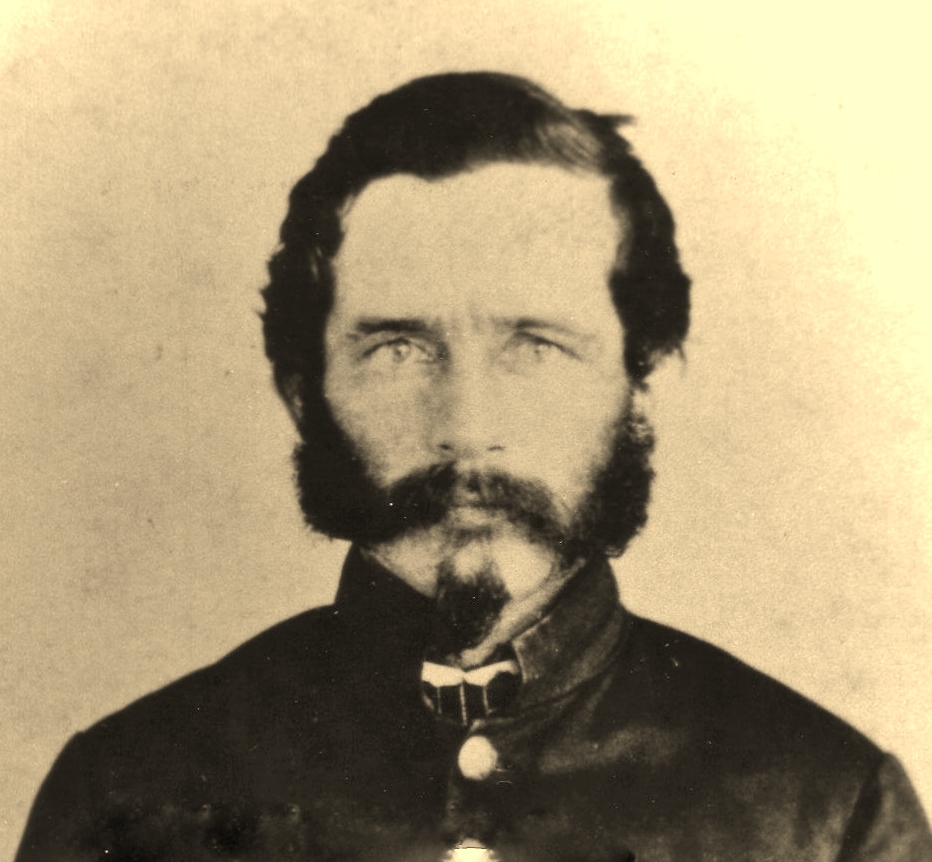
Sergeant-Major William M. Hendricks, central regimental command, 47th Pennsylvania Volunteers, circa 1863 (public domain).

Among the more startling departures were those of First Lieutenant William M. Hendricks of Company C, Private William Kennedy of Company G, and Private Daniel Kochendarfer (alternate spellings: Kochenderfer, Kochendorfer) of Company H. First Lieutenant Hendricks had simply had his fill of military life and had resigned his commission on May 9, 1865 and Private Kennedy had died from phthisis at Mower General Hospital in Philadelphia, Pennsylvania on May 25, but Private Kochendarfer was ordered to remain behind for an entirely different reason — an arrest and conviction (the details of which remain murky to this day).

* Note: Having distinguished himself earlier in his career by nursing his sick and wounded comrades during their final moments of life in 1862, Private Daniel Kochendarfer was convicted during a court martial trial and sent to a federal military prison on June 1, 1865. He remained imprisoned there even as the 47th Pennsylvania Veteran Volunteer Infantry was mustering out for the final time on Christmas Day in 1865. Dishonorably discharged on March 7, 1866, he was never able to clear his name, despite petitioning the U.S. War Department for redress during the 1890s.

Medical Discharges

Other discharges that were issued to 47th Pennsylvanians at Camp Brightwood that spring were granted for entirely different reasons — physical or mental fitness for new duties that would require both brains and brawn. Among those deemed no longer fit to serve were:

  • Private George W. Lightfoot of Company G, who was transferred to Company I in the 24th Regiment of the U.S. Army’s Veteran Reserve Corps, which was also known as the “Invalid Corps” (April 25, 1865);
  • Private Joseph H. Schwab of Company F, who was honorably discharged on a surgeon’s certificate of disability (April 25, 1865);
  • Private William Leinberger of Company C, who was transferred to the 1st Battalion of the 21st Regiment of the Veteran Reserve Corps (April 28, 1865);
  • Private William M. Michael of Company C, who had been wounded in action during the Battle of Cedar Creek, Virginia on October 19, 1864 and was honorably discharged per General Orders, No. 77, issued by the Office of the U.S. Adjutant General (May 3, 1865);
  • Private William H. Guptill of Company G, who was honorably discharged on a surgeon’s certificate of disability (May 15, 1865);
  • Private Josiah D. Rabenold of Company B, who had been wounded in action during the Battle of Opequan, Virginia, also known as “Third Winchester,” on 19 September 1864, was treated by Union Army physicians and was honorably discharged (May 15, 1865);
  • Private Joseph Young of Company G, who had been hospitalized at a Union Army facility in Cumberland, Maryland and was honorably discharged on a surgeon’s certificate (May 17, 1865);
  • Private Charles Acher of Company K, who was honorably discharged on a surgeon’s certificate (May 19, 1865);
  • Private George P. Blain of Company C, who had been wounded in action during the Battle of Cedar Creek and was honorably discharged per General Orders, No. 77, issued by the Office of the U.S. Adjutant General (May 19, 1865);
  • Private Adam Lyddick of Company H, who had been severely wounded above the knee during the Battle of Cedar Creek, Virginia on October 19, 1864 and was honorably discharged on a surgeon’s certificate (May 19, 1865);
  • Private George Turpin of Company H, who had been hospitalized at the Union’s Mower General Hospital in Philadelphia (May 19, 1865);
  • Private Charles Buss of Company F, who had endured captivity as a prisoner of war (POW) at the Confederate Army’s prison camp near Tyler, Texas (Camp Ford) until his release on January 1, 1865 and was honorably discharged on a surgeon’s certificate (May 25, 1865);
  • Private Joel Michael of Company F was honorably discharged on a surgeon’s certificate (May 25, 1865);
  • Private Allen L. Kramer of Company B, who was wounded in action during the Battle of Creek, was treated at a Union Army General Hospital in Philadelphia and was honorably discharged on a surgeon’s certificate (May 26, 1865);
  • Private Charles F. Stuart of Company C, who had endured captivity as a POW at a Confederate Army prisoner of war camp until his release on 4 March 1865 and was honorably discharged (May 29, 1865);
  • Private Daniel S. Crawford of Company A, whose leg had been amputated to save his life after being wounded during the Battle of Cedar Creek and was honorably discharged on a surgeon’s certificate (May 31, 1865);
  • Private Michael Fitzgibbon of Company I, who was initially alleged to have deserted from Camp Brightwood, but had, in reality, been receiving treatment for malaria from Union Army physicians and was honorably discharged (May 31, 1865);
  • Private Lewis Brong of Company B, who had developed a chronic medical condition during Sheridan’s 1864 Shenandoah Valley Campaign and was honorably discharged per General Orders, No. 53, issued by the U.S. War Department (June 1, 1865);
  • Regimental Quartermaster Francis Z. Heebner, who had endured captivity as a POW at a Confederate Army officers’ prison in Richmond or Danville, Virginia until his release in late February 1865 and was honorably discharged (June 1, 1865);
  • Private Jenkin J. Richards of Company E, who had been hospitalized at the Union’s Fairfax Seminary Hospital in Fairfax, Virginia and was honorably discharged on a surgeon’s certificate (June 3, 1865);
  • Private Augustus Deitz/Dietzof Company H, who had been hospitalized in Washington, D.C. and was honorably discharged on a surgeon’s certificate (June 6, 1865); and
  • Private Andrew Mehaffie of Company D, who had also been wounded during the Battle of Cedar Creek and was also honorably discharged on a surgeon’s certificate (June 9, 1865).

Honorable Discharge by General Orders

Per General Orders, No. 53 or General Orders, No. 272, the more able-bodied 47th Pennsylvanians mustering out at Camp Brightwood were:

  • Private Richard Ambrum (Company G, June 1, 1865);
  • Private George W. Baltozer (Company D, June 14, 1865);
  • Private William H. Barber (Company K, June 1, 1865);
  • Sergeant Samuel H. Barnes (Company E, June 1, 1865);
  • Private Alfred Biege (Company F, June 1, 1865);
  • Private David K. Bills (Company A, June 1, 1865);
  • Private Tilghman Boger (Company K, June 1, 1865);
  • Private David Buskirk (Company G, May 26, 1865);
  • Private William Christ (Company F, June 1, 1865);
  • Private Michael Deibert (Company F, June 1, 1865);
  • Private George Diehl (Company B, May 23, 1865);
  • Private William Earhart (Company D, June 1, 1865);
  • Corporal William H. Eichman (Company E, June 1, 1865);
  • Private Milton A. Engleman (Company G, June 1, 1865);
  • Private George Felger (Company E, June 1, 1865);
  • Private Isaac Fleishhower (Company A, May 19, 1865);
  • Private William Fowler (Company E, June 1, 1865);
  • Private Charles H. Frey (Company E, June 1, 1865);
  • Musician and Private James A. Gaumer (Regimental Band No. 2 and Company G, June 1, 1865);
  • Private Solomon Gildner (Company A, June 1, 1865);
  • Private Benedict Glichler (Company K, May 19, 1865);
  • Sergeant John W. Glick (Company G, June 1, 1865);
  • Private Solomon Gross (Company I, June 2, 1865);
  • Private Emanuel Guera (Company H, June 19, 1865);
  • Private James Hall (Company H, June 1, 1865);
  • Privates Adam and Jacob Hammaker (Company H, June 1, 1865);
  • Private William George Harper (Company D, June 1, 1865);
  • Private William P. Heller (Company K, June 1, 1865);
  • Private Henry Henn (Company G, May 15, 1865);
  • Corporal George K. Hepler (Company C, June 1, 1865);
  • Privates Levinus and Solomon Hillegass (Company G, June 1, 1865);
  • Regimental Quartermaster Sergeant Henry J. Hornbeck (June 1, 1865);
  • Private Ananias Horting (Company H, June 1, 1865);
  • Private Daniel Houser (Company E, June 1, 1865);
  • Private Joseph Hausman (Company B, June 1, 1865);
  • Corporal Benjamin Huntzberger/Hunsberger (Company I, June 2, 1865);
  • Private Abraham F. Keim (Company D, May 23 or 28, 1865);
  • Musician Simon P. Kieffer (Company F, June 1, 1865);
  • Private Charles King (Company F, June 1, 1865);
  • Private David F. Knerr (Company I, June 1, 1865);
  • Corporal Daniel J. Kramer (Company I, June 1, 1865);
  • Private William H. Kramer (Company G, June 1, 1865);
  • Private John J. Lawall (Company I, June 1, 1865);
  • Private James Lay (Company H, June 1, 1865);
  • Private William Leiby (Company G, June 1, 1865);
  • Private George W. Levers (Company E, June 1, 1865);
  • Private John F. Liddick (aka John Liddick 2 and John Liddick 3 per Bates’ History of Pennsylvania Volunteers, Company H, June 1, 1865);
  • Private William H. Liddick (Company H, June 1, 1865);
  • Private James T. Lilly (Company F, May 31, 1865);
  • Private August Loeffelman (Company A, June 1, 1865);
  • Private George Malick (Company C, June 1, 1865);
  • Private Jesse Moyer (Company I, June 1, 1865);
  • Private Aamon Myers (Company D, June 1, 1865);
  • Private William Noll (Company K, June 1, 1865);
  • Private Thomas H. O’Donald (Company A, May 5, 1865);
  • Private Andrew J. Osmun (Company B, June 1, 1865);
  • Private Abraham Osterstock (Company A, May 5, 1865);
  • Private Jacob Paulus (Company A, June 1, 1865);
  • Private Washington A. Power (Company D, June 1, 1865);
  • Private Israel Reinhard (Company G, June 1, 1865);
  • Private Edward Remaly (Company F, June 1, 1865);
  • Corporal Allen J. Reinhard (Company B, June 1, 1865);
  • Private Henry Rinek (Company E, June 1, 1865);
  • Private Charles Rohrbacher (Company F, June 1, 1865);
  • Private Steven Schechterly (Company I, June 1, 1865);
  • Private Lewis Schmohl (Company A, June 1, 1865);
  • Private Joseph Benson Shaver (Company D, June 1, 1865);
  • Private Peter Shireman (Company F, June 1, 1865);
  • Private Franklin Sieger (Company B, June 1, 1865);
  • Private Samuel H. Smith (Company I, June 1, 1865);
  • Private John G. Snyder (Company F, June 1, 1865);
  • Private Erwin S. Stahler (Company G, June 1, 1865);
  • Private H. Stoutsaberger (Company H, June 1, 1865);
  • George Stroop (Captain, Company D, June 2, 1865);
  • Private Charles Stump (Company A, May 15, 1865);
  • Private George Sweger (Company H, June 1, 1865);
  • Private Samuel Transue, (Company E, June 1, 1865);
  • Private Israel Troxell (Company I, June 1, 1865);
  • Private Oliver Van Billiard (Company B, May 26, 1865);
  • Corporal Walter H. Van Dyke (Company F, June 1, 1865);
  • Corporal William M. Wallace (Company H, June 1, 1865);
  • Private Daniel H. Wannamaker/Wannermaker (Company I, June 1, 1865);
  • Private Cornelius Wenrich/Wenrick (Company C, June 6, 1865);
  • Corporal Solomon Wieder (Company G, June 1, 1865);
  • Private Andrew J. Williams (Company D, June 1, 1865);
  • Private Franklin H. Wilson (Company F, June 1, 1865);
  • and Private Daniel S. Zook (Company D, May 17, 1865).

Peacekeeping and Reconstruction

War-damaged houses in Savannah, Georgia, 1865 (Sam Cooley, U.S. Army, U.S. Library of Congress, public domain).

As spring gave way to summer, the new mission of the 47th Pennsylvania Veteran Volunteer Infantry would be to keep the peace across the United States of America’s Deep South while helping to rebuild shattered communities and restore local government operations during what has since become known as the Reconstruction Era. They arrived at their first new duty station (Savannah, Georgia) during the first week of June in 1865. Promotions during the Camp Brightwood and Reconstruction periods of duty were awarded to:

  • Adams, William (Company E): From corporal to sergeant, May 1865;
  • Brown, Amos T. (Company H): From private to corporal, June 2, 1865;
  • Bush, James M. (Company F): From private to corporal, April 25, 1865;
  • Clay, George W. (Company D): From second lieutenant to first lieutenant, June 2, 1865);
  • Cunningham, Robert (Company F): From private to corporal, June 2, 1865;
  • Dennis, Henry T. (Company G): From sergeant to first sergeant, May 14, 1865;
  • Eisenhard, John H. (Company B): From private to corporal, April 21, 1865;
  • Haltiman, William H. (Company I): From first sergeant to second lieutenant, May 27, 1865;
  • Hartzell, Israel Frank (Company I): From private to corporal, June 2, 1865;
  • Hettinger, Stephen (Company I): From private to corporal, June 2, 1865;
  • Hinckle, Willam H. (Company K): From private to corporal April 21, 1865;
  • Jacoby, Moses (Company E): From private to corporal, June 2, 1865;
  • Jones, John L. (Company F): From corporal to sergeant, June 2, 1865);
  • Kosier, George (Company D: From first lieutenant to captain, June 1, 1865);
  • Kuder, Owen (Company I): From private to corporal, June 2, 1865;
  • Lawall, Allen D. (Company I): From second to first lieutenant, May 30, 1865;
  • Lilly, Joseph M. (Company F): From corporal to sergeant, April 21, 1865;
  • Mayers, William H. (Company I, alternate surname spellings: Mayer, Meyers, Moyers; listed in Bates’ History of Pennsylvania Volunteers as “William H. Moyers I”): From sergeant to first sergeant, May 27, 1865;
  • Mink, Theodore (Company I): From first lieutenant to captain, May 22, 1865;
  • Moser, Owen (Company E): From private to corporal, May 27, 1865;
  • O’Brien, Martin (Company F): From private to corporal, April 25, 1865;
  • Rader, Reuben E. (Company A): From private to corporal, May 14, 1865;
  • Rockafellow, William (Company E): From corporal to sergeant, June 2, 1865;
  • Seneff, Henry (Company C): From private to corporal, April 22 1865;
  • Small, Charles H. (Company H): From company private to regimental quartermaster sergeant, June 2, 1865;
  • Stuber, Levi (Company I): From company captain to regimental major and third-in-command, May 22, 1865;
  • Walton, John F. (Company E): From private to corporal, May 1, 1865; and
  • Weise, Henry C. (Company H): From private to corporal, June 2, 1865.

Sadly, while all of those advancements in rank were occurring, Private Allen Faber of Company A, was fighting a battle that he was destined to lose. Still hospitalized for treatment of rheumatic carditis at the Union’s Harewood General Hospital in Washingon, D.C, he finally succumbed there to complications from his condition on June 7, 1865, and was subsequently interred with military honors at the Arlington National Cemetery in Arlington, Virginia.


Sources:

  1. Bates, Samuel P. History of Pennsylvania Volunteers, 1861-5, vol. 1. Harrisburg, Pennsylvania: B. Singerly, State Printer, 1869.
  2. Battleground National Cemetery: Battleround to Community — Brightwood Heritage Trail,” “Fort Stevens” and “Mayor Emery and the Union Army.” United States: Historical Marker Database, retrieved online May 20, 2025.
  3. “Battleground to Community: Brightwood Heritage Trail.” Washington, D.C.: Cultural Tourism DC, 2008.
  4. Civil War Muster Rolls (47th Pennsylvania Infantry). Harrisburg, Pennsylvania: Pennsylvania State Archives.
  5. Civil War Veterans’ Card File, 1861-1866 (47th Pennsylvania Infantry). Harrisburg, Pennsylvania: Pennsylvania State Archives.
  6. “Our Returned Prisoners: Names of 500 Released Officers Sent to Annapolis.” New York, New York: The New York Times, February 28, 1865.
  7. Schmidt, Lewis. A Civil War History of the 47th Regiment of Pennsylvania Veteran Volunteers. Allentown, Pennsylvania: Self-published, 1986.
  8. “The History of the Forty-Seventh Regt. P. V.” Allentown, Pennsylvania: The Lehigh Register, 20 July 1870.


“Propitious Weather and a Splendid Spectacle”: The United States of America’s Grand Review of the Armies (May 23, 1865)

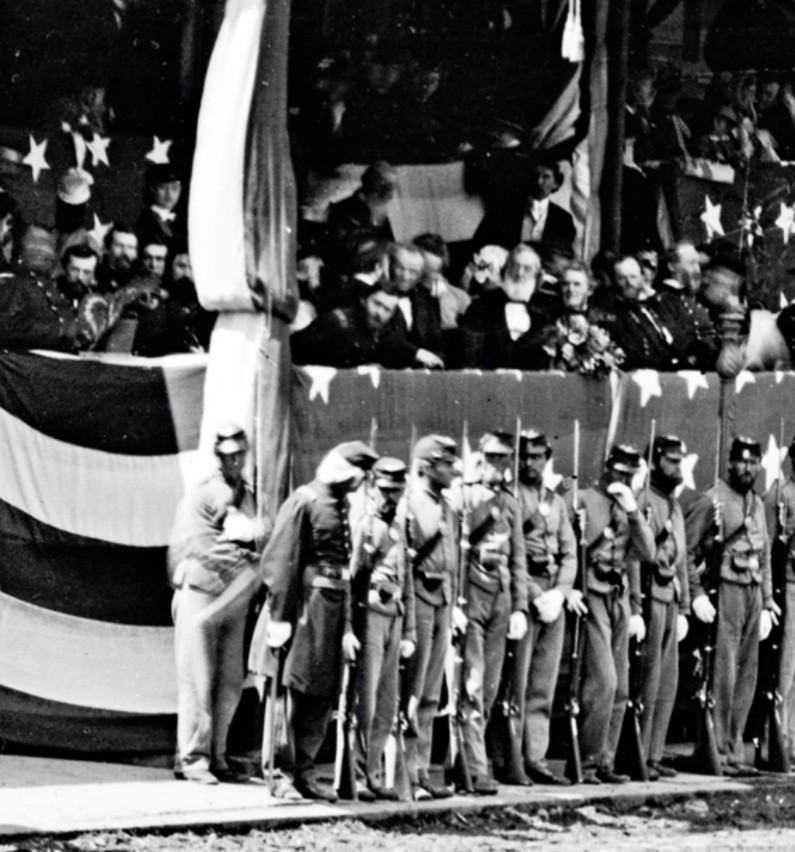
Lieutenant-General Ulysses S. Grant leans forward to have a better look at a Union regiment approaching the presidential reviewing stand, President Andrew Johnson to his left, Grand Review of the National Armies, Washington, D.C., May 23, 1865 (U.S. Library of Congress, public domain; click to enlarge).

It was a week to remember. The 47th Pennsylvania Veteran Volunteers had survived the bloody Battle of Pocotaligo in South Carolina (October 1862) to make history as the only regiment from the Great Keystone State to participate in the Union’s 1864 Red River Campaign across Louisiana and help firmly, finally turn the tide of the American Civil War in the Union’s favor during Sheridan’s 1864 Shenandoah Valley Campaign — only to be brought to their knees in mourning, upon receiving the heartbreaking news that their beloved commander-in-chief had been assassinated — just as victory was at hand.

Now, they were joining more than one hundred and forty-five thousand other “boys in blue” in a triumphant march through the streets of Washington, D.C. that would subsequently be described by The New York Times as “The Grand Procession of Battle Stained Banners” and a “splendid spectacle” that was graced with “propitious weather.” The reporter penning those superlatives was describing the Union’s Grand Review of the National Armies, which took place from May 23 to 24.

The Army of the Potomac has passed in review. The first day’s pageant is over, and to the correspondent falls the duty of depicting a scene almost devoid of incident, save in its grand aspiration. Every circumstance has combined to make it a complete success. The weather has been magnificent; the air, delightfully tempered by the rains of the past week, is cool and fragrant, and dust, is for the time subdued….

Though the city is so crowded, it is yet gay and jovial with the good feeling that prevails, for the occasion is one of such grand import and true rejoicing, that small vexations sink out of sight. With many it is the greatest epoch of their lives; with the soldier it is the last act in the drama; with the nation it is the triumphant exhibition of the resources and valor which have saved it from disruption and placed it first upon earth.

So the scene of to-day (and that of to-morrow) will never be forgotten, and he who is privileged to be a witness will mark it as a white day in the calendar, from which to gather hope and courage for the future….

That Times reporter went on to describe the ways in which multiple Union Army regiments had made their way to the nation’s capital, where they had set up tents upon their respective arrivals and how they had assembled for the first day of the review, providing a list, line-by-line, of the long order of march — a list which included the 47th Pennsylvania Volunteers. (Officially stationed at Camp Brightwood in the northwest corner of Washington, D.C. by early May 1865, the 47th Pennsylvanians had departed from that camp on Monday, May 22 to move closer to their assigned position for the Grand Review’s start, according to Private Henry Horn of Company G.)

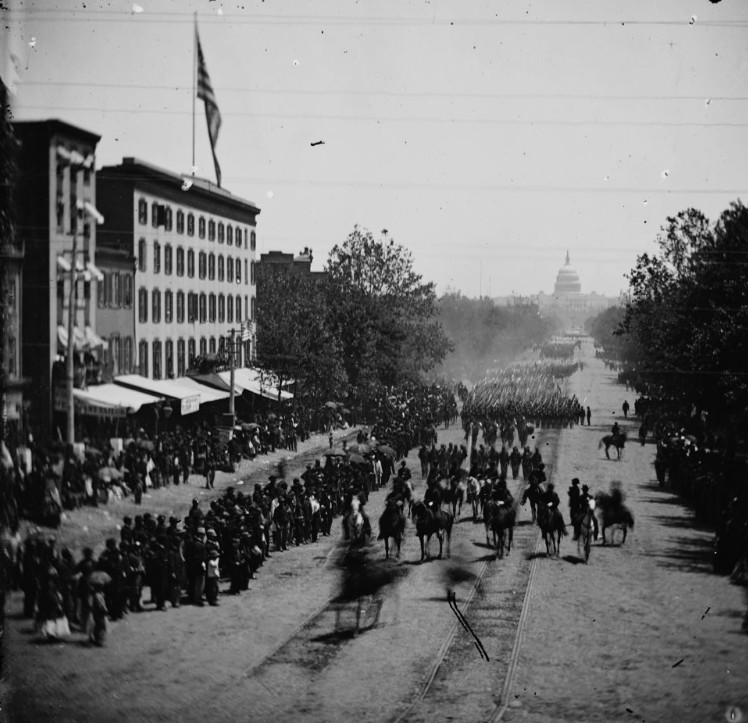
19th Corps, Army of the United States, Grand Review of the National Armies, Pennsylvania Avenue, Washington, D.C., May 23, 1865 (Matthew Brady, U.S. Library of Congress, public domain).

The 47th Pennsylvania was just one of the one hundred and eighteen infantry regiments, twenty-nine cavalry regiments and thirty-three artillery batteries that boldly stepped forth from Capitol Hill on that first day of the Grand Review (May 23, 1865). Marching with the precision they were known for, under the banners of the Army of the Potomac (Mr. Lincoln’s Army), they were participants in a thrilling, six-hour parade, passing in front of a review stand that sheltered U.S. President Andrew Johnson, Secretary of War Edwin M. Stanton, Lieutenant-General Ulysses S. Grant, and other high-ranking officials of the military and federal government. According to the Times, the 47th Pennsylvania Veteran Volunteers were positioned behind the parade’s third division, as part of the Nineteenth Army Corps (XIX Corps) in Dwight’s Division:

Third Division.
Brevet Brig.-Gen. John G. Curtin commanding.

First Brigade, Col. A. B. McCalmon commanding — 51st Pennsylvania Veteran Volunteers, Col. William J. Bolton; 208th Pennsylvania, Lieut.-Col. M. T. Heintzelman; 209th Pennsylvania, Col. T. B. Kaufman; 200th Pennsylvania, Maj. Jacob Rehm.

Second Brigade, Col. J. A. Mathews commanding — 207th Pennsylvania, Col. R. C. Cox; 211th Pennsylvania, Lieut.-Col. Coulter; 205th Pennsylvania, Lieut.-Col. W. F. Walter.

Dwight’s Division.
Nineteenth Army Corps, Brig.-Gen. William Dwight commanding.

First Brigade, Brig.-Gen. G. L. Beal commanding — 15th Maine, Col. Isaac Dyer; 114th New York, Col. S. R. Per Lee; 29th Maine, Col. George H. Nye; 30th Massachusetts, Lieut.-Col. N. Shardman; 1st Maine Battalion, Capt. C. S. Brown.

Second Brigade, Brevet Brig.-Gen. E. P. Davis commanding — 153rd New York, Lieut.-Col. J. A. McLaughlin; 8th Vermont, Col. J. B. Mead; 12th Connecticut, Lieut.-Col. G. W. Lewis; 26th Massachusetts, Lieut.-Col. W. H. Chapman; 47th Pennsylvania, Col. J. P. S. Gobin.

Third Brigade, Brig.-Gen. J. D. Fessenden commanding — 173rd New York, Col. L. M. Peck; 160th New York, Col. C. C. Dwight; 162nd New York, Col. J. W. Blanchard; 133rd New York, Col. L. D. Currie; 30th Maine, Col. T. H. Hubbard.

Artillery Brigade, Brevet Brig.-Gen. J. C. Tidball commanding — 34th New York Battery, Brevet Maj. J. Roemer; 7th Maine Battery, Capt. A. B. Twitchell; 19th New York Battery, Capt. E. W. Rogers; Battery D, 47th Pennsylvania Volunteer Artillery; Capt. S. H. Rhoads; 11th Massachusetts Battery, Capt. E. J. Jones; 27th New York Battery, Capt. J. B. Eaton.

Second State Colors, 47th Pennsylvania Veteran Volunteers (presented to the regiment 7 March 1865).

Lest one be tempted to think that the 47th Pennsylvania Veteran Volunteers were placed further back in the line of march because they were being accorded less respect, one only need look at the rosters of the men who immediately followed the 47th. The division positioned directly behind them was composed of general staff of the Army of the United States and regiments led by American Civil War icon and Gettyburg hero Joshua L. Chamberlain. Observed U.S. Secretary of War Edwin M. Stanton, “You see in these armies, the foundation of the Republic: our future railroad managers, congressmen, bank presidents, senators, manufacturers, judges, governors and diplomats; yes and not less than half a dozen presidents.”

John Peter Shindel Gobin, 47th Pennsylvania Volunteers, shown here as a captain in 1863, went on to become lieutenant governor of Pennsylvania after the war (public domain).

Among the 47th Pennsylvanians who would continue to serve their communities, commonwealth and nation faithfully were future city councilmen, industrialists, inventors, judges, a three-time mayor, newspaper publishers, physicians, policemen, federal postmasters, local school board members, and a state senator who would be publicly elected as Pennsylvania’s seventh lieutenant governor. Each one had experienced the horrors of war. All were forever changed. So, please take time this Memorial Day weekend to read and share their stories with your family, friends and neighbors — and say their names as you offer a toast in tribute to their valor. We owe them at least that much for the sacrifices they made to save our nation.


Sources:

  1. Bates, Samuel P. History of Pennsylvania Volunteers, 1861-5, vol. 1. Harrisburg, Pennsylvania: B. Singerly, State Printer, 1869.
  2. “Grand Military Review: Streets Crowded with Spectators: Sherman Greeted with Deafening Cheers.” Pittsburgh, Pennsylvania: The Daily Post, May 25, 1865.
  3. “Our Heroes! The Grand Review at Washington. Honor to the Brave. Immense Outpouring of the People. The Troops Reviewed by Gen. Grant.” Harrisburg, Pennsylvania: Daily Telegraph, May 23, 1865.
  4. Review of the Armies; Propitious Weather and a Splendid Spectacle. Nearly a Hundred Thousand Veterans in the Lines.” New York, New York: The New York Times, May 24, 1865, front page.
  5. Rodrock, Rev. William D. C. Chaplain’s Reports (47th Pennsylvania Volunteer Infantry, 1865). Washington, D.C.: U.S. National Archives and Records Administration.
  6. Schmidt, Lewis. A Civil War History of the 47th Regiment of Pennsylvania Veteran Volunteers. Allentown, Pennsylvania: Self-published, 1986.
  7. “Serenade to General Grant” (performance for Lieutenant-General Ulysses S. Grant by the 47th Pennsylvania Veteran Volunteers’ Regimental Band), in “Washington.” Philadelphia, Pennsylvania: The Inquirer, May 22, 1865.
  8. The Final March: Grand Review of the Armies.” Washington, D.C.: U.S. National Park Service, retrieved online May 20, 2025.
  9. “The Grand Review: A Grand Spectacle Witnessed.” Pittsburgh, Pennsylvania: The Daily Post, May 24, 1865.
  10. “The Grand Review: Immense Crowds in Washington: Fine Appearance of the Troops: Their Enthusiastic Reception.” Harrisburg, Pennsylvania: Pennsylvania Daily Telegraph, May 24, 1865; and West Chester, Pennsylvania: The Record, May 17, 1865.
  11. “The Grand Review: The City Crowded with Visitors: Order of Corps, Divisions, Brigades and Regiments.” Philadelphia, Pennsylvania: Daily Constitutional Union, May 23, 1865.
  12. “The History of the Forty-Seventh Regt. P. V.” Allentown, Pennsylvania: The Lehigh Register, 20 July 1870.


A Musical Tribute to Beloved Commanding Officers: The 47th Pennsylvania’s Regimental Band “Serenades” Generals Grant and Sheridan (May 22, 1865)

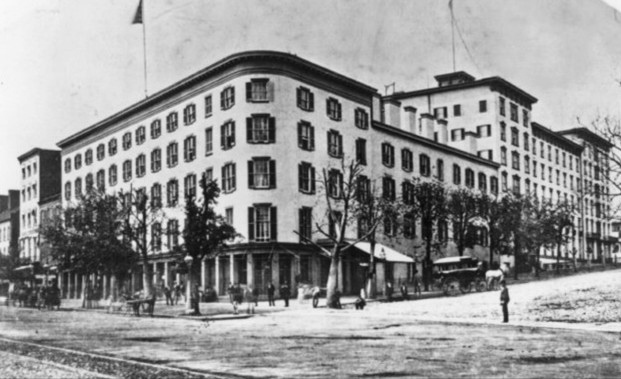
Willard’s Hotel, Washington, D.C., circa 1860-1865 (public domain; click to enlarge).

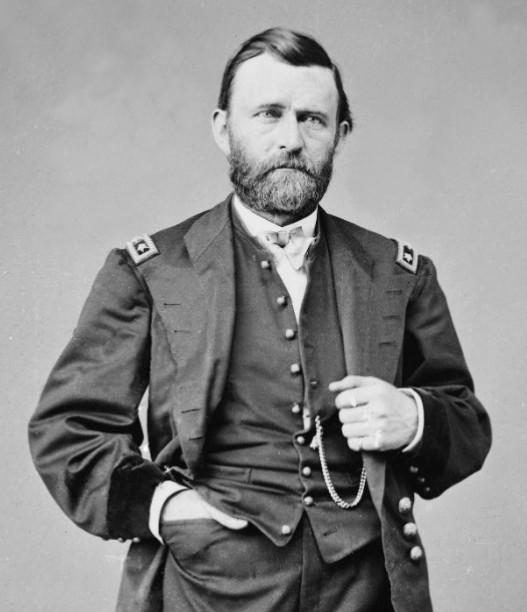
On the eve of the headline-making Grand Review of the National Armies in the nation’s capital in late May 1865, members of the 47th Pennsylvania Veteran Volunteers’ Regimental Band made their own small headlines in newspapers nationwide when they performed a selection of patriotic and popular musical numbers during an hour-long, impromptu concert for Union Lieutenant-General Ulysses S. Grant and Major-General Philip H. Sheridan, who were engaged in a meeting at Willard’s Hotel. Also joining in the musical tribute were musicians from one of Maine’s volunteer infantry regiments.

Lieutenant-General Ulysses S. Grant (public domain).

As the 47th Pennsylvanians performed, a crowd gathered nearby to listen. When the music ceased, calls of “Speech! Speech!” to Grant and Sheridan began to ripple through the crowd. Both men demurred, however, choosing instead to continue their “parting interview,” according to the Bangor Daily Whig and Courier — a decision which evidently did not disappoint the throng for long. Per The Philadelphia Inquirer, “The music was very fine, both bands rivaling each other in doing honor to the greatest General of the age” (General Grant).

Joseph Eugene Walter, Regimental Band, 47th Pennsylvania Volunteers, circa 1861.

Among the 47th Pennsylvanians who may very well have performed for Grant and Sheridan that evening were Private Joseph Eugene Walter and Principal Musician Daniel Dachrodt. (Walter, a private with Company E, had been a cornetist with Pomp’s Cornet Band in Easton, Northampton County, Pennsylvania prior to the start of the American Civil War and had previously served with the 47th Pennsylvania’s highly-regarded first Regimental Band, which had been led by Thomas Coates, the “Father of Band Music in America.” Dachrodt, who had been promoted to the rank of Drum Major and had then been placed in charge of all of the regiment’s field drummers, would ultimately survive the war — and all of his comrades — to become the last living member of the regiment in 1939.)

Major-General Philip Sheridan, U.S. Army (c. 1864, U.S. Library of Congress, public domain).

Standing on the balcony of Willard’s Hotel again the next morning (May 23), Major-General Sheridan was treated to another rousing tribute as members of his cavalry “passed before him to pay a farewell salute … while the bands played ‘Hail to the Chief!'” Those same units would take part, later that morning and afternoon, in the Army of the Potomac’s march down Pennsylvania Avenue during the parade on day one of the Grand Review. That evening, Sheridan would depart for the train depot in Baltimore, Maryland, for transportation to his new assignment — spearheading regional Reconstruction efforts as the military governor of Louisiana and Texas.

Sources:

  1. Discover Our History.” Washington, D.C.: Willard Intercontinental Hotel, retrieved online May 20, 1865.
  2. General Philip H. Sheridan.” Washington, D.C.: U.S. National Park Service, retrieved online, May 20, 2025.
  3. Grant” (television mini-series). New York, New York: History Channel Education, 2020.
  4. “Our Heroes! The Grand Review at Washington. Honor to the Brave. Immense Outpouring of the People. The Troops Reviewed by Gen. Grant.” Harrisburg, Pennsylvania: Daily Telegraph, May 23, 1865.
  5. Regimental Band of the 47th Pennsylvania Veteran Volunteers (report on the band’s performance for Lieutenant-General Ulysses S. Grant in Washington, D.C.), in “Special Dispatch to the Boston Journal.” Bangor, Maine: Bangor Daily Whig and Courier, May 23, 1865.
  6. Review of the Armies; Propitious Weather and a Splendid Spectacle. Nearly a Hundred Thousand Veterans in the Lines.” New York, New York: The New York Times, May 24, 1865, front page.
  7. “Serenade to General Grant” (performance for Lieutenant-General Ulysses S. Grant by the 47th Pennsylvania Veteran Volunteers’ Regimental Band), in “Washington.” Philadelphia, Pennsylvania: The Inquirer, May 22, 1865.
  8. The Final March: Grand Review of the Armies.” Washington, D.C.: U.S. National Park Service, retrieved online May 20, 2025.
  9. “The Grand Review: The City Crowded with Visitors: Order of Corps, Divisions, Brigades and Regiments.” Philadelphia, Pennsylvania: Daily Constitutional Union, May 23, 1865.


Camp Brightwood, Washington, D.C. (Mid-April – June 2, 1865)

Unidentified Union infantry regiment, Camp Brightwood, Washington, D.C., circa 1865 (public domain; click to enlarge).

Marched closer to the nation’s capital in the wake of U.S. President Abraham Lincoln’s assassination in mid-April 1865, the 47th Pennsylvania Veteran Volunteers were directed to proceed to the Brightwood district in the northwestern section of Washington, D.C. and erect their Sibley tents at the Union Army duty station known as Camp Brightwood.

Their new job was to prevent Confederate States Army troops and their sympathizers from reigniting the flames of civil war that had just been stamped out weeks earlier.

According to historians at Cultural Tourism DC, Brightwood was “one of Washington, DC’s early communities and the site of the only Civil War battle to take place within the District of Columbia” — the Battle of Fort Stevens.

This crossroads community developed from the Seventh Street Turnpike, today’s Georgia Avenue, and Military Road. Its earliest days included a pre-Civil War settlement of free African Americans…. Eventually Brightwood boasted a popular race track, country estates, and sturdy suburban housing. In 1861 the area was known as Brighton, but once it was large enough to merit a U.S. Post Office, the name was changed to Brightwood to distinguish it from Brighton, Maryland.

Also, according to Cultural Tourism historians, Camp Brightwood was established on the grounds of “Emery Place, the summer estate of Matthew Gault Emery,” who had “made a fortune in stone-cutting, including the cornerstone for the Washington Monument,” which was laid in 1848.

During the Civil War (1861-1865), Captain Emery led the local militia. His hilltop became a signal station where soldiers used flags or torches to communicate with nearby Fort DeRussy or the distant Capitol. Soldiers of the 35th New York Volunteers created Camp Brightwood here. During the Battle of Fort Stevens in July 1864, Camp Brightwood was a transfer point for the wounded.

By late April of 1865, it was home to multiple Union Army regiments, including the 47th Pennsylvania Veteran Volunteers.

Guarding the Lincoln Assassination Conspirators

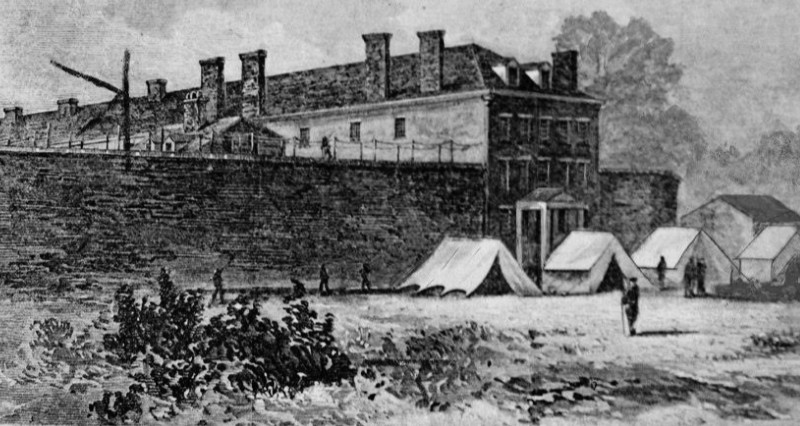
Washington Arsenal Penitentiary, Washington, D.C., 1865 (Joseph Hanshew, public domain; click to enlarge).

Sometime after their arrival at Camp Brightwood during that fateful spring of 1865, a group of 47th Pennsylvania Veteran Volunteers were given a new assignment — guard duty at the Washington Arsenal and its prison facility, where eight people were being held in connection with their involvement in the assassination of President Abraham Lincoln. They had been arrested between April 17 and 26.

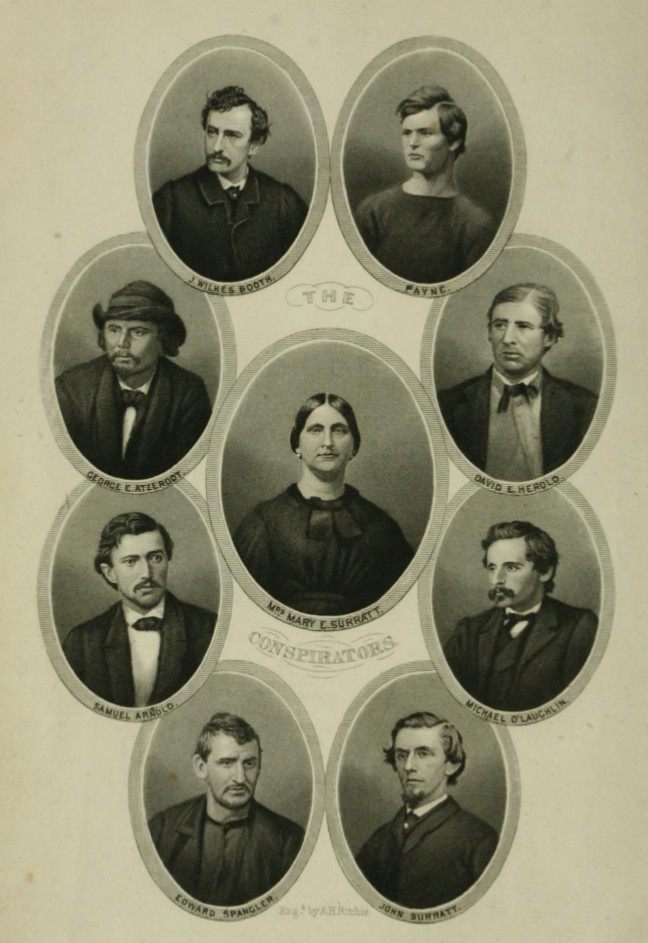
The key conspirators involved in President Abraham Lincoln’s assassination (Benn Pitman, The Assassination of President Lincoln and the Trial of the Conspirators,” 1865, U.S. Library of Congress, public domain).

While researchers for 47th Pennsylvania Volunteers: One Civil War Regiment’s Story have not yet determined the exact start date of the 47th Pennsylvania’s guard duties at the Washington Arsenal Penitentiary, they are now able to offer a better estimate — thanks to the work of Lincoln scholars Edward Steers, Jr. and Harold Holzer, who published documents written by Union Major-General John Frederick Hartranft, the Pennsylvanian appointed by U.S. President Andrew Johnson on May 1, 1865 “to command the military prison at the Washington Arsenal, where the U.S. government had just incarerated the seven men and one woman accused of complicity in the shooting.” Included in the Steers-Holzer compilation is a letter from Major-General Hartranft, governor and commander of the “Washington Arsenal Military Prison,” to Major-General Winfield S. Hancock, commanding officer of the United States Middle Military Division, which was dated May 11, 1865. Hartranft began by informing Hancock that “at 10:25 yesterday [May 10, 1865], Lt. Col. J. M. Clough, 18th N. H. reported with 450 muskets, for four days duty, relieving the 47th Pa. Vols.” He then went on to describe the duties performed by 18th New Hampshire Volunteers at the Washington Arsenal on May 10:

At 11:45, the prisoners on trial were taken into Court, in compliance with the orders of the same. At 1 P.M. the Court ordered the prisoners returned to their cells, which was done.

At 1:10 P.M. dinner was served to the prisoners in the usual manner.

At 1:30 in compliance with your orders Marshal McPhail was admitted to see the prisoner in 161 [Atzerodt], his hood having been previously removed; he remained with him until 2.35, immediately after which his hood was replaced and the door locked.

At 3:45 P.M. Mr. George L. Crawford in accordance with your instructions, was permitted to have an interview with prisoner in 209. I was present during the same, and heard all that was said. The conversation was in regard to the property of the prisoner in Philadelphia. At 4:25 the hood was replaced and the cell locked.

At 6 P.M. Supper was furnished the prisoners and at the same time Dr. Porter and myself made inspections of all the cells and prisoners.

At 6 P.M. in accordance with your instructions, Mr. Stone, counsel for Dr. Mudd, was permitted to visit his client. The interview took place in the presence of Lt. Col. McCall but not in his hearing.

At 6:35 the interview closed, and the door was again locked.

At 7 this A.M. breakfast was served to the prisoners in the usual manner. At 7:15, Dr. Porter and myself made Inspections of all the cells and prisoners.

I would respectfully recommend that the prisoner in 190 be removed to cell 165.

All passes admitting persons during the last 24 hours are here with enclosed.

As a result, researchers for the 47th Pennsylvania Volunteers’ project postulate that:

  1. As many as four hundred and fifty 47th Pennylvania Veteran Volunteer Infantrymen may have been stationed at the Washington Arsenal between May 6-10, 1865; and
  2. At least some of those 47th Pennsylvanians may very well have interacted with the key Lincoln assassination conspirators (Samuel Bland Arnold, George A. Atzerodt, David E. Herold, Dr. Samuel Alexander Mudd, Michael O’Laughlen, Lewis Thornton Powell/Lewis Payne, Edman Spangler/Ned Spangler, and Mary Elizabeth Surratt) — interactions which likely took place while those eight prisoners were confined at the Washington Arsenal prison; on the way to and from the courtroom, where they were being tried for conspiring to assassinate President Lincoln; inside that courtroom during trial proceedings; and possibly also at other sites related to their confinement and trial.

Although the duties performed between by 47th Pennsylvania Volunteers between May 6-9 would not have been exactly the same as those performed by the New Hampshire soldiers on May 10, they may very well have been similar — meaning that at least some 47th Pennsylvania Volunteers may have been involved in locking and unlocking the doors of the conspirators’ cells, escorting the conspirators into the courtroom of their military trial (which began on May 9, 1865), standing guard over the conspirators during their trial to prevent their escape, escorting them from the courtroom, and interacting with them in their cells by:

  • Bringing meals to them;
  • Removing and replacing the hoods that covered their heads so that they could interact with their lawyers and other visitors;
  • Verifying the legitimacy of passes held by would-be visitors and denying or granting access to those visitors as appropriate;
  • Escorting visitors to and from their cells; and
  • Monitoring their visits with anyone granted entry to their cells.

With their guard assignment completed by the morning of May 10, 1865, the 47th Pennsylvania Volunteers who were serving on detached duty at the Washington Arsenal were marched back to Camp Brightwood, where they would remain until their next assignment — participating in the Union’s Grand Review of the National Armies on May 23, 1865.

19th Corps, Army of the United States, Grand Review of the National Armies, Pennsylvania Avenue, Washington, D.C., May 23, 1865 (Matthew Brady, U.S. Library of Congress, public domain).

The Grandest of the Grand Reviews

The 47th Pennsylvania Veteran Volunteer Infantry was just one group of the more than one hundred and forty-five thousand Union military men who marched from Capitol Hill through the streets of Washington, D.C. during a two-day spectacle designed to celebrate the end of the American Civil War and heal Americans’ heartbreak in the wake of President Lincoln’s assassination. Held from May 23-24, 1865, it was a sight that had never been seen before — and one that would likely never be seen anywhere in the United States of America ever again. The first day’s parade alone lasted six hours.

Lieutenant-General Ulysses S. Grant, leaning forward, President Andrew Johnson to his left, Grand Review of the National Armies, Washington, D.C., May 23, 1865 (U.S. Library of Congress, public domain).

According to The New York Times, the 47th Pennsylvanians were positioned behind the parade’s third division, as part of the Nineteenth Army Corps (XIX Corps) in Dwight’s Division. Marching with the precision for which they had become renowned, they passed in front of a review stand which sheltered U.S. President Andrew Johnson, Secretary of War Edwin M. Stanton and Lieutenant-General Ulysses S. Grant. The division directly behind the 47th Pennsylvanians in that day’s line of march included other officers and general staff of the Army of the United States and regiments commanded by American Civil War icon Brigadier-General Joshua L. Chamberlain, one of the most beloved heroes from the tide-turning Battle of Gettysburg.

Rev. William DeWitt Clinton Rodrock, chaplain, 47th Pennsylvania Volunteers (courtesy of Robert Champlin, used with permission).

Afterward, 47th Pennsylvania Chaplain William DeWitt Clinton Rodrock summed up the experience in a report penned at Camp Brightwood on May 31:

The wise king of the Scriptures speaks of a sorrow that pervades the human heart “in the midst of laughter.” The truthfulness of this Divine philosophy is a matter of daily experience. Our most joyous seasons are intermingled with a sadness that often challenges definition. Every garden has its sepulchre. Every draft of sweet has its ingredient of bitter. This fact has never been so fully realized as this month. With the mighty army of brave soldiers congregated and reviewed in Washington and the … expressions of deep regret that Abraham Lincoln is not here to have witnessed the great pageant of the 23rd and 24th inst. have been universal. Not the splendid victories which our brave soldiers have won — not the pleasing prospect that they are “homeward bound” — not the consolatory thought that the reins of government have fallen into the hands of so good a man as Andrew Johnson — have served to restrain these utterances of grief and sorrow. Had it been God’s will to spare Mr. Lincoln’s life, what an eclat his presence would have imparted to the mighty pageant.

But as He willed otherwise and “doeth all things well,” it is ours to learn the great lesson of the hour.

Rebuilding a Shattered Nation

Ruins of Charleston, South Carolina as seen from the Circular Church, 1865 (U.S. National Archives and Records Administration, public domain).

As the cheers of the Grand Review crowds faded, the 47th Pennsylvania Veteran Volunteers resumed life at Camp Brightwood, with many assuming that their days of wearing “Union Blue” were finally coming to an end. But that assumption proved to be an incorrect one when the 47th Pennsylvania Veteran Volunteers received word that they were being reassigned. Ordered to pack their belongings in late May 1865, they would be heading back to America’s Deep South — this time to assist with Reconstruction duties in Georgia and South Carolina, beginning the first week in June.


Sources:

  1. Assassination of President Abraham Lincoln.” Washington, D.C.: U.S. Library of Congress, retrieved online May 21, 2025.
  2. Bates, Samuel P. History of Pennsylvania Volunteers, 1861-5, vol. 1. Harrisburg, Pennsylvania: B. Singerly, State Printer, 1869.
  3. Battleground National Cemetery: Battleround to Community — Brightwood Heritage Trail,” “Fort Stevens” and “Mayor Emery and the Union Army.” United States: Historical Marker Database, retrieved online May 20, 2025.
  4. “Battleground to Community: Brightwood Heritage Trail.” Washington, D.C.: Cultural Tourism DC, 2008.
  5. “Grand Military Review: Streets Crowded with Spectators: Sherman Greeted with Deafening Cheers.” Pittsburgh, Pennsylvania: The Daily Post, May 25, 1865.
  6. Grant” (television mini-series). New York, New York: History Channel Education, 2020.
  7. “Our Heroes! The Grand Review at Washington. Honor to the Brave. Immense Outpouring of the People. The Troops Reviewed by Gen. Grant.” Harrisburg, Pennsylvania: Daily Telegraph, May 23, 1865.
  8. Pitman, Benn. The Assassination of President Abraham Lincoln and the Trial of the Conspirators. Cincinnati, Ohio and New York, New York: Moore, Wilstach & Boldwin, 1865.
  9. Reconstruction: An Overview.” Washington, D.C.: American Battlefield Trust, November 28, 2023.
  10. Review of the Armies; Propitious Weather and a Splendid Spectacle. Nearly a Hundred Thousand Veterans in the Lines.” New York, New York: The New York Times, May 24, 1865, front page.
  11. Rodrock, Rev. William D. C. Chaplain’s Reports (47th Pennsylvania Volunteer Infantry, 1865). Washington, D.C.: U.S. National Archives and Records Administration.
  12. Schmidt, Lewis. A Civil War History of the 47th Regiment of Pennsylvania Veteran Volunteers. Allentown, Pennsylvania: Self-published, 1986.
  13. “Serenade to General Grant” (performance for Lieutenant-General Ulysses S. Grant by the 47th Pennsylvania Veteran Volunteers’ Regimental Band), in “Washington.” Philadelphia, Pennsylvania: The Inquirer, May 22, 1865.
  14. Steers, Edward Jr. and Harold Holzer. The Lincoln Assassination Conspirators: Their Confinement and Execution, as Recorded in the Letterbook of John Frederick Hartranft. Baton Rouge, Louisiana, 2009.
  15. The Final March: Grand Review of the Armies.” Washington, D.C.: U.S. National Park Service, retrieved online May 20, 2025.
  16. “The Grand Review: A Grand Spectacle Witnessed.” Pittsburgh, Pennsylvania: The Daily Post, May 24, 1865.
  17. “The Grand Review: Immense Crowds in Washington: Fine Appearance of the Troops: Their Enthusiastic Reception.” Harrisburg, Pennsylvania: Pennsylvania Daily Telegraph, May 24, 1865; and West Chester, Pennsylvania: The Record, May 17, 1865.
  18. “The Grand Review: The City Crowded with Visitors: Order of Corps, Divisions, Brigades and Regiments.” Philadelphia, Pennsylvania: Daily Constitutional Union, May 23, 1865.
  19. “The History of the Forty-Seventh Regt. P. V.” Allentown, Pennsylvania: The Lehigh Register, 20 July 1870.
  20. The Lincoln Conspirators,” in “Ford’s Theatre.” Washington, D.C.: U.S. National Park Service, retrieved online May 21, 2025.


National Poetry Month: The Meaning of Life During War and Peace

“Launched by the Academy of American Poets in April 1996, National Poetry Month is a special occasion that celebrates poets’ integral role in our culture and that poetry matters. Over the years, it has become the largest literary celebration in the world, with tens of millions of readers, students, K–12 teachers, librarians, booksellers, literary events curators, publishers, families, and — of course — poets, marking poetry’s important place in our lives.”

— American Academy of Poets


As we come to the close of National Poetry Month in 2025, we take a look back at poems that were written during the American Civil War, Reconstruction, Gilded Age, Progressive, World War I, and Roaring Twenties eras of American History by the famous (Thomas Buchanan Read and Walt Whitman) and less famous (Martha A. John), as well as by members of the 47th Pennsylvania Volunteer Infantry and their families who penned poems to express their insights about life and death during and after the war.

Read, reflect, remember, and share because humanities education programs really still do matter.

  • A Comet” (Martha A. John, a sister of Private George Dillwyn John, in A Souvenir: Incidents, Experiences, and Reflections,” 1902);
  • An Evening in Camp” (in The Sunbury American, December 28, 1861);
  • Drum-Taps” (Walt Whitman, in Leaves of Grass, October 1865);
  • The Battle of Cedar Creek” (Private H. B. Robinson, October 1864);
  • The Friendly Trio” (Jesse L. Bernheisel, a son of Private Luther Bernheisel, in Berny’s Poems; Hints Towards Happiness, 1927); and
  • Sheridan’s Ride” (Thomas Buchanan Read, in The Daily Evening Telegraph, Philadelphia, Pennsylvania, November 9, 1864).

Inkwell and book (excerpt of an illustration by F. Y. Cory, in Memoirs of a Baby, Josephine Daskam, author, 1893, public domain).


Sources:

  1. “An Evening in Camp.” Sunbury, Pennsylvania: The Sunbury American, December 28, 1861; and West Chester, Pennsylvania: The West Chester (Pa.) Times.
  2. Bernheisel, Jesse L. Berny’s Poems; Hints Towards Happiness. Philadelphia, Pennsylvania: Self-published, 1927.
  3. John, Martha A. “A Comet, in A Souvenir: Incidents, Experiences, and Reflections. Sterling, Illinois: Sterling Gazette Print, 1902-3.
  4. Robinson, H. B. “The Battle of Cedar Creek.” Cedar Creek, Virginia: Composed following the October 19, 1864 battle; preserved in The H. B. Robinson Collection, in The Maurer Family Archives, Amy Lowers Maurer, curator).
  5. “Sheridan’s Ride.” Philadelphia, Pennsylvania: The Daily Evening Telegraph, November 9, 1864; Cleveland, Ohio: The Evening Post, November 17, 1864; Davenport, Iowa: The Democrat, November 25, 1864; Brownsville, Nebraska Territory: Nebraska Advertiser, December 1, 1864; and Sacramento, California: The Sacramento Bee (in “Entertainment”), December 17, 1864.
  6. Whitman, Walt. “Drum-Taps,” in Leaves of Grass. Philadelphia, Pennsylvania: David McKay, 1891 (first published by Whitman in Drum-Taps, New York, October 1865).


April 15th: A Date of Decision and Death for President Abraham Lincoln

This 1865 photograph of President Abraham Lincoln by Alexander Gardner is believed by historians to be the final photo taken of Lincoln (1865, U.S. Library of Congress, public domain).

There were multiple key moments in the life of the man who would become the sixteenth president of the United States of America. Some, like the deaths of his mother and sister, would dramatically alter the trajectory of his life; others, like his decision to embark upon a life of public service, would reshape the future of a nation.

But his actions on one particular date, during two entirely different years, did both.

So pivotal in history, that particular date’s annual arrival still stops average Americans in their tracks each year, prompting them to reflect on the legacy of that one man — and the question, “What if?”

That man was U.S. President Abraham Lincoln and that date is April 15.

Lincoln’s Call for Seventy-Five Thousand Volunteers (April 15, 1861)

Proclamation issued by U.S. President Abraham Lincoln, calling for seventy-five thousand state militia troops to bring an end to the secession of, and insurrection by, eleven of fifteen southern slaveholding states, April 15, 1861 (U.S. National Archives and Records Administration, public domain; click to enlarge).

In response to the fall of Fort Sumter in Charleston, South Carolina to Confederate States troops on April 14, 1861, President Abraham Lincoln issued a proclamation in which he called for seventy-five thousand men across the United States to risk their lives to defend the nation’s capital and bring a swift end to the secession crisis and insurrection initiated by eleven of fifteen southern slave holding states. That proclamation, which was issued on April 15, 1861 read as follows:

By the President of the United States.

A Proclamation.

Whereas the laws of the United States have been, for some time past, and now are, opposed, and the execution thereof obstructed, in the States of South Carolina, Georgia, Alabama, Florida, Mississippi, Louisiana, and Texas, by combinations too powerful to be suppressed by the ordinary course of judicial proceedings, or by the powers vested in the Marshals by law:

Now, therefore, I, Abraham Lincoln, President of the United States, in virtue of the power in me vested by the Constitution and the laws, have thought fit to call forth, and hereby do call forth, the militia of the several States of the Union, to the aggregate number of seventy-five thousand, in order to suppress said combinations, and to cause the laws to be duly executed.

The details for this object will be immediately communicated to the State authorities through the War Department.

I appeal to all loyal citizens to favor, facilitate, and aid this effort to maintain the honor, the integrity, and the existence of our National Union, and the perpetuity of popular Government, and to redress wrongs already long enough endured.

I deem it proper to say that the first service assigned to the forces hereby called forth will probably be to repossess the forts, places, and property which have been seized from the Union; and in every event the utmost care will be observed, consistently with the objects aforesaid, to avoid any devastation, any destruction of or interference with property, or any disturbance of peaceful citizens in any part of the country.

And I hereby command the persons composing the combinations aforesaid to disperse and retire peaceably to their respective abodes within twenty days from this date.

Deeming that the present condition of public affairs presents an extraordinary occasion, I do hereby, in virtue of the power in me vested by the Constitution, convene both Houses of Congress.

Senators and Representatives are therefore summoned to assemble at their respective Chambers, at 12 o’clock, noon, on Thursday, the fourth day of July next, then and there to consider and determine such measures as, in their wisdom, the public safety and interest may seem to demand.

In witness whereof, I have hereunto set my hand, and caused the seal of the United States to be affixed.

Done at the city of Washington, this fifteenth day of April, in the year of our Lord one thousand eight hundred and sixty-one, and of the Independence of the United States the eighty-fifth.

Abraham Lincoln

By the President: William H. Seward, Secretary of State.

Four years later, on the exact same date, President Abraham would draw his last breath.

Lincoln’s Death from an Assassin’s Bullet (April 15, 1865)

President Abraham Lincoln on his deathbed at the Petersen House in Washington, D.C., April 15, 1865 (Harper’s Weekly, 1865, public domain; click to enlarge).

Mortally wounded by a shot to his head, which was fired by an assassin and Confederate sympathizer while President Abraham Lincoln was watching a performance of the popular stage play, Our American Cousin, at Ford’s Theatre in Washington, D.C., on the evening of Good Friday, April 14, 1865, President Lincoln was initially examined on site in the presidential box, by fellow theatre attendee and physician Charles Leale, before being carried downstairs by Union Army soldiers and taken across Tenth Street — and into a room at the Petersen boarding house, where he was then gently lowered onto the bed of Willie Clark.

As additional physicians arrived and assessed the president’s condition, a decision was made to make him as comfortable as possible, when it was determined that he would likely not survive the night.

A remarkably strong man, even as he waged his toughest battle, President Lincoln managed to hang onto until the following morning, drawing his final ragged breath at 7:22 a.m. on April 15, 1865 — and leaving the work of national healing and Reconstruction in far less capable hands.

One hundred and sixty years later, Americans still wonder, “Would we be a better nation if Lincoln had survived?”


Sources:

  1. A Proclamation by the President of the United States, April 15, 1861.” Washington, D.C.: U.S. Capitol Visitor Center, retrieved online April 15, 2025.
  2. Abraham Lincoln’s Assassination,” in “History Channel: Civil War.” New York, New York: A&E Television Networks, February 27, 2025.
  3. Eric Foner: Reconstruction and the Constitution” (video). Chicago, Illinois: Chicago Humanities Festival, 2019.
  4. Lincoln’s Death,” in “Lincoln Assassination.” Washington, D.C.: Ford’s Theatre, retrieved online December 1, 2024.
  5. The Petersen House.” Washington, D.C.: U.S. National Park Service, December 1, 2024.