Remembering the Red River Campaign Prisoners of War on National POW/MIA Recognition Day

This POW/MIA Recognition Flag designed by Newt Heisley was formally recognized by U.S. House of Representatives Resolution No. 467 on September 21, 1990 (public domain).

During the Army of the United States’ 1864 Red River Campaign across Louisiana in the American Civil War, multiple members of the 47th Pennsylvania Volunteer Infantry were declared as “Missing in Action” (MIA) — largely due to the confusion caused by a series of engagements with the enemy in which Union soldiers were repeatedly required to retreat, regroup and resume the fight as they faced down wave after wave of Confederate troops attempting to outflank and perform end runs around the outer edges of Union Army lines.

Each time the cannon smoke began to clear from those battles, many of those MIA members of the 47th Pennsylvania Volunteer Infantry found their way back to the regiment, carrying word to senior officers of the 47th Pennsylvania Volunteers that members of the regiment had been captured by Confederate troops. By mid-May of 1864, it was clear that at least twenty-three 47th Pennsylvania Volunteers were being held as prisoners of war (POWs) by the Confederate States Army.

Regimental leaders would later learn that many of those men had been force marched roughly one hundred and fifty miles to Camp Ford, which was located outside of Tyler, Texas and would become the largest Confederate POW camp west of the Mississippi River by the summer of 1864. Once there, they were starved, given minimal to no medical care for any wounds they had sustained, exposed to extreme variations in temperature and weather, due to inadequate shelter, and sickened by dysentery and other diseases that were spread by living in the cramped, overcrowded conditions that became increasingly unsanitary, due to the placement of latrine facilities near water supplies meant for drinking or bathing. As their days dragged on, their treatment by Confederate soldiers grew more and more harsh. According to representatives of the Smith County Historical Society who have been working on documenting the history of Camp Ford:

On April 8th and 9th 1864 at the battles of Mansfield and Pleasant Hill, Louisiana, Confederate forces captured more than 2,000 Union soldiers, who were quickly marched to Tyler…. The existing stockade did not have sufficient area to house them, and an emergency enlargement was undertaken. Local slaves were again impressed, the north and east wall was dug up and the logs cut in half, and the top ten feet of the logs of the south and west walls were cut off. The resulting half logs gave sufficient timber to quadruple the area of the stockade, and it was expanded to about eleven acres.

With additional battles in Arkansas and Louisiana, the prison population had grown to around 5,000 by mid-June. Hard-pressed CS officials had no ability to provide shelter for the new prisoners, and their suffering was intense. The number of tools was inadequate, and many men could only dig holes in the ground for shelter. Rations were often insufficient and the death rate soared…. Of 316 total deaths at the camp, 232 occurred between July and November 1864….

At least three 47th Pennsylvania Volunteers are confirmed to have died while imprisoned at Camp Ford. Another member of the regiment was later removed from that prison and moved to Andersonville, the most notorious of all American Civil War POW camps. Two others died as POWs who were confined to a Confederate hospital.

In recognition of National POW/MIA Recognition Day, which is observed on the third Friday each September in the United States of America, we pay tribute to those twenty-three brave souls.

DeSoto and Sabine Parishes (Mansfield and Pleasant Hill, Louisiana)

Possibly wounded in action during the Battle of Pleasant Hill, Privates Solomon Powell and Jonathan Wantz of Company D were captured during that battle on April 9, 1864. Private Powell died either that same day or on June 7, 1864, while still being held by Confederate troops as a POW at Pleasant Hill. Private Wantz also died while still being held as a POW at Pleasant Hill; his death was reported as having occurred on June 17, 1864. Their exact burial locations remain unidentified.

Confederate Hospital (Shreveport, Louisiana)

G Company Private Joseph Clewell — who had only been a member of the 47th Pennsylvania since mid-November 1863, fell ill sometime after being captured by Confederate troops during one of the 47th Pennsylvania’s Red River Campaign engagements in the spring of 1864. Suffering from chronic diarrhea due to the poor water quality and unsanitary living conditions that he endured while being held as a POW, he was subsequently confined to the Confederate States Army Hospital No. 59 in Shreveport, Louisiana sometime in May or early June. Held at that hospital as a POW, his health continued to decline until he died there on June 18, 1864, according to the U.S. Army’s Registers of Deaths of Volunteer Soldiers. His exact burial location also remains unidentified.

This illustration presented a rosier view of life at Camp Ford, the largest Confederate Army prison camp west of the Mississippi River, than was the actual situation for the 47th Pennsylvania Volunteers confined there (Harper’s Weekly, March 4, 1865, public domain).

Camp Ford or Camp Groce (Texas)

The 47th Pennsylvania Volunteers confirmed to have been released from Camp Ford or Camp Groce in Texas during a series of prisoner exchanges between the Army of the United States and the Confederate States Army were:

  • Private Charles Frances Brown, Bugler of Company D and Regimental Band No. 2 (date of release: July 22, 1864; discharged after receiving medical treatment; re-enlisted with the 7th New York Volunteers in October 1864);
  • Private Charles Buss/Bress of Company D (fell ill with dysentery while confined as a POW at Camp Ford and developed chronic diarrhea and severe hemorrhoids — conditions that would plague him for the remainder of his life, date of release: July 22, 1864; received medical treatment and was honorably discharged from a Union Army medical facility in Philadelphia in May 1865);
  • Private Ephraim Clouser of Company D (captured after being shot in the right knee, date of release: November 25, 1864; placed on Union Army sick rolls after being diagnosed as being too traumatized to remain on duty, he was transferred to the Union Army’s Jefferson Barracks Hospital in St. Louis, Missouri, then to a Union Army hospital in Cincinnati, Ohio and then to the Union Army’s general hospital in York, Pennsylvania, where he remained until the end of the war; still suffering from post-traumatic stress disorder (PTSD) after the war, he was declared by the Pennsylvania court system to be unable to care for himself, and was confined to the Harrisburg State Hospital for the remainder of his life);
  • Sergeant James Crownover of Company D (captured after being shot in the right shoulder, date of release: November 25, 1864; received medical treatment, recovered and returned to duty);
  • Private James Downs of Company D (date of release: July 22, 1864; received medical treatment and returned to duty; possibly suffering from post-traumatic stress disorder (PTSD), he fell from a window of the Brookville Memorial Home in Jefferson County, Pennsylvania in 1921);
  • Private Conrad P. Holman, of Company C (date of release: July 22, 1864; received medical treatment, recovered and returned to duty);
  • Corporal James Huff of Company E (captured after being wounded, date of release: August 29, 1864; received medical treatment, recovered and returned to duty; captured by Confederate troops during the Battle of Cedar Creek, Virginia on October 19, 1864, was transported and force marched to North Carolina, where he was held as a POW at the Salisbury Prison Camp until his death there from starvation and harsh treatment on March 5, 1865; he was subsequently buried somewhere on the POW camp grounds in an unmarked mass trench grave of Union soldiers);
  • Private John Lewis Jones of Company F (captured after being wounded, date of release: September 24, 1864; received medical treatment, recovered and returned to duty);
  • Private Edward Mathews of Company C (date of release: July 22, 1864; received medical treatment, recovered and returned to duty);
  • Private Adam Maul/Moll/Moul of Company C (captured on May 3, 1864, while away from his regiment’s encampment in Alexandria, Louisiana — possibly while assigned to duties related to the construction of Bailey’s Dam, date of release: July 22, 1864; received medical treatment, recovered and was assigned to detached duty at Hilton Head, South Carolina on January 3, 1865, but was reportedly not given discharge paperwork by his regiment; his exact burial location remains unidentified);
  • Private John W. McNew of Company C (captured after being wounded, date of release: July 22, 1864; received medical treatment, recovered and returned to duty);
  • Corporal John Garber Miller of Company D (date of release: July 22, 1864; received medical treatment, recovered and returned to duty);
  • Private Samuel W. Miller of Company C (date of release: July 22, 1864; received medical treatment, recovered and returned to duty);
  • Private John Wesley Smith of Company C (date of release: July 22, 1864; received medical treatment, recovered and returned to duty;
  • Private William J. Smith of Company D (date of release: July 22, 1864; received medical treatment, recovered and returned to duty; and
  • Private Benjamin F. Wieand/Weiand of Companies B and D (captured after being wounded; received medical treatment after his release from captivity and was honorably discharged on July 21, 1865.

The 47th Pennsylvania Volunteers confirmed to have died on the grounds of Camp Ford were:

  • Private Samuel M. Kern of Company D (date of death: June 12, 1864);
  • Private Frederick Smith of Company I (date of death: May 4, 1864); and
  • Private John Weiss, Company F (captured after being severely wounded, he was initially confined to Camp Ford, but was then transferred to a “Rebel hospital” for treatment of his wounds, according to regimental records; died at that Confederate hospital on July 15, 1864).

The burial locations of Privates Samuel Kern, Frederick Smith and John Weiss remain unidentified. (The Confederate hospital where Private John Weiss died may have been the Confederate Army Hospital No. 59 in Shreveport, Louisiana — the same Confederate hospital where G Company Private Joseph Clewell died on June 18, 1864.)

Issuing Rations at the Andersonville POW Camp, August 17, 1864 (view from Main Gate, U.S. Library of Congress, public domain).

Andersonville (Fort Sumter, Georgia)

According to an article in the April 12, 1911 edition of the Reading Eagle, Private Ben Zellner of the 47th Pennsylvania’s Company K had also begun his imprisonment as a POW at Camp Ford, but was later transported to Georgia, where he was confined to Andersonville, the most notorious Confederate prison camp of them all.

Benjamin Zellner, who was one of the youngest soldiers during the Civil War, was captured by the Confederates at Pleasant Hill, La., April 8, 1864. He was a member of Co. K, 47th Regiment, with Gen. Banks’ army on the Red River expedition. Comrade Zellner was wounded in a charge to the left of the lines and fell on the field. The Union forces being driven back, he, with a number of others was captured. After being kept at Pleasant Hill two weeks, they were removed to Mansfield, La., on a Saturday night and kept over night [sic] in the Court House until Sunday morning. Thence they were removed to Shreveport, La., and again kept in the Court House. From thence they were marched 110 miles to Unionville prison at Tyler, Tex…. The 47th was the only Penn’a Regiment to participate in the Red River campaign.

Although POW records from Camp Ford that are maintained by the Smith County Historical Society note that a “Ben Cellner” was released in that camp’s July 22, 1864 prisoner exchange with the Union Army, interviews by several different newspaper reporters of Zellner in his later life contradict those records. According to Zellner and the Reading Eagle, he had been transported to Camp Sumter near Anderson, Georgia sometime in May or June 1864:

In about a month [after arriving at Camp Ford in Texas, following their 8 April capture in Louisiana] 300 or 400 of the strongest were brought back to Shreveport and then transported down the Red River to an old station and marched four days, when they were taken by train to Andersonville….

At the time of Private Zellner’s internment, Andersonville was under the command of Henry Wirz, who would later be convicted of war crimes for his brutal treatment of Union prisoners. According to the September 21, 1864 edition of The Soldiers’ Journal:

Those Union prisoners recently released from Camp Sumter, at Andersonville, Ga., have made affidavit of the condition of the 35,000 prisoners confined there. The horrors of their imprisonment, plainly and unaffectedly narrated, have no parallel outside of Taeping or Malay annals. Twenty-five acres of human beings – so closely packed that locomotion is made obsolete, compelled to drink from sewers, and to eat raw meat like cannibals – are dwelling under vigilant espionage, hopeless, helpless, and Godless. Some are lunatic, and others have become desperately wicked; all are living, loathing, naked, starved fellow-men.

Reportedly held as a POW for six months and fourteen days, according to the March 26, 1915 edition of The Allentown Leader, Zellner was freed from captivity during a Union and Confederate army prisoner exchange in September 1864 (per a report in the April 12, 1911 edition of the Reading Eagle). The April 8, 1911 Allentown Leader noted that, after this prisoner exchange, which took place “along the James River,” he was then sent with a number of his fellow former POWs “to Washington, to Fortress Monroe, to New York and home.” Following a period of recovery, he then returned to service with his regiment just in time to participate in a key portion of Union Major-General Phillip Sheridan’s 1864 Shenandoah Valley Campaign.

Read their stories. Remember their names. Honor their individual sacrifices.


Sources:

  1. “47 Years Today Since Rebels Caught Him: This Is a Memorable Anniversary for Comrade Ben Zellner.” Allentown, Pennsylvania: The Allentown Leader, April 8, 1911.
  2. Allentown’s Youngest Civil War Veteran (profile of Private Ben Zellner). Reading, Pennsylvania: Reading Eagle, April 12, 1911.
  3. Bates, Samuel P. History of Pennsylvania Volunteers, 1861-5, vol. 1. Harrisburg, Pennsylvania: B. Singerly, State Printer, 1869.
  4. Camp Ford,” in “Texas Beyond History.” Austin, Texas: Texas Archaeological Research Laboratory, University of Texas at Austin, retrieved online January 24, 2025.
  5. Camp Ford Prison Records (47th Pennsylvania Volunteer Infantry, 1864). Tyler, Texas: Smith County Historical Society.
  6. “Camp Sumter,” in “Editorial Jottings.” Washington, D.C.: The Soldiers’ Journal, September 21, 1864.
  7. Civil War Muster Rolls (47th Pennsylvania Infantry). Harrisburg, Pennsylvania: Pennsylvania State Archives.
  8. Civil War Veterans’ Card File, 1861-1866 (47th Pennsylvania Infantry). Harrisburg, Pennsylvania: Pennsylvania State Archives.
  9. Gilbert, Randal B. A New Look at Camp Ford, Tyler, Texas: The Largest Confederate Prison Camp West of the Mississippi River, 3rd Edition. Tyler, Texas: The Smith County Historical Society, 2010.
  10. “His Glorious Record as a Soldier: Fought at Gettysburg, Red River and Shenandoah Valley and Besides Enduring the Horrors of Andersonville, Carries Bullet to This Day.” Allentown, Pennsylvania: The Allentown Leader, March 26, 1917.
  11. Horwitz, Tony. “Did Civil War Soldiers Have PTSD?“, in Smithsonian Magazine, January 2015. Washington, D.C.: Smithsonian Institution.
  12. Lawrence, F. Lee. “Camp Ford,” in “Hand Book of Texas.” Austin, Texas: Texas State Historical Association, retrieved online January 24, 2025.
  13. “Newport: Special Correspondence” (notice documenting Ephraim Clouser’s confinement for mental illness and later death at the asylum in Harrisburg, Pennsylvania). Harrisburg, Pennsylvania: Harrisburg Daily Independent, March 18, 1899.
  14. POW/MIA Recognition Day.” Indianapolis, Indiana: The American Legion National Headquarters, retrieved online September 19, 2025.
  15. Registers of Deaths of Volunteers. Washington, D.C.: U.S. National Archives and Records Administration, 1864-1865.
  16. Schmidt, Lewis. A Civil War History of the 47th Regiment of Pennsylvania Veteran Volunteers. Allentown, Pennsylvania: Self-published, 1986.
  17. Simmons, G. W. “Camp Ford, Texas” (sketch, Harper’s Weekly, March 4, 1865; retrieved June 9, 2015, via University of North Texas Libraries, The Portal to Texas History, crediting Star of the Republic Museum, Washington, Texas).
  18. Slattery, Joe. “Confederate Soldiers Who Died at the Confederate General Hospital in Shreveport, Louisiana,” in The Genie, vol. 37, no. 1 (First Quarter, 2003), p. 12. Shreveport, Louisiana: Ark-La-Tex Genealogical Association.
  19. “The Exchange of Prisoners; The Cartel Agreed Upon by Gen. Dix for the United States, and Gen. Hill for the Rebels,” in “Supplementary Articles.” New York, New York: The New York Times, October 6, 1862.
  20. Thoms, Alston V., principal investigator and editor, and David O. Brown, Patricia A. Clabaugh, J. Philip Dering, et. al., contributing authors. Uncovering Camp Ford: Archaeological Interpretations of a Confederate Prisoner-of-War Camp in East Texas. College Station, Texas: Center for Ecological Archaelogy, Department of Anthropology, Texas A & M University.
  21. Union Army Deaths in Shreveport 1864-1865.” Shreveport, Louisiana: Sons of Union Veterans, Brig. Gen. Joseph Bailey Camp No. 5, retrieved April 29, 2021.
  22. “Up in Perry” (notice of Ephraim Clouser’s arrest and sanity hearing). Harrisburg, Pennsylvania: Harrisburg Telegraph, September 22, 1892.
  23. Wharton, Henry D. Letters from the Sunbury Guards, 1861-1866. Sunbury, Pennsylvania: Sunbury American.


One Special September Day: Four 47th Pennsylvania Volunteers Shake Hands with President Abraham Lincoln in 1861 (part two)

White House, Washington, D.C., 1861 (Matthew Brady, U.S. Library of Congress, public domain).

“There is another chapter to the story of how four young soldiers from Allentown, members of the Forty-Seventh Regiment, managed to see President Lincoln in 1861 after they had made two ineffectual efforts to see the great man. The young soldiers were Allen Wolf, William H. Smith, Jacob Worman, and George Hepler. They were members of Captain Mickley’s Company G and the pass which they had expired at 5 p.m. of that day.”

The Allentown Democrat, April 5, 1911


Their mission to shake the hand of President Abraham Lincoln accomplished, Private George Heppler, Drummer William N. Smith, Private Allen David Wolf, and Private Jacob Peter Worman, of the 47th Pennsylvania Volunteer Infantry, had a second mission to accomplish in late September of 1861 — to make it back to their regiment’s encampment, safely and quickly — because the pass that they had received from one of their superior officers was about to expire.

But their new mission would prove to be even more difficult than had their successful White House meeting with President Lincoln. According to The Allentown Democrat:

“It was growing late in the afternoon when the young soldiers left the White House and they made tracks for the camp. What followed can best be told in Mr. Wolf’s own words:

‘When we got to the point where our regiment had been encamped in the morning we saw nothing but strange faces. We asked for Company G, and were directed to a point. When we came there we found that during our absence the Forty-seventh had been ordered to move and a Wisconsin regiment was encamped there. We decided to return to the city [Washington, D.C.] and in due time fell into the hands of the patrol. We showed our pass and were sent to the headquarters of General McClellan. The general met us personally. We told him of our predicament and he told us that our regiment was now encamped in a different location. He directed us to cross the chain bridge. The general also informed us that a wagon train would go that way and that we should follow it. We did as he instructed us to do. What a march that was, however! It was raining all night and we were drenched to the skin by the time we reached our regiment. But we felt amply repaid. We had seen the greatest man in the country and had spoken to General McClellan.’

Chain Bridge across the Potomac above Georgetown looking toward Virginia, 1861 (The Illustrated London News, public domain).

The inability of the four 47th Pennsylvania Volunteers to locate their regiment’s camp is more easily understood when reading a letter penned on 29 September by Company C Musician Henry Wharton, in which he informed readers of the Sunbury American that the 47th Pennsylvania had changed camps three times in three days:

“On Friday last we left Camp Kalorama, and the same night encamped about one mile from the Chain Bridge on the opposite side of the Potomac from Washington. The next morning, Saturday, we were ordered to this Camp [Camp Advance near Fort Ethan Allen, Virginia], one and a half miles from the one we occupied the night previous. I should have mentioned that we halted on a high hill (on our march here) at the Chain Bridge, called Camp Lyon, but were immediately ordered on this side of the river. On the route from Kalorama we were for two hours exposed to the hardest rain I ever experienced. Whew, it was a whopper; but the fellows stood it well – not a murmur – and they waited in their wet clothes until nine o’clock at night for their supper. Our Camp adjoins that of the N.Y. 79th (Highlanders.)….

“We had not been in this Camp more than six hours before our boys were supplied with twenty rounds of ball and cartridge, and ordered to march and meet the enemy; they were out all night and got back to Camp at nine o’clock this morning, without having a fight. They are now in their tents taking a snooze preparatory to another march this morning…. I don’t know how long the boys will be gone, but the orders are to cook two days’ rations and take it with them in their haversacks….”

Despite that confusion, all four of the adventurous 47th Pennsylvania Volunteers eventually did manage to reconnect with their regiment at its encampment in Virginia. They then went on to follow President Lincoln’s directive to them: “Be good and above all obey your commander.”

Private Allen David Wolf, who was ultimately promoted up through the ranks to become Corporal Wolf, and Drummer William N. Smith both survived their initial three-year terms of enlistment and were both honorably discharged from the 47th Pennsylvania Volunteer Infantry’s encampment near Berryville, Virginia on September 18, 1864.

Private George Heppler, who was also ultimately promoted to the rank of corporal, and Private Worman, who was promoted to the rank of sergeant, served far longer — until the 47th was mustered out for the final time on Christmas Day in 1865.

All four witnessed both the worst and best of humanity and were forever changed by all that they had seen and heard as they fought to save their nation from disunion.


Sources:

  1. Bates, Samuel P. History of Pennsylvania Volunteers, 1861-5, vol. 1. Harrisburg, Pennsylvania: B. Singerly, State Printer, 1869.
  2. “Gleanings by the Way.” Allentown, Pennsylvania: The Allentown Democrat, April 4, 1911.
  3. “Gleanings By the Way.” Allentown, Pennsylvania: The Allentown Democrat, April 5, 1911.
  4. Wharton, Henry D. “Letters from the Sunbury Guards.” Sunbury, Pennsylvania: The Sunbury American, September 1861.


One Special September Day: Four 47th Pennsylvania Volunteers Shake Hands with President Abraham Lincoln in 1861 (part one)

Abraham Lincoln in New York City on Monday morning, February 27, 1860, several hours before he delivered his Cooper Union address (Matthew Brady, U.S. Library of Congress, public domain).

“In the eyes of the young men who went to the front during the dark days of the Civil War, the greatest man in the country was President Lincoln. It was every young soldier’s ambition to get the opportunity to see the great Lincoln, to shake him by the hand and to hear words fall from his lips. It was not an easy matter to have this ambition gratified. But comparatively few soldiers ever got within speaking distance of the great statesman. It was a physical impossibility for the president to see all those who wished to meet him and the attaches [sic] of the White House had to exercise great diplomacy with the eager throngs that haunted the executive mansion.”

— The Allentown Democrat, April 4, 1911


The vast majority of average Americans will never have the opportunity to shake the hand of a United States president. The schedules of modern office holders are too hectic and security protections are too tight to allow for such encounters on anything more than an infrequent basis — a reality that was true even for many U.S. citizens in the nineteenth century.

So, it is striking to learn that four young Pennsylvanians actually were able to shake President Abraham Lincoln’s hand on one very special day in late September 1861. All four were members of the 47th Pennsylvania Volunteer Infantry, which would go on to make history as the only regiment from the Commonwealth of Pennsylvania to participate in the Union’s Red River Campaign across Louisiana, and all four were members of that regiment’s G Company — a unit that would sustain heavy casualties as it fought valiantly in the Battle of Pocotaligo, South Carolina in 1862 and the Battle of Cedar Creek, Virginia in 1864.

Those memorable handshakes between President Lincoln and Private George Heppler, Drummer William N. Smith, Private Allen David Wolf, and Private Jacob Peter Worman, unfolded as follows, according to Wolf (who was interviewed by The Allentown Democrat in 1911):

“Our regiment went in 1861 from Harrisburg to Washington where we were encamped just outside the city limits. It was our dream to see Lincoln. Accordingly one day the four of us secured a pass to go into the city, but the time set for our return was 5 o’clock. We were all young fellows — I was seventeen years of age — and thrown into a new world. Everything seemed so wonderful to us and so different from Allentown. We were enjoying our holiday immensely, when some one suggested that we try to see President Lincoln. We had heard so much about this great man and when the matter was suggested we were all agreed.

“Let me tell you, however, that to start out to see the president and to actually see him in those days was [sic] two different things. Little did we dream of the difficulties that we would encounter. We started for the White House and arrived in due time. We got into the green room, where a negro servant met us and asked us our business. We told him that we were young soldiers from Pennsylvania and were very eager to see the president. The black man retired and returned a few moments later with the message that the president was very busy and could not see us at that time. We were disappointed, of course.

“We walked around the city for about an hour, but we were not satisfied. The disappointment over our failure to see the president weighed heavily on our minds. It was then that we determined to make another effort to have our ambition gratified and presented ourselves at the White House again. The negro servant recognized us and laughed when he saw us. We prevailed upon him to see the president and to find out whether we couldn’t see him. The negro again went up stairs and returned with the message that the president was still busy. We went away the second time disappointed.

“Again we walked about the city. Nothing seemed to interest us, however. We nursed our disappointment as best we could, but we simply could not rid ourselves of the desire to see the president. At four o’clock in the afternoon we determined to make a final effort. Again we ascended the White House steps and again we were met by our negro friend.He consented to intercede for us and went up stairs. A few moments later the president came down the stairway. We were standing at the bottom. There was a kindly, patient smile on his face. He greeted us cordially, shook each by the hand and said: ‘Boys, you are young soldiers. Be good and above all obey your commander.’ With that he retired. We were satisfied and went away brimful of happiness and patriotism.'”

What happened next for those four soldiers? Find out in part two of our look back at one of several encounters that members of the 47th Pennsylvania Volunteer Infantry had with President Abraham Lincoln during the American Civil War.


Sources:

  1. Bates, Samuel P. History of Pennsylvania Volunteers, 1861-5, vol. 1. Harrisburg, Pennsylvania: B. Singerly, State Printer, 1869.
  2. “Gleanings by the Way.” Allentown, Pennsylvania: The Allentown Democrat, April 4, 1911.
  3. “Gleanings By the Way.” Allentown, Pennsylvania: The Allentown Democrat, April 5, 1911.


April 12th: This Date in 47th Pennsylvania Volunteer Infantry History

April 12th would prove to be an important date for the men who served with the 47th Pennsylvania Volunteer Infantry during the American Civil War and Reconstruction eras. This abridged timeline illustrates why:

1861

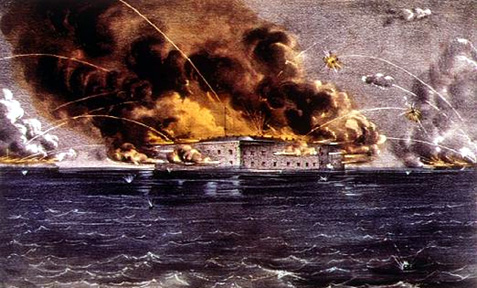
The bombardment of Fort Sumter 12-14 April 1861 (Currier & Ives, public domain).

At 4:30 a.m., on April 12, 1861, artillery batteries of the Confederate States Army open fire on United States Army troops stationed at Fort Sumter in Charleston, South Carolina. A long and disastrous period of civil war begins in America.

The majority of Pennsylvanians and residents of other states throughout America who will ultimately serve with the 47th Pennsylvania Volunteer Infantry are at home, asleep in their beds — or just rising and readying themselves for their work days on family farms, as canal boatmen, in iron foundries, silk mills, tanneries or tobacco factories, as quarrymen toiling away in the slate industry, or as miners tunneling deeper inside of the Earth in poorly-lighted coal mines, along with countless other blue collar laborers who are risking their own health and safety just to keep their families housed and fed.

The 47th Pennsylvania Volunteer Infantry isn’t even “a glimmer” in anyone’s eyes — yet. (It won’t be founded until August 5, 1861.)

1862

In 1862, The Gazette, one of two hometown newspapers read by the majority of men serving with the 47th Pennsylvania Volunteer Infantry’s C Company, carries the following news in its April 12th edition:

Jeff. Davis is becoming desperate. He has issued an extraordinary Message ordering the enrollment of all citizens of the Confederate States between the ages of 18 and 35, for military service, the residue of the fighting population, above 35 to form a fighting force.

Although that particular edition of the newspaper has not yet reached the 47th Pennsylvania Volunteers who are stationed in Florida, a warning about the Confederate Conscription Act’s pending passage has likely been telegraphed by the U.S. War Department to senior officers at the 47th Pennsylvania’s headquarters at Fort Taylor in Key West in order to prepare them for the increased threat they and their troops will face.

1864

On April 12, 1864, Captain Charles William Abbott, commanding officer of the 47th Pennsylvania Volunteer Infantry’s K Company, pens a brief report from his regiment’s camp at Grand Ecore, Louisiana to his superior officers in the United States Army of the Gulf, which partially documents the losses in soldiers and supplies sustained by his regiment during the Battle of Pleasant Hill, Louisiana on April 9, 1864. That report also contains details about the regiment’s movements during this phase of duty.

Sergeant John Gross Helfrich then describes this same battle in a letter to his parents on May 5th, in which he notes:

I have learned additional news of the late fight of our boys of the “Nineteenth Corps”…. The casualties of our boys amounted to a great deal more than at first reported. The Lt. Col. of our Forty-seventh Regt. is missing, and supposed he is wounded or perhaps killed. Lt. Swoyer is dead.

1865

In a letter that he is writing to the Sunbury American on April 12, 1865 from the 47th Pennsylvania Volunteer Infantry’s camp near Summit Point, Virginia, 47th Pennsylvanian Henry D. Wharton describes a celebration that took place following the surrender at Appomattox by Confederate General Robert E. Lee and his army on April 9, 1865:

Since yesterday a week we have been on the move, going as far as three miles beyond Winchester. There we halted for three days, waiting for the return or news from Torbett’s cavalry who had gone on a reconnoisance [sic] up to the valley. They returned, reporting they were as far up as Mt. Jackson, some sixty miles, and found nary an armed reb. The reason of our move was to be ready in case Lee moved against us, or to march on Lynchburg, if Lee reached that point, so that we could aid in surrounding him and [his] army, and with Sheridan and Mead capture the whole party. Grant’s gallant boys saved us that march and bagged the whole crowd. Last Sunday night our camp was aroused by the loud road of artillery. Hearing so much good news of late, I stuck to my blanket, not caring to get up, for I suspected a salute, which it really was for the ‘unconditional surrender of Lee.’ The boys got wild over the news, shouting till they were hoarse, the loud huzzas [sic, huzzahs] echoing through the Valley, songs of ‘rally round the flag,’ &c., were sung, and above the noise of the ‘cannons opening roar,’ and confusion of camp, could be heard ‘Hail Columbia’ and Yankee Doodle played by our band. Other bands took it up and soon the whole army let loose, making ‘confusion worse confounded.’

The next morning we packed up, struck tents, marched away, and now we are within a short distance of our old quarters. – The war is about played out, and peace is clearly seen through the bright cloud that has taken the place of those that darkened the sky for the last four years. The question now with us is whether the veterans after Old Abe has matters fixed to his satisfaction, will have to stay ‘till the expiration of the three years, or be discharged as per agreement, at the ‘end of the war.’ If we are not discharged when hostilities cease, great injustice will be done.

The members of Co. ‘C,’ wishing to do honor to Lieut. C. S. Beard, and show their appreciation of him as an officer and gentleman, presented him with a splendid sword, sash and belt. Lieut. Beard rose from the ranks, and as one of their number, the boys gave him this token of esteem.

A few nights ago, an aid [sic] on Gen. Torbett’s staff, with two more officers, attempted to pass a safe guard stationed at a house near Winchester. The guard halted the party, they rushed on, paying no attention to the challenge, when the sentinel charged bayonet, running the sharp steel through the abdomen of the aid [sic], wounding him so severely that he died in an hour. The guard did his duty as he was there for the protection of the inmates and their property, with instruction to let no one enter.

The boys are all well, and jubilant over the victories of Grant, and their own little Sheridan, and feel as though they would soon return to meet the loved ones at home, and receive a kind greeting from old friends….

1866

On April 12, 1866, members of the 47th Pennsylvania Veteran Volunteers who survived the American Civil War are three months into their post-war civilian lives. Many are back home in Pennsylvania, trying to regain some sense of their old selves with normal work and family routines. Others have already left their pre-war and war lives behind, choosing to migrate west in search of better opportunities — or a certain peace of mind they hope to find in knowing they will be far away from any decision-makers who might drag their communities and nation back down into another disastrous war in the future.


Sources:

  1. Abbott, Charles W. Report from Captain Charles W. Abbott, Captain, Company K, 47th Pennsylvania Volunteer Infantry, to Senior Officers of the U.S. Army of the Gulf’s XIX Corps (19th Corps), Grand Ecore, Louisiana, April 12, 1864. Nazareth, Pennsylvania: Personal Collection of Julian Burley.
  2. Agriculture and Rural Life,” in “Stories from PA History.” Harrisburg, Pennsylvania: Pennsylvania Historical and Museum Commission, 2023.
  3. Fort Sumter and Fort Moultrie National Park.” Washington, D.C.: National Park Foundation, retrieved online April 12, 2025.
  4. Harris, Howard and Perry K. Blatz. Keystone of Democracy: A History of Pennsylvania Workers. Harrisburg, Pennsylvania: Pennsylvania Historical and Museum Commission, 1999.
  5. Helfrich, John Gross. Letter to His Parents, May 5, 1864. Mesa, Arizona: Personal Collection of the Colin Cofield Family Archives.
  6. Miller, Randall M. and William A. Pencak. Pennsylvania: A History of the CommonwealthUniversity Park, Pennsylvania: The Pennsylvania State University Press, 2002.
  7. Mining Anthracite,” in “Stories from PA History.” Harrisburg, Pennsylvania: Pennsylvania Historical and Museum Commission, 2023.
  8. Montgomery, Morton L. Early Furnaces and Forges of Berks County, Pennsylvania, in The Pennsylvania Magazine of History and Biography, 1884. Philadelphia, Pennsylvania: Historical Society of Pennsylvania, 1884.
  9. News Regarding the Confederate States’ New Conscription Order. Sunbury, Pennsylvania: The Gazette, April 12, 1862.
  10. Palladino, Grace. Another Civil War: Labor, Capital, and the State in the Anthracite Regions of Pennsylvania, 1840-1868. New York, New York: Fordham University Press, March 30, 2006.
  11. Sacher, John M. Confederate Conscription and the Struggle for Southern Soldiers. Baton Rouge, Louisiana: LSU Press, 2021.
  12. The Industrial Age,” in “Stories from PA History: Science and Invention.” Harrisburg, Pennsylvania: Pennsylvania Historical and Museum Commission, 2023.
  13. The Pennsylvania Iron Industry: Furnace and Forge of America,” in “Stories from PA History.” Harrisburg, Pennsylvania: Pennsylvania Historical and Museum Commission, 2023.
  14. The Railroad in Pennsylvania,” in “Stories from PA History.” Harrisburg, Pennsylvania: Pennsylvania Historical and Museum Commission, 2023.
  15. Timeline of Labor History in Pennsylvania.” Pennsylvania: Pennsylvania Labor History Society, retrieved online April 12, 2025.


The Backbones of a Nation: The Laborers Who Enlisted with the 47th Pennsylvania Volunteer Infantry

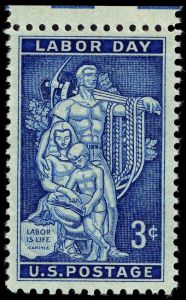
“Labor Is Life” (U.S. Postal Service’s Labor Day Stamp, 1956, U.S. Library of Congress, public domain).

Bakers, blacksmiths, boatmen, butchers, carpenters, cabinetmakers, cigarmakers, coal miners, factory workers, farmers, gardeners, gold miners, iron workers, masons, quarry workers, teamsters, tombstone carvers. These were just a few of the diverse job titles held by the laborers who enlisted with the 47th Pennsylvania Volunteer Infantry during the American Civil War.

Many returned to their same occupations after the war ended while others found new pathways for their life journeys. Far too many were never able to return to the arms of their loved ones and still rest in marked or unmarked graves far from the Commonwealth of Pennsylvania.

In honor of Labor Day, 47th Pennsylvania Volunteers: One Civil War Regiment’s Story is proud to present this abridged list of blue-collar men and boys who served with the 47th Pennsylvania Volunteer Infantry between August 1861 and January 1866, as well as the names of two of the women associated with the regiment who made their own unforgettable marks on the world.

* Auchmuty, Samuel S. (First Lieutenant, Company D): A native of Duncannon, Perry County and veteran of the Mexican-American War who was employed as a carpenter during the early 1860s, Samuel Auchmuty responded to President Abraham Lincoln’s call for volunteers to defend the nation’s capital during the opening weeks of the American Civil War by enrolling as a first lieutenant with Company D of the newly-formed 47th Pennsylvania Volunteer Infantry on August 20, 1861; after completing his three-year term of enlistment, he was honorably discharged in September 1864 and returned home to Pennsylvania, where he resumed his work as a house carpenter and launched a successful contracting business that was responsible for building new business structures, churches, single-family homes, and schools, as well as renovating existing structures; he died in 1891, following a brief illness;
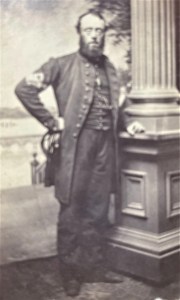
First Sergeant Christian S. Beard, circa 1863 (public domain).

* Beard, Christian Seiler (First Lieutenant, Company C): A twenty-seven-year-old, married carpenter residing in Williamsport, Lycoming County when President Abraham Lincoln called for seventy-five thousand volunteers to defend the nation’s capital, following the fall of Fort Sumter in mid-April 1865, Chistian S. Beard promptly enrolled for Civil War military service before that month was out as a private with Company D of the 11th Pennsylvania Volunteers; honorably discharged in July after completing his Three Months’ Service, he re-enlisted as a sergeant with Company C of the newly-formed 47th Pennsylvania Volunteers on August 19; after rising up through the ranks to become a first lieutenant, he was honorably discharged on Christmas Day, 1865, and returned home to his wife in Dauphin County, Pennsylvania, where he continued to work as a carpenter; after having several children with his wife, he was widowed by her; remarried in 1884, he relocated with his wife and children to Pittsburgh, where he continued to work as a carpenter; ailing with heart and kidney disease, he died there on November 16, 1911 and was interred at that city’s Highwood Cemetery;

* Burke, Thomas (Sergeant, Company I): A first-generation American, Thomas Burke was a twenty-year-old cabinetmaker residing in Allentown at the dawn of the American Civil War; after enrolling for military service on the day that the 47th Pennsylvania Volunteer Infantry was founded (August 5, 1861), he was officially mustered in as a private; from that point on, he continued to work his way up the ranks, receiving a promotion to corporal on September 19, 1864 and then to sergeant on July 11, 1865; honorably mustered out with his company in Charleston, South Carolina on December 25, 1865, he returned home to Lehigh County, where he married and began a family; sometime in early to mid-1871, he and his family migrated west to Iowa, settling in Anamosa, Jones County, where he was employed as a carpenter and contractor; he died at his home there on October 22, 1910 and was buried at that town’s Riverside Cemetery;

* Colvin, John Dorrance (Second Lieutenant, Company C): A native of Abington Township, Lackawanna County who was a farmer when he enlisted for Civil War military service on September 12, 1861, John D. Colvin transferred to the U.S. Army Signal Corps on October 13, 1863, and continued to serve with the Signal Corps for the duration of the war; employed as an engineer, post-war, he helped the Pacific Railroad to extend its service from Atchison, Kansas to Fort Kearney in Nebraska before returning home to Pennsylvania, where he married, began a family and resided with them in Olyphant and Carbondale before relocating with them to Parsons in Luzerne County, where he became a prominent civic leader and member of the school board; initially employed as a machinist, he went on to become superintendent of the Delaware & Hudson Coal company before taking a similar job with the Lehigh Valley Coal Company; the U.S. Postal Service’s postmaster of Parsons during the early 1890s, he died there on March 15, 1901 and was buried at the Hollenback Cemetery in Wilkes-Barre;

* Crownover, James (Sergeant, Company D): A twenty-three-year-old teamster residing in Blain, Perry County when he enrolled for Civil War military service on August 20, 1861, James Crownover rose up through the ranks of the 47th Pennsylvania from private to reach the rank of sergeant; wounded in the right shoulder and captured by Confederate troops during the Battle of Pleasant Hill, Louisiana on April 9, 1864, he was marched to Camp Ford, near Tyler, Texas, the largest Confederate prison camp west of the Mississippi River, where he was held as a prisoner of war (POW) until he was released during a prisoner exchange on November 25, 1864; during captivity, he was commissioned, but not mustered as a second lieutenant; given medical treatment before he was returned to active duty, he was honorably discharged with his regiment in Charleston, South Carolina on December 25, 1865; after returning home, he found work at a tannery near Blain, married, began a family and then relocated with them to East Huntingdon Township, Westmoreland County, where he worked as a teamster; relocating with them to Braddock in Allegheny County after the turn of the century, he worked at a local mill there; he died in Allegheny County on July 18, 1903 and was buried at the Monongahela Cemetery in Braddock Hills;

Jacob Daub, circa 1862-1865 (carte de visite, Cooley & Beckett Photographers, Savannah, Georgia and Beaufort and Hilton Head, South Carolina, public domain).

* Daub, Jacob and William J. (Drummer Boy, Company A): A German immigrant as a child, Jacob Daub emigrated with his parents and younger brother, William, circa 1852; after settling in Easton, Northampton County, Pennsylvania, where his father found work as a stone mason, Jacob grew up to become a cigarmaker, and also became the first of the two brothers to enlist in the American Civil War; after enrolling at the age of sixteen, he was classified as a field musician and assigned to Company A as its drummer boy; his nineteen-year-old brother, William, a carpenter by 1865, followed him into the war when he enlisted as a private with the same company in February of that year; after the war ended, both returned home to Northampton County, where they married, had children and went on to live long, full lives; William eventually died at the age of eighty in 1928, followed by Jacob, who passed away in 1936, roughly two months before his ninety-first birthday;

* Detweiler, Charles C. (Private, Company A): Berks County native Charles Detweiler enrolled for Civil War military service on September 16, 1862; a carpenter who later became a farmer, he served with Company A until he was severely injured in the Battle of Cedar Creek, Virginia, October 19, 1864, when he sustained a musket ball wound to the middle of his thigh; treated at a Union Army hospital in Virginia before being transported to the Union’s Mower General Hospital in Philadelphia, Pennsylvania, he learned that the musket ball had damaged his femur and femoral arteries; following his wound-related death at Mower on March 12, 1865, he was buried at the Fairview Cemetery in Kutztown, Berks County;

* Diaz, John (Private, Company I): An immigrant from Spain’s Canary Islands, John Diaz emigrated sometime between 1862 and 1865 and settled in Philadelphia, Pennsylvania, where he found work as a cigarmaker; on January 25, 1865, at the age of nineteen, he enlisted with the Union Army at a recruiting depot in Norristown, Montgomery County and served as a private with Company I of the 47th Pennsylvania Volunteer Infantry until it was mustered out on Christmas Day, 1865; following his return to Pennsylvania, he resumed work as a cigarmaker in Philadelphia, eventually launching his own cigarmaking firm, which became a family business as his sons became old enough to work for him; sometime between 1906 and 1910, he relocated with his wife and several of his children to Camden County, New Jersey, where he died on September 5, 1915;

James Downs (circa 1880s, public domain).

* Downs, James (Corporal, Company D): A twenty-three-year-old tanner residing in Blain, Perry County when he enrolled for Civil War military service on August 20, 1861, James Downs was captured by Confederate troops during the Battle of Pleasant Hill, Louisiana on April 9, 1864 and marched to Camp Ford, near Tyler, Texas, the largest Confederate prison camp west of the Mississippi River; held there as a prisoner of war (POW) until he was released during a prisoner exchange on July 22, 1864, he received medical treatment and was subsequently returned to active duty; following his honorable discharge with his regiment in Charleston, South Carolina, on December 25, 1865, he returned home, married, began a family and relocated with his family to Phillipsburg, New Jersey; suffering from heart and kidney disease, and possibly also from post-traumatic stress disorder, rather than “insane” as physicians at the Pennsylvania Memorial Home in Brookville, Jefferson County, Pennsylvania had diagnosed him, he fell from a window at that home and died at there on September 16, 1921; he was subsequently interred in the Veterans’ Circle of the Brookville Cemetery;

* Eagle, Augustus (Second Lieutenant, Company F): A German immigrant as a teenager, Augustus Eagle arrived in America on June 23, 1855, two years after his brother, Frederick Eagle, had emigrated and made a life for himself in Catasauqua, Lehigh County, Pennsylvania; both men married and began families there, with Fred employed as a laborer and Gus employed by the Crane Iron Works; when President Abraham Lincoln issued his call for volunteers to defend the nation’s capital during the opening weeks of the American Civil War, both men enrolled for military service on August 21, 1861 as privates with Company F of the 47th Pennsylvania Volunteer Infantry; in 1862, Fred fell ill and was honorably discharged on a surgeon’s certificate of disability, but Gus continued to serve, rising up through the regiment’s enlisted and officers’ ranks; commissioned as a second lieutenant, he was honorably discharged on September 11, 1864, upon completion of his three-year term of service; post-war, Fred became a successful baker with real estate and personal property valued at $4,200 (roughly $155,750 in 2023 dollars) and died in Catasauqua in 1885, while Gus owned a successful restaurant in Whitehall Township before operating the Fairview Hotel, which became a popular spot for political gatherings; after suffering a series of strokes in 1902, Gus died at his home on August 17 and was buried at the Fairview Cemetery in West Catasauqua;

* Eisenbraun, Alfred (Drummer Boy, Company B): A tobacco stripper and first-generation American from Allentown, Lehigh County, fifteen-year-old Alfred Eisenbraun became the second “man” from the 47th Pennsylvania to die when he succumbed to complications from typhoid fever at the Kalorama Eruptive Fever Hospital in Georgetown, District of Columbia on October 26, 1861; he still rests at the U.S. Soldiers’ and Airmen’s Home Cemetery in Washington, D.C.;

* Fink, Aaron (Corporal, Company B): A shoemaker and native of Salisbury Township, Lehigh County, Pennsylvania, Aaron Fink, grew up, began a family and established a successful small shoemaking business, first in Allentown and then in Mauch Chunk (now Jim Thorpe) in Carbon County; on August 20, 1861, he chose to respond to President Abraham Lincoln’s call for volunteers to help bring the American Civil War to a quick end when he enrolled for military service; shot in the right leg during the fighting at the Frampton Plantation during the Battle of Pocotaligo, South Carolina on October 22, 1862, he was treated at the Union Army’s hospital at Hilton Head, South Carolina, but died there from wound-related complications on November 5, 1862; initially buried near that hospital, his remains were later exhumed by Allentown undertaker Paul Balliet and returned to Pennsylvania for reinterment at that city’s Union-West End Cemetery;

* Fornwald, Reily M. (Corporal, Company G): Born in Heidelberg Township, Berks County, Reily Fornwald was raised there on his family’s farm near Stouchsberg; educated in his community’s common schools and then at Millersville State Normal School, he became a railroad worker before returning to farm life shortly before the dawn of the American Civil War; after enlisting for military service at the age of twenty on September 11, 1862, he was wounded in the head and groin by an exploding artillery shell during the Battle of Pocotaligo, South Carolina on October 22, 1862; stabilized on the battlefield before being transported to a field hospital for more advanced medical care, he spent four weeks recuperating before returning to active duty with his regiment; promoted to the rank of corporal on January 19, 1863, he continued to serve with his regiment until he was honorably discharged at Berryville, Virginia on September 18, 1864, upon expiration of his term of enlistment; after returning home, he spent four years operating a blast furnace for White & Ferguson in Robesonia, Berks County; he also married and began a family; sometime around 1870, he left that job to become an engine operator for Wright, Cook & Co. in Sheridan and then moved to a job as an engine operator for William M. Kauffman—a position he held for roughly a decade before securing employment as a shifting engineer with the Reading Railway Company at its yards in Reading; following his retirement in 1905, he and his wife settled in Robesonia, where he became involved in buying and selling real estate; following a severe fall in May 1925, during which he fractured a thigh bone, he died at the Homeopathic Hospital in Reading on June 1 and was buried at Robesonia’s Heidelberg Cemetery;
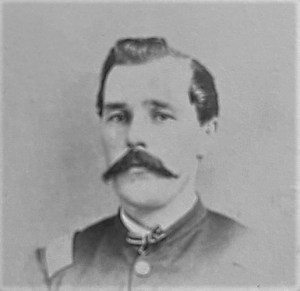
Captain Reuben Shatto Gardner, Company H, 47th Pennsylvania Volunteers, circa 1863 (public domain).

* Gardner, Reuben Shatto, John A. and Jacob S. R.: Natives of Perry County, Reuben Shatto Gardner and his brothers, John A. Gardner and Jacob S. R. Gardner, began their work lives as laborers; among the earliest responders to President Abraham Lincoln’s call to defend the nation’s capital, following the fall of Fort Sumter in mid-April 1861, Reuben was a twenty-five-year-old miller who resided in Newport, Perry County; after enlisting as a private with Company D of the 2nd Pennsylvania Volunteers on April 20, he was honorably mustered out after completing his term of service; he then re-upped for a three-year tour of duty, mustering in as a first sergeant with Company H of the newly-formed 47th Pennsylvania Volunteer Infantry; also enrolling with him that same day were his twenty-three-year-old and twenty-one-year-old brothers, John A. Gardner and Jacob S. R. Gardner; John officially mustered in at Camp Curtin in Harrisburg on September 18 (the day before Reuben arrived), while Jacob officially mustered in on September 19; both joined their brother’s company, entering at their respective ranks of corporal and private, but Jacob’s tenure was a short one; sickened by typhoid fever in late December 1861, he died at the 47th Pennsylvania’s regimental hospital at Camp Griffin, near Langley, Virginia on January 8, 1862; his remains were later returned to Perry County for burial at the Old Newport Cemetery; soldiering on, Reuben and John were transported with their regiment by ship to Fort Taylor in Key West, Florida and subsequently sent to South Carolina with their regiment and other Union troops; shot in the head and thigh during the Battle of Pocotaligo, South Carolina on October 22, 1862, Reuben was treated at the Union Army’s hospital at Hilton Head, South Carolina for an extended period of time, and then returned to active duty with his regiment; meanwhile, John was assigned with H Company and the men from Companies D, F and K to garrison Fort Jefferson in Florida’s Dry Tortugas; both brothers then continued to work their way up the regiment’s ranks, with John promoted to corporal on September 18, 1864 and Reuben ultimately commissioned as a captain and given  command of Company H on February 16, 1865; both then returned home after honorably mustering out with the regiment in Charleston, South Carolina on Christmas Day, 1865; sometime around 1866 or 1867, Reuben and his wife migrated west, first to Elk River Station in Sherburne County, Minnesota and then to Stillwater, Washington County, before settling in the city of Minneapolis; through it all, he worked as a miller; Reuben and his family then relocated farther west, arriving in King County, Washington after the Great Seattle Fire of 1889; initially employed in the restaurant industry, Reuben later found work as a railroad conductor before prospecting for gold with son Edward in the western United States and British Columbia, Canada during the 1890s Gold Rush; employed as a U.S. Post Office clerk in charge of the money order and registry departments in Seattle from 1898 to 1902, Reuben died in Seattle at the age of sixty-eight on September 25, 1903 and was interred at that city’s Lakeview Cemetery; meanwhile, his brother John, who had resumed work as a fireman with the Pennsylvania Railroad after returning from the war, was widowed by his wife in 1872; after remarrying and welcoming the births of more children, he was severely injured on October 9, 1873 while working as a fireman on the Pacific Express for the Pennsylvania Railroad; unable to continue working as a fireman due to his amputated hand, he worked briefly as a railroad call messenger before launching his own transfer business in Harrisburg; after he was widowed by his ailing second wife, John was severely injured in a second accident in 1894 while loading his delivery wagon; still operating his business after the turn of the century, he remarried on January 3, 1900, but was widowed by his third wife when she died during a surgical procedure in 1911; he subsequently closed his business and relocated to the home of his daughter in the city of Reading, Berks County; four years later, he fell on an icy sidewalk and became bedfast; aged eighty and ailing from arteriosclerosis and lung congestion, he died at her home on February 20, 1918 and was buried at Reading’s Charles Evans Cemetery;

* Gethers, Bristor (Under-Cook, Company F): Born into slavery in South Carolina circa 1829, Bristor Gethers was married “by slave custom at Georgetown, S.C.” on the Pringle plantation in Georgetown sometime around 1847 to “Rachael Richardson” (alternate spelling “Rachel”); a field hand at the dawn of the Civil War, he was freed from chattel enslavement in 1862 by Union Army troops; he then enlisted as an “Under-Cook” with Company F of the 47th Pennsylvania Volunteer Infantry in Beaufort, South Carolina on October 5, 1862, and traveled with the regiment until October 4, 1865, when he was honorably discharged in Charleston, South Carolina upon completion of his three-year term of enlistment; at that point, he returned to Beaufort and resumed life with his wife and their son, Peter; a farmer, Bristor was ultimately disabled by ailments that were directly attributable to his Union Army tenure; awarded a U.S. Civil War Soldiers’ Pension, he lived out his days with his wife on Horse Island, South Carolina, and died on Horse Island, South Carolina on June 24 or 25, 1894; he was then laid to rest at a graveyard on Parris Island on June 26 of that same year;

* Gilbert, Edwin (Captain, Company F): A native of Northampton County and a carpenter residing in Catasauqua, Lehigh County at the dawn of the American Civil War, Edwin Gilbert enrolled as a corporal on August 21, 1861; after rising up through his regiment’s officer ranks, he was ultimately commissioned as a captain and placed in charge of his company on New Year’s Day, 1865, and then mustered out with his company in Charleston, South Carolina of Christmas of that same year; resuming his life with his wife and children in Lehigh County after the war, he continued to work as a carpenter; after suffering a stroke in late December 1893, he died on January 2, 1894 and was buried at the Fairview Cemetery in West Catasauqua;
Mrs. Caroline Bost and Martin L. Guth celebrated the anniversary of President Abraham Lincoln’s birthday with fellow Grand Army of the Republic and ladies auxiliary members in February 1933 (public domain).

* Guth, Martin Luther (Corporal, Company K): A native of Lehigh County and son of a farmer, Martin L. Guth was a seventeen-year-old laborer and resident of Guthsville in Whitehall Township at the dawn of the American Civil War; after enrolling for military service on September 26, 1862, he was officially mustered in as a corporal; he continued to serve with his regiment until he was honorably mustered out on October 1, 1865, upon expiration of his term of service; at some point during that service, he broke his leg—an injury that did not heal properly and plagued him for the remainer of his life; after returning home to the Lehigh Valley, he found work again as a laborer; married in 1883, he became the father of four children, one of whom was born in New Mexico and another who was born in California; he had moved his family west in search of work in the mining industry; documented as a “prospector” or “miner” records created in Nevada during that period, he was also documented on voter registration rolls of Butte City in Glenn County, California in August 1892; by 1900, he was living separately from his wife, who was residing in Bandon, Coos County, Oregon with their two children while he was residing at the Veterans’ Home of California in Yount Township, Napa County, California; subsequently admitted to the Mountain Branch of the network of U.S. National Homes for Disabled Volunteer Soldiers in Johnson City, Tennessee on February 11, 1912, his disabilities included an old compound fracture of his right leg with chronic ulceration, defective vision (right eye), chronic bronchitis, and arteriosclerosis; discharged on December 12, 1920, he was admitted to the U.S. National Soldiers’ Home in Leavenworth, Kansas on July 30, 1912, but discharged on September 29, 1913; by 1920, he was living alone on Fruitvale Avenue in the city of Oakland, California, but was remaining active with his local chapter of the Grand Army of the Republic as he rose through the leadership ranks of chapter, state and national G.A.R. organizations; after a long, adventure-filled life, he died on October 11, 1935, at the age of ninety-one, at the veterans’ home in San Francisco and was interred at the San Francisco National Cemetery (also known as the Presidio Cemetery);

Lieutenant Charles A. Hackman, Company G, 47th Pennsylvania Volunteers, circa 1864 (public domain).

* Hackman, Charles Abraham and Martin Henry (First Lieutenant and Sergeant, Company G): Natives of Rittersville, Lehigh County, Charles and Martin Hackman began their work lives as apprentices, with Charles employed by a carpenter and Martin employed by master coachmaker Jacob Graffin; members of the local militia unit known as the Allen Rifles, they were among the earliest responders to President Abraham Lincoln’s call to defend the nation’s capital, following the fall of Fort Sumter in mid-April 1861; both enlisted as privates with Company I of the 1st Pennsylvania Volunteers on April 20 and were honorably mustered out in July after completing their service; Charles then re-upped for a three-year tour of duty, mustering in as a sergeant with Company G of the newly-formed 47th Pennsylvania Volunteer Infantry; he then spent most of his early service in Virginia; meanwhile, his younger brother, Martin H. Hackman, who was employed as a coach trimmer in Lehigh County, re-enlisted for his own second tour of duty, as a private with Charles’ company, on January 8, 1862; working their way up the ranks, Charles was commissioned as a first lieutenant on June 18, 1863, while Martin was promoted to sergeant on April 26, 1864; Charles was then breveted as a captain on November 30, 1864 after having mustered out on November 5; Martin was then honorably discharged on January 8, 1865; initially employed, post-war, with the Philadelphia & Reading Railroad’s train car facility in Reading, Berks County, Charles was promoted to car inspector at the company’s Philadelphia facility in December 1866; he subsequently married, but had no children and was widowed in 1904; remarried, he remained in Philadelphia until the early 1900s, when he relocated to Allentown; Martin, who worked as a bricklayer in Allentown, did have children after marrying, but he, too, was widowed; also remarried, he became a manager at a rolling mill; ailing with pneumonia in early 1917, Charles was eighty-six years old when he died in Allentown on January 17; he was buried at Allentown’s Union-West End Cemetery, while his brother Martin was buried at the Nisky Hill Cemetery in Bethlehem, following his death in Bethlehem from a cerebral hemorrhage on December 14, 1921;

* Junker, George (Captain, Company K): A German immigrant as a young adult, George Junker emigrated sometime around the early 1850s and settled in Allentown, Lehigh County, Pennsylvania, where he found employment as a marble worker and tombstone carver, and where he also joined the Allen Infantry, one of his adopted hometown’s three militia units; responding to U.S. President Abraham Lincoln’s call for volunteers to defend the nation’s capital during the opening weeks of the American Civil War, George enlisted with his fellow Allen Infantrymen, honorably completed his Three Months’ Service, and promptly began his own recruitment of men for an “all-German company” for the newly-formed 47th Pennsylvania Volunteer Infantry; commissioned as a captain with the 47th Pennsylvania, he was placed in charge of his men who became known as Company K; mortally wounded by a Confederate rifle shot during the Battle of Pocotaligo, South Carolina on October 22, 1862, he died from his wounds the next day at the Union Army’s division hospital at Hilton Head, South Carolina; his remains were returned to his family in Hazleton, Luzerne County for reburial at the Vine Street Cemetery;

* Kern, Samuel (Private, Company D): A native of Perry County who was employed as a farmer in Bloomfield, Perry County when he enrolled for Civil War military service on August 20, 1861, Samuel Kern was wounded and captured by Confederate troops during the Battle of Pleasant Hill, Louisiana on April 9, 1864; marched to Camp Ford, near Tyler, Texas, the largest Confederate prison camp west of the Mississippi River, he was held there as a prisoner of war (POW) until he died from harsh treatment on June 12, 1864; buried somewhere on the grounds of that prison camp, his grave remains unidentified;

* Kosier, George (Captain, Company D): A native of Perry County and twenty-four-year-old carpenter residing in that county’s community of New Bloomfield at the dawn of the American Civil War, George Kosier became one of the earliest men from his county to respond to President Abraham Lincoln’s call for to defend the nation’s capital, following the fall of Fort-Sumter in mid-April 1861, when he enrolled for military service on April 20 as a corporal with Company D of the 2nd Pennsylvania Volunteers; honorably discharged in July after completing his Three Months’ Service, he re-enlisted as a first sergeant with Company D of the newly-formed 47th Pennsylvania Volunteer Infantry; joining him were his younger brothers, Jesse and William S. Kosier, aged nineteen and twenty-three, who were enrolled as privates with the same company; all three subsequently re-enlisted with their company at Fort Taylor in Key West, Florida in 1863; sadly, Jesse fell ill with pleurisy and died at the Union Army’s Field Hospital in Sandy Hook, Maryland on August 1864; initially buried at a cemetery in Weverton, Maryland, his remains were later exhumed and reinterred at the Antietam National Cemetery in Sharpsburg, Maryland; both George and William continued to serve with the regiment, with George continuing his rise up the ranks; commissioned as a captain, he was given command of Company D in early June 1865; both brothers were then honorably discharged with their regiment on Christmas Day, 1865; post-war, both men married and began families; William died in Pennsylvania sometime around 1879, but George went on to live a long full life; after settling in Ogle County, Illinois, where he was employed as a carpenter, he relocated with his family to Wright County, Iowa, where he built bridges; he died in Chicago on December 3, 1920 and was buried at that city’s Rosehill Cemetery;
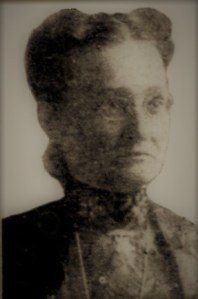
Anna (Weiser) Leisenring (1851-1942) , circa 1914 (public domain).

* Leisenring, Annie (Weiser): The wife of Thomas B. Leisenring (Captain, Company G), Annie Leisenring was employed by the Commonwealth of Pennsylvania as a factory inspector after the American Civil War; she became well known through newspaper accounts of her inspection visits and also became widely respected for her efforts to improve child labor laws statewide;

* Lowrey, Thomas (Corporal, Company E): An Irish immigrant as a young adult, Thomas Lowrey emigrated sometime around the late 1840s or early 1850s and settled in Northampton County, Pennsylvania, where he found work as a miner, married and began a family; responding to U.S. President Abraham Lincoln’s call for volunteers to defend the nation’s capital during the opening weeks of the American Civil War, Thomas enlisted with Company E of the 47th Pennsylvania on September 16, 1861; after completing his three-year term of enlistment, he was honorably discharged in September 1864 and returned home to Pennsylvania, where he resumed work as a coal miner near Shenandoah, Schuylkill County, and where he resided with his wife and children; after witnessing the dawn of a new century, he died in Shenandoah on January 11, 1906;
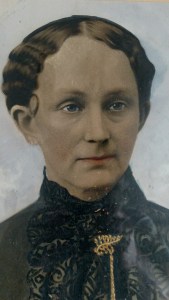
This image of Julia (Kuenher) Minnich, circa 1860s, is being presented here through the generosity of Chris Sapp and his family, and is being used with Mr. Sapp’s permission. This image may not be reproduced, repurposed, or shared with other websites without the permission of Chris Sapp.

* Magill, Julia Ann (Kuehner Minnich): Widowed and the mother of a young son at the time that her husband, B Company’s Captain Edwin G. Minnich, was killed in battle during the American Civil War, Julia Ann (Kuehner) Minnich became a Union Army nurse at Harewood Hospital in Washington, D.C. during the war in order to keep a roof over her son’s head; she then spent the remainder of her life battling the U.S. Pension Bureau to receive and keep both the U.S. Civil War Widow’s Pension and U.S. Civil War Nurse’s Pension that she was entitled to under federal law; forced to go on working into her later years by poverty, she finally found work as a cook at a hotel in South Bethlehem; she died sometime after 1906;

* Menner, Edward W. (Second Lieutenant, Company E): A first-generation American who was a native of Easton, Northampton County, Edward Menner was a sixteen-year-old carpenter when he enrolled for Civil War military service on August 25, 1861; working his way up from private to second lieutenant before he was honorably discharged with his regiment in Charleston, South Carolina on Christmas Day, 1865, he was wounded in the left shoulder during the Battle of Cedar Creek, Virginia on October 19, 1864; after returning home to the Lehigh Valley, he secured employment as a hooker with the Bethlehem Iron Company (later known as Bethlehem Steel) on March 15, 1866; he married, begam a family and continued to work in the iron industry for much of his life; he died in Bethlehem on April 25, 1913 and was buried at that city’s Nisky Hill Cemetery;

* Miller, John Garber (Sergeant, Company D): A native of Ironville, Blair County, John G. Miller was a twenty-one-year-old laborer living in Duncannon, Perry County when he enrolled for Civil War military service on August 20, 1861; captured by Confederate troops during the Battle of Pleasant Hill, Louisiana on April 9, 1864 and marched to Camp Ford, near Tyler, Texas, the largest Confederate prison camp west of the Mississippi River, he was held there as a prisoner of war (POW) until he was released during a prisoner exchange on July 22, 1864; returned to active duty with his regiment after receiving medical treatment, he continued to serve until he was honorably discharged with the regiment in Charleston, South Carolina on December 25, 1865; after returning home, he married, began a family and relocated with his family to Philipsburg, Centre County, Pennsylvania, where he was employed as a teamster; returning to Blair County with his family, he resided with them in Logan Township before relocating with them again to Coalport, Clearfield County; suffering from heart disease, he died in Coalport on February 16, 1921 and was interred at the Coalport Cemetery;
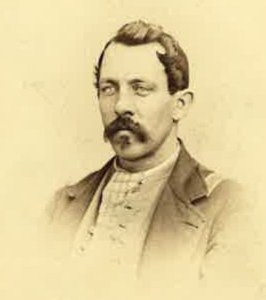
Captain Theodore Mink, Company I, 47th Pennsylvania Volunteers (circa 1870s-1880s, courtesy of Julian Burley; used with permission).

* Mink, Theodore (Captain, Company I): A native of Allentown, Lehigh County who was apprenticed as a coachmaker and then tried his hand as a whaler and blacksmith prior to the American Civil War, Thedore Mink became one of the “First Defenders” who responded to President Abraham Lincoln’s call for seventy-five thousand volunteers to defend the nation’s capital after the fall of Fort Sumter in mid-April 1861; after honorably completing his Three Months’ Service in July, he re-enlisted on August 5 as a sergeant with Company I of the newly-formed 47th Pennsylvania Volunteer Infantry; after steadily working his way up through the ranks, he was commissioned as a captain and placed in charge of his company on May 22, 1865; he continued to serve with his regiment until it was mustered out on Christmas Day, 1865; following his return to Pennsylvania, he was hired as a laborer with a circus troupe operated by Mike Lipman before finding longtime employment in advertising and then as head of the circus wardrobe for the Forepaugh Circus before he was promoted to management with the circus; felled by pneumonia during late 1889, he died in Philadelphia on January 7, 1890 and was interred in Allentown’s Union-West End Cemetery;

* Newman, Edward (Private, Company H): A German immigrant who left his homeland sometime around 1920, Edward Newman chose to settle in Allentown, Lehigh County, Pennsylvania, where he found work as a baker; after enlisting for Civil War military service in August 1862, he mustered in as a private with Company I of the 127th Pennsylvania Volunteers and fought in the Battle of Fredericksburg from December 11-15 of that year; honorably mustered out with his regiment in May 1863, he re-enlisted on October 23, 1863 for a second tour of duty—but as a private with a different regiment—Company H of the 47th Pennsylvania Volunteers; he continued to serve with the 47th Pennsylvania until he was officially mustered out in Charleston, South Carolina on Christmas Day, 1865, he returned to Pennsylvania’s Lehigh Valley, where he worked briefly as a baker; suffering from rheumatism that developed while the 47th Pennsylvania was stationed near Cedar Creek, Virginia during the fall of 1864, he was admitted to the network of U.S. Homes for Disabled Volunteer Soldiers at the Central Branch in Dayton, Montgomery County, Ohio on July 17, 1877; still unmarried and still living there in 1880, his health continued to decline; diagnosed with acute enteritis, he died there on January 22, 1886 and was buried at the Dayton National Cemetery;

Captain Daniel Oyster, Company C, 47th Pennsylvania Volunteers, circa 1864 (public domain).

* Oyster, Daniel (Captain, Company C): A native of Sunbury, Northumberland County who was employed as a machinist, Daniel Oyster became one of the earliest men from his county to respond to President Abraham Lincoln’s call to defend the nation’s capital, following the fall of Fort-Sumter in mid-April 1861, when he enrolled for Civil War military service on April 23 as a corporal with Company F of the 11th Pennsylvania Volunteers; honorably discharged in July after completing his Three Months’ Service, he re-enlisted as a first sergeant with Company C of the newly-formed 47th Pennsylvania Volunteers on August 19; his brother, John Oyster, subsequently followed him into the service, enrolling as a private with his company on November 20, 1863; after rising up through the ranks to become captain of his company, Daniel was shot in his left shoulder near Berryville, Virginia on September 5, 1864 and then shot in his right shoulder during the Battle of Cedar Creek on October 19; successfully treated by Union Army surgeons for both wounds, he was awarded a veteran’s furlough in order to continue his recuperation and returned home to Sunbury; he then returned to duty and was honorably discharged with his company on Christmas Day, 1865; post-discharge, he and his brother, John, returned home to Sunbury; Daniel continued to reside with their aging mother and was initially employed as a policeman, but was then forced by a war-related decline in his health to take less-taxing work as a railroad postal agent; his brother John, who was married, lived nearby and worked as a fireman, but died in Sunbury on April 20, 1899; employed as a bookkeeper after the turn of the century, Daniel never married and was ultimately admitted to the Southern Branch of the U.S. National Home for Disabled Volunteer Soldiers in Hampton, Virginia, where he died on August 5, 1922—exactly sixty-one years to the day after the 47th Pennsylvania Volunteer Infantry was founded; he was given a funeral with full military honors before being laid to rest in the officers’ section at the Arlington National Cemetery on August 11;

* Sauerwein, Thomas Franklin (First Sergeant, Company B): The son of a lock tender in Pennsylvania’s Lehigh Valley, Thomas Sauerwein was employed as a carpenter at the dawn of the American Civil War; following his enrollment for military service in Allentown, Lehigh County on August 20, 1861, he was officially mustered in as a private with Company B of the 47th Pennsylvania Volunteer Infantry; from that point on, he steadily worked his way up the ranks of the regiment, ultimately being promoted to first sergeant on New Year’s Day, 1865; following his honorable discharge with his company on Christmas Day of that same year, he returned home to the Lehigh Valley, where he found work as a carpenter, married and began a family; by 1880, he had moved his family west to Williamsport in Lycoming County, where he had found work as a machinist; employed as a leather roller with a tanning factory, he was promoted to a position as a leather finisher after the turn of the century, while his two sons worked as leather rollers in the same industry; he died in Williamsport on July 29, 1912 and was buried at the East Wildwood Cemetery in Loyalsock;

* Slayer, Joseph (Private, Company E; also known as “Dead Eye Dick” and “E. J. McMeeser”): A native of Philadelphia, Joseph Slayer was a nineteen-year-old miner residing in Willliams Township, Northampton County, Pennsylvania at the dawn of the American Civil War; after enrolling for military service in Easton, Northampton County on September 9, 1861, he was officially mustered in as a private with Company E of the 47th Pennsylvania Volunteers; he continued to serve with his company, re-enlisting as a private with Company E, under the name of Joseph Slayer, at Fort Jefferson in Florida’s Dry Tortugas on January 4, 1864; honorably mustered out with his company in Charleston, South Carolina on Christmas Day, 1865, he relocated to Zanesville, Ohio sometime after the war, where he joined the Grand Army of the Republic’s Hazlett Post No. 81; he may then have relocated briefly to St. Paul, Minnesota sometime around the 1870s or early 1880s, or may simply have had a child and grandchild living there, because newspaper reports of his death noted that he had been carrying a photograph of a toddler named Robert—a photo that had “To Grandpa” inscribed on it and indicated that the grandchild, Robert, was a resident of St. Paul in 1892; by the 1880s, Joseph had made it as far west as the Dakota Territory—but this was where his life’s journey took a strange twist; discarding the name he had used in the army (“Joseph Slayer”), he changed his name several times over the next several years, as if he were trying to shed his prior life and all of its associations; acquaintances he met in the southern part of the Dakota Territory during the early to mid-1880s knew him as “Dead Eye Dick” while others who met him after he had resettled in Bismarck, in the northern part of the Dakota Territory, knew him as “Eugene McMeeser” or “E. J. McMeeser” (alternate spelling: “McNeeser”); by the time that the federal government conducted its special census of Civil War veterans in June 1890, Joseph was so comfortable fusing parts of his old and new lives together that he was convincingly documented by an enumerator as “Eugene McMeeser,” a veteran who had served as a private with Company E of the 47th Pennsylvania Infantry from September 9, 1861 until January 11, 1866; in 1890, Joseph became a married man; documented as having rheumatism so severe that he was “at times confined at home,” he filed for a U.S. Civil War Pension from North Dakota on March 28, 1891—but he did so as “Joseph Slayer”—the name under which he had first enrolled for military service in Pennsylvania in 1861; ultimately awarded a pension—which would not have happened if federal officials had not been able to verify his identity and match it to his existing military service records, he was diagnosed with angina pectoris in 1904, but still managed to secure a U.S. patent for one of his inventions—a napkin holder; he died in Bismarck less than a month later, on January 12 or 13, 1905; found on the floor of his rented room, his death sparked a coroner’s inquest which revealed that he had been living under an assumed name; he was buried at Saint Mary’s Cemetery in Bismarck; the name “Joseph Slayer” was carved onto his military headstone;

* Snyder, Timothy (Corporal, Company C): A carpenter who was born in Rebuck, Northumberland County, Tim Snyder was employed as a carpenter and residing in the city of Sunbury in that county by the dawn of the American Civil War; after enlisting for military service as a private in August 1861, he was wounded twice in combat, once during the Battle of Pocotaligo, South Carolina (1862) and a second time, in the knee, during the Battle of Opequan, Virginia (1864), shortly after he had been promoted to the rank of corporal; he survived and returned to Pennsylvania, where he resumed work as a carpenter; after relocating to Schuylkill County, he settled in the community of Ashland; in 1870, he married Catharine Boyer and started a family with her; he continued to work as a carpenter in Schuylkill County until his untimely death in May 1889 and was laid to rest with military honors at the Brock Cemetery in Ashland; John Hartranft Snyder, his first son to survive infancy, grew up to become a co-founder of the Lavelle Telegraph and Telephone Company, while his second son to survive infancy, Timothy Grant Snyder, became a corporal in the United States Marine Corps during the Spanish-American War; stationed on the USS Buffalo as it visited Port Said, Egypt, he also served aboard Admiral George Dewey’s flagship, the USS Olympia, in 1899;
Drummer Boy William Williamson, 47th Pennsylvania Volunteers, Company A, circa 1863 (public domain).

* Williamson, William (Drummer, Company A): A farmer from Stockertown, Northampton County, William Williamson was documented by a mid-nineteenth-century federal census enumerator as an unmarried laborer who lived at the Easton home of Northampton County physician John Sandt, M.D.—an indication that William’s parents may have either died or were struggling so much financially during the 1850s and early 1860s that they had encouraged him to “leave the nest” and begin supporting himself, or had hired him out as an apprentice or indentured servant; like so many other young men from Northampton County, when President Abraham Lincoln issued his call for help to protect the nation’s capital from a likely invasion by Confederate States Army troops, he stepped forward, raised his hand, and stated the following:

I, William Williamson appointed a private in the Army of the United States, do solemnly swear, or affirm, that I will bear true allegiance to the United States of America, and that I will serve them honestly and faithfully against all their enemies or opposers whatsoever, and observe and obey the orders of the President of the United States, and the orders of the officers appointed over me, according to the rules and articles for the government of the Armies of the United States.

Later in life, William Williamson became a champion for an older woman who had been struggling to convince officials of the federal government that she was worthy enough to be awarded a U.S. Civil War Mother’s Pension, after her son had died in service to the nation as a Union Army soldier.

Post-war, William Williamson found work at a slate quarry, married, began a family in Belfast, Northampton County, and lived to witness the dawn of a new century. Following his death at the age of sixty in Plainfield Township on June 17, 1901, he was laid to rest at the Belfast Union Cemetery.


Sources:

  1. “A Badge from Admiral Dewey and Schuylkill County” (announcements of Timothy Grant Snyder’s service on Admiral Dewey’s flagship). Reading, Pennsylvania: Reading Eagle: October 3, 1899 and November 21, 1899.
  2. Baptismal, census, marriage, military, death, and burial records of the Snyder family. Pennsylvania, California, Florida, Louisiana, Massachusetts, Nevada, Ohio, etc.: Snyder Family Archives, 1650-present; and in Historic Pennsylvania Church and Town Records (baptismal, marriage, death and burial records of various churches across Pennsylvania). Philadelphia, Pennsylvania: Historical Society of Pennsylvania, 1776-1918.
  3. Bates, Samuel P. History of Pennsylvania Volunteers, 1861-5, vol. 1. Harrisburg, Pennsylvania: B. Singerly, State Printer, 1869.
  4. James Crownover, James Downs and Samuel Kern, et. al., in Camp Ford Prison Records. Tyler, Texas: The Smith County Historical Society, 1864.
  5. Civil War Muster Rolls, 1861-1866 (47th Pennsylvania Infantry). Harrisburg, Pennsylvania: Pennsylvania State Archives.
  6. Civil War Veterans’ Card File, 1861-1866 (47th Pennsylvania Infantry). Harrisburg, Pennsylvania: Pennsylvania State Archives.
  7. Registers of Deaths of Volunteers, U.S. Army; Admissions Ledgers, U.S. National Homes for Disabled Volunteer Soldiers; federal burial ledgers, and national cemetery interment control forms, 1861-1935. Washington, D.C.: U.S. Office of the Adjutant General (Record Group 94), U.S. National Archives and Records Administration.
  8. Schmidt, Lewis. A Civil War History of the 47th Regiment of Pennsylvania Veteran Volunteers. Allentown, Pennsylvania: Self-published, 1986.
  9. U.S. Census Records, 1830-1930. Washington, D.C.: U.S. National Archives and Records Administration.
  10. U.S. Civil War Pension Records, 1862-1935. Washington, D.C.: U.S. National Archives and Records Administration.
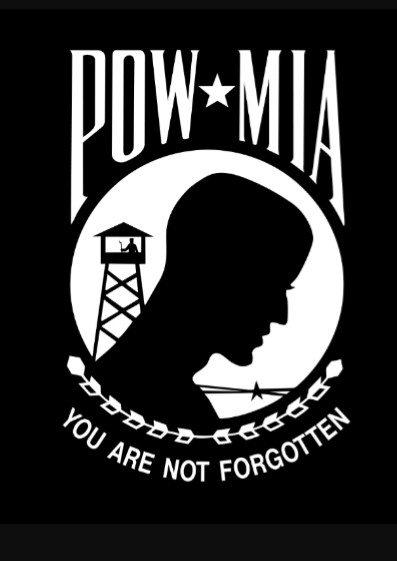
First Blood: The Battle of Pocotaligo, South Carolina (47th Pennsylvania Volunteers’ Perspective, October 22, 1862)

Colonel Tilghman H. Good, commanding officer, 47th Pennsylvania Volunteers, circa 1863 (public domain image).

They were steady, true and brave. If heavy losses may indicate gallantry, the palm may be given to Col. Good’s noble regiment, the Forty-seventh Pennsylvania Volunteers. Upon this command the brunt of battle fell. Out of 600 who went into action, nearly 150 were killed or wounded. All of the Keystone troops did splendidly….

– Newspapers across America, October and November 1862


Although reports penned by senior military officials immediately following the combined Union Army-Navy Expedition to Pocotaligo provide an important overview of the incidents leading up to the Battle of Pocotaligo, South Carolina on October 22, 1862, it is the individual reports penned by the brigade and regimental commanding officers on site which provide the most detailed accounts of how this Union military engagement changed from an “expedition” to a raging battle.

Perhaps the most important of these front-line accounts come from members of the 47th Pennsylvania Volunteer Infantry themselves because the regiment’s founder, Colonel Tilghman H. Good, served that day as both commanding officer of his own regiment and as the commanding officer of the U.S. Tenth Army’s First Brigade, to which the 47th Pennsylvania was attached, and because the enlisted men and their direct superiors were involved in the most heated parts of this particular battle.

Highlighted version of the U.S. Army’s map of the Pocotaligo-Coosawhatchie Expedition, South Carolina, October 22, 1862. Blue Arrow: Mackay’s Point, where the U.S. Tenth Army debarked and began its march. Blue Box: Position of Union troops (blue) and Confederate troops (red) in relation to the Pocotaligo bridge and town of Pocotaligo, the Charleston & Savannah Railroad, and the Caston and Frampton plantations (blue highlighting added by Laurie Snyder, 2023; public domain; click to enlarge).

Colonel Good’s first account of the battle was written on October 24, 1862, two days after the engagement with the enemy occurred, and was penned at his desk at the headquarters of the 47th Pennsylvania Volunteer Infantry in Beaufort, South Carolina.

SIR: I have the honor to submit the following report of the part taken by the Forty-seventh Regiment Pennsylvania Volunteers in the action of October 22:

Eight companies, comprising 480 men, embarked on the steamship Ben De Ford [sic, Ben Deford], and two companies, of 120 men, on the Marblehead, at 2 a.m. October 21. With this force I arrived at Mackays Landing before daylight the following morning. At daylight I was ordered to disembark my regiment and move forward across the first causeway and take a position, and there await the arrival of the other forces. The two companies of my regiment on board of the Marblehead had not yet arrived, consequently I had but eight companies of my regiment with me at this juncture.

At 12 [noon]. I was ordered to take the advance with four companies, one of the Forty-seventh and one of the Fifty-fifth Pennsylvania Volunteers, and two of the Sixth Connecticut, and to deploy two of them as skirmishers and move forward. After moving forward about 2 miles I discerned some 30 or 40 of the enemys [sic] cavalry ahead, but they fled as we advanced. About 2 miles farther on I discovered two pieces of artillery and some cavalry, occupying a position about three-quarters of a mile ahead in the road. I immediately called for a regiment, but seeing that the position was not a strong one I made a charge with the skirmishing line. The enemy, after firing a few rounds of shell, fled. I followed up as rapidly as possible to within about 1 mile of Frampton Creek. In front of this stream is a strip of woods about 500 yards wide, and in front of the woods a marsh of about 200 yards, with a small stream running through it parallel with the woods. A causeway also extends across the swamp, to the right of which the swamp is impassable. Here the enemy opened a terrible fire of shell from the rear, of the woods. I again called for a regiment, and my regiment came forward very promptly. I immediately deployed in line of battle and charged forward to the woods, three companies on the right and the other five on the left of the road. I moved forward in quick-time, and when within about 500 yards of the woods the enemy opened a galling fire of infantry from it. I ordered double-quick and raised a cheer, and with a grand yell the officers and men moved forward in splendid order and glorious determination, driving the enemy from this position.

Lieutenant-Colonel George Warren Alexander, 47th Pennsylvania Volunteers, circa 1861 (public domain).

On reaching the woods I halted and reorganized my line. The three companies on the right of the road (in consequence of not being able to get through the marsh) did not reach the woods, and were moved by Lieutenant-Colonel Alexander by the flank on the causeway. During this time a terrible fire of grape and canister was opened by the enemy through the woods, hence I did not wait for the three companies, but immediately charged with the five at hand directly through the woods; but in consequence of the denseness of the woods, which was a perfect matting of vines and brush, it was almost impossible to get through, but by dint of untiring assiduity the men worked their way through nobly. At this point I was called out of the woods by Lieutenant Bacon, aide-de-camp, who gave the order, ‘The general wants you to charge through the woods.’ I replied that I was then charging, and that the men were working their way through as fast as possible. Just then I saw the two companies of my regiment which embarked on the Marblehead coming up to one of the companies that was unable to get through the swamp on the right. I went out to meet them, hastening them forward, with a view of re-enforcing the five already engaged on the left of the road in the woods; but the latter having worked their way successfully through and driven the enemy from his position, I moved the two companies up the road through the woods until I came up with the advance. The two companies on the right side of the road, under Lieutenant-Colonel Alexander had also worked their way up through the woods and opened fire on the retreating enemy. At this point I halted and reorganized my regiment, by forming close column by companies.

This image of Captain Edwin G. Minnich is being presented here through the generosity of Chris Sapp and his family, and is being used with Mr. Sapp’s permission. This image may not be reproduced, repurposed, or shared with other websites without the permission of Chris Sapp.

I then detailed Lieutenant Minnich, of Company B, and Lieutenant Breneman, of Company H, with a squad of men, to collect the killed and wounded. They promptly and faithfully attended to this important duty, deserving much praise for the efficiency and coolness they displayed during the fight and in the discharge of this humane and worthy trust.

The casualties in this engagement were 96. Captain Junker of Company K; Captain Mickley, of Company I [sic, “G”], and Lieutenant Geety, of Company H, fell mortally wounded while gallantly leading their respective companies on.

I cannot speak too highly of the conduct of both officers and men. They all performed deeds of valor, and rushed forward to duty and danger with a spirit and energy worthy of veterans.

The rear forces coming up passed my regiment and pursued the enemy. When I had my regiment again placed in order, and hearing the boom of cannon, I immediately followed up, and, upon reaching the scene of action, I was ordered to deploy my regiment on the right side of the wood, move forward along the edge of it, and relieve the Seventh Connecticut Regiment. This I promptly obeyed. The position here occupied by the enemy was on the opposite side of the Pocotaligo Creek, with a marsh on either side of it, and about 800 yards distant from the opposite wood, where the enemy had thrown up rifle pits all along its edge.

On my arrival the enemy had ceased firing; but after the lapse of a few minutes they commenced to cheer and hurrah for the Twenty-sixth South Carolina. We distinctly saw this regiment come up in double-quick and the men rapidly jumping into the pits. We immediately opened fire upon them with terrible effect, and saw their men thinning by scores. In return they opened a galling fire upon us. I ordered the men under cover and to keep up the fire.

Excerpt from the U.S. Army map of the Pocotaligo-Coosawhatchie Expedition, October 22, 1862, showing the Caston and Frampton plantations in relation to the town of Pocotaligo, the Pocotaligo bridge and the Charleston & Savannah Railroad (public domain).

During this time our forces commenced to retire. I kept my position until all our forces were on the march, and then gave one volley and retired by flank in the road at double-quick about 1,000 yards in the rear of the Seventh Connecticut. This regiment was formed about 1,000 yards in the rear of my former position. We jointly formed the rear guard of our forces and alternately retired in the above manner.

My casualties here amounted to 15 men.

We arrived at Frampton (our first battle ground) at 8 p.m. Here my regiment was relieved from further rear-guard duty by the Fourth New Hampshire Regiment. This gave me the desired opportunity to carry my dead and wounded from the field and convey them back to the landing. I arrived at the above place at 3 o’clock the following morning.

* Note: All of this unfolded without two of the 47th Pennsylvania’s more seasoned officers: Major William H. Gausler, Colonel Good’s third-in-command, and Captain Henry S. Harte, the commanding officer of Company F. Both had been ordered to return home to Pennsylvania’s Lehigh Valley in July to resume their recruiting efforts, which ran through early November 1862. Major Gausler persuaded fifty-four new recruits to join the 47th Pennsylvania while Harte rounded up an additional twelve. Meanwhile, back in the Deep South, Captain Harte’s F Company men were commanded by Harte’s direct subordinates, First Lieutenant George W. Fuller and Second Lieutenant August G. Eagle. As a result, neither Gausler, nor Harte participated in their regiment’s first truly significant military engagements at Saint John’s Bluff and Pocotaligo.

First State Color, 47th Regiment, Pennsylvania Volunteer Infantry (presented to the regiment by Pennsylvania Governor Andrew Curtin, September 20, 1861; retired May 11, 1865, public domain).

In a second letter to his superiors, Colonel Good presented his “report of the part taken by the First Brigade in the battles of October 22,” which included further details about the 47th Pennsylvania’s role that day:

After meeting the enemy in his first position he was driven back by the skirmishing line, consisting of two companies of the Sixth Connecticut, one of the Forty-seventh Pennsylvania, and one of the Fifty-fifth Pennsylvania, under my command. Here the enemy only fired a few rounds of shot and shell. He then retreated and assumed another position, and immediately opened fire. Colonel Chatfield, then in command of the brigade, ordered the Forty-seventh Pennsylvania forward to me, with orders to charge. I immediately charged and drove the enemy from the second position. The Sixth Connecticut was deployed in my rear and left; the Fifty-fifth Pennsylvania on my right, and the Fourth New Hampshire in the rear of the Fifty-fifth, both in close column by divisions, all under a heavy fire of shell and canister. These regiments then crossed the causeway by the flank and moved close up to the woods. Here they were halted, with orders to support the artillery. After the enemy had ceased firing the Fourth New Hampshire was ordered to move up the road in the rear of the artillery and two companies of the Forty-seventh Pennsylvania to follow this regiment. The Sixth Connecticut followed up, and the Fifty-fifth moved up through the woods. At this juncture Colonel Chatfield fell, seriously wounded, and Lieutenant-Colonel Speidel was also wounded.

The casualties in the Forty-seventh Pennsylvania amounted to 96 men. As yet I am unable to learn the loss of the entire brigade.

“The Commencement of the Battle near Pocotaligo River” (Frank Leslie’s Illustrated Newspaper, October 1862, public domain).

The enemy having fled, the Fourth New Hampshire and the Fifty- fifth Pennsylvania followed in close pursuit. During this time the Forty-seventh Pennsylvania and the Sixth Connecticut halted and again organized, after which they followed. On coming up to the engagement I assumed command of the brigade, and found the forces arranged in the following order: The Fourth New Hampshire was deployed as skirmishers along the entire front, and the Fifty-fifth deployed in line of battle on the left side of the road, immediately in the rear of the Fourth New Hampshire. I then ordered the Sixth Connecticut to deploy in the rear of the Fifty-fifth Pennsylvania and the Forty-seventh Pennsylvania to deploy on the right side of the road in line of battle and relieve the Seventh Connecticut. I then ordered the Fourth New Hampshire, which had spent all its ammunition, back under cover on the road in the woods. The enemy meantime kept up a terrific fire of grape and musketry, to which we replied with terrible effect. At this point the orders were given to retire, and the Forty-seventh Pennsylvania and Seventh Connecticut formed the rear guard. I then ordered the Thirty-seventh Pennsylvania to keep its position and the Sixth Connecticut to march by the flank into the road and to the rear, the Fourth New Hampshire and Fifty-fifth Pennsylvania to follow. The troops of the Second Brigade were meanwhile retiring. After the whole column was in motion and a line of battle established by the Seventh Connecticut about 1,000 yards in the rear of the Forty-seventh Pennsylvania I ordered the Forty-seventh to retire by the flank and establish a line of battle 1,000 yards in the rear of the Seventh Connecticut; after which the Seventh Connecticut moved by the flank to the rear and established a line of battle 1,000 yards in the rear of the Forty seventh, and thus retiring, alternately establishing lines, until we reached Frampton Creek, where we were relieved from this duty by the Fourth New Hampshire. We arrived at the landing at 3 o’clock on the morning of the 23d instant.

The casualties of the Sixth Connecticut are 34 in killed and wounded and the Forty-seventh Pennsylvania 112 in killed and wounded. As to the remaining regiments I have as yet received no report.

The Post-Battle Confederate Response

In the days following the Battle of Pocotaligo (known today as the Second Battle of Pocotaligo or the Battle of Yemassee due to its proximity to the town of Yemassee, South Carolina), newspapers across the Confederate States carried comments attributed to Confederate Brigadier-General Pierre Gustave Toutant de Beauregard on October 23:

The enemy advanced yesterday morning in two columns, one against Coosawhatchie and the other against Pocotaligo. They were repulsed from Pocotaligo by our forces, but at Coosawhatchie they succeeded in gaining the Railroad, yet, before they could do it much damage, our troops came up and drove them off.

The Railroad and Telegraph lines have been mended and are again in working order.

The enemy’s gunboats are anchored below Coosawhatchie.

Intent on leaving no doubt as to what the Confederate States Army was actually fighting for, General Beauregard then wrote:

The Abolitionists attacked in force Pocotaligo and Coosawhatchie yesterday. They were gallantly repulsed to their gunboats at Mackey’s Point and Bee’s Creek Landing, by Col. W. S. Walker commanding the District, and D. P. Harrison, commanding the troops sent from here. The enemy had come in thirteen transports and gunboats. The Charleston and Savannah Railroad is uninjured. The Abolitionists left their dead and wounded on the field, and our cavalry is in hot pursuit.

Among the Confederate regiments that battled the U.S. Tenth Army Corps that day, according to southern newspaper accounts, were the Virginia Artillery, Captain J. N. Lampkin, commanding, the Beaufort Volunteer Artillery, Captain Stephen Elliott, Jr., commanding, the Charleston Light Dragoons, and the Rutledge Mounted Riflemen.

Commendations Received by Members of the 47th Pennsylvania Volunteers

Captain John Peter Shindel Gobin, Co. C, 47th Pennsylvania Volunteers, shown here circa 1863, went on to become Lieutenant Governor of Pennsylvania after the war (public domain).

Praise for the performance of the 47th Pennsylvania Volunteers quickly followed after the regiment returned to Hilton Head. Brigadier-General Brannan praised Colonel Good twice, noting:

Col. T. H. Good, Forty-seventh Regiment Pennsylvania Volunteers (Colonel Chatfield being wounded early in the day), commanded the First Brigade during the latter part of the engagement with much ability. Nothing could be more satisfactory than the promptness and skill with which the wounded were attended to by Surg. E. W. Bailey [sic, Baily], Forty-seventh Pennsylvania Volunteers, medical director, and the entire medical staff of the command.

He then added this update:

I herewith transmit the reports of Brig. Gen. A. H. Terry and Col. T. H. Good, Forty-seventh Regiment Pennsylvania Volunteers, who commanded brigades during the late expedition, under my command, to Pocotaligo, S.C., and would beg respectfully to bring them to the favorable notice of the department for their gallant and meritorious conduct during the engagement of October 22….

In addition to those officers mentioned in my report of the expedition I have great pleasure, on the recommendation of their respective commanders, in bringing to the favorable consideration of the department the following officers and men, who rendered themselves specially worthy of notice by their bravery and praiseworthy conduct during the entire expedition and the engagements attending it: First Lieut. E. Gittings, wounded, lieutenant Company E, Third U.S. Artillery, commanding section, who served his pieces with great coolness and judgment under the heavy fire of a rebel battery; Lieutenant Col. G. W. Alexander, Forty-seventh Regiment Pennsylvania Volunteers; Maj. J. H. Filler, Fifty-fifth Regiment Pennsylvania Volunteers; Capt. Theodore Bacon, Seventh Regiment Connecticut Volunteers, acting assistant adjutant-general Second Brigade; First Lieut. Adrian Terry, Seventh Connecticut Volunteers, and Second Lieut. Martin S. James, Third Regiment Rhode Island Volunteer Artillery, staff of Brigadier-General Terry; Capt. J. P. Shindel Gobin, Company C, Forty-seventh Regiment Pennsylvania Volunteers; Capt. George Junker, killed, Company K, Forty-seventh Regiment, Pennsylvania Volunteers; Captain Mickley, killed, Company G, Forty-seventh Regiment Pennsylvania Volunteers; First Lieut. W. H. R. Hangen, adjutant, wounded, Forty-seventh Regiment Pennsylvania Volunteers; First Lieutenant Minnich, Company B, Forty-seventh Regiment Pennsylvania Volunteers; First Lieut. W. W. Geety, severely wounded, commanding Company H, Forty-seventh Pennsylvania Volunteers; Second Lieutenant Breneman, Company H, Forty-seventh Regiment Pennsylvania Volunteers; Private Michael Larkins [sic, Larkin], wounded, Company C, Forty-seventh Regiment Pennsylvania Volunteers….

Brigadier-General Alfred H. Terry, commanding officer of the U.S. Tenth Army’s Second Brigade that day, had this to say about the 47th Pennsylvania Volunteers:

The Forty-seventh Regiment Pennsylvania Volunteers was for a short time under my immediate command, and, although they are not a portion of my brigade, I cannot forbear mentioning the steadiness and discipline by this admirable regiment during our movements to the rear.

47th Pennsylvania Volunteer Infantry Casualty Reports by Officers of the Regiment

Captain Charles Mickley, Company G, 47th Pennsylvania Volunteers, circa 1862 (public domain).

Losses for the 47th at Pocotaligo were statistically significant. Two officers and eighteen enlisted men died; an additional two officers and one hundred and fourteen enlisted men from the 47th were wounded.

Der Lecha Caunty Patriot, an Allentown-based German-language newspaper, reported that Captain Charles Mickley, the commanding officer of Company G, had suffered a fatal head wound during the Battle of Pocotaligo on “the railway between Charleston, South Carolina and Savannah, Georgia.” His “remains were brought immediately after his death to his home in Allentown.” Captain Mickley’s subsequent funeral service, which was officiated by the Reverands Derr and Brobst at the local Reformation Church, was widely attended by a “suffering entourage.”

Also among the G Company casualties were Privates Benjamin Diehl, James Knappenberger, John Kuhns (alternate spelling: Kuntz), and George Reber. Privates Knappenberger and Kuhns were killed in action during the 47th’s early engagement at the Frampton Plantation; George Reber, a resident of Thorntown, Pennsylvania, sustained a fatal gunshot wound to his head. Private Franklin Oland subsequently died from his wounds at the Union Army’s general hospital at Hilton Head, South Carolina on October 30, and Private John Heil, who had sustained a gunshot wound (termed “Vulnus Sclopet” in his medical records), succumbed to his own battle wound-related complications at Hilton Head on November 2, 1862.

Daniel K. Reeder, former corporal, Company H, 47th Pennsylvania Volunteers (National Republican, December 1, 1887, public domain).

On October 25, 1862, Captain James Kacy of Company H penned the following letter to his company’s hometown newspaper, The Perry County Democrat. Writing from the regiment’s headquarters at Beaufort, he asked for the community’s help in reaching a decedent’s family:

Jason Robinson, a printer, joined my company, from your place and was killed at the battle of Pocotaligo on 22d inst. I do not know his relations or where to write to them. Probably you do. The following is a list of killed and wounded in my company:

COMPANY H. – Killed – Henry Stambaugh, Jefferson Waggoner, Peter Deitrick, Jason P. Robinson. – Wounded—First Lieutenant W. W. Geety, mortally, Orderly Sergeant, George Reynolds; Sergeant Reuben S. Gardner, in head and leg; Corporals Daniel Reeder, David H. Smith, Peter W. Stockslager; privates Jerome Briner [sic], Henry Bolinger, Augustus Rupp, Samuel Huggins, Comley Idall, Patrick Mullen, Jefferson Haney.

We did not lose a prisoner but took some. Total loss in the 47th Reg. 99 wounded, 23 killed. Several have died since. Our boys fought like Turks. We ran out of ammunition and had to leave the field.–We are going back soon.

The effects of Robinson will be sent home as soon as I can put up and forward by express.

Reeder, who had been shot in the arm, was wounded so severely that surgeons were forced to amputate his damaged limb above the elbow. After convalescing briefly at the Union Army’s General Hospital at Hilton Head, South Carolina, he was discharged on a surgeon’s certificate of disability on November 24, 1862, and sent home to Pennsylvania.

Geety’s survival was nothing short of miraculous, according to accounts by physicians who provided follow-up treatment for him in 1863 Harrisburg, where he had been reassigned to recruiting duties for the 47th Pennsylvania and quartermaster duties for Camp Curtin. (See Geety’s bio on our website for details.)

Idall, Reynolds and Huggins, however, were less fortunate. Idall died from gunshot-related complications eight days after the battle, while undergoing care at the Union Army’s post hospital at Hilton Head, South Carolina. Reynolds also succumbed to complications there on November 8 while Private Huggins, who had sustained a wound to his leg (also described on his Army death ledger entry as “Vulnus Sclopet”) died there from his wounds on December 16, 1862.

Captain Daniel Oyster, Company C, 47th Pennsylvania Volunteers, circa 1864 (public domain).

The losses within Company C were higher, in many cases, than those of other companies within the regiment, largely due to one simple fact—Company C was the color-bearer unit. As such, it came under heavier fire than many of the 47th’s other units because the red, white, and blue American flag carried by the company was easy to spot for sharpshooters and artillerymen, even through the smoky air of battle. In one heartbreaking “twist of fate” tragedy, Sergeant Peter Haupt and his brother, Private Samuel Y. Haupt, initially were counting their lucky stars after being hit—Samuel sustaining a wound to his chin and Peter sustaining a wound to his foot, only to learn later that Peter’s foot injury was resisting the best treatment efforts of regimental and division medical personnel. In a stunning turn, Peter Haupt died at the Union Army’s post hospital at Hilton Head, just over three weeks later. According to an affidavit submitted to the Commissioner of Pensions, United States by Second Lieutenant Daniel Oyster at Fort Taylor, Key West, Florida on August 14, 1863, and certified at Fort Taylor on August 20, 1863 by Captain John Peter Shindel Gobin in his acting capacity as Judge Advocate:

This is to certify that Sergeant Peter Haupt of Company (C) 47th Regiment of Pennsylvania Volunteers died at Hilton Head South Carolina November 14th 1862 of wounds received at Pocotalico [sic] South Carolina;

That the said wounds were received by the said Peter Haupt during an engagement with the enemy at the place aforesaid and were caused by a Rifle or Musket ball having entered his left foot and which resulted in his death at the time and place aforesaid that I was present and have personal knowledge of the facts.

The actual cause of Sergeant Peter Haupt’s death, which was listed by his physician on the Union Army hospital’s death ledger, was “traumatic tetanus.” His remains were subsequently returned home; he was then laid to rest at the Sunbury Cemetery in Sunbury, Northumberland County, Pennsylvania.

Also on the roster of C Company wounded was Private Timothy Matthias Snyder. Unlike so many others in the 47th, Tim survived, recuperated and returned to duty, serving with the regiment until its final muster out on Christmas day in 1865. His son, John Hartranft Snyder, grew up to become a pioneer in the telephone industry.

Among the Company E injured was Corporal Reuben Weiss. Wounded in both legs (including a gunshot to the left leg), he returned to duty after convalescing, and served for another two years until being honorably discharged on a surgeon’s certificate.

One of the Company I casualties was Edwin Dreisbach, who also survived and continued to serve for the duration of the war. Sadly, though, his later life was altered by mental illness (possibly Soldier’s Heart,” which is more commonly known today as post-traumatic stress disorder).

As hard as this battle was on Company C, though, it was Company K that suffered many of the regiment’s most severe casualties. Private John McConnell died on the field of battle while Captain George Junker was mortally wounded by a minie ball fired from a Confederate rifle during the intense fighting near the Frampton Plantation. Also mortally wounded were Privates Abraham Landes (alternate spelling: “Landis”) and Joseph Louis (alternate spelling: “Lewis”). All three died the next day while being treated at the Union Army’s General Hospital at Hilton Head, South Carolina.

Private John Schuchard, who was also mortally wounded at Pocotaligo, died at the same hospital on October 24. Private Edward Frederick lasted a short while longer, finally succumbing on February 16, 1863 at Fort Jefferson in the Dry Tortugas, Florida to brain fever, a complication from the personal war he had waged with his battle wounds. He was initially buried at the fort’s parade grounds.

Private Gottlieb Fiesel, who had also sustained a head wound, initially survived. Although his skull had been fractured and the left side of his head badly damaged by shrapnel from an exploding artillery shell, physicians were hopeful that Fiesel might still recover since surgeries to remove bone fragments from his brain had been successful—but then he contracted meningitis while recuperating. He passed away at Hilton Head on November 9, 1862, and was one of those interred at the Beaufort National Cemetery.

Private Jacob Hertzog, 47th Pennsylvania Volunteers – Co. K, successfully recovered from a gunshot wound to his right arm, circa 1866 (U.S. Surgeon General’s Office, public domain).

K Company’s Corporal John Bischoff and Privates Manoah J. Carl, Jacob F. Hertzog, Frederick Knell, Samuel Kunfer, Samuel Reinert, John Schimpf, William Schrank, and Paul Strauss were among those wounded in action who rallied. Private Strauss survived an artillery shell wound to his right shoulder, recuperated, and continued to serve with the regiment. Private Hertzog, who had been discharged two months earlier on his own surgeon’s certificate, on February 24, 1863, had sustained a gunshot wound to his right arm; his treatment, like that of the aforementioned Private Fiesel, was detailed extensively in medical journals during and after his period of service. (See his bio on our website for more details.)

In late October and early November, newspapers nationwide began publishing more detailed casualty lists. Even just as partial tallies, they were still jaw-dropping, in terms of numbers and in terms of the severity and types of battle wounds sustained by members of the regiment:

Regimental Officers:

  • Hangen, Regimental First Lieutenant and Adjutant Washington H. R.: Severely wounded in the knee; narrowly avoided amputation; survived and returned to duty after lengthy convalescence period;

Company A:

  • Ferer (alternate spelling: Fever), Sergeant William: Slight wound;
  • Fraunfelder (alternate spelling of surname: Trumpfelder), Corporal Levi: Slight wound;
  • Strauss, Corporal David: Severe thigh wound;

Company B:

  • Fink, Corporal Aaron: Sustained gunshot wounds to both legs, below the knees; died from wounds at the Union Army’s post hospital at Hilton Head, South Carolina, November 5, 1862;
  • Gaumer, Sergeant Allen: Killed, Frampton Plantation;
  • George, Private Nathan: Died from battle wounded-related complications at the Union Army’s post hospital, Hilton Head, South Carolina, November 14, 1862;
  • Kern (alternate spelling: Hern), Private William: Sustained service-related wound the day before the Battle of Pocotaligo, South Carolina; died from military wound-related complications at the Union Army’s post hospital at Hilton Head, South Carolina, October 23, 1862;
  • Leisenring, Private Martin: Unspecified wound;
  • Pfeifer, Private Obadiah: Leg amputated after being wounded in action during the Battle of Pocotaligo, South Carolina, October 22, 1862; discharged on a surgeon’s certificate of disability, March 16, 1865, due to loss of leg;
  • Raymond, Private Haldeman: Gunshot wound to left arm;
  • Ruttman, Private Ernst (alternate spelling: Rothman, Earnest): Unspecified wound;
  • Savitz, Private Charles J.: Finger shot off;
  • Wieand (alternate spellings: Weiand, Wiand), Private Benjamin: Unspecified wound;
  • Wieand (alternate spelling: Wiand), Private John: Leg amputated after sustaining gunshot or shrapnel wound; discharged on surgeon’s certificate of disability, December 3, 1862;

Company C:

  • Bartlow, Private John: Leg wound;
  • Billington, Private Samuel H.: Leg wound;
  • Deibert, Private Seth: Killed;
  • Finck, Corporal William F.: Leg wound;
  • Haas, Private Jeremiah: Breast and face wounds;
  • Haupt, Corporal Samuel S.: Chin/face wound;
  • Haupt, Sergeant Peter: Ankle/foot wound;
  • Holman, Private Conrad: Face wound;
  • Horner, Private George: Killed;
  • Kiehl, Private Theodore: Face wound;
  • Larkins, Private Michael: Hip and side wounds;
  • Leffler, Private Charles: Leg wound;
  • Lothard, Private Thomas (also known as Marshall, Charles): Body wound;
  • O’Rourke, Private Richard: Side wound;
  • Rhine, Private James R.: Leg wound;
  • Snyder, Private Timothy: Unspecified wound;
  • Wolf, Private Peter: Killed;

Company D:

  • Baltozer (alternate spelling: Balltager), Private Jacob: Arm wound;
  • Crownover, Corporal James: Slight breast wound;
  • Musser (alternate spelling: Muiser), Private Alex: Killed;
  • Sheaffer, Private Benjamin: Slight breast wound;
  • Stewart, Corporal Cornelius: Severe side wound;

Company E:

  • Adams, Private William: Leg wound;
  • Bachman (alternate spelling: Bauchman), Private Henry A.: Killed (possibly killed at the actual Pocotaligo bridge; military affidavits for his mother’s U.S. Civil War Pension stated that his death occurred at “the battle of Pocotaligo Bridge, South Carolina”);
  • Coult, Private George: Hip wound;
  • Derr, Private Nathan: Shoulder wound;
  • Force (alternate spelling: Farce), Private William H.: Wrist wound;
  • Hahn, Private George: Leg wound;
  • Harkins, Private Daniel F.: Arm wound;
  • Jacoby (alternate spelling of surname: Jacobs), Private Moses: Hand wound;
  • Kirkendall (alternate spelling: Kerkendall), Private Jacob: Unspecified wound;
  • Lind, Private John: Wounds to both legs;
  • Minnick (alternate spelling: Minnich), Private Samuel: Killed;
  • Munday (alternate spelling: Monday), Private John: Neck wound;
  • Rose, Private George: Killed;
  • Stem (alternate spellings: Stein, Stern), Private Samuel: Shoulder wound;
  • Weiss, Corporal Reuben: Wounds to both legs;

Company F:

  • Eberhard (alternate spellings: Eberhart, Everhart), Corporal Augustus: Wounds to both legs;
  • Fink, Private William: Thigh wound;
  • King (alternate spelling: Ping), Private Charles: Arm wound;
  • Moser (alternate spelling: Morser), Private Peter: Arm wound;
  • O’Brien (alternate spelling: O’Brian), Private John: Gunshot wound to face;

Company G:

  • Ambrum (alternate spellings: Ambron, Arnbrunn), Private Richard: Unspecified wound;
  • Beidleman (alternate spelling: Beidelman), Private Jacob: Unspecified wound;
  • Diehl, Private Benjamin: Killed at the Frampton Plantation;
  • Fornwald, Private Reily M. (alternate spelling: Reilly Fernwald): Sustained shrapnel wounds to the head and groin; spent four weeks recuperating at the Union Army’s post hospital at Hilton Head, South Carolina before returning to duty;
  • Hallmeyer, Private Max Joseph: Wounded in the right leg and back; discharged on a surgeon’s certificate of disability October 28, 1862; died from wound-related complications at home in 1869;
  • Heil, Private John: Died from gunshot wound-related complications at the Union Army’s post hospital at Hilton Head, South Carolina, November 2, 1862;
  • Hensler (alternate spelling: Hansler), Private William: Unspecified wound;
  • Hoffert (alternate spelling: Huffert), Private Franklin: Unspecified wound;
  • Kemmerer, Private Allen: Sustained gunshot wound(s), possibly to his right leg and/or left foot;
  • Knappenberger, Private Jonas: Killed at the Frampton Plantation;
  • Kramer, Private William H.: Unspecified wound;
  • Kuhns (alternate spelling: Kuntz), Private John Henry: Killed at the Frampton Plantation;
  • Moser (alternate spelling: Mazer), Private Franklin: Unspecified wound;
  • Mickley, Captain Charles: Killed by fatal head shot;
  • Oland, Private Franklin: Unspecified wound; died at the Union Army’s post hospital at Hilton Head, South Carolina, October 30, 1862;
  • Raber (alternate spelling: Reber), Private George: Unspecified wound;
  • Wieder (alternate spelling: Weider), Private David: Unspecified wound;

Company H:

  • Bigger, Private Alexander: Unspecified wound; discharged on a surgeon’s certificate of disability, November 18, 1862;
  • Bollinger (alternate spelling: Bolinger), Private Henry: Unspecified wound;
  • Bupp (alternate spelling: Rupp), Private Augustus: Unspecified wound;
  • Bryner, Private Jerome (alternate: Briner, James): Unspecified wound;
  • Deitrick (alternate spellings: Deitrich), Private Peter: Killed near the Frampton Plantation;
  • Gardner, Sergeant Reuben Shatto: Head and thigh wounds; recovered after a long period of convalescence and returned to duty;
  • Geety, First Lieutenant William W. Geety: Initially listed as mortally wounded due to a severe head wound, he survived, following multiple surgeries; assigned to recruiting duty for the remainder of his military career so that he could continue his medical treatment;
  • Handy, Private Jefferson (possibly: Haney, Thomas J.): Unspecified wound;
  • Huggins (alternate spelling: Higgins), Private Samuel: Sustained gunshot wound to leg; died from wound-related complications at the Union Army’s post hospital at Hilton Head, December 16, 1862;
  • Idall, Private Comley: Sustained gunshot wound; died from wound-related complications at the Union Army’s post hospital at Hilton Head, October 30, 1862;
  • Johnson, Private Cyrus: Unspecified wound; discharged on a surgeon’s certificate of disability, December 16, 1862;
  • Kingsborough, Private Robert Reid: Unspecified wound; discharged on a surgeon’s certificate of disability, October 26, 1862;
  • Mullen, Private Patrick: Unspecified wound;
  • Reeder (alternate spelling: Ruder), Corporal Daniel: Wounded in the arm, resulting in the amputation of that arm above the elbow and subsequent discharge on a surgeon’s certificate of disability, November 24, 1862;
  • Reynolds, Orderly Sergeant George: Unspecified severe wound; died from wound-related complications at the Union Army’s post hospital at Hilton Head, November 8, 1862;
  • Robinson: Private Jason F.: Killed near the Frampton Plantation;
  • Smith, Corporal David H.: Unspecified wound;
  • Stambaugh, Private Henry: Killed near the Frampton Plantation;
  • Stockslager, Corporal Peter W.: Unspecified wound;
  • Waggoner, Private Jefferson: Killed near the Frampton Plantation;

Company I:

  • Baudenschlager (alternate spellings: Bartenslager, Bondenschlager), Private John: Unspecified wound; discharged on a surgeon’s certificate of disability, October 29, 1862;
  • Cole, Private James B.: Unspecified wound; discharged on a surgeon’s certificate of disability, November 15, 1862;
  • Dreisbach, Private Edwin: Unspecified slight wound;
  • Druckenmiller, Private Lewis (alternate given name: Daniel): Killed;
  • Kramer, Private Daniel Joseph: Leg wound;
  • Metz (alternate spelling; Mertz), Private Jeremiah: Killed;

Company K:

  • Bischoff (alternate spelling: Bishop), Corporal John: Leg wound;
  • Carl, Private Manoah: Foot wound;
  • Fiesel, Private Gottlieb: Left side of head damaged and skull fractured by shrapnel from exploding artillery shell; physicians at the Union Army’s post hospital at Hilton Head, South Carolina were hopeful that he might recover since surgeries to remove bone fragments from his brain had been successful, but he contracted meningitis while recuperating and died at Hilton Head on November 9, 1862;
  • Frederick (alternate spelling: Fredericks), Private Edwin: Head wound;
  • Hertzog, Private Jacob: Sustained severe gunshot wound (“Vulnus Sclopet”) to his right elbow joint; treated initially in the field and at his regiment’s hospital before being admitted to the U.S. Army’s Hospital No. 1 at Beaufort, South Carolina for more advanced care; underwent surgery of his right arm October 26, 1862, his sutures were removed November 15; by December 15, 1862, he was dressed and walking around the grounds of the Beaufort hospital; sent north via the steamer Star of the South December 28, 1862; discharged from Fort Wood in the New York Harbor via a surgeon’s certificate of disability February 24, 1863;
  • Junker, Captain George: Mortally wounded in action by a minie ball fired from a Confederate Army soldier’s rifle; died October 23, 1862 at the Union Army’s post hospital at Hilton Head, South Carolina; his remains were returned to his family in Hazleton, Luzerne County, Pennsylvania for reburial;
  • Knell, Private Frederick: Unspecified wound; discharged on a surgeon’s certificate of disability, May 9, 1863;
  • Kolb (alternate spellings: Holb, Kolp), Private Hiram: Finger shot off; sent north for more advanced care, ultimately hospitalized at the Union Army’s general hospital in York, Pennsylvania;
  • Kunfer (alternate spelling: Cunfer), Private Samuel: Unspecified wound;
  • Landes, Private Abraham: Gunshot wound to breast; died from battle wounds, October 23, 1862, while being treated at the Union Army’s post hospital at Hilton Head, South Carolina;
  • Louis (alternate spelling: Lewis), Private Joseph: Mortally wounded by gunshot; died October 23, 1862, while being treated at the Union Army’s post hospital at Hilton Head, South Carolina;
  • Marder, Private Jacob (possibly Matter, Jacob): Stomach wound;
  • McConnell, Private John: Killed;
  • Miller, Private Louis: Wounded in both thighs;
  • Reinert, Private Samuel: Right shoulder wound;
  • Schiff (possibly Schimpf), Private John: Thigh wound;
  • Schrank, Private William: Arm wound;
  • Schuchard (alternate spelling: Shuckard), Private John: Mortally wounded; died from battle wounds October 24, 1862 while being treated at the Union Army’s post hospital at Hilton Head, South Carolina; and
  • Strauss, Private Paul: Sustained artillery shell wounds to his right shoulder and back.

Battered, But Not Cowed

Described as “shattered” by one newspaper correspondent, the 47th Pennsylvania rested, recuperated, regrouped, and they soldiered on in their fight to preserve America’s Union and eradicate slavery nationwide. The only regiment from the Commonwealth of Pennsylvania to participate in the Union Army’s 1864 Red River Campaign, the 47th Pennsylvanians helped turn the tide of war firmly in the Union’s favor by re-engaging with the enemy time and again during Sheridan’s Shenandoah Valley Campaign in the fall of that same year.

But they would always remember the cost of that terrible day in 1862. Surviving veterans of the 47th Pennsylvania never failed to honor the memory of their friends who never made it home, paying tribute through annual reunions of the regiment, which were typically held in October to mark the anniversaries of the Battle of Pocotaligo (October 22, 1862) and the Battle of Cedar Creek (October 19, 1864).

For the remainder of their lives, they continued to be steady, true and brave.

Surviving members of the 47th Pennsylvania Volunteer Infantry at their 1923 reunion, Odd Fellows Hall, Allentown, Pennsylvania (public domain).


Sources:

  1. Burial Ledgers, in Record Group 15, The National Cemetery Administration, and Record Group 92, U.S. Departments of Defense and Army (Quartermaster General). Washington, D.C.: U.S. National Archives and Records Administration: 1861-1865.
  2. Civil War Muster Rolls, in Records of the Department of Military and Veterans’ Affairs (Record Group 19, Series 19.11). Harrisburg: Pennsylvania Historical and Museum Commission.
  3. Peter and Freeman Haupt, in Card Records of Headstones Provided for Deceased Union Civil War Veterans, in Records of the Office of the Quartermaster General (Record Group 92, Microfilm M1845). Washington, D.C.: U.S. National Archives.
  4. Peter and Mary Haupt, in U.S. Civil War Widows’ Pension Files. Washington, D.C.: U.S. National Archives and Records Administration.
  5. Report of Col. Tilghman H. Good, Forty-seventh Pennsylvania Infantry and Report of Col. Tilghman H. Good, Forty-seventh Pennsylvania Infantry, commanding First Brigade, Tenth Army Corps, in The War of the Rebellion: A Compilation of the Official Records of the Union and Confederate Armies. Prepared Under the Direction of the Secretary of War, By Lieut. Col. Robert N. Scott, Third U.S. Artillery, and Published Pursuant to Act of Congress Approved June 16, 1880, Series I, Vol. XIV. Washington, D.C.: Government Printing Office, 1885.
  6. “The Killed and Wounded in the Battle” (casualty list from the Battle of Pocotaligo). New York, New York: The New York Herald, October 29, 1862.
  7. “The Latest Telegraphic News: Advance of the Enemy to Pocotaligo — Repulsed by Our Forces.” Raleigh, North Carolina: The North Carolina Standard, October 28, 1862.
  8. “The Fight at Pocotaligo — Further Particulars.” Camden, South Carolina: The Camden Confederate, October 31, 1862.
  9. “The Recent Battles Near Charleston — The Rebels Driven to Pocotaligo Bridge,” in “The War News.” Baltimore, Maryland: The Baltimore Sun, October 30, 1862.


First Blood: The Battle of Pocotaligo, South Carolina (Planning and Preparation: Mid-October 1862)

Major-General Ormsby MacKnight Mitchel, Commanding Officer, U.S. Department of the South and Tenth Corps, U.S. Army, circa 1862 (public domain).

On the heels of his army’s successful capture of Saint John’s Bluff, Florida and related events in early October 1862, Union Major-General Ormsby MacKnight Mitchel, commanding officer of the United States Army’s Department of the South, directed his senior staff and leadership of the U.S. Army’s Tenth Corps (X Corps) to intensify actions against the Confederate States Army and Navy in an effort to further disrupt the enemy’s ability to move troops and supplies throughout Florida, Georgia and South Carolina. As part of this directive, he engaged his senior officers in planning a new expedition — this time to Pocotaligo, South Carolina. According to Mitchel, preparations for that event began in earnest in mid-October, with an eye to the following objectives:

First, to make a complete reconnaissance of the Broad River and its three tributaries, Coosawhatchie, Tulifiny [sic], and Pocotaligo; second, to test practically the rapidity and safety with which a landing could be effected; third to learn the strength of the enemy on the main-land, now guarding the Charleston and Savannah Railroad; and fourth, to accomplish the destruction of so much of the road as could be effected in one day….

This 1856 map of the Charleston & Savannah Railroad shows the island of Hilton Head, South Carolina in relation to the town of Pocotaligo (U.S. Library of Congress, public domain; click to enlarge).

Mitchel then worked with his subordinate officers to determine how much of the U.S. Army’s Tenth Corps would take part in the expedition, assess the potential weak spots in his strategy and revise planning details to improve his soldiers’ likelihood of success:

The troops composing the expedition were the following: Forty-seventh Pennsylvania, 600 men; Fifty-fifth Pennsylvania, 400 men; Fourth New Hampshire, 600 men; Seventh Connecticut, 500 men; Third New Hampshire: 480 men; Sixth Connecticut, 500 men; Third Rhode Island, 300 men; Seventy-sixth Pennsylvania, 430 men; New York Mechanics and Engineers, 250 men; Forty-eighth New York, 300 men; one section of Hamilton’s battery and 40 men; one section of the First Regiment Artillery, Company M, battery and 40 men, and the First Massachusetts Cavalry, 100 men. Making an entire force of 4,500 men.

Every pains [sic] had been taken to secure as far as possible success for the expedition. Scouts and spies had been sent to the main-land to all the most important points between the Savannah River railroad bridge and the bridge across the Salkehatchie. A small party was sent out to cut, if possible, the telegraph wires. Scouts had been sent in boats up the tributaries of the Broad River. All the landings had been examined, and the depth of water in the several rivers ascertained as far as practicable. Two of our light-draught transports have been converted into formidable gunboats and are now heavily armed, to wit, The Planter and the George Washington. By my orders the New York Mechanics and Engineers, Colonel Serrell, had constructed two very large flat-boats, or scows, each capable of transporting half a battery of artillery, exclusive of the caissons, with the horses. They were provided with hinged aprons, to facilitate the landing not only of artillery but of troops from the transports.

Owing to an accident which occurred to the transport Cosmopolitan during the expedition to the Saint John’s River I found myself deficient in transportation, and applied to the commanding officer, Commodore Godon, of the South Atlantic Blockading Squadron, who promptly placed under my orders a number of light-draught gunboats for the double purpose of transportation and military protection.

The after cabin inside of the U.S. Steamer Ben Deford, c. 1860s (U.S. Library of Congress, public domain).

As planning progressed, details were firmed up regarding the Union Navy’s anticipated support. According to Mitchel:

On the evening of the 21st, under the command of Captain Steedman, U.S. Navy, the gunboats and transports were arranged in the following order for sailing: The Paul Jones, Captain Steedman, without troops; the Ben De Ford, Conemaugh, Wissahickon, Boston, Patroon, Darlington, steam-tug Relief, with schooner in tow; Marblehead, Vixen, Flora, Water Witch, George Washington, and Planter. The flat-boats, with artillery, were towed by the Ben De Ford and Boston. The best negro pilots which could be found were placed on the principal vessels, as well as signal officers, for the purpose of intercommunication. The night proved to be smoky and hazy, which produced some confusion in the sailing of the vessels, as signal lights could not be seen by those most remote from the leading ship. The larger vessels, however, got under way about 12 o’clock at night.

Union Army map, Pocotaligo-Coosawhatchie Expedition, 21-23 October 1862 (public domain; click to enlarge).

Mitchel and his leadership team also worked out the details of the expedition’s landing and debarkation plans, decided upon the weaponry they would need to disrupt and permanently disable the railroad tracks and the bridge at Pocotaligo and identified other possible actions to be undertaken by the expeditionary force:

After a careful examination of the map I ordered a landing to be effected at the mouth of the Pocotaligo River, at a place known as Mackay’s Point. This is really a narrow neck of land made by the Broad River and the Pocotaligo, in both of which rivers gunboats could lie and furnish a perfect protection for the debarkation and embarkation of the troops. There is a good country road leading from the Point to the old town of Pocotaligo, then entering a turnpike, which leads from the town of Coosawhatchie to the principal ferry on the Salkehatchie River. The distance to the railroad was only about 7 or 8 miles, thus rendering it possible to effect a landing, cut the railroad and telegraph wires, and return to the boats in the same day. I saw that it would be impossible for the troops to be attacked by the enemy either in flank or rear, as the two flanks were protected by the Pocotaligo River on the one hand and by the Broad and by the Tulifiny [sic, Tulifinny], its tributary, on the other. Presuming that the enemy would make his principal defense at or near Pocotaligo, I directed that a detachment of the Forty-eighth New York, under command of Colonel Barton, with the armed transport Planter, accompanied by one or two light-draught gunboats, should ascend the Coosawhatchie River, for the purpose of making a diversion, and in case no considerable force of the enemy was met, to destroy the railroad at and near the town of Coosawhatchie.

In addition to our land forces we were furnished by the Navy with several transports, armed with howitzers, three of which were landed with the artillery, and thus gave us a battery of seven pieces. All the troops were furnished with 100 rounds of ammunition. Two light ambulances and one wagon, with its team, accompanied the expedition.

The Integral Role of the 47th Pennsylvania

Design of the U.S. Army’s insignia for the Tenth (X) Army Corps, which would have been sewn onto uniforms of the 47th Pennsylvania Volunteer Infantry and displayed on a flag carried by the regiment during the Battle of Pocotaligo, South Carolina on 22 October 1862 (public domain).

The Union Army regiments selected for participation in the Pocotaligo expedition were part of the U.S. Army’s Tenth Corps (X Corps), which was part of the U.S. Army’s larger Department of the South, which was headquartered at Hilton Head, South Carolina and oversaw Union military operations in Florida, Georgia and South Carolina during this time. Established on 13 September 1862, the Tenth Corps served under the command of Union Major-General Ormsby MacKnight Mitchel from the time of its founding until his death from yellow fever on 30 October of that same year. It was then placed under the command of Brigadier-General John Milton Brannan, who had also assumed command of the U.S. Army’s Department of the South, a position he held until 21 January 1863.

Among the regiments attached to the U.S. Army’s Tenth Corps in the U.S. Department of the South during fall of 1862 was the 47th Pennsylvania Volunteer Infantry, which would later make history as the only regiment from Pennsylvania to participate in the Union’s 1864 Red River Campaign across Louisiana. The 47th Pennsylvania, which had been founded on 5 August 1861 by Colonel Tilghman H. Good, remained under Colonel Good’s command. Regimental operations were also overseen by Good’s second-in-command, Lieutenant-Colonel George Warren Alexander.

As preparations continued to be refined, Brigadier-General Brannan determined, in his new role as commanding officer of the expedition, that he would need one of his subordinate officers to take his place on the field as the expedition began. He chose Colonel Good of the 47th Pennsylvania Volunteers, who would go on to become a three-time mayor of Allentown, Pennsylvania after the war. Good then placed Lieutenant-Colonel Alexander in direct command of the 47th Pennsylvania. A New Hampshire native, Alexander had served as captain of the Reading Artillerists in Berks County, Pennsylvania prior to the war; post-war, he founded G. W. Alexander & Sons, a renowned hat manufacturing company that was based in West Reading.

What all of those Union Army infantrymen did not know at the time they boarded their respective transport ships on 21 October 1862 was that they would soon been engaged in combat so intense that the day would come to be described in history books more than a century later as the Second Battle of Pocotaligo (or the Battle of Yemassee, due to its proximity to the town of Yemassee, South Carolina).

This encounter between the Union and Confederate armies would unfold on 22 October 1862 between Savannah, Georgia and Charleston, South Carolina on the banks of the Pocotaligo River in northern Beaufort County, South Carolina.

Next: The Second Battle of Pocotaligo


Sources:

  1. “General Orders, Hdqrs., Department of the South, Numbers 40, Hilton Head, Port Royal, S. C., September 17, 1862” (announcement by Major-General Ormsby M. Mitchel that he has assumed command of the newly formed Department of the South), in The War of the Rebellion: A Compilation of the Official Records of the Union and Confederate Armies. Prepared Under the Direction of the Secretary of War, By Lieut. Col. Robert N. Scott, Third U.S. Artillery, and Published Pursuant to Act of Congress Approved June 16, 1880, Series I, Vol. XIV, Serial 20, p. 382. Washington, D.C.: Government Printing Office, 1885.
  2. “Report of Maj. Gen. Ormsby M. Mitchel, U.S. Army, commanding Department of the South and Return of Casualties in the Union forces in the skirmish at Coosawhatchie and engagements at the Caston and Frampton Plantations, near Pocotaligo, S.C., October 22, 1862,” in The War of the Rebellion: A Compilation of the Official Records of the Union and Confederate Armies. Prepared Under the Direction of the Secretary of War, By Lieut. Col. Robert N. Scott, Third U.S. Artillery, and Published Pursuant to Act of Congress Approved June 16, 1880, Series I, Vol. XIV. Washington, D.C.: Government Printing Office, 1885.

October 1861: Drummer Boys, Disease, and Death

U.S. Soldiers’ Asylum Home Cemetery, Washington, D.C., circa 1861 (public domain).

“[T]he impact and meaning of the war’s casualties were not simply a consequence of scale, of the sheer numbers of Union and Confederate soldiers who died. Death’s significance for the Civil War generation derived as well from the way it violated prevailing assumptions about life’s proper end — about who should die, when and where, and under what circumstances.”

— Drew Gilpin Faust, Ph.D., President Emeritus and the Arthur Kingsley Porter University Professor, Harvard University and author, This Republic of Suffering: Death and the Civil War


Less than a month after leaving the great Keystone State for the Eastern Theater of America’s shattering Civil War, the members of the 47th Pennsylvania Volunteer Infantry encountered their most fearsome foe — the one they would consistently find the most difficult to defeat throughout the long war — disease.

It was an enemy, in fact, that turned out to be the deadliest not just for the 47th Pennsylvania Volunteers, but for the entire Union Army as it fought to preserve the nation’s Union while ending the practice of slavery across the United States. Per The Gilder Lehrman Institute of American History, sixty-two percent of all Union soldiers who died during the American Civil War were felled by disease, rather than by the shrapnel-spewing blasts of Confederate cannon or the accurately targeted minié balls of CSA rifles.

Surprising as this may seem to this century’s students of American History, it shouldn’t be, according to infectious disease specialist Jeffrey S. Sartin, M.D.:

“The American Civil War represents a landmark in military and medical history as the last large-scale conflict fought without knowledge of the germ theory of disease. Unsound hygiene, dietary deficiencies, and battle wounds set the stage for epidemic infection, while inadequate information about disease causation greatly hampered disease prevention, diagnosis, and treatment. Pneumonia, typhoid, diarrhea/dysentery, and malaria were the predominant illnesses. Altogether, two-thirds of the approximately 660,000 deaths of soldiers were caused by uncontrolled infectious diseases, and epidemics played a major role in halting several major campaigns. These delays, coming at a crucial point early in the war, prolonged the fighting by as much as 2 years.”

With respect to the 47th Pennsylvania Volunteers, the two diseases which wreaked such devastating havoc early on were Variola (smallpox) and typhoid fever.

Variola

A transmission electron micrograph of an 1849 strain of Variola shows several smallpox virions. Note the “dumbbell-shaped” structure. Located inside the virion, this is the viral core, and contains the DNA of the virus (Temple University, public domain via Wikipedia).

Variola, more commonly known as “smallpox,” was an acute infectious disease that, even in the mildest of cases in 1861, was highly contagious. Notable for the high fever it caused, it also produced individual, boil-like eruptions across the human body. Known as “pocks,” these eruptions would quickly become fluid-filled pustules — even with the weakest strains of the disease — that would, if sufferers survived, eventually burst, leaving them badly scarred.

If, however, the soldier contracted the most virulent form of the disease — Variola confluens — as happened with at least one member of the 47th Pennsylvania — the suffering and likelihood of death was much, much greater. Far more severe than the strain that would have typically sickened the average child or adult during the mid-1800s, Variola confluens produced patches of pustules, rather than individual pocks. Forming on the face in such large swaths, the skin of the soldier who had been unfortunate to contract this strain of the disease would have appeared to have been burned or blistered. In addition to the horrific facial disfigurement, that soldier would also likely have experienced hair loss, severe pain and damage to his mucous membranes, mouth, throat, and eyes as the fever ravaged his body and continued to climb. If the disease devolved into the hemorrhagic phase prior to his death, the pocks on his face and mucous membranes would then also have begun to bleed.

Most likely exposed to the disease sometime while they were encamped in Virginia with their regiment, the first of the 47th Pennsylvanians to contract Variola would not initially have noticed any symptoms during this disease’s ten to fourteen-day incubation period. The first symptoms they would have experienced would have been due to rigor (sudden chills as the onset of fever began, alternating with shivering and sweating). As this primary fever increased, their temperatures would have risen to 103° or 104° Fahrenheit or higher over a two-day period, quickening the pulse and causing intense thirst, headache, constipation, vomiting, and back pain. As their conditions worsened, they might also have experienced convulsions and/or a redness on their abdomens or inner thighs — markings which might have appeared to be a rash of some sort or the beginnings of scarlet fever, but which were, in fact, a series of small, flat, circular spots on the body caused by bleeding under the skin and known as “petechiae.”

It would only have been on roughly the third day, post-incubation period, that these same men would have noticed that their faces were erupting with boils, but even then, they might have missed this sign because such pocks typically appeared as a single patch of redness on the sufferer’s forehead, near the roots of the hair. Within hours of this first eruption, however, the soldiers would most certainly have realized that something was wrong as they began scratching to relieve the itching on patches that had spread across their faces and bodies — particularly when the pocks began to fill with fluid and swelled to pea-sized bumps.

Likely sent to the regiment’s hospital sometime around this time, these 47th Pennsylvanians would have been transferred to the eruptive fever hospital on the Kalorama Heights in Georgetown before the week was out because, by day eight or nine, their skin would have become inflamed and swollen as the fluid in the pocks changed from clear to yellow, began to smell, and spread to their mouths, throats, noses, and eyes, putting their breathing and vision at risk. Increasingly hoarse, despite the increase in saliva they were experiencing, their bodies would then also have been overtaken by secondary fever, followed possibly by delirium and then coma.

If they somehow managed to survive until the disease’s latter phase, the pustules would have eventually dried up (typically on the twelfth day, post-incubation); if they didn’t, death most likely would have ensued due to myocardial insufficiency caused by the weakening of their heart muscles.

Typhoid Fever

An image of Salmonella typhi, the bacteria which cause typhoid fever (U.S. Armed Forces. Institute of Pathology, public domain).

Often confused with the insect-borne typhus fever, typhoid fever is caused by bacteria. Poorly understood well into and beyond the mid-nineteenth century, despite having sickened countless numbers of individuals since the time of Hippocrates, according to American University historian Thomas V. DiBacco, typhoid fever’s method of transmission remained unidentified until 1856. That year, it finally dawned on scientists that fecal matter contaminated with Salmonella typhosa, one of the strains of bacteria now known to cause food poisoning, was at the root of the “persistently high fever, rash, generalized pains, headache and severe abdominal discomfort,” and intestinal bleeding of the patients physicians were failing to save.

Spread by the unsanitary conditions so common to the close living quarters shared by America’s Civil War-era soldiers, as well as by their respective regimental company cooks who were often forced to prepare meals with unclean hands when their regiments stopped briefly during long marches, the typhoid fever-causing Salmonella typhosa bacterium would typically enter a soldier’s body “through food, milk or water contaminated by a carrier,” but might also have been contracted just as easily via a bite from one of the many flies swarming around a regiment’s latrine facilities or horses.

And, because the “worst manifestations” of the disease did not appear until two or three weeks into an individual’s illness, according to DiBacco, typhoid fever was able to spread like wildfire not just during its incubation period, but even when soldiers were aware that others within their respective companies were ill because “typhoid victims were disposed to think the malady less serious as time went by.”

It is this latter fact alone that, perhaps, explains why outbreaks of typhoid fever continued to plague the 47th Pennsylvania throughout the duration of the war when Variola did not.

The First ”Men” to Die

Court House, Sunbury, Pennsylvania, 1851 (James Fuller Queen, U.S. Library of Congress, public domain).

The first “man” to die from the 47th Pennsylvania Volunteer Infantry was John Boulton Young, a thirteen-year-old drummer boy who was known affectionately as “Boulty” (alternatively, “Boltie”). A member of the regiment’s C Company, he served under Captain John Peter Shindel Gobin, but was known to, and beloved by, the majority of the roughly one thousand men who served with the 47th.

Born on 25 September 1848 in Sunbury, Pennsylvania as the second oldest son of Pennsylvania natives, Michael A. and Elizabeth (Boulton) Young, Boulty was still in school at the time of his enlistment for Civil War military service in his hometown on 19 August 1861. He clearly lied about his age on military paperwork that day, indicating that he was fourteen, rather than twelve — a fiction which was maintained by Gobin and his fellow C Company officers throughout the boy’s tenure of service.

* Note: According to historians at the American Battlefield Trust, “For most of the war, the minimum enlistment age in the North was legally held at 18 for soldiers and 16 for musicians, although younger men could enlist at the permission of their parents until 1862. In the South, the age limit for soldiers stayed at 18 until 1864 when it was legally dropped to 17.”

Just four feet tall at the time of his official muster in at the rank of musician (drummer boy) at Camp Curtin in Harrisburg on 2 September, Boulty was so small that his superiors needed to customize both his uniform and his drum to make it easier for him to function as a member of the 47th Pennsylvania.

The Kalorama Eruptive Fever Hospital (also known as the Anthony Holmead House in Georgetown, D.C. after it was destroyed in a Christmas Eve fire in 1865 (U.S. Library of Congress, public domain).

After completing basic training and traveling by train with his regiment to the Washington, D.C. area in mid-September, Boulty subsequently endured several long marches, including at least one undertaken in a driving rain. By late September or early October of 1861, Boulty had contracted such a challenging case of Variola (smallpox) that regimental surgeons ordered his superiors to ship him from Virginia, where the 47th Pennsylvania was encamped as part of the Army of the Potomac, to the eruptive fever hospital on the Kalorama Heights in Georgetown, District of Columbia.

Diagnosed by the physicians there with Variola confluens, the most virulent form of the disease, he died at that hospital on 17 October 1861. His body was then quickly prepared and transported for burial. Initially interred in Washington, D.C. at the Soldiers’ Asylum Cemetery (now known the United States Soldiers’ and Airmen’s Home Cemetery), his remains were disinterred in early 1862, and returned to Pennsylvania for reburial at Penn’s Cemetery in his hometown of Sunbury.

To learn more about Boulty’s life before and during the Civil War, as well as what happened to the surviving members of his family, read his biographical sketch, The First “Man” to Die: Drummer Boy John Boulton Young.

Alfred Eisenbraun

Allentown, circa 1840 (public domain).

The second “man” from the 47th Pennsylvania to die was also a drummer boy — fifteen-year-old Alfred Eisenbraun, who served with the regiment’s B Company. A native of Allentown, Pennsylvania who was born in June of 1846, he was a son of Johann Daniel Eisenbraun, a noted Frakturist and tombstone carver who had emigrated from Württemberg, Germany to the United States in 1820, and Lehigh County, Pennsylvania native Margaret (Troxell) Eisenbraun.

Unlike “Boulty,” however, Alfred Eisenbraun had already left his studies behind, and had joined his community’s local workforce in order to help support his family. Employed as a “tobacco stripper,” he separated tobacco leaves from their stems before stacking those leaves in piles for the creation of cigars or chewable tobacco. As he did this, he likely would have been “breathing foul air, in rooms bare and cold or suffocatingly hot”, possibly “in a damp basement, musty with mould [sic] or lurking miasma,” according to Clare de Graffenried, a 19th-century U.S. Bureau of Labor employee who researched and wrote extensively about child labor.

So, it comes as no surprise that a boy in Eisenbraun’s situation would have viewed service with the military as a vast improvement over his existing job — especially if the pay was higher — which it most certainly was. Just barely fifteen when he enrolled for Civil War service in his hometown on 20 August 1861, Eisenbraun officially mustered in at the rank of musician (drummer boy) with the 47th Pennsylvania’s Company B at Camp Curtin on 30 August. Military records at the time described him as being five feet, five inches tall with black hair, black eyes and a dark complexion. His commanding officer was Captain Emanuel P. Rhoads.

Like Boulty, Eisenbraun completed basic training, traveled by train with his regiment to the Washington, D.C. area in mid-September, and then endured several long marches, including the same one that was undertaken in a driving rain. And, like Boulty, Eisenbraun also fell ill in late September or early October.

The Union Hotel in Georgetown, District of Columbia became one of the U.S. Army’s general hospitals during the American Civil War (image circa 1861-1865, U.S. Library of Congress, public domain).

But unlike Boulty, Eisenbraun was felled by typhoid fever. According to regimental historian Lewis Schmidt, the teen “had been sick almost from the time the regiment left Camp Curtin” in mid-September. After initially receiving treatment from regimental physicians through at least mid-October, he was sent back to the Washington, D.C. area to receive more advanced care. Per Schmidt, two of Eisenbraun’s fellow B Company members “visited Alfred at the fort on the 21st … and found him getting better, pleased to see them, and happy to engage in some conversation.”

But on Thursday morning, 24 October, after Captain Rhoads headed over to the fort’s hospital nearby, he was informed that Eisenbraun “and all the other sick men had been moved to the General Hospital in Georgetown.” Assuming that Eisenbraun’s condition had improved, since he’d apparently been deemed well enough to travel, Rhoads returned to his camp site, confident that he’d see the boy again — but he was wrong.

Eisenbraun, it turned out, had been transported to the former Union Hotel in Georgetown, which had been converted into one of the U.S. Army’s general hospitals. He died there from typhoid fever on 26 October 1861. Like Boulty, he was laid to rest at the Soldiers’ Asylum Cemetery in Washington, D.C.; unlike Boulty, however, his remains were never brought home.

To learn more about Alfred’s life before and during the Civil War, read his biographical sketch, Alfred Eisenbraun, Drummer Boy – The Regiment’s Second “Man” to Die.

The Third to Die: Sergeant Franklin M. Holt

Court House, Amherst, New Hampshire, circa 1858 (public domain).

Franklin M. Holt had already distinguished himself before becoming the first “true man” from the 47th Pennsylvania’s rosters to die. The regiment’s third fatality, he was also one of a handful of non-Pennsylvanians serving with this all-volunteer Pennsylvania regiment.

Born in New Hampshire in 1838, Frank Holt was a son of Cambridge, Massachusetts native, Edwin Holt, and Mont Vernon, New Hampshire native, Susan (Marden) Holt. A farmer like his father, he left his home state sometime around the summer of 1860, and took a job as a “map agent” in Monmouth County, New Jersey. But by the spring of 1861, he had relocated again, and had adopted the Perry County, Pennsylvania community of New Bloomfield as his new hometown.

That same spring, when President Abraham Lincoln issued his call for seventy-five thousand volunteers to help defend the nation’s capital following the fall of Fort Sumter to troops of the Confederate States Army, Holt enrolled with Company D of the 2nd Pennsylvania Infantry, completing his Three Months’ Service from 20 April to 26 July 1861 under the leadership of Henry D. Woodruff.

Realizing that the fight to preserve America’s Union was far from over, Holt re-enlisted in the 47th Regiment, Pennsylvania Volunteer Infantry’s D Company, which was also commanded by Captain Woodruff. Following his re-enrollment on 20 August in Bloomfield, he then re-mustered at Camp Curtin on 31 August at the rank of sergeant and, like drummer boys John Boulton Young and Alfred Eisenbraun, completed basic training before traveling with the regiment to the Washington, D.C. area for service with the Army of the Potomac.

Enduring a climate of torrential rain and pervasive, persistent dampness during his early days of service, Holt ultimately also fell ill with Variola (smallpox) and, like drummer boy Young who had also contracted the disease, he was transported to the eruptive fever hospital on the Kalorama Heights in Georgetown, District of Columbia, where he was treated by at least one of the same physicians who treated Boulty. Despite having apparently been diagnosed with a less severe form of the disease (according to military records which noted that Holt was sickened by Variola rather than the Variola confluens that felled Boulty), Sergeant Holt died at Kalorama on 28 October 1861.

“Kind, gentlemanly courteous, and honest in all his transactions,” according to the New Bloomfield Democrat, Holt had also “won for himself the esteem of all who knew him” prior to his untimely death. Like the two young drummer boys before him, he too was buried quickly at the Soldiers’ Asylum Cemetery in Washington, D.C. Although his remains were also never returned home, Holt was ultimately honored by members of his family, who erected a cenotaph in his honor at the Meadow View Cemetery in Amherst, New Hampshire.

To learn more about Frank’s life before and during the Civil War, read his biographical sketch, Holt, Franklin M. (Sergeant).

To learn more about Civil War Medicine, in general, as well as the battle wounds and illnesses most commonly experienced by members of the 47th Pennsylvania Volunteers, please visit the Medical section of this website.


Sources:

  1. Affleck, M.D., J. O. Smallpox,” in “1902 Encyclopedia.” Encyclopedia Britannica, 9th and 10th editions (online), 2005-2019.
  2. Alfred Eisenbraun (obituary). Allentown, Pennsylvania: Lehigh Register, 30 October 1861.
  3. Alfred Eisenbraun (obituary), in “Gestörben.” Allentown, Pennsylvania: Der Lecha Caunty Patriot, 6 November 1861.
  4. Allen Eisenbraun (death notice), in “Deaths of Soldiers.” Washington, D.C.: The Evening Star, 28 October 1861.
  5. Barker, M.D., Lewellys Franklin. Monographic Medicine, Vol. II: The Clinical Diagnosis of Internal Diseases,” p. 431 (“Variola confluens”). New York, New York: D. Appleton and Company, 1916.
  6. Bates, Samuel P. History of Pennsylvania Volunteers, 1861-5, vol.1. Harrisburg, Pennsylvania: B. Singerly, State Printer, 1869.
  7. Burial Ledgers (Eisenbraun, Alfred; Holt, Franklin M.; Young, J. Bolton), in Records of The National Cemetery Administration and U.S. Departments of Defense and Army (Quartermaster General), 1861. Washington, D.C.: U.S. National Archives and Records Administration.
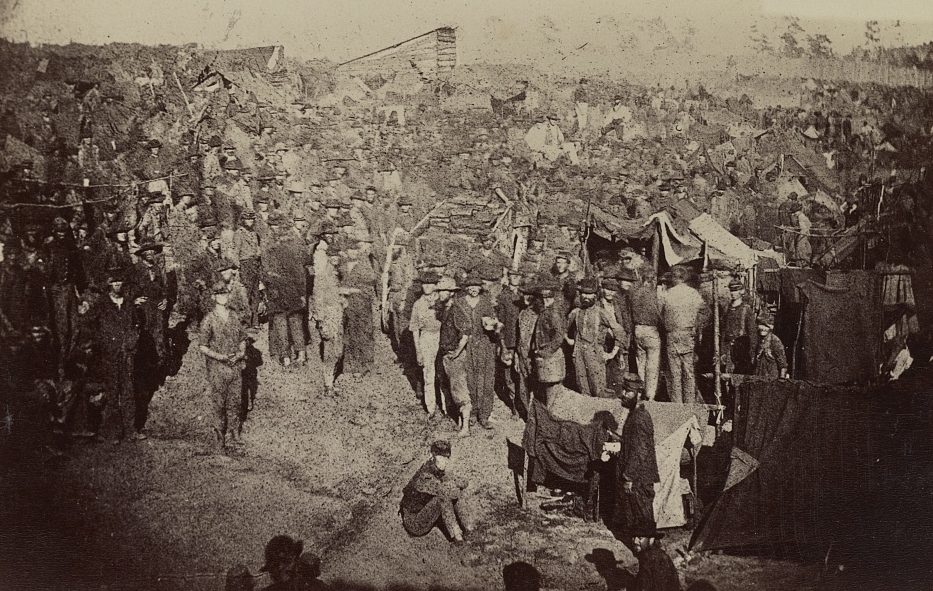
  8. Casualties and Costs of the Civil War.” New York, New York: The Gilder Lehrman Institute of American History.
  9. Civil War General Index Cards (Eisenbraun, Alfred and Eisenbrown, Allen), in Records of the U.S. Department of the Army. Washington, D.C.: U.S. National Archives and Records Administration and Fold3: 1861.
  10. Civil War Veterans’ Card File, 1861-1865 (Eisenbraun, Alfred; Holt, Franklin M.; Young, J. Bolton). Harrisburg, Pennsylvania: Pennsylvania State Archives.
  11. “Death of a Young Soldier” (obituary of John Boulton Young). Bloomsburg, Pennsylvania: Star of the North, Wednesday, 30 October 1861 (reprinted from the Sunbury Gazette).
  12. “Deaths of Soldiers” (death notice for John Boulton Young). Washington, D.C.: The National Republican, 18 October 1861.
  13. de Graffenried, Clare. “Child Labor,” in Publications of the American Economic Association, Vol. 5, No. 2. New York, New York: March 1890 (accessed 22 March 2016).
  14. DiBacco, Thomas V. When Typhoid Was Dreaded.” Washington, D.C.: The Washington Post, 25 January 1994.
  15. “The Drummer Boy’s Monument” (monument erected to John Boulton Young). Sunbury, Pennsylvania: Sunbury American, 6 February 1864.
  16. Fabian, Monroe H. John Daniel Eisenbrown, in “Pennsylvania Folklife Book 62,” in Pennsylvania Folklife Magazine, Vol. 24, No. 2. Lancaster, Pennsylvania: 1975.
  17. Faust, Drew G. The Civil War soldier and the art of dying,” in The Journal of Southern History, Vol. 67, No. 1, pp. 3-38. Houston, Texas: Southern Historical Association (Rice University), 2001.
  18. Holt Eulogy. New Bloomfield, Pennsylvania: New Bloomfield Democrat, 1861. Inkrote, Cindy. “Civil War drummer boy was different kind of hero.” Sunbury, Pennsylvania: The Daily Item, 4 October 2009.
  19. Letters of John Peter Shindel Gobin, 1861-1900. Various Collections (descendants of the 47th Pennsylvania Volunteers, et. al.).
  20. “Registers of Pennsylvania Volunteers, 1861-1865: 47th Regiment” (Companies B, C, and D) in Records of the Department of Military and Veterans’ Affairs (Record Group 19, Series 19.11). Harrisburg, Pennsylvania: Pennsylvania State Archives.
  21. Sartin, M.D., Jeffrey S. Infectious diseases during the Civil War: The triumph of the ‘Third Army,’ in Clinical Infectious Diseases, Vol. 16, No. 4, pp. 580-584. Cary, North Carolina: Oxford University Press, April 1993.
  22. Schmidt, Lewis. A Civil War History of the 47th Regiment of Pennsylvania Veteran Volunteers. Allentown, Pennsylvania: Self-published, 1986.
  23. U.S. Census. Washington, D.C. and Pennsylvania (Allentown and Sunbury, Pennsylvania; Amherst, New Hampshire; Monmouth, New Jersey): 1840-1930.
  24. U.S. Registers of Deaths of Volunteers, 1861 (Eisenbraun/Eisenbraum, Alfred; Holt, Franklin/Frank M; Young, J. Bolton/Jno. B.). Washington, D.C.: United States Army and U.S. National Archives and Records Administration.
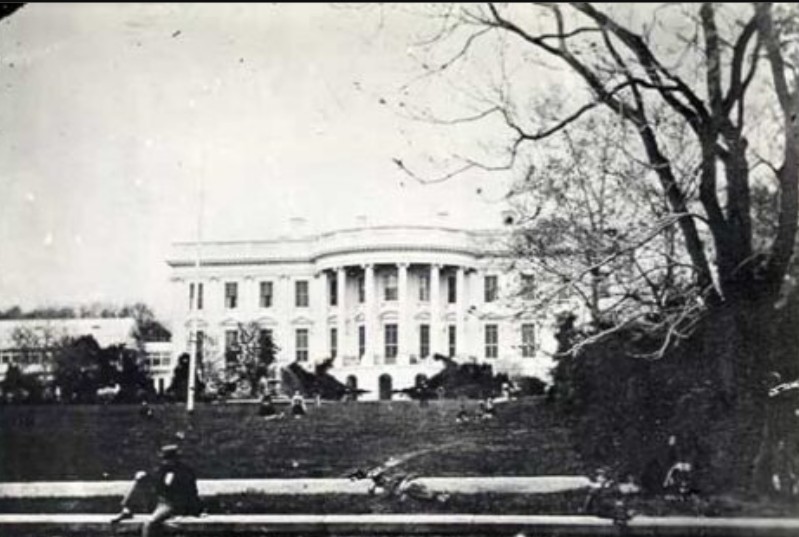
 

September 1861: A New Pennsylvania Regiment Heads for Washington, D.C. and War

First State Color, 47th Regiment, Pennsylvania Volunteer Infantry. Presented to the Regiment by Pennsylvania Governor Andrew Curtin on 20 September 1861. Retired 11 May 1865. Source: Pennsylvania Capitol Preservation Committee (1985.057, State Color, Evans and Hassall, v1p126).

As the days of September 1861 rolled away and summer turned to fall, the 47th Regiment, Pennsylvania Volunteer Infantry, which had been founded by Colonel Tilghman H. Good on 5 August 1861, and had been trained in Hardee’s Light Infantry Tactics as its men mustered in by company at Camp Curtin in Harrisburg from mid-August through mid-September, was finally given its first official assignment — to defend its nation’s capital, which had been threatened with invasion by troops of the Confederate States Army.

Roughly seventy percent of the 47th Pennsylvania Infantry hailed from the Keystone State’s Lehigh Valley, including the cities of Allentown, Bethlehem and Easton and surrounding communities in Lehigh and Northampton counties. Company C, which had been formed primarily from the men of Northumberland County and was led by Captain John Peter Shindel Gobin, was more commonly known as the “Sunbury Guards.” Companies D and H were staffed largely by men from Perry County. Company K was formed with the intent of creating an “all German” company comprised of German-Americans and German immigrants. In actuality, the majority of 47th Pennsylvania Volunteers were men of German descent — a noteworthy fact when considering the significant role played by German immigrants and German-Americans prior to, during, and after the American Civil War. Curriculum developers at Boston’s WGBH Educational Foundation, which produced the 1998 PBS television series, Africans in America, note that:

“As early as 1688, four German Quakers in Germantown near Philadelphia protested slavery in a resolution that condemned the “traffic of Men-body.” By the 1770s, abolitionism was a full-scale movement in Pennsylvania. Led by such Quaker activists as Anthony Benezet and John Woolman, many Philadelphia slaveholders of all denominations had begun bowing to pressure to emancipate their slaves on religious, moral, and economic grounds.

In April 1775, Benezet called the first meeting of the Society for the Relief of Free Negroes Unlawfully held in Bondage at the Rising Sun Tavern. Thomas Paine was among the ten white Philadelphians who attended; seven of the group were Quakers. Often referred to as the Abolition Society, the group focused on intervention in the cases of blacks and Indians who claimed to have been illegally enslaved. Of the twenty-four men who attended the four meetings held before the Society disbanded, seventeen were Quakers.

Six of these original members were among the largely Quaker group of eighteen Philadelphians that reorganized in February 1784 as the Pennsylvania Society for Promoting the Abolition of Slavery and for the Relief of Free Negroes Unlawfully Held in Bondage (commonly referred to as the Pennsylvania Abolition Society, or PAS). Although still occupied with litigation on behalf of blacks who were illegally enslaved under existing laws, the new name reflected the Society’s growing emphasis on abolition as a goal. Within two years, the group had grown to 82 members and inspired the establishment of anti-slavery organizations in other cities.

PAS reorganized once again in 1787. While previously, artisans and shopkeepers had been the core of the organization, PAS broadened its membership to include such prominent figures as Benjamin Franklin and Benjamin Rush, who helped write the Society’s new constitution. PAS became much more aggressive in its strategy of litigation on behalf of free blacks, and attempted to work more closely with the Free African Society in a wide range of social, political and educational activity.

In 1787, PAS organized local efforts to support the crusade to ban the international slave trade and petitioned the Constitutional Convention to institute a ban. The following year, in collaboration with the Society of Friends, PAS successfully petitioned the Pennsylvania legislature to amend the gradual abolition act of 1780. As a result of the 2000-signature petition and other lobbying efforts, the legislature prohibited the transportation of slave children or pregnant women out of Pennsylvania, as well as the building, outfitting or sending of slave ships from Philadelphia. The amended act imposed heavier fines for slave kidnapping, and made it illegal to separate slave families by more than ten miles.”

Although the Pennsylvania Abolition Society’s influence had begun to wane by the early 1800s, men and women of German descent helped to reinvigorate support for the abolition of slavery in the lead-up to and during the Civil War. According to Kenneth Barkin, professor emeritus of history at the University of California, Riverside, “it is increasingly evident that German immigrant opposition to slavery was so pervasive that it may have been a crucial, albeit, ignored factor in the victory of Union forces.”

“Of the 1.3 million German immigrants in the United States before 1860, approximately 200,000 either volunteered for or were drafted into the Union Army. They produced a considerably higher percentage of Union soldiers per hundred thousand immigrants in the U.S. population than either the British or the Irish. About 24 percent of Union troops were born outside of the United States, and 10 percent of all Union soldiers were of German origin. There were several battalions with German soldiers and officers in which the German language was used for communication.”

In the case of the 47th Pennsylvania Volunteer Infantry, many of the men who were of German heritage and their families still spoke German or “Pennsylvania Dutch” at their homes and churches more than a century after their ancestors emigrated from Germany in search of religious or political freedom.

The 47th Pennsylvania was also noteworthy because it attracted males of diverse ages. Its youngest member was John Boulton Young, a thirteen-year-old drummer boy from Sunbury, Pennsylvania; its oldest was Benjamin Walls, a sixty-five-year-old, financially successful farmer from Juniata County who would, at the age of sixty-eight, attempt to re-enlist after being seriously wounded while protecting the American flag in combat. They and their comrades were initially led by Colonel Tilghman Good, Lieutenant-Colonel George Warren Alexander, and Major William H. Gausler.

Thomas Coates, “Father of Band Music in America,” led the 47th Pennsylvania’s Regimental Band from August 1861 to September 1862 (public domain).

On Friday the 13th, there were frequent bouts of inspiration among Harrisburg residents, rather than of superstitious worry, as three thousand men from the 47th Pennsylvania and other volunteer regiments from the Keystone State marched in an impromptu parade from Camp Curtin through the city’s main streets.

The next day, members of the 47th Pennsylvania marched forth again — this time to welcome the arrival of their Regimental Band, which was led by the “Father of Band Music in America,” Professor Thomas Coates, and was comprised primarily of musicians from the Easton-based ensemble known as Pomp’s Cornet Band, as well as members of the Allentown Band. Later that evening, the band performed for Pennsylvania Governor Andrew Gregg Curtin.

With the majority of the regiment’s officers and enlisted men mustered in by 19 September 1861, the 47th Pennsylvania Volunteer Infantry was ordered to head south for Washington, D.C.

A Journey of Heroes Begins

President Abraham Lincoln’s funeral train passes through the train station in Harrisburg, Pennsylvania on 22 April 1865 (public domain).

Their epic journey began on 20 September 1861. Directed to begin packing at 5:00 a.m. so that they would be ready for a 7:00 a.m. departure by train, the men of the 47th Regiment, Pennsylvania Volunteer Infantry pulled their gear together and assembled in formation at Camp Curtin. They were then presented with the Pennsylvania State Battle Flag (shown at the top of this article). Also known as the First State Color, it had “a field of 34 white stars, one for each state both north and south, on a blue background in the upper left corner in the shape of a rectangle covering approximately 19% of the flag’s total area, with 17 stars above and below the state emblem, which consisted of two white horses, eagle, seal and inscription,” according to regimental historian Lewis Schmidt. “The remainder of the flag was composed of 7 red and 6 white alternating horizontal stripes, and the whole was fringed with gold braid. The unit designation was painted in gold on the center red stripe to the right of the bottom of the blue field. As battle citations were awarded each unit, they would be painted on the red stripes in gold lettering.”

This flag would ultimately be carried by regimental color-bearers between the fall of 1861 and 11 May 1865 into Confederate States of America-held territories of the United States, as well as throughout multiple U.S. territories that were recaptured by Union troops, and would also serve as a rallying point during the intense, smoke-filled battles fought by the 47th Pennsylvania Infantry in South Carolina, Louisiana, and Virginia in 1862 and 1864.

Marched to the train station in Harrisburg, they boarded cattle and hog cars on a Northern Central Railway train, and then did what military men have done throughout the ages. They waited — and waited. By the time of their 1:30 p.m. departure, a crowd “had gathered and lined both sides of the track, all the way from the depot to the other side of the bridge which crosses the Susquehanna River,” according to Schmidt. “Everyone was cheering, flags were flying, and the men were hanging from the cars, all in a great state of excitement. Many railroad friends of the Easton contingent that had been part of the 1st Regiment during earlier service, turned out to see them off with their new unit, having transported them to the seat of war on earlier occasions.”

Traveling by way of York, Pennsylvania, they finally reached the Bolton Depot in Baltimore, Maryland, where they disembarked, refilled their canteens with water, lined up behind their Regimental Band, and marched with their loaded rifles across the city to the Baltimore and Ohio Railroad Station. Once there, they clambered aboard “glorious to tell, real genuine passenger cars” and departed for Washington, D.C., according to Captain Gobin, who added that the “lateness of the hour did not prevent the appearance, at a great many windows, of white robed fair ones, who had evidently risen from their beds to greet and cheer us as we passed.”
Soldier’s Rest, Washington, D.C., circa 1860s (U.S. Library of Congress, public domain).

Just outside of Baltimore, according to Schmidt, “the troop train had to ‘switch off’ for a short time, as the regular passenger train passed.” Consequently, the 47th Pennsylvanians did not arrive in the nation’s capital until 9:00 a.m. on 21 September. Disembarking after the train came to a stop, they were granted a brief respite at the Soldier’s Rest there, according to C Company Musician Henry Wharton, who later penned a recap of their travels for his hometown newspaper, the Sunbury American:

“After a tedious ride we have, at last, safely arrived at the City of ‘magnificent distances.’ We left Harrisburg on Friday last at 1 o’clock A.M. and reached this camp yesterday (Saturday) at 4 P.M., as tired and worn out a sett [sic] of mortals as can possibly exist. On arriving at Washington we were marched to the ‘Soldiers Retreat,’ a building purposely erected for the benefit of the soldier, where every comfort is extended to him and the wants of the ‘inner man’ supplied.”

Gobin, who was Wharton’s direct superior, added that, when they arrived at the Soldier’s Rest, “we found the Union Relief Association had provided ice water in abundance for us, while hot coffee could be obtained for three cents a cup. I indulged in several of the latter.” Schmidt later uncovered these additional details about their brief period of respite:

“At 9 AM, the regiment arrived in Washington and Col. Good left to find a place for the men to camp and get some rest, while Lt. Col. Alexander busied himself seeing to the problem of procuring some cooked rations for the troops. The first building that they saw when they arrived was a very large structure near the railroad which displayed a sign with prominent letters that read ‘The Soldier’s Rest’, a place they intended to head for at the first opportunity. Lt. Col. Alexander returned shortly thereafter and instructed the Captains to take their companies, two at a time, to another building conveniently in view in the distance, and identified by its large sign with letters in bold relief advertising ‘Soldier’s Retreat’, where the men were served cooked beef, bread and coffee. The soldiers satisfied their hunger with this excellent meal, and ‘partook that which sticks to your ribs’, before settling down and enjoying a few hours rest and free [time], after which they washed up and had their pictures taken.”

Afterward, according to Wharton, they “were ordered into line and marched, about three miles” to “Camp Kalorama” on the Kalorama Heights near Georgetown — just two miles from the White House.

“So tired were the men, that on marching out, some gave out, and had to leave the ranks, but J. Boulton Young, our ‘little Zouave,’ stood it bravely, and acted like a veteran. So small a drummer is scarcely seen in the army, and on the march through Washington he was twice the recipient of three cheers.”

Union General George B. McClellan on Horseback (Harper’s Weekly, January 1862, public domain).

The length of that march was, in fact, closer to four miles, and was “considerably more difficult,” according to Schmidt, “since the men had not had any sleep the night before and they were marching in the warmest part of the day with a strong, bright sun in their faces the whole way.” That march also turned out to be a noteworthy one for an entirely different reason, according to Wharton:

“We were reviewed by Gen. McClellan yesterday [21 September 1861] without our knowing it. All along the march we noticed a considerable number of officers, both mounted and on foot; the horse of one of the officers was so beautiful that he was noticed by the whole regiment, in fact, so wrapt [sic] up were they in the horse, the rider wasn’t noticed, and the boys were considerably mortified this morning on dis-covering [sic] they had missed the sight of, and the neglect of not saluting the soldier next in command to Gen. Scott.”

The weary 47th Pennsylvanians finally arrived at Camp Kalorama around 5:00 p.m. on 21 September, and immediately began to erect their white soldiers’ tents — an activity they continued to engage in even as the region’s rainy weather began to increase in intensity.

The U.S. Capitol, under construction at the time of President Abraham Lincoln’s inauguration (shown here), was still not finished when the 47th Pennsylvania Volunteers arrived in Washington, D.C. in September 1861 (public domain).

The next day, as Wharton was penning his 22 September recap to the Sunbury American, he described Colonel Tilghman Good as “an excellent man and a splendid soldier” and “a man of very few words” who continually attend[ed] to his duties and the wants of the Regiment,” and added that C Company’s William Hendricks had been promoted to the rank of regimental sergeant-major. “He made his first appearance at guard mounting this morning; he looked well, done up his duties admirably, and, in time, will make an excellent officer.” Gobin observed that their new home was “a very fine location for a camp…. Good water is handy, while Rock Creek, which skirts one side of us, affords an excellent place for washing and bathing.”

Within short order, several 47th Pennsylvanians were given passes to the city, including members of Company D who “climbed to the top of the unfinished Capitol,” and B Company’s Corporal Henry Storch and Private Luther Mennig, who were sent to the Washington Arsenal on regimental business. On 24 September 1861, the 47th Regiment, Pennsylvania Volunteer Infantry finally became part of the Union Army when its men were officially mustered into federal service. Members of the regiment dressed in the standard dark blue wool uniforms worn by the regular troops of the U.S. Army.

Three days later, the regiment was attached to the Army of the Potomac, and assigned to Brigadier-General Isaac Stevens’ 3rd Brigade, which also included the 33rd, 49th and 79th New York regiments. By that afternoon, the 47th Pennsylvania was on the move again, ordered onward by Brigadier-General Silas Casey.

Chain Bridge across the Potomac above Georgetown looking toward Virginia, 1861 (The Illustrated London News, public domain).

Marching behind their Regimental Band, the Mississippi rifle-armed 47th Pennsylvania infantrymen reached Camp Lyon, Maryland on the Potomac River’s eastern shore. At 5:00 p.m., they joined the 46th Pennsylvania in moving double-quick (onehundred and sixty-five steps per minute using thirty-three-inch steps) across the “Chain Bridge” marked on federal maps, and continued on for roughly another mile before being ordered to make camp.

The next morning, they broke camp and moved again. Marching toward Falls Church, Virginia, they trudged into Camp Advance around dusk. There, about two miles from the bridge they had crossed a day earlier, they re-pitched their tents in a deep ravine near a new federal fort under construction (Fort Ethan Allen). They had completed a roughly eight-mile trek, and were situated fairly close to Brigadier-General William Farrar Smith’s headquarters. Under Smith’s leadership, their regiment and brigade would help to defend the nation’s capital from the time of their September arrival through late January of 1862 when the men of the 47th Pennsylvania would be shipped south.

Once again, 47th Pennsylvanians took pen to paper to recap their regiment’s activities, including Privates George Washington Hahn, David Huber and Frederick Scott of E Company who sent this letter to the editor of the Easton Express:

“Most likely you have already published the letter from the headquarters of the company, but it may also be interesting to some of your readers to hear from the boys.

We left Harrisburg at 1-1/2 p.m. on Friday last, and after a ride of about twenty-four hours in those delightful cattle cars, we came in sight of the Capitol of the U.S. with colors flying and the band playing and everyone in the best of spirits. After waiting a few minutes, we were provided with an excellent dinner of bread, beef and coffee, and then proceeded to Camp Kalorama, near Georgetown Heights and about three miles from Washington. We have one of the best camps in the Union; plenty of shade trees, water and food at present; we have had no ‘Hardees’ [hardtack] yet in this camp, but no doubt we will have them in abundance by and by. But we can cook them in so many different ways, they are better than beef. We soak them overnight, fry them for breakfast, stew them for dinner, and warm them over for supper. Who wouldn’t be a soldier and get such good living free gratis?

We are all happy boys. The way we pass our time in the evening is as follows: first, after supper, we have a good Union song, then we read, write, crack jokes and sing again. We are ‘gay and happy’ and always shall be while the stars and stripes float over us.

We have one of the best regiments we have yet seen, and no doubt in a few months, it will be the crack regiment of the army. We have a noble Colonel and an excellent Band, and the company officers throughout are well drilled for their positions. Our boys are well and contented; satisfied with their clothing, satisfied with their rations, and more than all satisfied with their officers, from Captain to the 8th Corporal. Our boys will stand by the Captain till the last man falls. We had the pleasure this morning of meeting an old Eastonian, Major Baldy. He looks well and hearty and says he is ready for action. His men are in the rifle pits every night and think nothing of facing the enemy.

This morning we took a French pass [leave without authorization] and visited Georgetown Heights; we stood on top of the reservoir and from there had a fine view of the Federal forts and forces on the other side of the Potomac. It looks impossible for an enemy to enter Washington, so strongly fortified is every hill and the camps connect for miles along the river. We saw General McClellan and Professor Lowe taking a view of the Confederate army from the balloon. The rebels are now only four miles from here. But we are afraid we have taken too much of your room. You may expect to hear from us again soon.”

Company C Musician Henry Wharton then noted via this 29 September letter to the Sunbury American that the 47th had changed camps three times in three days:

“On Friday last we left Camp Kalorama, and the same night encamped about one mile from the Chain Bridge on the opposite side of the Potomac from Washington. The next morning, Saturday, we were ordered to this Camp [Camp Advance near Fort Ethan Allen, Virginia], one and a half miles from the one we occupied the night previous. I should have mentioned that we halted on a high hill (on our march here) at the Chain Bridge, called Camp Lyon, but were immediately ordered on this side of the river. On the route from Kalorama we were for two hours exposed to the hardest rain I ever experienced. Whew, it was a whopper; but the fellows stood it well – not a murmur – and they waited in their wet clothes until nine o’clock at night for their supper. Our Camp adjoins that of the N.Y. 79th (Highlanders)….
We had not been in this Camp more than six hours before our boys were supplied with twenty rounds of ball and cartridge, and ordered to march and meet the enemy; they were out all night and got back to Camp at nine o’clock this morning, without having a fight. They are now in their tents taking a snooze preparatory to another march this morning…. I don’t know how long the boys will be gone, but the orders are to cook two days’ rations and take it with them in their haversacks….

There was a nice little affair came off at Lavensville [sic], a few miles from here on Wednesday last; our troops surprised a party of rebels (much larger than our own.) killing ten, took a Major prisoner, and captured a large number of horses, sheep and cattle, besides a large quantity of corn and potatoes, and about ninety six tons of hay. A very nice day’s work. The boys are well, in fact, there is no sickness of any consequence at all in our Regiment.”

According to G Company Private George Xander, after their initial arrival at Camp Advance/Fort Ethan Allen, the 47th Pennsylvanians immediately began building “defensive works” that “were thrown up with logs, in front of which a ditch eight feet wide and eight feet deep was dug. A powder magazine was also built.” On 28 September, the regiment was ordered to relocate yet again. After marching two more miles, they re-pitched their tents along a hill at the back of the fort, becoming part of the 4th Provisional Brigade, along with the men from Colonel Cosgrove’s 27th Indiana Volunteers, Colonel Leasure’s Roundheads, Colonel McKnight’s Wildcats, and Colonel Robinson’s 1st Michigan Volunteers.

The military action described by Wharton above in which “our boys were supplied with twenty rounds of ball and cartridge” actually began at 10:00 p.m. on Saturday, 28 September in response to intelligence received by senior Union Army officials that Fort Ethan Allen was likely to be attacked by Confederate forces that night. After making their way inside the fort at 10:30 p.m., the 47th Pennsylvanians formed battle lines “against the breastworks where they remained until 2 AM, when they were relieved by the 33rd New York Regiment and told to rest and sleep on their arms,” according to Schmidt. Around 4:00 a.m., they were then “ordered to march ‘double-quick for about three miles to Vandersburg Farm, where encountering no officers with instructions, Col. Good decided to advance another mile…. Here he found Gen. Smith who ordered the 47th into position in reserve. Many ambulances were coming up the road with the dead and wounded, and there were dead horses and broken gun carriages lying all about. It was reported that there were about 17 killed and 25 wounded.”

Although the 47th Pennsylvania was later reported to have been involved in the fighting, they were not. They had narrowly missed being ensnared in a “friendly fire” incident between the 69th and 71st Pennsylvania Volunteers, and instead had been ordered to return to their campsite on the hill after having completed their guard duties inside the fort. Finally able to enjoy a hearty breakfast that Sunday morning, the regiment then participated in the Sunday religious services which were being presented by Chaplain Rizer of the 79th New York Highlanders. The sermon was delivered by Rizer in German out of respect for the significant number of men in the 47th Pennsylvania who were German immigrants or were German-Americans who spoke “Pennsylvania Dutch.”

Simon Cameron, President Lincoln’s first Secretary of War, shown between 1860 and 1870 (public domain).

That evening of Sunday, 29 September, Simon Cameron, a native of Lancaster County, Pennsylvania who was serving as President Lincoln’s Secretary of War, officially welcomed the 47th Pennsylvania Infantry to Washington.

The month then closed with the men of 47th’s B and D Companies marching four miles away from the camp to perform a 48-hour stint of picket duty, beginning on 30 September 1861.

Exactly two months later, the sentiments of Civil War-era soldiers regarding their assignment to picket duty was eloquently evoked by a 30-something, female poet and short story writer in the “The Picket Guard.” Penned by Ethel Lynn Beers, the poem was initially published in the 30 November 1861 edition of Harper’s Weekly. It was then later set to music, and became more commonly known as “All Quiet Along the Potomac To-night”:

“ALL quiet along the Potomac to-night!”
Except here and there a stray picket
Is shot, as he walks on his beat, to and fro,
By a rifleman hid in the thicket.
‘Tis nothing! a private or two, now and then,
Will not count in the news of the battle;
Not an officer lost, only one of the men,
Moaning out, all alone, the death rattle.

All quiet along the Potomac to-night!
Where the soldiers lie peacefully dreaming;
And their tents in the rays of the clear autumn moon,
And the light of the camp-fires are gleaming.
A tremulous sigh, as the gentle night-wind
Through the forest leaves softly is creeping;
While stars up above, with their glittering eyes,
Keep guard o’er the army sleeping.
There’s only the sound of the lone sentry’s tread
As he tramps from the rock to the fountain,
And he thinks of the two in the low trundle-bed,
Far away in the cot on the mountain.

His musket falls slack; his face, dark and grim,
Grows gentle with memories tender,
As he mutters a prayer for the children asleep,
For their mother—”may Heaven defend her!”
The moon seems to shine just as brightly as then—
That night when the love, yet unspoken,
Leaped up to his lips, when low, murmured vows
Were pledged to be ever unbroken.

Then drawing his sleeve roughly over his eyes,
He dashes off tears that are welling,
And gathers his gun closer up to his breast
As if to keep down the heart’s swelling.
He passes the fountain, the blasted pine-tree,
And his footstep is lagging and weary;
Yet onward he goes, through the broad belt of light,
Toward the shades of the forest so dreary.

Hark! was it the night-wind that rustled the leaves?
Was it moonlight so wondrously flashing?
It looked like a rifle: “Ha! Mary, good-by!”
And the life-blood is ebbing and plashing.
“All quiet along the Potomac to-night!”
No sound save the rush of the river,
While soft falls the dew on the face of the dead,
The picket’s off duty forever!


Sources:

  1. Barkin, Kenneth. Ordinary Germans, Slavery, and the U.S. Civil War,” in “Essay Reviews,” in The Journal of African American History, Vol. 93, No. 1, Winter 2008, pp. 70-79. Chicago, Illinois: University of Chicago Press (published for the Association for the Study of African American and History), 2008.
  2. Bates, Samuel P. History of Pennsylvania Volunteers, 1861-5, Prepared in Compliance with Acts of the Legislature, vol. 1, 1150-1190. Harrisburg, Pennsylvania: B. Singerly, State Printer, 1869.
  3. Beers, Ethel Lynn. “The Picket Guard.” New York, New York: Harper’s Weekly, 30 November 1861.
  4. Egle, William H. Life and Times of Andrew Gregg Curtin, pp. 127, 250. Philadelphia, Pennsylvania: The Thompson Publishing Co., 1896.
  5. “47th Infantry, First State Color,” in “Pennsylvania Civil War Battle Flags.” Harrisburg, Pennsylvania: Pennsylvania Capitol Preservation Committee.
  6. “Founding of the Pennsylvania Abolition Society,” in Africans in America. Boston, Massachusetts: WGBH Educational Foundation, 1998.
  7. Hahn, George Washington, David Huber and Frederick Scott. Letter from the 47th Pennsylvania Volunteers. Easton, Pennsylvania: Easton Daily Evening Express, September 1861.
  8. Hardee, William Joseph. Hardee’s Rifle and Light Infantry Tactics. Memphis, Tennessee: E.C. Kirk & Co., 1861.
  9. Henry, Matthew Schropp. History of the Lehigh Valley, Containing a Copious Selection of the Most Interesting Facts, Traditions, Biographical Sketches, Anecdotes, etc., etc., Relating to Its History and Antiquities, pp. 141-143. Easton, Pennsylvania: Bixler & Corwin, 1860.
  10. “Letter from the Secretary of War, Transmitting the report of Major General George B. McClellan upon the organization of the Army of the Potomac, and its campaigns in Virginia and Maryland, from July 26, 1861, to November 7, 1862.” Washington, D.C.: Government Printing Office (Ex. Doc. No. 15 produced for the 38th Congress, 1st Session, U.S. House of Representatives), 1864.
  11. Mathews, Alfred and Austin N. Hungerford. History of the Counties of Lehigh and Carbon, in the Commonwealth of Pennsylvania. Philadelphia, Pennsylvania: Everts & Richards, 1884.
  12. Newman, Richard S. The PAS and American Abolitionism: A Century of Activism from the American Revolutionary Era to the Civil War,” in “Pennsylvania Abolition Society Papers,” in “History Online: Digital History Projects.” Philadelphia, Pennsylvania: Historical Society of Pennsylvania, retrieved online 28 August 2019.
  13. Schmidt, Lewis. A Civil War History of the 47th Regiment of Pennsylvania Veteran Volunteers. Allentown, Pennsylvania: Self-published, 1986.
  14. Wharton, Henry. Letters from the Sunbury Guards. Sunbury, Pennsylvania: Sunbury American, 1861-1862.


Faces of the 47th Project Honors History-Making Civil War Soldiers from Pennsylvania

First Lieutenant William Wallace Geety, Co. H, 47th Pennsylvania Volunteers, c. 1864-1865.

A tantalizing new video released by 47th Pennsylvania Volunteers: One Civil War Regiment’s Story just opened an important new portal to the 19th century for Civil War enthusiasts, teachers, students, and genealogists.

Faces of the 47th is part of a larger, ongoing initiative to document and raise public awareness about the 47th Regiment, Pennsylvania Volunteer Infantry – the only regiment from the Keystone State to fight in the Union’s 1864 Red River Campaign  across Louisiana. The video presents the photographic and illustrated images of more than two dozen men who fought with the all-volunteer unit between 1861 and 1865.

“Each one of these images holds the potential to help family history researchers feel closer to their Civil War-era ancestors while also enabling teachers, students and Civil War enthusiasts to deepen their connections to one of the most painful chapters in the American narrative,” explains Laurie Snyder, managing editor for the project. “By ‘putting faces to the names’ on military muster rolls, we’re bringing history to life while also paying tribute to those who fought to eradicate slavery and preserve our nation’s union.”

The photo digitization project received early support from Thomas MacEntee, founder of High-Definition Genealogy, via The Genealogy Fairy™ program, which enabled Snyder to locate and digitize photographs of key members of the regiment. Among the images preserved in this initial collection are the faces of a regimental chaplain, musicians, prisoners of war (POWs), military surgeons, and officers and enlisted men who were grievously wounded or killed in combat, as well as several men who became inventors, leading business executives and elected officials in and beyond Pennsylvania after the war.

George Dillwyn John (third from left; formerly, 47th Pennsylvania Volunteers), Grand Army of the Republic gathering, Will Robinson Post, Illinois, c. 1926.

“At the time I applied for the grant, there were hundreds of photographs tucked away in public libraries, historical societies, universities, and private family history collections from Maine to California and Michigan to Louisiana. Most had not yet been digitized and might have been lost for all time had Thomas MacEntee not provided the support he did when he did,” said Snyder. “More work still needs to be done, of course, because there are photos still not yet scanned, but the project took more than two dozen giant steps forward with just that one grant from Thomas. He’s a hero in my book.”

Other significant support for the project has been provided by the Burrowes and Wasserman families.

About the 47th Pennsylvania Volunteers

Joseph Eugene Walter, Regimental Band, 47th Pennsylvania Volunteers, c. 1861.

Recruited primarily at community gathering places in their respective home towns, the soldiers who served with the 47th Pennsylvania Volunteer Infantry were primarily men of German heritage whose families still spoke German or “Pennsylvania Dutch” more than a century after their ancestors emigrated from Germany in search of religious and political freedom. Still others were recent immigrants from Germany, Ireland and Cuba. Formerly enslaved black men who had been freed by the regiment from plantations in South Carolina and Louisiana were added to regimental rosters in 1862 and 1864.

In addition to fighting in the battles of Sabine Cross Roads/Mansfield, Pleasant Hill and Monett’s Ferry/Cane River during the Red River Campaign, the 47th Pennsylvania Volunteers also engaged in the defense of Washington, D.C. in 1861 and again in 1865, following the assassination of President Abraham Lincoln; the capture of Saint John’s Bluff, Florida and Battle of Pocotaligo, South Carolina (1862); the garrisoning of Forts Taylor and Jefferson in Key West and the Dry Tortugas, Florida (1863); Union Major-General Philip Sheridan’s tide-turning Shenandoah Valley Campaign (1864), including the battles of Berryville, Opequon, Fisher’s Hill, and Cedar Creek; and provost (military police) and Reconstruction duties in Savannah, Georgia and Charleston, South Carolina (1865). Most were finally released from duty when the regiment formally mustered out on Christmas Day in 1865.

Learn More and Support

To learn more about the 47th Pennsylvania Volunteers and lend your support to this historic initiative, visit the website of 47th Pennsylvania Volunteers: One Civil War Regiment’s Story, and follow the project on Facebook, Twitter, Tumblr, and YouTube.