Sheridan’s 1864 Shenandoah Valley Campaign: Camp Russell, Stephens City, Virginia (November 1864 – December 20, 1864)

General J. D. Fessenden’s headquarters, U.S. Army of the Shenandoah at Camp Russell near Stephens City (now Newtown) in Virginia (Lieutenant S. S. Davis, Frank Leslie’s Illustrated Newspaper, December 31, 1864, public domain; click to enlarge).

Erected in November 1864 on grounds that were adjacent to the Opequon Creek, just west of Stephens City (now Newtown) and south of Winchester, Virginia, by Union Army troops operating under the command of Major-General Philip H. Sheridan, Camp Russell was the site where the 47th Pennsylvania Volunteer Infantry was housed from November 1864 until December 20, 1864, while it was still attached to the United States Army of the Shenandoah.

Named after Brigadier-General David A. Russell, who had been killed in action on September 19, 1864 during the Battle of Opequan (also known as “Third Winchester”), which had unfolded just over two miles away during the earlier part of Sheridan’s 1864 Shenandoah Valley Campaign, Camp Russell was built using the lumber and bricks from a neighboring African American Methodist chapel that had been dismantled by Sheridan’s troops, according to historians at the Newtown History Center.

It quickly became a two-mile-long complex that consisted of separate encampments for each of the Army of the Shenandoah’s individual regiments, as well as a hospital system, and was protected by a roughly four-mile-long system of earthworks and trenches that had been installed on both sides of the Valley Pike (south of what, today, is the intersection of Interstate 81 and Virginia Route 37).

These earthworks and trenches were subsequently connected to the Carysbrooke Redoubt on the pike’s eastern side, which ensured that the southern end of Camp Russell was also well fortified (a critical planning component since the Confederate States Army troops of Lieutenant-General Jubal Early were positioned to the south during this point in time). In addition, Camp Russell was also heavily guarded around the clock by Union Army soldiers who were assigned to scouting duties and picket details.

During this same time, C Company soldier Henry Wharton penned a new letter to the Sunbury American, his hometown newspaper:

NEAR NEWTOWN, VA. 
November 14, 1864.

DEAR WILVERT:

The day after election the entire army of the Shenandoah left their old camps at Cedar creek and fell back to this place. The reason of this was the scouts reported a force coming down the Luray Valley and the removal enabled General Sheridan to get a better position and establish lines unknown to the enemy. Intrenchments [sic] have been, and are now being constructed that will baffle the ingeniousness of the best rebel Generals, and such, that behind them our forces can repel double their numbers, and if they have the temerity to make an attack, with the number not slain or crippled by our arms, few could escape being capture. – Such is the position we now occupy.

For the last three days a considerable number of the enemy’s cavalry have been bothering our pickets, with the purpose, no doubt, of finding out our position. Our Brigade, (the 2d) was sent out to give the Johnnies a chance for a fight, but on their arrival, the cavalry of Jefferson D. fell back out of range of our rifles. Since then our cavalry went out in several directions for the purpose of giving them fight or gobble them up, the latter if possible. Brigadier General Powell took the road to Front Royal, met the graybacks, whipped them, captured one hundred and sixty prisoners, two pieces of artillery, (all they had) their caissons, ammunition, ambulances, wagon train, and drove the balance ten miles from where they first met. Of the other cavalry we have had no report as yet, but from the fact that they are led by a man who knows not defeat, the daring General Custer, we can expect news that will cheer the hearts of all who are in favor of putting down the rebellion by force of arms.

The election passed off quietly and without any military interference, not the influence of officers used in controlling any man’s vote. In the regiments from the old Keystone, the companies were formed by the first Sergeant, when he stated to the men the object for which they were called to ‘fail to,’ and then they proceeded to the election of officers to hold the election – the boys having the whole control, none of the officers interfering in the least.

Wharton went on to report the numbers of the election results by company as follows:

  • Company A (ten votes for Abraham Lincoln, one vote for George McClellan);
  • Company B (twenty-six votes for Abraham Lincoln, two votes for George McClellan);
  • Company C (twenty-nine votes for Abraham Lincoln, fifteen votes for George McClellan);
  • Company D (thirty-one votes for Abraham Lincoln, eleven votes for George McClellan);
  • Company E (twenty-four votes for Abraham Lincoln, three votes for George McClellan);
  • Company F (eighteen votes for Abraham Lincoln, sixteen votes for George McClellan);
  • Company G (nine votes for Abraham Lincoln, thirteen votes for George McClellan);
  • Company H (ten votes for Abraham Lincoln, twenty-four votes for George McClellan);
  • Company I (nineteen votes for Abraham Lincoln, sixteen votes for George McClellan); and
  • Company K (eighteen votes for Abraham Lincoln, twenty votes for George McClellan).
  • Lincoln’s Majority: 73 votes.

According to Wharton, “The battle at Cedar Creek thinned our ranks by which we lost many votes—this number and those away in hospitals would have increased the Union majority to three hundred.”

* Note: To read more of Henry Wharton’s letters from 1864, click here.

A Time of Celebration and Sadness

As evidenced by several of the letters that were written by 47th Pennsylvanians during this phase of duty, life at Camp Russell was a time of both celebration and profound heartache. According to Professor Jonathan A. Noyalas, director of Shenandoah University’s McCormick Civil War Institute:

In celebrating Maj. Gen. Philip H. Sheridan’s triumph at the Battle of Cedar Creek on October 19, 1864, newspapers across the North enthusiastically conjectured that this latest in a series of spectacular Union successes would finally end military operations in the Shenandoah Valley…. On October 23, a correspondent for Iowa’s Muscatine Evening Journal concluded the same, proclaiming, ‘Sheridan’s victory at Cedar Creek makes the third he has gained during the present campaign in the Shenandoah Valley. This last defeat will, it is more than probable, end the campaign on the part of the enemy in that region.’

…. Yet in Sheridan’s army itself, the soldiers’ mood generally remained much more restrained, reflective, and somber. Veterans especially found it difficult to reconcile the joy of victory with the grief they felt….

Beyond such melancholy reflections, the army’s veterans also confronted the stark reality that Confederate Lt. Gen. Jubal Early likely wasn’t done yet….

In Cedar Creek’s immediate wake, continued harassment from Confederate partisans, irregulars, and bushwhackers only added to the uncertainty. Sheridan had been particularly annoyed by ‘guerrilla bands’ throughout the campaign [but] was confident these guerrillas could be curtailed by depriving them of potential manpower. On October 22, Sheridan ordered the arrest of every Confederate male civilian capable of bearing arms….

Significant Recognition for the 47th Pennsylvania’s Distinguished Service

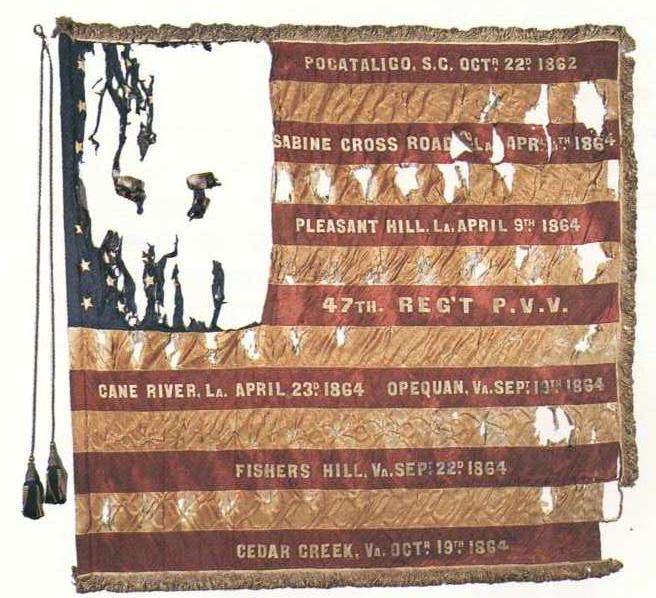
Second State Colors, 47th Pennsylvania Veteran Volunteers, showing the battles for which the 47th Pennsylvania Volunteer Infantry was honored for its distinguished service to the United States during the American Civil War (presented to the regiment 7 March 1865).

One of the more uplifting moments in the history of the 47th Pennsylvania Volunteer Infantry occurred in late November 1864 when this regiment’s members were honored by a senior Union Army officer, Brevet Major-General William H. Emory, for their valiant service during the Union’s spring 1864 Red River Campaign across Louisiana.

GENERAL ORDERS, HDQRS. NINETEENTH ARMY CORPS, No. 12.
Camp Russell, November 22, 1864.

The following-named regiments are hereby authorized to inscribe upon their colors the names of the engagements set opposite their respective names in which they bore a distinguished part:

Thirteenth, Fifteenth, Twenty-ninth, and Thirtieth Maine Volunteers-Sabine Cross-Roads, Pleasant Hill, Cane River Crossing, La.; One hundred and fourteenth, One hundred and sixteenth, One hundred and fifty-third, One hundred and sixteenth, One hundred and sixty-second, One hundred and sixty-fifth, and One hundred and seventy-third New York Volunteers-Sabine Cross-Roads, Pleasant Hill, Cane River Crossing, La; Forty-seventh Pennsylvania Volunteers-Sabine Cross-Roads, Pleasant Hill, Cane River Crossing, La.; Thirty-eight Massachusetts, Thirteenth Connecticut, and One hundred and twenty-eight New York Volunteers-Cane River Crossing, La.

By command of Brevet Major-General Emory:
PETER FRENCH, Acting Assistant Adjutant-General.”

A War That Still Needed to Be Won

Charlestown West Virginia, circa 1863 (public domain).

Rested and somewhat healed, thanks to their stay at Camp Russell, the 47th Pennsylvania Volunteers were informed less than a month after being honored by Brigadier-General Emory that their stay at their new winter quarters was destined to be shorter than they had hoped. They were being reassigned yet again—this time to help fulfill Major-General Sheridan’s directive that the Army of the Shenandoah eliminate the continuing threat posed by Confederate guerrillas and their sympathizers.

And so, after packing up and saying goodbye to the new friends they’d made at Camp Russell, they began a new, thirty-mile march, five days before Christmas. Trudging north during a driving snowstorm, they finally reached Charlestown, West Virginia, where they quickly established their latest “new home” at Camp Fairview, and continued to soldier on.


Sources:

  1. Camp Russell.” The Historical Marker Database, retrieved online December 27, 2023.
  2. Civil War, 1861-1865.” Stephens City, Virginia: Newtown History Center, retrieved online December 27, 2023.
  3. General Orders, No. 12 (Issued by Brigadier-General William H. Emory, Camp Russell, Virginia, November 22, 1864), in The War of the Rebellion: Official Records of the Civil War: Chapter LV: “Operations in Northern Virginia, West Virginia, Maryland, and Pennsylvania: Correspondence.” Washington, D.C.: Government Printing Office, 1894.
  4. Noyalas, Jonathan . The Fight at Cedar Creek Was Over. So Why Couldn’t Union Troops Let Their Guard Down? Arlington, Virginia: HistoryNet, 27 February 2023.


Camp Griffin (also known as “Camp Big Chestnut”), Langley, Virginia

The Big Chestnut Tree, Camp Griffin, Langley, Virginia, 1861 (U.S. Library of Congress, public domain).

Located near Langley, Virginia, Camp Griffin was a key muster-in point for multiple Union Army units during the early years of the American Civil War. Originally named “Camp Big Chestnut” in recognition of the large chestnut tree that was one of the earliest defining features of the campground, it quickly became a major training base and staging area for multiple state volunteer infantry and artillery units that fought under the banner of the United States government.

During the fall of 1861, it was renamed as “Camp Griffin” to honor Captain Charles Griffin, who had distinguished himself in combat as the commanding officer of the United States Artillery’s 5th Regiment, Battery D (the “West Point Battery”) during the First Battle of Bull Run in July 1861. Griffin was then also later promoted to Brigadier-General of Volunteers on June 12, 1862.

The 47th Pennsylvania Volunteers at Camp Griffin

The Sibley tents of an unidentified Union Army regiment, Camp Griffin, Virginia, fall 1861 (U.S. Library of Congress, public domain; click to enlarge).

“Camp Big Chestnut” (later known as Camp Griffin) was the first “real home” of the 47th Pennsylvania Volunteer Infantry after its extended muster-in and basic training period at Camp Curtin in Harrisburg, Pennsylvania from August through mid-September 1861. Initially transported by rail to the Washington, D.C. area and stationed on the Kalorama Heights in the District of Columbia, the 47th Pennsylvania Volunteers were ordered to set up and tear down their camps multiple times during their earliest weeks on the job, moving from Camp Kalorama to Camp Lyon, Maryland on the Potomac River’s eastern shore during an intense, two-hour rainstorm, and then across the “Chain Bridge” into Virginia, where they briefly encamped before marching for Camp Advance near Falls Church the next day. During their brief stay there, they were situated close to Fort Ethan Allen and the headquarters of Brigadier-General William Farrar Smith (also known as “Baldy”).

Shortly after that, they were ordered to move yet again—this time, to “Camp Big Chestnut” near Langley, Virginia. They couldn’t have known it at the time, but it was here where they would spend the bulk of their assigned duties from the fall of 1861 through early January 1862.

It was from this point that they were sent out to perform picket duties and skirmish with Confederate troops that were stationed nearby, and it was here and near this camp that they continued to drill daily and participate in Grand Reviews with multiple other Union Army units to demonstrate their readiness for battle to the most senior of Union Army leaders like General George B. McClellan, commanding officer of the U.S. Army of the Potomac—and even to their commander-in-chief, President Abraham Lincoln.

It was also here that they also served as part of that Army of the Potomac (“Mr. Lincoln’s Army”), ensuring that no troops from the Confederate States Army were ever able to breach the Union’s defensive lines and enter Washington, D.C. Quite simply put, the 47th Pennsylvania Volunteer Infantry’s job was to defend the nation’s capital—a task which its members performed well and faithfully. No Rebel ever carried a Confederate flag into the U.S. Capitol Building or White House during its time on the job.

On October 11, the 47th Pennsylvania marched in a review of massed troops that was held near the camp. In his letter of  October 13 to the Sunbury American newspaper, Henry Wharton described their duties, as well as their new home:

The location of our camp is fine and the scenery would be splendid if the view was not obstructed by heavy thickets of pine and innumerable chesnut [sic] trees. The country around us is excellent for the Rebel scouts to display their bravery; that is, to lurk in the dense woods and pick off one of our unsuspecting pickets. Last night, however, they (the Rebels) calculated wide of their mark; some of the New York 33d boys were out on picket; some fourteen or fifteen shots were exchanged, when our side succeeded in bringing to the dust, (or rather mud,) an officer and two privates of the enemy’s mounted pickets. The officer was shot by a Lieutenant in Company H [?], of the 33d.

Our own boys have seen hard service since we have been on the ‘sacred soil.’ One day and night on picket, next day working on entrenchments at the Fort, (Ethan Allen.) another on guard, next on march and so on continually, but the hardest was on picket from last Thursday morning ‘till Saturday morning – all the time four miles from camp, and both of the nights the rain poured in torrents, so much so that their clothes were completely saturated with the rain. They stood it nobly – not one complaining; but from the size of their haversacks on their return, it is no wonder that they were satisfied and are so eager to go again tomorrow. I heard one of them say ‘there was such nice cabbage, sweet and Irish potatoes, turnips, &c., out where their duty called them, and then there was a likelihood of a Rebel sheep or young porker advancing over our lines and then he could take them as ‘contraband’ and have them for his own use.’ When they were out they saw about a dozen of the Rebel cavalry and would have had a bout with them, had it not been for…unlucky circumstance – one of the men caught the hammer of his rifle in the strap of his knapsack and caused his gun to fire; the Rebels heard the report and scampered in quick time….

In his own mid-October letter home, Captain John Peter Shindel Gobin, the commanding officer of C Company, reported that the right wing of the 47th Pennsylvania (companies A, C, D, F and I) was ordered to picket duty after the left-wing’s companies (B, G, K, E, and H) were forced to return to camp by Confederate troops:

I was ordered to take my company to Stewart’s house, drive the Rebels from it, and hold it at all hazards. It was about 3 o’clock in the morning, so waiting until it was just getting day, I marched 80 men up; but the Rebels had left after driving Capt. Kacy’s company [H] into the woods. I took possession of it, and stationed my men, and there we were for 24 hours with our hands on our rifles, and without closing an eye. I took ten men, and went out scouting within half a mile of the Rebels, but could not get a prisoner, and we did not dare fire on them first. Do not think I was rash, I merely obeyed orders, and had ten men with me who could whip a hundred; Brosius [sic, Brosious], Piers [sic, Pyers], Harp and McEwen were among the number. Every man in the company wanted to go. The Rebels did not attack us, and if they had they would have met with a warm reception, as I had my men posted in such a manner that I could have whipped a regiment. My men were all ready and anxious for a “fight.”

On Friday, October 22, the 47th engaged in a Divisional Review, described by historian Lewis Schmidt as “about 10,000 infantry, 1000 cavalry, and twenty pieces of artillery all in one big open field.” Four days later, Company B’s drummer boy, Alfred Eisenbraun, was dead—the second “man” from the regiment to die since the 47th Pennsylvania’s formation. (The first was another drummer boy, John Boulton Young of C Company, who was felled by smallpox at the Kalorama eruptive fever hospital in Georgetown on October 17.)

Of all of the dangerous foes the 47th Pennsylvania Volunteers would encounter during their stay at Camp Griffin, it seemed that disease would prove to be the most persistent—and deadliest. In subsequent letters home, Captain Gobin asked Sunbury residents to donate blankets for the Sunbury Guards (the men of Company C):

The government has supplied them with one blanket apiece, which, as the cold weather approaches, is not sufficient…. Some of my men have none, two of them, Theodore Kiehl and Robert McNeal, having given theirs to our lamented drummer boy when he was taken sick… Each can give at least one blanket, (no matter what color, although we would prefer dark,) and never miss it, while it would add to the comfort of the soldiers tenfold. Very frequently while on picket duty their overcoats and blankets are both saturated by the rain. They must then wait until they can dry them by the fire before they can take their rest.

In late October 1861, the men from Companies B, G and H woke at 3 a.m., according to Schmidt, assembled a day’s worth of rations, marched four miles from camp, and took over picket duties from the 49th New York:

Company B was stationed in the vicinity of a Mrs. Jackson’s house, with Capt. Kacy’s Company H on guard around the house. The men of Company B had erected a hut made of fence rails gathered around an oak tree, in front of which was the house and property, including a persimmon tree whose fruit supplied them with a snack. Behind the house was the woods were the Rebels had been fired on last Wednesday morning while they were chopping wood there.

Less than a month later, in his letter of 17 November, Henry Wharton revealed more details about life at Camp Griffin:

This morning our brigade was out for inspection; arms, accoutrements [sic], clothing, knapsacks, etc, all were out through a thorough examination, and if I must say it myself, our company stood best, A No. 1, for cleanliness. We have a new commander to our Brigade, Brigadier General Brannen [sic, Brannan], of the U.S. Army, and if looks are any criterion, I think he is a strict disciplinarian and one who will be as able to get his men out of danger as he is willing to lead them to battle….

The boys have plenty of work to do, such as piquet [sic] duty, standing guard, wood-chopping, police duty and day drill; but then they have the most substantial food; our rations consist of fresh beef (three times a week) pickled pork, pickled beef, smoked pork, fresh bread, daily, which is baked by our own bakers, the Quartermaster having procured portable ovens for that purpose, potatoes, split peas, beans, occasionally molasses and plenty of good coffee, so you see Uncle Sam supplies us plentifully….

A few nights ago our Company was out on piquet [sic, picket]; it was a terrible night, raining very hard the whole night, and what made it worse, the boys had to stand well to their work and dare not leave to look for shelter. Some of them consider they are well paid for their exposure, as they captured two ancient muskets belonging to Secessia. One of them is of English manufacture, and the other has the Virginia militia mark on it. They are both in a dilapidated condition, but the boys hold them in high estimation as they are trophies from the enemy, and besides they were taken from the house of Mrs. Stewart, sister to the rebel Jackson who assassinated the lamented Ellsworth at Alexandria. The honorable lady, Mrs. Stewart, is now a prisoner at Washington and her house is the headquarters of the command of the piquets [sic]….

Since the success of the secret expedition, we have all kinds of rumors in camp. One is that our Brigade will be sent to the relief of Gen. Sherman, in South Carolina. The boys all desire it and the news in the ‘Press’ is correct, that a large force is to be sent there, I think their wish will be gratified….

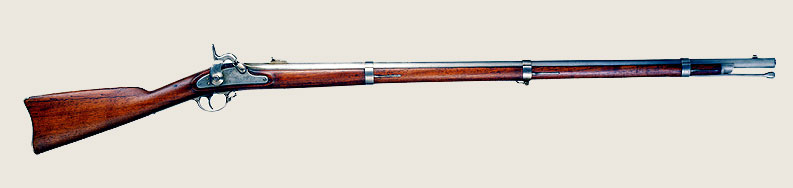
Springfield rifle, 1861 model (public domain).

On 20 November, the 47th Pennsylvania Volunteers marched in The Grand Review of the Army of the Potomac at Bailey’s Crossroads, Virginia. According to National Portrait Gallery historian James Barber:

For three hours some 70,000 polished troops marched passed the reviewing stand, where the president, members of his cabinet, and Washington dignitaries were in attendance. It was the largest military assemblage up to that time in North America. ‘The Grand Review went off splendidly,’ wrote McClellan that night in a letter to his wife, ‘not a mistake was made, not a hitch. I never saw so large a Review in Europe so well done—I was completely satisfied & delighted beyond expression.’

Among the 20,000 spectators to witness the Grand Review was the poet and social activist Julia Ward Howe of Boston, Massachusetts, who was visiting the Washington area with her husband, Dr. Samuel Gridley Howe.

After leaving the review, during the carriage ride back to Washington, she heard troops singing the song John Brown’s Body.’ A companion suggested that she should write new lyrics to the song, the melody of which lingered in her mind that night in her room at Willard’s Hotel in Washington. She awoke ‘in the gray of the morning twilight’ with the song still in her head and ‘the long lines of the desired poem began to twine themselves in my mind.’ She arose quickly and in the dimness of the early hour she began scribbling the verses on stationery ‘almost without looking at the paper.’

Her poem, The Battle Hymn of the Republic, was first published in The Atlantic Monthly in February 1862; the magazine paid her five dollars. Soon thereafter her verse was set to music and her inspirational song became a wartime favorite….

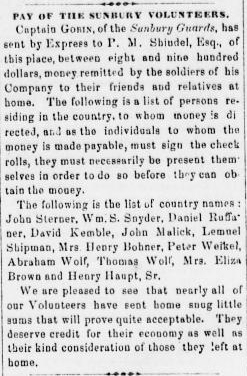
The November 30, 1861 edition of the Sunbury American carried the good news of pay sent home to loved ones by Sunbury’s boys in blue (public domain; click to enlarge).

The next day, according to Schmidt, the regiment participated in a morning divisional headquarters review overseen by the 47th Pennsylvania’s commanding officer, Colonel Tilghman H. Good, followed by brigade and division drills all afternoon. According to Schmidt, “each man was supplied with ten blank cartridges.” Afterward, “Gen. Smith requested Gen. Brannan to inform Col. Good that the 47th was the best regiment in the whole division.” As a reward—and in preparation for bigger things to come, Brannan obtained new Springfield rifles for every member of the 47th Pennsylvania.

As November came to a close, Captain Gobin helped a number of Sunbury Guardsmen to send a total of $900 from their collective pay back home to their families and friends in Pennsylvania. The editors of the Sunbury American subsequently announced the names of the family members and others who could expect to receive the sorely needed financial support from their boys in blue via a special notice in the newspaper’s November 30, 1861 edition.

Winter Quarters at Camp Griffin

Sketch of the 47th Pennsylvania Volunteers’ winter quarters at Camp Griffin, near Langley, Virginia, by Second Lieutenant William H. Wyker, Company E, December 1861 (public domain).

As fall deepened and progressed into winter, the 47th Pennsylvania Volunteer Infantry was ordered to batten down the hatches and establish its winter quarters—during a time when the guns on both sides of the war fell silent as snow blanketed Virginia, making it nearly impossible for Union and Confederate troops to march over the slippery, icy farm grounds around them—let alone drag their artillery into fighting positions in order to continue blasting away at one another.

It was simply too cold and too miserable to expend energy as combatants. But there were lighter moments as well.

Quartermaster James VanDyke procured a holiday surprise for the 47th Pennsylvania Volunteers (Sunbury American, December 21, 1861, public domain).

According to the December 21, 1861 edition of the Sunbury American, Regimental Quartermaster James Van Dyke, who was enjoying an approved furlough at home in Sunbury, Pennsylvania, was able to procure “various articles of comfort, for the inner as well as the outer man.” Upon his return to camp, many of the 47th Pennsylvanians of German heritage were pleasantly surprised to learn that the well-liked former sheriff of Sunbury had thoughtfully brought a sizable supply of sauerkraut with him. The German equivalent of “comfort food,” this favored treat warmed stomachs and lifted more than a few spirits that first cold winter away from loved ones.

Also, in a letter written sometime around Christmas 1861, Captain Gobin reported that Private John D. Colvin had been detailed to special duty with the signal corps in Washington, D.C. while Musician Henry D. Wharton, increasingly known to folks back home for his letters to the Sunbury American, had assumed additional responsibilities as a clerk who was assigned to the staff of Brigadier-General Brannan at Brigade Headquarters.

As fall fell away, the 47th Pennsylvania Volunteers continued to wait for better weather, hunkered down in their sturdier, winter quarters at Camp Griffin, remaining here until January 22, 1862, when the regiment was ordered to pack up and march for the railroad station at Falls Church. Transported from there by rail to Alexandria, they then sailed the Potomac via the steamship City of Richmond to the Washington Arsenal, where they were reequipped before being marched off for dinner and rest at the Soldiers’ Retreat in Washington, D.C. The next afternoon, they hopped cars on the Baltimore & Ohio Railroad, and headed for Annapolis, Maryland.

Arriving around 10 p.m., they were assigned quarters in barracks at the United States Naval Academy. They then spent that Friday through Monday (January 24-27, 1862) loading their equipment and other supplies onto the steamship Oriental, before sailing away at 4 p.m. that final afternoon. They were headed for America’s far warmer Deep South—and a very long time away from the arms of their loved ones and the comforts of home.

To learn more about the 47th Pennsylvania’s next phase of duty, read “Late Winter through Early Spring 1862 (Florida): Serving as Soldiers and Surrogates for Family.”


Sources:

  1. Bates, Samuel P. History of Pennsylvania Volunteers, 1861-5, vol 1. Harrisburg, Pennsylvania: B. Singerly, State Printer, 1869.
  2. Gobin, John Peter Shindel. Personal Letters, 1861-1865. Northumberland, Pennsylvania: Personal Collection of John Deppen.
  3. Lincoln and McClellan: An Army Ready for War.” Washington, D.C.: National Portrait Gallery, retrieved online December 1, 2023.
  4. Schmidt, Lewis G. A Civil War History of the 47th Regiment of Pennsylvania Veteran Volunteers. Allentown, Pennsylvania: Self-published, 1986.
  5. Wharton, Henry D. Letters from the Sunbury Guards. Sunbury, Pennsylvania: Sunbury American, 1861-1868.


The Battle of Pocotaligo, South Carolina: Unpredictable Outcomes

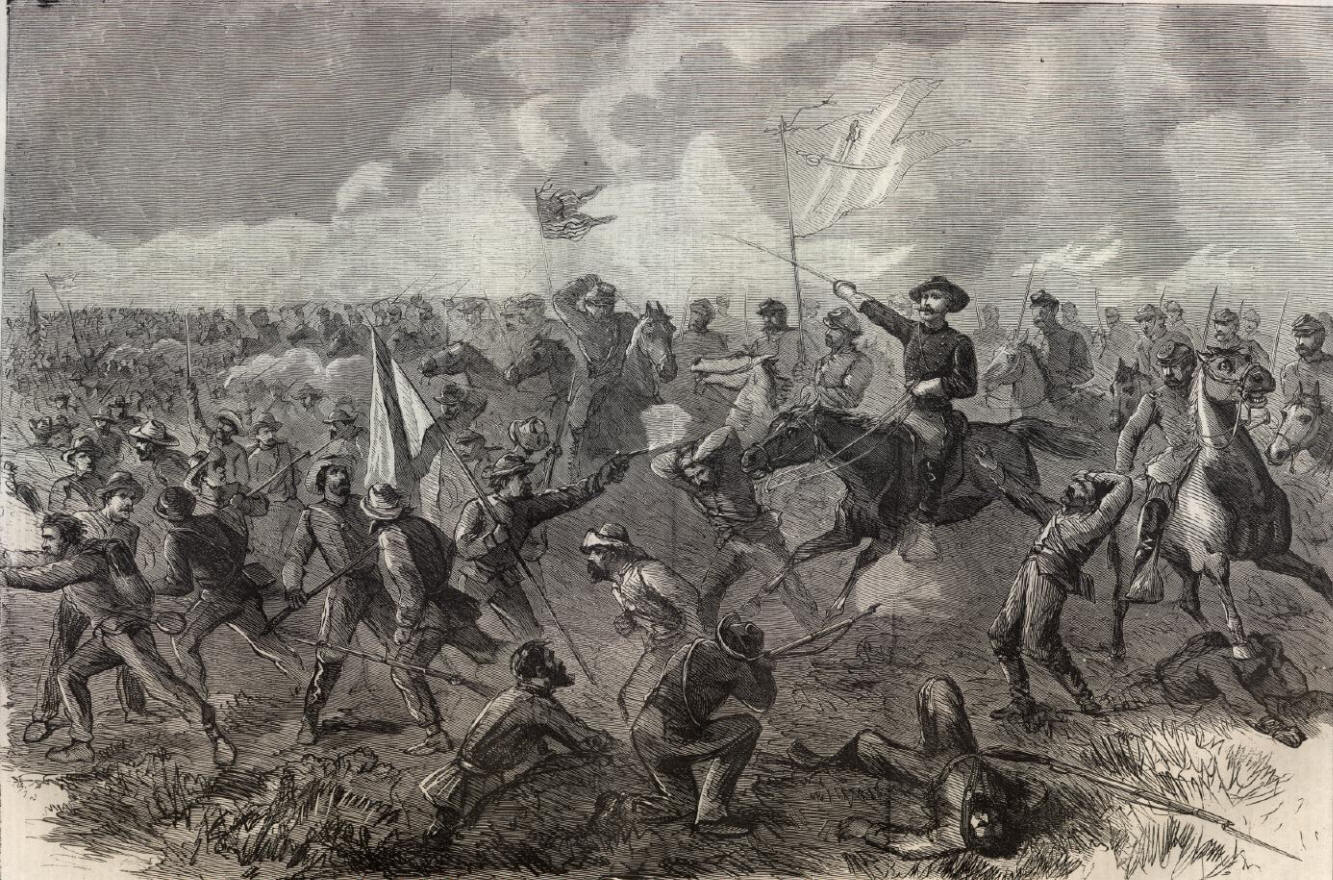
“The Commencement of the Battle near Pocotaligo River” (Frank Leslie’s Illustrated Newspaper, October 1862, public domain; click to enlarge).

And among them Strife and Tumult joined, and destructive Fate, grasping one man alive, fresh-wounded, another without a wound, and another she dragged dead through the melee by the feet; and the raiment she had about her shoulders was red with the blood of men. Just like living mortals joined they and fought; and they each were dragging away the bodies of the others’ slain.”

—Homer, The Iliad, Volume II, Book 18


October 22, 1862 was a deadly day for the 47th Pennsylvania Volunteer Infantry, and the succeeding days throughout that month and beyond proved to be deadlier still, as one member of the regiment after another succumbed to the wounds they had sustained in battle—or to complications that arose from the multiple surgeries that had been performed by Union Army surgeons in valiant, but vain attempts to save their lives.

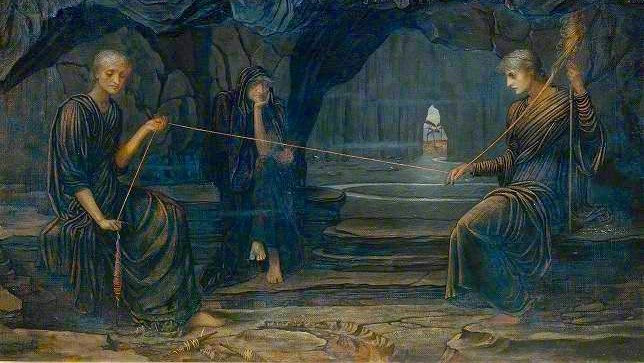
Excerpt from “A Golden Thread” (John Melhuish Strudwick, circa 1885, public domain).

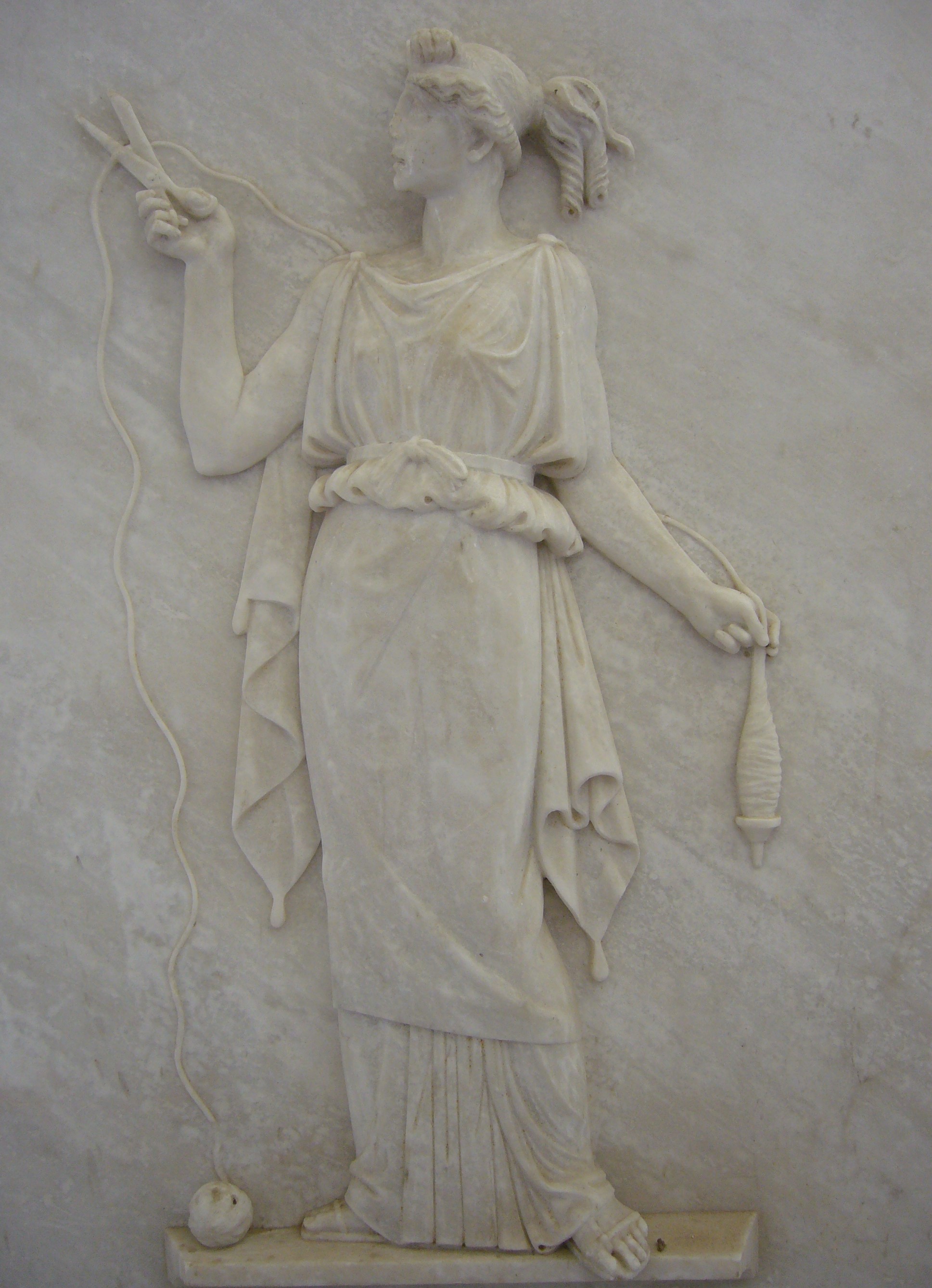
What will be striking to any student of history engaged in even just a cursory review of this regiment’s medical and death records during this period of American Civil War-era service, is the seeming fickleness of who lived or died—as if Lachesis and Atropos had debated and determined their fates while Clotho spun out the thread of each life, giving them no say in their individual destinies.

Or was it the decision-making mind and finger of God? “You, but not you.”

This randomness dawns with startling clarity when examining the vastly different outcomes of Sunbury, Pennsylvania brothers, Samuel and Peter Haupt, and of company commanding officers Charles Mickley, George Junker and William Wallace Geety.

Captain Charles Mickley of G Company was killed instantly, early on in the Battle of Pocotaligo on October 22, 1862—brought swiftly to the ground by a rifle shot to his head. He never knew what hit him—or what happened to the men of his company who were marching head on with him into an intense barrage of canister and grape shot, mingled with rifle fire and artillery shell shrapnel.

Captain George Junker of Company K was felled by a minié ball fired from a Confederate rifle during his company’s advance on the Frampton Plantation. Initially stabilized in the field before being transported back to Hilton Head, where he was hospitalized at the Union Army’s post hospital, he died there the next day. He, too, had been shot in the head.

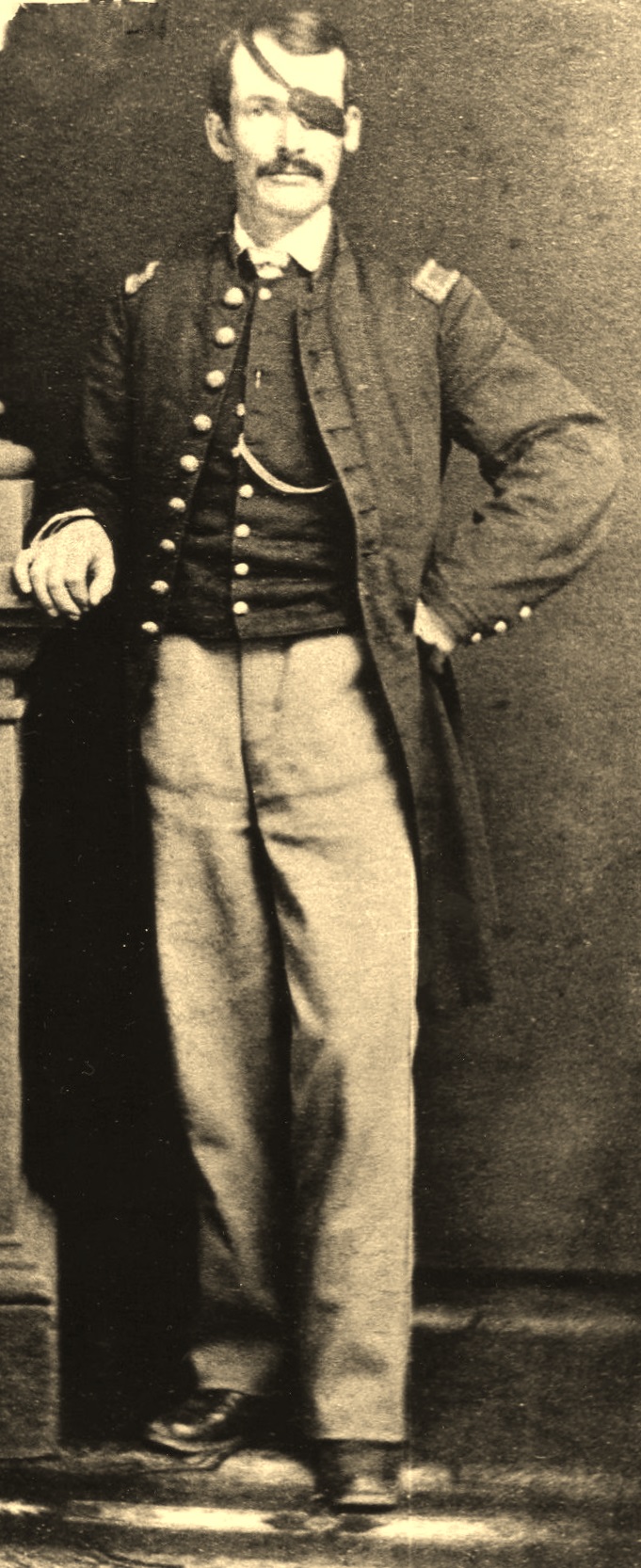
But First Lieutenant William Wallace Geety miraculously survived the gunshot that he sustained to his head—despite having been initially described by The New York Times in its list of Pocotaligo casualties as “mortally wounded.” His survival subsequently became the subject of multiple newspaper reports and medical journal articles. According to the Commemorative Biographical Encyclopedia of Dauphin County, he was wounded in action when “grape shot struck him between the eyes and passing to the left destroyed the eye, shattered the bones of the face, injuring the nerves and lodged near the carotid artery. While lying upon the field he was for a while given up for dead.”

The Union Army surgeons who treated him throughout his convalescence provided even more telling and precise accounts, documenting that William W. Geety had been struck between the eyes by a one-half-inch-diameter iron ball propelled by a cannon shrapnel shell which had exploded on impact in front of him while he was commanding his men on the field. As the shrapnel peppered the air around him, the ball traveled upward through his head before striking the back of his skull, where it then reversed course, traveled down toward his left jaw and neck, and lodged behind the carotid artery. In the process, his left eye was destroyed along with nerve sensation on his left neck and face, which was also disfigured. When battlefield surgeons realized that one of the major fragments was located perilously close to his carotid artery and could not be removed without killing their patient, they opted to leave that piece of shrapnel in place, stabilized Geety, and continued to care for him until he could safely be moved to one of the Union’s larger and better equipped hospitals for more advanced treatment.

Finally well enough to pen a letter home to his wife and children on November 19, 1864, Geety wrote:

I have lost my left eye, the base of the nose has been taken out. My jaw has been splintered besides some other bones about the brain being cracked. I am very thankful that I got through so safely, as my life was despared [sic] of at first.

In later accounts, he recalled that the grapeshot had struck him near the bottom of his nose, and “after knocking a piece out of my skull, turned and lodged in my throat against the carotid artery from whence I had it cut, at the same time part of the casing of the shell struck me in the face, making a longitudinal cut across my left eye, breaking the lower jaw, and staving in the upper jaw bone on the right side of the face. The socket for the lower jaw to work is broken off, so that every time I open my mouth the jaw flies out of joint.”

Astoundingly ambulatory just a month after the battle, he continued to receive medical care at the Union Officers’ Hospital in Beaufort, South Carolina, and was actually able to walk around the city under his own power.

* For more information about what happened to First Lieutenant William W. Geety after he was released from the Union Army’s hospital in South Carolina, read First Lieutenant William W. Geety — Battling Back from a Nearly Fatal Head Wound.”

But a Foot Wound Was Fatal?

Atropos, one of the Three Fates in Greek mythology, cuts the thread of life (bas relief image, public domain).

Also wounded that same day, but seemingly less seriously than their commanding officers had been, were the Haupt brothers of the 47th Pennsylvania’s C Company (the color-bearer unit). Private Samuel Haupt was struck in the chin—presumably by one of the countless artillery shell fragments flying through the air as the enemy unleashed a barrage of cannon fire on their company as it advanced toward its target—while his brother, Sergeant Peter Haupt, was struck in the foot that had been fired by a musket or rifle ball.

Sam survived, but Peter did not.

A seemingly minor wound, ballistic injuries to a foot are often extremely painful and traumatic—even today. According to the editors of Ballistic Trauma: A Practical Guide, “There are three mechanisms whereby a projectile can cause tissue injury:

  1. In a low-energy transfer wound, the projectile crushes and lacerates tissue along the track of the projectile, causing a permanent cavity. In addition, bullet and bone fragments can act as secondary missiles, increasing the volume of tissue crushed.
  2. In a high-energy transfer wound, the projectile may impel the walls of the wound track [and] radially outwards, causing a temporary cavity lasting 5 to 10 milliseconds before its collapse in addition to the permanent mechanical disruption produced….
  3. In wounds where the firearm’s muzzle is in contact with the skin at the time of firing, tissues are forced aside by the gases expelled from the barrel of the fire, causing a localized blast injury.”

In Peter Haupt’s case, the high degree of damage to his foot was compounded by the fact that his wound was caused by a musket or minié ball that was made of lead—a substance known to cause blood poisoning and damage to human tissue and organs—and likely also by surgical procedures that were less than sterile, which resulted in a subsequent infection. His cause of death at the Union Army’s post hospital at Hilton Head, South Carolina on November 14, 1862—just over three weeks after the battle—was “traumatic tetanus,” according to the Union Army’s Registers of Deaths of Volunteer soldiers.

The Consequences of Human Conflict

Random, divergent and seemingly senseless fates.

Whether determined by the finger of God, the pre-battle machinations of the Moirai of Greek mythology, or the sheer dumb luck of being positioned at precisely the wrong spot in the regiment’s line of march that terrible day, the final outcomes of the 47th Pennsylvanians who did or did not make it home stand as a testament to the often inexplicable and heartbreaking nature of war.


Sources:

  1. “A Soldier’s Death” (obituary of Captain W. W. Geety). Harrisburg, Pennsylvania: Harrisburg Telegraph, 20 January 1887.
  2. Affidavit Regarding Peter Haupt’s Death (written by Second Lieutenant Daniel Oyster on August 14, 1863 and certified by Captain John Peter Shindel Gobin on August 20, 1863, Company C, 47th Pennsylvania Volunteer Infantry, Fort Taylor, Key West, Florida). Washington, D.C.: Officer of the United States Commissioner of Pensions.
  3. Burial Ledgers, in Record Group 15, The National Cemetery Administration, and Record Group 92, United States Departments of Defense and Army (Quartermaster General). Washington, D.C.: U.S. National Archives and Records Administration: 1861-1865.
  4. Commemorative Biographical Encyclopedia of Dauphin County, Containing Sketches of Representative Citizens, and Many of the Early Scotch-Irish and German Settlers. Chambersburg, Pennsylvania: J. M. Runk & Company, 1896.
  5. “Extraordinary Case” (account of the injury and treatment of William Wallace Geety). Harrisburg, Pennsylvania: Patriot & Union, June 12, 1863.
  6. Haupt, Peter, in Registers of Deaths of Volunteer Soldiers, United States Army, 1862. Washington, D.C.: U.S. National Archives and Records Administration.
  7. Homer, The Iliad, II, Book 18 (A. T. Murray, translator). Cambridge, Massachusetts: Harvard University Press, 1924.
  8. Junker, George, in Registers of Deaths of Volunteer Soldiers, United States Army, 1862. Washington, D.C.: U.S. National Archives and Records Administration.
  9. Lead Toxicity: Biological Fate,” in “Environmental Health and Medicine.” Atlanta, Georgia: Agency for Toxic Substances and Disease Registry, United States Centers for Disease Control, May 2023.
  10. Letter from Captain James Kacy from Beaufort, South Carolina, October 25, 1862, regarding H Company casualties sustained during the Battle of Pocotaligo, South Carolina, October 22, 1862. Bloomfield, Pennsylvania: The Perry County Democrat, November 6, 1862.
  11. “List of Casualties: Forty-Seventh Pennsylvania Volunteers—Col. T. H. Good.” New York, New York: The New York Times, October 29, 1862.
  12. Mahoney, Peter F., James Ryan, et. al. Ballistic Trauma: A Practical Guide, Second Edition, pp. 31-66, 91-121, 168-179, 356-395, 445-464, 535-540, 596-605. London, England: Springer-Verlag London Limited, 2005.
  13. Reimer, Terry. Wounds, Ammunition, and Amputation.” Frederick, Maryland: National Museum of Civil War Medicine, 2007.
  14. Reports of Col. Tilghman H. Good, Forty-seventh Pennsylvania Infantry and Report of Col. Tilghman H. Good, Forty-seventh Pennsylvania Infantry, commanding First Brigade, Tenth Army Corps, in The War of the Rebellion: A Compilation of the Official Records of the Union and Confederate Armies. Prepared Under the Direction of the Secretary of War, By Lieut. Col. Robert N. Scott, Third U.S. Artillery, and Published Pursuant to Act of Congress Approved June 16, 1880, Series I, Vol. XIV. Washington, D.C.: Government Printing Office, 1885.
  15. Schroeder-Lein, Glenna. The Wounded,” in “Essential Civil War Curriculum.” Blacksburg, Virginia: Virginia Center for Civil War Studies, Virginia Tech University, retrieved online November 8, 2023.
  16. “The Killed and Wounded in the Battle” (casualty list from the Battle of Pocotaligo). New York, New York: The New York Herald, October 29, 1862.
  17. “Younker, George [sic],” in United States Records of Headstones of Deceased Union Veterans, 1879-1903.” Washington, D.C.: U.S. National Archives and Records Administration.
  18. “Zurückgefehrt” (announcement of the return to Pennsylvania for reburial of the remains of Captain George Junker, Henry A. Blumer, Aaron Fink and Henry Zeppenfeld). Allentown, Pennsylvania: Der Lecha Caunty Patriot, December 3, 1862.


Abraham Lincoln’s Road to the Presidency

Abraham Lincoln in New York City on Monday morning, February 27, 1860, several hours before he delivered his Cooper Union address (Matthew Brady, U.S. Library of Congress, public domain).

During the almost quarter of a century that he resided in his adopted hometown of Springfield, Illinois, Abraham Lincoln was transformed from an average, young adult, who was embarking upon a crucial phase of his life’s journey in early nineteenth-century America, into the lawyer-turned-civic leader that would place his feet on the path to the White House.

A product of rural America, his formative years had been spent in Kentucky and southern Indiana. A resident of New Salem, Illinois in 1831, he was just twenty-five when he was elected to his first term in the Illinois State Legislature and began to study law more seriously. By 1837, he was a solicitor who lived and practiced law in Springfield. Married to Mary Todd five years later, he built his life with her at their Eighth and Jackson street-corner home, while also carving out a name for himself as a skilled and trustworthy legal scholar and successful courtroom attorney. Avidly interested in politics, he also became an active member of the Whig Party.

Persuaded by his wife and political associates to run for federal office in 1846, he was elected to the U.S. House of Representatives in that same year. His initial service was short-lived, however; he had pledged to serve only one, two-year term, hoping to secure a more stable, federal government job in the administration of U.S. President Zachary Taylor. But when that opportunity fell through, he returned home to Springfield and threw himself back into the practice of law.

* Note: During his tenure with the U.S. House of Representatives, Abraham Lincoln co-wrote a bill with Congressman Joshua R. Giddings that he hoped would end the practice of slavery in the District of Columbia. Lacking support from his fellow Whig Party members, however, he subsequently chose to withdraw that bill.

By the mid-1850s, Abraham Lincoln was realizing that his conscience would no longer permit him to sit on the sidelines, politically, when there was so much in his country that needed to be changed. Incensed by the passage of the Kansas-Nebraska Act in 1854, which paved the way for the brutal practice of chattel slavery to spread like a wave of toxic sludge over newly-forming states, Lincoln left the Whigs behind to join a new, more forward-thinking political organization—the Republican Party.

Four years later, he mounted a campaign against U.S. Senator Stephen A. Douglas. Although he lost that race, he would forever become linked to that Democrat as a result of their famously intense Lincoln-Douglas Debates, a forum that gave him a nationwide name recognition so high that it enabled him to become President of the United States.

Chosen by the Republican Party in 1860 to be its candidate for the highest office in the nation, Abraham Lincoln was elected as President on November 6, 1860.

How That Crucial Election Day Unfolded

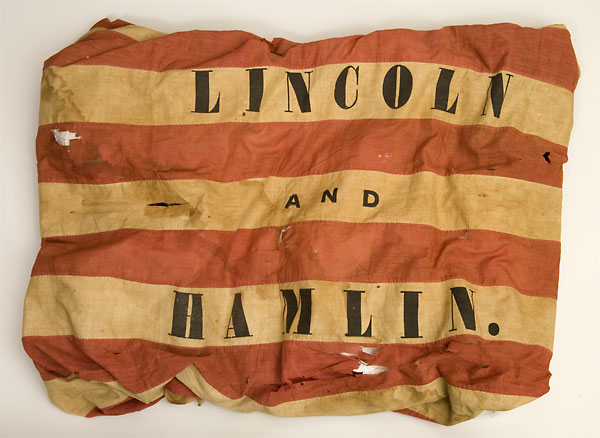
Hand-sewn banner used in Abraham Lincoln’s 1860 campaign for President of the United States (Lincoln Home, U.S. National Park Service, public domain).

According to Jamie Malanowski, a former editor at Time magazine:

“There were no surprises: the long-settled Yankees in Maine and New Hampshire and pioneering Germans of Michigan and Wisconsin delivered the expected victories. And then came news from Illinois: ‘We have stood fine. Victory has come.’ And then from Indiana: ‘Indiana over twenty thousand for honest Old Abe.’

The throngs in the streets cheered every report, every step towards the electoral college number, but news from the big Eastern states was coming painfully slowly…. The advisers paced the floorboards, jumping at every eruption of the rapid clacking of Morse’s machine….

It wasn’t until after 10 that reports of victory in Pennsylvania arrived in the form a telegram from the canny vote-counter Simon Cameron, the political boss of the Keystone State, who tucked within his state’s tallies joyfully positive news about New York: ‘Hon. Abe Lincoln, Penna seventy thousand for you. New York safe. Glory enough.’

Not until 2 a.m. did official results from New York arrive … the one-time rail-splitter won by 50,000 votes.”

The Aftermath

“As the votes were counted, Lincoln had about 40 percent of the popular vote and 180 electoral votes, compared with 133 for his opponents combined,” according to historians at the National Constitution Center, but events in America’s Deep South “cast a pall over the upcoming Electoral College voting process”:

“What if the southern states refused to take part in the Electoral College? Or what if a unified front to avoid secession could convince enough ‘faithless electors’ to switch sides to derail the election?

And what if the southern states boycotted the Electoral College?”

Lincoln scholar Harold Holzer sums up what was in the minds of many Americans in the days following the 1860 presidential election:

“If these states did not participate in the traditional process, could the Electoral College proceed? What would constitute a quorum? No one, least of all Lincoln, knew the answers to these vexing questions.”

Those questions were finally answered when those southern states agreed to participate in the Electoral College process of the United States.

“But there was a greater than normal military presence on Capitol Hill” to ensure that the peaceful transfer of power would take place that certification day, according to historians at the National Constitution Center. And it did.

Abraham Lincoln’s election was officially certified by the U.S. Congress on February 15, 1861.


Sources:

  1. Donald, David Herbert. Lincoln. New York, New York: Simon & Schuster, 1996.
  2. Foner, Eric. The Fiery Trial: Abraham Lincoln and American Slavery. New York, New York: W. W. Norton & Company, Inc., 2010.
  3. Harris, William C. Lincoln’s Rise to the Presidency. Lawrence, Kansas: University Press of Kansas, 2007.
  4. “Lawyer to President,” in “Virtual Museum Exhibit.” Springfield, Illinois: Lincoln Home National Historic Site, retrieved online November 6, 2023.
  5. Malanowski, Jamie. “Lincoln Wins. Now What,” in “Disunion.” New York, New York: The New York Times, November 7, 2010.
  6. Oates, Stephen B. “Abraham Lincoln 1861–1865,” in C. Vann Woodward, ed. Responses of the Presidents to Charges of Misconduct. New York City: Dell Publishing Co., Inc. pp. 111–123, 1974.
  7. Oates, Stephen B. With Malice Toward None: A Life of Abraham Lincoln. New York, New York: Harper Collins, 2011.
  8. On This Day, Abraham Lincoln Is Elected President.” Philadelphia, Pennsylvania: National Constitution Center, November 6, 2023.
  9. President Abraham Lincoln.” Washington, D.C.: U.S. Library of Congress, retrieved online November 6, 2023.

First Blood: The Battle of Pocotaligo, South Carolina (47th Pennsylvania Volunteers’ Perspective, October 22, 1862)

Colonel Tilghman H. Good, commanding officer, 47th Pennsylvania Volunteers, circa 1863 (public domain image).

They were steady, true and brave. If heavy losses may indicate gallantry, the palm may be given to Col. Good’s noble regiment, the Forty-seventh Pennsylvania Volunteers. Upon this command the brunt of battle fell. Out of 600 who went into action, nearly 150 were killed or wounded. All of the Keystone troops did splendidly….

– Newspapers across America, October and November 1862


Although reports penned by senior military officials immediately following the combined Union Army-Navy Expedition to Pocotaligo provide an important overview of the incidents leading up to the Battle of Pocotaligo, South Carolina on October 22, 1862, it is the individual reports penned by the brigade and regimental commanding officers on site which provide the most detailed accounts of how this Union military engagement changed from an “expedition” to a raging battle.

Perhaps the most important of these front-line accounts come from members of the 47th Pennsylvania Volunteer Infantry themselves because the regiment’s founder, Colonel Tilghman H. Good, served that day as both commanding officer of his own regiment and as the commanding officer of the U.S. Tenth Army’s First Brigade, to which the 47th Pennsylvania was attached, and because the enlisted men and their direct superiors were involved in the most heated parts of this particular battle.

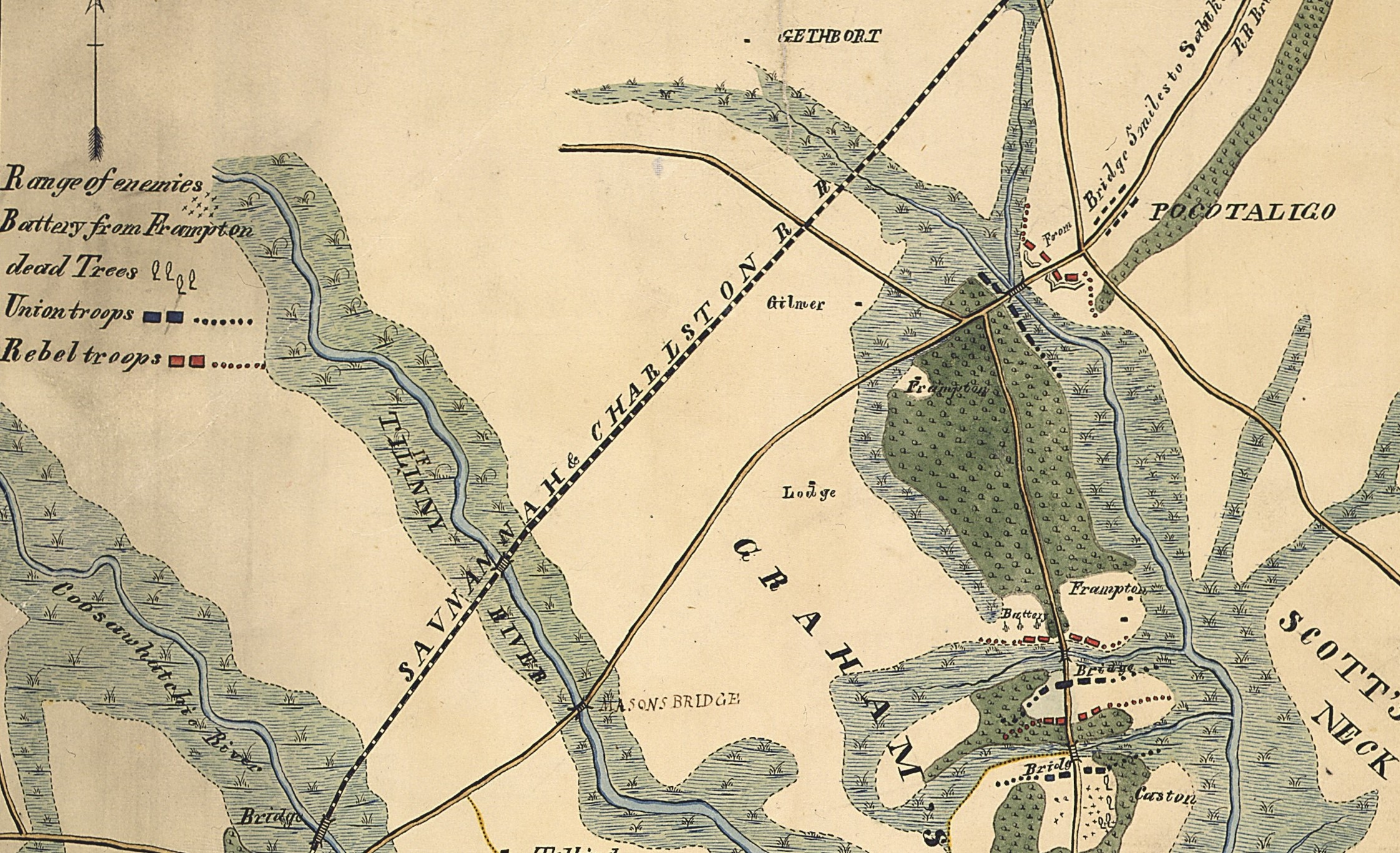
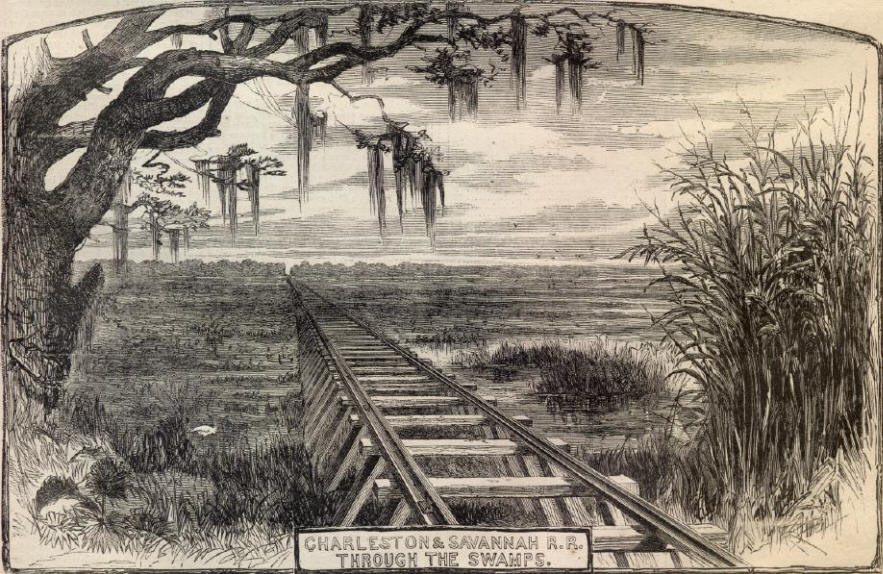
Highlighted version of the U.S. Army’s map of the Pocotaligo-Coosawhatchie Expedition, South Carolina, October 22, 1862. Blue Arrow: Mackay’s Point, where the U.S. Tenth Army debarked and began its march. Blue Box: Position of Union troops (blue) and Confederate troops (red) in relation to the Pocotaligo bridge and town of Pocotaligo, the Charleston & Savannah Railroad, and the Caston and Frampton plantations (blue highlighting added by Laurie Snyder, 2023; public domain; click to enlarge).

Colonel Good’s first account of the battle was written on October 24, 1862, two days after the engagement with the enemy occurred, and was penned at his desk at the headquarters of the 47th Pennsylvania Volunteer Infantry in Beaufort, South Carolina.

SIR: I have the honor to submit the following report of the part taken by the Forty-seventh Regiment Pennsylvania Volunteers in the action of October 22:

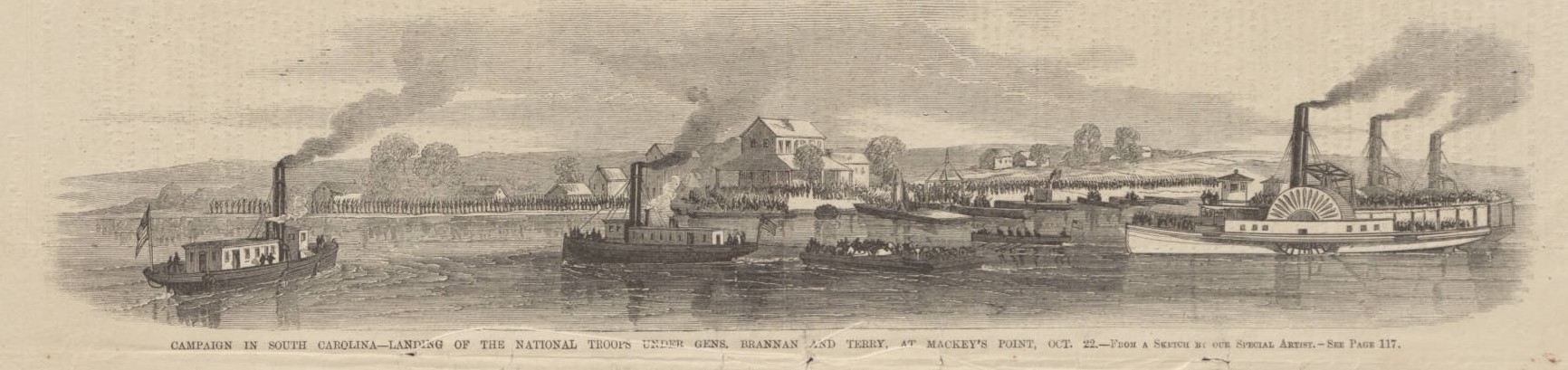
Eight companies, comprising 480 men, embarked on the steamship Ben De Ford [sic, Ben Deford], and two companies, of 120 men, on the Marblehead, at 2 a.m. October 21. With this force I arrived at Mackays Landing before daylight the following morning. At daylight I was ordered to disembark my regiment and move forward across the first causeway and take a position, and there await the arrival of the other forces. The two companies of my regiment on board of the Marblehead had not yet arrived, consequently I had but eight companies of my regiment with me at this juncture.

At 12 [noon]. I was ordered to take the advance with four companies, one of the Forty-seventh and one of the Fifty-fifth Pennsylvania Volunteers, and two of the Sixth Connecticut, and to deploy two of them as skirmishers and move forward. After moving forward about 2 miles I discerned some 30 or 40 of the enemys [sic] cavalry ahead, but they fled as we advanced. About 2 miles farther on I discovered two pieces of artillery and some cavalry, occupying a position about three-quarters of a mile ahead in the road. I immediately called for a regiment, but seeing that the position was not a strong one I made a charge with the skirmishing line. The enemy, after firing a few rounds of shell, fled. I followed up as rapidly as possible to within about 1 mile of Frampton Creek. In front of this stream is a strip of woods about 500 yards wide, and in front of the woods a marsh of about 200 yards, with a small stream running through it parallel with the woods. A causeway also extends across the swamp, to the right of which the swamp is impassable. Here the enemy opened a terrible fire of shell from the rear, of the woods. I again called for a regiment, and my regiment came forward very promptly. I immediately deployed in line of battle and charged forward to the woods, three companies on the right and the other five on the left of the road. I moved forward in quick-time, and when within about 500 yards of the woods the enemy opened a galling fire of infantry from it. I ordered double-quick and raised a cheer, and with a grand yell the officers and men moved forward in splendid order and glorious determination, driving the enemy from this position.

Lieutenant-Colonel George Warren Alexander, 47th Pennsylvania Volunteers, circa 1861 (public domain).

On reaching the woods I halted and reorganized my line. The three companies on the right of the road (in consequence of not being able to get through the marsh) did not reach the woods, and were moved by Lieutenant-Colonel Alexander by the flank on the causeway. During this time a terrible fire of grape and canister was opened by the enemy through the woods, hence I did not wait for the three companies, but immediately charged with the five at hand directly through the woods; but in consequence of the denseness of the woods, which was a perfect matting of vines and brush, it was almost impossible to get through, but by dint of untiring assiduity the men worked their way through nobly. At this point I was called out of the woods by Lieutenant Bacon, aide-de-camp, who gave the order, ‘The general wants you to charge through the woods.’ I replied that I was then charging, and that the men were working their way through as fast as possible. Just then I saw the two companies of my regiment which embarked on the Marblehead coming up to one of the companies that was unable to get through the swamp on the right. I went out to meet them, hastening them forward, with a view of re-enforcing the five already engaged on the left of the road in the woods; but the latter having worked their way successfully through and driven the enemy from his position, I moved the two companies up the road through the woods until I came up with the advance. The two companies on the right side of the road, under Lieutenant-Colonel Alexander had also worked their way up through the woods and opened fire on the retreating enemy. At this point I halted and reorganized my regiment, by forming close column by companies.

This image of Captain Edwin G. Minnich is being presented here through the generosity of Chris Sapp and his family, and is being used with Mr. Sapp’s permission. This image may not be reproduced, repurposed, or shared with other websites without the permission of Chris Sapp.

I then detailed Lieutenant Minnich, of Company B, and Lieutenant Breneman, of Company H, with a squad of men, to collect the killed and wounded. They promptly and faithfully attended to this important duty, deserving much praise for the efficiency and coolness they displayed during the fight and in the discharge of this humane and worthy trust.

The casualties in this engagement were 96. Captain Junker of Company K; Captain Mickley, of Company I [sic, “G”], and Lieutenant Geety, of Company H, fell mortally wounded while gallantly leading their respective companies on.

I cannot speak too highly of the conduct of both officers and men. They all performed deeds of valor, and rushed forward to duty and danger with a spirit and energy worthy of veterans.

The rear forces coming up passed my regiment and pursued the enemy. When I had my regiment again placed in order, and hearing the boom of cannon, I immediately followed up, and, upon reaching the scene of action, I was ordered to deploy my regiment on the right side of the wood, move forward along the edge of it, and relieve the Seventh Connecticut Regiment. This I promptly obeyed. The position here occupied by the enemy was on the opposite side of the Pocotaligo Creek, with a marsh on either side of it, and about 800 yards distant from the opposite wood, where the enemy had thrown up rifle pits all along its edge.

On my arrival the enemy had ceased firing; but after the lapse of a few minutes they commenced to cheer and hurrah for the Twenty-sixth South Carolina. We distinctly saw this regiment come up in double-quick and the men rapidly jumping into the pits. We immediately opened fire upon them with terrible effect, and saw their men thinning by scores. In return they opened a galling fire upon us. I ordered the men under cover and to keep up the fire.

Excerpt from the U.S. Army map of the Pocotaligo-Coosawhatchie Expedition, October 22, 1862, showing the Caston and Frampton plantations in relation to the town of Pocotaligo, the Pocotaligo bridge and the Charleston & Savannah Railroad (public domain).

During this time our forces commenced to retire. I kept my position until all our forces were on the march, and then gave one volley and retired by flank in the road at double-quick about 1,000 yards in the rear of the Seventh Connecticut. This regiment was formed about 1,000 yards in the rear of my former position. We jointly formed the rear guard of our forces and alternately retired in the above manner.

My casualties here amounted to 15 men.

We arrived at Frampton (our first battle ground) at 8 p.m. Here my regiment was relieved from further rear-guard duty by the Fourth New Hampshire Regiment. This gave me the desired opportunity to carry my dead and wounded from the field and convey them back to the landing. I arrived at the above place at 3 o’clock the following morning.

* Note: All of this unfolded without two of the 47th Pennsylvania’s more seasoned officers: Major William H. Gausler, Colonel Good’s third-in-command, and Captain Henry S. Harte, the commanding officer of Company F. Both had been ordered to return home to Pennsylvania’s Lehigh Valley in July to resume their recruiting efforts, which ran through early November 1862. Major Gausler persuaded fifty-four new recruits to join the 47th Pennsylvania while Harte rounded up an additional twelve. Meanwhile, back in the Deep South, Captain Harte’s F Company men were commanded by Harte’s direct subordinates, First Lieutenant George W. Fuller and Second Lieutenant August G. Eagle. As a result, neither Gausler, nor Harte participated in their regiment’s first truly significant military engagements at Saint John’s Bluff and Pocotaligo.

First State Color, 47th Regiment, Pennsylvania Volunteer Infantry (presented to the regiment by Pennsylvania Governor Andrew Curtin, September 20, 1861; retired May 11, 1865, public domain).

In a second letter to his superiors, Colonel Good presented his “report of the part taken by the First Brigade in the battles of October 22,” which included further details about the 47th Pennsylvania’s role that day:

After meeting the enemy in his first position he was driven back by the skirmishing line, consisting of two companies of the Sixth Connecticut, one of the Forty-seventh Pennsylvania, and one of the Fifty-fifth Pennsylvania, under my command. Here the enemy only fired a few rounds of shot and shell. He then retreated and assumed another position, and immediately opened fire. Colonel Chatfield, then in command of the brigade, ordered the Forty-seventh Pennsylvania forward to me, with orders to charge. I immediately charged and drove the enemy from the second position. The Sixth Connecticut was deployed in my rear and left; the Fifty-fifth Pennsylvania on my right, and the Fourth New Hampshire in the rear of the Fifty-fifth, both in close column by divisions, all under a heavy fire of shell and canister. These regiments then crossed the causeway by the flank and moved close up to the woods. Here they were halted, with orders to support the artillery. After the enemy had ceased firing the Fourth New Hampshire was ordered to move up the road in the rear of the artillery and two companies of the Forty-seventh Pennsylvania to follow this regiment. The Sixth Connecticut followed up, and the Fifty-fifth moved up through the woods. At this juncture Colonel Chatfield fell, seriously wounded, and Lieutenant-Colonel Speidel was also wounded.

The casualties in the Forty-seventh Pennsylvania amounted to 96 men. As yet I am unable to learn the loss of the entire brigade.

“The Commencement of the Battle near Pocotaligo River” (Frank Leslie’s Illustrated Newspaper, October 1862, public domain).

The enemy having fled, the Fourth New Hampshire and the Fifty- fifth Pennsylvania followed in close pursuit. During this time the Forty-seventh Pennsylvania and the Sixth Connecticut halted and again organized, after which they followed. On coming up to the engagement I assumed command of the brigade, and found the forces arranged in the following order: The Fourth New Hampshire was deployed as skirmishers along the entire front, and the Fifty-fifth deployed in line of battle on the left side of the road, immediately in the rear of the Fourth New Hampshire. I then ordered the Sixth Connecticut to deploy in the rear of the Fifty-fifth Pennsylvania and the Forty-seventh Pennsylvania to deploy on the right side of the road in line of battle and relieve the Seventh Connecticut. I then ordered the Fourth New Hampshire, which had spent all its ammunition, back under cover on the road in the woods. The enemy meantime kept up a terrific fire of grape and musketry, to which we replied with terrible effect. At this point the orders were given to retire, and the Forty-seventh Pennsylvania and Seventh Connecticut formed the rear guard. I then ordered the Thirty-seventh Pennsylvania to keep its position and the Sixth Connecticut to march by the flank into the road and to the rear, the Fourth New Hampshire and Fifty-fifth Pennsylvania to follow. The troops of the Second Brigade were meanwhile retiring. After the whole column was in motion and a line of battle established by the Seventh Connecticut about 1,000 yards in the rear of the Forty-seventh Pennsylvania I ordered the Forty-seventh to retire by the flank and establish a line of battle 1,000 yards in the rear of the Seventh Connecticut; after which the Seventh Connecticut moved by the flank to the rear and established a line of battle 1,000 yards in the rear of the Forty seventh, and thus retiring, alternately establishing lines, until we reached Frampton Creek, where we were relieved from this duty by the Fourth New Hampshire. We arrived at the landing at 3 o’clock on the morning of the 23d instant.

The casualties of the Sixth Connecticut are 34 in killed and wounded and the Forty-seventh Pennsylvania 112 in killed and wounded. As to the remaining regiments I have as yet received no report.

The Post-Battle Confederate Response

In the days following the Battle of Pocotaligo (known today as the Second Battle of Pocotaligo or the Battle of Yemassee due to its proximity to the town of Yemassee, South Carolina), newspapers across the Confederate States carried comments attributed to Confederate Brigadier-General Pierre Gustave Toutant de Beauregard on October 23:

The enemy advanced yesterday morning in two columns, one against Coosawhatchie and the other against Pocotaligo. They were repulsed from Pocotaligo by our forces, but at Coosawhatchie they succeeded in gaining the Railroad, yet, before they could do it much damage, our troops came up and drove them off.

The Railroad and Telegraph lines have been mended and are again in working order.

The enemy’s gunboats are anchored below Coosawhatchie.

Intent on leaving no doubt as to what the Confederate States Army was actually fighting for, General Beauregard then wrote:

The Abolitionists attacked in force Pocotaligo and Coosawhatchie yesterday. They were gallantly repulsed to their gunboats at Mackey’s Point and Bee’s Creek Landing, by Col. W. S. Walker commanding the District, and D. P. Harrison, commanding the troops sent from here. The enemy had come in thirteen transports and gunboats. The Charleston and Savannah Railroad is uninjured. The Abolitionists left their dead and wounded on the field, and our cavalry is in hot pursuit.

Among the Confederate regiments that battled the U.S. Tenth Army Corps that day, according to southern newspaper accounts, were the Virginia Artillery, Captain J. N. Lampkin, commanding, the Beaufort Volunteer Artillery, Captain Stephen Elliott, Jr., commanding, the Charleston Light Dragoons, and the Rutledge Mounted Riflemen.

Commendations Received by Members of the 47th Pennsylvania Volunteers

Captain John Peter Shindel Gobin, Co. C, 47th Pennsylvania Volunteers, shown here circa 1863, went on to become Lieutenant Governor of Pennsylvania after the war (public domain).

Praise for the performance of the 47th Pennsylvania Volunteers quickly followed after the regiment returned to Hilton Head. Brigadier-General Brannan praised Colonel Good twice, noting:

Col. T. H. Good, Forty-seventh Regiment Pennsylvania Volunteers (Colonel Chatfield being wounded early in the day), commanded the First Brigade during the latter part of the engagement with much ability. Nothing could be more satisfactory than the promptness and skill with which the wounded were attended to by Surg. E. W. Bailey [sic, Baily], Forty-seventh Pennsylvania Volunteers, medical director, and the entire medical staff of the command.

He then added this update:

I herewith transmit the reports of Brig. Gen. A. H. Terry and Col. T. H. Good, Forty-seventh Regiment Pennsylvania Volunteers, who commanded brigades during the late expedition, under my command, to Pocotaligo, S.C., and would beg respectfully to bring them to the favorable notice of the department for their gallant and meritorious conduct during the engagement of October 22….

In addition to those officers mentioned in my report of the expedition I have great pleasure, on the recommendation of their respective commanders, in bringing to the favorable consideration of the department the following officers and men, who rendered themselves specially worthy of notice by their bravery and praiseworthy conduct during the entire expedition and the engagements attending it: First Lieut. E. Gittings, wounded, lieutenant Company E, Third U.S. Artillery, commanding section, who served his pieces with great coolness and judgment under the heavy fire of a rebel battery; Lieutenant Col. G. W. Alexander, Forty-seventh Regiment Pennsylvania Volunteers; Maj. J. H. Filler, Fifty-fifth Regiment Pennsylvania Volunteers; Capt. Theodore Bacon, Seventh Regiment Connecticut Volunteers, acting assistant adjutant-general Second Brigade; First Lieut. Adrian Terry, Seventh Connecticut Volunteers, and Second Lieut. Martin S. James, Third Regiment Rhode Island Volunteer Artillery, staff of Brigadier-General Terry; Capt. J. P. Shindel Gobin, Company C, Forty-seventh Regiment Pennsylvania Volunteers; Capt. George Junker, killed, Company K, Forty-seventh Regiment, Pennsylvania Volunteers; Captain Mickley, killed, Company G, Forty-seventh Regiment Pennsylvania Volunteers; First Lieut. W. H. R. Hangen, adjutant, wounded, Forty-seventh Regiment Pennsylvania Volunteers; First Lieutenant Minnich, Company B, Forty-seventh Regiment Pennsylvania Volunteers; First Lieut. W. W. Geety, severely wounded, commanding Company H, Forty-seventh Pennsylvania Volunteers; Second Lieutenant Breneman, Company H, Forty-seventh Regiment Pennsylvania Volunteers; Private Michael Larkins [sic, Larkin], wounded, Company C, Forty-seventh Regiment Pennsylvania Volunteers….

Brigadier-General Alfred H. Terry, commanding officer of the U.S. Tenth Army’s Second Brigade that day, had this to say about the 47th Pennsylvania Volunteers:

The Forty-seventh Regiment Pennsylvania Volunteers was for a short time under my immediate command, and, although they are not a portion of my brigade, I cannot forbear mentioning the steadiness and discipline by this admirable regiment during our movements to the rear.

47th Pennsylvania Volunteer Infantry Casualty Reports by Officers of the Regiment

Captain Charles Mickley, Company G, 47th Pennsylvania Volunteers, circa 1862 (public domain).

Losses for the 47th at Pocotaligo were statistically significant. Two officers and eighteen enlisted men died; an additional two officers and one hundred and fourteen enlisted men from the 47th were wounded.

Der Lecha Caunty Patriot, an Allentown-based German-language newspaper, reported that Captain Charles Mickley, the commanding officer of Company G, had suffered a fatal head wound during the Battle of Pocotaligo on “the railway between Charleston, South Carolina and Savannah, Georgia.” His “remains were brought immediately after his death to his home in Allentown.” Captain Mickley’s subsequent funeral service, which was officiated by the Reverands Derr and Brobst at the local Reformation Church, was widely attended by a “suffering entourage.”

Also among the G Company casualties were Privates Benjamin Diehl, James Knappenberger, John Kuhns (alternate spelling: Kuntz), and George Reber. Privates Knappenberger and Kuhns were killed in action during the 47th’s early engagement at the Frampton Plantation; George Reber, a resident of Thorntown, Pennsylvania, sustained a fatal gunshot wound to his head. Private Franklin Oland subsequently died from his wounds at the Union Army’s general hospital at Hilton Head, South Carolina on October 30, and Private John Heil, who had sustained a gunshot wound (termed “Vulnus Sclopet” in his medical records), succumbed to his own battle wound-related complications at Hilton Head on November 2, 1862.

Daniel K. Reeder, former corporal, Company H, 47th Pennsylvania Volunteers (National Republican, December 1, 1887, public domain).

On October 25, 1862, Captain James Kacy of Company H penned the following letter to his company’s hometown newspaper, The Perry County Democrat. Writing from the regiment’s headquarters at Beaufort, he asked for the community’s help in reaching a decedent’s family:

Jason Robinson, a printer, joined my company, from your place and was killed at the battle of Pocotaligo on 22d inst. I do not know his relations or where to write to them. Probably you do. The following is a list of killed and wounded in my company:

COMPANY H. – Killed – Henry Stambaugh, Jefferson Waggoner, Peter Deitrick, Jason P. Robinson. – Wounded—First Lieutenant W. W. Geety, mortally, Orderly Sergeant, George Reynolds; Sergeant Reuben S. Gardner, in head and leg; Corporals Daniel Reeder, David H. Smith, Peter W. Stockslager; privates Jerome Briner [sic], Henry Bolinger, Augustus Rupp, Samuel Huggins, Comley Idall, Patrick Mullen, Jefferson Haney.

We did not lose a prisoner but took some. Total loss in the 47th Reg. 99 wounded, 23 killed. Several have died since. Our boys fought like Turks. We ran out of ammunition and had to leave the field.–We are going back soon.

The effects of Robinson will be sent home as soon as I can put up and forward by express.

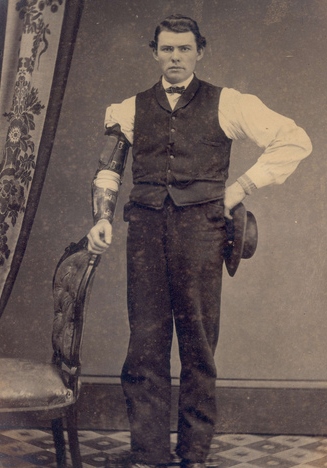
Reeder, who had been shot in the arm, was wounded so severely that surgeons were forced to amputate his damaged limb above the elbow. After convalescing briefly at the Union Army’s General Hospital at Hilton Head, South Carolina, he was discharged on a surgeon’s certificate of disability on November 24, 1862, and sent home to Pennsylvania.

Geety’s survival was nothing short of miraculous, according to accounts by physicians who provided follow-up treatment for him in 1863 Harrisburg, where he had been reassigned to recruiting duties for the 47th Pennsylvania and quartermaster duties for Camp Curtin. (See Geety’s bio on our website for details.)

Idall, Reynolds and Huggins, however, were less fortunate. Idall died from gunshot-related complications eight days after the battle, while undergoing care at the Union Army’s post hospital at Hilton Head, South Carolina. Reynolds also succumbed to complications there on November 8 while Private Huggins, who had sustained a wound to his leg (also described on his Army death ledger entry as “Vulnus Sclopet”) died there from his wounds on December 16, 1862.

Captain Daniel Oyster, Company C, 47th Pennsylvania Volunteers, circa 1864 (public domain).

The losses within Company C were higher, in many cases, than those of other companies within the regiment, largely due to one simple fact—Company C was the color-bearer unit. As such, it came under heavier fire than many of the 47th’s other units because the red, white, and blue American flag carried by the company was easy to spot for sharpshooters and artillerymen, even through the smoky air of battle. In one heartbreaking “twist of fate” tragedy, Sergeant Peter Haupt and his brother, Private Samuel Y. Haupt, initially were counting their lucky stars after being hit—Samuel sustaining a wound to his chin and Peter sustaining a wound to his foot, only to learn later that Peter’s foot injury was resisting the best treatment efforts of regimental and division medical personnel. In a stunning turn, Peter Haupt died at the Union Army’s post hospital at Hilton Head, just over three weeks later. According to an affidavit submitted to the Commissioner of Pensions, United States by Second Lieutenant Daniel Oyster at Fort Taylor, Key West, Florida on August 14, 1863, and certified at Fort Taylor on August 20, 1863 by Captain John Peter Shindel Gobin in his acting capacity as Judge Advocate:

This is to certify that Sergeant Peter Haupt of Company (C) 47th Regiment of Pennsylvania Volunteers died at Hilton Head South Carolina November 14th 1862 of wounds received at Pocotalico [sic] South Carolina;

That the said wounds were received by the said Peter Haupt during an engagement with the enemy at the place aforesaid and were caused by a Rifle or Musket ball having entered his left foot and which resulted in his death at the time and place aforesaid that I was present and have personal knowledge of the facts.

The actual cause of Sergeant Peter Haupt’s death, which was listed by his physician on the Union Army hospital’s death ledger, was “traumatic tetanus.” His remains were subsequently returned home; he was then laid to rest at the Sunbury Cemetery in Sunbury, Northumberland County, Pennsylvania.

Also on the roster of C Company wounded was Private Timothy Matthias Snyder. Unlike so many others in the 47th, Tim survived, recuperated and returned to duty, serving with the regiment until its final muster out on Christmas day in 1865. His son, John Hartranft Snyder, grew up to become a pioneer in the telephone industry.

Among the Company E injured was Corporal Reuben Weiss. Wounded in both legs (including a gunshot to the left leg), he returned to duty after convalescing, and served for another two years until being honorably discharged on a surgeon’s certificate.

One of the Company I casualties was Edwin Dreisbach, who also survived and continued to serve for the duration of the war. Sadly, though, his later life was altered by mental illness (possibly Soldier’s Heart,” which is more commonly known today as post-traumatic stress disorder).

As hard as this battle was on Company C, though, it was Company K that suffered many of the regiment’s most severe casualties. Private John McConnell died on the field of battle while Captain George Junker was mortally wounded by a minie ball fired from a Confederate rifle during the intense fighting near the Frampton Plantation. Also mortally wounded were Privates Abraham Landes (alternate spelling: “Landis”) and Joseph Louis (alternate spelling: “Lewis”). All three died the next day while being treated at the Union Army’s General Hospital at Hilton Head, South Carolina.

Private John Schuchard, who was also mortally wounded at Pocotaligo, died at the same hospital on October 24. Private Edward Frederick lasted a short while longer, finally succumbing on February 16, 1863 at Fort Jefferson in the Dry Tortugas, Florida to brain fever, a complication from the personal war he had waged with his battle wounds. He was initially buried at the fort’s parade grounds.

Private Gottlieb Fiesel, who had also sustained a head wound, initially survived. Although his skull had been fractured and the left side of his head badly damaged by shrapnel from an exploding artillery shell, physicians were hopeful that Fiesel might still recover since surgeries to remove bone fragments from his brain had been successful—but then he contracted meningitis while recuperating. He passed away at Hilton Head on November 9, 1862, and was one of those interred at the Beaufort National Cemetery.

Private Jacob Hertzog, 47th Pennsylvania Volunteers – Co. K, successfully recovered from a gunshot wound to his right arm, circa 1866 (U.S. Surgeon General’s Office, public domain).

K Company’s Corporal John Bischoff and Privates Manoah J. Carl, Jacob F. Hertzog, Frederick Knell, Samuel Kunfer, Samuel Reinert, John Schimpf, William Schrank, and Paul Strauss were among those wounded in action who rallied. Private Strauss survived an artillery shell wound to his right shoulder, recuperated, and continued to serve with the regiment. Private Hertzog, who had been discharged two months earlier on his own surgeon’s certificate, on February 24, 1863, had sustained a gunshot wound to his right arm; his treatment, like that of the aforementioned Private Fiesel, was detailed extensively in medical journals during and after his period of service. (See his bio on our website for more details.)

In late October and early November, newspapers nationwide began publishing more detailed casualty lists. Even just as partial tallies, they were still jaw-dropping, in terms of numbers and in terms of the severity and types of battle wounds sustained by members of the regiment:

Regimental Officers:

  • Hangen, Regimental First Lieutenant and Adjutant Washington H. R.: Severely wounded in the knee; narrowly avoided amputation; survived and returned to duty after lengthy convalescence period;

Company A:

  • Ferer (alternate spelling: Fever), Sergeant William: Slight wound;
  • Fraunfelder (alternate spelling of surname: Trumpfelder), Corporal Levi: Slight wound;
  • Strauss, Corporal David: Severe thigh wound;

Company B:

  • Fink, Corporal Aaron: Sustained gunshot wounds to both legs, below the knees; died from wounds at the Union Army’s post hospital at Hilton Head, South Carolina, November 5, 1862;
  • Gaumer, Sergeant Allen: Killed, Frampton Plantation;
  • George, Private Nathan: Died from battle wounded-related complications at the Union Army’s post hospital, Hilton Head, South Carolina, November 14, 1862;
  • Kern (alternate spelling: Hern), Private William: Sustained service-related wound the day before the Battle of Pocotaligo, South Carolina; died from military wound-related complications at the Union Army’s post hospital at Hilton Head, South Carolina, October 23, 1862;
  • Leisenring, Private Martin: Unspecified wound;
  • Pfeifer, Private Obadiah: Leg amputated after being wounded in action during the Battle of Pocotaligo, South Carolina, October 22, 1862; discharged on a surgeon’s certificate of disability, March 16, 1865, due to loss of leg;
  • Raymond, Private Haldeman: Gunshot wound to left arm;
  • Ruttman, Private Ernst (alternate spelling: Rothman, Earnest): Unspecified wound;
  • Savitz, Private Charles J.: Finger shot off;
  • Wieand (alternate spellings: Weiand, Wiand), Private Benjamin: Unspecified wound;
  • Wieand (alternate spelling: Wiand), Private John: Leg amputated after sustaining gunshot or shrapnel wound; discharged on surgeon’s certificate of disability, December 3, 1862;

Company C:

  • Bartlow, Private John: Leg wound;
  • Billington, Private Samuel H.: Leg wound;
  • Deibert, Private Seth: Killed;
  • Finck, Corporal William F.: Leg wound;
  • Haas, Private Jeremiah: Breast and face wounds;
  • Haupt, Corporal Samuel S.: Chin/face wound;
  • Haupt, Sergeant Peter: Ankle/foot wound;
  • Holman, Private Conrad: Face wound;
  • Horner, Private George: Killed;
  • Kiehl, Private Theodore: Face wound;
  • Larkins, Private Michael: Hip and side wounds;
  • Leffler, Private Charles: Leg wound;
  • Lothard, Private Thomas (also known as Marshall, Charles): Body wound;
  • O’Rourke, Private Richard: Side wound;
  • Rhine, Private James R.: Leg wound;
  • Snyder, Private Timothy: Unspecified wound;
  • Wolf, Private Peter: Killed;

Company D:

  • Baltozer (alternate spelling: Balltager), Private Jacob: Arm wound;
  • Crownover, Corporal James: Slight breast wound;
  • Musser (alternate spelling: Muiser), Private Alex: Killed;
  • Sheaffer, Private Benjamin: Slight breast wound;
  • Stewart, Corporal Cornelius: Severe side wound;

Company E:

  • Adams, Private William: Leg wound;
  • Bachman (alternate spelling: Bauchman), Private Henry A.: Killed (possibly killed at the actual Pocotaligo bridge; military affidavits for his mother’s U.S. Civil War Pension stated that his death occurred at “the battle of Pocotaligo Bridge, South Carolina”);
  • Coult, Private George: Hip wound;
  • Derr, Private Nathan: Shoulder wound;
  • Force (alternate spelling: Farce), Private William H.: Wrist wound;
  • Hahn, Private George: Leg wound;
  • Harkins, Private Daniel F.: Arm wound;
  • Jacoby (alternate spelling of surname: Jacobs), Private Moses: Hand wound;
  • Kirkendall (alternate spelling: Kerkendall), Private Jacob: Unspecified wound;
  • Lind, Private John: Wounds to both legs;
  • Minnick (alternate spelling: Minnich), Private Samuel: Killed;
  • Munday (alternate spelling: Monday), Private John: Neck wound;
  • Rose, Private George: Killed;
  • Stem (alternate spellings: Stein, Stern), Private Samuel: Shoulder wound;
  • Weiss, Corporal Reuben: Wounds to both legs;

Company F:

  • Eberhard (alternate spellings: Eberhart, Everhart), Corporal Augustus: Wounds to both legs;
  • Fink, Private William: Thigh wound;
  • King (alternate spelling: Ping), Private Charles: Arm wound;
  • Moser (alternate spelling: Morser), Private Peter: Arm wound;
  • O’Brien (alternate spelling: O’Brian), Private John: Gunshot wound to face;

Company G:

  • Ambrum (alternate spellings: Ambron, Arnbrunn), Private Richard: Unspecified wound;
  • Beidleman (alternate spelling: Beidelman), Private Jacob: Unspecified wound;
  • Diehl, Private Benjamin: Killed at the Frampton Plantation;
  • Fornwald, Private Reily M. (alternate spelling: Reilly Fernwald): Sustained shrapnel wounds to the head and groin; spent four weeks recuperating at the Union Army’s post hospital at Hilton Head, South Carolina before returning to duty;
  • Hallmeyer, Private Max Joseph: Wounded in the right leg and back; discharged on a surgeon’s certificate of disability October 28, 1862; died from wound-related complications at home in 1869;
  • Heil, Private John: Died from gunshot wound-related complications at the Union Army’s post hospital at Hilton Head, South Carolina, November 2, 1862;
  • Hensler (alternate spelling: Hansler), Private William: Unspecified wound;
  • Hoffert (alternate spelling: Huffert), Private Franklin: Unspecified wound;
  • Kemmerer, Private Allen: Sustained gunshot wound(s), possibly to his right leg and/or left foot;
  • Knappenberger, Private Jonas: Killed at the Frampton Plantation;
  • Kramer, Private William H.: Unspecified wound;
  • Kuhns (alternate spelling: Kuntz), Private John Henry: Killed at the Frampton Plantation;
  • Moser (alternate spelling: Mazer), Private Franklin: Unspecified wound;
  • Mickley, Captain Charles: Killed by fatal head shot;
  • Oland, Private Franklin: Unspecified wound; died at the Union Army’s post hospital at Hilton Head, South Carolina, October 30, 1862;
  • Raber (alternate spelling: Reber), Private George: Unspecified wound;
  • Wieder (alternate spelling: Weider), Private David: Unspecified wound;

Company H:

  • Bigger, Private Alexander: Unspecified wound; discharged on a surgeon’s certificate of disability, November 18, 1862;
  • Bollinger (alternate spelling: Bolinger), Private Henry: Unspecified wound;
  • Bupp (alternate spelling: Rupp), Private Augustus: Unspecified wound;
  • Bryner, Private Jerome (alternate: Briner, James): Unspecified wound;
  • Deitrick (alternate spellings: Deitrich), Private Peter: Killed near the Frampton Plantation;
  • Gardner, Sergeant Reuben Shatto: Head and thigh wounds; recovered after a long period of convalescence and returned to duty;
  • Geety, First Lieutenant William W. Geety: Initially listed as mortally wounded due to a severe head wound, he survived, following multiple surgeries; assigned to recruiting duty for the remainder of his military career so that he could continue his medical treatment;
  • Handy, Private Jefferson (possibly: Haney, Thomas J.): Unspecified wound;
  • Huggins (alternate spelling: Higgins), Private Samuel: Sustained gunshot wound to leg; died from wound-related complications at the Union Army’s post hospital at Hilton Head, December 16, 1862;
  • Idall, Private Comley: Sustained gunshot wound; died from wound-related complications at the Union Army’s post hospital at Hilton Head, October 30, 1862;
  • Johnson, Private Cyrus: Unspecified wound; discharged on a surgeon’s certificate of disability, December 16, 1862;
  • Kingsborough, Private Robert Reid: Unspecified wound; discharged on a surgeon’s certificate of disability, October 26, 1862;
  • Mullen, Private Patrick: Unspecified wound;
  • Reeder (alternate spelling: Ruder), Corporal Daniel: Wounded in the arm, resulting in the amputation of that arm above the elbow and subsequent discharge on a surgeon’s certificate of disability, November 24, 1862;
  • Reynolds, Orderly Sergeant George: Unspecified severe wound; died from wound-related complications at the Union Army’s post hospital at Hilton Head, November 8, 1862;
  • Robinson: Private Jason F.: Killed near the Frampton Plantation;
  • Smith, Corporal David H.: Unspecified wound;
  • Stambaugh, Private Henry: Killed near the Frampton Plantation;
  • Stockslager, Corporal Peter W.: Unspecified wound;
  • Waggoner, Private Jefferson: Killed near the Frampton Plantation;

Company I:

  • Baudenschlager (alternate spellings: Bartenslager, Bondenschlager), Private John: Unspecified wound; discharged on a surgeon’s certificate of disability, October 29, 1862;
  • Cole, Private James B.: Unspecified wound; discharged on a surgeon’s certificate of disability, November 15, 1862;
  • Dreisbach, Private Edwin: Unspecified slight wound;
  • Druckenmiller, Private Lewis (alternate given name: Daniel): Killed;
  • Kramer, Private Daniel Joseph: Leg wound;
  • Metz (alternate spelling; Mertz), Private Jeremiah: Killed;

Company K:

  • Bischoff (alternate spelling: Bishop), Corporal John: Leg wound;
  • Carl, Private Manoah: Foot wound;
  • Fiesel, Private Gottlieb: Left side of head damaged and skull fractured by shrapnel from exploding artillery shell; physicians at the Union Army’s post hospital at Hilton Head, South Carolina were hopeful that he might recover since surgeries to remove bone fragments from his brain had been successful, but he contracted meningitis while recuperating and died at Hilton Head on November 9, 1862;
  • Frederick (alternate spelling: Fredericks), Private Edwin: Head wound;
  • Hertzog, Private Jacob: Sustained severe gunshot wound (“Vulnus Sclopet”) to his right elbow joint; treated initially in the field and at his regiment’s hospital before being admitted to the U.S. Army’s Hospital No. 1 at Beaufort, South Carolina for more advanced care; underwent surgery of his right arm October 26, 1862, his sutures were removed November 15; by December 15, 1862, he was dressed and walking around the grounds of the Beaufort hospital; sent north via the steamer Star of the South December 28, 1862; discharged from Fort Wood in the New York Harbor via a surgeon’s certificate of disability February 24, 1863;
  • Junker, Captain George: Mortally wounded in action by a minie ball fired from a Confederate Army soldier’s rifle; died October 23, 1862 at the Union Army’s post hospital at Hilton Head, South Carolina; his remains were returned to his family in Hazleton, Luzerne County, Pennsylvania for reburial;
  • Knell, Private Frederick: Unspecified wound; discharged on a surgeon’s certificate of disability, May 9, 1863;
  • Kolb (alternate spellings: Holb, Kolp), Private Hiram: Finger shot off; sent north for more advanced care, ultimately hospitalized at the Union Army’s general hospital in York, Pennsylvania;
  • Kunfer (alternate spelling: Cunfer), Private Samuel: Unspecified wound;
  • Landes, Private Abraham: Gunshot wound to breast; died from battle wounds, October 23, 1862, while being treated at the Union Army’s post hospital at Hilton Head, South Carolina;
  • Louis (alternate spelling: Lewis), Private Joseph: Mortally wounded by gunshot; died October 23, 1862, while being treated at the Union Army’s post hospital at Hilton Head, South Carolina;
  • Marder, Private Jacob (possibly Matter, Jacob): Stomach wound;
  • McConnell, Private John: Killed;
  • Miller, Private Louis: Wounded in both thighs;
  • Reinert, Private Samuel: Right shoulder wound;
  • Schiff (possibly Schimpf), Private John: Thigh wound;
  • Schrank, Private William: Arm wound;
  • Schuchard (alternate spelling: Shuckard), Private John: Mortally wounded; died from battle wounds October 24, 1862 while being treated at the Union Army’s post hospital at Hilton Head, South Carolina; and
  • Strauss, Private Paul: Sustained artillery shell wounds to his right shoulder and back.

Battered, But Not Cowed

Described as “shattered” by one newspaper correspondent, the 47th Pennsylvania rested, recuperated, regrouped, and they soldiered on in their fight to preserve America’s Union and eradicate slavery nationwide. The only regiment from the Commonwealth of Pennsylvania to participate in the Union Army’s 1864 Red River Campaign, the 47th Pennsylvanians helped turn the tide of war firmly in the Union’s favor by re-engaging with the enemy time and again during Sheridan’s Shenandoah Valley Campaign in the fall of that same year.

But they would always remember the cost of that terrible day in 1862. Surviving veterans of the 47th Pennsylvania never failed to honor the memory of their friends who never made it home, paying tribute through annual reunions of the regiment, which were typically held in October to mark the anniversaries of the Battle of Pocotaligo (October 22, 1862) and the Battle of Cedar Creek (October 19, 1864).

For the remainder of their lives, they continued to be steady, true and brave.

Surviving members of the 47th Pennsylvania Volunteer Infantry at their 1923 reunion, Odd Fellows Hall, Allentown, Pennsylvania (public domain).


Sources:

  1. Burial Ledgers, in Record Group 15, The National Cemetery Administration, and Record Group 92, U.S. Departments of Defense and Army (Quartermaster General). Washington, D.C.: U.S. National Archives and Records Administration: 1861-1865.
  2. Civil War Muster Rolls, in Records of the Department of Military and Veterans’ Affairs (Record Group 19, Series 19.11). Harrisburg: Pennsylvania Historical and Museum Commission.
  3. Peter and Freeman Haupt, in Card Records of Headstones Provided for Deceased Union Civil War Veterans, in Records of the Office of the Quartermaster General (Record Group 92, Microfilm M1845). Washington, D.C.: U.S. National Archives.
  4. Peter and Mary Haupt, in U.S. Civil War Widows’ Pension Files. Washington, D.C.: U.S. National Archives and Records Administration.
  5. Report of Col. Tilghman H. Good, Forty-seventh Pennsylvania Infantry and Report of Col. Tilghman H. Good, Forty-seventh Pennsylvania Infantry, commanding First Brigade, Tenth Army Corps, in The War of the Rebellion: A Compilation of the Official Records of the Union and Confederate Armies. Prepared Under the Direction of the Secretary of War, By Lieut. Col. Robert N. Scott, Third U.S. Artillery, and Published Pursuant to Act of Congress Approved June 16, 1880, Series I, Vol. XIV. Washington, D.C.: Government Printing Office, 1885.
  6. “The Killed and Wounded in the Battle” (casualty list from the Battle of Pocotaligo). New York, New York: The New York Herald, October 29, 1862.
  7. “The Latest Telegraphic News: Advance of the Enemy to Pocotaligo — Repulsed by Our Forces.” Raleigh, North Carolina: The North Carolina Standard, October 28, 1862.
  8. “The Fight at Pocotaligo — Further Particulars.” Camden, South Carolina: The Camden Confederate, October 31, 1862.
  9. “The Recent Battles Near Charleston — The Rebels Driven to Pocotaligo Bridge,” in “The War News.” Baltimore, Maryland: The Baltimore Sun, October 30, 1862.


First Blood: The Battle of Pocotaligo, South Carolina (October 22, 1862)

Dock, Hilton Head, South Carolina, circa 1862 (Sam Cooley, U.S. Library of Congress, public domain).

They knew they were being ordered to move deeper into enemy territory, but thought their superiors had researched and planned their expedition thoroughly — down to the last bullet they might need if misfortune would befall them.

Confidently boarding their respective transport steamships during the evening of October 21, 1862, the 47th Pennsylvania Volunteers and their fellow Union soldiers from the U.S. Army’s Tenth (X) Corps were ready to head out from the U.S. Department of the South’s main base at Hilton Head, South Carolina on their expedition to Pocotaligo.

According to reports penned later that month by senior Union Army officers, the troops involved in what was initially labeled the “Expedition to Pocotaligo” (as if it were a planned North Pole exploration, rather than a U.S. Army action against a state that had seceded from the Union), would total roughly 4,500 men who were enrolled in the following units:

  • 6th Connecticut Volunteers (500 men);
  • 7th Connecticut Volunteers (500 men);
  • Hamilton’s Artillery Battery (one full section plus 40 additional men);
  • 3rd New Hampshire Volunteers (480 men);
  • 4th New Hampshire Volunteers (600 men);
  • 1st Massachusetts Cavalry (100 men);
  • New York Mechanics and Engineers (250 men);
  • 48th New York Volunteers (300 men);
  • 47th Pennsylvania Volunteers (600 men);
  • 55th Pennsylvania Volunteers (400 men);
  • 76th Pennsylvania Volunteers 430 men);
  • 1st Regiment, U.S. Artillery, Company M (one full section plus 40 additional men); and the
  • 3rd Rhode Island Volunteers (300 men);

The after cabin inside of the U.S. Steamer Ben Deford, circa 1860s (U.S. Library of Congress, public domain).

They departed shortly after 12:01 a.m. on October 22, 1862. The Paul Jones, with U.S. Navy Captain Charles Steedman and his small team, steamed away first, followed by the Ben Deford (towing flat-boats with artillery), the Conemaugh and Wissahickon, the Boston (towing flat-boats with artillery), the Patroon and Darlington, the Relief (a steam tug towing a schooner), and the Marblehead, Vixen, Flora, Water Witch, George Washington, and Planter. The flat-boats carried Union Artillery howitzers and/or the light ambulances and wagon that would transport supplies and wounded men. Each of the 4,500 infantrymen involved was equipped with just one hundred rounds of ammunition, which, in hindsight, would prove to be an underestimation of the firepower needed to achieve the mission’s objectives — to destroy the Pocotaligo bridge and as much of the Charleston & Savannah Railroad as possible in the time allotted for the mission.

In addition to Union troops, each of the largest ships also carried a member of the U.S. Army’s Signal Corps to facilitate communication between the vessels, and was staffed by ship pilots from the area — Black men who were experienced navigators who knew exactly where the water hazards were along the Broad River and its tributaries — the Coosawhatchie, Tulifinny, and Pocotaligo rivers, the latter of which was more creek than river.

The first warning of potential trouble ahead came from Mother Nature. “The night proved to be smoky and hazy, which produced some confusion in the sailing of the vessels, as signal lights could not be seen by those most remote from the leading ship.”

Landing of the U.S. Tenth Army Corps at Mackay’s Point, South Carolina at the start of the Expedition to Pocotaligo, October 22, 1862 (“The commencement of the Battle near Pocotaligo,” Frank Leslie’s Illustrated Newspaper, October 1862, public domain; click to enlarge).

But the Union transports steamed on anyway, slowly progressing toward the mouth of the Pocotaligo River — a distance of roughly twenty-four miles. If all went according to Mitchel’s plan, they would drop anchor at Mackay’s Point, their soldiers protected in their debarkation by their fleet’s gunboats:

There [was] a good country road leading from the Point to the old town of Pocotaligo, then entering a turnpike, which leads from the town of Coosawhatchie to the principal ferry on the Salkehatchie River. The distance to the railroad was only about 7 or 8 miles, thus rendering it possible to effect a landing, cut the railroad and telegraph wires, and return to the boats in the same day…. Presuming that the enemy would make his principal defense at or near Pocotaligo, I directed that a detachment of the Forty-eighth New York, under command of Colonel Barton, with the armed transport Planter, accompanied by one or two light-draught gunboats, should ascend the Coosawhatchie River, for the purpose of making a diversion, and in case no considerable force of the enemy was met, to destroy the railroad at and near the town of Coosawhatchie.

The “landing was effected rapidly and in perfect safety,” according to Mitchel, but as the poet Robert Burns sagely warned in 1785, “proving foresight may be vain: The best laid schemes o’ Mice an’ Men Gang aft agley.” (The best laid plans often go astray.)

Highlighted version of the U.S. Army’s map of the Pocotaligo-Coosawhatchie Expedition, South Carolina, October 22, 1862. Blue Arrow: Mackay’s Point, where the U.S. Tenth Army debarked and began its march. Blue Box: Position of Union troops (blue) and Confederate troops (red) in relation to the Pocotaligo bridge and town of Pocotaligo, the Charleston & Savannah Railroad, and the Caston and Frampton plantations (blue highlighting added by Laurie Snyder, 2023; public domain; click to enlarge).

Just shy of Mackay’s Point, one of the larger Union ships ran aground, forcing the commanding officers on the scene to slow the expedition’s advance, which caused a delay of between three to four hours, and gave “the enemy full opportunity to make every disposition of his available troops for defensive purposes, and also to telegraph to Charleston and Savannah for reinforcements,” according to Mitchel.

When the transports finally did reach Mackay’s Point, the infantrymen and artillery soldiers quickly pulled together their gear, debarked, formed up for their march, and stepped off toward their intended targets. But, here again, General Mitchel’s planning was off. Completing just three miles of the anticipated “seven or eight” that the primary group was expected to cover to reach its intended target, the Tenth Army infantrymen suddenly ran smack into strongly entrenched Confederate troops.

They fought valiantly, driving the Confederates up and across the Pocotaligo River, and then destroyed the bridge the Confederates had battled so hard to protect. But they were forced to waste precious ammunition and physical energy to do so.

At that point, according to Mitchel, the Tenth Army continued on, re-engaging with the enemy at various points during their advance along narrow, swamp-flanked paths:

The march and fight continued from about 1 o’clock until between 5 and 6 o’clock in the afternoon. The officers and troops behaved in the most gallant manner. One bayonet charge was made over causeways with the most determined courage and with veteran firmness. The advance was made with caution, but with persistent steadiness, driving the enemy over a distance of more than 3 miles, and finally compelling him to seek safety by crossing the Pocotaligo River and the destruction of the bridge. The fight was continued on the banks of the Pocotaligo, but the coming on of night and the exhaustion of our ammunition, as well as the impossibility of crossing the river, rendered it necessary for the troops to return to their boats. This was done in perfect order and with great deliberation. It was impossible for the enemy to harass our troops, as they were on the opposite side of the river and the bridge was destroyed.

So far as I know all the dead and wounded were brought off.

Nothing whatever fell into the hands of the enemy, while they were compelled to abandon two of their caissons, with ammunition, which was returned to them (the ammunition) on the banks of the Pocotaligo from our naval howitzers….

 Revising his estimates later in this same report to his superiors, Mitchel wrote:

I regret to say that the main body, under the command of Brigadier-General Brannan, suffered severely in killed and wounded in the three fights, which constituted almost one continuous battle during the afternoon.

I inclose [sic] a list of casualties, which I think is nearly complete, and from which it appears that our loss amounts to about 50 killed and 300 wounded. The loss of the enemy it was of course impossible for us to ascertain.

A few prisoners have fallen into our hands, and we have every reason to believe that the enemy suffered severely.

The greatest activity prevailed on the railroad, and trains of cars with troops appear to have been sent from both Charleston and Savannah.

The 47th Pennsylvania Volunteers were among those Union Army troops that Mitchel was referring to in the first and second paragraphs of that quote above.

* Note: While all of that was unfolding, the second part of the expeditionary force was carrying out Mitchel’s orders to target a western segment of the Charleston & Savannah Railroad. According to Mitchel, a detachment of Forty-eighth New York Volunteers steamed toward the village of Coosawhatchie aboard the Planter stopping a mile and a half outside of town.

A landing was effected, and the troops of Colonel Barton, accompanied by a detachment of Engineers and Mechanics, marched upon the village. When within about 100 yards of the railroad a train of eight or ten cars came up at high speed, and was received by a volley from our infantry and a discharge from one of the naval howitzers. As the troops were mostly upon platform cars, and very much crowded, this fire must have been very destructive. The engineer was killed, but the train was stopped in the village, and these troops were added to those already guarding the bridge, and this force made it necessary to draw off the Engineers, who were engaged in tearing up the track, having taken with them the tools required for this purpose, and the entire detachment fell back, under the protection of the armed transport and gunboat. The enemy pursued, supposing the Planter to be an unarmed transport, but her heavy guns soon drove them back in disorder, and Colonel Barton, having determined, in his dash upon the village, the position of the village and the depot, shelled them both with his 30-pounder Parrotts for nearly two hours during the afternoon. Before dark he returned to Mackay’s Point, with no loss except the wounding of Lieutenant Blanding, of the Third Rhode Island, whose arm was shattered and his side pierced by a Minie ball.

“Destruction of Railroad Track by Federal Troops” and “Attack on a Rebel Train by 48th Volr. RG.” (“The commencement of the battle near Pocotaligo River,” Frank Leslie’s Illustrated Newspaper, October 1862, public domain; click to enlarge). Note: The “48th Volr.” RG.” pictured here was most likely the 48th New York Volunteer Infantry.

How the Battle Actually Unfolded

Charleston & Savannah Railroad, South Carolina (Harper’s Weekly, March 4, 1865, public domain).

The initial battle report prepared by Major-General Mitchel proved to be short on details and rosier than the reality.

According to Brigadier-General John Milton Brannan, the commanding officer of the expedition who was actually on site (as opposed to Mitchel who was back at Hilton Head, ailing with yellow fever), Brannan “assumed command of the following forces, ordered to destroy the railroad and railroad bridges on the Charleston and Savannah line”:

A portion of the First Brigade (Brannan’s), Col. J. L. Chatfield, Sixth Regiment Connecticut Volunteers, commanding, effective strength 2,000; a portion of Second Brigade, Brig. Gen. A. H. Terry commanding, effective strength 1,410; detachment of Third Rhode Island Volunteers, Colonel Brown commanding, effective strength 300; detachment of Forty-eighth Regiment New York State Volunteers, Colonel Barton commanding, effective strength 300; detachment of First Massachusetts Cavalry, Capt. L. Richmond commanding, effective strength 108;  section of First U.S. Artillery, Lieut. G. V. Henry commanding, effective strength 40; section of Third U.S. Artillery, Lieut. E. Gittings commanding, effective strength 40; detachment of New York Volunteer Engineers, Lieutenant Colonel Hall commanding, effective strength 250. Total effective strength, 4,448 men.

Departing from Hilton Head with the expeditionary force “on the evening of October 21, and proceeding up Broad River,” Brigadier-General Brannan “arrived off Pocotaligo Creek at 4:30 a.m. with the transport Ben De Ford [sic, Ben Deford] and the gunboat Paul Jones.”

Col. William B. Barton, Forty-eighth Regiment New York State Volunteers, 50 men of the Volunteer Engineer Corps, and 50 men of the Third Rhode Island Volunteers, in accordance with my order, delivered early that morning, proceeded direct to the Coosawhatchie River, to destroy the railroad and railroad bridges in that vicinity. The other gunboats and transports did not all arrive until about 8 a.m. on October 22. I immediately effected a landing of my artillery and infantry at Mackay’s Point, at the junction of Pocotaligo and Tulifiny [sic, Tulifinny] Rivers. I advanced without delay in the direction of Pocotaligo Bridge, sending back the transports Flora and Darlington to Port Royal Island for the cavalry, the First Brigade being in advance, with a section from the First U.S. Artillery, followed by the Second Brigade, with Colonel Brown’s command, the section of the Third U.S. Artillery and three boat howitzers, which Captain Steedman, commanding the naval forces, kindly furnished for this occasion, and a detachment of 45 men from the Third Rhode Island Volunteer Artillery, under Captain Comstock, of that regiment.

“The Commencement of the Battle near Pocotaligo River” (Frank Leslie’s Illustrated Newspaper, October 1862, public domain).

On advancing about 5½ miles and debouching upon an open rolling country the rebels opened upon us with a field battery from a position on the plantation known as Caston’s. I immediately caused the First Brigade to deploy, and, bringing my artillery to the front, drove the rebels from this position. They, however, destroyed all small bridges in the vicinity, causing much delay in my advance. These, with the aid of the Engineer Corps, were reconstructed as we advanced, and I followed up the retreat of the rebels with all the haste practicable. I had advanced about 1¼ miles farther, when a battery again opened on us from a position on the plantation called Frampton. The rebels here had every advantage of ground, being ensconced in a wood, with a deep swamp in front, passable only by a narrow causeway, on which the bridge had been destroyed, while, on our side of the swamp and along the entire front and flanks of the enemy (extending to the swamps), was an impervious thicket, intersected by a deep water ditch, and passable only by a narrow road. Into this road the rebels threw a most terrific fire of grape shot, shell, canister, and musket balls, killing and wounding great numbers of my command. Here the ammunition for the field pieces fell short, and, though the infantry acted with great courage and determination, they were twice driven out of the woods with great slaughter by the overwhelming fire of the enemy, whose missiles tore through the woods like hail. I had warmly responded to this fire with the sections of First and Third U.S. Artillery and the boat howitzers until, finding my ammunition about to fail, and seeing that any flank movement was impossible, I pressed the First Brigade forward through the thicket to the verge of a swamp, and sent the section of First U.S. Artillery, well supported, to the causeway of the wood on the farther side, leaving the Second Brigade, with Colonel Brown’s command, the section of Third U.S. Artillery, and the boat howitzers as a line of defense in my rear. The effect of this bold movement was immediately evident in the precipitate retreat of the rebels, who disappeared in the woods with amazing rapidity. The infantry of the First Brigade immediately plunged through the swamp, (parts of which were nearly up to their arm-pits) and started in pursuit. Some delay was caused by the bridge having been destroyed, impeding the passage of the artillery. This difficulty was overcome and with my full force I pressed forward on the retreating rebels. At this point (apprehending, from the facility which the rebels possessed of heading [to] Pocotaligo Creek, that they would attempt to turn my left flank) I sent an infantry regiment, with a boat howitzer, to my left, to strike the Coosawhatchie road.

Excerpt from the U.S. Army map of the Pocotaligo-Coosawhatchie Expedition, October 22, 1862, showing the positions of the Caston and Frampton plantations in relation to the town of Pocotaligo, the Pocotaligo bridge and the Charleston & Savannah Railroad (public domain; click to enlarge).

The position which I had found proved, as I had supposed, to be one of great natural advantage to the rebels, the ground behind higher on that side of the swamp, and having a firm, open field for the working of their artillery, which later they formed in a half circle, throwing a concentrated fire on the entrance to the wood we had first passed.

The rebels left in their retreat a caisson full of ammunition, which later, fortunately, fitting the boat howitzers, enabled us, at a later period of the day, to keep up our fire when all other ammunition had failed.

Still pursuing the flying rebels, I arrived at that point where the Coosawhatchie road (joining that from Mackay’s Landing) runs through a swamp to Pocotaligo Bridge. Here the rebels opened a murderous fire upon us from batteries of siege guns and field pieces on the farther side of the creek. Our skirmishers, however, advanced boldly to the edge of the swamp, and, from what cover they could obtain, did considerable execution among the enemy. The rebels, as I had anticipated, attempted a flank movement on our left, but for some reason abandoned it. The ammunition of the artillery here entirely failed, owing to the caissons not having been brought on, for the want of transportation from Port Royal, and the pieces had to be sent back to Mackay’s Point, a distance of 10 miles, to renew it.

The bridge across the Pocotaligo was destroyed, and the rebels from behind their earthworks continued on the only approach to it, through the swamp. Night was now closing fast, and seeing the utter hopelessness of attempting anything further against the force which the enemy had concentrated at this point from Savannah and Charleston, with an army of much inferior force, unprovided with ammunition, and not having even sufficient transportation to remove the wounded, who were lying writhing along our entire route, I deemed it expedient to retire to Mackay’s Point, which I did in successive lines of defenses, burying my dead and carrying our wounded with us on such stretchers as we could manufacture from branches of trees, blankets, &.c., and receiving no molestation from the rebels, embarked and returned to Hilton Head on the 23d instant.

Was the U.S. Tenth Army Corps Ambushed?

Brigadier-General John Milton Brannan, U.S. Army, circa 1862 (public domain).

Brigadier-General Brannan pulled no punches during his post-combat assessment of the Battle of Pocotaligo (now known as the Second Battle of Pocotaligo or the Battle of Yemassee). In his first report to Major-General Mitchel, he made these stunning observations:

Facts tend to show that the rebels were perfectly acquainted with all our plans, as they had evidently studied our purpose with care, and had two lines of defense, Caston and Frampton, before falling back on Pocotaligo, where, aided by their field works and favored by the nature of the ground and the facility of concentrating troops, they evidently purposed making a determined stand; and indeed the accounts gathered from prisoners leave no doubt but that the rebels had very accurate information of our movements.

I greatly felt the want of the cavalry, which, in consequence of the transports having grounded in the Broad River, did not arrive till nearly 4 p.m., and which in the early part of the day would perhaps have captured some field pieces in the open country we were then in, and would at all events have prevented the destruction of the bridge in the rear of the rebels.

Brannan also made clear that the blame for the troops’ tragic lack of ammunition — the primary cause of the Tenth Army’s high casualty rate — rested on Mitchel’s shoulders, and Mitchel’s shoulders alone:

The fitting out of the expedition, as relates to its organization, supplies, transportation, and ammunition, was done entirely by the major-general commanding the department, who at first purposed to command it. I was not assigned to the command till a few hours previous to the sailing of the expedition from Hilton Head.

Commendations for the Valiant

Colonel Tilghman H. Good, 47th Pennsylvania Volunteers, shown circa 1863, was praised for his performance during the Battle of Pocotaligo in 1862.

Hearteningly, Brigadier-General Brannan devoted a significant portion of his report to Major-General Mitchel by giving credit where credit was actually due — to the officers and enlisted members of the U.S. Army’s Tenth Corps who, despite being hampered by their superiors’ poor, pre-expedition munitions and terrain assessments, still managed to destroy one bridge and inflict significant damage on another segment of the Charleston & Savannah Railroad.

I desire to call the attention of the major-general commanding the department to the gallant and distinguished conduct of First Lieut. Guy V. Henry, First U.S. Artillery, commanding a section of light artillery. His pieces were served admirably throughout the entire engagement. He had two horses shot. The section of Third U.S. Artillery, commanded by First Lieut. E. Gittings, was also well served. He being wounded in the latter part of the day, his section was commanded by Lieutenant Henry.

The three boat howitzers furnished by Captain Steedman, U.S. Navy, commanding the naval forces, were served well, and the officers commanding them, with the crews, as also the detachment of the Third Rhode Island Volunteers, deserve great credit for their coolness, skill, and gallantry. The officers commanding these guns are as follows: Lieut. Lloyd Phoenix and Ensigns James Wallace, La Rue P. Adams, and Frederick Pearson.

1st Lieutenant William W. Geety, Co. H, 47th Pennsylvania Volunteers, shown here circa 1863, was grievously wounded during the Battle of Pocotaligo (public domain).

The conduct of my entire staff – Capt. Louis J. Lambert, assistant adjutant-general; Capt. L. Coryell, assistant quartermaster, and Lieuts. Ira V. German and George W. Bacon, aides-de-camp – gave me great pleasure and satisfaction. My orders were transmitted by them in the hottest of the battle with great rapidity and correctness. To Col. E. W. Serrell, New York Volunteer Engineers, who acted as an additional aide-de-camp, I am much indebted. His energy, perfect coolness, and bravery were a source of gratification to me. Orders from me were executed by him in a very satisfactory manner. Lieut. G. H. Hill, signal officer, performed his duties with great promptness. He acted also as additional aide-de-camp, and gave me much assistance in carrying my orders during the entire day.

With respect to the 47th Pennsylvania Volunteer Infantry’s performance, Brannan singled out two of its officers:

Col. T. H. Good, Forty-seventh Regiment Pennsylvania Volunteers (Colonel Chatfield being wounded early in the day), commanded the First Brigade during the latter part of the engagement with much ability. Nothing could be more satisfactory than the promptness and skill with which the wounded were attended to by Surg. E. W. Bailey [sic, Baily], Forty-seventh Pennsylvania Volunteers, medical director, and the entire medical staff of the command.

Private Jacob Hertzog, Co. K, 47th Pennsylvania Volunteers, wearing the support device which facilitated his recovery from a gunshot wound during the Battle of Pocotaligo (George A. Otis, public domain).

Regarding the performance of the enlisted and non-commissioned members of the Tenth Army, he noted that:

The troops of the command behaved with great gallantry, advancing against a remarkably heavy fire of musketry, canister, grape, round shot, and shell, driving the enemy before them with much determination. I was perfectly satisfied with their conduct.

It affords me much pleasure again to report the perfect cordiality existing between the two branches of the service, and I was much indebted to Capt. Charles Steedman, U.S. Navy, for his valuable aid and assistance in disembarking and re-embarking the troops; also in sending launches, with howitzers, to prevent an attack on our pickets while we were embarking to return to Hilton Head.

First Lieutenant and Regimental Adjutant Washington H. R. Hangen, 47th Pennsylvania Volunteers, shown here circa 1864, was seriously wounded in the leg during the Battle of Pocotaligo (public domain).

In his follow-up report to Mitchel, which was penned at Hilton Head, South Carolina on November 6, 1862, Brannan presented a detailed list of the commendations he recommended be issued to the most heroic members of the Tenth Army, many of whom had been killed or grievously wounded at Pocotaligo:

I herewith transmit the reports of Brig. Gen. A. H. Terry and Col. T. H. Good, Forty-seventh Regiment Pennsylvania Volunteers, who commanded brigades during the late expedition, under my command, to Pocotaligo, S.C., and would beg respectfully to bring them to the favorable notice of the department for their gallant and meritorious conduct during the engagement of October 22; as also Col. J. L. Chatfield, Sixth Regiment Connecticut Volunteers, who commanded the First Brigade until severely wounded, in the early part of the engagement, while gallantly leading it to the charge. Great praise is also due to General Terry for his care and unremitting exertions during the night of the 22d in superintending the removal of the wounded to the transports.

I also forward the report of Col. E. W. Serrell, First New York Volunteer Engineers, chief engineer of the department, of the part taken by their several commands.

Accompanying General Terry’s report is the report of the success of Lieut. S. M. Smith, Third Regiment Rhode Island Volunteer Artillery,* who was sent up before daylight on the 22d to Cathbert’s Island, on the Pocotaligo Creek, to capture the rebel pickets there stationed.

* Note: General Terry’s reports stated Third New Hampshire Volunteers.

2nd Lieutenant Christian K. Breneman, shown here circa 1863, assumed command of Co. H, 47th Pennsylvania Volunteers during the Battle of Pocotaligo when 1st Lieutenant William Geety was grievously wounded (public domain).

In addition to those officers mentioned in my report of the expedition I have great pleasure, on the recommendation of their respective commanders, in bringing to the favorable consideration of the department the following officers and men, who rendered themselves specially worthy of notice by their bravery and praiseworthy conduct during the entire expedition and the engagements attending it:

First Lieut. E. Gittings, wounded, lieutenant Company E, Third U.S. Artillery, commanding section, who served his pieces with great coolness and judgment under the heavy fire of a rebel battery; Lieutenant Col. G. W. Alexander, Forty-seventh Regiment Pennsylvania Volunteers; Maj. J. H. Filler, Fifty-fifth Regiment Pennsylvania Volunteers; Capt. Theodore Bacon, Seventh Regiment Connecticut Volunteers, acting assistant adjutant-general Second Brigade; First Lieut. Adrian Terry, Seventh Connecticut Volunteers, and Second Lieut. Martin S. James, Third Regiment Rhode Island Volunteer Artillery, staff of Brigadier-General Terry;

Captain John Peter Shindel Gobin, Co. C, 47th Pennsylvania Volunteers, shown here circa 1863, went on to become Lieutenant Governor of Pennsylvania after the war (public domain).

Capt. J. P. Shindel Gobin, Company C, Forty-seventh Regiment Pennsylvania Volunteers; Capt. George Junker, killed, Company K, Forty-seventh Regiment, Pennsylvania Volunteers; Captain Mickley, killed, Company G, Forty-seventh Regiment Pennsylvania Volunteers; First. Lieut. W. H. R. Hangen, adjutant, wounded, Forty-seventh Regiment Pennsylvania Volunteers; First Lieutenant Minnich, Company B, Forty-seventh Regiment Pennsylvania Volunteers; First Lieut. W. W. Geety, severely wounded, commanding Company H, Forty-seventh Pennsylvania Volunteers; Second Lieutenant Breneman, Company H, Forty-seventh Regiment Pennsylvania Volunteers; Private Michael Larkins [sic, Larkin], wounded, Company C, Forty-seventh Regiment Pennsylvania Volunteers; Captain Bennett, Company E, Fifty-fifth Regiment Pennsylvania Volunteers; First Lieut. D. W. Fox, commanding Company A, Fifty-fifth Regiment Pennsylvania Volunteers; First Lieutenant Metzger, adjutant Fifty-fifth Regiment Pennsylvania Volunteers; First Sergt. H. W. Fox, Company K, Fifty-fifth Regiment Pennsylvania Volunteers; Private Peter McGuire, Company A, Fifty-fifth Regiment Pennsylvania Volunteers; Lieut. S. S. Stevens, Sixth Regiment Connecticut Volunteers, acting assistant adjutant-general First Brigade; Commissary Sergt William H. Johnson, Sixth Regiment Connecticut Volunteers; Sergeant [Charles H.] Grogan, Private G. Platt, and Private A. B. Beers, Company I, Sixth Regiment Connecticut Volunteers; Private R. Wilson, Company D, Sixth Connecticut Volunteers; First Lieut. Edward S. Perry and Private William Crabbe, Company H, Seventh Regiment Connecticut Volunteers; Artificer Patrick Walsh, Company B, First U.S. Artillery; Sergt. Michael Mannon, Light Company E, Third U.S. Artillery; Sergt. N.M. Edwards, First New York Volunteer Engineers, and Sergts. Henry Mehles, Lionel Auyan, and Fisher, First New York Volunteer Engineers.

I would also mention that I am much indebted to Mr. Cooley, sutler of the Sixth Connecticut Volunteers, for his care and attention to the wounded and his care and his exertions in carrying them on the field and placing them on the transports.

Brannan then closed this second report by attaching “a complete and accurate list of the killed, wounded, and missing during the entire expedition, giving their names, rank, companies, and regiments, with a description of the nature of their wounds.” The New York Times initially estimated that the 47th Pennsylvania, alone, had suffered 140 casualties (killed and wounded), the equivalent of roughly one-and-a-half companies of men, and described the regiment as “terribly shattered.”

Shattered, but valiant. Newspapers across America subsequently carried the following tribute to the 47th Pennsylvania:

They were steady, true and brave. If heavy losses may indicate gallantry, the palm may be given to Col. Good’s noble regiment, the Forty-seventh Pennsylvania Volunteers. Upon this command the brunt of battle fell. Out of 600 who went into action, nearly 150 were killed or wounded. All of the Keystone troops did splendidly, as did the Connecticut Volunteers, under Chatfield and Hawley.

 Next: The Battle of Pocotaligo from the Perspective of the 47th Pennsylvania Volunteers


Sources:

  1. “General Orders, Hdqrs., Department of the South, Numbers 40, Hilton Head, Port Royal, S. C., September 17, 1862” (announcement by Major-General Ormsby M. Mitchel that he has assumed command of the newly formed Department of the South), in The War of the Rebellion: A Compilation of the Official Records of the Union and Confederate Armies. Prepared Under the Direction of the Secretary of War, By Lieut. Col. Robert N. Scott, Third U.S. Artillery, and Published Pursuant to Act of Congress Approved June 16, 1880, Series I, Vol. XIV, Serial 20, p. 382. Washington, D.C.: Government Printing Office, 1885.
  2. “Report of Maj. Gen. Ormsby M. Mitchel, U.S. Army, commanding Department of the South and Return of Casualties in the Union forces in the skirmish at Coosawhatchie and engagements at the Caston and Frampton Plantations, near Pocotaligo, S.C., October 22, 1862,” in The War of the Rebellion: A Compilation of the Official Records of the Union and Confederate Armies. Prepared Under the Direction of the Secretary of War, By Lieut. Col. Robert N. Scott, Third U.S. Artillery, and Published Pursuant to Act of Congress Approved June 16, 1880, Series I, Vol. XIV. Washington, D.C.: Government Printing Office, 1885.
  3. Reports of Brig. Gen. John M. Brannan, U.S. Army, commanding expedition, in The War of the Rebellion: A Compilation of the Official Records of the Union and Confederate Armies. Prepared Under the Direction of the Secretary of War, By Lieut. Col. Robert N. Scott, Third U.S. Artillery, and Published Pursuant to Act of Congress Approved June 16, 1880, Series I, Vol. XIV. Washington, D.C.: Government Printing Office, 1885.
  4. The Department of the South: The Recent Attack on the Charleston and Savannah Railroad. Official Report of the Operations at Coosahatchie [sic].” New York, New York: The New York Times, November 11, 1862.


Research Update: More New Details Regarding the Lives of Formerly Enslaved Black Men Who Enlisted with the 47th Pennsylvania Volunteer Infantry

Union Army at Morganza Bend, Louisiana, c. 1863-1865_USLOC, pubdom

Union Army base at Morganza Bend, Louisiana, circa 1863-1865 (U.S. Library of Congress, public domain).

Researchers investigating the lives of nine formerly enslaved Black men who enlisted with the 47th Pennsylvania Volunteer Infantry during the American Civil War recently uncovered new details about two of those soldiers.

In addition to finding more data related to the immediate post-war life of Aaron French (learn more about him in this article here), including how and why he ended up settling in Mississippi following the Civil War, researchers have also now found important information about the life of Hamilton Blanchard—who enrolled with Bullard on the same day.

Born into slavery in Natchitoches, Louisiana sometime around 1843, Hamilton Blanchard was able to secure his freedom twenty-one years later when the United States Army arrived in town as part of an expedition led by Union Major-General Nathaniel P. Banks. Determined not to be forced back into bondage after the Union troops moved on in their ill-fated quest to capture the city of Shreveport, he chose to enlist with one of the units serving under Banks—the 47th Pennsylvania Volunteer Infantry—the only regiment from Pennsylvania that was involved in the Union’s 1864 Red River Campaign across Louisiana.

After enrolling in the military, Hamilton Blanchard was then assigned to Company D at the rank of “Cook” on 5 April 1864.

Crop_Bullard, Aaron and Hamilton Blanchard_Co. D, 47th PA_Muster Roll

Muster roll entries for Aaron Bullard and Hamilton Blanchard, Company D, 47th Pennsylvania Volunteers (U.S. National Archives, public domain).

The official muster-in of Blanchard, Aaron Bullard, and three other young Black men who enrolled that day did not take place immediately, however, because the 47th Pennsylvania Volunteers were ordered to move out shortly after their arrival, and were quickly drawn into intense combat with enemy troops commanded by Confederate Major-General Richard Taylor (a plantation owner and son of Zachary Taylor, former President of the United States). Battered badly during the Battle of Sabine Cross Roads near Mansfield, Louisiana on 8 April and in the Battle of Pleasant Hill the next day (9 April), they fought the Confederate Army again on 23 April near Monett’s Ferry in the Battle of Cane River and on 16 May in the Battle of Mansura near Marksville.

Continuing on toward the southeastern part of Louisiana, the 47th Pennsylvania Volunteers marched for Morganza, which had been held in Union hands since the fall of 1863 and was now the site of a major Union Army encampment. While there, the officers of the 47th Pennsylvania Volunteer Infantry officially mustered in all nine of the formerly enslaved Black men who had enlisted with the 47th Pennsylvania in Beaufort, South Carolina (1862) and Natchitoches, Louisiana (April 1864)—a process which took place between 20-24 June 1864.

From that point on, those nine men traveled with the 47th Pennsylvania as it returned to the East Coast and engaged in multiple battles associated with Union Major-General Philip Sheridan’s 1864 Shenandoah Valley Campaign across Virginia, the protection of the nation’s capital following the April 1865 assassination of President Abraham Lincoln, and the early days of Reconstruction in Georgia and South Carolina.

On Christmas Day in 1865, Hamilton Blanchard then joined his fellow 47th Pennsylvania Volunteers in mustering out from their final duty station in Charleston, South Carolina.

Post-War Life

Having been honorably discharged from the 47th Pennsylvania Volunteer Infantry when the regiment mustered out, at least two of the nine formerly enslaved Black men who had enlisted with the regiment evidently made their way north—possibly when the other members of their former regiment returned home to Pennsylvania. (It is also possible, however, that they made the journey independently of their former regiment because both men appear to have resettled in the Washington, D.C. area, post-war, while the other 47th Pennsylvania Volunteers were transported by ship directly to New York City and then by train to Camp Cadwalader in Philadelphia, Pennsylvania, where they were given their final discharge papers on 9 January 1866.)

Blanchard-Bullard_Madison Co., MS_Freedmen's Bureau Contract, Feb-Dec 1866, p. 1

Freedmen’s Bureau contract between Madison County, Mississippi farm owner John P. Arvile [sic] and farm laborers Hamilton Blanchard, Aaron Bullard, et. al., Washington, D.C., 16 February 1866 (excerpt, p. 1, U.S. National Archives).

What is known for certain is that Hamilton Blanchard and Aaron Bullard made contact with a representative of the Bureau of Refugees, Freedmen, and Abandoned Lands sometime in late 1865 or early 1866. They then signed a contract with the Freedmen’s Bureau during the early winter of 1866 in which they both agreed to join a large group of formerly enslaved Black men, women, and children who would be providing farm labor to a man named John P. Avrill (alternate spellings: “Averile”, “Averill”, “Arvile”, “Arville”, or “Avrille”) at his property in Canton, Madison County, Mississippi.

That Freedmen’s Bureau contract was slated to be in effect between 16 February and 16 December of 1866, and begins with a cover page which states:

Washington D.C.
February 1866
Contract No.
John P. Arvill
With (66) Freedmen

John Arville
Contract with
46 Farm Hands

The main body of the document goes on to reveal the following details of the contract:

Articles of Agreement made and concluded this the Sixteenth day of February 1866 between John P. Arvile of Canton P.O. County of Madison State of Mississippi party of the first part and

Charles Matthews, Henry Long, Joseph Thompson, Samuel Johnson, Robert Johnson, John Thomas … Charles Ford, Caroline Carter, Agnes Fitzhugh and child (infant), Benjamin Smith, Anna Smith, Thomas Reed [sp?], Aaron Bullard, Hamilton Blanchard, Isaiah Wiggins, James Lewis, Charles K. [illegible], Baily Taylor, William Carter, and Andy Hampton [sp?].

The next paragraph lists Hamilton Blanchard and Aaron Bullard a second time, along with multiple names from the aforementioned group of farm laborers. Subsequent paragraphs spell out further points of the agreement:

All of Washington City, County of Washington, District of Columbia, parties of the second part, the said Charles Matthews, Henry Long, Joseph Thompsen, Samuel Johnson, Robert Johnson, John Thomas … Aaron Bullard, Hamilton Blanchard, Isaiah Wiggins, James Lewis … Field Laborers, agree to enter the service of the said John P. Averile as Laborers and that they will faithfully and diligently apply themselves and perform the duties of Laborers on the premises of said John P. Averile for and during the period of time from the Sixteenth day of February 1866 until the sixteenth day of 1866; and they further agree that their employer shall retain one half their monthly wages until the expiration of their term of service.

And the said John P. Arvile hereby agrees to employ them (the said Field laborers) for the period of time aforesaid. Viz from the Sixteenth day of February 1866 until the sixteenth day of December 1866; and to pay for their services the sum set opposite their respective names per month, monthly (one half of which shall be retained each month) and all stoppages and arranged promptly, paid at the expiration of their respective terms of service to wit…..

In equal monthly payments; and the said John P. Arvile further agrees to furnish said Freed laborers … quarters, fuel, full substantial and healthy rations, and all necessary attendance and supplies in case of sickness, in addition to the compensation … named, and that he will assist and encourage efforts for the education of the children of his employees, and it is further agreed by the said John P. Arvile, that in case he at any time fails to perform his part of this contract agreement he will pay to each of the said laborers the full sum of One hundred and twenty dollars [strikethrough made by someone’s hand to original contract], as fixed, agreed and liquidated damages. This contract can be annulled by the mutual consent of the Employer and the employee, but only in the presence of an Authorized Agent of the Bureau of Refugees Freedmen and Abandoned Lands and such annullment [sic] on the part of the Employer and anyone [sic] employee shall in no wise affect the validity of the Contract in respect to the employer and the other employees and should either party violate this contract then the other party shall make complaint to the nearest authorized agent of the Bureau Refugees Freemen & Abandoned Lands.

The contract continues on, specifying that both Aaron Bullard and Hamilton Blanchard were to each be paid a wage of $10 per month, and stating that some of the other men on the list would be paid as much as $12 per month while others would be paid $8 per month. (Teenaged boys and women on the list were to be paid even less—$6 per month.)

In all cases, the reality was far different. Per the contract, they were initially paid only half of what their monthly wages were because the Freedmen’s Bureau agent in charge of looking out for the welfare of these formerly enslaved men, women, and children allowed the white farmer—their “employer”—to “retain one half their monthly wages until the expiration of their term of service.”

No further data has been uncovered from Freedmen’s Bureau records about the status of those unpaid wages or the outcome of that contract, but because these Black men, women, and children were essentially returned to an unequal system of servitude by the Freedmen’s Bureau agent (as evidenced by the manner in which this contract was drafted—favoring the White “employer” over the Black “field laborer” and including multiple after-the-fact revisions, such as word insertions and strikethroughs)—it is highly unlikely that Hamilton Blanchard, Aaron Bullard, or the other Black men, women, and children mentioned in the contract were ever paid the full amount they were entitled to for what was most assuredly very hard labor.

Blanchard-Bullard-Chapman_Treasury Inquiry, 10 Nov 1866

Letter of inquiry from J. H. Chapman on behalf of Hamilton Blanchard to E. B. French, second auditor, U.S. Treasury Department, 10 November 1868 (Freedmen’s Bureau records, U.S. National Archives). 

This hypothesis posed by researchers investigating the history of the 47th Pennsylvania Volunteer Infantry is backed up by a letter of inquiry penned on 10 November 1868 by J. H. Chapman, a Sub-Assistant Commissioner of the Freedmen’s Bureau working at an office in Vicksburg, Mississippi, to E. B. French, Second Auditor of the U.S. Department of the Treasury in Washington, D.C.

In this letter, Chapman asks French that he “be informed what disposition has been made of the claim of Hamilton Blanchard, late of Co. “D” 47 Penn Vol. Inft., his discharge was received by J. R. Schuchard [sp?]” of the “Freedmen’s Aid Commission, March 15, 1866.” Chapman added that he was requesting this update on Blanchard’s behalf “for the purpose of prosecuting his claim against the Gov.” He then also requested “information concerning the claim of Aaron Bullard (Col.) who belonged to same company & regiment.”

* Note: An unidentified individual added an undated notation to the bottom of this letter in handwriting that is clearly different from that of the original letter writer, Chapman. That notation correctly states: “The 47th Pa was not a colored regt. See Form R enclosed. A.M.R. 103.” (The 47th Pennsylvania Volunteer Infantry became an integrated regiment on 5 October 1862, but its African American members were not considered to be part of the U.S. Colored Troops, also known as the USCT.)

Researchers have not yet located the “Form R” referred to in the notation to Chapman’s letter, but will be pursuing this lead, as well as investigating the claims filed by Hamilton Blanchard and Aaron Bullard, and searching for additional information regarding what happened to Hamilton Blanchard during and after the 1870s. 

An additional avenue of inquiry will be the potential relationship that may have developed between Aaron Bullard and E. B. French during or after this time—a new theory being considered in light of the discovery of French’s name on this letter. (Aaron Bullard changed his surname, “Bullard,” which had been associated with his enslavement in Louisiana, to “French” sometime between his 1868 appeal to E. B. French in the U.S. Treasury Department and the day he was visited at home in Issaquena County, Mississippi by an enumerator of the 1870 U.S. Census—possibly indicating that he wanted to both shed his “slave name” and honor someone who had been helpful to him.)

Sources:

  1. Bates, Samuel P. History of Pennsylvania Volunteers, 1861-5, vol. 1. Harrisburg, Pennsylvania: B. Singerly, State Printer, 1869.
  2. Civil War Muster Rolls, in Records of the Department of Military and Veterans’ Affairs (Record Group 19, Series 19.11). Harrisburg, Pennsylvania: Pennsylvania Historical and Museum Commission, 1861-1865.
  3. Civil War Veterans’ Card File. Harrisburg, Pennsylvania: Pennsylvania State Archives.
  4. “Records of the Field Offices for the District of Columbia, Bureau of Refugees, Freedmen, and Abandoned Lands, 1865-1870” (NARA Series Number: M1902; NARA Reel Number: 18; NARA Record Group Number: 105; NARA Record Group Name: Records of the Bureau of Refugees, Freedmen, and Abandoned Lands, 1861 – 1880; Collection Title: District of Columbia Freedmen’s Bureau Field Office Records 1863-1872: Aaron Bullard and Hamilton Blanchard, 1866 and 1868). Washington, D.C.: U.S. National Archives and Records Administration.
  5. Schmidt, Lewis. A Civil War History of the 47th Regiment of Pennsylvania Veteran Volunteers. Allentown, Pennsylvania: Self-published, 1986.
  6. Wharton, Henry D. Letters from the Sunbury Guards. Sunbury, Pennsylvania: Sunbury American, 1861-1868.

Early to Mid-October 1862: Jacksonville, a Confederate Steamer, and a Regiment’s Historic Integration

Earthen works surrounding the Confederate battery atop Saint John’s Bluff along the Saint John’s River in Florida, 1862 (J. H. Schell, public domain).

Following their early October 1862 routing of Confederate States Army troops at an artillery battery on Saint John’s Bluff in Duval County, Florida—a battery which had been strategically positioned to prevent Union ships from making their way from the Atlantic Ocean and mouth of the Saint John’s River at Jacksonville to Palatka and points south, the 47th Pennsylvania Volunteers joined other Union soldiers in disabling the battery. According to 47th Pennsylvania Volunteer Infantryman Henry D. Wharton:

“On the day following our occupation of these works the guns were dismounted and removed on board the steamer Neptune, together with the shot and shell, and removed to Hilton Head. The powder was all used in destroying the batteries.”

Meanwhile that same weekend (Friday and Saturday, October 3-4, 1862), Brigadier-General John Milton Brannan, who was quartered on board the Ben Deford as the Union expedition’s commanding officer, Colonel Tilghman H. Good, commanding officer of the 47th Pennsylvania Volunteers, and other Union officers serving under Brannan were busy penning reports to their respective superiors, and were also planning their next move to further secure this region of Florida, which had been deemed of key strategic importance by senior Union military leaders due to the significant role the state had been playing as a supplier of food to the Confederacy.

On Saturday, Brannan chose several officers to direct their subordinates to prepare rations and ammunition for a new expedition that would take them roughly 20 miles upriver to Jacksonville. (A sophisticated hub of cultural and commercial activities with a racially diverse population of roughly 2,100 residents, the city had repeatedly changed hands between the Union and Confederacy until its occupation by Union forces on March 12, 1862.) Among the Union soldiers selected for this mission were 47th Pennsylvania Volunteers from Company C, Company E, and Company K.

Provost Marshal’s guardhouse, Jacksonville, Florida, 1864 (public domain).

One of the first groups to depart—Company C of the 47th Pennsylvania, did so that Saturday as part of a small force made up of infantry and gunboats, the latter of which were commanded by Captain Charles E. Steedman. Their mission was to destroy all enemy boats they encountered to stop the movement of Confederate troops throughout the region. Upon arrival in Jacksonville later that same day, the infantrymen were charged by Brannan with setting fire to the office of that city’s Southern Rights newspaper.

This special pro-Union edition of Jacksonville, Florida’s formerly pro-Confederate Southern Rights newspaper was written and printed by Henry Wharton and other members of the 47th Pennsylvania Volunteers on October 4, 1862 (public domain).

Before that action was taken, however, Captain John Peter Shindel Gobin and his subordinate, Henry Wharton, who had both been employed by the Sunbury American newspaper in Sunbury, Pennsylvania prior to the war, salvaged the pro-Confederacy publication’s printing press so that Wharton could more efficiently produce the regimental newspaper he had launched while the 47th Pennsylvania was stationed at Fort Taylor in Key West, Florida. That salvage operation also gave Wharton and several of his C Company comrades the opportunity to take a parting, verbal “shot” at Confederate sympathizers in the region by publishing a snarky, final edition of the paper. Dated October 4, 1862, its text included the following:

“On account of the presence of distinguished visitors, the election is indefinitely postponed.

A few lines have been taken from the matter of this page to make room for explanation.

The form from which we strike off a few copies, is the same taken from Secession Printing Office at Jacksonville, Fla., on the expedition of Gen. J.M. Brannan to the St. John’s River.

Wishing to know whether secesh type would print under Federal rule, we concluded to bring along with us the press and fixtures; to our surprise and gratification we find the machine prints almost alone, satisfying us that it rejoices at the change. We have no doubt it will continue the good spirit already manifested and will make itself generally useful under the kind treatment already received, in printing various blanks required by the Post. It is possible it may get patriotic and issue a Constitutional Union Paper.

Beaufort, S.C. Oct. 17, 1862
Notice

The editor of this paper is absent from town for a few days on urgent business in the interior. It is therefore announced that the publication of this Paper will hereafter be weekly suspended as it has been heretofore, weakly continued.

The taking of our battery after a loss of courage, but no blood, and the presence of the yankee [sic] fleet, and the fearful proximity of Gen. Brannan and his forces, render the Southern Rights precarious.

The friends of Col. Hopkins are informed that the Colonel declines to run as a candidate for the office of Senator, notwithstanding the good time he made running from St. John’s Bluff.” 

According to historian Lewis Schmidt, the “newspaper contained other original articles of local interest,” as well as the announcement of a $25 reward for the capture of Ned, a 28-year-old Black man who had escaped slavery near Jacksonville.

On Sunday, October 5, Brannan and his detachment sailed away for Jacksonville at 6:30 a.m. Per Wharton, the weekend’s events unfolded as follows:

“As soon as we had got possession of the Bluff, Capt. STEEDMAN and his gunboats went to Jacksonville for the purpose of destroying all boats and intercepting the passage of the rebel troops across the river, and on the 5th Gen. BRANNAN also went up to Jacksonville in the steamer Ben Deford, with a force of 785 infantry, and occupied the town. On either side of the river were considerable crops of grain, which would have been destroyed or removed, but this was found impracticable for want of means of transportation. At Yellow Bluff we found that the rebels had a position in readiness to secure seven heavy guns, which they appeared to have lately evacuated, Jacksonville we found to be nearly deserted, there being only a few old men, women, and children in the town, soon after our arrival, however, while establishing our picket line, a few cavalry appeared on the outskirts, but they quickly left again. The few inhabitants were in a wretched condition, almost destitute of food, and Gen. BRANNAN, at their request, brought a large number up to Hilton Head to save them from starvation, together with 276 negroes—men, women, and children, who had sought our protection.”

* Note: Yellow Bluff, which was situated five miles to the north of Saint John’s Bluff on the opposite side of the Saint John’s River, was the site of another Confederate artillery battery—one surrounded by T-shaped earthen works that had been erected earlier in 1862.

The Darlington, a former Confederate steamer turned Union gunboat (public domain).

Receiving word soon after his arrival at Jacksonville that “Rebel steamers were secreted in the creeks up the river,” Brigadier-General Brannan ordered Captain Charles Yard of the 47th Pennsylvania’s Company E to take a detachment of 100 men from his own company and those of the 47th’s Company K, and board the steamer Darlington “with two 24-pounder light howitzers and a crew of 25 men.” All would be under the command of Lt. Williams of the U.S. Navy, who would command the “convoy of gunboats to cut them out.” Describing the Darlington in a subsequent diary entry, Corporal George R. Nichols of the 47th Pennsylvania Volunteers’ E Company wrote:

“This steamer is runn [sic] by a negro crew and this same crew runn [sic] her away from the Rebels out of charleston [sic] harbor Passed [sic] forts Sumpter and Moltre [sic] and all the land Batterys [sic] and turned her over to Uncle Sam. The crew is Brave and Smart and that if they are Black men.”

The rebel steamer Governor Milton, captured by the U.S. flotilla in St. John’s River, Florida (Frank Leslie’s Illustrated Newspaper, courtesy: State Archives of Florida, Florida Memory Project, public domain).

According to Schmidt, the small force steamed upriver roughly 100 to 200 miles “to Lake Beresford, where they then assisted in capturing the [68-ton] steamer Governor Milton,” which had been renamed in honor of Florida’s governor after having been “formerly known as the George M. Bird [under its previous owners] a New England family named ‘Swift’, who were timber cutters and used it as a tug boat to tow rafts loaded with live oak to the lumber market.”

Corporal Nichols of E Company went on to describe the capture as follows:

“At 9 PM … October 7, discovered the steamer Gov. Milton in a small creek, 2 miles above Hawkinsville; boarded her in a small boat, and found that she had been run in there but a short time before, as her fires were not yet out. Her engineer and mate, then in charge, were asleep on board at the time of her capture. They informed us that owing to the weakness of the steamer’s boiler we found her where we did. We returned our prize the next day…..

I commanded one of the Small Boats that whent [sic] in after her. I was Boatman and gave orders when the headman jumped on Bord [sic] take the Painter with him. That however belongs to Wm. Adams or Jacob Kerkendall [sic]. It was So dark I could not tell witch [sic] Struck the deck first. But when I Struck the deck I demanded the Surrend [sic] of the Boat in the name of the U.S. after we had the boat an offercier [sic] off the Paul Jones, a Gun Boat was with us he ask me how Soon could I move her out in the Stream I said five minuts [sic]. So an Engineer one of coulered [sic] Men helped me. and I will Say right hear [sic] he learned Me More than I ever knowed about Engineering. Where we Started down the River we was one hundred and twenty five miles up the river. When we Stopped at Polatkey [Palatka] to get wood for the Steamer I whent [sic] out and Borrowed a half of a deer that hung up in a cut house and a bee hive for some honey for the Boys. I never forget the boys.’” 

According to Brigadier-General Brannan, the Union party “returned on the morning of the 9th with a Rebel steamer, Governor Milton, which they captured in a creek about 230 miles up the river and about 27 miles north [and slightly west] from the town of Enterprise. Lt. Bacon, my aide-de-camp, accompanied the expedition… On the return of the successful expedition after the Rebel steamers… I proceeded with that portion of my command to St. John’s Bluff, awaiting the return of the Boston.”

This return trip did not happen without complications, however; in a letter penned to The New York Times on October 14, Wharton reported the following:

“Finding that the Cosmopolitan, which had been sent to Hilton Head for provisions, had struck heavily in crossing the bar, on her return to the St. John’s River, and was temporarily disabled for service, the Seventh Connecticut Regiment was sent to Hilton Head on the Boston, with the request that she should return for the remainder of the troops, and she got back on the 11th, when the command was reembarked, reaching this plane yesterday, excepting one company of the Forty-seventh Pennsylvania, which is left for the protection of the Cosmopolitan. The accident to this valuable steamer is severe. A large hole was made in her bottom and she filled, but she will not be a wreck, as was at first feared.”

The Governor Milton, which would later be appraised by the Union Navy at $2,000, was also temporarily left behind, under the command of Captain Steedman so that its boiler could be repaired. Overseeing those repairs was Corporal Nichols, who had been temporarily detached from the 47th Pennsylvania’s E Company. Observed Nichols:

“So hear [sic] we are at Jacksonville and off we go down the river again, and the Captain Yard Said you are detailed on detached duty as Engineer well that beats hell. I told him I did not Enlist for an Engineer. well I cannot help it he said. I got orders for you to stay hear [sic]. When the Boys was gone about a week orders came for us to come to Beaufort, S. Carolina by the inland rout over the Museley Mash Rout. So I Borrowed a twelve pound gun with amanition [sic] for to Protect our Selves with. But I only used it once to clear Some cavelry [sic] away. We Passed fort Palask [sic]. But that was in our Possession and we got Back to Beaufort all right. and I whent [sic] up to See the Boys and Beged [sic] captain to get me Back in the company, But he could not make it go.”

Integration of the Regiment

Meanwhile, as those activities were unfolding at Saint John’s Bluff, Yellow Bluff, Jacksonville and aboard the Governor Milton, the 47th Pennsylvania Volunteer Infantry was making history back in South Carolina when it became an integrated regiment on Sunday, October 5, 1862—three months before President Abraham Lincoln officially issued the Emancipation Proclamation.

Roster entries for Privates Abraham and Edward Jassum confirm their October 1862 enlistments with Company F, 47th Pennsylvania Volunteer Infantry in Beaufort, South Carolina (Registers of Pennsylvania Volunteers, Pennsylvania State Archives, public domain).

On that day, two Black men who had been freed from slavery in Beaufort, South Carolina—Abraham Jassum and Bristor Gethers—enlisted with the 47th Pennsylvania Volunteers at a recruiting depot in Beaufort.

Jassum, who was just 16 years old, mustered in as a “negro undercook” with Company F. Military records described him as being 5 feet 6 inches tall with black hair, black eyes and a black complexion, and stated that his occupation prior to enlistment was “Cook.” (Those same records also confirm that Abraham Jassum continued to serve with F Company until he honorably mustered out at Charleston, South Carolina on October 4, 1865 when his three-year term of enlistment expired while an alternate set of records offers an alternate date of October 16, 1862 for his enlistment.)

Possible name variants for Bristor Gethers of the 47th Pennsylvania Volunteers, 1894 (U.S. Civil War General Pension Index Cards, U.S. National Archives, public domain).

Gethers, a 33-year-old man whose name was misspelled repeatedly on military records throughout and following his enlistment tenure (as “Presto Gettes” on his muster roll entry and later listing in the Civil War Veterans’ Card File in the Pennsylvania State Archives and as “Presto Garris” and “Bristor Geddes” on U.S. Civil War Pension records), also mustered in with Company F as a “negro undercook.” Described on military records as being 5 feet 5 inches tall with black hair, black eyes and a black complexion, his entry in the Civil War Veterans’ Card File noted, perhaps incorrectly, that he had been employed as a fireman. (These same records also indicate that Bristor Gethers honorably mustered out at Charleston, South Carolina on October 4, 1865 upon expiration of his three-year term of service while federal records indicate that he and his wife, “Rachel Gethers,” applied for his Civil War Pension from South Carolina.)

The regiment’s integration also continued mid-month with the October 15 enlistment of 22-year-old Edward Jassum, who was also initially assigned to Company F as an undercook. (These same records indicate that he was transferred two years later—to Company H—on October 11, 1864, and that he also continued to serve with the 47th Pennsylvania Volunteers until being honorably discharged on October 14, 1865 upon expiration of his three-year term of service.)

Mop Up and Return to Headquarters

As that integration of the 47th Pennsylvania Volunteer Infantry was taking place in Beaufort, South Carolina, Brigadier-General Brannan’s expeditionary force was winding down its activities in Duval County, Florida. According to a letter penned by Private William Brecht of the 47th Pennsylvania’s K Company, once the artillery pieces were carried away from Saint John’s Bluff by Brannan’s troops, Brannan ordered Captain Henry D. Woodruff of the 47th’s D Company to take his company as well men from Company F and Company I to “blow up the fort, which was done with the most terrific explosions, filling the air for a great distance with fragments of timber and sand.”

“And thus came to an end Fort Finnegan, on St. John’s Bluff,” mused Brecht, who added that “after we destroyed the fort and it exploded into the air, the steamer Cosmopolitan which had been damaged and was full of water, we pumped out and fixed up again.”

Recapping the activities of his troops for his superiors, Brannan subsequently stated that, on Saturday, October 11:

“I embarked the section of the 1st Connecticut Battery, with their guns, horses, &c., and one company of the 47th on board the steamer Darlington, sending them to Hilton Head via Fernandina, Fla…. [T]he Boston having returned, I embarked myself, with the last remaining portion of my command, except one company of the 47th left to assist and protect the Cosmopolitan…which was stuck on the bar…for Hilton Head, S.C., on the 12th instant, and arrived at that place on the 13th instant. The captured steamer Governor Milton I left in charge of Capt. Steedman, U.S. Navy and Cpl. Nichols.”

According to Schmidt:

“Company F embarked for Hilton Head on Friday and arrived home on Sunday, while Company D embarked on Saturday…but did not leave the St. John’s River til Sunday…. Some of the troops, including Company C, had returned to Beaufort on Saturday, October 11, but at least portions of Company K did not return until the following Tuesday. Returning with Company C was Capt. Gobin, who had contracted intermittent fever during the expedition and was hospitalized as soon as he returned….

Company D arrived back at Hilton Head on Saturday, and Company B and F on Sunday; and by Monday, October 13, most of the troops were back in camp in Beaufort, including Companies, A, G and K which arrived on this date. Company E did not arrive until Wednesday and Company H on Thursday night.” 

Although Corporal Nichols of E Company would not return from his detached duties aboard the Governor Milton until much later, Captain Gobin was able to return to active duty on October 20. Crediting his recovery to “good nursing and an abundance of quinine,” he resumed leadership of the 47th Pennsylvania’s C Company, which had returned to South Carolina nine days earlier.

October 20 also proved to be an important day for the regiment when The New York Times published a letter that had been penned six days earlier by Wharton, and which recapped the events of the St. John’s Bluff Expedition and subsequent successes by Brigadier-General Brannan’s troops. In addition to excerpts presented above in this article and in the article, Late September to Early October 1862: First Victory,” Wharton’s letter also included the following insights:

“Gen. BRANNAN thinks it evident, from his experience on this expedition, that the rebel troops in this portion of the country have not sufficient organization and determination, in consequence of their living in separate and distinct companies, to sustain any position, but seem rather to devote themselves to a system of guerrilla warfare. This was exemplified by the advance on St. John’s Bluff, where, after evacuating the fort, they continued to hover on our flanks and front, but did not come near enough to make their fire effective. We learned at Jacksonville that they commenced evacuating the Bluff immediately after our surprise of their pickets at Mount Pleasant Creek.

Major-General Ormsby M. Mitchel, Commanding Officer, U.S. Department of the South, circa 1862 (public domain).

Wharton also included remarkable details regarding the October 12, 1862 dedication of the First African Baptist Church on Hilton Head Island, South Carolina by Union Major-General Ormsby Mitchel—during which Mitchel outlined his plans for the creation of Mitchelville—“the first self-governed town of formerly enslaved people in the United States,” according to staff at the Historic Mitchelville Freedom Park. Wharton observed that:

“On Sunday the negro church at Hilton Head was dedicated to Divine service. Gen. HUNTER authorized the construction of the building, and before he left the work was nearly finished. The situation of the church is good; the appearance is neat, though plain as a Quaker meeting-house, and in all respects the building meets the requirements of the case. Three hundred persons may be comfortably seated. The Pastor is a black man from Savannah, named ABRAM MURCHISON, who has been in due form ordained a Baptist minister by the army Chaplains, and installed in office. ABRAM, though able to read and write, is not polished in his manners; but what he lacks in culture is more than compensated in earnest eloquence, a vigorous and clear expression of his views, deep piety, and a powerful influence over the colored people. The dedication exercises were interesting in themselves, being conducted by Rev. H.N. HUDSON, Chaplain of the New-York Volunteer Engineer Regiment, and elocutionist of celebrity. Gen. MITCHEL was present, with the members of this Staff, and, by invitation, addressed the audience. His remarks were pointed, impressive and instructive. They were listened to attentively, and indorsed [sic] with nods of approbation from young and old. I do not think that a portion of the TIMES could be better filled than with this frank and unmistakable expression of the Gen. MITCHEL’s views on the negro question. He said:

‘I have been requested to say a few words to you by your teacher, who is a good man. Any good man I like, regardless of color. I respect him as much whether he is black or white. If he be a bad man I shall treat him as such, whether he is white or black. Most of you know that I have talked to all my soldiers since I came here, and now I am talking to you who are another set of soldiers, who have not yet arms in their hands, but are under my protection and guidance, and in whom I take interest. With your past life I fully sympathize. I know and understand it all. I was reared in the midst of Slavery, born in Kentucky, and know all about it. While there are many things connected with it that are pleasant, to which you will testify, there are a vast many other things which are not pleasant, and I think that God intends all men shall be free, because he intends that all men shall serve him with their whole heart. I think this is true. I am not certain. I don’t know. But in any condition we can all love and serve God. That privilege cannot be taken away. I care not how savage and wicked the master may be, he cannot prevent you from praying in the midst of the night, and God hears and answers the prayer of all, slave or free.

But it seems to me that there is a new time coming for you colored people; a better day is dawning for you oppressed and down-trodden blacks. I don’t know that this is true, but I hope that the door is being opened for your deliverance. And now, how deeply you should ponder these words. If now you are unwilling to help yourselves nobody will be willing to help you. You must trust yourselves to the guidance of those who have had better opportunities and have acquired superior wisdom, if you would be carried through this crisis successfully. And I believe the good God will bless your efforts, and lift you up to a higher level than you have yet occupied, so that you and your children may become educated and industrious citizens. You must organize yourselves into families. Husbands must love their wives and children, clinging to them and turning from all others, and feeling that their highest object in life, next to serving the good God, is to do all they can for their families, working for them continually.

Good colored friends, you have a great work to do, and you are in a position of responsibility. The whole North, all the people in the Free States, are looking at you and the experiment now tried on your behalf with the deepest interest. This experiment is to give you freedom, position, home and your own families—wives, property, your own soil. You shall till and cultivate your own crops; you shall gather and sell the products of your industry for your own benefit; you shall own your own savings, and you shall be able to feel that God is prospering you from day to day and from year to year, and raising you to a higher level of goodness, religion and a nobler life.

Supposing you fail down here; that will be an end to the whole matter. It is like attaching a cable to a stranded vessel, and all the strength that can be mustered is put upon this rope to haul her off. If this only rope breaks the vessel is lost. God help you all and help us all to help you. If you are idle, vicious, indolent and negligent, you will fail and your last hope is gone; if you are not faithful you rivet eternally the fetters upon those who to-day are fastened down by fetters and suffer by the driver’s goad. You have in your hands the rescuing of those sufferers over whose sorrows you mourn continually. If you fail, what a dreadful responsibility it will be when you come to die to feel that the only great opportunity you had for serving yourselves and your oppressed race was allowed to slip.

And you, women, you must be careful of your children. You must teach them to be industrious, cleanly, obedient, and dutiful at all times. You must keep your houses neat and tidy, working all day, if necessary, to have them in the best possible condition, always thinking and contriving to make them cleaner and more comfortable. When your husband comes home from the labors and fatigues of the day, always have something good and nice for his supper, and speak kindly to him, for these little acts of love and attention will bring you happiness and joy.

And when you men go out to work, you must labor with diligence and zeal. It seems to me, had I the stimulus to work that you have that I could labor like a giant. Now you know who I am. My first duty here is to deal justly; second, to love mercy, and third, to walk humbly. First, justly—I shall endeavor to get you to do your duty faithfully. If you do I shall reward you; and if you refuse, then what comes next? Why, the wicked must be punished and made to do right. I will take the bad man by the throat and force him to his duty. I do not mean that I will take hold of him with my own hands, but with the strong arm of military power. Now do we understand each other? I am working for you already. I am told by your Superintendent that a gang of fifty men are building your houses at the rate of six a day. These houses are to make you more comfortable. You are to have a patch of ground, which you can call your own, to raise your own garden truck, and you may work for the Government for good wages. And you women must make your houses shine; you must plaster them and whitewash them, and gradually get furniture in your cabins, and a cooking-stove. I have arranged in such a way that you will get your clothing cheaper and better than before, and you are to have a school for your children. And you must have flowers in your gardens and blossoms before your doors. You will see in a little while how much happier you will be made. Are you not willing to work for this? Yes, God helping, you will all work. This is only for yourselves; but if you are successful, this plan will go all through the country, and we will have answered the question that has puzzled all good, thinking men in the world for one hundred years. They have asked, ‘What will you do with the black man after liberating him?’ We will show them what we will do. We will make him a useful, industrious citizen—give him the earnings of the sweat of his brow, and as a man, we will give him what the Lord ordained him to have.

I shall watch everything closely respecting this experiment. It is something to be permanent—more than for a day, more than for a year. Upon you depends whether this mighty result shall be worked out, and the day of jubilee come to God’s ransomed people.’”

Wharton also noted that:

“The white people have also had the advantage of religious instruction offered them during the past two Sabbaths, for the first time since the military occupation of South Carolina soil. An upper floor of one of the large commissary building has been appropriated as a place of worship, and the various regimental Chaplains are to officiate alternately. The first Sunday a discourse was delivered by the Rev. H.N. HUDSON, (Episcopal,) of the Volunteer Engineer Regiment, and day before yesterday the Rev. Dr. STRICKLAND, (Methodist,) Chaplain of the New-York Forty-eighth, favored us with a sermon. Gen. MITCHEL, who has instituted these religious privileges, is himself a regular attendant on the services.

Wharton then closed his letter with the following additional details:

“The propeller Trade Wind, Capt. Delanoy, was towed into this port last week by the gunboat Pocahontas, disabled by the bursting of her cylinder, when in latitude 25° north, longitude 79° 30′ west, on a voyage from New-York to New-Orleans, carrying a United States mail, and a cargo of Sutler’s goods. The damage is too great to be repaired here with our limited facilities, and she awaits a chance of being towed to New-York. Mr. RANKIN, of Philadelphia, chief engineer of the vessel, was severely sealed [sic] by the accident. The mails will be forwarded to New-Orleans by the first naval supply vessel going to that port.

The gunboat Quaker City at noon on Saturday last, ran [up] on the bar at North Edisto. Fears were [high] for the safely of the vessel, and the army steamers [?] Point and Rescue were sent to her aid. She was, however, out of danger when they reached her.

The work of organizing the troops in this Department into brigades has been commenced by Gen. MITCHEL, with a view to more system, and enhanced probability in future operations. Brig.-Gen. TERRY has been relieved of the command of the posts of the Florida Coast, and assigned to the Second Brigade, which is composed of the Seventh-sixth and Ninety-seventh Pennsylvania, the Seventh Connecticut, and the Third New-Hampshire Regiments….

By command of Maj.-Gen. O.M. MITCHEL,
W.P. [?], Maj.-Gen. and Chief of Staff ,
H. J. W.”


Sources:

  1. Beecher, Herbert W. History of the First Light Battery Connecticut Volunteers, 1861-1865, Vol. I. New York, New York: A. T. De La Mare Ptg. and Pub. Co., Ltd., 1901.
  2. “Florida’s Role in the Civil War: Supplier of the Confederacy.” Tampa, Florida: Florida Center for Instructional Technology, University of South Florida (College of Education), retrieved online, January 15, 2020.
  3. IMPORTANT FROM PORT ROYAL.; The Expedition to Jacksonville, DESTRUCTION OF THE REBEL BATTERIES. CAPTURE OF A STEAMBOAT. Another Speech from Gen. Mitchell. His Policy and Sentiments on the Negro Question.” New York, New York: The New York Times, October 20, 1862.
  4. “Mitchelville: Freedom’s Home,” in Think Like a Historian.” Beaufort County, South Carolina: Finding Freedom’s Home: Archaeology at Mitchelville, retrieved online, January 18, 2021.
  5. Proctor, Samuel. Jacksonville During the Civil War,” in Florida Historical Quarterly, Vol. 41, No. 4, 1962, pp. 343-355. Orlando, Florida STARS (Showcase of Text, Archives, Research & Scholarship), University of Central, Florida.
  6. Reports of Lieut. Col. Tilghman H. Good, Forty-seventh Pennsylvania Infantry, in Official Records of the Union and Confederate Armies, 1861-1865 (Microfilm M262). Washington, D.C.: U.S. National Archives and Records Administration.
  7. Schmidt, Lewis G. A Civil War History of the 47th Regiment of Pennsylvania Veteran Volunteers. Allentown, Pennsylvania: Self-published, 1986.
  8. Timucuan: The River War: The Timucuan Preserve in the Civil War.” Washington, DC: National Park Service and the U.S. Department of the Interior, retrieved online, January 18, 2021.


Late September to Early October 1862: First Victory

Boat Landing, Beaufort, South Carolina, February 1862 (Timothy O’Sullivan, U.S. Army, U.S. Library of Congress, public domain).

Still stationed far from home during the middle of the second year of the American Civil War, the officers of the 47th Regiment, Pennsylvania Volunteer Infantry marked the first anniversary of their regiment’s mustering in to the Union Army by issuing a series of orders to protect their subordinates and facilitate the continued smooth operation of their organization.

Colonel Tilghman H. Good, concerned about his men’s repeated battles with smallpox, typhoid, and dysentery, announced key procedural changes as follows:

“Beaufort, S.C. Sept 12th, 1862
Regimental Order No. 207

I. The Colonel commanding desires to call the attention of all officers and men in the regiment to the paramount necessity of observing rules for the preservation of health. There is less to be apprehended from battle than disease. The records of all companies in climate like this show many more casualties by the neglect of sanitary post action than by the skill, ordnance and courage of the enemy. Anxious that the men in my command may be preserved in the full enjoyment of health to the service of the Union. And that only those who can leave behind the proud epitaph of having fallen on the field of battle in the defense of their country shall fail to return to their families and relations at the termination of this war.

II. All the tents will be struck at 7:30 a.m. on Monday, Wednesday and Saturday of each week. The signal for this purpose will be given by the drum major by giving three taps on the drum. Every article of clothing and bedding will be taken out and aired; the flooring and bunks will be thoroughly cleaned. By the same signal at 11 a.m. the tents will be re-erected. On the days the tents are not struck the sides will be raised during the day for the purpose of ventilation.

III. The proper cooking of provisions is a matter of great importance more especially in this climate but have not yet received from most of the offices of the regiment that attention that should be paid to it.

IV. Thereafter an officer of each company will be detailed by the commander of each company and have their names reported to these headquarters to superintend the cooking of provisions taking care that all food prepared for the soldiers is sufficiently cooked and that the meats are all boiled or seared (not fried). He will also have charge of the dress table and he is held responsible for the cleanliness of the kitchen cooking utensils and the preparation of the meals at the time appointed.

V. The following rules for the taking of meals and regulations in regard to the conducting of the company will be strictly followed. Every soldier will turn his plate, cup, knife and fork into the Quarter Master Sgt who will designate a permanent place or spot for each member of the company and there leave his plate & cup, knife and fork placed at each meal with the soldier’s rations on it. Nor will any soldier be permitted to go to the company kitchen and take away food therefrom.

VI. Until further orders the following times for taking meals will be followed. Breakfast at six, dinner at twelve, supper at six. The drum major will beat a designated call fifteen minutes before the specified time which will be the signal to prepare the tables, and at the time specified for the taking of meals he will beat the dinner call. The soldier will be permitted to take his spot at the table before the last call.

VII. Commanders of companies will see that this order is entered in their company order book and that it is read forth with each day on the company parade. All commanding officers of companies will regulate daily their time by the time of this headquarters. They will send their 1st Sergeants to this headquarters daily at 8 a.m. for this purpose.

Great punctuality is enjoined in conforming to the stated hours prescribed by the roll calls, parades, drills, and taking of meals; review of army regulations while attending all roll calls to be suspended by a commissioned officer of the companies, and a Captain to report the alternate to the Colonel or the commanding officer.

At 5 a.m., Commanders of companies are imperatively instructed to have the company quarters washed and policed and secured immediately after breakfast.

At 6 a.m., morning reports of companies requested by the Captains and 1st Sergeants and all applications for special privileges of soldiers must be handed to the Adjutant before 8 a.m. 

By Command of  Col. T. H. Good
W. H. R. Hangen, Adj.’”

Good’s order also delineated the regiment’s daily schedule:

  • Reveille (5:30 a.m.) and Breakfast (6:00 a.m.)
  • First Call for Guard (6:10 a.m.) and Second Call for Guard (6:15 a.m.)
  • Surgeon’s call (6:30 a.m.)
  • First Call for Company Drill (6:45 a.m.) and Second Call for Company Drill (7:00 a.m.)
  • Recall from Company Drill (8:00 a.m.)
  • First Call for Squad Drill (9:00 a.m.) and Second Call for Squad Drill (9:15 a.m.)
  • Recall from Squad Drill (10:30 a.m.)
  • Dinner (12:00 p.m.)
  • Call for Non-commissioned Officers (1:30 p.m.) and Recall 2:30 p.m.
  • First Call for Squad Drill (3:15 p.m.) and Second Call for Squad Drill (3:30 p.m.)
  • Recall from Squad Drill (4:30 p.m.)
  • First Call for Dress Parade (5:10 p.m.) and Second Call for dress parade (5:15 p.m.)
  • Supper (6:10 p.m.)
  • Tattoo (9:00 p.m.) and Taps (9:15 p.m.)

General Order No. 130 directed officers to reduce the amount of baggage they carried with them, allowing each officer only a single carpet bag or valise and a single mess chest. Moving forward, none of their boxes or trunks would be taken aboard baggage trains. In addition, privates would be prohibited from loading boxes onto regimental wagons, as well as from carrying carry carpet bags—while sutlers were banned from using regimental wagons to move their wares from place to place.

Major-General Ormsby M. Mitchel, Commanding Officer, U.S. Department of the South, circa 1862 (public domain).

The next week, the 47th Pennsylvania Volunteers entered into what would become an eventful service period. It began on Monday, September 15 when General Ormsby S. Mitchel arrived at Hilton Head, South Carolina and assumed command of the U.S. Army’s Department of the South. Mitchel then traveled to Beaufort the next day, according to 47th Pennsylvania musician Henry D. Wharton, where he demonstrated “his eagerness to command” as he reviewed all of the troops which made up the brigade serving under Brigadier-General John Milton Brannan.

“In the afternoon at 3 o’clock, the 47th and 55th Pennsylvania Volunteers, 4th New Hampshire, 8th Maine, 1st Massachusetts Cavalry, 1st Connecticut Battery, and the 1st US Artillery were on the drill ground, ready for the reception of their new officer. The 6th Connecticut was not on review, they being on picket. After review, the regiments marched to their different camps, formed in mass, ready to receive the General on his visit to their camps. Ours was the first at which he stopped. He rode in front of the regiment and said:

‘Soldiers, I am with you for the first time. I want you to hear my voice, that you may know it, on the battlefield and at night when you are on guard, so that when you do hear it you may know your General. Where I have been in command every soldier knows me by my voice, even at night, no matter what post I might cross. Discipline is the great requisite of the soldier. Every soldier should be fit to be a non-commissioned officer, none should be satisfied with his grades. A soldier who does nothing for promotion is not fit for a soldier, and a commissioned officer, who is satisfied with his position, will never make a good officer.’

‘Men of the 47th, of the Old Keystone, I trust you. It is impossible for a General, commanding, to know all in his command, nor the men him, but having confidence in you, I know you will act in such a manner that will reflect credit on the glorious state from which you hail. To gain a victory is your aim. There are two kinds of victories: one to meet the enemy and fall in death’s track, and the other to see the backs of the foe, as they try to escape the vengeance of those who are fighting for the most glorious cause and country a soldier can lay down his life for. It is not to be supposed you are to remain inactive. It is not quite time for an advance, but rest assured, you may soon hear the command, ‘Onward!’”

“The boys were very much pleased,” added Wharton, and as Mitchel and Gen. Brannan departed, they “gave such cheers, and a tiger, as Pennsylvanians always give to those in whom they place confidence.”

On Saturday, September 20, the 47th Pennsylvania Volunteers officially celebrated the one-year anniversary of their service by listening to a reading of Special Order No. 60, which had been issued at Beaufort by their regiment’s founder:

“The Colonel commanding takes great pleasure in complimenting the officers and men of the regiment on the favorable auspices of today.

Just one year ago today, the organization of the regiment was completed to enter the service of our beloved country, to uphold the same flag under which our forefathers fought, bled, and died, and perpetuate the same free institutions which they handed down to us unimpaired.

It is becoming therefore for us to rejoice on this first anniversary of our regimental history and to show forth devout gratitude to God for this special guardianship over us.

Whilst many other regiments who swelled the ranks of the Union Army even at a later date than the 47th have since been greatly reduced by sickness or almost cut to pieces on the field of battle, we as yet have an entire regiment and have lost but comparatively few out of our ranks.

Certain it is we have never evaded or shrunk from duty or danger, on the contrary, we have been ever anxious and ready to occupy any fort, or assume any position assigned to us in the great battle for the constitution and the Union.

We have braved the danger of land and sea, climate and disease, for our glorious cause, and it is with no ordinary degree of pleasure that the Colonel compliments the officers of the regiment for the faithfulness at their respective posts of duty and their uniform and gentlemanly manner towards one another.

Whilst in numerous other regiments there has been more or less jammings and quarelling [sic] among the officers who thus have brought reproach upon themselves and their regiments, we have had none of this, and everything has moved along smoothly and harmoniously. We also compliment the men in the ranks for their soldierly bearing, efficiency in drill and tidy and cleanly appearance, and if at any time it has seemed to be harsh and rigid in discipline, let the men ponder for a moment and they will see for themselves that it has been for their own good.

To the enforcement of law and order and discipline it is due our fame as a regiment and the reputation we have won throughout the land.

With you he has shared the same trials and encountered the same dangers. We have mutually suffered from the same cold in Virginia and burned by the same southern sun in Florida and South Carolina, and he assures the officers and men of the regiment that as long as the present war continues, and the service of the regiment is required, so long he stands by them through storm and sunshine, sharing the same danger and awaiting the same glory.”

Two days later, the 47th Pennsylvania’s Assistant Surgeon Jacob H. Scheetz, MD was placed in charge of the Union’s General Hospital in Beaufort. (The commander of the 47th Pennsylvania’s medical unit since March 17, 1862 when Regimental Surgeon Baily was assigned to detached duty, Scheetz would continue to direct operations at the Beaufort facility until the 47th Pennsylvania returned to Key West in December 1862.)

Saint John’s Bluff Expedition

USS Boston (pre-Civil War, public domain).

Then, as September drew to a close, the brisk winds of change began to truly stir when the 47th Pennsylvania Volunteers and other regiments under Brigadier-General Brannan’s command were ordered to pull together two days’ worth of ammunition and food for a return trip to Florida. Boarding the USS Boston, a 225-foot, 630-ton side wheeler, during the morning of Tuesday, September 30, the 47th Pennsylvanians sailed away around noon, followed by the 7th Connecticut at 2:30 p.m. that afternoon on the Ben DeFord, and sixty members of the 1st Massachusetts Cavalry plus two cannons and their operators from the 1st Connecticut Light Artillery, who sailed via the Cosmopolitan. Also joining the expedition was a smaller steamship, the Neptune, which transported surfboats.

Stopping briefly that afternoon at Hilton Head to pick up Brigadier-General Brannan and his staff (who made the Ben DeFord their headquarters for the expedition), the troops were addressed by Major-General Mitchel, urging them to capture as many of the enemy as possible while also destroying or seizing their artillery. “Exceptional glory” was not to be obtained “should the expedition succeed,” he said, but they would be “disgraced” if they failed.

Union Navy’s base of operations, Mayport Mills, circa 1862 (public domain).

The fleet of ships sailed out of Port Royal Bay at 4 p.m. and, after what was described by several of the soldiers involved as “a pleasant voyage” of roughly 140 miles, they reached the mouth of Florida’s St. John’s River at 7 a.m. on October 1. Steaming on to a point opposite Mayport Mills, they were forced to wait for the Darlington, a smaller steamer that had been captured previously from Confederates, to arrive and transport them to shore.

Brannan used the hour to review his troop strength and strategize with Captain Charles E. Steedman. The 1,573 men they commanded were slated to attack a reportedly impregnable Confederate fort atop a nearby bluff (Fort Rickets or Fort Finegan, according to members of the 47th Pennsylvania), which towered 80 feet above the river. That force included the following:

  • 47th Pennsylvania (825 men, commanded by Colonel Tilghman H. Good);
  • 7th Connecticut (647 men, commanded by Colonel Joseph R. Hawley);
  • 1st Connecticut Light Battery (41 men and two cannons from the battery’s left section, commanded by Lieutenant Cannon);
  • Hamilton’s Battery (two sections); and
  • 1st Massachusetts cavalry (one company of 60 men, commanded by Captain Case).

Waiting for them would be roughly 1,200 Confederate infantry and cavalry—plus artillery.

From Water to Land

Ready to move the troops from steamer to shore by noon on Wednesday, October 1, the Union’s transport ships crossed the St. John’s Bar and entered the river around 2 p.m. The Cimarron, Water Witch, and Uncas were sent upstream toward Sister’s Creek in order to draw enemy fire and shell the fort. Successful in distracting the enemy, those gunboats kept up their efforts for roughly an hour as the Union transports unloaded their passengers downstream.

* Note: Per historian Lewis Schmidt, Mayport Mills was “a small timber village located about two miles up the St. John’s River and four miles as the crow flies east of the fort at the approximate location of present day Mayport which is located along the south bank of the river.”

According to historian Herbert W. Beecher:

“There were two or three large sawmills supplied with gang saws, which gave evidence of cutting a large amount of lumber … a store close by  the bank … a Catholic Church and two light houses, one of them a very beautiful and costly structure, nearly new; apparently never having been used … several small cottages, containing three or four rooms, were built on the sand and had most probably been occupied by  the lumbermen; they appeared as though they had been standing empty six or seven months. The wind had drifted the white sand about them until some of the drifts were 25 feet high and so compactly made that it was possible for the comrades to walk up the sand drifts and on the roofs of the houses and look down the chimneys … one of the comrades … lighted a pine torch and commenced setting the houses on fire. He was surprised when ordered to stop the deprivation … and was arrested, reported a member of the Connecticut Battery. Mr. Parson, owner of the Mayport Lumber Mills, and one of his negroes was made a prisoner on Thursday morning, but Parson was so thoroughly a Rebel, that no threats could induce him to give information.”

The troop and equipment unloading plan appears to have been somewhat problematic, according to historian Herbert W. Beecher:

“In unloading, the horses were thrown overboard and mostly made for a sand bank about a quarter of a mile from the steamer, but in one or two cases they put out to sea and had to be chased by the boat’s crew in a small boat. In this way one horse was drowned, and Gen. Brannan’s horse had its leg broken and had to be killed…. It was late that night before the Cosmopolitan was unloaded and the companies had to remain on the bank among the sand hills all night….

The scouts reported that the infantry could land at place known as Buckhorn Creek, between Pablo and Mount Pleasant Creeks… A portion of the troops were taken under protection of the gunboats, to Buckhorn Creek on the mainland … and landed at 2 o’clock on the morning of the 2nd … between Pablo and Mount Pleasant Creeks … and if possible they were to capture the enemy….

The 47th Pennsylvania Volunteers, under Col. Good, immediately threw out skirmishers, and the advance commenced, but had proceeded hardly a mile when they came suddenly upon an unfordable creek, and were compelled to return to Mayport Mills, when it was decided to re-embark the troops on the flats.”

Military reports of the 47th Pennsylvania’s landing described a more efficient process, however; Colonel Good, the 47th’s commanding officer, stated that “at 9 PM Lt. Cannon reported to me that his command, consisting of one section of the 1st Connecticut Battery, was then coming up the creek on flat boats with a view of landing.”

“During the night … at 4 a.m. a safe landing was effected … the artillery was brought up in surf boats and landed at the point where we lay…. The order to move to St. John’s Bluff reached me at 4 p.m. yesterday…. The night passed pretty peacefully and we all excitedly awaited to see what would happen when the time came for the main engagement…. A few rebels came into our camp and insisted on going along with us, and also a few cattle we took along, which we slaughtered and divided among the companies.”

H Company First Lieutenant William Wallace Geety described “standing picket that night until 12 when I laid down and slept soundly. We were reinforced that night by cavalry and artillery.”

Captain Henry Durant (“H.D.”) Woodruff, commanding officer of Company D, 47th Pennsylvania Volunteers (public domain).

Captain Henry Durant Woodruff, the commanding officer of the 47th Pennsylvania’s D Company, recalled that:

“Between this point of land and the fort was an extensive swamp and lagoon, which we could not cross, and to reach the fort from this point we would have to march around forty miles. This we concluded not to do. We waited til night, re-embarked, unloaded our surf boats.”

* NOTE: According to Schmidt, the landing was effected where the Buckhorn Creek “intersects the Intercoastal Waterway and Pablo Creek at Chicopit Bay, about two miles upriver from Mayport…. The attempted approach was made through marsh and swamp and when the troops reached Greenfield Creek, the route became totally impassable and they were unable to reach a point where the fort could be approached from the rear or southern side.”

Also, per Woodruff:

“The ground was altogether too swampy for either cavalry or artillery to land at that point; the artillery was ordered to reload on a light draught steamer and flatboats and proceed up a winding creek to a point in the marsh where it was more practicable to land. The gunboats were called into requisition to transport the infantry, in their boats, to the land and to send their light howitzers to cover the landing. The entire force of the infantry and marine howitzers proceeded up the river a little distance and landed at the head of Mount Pleasant Creek, where Col. Good established a strong position to cover the landing of the artillery and cavalry….

We found five gunboats in the river. They had attempted the reduction of the fort, but had been repulsed. The only remedy left was for our small force to land and take it by storm; and the only place we could land was under the guns of the fort. Consequently we had recourse to strategy. We landed in full sight of the fort, on a point of land at the mouth of the river, out of reach of their guns….

Landing at our destination about 6 a.m. right in one of those great Florida swamps and marshes, among rattlesnakes, copperheads, centipedes, alligators, and many other poisonous reptiles and insects. We were informed that the natives never dare venture into that swamp, except in mid-winter, and even then they selected the coldest days when no sun was shining. The cook and his assistant selected a spot to make the coffee; it was near a large palmetto jungle. I well remember, when just as the fire was burning nicely, out crawled a huge rattlesnake from the palmetto grove. The heat of the fire had roused him from his lethargic sleep and the aromatic fragrance of the coffee was too much for him. Everyone who saw the reptile had a shot at him with pistols, making him surrender very quickly. He measured nine feet in length and had ten rattles. In his death struggles he emitted an odor, a sort of sickening musk, that scented the entire camp.”

As all of this was taking place, Brigadier-General Brannan was sailing up the river aboard the gunboat Paul Jones with additional troops following on the Cimarron and Patroon. Conducting reconnaissance, they also shelled the woods to the left and right.

“Col. Good and his 47th Pennsylvania Volunteers marched for the bluff,” early Thursday morning according to Schmidt, “with the help of a Black man named Israel, a contraband who served as Good’s guide. They headed for Parker’s Plantation.” The day unfolded as follows, per Good’s report to his superiors:

“HEADQUARTERS U.S. FORCES
Mount Pleasant Landing, Fla. October 2, 1862.

SIR: I have the honor to make the following report for the information of the general commanding:

In accordance with orders received I landed my regiment on the bank of Buckhorn Creek at 7 o’clock yesterday morning. After landing I moved forward in the direction of Parker’s plantation, about 1 mile, being then within about 1¼ miles of said plantation. Here I halted to await the arrival of the Seventh Connecticut Regiment. I advanced two companies of skirmishers toward the house, with instructions to halt in case of meeting any of the enemy and report the fact to me. After they had advanced about three-quarters of a mile they halted and reported some of the enemy ahead. I immediately went forward to the line and saw some 5 or 6 mounted men about 700 or 800 yards ahead. I then ascended a tree, so that I might have a distinct view of the house, and from this elevated position I distinctly saw one company of infantry close to the house, which I supposed to number about 30 or 40 men, and also some 60 or 70 mounted men. After waiting for the arrival of the Seventh Connecticut Volunteers until 10 o’clock, and it not appearing, I dispatched a squad of men back to the landing for a 6-pounderfield howitzer which had been kindly offered to my service my Lieutenant Boutelle, of the Paul Jones. This howitzer had been stationed on a flat-boat to protect our landing. The party, however, did not arrive with the piece until 12 o’clock, in consequence of the difficulty of dragging it through the swamp. Being anxious to have as little delay as possible, I did not await the arrival of the howitzer, but at 11 a.m. moved forward, and as I advanced the enemy fled. After reaching the house I awaited the arrival of the Seventh Connecticut and the howitzer. After they arrived I moved forward to the head of Mount Pleasant Creek to a bridge, at which place I arrived at 2 p.m. Here I found the bridge destroyed, but which I had repaired in a short time. I then crossed it and moved down on the south bank toward Mount Pleasant Landing. After moving about 1 mile down the bank of the creek my skirmishing companies came upon a camp which evidently had been very hastily evacuated, from the fact that the occupants had left a table standing with a sumptuous meal already prepared for eating. On the center of the table was placed a fine, large meat pie still warm, from which one of the party had already served his plate. The skirmishers also saw 3 mounted men leave the place in hot haste. I also found a small quantity of commissary and quartermaster’s stores, with 23 tents, which, for want of transportation, I was obliged to destroy. After moving about a mile farther on I came across another camp, which also indicated the same sudden evacuation. In it I found the following articles, viz: Eighteen Hall’s breech-loading carbines, 12 double-barreled shot-guns, 8 breech-loading Maynard rifles, 11 Enfield rifles, and 96 knapsacks. These articles I brought along by having the men carry them. There were, besides, a small quantity of commissary and quartermaster’s stores, including 16 tents, which, for the same reason as stated, I ordered to be destroyed. I then pushed forward to the landing, where I arrived at 7 p.m.

We drive the enemy’s skirmishers in small parties along the entire march. The march was a difficult one, in consequence of meeting so many swamps almost knee-deep.

I am, sir, your obedient servant,
T. H. GOOD,
Colonel Forty-seventh Regiment, Pennsylvania Volunteers.

Captain LAMBERT,
Assistant Adjutant-General”

* NOTE: Among the initial group of skirmishers from the 47th Pennsylvania was F Company Private George Klein. In a letter (transcribed from its original German by historian Lewis Schmidt), Klein noted that his “company put out skirmishers, and the first platoon which I belonged to, one Lieutenant and 28 men, went toward the first house we saw.”

“Our guide was an intelligent colored man [Israel] and we wanted to catch a secesh. We did get to catch a band of guerillas at the house who were watching to see what the Yankees had on their mind, and they pulled back when they saw us. We took them a piece back and handed them over to the officers, and they were put on the steamer and guarded. Still, there was one white man, three daughters or cousins, and three old [enslaved men] in the house. The ladies were getting excited when we got near the house and they were pretty and wondering what the Yankees were going to do to the devotees of Uncle Jeff. Perhaps the night before they had a nice dream about King Cotton’s future. That was reason enough to cry and weep. But it did not bother us, we grabbed our prey and got back to camp without trouble.”

Good then offered further insight via a follow-up report:

“HEADQUARTERS U.S. FORCES
Saint John’s Bluff, Fla., October 3, 1862.

SIR: For the information of the general commanding I have the honor to make the following report:

At 9 o’clock last night Lieutenant Cannon reported to me that his command, consisting of one section of the First Connecticut Battery, was then coming up the creek on flat-boats with a view of landing. At 4 o’clock this morning a safe landing was effected and the command was ready to move. The order to move to Saint John’s Bluff reached me at 4 p.m. yesterday. In accordance with it I put the column in motion immediately and moved cautiously up the bank of the Saint John’s River, the skirmishing companies occasionally seeing small parties of the enemy’s cavalry retiring in our front as we advanced. When about 2 miles from the bluff the left wing of the skirmishing line came upon another camp of the enemy, which, however, in consequence of the lateness of the hour, I did not take time to examine, it being then already dark.

After my arrival at the bluff, it being then 7:30 o’clock, I dispatched Lieutenant-Colonel Alexander with two companies back to the last-named camp (which I found, from a number of papers left behind, to have been called Camp Hopkins and occupied by the Milton Artillery, of Florida) to reconnoiter and ascertain its condition. Upon his return he reported that from every appearance the skedaddling of the enemy was as sudden as in the other instances already mentioned, leaving their trunks and all the camp equipage behind; also a small quantity of commissary stores, sugar, rice, half barrel of flour, one bag of salt, &c., including 60 tents, which I have brought in this morning. The commissary stores were used by the troops of my command.

I have the honor to be, your obedient servant,

T. H. GOOD,
Colonel Forty-seventh Regiment Pa. Vols., Comdg.

Captain LAMBERT,
Assistant Adjutant-General.”

* NOTE: Private Brecht recalled the expedition (in another letter, which was translated from the original German by Schmidt):

“It was an unusual day for us on the way, always through bush, marsh, swamp and water and a few times we were under water and in much rain. We worked through with sixty bullets per man on the side, and five days rations on the back, but we made it. Col. Good was at the head of the regiment on foot, and was strong and happy, and even the Connecticut Regiment could not keep up with us and were always a good piece behind. Before we reached out camping place we passed two rebel camps which we could see were abandoned in a hurry, one left his hat and one left his saber. Because of the swampy terrain, the horses could not follow us….

The enemy’s camps were utterly destroyed…. The tents, and those things we could not carry, we destroyed…. After destroying the marques [tents], mostly all new and numbering some seven or eight, we pushed on again under the guidance of a negro, who escaped from the fort but four weeks previous…. The country soon became marshy after leaving the last camp, and it was found necessary to build a corduroy road for the howitzer accompanying the land force. This unlooked for circumstance detained our troops some time…. Night came upon us. I then pushed forward to the landing, where I arrived at 7 PM … we moved to the river bank to bivouac for the night under the cover of gunboats … we made camp one mile below the fort … in the bushes for night…. Col. Good was in command all day. The march was a difficult one, in consequence of meeting so many swamps almost knee deep… it rained all day and much of our way was through swamps. I was glad to stop and get hot coffee and dry stockings.’ [Good] ‘sent to the General and asked permission to storm the fort that night. The General refused, as the cavalry and artillery had not been landed. So we bivouacked that night on the shore of the St. John….”

Earthen works surrounding the Confederate battery atop Saint John’s Bluff, Saint John’s River, Florida, 1862 (J. H. Schell, public domain).

While First Lieutenant Geety confirmed that:

“16 pieces of artillery were left ready loaded, primed, with the lanyards hooked to the primers ready to pull.’ He also included with his memorabilia a ‘roster of the rebel troops stationed about St. John’s River, Florida, taken at the camp of the Louisiana Tigers, who with another rebel regiment guarded the rear approaches of the rebel fort. They ran leaving all their camp and garrison equipage and their suppers on the fire which our men ate…. The rebels had 1500 men, six pieces of light artillery besides the nine pieces at the fort and a impregnable position. The rebels were not uniformed and have rice, corn, and fresh meat; coffee and flour only allowed those in the hospital; salt they had little or none of, it being worth $1 per quart; sugar they had plenty of.”

Penning his own recap, Brigadier-General Brannan estimated that the Confederate equipment captured by Union troops was worth more than two hundred thousand dollars and included: two eight-inch columbiads, two eight-inch howitzers, two eight-inch, smooth bore guns, two 4.6-inch rifled cannon, $15,000 worth of shot and shell, multiple small arms, and more than two hundred tents. Brannan later explained that he “left the work of removing the guns from St. John’s Bluff to Col. T.H. Good, 47th Regiment Pennsylvania Volunteers, my second in command.” 

One of the most detailed recaps, however, was apparently penned in Port Royal, South Carolina on Tuesday, October 14, 1862 by 47th Pennsylvanian Henry D. Wharton after Brigadier-General Brannan and his troops had returned from Florida to Hilton Head. Wharton’s report was subsequently distributed via several publications nationwide, including the October 20 edition of The New York Times and Wharton’s hometown newspaper:

“The expedition left Hilton Head on the afternoon of the 30th ultimo, consisting of the Pennsylvania Forty-seventh Regiment, Col. GOOD; the Connecticut Seventh Regiment, Col. HAWLEY; a section of the First Connecticut Battery, under Lieut. CARMON, and a detachment of the First Massachusetts Cavalry under Capt. CASE, making a total effective force of 1,573. The troops were embarked on the steamers Ben Deford, Boston, Cosmopolitan and Neptune, and arrived off the bar of the St. John’s River early on the morning following their departure, but were unable to enter the river until 2 P.M. in consequence of the shallowness of the channel. There the expedition was joined by the gunboats Paul Jones, Capt. STEEDMAN, commanding the fleet; Cameron, Capt. WOODHULL; Water Witch, Lieut.-Com. PENDERGRAST; E. B. Hait, Lieut.-Com. SNELL; Uncas, Lieut.-Com. CRANE, and the Patroon, Lieut.-Com. Urano. The same afternoon three gunboats were sent up to feel the position of the battery on the Bluff, and were immediately and warmly engaged, the enemy apparently having a number of heavy guns in his works.”

Wharton went on, noting that the troops disembarked “at a place known as Mayport Mills, situated a short distance from the entrance of the river,” and added that “all the men, rations and arms were on shore by 9 o’clock on the evening of the 1st.”

“The country between this point and St. John’s Bluff presented great difficulties in the transportation of troops, being intersected with impassable swamps and unfordable creeks, and presenting an alternative of a march of forty miles without land transportation, to turn the head of the creek, or to reland [sic] up the river at a strongly-guarded position of the enemy. On further search, a landing place was found for the infantry at about 2 o’clock on the morning of the 2d, at a place called Buckhorn Creek, between Pable and Mount Pleasant Creeks, but the swampy [nature] of the ground made it impracticable to land the cavalry and artillery at that point. The gunboats here rendered valuable assistance by transporting troops and sending light howitzers in launches to cover the landing.”

According to Wharton, the 47th Pennsylvania’s commanding officer, Col. Good, was ordered to lead “the entire infantry and … howitzers … immediately forward to the head of Mount Pleasant Creek, to secure a position to cover the landing of the cavalry and artillery.”

“The movement was executed skillfully, surprising and putting to flight the rebel pickets on that creek. This rapid movement to Mount Pleasant Creek, and the landing of the troops at Buckhorn Creek, was very fortunate as it seemed to disarrange the enemy’s plan, if he had any, to prevent our disembarkation. Their pickets retired in such haste and trepidation as to leave their camps standing, their arms, and even a great portion of their clothing behind them, and only escaped themselves because of the intricate character of the ground and their superior knowledge of the country.”

The next afternoon (October 3), “the artillery and cavalry were in readiness at the head of Mount Pleasant Creek, two miles from the enemy’s batteries at St. John’s Bluff.” Wharton and more senior military men estimated the number of Confederate cavalrymen and infantrymen who opposed them that day at 1,200 in addition to the artillery batteries, which reportedly contained “nine heavy pieces.” 

“Under these circumstances, Gen. Brannan deemed it expedient, in consultation with Capt. Steedman, to send the Cosmopolitan to Fernandina for reinforcements from the garrison of that place, and three hundred of the Ninth Maine Regiment were sent down on the following morning.”

Later in the day on October 3, according to Wharton, Brannan directed Steedman to send out three gunboats “to feel the position of the enemy, shelling them as they advanced, when the batteries were found to be vacated, and Lieut. Snell, of the Hale, sent a boat on shore and raised the American flag, finding the rebel flag in the battery. The naval force then retained possession, until the arrival of the troops, who immediately advanced…. On approaching the enemy’s position on the Bluff, it was found to be of great strength, possessing a heavy and effective armament, consisting of two eight-inch columbiads, two eight-inch siege howitzers, two eight-inch seacoast howitzers, and two rifled guns, supplied with ammunition in abundance, shot, shell, tools and camp equipage.”

“The works were skillfully and carefully constructed, and the strength of the position was greatly enhanced by the natural ground, it being only approachable on the land side, through a winding ravine immediately under the guns of the position, and, from the narrowness of the river and the elevation of the Bluff, rendering fighting by the gunboats most difficult and dangerous. Most of the guns were mounted on complete traverse circles, and, indeed, taking everything into consideration, there is no doubt that a small party of determined men might have maintained the position for a considerable time against even a larger force than we brought against it.”

But Brannan and Good’s men weren’t quite done, yet, with the Confederates in that region.

Next up? Entering Jacksonville, the capture of a Confederate steamer, and the integration of the 47th Pennsylvania Volunteer Infantry with the enlistment of several formerly enslaved Black men.

Sources:

  1. Beecher, Herbert W. History of the First Light Battery Connecticut Volunteers, 1861-1865, Vol. I. New York, New York: A. T. De La Mare Ptg. and Pub. Co., Ltd., 1901.
  2. “Important From Port Royal; The Expedition to Jacksonville, Destruction of the Rebel Batteries. Capture of a Steamboat. Another Speech from Gen. Mitchel. His Policy and Sentiments on the Negro Question.” New York, New York: The New York Times, October 20, 1862.
  3. Reports of Lieut. Col. Tilghman H. Good, Forty-seventh Pennsylvania Infantry, in Official Records of the Union and Confederate Armies, 1861-1865 (Microfilm M262). Washington, D.C.: U.S. National Archives and Records Administration.
  4. Schmidt, Lewis G. A Civil War History of the 47th Regiment of Pennsylvania Veteran Volunteers. Allentown, Pennsylvania: Self-published, 1986.
  5. Wharton, Henry D. Letters from the Sunbury Guards. Sunbury, Pennsylvania: Sunbury American, 1862.


Sheridan’s Tide-Turning Shenandoah Valley Campaign: The September Battles (Virginia, July-September, 1864)

Shenandoah Valley from Maryland Heights (Alfred R. Waud, 1864, U.S. Library of Congress, public domain). For Waud’s own description of this work, click here.

By 1864, Federal control of the Shenandoah Valley of Virginia was viewed as necessary to a Union victory because of the Valley’s configuration and its economic potential to the Confederate war effort. The Valley’s alignment from southwest to northeast made it an excellent Confederate avenue of approach, threatening Federal resources in Maryland, Pennsylvania, and of course, Washington, D.C., itself. The excellent road system, including the hard-surface Valley Pike (US 11), allowed rapid movement into vulnerable Federal areas…. The area had continued to produce a large portion of the food required by Lee’s army in eastern Virginia as well as that needed in other parts of the Confederacy. Unfettered access to the Valley put the produce of nearby parts of Maryland and Pennsylvania within Confederate reach as well. — Joseph Whitehorne, The Battle of Cedar Creek


Following Washington, D.C.’s close brush 11-12 July 1864 with Lieutenant-General Jubal Early’s advancing Confederate army, that army’s 30 July burning of Chambersburg, Pennsylvania, and Union General-in-Chief Ulysses S. Grant’s consequent summer 1864 shakeup of top military leaders, which included his appointment of Major-General Philip H. Sheridan as head of the U.S. Middle Military Division and its Army of the Shenandoah, the stage was set for the Civil War’s Shenandoah Valley Campaign—a series of battles that tipped the scales of victory sharply in favor of the Federal Government during the fall of 1864, and ensured the reelection of Abraham Lincoln to his final, fatal term as president of the United States of America.

Among the players in this intense drama were Confederate army leaders described by historian Jeffry Wert as “some of the finest combat commanders in Virginia.” Their Union opponents were equally impressive. According to Wert:

Union authorities, finally, had brought to the Shenandoah Valley a command – in strength, leadership and combat prowess – worthy of the strategic value of the region. The Army of the Shenandoah exceeded, in numbers alone, any previous Union force in the Valley. Sheridan would begin the forthcoming campaign with nearly 35,000 infantry and artillery effectives and 8,000 cavalry. If the separate Military District of Harpers Ferry, commanded by Brigadier General John D. Stevenson, numbering nearly 5,000, were included, Sheridan had, at hand, approximately 48,000 troops. His Middle Military Division also embraced the nearly 29,000 troops in the Department of Washington, the 2,700 soldiers in the Department of the Susquehanna and the approximately 5,900 Federals in the Middle Department.

Even more striking was the Federal Government’s charge to those Union troops. On 5 August 1864, Grant wrote to Sheridan, urging:

In pushing up the Shenandoah Valley, where it is expected you will have to go first or last, it is desirable that nothing should be left to invite the enemy to return. Take all provisions, forage, and stock wanted for the use of your command; such as cannot be consumed, destroy. It is not desirable that the buildings should be destroyed – they should rather be protected; but the people should be informed that, so long as an army can subsist among them, recurrence of these raids must be expected, and we are determined to stop them at all hazards.

Bear in mind, the object is to drive the enemy south…. Make your own arrangements for supplies of all kinds, giving regular vouchers for such as may be taken from loyal citizens in the country through which you march.

The day after Grant penned that directive—6 August 1864—the 47th Regiment, Pennsylvania Volunteer Infantry crossed over the Potomac River at Harper’s Ferry, Virginia. Still attached to the 19th U.S. Army Corps of Brigadier-General William Emory (the corps and senior commanding officer to which and to whom they had been attached in Louisiana), the 47th Pennsylvania Volunteers were preceded and followed, respectively, by troops commanded by Brigadier-Generals George R. Crook and John B. Ricketts.

* Note: On 7 July 1864, while stationed in New Orleans, the 47th Pennsylvania Infantry was temporarily separated into two detachments when the soldiers assigned to the regiment’s Companies B, G and K were ordered to remain behind in Louisiana to await transportation north following the end of the Union’s Red River Campaign while the men from Companies A, C, D, F, H, and I steamed aboard the McClellan for the Washington, D.C. area. That group of 47th infantrymen then had a memorable encounter with President Abraham Lincoln at Fort Stevens (situated just outside of the nation’s capital) on 12 July, and joined in fighting in and around Snicker’s Gap, Virginia (also known as the Battle of Cool Spring) in mid-July under the command of Union Major-General David Hunter and Brigadier-General William Emory. Both detachments from the 47th Pennsylvania were ultimately reunited on 2 August at Monocacy, Virginia, and were then ordered on to Harper’s Ferry and Halltown, Virginia.
Halltown Ridge, looking west with “old ruin of 123 on left. Colored people’s shanty right,” where Union troops dug in after Major-General Philip Sheridan took command of the Middle Military Division, 7 August 1864 (photo and caption: Thomas Dwight Biscoe, 2 August 1884, courtesy of Southern Methodist University).

Ordered to march next for Halltown, Virginia, the 47th Pennsylvanians were assigned, upon arrival, to defensive duties. Union Major-General David Hunter “took up his position covering Halltown and proceeded to strengthen its entrenchments,” according to historian Richard Irwin, while “Crook’s left rested on the Shenandoah, Emory [including the 47th Pennsylvania] extended the line to the turnpike road, and Wright carried it to the Potomac.”

According to the Shenandoah Valley Battlefields Foundation, as Sheridan was bolstering Union positions in Virginia, Lieutenant-General Jubal Early was reinforcing his Confederate positions with the Confederate States of America troops under his command:

Early deployed his forces to defend the approaches to Winchester, while Sheridan moved his army, now 50,000 strong, south via Berryville with the goal of cutting the Valley Turnpike. On August 11, Confederate cavalry and infantry turned back Union cavalry at Double Toll Gate in sporadic, day-long fighting, preventing this maneuver.

Robert E. Lee sent reinforcements under the overall command of Gen. Richard Anderson to join Early. On August 16, Union cavalry encountered this force advancing through Front Royal, and in a sharp engagement at Guard Hill, Gen. George A. Custer’s brigade captured more than 300 Confederates.

Sheridan had been ordered to move cautiously and avoid a defeat, particularly if Early were reinforced. Uncertain of Early’s and Anderson’s combined strength, Sheridan withdrew to a defensive line near Charles Town to cover the Potomac River crossings and Harpers Ferry. Early’s forces routed the Union rear guard at Abrams Creek at Winchester on August 17 and pressed north on the Valley Turnpike to Bunker Hill. Judging Sheridan’s performance thus far, General Early considered him a timid commander.

On August 21, Early and Anderson launched a converging attack against Sheridan. As Early struck the main body of Union infantry at Cameron’s Depot, Anderson moved north from Berryville against Sheridan’s cavalry at Summit Point. Results of the fighting were inconclusive, but Sheridan continued to withdraw. The next day, Early advanced boldly on Charles Town, panicking a portion of the retreating Union army, but by late afternoon, Sheridan had retreated into formidable entrenchments at Halltown, south of Harpers Ferry, where he was beyond attack.

Early then attempted another incursion into Maryland, hoping by this maneuver to maintain the initiative. On August 25, two divisions of Sheridan’s cavalry intercepted Early’s advance, but the Confederate infantry drove them back to the Potomac. Early’s intentions were revealed, however, and on August 26, Sheridan’s infantry attacked and overran a portion of the Confederate entrenchments at Halltown, forcing Anderson and Kershaw to withdraw to Stephenson’s Depot. Early abandoned his raid and returned south, establishing a defensive line on the west bank of Opequon Creek* from Bunker Hill to Stephenson’s Depot.

On August 29, Union cavalry forded the Opequon at Smithfield Crossing but were swiftly driven back across the creek by Confederate infantry. Union infantry of the VI Corps then advanced and regained the line of the Opequon. This was one more in a series of thrusts and parries that characterized this phase of the campaign, known to the soldiers as the “mimic war.”

Regimental records confirm back-and-forth movements by the 47th Pennsylvania Volunteers during this “mimic war” with a fair degree of confusion regarding dates of departure and arrival at various camp sites. According to historian Lewis Schmidt, “On Wednesday [10 August], the regiment marched from Halltown, as Company K recorded it ‘left Halltown and marched to Middletown and back to Halltown and skirmished.’”  On the 11th, “the 47th left its bivouac near Berryville and marched to Middletown where it arrived the next day,” and remained there for several weeks before returning to Halltown where, according to Schmidt, “it arrived on August 20.”

The clerks from C Company, however, noted that the regiment left Middletown for Winchester, departing on Monday, 15 August and arriving the next day. By Wednesday, they then recorded the 47th as heading for Berryville.

In a letter home to the Sunbury American newspaper, 47th Pennsylvanian Henry D. Wharton provided a more detailed chronology, while also offering vital insights into what life was like for Virginians trapped between opposing armies—and what it had been like for members of his regiment who had been held as prisoners of war (POWs):

20 August 1864
Letter from the Sunbury Guards.
CAMP NEAR CHARLESTON, VA.   }
August 20, 1864.

DEAR WILVERT : –

Since I wrote to you last, we have had weary marches and travelled many miles after the Johnnies, but as yet have not met them in a regular battle. Since the 10th of this month, Gen. Sheridan has done his best to catch and whip the rebels, but their fleetness and the peculiarity of the country, in the way of mountains and gaps, is such that he is now no nearer that object than when our march commenced. Our cavalry drove the reel videttes often while on our march towards Winchester, and every day, in skirmishes, compelled the graybacks to run for safety. Early was forced to retreat to the mountains beyond Strasburg, where he threw up intrenchments [sic], hoping to draw our army into a trap, but our commander knowing the position he held, and the almost impossibility of driving the enemy from the gap, did not advance further than Cedar creek with the main army, and then sent the cavalry to commence operations, by trying to draw him out into an open field and fair fight. This they accomplished on last Tuesday [16 August] having as Gen. Sheridan reports ‘a brilliant affair,’ in which the rebels lost severely in killed, wounded and prisoners. In this fight the rebs crossed a stream and made a charge; they were repulsed and in recrossing, besides the killed, many were taken prisoners, the cavalry boys saying ‘come back, or we will shoot. This command was readily obeyed, the Johnnies thinking like Capt. Scott’s coon, ‘not to shoot and they would knock under.’ The enemy were forced back to Front Royal, when they were reinforced by two Divisions of Longstreet’s corps, from Richmond. Our force then fell back to the creek, when a sharp artillery duel came off. Not making anything out of this, Sheridan fell further back, trying to coax the enemy from his earthenworks and the stronghold of the mountain. This, the Confed leaders would not accept, so Sheridan moved part of his forces back to Winchester, then to Berryville, keeping, however, his army so fixed that there could be no danger of surprise, and finally to this camp, two miles from Charlestown, where every preparation is made for a fight, and the great wish now is that the rebel horde will make their appearance in force, so that the strife may end in the valley, and that we may so effectually use them up that there will be an end to the raids into Pennsylvania and Maryland.

On our route from Berryville to Middletown, we passed a farm house, on the porch of which, were three gaily dressed young ladies. They laughed and chatted with the boys, offering them water, and made themselves generally agreeable. Not suspecting anything wrong, the most of our corps passed by, when a little brother allowed ‘there was some soldiers in the house.’ The Provost Marshal thought it advisable to examine the premises, and by so doing found concealed under beds, three rebel officers and seven privates. These gentlemen were at work threshing grain, and our skirmishers coming on them so quickly they could not get away, so they sought the house for shelter thinking by this ruse of the young ladies donning their ‘best bib and tucker,’ they could elude the vigilance of the Yanks and escape. They were mistaken and ere you get this, these chivalrous gentlemen will be in durance vile, guarded by Uncle Abe’s pets.

Charlestown is not the place it was three years ago, when we were encamped there as three months men. Then business was brisk, stores filled with goods and open to purchasers, the streets crowded with men, and the open windows showed the faces of many beautiful women, some of whom wore smiles and appeared happy, while others played the part of the virago and spat at our boys as they passed on the side walk. Now misery and want are visible, stores closed, signs displaced, streets deserted, buildings burned and everything indicates that these once happy people, what are left, are brought to poverty, if not starvation. Winchester has been a right smart place, having all the modern improvements, such as gas, water works, &c. The buildings are really fine and the streets well paved. It is situated in a splendid valley and must have been a place of considerable business. But like its sister, Charlestown, war and battle has had effect on it; and now it is but a ‘deserted village.’

A cavalry train was attacked at Berrysville [sic], a few days ago, by Moseby’s [sic] men, just as they were coming out of the park. The guard (hundred day men) were surprised and fled, leaving arms, &c., in the confusion. The wagons, about fifty, were burned and two hundred mules captured. A scouting of cavalry hearing the firing, immediately started to the rescue, and arrived in time only to give chase to the guerrillas who were notified of the whereabouts of the train by a citizen; who, for his part was hung as a spy. This spy made a speech acknowledging his guilt, giving his reasons for the act, and then most pittifully [sic] begged for his life. It was all of no avail, for the facts were so positive that hesitance to carry out the sentence would have been criminal. He had been under arrest twice before, but managed to escape. This time he was caught in citizens [sic] dress, having been but a short time before seen a rebel uniform, in fact, about the time the train was attacked. Papers were found on him addressed to Longstreet, giving a particular account of our forces, the amount of infantry, artillery and cavalry, and, besides, he was identified by an Adjutant, whom he, the spy, had stood guard over while he was in Libby prison. He had the spiritual advice of three Chaplains, and was baptized shortly before his execution.

Several promotions have been made lately in the 47th Pa.Vols., the most prominent of which is Capt. J. P. S. Gobin, to that of Major. This appointment is well deserved and is the unanimous choice of the Regiment. The members of Co. C., for their own good, are opposed to losing their Captain; but for his advancement are well pleased, and consider what is their loss is gain to the regiment.

The members of Co. C., that were taken prisoners in the battle on the Red river, have been paroled or exchanged, with the exception of John C. Sterner, and are now at their homes on furlough or in hospitals at New Orleans. While at Tyler, Texas, [Camp Ford] they were vaccinated or innoculated [sic], with impure matter which impregnated their blood and now they are afflicted with ulcerated limbs and sore eyes. The fiends, pretending to give these men a preventive for small pox, filled their systems with a loathsome disease that will cling through life. Is not this an inhuman act? Samuel Miller is in the hospital at New Orleans.

An attack is hourly expected. Our forces are in position ready to receive the enemy. If a battle comes off, and I am lucky, I will send you particulars. The boys are well. With respects to all in the office, yourself and friends, I remain,

Yours, Fraternally,
H.D.W.

“On Wednesday [31 August], correspondence and a regimental return indicated the 47th was located near Charlestown,” according to Schmidt, and “the 47th was paid this date by a Major Eaton. Various members of the band were paid by the 47th’s Council of Administration effective through this date, generally for a three to four month period. The men and accounts are as follows: Anthony B. Bush, $157.50; Eugene Walters [sic] and John Rupp, each $100; David Gackenback [sic], $52.50 Henry Kern and George Frederick, each $60; Henry Tool [sic], $30; and Lewis Sponheimer, Harrison Handwerk, Edwin Dreisbach, Daniel Dachradt [sic] and William Heckman, each $16.”

A Busy First Week of September — The Battle of Berryville, Virginia

During the opening days of September 1864, the sparring between Union and Confederate forces continued, and the regimental command of the 47th Pennsylvania Volunteers was reshuffled yet again.

Among those moving up the ranks on 1 September 1864 were regimental Sergeant-Major William M. Hendricks, who advanced to first lieutenant with the regiment’s central command staff; E Company Private Washington Scott Johnston, who was promoted to the rank of first lieutenant and adjutant and transferred to the regiment’s central command staff; B Company’s Charles H. Martin, who advanced from private to first sergeant; C Company First Lieutenant Daniel Oyster, who was commissioned as captain, and placed in command of his unit; C Company’s First Sergeant Christian S. Beard, Sergeant William Fry, Private John Bartlow, and Private Timothy Matthias Snyder who advanced, respectively, to the ranks of second lieutenant, first sergeant, sergeant, and corporal; and F Company’s First Sergeant William Hiram Bartholomew, who was advanced to the rank of first lieutenant within his unit.

“Personnel records for the period” also showed that “many members of the regiment were due the 4th installment of their $402 bounty,” according to Schmidt:

The records of Privates Tilghman Ritz and Lewis Seip of Company B include, ‘due $6 increased pay for months of May-June’ as the pay rates for Privates were increased from $13 to $16 per month; records of Pvt. Charles Schaeffer of Company E list ‘stoppage for trans $10.80’; remarks in the records of Pvt. Christian Smith of Company G include ‘C.P.M.G.O. due $6 increased pay for May-June’; and Pvt. Daniel Kochendorfer of Company H ‘1st install bounty due $50’….

“Berryville from the West. Blue Ridge on the Horizon,” according to T. D. Biscoe, who photographed the Berryville Pike on 1 August 1884—two decades after the 47th Pennsylvania Volunteers fought in this vicinity (photo courtesy of Southern Methodist University).

Marching from Halltown during the opening days of September 1864, Sheridan’s troops arrived at Berryville on Saturday, 3 September. Meanwhile, that same day according to Schmidt, the 47th Pennsylvania’s “Company I reported that it [also had] left camp near Charlestown and marched to Berryville.”

Before they could even put their tents in place, however, a portion of Sheridan’s troops were forced to repel an attack by Major-General Joseph B. Kershaw’s division of Confederate States of America troops on a Union grouping led by Brigadier-General George Crook. Motivated by CSA Lieutenant-General Early’s orders to move additional Confederate troops into the area, the attack was led by CSA Major-General Richard H. Anderson. According to the Shenandoah Valley Battlefields Foundation:

On September 2-3, Averell’s cavalry division rode south from Martinsburg and struck the Confederate left flank at Bunker Hill, defeating the Confederate cavalry but being driven back by infantry. Meanwhile, Sheridan concentrated his infantry near Berryville. On the afternoon of September 3, Anderson’s command encountered and attacked elements of Crook’s corps (Army of West Virginia) at Berryville but was repulsed. Early brought his entire army up on the 4th, but found Sheridan’s position at Berryville too strongly entrenched to attack. Early again withdrew to the Opequon line.
General Crook’s Battle Near Berryville, Virginia, September 3, 1864 (James E. Taylor, public domain; click to enlarge).

On 5 September 1864, Captain Daniel Oyster of the 47th Pennsylvania was wounded in action in the left shoulder in a post-battle skirmish. Two days later, C Company scribe Wharton provided the following details about the Battle of Berryville and its aftermath:

7 September 1864
Letter from the Sunbury Guards.
NEAR BERRYVILLE, VA.,    }
September 7, 1864.

DEAR WILVERT:

For several days after the army had advanced up this valley, the men were busily engaged in building intrenchments [sic] and fortifying their position, two miles west of Charlestown. During the entire night and the whole next day were the boys at work with the shovel and pick, carrying rails, &c., building breastworks for the protection of the regiment, and scarcely was the job finished, the bright spade put aside, when ‘fall in’ was heard, and the 47th was moved to another place to build other earthworks. – This they done [sic] cheerfully, knowing the work was necessary; and that it was for their own protection. The position held by our army, at that point, was excellent, and so well arranged was [sic] our defences, that an attack made on us by the enemy would have been disastrous to him, and added another list to the name of Union victories. The enemy knew this, and after finding out Sheridan’s strength fell back towards Winchester, keeping his head quarters [sic] at Bunker Hill. Our forces on last Saturday morning [3 September], then broke up camp, following them to within one mile of this place, where we found signs of the Johnnies. The 8th corps, Gen. Crooks [sic], commanding, was, in the advance who rested in line of battle, with arms stacked, for a couple of hours, while pickets were being posted. After the pickets had been established this command went into camp, and had just finished pitching their tents, which was about four o’clock P.M., when heavy skirmishing was heard on the picket line. The whole command was rapidly turned out and formed, and moved to the support of the pickets, who had been driven from behind some intrenchments [sic], which they had occupied.

From the correspondent of the Baltimore American, I learn the following facts of the fight:

The 36th Ohio and 9th Virginia were formed, and charged the enemy, driving then out of the entrenchments. A desperate struggle now ensued, the rebels being determined, if possible, to regain possession of these entrenchments. With this object in view they massed full two divisions of their command and hurled them with their accustomed ferocity against our gallant little band, who were supported by both Thoburn’s and Duvall’s division. They were handsomely repulsed every time they changed, the conflict lasting long after the sun had sent, and artillery firing being kept up until 9 o’clock.

Our loss was about three hundred killed and wounded that of the enemy, from good information, was at least one-third greater, besides fifty prisoners and a stand of colors.

While the fight was going on, the 6th and 19th corps were pushed forward and took up several lines, but not being needed, did not share in the punishment given the rebels. On the next day, Sabbata [sic], the pickets had hard work and done a great deal of firing with the enemy. A member of Company C., to which I belong, told me he fired fifty-three rounds at them. What punishment was inflicted I cannot tell you, on the part of the Johnies sic], but to our men, I know it was small; two men of the 47th wounded by the same ball, and they slightly.

On Monday [5 September] the 47th was out on a reconnoisance [sic]. Four companies were in advance as skirmishers, who soon were received by a shower of bullets from the graybacks. This did not, in the least deter them, for they gave as good as they got, and with the regiment pushed on driving the enemy before them. The main portion of the regiment dare not fire, for if they did, the shooting of our own men who have been the consequence, so they stood the whizzing of bullets about their ears, as well as could be expected, under the circumstances. In this work two members of Co., C., were wounded. David Sloan, flesh wound in right arm from a minnie ball, and Benjamin McKillips in right hand. These wounds are slight, but at the present time somewhat painful, not so much so, however, as to prevent them enjoying that great luxury of a soldier – sleep. Capt. Oyster was struck by a ball, staggering him, but otherwise doing no injury. In his being hit there is a circumstance connected, that I cannot help but giving you, even you may put it down as a fish story, though for the truth the whole company will vouch. The ball struck him on the back of his shoulder, made a hole in his vest and shirt and none in the coat. Two members of Co. K., were wounded – one of them has since died.

The whole army have [sic] been busily engaged in digging intrenchments [sic], and throwing up breastworks, and now occupy a very strong position. Whether there will be an engagement here, or what the movements are to be, I can form no opinion, for if there was a General ever kept his thoughts, Sheridan is the one, and it is an impossibility to find out anything until it is completed. For material to write on, one is continued to his own Brigade, and there is so much sameness in that, that it would be but a repetition to send it to you. If I were to take down the ‘thousand and one’ rumors that daily come into camp, I could fill columns of the American, weekly, but as I prefer facts, I hope you will be satisfied if I send you news semi-occasionally.

I wrote to you a few days ago of the promotions in Company C, but for fear they did not reach you, I send them again: Daniel Oyster, Captain; William M. Hendricks, 1st Lieutenant; and Christian S. Beard, 2nd Lieutenant. They are well liked, and in their new positions give satisfaction. With the exception of the wounded, the boys are well, perfectly contented with their lot, only that they have a great hankering for the greenbacks that is [sic] due to them. Those, it is said, will be forthcoming in a few days. With respects to yourself, family and old friends, I remain,

Yours, Fraternally,
H.
D. W.

Note: According to reports by the regiment, as well as members of the 29th Maine Volunteers, the 47th Pennsylvania incurred a total of eight casualties—seven who were wounded (including Private David Sloan of C Company), and one—Private George Kilmore, of K Company, who died the same day of the battle (5 September) from the gunshot wound to his abdomen. When he started the day, he had had just two weeks left to serve on his three-year service term.

With respect to Captain Oyster’s gunshot wound (usually noted on Civil War medical records as Vulnus Sclopet), Wharton was somewhat off in his assessment. Oyster required medical attention after being struck in the left shoulder and, although he recuperated and returned to lead his unit once again before the month was out, that shoulder wound and another suffered later prompted him to seek less strenuous employment after the war.

Winchester, Virginia (circa 1862, U.S. Army, public domain).

Records completed by Company B personnel immediately after the Battle of Berryville documented the 47th Pennsylvania’s continued skirmishes with the enemy—this time at Winchester on Wednesday, 7 September. According to Schmidt, around this same time, “Regimental Order #58, at camp near Berryville, detailed five men to daily duty with the ambulance corps. They were to report to Surgeon John Homans,” who “was not with the 47th.” Three days later, an additional five men were shifted to the ambulance corps via Regimental Orders, No. 59.

On 11 September, a Sunday, additional personnel changes were made when F Company’s Second Lieutenant Augustus Eagle resigned his commission, and Private Benjamin F. Bush was promoted to the rank of corporal—and then, within a week, to sergeant.

The grueling marches by the regiment in hot weather and continued close living in frequently unsanitary conditions also continued to thin the 47th’s ranks as men were felled by everything from dysentery to sunstroke. On 15 September, B Company Private Jacob Apple died from apoplexy at the 47th Pennsylvania’s regimental hospital at Berryville, Virginia; his death was certified by the 47th’s Assistant Surgeon, William F. Reiber, M.D.

Also during this time, according to Schmidt, regimental founder and commanding officer Colonel Tilghman H. Good began sending multiple letters from his headquarters near Berryville, Virginia to his superiors in Harrisburg, Pennsylvania, requesting promotions for additional members of the 47th Pennsylvania not only as a reward for the dedication and valor his men had repeatedly displayed in combat, but because of the planned departures by more than two hundred members of the regiment (the equivalent of more than two full companies) upon the 18 September 1864 expiration of their respective terms of service. Among those scheduled to depart were: Colonel Good and his second in command, Lieutenant-Colonel George Warren Alexander, on 23-24 September, as well as these men from:

  • Regimental Command: Regimental Surgeon and Assistant Surgeon, Elisha W. Baily, M.D. and Jacob H. Scheetz, M.D. (23 September 1864);
  • Regimental Band: Bandmaster and A Company Private Anton B. Bush (via a surgeon’s certificate of disability), and Musician and G Company Private Frederick L. Jacobs;
  • Company A: Captain Richard A. Graeffe, First Lieutenant James F. Meyers, Sergeant Bernard Brahler, Corporal Frederick Kageley, Private John Alder (teamster), and Privates Daniel Battaglia, William Borman, Samuel Danner, Lewis Gebhart, John Hawk, Joseph Kline, Mahlon and Owen Laub, Moritz Lazius, Peter Lewis, Frederick E. Meyers, Stephen I. Schmidt, Fred Sheniger, Andrew Thoman, Joseph A. Tice, Stephen Walter, and Charles Weidnecht;
  • Company B: Captain Emanuel (E. P.) Rhoads, Second Lieutenant Allen G. Balliet, Private Henry A. Haltiman (who later re-enlisted with the regiment), Sergeant Oliver Hiskey, and Privates Henry Bergenstock, Alexander Blumer, Frederick Bohlen, Ephraim Clader, Edward Denhard, Peter Ferber, William Gangwere, Levi Knerr, Levi Martin, Luther Mennig, Casper Schreiner, Aaron Serfass, Charles W. Siegfeld, Charles Trexler, Christian Ungerer, William J. Weiss, Harrison and William Wieand, Abraham N. Wolf, and Franklin Young;
  • Company C: Privates David S. Beidler, R. W. Druckemiller, Charles Harp, Conrad P. Holman, David W. and Isaac Kemble, George Miller, William Pfeil, William Plant, Alexander M. Ruffaner, Christian Schall, Isaac Snyder, Ephraim Thatcher, James and Samuel Whistler, Theodore Woodbridge, and Henry W. Wolf;
  • Company D: Captain Henry Durant Woodruff, First Lieutenant Samuel S. Auchmuty, Sergeants Henry Heikel and Alexander David Wilson, Corporals Samuel A. M. Reed and Cornelius Baskins Stewart, and Privates George A. Berrier, Jacob Charles, William Collins, William Henry Coulter, George Washington Dill, George Washington Jury, Hugh O’Neil, George H. Rigler, William Sheaffer, William D. Stites, Wilson Tagg, and John Wantz;
  • Company E: Captain Charles Hickman Yard, First Lieutenant Lawrence Bonstine, Second Lieutenant William H. Wyker, Sergeants Owen H. Weida and William R. Cahill, Corporal ThomasLowrey, Field Musician William Wilhelm (drummer boy), Privates John Bruch, Andrew Bucher, John Callahan, Jeremiah Cooper, Charles Dewey, John Dingler, William Ditterline, Henry Duffin, Adam P. Heckman, Samuel T. Hudson, Abraham Jacobus, William M. James, George W. Lantz, Henry Miller, Granville Moore, Richard Shelling, George W. Snyder, Joseph A. Tice, John Tidaboch, Theodore Troxell, and George Vogel;
  • Company F: Captain Henry Samuel Harte, Sergeants William H. Glace, John W. Heberling, Albert H. McHose, Corporal James E. Patterson, Field Musician David Tombler, Privates David Andrews, Abraham Bander, Faustin Boyer, Augustus Eagle, Orlando Fuller, Joseph Geiger, Thomas B. Glick, John F. Haldeman, Joseph Heckman, Osman Houser, Henry Hummel, William Jordan, Owen Kern, George King, Nicholas Kuhn, William Kuntz, Joel Laudenschlager, Peter S. Levan, John Lucky, Albert J. Newhard, William Offhouse, Thomas B. Rhoads, Francis Roth, Llewellyn J. Schleppy, Gottlieb Schrum, Robert M. Sheats, Nicholas Smith, James Allen Trexler, John P. Weaver, and Gilbert Whiteman;
  • Company G: First Sergeant D. K. Diefenderfer, Corporals Solomon Becker, Horatio Nelson Coffin, Reily M. Fornwald, William Hensler, and Allen Wolf, Field Musician William N. Smith, Privates Jacob H. Bowman, Lewis Dennis, Timothy Donahue, Ferdinand Fisher, Preston B. Good, Cornelius Heist, George T. Henry, Franklin Hoffert, Lewis Keiper, George Knauss, Orlando G. Miller, Barney Montague, George Reber, Francis Schmetzer, Frederick Weisbach, and Engelbert Zander;
  • Company H: Captain James Kacy; Sergeants James F. Naylor, Robert H. Nelson and John P. Rupley, Corporal John Kitner, Field Musician Allen McCabe, Privates Augustus Bupp, John A. Durham, Thomas J. Haney, Isaac P. Henderson, Michael Horting, William C. Hutcheson, Adam, Louden, Walter C. Miller, Samuel M. Raudibaugh, David Thompson, Benjamin Thornton, and George W. Zinn;
  • Company I: Second Lieutenant James Stuber, Corporals Francis S. Daeufer, John William Henry Diehl, Tilghman W. Fatzinger, Henry Miller and Daniel H. Nunnemacher, Privates Theodore Baker, Willoughby Fenstermaker, Allen P. Gilbert, Charles Gross, William F. Henry, Charles Kaucher, Edwin H. Keiper, Xaver Kraff, Ogdon Lewis, Peter Lynd, Aaron McHose, Gottlieb Schweitzer, William Smith, John L. Transue, John Troxell, Daniel Vansickle, Samuel W. Weirbach, Henry W. Wieser, and Nathaniel Xander; and
  • Company K: Sergeants Peter Reinmiller and Conrad J. Volkenand, Corporals Lewis Benner, and George Knuck, Privates Valentine Amend, Martin Bornschier, Charles B. Fisher, Charles Heiney, Jacob Kingsley, John Koldhoff, Anthony Krauss, Samuel Madder, John Schimpf, John Scholl, and Christopher Ulrich.

Despite his expired term of service, Colonel Good remained in Virginia through September, helping to train and advise the replacement leaders of his regiment until finally opting in October 1864 to return home to the Keystone State. Meanwhile, as this loss of “institutional memory” from the Union was taking place, Confederate troops were on the move again. Per Shenandoah Valley Battlefields Foundation records:

On September 15, Anderson left the Winchester area to return to Lee’s army and by the 18th had reached the Virginia Piedmont. Early spread out his remaining divisions from Winchester to Martinsburg, where he once more cut the B&O Railroad. When Sheridan learned of Anderson’s departure and the raid on Martinsburg, he determined to attack at once while the Confederate army was scattered….

By Saturday, 17 September 1864, Early had positioned his Confederate troops in a looming line from Winchester to Martinsburg, and the Opequon Creek was just two days away from becoming more than an obscure squiggly line on the future road maps of Virginia.

The Battle of Opequan* Begins
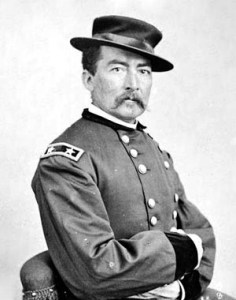
Major-General Philip Sheridan, U.S. Army (circa 1864, U.S. Library of Congress, public domain).

As rifles and cannon cooled following the Battle of Berryville, troops on both sides of the conflict tended to their wounded at the end of the first week of September 1864 while their respective commanding officers resumed their strategic planning. According to Union Major-General Philip H. Sheridan:

Word to the effect that some of [Confederate Lieutenant-General] Early’s troops were under orders to return to Petersburg, and would start back at the first favorable opportunity, had been communicated to me already from many sources, but we had not been able to ascertain the date for their departure. Now that they had actually started, I decided to wait before offering battle until Kershaw had gone so far as to preclude his return, feeling confident that my prudence would be justified by the improved chances of victory; and then, besides, Mr. Stanton kept reminding me that positive success was necessary to counteract the political dissatisfaction existing in some of the Northern States. This course was advised and approved by General Grant, but even with his powerful backing it was difficult to resist the persistent pressure of those whose judgment, warped by their interests in the Baltimore and Ohio railroad, was often confused and misled by stories of scouts (sent out from Washington), averring that Kershaw and Fitzhugh Lee had returned to Petersburg, Breckenridge to southwestern Virginia, and at one time even maintaining that Early’s whole army was east of the Blue Ridge, and its commander himself at Gordonsville.

During the activity prevailing in my army … the infantry was quiet, with the exception of Getty’s division, which made a reconnaissance to the Opequon, and developed a heavy force of the enemy at Edwards’s Corners. The cavalry, however, was employed a good deal … skirmishing – heavily at times – to maintain a space about six miles in width between the hostile lines, for I wished to control this ground so that when I was released from the instructions of August 12 I could move my men into position for attack without the knowledge of Early….

It was the evening of the 16th of September that I received from Miss Wright* positive information that Kershaw was in march toward Front Royal on his way by Chester Gap to Richmond. Concluding that this was my opportunity, I at once resolved to throw my whole force into Newtown the next day, but a despatch [sic] from General Grant directing me to meet him at Charlestown … caused me to defer action until I should see him. In our resulting interview … I went over the situation very thoroughly, and pointed out with so much confidence the chances of a complete victory should I throw my army across the Valley pike near Newtown that he fell in with the plan at once, authorized me to renew the offensive, and to attack Early as soon as I deemed it most propitious to do so; and although before leaving City Point he had outlined certain operations for my army, yet he neither discussed nor disclosed his plans, my knowledge of the situation striking him as being so much more accurate than his own.

* Note: The Battle of Opequan is also often referred to as “Third Winchester” or the “Battle of Winchester.” Spelling variants of “Opequan” and “Opequon” are used throughout this article and the website for 47th Pennsylvania Volunteers: One Civil War Regiment’s Story because battle reports penned by Union and Confederate commanders frequently presented the creek and battle name as “Opequan” while the spelling employed by the publishers of the various memoirs penned by Union Army leaders following the war was “Opequon.” (The spelling used by present-day Virginians is also “Opequon.”)

As the Battle of Opequan began, the 47th Pennsylvania Volunteer Infantry was led by Colonel Tilghman H. Good, and attached to the U.S. Army’s 19th Corps commanded by Brigadier-General William H. Emory—as part of that corps’ 2nd Brigade, which was led by Brigadier-General James W. McMillan. This brigade also included the 12th Connecticut, 160th New York, and 8th Vermont volunteer armies.

Per his Personal Memoirs penned in 1888, former U.S. President Ulysses S. Grant recalled that, as General-in-Chief of the U.S. Army in 1864, he set off for Virginia on 15 September to offer guidance to Major-General Philip H. Sheridan:

My purpose was to have him attack Early, or drive him out of the valley and destroy that source of supplies for Lee’s army. I knew it was impossible for me to get orders through Washington to Sheridan to make a move, because they would be stopped there and such orders as Halleck’s caution (and that of the Secretary of War) … would be given instead, and would, no doubt, be contradictory to mine. I therefore, without stopping at Washington, went directly through to Charlestown, some ten miles above Harpers Ferry, and waited there to see General Sheridan, having sent a courier in advance to inform him where to meet me.

When Sheridan arrived I asked him if he had a map showing the positions of his army and that of the enemy. He at once drew one out of his side pocket, showing all roads and streams, and the camps of the two armies. He said that if he had permission he would move so and so (pointing out how) against the Confederates, and that he could ‘whip them.’ Before starting I had drawn up a plan of campaign for Sheridan, which I had brought with me; but, seeing that he was so clear and so positive in his views and so confident of success, I said nothing about this and did not take it out of my pocket.

Sheridan’s wagon trains were kept at Harper’s Ferry, where all of his stores were. By keeping the teams at that place, their forage did not have to be hauled to them. As supplies of ammunition, provisions and rations for the men were wanted, trains would be made up to deliver the stores to the commissaries and quartermasters encamped at Winchester. Knowing that he, in making preparations to move at a given day, would have to bring up wagon trains from Harpers’ Ferry, I asked him if he could be ready to get off by the following Tuesday. This was on Friday. ‘O yes,’ he said, he ‘could be off before daylight on Monday.’ I told him then to make the attack at that time and according to his own plan; and I immediately started to return to the army about Richmond. After visiting Baltimore and Burlington, New Jersey, I arrived at City Point on the 19th.

Regarding Sheridan’s aforementioned comments regarding “Miss Wright,” Rebecca McPherson Wright was a Quaker who taught at a private school in Winchester, Virginia during the early years of the Civil War. Described by Sheridan in his 1888 memoir as “faithful and loyal to the Government,” she risked her life to covertly provide accurate, critically important information to Union military leaders regarding the location, number and fitness of Confederate troops in the vicinity of Winchester, and was later rewarded with a position with the U.S. Treasury Department in recognition of her fidelity and valor.

Following his meeting with Grant, Sheridan returned to his headquarters in order to begin moving his troops “toward Newtown,” but halted those preparations upon notification that members of Early’s infantry were marching on Martinsburg:

This considerably altered the states of affairs, and I now decided to change my plan and attack at once the two divisions remaining about Winchester and Stephenson’s depot, and later, the two sent to Martinsburg; the disjointed state of the enemy giving me the opportunity to take him in detail, unless the Martinsburg column should be returned by forced marches.

While General Early was in the telegraph office at Martinsburg on the morning of the 18th, he learned of Grant’s visit to me; and anticipating activity by reason of this circumstance, he promptly proceeded to withdraw so as to get the two divisions within supporting distance of Ramseur’s, which lay across the Berryville pike about two miles east of Winchester, between Abraham’s Creek and Red Bud Run, so by the night of the 18th Wharton’s division, under Breckenridge, was at Stephenson’s depot, Rodes near there, and Gordon’s at Bunker Hill. At daylight of the 19th these positions of the Confederate infantry still obtained, with the cavalry of Lomax, Jackson, and Johnson on the right of Ramseur, while to the left and rear of the enemy’s general line was Fitzhugh Lee, covering from Stephenson’s depot west across the Valley pike to Apple-pie Ridge.

Opequon Crossing, circa 1930s (courtesy of Southern Methodist University).

The Opequon Creek “flow[ed] at the foot of a broad and thickly wooded gorge, with high and steep banks” during September of 1864, according to historian Richard B. Irwin. Travelers along the roughly three-mile route to Winchester on the Berryville Road would move from ravine “to the level of rolling plain,” encountering “high ground … covered with large oaks, pines and undergrowth,” which was “intersected by many brooks,” the largest of which was the Red Bud Run, and “a still larger stream, called Abraham’s Creek,” which “after pursuing a nearly parallel course on the south side of the defile, crosses the road not far from the ford” before emptying into the Opequon.

The Union cavalry had maintained control of the six miles east of the Opequan, and at 2 AM Monday, the 19th, Sheridan set his forces in motion. The route was through Berryville, across the Opequan and on to Winchester. The 6th Corps led off, followed by its wagon train, then the 19th Corps [including the 47th Pennsylvania], and finally the Army of West Virginia bringing up the rear. Unfortunately, east of the Opequan, the 6th and 19th Corps became entangled, and the 19th Corps halted to let the 6th Corps pass, hopelessly stringing out the Union troops which were separated by the wagon train. Eventually the 19th Corps moved into the woods on either side of the road and managed to get by the train, but it took six hours to travel the 3 miles in crossing the Opequan, and form a line of battle between the creek and Winchester at 11:40 a.m. This same confusion along the route of the march, caused the artillery to be delayed. As a result, the Confederate forces of Gen. Early had time to reach and consolidate in preparation for the impending engagement.

Sheridan, recalled a later departure time, noting:

My army moved at 3 o’clock that morning. The plan was for Torbert to advance with Merritt’s division of cavalry from Summit Point, carry the crossings of the Opequon at Stevens’s and Lock’s fords, and form a junction near Stephenson’s depot, with Averell, who was to move south from Darksville by the Valley pike. Meanwhile, Wilson was to strike up the Berryville pike, carry the Berryville crossing of the Opequon, charge through the gorge or cañon on the road west of the stream, and occupy the open ground at the head of this defile. Wilson’s attack was to be supported by the Sixth and Nineteenth corps, which were ordered to the Berryville crossing, and as the cavalry gained the open ground beyond the open gorge, the two infantry corps, under command of General Wright, were expected to press on after and occupy Wilson’s ground, who was then to shift to the south bank of Abraham’s creek and cover my left; Crook’s two divisions, having to march from Summit Point, were to follow the Sixth and Nineteenth corps to the Opequon, and should they arrive before the action began, they were to be held in reserve till the proper moment came, and then, as a turning-column, be thrown over toward the Valley pike, south of Winchester.”

Battle of Opequan (aka Third Winchester), Virginia, 19 September 1864 (public domain).

By dawn on 19 September, the brigade from Wilson’s division headed by McIntosh had succeeded in compelling Confederate pickets to flee their Berryville positions with “Wilson following rapidly through the gorge with the rest of the division, debouched from its western extremity with such suddenness as to capture as to capture a small earthwork in front of General Ramseur’s main line.” Although “the Confederate infantry, on recovering from its astonishment, tried hard to dislodge them,” they were unable to do so, according to Sheridan. Wilson’s Union troops were then reinforced by the U.S. 6th Army.

I followed Wilson to select the ground on which to form the infantry. The Sixth Corps began to arrive about 8 o’clock, and taking up the line Wilson had been holding, just beyond the head of the narrow ravine, the cavalry was transferred to the south side of Abraham’s Creek.

The Confederate line lay along some elevated ground about two miles east of Winchester, and extended from Abraham’s Creek north across the Berryville pike, the left being hidden in the heavy timber on Red Bud Run. Between this line and mine, especially on my right, clumps of woods and patches of underbrush occurred here and there, but the undulating ground consisted mainly of open fields, many of which were covered with standing corn that had already ripened.

“The 6th Corps formed across the Berryville Road” while the “19th Corps prolonged the line to the Red Bud on the right with the troops of the Second Division.” According to Irwin, the:

First Division’s First and Second Brigades, under Beal and McMillan, formed in the rear of the Second Division and on the right flank. Beal’s First Brigade was on the right of the division’s position, and McMillan’s Second Brigade deployed on the left and rear of Beal; in order of the 47th Pennsylvania, 8th Vermont, 160th New York, and 12th Connecticut, with five companies of the 47th Pennsylvania deployed to cover the whole right flank of his brigade and to move forward with it by the flank left in front. By this time, the Army of West Virginia had crossed the ford and was massed on the left of the west bank.

While the ground in front of the 6th Corps was for the most part open, the 19th Corps found itself in a dense wood, restricting its vision of both the enemy and its own forces.

“Much time was lost in getting all of the Sixth and Nineteenth corps through the narrow defile,” Sheridan observed, adding that, because Grover’s division was “greatly delayed there by a train of ammunition wagons … it was not until late in the forenoon that the troops intended for the attack could be got into line ready to advance.” As a result:

General Early was not slow to avail himself of the advantages thus offered him, and my chances of striking him in detail were growing less every moment, for Gordon and Rodes were hurrying their divisions from Stephenson’s depot across-country on a line that would place Gordon in the woods south of Red Bud Run, and bring Rodes into the interval between Gordon and Ramseur.

When the two corps had all got through the cañon they were formed with Getty’s division of the Sixth to the left of the Berryville pike, Rickett’s division to the right of the pike, and Russell’s division in reserve in rear of the other two. Grover’s division of the Nineteenth Corps came next on the right of Rickett’s, with Dwight to its rear in reserve, while Crook was to begin massing near the Opequon crossing about the time Wright and Emory [including the 47th Pennsylvania Volunteers]  were ready to attack.

Victory of Philip Sheridan’s Union army over Jubal Early’s Confederate forces, Battle of Opequan, 19 September 1864 (Kurz & Allison, circa 1893, U.S. Library of Congress, public domain).

More than a quarter of a century after the clash, Irwin conjured the spirit of the battle’s beginning:

About a quarter before twelve o’clock, at the sound of Sheridan’s bugle, repeated from corps, division, and brigade headquarters, the whole line moved forward with great spirit, and instantly became engaged. Wilson pushed back Lomax, Wright drove in Ramseur, while Emory, advancing his infantry [including the 47th Pennsylvania Volunteers] rapidly through the wood, where he was unable to use his artillery, attacked Gordon with great vigor. Birge, charging with bayonets fixed, fell upon the brigade of Evans, forming the extreme left of Gordon, and without a halt drove it in confusion through the wood and across the open ground beyond to the support of Braxton’s artillery, posted by Gordon to secure his flank on the Red Bud road. In this brilliant charge, led by Birge in person, his lines naturally became disordered…. 

Sharpe, advancing simultaneously on Birge’s left, tried in vain to keep the alignment with Ricketts and with Birge…. At first the order of battle formed a right angle with the road, but the bend once reached, in the effort to keep closed upon it, at every step Ricketts was taking ground more and more to the left, while the point of direction for Birge, and equally for Sharpe, was the enemy in their front, standing almost in the exact prolongation of the defile, from which line, still plainly marked by Ash Hollow, the road … was steadily diverging.

As the battle continued to unfold, the disorganization affected the lines on both sides of the conflict. According to Irwin:

The 19th Corps Second Division was initially successful, but in its charge became disorganized; and the troops on the left in following the less obstructed area of the road which veared [sic] slightly left, soon opened up a gap on their right; while the remainder of the Union forces were moving straight ahead as they engaged the Confederates. This gap eventually reached 400 yards in width, an opportunity the Confederates soon exploited. Fortunately the Confederates were soon themselves disorganized by their advance, and encountering fresh Union troops on their right flank were halted. The Confederate attack on the right flank also achieved initial success, until halted by Beal’s first brigade.

McMillan had been ordered to move forward at the same time as Beal, and to form on his left. The five companies of the 47th Pennsylvania that had been detached to form a skirmish line on the Red Bud Run to cover McMillan’s right flank, had some how [sic] lost their way on the broken ground among the thickets, and, not finding them in place, McMillan had been obliged to send the remaining companies of the same regiment to do the same duty, and brought the rest of the brigade to the front to restore the line. The line then charged and drove the Confederates back beyond the positions where their attack had started. The initial engagement had lasted barely an hour, and by 1 PM was over. The right flank of the 19th Corps was held by the 47th Pennsylvania and 30th Massachusetts.

According to Sheridan:

Just before noon the line of Getty, Ricketts, and Grover moved forward, and as we advanced, the Confederates, covered by some heavy woods on their right, slight underbrush and corn-fields along their centre [sic], and a large body of timber on their left along the Red Bud, opened fire from their whole front. We gained considerable ground at first, especially on our left but the desperate resistance which the right met with demonstrated that the time we had unavoidably lost in the morning had been of incalculable value to Early, for it was evident that he had been enabled already to so far concentrate his troops as to have the different divisions of his army in a connected line of battle in good shape to resist.

Getty and Ricketts made some progress toward Winchester in connection with Wilson’s cavalry…. Grover in a few minutes broke up Evans’s brigade of Gordon’s division, but his pursuit of Evans destroyed the continuity of my general line, and increased an interval that had already been made by the deflection of Ricketts to the left, in obedience to instructions that had been given him to guide his division on the Berryville pike. As the line pressed forward, Ricketts observed this widening interval and endeavored to fill it with the small brigade of Colonel Keifer, but at this juncture both Gordon and Rodes struck the weak spot where the right of the Sixth Corps and the left of the Nineteenth should have been in conjunction, and succeeded in checking my advance by driving back a part of Ricketts’s division, and the most of Grover’s. As these troops were retiring I ordered Russell’s reserve division to be put into action, and just as the flank of the enemy’s troops in pursuit of Grover was presented, Upton’s brigade, led in person by both Russell and Upton, struck it in a charge so vigorous as to drive the Confederates back … to their original ground.

The success of Russell enabled me to re-establish the right of my line some little distance in advance of the position from which it started in the early morning, and behind Russell’s division (now commanded by Upton) the broken regiments of Ricketts’s division were rallied. Dwight’s division was then brought up on the right, and Grover’s men formed behind it….

No news of Torbert’s progress came … so … I directed Crook to take post on the right of the Nineteenth Corps and, when the action was renewed, to push his command forward as a turning-column in conjunction with Emory. After some delay … Crook got his men up, and posting Colonel Thoburn’s division on the prolongation of the Nineteenth Corps, he formed Colonel Duval’s division to the right of Thoburn. Here I joined Crook, informing him that … Torbert was driving the enemy in confusion along the Martinsburg pike toward Winchester; at the same time I directed him to attack the moment all of Duval’s men were in line. Wright was introduced to advance in concert with Crook, by swinging Emory [including the 47th Pennsylvania and his other 19th Corps’ troops] and the right of the Sixth Corps to the left together in a half-wheel. Then leaving Crook, I rode along the Sixth and Nineteenth corps, the open ground over which they were passing affording a rare opportunity to witness the precision with which the attack was taken up from right to left. Crook’s success began the moment he started to turn the enemy’s left…

Both Emory [including the 47th Pennsylvania] and Wright took up the fight as ordered…. [A]s I reached the Nineteenth Corps the enemy was contesting the ground in its front with great obstinacy; but Emory’s dogged persistence was at length rewarded with success, just as Crook’s command emerged from the morass of the Red Bud Run, and swept around Gordon, toward the right of Breckenridge….”

As “Early tried hard to stem the tide” of the multi-pronged Union assault, “Torbert’s cavalry began passing around his left flank, and as Crook, Emory, and Wright attacked in front, panic took possession of the enemy, his troops, now fugitives and stragglers, seeking escape into and through Winchester,” according to Sheridan.

When this second break occurred, the Sixth and Nineteenth corps were moved over toward the Millwood pike to help Wilson on the left, but the day was so far spent that they could render him no assistance.” The battle winding down, Sheridan headed for Winchester to begin writing his report to Grant.

According to Irwin, although the heat of battle had cooled by 1 p.m., troop movements had continued on both sides throughout the afternoon until “Crook, with a sudden … effective half-wheel to the left, fell vigorously upon Gordon, and Torbert coming on with great impetuosity … the weight was heavier than the attenuated lines of Breckinridge and Gordon Could bear.” As a result, “Early saw his whole left wing give back in disorder, and as Emory [including the 47th Pennsylvania] and Wright pressed hard, Rodes and Ramseur gave way, and the battle was over.”

Early vainly endeavored to reconstruct his shattered lines [near Winchester]. About five o’clock Torbert and Crook, fairly at right angles to the first line of battle, covered Winchester on the north from the rocky ledges that lie to the eastward of the town…. Thence Wright extended the line at right angles with Crook and parallel with the valley road, while Sheridan drew out Emory [including the 47th Pennsylvania] … and sent him to extend Wright’s line to the south….

Sheridan, mindful that his men had been on their feet since two o’clock in the morning … made no attempt to send his infantry after the flying enemy….

Sheridan … openly rejoiced, and catching the enthusiasm of their leader, his men went wild with excitement when, accompanied by his corps commanders, Wright and Emory and Crook, Sheridan rode down the front of his lines. Then went up a mighty cheer that gave new life to the wounded and consoled the last moments of the dying….

When the President heard the news his first act was to write with his own hand a warm message of congratulation, and this he followed up by making Sheridan a brigadier-general in the regular army, and assigning him permanently to the high command he had been exercising under temporary orders.

Summing up the battle for Lincoln and Grant, Sheridan reported:

My losses in the Battle of Opequon were heavy, amounting to about 4,500 killed, wounded and missing. Among the killed was General Russell, commanding a division, and the wounded included Generals Upton, McIntosh and Chapman, and Colonels Duval and Sharpe. The Confederate loss in killed, wounded, and prisoners equaled about mine. General Rodes being of the killed, while Generals Fitzhugh Lee and York were severely wounded.

We captured five pieces of artillery and nine battle flags. The restoration of the lower valley – from the Potomac to Strasburg – to the control of the Union forces caused great rejoicing in the North, and relieved the Administration from further solicitude for the safety of the Maryland and Pennsylvania borders. The President’s appreciation of the victory was expressed in a despatch [sic] so like Mr. Lincoln I give a fac-simile [sic] of it to the reader. This he supplemented by promoting me to the grade of brigadier-general in the regular army, and assigning me to the permanent command of the Middle Military Department, and following that came warm congratulations from Mr. Stanton and from Generals Grant, Sherman and Meade.

“The losses of the Army of the Shenandoah, according to the revised statements compiled in the War Department, were 5018, including 697 killed, 3983 wounded, 338 missing,” per revised estimates by Irwin. “Of the three infantry corps, the 19th, though in numbers smaller than the 6th, suffered the heaviest loss, the aggregate being 2074 [314 killed, 1554 wounded, 206 missing]. Conversely, Early “lost nearly 4000 in all, including about 200 prisoners; or as other sources reported, anywhere from 5500 to 6850 killed, wounded, and missing or captured.”

Despite the significant number of killed, wounded and missing on both sides of the conflict, casualties within the 47th Pennsylvania Volunteers were surprisingly low. Private Thomas Steffen of Company B was killed in action while F Company Private William H. Jackson’s cause of death was somewhat less clear; he was reported in Bates’ History of Pennsylvania Volunteers, 1861-5 as having died on the same day on which the battle took place.

Among the wounded were C Company Corporal Timothy Matthias Snyder, who was wounded slightly in the knee, and Privates William Adams (E Company), Charles Pfeiffer (B Company), who lost the forefinger of his right hand, J. D. Raubenold (B Company), and Edward Smith (E Company).

As he penned his memoir in 1885 during the final days of his life, President Ulysses S. Grant again made clear the significance of the Battle of Opequan:

Sheridan moved at the time he had fixed upon. He met Early at the crossing of Opequon Creek [September 19], and won a most decisive victory – one which electrified the country. Early had invited this attack himself by his bad generalship and made the victory easy. He had sent G. T. Anderson’s division east of the Blue Ridge [to Lee] before I [Grant] went to Harpers Ferry and about the time I arrived there he started with two other divisions (leaving but two in their camps) to march to Martinsburg for the purpose of destroying the Baltimore and Ohio Railroad at that point. Early here learned that I had been with Sheridan and, supposing there was some movement on foot, started back as soon as he got the information. But his forces were separated and … he was very badly defeated. He fell back to Fisher’s Hill, Sheridan following.

Battle of Winchester, 19 September 1864 (Harper’s Weekly, 8 October 1864, public domain). Also known as the “Battle of Opequan” or “Third Winchester.”

In its 8 October 1864 edition, Harper’s Weekly recapped the battle as follows:

The engraving on page 644 illustrates one of the most spirited actions, and certainly the most imposing spectacle of the war. It will be remembered that Sheridan, after having got the Sixth Corps across the Opequan, was compelled to wait  full two hours for the arrival of the Nineteenth, and as a consequence of this to form an entirely new plan of battle in the face of an enemy already prepared and in line. At first the advantage appeared to rest with Early, whose fierce cannonade broke Sheridan’s first line, and threatened to disturb his second. But this state of affairs changed as soon as the Federal artillery got in position. The line of battle was reformed, and the conflict opened in terrible earnest. The two opposing armies were are some points not more than two hundred yards apart. The slaughter is described to have been truly awful; but the advantage rested now with Sheridan’s advancing columns. At a critical point in the fight the cavalry bugle was heard above the din of the strife and the shouts of the contending armies; then followed the charge, led by such soldiers as Merritt and Custer and Torbert, upon the enemy’s right. This decided the fortunes of the day. The movement was in accordance with Sheridan’s deep laid plan, and besides being the most magnificent of spectacles was also a most wonderful success. ‘The stubborn columns of Early’s command,’ says the Tribune correspondent, ‘were forced to give way, and break before the fierce onslaught which our cavalry made upon them, who, with sabre in hand, rode them down, cutting them right and left, capturing 721 privates and non-commissioned officers, with nine battle-flags and two guns.’ Thus was fought and won the battle of Winchester, September 19, 1864. [Also known as the Battle of Opequan.]

Outcome and Immediate Aftermath of the Battle of Opequan (Third Winchester)

According to historian Richard Bluhm, during the “severe fighting” in and around the Opequon Creek on 19 September, the Union’s:

VI Corps troops pushed Ramseur and Rodes back while XIX Corps [including the 47th Pennsylvania Volunteers] attacked Gordon’s position on the rebel left. As the two Union corps advanced, a gap opened between them. Two Confederate brigades charged into it and threatened to collapse the entire Union right until a counterattack by Russell’s division restored the Union line. Meanwhile, Sheridan, concerned how Torbert was faring at Stephenson’s Depot, redirected Crook to move his command to the Union right, toward Gordon’s rebel lines. North of Winchester, Wharton’s [Confederate] infantry temporarily held its position until Averell’s [Union] cavalry outflanked it, forcing the rebels back. Breckinridge [and his Confederate troops] retired toward Winchester with the Union cavalry in pursuit, but, near the town, Wharton’s two brigades counterattacked and stalled Torbert’s [Union] advance.

About the same time, Sheridan ordered a final coordinated thrust against the Confederate line, which was now bent into an L-shaped formation to the north and east of Winchester. Crook’s [Union] troops hit Gordon’s left flank and turned into it, sending the Confederate division reeling back, while Wright and Emory also brought their corps [including the 47th Pennsylvania] into action. Merritt’s and Averell’s Federal divisions made a classic cavalry charge into the Confederates’ far left flank, breaking the infantry lines. The combination of assaults shattered Early’s [Confederate] position and forced his army south in an orderly retreat out of Winchester. Sheridan’s [Union] infantry stopped on the south edge of the town while Union cavalry continued to pursue the Confederates to Kernstown. Early ended his retreat at a strong position on Fisher’s Hill about twenty miles away.

Sheridan continued his offensive against Early the next day At dawn, 20 September, his army moved south toward Fisher’s Hill. Crook received orders to make a concealed march the next day to hidden positions west of Fisher’s Hill and then make an assault on 22 September. Meanwhile, Sheridan sent Torbert east around Massanutten Mountain into the Luray Valley with a reinforced cavalry division. He was to cross back into the Valley some thirty miles south at New Market to cut off Early’s retreat.

Convinced that Early was finally beaten, Grant wanted Sheridan to move against the rail junction at Charlottesville, but Sheridan balked. He was almost one hundred miles from the closest Union supply depot, and foraging efforts in the picked over Valley could not support his army. He suggested destroying crops, barns, and other supplies in the Shenandoah Valley and then withdrawing with his army northward. With Grant’s approval, Sheridan sent Union cavalry as far south as Waynesboro to cut the railroads, burn grain and woolen mills, and seize or destroy crops and livestock….

The Battle of Fisher’s Hill
Fisher’s Hill, Virginia, circa 1892 (William Henry Jackson, Detroit Publishing Co., U.S. Library of Congress, public domain).

Per Irwin, the military value of Fisher’s Hill, Virginia “resided mainly in the fact that between the peaks of Masanutten and the North Mountains the jaws of the valley were contracted to a width of not more than four miles.

The right flank of this shortened front rests securely upon the north fork of the Shenandoah, where it winds about the base of Three Top Mountain before bending widely toward the east to join the south fork and form the Shenandoah River. Across the front, among rocks, between steep and broken cliffs, winds the brawling brook called Tumbling Run, and above it, from its southern edge, rises the rugged crag called Fisher’s Hill.”
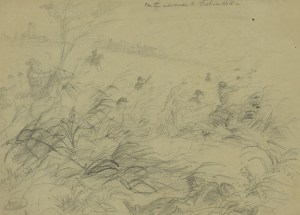
“Forward the Skirmishers: On the Advance to Fisher’s Hill” (Alfred Waud, 22 September 1864, U.S. Library of Congress, public domain).

It was in and around this high ground that Confederate Lieutenant-General Jubal Early chose to regroup following his defeat on 19 September 1864 during the Battle of Opequan. But Sheridan and his Union troops were not about to let that happen. According to Irwin:

On the morning of the 20th of September Sheridan set out to follow Early, and in the afternoon took up a position before Strasburg, the Sixth Corps on the right, Emory [including the 47th Pennsylvania] on the left, and Crook behind Cedar Creek in support. The next morning the 21st, Sheridan pushed and followed Early’s skirmishers over the high hill that stands between Strasburg and Fisher’s Hill, overlooking both, drove them behind the defences [sic] of Fisher’s Hill, and took up a position covering the front from the banks of the North Fork on the left, where Emory’s left rested lightly, to the crown of the hill just mentioned, which commanded the approach by what is called the back road, or Cedar Creek grade, and was but slightly commanded by Fisher’s Hill itself. This strong vantage-ground Wright wrested from the enemy after a struggle, and felling the trees for protection and for range, planted his batteries there. The ground was very difficult, broken and rocky, and to hold it the Sixth Corps had to be drawn toward the right, while Emory [including the 47th Pennsylvania], following the movement, in the dark hours of the early morning of the 22d of September, extended his front so as to cover the ground thus given up by Wright.

Sheridan now thought of nothing short of the capture of Early’s army. Torbert was to drive the Confederate cavalry through the Luray, and thence, crossing the Massanutten range, was to lay hold of the valley pike at New Market, and plant himself firmly in Early’s rear on his only line of retreat. Crook, by a wide sweep to the right, his march hidden by the hills and woods, was to gain the back road, so as to come up secretly on Early’s left flank and rear, and the first sounds of battle … were to serve as a signal for Wright and Emory [including the 47th Pennsylvania] to fall on with everything they had.

Battlefields of Fisher’s Hill and Cedar Creek, Virginia (U.S. Engineers’ Map, Lt.-Col. G. L. Gillespie, 1873, public domain).

During the forenoon of the 22d, Grover held the left of the position of the Nineteenth Corps, his division formed in two lines in the order of Macauley, Birge; Shunk, Molineaux. Dwight, in the order of Beal, McMillan [including the 47th Pennsylvania], held the right, and connected with Wheaton. In taking ground toward the right … this line had become too extended, and, as it was necessary that the left of the skirmishers, at least, should rest upon the river, Grover shortened his front by moving forward Foster with the 128th and Lewis with the 176th New York to drive in the enemy’s skirmishers opposite, and to occupy the ground that they had been holding. This was handsomely done under cover of a brisk shelling from Taft’s and Bradbury’s guns. As on the rest of the line, the whole front of the corps was covered as usual by hasty entrenchments. In the afternoon Ricketts moved far to the right, and seized a wooded knoll commanding Ramseur’s position on Fisher’s Hill. In preparation for the attack Sheridan gave Emory [including the 47th Pennsylvania] the ground on the left of the railway, and Wright that beyond it, and Molineaux moved forward to lead the advance of Grover. The sun was low when the noise of battle was heard far away on the right. This was Crook, sweeping everything before him as he charged suddenly out of the forest full upon the left flank and rear of Lomax and Ramseur, taking the whole Confederate line completely in reverse. The surprise was absolute. Instantly Wright and Emory [including the 47th Pennsylvania] took up the movement, and, inspired by the presence and the impetuous commands of Sheridan, descended rapidly the steep and broken sides of the ravine, at the bottom of which lies Tumbling Run, and then rather scrambling than charging up the rocky and almost inaccessible sides of Fisher’s Hill, swarmed over the strong entrenchments, line after line, and planting their colors upon the parapets, saw the whole army of Early in disorderly flight. Foremost to mount the parapet was Entwistle with his company of the 176th New York…. Crook, but almost at the same instant Wilson, gallantly leading the 28th Iowa, planted the colors of his regiment in the works…. [T]he Confederates … abandoned sixteen pieces of artillery where they stood. Early was unable to arrest the retreat of his army until he found himself near Edenburg, four miles beyond Woodstock.

Sheridan’s loss in this battle was 52 killed, 457 wounded, 19 missing, in all, 528…. Emory [including the 47th Pennsylvania] accounts for 15 killed, 86 wounded, 13 missing, together 114…. Early reports his loss in the infantry and artillery alone as 30 killed, 210 wounded, 995 missing, total 1,235; but Sheridan claims 1,100 prisoners….

[Sheridan] without a halt … pushed forward his whole organization, each regiment or brigade nearly in the order in which it chanced to file into the road. Devin’s cavalry brigade trod closely on the heels of what was left of Lomax, and Emory [including the 47th Pennsylvania], whose line had crossed the valley road, pushed up it as fast as the men could move over the ground. Wright moved in close support of Emory and personally directed the operations of both corps, the Nineteenth as well as the Sixth. So fast did the infantry march that it was 10 o’clock at night before Devin, from his place in line on the right of the Sixth Corps, was able to take the road abreast with the Nineteenth, and broad daylight before his or any other horsemen passed the hardy yet toil-worn soldiers of Molineaux, who were left all night to lead the swift pursuit…. About half-past eight the head of the column first came in contact with the rear-guard of the enemy, but this was soon driven in, and no further resistance was offered until about an hour later, at the crossing of a creek near Woodstock, a brisk fire of musketry, aided by two guns in the road, was opened on Molineaux’s front, but was quickly silenced. At dawn on the 23d of September Sheridan went into bivouac covering Woodstock, and let the infantry rest until early in the afternoon, when he again took up the pursuit with Wright and Emory [including the 47th Pennsylvania], leaving Crook to care for the dead and wounded. Early fell back to Mount Jackson, and was preparing to make a stand when Averell coming up, he and Devin made so vigorous a demonstration with the cavalry alone that Early thought it best to continue his retreat beyond the North Fork to Rude’s Hill, which stands between Mount Jackson and New Market.

Sheridan advanced to Mount Jackson on the morning of the 24th of September, and before nightfall had concentrated his whole army there. He was moving his cavalry to envelop both of Early’s flanks and the infantry, Wright leading, to attack in front. However, Early did not wait for this, but retreated rapidly in order of battle, pursued by Sheridan in the same order, that is by the right of the regiments with an attempt at deploying intervals through New Market and six miles beyond to a point where a country road diverges through Keezletown and Cross Keys to Port Republic, at the head of the South Fork. Here both armies halted face to face, Sheridan for the night; but Early, as soon as it was fairly dark, fell back about five miles on the Port Republic road, and again halted at a point about fourteen miles short of that town.

Early’s object in quitting the main valley road, which would have conducted him to Harrisonburg, covering Staunton, was to receive once more the reinforcements that Lee, at the first tidings from Winchester, had again hurried forward under Kershaw. On the 25th of September, therefore, Early retreated through Port Republic toward Brown’s Gap, where Kershaw, marching from Culpeper through Swift Run Gap, joined him on the 26th. Here also Early’s cavalry rejoined him, Wickham from the Luray valley, and Lomax, pressed by Powell, from Harrisonburg.

Sheridan, keeping to the main road, advanced to Harrisonburg with Wright and Emory [including the 47th Pennsylvania], leaving Crook to hold the fork of the roads where Early had turned off. At Harrisonburg Torbert rejoined with Merritt and Wilson. Then Sheridan sent Torbert with Wilson and Lowell by Staunton to Waynesboro, where, before quitting the valley by Rockfish Gap, the main road, as well as the railway to Charlottesville, crosses the affluent of the Shenandoah known as the South River. To divert attention from this raid Sheridan reinforced Devin, who, in the absence of Torbert’s main body, had been following and observing Early near Port Republic without other cavalry support, and thus Merritt presently ran into Kershaw marching to join Early at Brown’s Gap. Early, having gone as far as he wished, turned upon Merritt and drove him across the South Fork, but just then getting the first inkling of Torbert’s movements, divined their purpose … [and] marched with all speed, in compact order and with the greatest watchfulness in every direction, on Rockfish Gap. But Torbert, having a good start, won the race, and … caused [Early] to draw off.

Sheridan … had gone nearly as far as he intended, but as he meant presently to begin with his cavalry above Staunton the work of destroying the value of the whole valley to the Confederate army, on the 29th he ordered Wright and Emory [including the 47th Pennsylvania] to Mount Crawford to support Torbert in this work…. Sheridan … propose to bring the Valley campaign to an end with the destruction of the crops, and then to move with his main force to join Grant on the James. Grant, at once agreeing to this, directed Sheridan to keep Crook in the valley and to transfer the rest of his force to the armies before Richmond.

In 1888, Sheridan recalled this critical period in the Union Army’s history:

The night of the 19th of September I gave orders for following Early up the valley next morning – the pursuit to begin at daybreak – and in obedience to these directions Torbert moved Averell out on the Back road leading to Cedar Creek and Merritt up the Valley pike toward Strasburg, while Wilson was directed on Front Royal by way of Stevensburg. Merritt’s division was followed by the infantry Emory’s [including the 47th Pennsylvania] and Wright’s columns marching abreast in the open country to the right and left of the pike, and Crook’s immediately behind them. The enemy having kept up his retreat at night, presented no opposition whatever until the cavalry discovered him posted at Fisher’s Hill, on the first defensive line where he could hope to make any serious resistance. No effort was made to dislodge him, and later in the day, after Wright and Emory [including the 47th Pennsylvania] came up, Torbert shifted Merritt over toward the Back road till [sic] he rejoined Averell. As Merritt moved to the right, the Sixth and Nineteenth Corps [including the 47th Pennsylvania] crossed Cedar Creek and took up the ground the cavalry was vacating, Wright posting his own corps to the west of the Valley pike overlooking Strasburg, and Emory’s [including the 47th Pennsylvania] on his left so as to extend almost to the road leading from Strasburg to Front Royal. Crook, as he came up the same evening, went into position in some heavy timber on the north bank of the Cedar Creek.

A reconnoissance [sic] made pending these movements convinced me that the enemy’s position at Fisher’s Hill was so strong that a direct assault would entail unnecessary destruction of life, and, besides, be of doubtful result. At the point where Early’s troops were in position, between the Massanutten range and Little North Mountain, the valley is only about three and a half miles wide. All along the precipitous bluff which overhangs Tumbling Run on the south side, a heavy line of earthworks had been constructed when Early retreated to this point in August, and these were now being strengthened so as to make them almost impregnable; in fact, so secure did Early consider himself that, for convenience, his ammunition chests were taken from the caissons and placed behind the breastworks. Wharton, now in command of Breckenridge’s division … held the right of this line, with Gordon next him; Pegram, commanding Ramseur’s old division, joined Gordon. Ramseur with Rodes’s division, was on Pegram’s left, while Lomax’s cavalry, now serving as foot-troops, extended the line to the Back road. Fitzhugh Lee being wounded, his cavalry, under General Wickham, was sent to Milford to prevent Fisher’s Hill from being turned through the Luray Valley.

In consequence of the enemy’s being so well protected from a direct assault, I resolved on the night of the 20th to use again a turning-column against his left, as had been done on the 19th at Opequan.  To this end I resolved to move Crook, unperceived if possible, over to the eastern face of Little North Mountain, whence he could strike the left and rear of the Confederate line, and as he broke it up, I could support him by a left half-wheel of my whole line of battle. The execution of this plan would require perfect secrecy, however, for the enemy from his signal-station on Three Top could plainly see every movement of our troops in daylight. Hence, to escape such observation, I marched Crook during the night of the 20th into some heavy timber north of Cedar Creek, where he lay concealed all day of the 21st. This same day Wright and Emory [including the 47th Pennsylvania] were moved up closer to the Confederate works, and the Sixth Corps, after a severe fight, in which Ricketts’s and Getty were engaged, took up some high ground on the right of the Manassas Gap railroad in plain view of the Confederate works, and confronting a commanding point where much of Early’s artillery was massed. Soon after General Wright had established this line I rode with him along it to the westward, and finding that the enemy was still holding an elevated position further to our right, on the north side of Tumbling Run, I directed this also to be occupied. Wright soon carried the point, which gave us an unobstructed view of the enemy’s works and offered good ground for our artillery. It also enabled me to move the whole of the Sixth Corps to the front till its line was within about seven hundred yards of the enemy’s works; the Nineteenth Corps [including the 47th Pennsylvania], on the morning of the 22d, covering the ground vacated by the Sixth by moving to the front and extending to the right, but still keeping its reserves on the railroad.

In the darkness of the night of the 21st, Crook was brought across Cedar Creek and hidden in a clump of Timber behind Hupp’s Hill till daylight of the 22d, when, under cover of the intervening woods and ravines, he was marched beyond the right of the Sixth Corps and again concealed not far from the Back road. After Crook had got into this last position, Ricketts’s division was pushed out until it confronted the left of the enemy’s infantry, the rest of the Sixth Corps extending from Ricketts’s left to the Manassas Gap railroad, while the Nineteenth Corps [including the 47th Pennsylvania] filled in the space between the left of the Sixth and the North Fork of the Shenandoah….

While Ricketts was occupying the enemy’s attention, Crook, again moving unobserved into the dense timber on the eastern face of the Little North Mountain, conducted his command south in two parallel columns until he gained the rear of the enemy’s works, when, marching his divisions by the left flank, he led them in an easterly direction down the mountain-side. As he emerged from the timber near the base of the mountain, the Confederates discovered him … and opened with their batteries, but it was too late – they having few troops at hand to confront the turning-column. Loudly cheering, Crook’s men quickly crossed the broken stretch in rear of the enemy’s left, producing confusion and consternation at every step.

About a mile from the mountain’s base, Crook’s left was joined by Ricketts, who in proper time had begun to swing his division into action, and the two commands moved along in rear of the works so rapidly that, with but slight resistance, the Confederates abandoned the guns massed near the centre [sic]. The swinging movement of Ricketts was taken up successively from right to left throughout my line, and in a few minutes the enemy was thoroughly routed, the action, though brief, being none the less decisive. Lomax’s dismounted cavalry gave way first, but was shortly followed by all the Confederate infantry in an indescribable panic, precipitated doubtless by fears of being caught and captured in the pocket formed by Tumbling Run and the North Fork of the Shenandoah River. The stampede was complete, the enemy leaving the field without semblance of organization, abandoning nearly all his artillery and such other property as was in the works, and the rout extending through the fields and over the woods toward Woodstock, Wright and Emory [including the 47th Pennsylvania] in hot pursuit.

Midway between Fisher’s Hill and Woodstock there is some high ground, where at night-fall a small squad endeavored to stay with us two pieces of artillery, but this attempt at resistance proved fruitless, and notwithstanding the darkness, the guns were soon captured. The chase was then taken up by Devin’s brigade as soon as it could be passed to the front, and continued till after daylight the next morning, but the delays incident to a night pursuit made it impossible for Devin to do more than pick up stragglers….

The battle of Fisher’s Hill was, in a measure, a part of the battle of Opequon; that is to say, it was an incident of the pursuit resulting from that action. In many ways, however, it was much more satisfactory, and particularly so because the plan arranged on the evening of the 20th was carried out to the very letter by Generals Wright, Crook, and Emory, not only in all their preliminary manoeuvres [sic], but also during the fight itself. The only drawback was with the cavalry, and to this day I have been unable to account satisfactorily for Torbert’s failure….

We reached Woodstock early on the morning of the 23d, and halted there some little time to let the troops recover their organization, which had been broken in the night march they had just made. When the commands had closed up we pushed on toward Edinburg, in the hope of making more captures at Narrow Passage Creek; but the Confederates, too fleet for us, got away; so General Wright halted the infantry not far from Edinburg, till rations could be brought for the men. Meanwhile I, having remained at Woodstock, sent Devin’s brigade to press the enemy … and if possible prevent him from halting long enough to reorganize. Notwithstanding Devin’s efforts the Confederates managed to assemble a considerable force to resist him, and being too weak for the rear-guard, he awaited the arrival of Averell, who … would be hurried to the front with all possible despatch [sic]…. It turned out, however, that he was not near by [sic] at all, and … without good reason he had refrained from taking any part whatever in pursuing the enemy in the flight from Fisher’s Hill, and in fact had gone into camp and and left to the infantry the work of pursuit….

The failure of Averell to press the enemy the evening of the 23d gave early time to collect his scattered forces and take up a position on the east side of the North Fork of the Shenandoah, his left resting on the west side of that stream at Rude’s Hill, a commanding point about two miles south of Mt. Jackson. Along this line he had constructed some slight works during the night, and at daylight on the 24th I moved the Sixth and Nineteenth corps [including the 47th Pennsylvania] through Mt. Jackson to attack him, sending Powell’s division to pass around his left flank, toward Timberville, and Devin’s brigade across the North Fork, to move along the base of Peaked Ridge and attack his right. The country was entirely open, and none of these manoeuvres [sic] could be executed without being observed, so as soon as my advance began, the enemy rapidly retreated in line of battle up the valley through New Market, closely followed by Wright and Emory [including the 47th Pennsylvania], their artillery on the pike and their columns on its right and left. Both sides moved with celerity, the Confederates stimulated by the desire to escape, and our men animated by the prospect of wholly destroying Early’s army. The stern-chase continued for about thirteen miles, our infantry often coming within range, yet whenever we began to deploy, the Confederates increased the distance between us by resorting to a double quick, evading battle with admirable tact. While all this was going on, the open country permitted us a rare and brilliant site, the bright sun gleaming from the arms and trappings of the thousands of pursuers and pursued.

Near New Market, as a last effort to hold the enemy, I pushed Devlin’s cavalry – comprising about five hundred men – with two guns right up on Early’s lines, in the hope that the tempting opportunity given him to capture the guns would stay his retreat long enough to let my infantry deploy within range, but he refused the bait, and … continued on with little loss and in pretty good order….

Some six miles south of [New Market] Early left the Valley Pike and took the road to Keezletown, a move due … mainly [to] the fact that the Keezletown road ran immediately along the base of Peaked Mountain – a rugged ridge affording protection to Early’s right flank – and led in a direction facilitating his junction with Kershaw, who had been ordered back to him from Culpeper the day after the battle of Opequon. The chase was kept up on the Keezletown road till darkness overtook us, when my weary troops were permitted to go into camp; and as soon as the enemy discovered by our fires that the pursuit had stopped, he also bivouacked some five miles farther south toward Port Republic.

The next morning Early was joined by Lomax’s cavalry from Harrisonburg, Wickham’s and Payne’s brigades of cavalry also uniting with him from the Luray Valley. His whole army then fell back to the mouth of Brown’s Gap to await Kershaw’s division and Cutshaw’s artillery….

By the morning of the 25th the main body of the enemy had disappeared entirely from my front, and the capture of some small squads of Confederates in the neighboring hills furnished us the only incidents of the day….

Picking up prisoners here and there, my troops resumed their march directly south on the Valley pike, and when the Sixth and Nineteenth corps [including the 47th Pennsylvania] reached Harrisonburg they went into camp, Powell in the meanwhile pushing on to Mt. Crawford, and Crook taking up a position in our rear at the junction of Keezletown road and the Valley pike. Late in the afternoon Torbert’s cavalry came in from New Market.

The succeeding day I sent Merritt to Port Republic to occupy the enemy’s attention, while Torbert, with Wilson’s division and the regular brigade, was ordered to Staunton, whence he was to proceed to Waynesboro and blow up the railroad bridge. Having done this, Torbert, as he returned, was to drive off whatever cattle he could find, destroy all forage and breadstuffs, and burn the mills. He took possession of Waynesboro in due time, but had succeeded in only partially demolishing the railroad bridge when, attacked by Pegram’s division of infantry and Wickham’s cavalry, he was compelled to fall back to Staunton. From the latter place he retired to Bridgewater and Spring Hill, on the way, however, fully executing his instructions regarding the destruction of supplies.”

Meanwhile, added Sheridan, “Merritt had occupied Port Republic, but he happened to get there the very day that Kershaw’s division was marching from Swift Run Gap to join Early”:

Kershaw’s four infantry brigades attacked at once, and Merritt, forced out of Port Republic, fell back toward Cross Keys … I ordered the infantry there, but Torbert’s attack at Waynesboro had alarmed Early, and … he drew all his forces in toward Rock-fish Gap. This enabled me to re-establish Merritt at Port Republic, send the Sixth and Nineteenth corps [including the 47th Pennsylvania] to the neighborhood of Mt. Crawford to await the return of Torbert, and to post Crook at Harrisonburg; these dispositions practically obtained till the 6th of October, I holding a line across the valley from Port Republic along North River by Mt. Crawford to the Back road near the mouth of Briery Branch Gap….

Grant, once again via his own personal memoirs, reiterated the significance of Sheridan’s Shenandoah Valley victories:

The valley is narrow at that point [Fisher’s Hill], and Early made another stand there, which extended across. But Sheridan turned both his flanks and again sent him speeding up the valley, following in hot pursuit. The pursuit was continued up the valley to Mount Jackson and New Market. Sheridan captured eleven hundred prisoners and sixteen guns. The houses which he passed all along the route were found to be filled with Early’s wounded, and the country swarmed with his deserters. Finally, on the 25th, Early turned from the valley eastward, leaving Sheridan at Harrisonburg in undisputed possession.

Now one of the main objects of the expedition began to be accomplished. Sheridan went to work with his command, gathering in the crops, cattle, and everything in the upper part of the valley required by our troops, and especially taking what might be of use to the enemy. What he could not take away he destroyed, so that the enemy would not be invited to come back there. I congratulated Sheridan upon his recent great victory and had a salute of a hundred guns fired in honor of it, the guns being aimed at the enemy around Petersburg. I also notified the other commanders throughout the country, who also fired salutes in honor of the victory.

Private Jacob M. Kerkendall, Company E, 47th Pennsylvania Volunteers, was one of the Union soldiers who were wounded in action during the Battle of Fisher’s Hill, Virginia.

Through the Eyes of a 47th Pennsylvanian

Corporal Timothy Snyder’s knee wound described by Henry D. Wharton, 47th Pennsylvania (September 1864, Sunbury American, public domain).

In a letter home to the Sunbury American newspaper later that month, 47th Pennsylvanian Henry D. Wharton recapped his regiment’s recent combat experiences:

Letter from the Sunbury Guards.
HARRISONBURG, Va., Sept, 1864.

DEAR WILVERT:

As there has been no train going back to Harper’s Ferry, and our long and hurried chase after the Johnnies, I have not been able to send you any account of our great and glorious victories. We have, this morning, a breathing spell, so I will profit by it and give you a short history of our doings.

On Monday, Sept. 19, we broke camp at two o’clock in the morning, and moved in the direction of Winchester. The 19th corps marched slowly for an hour when they stopped for two hours. Hearing heavy firing they moved on crossed the Opequan creek, and pushed forward quickly, eager to join in any fun going on in front. This sport was found three miles east of Winchester, where the 6th and artillery were engaged with the enemy. The two Divisions of the 19th with the 8th were thrown in line of battle, ready for the work before them. Keeping in this line for about thirty minutes, under the artillery of the rebels, who were engaged in a nice little duel with our own, an advance was ordered. Our men moved forward as if on parade, and were soon hid in a thick woods, where the rebels were massed to receive them. Then the murderous work commenced. For twenty minutes a continual roar of musketry was heard, reports of artillery shook the earth and the air seemed filed with the whiz of shells and bullets, commingled with the cheers of the men engaged in deadly strife, when a portion of our centre [sic] broke and fell back from the woods into the field from which they started. Matters at this moment looked dark and a retreat seemed on the tapis, but not so, a defiant cheer arose above the din of battle, and the 1st Division of the 19th and parts of the 6th stopped the graybacks in their advance. The party who broke, now rallied, and our whole force was hurled against the foe, driving them from every position they held, finally forcing them into a disgraceful retreat, chasing horse, foot and dragoon twenty-two miles to Fisher’s Hill, back of Strausburg [sic]. The enemy left so hurriedly that twenty-five hundred wounded fell into our hands, besides their dead. We captured over four thousand prisoners, five pieces of artillery, any quantity of small arms, and fifteen battle flags. The loss of their General officers shows how severely they were punished. Generals Rhodes, Gordon, Ramseur and Wharton were killed, and Generals Bradley T. Johnson, Yorke and Godwin wounded. The total rebel loss in killed, wounded and captured, was between eight and nine thousand. You may rely on the amount of prisoners – for I saw the most of them – at one place in Winchester twenty-five hundred, and of squads brought in during the fight, I counted from two hundred down to as low numbers as one Colonel. – Our loss was severe, but not one-fourth that of the enemy, as we lost no prisoners and retained possession of our wounded. I crossed over a part of the battle-field, and found a sickening sight. Dead and dying covered the ground, wounded men gasping for breath and others crying for water. These were mostly rebels, (our own having been cared for,) but were now being attended to by our nurses, and would have been before, only that they, (the rebels) were further on in the battle field than our men. The rebels fled so precipitately, that not to be deterred to their flight, they cut their accoutrements from their waists and shoulders, and threw away their guns, leaving all in the field. – Dead bodies were to be seen into the very town of Winchester, and on the outskirts, I saw one, breathing his last, who had been shot behind a stone fence, while trying to do the same trick to one of our own boys. On the route through Newtown, Middleton and the whole way to Cedar creek, evidence of their flight was seen. Dead horses, burned caissons, wagons, ambulances and the destruction of arms. All these things were by the road side and in the fields, showing how hard pushed Early was in his flight.

The 1st Division of the 6th corps, in the death of General Russell, lost a capable officer, and his loss is regretted by all who were under his command.

On Tuesday night our forces reached Strasburg, or rather on the hills, of the Winchester side. The next day we advanced about one mile, and occupied the day in shelling the woods, to find out the position of the enemy. This was accomplished, and that night a portion of the army moved toward Fisher’s Hill, which was occupied by the enemy. The next morning, Thursday, our entire army was formed in line, and assigned positions. Skirmish lines, with their supports, were thrown out who gradually drove them from the many lines, they established during the day. Our artillery were engaged most of the day in shelling their lines and trying to get an answer from their batteries. This was done about two o’clock, when they fired at our skirmish line, as they made a general advance. Then commenced a heavy artillery fight, during which our lines steadily drove that of the rebels back. The Johnnies were driven from line to line, until finally they broke and fled in worse confusion than they did at Winchester, our boys after them, yelling, the rebels leaving behind all the artillery they had in position, which our fellows took and used on them as they disgracefully retreated. Our boys followed them at double-quick about four miles, in the greatest glee, forgetting all fatigue in their triumph, nor thinking of danger, when, under cover of darkness, the rebels fired four shots of artillery loaded with shell right in their front, and from musketry on either side. The damage down was slight, only wounding some three or four, but for the moment caused confusion, but Sheridan who is always in front, shouted never mind one gun after so glorious a victory; give them a yell you can frighten them with that,’ which the boys did, and then continued on to Woodstock, where they had to stop for rest and rations. The gun used by the rebels in this cowardly attack was captured by our men on the spot.

Our stay at Woodstock was a short one, for we immediately pushed on after the flying foe, they only stopping occasionally to impede our progress, that they might get off their train. The people by the way, told us such a retreat was never heard of. Cavalry, Artillery, Infantry, and waggon [sic] trains all mixed up – each one trying to be foremost. They say their Army is completely demoralized, and the people were anxious for peace. A woman told some of us that the retreating soldiers swore they would fight no more. General Early, at New Market, cried when he could no more rally his men, that he might make a final stand to retrieve his lost fortune.

Of the amount of prisoners captured I cannot give you a correct amount. It can safely be put down at eight hundred. We captured nineteen pieces of artillery, two battle flags, and of small arms I will make no attempt to guess, only I can tell you that they were more numerously scattered than on the way to Winchester. At all the towns we passed, Edensburg, Mt. Jackson, New Market and Harrisonburg, there are two or three hospitals, filled with wounded, injured in these late battles.

The 47th was in the midst of these fights, yet she has almost escaped unharmed. The casualties were one killed and ten wounded, none dangerously. Of the wounded one was Timothy Snyder, slight in knee, from Co. C. Please inform friends of our safety, that all are well and in the best possible humor over last week’s glorious work.

Early by some means got the remains of his army through Thornton’s Gap, near New Market, and are supposed to be going toward Gordonville. What steps General Sheridan will take for their pursuit is not known. The distance we have pursued the rebels is sixty-five miles, this with the amount of captures, killed and wounded, I have no doubt you will consider a pretty good six day’s work. With respects to friends, yourself and family, I remain,

Yours, Fraternally,
H.
D. W.

Next: The Battle of Cedar Creek


Sources:

  1. Bates, Samuel P. History of Pennsylvania Volunteers, 1861-5, vol. 1. Harrisburg, Pennsylvania: B. Singerly, State Printer, 1869.
  2. “Battle of Berryville,” in CWSAC Battle Summaries. Washington, D.C.: Civil War Sites Advisory Commission (CWSAC), The American Battlefield Protection Program, retrieved online 1 September 2016.
  3. Bluhm, Jr., Raymond K. Shenandoah Valley Campaign: March-November 1864. Washington, D.C.: Center of Military History, United States Army.
  4. Grant, Ulysses S. Personal Memoirs of Ulysses S. Grant. New York, New York: C. L. Webster, 1885.
  5. Irwin, Richard B. History of the Nineteenth Army Corps. New York, New York: G. P. Putnam’s Sons, 1892.
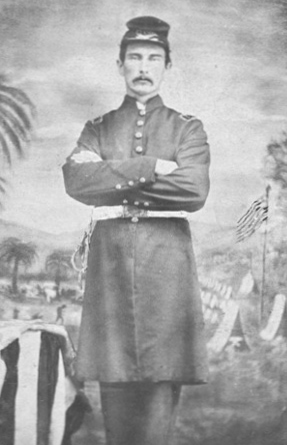
  6. Mahon, Michael G. The Shenandoah Valley 1861-1865: The Destruction of the Granary of the Confederacy. Mechanicsburg, Pennsylvania: Stackpole Books, 1999.
  7. “Registers of Deaths of Volunteers,” in “Records of the U.S. Adjutant General’s Office, 1861-1865″ (Record Group 94). Washington, D.C.: U.S. National Archives and Records Administration.
  8. Schmidt, Lewis. A Civil War History of the 47th Regiment of Pennsylvania Veteran Volunteers. Allentown, Pennsylvania: Self-published, 1986.
  9. “Sheridan’s 1864 Shenandoah Campaign,” in “Shenandoah at War.” New Market, Virginia: Shenandoah Valley Battlefields Foundation, retrieved online 1 September 2016.
  10. Sheridan, Philip Henry. Personal Memoirs of P. H. Sheridan, General, United States Army in Two Volumes, vol. II. New York, New York: Charles L. Webster & Company, 1888.
  11. Snyder, Laurie. Red River Campaign (Louisiana, March to May 1864),” and A Voyage North and a Memorable Encounter with Abraham Lincoln,” and From Louisiana to Virginia (1864): The Battle of Snicker’s Gap and Service with the Army of the Shenandoah,” in 47th Pennsylvania Volunteers: One Civil War Regiment’s Story. Retrieved online 1 July 2017.
  12. U.S. Civil War Veterans’, Widows’ and Orphans’ Pension Files. Washington, D.C.: U.S. National Archives and Records Administration.
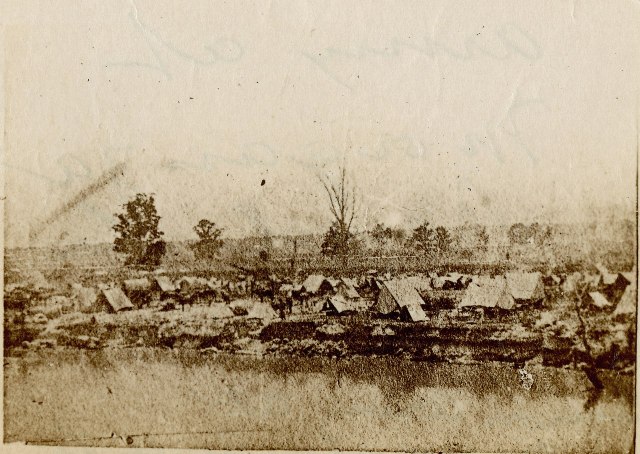

  13. Wert, Jeffry D. From Winchester to Cedar Creek: The Shenandoah Campaign of 1864. Mechanicsburg, Pennsylvania: Stackpole Books, 1997.
  14. Wharton, Henry D. Letters from the Sunbury Guards. Sunbury, Pennsylvania: Sunbury American, 1864.
  15. Whitehorne, Joseph W. A. The Battle of Cedar Creek. Washington, D.C.: U.S. Army, Center of Military History, 1992.