Observing Pennsylvania German Day on June 28

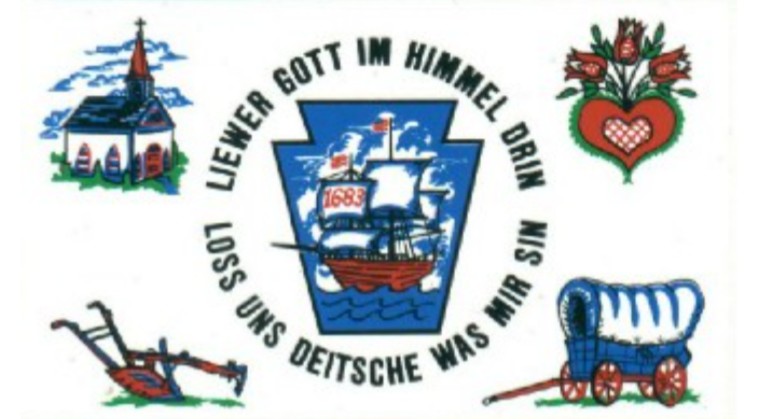
This Pennsylvania German Flag, which was created by Peter V. Fritsch, was officially dedicated at the Allentown Court House in 1989 (public domain).

On June 29, 1976, the General Assembly of the Commonwealth of Pennsylvania enacted P. L. 458, No. 113, directing that Pennsylvania German Day be observed annually on June 28, across the great Keystone State:

Section 1. In recognition of the cultural, educational and historical contributions from their heritage to this Commonwealth, June 28 of each year is set aside to commemorate the Pennsylvania German, commonly known as Pennsylvania Dutch, and is hereby designated to be “Pennsylvania German Day.”

The Governor is authorized and requested to issue a proclamation each year calling upon the people of the Commonwealth to commemorate the contributions of the German people to the history and culture of the Commonwealth, and to approve that day with appropriate honors and ceremonies.

Section 2. This act shall take effect immediately.

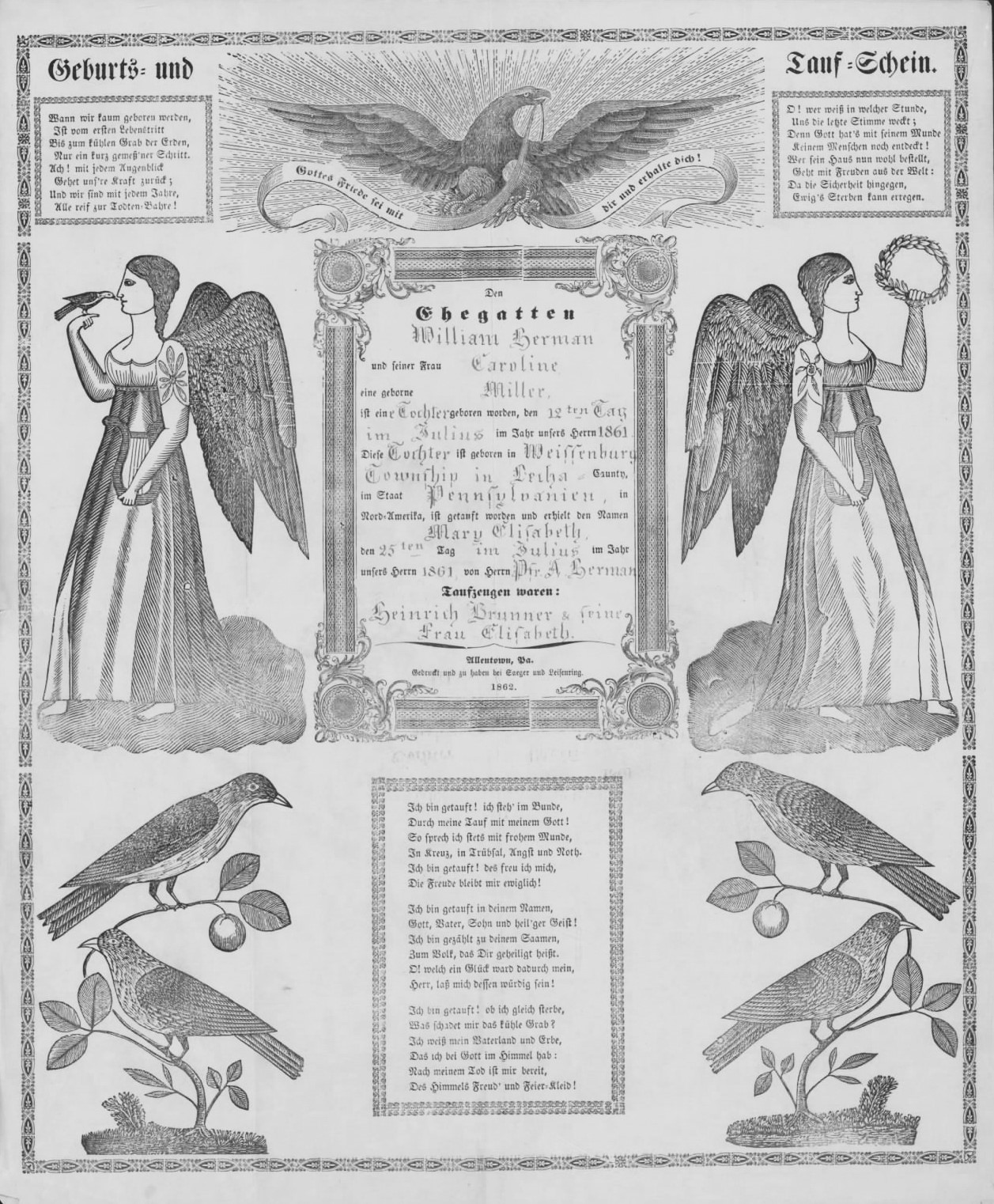
Copy of the 1862 Taufschein of Mary Elisabeth Herman, daughter of Private William Herman, 47th Pennsylvania Volunteers (U.S. Civil War Widows’ and Orphans’ Pension Files, U.S. National Archives and Records Administration, public domain; click to enlarge).

That act carries special meaning for all who are involved with 47th Pennsylvania Volunteers: One Civil War Regiment’s Story because a significant portion of the men who served with the 47th Pennsylvania Volunteer Infantry during the American Civil War were men and boys of German heritage, including:

Read their stories. Remember their names. Honor the sacrifices they made for the United States of America and the world.


Sources: 

  1. Act No. 113 of 1976: Pennsylvania German Day — Observance.” Harrisburg, Pennsylvania: Pennsylvania General Assembly, June 29, 1976 (retrieved online June 28, 2025).
  2. Civil War Veterans’ Card File, 1861-1866 (47th Pennsylvania Infantry). Harrisburg, Pennsylvania: Pennsylvania State Archives.
  3. Moyer, Del-Louise. “John Daniel Eisenbrown: Fraktur Artist and Grave Monument Engraver.” Philadelphia, Pennsylvania: AlyssumArts, September 7, 2015.
  4. U.S. Civil War Pension Files. Washington, D.C.: U.S. National Archives and Records Administration.


Reconstruction and Provost Duties: The 47th Pennsylvania Heads for Georgia (Early to Late June 1865)

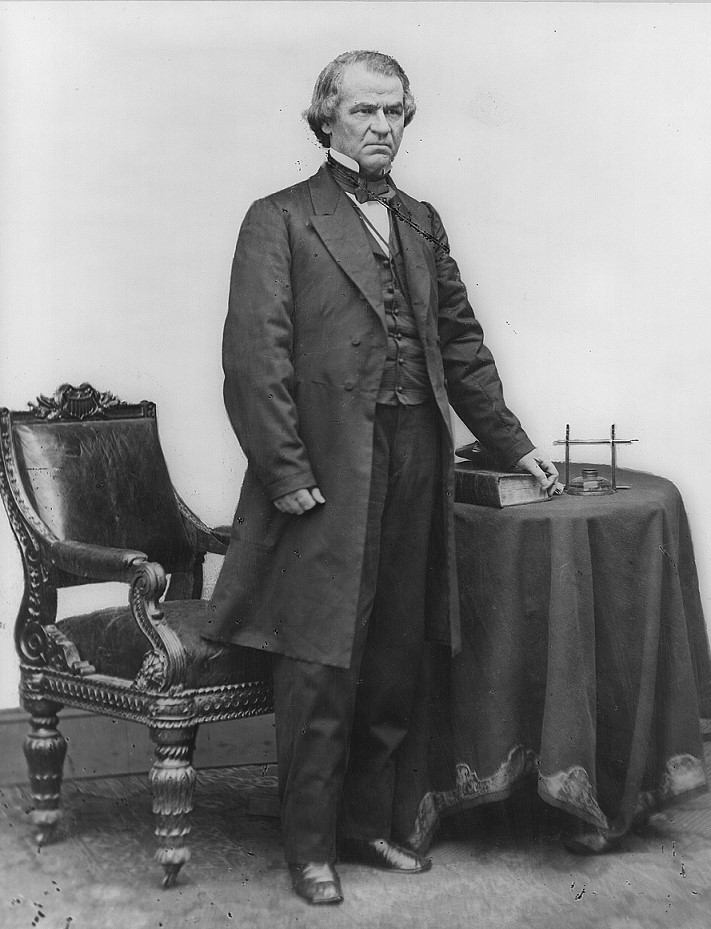
U.S. President Andrew Johnson, circa 1865 (Matthew Brady, U.S. Library of Congress, public domain).

With the American Civil War officially over, and the shock of his assassinated predecessor beginning to ease, U.S. President Andrew Johnson was now in charge of healing a divided, battered nation. According to historian Eric Foner, President Johnson “inaugurated the period of Presidential Reconstruction (1865-67) in May of 1865.”

Johnson offered a pardon to all southern Whites except Confederate leaders and wealthy planters (although most of these subsequently received individual pardons), restoring their political rights and all property except for slaves. He also outlined how new state governments would be created.

In order to facilitate the rebuilding of those new local and state governments, President Johnson also made the decision to station federal troops in key locations throughout the nation’s southern and western states. Among the federal troops ordered to assist with the operations were members of the 47th Pennsylvania Volunteer Infantry (who were known by this time as the 47th Pennsylvania Veteran Volunteers).

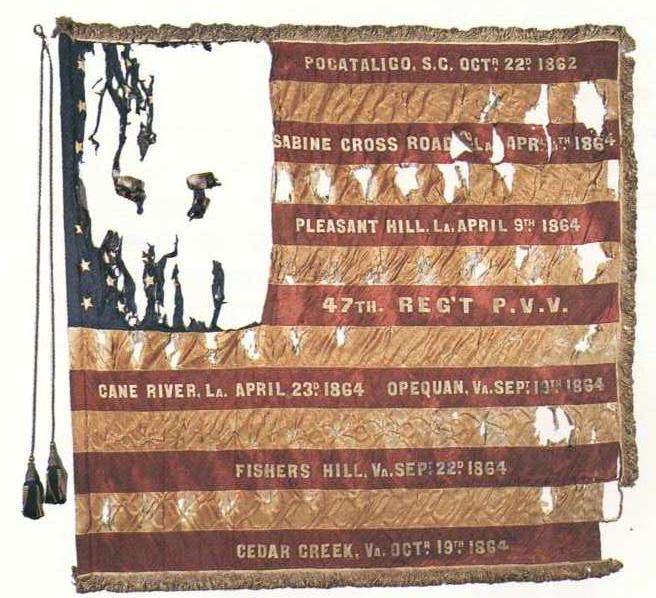
Second State Colors, 47th Pennsylvania Veteran Volunteers (presented to the regiment 7 March 1865).

A New Mission Begins

The Reconstruction Era for the 47th Pennsylvania Veteran Volunteers effectively began with the regiment’s departure for America’s Deep South on June 3, 1865, according to Assistant Regimental Surgeon John Young Shindel, M.D., who wrote these words on that day in history:

At about 10 o’clock, went on board the U.S.S. North Star…. Some of the Reg. went on Board the “Haze”. Dr. S. [and] Some on board the “Metis” from W. [Washington]. Started down the Potomac. Passed Mt. Vernon….

Reaching Fortress Monroe the next morning circa 11:00 a.m., the North Star continued south through the Atlantic Ocean and on to the waters off Cape Hatteras, North Carolina around 10:00 p.m. on June 4, according to Dr. Young. Suffering from seasickness the following day, he noted that his ship had already reached Cape Fear in North Carolina.

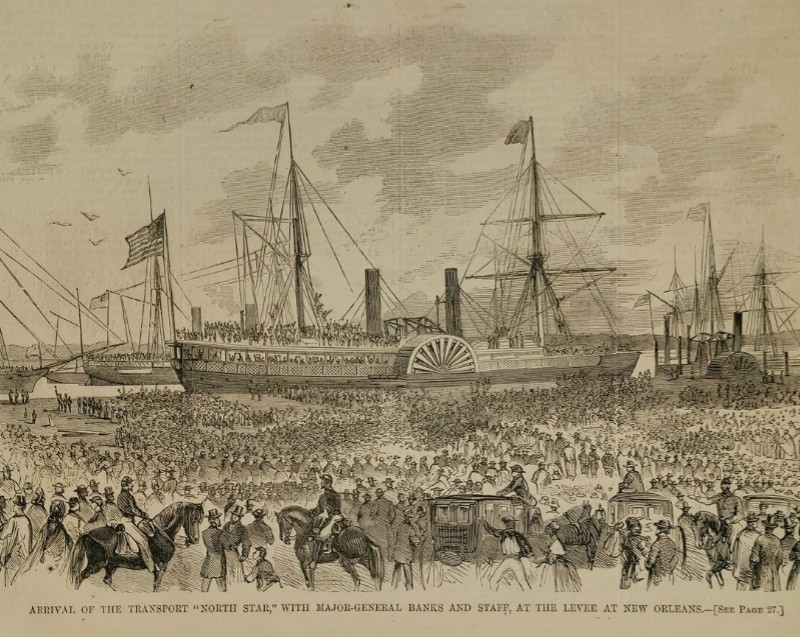
U.S.S. North Star, circa 1863 (Harper’s Weekly, January 10, 1863, public domain).

By Tuesday, June 6, the North Star had steamed to the mouth of the Savannah River, where it stopped, briefly, in order to allow a pilot to board. That pilot then moved the ship along the river, past Fort Pulaski, across the bar, and toward the harbor in the city of Savannah, Georgia, where it finally then dropped its anchor. The ship’s passengers were then directed to effect their transfer to smaller troop transports — the General Grant and the Oneita, according to Private Luther Horn of Company E. Those smaller steamers then took the 47th Pennsylvanians directly into the city. Upon their arrival at their designated landing spots at 4:00 a.m. the next morning (June 7), they disembarked, setting their feet on the soil of Georgia for the first time in the regiment’s history.

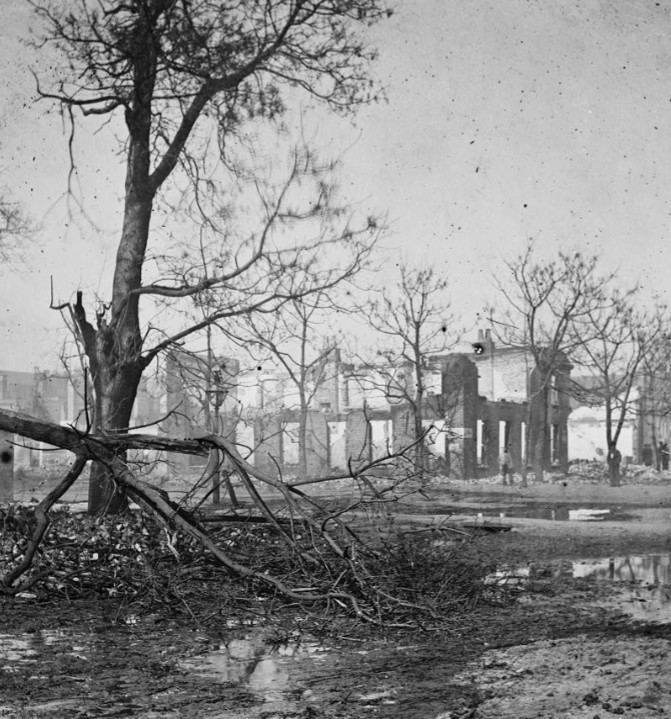
War-damaged houses in Savannah, Georgia, 1865 (Sam Cooley, U.S. Army, U.S. Library of Congress, public domain).

Using the next three hours to unload their equipment, they then lined up, by company, and stepped forward into their new mission at 7:30 a.m. Marching through the streets of Savannah, they headed one mile south, toward the city’s southern section, where they began erecting their Sibley tents.

* Note: Meanwhile, the steamships carrying the remaining 47th Pennsylvanians (the Metis and the Haze) were still en route. The Metis arrived later that day (June 7); the Haze arrived during the afternoon of June 8 with the members of Companies A, D, H, and I.

As the reunited 47th Pennsylvania Veteran Volunteers began settling in to their new routine, Regimental Orders, No. 67 directed members of Regimental Band No. 2 to practice between 9:00 and 10:00 every morning and perform every evening at 7:00 outside of the tent of the regiment’s commanding officer, Colonel John Peter Shindel Gobin.

On Friday, June 9, the entire regiment took part in a brigade parade. Five days later, Regimental Orders, No. 69 directed that “the first call for dress parade would be at 6 PM, and commanders were instructed to fall in their companies and drill them in the manual of arms until the second call at 6:30 PM,” according to regimental historian Lewis Schmidt. By mid-June the regiment was staffed by a total of eight hundred and sixty-three officers and enlisted men.

C Company’s Adam Maul and G Company’s Benjamin Neur, both privates, were subsequently detached to duties as clerks at the U.S. Department of the South’s headquarters. On June 21, Regimental Orders, No. 70 directed the captains of each company to “have their respective companies policed every morning and see that the tents and quarters of the men are properly ventilated and kept scrupulously clean, necessary for health,” adding that “one of the medical officers will inspect.”

Battling the elements once again, the 47th Pennsylvanians broke camp and relocated a short distance away — to drier ground — on Monday, June 26.

Confident in his regiment’s abilities to keep the peace, even as other Union Army regiments were receiving orders to depart from Georgia, leaving the 47th Pennsylvania with far less support, Colonel Gobin “requested permission from Maj. Wilkinson, AA Gen. of the District of Savannah, to turn in excess ordnance and ordnance stores” on June 27. The diplomacy phase of their new mission had begun.


Sources:

  1. Bates, Samuel P. History of Pennsylvania VolunteersVolunteers, 1861-5, vol. 1. Harrisburg, Pennsylvania: B. Singerly, State Printer, 1869.
  2. Civil War Muster Rolls (47th Pennsylvania Infantry). Harrisburg, Pennsylvania: Pennsylvania State Archives.
  3. Civil War Veterans’ Card File, 1861-1866 (47th Pennsylvania Infantry). Harrisburg, Pennsylvania: Pennsylvania State Archives.
  4. Foner, Eric. “Reconstruction.” Washington, D.C.: U.S. National Park Service, retrieved online June 3, 2025.
  5. “From Charleston and Savannah.” Pittsburgh, Pennsylvania: The Pittsburgh Daily Gazette, July 13, 1865.
  6. “From the South,” in “By Telegraph from Charleston.” Baraboo, Wisconsin: Baraboo Republic, July 19, 1865.
  7. “Savannah Intelligence.” Charleston, South Carolina: Charleston Daily Courier, July 4, 1865.
  8. Schmidt, Lewis. A Civil War History of the 47th Regiment of Pennsylvania Veteran Volunteers. Allentown, Pennsylvania: Self-published, 1986.
  9. Shindel, John Young. Diary and Personal Letters, 1865-1866. Allentown, Pennsylvania: Personal Collection of Lewis Schmidt.
  10. “The History of the Forty-Seventh Regt. P. V.” Allentown, Pennsylvania: The Lehigh Register, July 20, 1870.


Camp Brightwood, Washington, D.C.: Medical Issues and Personnel Changes (April-Early June 1865)

Spectators gather for the Grand Review of the Armies, 23-24 May 1865, beside the crepe-draped U.S. Capitol, flag at half-staff following the assassination of President Abraham Lincoln (U.S. Library of Congress, public domain).

Headquartered at Camp Brightwood in the Brightwood district of Washington, D.C.’s northwestern section since late April 1865, the 47th Pennsylvania Volunteers were attached to Dwight’s Division of the 2nd Brigade of the U.S. Department of Washington’s 22nd Corps. Their job was to prevent former Confederate States military troops and their sympathizers from reigniting the flames of civil war in the wake of U.S. President Abraham Lincoln’s assassination.

Multiple members of the regiment had only recently completed their detached duties as guards at the military prison where the key conspirators in their commander-in-chief’s murder were being held during their historic trial, and the regiment as a whole had just marched in the Union’s Grand Review of the National Armies on May 23.

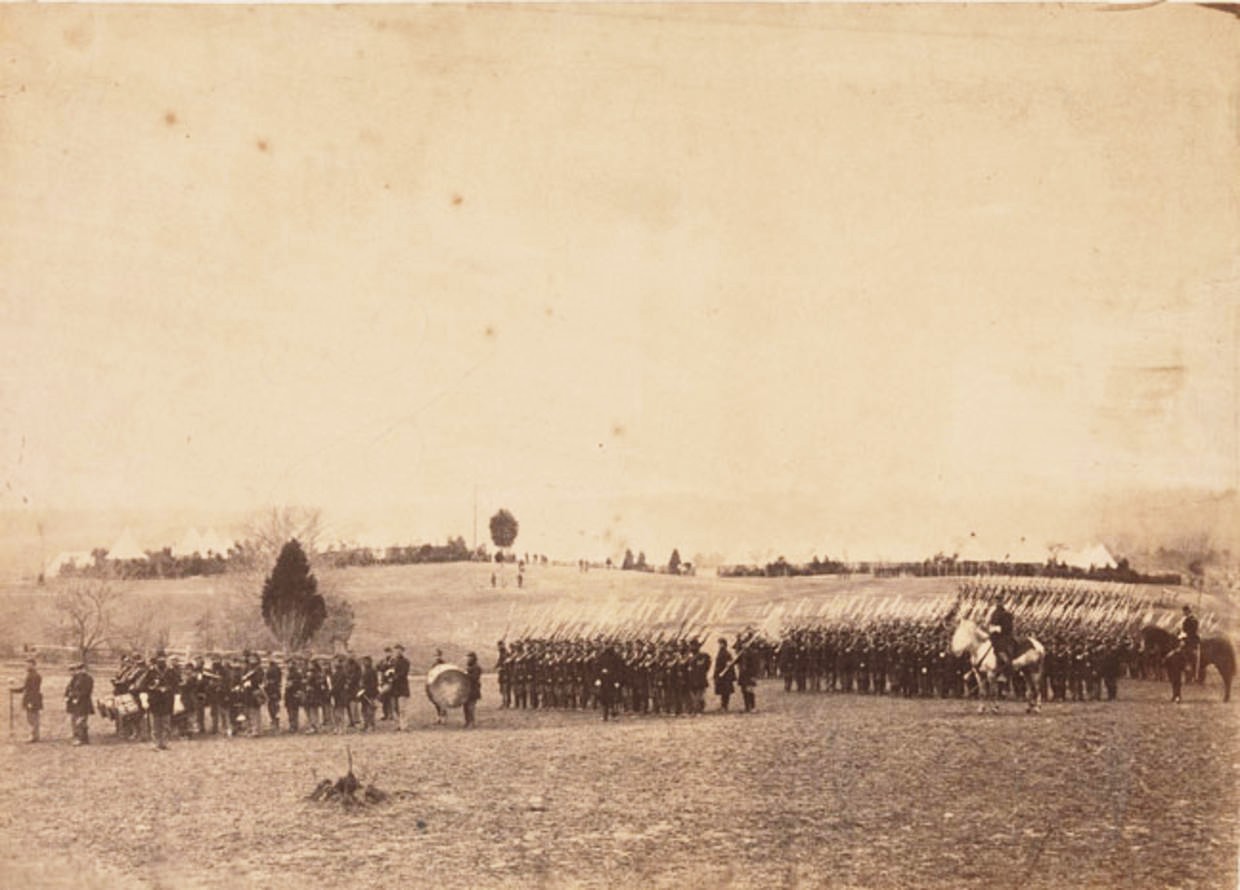
Unidentified Union infantry regiment, Camp Brightwood, Washington, D.C., circa 1865 (public domain).

Now, as the majority of Union Army soldiers were being granted honorable discharges from the military, the 47th Pennsylvania Veteran Volunteers were hurriedly packing their belongings — but for transport to south, rather than back home. Meanwhile, as that frenzy of activity was unfolding, a “lucky few” of their comrades were being transferred to other federal military units, while others were receiving word that they would be honorably discharged via general orders that had been issued by the United States War Department — or by surgeons’ certificates of disability that had been approved by regimental or more senior ranking Union Army physicians.

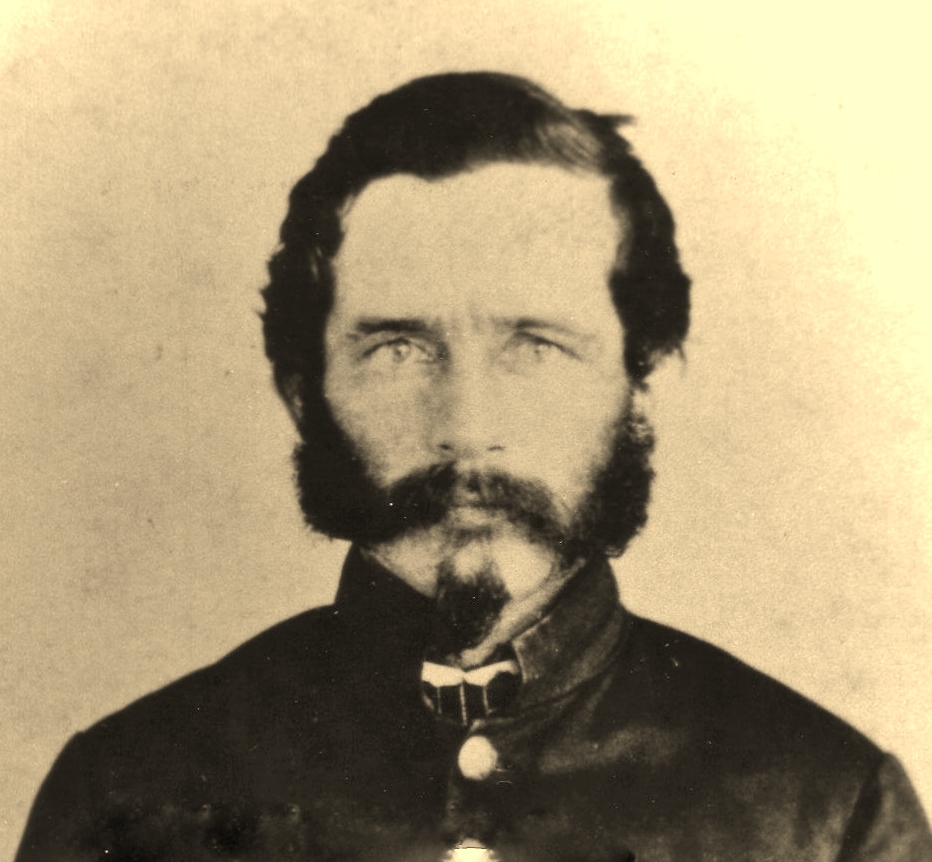
Sergeant-Major William M. Hendricks, central regimental command, 47th Pennsylvania Volunteers, circa 1863 (public domain).

Among the more startling departures were those of First Lieutenant William M. Hendricks of Company C, Private William Kennedy of Company G, and Private Daniel Kochendarfer (alternate spellings: Kochenderfer, Kochendorfer) of Company H. First Lieutenant Hendricks had simply had his fill of military life and had resigned his commission on May 9, 1865 and Private Kennedy had died from phthisis at Mower General Hospital in Philadelphia, Pennsylvania on May 25, but Private Kochendarfer was ordered to remain behind for an entirely different reason — an arrest and conviction (the details of which remain murky to this day).

* Note: Having distinguished himself earlier in his career by nursing his sick and wounded comrades during their final moments of life in 1862, Private Daniel Kochendarfer was convicted during a court martial trial and sent to a federal military prison on June 1, 1865. He remained imprisoned there even as the 47th Pennsylvania Veteran Volunteer Infantry was mustering out for the final time on Christmas Day in 1865. Dishonorably discharged on March 7, 1866, he was never able to clear his name, despite petitioning the U.S. War Department for redress during the 1890s.

Medical Discharges

Other discharges that were issued to 47th Pennsylvanians at Camp Brightwood that spring were granted for entirely different reasons — physical or mental fitness for new duties that would require both brains and brawn. Among those deemed no longer fit to serve were:

  • Private George W. Lightfoot of Company G, who was transferred to Company I in the 24th Regiment of the U.S. Army’s Veteran Reserve Corps, which was also known as the “Invalid Corps” (April 25, 1865);
  • Private Joseph H. Schwab of Company F, who was honorably discharged on a surgeon’s certificate of disability (April 25, 1865);
  • Private William Leinberger of Company C, who was transferred to the 1st Battalion of the 21st Regiment of the Veteran Reserve Corps (April 28, 1865);
  • Private William M. Michael of Company C, who had been wounded in action during the Battle of Cedar Creek, Virginia on October 19, 1864 and was honorably discharged per General Orders, No. 77, issued by the Office of the U.S. Adjutant General (May 3, 1865);
  • Private William H. Guptill of Company G, who was honorably discharged on a surgeon’s certificate of disability (May 15, 1865);
  • Private Josiah D. Rabenold of Company B, who had been wounded in action during the Battle of Opequan, Virginia, also known as “Third Winchester,” on 19 September 1864, was treated by Union Army physicians and was honorably discharged (May 15, 1865);
  • Private Joseph Young of Company G, who had been hospitalized at a Union Army facility in Cumberland, Maryland and was honorably discharged on a surgeon’s certificate (May 17, 1865);
  • Private Charles Acher of Company K, who was honorably discharged on a surgeon’s certificate (May 19, 1865);
  • Private George P. Blain of Company C, who had been wounded in action during the Battle of Cedar Creek and was honorably discharged per General Orders, No. 77, issued by the Office of the U.S. Adjutant General (May 19, 1865);
  • Private Adam Lyddick of Company H, who had been severely wounded above the knee during the Battle of Cedar Creek, Virginia on October 19, 1864 and was honorably discharged on a surgeon’s certificate (May 19, 1865);
  • Private George Turpin of Company H, who had been hospitalized at the Union’s Mower General Hospital in Philadelphia (May 19, 1865);
  • Private Charles Buss of Company F, who had endured captivity as a prisoner of war (POW) at the Confederate Army’s prison camp near Tyler, Texas (Camp Ford) until his release on January 1, 1865 and was honorably discharged on a surgeon’s certificate (May 25, 1865);
  • Private Joel Michael of Company F was honorably discharged on a surgeon’s certificate (May 25, 1865);
  • Private Allen L. Kramer of Company B, who was wounded in action during the Battle of Creek, was treated at a Union Army General Hospital in Philadelphia and was honorably discharged on a surgeon’s certificate (May 26, 1865);
  • Private Charles F. Stuart of Company C, who had endured captivity as a POW at a Confederate Army prisoner of war camp until his release on 4 March 1865 and was honorably discharged (May 29, 1865);
  • Private Daniel S. Crawford of Company A, whose leg had been amputated to save his life after being wounded during the Battle of Cedar Creek and was honorably discharged on a surgeon’s certificate (May 31, 1865);
  • Private Michael Fitzgibbon of Company I, who was initially alleged to have deserted from Camp Brightwood, but had, in reality, been receiving treatment for malaria from Union Army physicians and was honorably discharged (May 31, 1865);
  • Private Lewis Brong of Company B, who had developed a chronic medical condition during Sheridan’s 1864 Shenandoah Valley Campaign and was honorably discharged per General Orders, No. 53, issued by the U.S. War Department (June 1, 1865);
  • Regimental Quartermaster Francis Z. Heebner, who had endured captivity as a POW at a Confederate Army officers’ prison in Richmond or Danville, Virginia until his release in late February 1865 and was honorably discharged (June 1, 1865);
  • Private Jenkin J. Richards of Company E, who had been hospitalized at the Union’s Fairfax Seminary Hospital in Fairfax, Virginia and was honorably discharged on a surgeon’s certificate (June 3, 1865);
  • Private Augustus Deitz/Dietzof Company H, who had been hospitalized in Washington, D.C. and was honorably discharged on a surgeon’s certificate (June 6, 1865); and
  • Private Andrew Mehaffie of Company D, who had also been wounded during the Battle of Cedar Creek and was also honorably discharged on a surgeon’s certificate (June 9, 1865).

Honorable Discharge by General Orders

Per General Orders, No. 53 or General Orders, No. 272, the more able-bodied 47th Pennsylvanians mustering out at Camp Brightwood were:

  • Private Richard Ambrum (Company G, June 1, 1865);
  • Private George W. Baltozer (Company D, June 14, 1865);
  • Private William H. Barber (Company K, June 1, 1865);
  • Sergeant Samuel H. Barnes (Company E, June 1, 1865);
  • Private Alfred Biege (Company F, June 1, 1865);
  • Private David K. Bills (Company A, June 1, 1865);
  • Private Tilghman Boger (Company K, June 1, 1865);
  • Private David Buskirk (Company G, May 26, 1865);
  • Private William Christ (Company F, June 1, 1865);
  • Private Michael Deibert (Company F, June 1, 1865);
  • Private George Diehl (Company B, May 23, 1865);
  • Private William Earhart (Company D, June 1, 1865);
  • Corporal William H. Eichman (Company E, June 1, 1865);
  • Private Milton A. Engleman (Company G, June 1, 1865);
  • Private George Felger (Company E, June 1, 1865);
  • Private Isaac Fleishhower (Company A, May 19, 1865);
  • Private William Fowler (Company E, June 1, 1865);
  • Private Charles H. Frey (Company E, June 1, 1865);
  • Musician and Private James A. Gaumer (Regimental Band No. 2 and Company G, June 1, 1865);
  • Private Solomon Gildner (Company A, June 1, 1865);
  • Private Benedict Glichler (Company K, May 19, 1865);
  • Sergeant John W. Glick (Company G, June 1, 1865);
  • Private Solomon Gross (Company I, June 2, 1865);
  • Private Emanuel Guera (Company H, June 19, 1865);
  • Private James Hall (Company H, June 1, 1865);
  • Privates Adam and Jacob Hammaker (Company H, June 1, 1865);
  • Private William George Harper (Company D, June 1, 1865);
  • Private William P. Heller (Company K, June 1, 1865);
  • Private Henry Henn (Company G, May 15, 1865);
  • Corporal George K. Hepler (Company C, June 1, 1865);
  • Privates Levinus and Solomon Hillegass (Company G, June 1, 1865);
  • Regimental Quartermaster Sergeant Henry J. Hornbeck (June 1, 1865);
  • Private Ananias Horting (Company H, June 1, 1865);
  • Private Daniel Houser (Company E, June 1, 1865);
  • Private Joseph Hausman (Company B, June 1, 1865);
  • Corporal Benjamin Huntzberger/Hunsberger (Company I, June 2, 1865);
  • Private Abraham F. Keim (Company D, May 23 or 28, 1865);
  • Musician Simon P. Kieffer (Company F, June 1, 1865);
  • Private Charles King (Company F, June 1, 1865);
  • Private David F. Knerr (Company I, June 1, 1865);
  • Corporal Daniel J. Kramer (Company I, June 1, 1865);
  • Private William H. Kramer (Company G, June 1, 1865);
  • Private John J. Lawall (Company I, June 1, 1865);
  • Private James Lay (Company H, June 1, 1865);
  • Private William Leiby (Company G, June 1, 1865);
  • Private George W. Levers (Company E, June 1, 1865);
  • Private John F. Liddick (aka John Liddick 2 and John Liddick 3 per Bates’ History of Pennsylvania Volunteers, Company H, June 1, 1865);
  • Private William H. Liddick (Company H, June 1, 1865);
  • Private James T. Lilly (Company F, May 31, 1865);
  • Private August Loeffelman (Company A, June 1, 1865);
  • Private George Malick (Company C, June 1, 1865);
  • Private Jesse Moyer (Company I, June 1, 1865);
  • Private Aamon Myers (Company D, June 1, 1865);
  • Private William Noll (Company K, June 1, 1865);
  • Private Thomas H. O’Donald (Company A, May 5, 1865);
  • Private Andrew J. Osmun (Company B, June 1, 1865);
  • Private Abraham Osterstock (Company A, May 5, 1865);
  • Private Jacob Paulus (Company A, June 1, 1865);
  • Private Washington A. Power (Company D, June 1, 1865);
  • Private Israel Reinhard (Company G, June 1, 1865);
  • Private Edward Remaly (Company F, June 1, 1865);
  • Corporal Allen J. Reinhard (Company B, June 1, 1865);
  • Private Henry Rinek (Company E, June 1, 1865);
  • Private Charles Rohrbacher (Company F, June 1, 1865);
  • Private Steven Schechterly (Company I, June 1, 1865);
  • Private Lewis Schmohl (Company A, June 1, 1865);
  • Private Joseph Benson Shaver (Company D, June 1, 1865);
  • Private Peter Shireman (Company F, June 1, 1865);
  • Private Franklin Sieger (Company B, June 1, 1865);
  • Private Samuel H. Smith (Company I, June 1, 1865);
  • Private John G. Snyder (Company F, June 1, 1865);
  • Private Erwin S. Stahler (Company G, June 1, 1865);
  • Private H. Stoutsaberger (Company H, June 1, 1865);
  • George Stroop (Captain, Company D, June 2, 1865);
  • Private Charles Stump (Company A, May 15, 1865);
  • Private George Sweger (Company H, June 1, 1865);
  • Private Samuel Transue, (Company E, June 1, 1865);
  • Private Israel Troxell (Company I, June 1, 1865);
  • Private Oliver Van Billiard (Company B, May 26, 1865);
  • Corporal Walter H. Van Dyke (Company F, June 1, 1865);
  • Corporal William M. Wallace (Company H, June 1, 1865);
  • Private Daniel H. Wannamaker/Wannermaker (Company I, June 1, 1865);
  • Private Cornelius Wenrich/Wenrick (Company C, June 6, 1865);
  • Corporal Solomon Wieder (Company G, June 1, 1865);
  • Private Andrew J. Williams (Company D, June 1, 1865);
  • Private Franklin H. Wilson (Company F, June 1, 1865);
  • and Private Daniel S. Zook (Company D, May 17, 1865).

Peacekeeping and Reconstruction

War-damaged houses in Savannah, Georgia, 1865 (Sam Cooley, U.S. Army, U.S. Library of Congress, public domain).

As spring gave way to summer, the new mission of the 47th Pennsylvania Veteran Volunteer Infantry would be to keep the peace across the United States of America’s Deep South while helping to rebuild shattered communities and restore local government operations during what has since become known as the Reconstruction Era. They arrived at their first new duty station (Savannah, Georgia) during the first week of June in 1865. Promotions during the Camp Brightwood and Reconstruction periods of duty were awarded to:

  • Adams, William (Company E): From corporal to sergeant, May 1865;
  • Brown, Amos T. (Company H): From private to corporal, June 2, 1865;
  • Bush, James M. (Company F): From private to corporal, April 25, 1865;
  • Clay, George W. (Company D): From second lieutenant to first lieutenant, June 2, 1865);
  • Cunningham, Robert (Company F): From private to corporal, June 2, 1865;
  • Dennis, Henry T. (Company G): From sergeant to first sergeant, May 14, 1865;
  • Eisenhard, John H. (Company B): From private to corporal, April 21, 1865;
  • Haltiman, William H. (Company I): From first sergeant to second lieutenant, May 27, 1865;
  • Hartzell, Israel Frank (Company I): From private to corporal, June 2, 1865;
  • Hettinger, Stephen (Company I): From private to corporal, June 2, 1865;
  • Hinckle, Willam H. (Company K): From private to corporal April 21, 1865;
  • Jacoby, Moses (Company E): From private to corporal, June 2, 1865;
  • Jones, John L. (Company F): From corporal to sergeant, June 2, 1865);
  • Kosier, George (Company D: From first lieutenant to captain, June 1, 1865);
  • Kuder, Owen (Company I): From private to corporal, June 2, 1865;
  • Lawall, Allen D. (Company I): From second to first lieutenant, May 30, 1865;
  • Lilly, Joseph M. (Company F): From corporal to sergeant, April 21, 1865;
  • Mayers, William H. (Company I, alternate surname spellings: Mayer, Meyers, Moyers; listed in Bates’ History of Pennsylvania Volunteers as “William H. Moyers I”): From sergeant to first sergeant, May 27, 1865;
  • Mink, Theodore (Company I): From first lieutenant to captain, May 22, 1865;
  • Moser, Owen (Company E): From private to corporal, May 27, 1865;
  • O’Brien, Martin (Company F): From private to corporal, April 25, 1865;
  • Rader, Reuben E. (Company A): From private to corporal, May 14, 1865;
  • Rockafellow, William (Company E): From corporal to sergeant, June 2, 1865;
  • Seneff, Henry (Company C): From private to corporal, April 22 1865;
  • Small, Charles H. (Company H): From company private to regimental quartermaster sergeant, June 2, 1865;
  • Stuber, Levi (Company I): From company captain to regimental major and third-in-command, May 22, 1865;
  • Walton, John F. (Company E): From private to corporal, May 1, 1865; and
  • Weise, Henry C. (Company H): From private to corporal, June 2, 1865.

Sadly, while all of those advancements in rank were occurring, Private Allen Faber of Company A, was fighting a battle that he was destined to lose. Still hospitalized for treatment of rheumatic carditis at the Union’s Harewood General Hospital in Washingon, D.C, he finally succumbed there to complications from his condition on June 7, 1865, and was subsequently interred with military honors at the Arlington National Cemetery in Arlington, Virginia.


Sources:

  1. Bates, Samuel P. History of Pennsylvania Volunteers, 1861-5, vol. 1. Harrisburg, Pennsylvania: B. Singerly, State Printer, 1869.
  2. Battleground National Cemetery: Battleround to Community — Brightwood Heritage Trail,” “Fort Stevens” and “Mayor Emery and the Union Army.” United States: Historical Marker Database, retrieved online May 20, 2025.
  3. “Battleground to Community: Brightwood Heritage Trail.” Washington, D.C.: Cultural Tourism DC, 2008.
  4. Civil War Muster Rolls (47th Pennsylvania Infantry). Harrisburg, Pennsylvania: Pennsylvania State Archives.
  5. Civil War Veterans’ Card File, 1861-1866 (47th Pennsylvania Infantry). Harrisburg, Pennsylvania: Pennsylvania State Archives.
  6. “Our Returned Prisoners: Names of 500 Released Officers Sent to Annapolis.” New York, New York: The New York Times, February 28, 1865.
  7. Schmidt, Lewis. A Civil War History of the 47th Regiment of Pennsylvania Veteran Volunteers. Allentown, Pennsylvania: Self-published, 1986.
  8. “The History of the Forty-Seventh Regt. P. V.” Allentown, Pennsylvania: The Lehigh Register, 20 July 1870.


“Propitious Weather and a Splendid Spectacle”: The United States of America’s Grand Review of the Armies (May 23, 1865)

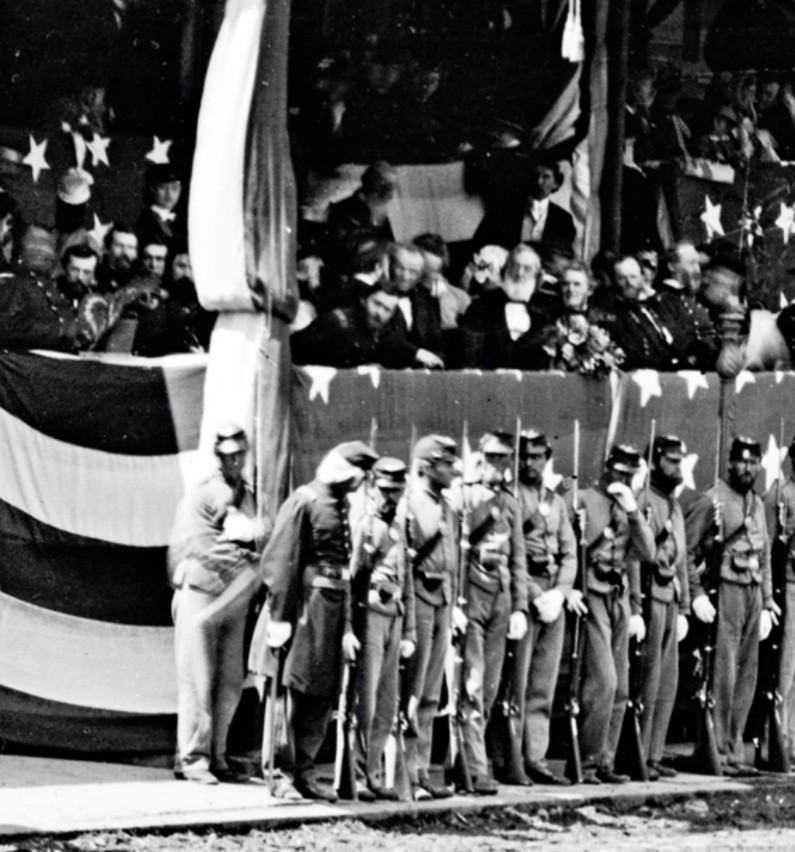
Lieutenant-General Ulysses S. Grant leans forward to have a better look at a Union regiment approaching the presidential reviewing stand, President Andrew Johnson to his left, Grand Review of the National Armies, Washington, D.C., May 23, 1865 (U.S. Library of Congress, public domain; click to enlarge).

It was a week to remember. The 47th Pennsylvania Veteran Volunteers had survived the bloody Battle of Pocotaligo in South Carolina (October 1862) to make history as the only regiment from the Great Keystone State to participate in the Union’s 1864 Red River Campaign across Louisiana and help firmly, finally turn the tide of the American Civil War in the Union’s favor during Sheridan’s 1864 Shenandoah Valley Campaign — only to be brought to their knees in mourning, upon receiving the heartbreaking news that their beloved commander-in-chief had been assassinated — just as victory was at hand.

Now, they were joining more than one hundred and forty-five thousand other “boys in blue” in a triumphant march through the streets of Washington, D.C. that would subsequently be described by The New York Times as “The Grand Procession of Battle Stained Banners” and a “splendid spectacle” that was graced with “propitious weather.” The reporter penning those superlatives was describing the Union’s Grand Review of the National Armies, which took place from May 23 to 24.

The Army of the Potomac has passed in review. The first day’s pageant is over, and to the correspondent falls the duty of depicting a scene almost devoid of incident, save in its grand aspiration. Every circumstance has combined to make it a complete success. The weather has been magnificent; the air, delightfully tempered by the rains of the past week, is cool and fragrant, and dust, is for the time subdued….

Though the city is so crowded, it is yet gay and jovial with the good feeling that prevails, for the occasion is one of such grand import and true rejoicing, that small vexations sink out of sight. With many it is the greatest epoch of their lives; with the soldier it is the last act in the drama; with the nation it is the triumphant exhibition of the resources and valor which have saved it from disruption and placed it first upon earth.

So the scene of to-day (and that of to-morrow) will never be forgotten, and he who is privileged to be a witness will mark it as a white day in the calendar, from which to gather hope and courage for the future….

That Times reporter went on to describe the ways in which multiple Union Army regiments had made their way to the nation’s capital, where they had set up tents upon their respective arrivals and how they had assembled for the first day of the review, providing a list, line-by-line, of the long order of march — a list which included the 47th Pennsylvania Volunteers. (Officially stationed at Camp Brightwood in the northwest corner of Washington, D.C. by early May 1865, the 47th Pennsylvanians had departed from that camp on Monday, May 22 to move closer to their assigned position for the Grand Review’s start, according to Private Henry Horn of Company G.)

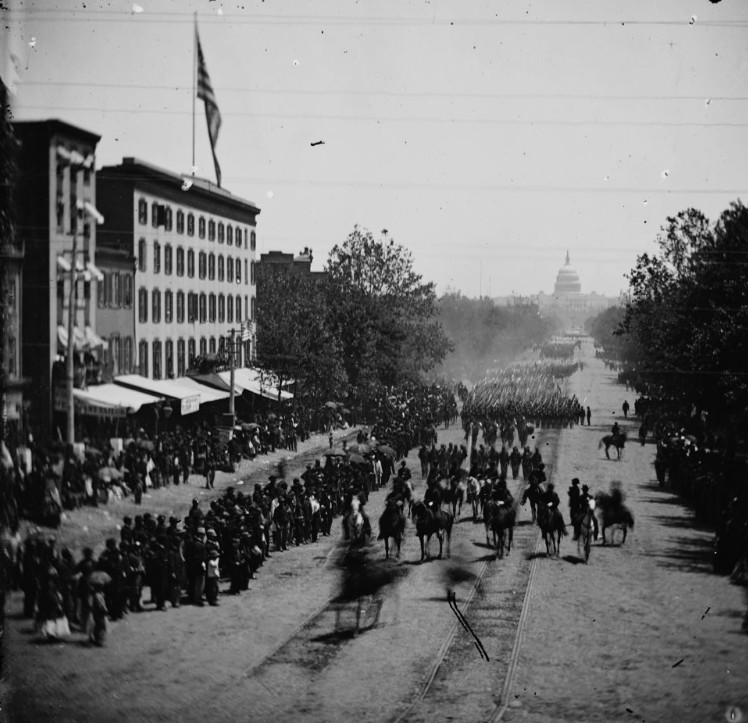
19th Corps, Army of the United States, Grand Review of the National Armies, Pennsylvania Avenue, Washington, D.C., May 23, 1865 (Matthew Brady, U.S. Library of Congress, public domain).

The 47th Pennsylvania was just one of the one hundred and eighteen infantry regiments, twenty-nine cavalry regiments and thirty-three artillery batteries that boldly stepped forth from Capitol Hill on that first day of the Grand Review (May 23, 1865). Marching with the precision they were known for, under the banners of the Army of the Potomac (Mr. Lincoln’s Army), they were participants in a thrilling, six-hour parade, passing in front of a review stand that sheltered U.S. President Andrew Johnson, Secretary of War Edwin M. Stanton, Lieutenant-General Ulysses S. Grant, and other high-ranking officials of the military and federal government. According to the Times, the 47th Pennsylvania Veteran Volunteers were positioned behind the parade’s third division, as part of the Nineteenth Army Corps (XIX Corps) in Dwight’s Division:

Third Division.
Brevet Brig.-Gen. John G. Curtin commanding.

First Brigade, Col. A. B. McCalmon commanding — 51st Pennsylvania Veteran Volunteers, Col. William J. Bolton; 208th Pennsylvania, Lieut.-Col. M. T. Heintzelman; 209th Pennsylvania, Col. T. B. Kaufman; 200th Pennsylvania, Maj. Jacob Rehm.

Second Brigade, Col. J. A. Mathews commanding — 207th Pennsylvania, Col. R. C. Cox; 211th Pennsylvania, Lieut.-Col. Coulter; 205th Pennsylvania, Lieut.-Col. W. F. Walter.

Dwight’s Division.
Nineteenth Army Corps, Brig.-Gen. William Dwight commanding.

First Brigade, Brig.-Gen. G. L. Beal commanding — 15th Maine, Col. Isaac Dyer; 114th New York, Col. S. R. Per Lee; 29th Maine, Col. George H. Nye; 30th Massachusetts, Lieut.-Col. N. Shardman; 1st Maine Battalion, Capt. C. S. Brown.

Second Brigade, Brevet Brig.-Gen. E. P. Davis commanding — 153rd New York, Lieut.-Col. J. A. McLaughlin; 8th Vermont, Col. J. B. Mead; 12th Connecticut, Lieut.-Col. G. W. Lewis; 26th Massachusetts, Lieut.-Col. W. H. Chapman; 47th Pennsylvania, Col. J. P. S. Gobin.

Third Brigade, Brig.-Gen. J. D. Fessenden commanding — 173rd New York, Col. L. M. Peck; 160th New York, Col. C. C. Dwight; 162nd New York, Col. J. W. Blanchard; 133rd New York, Col. L. D. Currie; 30th Maine, Col. T. H. Hubbard.

Artillery Brigade, Brevet Brig.-Gen. J. C. Tidball commanding — 34th New York Battery, Brevet Maj. J. Roemer; 7th Maine Battery, Capt. A. B. Twitchell; 19th New York Battery, Capt. E. W. Rogers; Battery D, 47th Pennsylvania Volunteer Artillery; Capt. S. H. Rhoads; 11th Massachusetts Battery, Capt. E. J. Jones; 27th New York Battery, Capt. J. B. Eaton.

Second State Colors, 47th Pennsylvania Veteran Volunteers (presented to the regiment 7 March 1865).

Lest one be tempted to think that the 47th Pennsylvania Veteran Volunteers were placed further back in the line of march because they were being accorded less respect, one only need look at the rosters of the men who immediately followed the 47th. The division positioned directly behind them was composed of general staff of the Army of the United States and regiments led by American Civil War icon and Gettyburg hero Joshua L. Chamberlain. Observed U.S. Secretary of War Edwin M. Stanton, “You see in these armies, the foundation of the Republic: our future railroad managers, congressmen, bank presidents, senators, manufacturers, judges, governors and diplomats; yes and not less than half a dozen presidents.”

John Peter Shindel Gobin, 47th Pennsylvania Volunteers, shown here as a captain in 1863, went on to become lieutenant governor of Pennsylvania after the war (public domain).

Among the 47th Pennsylvanians who would continue to serve their communities, commonwealth and nation faithfully were future city councilmen, industrialists, inventors, judges, a three-time mayor, newspaper publishers, physicians, policemen, federal postmasters, local school board members, and a state senator who would be publicly elected as Pennsylvania’s seventh lieutenant governor. Each one had experienced the horrors of war. All were forever changed. So, please take time this Memorial Day weekend to read and share their stories with your family, friends and neighbors — and say their names as you offer a toast in tribute to their valor. We owe them at least that much for the sacrifices they made to save our nation.


Sources:

  1. Bates, Samuel P. History of Pennsylvania Volunteers, 1861-5, vol. 1. Harrisburg, Pennsylvania: B. Singerly, State Printer, 1869.
  2. “Grand Military Review: Streets Crowded with Spectators: Sherman Greeted with Deafening Cheers.” Pittsburgh, Pennsylvania: The Daily Post, May 25, 1865.
  3. “Our Heroes! The Grand Review at Washington. Honor to the Brave. Immense Outpouring of the People. The Troops Reviewed by Gen. Grant.” Harrisburg, Pennsylvania: Daily Telegraph, May 23, 1865.
  4. Review of the Armies; Propitious Weather and a Splendid Spectacle. Nearly a Hundred Thousand Veterans in the Lines.” New York, New York: The New York Times, May 24, 1865, front page.
  5. Rodrock, Rev. William D. C. Chaplain’s Reports (47th Pennsylvania Volunteer Infantry, 1865). Washington, D.C.: U.S. National Archives and Records Administration.
  6. Schmidt, Lewis. A Civil War History of the 47th Regiment of Pennsylvania Veteran Volunteers. Allentown, Pennsylvania: Self-published, 1986.
  7. “Serenade to General Grant” (performance for Lieutenant-General Ulysses S. Grant by the 47th Pennsylvania Veteran Volunteers’ Regimental Band), in “Washington.” Philadelphia, Pennsylvania: The Inquirer, May 22, 1865.
  8. The Final March: Grand Review of the Armies.” Washington, D.C.: U.S. National Park Service, retrieved online May 20, 2025.
  9. “The Grand Review: A Grand Spectacle Witnessed.” Pittsburgh, Pennsylvania: The Daily Post, May 24, 1865.
  10. “The Grand Review: Immense Crowds in Washington: Fine Appearance of the Troops: Their Enthusiastic Reception.” Harrisburg, Pennsylvania: Pennsylvania Daily Telegraph, May 24, 1865; and West Chester, Pennsylvania: The Record, May 17, 1865.
  11. “The Grand Review: The City Crowded with Visitors: Order of Corps, Divisions, Brigades and Regiments.” Philadelphia, Pennsylvania: Daily Constitutional Union, May 23, 1865.
  12. “The History of the Forty-Seventh Regt. P. V.” Allentown, Pennsylvania: The Lehigh Register, 20 July 1870.


A Musical Tribute to Beloved Commanding Officers: The 47th Pennsylvania’s Regimental Band “Serenades” Generals Grant and Sheridan (May 22, 1865)

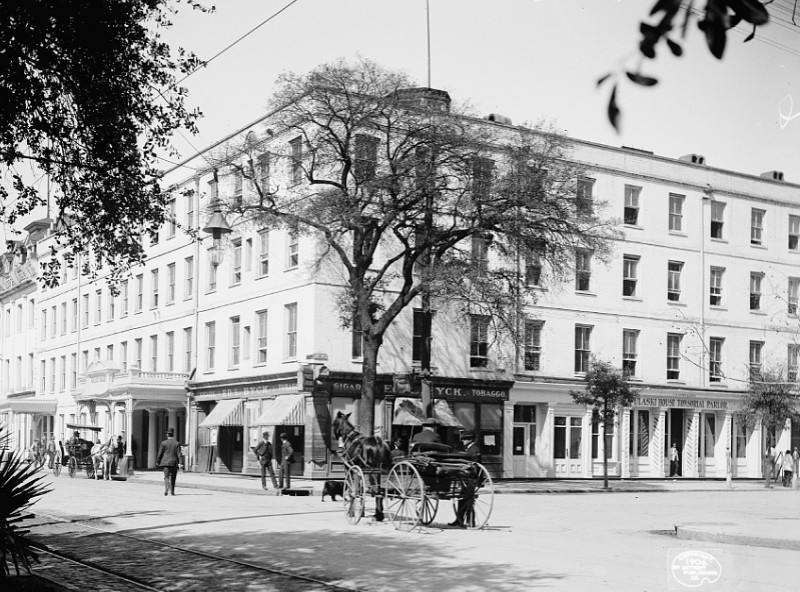
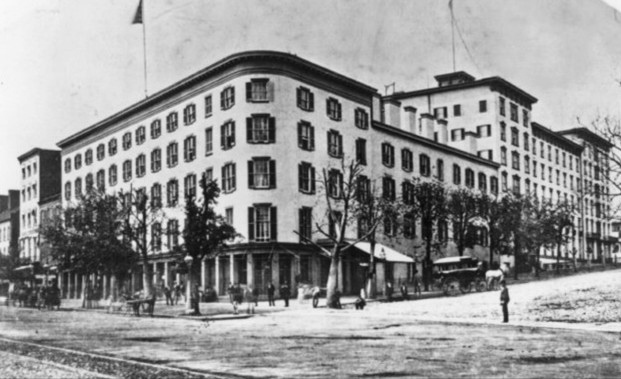
Willard’s Hotel, Washington, D.C., circa 1860-1865 (public domain; click to enlarge).

On the eve of the headline-making Grand Review of the National Armies in the nation’s capital in late May 1865, members of the 47th Pennsylvania Veteran Volunteers’ Regimental Band made their own small headlines in newspapers nationwide when they performed a selection of patriotic and popular musical numbers during an hour-long, impromptu concert for Union Lieutenant-General Ulysses S. Grant and Major-General Philip H. Sheridan, who were engaged in a meeting at Willard’s Hotel. Also joining in the musical tribute were musicians from one of Maine’s volunteer infantry regiments.

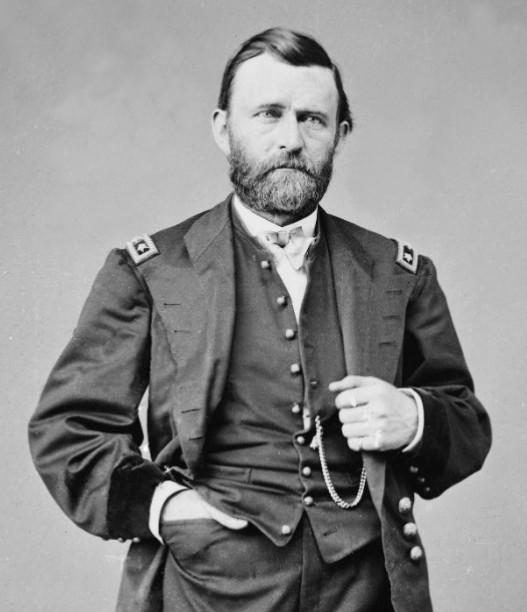
Lieutenant-General Ulysses S. Grant (public domain).

As the 47th Pennsylvanians performed, a crowd gathered nearby to listen. When the music ceased, calls of “Speech! Speech!” to Grant and Sheridan began to ripple through the crowd. Both men demurred, however, choosing instead to continue their “parting interview,” according to the Bangor Daily Whig and Courier — a decision which evidently did not disappoint the throng for long. Per The Philadelphia Inquirer, “The music was very fine, both bands rivaling each other in doing honor to the greatest General of the age” (General Grant).

Joseph Eugene Walter, Regimental Band, 47th Pennsylvania Volunteers, circa 1861.

Among the 47th Pennsylvanians who may very well have performed for Grant and Sheridan that evening were Private Joseph Eugene Walter and Principal Musician Daniel Dachrodt. (Walter, a private with Company E, had been a cornetist with Pomp’s Cornet Band in Easton, Northampton County, Pennsylvania prior to the start of the American Civil War and had previously served with the 47th Pennsylvania’s highly-regarded first Regimental Band, which had been led by Thomas Coates, the “Father of Band Music in America.” Dachrodt, who had been promoted to the rank of Drum Major and had then been placed in charge of all of the regiment’s field drummers, would ultimately survive the war — and all of his comrades — to become the last living member of the regiment in 1939.)

Major-General Philip Sheridan, U.S. Army (c. 1864, U.S. Library of Congress, public domain).

Standing on the balcony of Willard’s Hotel again the next morning (May 23), Major-General Sheridan was treated to another rousing tribute as members of his cavalry “passed before him to pay a farewell salute … while the bands played ‘Hail to the Chief!'” Those same units would take part, later that morning and afternoon, in the Army of the Potomac’s march down Pennsylvania Avenue during the parade on day one of the Grand Review. That evening, Sheridan would depart for the train depot in Baltimore, Maryland, for transportation to his new assignment — spearheading regional Reconstruction efforts as the military governor of Louisiana and Texas.

Sources:

  1. Discover Our History.” Washington, D.C.: Willard Intercontinental Hotel, retrieved online May 20, 1865.
  2. General Philip H. Sheridan.” Washington, D.C.: U.S. National Park Service, retrieved online, May 20, 2025.
  3. Grant” (television mini-series). New York, New York: History Channel Education, 2020.
  4. “Our Heroes! The Grand Review at Washington. Honor to the Brave. Immense Outpouring of the People. The Troops Reviewed by Gen. Grant.” Harrisburg, Pennsylvania: Daily Telegraph, May 23, 1865.
  5. Regimental Band of the 47th Pennsylvania Veteran Volunteers (report on the band’s performance for Lieutenant-General Ulysses S. Grant in Washington, D.C.), in “Special Dispatch to the Boston Journal.” Bangor, Maine: Bangor Daily Whig and Courier, May 23, 1865.
  6. Review of the Armies; Propitious Weather and a Splendid Spectacle. Nearly a Hundred Thousand Veterans in the Lines.” New York, New York: The New York Times, May 24, 1865, front page.
  7. “Serenade to General Grant” (performance for Lieutenant-General Ulysses S. Grant by the 47th Pennsylvania Veteran Volunteers’ Regimental Band), in “Washington.” Philadelphia, Pennsylvania: The Inquirer, May 22, 1865.
  8. The Final March: Grand Review of the Armies.” Washington, D.C.: U.S. National Park Service, retrieved online May 20, 2025.
  9. “The Grand Review: The City Crowded with Visitors: Order of Corps, Divisions, Brigades and Regiments.” Philadelphia, Pennsylvania: Daily Constitutional Union, May 23, 1865.


Camp Brightwood, Washington, D.C. (Mid-April – June 2, 1865)

Unidentified Union infantry regiment, Camp Brightwood, Washington, D.C., circa 1865 (public domain; click to enlarge).

Marched closer to the nation’s capital in the wake of U.S. President Abraham Lincoln’s assassination in mid-April 1865, the 47th Pennsylvania Veteran Volunteers were directed to proceed to the Brightwood district in the northwestern section of Washington, D.C. and erect their Sibley tents at the Union Army duty station known as Camp Brightwood.

Their new job was to prevent Confederate States Army troops and their sympathizers from reigniting the flames of civil war that had just been stamped out weeks earlier.

According to historians at Cultural Tourism DC, Brightwood was “one of Washington, DC’s early communities and the site of the only Civil War battle to take place within the District of Columbia” — the Battle of Fort Stevens.

This crossroads community developed from the Seventh Street Turnpike, today’s Georgia Avenue, and Military Road. Its earliest days included a pre-Civil War settlement of free African Americans…. Eventually Brightwood boasted a popular race track, country estates, and sturdy suburban housing. In 1861 the area was known as Brighton, but once it was large enough to merit a U.S. Post Office, the name was changed to Brightwood to distinguish it from Brighton, Maryland.

Also, according to Cultural Tourism historians, Camp Brightwood was established on the grounds of “Emery Place, the summer estate of Matthew Gault Emery,” who had “made a fortune in stone-cutting, including the cornerstone for the Washington Monument,” which was laid in 1848.

During the Civil War (1861-1865), Captain Emery led the local militia. His hilltop became a signal station where soldiers used flags or torches to communicate with nearby Fort DeRussy or the distant Capitol. Soldiers of the 35th New York Volunteers created Camp Brightwood here. During the Battle of Fort Stevens in July 1864, Camp Brightwood was a transfer point for the wounded.

By late April of 1865, it was home to multiple Union Army regiments, including the 47th Pennsylvania Veteran Volunteers.

Guarding the Lincoln Assassination Conspirators

Washington Arsenal Penitentiary, Washington, D.C., 1865 (Joseph Hanshew, public domain; click to enlarge).

Sometime after their arrival at Camp Brightwood during that fateful spring of 1865, a group of 47th Pennsylvania Veteran Volunteers were given a new assignment — guard duty at the Washington Arsenal and its prison facility, where eight people were being held in connection with their involvement in the assassination of President Abraham Lincoln. They had been arrested between April 17 and 26.

The key conspirators involved in President Abraham Lincoln’s assassination (Benn Pitman, The Assassination of President Lincoln and the Trial of the Conspirators,” 1865, U.S. Library of Congress, public domain).

While researchers for 47th Pennsylvania Volunteers: One Civil War Regiment’s Story have not yet determined the exact start date of the 47th Pennsylvania’s guard duties at the Washington Arsenal Penitentiary, they are now able to offer a better estimate — thanks to the work of Lincoln scholars Edward Steers, Jr. and Harold Holzer, who published documents written by Union Major-General John Frederick Hartranft, the Pennsylvanian appointed by U.S. President Andrew Johnson on May 1, 1865 “to command the military prison at the Washington Arsenal, where the U.S. government had just incarerated the seven men and one woman accused of complicity in the shooting.” Included in the Steers-Holzer compilation is a letter from Major-General Hartranft, governor and commander of the “Washington Arsenal Military Prison,” to Major-General Winfield S. Hancock, commanding officer of the United States Middle Military Division, which was dated May 11, 1865. Hartranft began by informing Hancock that “at 10:25 yesterday [May 10, 1865], Lt. Col. J. M. Clough, 18th N. H. reported with 450 muskets, for four days duty, relieving the 47th Pa. Vols.” He then went on to describe the duties performed by 18th New Hampshire Volunteers at the Washington Arsenal on May 10:

At 11:45, the prisoners on trial were taken into Court, in compliance with the orders of the same. At 1 P.M. the Court ordered the prisoners returned to their cells, which was done.

At 1:10 P.M. dinner was served to the prisoners in the usual manner.

At 1:30 in compliance with your orders Marshal McPhail was admitted to see the prisoner in 161 [Atzerodt], his hood having been previously removed; he remained with him until 2.35, immediately after which his hood was replaced and the door locked.

At 3:45 P.M. Mr. George L. Crawford in accordance with your instructions, was permitted to have an interview with prisoner in 209. I was present during the same, and heard all that was said. The conversation was in regard to the property of the prisoner in Philadelphia. At 4:25 the hood was replaced and the cell locked.

At 6 P.M. Supper was furnished the prisoners and at the same time Dr. Porter and myself made inspections of all the cells and prisoners.

At 6 P.M. in accordance with your instructions, Mr. Stone, counsel for Dr. Mudd, was permitted to visit his client. The interview took place in the presence of Lt. Col. McCall but not in his hearing.

At 6:35 the interview closed, and the door was again locked.

At 7 this A.M. breakfast was served to the prisoners in the usual manner. At 7:15, Dr. Porter and myself made Inspections of all the cells and prisoners.

I would respectfully recommend that the prisoner in 190 be removed to cell 165.

All passes admitting persons during the last 24 hours are here with enclosed.

As a result, researchers for the 47th Pennsylvania Volunteers’ project postulate that:

  1. As many as four hundred and fifty 47th Pennylvania Veteran Volunteer Infantrymen may have been stationed at the Washington Arsenal between May 6-10, 1865; and
  2. At least some of those 47th Pennsylvanians may very well have interacted with the key Lincoln assassination conspirators (Samuel Bland Arnold, George A. Atzerodt, David E. Herold, Dr. Samuel Alexander Mudd, Michael O’Laughlen, Lewis Thornton Powell/Lewis Payne, Edman Spangler/Ned Spangler, and Mary Elizabeth Surratt) — interactions which likely took place while those eight prisoners were confined at the Washington Arsenal prison; on the way to and from the courtroom, where they were being tried for conspiring to assassinate President Lincoln; inside that courtroom during trial proceedings; and possibly also at other sites related to their confinement and trial.

Although the duties performed between by 47th Pennsylvania Volunteers between May 6-9 would not have been exactly the same as those performed by the New Hampshire soldiers on May 10, they may very well have been similar — meaning that at least some 47th Pennsylvania Volunteers may have been involved in locking and unlocking the doors of the conspirators’ cells, escorting the conspirators into the courtroom of their military trial (which began on May 9, 1865), standing guard over the conspirators during their trial to prevent their escape, escorting them from the courtroom, and interacting with them in their cells by:

  • Bringing meals to them;
  • Removing and replacing the hoods that covered their heads so that they could interact with their lawyers and other visitors;
  • Verifying the legitimacy of passes held by would-be visitors and denying or granting access to those visitors as appropriate;
  • Escorting visitors to and from their cells; and
  • Monitoring their visits with anyone granted entry to their cells.

With their guard assignment completed by the morning of May 10, 1865, the 47th Pennsylvania Volunteers who were serving on detached duty at the Washington Arsenal were marched back to Camp Brightwood, where they would remain until their next assignment — participating in the Union’s Grand Review of the National Armies on May 23, 1865.

19th Corps, Army of the United States, Grand Review of the National Armies, Pennsylvania Avenue, Washington, D.C., May 23, 1865 (Matthew Brady, U.S. Library of Congress, public domain).

The Grandest of the Grand Reviews

The 47th Pennsylvania Veteran Volunteer Infantry was just one group of the more than one hundred and forty-five thousand Union military men who marched from Capitol Hill through the streets of Washington, D.C. during a two-day spectacle designed to celebrate the end of the American Civil War and heal Americans’ heartbreak in the wake of President Lincoln’s assassination. Held from May 23-24, 1865, it was a sight that had never been seen before — and one that would likely never be seen anywhere in the United States of America ever again. The first day’s parade alone lasted six hours.

Lieutenant-General Ulysses S. Grant, leaning forward, President Andrew Johnson to his left, Grand Review of the National Armies, Washington, D.C., May 23, 1865 (U.S. Library of Congress, public domain).

According to The New York Times, the 47th Pennsylvanians were positioned behind the parade’s third division, as part of the Nineteenth Army Corps (XIX Corps) in Dwight’s Division. Marching with the precision for which they had become renowned, they passed in front of a review stand which sheltered U.S. President Andrew Johnson, Secretary of War Edwin M. Stanton and Lieutenant-General Ulysses S. Grant. The division directly behind the 47th Pennsylvanians in that day’s line of march included other officers and general staff of the Army of the United States and regiments commanded by American Civil War icon Brigadier-General Joshua L. Chamberlain, one of the most beloved heroes from the tide-turning Battle of Gettysburg.

Rev. William DeWitt Clinton Rodrock, chaplain, 47th Pennsylvania Volunteers (courtesy of Robert Champlin, used with permission).

Afterward, 47th Pennsylvania Chaplain William DeWitt Clinton Rodrock summed up the experience in a report penned at Camp Brightwood on May 31:

The wise king of the Scriptures speaks of a sorrow that pervades the human heart “in the midst of laughter.” The truthfulness of this Divine philosophy is a matter of daily experience. Our most joyous seasons are intermingled with a sadness that often challenges definition. Every garden has its sepulchre. Every draft of sweet has its ingredient of bitter. This fact has never been so fully realized as this month. With the mighty army of brave soldiers congregated and reviewed in Washington and the … expressions of deep regret that Abraham Lincoln is not here to have witnessed the great pageant of the 23rd and 24th inst. have been universal. Not the splendid victories which our brave soldiers have won — not the pleasing prospect that they are “homeward bound” — not the consolatory thought that the reins of government have fallen into the hands of so good a man as Andrew Johnson — have served to restrain these utterances of grief and sorrow. Had it been God’s will to spare Mr. Lincoln’s life, what an eclat his presence would have imparted to the mighty pageant.

But as He willed otherwise and “doeth all things well,” it is ours to learn the great lesson of the hour.

Rebuilding a Shattered Nation

Ruins of Charleston, South Carolina as seen from the Circular Church, 1865 (U.S. National Archives and Records Administration, public domain).

As the cheers of the Grand Review crowds faded, the 47th Pennsylvania Veteran Volunteers resumed life at Camp Brightwood, with many assuming that their days of wearing “Union Blue” were finally coming to an end. But that assumption proved to be an incorrect one when the 47th Pennsylvania Veteran Volunteers received word that they were being reassigned. Ordered to pack their belongings in late May 1865, they would be heading back to America’s Deep South — this time to assist with Reconstruction duties in Georgia and South Carolina, beginning the first week in June.


Sources:

  1. Assassination of President Abraham Lincoln.” Washington, D.C.: U.S. Library of Congress, retrieved online May 21, 2025.
  2. Bates, Samuel P. History of Pennsylvania Volunteers, 1861-5, vol. 1. Harrisburg, Pennsylvania: B. Singerly, State Printer, 1869.
  3. Battleground National Cemetery: Battleround to Community — Brightwood Heritage Trail,” “Fort Stevens” and “Mayor Emery and the Union Army.” United States: Historical Marker Database, retrieved online May 20, 2025.
  4. “Battleground to Community: Brightwood Heritage Trail.” Washington, D.C.: Cultural Tourism DC, 2008.
  5. “Grand Military Review: Streets Crowded with Spectators: Sherman Greeted with Deafening Cheers.” Pittsburgh, Pennsylvania: The Daily Post, May 25, 1865.
  6. Grant” (television mini-series). New York, New York: History Channel Education, 2020.
  7. “Our Heroes! The Grand Review at Washington. Honor to the Brave. Immense Outpouring of the People. The Troops Reviewed by Gen. Grant.” Harrisburg, Pennsylvania: Daily Telegraph, May 23, 1865.
  8. Pitman, Benn. The Assassination of President Abraham Lincoln and the Trial of the Conspirators. Cincinnati, Ohio and New York, New York: Moore, Wilstach & Boldwin, 1865.
  9. Reconstruction: An Overview.” Washington, D.C.: American Battlefield Trust, November 28, 2023.
  10. Review of the Armies; Propitious Weather and a Splendid Spectacle. Nearly a Hundred Thousand Veterans in the Lines.” New York, New York: The New York Times, May 24, 1865, front page.
  11. Rodrock, Rev. William D. C. Chaplain’s Reports (47th Pennsylvania Volunteer Infantry, 1865). Washington, D.C.: U.S. National Archives and Records Administration.
  12. Schmidt, Lewis. A Civil War History of the 47th Regiment of Pennsylvania Veteran Volunteers. Allentown, Pennsylvania: Self-published, 1986.
  13. “Serenade to General Grant” (performance for Lieutenant-General Ulysses S. Grant by the 47th Pennsylvania Veteran Volunteers’ Regimental Band), in “Washington.” Philadelphia, Pennsylvania: The Inquirer, May 22, 1865.
  14. Steers, Edward Jr. and Harold Holzer. The Lincoln Assassination Conspirators: Their Confinement and Execution, as Recorded in the Letterbook of John Frederick Hartranft. Baton Rouge, Louisiana, 2009.
  15. The Final March: Grand Review of the Armies.” Washington, D.C.: U.S. National Park Service, retrieved online May 20, 2025.
  16. “The Grand Review: A Grand Spectacle Witnessed.” Pittsburgh, Pennsylvania: The Daily Post, May 24, 1865.
  17. “The Grand Review: Immense Crowds in Washington: Fine Appearance of the Troops: Their Enthusiastic Reception.” Harrisburg, Pennsylvania: Pennsylvania Daily Telegraph, May 24, 1865; and West Chester, Pennsylvania: The Record, May 17, 1865.
  18. “The Grand Review: The City Crowded with Visitors: Order of Corps, Divisions, Brigades and Regiments.” Philadelphia, Pennsylvania: Daily Constitutional Union, May 23, 1865.
  19. “The History of the Forty-Seventh Regt. P. V.” Allentown, Pennsylvania: The Lehigh Register, 20 July 1870.
  20. The Lincoln Conspirators,” in “Ford’s Theatre.” Washington, D.C.: U.S. National Park Service, retrieved online May 21, 2025.


National Poetry Month: The Meaning of Life During War and Peace

“Launched by the Academy of American Poets in April 1996, National Poetry Month is a special occasion that celebrates poets’ integral role in our culture and that poetry matters. Over the years, it has become the largest literary celebration in the world, with tens of millions of readers, students, K–12 teachers, librarians, booksellers, literary events curators, publishers, families, and — of course — poets, marking poetry’s important place in our lives.”

— American Academy of Poets


As we come to the close of National Poetry Month in 2025, we take a look back at poems that were written during the American Civil War, Reconstruction, Gilded Age, Progressive, World War I, and Roaring Twenties eras of American History by the famous (Thomas Buchanan Read and Walt Whitman) and less famous (Martha A. John), as well as by members of the 47th Pennsylvania Volunteer Infantry and their families who penned poems to express their insights about life and death during and after the war.

Read, reflect, remember, and share because humanities education programs really still do matter.

  • A Comet” (Martha A. John, a sister of Private George Dillwyn John, in A Souvenir: Incidents, Experiences, and Reflections,” 1902);
  • An Evening in Camp” (in The Sunbury American, December 28, 1861);
  • Drum-Taps” (Walt Whitman, in Leaves of Grass, October 1865);
  • The Battle of Cedar Creek” (Private H. B. Robinson, October 1864);
  • The Friendly Trio” (Jesse L. Bernheisel, a son of Private Luther Bernheisel, in Berny’s Poems; Hints Towards Happiness, 1927); and
  • Sheridan’s Ride” (Thomas Buchanan Read, in The Daily Evening Telegraph, Philadelphia, Pennsylvania, November 9, 1864).

Inkwell and book (excerpt of an illustration by F. Y. Cory, in Memoirs of a Baby, Josephine Daskam, author, 1893, public domain).


Sources:

  1. “An Evening in Camp.” Sunbury, Pennsylvania: The Sunbury American, December 28, 1861; and West Chester, Pennsylvania: The West Chester (Pa.) Times.
  2. Bernheisel, Jesse L. Berny’s Poems; Hints Towards Happiness. Philadelphia, Pennsylvania: Self-published, 1927.
  3. John, Martha A. “A Comet, in A Souvenir: Incidents, Experiences, and Reflections. Sterling, Illinois: Sterling Gazette Print, 1902-3.
  4. Robinson, H. B. “The Battle of Cedar Creek.” Cedar Creek, Virginia: Composed following the October 19, 1864 battle; preserved in The H. B. Robinson Collection, in The Maurer Family Archives, Amy Lowers Maurer, curator).
  5. “Sheridan’s Ride.” Philadelphia, Pennsylvania: The Daily Evening Telegraph, November 9, 1864; Cleveland, Ohio: The Evening Post, November 17, 1864; Davenport, Iowa: The Democrat, November 25, 1864; Brownsville, Nebraska Territory: Nebraska Advertiser, December 1, 1864; and Sacramento, California: The Sacramento Bee (in “Entertainment”), December 17, 1864.
  6. Whitman, Walt. “Drum-Taps,” in Leaves of Grass. Philadelphia, Pennsylvania: David McKay, 1891 (first published by Whitman in Drum-Taps, New York, October 1865).


April 15th: A Date of Decision and Death for President Abraham Lincoln

This 1865 photograph of President Abraham Lincoln by Alexander Gardner is believed by historians to be the final photo taken of Lincoln (1865, U.S. Library of Congress, public domain).

There were multiple key moments in the life of the man who would become the sixteenth president of the United States of America. Some, like the deaths of his mother and sister, would dramatically alter the trajectory of his life; others, like his decision to embark upon a life of public service, would reshape the future of a nation.

But his actions on one particular date, during two entirely different years, did both.

So pivotal in history, that particular date’s annual arrival still stops average Americans in their tracks each year, prompting them to reflect on the legacy of that one man — and the question, “What if?”

That man was U.S. President Abraham Lincoln and that date is April 15.

Lincoln’s Call for Seventy-Five Thousand Volunteers (April 15, 1861)

Proclamation issued by U.S. President Abraham Lincoln, calling for seventy-five thousand state militia troops to bring an end to the secession of, and insurrection by, eleven of fifteen southern slaveholding states, April 15, 1861 (U.S. National Archives and Records Administration, public domain; click to enlarge).

In response to the fall of Fort Sumter in Charleston, South Carolina to Confederate States troops on April 14, 1861, President Abraham Lincoln issued a proclamation in which he called for seventy-five thousand men across the United States to risk their lives to defend the nation’s capital and bring a swift end to the secession crisis and insurrection initiated by eleven of fifteen southern slave holding states. That proclamation, which was issued on April 15, 1861 read as follows:

By the President of the United States.

A Proclamation.

Whereas the laws of the United States have been, for some time past, and now are, opposed, and the execution thereof obstructed, in the States of South Carolina, Georgia, Alabama, Florida, Mississippi, Louisiana, and Texas, by combinations too powerful to be suppressed by the ordinary course of judicial proceedings, or by the powers vested in the Marshals by law:

Now, therefore, I, Abraham Lincoln, President of the United States, in virtue of the power in me vested by the Constitution and the laws, have thought fit to call forth, and hereby do call forth, the militia of the several States of the Union, to the aggregate number of seventy-five thousand, in order to suppress said combinations, and to cause the laws to be duly executed.

The details for this object will be immediately communicated to the State authorities through the War Department.

I appeal to all loyal citizens to favor, facilitate, and aid this effort to maintain the honor, the integrity, and the existence of our National Union, and the perpetuity of popular Government, and to redress wrongs already long enough endured.

I deem it proper to say that the first service assigned to the forces hereby called forth will probably be to repossess the forts, places, and property which have been seized from the Union; and in every event the utmost care will be observed, consistently with the objects aforesaid, to avoid any devastation, any destruction of or interference with property, or any disturbance of peaceful citizens in any part of the country.

And I hereby command the persons composing the combinations aforesaid to disperse and retire peaceably to their respective abodes within twenty days from this date.

Deeming that the present condition of public affairs presents an extraordinary occasion, I do hereby, in virtue of the power in me vested by the Constitution, convene both Houses of Congress.

Senators and Representatives are therefore summoned to assemble at their respective Chambers, at 12 o’clock, noon, on Thursday, the fourth day of July next, then and there to consider and determine such measures as, in their wisdom, the public safety and interest may seem to demand.

In witness whereof, I have hereunto set my hand, and caused the seal of the United States to be affixed.

Done at the city of Washington, this fifteenth day of April, in the year of our Lord one thousand eight hundred and sixty-one, and of the Independence of the United States the eighty-fifth.

Abraham Lincoln

By the President: William H. Seward, Secretary of State.

Four years later, on the exact same date, President Abraham would draw his last breath.

Lincoln’s Death from an Assassin’s Bullet (April 15, 1865)

President Abraham Lincoln on his deathbed at the Petersen House in Washington, D.C., April 15, 1865 (Harper’s Weekly, 1865, public domain; click to enlarge).

Mortally wounded by a shot to his head, which was fired by an assassin and Confederate sympathizer while President Abraham Lincoln was watching a performance of the popular stage play, Our American Cousin, at Ford’s Theatre in Washington, D.C., on the evening of Good Friday, April 14, 1865, President Lincoln was initially examined on site in the presidential box, by fellow theatre attendee and physician Charles Leale, before being carried downstairs by Union Army soldiers and taken across Tenth Street — and into a room at the Petersen boarding house, where he was then gently lowered onto the bed of Willie Clark.

As additional physicians arrived and assessed the president’s condition, a decision was made to make him as comfortable as possible, when it was determined that he would likely not survive the night.

A remarkably strong man, even as he waged his toughest battle, President Lincoln managed to hang onto until the following morning, drawing his final ragged breath at 7:22 a.m. on April 15, 1865 — and leaving the work of national healing and Reconstruction in far less capable hands.

One hundred and sixty years later, Americans still wonder, “Would we be a better nation if Lincoln had survived?”


Sources:

  1. A Proclamation by the President of the United States, April 15, 1861.” Washington, D.C.: U.S. Capitol Visitor Center, retrieved online April 15, 2025.
  2. Abraham Lincoln’s Assassination,” in “History Channel: Civil War.” New York, New York: A&E Television Networks, February 27, 2025.
  3. Eric Foner: Reconstruction and the Constitution” (video). Chicago, Illinois: Chicago Humanities Festival, 2019.
  4. Lincoln’s Death,” in “Lincoln Assassination.” Washington, D.C.: Ford’s Theatre, retrieved online December 1, 2024.
  5. The Petersen House.” Washington, D.C.: U.S. National Park Service, December 1, 2024.


April 12th: This Date in 47th Pennsylvania Volunteer Infantry History

April 12th would prove to be an important date for the men who served with the 47th Pennsylvania Volunteer Infantry during the American Civil War and Reconstruction eras. This abridged timeline illustrates why:

1861

The bombardment of Fort Sumter 12-14 April 1861 (Currier & Ives, public domain).

At 4:30 a.m., on April 12, 1861, artillery batteries of the Confederate States Army open fire on United States Army troops stationed at Fort Sumter in Charleston, South Carolina. A long and disastrous period of civil war begins in America.

The majority of Pennsylvanians and residents of other states throughout America who will ultimately serve with the 47th Pennsylvania Volunteer Infantry are at home, asleep in their beds — or just rising and readying themselves for their work days on family farms, as canal boatmen, in iron foundries, silk mills, tanneries or tobacco factories, as quarrymen toiling away in the slate industry, or as miners tunneling deeper inside of the Earth in poorly-lighted coal mines, along with countless other blue collar laborers who are risking their own health and safety just to keep their families housed and fed.

The 47th Pennsylvania Volunteer Infantry isn’t even “a glimmer” in anyone’s eyes — yet. (It won’t be founded until August 5, 1861.)

1862

In 1862, The Gazette, one of two hometown newspapers read by the majority of men serving with the 47th Pennsylvania Volunteer Infantry’s C Company, carries the following news in its April 12th edition:

Jeff. Davis is becoming desperate. He has issued an extraordinary Message ordering the enrollment of all citizens of the Confederate States between the ages of 18 and 35, for military service, the residue of the fighting population, above 35 to form a fighting force.

Although that particular edition of the newspaper has not yet reached the 47th Pennsylvania Volunteers who are stationed in Florida, a warning about the Confederate Conscription Act’s pending passage has likely been telegraphed by the U.S. War Department to senior officers at the 47th Pennsylvania’s headquarters at Fort Taylor in Key West in order to prepare them for the increased threat they and their troops will face.

1864

On April 12, 1864, Captain Charles William Abbott, commanding officer of the 47th Pennsylvania Volunteer Infantry’s K Company, pens a brief report from his regiment’s camp at Grand Ecore, Louisiana to his superior officers in the United States Army of the Gulf, which partially documents the losses in soldiers and supplies sustained by his regiment during the Battle of Pleasant Hill, Louisiana on April 9, 1864. That report also contains details about the regiment’s movements during this phase of duty.

Sergeant John Gross Helfrich then describes this same battle in a letter to his parents on May 5th, in which he notes:

I have learned additional news of the late fight of our boys of the “Nineteenth Corps”…. The casualties of our boys amounted to a great deal more than at first reported. The Lt. Col. of our Forty-seventh Regt. is missing, and supposed he is wounded or perhaps killed. Lt. Swoyer is dead.

1865

In a letter that he is writing to the Sunbury American on April 12, 1865 from the 47th Pennsylvania Volunteer Infantry’s camp near Summit Point, Virginia, 47th Pennsylvanian Henry D. Wharton describes a celebration that took place following the surrender at Appomattox by Confederate General Robert E. Lee and his army on April 9, 1865:

Since yesterday a week we have been on the move, going as far as three miles beyond Winchester. There we halted for three days, waiting for the return or news from Torbett’s cavalry who had gone on a reconnoisance [sic] up to the valley. They returned, reporting they were as far up as Mt. Jackson, some sixty miles, and found nary an armed reb. The reason of our move was to be ready in case Lee moved against us, or to march on Lynchburg, if Lee reached that point, so that we could aid in surrounding him and [his] army, and with Sheridan and Mead capture the whole party. Grant’s gallant boys saved us that march and bagged the whole crowd. Last Sunday night our camp was aroused by the loud road of artillery. Hearing so much good news of late, I stuck to my blanket, not caring to get up, for I suspected a salute, which it really was for the ‘unconditional surrender of Lee.’ The boys got wild over the news, shouting till they were hoarse, the loud huzzas [sic, huzzahs] echoing through the Valley, songs of ‘rally round the flag,’ &c., were sung, and above the noise of the ‘cannons opening roar,’ and confusion of camp, could be heard ‘Hail Columbia’ and Yankee Doodle played by our band. Other bands took it up and soon the whole army let loose, making ‘confusion worse confounded.’

The next morning we packed up, struck tents, marched away, and now we are within a short distance of our old quarters. – The war is about played out, and peace is clearly seen through the bright cloud that has taken the place of those that darkened the sky for the last four years. The question now with us is whether the veterans after Old Abe has matters fixed to his satisfaction, will have to stay ‘till the expiration of the three years, or be discharged as per agreement, at the ‘end of the war.’ If we are not discharged when hostilities cease, great injustice will be done.

The members of Co. ‘C,’ wishing to do honor to Lieut. C. S. Beard, and show their appreciation of him as an officer and gentleman, presented him with a splendid sword, sash and belt. Lieut. Beard rose from the ranks, and as one of their number, the boys gave him this token of esteem.

A few nights ago, an aid [sic] on Gen. Torbett’s staff, with two more officers, attempted to pass a safe guard stationed at a house near Winchester. The guard halted the party, they rushed on, paying no attention to the challenge, when the sentinel charged bayonet, running the sharp steel through the abdomen of the aid [sic], wounding him so severely that he died in an hour. The guard did his duty as he was there for the protection of the inmates and their property, with instruction to let no one enter.

The boys are all well, and jubilant over the victories of Grant, and their own little Sheridan, and feel as though they would soon return to meet the loved ones at home, and receive a kind greeting from old friends….

1866

On April 12, 1866, members of the 47th Pennsylvania Veteran Volunteers who survived the American Civil War are three months into their post-war civilian lives. Many are back home in Pennsylvania, trying to regain some sense of their old selves with normal work and family routines. Others have already left their pre-war and war lives behind, choosing to migrate west in search of better opportunities — or a certain peace of mind they hope to find in knowing they will be far away from any decision-makers who might drag their communities and nation back down into another disastrous war in the future.


Sources:

  1. Abbott, Charles W. Report from Captain Charles W. Abbott, Captain, Company K, 47th Pennsylvania Volunteer Infantry, to Senior Officers of the U.S. Army of the Gulf’s XIX Corps (19th Corps), Grand Ecore, Louisiana, April 12, 1864. Nazareth, Pennsylvania: Personal Collection of Julian Burley.
  2. Agriculture and Rural Life,” in “Stories from PA History.” Harrisburg, Pennsylvania: Pennsylvania Historical and Museum Commission, 2023.
  3. Fort Sumter and Fort Moultrie National Park.” Washington, D.C.: National Park Foundation, retrieved online April 12, 2025.
  4. Harris, Howard and Perry K. Blatz. Keystone of Democracy: A History of Pennsylvania Workers. Harrisburg, Pennsylvania: Pennsylvania Historical and Museum Commission, 1999.
  5. Helfrich, John Gross. Letter to His Parents, May 5, 1864. Mesa, Arizona: Personal Collection of the Colin Cofield Family Archives.
  6. Miller, Randall M. and William A. Pencak. Pennsylvania: A History of the CommonwealthUniversity Park, Pennsylvania: The Pennsylvania State University Press, 2002.
  7. Mining Anthracite,” in “Stories from PA History.” Harrisburg, Pennsylvania: Pennsylvania Historical and Museum Commission, 2023.
  8. Montgomery, Morton L. Early Furnaces and Forges of Berks County, Pennsylvania, in The Pennsylvania Magazine of History and Biography, 1884. Philadelphia, Pennsylvania: Historical Society of Pennsylvania, 1884.
  9. News Regarding the Confederate States’ New Conscription Order. Sunbury, Pennsylvania: The Gazette, April 12, 1862.
  10. Palladino, Grace. Another Civil War: Labor, Capital, and the State in the Anthracite Regions of Pennsylvania, 1840-1868. New York, New York: Fordham University Press, March 30, 2006.
  11. Sacher, John M. Confederate Conscription and the Struggle for Southern Soldiers. Baton Rouge, Louisiana: LSU Press, 2021.
  12. The Industrial Age,” in “Stories from PA History: Science and Invention.” Harrisburg, Pennsylvania: Pennsylvania Historical and Museum Commission, 2023.
  13. The Pennsylvania Iron Industry: Furnace and Forge of America,” in “Stories from PA History.” Harrisburg, Pennsylvania: Pennsylvania Historical and Museum Commission, 2023.
  14. The Railroad in Pennsylvania,” in “Stories from PA History.” Harrisburg, Pennsylvania: Pennsylvania Historical and Museum Commission, 2023.
  15. Timeline of Labor History in Pennsylvania.” Pennsylvania: Pennsylvania Labor History Society, retrieved online April 12, 2025.


Judy Snyder Wasserman: A Woman Who Made the World Better

Judy (Snyder) Wasserman and daughter, New Jersey, 1980s (courtesy of the Snyder-Wasserman-Griffin-Silvio Family Archives).

She was my sister and she was a force of nature. Join me in paying tribute to the first supporter of 47th Pennsylvania Volunteers: One Civil War Regiment’s Story, Judy (Snyder) Wasserman.

This educational project would not have been possible without her.

Who Was She?

Born in Houston, Texas on February 23, 1947, Judy Leah Snyder was a daughter of Schuylkill County, Pennsylvania natives Willard Emery Snyder (1917-1972) and Genevieve Madeline (Krupa) Snyder (1918-1997).

Her father, who had served with the United States Navy’s Seabees during World War II and was an employee of the Bell Telephone Company of Pennsylvania afterward, was a son of telephone industry pioneer John Hartranft Snyder (1873-1944), and a descendant of American Revolutionary War Patriot Johannes Nicholas Schneider (1749-1821) and American Civil War veteran Timothy Matthias Snyder (1840-1889), who served with the 47th Pennsylvania Volunteer Infantry’s C Company, the unit which had protected the American flag during multiple battles in South Carolina, Louisiana and Virginia.

Her mother, Genevieve, who had worked in the blueprints division at the Philadelphia Navy Yard during World War II, was a first-generation American whose parents, Jan Krupa (1881-1942) and Rozalia (Tuczek) Krupa (1884-1962), had emigrated separately from Poland between 1902 and 1905, and had met and married in Philadelphia’s Manayunk section in 1906 before relocating to the community of Minersville in Schuylkill County, where Jan found work as an explosives expert in the anthracite coal mining industry.

Initially raised in Lavelle, Schuylkill County, Judy Snyder relocated with her parents to the nearby community of Frackville, where she became the older sister to two siblings and was enrolled as a student at the Frackville Elementary School during the early 1950s.

Later that same decade, she relocated with her parents and younger sisters to the Borough of West Lawn in Berks County, Pennsylvania, where her youngest sister was born. An avid reader and persuasive debater who was inspired by the characters in Louisa May Alcott’s novel, “Little Women,” Judy successfully lobbied her parents to name her baby sister, “Laurie,” saving her from the years of playground bullying that would likely have resulted had one of several other proposed names been chosen. Fortunately, their parents agreed, assuring a lifelong, loving bond between the oldest and youngest sisters — a bond that was strengthened as Judy wheeled Laurie around their neighborhood on frequent stroller rides to nurture a sense of curiosity and wonder.

Skilled at math, Judy was also a Russian language student at Wilson High School in West Lawn. A talented painter during those same high school years, she went on to become an adept visual artist as the designer of eye-catching, award-winning window displays for major department stores in New York City and New Jersey, as well as interior designs and decorations for multiple Casual Corner stores on the East Coast.

Judy (Snyder) Wasserman as she created a department store window display (courtesy of the Snyder-Wasserman-Griffin-Silvio Family Archives).

A fashionable dresser, she helped her younger sisters to develop their own sense of style, as each went on to become educators in Pennsylvania’s highly regarded system of public schools. (She was less successful, however, at convincing “dear old Dad” to modernize. The bellbottom pants that she picked out for him one year never quite made it out of his closet, for one reason or another.)

Married to Howard Wasserman, one of the genuinely good guys in the world, Judy welcomed the births of two beautiful, brilliant daughters, Jess and Corry, who have each made their own positive impact on the world and will continue to do so for many years to come. Judy and Howard’s granddaughter, Izzy, has already shown signs that she, too, will be a formidable woman who will change the world in a positive way.

A lifelong learner who enjoyed studying American History, Judy drove her “baby” sister across Louisiana and back during two epic, 1990s road trips. Visiting multiple cities and towns, they stayed in a hotel on Bourbon Street in New Orleans that was reportedly haunted by the ghosts of Union Army soldiers, photographed the stained glass art at New Orleans’ Metairie Cemetery, marveled at the phenomenal flora and fauna found along Louisiana’s back roads, made a lifelong friend of the curator of the Bayou Folk Museum and Kate Chopin House in Cloutierville, toured the key filming locations for the movie, “Steel Magnolias,” in Natchitoches, Louisiana, and had some of the most memorable fine and junk food dining experiences in history.

She was witty and knew how to laugh and have fun — but she also knew when to get serious.

A fierce advocate for the most vulnerable in the world, she fought to improve public education for children across New Jersey and Louisiana, where she resided with her family, beginning in the 1990s. Also sensitive to the plight of animals that were being neglected or abused, she rescued more than a few from fates worse than death.

A warrior to the end, Judy (Snyder) Wasserman passed away in Lake Charles, Louisiana on April 1, 2023, but her sense of wonder and fighting spirit live on in those who love her still.


Sources: Images and oral history segments, courtesy of the Snyder-Wasserman-Griffin-Silvio Family Archives.