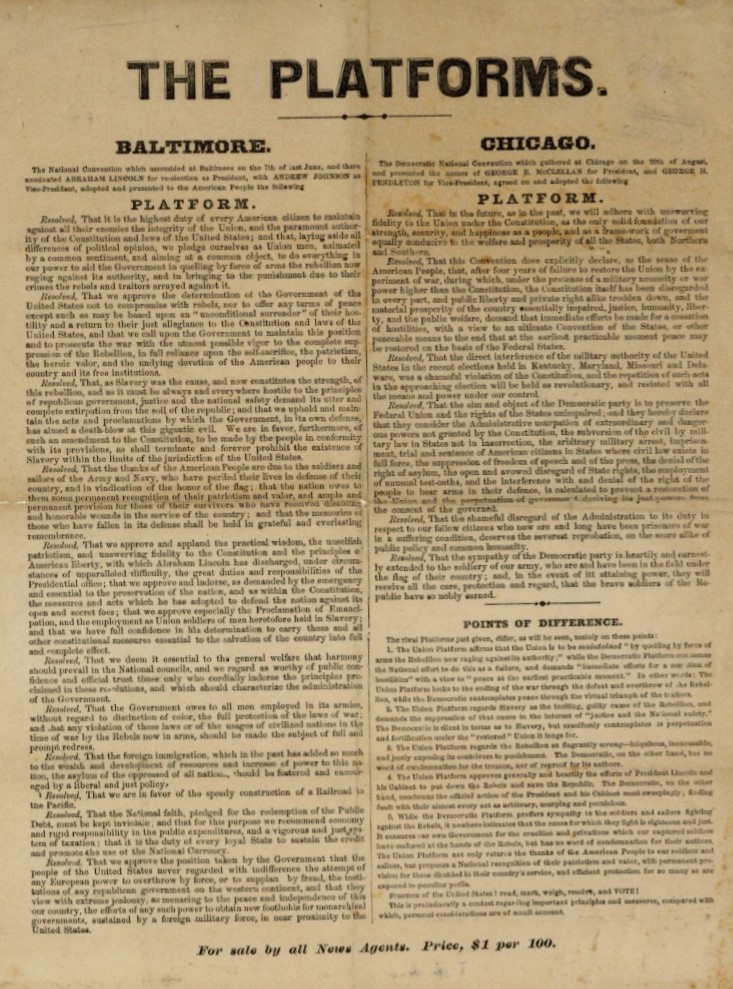
The platforms of the Union and Democratic parties, U.S. Presidential Election of 1864 (courtesy of the University of Illinois Urbana-Champaign; click to enlarge).
Even in the midst of a devastating civil war, Americans across the United States managed to come together to fulfill their civic responsibilities by voting on Election Day. Fathers and sons flocked to city and small town polling places while soldiers on active duty filled out ballot forms wherever they were stationed during the early to mid-1860s.
With respect to the Presidential Election of 1864, which was held in multiple states across America on November 8, 1864, that voting took place for members of the 47th Pennsylvania Volunteer Infantry at their encampment near Newtown, Virginia, according to a letter that was subsequently penned by 47th Pennsylvanian Henry D. Wharton to his hometown newspaper in Sunbury, Pennsylvania on November 14:
“The election passed off quietly and without any military interference, not the influence of officers used in controlling any man’s vote. In the regiments from the old Keystone, the companies were formed by the first Sergeant, when he stated to the men the object for which they were called to ‘fail to,’ and then they proceeded to the election of officers to hold the election – the boys having the whole control, none of the officers interfering in the least.”
Were the 47th Pennsylvania Volunteers pro-Lincoln or pro-McClellan?
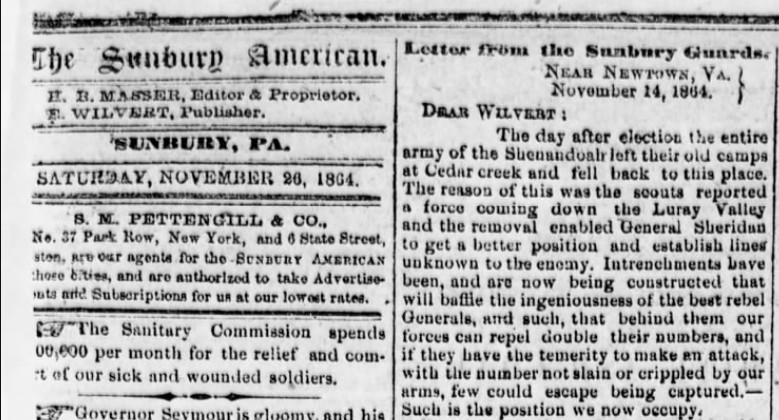
Excerpt from Henry Wharton’s letter to his hometown newspaper, November 14, 1864 (The Sunbury American, November 14, 1864, public domain; click to enlarge).
Wharton reported that, after the votes from members of the regiment were counted, President Abraham Lincoln was the favored choice of most of the 47th Pennsylvania Volunteers. Lincoln had garnered one hundred and ninety-four votes to General George B. McClellan’s one hundred and twenty-one (a margin of seventy-three votes). Those votes, by individual company, were tallied as follows:
- Company A: President Lincoln (ten); General McClellan (one)
- Company B: President Lincoln (twenty-six); General McClellan (two)
- Company C: President Lincoln (twenty-nine); General McClellan (thirteen)
- Company D: President Lincoln (thirty-one); General McClellan (eleven)
- Company E: President Lincoln (twenty-four); General McClellan (three)
- Company F: President Lincoln (eighteen); General McClellan (sixteen)
- Company G: President Lincoln (nine); General McClellan (thirteen)
- Company H: President Lincoln (ten); General McClellan (twenty-four)
- Company I: President Lincoln (nineteen); General McClellan (sixteen)
- Company K: President Lincoln (eighteen); General McClellan (twenty)
But Wharton’s figures for the men from Company K were incorrect, according to historian Lewis Schmidt, who noted in his book, A Civil War History of the 47th Regiment of Pennsylvania Veteran Volunteers, that “Fifteen of the members [of Company K] voted for the Lincoln electors and seven for the McClellan electors” when they “voted on the battlefield of Cedar Creek, November 8, 1864.” The members of Company K who cast votes that day were: “David H. Fetherolf, Mathias Miller, John Keiser, Phaon Guth, James D. Weil, Daniel Strauss, Paul Strauss, George Sherer, Lewis G. Seip, Henry Hantz, Charles W. Abbott, George Kase, Charles Stoudt, William Schlicher, William F. Knerr, E. F. Benner, George Delp, Tilghman Boger, William H. Barber, William D. Schick, Frank Beisel, and David Semmel.”
Apathy or Attrition?
One of the first things that researchers notice when looking at those figures for the 1864 election is that the number of votes tendered by 47th Pennsylvania Volunteers that November day was lower than it should have been — shockingly so when considering that each company of the regiment had been staffed by roughly one hundred men when the 47th Pennsylvania left Camp Curtin and headed for Washington, D.C. three years earlier. The turnout of 47th Pennsylvanians was not a sign of voter apathy, however, but of a simple, ugly truth. The regiment had just recently lost the equivalent of nearly two full companies of men in combat. According to Wharton, “The battle at Cedar Creek thinned our ranks by which we lost many votes – this number and those away in hospitals would have increased the Union majority to three hundred.”
* Note: When Henry Wharton wrote the phrase “Union majority,” he was referring to the National Union Party, which had been established during the 1860s by prominent Republicans as a way to bring members of their party together with “War Democrats” and potential voters from border states to vote for President Lincoln and others who supported the Republican platform for eradicating chattel slavery and ending the nation’s secession crisis and civil war.
What Happened After That Election in 1864?

President Abraham Lincoln signing the Emancipation Proclamation in 1862 (W.E. Winner, painter, J. Serz, engraver, circa 1864; public domain, U.S. Library of Congress).
Successful in his bid for re-election, both in terms of the electoral college and popular vote, President Abraham Lincoln went on to deliver one of his most inspiring addresses to the nation, urging his fellow Americans “to bind up the nation’s wounds” and “do all which may achieve and cherish a just and lasting peace among ourselves and with all nations.” He then continued to shepherd his nation through one of its darkest times until the war was finally over.
Food for Thought
If Henry Wharton and his fellow soldiers could make it to the polls on Election Day after all they endured in battle, so can you. Please vote. Your voice does matter.
Sources:
- “Political Party Timeline: 1836-1864,” in American Experience: Abraham and Mary Lincoln: A House Divided. Boston, Massachusetts: GBH Education for WGBH-TV (PBS), 2001.
- Schmidt, Lewis G. A Civil War History of the 47th Regiment of Pennsylvania Veteran Volunteers. Allentown, Pennsylvania: Self-published, 1986.
- “The People’s Candidate: Lincoln’s Presidential Elections,” in “Illinois History & Lincoln Collections.” Urbana, Illinois: Main Library, University of Illinois Champaign-Urbana, retrieved online November 3, 2025.
- Transcript of Abraham Lincoln’s Second Inaugural Address (delivered Saturday March 4, 1865), in “UShistory.org.” Philadelphia, Pennsylvania: Independence Hall Association, retrieved online March 4, 2020 and November 3, 2025.
- Wharton, Henry D. “Letter from the Sunbury Guards, Near Newtown, VA, November 14, 1864.” Sunbury, Pennsylvania: The Sunbury American, November 26, 1864.
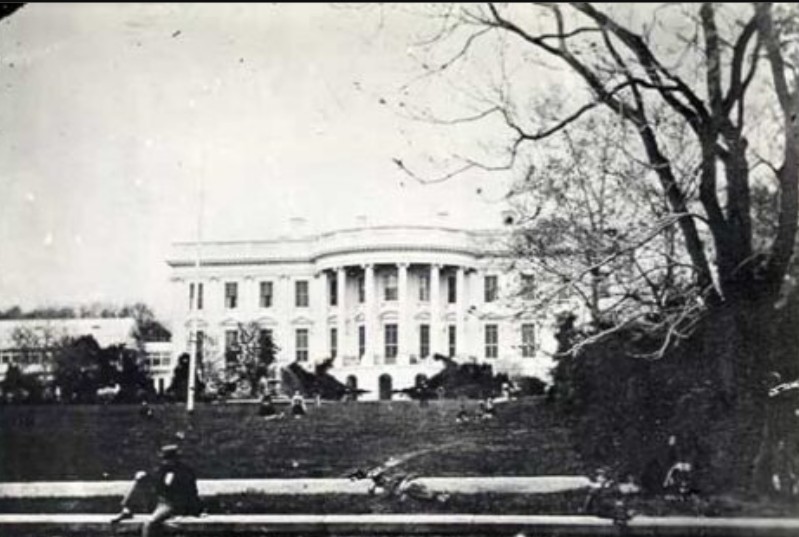

 47th Pennsylvania Volunteers
You must be logged in to post a comment.