Observing Pennsylvania German Day on June 28

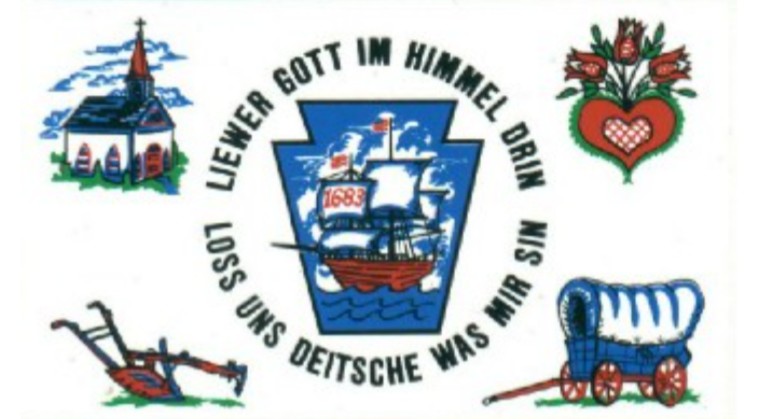
This Pennsylvania German Flag, which was created by Peter V. Fritsch, was officially dedicated at the Allentown Court House in 1989 (public domain).

On June 29, 1976, the General Assembly of the Commonwealth of Pennsylvania enacted P. L. 458, No. 113, directing that Pennsylvania German Day be observed annually on June 28, across the great Keystone State:

Section 1. In recognition of the cultural, educational and historical contributions from their heritage to this Commonwealth, June 28 of each year is set aside to commemorate the Pennsylvania German, commonly known as Pennsylvania Dutch, and is hereby designated to be “Pennsylvania German Day.”

The Governor is authorized and requested to issue a proclamation each year calling upon the people of the Commonwealth to commemorate the contributions of the German people to the history and culture of the Commonwealth, and to approve that day with appropriate honors and ceremonies.

Section 2. This act shall take effect immediately.

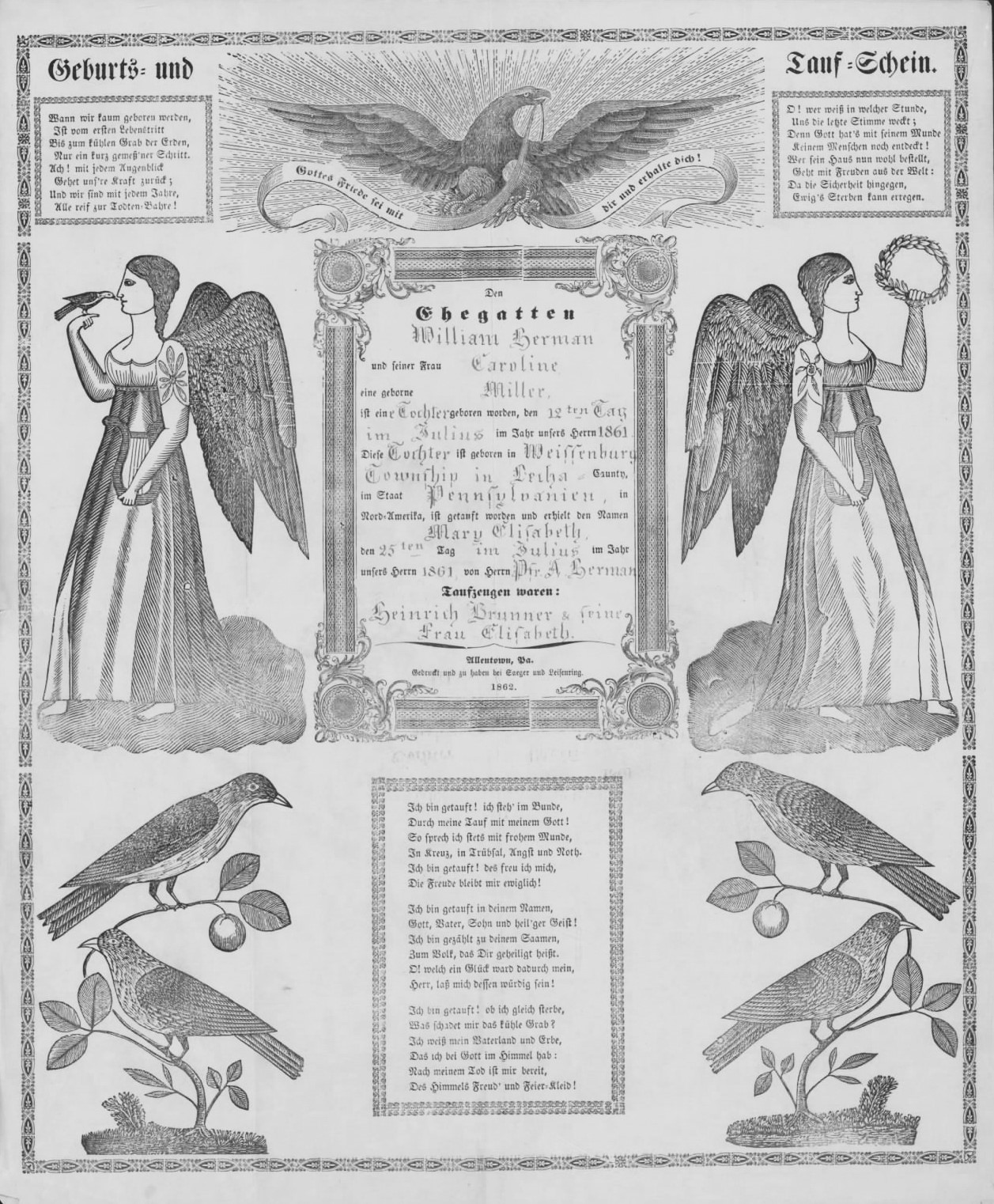
Copy of the 1862 Taufschein of Mary Elisabeth Herman, daughter of Private William Herman, 47th Pennsylvania Volunteers (U.S. Civil War Widows’ and Orphans’ Pension Files, U.S. National Archives and Records Administration, public domain; click to enlarge).

That act carries special meaning for all who are involved with 47th Pennsylvania Volunteers: One Civil War Regiment’s Story because a significant portion of the men who served with the 47th Pennsylvania Volunteer Infantry during the American Civil War were men and boys of German heritage, including:

Read their stories. Remember their names. Honor the sacrifices they made for the United States of America and the world.


Sources: 

  1. Act No. 113 of 1976: Pennsylvania German Day — Observance.” Harrisburg, Pennsylvania: Pennsylvania General Assembly, June 29, 1976 (retrieved online June 28, 2025).
  2. Civil War Veterans’ Card File, 1861-1866 (47th Pennsylvania Infantry). Harrisburg, Pennsylvania: Pennsylvania State Archives.
  3. Moyer, Del-Louise. “John Daniel Eisenbrown: Fraktur Artist and Grave Monument Engraver.” Philadelphia, Pennsylvania: AlyssumArts, September 7, 2015.
  4. U.S. Civil War Pension Files. Washington, D.C.: U.S. National Archives and Records Administration.


Reconstruction and Provost Duties: The 47th Pennsylvania Heads for Georgia (Early to Late June 1865)

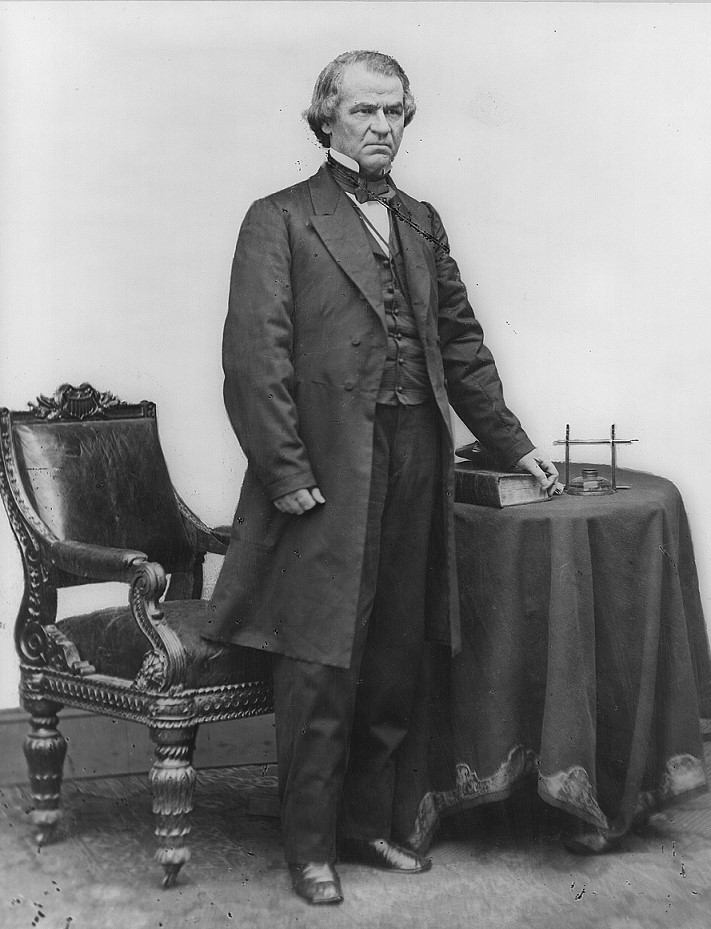
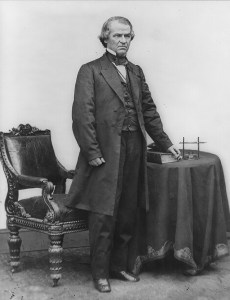
U.S. President Andrew Johnson, circa 1865 (Matthew Brady, U.S. Library of Congress, public domain).

With the American Civil War officially over, and the shock of his assassinated predecessor beginning to ease, U.S. President Andrew Johnson was now in charge of healing a divided, battered nation. According to historian Eric Foner, President Johnson “inaugurated the period of Presidential Reconstruction (1865-67) in May of 1865.”

Johnson offered a pardon to all southern Whites except Confederate leaders and wealthy planters (although most of these subsequently received individual pardons), restoring their political rights and all property except for slaves. He also outlined how new state governments would be created.

In order to facilitate the rebuilding of those new local and state governments, President Johnson also made the decision to station federal troops in key locations throughout the nation’s southern and western states. Among the federal troops ordered to assist with the operations were members of the 47th Pennsylvania Volunteer Infantry (who were known by this time as the 47th Pennsylvania Veteran Volunteers).
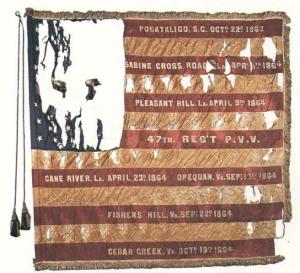
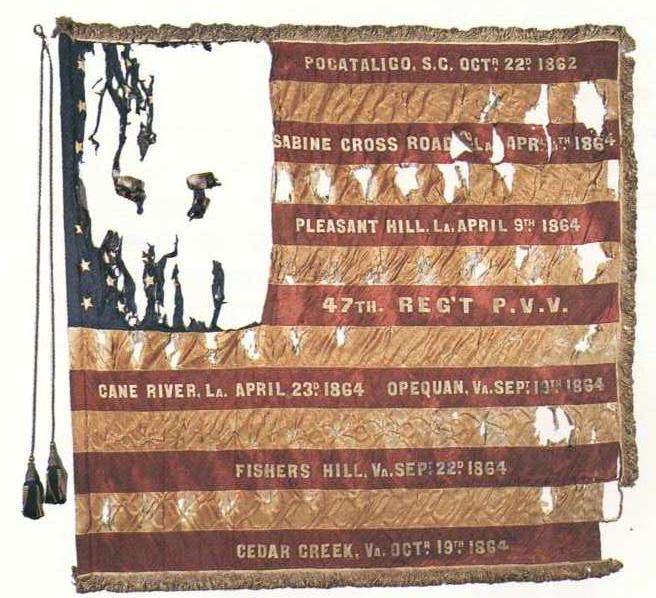
Second State Colors, 47th Pennsylvania Veteran Volunteers (presented to the regiment 7 March 1865).

A New Mission Begins

The Reconstruction Era for the 47th Pennsylvania Veteran Volunteers effectively began with the regiment’s departure for America’s Deep South on June 3, 1865, according to Assistant Regimental Surgeon John Young Shindel, M.D., who wrote these words on that day in history:

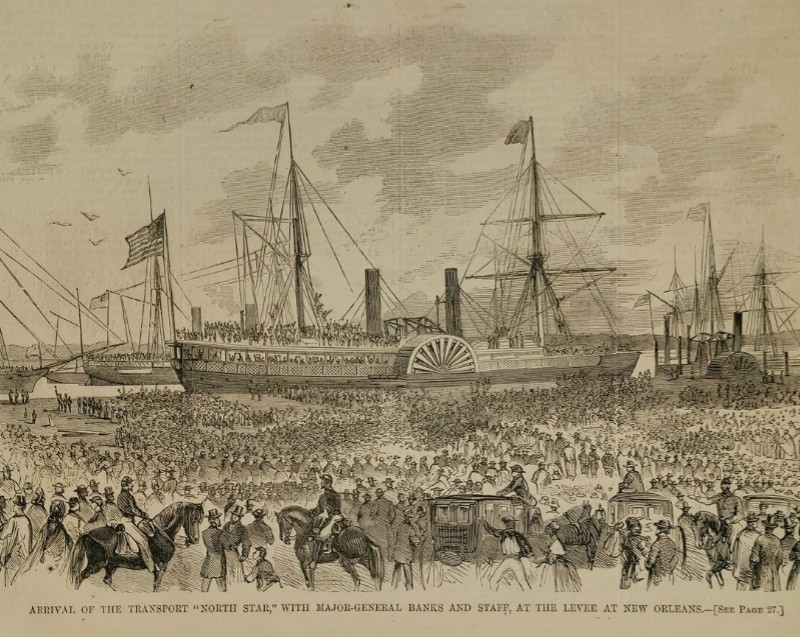
At about 10 o’clock, went on board the U.S.S. North Star…. Some of the Reg. went on Board the “Haze”. Dr. S. [and] Some on board the “Metis” from W. [Washington]. Started down the Potomac. Passed Mt. Vernon….

Reaching Fortress Monroe the next morning circa 11:00 a.m., the North Star continued south through the Atlantic Ocean and on to the waters off Cape Hatteras, North Carolina around 10:00 p.m. on June 4, according to Dr. Young. Suffering from seasickness the following day, he noted that his ship had already reached Cape Fear in North Carolina.
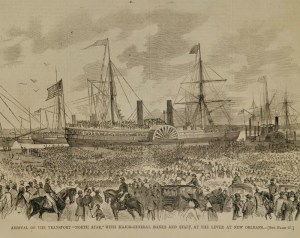
U.S.S. North Star, circa 1863 (Harper’s Weekly, January 10, 1863, public domain).

By Tuesday, June 6, the North Star had steamed to the mouth of the Savannah River, where it stopped, briefly, in order to allow a pilot to board. That pilot then moved the ship along the river, past Fort Pulaski, across the bar, and toward the harbor in the city of Savannah, Georgia, where it finally then dropped its anchor. The ship’s passengers were then directed to effect their transfer to smaller troop transports — the General Grant and the Oneita, according to Private Luther Horn of Company E. Those smaller steamers then took the 47th Pennsylvanians directly into the city. Upon their arrival at their designated landing spots at 4:00 a.m. the next morning (June 7), they disembarked, setting their feet on the soil of Georgia for the first time in the regiment’s history.
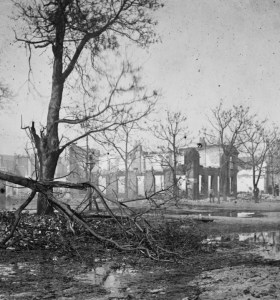
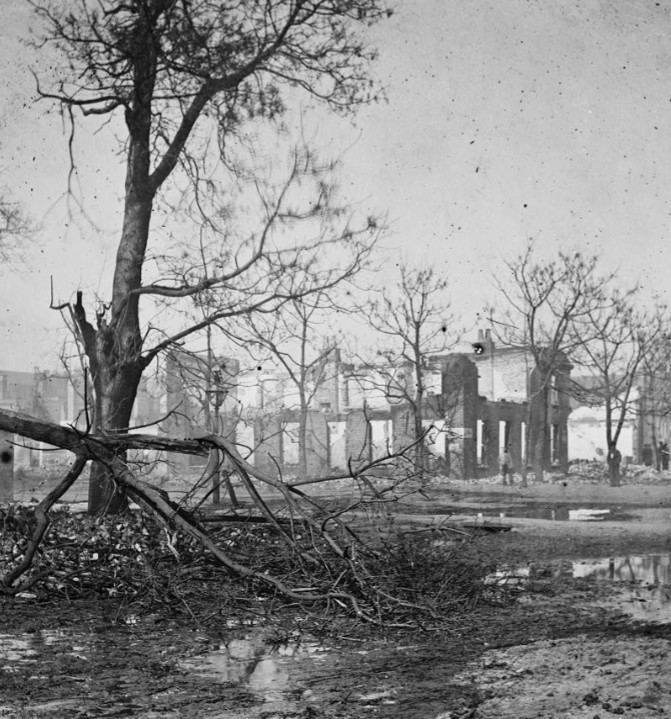
War-damaged houses in Savannah, Georgia, 1865 (Sam Cooley, U.S. Army, U.S. Library of Congress, public domain).

Using the next three hours to unload their equipment, they then lined up, by company, and stepped forward into their new mission at 7:30 a.m. Marching through the streets of Savannah, they headed one mile south, toward the city’s southern section, where they began erecting their Sibley tents.

* Note: Meanwhile, the steamships carrying the remaining 47th Pennsylvanians (the Metis and the Haze) were still en route. The Metis arrived later that day (June 7); the Haze arrived during the afternoon of June 8 with the members of Companies A, D, H, and I.

As the reunited 47th Pennsylvania Veteran Volunteers began settling in to their new routine, Regimental Orders, No. 67 directed members of Regimental Band No. 2 to practice between 9:00 and 10:00 every morning and perform every evening at 7:00 outside of the tent of the regiment’s commanding officer, Colonel John Peter Shindel Gobin.

On Friday, June 9, the entire regiment took part in a brigade parade. Five days later, Regimental Orders, No. 69 directed that “the first call for dress parade would be at 6 PM, and commanders were instructed to fall in their companies and drill them in the manual of arms until the second call at 6:30 PM,” according to regimental historian Lewis Schmidt. By mid-June the regiment was staffed by a total of eight hundred and sixty-three officers and enlisted men.

C Company’s Adam Maul and G Company’s Benjamin Neur, both privates, were subsequently detached to duties as clerks at the U.S. Department of the South’s headquarters. On June 21, Regimental Orders, No. 70 directed the captains of each company to “have their respective companies policed every morning and see that the tents and quarters of the men are properly ventilated and kept scrupulously clean, necessary for health,” adding that “one of the medical officers will inspect.”

Battling the elements once again, the 47th Pennsylvanians broke camp and relocated a short distance away — to drier ground — on Monday, June 26.

Confident in his regiment’s abilities to keep the peace, even as other Union Army regiments were receiving orders to depart from Georgia, leaving the 47th Pennsylvania with far less support, Colonel Gobin “requested permission from Maj. Wilkinson, AA Gen. of the District of Savannah, to turn in excess ordnance and ordnance stores” on June 27. The diplomacy phase of their new mission had begun.


Sources:

  1. Bates, Samuel P. History of Pennsylvania VolunteersVolunteers, 1861-5, vol. 1. Harrisburg, Pennsylvania: B. Singerly, State Printer, 1869.
  2. Civil War Muster Rolls (47th Pennsylvania Infantry). Harrisburg, Pennsylvania: Pennsylvania State Archives.
  3. Civil War Veterans’ Card File, 1861-1866 (47th Pennsylvania Infantry). Harrisburg, Pennsylvania: Pennsylvania State Archives.
  4. Foner, Eric. “Reconstruction.” Washington, D.C.: U.S. National Park Service, retrieved online June 3, 2025.
  5. “From Charleston and Savannah.” Pittsburgh, Pennsylvania: The Pittsburgh Daily Gazette, July 13, 1865.
  6. “From the South,” in “By Telegraph from Charleston.” Baraboo, Wisconsin: Baraboo Republic, July 19, 1865.
  7. “Savannah Intelligence.” Charleston, South Carolina: Charleston Daily Courier, July 4, 1865.
  8. Schmidt, Lewis. A Civil War History of the 47th Regiment of Pennsylvania Veteran Volunteers. Allentown, Pennsylvania: Self-published, 1986.
  9. Shindel, John Young. Diary and Personal Letters, 1865-1866. Allentown, Pennsylvania: Personal Collection of Lewis Schmidt.
  10. “The History of the Forty-Seventh Regt. P. V.” Allentown, Pennsylvania: The Lehigh Register, July 20, 1870.
 

Camp Brightwood, Washington, D.C.: Medical Issues and Personnel Changes (April-Early June 1865)

Spectators gather for the Grand Review of the Armies, 23-24 May 1865, beside the crepe-draped U.S. Capitol, flag at half-staff following the assassination of President Abraham Lincoln (U.S. Library of Congress, public domain).

Headquartered at Camp Brightwood in the Brightwood district of Washington, D.C.’s northwestern section since late April 1865, the 47th Pennsylvania Volunteers were attached to Dwight’s Division of the 2nd Brigade of the U.S. Department of Washington’s 22nd Corps. Their job was to prevent former Confederate States military troops and their sympathizers from reigniting the flames of civil war in the wake of U.S. President Abraham Lincoln’s assassination.

Multiple members of the regiment had only recently completed their detached duties as guards at the military prison where the key conspirators in their commander-in-chief’s murder were being held during their historic trial, and the regiment as a whole had just marched in the Union’s Grand Review of the National Armies on May 23.

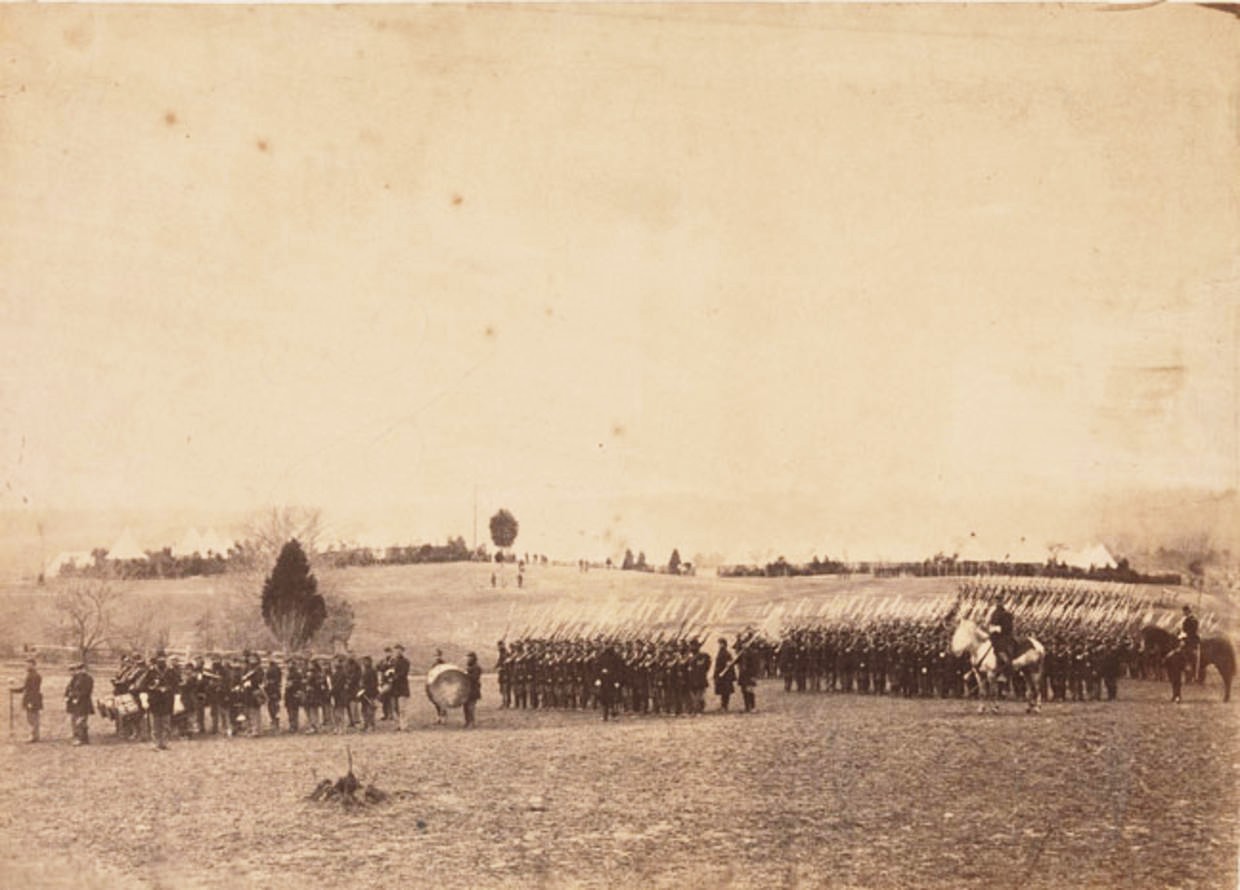
Unidentified Union infantry regiment, Camp Brightwood, Washington, D.C., circa 1865 (public domain).

Now, as the majority of Union Army soldiers were being granted honorable discharges from the military, the 47th Pennsylvania Veteran Volunteers were hurriedly packing their belongings — but for transport to south, rather than back home. Meanwhile, as that frenzy of activity was unfolding, a “lucky few” of their comrades were being transferred to other federal military units, while others were receiving word that they would be honorably discharged via general orders that had been issued by the United States War Department — or by surgeons’ certificates of disability that had been approved by regimental or more senior ranking Union Army physicians.

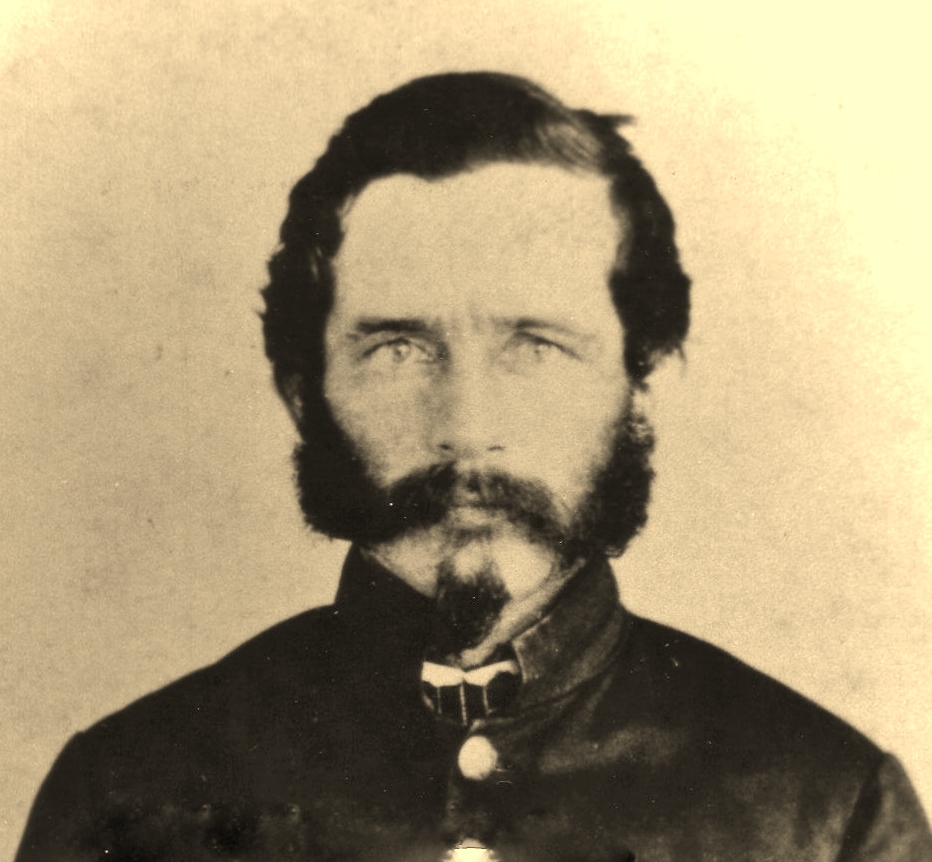
Sergeant-Major William M. Hendricks, central regimental command, 47th Pennsylvania Volunteers, circa 1863 (public domain).

Among the more startling departures were those of First Lieutenant William M. Hendricks of Company C, Private William Kennedy of Company G, and Private Daniel Kochendarfer (alternate spellings: Kochenderfer, Kochendorfer) of Company H. First Lieutenant Hendricks had simply had his fill of military life and had resigned his commission on May 9, 1865 and Private Kennedy had died from phthisis at Mower General Hospital in Philadelphia, Pennsylvania on May 25, but Private Kochendarfer was ordered to remain behind for an entirely different reason — an arrest and conviction (the details of which remain murky to this day).

* Note: Having distinguished himself earlier in his career by nursing his sick and wounded comrades during their final moments of life in 1862, Private Daniel Kochendarfer was convicted during a court martial trial and sent to a federal military prison on June 1, 1865. He remained imprisoned there even as the 47th Pennsylvania Veteran Volunteer Infantry was mustering out for the final time on Christmas Day in 1865. Dishonorably discharged on March 7, 1866, he was never able to clear his name, despite petitioning the U.S. War Department for redress during the 1890s.

Medical Discharges

Other discharges that were issued to 47th Pennsylvanians at Camp Brightwood that spring were granted for entirely different reasons — physical or mental fitness for new duties that would require both brains and brawn. Among those deemed no longer fit to serve were:

  • Private George W. Lightfoot of Company G, who was transferred to Company I in the 24th Regiment of the U.S. Army’s Veteran Reserve Corps, which was also known as the “Invalid Corps” (April 25, 1865);
  • Private Joseph H. Schwab of Company F, who was honorably discharged on a surgeon’s certificate of disability (April 25, 1865);
  • Private William Leinberger of Company C, who was transferred to the 1st Battalion of the 21st Regiment of the Veteran Reserve Corps (April 28, 1865);
  • Private William M. Michael of Company C, who had been wounded in action during the Battle of Cedar Creek, Virginia on October 19, 1864 and was honorably discharged per General Orders, No. 77, issued by the Office of the U.S. Adjutant General (May 3, 1865);
  • Private William H. Guptill of Company G, who was honorably discharged on a surgeon’s certificate of disability (May 15, 1865);
  • Private Josiah D. Rabenold of Company B, who had been wounded in action during the Battle of Opequan, Virginia, also known as “Third Winchester,” on 19 September 1864, was treated by Union Army physicians and was honorably discharged (May 15, 1865);
  • Private Joseph Young of Company G, who had been hospitalized at a Union Army facility in Cumberland, Maryland and was honorably discharged on a surgeon’s certificate (May 17, 1865);
  • Private Charles Acher of Company K, who was honorably discharged on a surgeon’s certificate (May 19, 1865);
  • Private George P. Blain of Company C, who had been wounded in action during the Battle of Cedar Creek and was honorably discharged per General Orders, No. 77, issued by the Office of the U.S. Adjutant General (May 19, 1865);
  • Private Adam Lyddick of Company H, who had been severely wounded above the knee during the Battle of Cedar Creek, Virginia on October 19, 1864 and was honorably discharged on a surgeon’s certificate (May 19, 1865);
  • Private George Turpin of Company H, who had been hospitalized at the Union’s Mower General Hospital in Philadelphia (May 19, 1865);
  • Private Charles Buss of Company F, who had endured captivity as a prisoner of war (POW) at the Confederate Army’s prison camp near Tyler, Texas (Camp Ford) until his release on January 1, 1865 and was honorably discharged on a surgeon’s certificate (May 25, 1865);
  • Private Joel Michael of Company F was honorably discharged on a surgeon’s certificate (May 25, 1865);
  • Private Allen L. Kramer of Company B, who was wounded in action during the Battle of Creek, was treated at a Union Army General Hospital in Philadelphia and was honorably discharged on a surgeon’s certificate (May 26, 1865);
  • Private Charles F. Stuart of Company C, who had endured captivity as a POW at a Confederate Army prisoner of war camp until his release on 4 March 1865 and was honorably discharged (May 29, 1865);
  • Private Daniel S. Crawford of Company A, whose leg had been amputated to save his life after being wounded during the Battle of Cedar Creek and was honorably discharged on a surgeon’s certificate (May 31, 1865);
  • Private Michael Fitzgibbon of Company I, who was initially alleged to have deserted from Camp Brightwood, but had, in reality, been receiving treatment for malaria from Union Army physicians and was honorably discharged (May 31, 1865);
  • Private Lewis Brong of Company B, who had developed a chronic medical condition during Sheridan’s 1864 Shenandoah Valley Campaign and was honorably discharged per General Orders, No. 53, issued by the U.S. War Department (June 1, 1865);
  • Regimental Quartermaster Francis Z. Heebner, who had endured captivity as a POW at a Confederate Army officers’ prison in Richmond or Danville, Virginia until his release in late February 1865 and was honorably discharged (June 1, 1865);
  • Private Jenkin J. Richards of Company E, who had been hospitalized at the Union’s Fairfax Seminary Hospital in Fairfax, Virginia and was honorably discharged on a surgeon’s certificate (June 3, 1865);
  • Private Augustus Deitz/Dietzof Company H, who had been hospitalized in Washington, D.C. and was honorably discharged on a surgeon’s certificate (June 6, 1865); and
  • Private Andrew Mehaffie of Company D, who had also been wounded during the Battle of Cedar Creek and was also honorably discharged on a surgeon’s certificate (June 9, 1865).

Honorable Discharge by General Orders

Per General Orders, No. 53 or General Orders, No. 272, the more able-bodied 47th Pennsylvanians mustering out at Camp Brightwood were:

  • Private Richard Ambrum (Company G, June 1, 1865);
  • Private George W. Baltozer (Company D, June 14, 1865);
  • Private William H. Barber (Company K, June 1, 1865);
  • Sergeant Samuel H. Barnes (Company E, June 1, 1865);
  • Private Alfred Biege (Company F, June 1, 1865);
  • Private David K. Bills (Company A, June 1, 1865);
  • Private Tilghman Boger (Company K, June 1, 1865);
  • Private David Buskirk (Company G, May 26, 1865);
  • Private William Christ (Company F, June 1, 1865);
  • Private Michael Deibert (Company F, June 1, 1865);
  • Private George Diehl (Company B, May 23, 1865);
  • Private William Earhart (Company D, June 1, 1865);
  • Corporal William H. Eichman (Company E, June 1, 1865);
  • Private Milton A. Engleman (Company G, June 1, 1865);
  • Private George Felger (Company E, June 1, 1865);
  • Private Isaac Fleishhower (Company A, May 19, 1865);
  • Private William Fowler (Company E, June 1, 1865);
  • Private Charles H. Frey (Company E, June 1, 1865);
  • Musician and Private James A. Gaumer (Regimental Band No. 2 and Company G, June 1, 1865);
  • Private Solomon Gildner (Company A, June 1, 1865);
  • Private Benedict Glichler (Company K, May 19, 1865);
  • Sergeant John W. Glick (Company G, June 1, 1865);
  • Private Solomon Gross (Company I, June 2, 1865);
  • Private Emanuel Guera (Company H, June 19, 1865);
  • Private James Hall (Company H, June 1, 1865);
  • Privates Adam and Jacob Hammaker (Company H, June 1, 1865);
  • Private William George Harper (Company D, June 1, 1865);
  • Private William P. Heller (Company K, June 1, 1865);
  • Private Henry Henn (Company G, May 15, 1865);
  • Corporal George K. Hepler (Company C, June 1, 1865);
  • Privates Levinus and Solomon Hillegass (Company G, June 1, 1865);
  • Regimental Quartermaster Sergeant Henry J. Hornbeck (June 1, 1865);
  • Private Ananias Horting (Company H, June 1, 1865);
  • Private Daniel Houser (Company E, June 1, 1865);
  • Private Joseph Hausman (Company B, June 1, 1865);
  • Corporal Benjamin Huntzberger/Hunsberger (Company I, June 2, 1865);
  • Private Abraham F. Keim (Company D, May 23 or 28, 1865);
  • Musician Simon P. Kieffer (Company F, June 1, 1865);
  • Private Charles King (Company F, June 1, 1865);
  • Private David F. Knerr (Company I, June 1, 1865);
  • Corporal Daniel J. Kramer (Company I, June 1, 1865);
  • Private William H. Kramer (Company G, June 1, 1865);
  • Private John J. Lawall (Company I, June 1, 1865);
  • Private James Lay (Company H, June 1, 1865);
  • Private William Leiby (Company G, June 1, 1865);
  • Private George W. Levers (Company E, June 1, 1865);
  • Private John F. Liddick (aka John Liddick 2 and John Liddick 3 per Bates’ History of Pennsylvania Volunteers, Company H, June 1, 1865);
  • Private William H. Liddick (Company H, June 1, 1865);
  • Private James T. Lilly (Company F, May 31, 1865);
  • Private August Loeffelman (Company A, June 1, 1865);
  • Private George Malick (Company C, June 1, 1865);
  • Private Jesse Moyer (Company I, June 1, 1865);
  • Private Aamon Myers (Company D, June 1, 1865);
  • Private William Noll (Company K, June 1, 1865);
  • Private Thomas H. O’Donald (Company A, May 5, 1865);
  • Private Andrew J. Osmun (Company B, June 1, 1865);
  • Private Abraham Osterstock (Company A, May 5, 1865);
  • Private Jacob Paulus (Company A, June 1, 1865);
  • Private Washington A. Power (Company D, June 1, 1865);
  • Private Israel Reinhard (Company G, June 1, 1865);
  • Private Edward Remaly (Company F, June 1, 1865);
  • Corporal Allen J. Reinhard (Company B, June 1, 1865);
  • Private Henry Rinek (Company E, June 1, 1865);
  • Private Charles Rohrbacher (Company F, June 1, 1865);
  • Private Steven Schechterly (Company I, June 1, 1865);
  • Private Lewis Schmohl (Company A, June 1, 1865);
  • Private Joseph Benson Shaver (Company D, June 1, 1865);
  • Private Peter Shireman (Company F, June 1, 1865);
  • Private Franklin Sieger (Company B, June 1, 1865);
  • Private Samuel H. Smith (Company I, June 1, 1865);
  • Private John G. Snyder (Company F, June 1, 1865);
  • Private Erwin S. Stahler (Company G, June 1, 1865);
  • Private H. Stoutsaberger (Company H, June 1, 1865);
  • George Stroop (Captain, Company D, June 2, 1865);
  • Private Charles Stump (Company A, May 15, 1865);
  • Private George Sweger (Company H, June 1, 1865);
  • Private Samuel Transue, (Company E, June 1, 1865);
  • Private Israel Troxell (Company I, June 1, 1865);
  • Private Oliver Van Billiard (Company B, May 26, 1865);
  • Corporal Walter H. Van Dyke (Company F, June 1, 1865);
  • Corporal William M. Wallace (Company H, June 1, 1865);
  • Private Daniel H. Wannamaker/Wannermaker (Company I, June 1, 1865);
  • Private Cornelius Wenrich/Wenrick (Company C, June 6, 1865);
  • Corporal Solomon Wieder (Company G, June 1, 1865);
  • Private Andrew J. Williams (Company D, June 1, 1865);
  • Private Franklin H. Wilson (Company F, June 1, 1865);
  • and Private Daniel S. Zook (Company D, May 17, 1865).

Peacekeeping and Reconstruction

War-damaged houses in Savannah, Georgia, 1865 (Sam Cooley, U.S. Army, U.S. Library of Congress, public domain).

As spring gave way to summer, the new mission of the 47th Pennsylvania Veteran Volunteer Infantry would be to keep the peace across the United States of America’s Deep South while helping to rebuild shattered communities and restore local government operations during what has since become known as the Reconstruction Era. They arrived at their first new duty station (Savannah, Georgia) during the first week of June in 1865. Promotions during the Camp Brightwood and Reconstruction periods of duty were awarded to:

  • Adams, William (Company E): From corporal to sergeant, May 1865;
  • Brown, Amos T. (Company H): From private to corporal, June 2, 1865;
  • Bush, James M. (Company F): From private to corporal, April 25, 1865;
  • Clay, George W. (Company D): From second lieutenant to first lieutenant, June 2, 1865);
  • Cunningham, Robert (Company F): From private to corporal, June 2, 1865;
  • Dennis, Henry T. (Company G): From sergeant to first sergeant, May 14, 1865;
  • Eisenhard, John H. (Company B): From private to corporal, April 21, 1865;
  • Haltiman, William H. (Company I): From first sergeant to second lieutenant, May 27, 1865;
  • Hartzell, Israel Frank (Company I): From private to corporal, June 2, 1865;
  • Hettinger, Stephen (Company I): From private to corporal, June 2, 1865;
  • Hinckle, Willam H. (Company K): From private to corporal April 21, 1865;
  • Jacoby, Moses (Company E): From private to corporal, June 2, 1865;
  • Jones, John L. (Company F): From corporal to sergeant, June 2, 1865);
  • Kosier, George (Company D: From first lieutenant to captain, June 1, 1865);
  • Kuder, Owen (Company I): From private to corporal, June 2, 1865;
  • Lawall, Allen D. (Company I): From second to first lieutenant, May 30, 1865;
  • Lilly, Joseph M. (Company F): From corporal to sergeant, April 21, 1865;
  • Mayers, William H. (Company I, alternate surname spellings: Mayer, Meyers, Moyers; listed in Bates’ History of Pennsylvania Volunteers as “William H. Moyers I”): From sergeant to first sergeant, May 27, 1865;
  • Mink, Theodore (Company I): From first lieutenant to captain, May 22, 1865;
  • Moser, Owen (Company E): From private to corporal, May 27, 1865;
  • O’Brien, Martin (Company F): From private to corporal, April 25, 1865;
  • Rader, Reuben E. (Company A): From private to corporal, May 14, 1865;
  • Rockafellow, William (Company E): From corporal to sergeant, June 2, 1865;
  • Seneff, Henry (Company C): From private to corporal, April 22 1865;
  • Small, Charles H. (Company H): From company private to regimental quartermaster sergeant, June 2, 1865;
  • Stuber, Levi (Company I): From company captain to regimental major and third-in-command, May 22, 1865;
  • Walton, John F. (Company E): From private to corporal, May 1, 1865; and
  • Weise, Henry C. (Company H): From private to corporal, June 2, 1865.

Sadly, while all of those advancements in rank were occurring, Private Allen Faber of Company A, was fighting a battle that he was destined to lose. Still hospitalized for treatment of rheumatic carditis at the Union’s Harewood General Hospital in Washingon, D.C, he finally succumbed there to complications from his condition on June 7, 1865, and was subsequently interred with military honors at the Arlington National Cemetery in Arlington, Virginia.


Sources:

  1. Bates, Samuel P. History of Pennsylvania Volunteers, 1861-5, vol. 1. Harrisburg, Pennsylvania: B. Singerly, State Printer, 1869.
  2. Battleground National Cemetery: Battleround to Community — Brightwood Heritage Trail,” “Fort Stevens” and “Mayor Emery and the Union Army.” United States: Historical Marker Database, retrieved online May 20, 2025.
  3. “Battleground to Community: Brightwood Heritage Trail.” Washington, D.C.: Cultural Tourism DC, 2008.
  4. Civil War Muster Rolls (47th Pennsylvania Infantry). Harrisburg, Pennsylvania: Pennsylvania State Archives.
  5. Civil War Veterans’ Card File, 1861-1866 (47th Pennsylvania Infantry). Harrisburg, Pennsylvania: Pennsylvania State Archives.
  6. “Our Returned Prisoners: Names of 500 Released Officers Sent to Annapolis.” New York, New York: The New York Times, February 28, 1865.
  7. Schmidt, Lewis. A Civil War History of the 47th Regiment of Pennsylvania Veteran Volunteers. Allentown, Pennsylvania: Self-published, 1986.
  8. “The History of the Forty-Seventh Regt. P. V.” Allentown, Pennsylvania: The Lehigh Register, 20 July 1870.