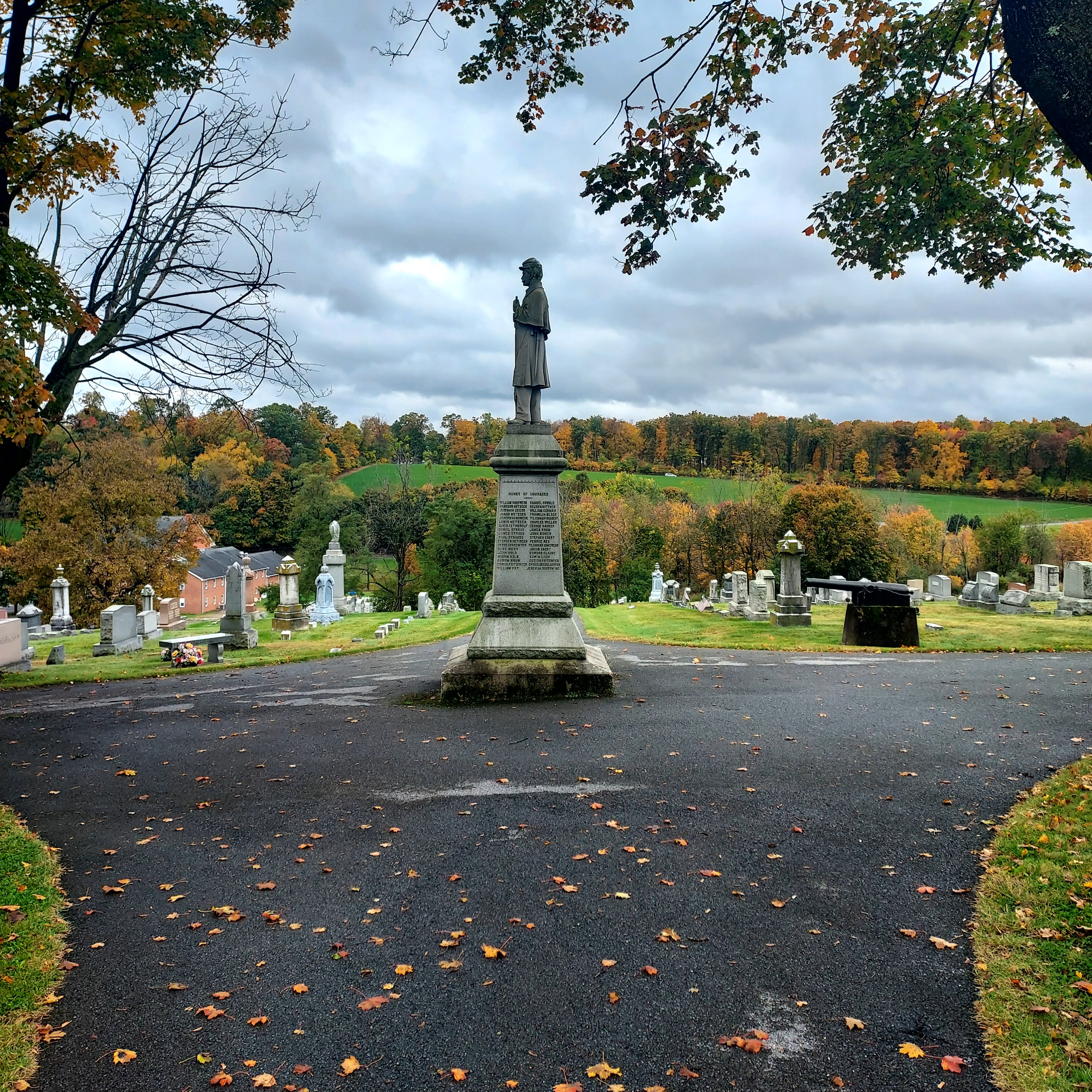
A silent sentinel standing watch over the fallen, October 21, 2023 (photo used with permission, courtesy of Julian Burley; click to enlarge).
Located near the community of Slatington in Heidelberg Township, Lehigh County, Pennsylvania, the Soldiers’ Monument in the Heidelberg Union Cemetery pays tribute to sixty-eight men from Lehigh County who served with the Union Army during the American Civil War. Each of their names was engraved on the shaft of the monument, which was planned in 1909, erected after $1,100 was raised by the monument planning committee, and dedicated on Memorial Day Weekend in 1910.
The idea for forming the planning committee came from the minds of Nathan Handwerk, who had participated as a private with the 47th Pennsylvania Volunteer Infantry’s K Company in the Union’s history-making 1864 Red River Campaign across Louisiana and 1864 Shenandoah Valley Campaign across Virginia before being promoted to the rank of corporal, and Moses Metzger (1846-1918), who had served with the 209th Pennsylvania Volunteers’ H Company.
Both men were members of the Heidelberg Church near Slatington and subsequently recruited other church members and Union Army veterans to assist with the monument’s planning and design in early 1909, fundraising for the project, construction oversight, and planning and implementation of its dedication ceremonies.
The Monument’s Design
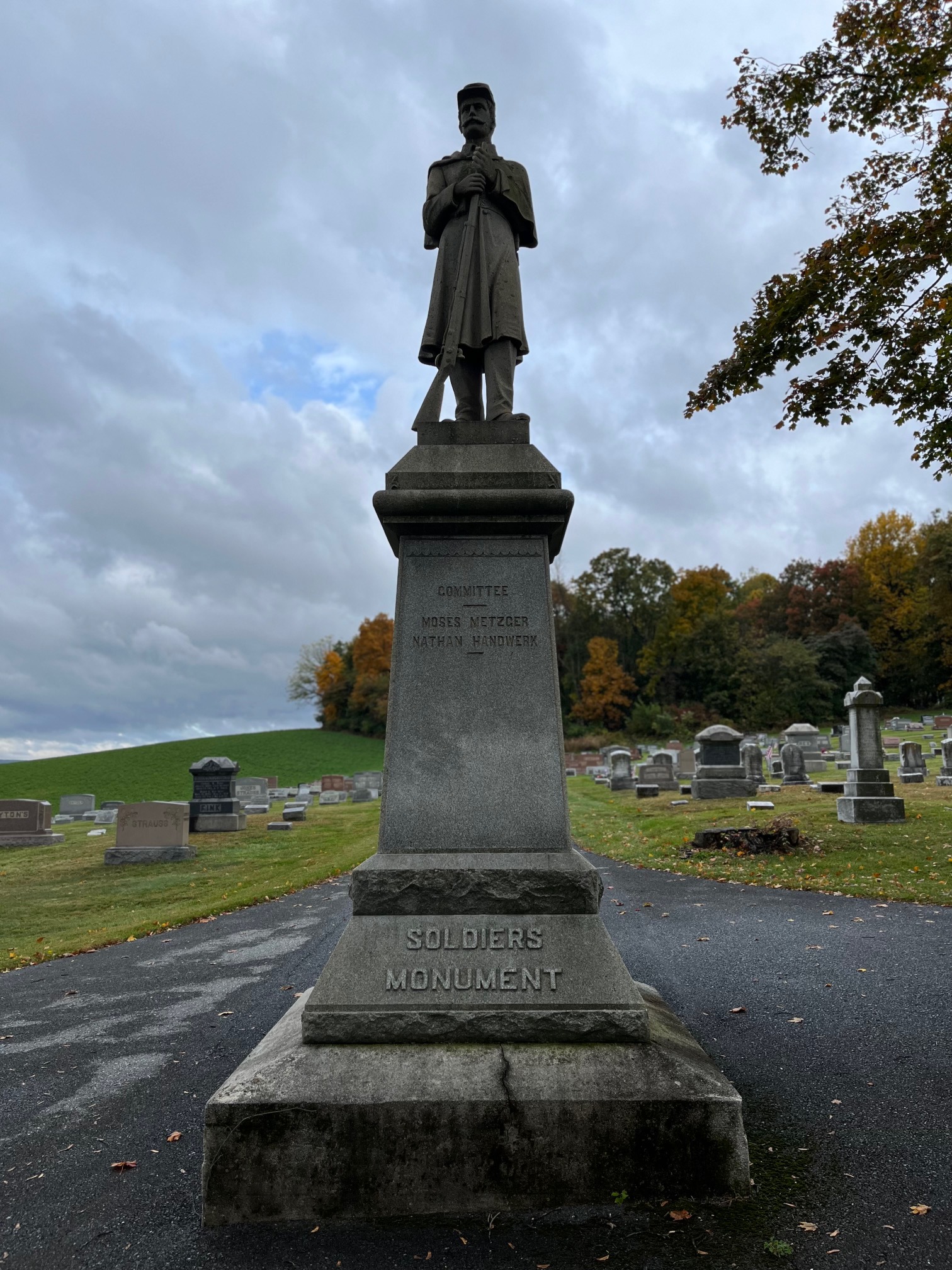
Moses Metzger and Nathan Handwerk spearheaded the drive to erect this Soldiers’ Monument at the Heidelberg Union Cemetery (photo used with permission, courtesy of Stacy Shiffert; click to enlarge).
Not nearly as ornate as other Civil War tributes that were erected around this same time by communities across the Great Keystone State, the Soldiers’ Monument at Heidelberg Union Cemetery is beautiful because of its simplicity—a single Union Army soldier standing alone, at post with his rifle, on watchful guard, dedicated to protecting his fellow soldiers from any attempted attack by the enemy.
The infantryman that was sculpted wears the regular uniform of the Union soldier—a woolen greatcoat with cape and infantryman’s trousers and boots, his head topped by the standard infantryman’s kepi (cap). Engraved on one side of the monument were the names of Handwerk and Metzger:
“Committee
Moses Metzger
Nathan Handwerk”
The life-sized sculpture of the soldier, which was carved from marble by artists at Hill of Fleetwood in Berks County, was placed atop a large, granite base with the soldier facing eastward, creating an imposing, overall height for the monument of eighteen feet. It was erected on cemetery land that was donated by two church congregations.
The details on the soldier’s greatcoat, both front and back, were so finely crafted that they convey a sense of movement, as if the soldier is moving to protect those he still guards more than a century after assuming his post.
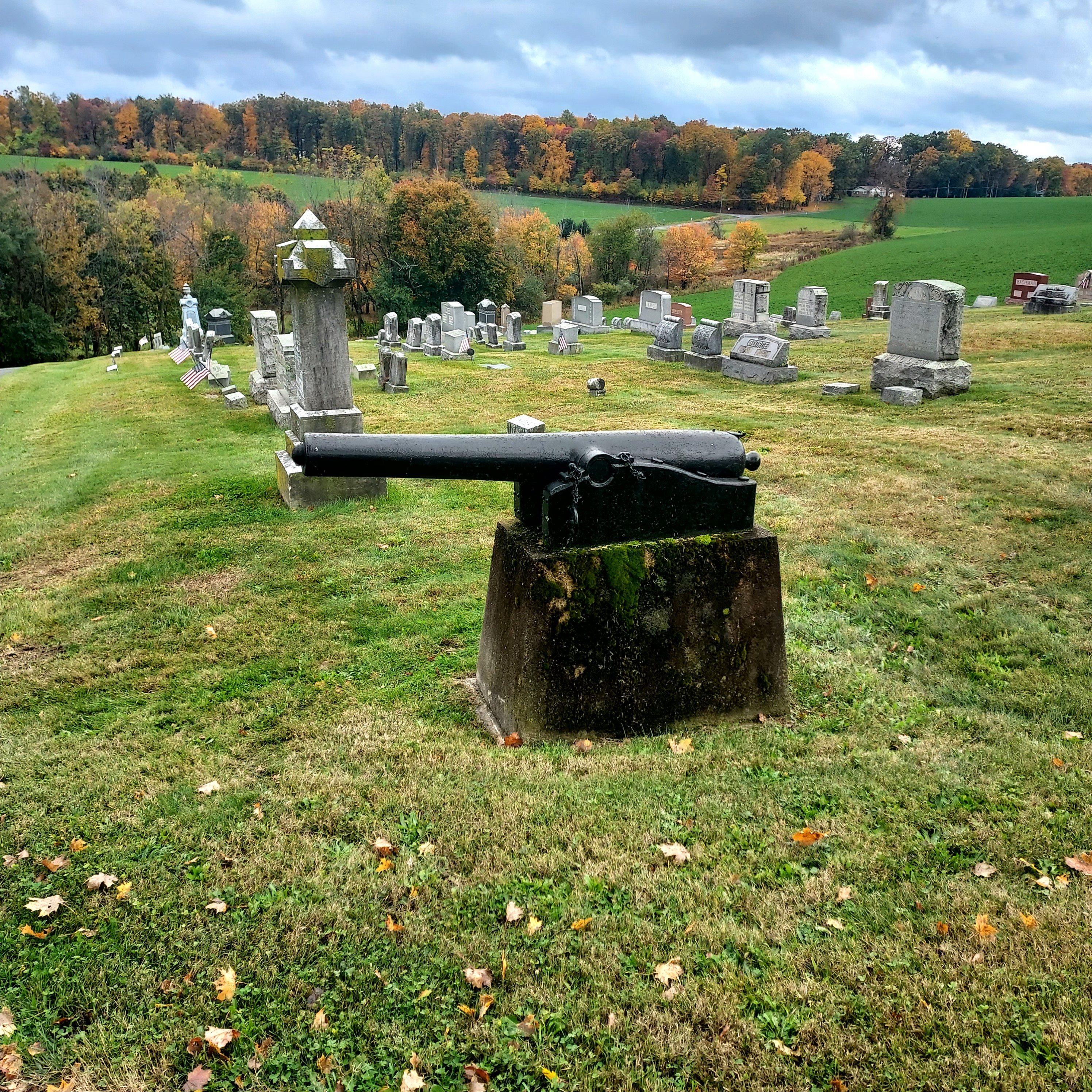
U.S. Congressman John H. Rothermel facilitated the U.S. War Department’s donation of a mounted cannon for placement near the monument (photo used with permission, courtesy of Julian Burley, October 2023).
Among the civic leaders and elected officials recruited to the monument’s planning by Metzger and Handwerk was U.S. Congressman John Hoover Rothermel of the city of Reading in Berks County, who secured a donation by the U.S. War Department of a mounted cannon. It was subsequently placed next to the monument in the dedicated section of the cemetery where the monument was located.
The Monument’s Dedication
Initially postponed from the fall of 1909 due to the likelihood of cold weather and an inability of planners to secure event speakers in time for the original dedication date, the official dedication of the Soldiers’ Monument at Heidelberg Union Cemetery was finally conducted for this monument on Sunday, 29 May 1910. Robert H. Norgang served as the master of ceremonies with addresses made to the crowd by the Rev. Dr. Theodore F. Herman, pastor of the Salem Reformed Church, District Attorney Fred B. Gernerd and Congressman Rothermel. The Rev. J. H. Longacre, pastor of the Heidelberg Church, read the formal dedication statement, and the Slatedale Band also performed during the event.
Lehigh Valley area newspapers reported that the crowd in attendance for the dedication was sizeable, ranging from “upwards of three hundred people” to “several thousand persons.”
The event began at 2:00 p.m. with a procession to the cemetery led by Nathan Handwerk and Moses Metzger. Following behind them were the Slatedale Band, representatives from the Grand Army of the Republic (the Samuel H. Kress Post of Slatington and the E. B. Young Post No. 87 of Allentown) and representatives from the Sons of Veterans (the Phil Sheridan Post of Slatington). After the procession arrived at the cemetery, the crowd joined together in singing My Country ‘Tis of Thee.
The crowd then listened attentively as Rev. Longacre read an excerpt from the Bible’s 33rd Psalm:
“Rejoice in the LORD, O ye righteous: for praise is comely for the upright…. He loveth righteousness and judgment; the earth is full of the goodness of the Lord…. The Lord looketh from heaven; he beholdeth all the sons of men. From the place of his habitation he looketh upon all the inhabitants of the earth. He fashioneth their hearts alike; he considereth all their works. There is no king saved by the multitude of an host: a mighty man is not delivered by much strength [meaning: No king is saved by the size of his army; no warrior escapes by his great strength]…. Behold, the eye of the LORD is upon them that fear him, upon them that hope in his mercy. To deliver their soul from death, and to keep them alive in famine. Our soul waiteth for the LORD: he is our help and our shield.”
The members of the crowd then bowed their heads and joined Longacre in prayer.
After the band performed a second selection, Norgang took to the podium to explain the community’s reasons for erecting the new soldiers’ monument, and provided a brief history of the American Civil War before introducing the Rev. Dr. Herman, who delivered his address in German, a portion of which was translated into English for publication in newspapers the next day:
“Tomorrow it will be 45 years when the voice of peace was sent forth and it caused great rejoicing. In that spring day the new hopes of a nation were planted. The soldiers returned to their homes after over 4 years of fighting and went back to the works of home.”
As Herman continued to speak, he called to listeners’ minds what it was like for the soldiers—hardened veterans—and recent recruits whose service tenures had been shorter and, in some cases, less brutal.
“Flowers were strewn in their paths and there was such rejoicing never exceeded. There was sadness in many homes for many a father or brother did not return. Their bodies were buried in graves far away. This memorial is erected to their memory and tomorrow all America will strew flowers on their graves. Their memories are being written in the hearts of our children and children’s children. We are here in serious vein to review what God has done for us and our Country. The graves yonder are dumb, as is also this shaft, but they tell us that in this world there are things better than life….”
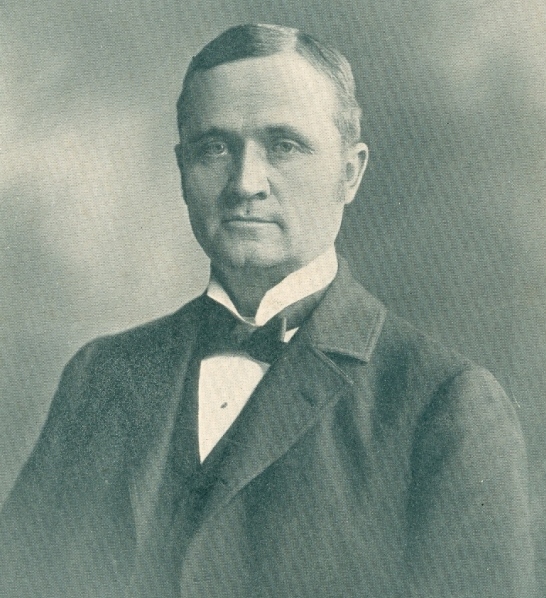
U.S. Congressman John Hoover Rothermel, c. 1890s (public domain).
Herman’s oratory was followed by a performance by the band of a third selection, which, in turn, was followed by this address by U.S. Congressman John H. Rothermel:
“It is a great pleasure, ladies and gentlemen, to be with you at this beautiful and on this delightful occasion.
It makes one thing of facts in history which are buried in the dead past as well as facts which are [a] vital force in the living present.
We have passed through two distinct stages in our national development. First, it resolved itself into one of organization and construction; then, the civil rights or preservative period, which was one of construction of the organic law, as well as preservation, and now we have passed into the third stage, the period of social equality and justice.
It seems as though Divine Providence, and the wisdom of the people, in each period developed and brought to the presidential office and to the legislative halls the philosophers and statesmen, properly equipped to lead the country to a higher and broader plain of Republican government….
It is unnecessary to pay a tribute to Washington, Jefferson, Lincoln, Grant, McClellan, Hooker, Sheridan and other great statesmen and generals because their names are all recorded in history. We are here today to honor the memory of the dead and pay our respects to the living, who are as patriotic and as loyal and true to their country as those I have just named. The privates in the army are often the most loyal and patriotic, but the credit goes to the higher officers.
The struggle for social justice is making itself felt all over the world. It cannot be ignored, nor can it be suppressed. It is in progress in Washington and in all other enlightened countries. It will take a Washington, a Jefferson, or a Lincoln to guide this country while this struggle is going on….
Personally I might say that I have the greatest respect for the men who fought for their firesides and mine. As your representative I have been liberal in the way I have allowed pensions. If ever there was a time when the veterans needed it, it is now when they are getting old and under the stress of the high cost of living.”
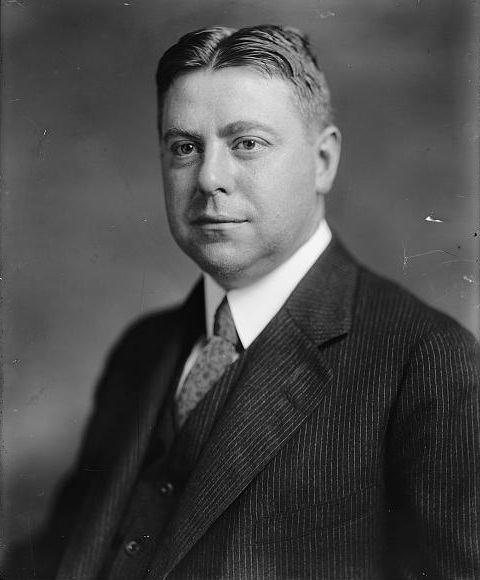
U.S. Congressman and former Lehigh County District Attorney Fred B. Gernerd, c. 1921 (U.S. Library of Congress, public domain).
District Attorney Fred B. Gernerd then rose to deliver his address. According to The Morning Call’s follow-up coverage of the event, Gernerd “had taken a great interest in the erection of the monument and he delivered a masterful address” on “a fine day” in which he “spoke of the beautiful country, the farm houses, the fine gardens, the big barns and good cattle, all of which testified to the industry, intelligence and frugality of the people there.” Gernard also “spoke of how the Pennsylvania Germans had settled this section and contributed to the cause of independence,” describing the men as “good soldiers whose marksmanship, devotion and great endurance provoked the constant praise of their commanders.” Quoting the orator directly, the newspaper recorded Gernerd’s remaining words as follows:
“The years since those stirring days have wrought wonderful and beneficent changes. The states are in perfect accord and the nation is disseminating its altruistic principles far beyond its native shores. Our nationalism has matured. We have taken our place among the nations of the world, not in the guise of a designing world power, but as an arbitrator of universal peace.
Ah, to-day we need not ask the question—What of the Pennsylvania Germans! The very inquiry is superfluous. They were among the first defenders. Each battle saw them in action. Many experienced the hardships and inhuman sufferings of Andersonville while hundreds saw the passing of day upon the battlefields of the union. Their courageous performances, their kind and generous disposition in camp and upon the march, their unfailing loyalty and true comradeship merited for them the unstinted praise of comrade and commander. They gave their full measure of patriotic devotion, reflecting much honor and glory to the Commonwealth of Pennsylvania which they so richly honored by their valor in life and by their sacrifices in death.
How appropriate this occasion; hundreds have assembled upon this sacred acre to pay a tribute to their soldier dead, and to dedicate and perpetuate this beautiful memorial to their precious memory. This shaft of granite with its roll of honor shall ever bear testimony of the patriotism and love of country that imbued these thrifty citizens of Heidelberg. What an evidence of gratitude, of love and appreciation. May its commanding presence be a continuing inspiration to those who worship here. May her citizens ever prove worthy of her proud tradition and her reverent dead. Let us who are here participating imbue the great lessons that have been so beautifully emphasized to-day. The nation needs heroic men. Great and destructive evils are constantly menacing our national honor. May we reflect a true patriotism by courageously performing our civic duties, and by harmonizing our characters with the durable traits of those who so nobly consecrated their lives that Old Glory might proudly wave its magnificent folds over a land of the free and a home of the brave.”
Major Milton A. Gherst, who had served the nation during the American Civil War and Spanish-American War before being appointed to the command staff of the Pennsylvania National Guard under Brevet General John Peter Shindel Gobin, spoke of war and patriotism, adding “I hope some time, a master mind will place a monument at the capital to typify the American soldier and then another erect one to the memory of the American mother and the people follow in their teachings.”
Uniformed members of the Sons of Union Veterans moved into position to fire a rifle salute, followed by a bugler who sounded taps. The entire crowd then joined in singing Onward, Christian Soldiers before Rev. Longacre delivered the benediction to close the ceremony.
The Pennsylvanians Memorialized on the Monument
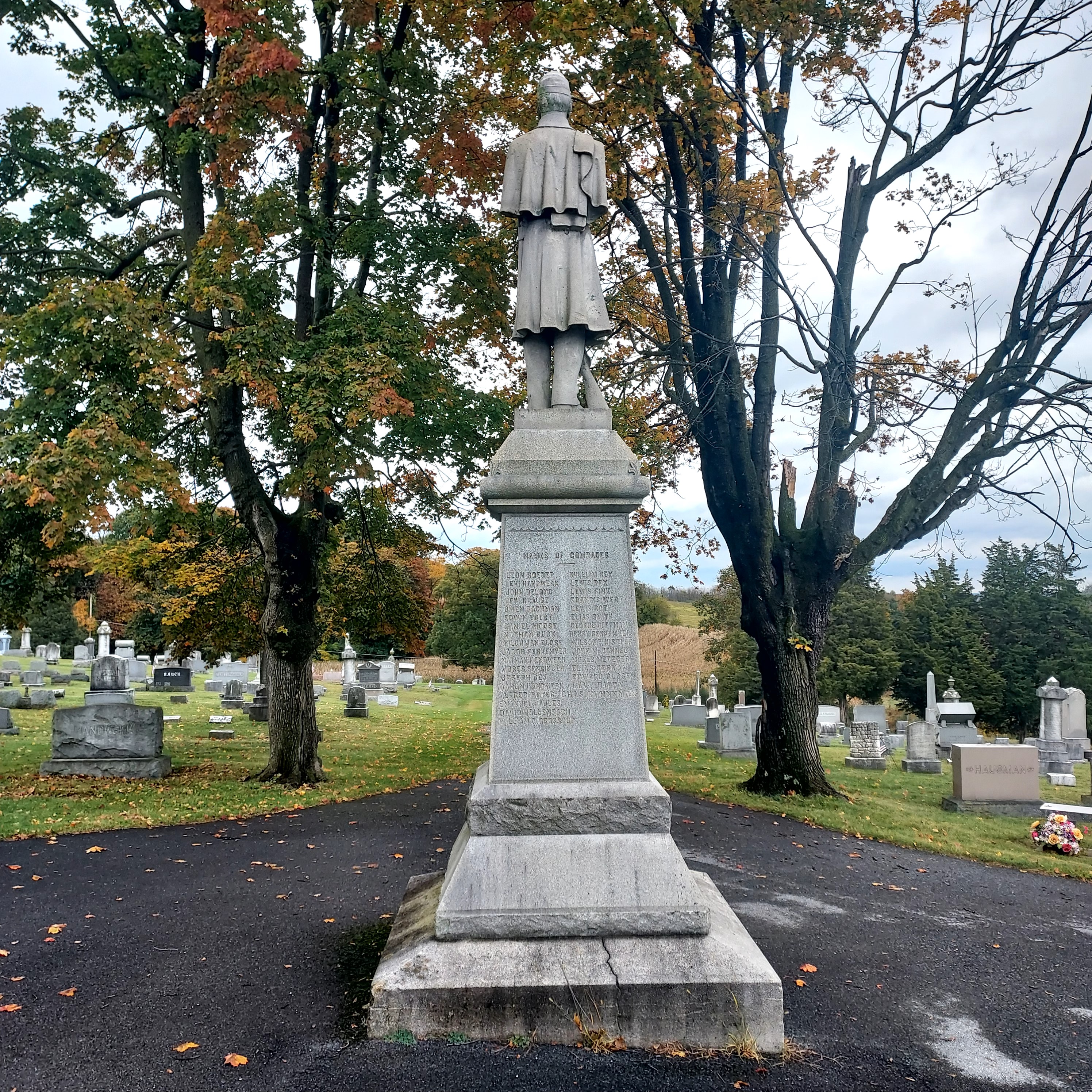
Each of the monument’s four sides pays tribute to veterans of the American Civil War and World Wars who were members of Heidelberg Township churches (used with permission, courtesy of Julian Burley, October 2023; click to enlarge).
Of the sixty-eight Union soldiers whose names were inscribed on the monument, all were members of Lutheran or Reformed church congregations in Heidelberg Township, Lehigh County. Fifteen had also been members of the 47th Pennsylvania Volunteer Infantry during the American Civil War:
- Berkemeyer/Berkmoyer, Peter, Company K
- Fetherolf, David, Company K (wounded in action during the Battle of Cedar Creek, Virginia, 19 October 1864; died at home, 17 November 1864)
- Handwerk, Nathan, Company K
- Hettinger, Stephen, Company I
- Hoffman, George, Company K (died at Annapolis, Maryland, 21 February 1865)
- Kolb, Hiram, Company K (wounded in action during the Battle of Cedar Creek, Virginia, 19 October 1864)
- Kolb, John, Company K (died from typhoid fever, Baltimore, Maryland, 21 October 1864)
- McConnell, John, Company K (killed in action, Battle of Pocotaligo, South Carolina, 22 October 1862)
- Metzger, Harrison, Company K
- Metzger, Jonas/Jonathan, Company K
- Metzger, Lewis, Company K
- Reidy/Riedy, Elias W., Company K (wounded by “friendly fire” while in training with his regiment at Camp Curtin, Harrisburg, Pennsylvania, fall of 1861)
- Strauss, David/Daniel, Company K
- Strauss, James, Company K (wounded in action during the Battle of Cedar Creek, Virginia, 19 October 1864)
- Strauss, Paul, Company K (wounded in action by an artillery shell during the Battle of Pocotaligo, South Carolina, 22 October 1862)
* To view additional photos of this monument and of the graves of 47th Pennsylvanians interred in this cemetery, please visit our Heidelberg Union Cemetery Gallery.
Sources:
- “Soldiers’ Monument Dedication in Spring.” Allentown, Pennsylvania: The Allentown Democrat, 4 October 1909.
- “Shaft to Soldiers Will Be Unveiled: Patriotic Event Will Take Place in the Heidelberg Cemetery Sunday Afternoon, May 29.” Allentown, Pennsylvania: The Allentown Democrat, 19 May 1910.
- “Fine Memorial to Brave Veterans: Handsome Soldiers Monument on Heidelberg Cemetery.” Allentown, Pennsylvania: The Morning Call, 20 May 1910.
- “Consecration of Shaft to Soldiers to Take Place on Heidelberg Cemetery Tomorrow.” Allentown, Pennsylvania: The Allentown Leader, 28 May 1910.
- “Major Milton A. Gherst,” in Historical Papers and Addresses of the Lebanon County Historical Society, Vol. 7, pp. 24-26. Lebanon, Pennsylvania: Lebanon County Historical Society, 1916.
- “Shaft to Honor Memory of Heroes of This Country: Several Thousand Persons Witnessed the Unveiling of the Soldiers’ Monument on the Heidelberg Church Cemetery Yesterday.” Allentown, Pennsylvania: The Allentown Democrat, 30 May 1910.
- “Shaft to Soldiers in Heidelberg Cemetery: Unveiled Yesterday with Notable Exercises.” Allentown, Pennsylvania: The Morning Call, May 30, 1910.
 47th Pennsylvania Volunteers
You must be logged in to post a comment.